Archive for January 25, 2019

Iran’s nuclear chief: We bought spares for nuke equipment we agreed to destroy

January 25, 2019

Source: Iran’s nuclear chief: We bought spares for nuke equipment we agreed to destroy | The Times of Israel

Ali Akbar Salehi says supreme leader was convinced West would renege on 2015 pact, so replacement tubes for nuclear reactor were secretly purchased

Head of Iran's Atomic Energy Organisation Ali Akbar Salehi adjusts his earphones during a news conference at the European Commission headquarters in Brussels,  November 26, 2018. (Francisco Seco/AP)

Head of Iran’s Atomic Energy Organisation Ali Akbar Salehi adjusts his earphones during a news conference at the European Commission headquarters in Brussels, November 26, 2018. (Francisco Seco/AP)

Ali Akbar Salehi, the head of the Atomic Energy Organization of Iran, has detailed how Iran quietly purchased replacement parts for its Arak nuclear reactor while it was conducting negotiations for an international agreement under which it knew it would be required to destroy the original components.

In an interview broadcast on Iran’s Channel 4 TV on January 22, Salehi recalled that during talks for the so-called Joint Comprehensive Plan of Action, the 2015 deal that lifted sanctions on Iran in return for it dismantling the weapons-capable parts of its nuclear program, Iranian Supreme Leader Ali Khamenei warned his country’s negotiators that he expected Western parties to renege on the agreement.

An English translation of some parts of the interview were provided Thursday by the Washington-based non-profit Middle East Media Research Institute.

“When our team was in the midst of the negotiations, we knew that [the Westerners] would ultimately renege on their promises,” Salehi said. “The leader [Khamenei] warned us that they were violators of agreements. We had to act wisely. Not only did we avoid destroying the bridges that we had built, but we also built new bridges that would enable us to go back faster if needed.”

The industrial complex at Arak in central-west Iran was a key topic in negotiations due to its nuclear reactor and heavy-water production facility. Western powers initially demanded that the core reactor mechanism — know as a calandria — be removed and that the pit in which it sits be filled with cement. While Iran agreed to remove — but not dismantle — the calandria, it also negotiated that only the pipes and openings leading to the pit be filled with cement, which was eventually done.

However, Salehi detailed in Tuesday’s interview, Iran’s nuclear team as a precaution purchased replacement parts for some of the piping used in the reactor which it had promised to fill with cement. They kept that fact hidden during the JCPOA negotiations, he made clear, and also hid it from other Iranian officials.

Illustrative: Iran’s heavy water nuclear facilities near the central city of Arak. (CC-BY-SA 3.0/Wikimedia/Nanking2012)

Inside the reactor core, said Salehi, “there are tubes where the fuel goes. We had bought similar tubes, but I could not declare this at the time. Only one person in Iran knew this. We told no one but the top man of the regime [Khamenei].”

“We had bought the same quantity of similar tubes,” he explained. “When they told us to pour cement into the tubes… we said: ‘Fine. We will pour.’ But we did not tell them that we had other tubes. Otherwise, they would have told us to pour cement into those tubes as well. Now we have the same tubes.”

However, Salehi insisted that such subterfuge did not indicate that Iran was or is seeking nuclear weapons, as the Trump Administration and Israel insist. Iran’s plan was to modernize the Arak reactor, which was based on an old Russian design, and use the new facility to produce reduced quantities of plutonium that would be used for nuclear fuel, but not weapons, he said.

“First, we do not intend to build a nuclear weapon,” he said and noted the refurbishment was agreed on during the nuclear talks. “Second, this [reactor’s] plutonium is not suitable for nuclear weapons.”
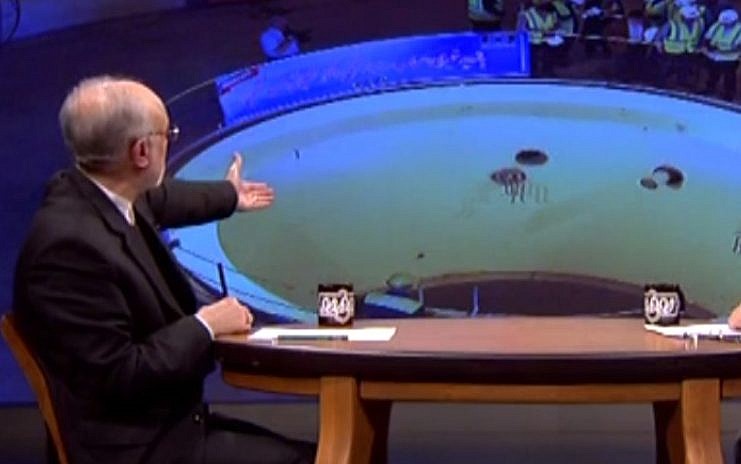
Screen capture from video showing the head of Iran’s Atomic Energy Organization Ali Akbar Salehi pointing to the empty reactor pit inside the Arak nuclear facility in Iran, January 22, 2019. (Memri)

Salehi also clarified that a photo apparently showing the Arak reactor pit filled with cement was fake, a photoshopped image produced by Iranian hardliners who opposed the nuclear deal and wanted to assert that Iran had been humiliated by the West into destroying its own plants.

US President Donald Trump pulled out of the nuclear deal in May last year but the other signatories, Britain, France, Germany, Russia, China and Iran have all agreed to try to keep the pact alive on their own. Trump insists the original agreement did not go far enough in curbing Iran’s nuclear weapons ambitions and wants to renegotiate the JCPOA with stricter terms. In the meantime Washington has imposed heavy sanctions on Iran that could weaken the ability of the remaining parties to maintain the deal.

Last week Salehi said Iran has begun “preliminary activities for designing” a modern process for 20-percent uranium enrichment. Restarting enrichment at that level would mean Iran had withdrawn from the 2015 nuclear deal.

Tehran has in the past warned that if the remaining parties are not able to keep up the trade and financial benefits the deal provided, it will also pull out and restart controversial parts of its nuclear program.

The Associated Press contributed to this report.


After Hamas rejects Qatari aid, Israel girds for violent surge on Gaza border 

January 25, 2019

Source: After Hamas rejects Qatari aid, Israel girds for violent surge on Gaza border | The Times of Israel

Extra troops sent to border area, Iron Dome batteries deployed with Friday protests expected to intensify amid anger over brief Israeli freeze on Gulf cash

A protester draped in the Palestinian flag gestures at Israeli forces across the border fence, during clashes following a demonstration along the border with Israel east of Gaza City on January 18, 2019. (Said KHATIB / AFP)

A protester draped in the Palestinian flag gestures at Israeli forces across the border fence, during clashes following a demonstration along the border with Israel east of Gaza City on January 18, 2019. (Said KHATIB / AFP)

The Israeli military was gearing up Friday for renewed violence on the Gaza border, a day after Hamas rejected millions in Qatari aid money, ratcheting up tensions on the volatile frontier.

Officials from the Hamas terror group made the surprise announcement that they would be rejecting $15 million in aid money from Qatar Thursday, days after Israel temporarily froze the transfer — part of a tacit ceasefire deal — as a punitive measure following a series of shooting incidents along the border.

The move stoked fears in Israel that Hamas, which is the de facto ruler in the Gaza Strip, could allow weekly protests along the border to become more violent after several weeks of relative calm, and could also renew rocket fire on Israeli towns.

“If no agreement is reached, the chances for violence along the border tomorrow afternoon are high,” a Gazan source told the Ynet news site.

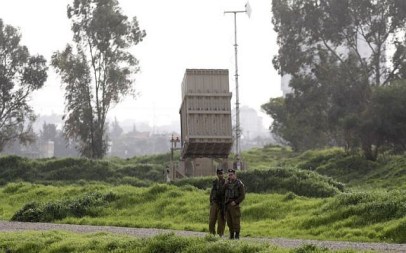
The Israel Defense Forces on Thursday began beefing up troop presence in areas near the Gaza border. It also ]deployed Iron Dome missile defense batteries in the Tel Aviv metropolitan area and in the south as a precautionary measure against potential attack from either the Gaza Strip or from the north, where the security situation has also been increasingly precarious.

Israeli soldiers stand near a battery of the Iron Dome defence system, designed to intercept and destroy incoming short-range rockets and artillery shells, deployed in Tel Aviv on January 24, 2019. (Menahem KAHANA / AFP)

Defense officials reportedly fear that the Iran-backed Islamic Jihad terror group could fire a longer-range missile from Gaza into Israel’s densely populated heartland.

Israeli officials are also worried that fighters in the Strip could carry out cross-border shooting attacks, either with light arms or anti-tank missiles, the Ynet news website reported. Some roads near the Gaza fence are expected to be closed off Friday.

The money transfer, originally slated for Wednesday, had been frozen Tuesday night by Prime Minister Benjamin Netanyahu after two incidents in which Israeli soldiers were shot at along the border, including one in which a soldier was hit in the helmet and lightly injured. Israel also responded by shelling observation posts and carrying out airstrikes, killing one Hamas fighter.

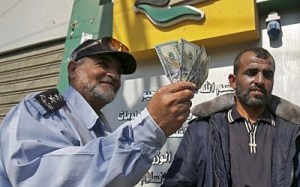
A Palestinian man shows his money after receiving his salary in Rafah in the southern Gaza Strip November 9, 2018. (Said Khatib/ AFP)

Under the unofficial ceasefire arrangement between Israel and Hamas, Doha has agreed to transfer a total of $90 million to Gaza in monthly installments of $15 million. The group received the funds, in $100 bills, in November and December.

The money, $10 million of which goes to Hamas civil servants and the rest to needy residents in the Strip, was seen by defense analysts as key to calming tensions between Israel and the Palestinian enclave, which has seen regular violence along the border over the past 10 months.

Israel approved the transfer on Thursday, but moments later Hamas announced it would reject the money, accusing Israel of violating the ceasefire agreement brokered by the Egyptian military, UN envoy Nickolay Mladenov and Qatar by delaying the transfer of the money.

“We say our people and Gaza will not be part of the blackmail and the internal Zionist elections,” senior Hamas official Khalil al-Hayya said.

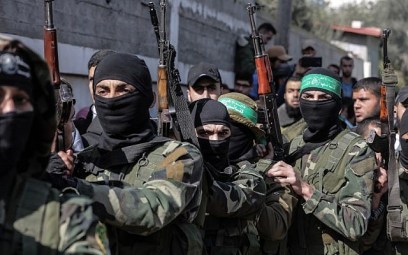
Masked Hamas gunmen attend the funeral of Mahmoud al-Nabaheen, 24, in the Bureij refugee camp, in the central Gaza Strip, on January 23, 2019. (MAHMUD HAMS / AFP)

According to reports, Hamas had been trying to calm the situation after the Tuesday flareup to allow the money through, but the use of the cash as a carrot had increased pressure on the group to reject it and take a harder line toward Israel.

Israel’s entire security establishment had been in favor of moving forward with the transfer, including the Israel Defense Forces, the Mossad intelligence service, the Shin Bet security service, and the National Security Council.

During a security cabinet meeting on Wednesday, defense officials said that it was the Islamic Jihad terror group, not Hamas, that had been behind the attacks on Israeli troops on the Gaza border the day before, and that while Israel’s shelling in response had killed a Hamas fighter, the terror group that rules Gaza has refrained from responding.

The transfer of the funds to Hamas, which calls for the destruction of the Jewish state, is unpopular in Israel, esecially among right wing voters who will be going to the polls on April 9. Hamas had initially seen the freeze as little more than campaign posturing from Netanyahu.

Since March, Palestinians have been holding regular protests on the border. Israel has accused Gaza’s Hamas rulers of using the demonstrations as a cover for attacks on troops and attempts to breach the security fence.

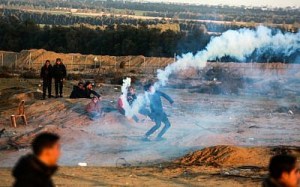
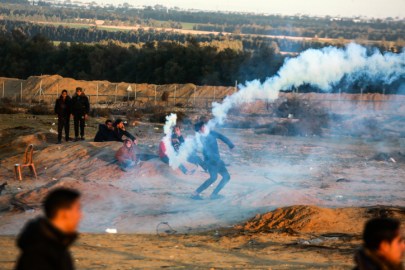
Palestinian protesters during clashes with Israeli forces following a demonstration along the border with Israel, east of Rafah in the southern Gaza Strip, on January 18, 2019. (Abed Rahim Khatib/ Flash90)

Last week some 10,000 Palestinians participated in riots along the border on Friday afternoon, throwing rocks, fire bombs and hand grenades at Israeli troops, and burning tires. Israeli soldiers reportedly responded with tear gas and, in some cases, live fire.

Over 200 Palestinians have been killed and thousands more injured along the Gaza border by Israeli troops since March, according to statistics from the United Nations and the Strip’s Hamas-run health ministry. Hamas has claimed many of the dead as its members.

An IDF soldier was shot dead by a Palestinian sniper in July during a riot along the security fence. A Palestinian man living in Israel was also killed by a rocket attack from the Gaza Strip in November.

Adam Rasgon and Judah Ari Gross contributed to this report.
 

IDF accuses Iran-backed Islamic Jihad of undermining Gaza calm as tensions rise

January 25, 2019

Source: IDF accuses Iran-backed Islamic Jihad of undermining Gaza calm as tensions rise | The Times of Israel

Army’s Arabic-language spokesperson says terror group has been trying to ‘destabilize’ situation in the Strip for weeks

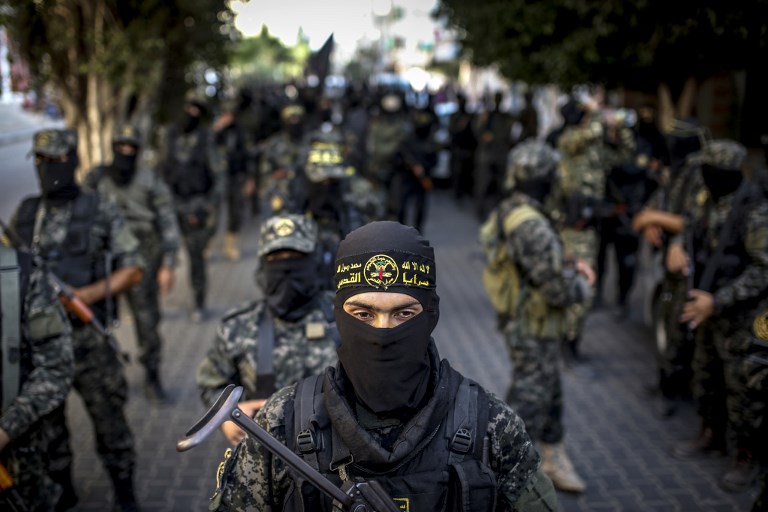
Members of the Iran-backed Palestinian Islamic Jihad terror group march during a military parade in Gaza City on October 4, 2018. (Anas Baba/AFP Photo)

The Israeli military on Thursday accused the Iran-backed Palestinian Islamic Jihad terror group of efforts to “destabilize” the situation in the Gaza Strip, as an unofficial ceasefire agreement between Israel and Hamas appeared to be in peril of collapsing.

“In recent weeks, we have monitored increasing attempts by the Islamic Jihad movement to destabilize the security situation in the Gaza Strip,” the Israel Defense Forces’ Arabic-language spokesperson tweeted.

“The activities of the radical Islamic Jihad movement risk… the attempts to improve the civilian reality in the Gaza Strip,” Lt. Col. Avichay Adraee added.

The accusations by the army spokesman came shortly after the Hamas terror group announced it would not be accepting millions of dollars in funding from the Qatari government, a key aspect of the unofficial ceasefire arrangement with Israel.

Hamas government employees wait to receive 60 percent of their long-overdue salaries, at the main Gaza Post Office, in Gaza City, November 9, 2018. (AP Photo/Adel Hana)

The $15 million tranche — out of a total of $60 million still to be paid to Hamas in four monthly installments — had originally been scheduled for transfer last week, but was blocked by the Israeli security cabinet over violence along the border. The funds were then due to be transferred on Wednesday, but were delayed then, too, after Israeli soldiers came under fire along the Gaza border on Tuesday.

The Israeli military believes the shooting attacks on its troops — including sniper fire at an Israeli commander, who was hit in the helmet by a bullet — were directed by the Palestinian Islamic Jihad, the second largest terror group in the Gaza Strip, which receives much of its funding from Israel’s nemesis, Iran.

“Residents of Gaza, through its activities, Islamic Jihad is putting your safety and security at risk,” Adraee wrote.

IDF Spokesman in Arabic, Avichay Adraee at the Ministry of Foreign Affairs in Jerusalem on September 6, 2017. (Yonatan Sindel/Flash90)

“There is no question about the loyalty of this organization. The only issue is whether it will succeed in its plans to drag you all toward an escalation,” he added.

Following further cabinet discussions and in light of the recommendations of the heads of all of Israel’s security services, the government on Thursday said that it had approved the transfer of the funds to cash-strapped Hamas, which rules the Gaza Strip.

However, moments after the Israeli announcement, senior Hamas leader Khalil al-Hayya said his group was not accepting the Qatari money, accusing Israel of violating the ceasefire agreement brokered by the Egyptian military, UN envoy Nickolay Mladenov and Qatar by withholding the money in response to border violence.

The helmet of an IDF officer that was hit by a sniper bullet during a riot along the Gaza border on January 22, 2019. (Courtesy)

“We told the brother and ambassador [Qatari envoy Mohammed al-Emadi] that we reject the third Qatari grant in response to the occupation’s behavior and its attempts to disengage from the understandings that Egypt, the United Nations and Qatar mediated,” Hayya told reporters in a Gaza press conference.

“We say our people and Gaza will not be part of the blackmail and the internal Zionist elections,” he said.

Senior Hamas official Khalil al-Hayya making a statement to the press on January 24, 2019. (Screenshot: Al-Aqsa TV)

It was not immediately clear how Hamas’ refusal to accept the remaining money would affect the unofficial ceasefire.

Prior to Hamas’ announcement, the Israel Defense Forces deployed Iron Dome missile defense batteries in the Tel Aviv metropolitan area and in the south as a precautionary measure against potential attack from either the Gaza Strip or from the north, where the security situation has also been increasingly precarious.

Under the unofficial ceasefire arrangement between Israel and Hamas, Doha agreed to transfer a total of $90 million to Gaza in monthly installments of $15 million. The group received the funds, in $100 bills, in November and December.

The money, $10 million of which goes to Hamas civil servants and the rest to needy residents in the Strip, was seen by defense analysts as key to calming tensions between Israel and the Palestinian enclave, which has seen regular violence along the border over the past 10 months.

“With our many active forces and factions, we are leading our efforts in the direction of obtaining our rights, which have been taken from us, on the path to liberation and return,” Hayya said.

Palestinian protesters during clashes with Israeli forces following a demonstration along the border with Israel, east of Rafah in the southern Gaza Strip, on January 18, 2019. (Abed Rahim Khatib/ Flash90)

The Hamas official said al-Emadi “understood” the terror group’s decision not to accept the funds.

“In the name of the Palestinian people, I offer our gratitude to Qatar — its emir, its people and its institutions. We tell them that Qatar’s efforts are appreciated,” the Hamas official said.

Al-Emadi arrived in the Gaza Strip late Wednesday evening via the Erez crossing, the Hamas-linked Al-Quds TV reported.

A diplomatic source told The Times of Israel that al-Emadi was still in his office in Gaza as of Thursday evening, noting that it was unclear when he would depart Gaza — a possible sign that negotiations with Hamas were ongoing.

The transfer of the funds to Hamas, which calls for the destruction of the Jewish state, is widely unpopular in Israel.

Since March, Palestinians have been holding regular protests on the border. Israel has accused Gaza’s Hamas rulers of using the demonstrations as a cover for attacks on troops and attempts to breach the security fence.

Over 200 Palestinians have been killed and thousands more injured along the Gaza border by Israeli troops during this time, according to statistics from the United Nations and the Strip’s Hamas-run health ministry. Hamas has claimed many of the dead as its members.

An IDF soldier was shot dead by a Palestinian sniper in July during a riot along the security fence. A Palestinian man living in Israel was also killed by a rocket attack from the Gaza Strip in November.


ISRAEL AGAIN DESTROYS RUSSIAN PANTSIR S1 IN SYRIA 

January 25, 2019

Russia warned Iran of imminent Israeli attack – TV7 Israel News 24.01.19 

January 25, 2019


Where’s David’s Sling and why wasn’t it used to intercept Iran’s missiles?

January 25, 2019

I was wondering this too when I saw that it was an Iron Dome that was used.

Hmm…

https://www.jpost.com/Arab-Israeli-Conflict/Wheres-Davids-Sling-and-why-wasnt-it-used-to-intercept-Irans-missiles-578377

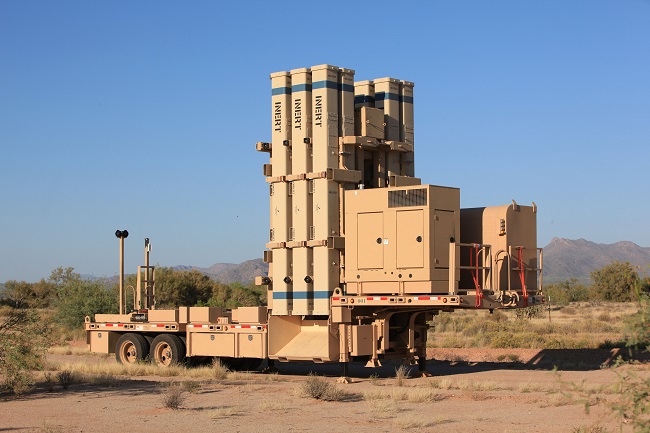
Rafael have started delivering major components of the new US-Israel David’s Sling Weapon System

Missile defense system hasn’t been used since it failed to intercept Syrian missiles last year.

At around 2:30 p.m. on Tuesday, Israelis enjoying the slopes of the Mount Hermon ski resort heard a loud bang and saw smoke trails in the skies above them. The Iron Dome missile defense system had intercepted a long-range missile fired by Iranian forces in Syria.

The missile was an Iranian-made surface-to-surface model with a range of some 200 km. with a payload of hundreds of kilograms of explosives that was fired from the outskirts of Damascus. The launch of this type of missile doesn’t happen at a moment’s notice. It took months of preparation and the approval of the highest officials in Tehran.

Israeli intelligence must have identified the chatter. They knew it was coming.

According to Syrian reports, an hour earlier Israeli jets carried out a rare daytime strike on Iranian targets in Syria. No special instructions had been given to the thousands of civilians enjoying the day and no warning siren was sounded.

However, the IDF was prepared, operating the recently upgraded Iron Dome to cover Mount Hermon.

While the primary targets of the Iron Dome system are short-range rockets and other artillery rounds that have been successfully intercepted, like the Iranian surface-to-surface missile on Sunday, the job should be done by the David Sling missile defense system.

This system became operational two years ago, and was first used last year against two SS-21 Tochka tactical ballistic missiles launched from Syria.

But, they missed their mark and David’s Sling has not been used since then.

Part of Israel’s multi-layered missile defense system umbrella, David’s Sling was designed to intercept tactical ballistic missiles and medium-to-long-range rockets, as well as cruise missiles fired at ranges between 40 to 300 km.

The Iranian missile would have made an ideal target to demonstrate to the Israeli public that the expensive defense system actually works.

Each interceptor launched by Israel’s David’s Sling system costs an estimated $1 million, but the army insists that the cost is not relevant when they are launched in order to defend the home front.

Israel’s air defenses also include the Iron Dome, which is designed to shoot down short-range rockets; and the Arrow system which intercepts ballistic missiles outside of the Earth’s atmosphere. Compared to the David’s Sling costly interceptor, each Iron Dome Tamir interceptor has a reported price of between $100,000 and $150,000.

But that shouldn’t be why we haven’t seen the use of David’s Sling since its failed interception.

Israel continuously improves the technology behind its anti-missile systems, with the Iron Dome upgraded with the Tamir interceptor that has a demonstrated capability against cruise missiles.

A week before the system was used, it was reported by Inside Defense that the United States Army wanted to purchase two Iron Dome batteries from Israel.

The Iron Dome undergoes upgrades “all the time” a spokesman for Rafael Advanced Systems told The Jerusalem Post, adding that the “system performed in accordance with its variety of capabilities.”

It was a good opportunity to give the new system a chance to fire while showing off its new capabilities to the US, as well as to the Iranians who want to deter Israel from launching further attacks against their interests in Syria.

But the question keeps popping up: Where is the David’s Sling?

Are there problems with the joint Israeli-US project that the public doesn’t know about?