Source: Iran: Iran Accused Of Chronic Failure
January 24, 2019: Israel has changed its approach to the war against Iran in Syria. Now the Israelis are attacking Iranian targets day and night and are taking credit for each attack. Senior Israel political and military leaders are now using the Internet to remind the Iranian IRGC (Iranian Revolutionary Guard Corps) commanders that they are losing and unable to do anything about it.
This is done deliberately to destroy the myth the IRGC has been creating back in Iran about how IRGC forces are about to destroy Israel. In fact the IRGC mercenaries in Syria have had success fighting ISIL and other Islamic terrorist rebels but not much else. Israel is now convincingly pointing out the IRGC lies and calling the IRGC incompetent and an embarrassment to Iran.
In this way Israel is winning their battle to keep Iran from establishing a permanent presence in Syria, even with American troops leaving northeast Syria. This Israeli goal has been achieved via combination of force (air and artillery strikes on Iranian bases and personnel in Syria) and diplomacy (convincing Russia to persuade Iran to keep their forces away from the Israel border or suffer Israeli attacks the Russians will not interfere with). Other diplomatic activities involved the Americans and Arab nations. Israel sees the Syrian government leaning towards rejoining the Arab League, which is an anti-Iran/pro-Israel organization at the moment. The Arab League also opposes Turkish ambitions in the Arab world, specifically Syria.
The Americans are preparing to pull their 2,000 troops out of Syria but not their support for the large force of Syrian Kurds who did most of the fighting to destroy the ISIL presence in eastern Syria. The American withdrawal was dependent on Turkish willingness to continue the fight against ISIL in Syria. The Turks backed off from doing that and were unwilling to negotiate with the Syrian Kurds.
Israel still appears to be able to carry out air strikes on targets in Syria despite the presence of the most modern Russian air defense systems. Israel does not discuss this openly. In part that is to keep secret details of how it is done. This silence is also a favor to the Russians, who don’t want the bad publicity that confirmation of Israeli ability to neutralize the latest Russian air defense systems. That way Russia can continue to sell its S-300 and S-400 systems.
With the Americans leaving the SDF (Syrian Kurd rebels) are depending on the United States and Russia to keep the Turks out of the northeast (east of the Euphrates River). The SDF is willing to keep fighting the remnants of ISIL (Islamic State in Iraq and the Levant) in eastern Syria as long as they don’t have to worry about a Turkish attack. Ominously the Turks have reinforced their forces facing the SDF. But figuring out who might attack, or support, the SDF now is not easy. The Turks do not want to fight the SDF for the very simple reason that there is not much popular support in Turkey for any operation that would get a lot of Turkish troops killed in Syria. For that reason, since the Turks crossed the border into Syrian in 2016 they have used local FSA (secular Free Syrian Army rebels) forces to do most of the fighting. What the Turks do want is to get the Kurds, especially YPG (Syrian Kurdish separatist) forces, away from the Turkish border. Going much further than 20 kilometers south of the border (at least on a permanent basis) is not part of the Turkish strategy. Turkey expects to use over 10,000 FSA fighters against the Kurds, along with Turkish tanks, artillery and air power.
Likewise the Syrians use Iranian mercenaries (many of them Afghan Shias) for the heavy combat. The Syrian Army was never noted for its combat capabilities and after seven years of civil war there are few Syrian combat units with much ability or willingness to carry out a successful offensive. Morale in the Syrian Army is understandably bad many current members have been in uniform since 2011 or before.
The Russians don’t have sufficient ground troops to carry out a large scale offensive and the most effective Russian ground troops are Russian mercenaries because Russian popular opinion is very hostile to Russian troops getting killed in foreign wars. Iraqi officials openly discussed sending Iraqi troops into Syria but the Iraqis have an even worse reputation for combat effectiveness than the Syrians. There was talk of the Saudis and UAE replacing the Americans in Syria. Possible in theory but not likely in practice. The Saudis are more concerned with the Iranian threat to Saudi Arabia itself.
That leaves Israel, which is focused on Iranian forces in Syria and Lebanon and continuing Iranian public backing for the destruction of Israel. Armed with the most formidable air force and special operations troops in the region Israel is currently allied with the Gulf Arab states being threatened by Iran.
Rebuilding The Syrian Arab Republic
Most Syrians are seeking assistance in rebuilding. The economy is a mess and Iran is currently the only one helping out. Syrian GDP is about half what it was in 2011 and limping along largely with the help of economic aid from Iran. The enormous expense (billions of dollars a year) has caused growing unrest in Iran and that aid may have to be cut. Gulf Arab states have expressed an interest in providing huge amounts of aid and loans for reconstruction, but only if Iranian troops and mercenaries are removed from Syria. In fact no one is willing to put a lot of money into rebuilding Syria has long as Iran has a large military force there whose main goal is to start a war with Israel. This presents the ruling Assad clan with a dilemma, or an opportunity. Do they try and betray their long time (since the 1980s) benefactor Iran for the good of Syria or stand by while Syria remains rubble, poverty and hunger while Iran tries to take on Israel. Even Iranian allies Russia and Turkey are unwilling to invest in a potential war zone and would prefer that Iranian military forces leave Syria. Worse, for the Iranian religious dictatorship, most Iranians back withdrawal from Syria and have been openly demonstrating for that since late 2017. Taking advantage of this Syria has been openly striving to rebuild diplomatic relations with other Arab nations. This presents Iran with a major problem, one that they could see coming,
President Bashar Assad spoke up to other Arab states in late 2018, for the first time since 2011, and went public with confirmation he had speaking with other Arab League members since late 2017 and had obtained offers of assistance in rebuilding Syria and assisting Syria in becoming an active member of the Arab League once more. In late 2011 Syria was suspended from the Arab League and many of the 21 other League members cut diplomatic relations or imposed sanctions. But the Arab League was unable to do much else. By early 2013 the Arab League was still unable to muster enough unity to call for international (Western) intervention in Syria. The Arab League did that in 2011 for Libya and many Arabs considered it shameful that the Arab world could not handle the military intervention itself. Despite trillions of dollars in oil income and hundreds of millions of Arabs demanding something be done, the Arab League had to call on outsiders to save Libya from degenerating into an interminable bloodbath. That is what happened in Syria and many Arabs refused to accept responsibility and just blamed the West and Israel for the mess. Given that toxic atmosphere, Western nations, including NATO member Turkey, were reluctant to do what the Arabs wanted done but would not admit they cannot do it themselves. Iran and the Russians intervened in support of the Assads and the slaughter of pro-rebel civilians continued as did Assad efforts to force pro-rebel civilians out of Syria.
Iran would prefer Syria remain an Iranian protectorate and occupied by Iranian mercenaries. No one but Iran seems to prefer this development. Actually most Iranians oppose the “Syrian Iranian Republic”. The Turks have opposed it for centuries (and prevented Iran from advancing west of its current borders.) Israel obviously opposes the Iranian presence and so do the Arab states (mainly Saudi Arabia and the UAE) who are at war with Iran. The Russians are traditional and historical enemies of the Iranians and Syria, not Iran, is a longtime customer (for Russian weapons) and ally. You can see where this is going, and so does the religious dictatorship that currently runs Iran.
Combat Fatigue
Because so many have been fighting for years Syrian troops cannot be trusted to handle heavy combat and in recognition of that those who were drafted around 2011 are being released from service. Most conscripts from that period are dead, deserted, discharged because of wounds, a refugee or had joined the rebels. Those who remained loyal did eventually get some relief in the form of Russian forces arriving in 2015 with all manner of assistance. While Russia brought few combat troops they did bring a lot of air support and help in rebuilding the Syrian military maintenance and logistical support forces. That also brought with it more corruption because there was more to steal. The Syrian military had long (for centuries) been crippled by corruption but by 2017 it was becoming a major problem that few wished to even talk about.
Russia has been very helpful in providing military and technical trainers to improve the combat and support skills of Syrian troops. The latest effort in this area is to help set up an IG (Inspector General) service that would regularly check units for their readiness and conformity to army regulations. More importantly the IG would report on actual or suspected corruption, which is still a big problem in the Syrian military. This effort won’t necessarily reduce corruption in a major way but it is good for morale.
January 23, 2019: Russian and Israeli negotiators worked out an agreement that enables Israeli warplanes to enter Syria and avoid conflict with Russian warplanes or air defense systems. Russia also confirmed that the S-300 systems they sent to the Syrians last October are still not active and are under the control of Russian troops. These systems will apparently remain under Russian control because Russia does not want the Israelis demonstrating how they can defeat the S-300 system. That sort of thing discourages export sales. That has already happened with the mobile Pantsir system, which has been attacked and destroyed several times by the Israelis. Most of the airstrikes on Syria do not involve Israeli aircraft entering Syria. Instead the Israeli warplanes launch guided missiles from over the Mediterranean or Lebanon. These attacks will continue to be kept completely secret with no advance warning to anyone. Israel also destroyed a lot of S-200 equipment and warned the Syrians that all of it will be destroyed unless the Syrians stop trying to use it against Israeli airstrikes.
In Russia a meeting between the Turkish and Russian leader failed to work out an agreement on Turkish plans to send more troops into Syria and establish a 20 kilometers deep security zone on the Syrian side of the border. Russia backs a plan that has the security zone in the Kurdish controlled northeast managed by the Syrian (Assad) forces. Turkey sees this as useless because the Assads have a long history of supporting Turkish rebels or anti-Turkey Islamic terrorists by providing them with sanctuaries near the Turkish border. The Turks do not trust the Assads and that is unlikely to change considering the decades of bad relations between the Turks and Assads. The Russians will keep trying, if only to maintain good relations with the Assads, which is the main reason the Russians are in Syria. It does not go unnoticed that the Russians get along with the Israelis and the Assads, as well as the Gulf Arab oil states.
The Turkish and Russian leaders did work out some details of how to handle the situation in northwest Syria, where over 30,000 Islamic terrorists are trapped near the Turkish border, along with over a million Syrian civilians. No details of this plan were released.
In the east Iraqi PMF artillery fired from Iran at ISIL targets in Syria, killing or wounding over 40 of the Islamic terrorists.
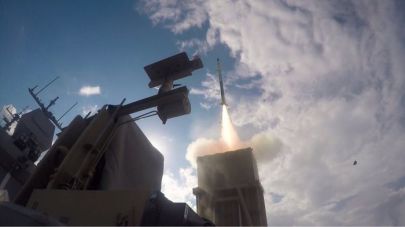
January 22, 2019: In Israel there was an Arrow 3 anti-missile missile test in southern Israel against an air-launched rocket that returned to earth at the same speed as a ballistic missile warhead fired from Iran. The test warhead was intercepted. This test had been planned for a long time and was not carried out just to send a message to the Iranians, but it did that as well.
In the northwest (Latakia province) two car bombs (one using a suicide bomber) were used for an attack in the port city of Latakia. The suicide car bomb went off (killing one civilian and wounding 14) but the unmanned car bomb was discovered and disabled before its timer set it off. This attack, like earlier ones in the province are usually the work of Islamic terror groups in nearby Idlib province.
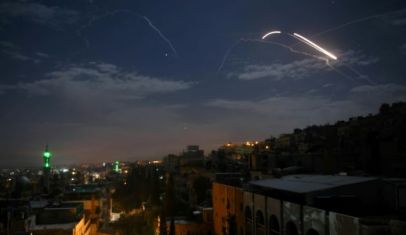
January 21, 2019: In Syria Israel carried out air and missile strikes against several Iranian military targets. This included an IRGC munitions warehouse near the Damascus airport. This warehouse complex is apparently the main IRGC supply center in Syria and the Israelis have been bombing it regularly. Also hit were a nearby IRGC training center as well as an IRGC intelligence facility. In addition Israel bombed Syrian air defense locations, after warning Syria that these weapons would be destroyed if Syria kept using them to interfere with Israel airstrikes. Israel hit mobile as well as fixed air defense weapons. The Syrians regularly claim that their SAM (surface to air missiles) are intercepting Israeli aircraft and missiles but there is no evidence (wreckage) to prove it. However firing these S-200 missiles does require Israeli aircraft to change their tactics and there is some risk that an aircraft might be damaged or destroyed. Most of these air attacks were at night and apparently 21 military personnel (12 IRGC, 11 Syrian) were killed. It was later reported that an IRGC freighter aircraft that was in the air and headed for Damascus when these attacks took place soon turned around and returned to Iran.
The attack on targets around Damascus that took place during daytime yesterday came a few hours after another IRGC freight aircraft had landed at the Damascus airport. Israel released satellite photos the next day showing the extensive damage caused by these attacks. Israel also taunted the Iranian commander, via the Internet, about their inability to do any damage to Israel while Iranian bases in Syria are destroyed on a regular basis. This particular message is apparently intended to weaken IRGC influence in Iran, where most people oppose Iranian participation in the Syrian war and the Israeli tweet undermines Iranian government claims that the Syrian effort is succeeding.
In other respects Iran is succeeding and is doing so by bringing in Shia from other countries (including Afghanistan) and providing them with homes (formerly occupied by Sunni Arabs who fled the country) and land. Iran is also providing aid directly to existing Shia communities in Syria. This sort of thing is not popular with the Assad government because Iran is creating a population loyal to Iran, not Syria. By demonstrating the inability of the Iranians to defend themselves against Israeli attack, or even retaliate, it becomes easier for the Assad government to consider rejoining the Arab League and siding with the Arab states against Iran. That would be a very risky move, but it becomes more difficult to pull off the longer Iran has to entrench itself in post-war Syria.
Israel released a video from one of its Skystriker loitering missiles destroying a Russian made Pantsir mobile antiaircraft system. Each Pantsir-S1 vehicle carries radar, two 30mm cannon, and twelve Tunguska missiles. The 90 kg (198 pound) Tunguska has a twenty kilometer range while the Pantsir-S1 radar has a 30 kilometer range. The missile can hit targets at up to 8,400 meters (26,000 feet) high. The 30mm cannon is effective up to 3,200 meters (10,000 feet). The vehicles used to carry all the Pantsir-S1 can vary, but the most common one used weighs 20 tons and has a crew of three. This is the second time Israel has shown one of its loitering missiles destroying a Pantsir system, which was designed to defend against such low altitude, slow moving threats. The last disclosure was after a May attack and featured another type of loitering missile. The Skystriker is basically a small (35 kg/77 pound) , very quiet propeller driven cruise missile with a two hour endurance and capable of autonomous and operator controlled movement. Skystriker is launched from a catapult mounted on a vehicle. If Skystriker, with five kg of explosives on board, does not find a target it can return and land (using a small parachute) and be reused. Other types of loitering munitions can be carried by aircraft.
In the northeast an SDF (Kurdish rebels) convoy was attacked by a suicide car bombers. Five SDF men were killed and the attack was believed to be the work of ISIL.
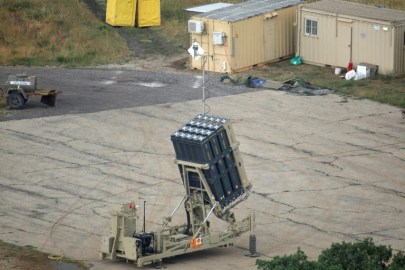
January 20, 2019: In southern Syria an Iranian long range rocket was fired at Israel and was intercepted by Iron Dome before it could hit the Israeli Golan Heights. Israel immediately retaliated with a daylight attack on Iranian targets. That was followed by overnight attacks.
January 19, 2019: Russia and Syria are making plans to triple the size and capacity of the Damascus airport but cannot proceed as long as Iran has facilities in or near the airport and Israel keeps attacking the Iranian warehouses and other targets in the area. Israel refuses to halt these attacks unless Iran leaves and stops using the airport. Iran refuses to do this.
January 17, 2019: Turkey has moved about 80,000 troops to the Syrian border, their largest such deployment ever. There is some reluctance to actually send the troops in because the paranoid Islamic government of Turkey continues (since 2000) to dismiss senior officers suspected of disloyalty. Even officers who point out potential problems with putting a lot of troops into Syria are removed or forced to retire. The Turkish troops already sent into Syria have not done as well as expected and suffered a lot of casualties. The Turkish government does not want to see this on an even larger scale.
The French leader announced that if American troops left Syria the smaller number of French special operations and support troops would remain. The French also said that they and the Americans were in agreement on the need to protect the Syrian Kurds from Turkish attack.
January 16, 2019: In the north (Manbij) an ISIL bomb killed 16 people, including two American military personnel and two American civilians.
January 15, 2019: American and Turkish negotiators have agreed to a 32 kilometers “security zone” on the Syrian side of the Turkish border that will be free of SDF any other American controlled Kurdish or Syrian fighters. There are still disagreements over who will monitor and maintain order in this security zone. Inability to agree on that keeps preventing implementation of such a zone.
Iraq confirmed that there had been a reduction in foreign troop strength in Iraq. At the start of 2018 there were 11,000 foreign troops in Iraq, many of them involved with fighting ISIL forces along the Syrian border. A year later there were about 24 percent fewer foreign troops in Iraq and that number is expected to decline. That number does not include Iranian troops, mainly with the IRGC who provide training and tactical advice to the many pro-Iran Shia militias. There are not many (a few hundred) of these IRGC personnel and they are not considered combat troops. Iraq still wants some NATO troops in Iraq to make it more difficult for the Iranians (mainly the IRGC) to attempt a takeover of the government.
January 13, 2019: The Israeli leader confirmed what was widely known, that Israel has been regularly carrying out airstrikes against Iranian targets in Syria. During those comments it was revealed that these air strikes involved some 2,000 smart bombs and guided missiles as well as some short range ballistic missiles in 2018 alone. There were thousands of air, missile and artillery strikes at Syrian targets in 2017 and 2018 when the decision was made to make an all-out effort against the Iranian military buildup in Syria. This effort has been considered a success because it has cost the Iranians a lot of money as the destroyed weapons often included large rockets and guided missiles which are not cheap, even in Iran. In addition hundreds of Iranian or Iranian allied military personnel were killed or wounded. Worse, Iran has not been able to respond. All this has encouraged Turkey and Syria to openly consider asking Iran to get out of Syria. This is an even more humiliating defeat for Iran. This also encouraged Iraq to more forcefully call for Iran to get out of Iraq.
January 11, 2019: Another Israeli airstrike destroyed a warehouse at an airport near Damascus. Also attacked was the site of a meeting between Iranian and Hezbollah military commanders. Some of them were at least wounded.
January 9, 2019: In northwest Syria most (about 70 percent) of Idlib province has been taken over by the HTS (Hayat Tahrir al Sham) coalition of Islamic terrorist groups. This takeover was completed recently despite Turkey, Russia and Iran-backed Syria having a plan to prevent it. That plan was never implemented because no one wanted a major battle in Idlib, except Iran. Back in August 2018 Russia, Turkey and Syria agreed on a plan to attack and destroy the Islamic terrorist groups in Idlib province, particularly HTS. Idlib was and is the last Islamic terrorist stronghold and is on the Turkish border. Six months ago Idlib was controlled by various rebel groups. Back then over half of Idlib was controlled by the HTS coalition. This is the main al Qaeda organization which evolved from al Nusra by absorbing (willingly or otherwise) many other like-minded groups over the years. About a third of the province was controlled by several other Islamic terrorist groups. In late August 2018 the largest six of these factions merged to form the NLF (National Liberation Front). This merger was arranged by Ahrar al Sham, a longtime rival of HTS, and backed by Turkey. At that point about ten percent of the province is controlled by Turkey (in the north along the hundred kilometer long border with Turkey) and Assad forces (several towns and villages in the southeast). HTS recently convinced NLF to join a larger coalition, under the leadership of HTS that would be better able to defend Idlib. Despite its Turkish ties NLF was persuaded (after HTS attacked and eliminated NLF factions who opposed the deal). Iran still has Syrian forces, controlled by the Assads, willing to attack but such an effort would be very costly without Russian airpower and unthinkable if Turkey opposed it (because of the risk of many Idlib civilians trying to flee into Turkey.) The Russian and Turkish leaders are to meet on the 23rd to try and work out a new agreement about Idlib, one that can be carried out.
January 7, 2019: In the north Russian military police began patrolling outside the Kurd held city of Manbij. Russia is trying to establish a buffer between the Kurds and Turkish forces (either Turks or Turkish backed FSA rebels.)
January 6, 2019: In the east (Deir Ezzor province) ISIL massed a considerable force and attacked an SDF base. Some 33 of the Kurdish fighters were killed but after several assaults ISIL gave up and retreated. ISIL apparently had the element of surprise and used suicide bombers but it wasn’t enough.
January 4, 2019: An American official announced that there was as yet no timetable for the withdrawal of American troops from Syria. The Americans won’t go until they have assurances that Turkey and the Russians will see to it that the Syrian Kurds are not attacked by Iranian, Syrian or Turkish forces. Turkey and Iran are not cooperating.
January 3, 2019: War related deaths in Syria were lower in 2018, but at about 20,000 dead it is still a lot. About a third of the dead were civilians. The death toll in 2017 was 34,000, with about 30 percent civilians. Since 2011 about 500,000 have died in Syria. While most were Syrians a large percentage (10-20 percent) were foreigners. A third of the 2011 Syrian population has fled the country and most are reluctant to return.
January 2, 2019: In the north (Manbij) about 400 SDF militiamen were seen leaving the city, apparently to reinforce SDF forces in a more urgent situation.
Russia reported that is believed Israel had successfully used six F-16s armed with air to ground missiles and firing them from Lebanon to destroy their targets during a December 25 attack. Russia and Syria had claimed that the Syrian air defenses (mainly S-200 SAM systems) had shot down some of the Israeli missiles but there was no evidence of that (Israeli missile fragments from someplace other than the target area) and in any event the targets were destroyed.
December 31, 2018: In the east (Deir Ezzor province) Iraqi F-16s attacked a compound where some 30 ISIL leaders and their associates were believed to be meeting.
December 30, 2018: Syria has given Iraq permission to make attacks against Islamic terrorists in Syria at any time without prior permission. Iraq has already been doing this, especially when they had intel about where ISIL forces were gathering and needed to carry out an air strike quickly. Iraqi ground forces (pro-Iran Iraqi militias) sometimes moved across the border in response to Syria based ISIL forces attacking or regularly crossing into Iraq.
December 29, 2018: Turkish and Russian military officials met in Russia to work out how the departure of American forces from Syria would be exploited by the two allies. There were apparently disagreements because Turkey wanted to exercise more control of the Syrian side of the border (currently occupied by Syrian Kurd militiamen) that Russia thought Turkey could handle (diplomatically and militarily). The two countries could not reach an agreement except for additional meetings to try and work something out.
December 28, 2018: In northern Syria Assad forces advanced closer to the Kurdish controlled city of Manbij. Since the Americans announced (on the 19th) they would pull their forces out of Syria the Kurds have been withdrawing from some areas to concentrate troops in areas they believe may in danger of attack by Syrian or Turkish forces.


 and
and  have agreed in principle a UK-Israel agreement. Here is the video of Eli Cohen (Israel’s Minister of the Economy) and I making the announcement at






 anneinpt
 artaxes
 danmillerinpanama
 davidking1530
 Peter Hofman
 Joseph Wouk
 Peter
Peter Louisiana Steve
 WarSclerotic
Recent Comments