“As long as I am prime minister, we will not stop fighting against them,” Prime Minister Benjamin Netanyahu tweeted.
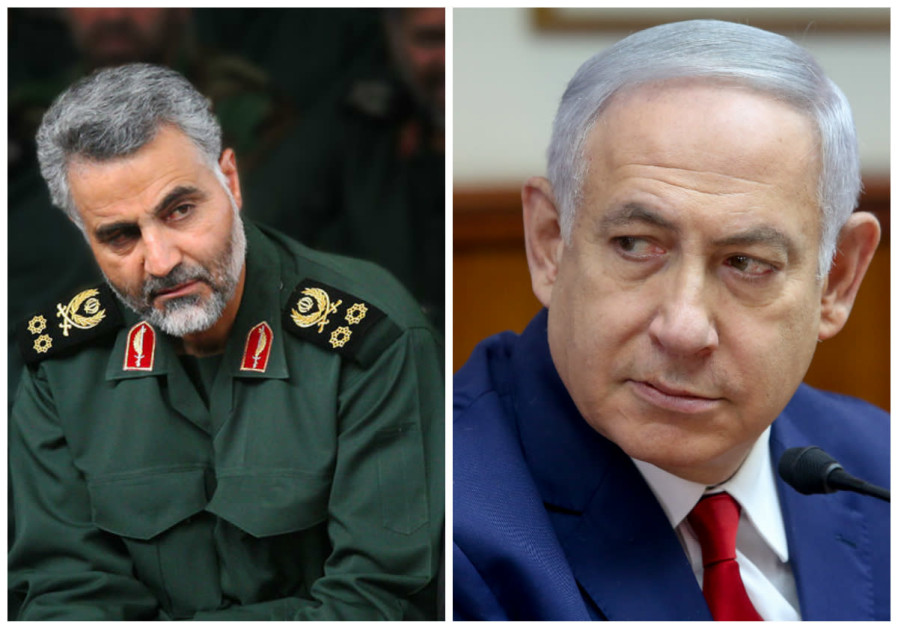
Prime Minister Benjamin Netanyahu took to Twitter Wednesday afternoon, attacking Iran’s Commander of the Islamic Revolution Guards Corps (IRGC) Qasem Soleimani for his comments about the upcoming elections in Israel, saying that “instead of interfering with the elections, Soleimani had better check the status of the Iranian bases he is trying to establish in Syria.”
“As long as I am prime minister, we will not stop fighting against them,” Netanyahu continued.
 Benjamin Netanyahu
✔@netanyahu
במקום להתערב בבחירות, מוטב שסולימאני יבדוק את מצבם של הבסיסים האיראניים שהוא מנסה להקים בסוריה. כל עוד אני ראש ממשלה, לא נפסיק להיאבק נגדם
This comes after Soleimani commented on the elections and said that an Iranian attack in Israel would destroy Netanyahu’s chances, otherwise, Netanyahu will continue the Israeli aggression against Iran until he wins.
This was during Soleimani’s visit to southern Syria, which Kuwaiti media reported was the reasoning for the Israeli attack in Syria. The visit was two days before Iranian forces fired a missile from an area near Damascus into the Golan Heights on Sunday in response to Israeli attacks in Syria.
Source: Netanyahu threatens Gaza, Iran after flareups on two fronts | The Times of Israel
PM tells troops that the country is ready for every scenario and any escalation after strikes on Iranian forces in Syria, Hamas terrorists in coastal enclave
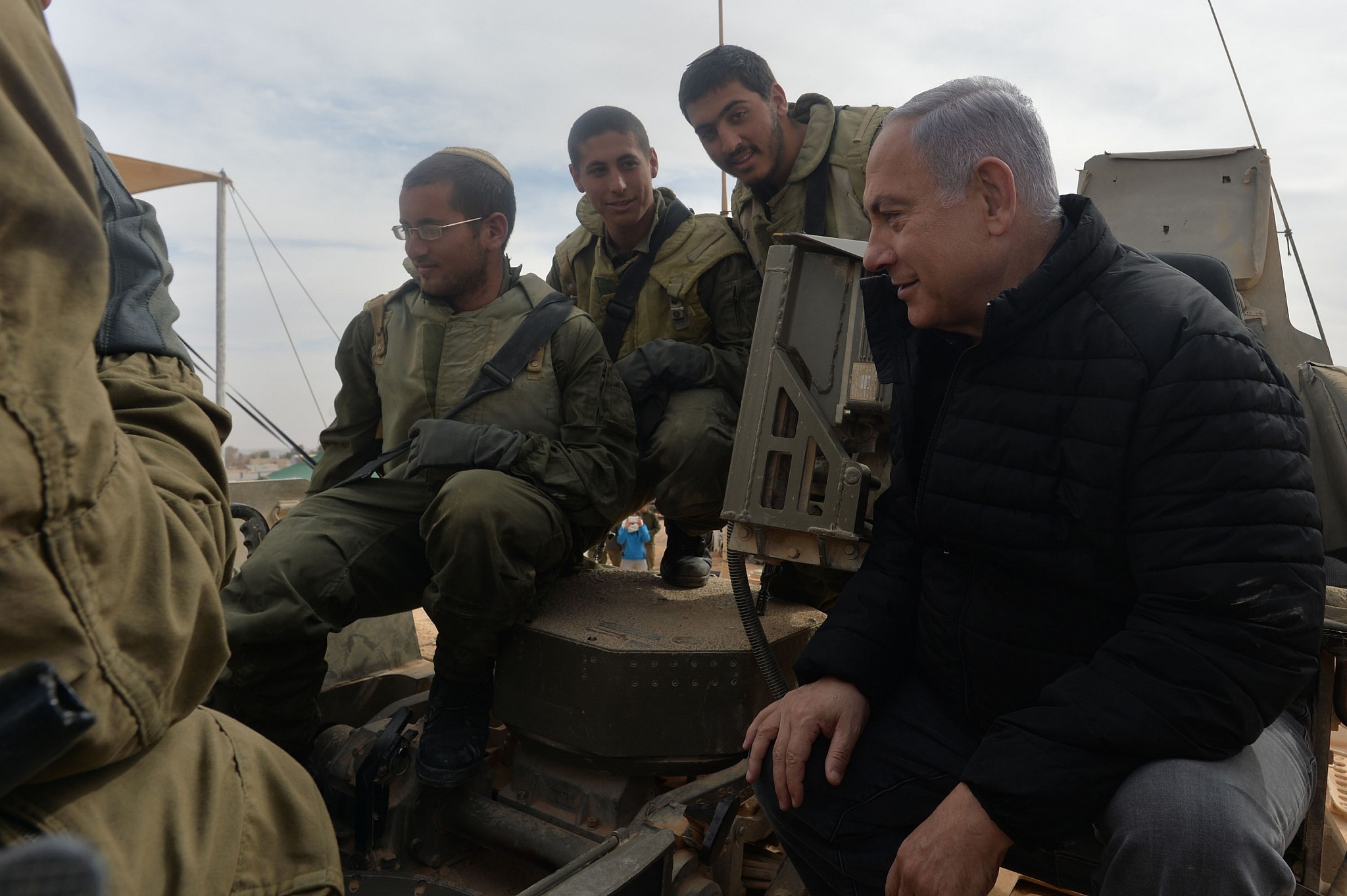
Prime Minister Benjamin Netanyahu on Wednesday threatened the Gaza Strip after an escalation of violence on the border, saying that Israel was ready for all possible scenarios.
“Maybe there is someone in Gaza who thinks they can raise their head, but I suggest they understand that the response will be serious and very painful. We are prepared for every scenario and every escalation,” he told soldiers during a visit to the Shizafon army base in the south of the country.
Netanyahu, who also serves as defense minister, also threatened Iran and vowed to fight the country’s forces in Syria.
“Iran is the main enemy, and has declared its intention to destroy us with nuclear weapons, which we are committed to thwarting,” he said. “But Iran is also building forces around us, and they have established a front in Lebanon through Hezbollah, and they have established a southern fortress in Gaza, which is maintained by Hamas and Islamic Jihad.
“And now they wish to build a third fortress in the Golan Heights, based on the establishment of the Iranian military. We are committed to fighting all these things and to fighting the Iranian army in Syria.”
On Sunday, Israel reportedly conducted a rare daylight missile attack on Iranian targets in Syria. In response, Iran fired a surface-to-surface missile at the northern Golan Heights, which was intercepted by the Iron Dome missile defense system over the Hermon ski resort, according to the Israel Defense Forces.
Netanyahu’s speech also came after the Israeli Air Force launched airstrikes against multiple Hamas targets in the northern Gaza Strip on Tuesday night, following two border clashes earlier in the day, including one in which a sniper shot an IDF officer in his helmet, causing light injuries, the army said.
The IDF said the raids targeted “a number of terror targets in a military base belonging to the Hamas terror group in the northern Gaza Strip.”
The Israeli military did not indicate who it believed fired the shots, but said it held Hamas responsible for the violence along the border on Tuesday, as the terror group has ruled Gaza since taking control of the enclave in 2007 by ousting the West Bank-based Palestinian Authority.
“The IDF is prepared and ready to act against any terrorist action from the Gaza Strip and is determined to defend the citizens of the State of Israel,” the army said in a statement.
Hamas accused Israel of escalating the situation, saying it was “fully responsible” for the uptick in violence.
“The valiant resistance will not allow our people’s blood to be used as fuel for Israeli election campaigns, and it possesses the will and means to safeguard our great people’s blood and interests,” said Hamas spokesman Fawzi Barhoum, referring to the Knesset elections in April.
“Following the recent incidents in the Gaza Strip, and with consultation with security officials, Prime Minister Benjamin Netanyahu decided not to allow the transfer of Qatari money to the Gaza Strip tomorrow,” an Israeli diplomatic official said, speaking on condition of anonymity.
A Hamas official told The Times of Israel that “Netanyahu’s decision to prevent their entry is a crime that will push Gaza toward an explosion.”
Qatar had been preparing to transfer $15 million in payouts to Hamas civil servants in the Gaza Strip. It was the third such installment for the terror group to be approved by the Israeli government, in what officials see as a pressure-release valve intended to calm unrest and ease a potential humanitarian crisis in the beleaguered Strip.
The transfer of the funds to Hamas, which calls for the destruction of the Jewish state, is widely unpopular in Israel. The announcement by the diplomatic official was a rare admission by the government that it had indeed approved the payments.
The funds were expected to be transferred on Wednesday, after they were initially stalled by Israel last week in response to another flare up in cross-border violence, Qatar’s envoy to the Hamas-ruled Gaza Strip, Mohammed al-Emadi, told the Reuters news service.
Since March, Palestinians have been holding regular protests on the border. Israel has accused Gaza’s Hamas rulers of using the demonstrations as a cover for attacks on troops and attempts to breach the security fence.
Israel has demanded an end to the violent demonstrations along the border in any ceasefire agreement.
Judah Ari Gross and Adam Rasgon contributed to this report.
Source: UN peacekeepers in Lebanon barred from Hezbollah tunnels – Israel Hayom
“It is unacceptable that the Lebanese government has not yet given UNIFIL access to the tunnel entrance on their side of the Blue Line,” U.S. diplomat says • Israeli Ambassador to U.N. Danny Danon: Lebanese army is allowing Hezbollah to continue building tunnels undisturbed.
|
UNIFIL vehicles in Lebanon
| Photo: AFP
|
The United Nations’ envoy to the Mideast said Tuesday that peacekeepers in Lebanon have not been given access to tunnels stretching into Israel, which U.N. officials say violate a cease-fire resolution that ended a devastating war between Israel and Hezbollah in 2006.
Nikolay Mladenov told the Security Council that the U.N. peacekeeping mission known as UNIFIL has confirmed that two tunnels crossed the U.N.-drawn Blue Line between Lebanon and Israel, but “has not been granted access to the confirmed entry points of a tunnel near Kfar Kila on the Lebanese side.”
He did not say whether Lebanon’s government or the Hezbollah terrorist group was blocking access for UNIFIL, but U.S. Deputy Ambassador Jonathan Cohen blamed the government.
Cohen accused Hezbollah, an Iranian ally, of threatening international peace and security with the extensive tunneling exposed by Israel, which has reported uncovering six tunnels into its territory.
“We commend UNIFIL’s work to keep the Blue Line under control, but it is unacceptable that the Lebanese government has not yet given UNIFIL access to the tunnel entrance on their side of the Blue Line,” Cohen told the council.
Israeli Ambassador to the U.N. Danny Danon complained to the council that “the Lebanese army has taken no action in response, allowing Hezbollah to continue building these tunnels undisturbed.”
Danon alleged that Iran funnels $7 billion to terrorist groups across the region, including $1 billion to Hezbollah, which he said has “grand plans to take over the Israeli Galilee” and invests millions in every tunnel. He provided no information on how Israel calculated its estimate of Iranian spending, which also included $4 billion to the Syrian government, “hundreds of millions” to Iran’s proxies in Iraq, tens of millions to Houthi Shiite rebels in Yemen, $70 million to Palestinian Islamic Jihad and $50 million to Hamas, which controls Gaza.
Mladenov noted that Lebanon has been without a government for over eight months and called on all parties to resolve their differences so the country “can address the main pressing challenges it faces, including that of a struggling economy.”
On the Israeli-Palestinian conflict, Mladenov said that “we should have no illusions about the dangerous dynamics … which continue to unfold before our eyes” and have eroded “the possibility of establishing a viable, contiguous Palestinian state.”
Riyad Mansour, the Palestinian ambassador, told the council that last year “Israel’s illegal occupation became more entrenched, more brutal and extreme” with the political process “deadlocked.”
“Day by day, the occupation is destroying the two-state solution and sowing deep despair among our people,” he said.
But despite “the dismal situation,” Mansour said, Palestinians “remain committed to non-violence, dialogue and the objectives of peace,” as well as negotiations on a two-state solution. He urged regional and international efforts “to help overcome the impasse and contribute to the realization of a just solution as a matter of urgency.”
Source: New IDF chief, new war doctrine – Israel Hayom
Dr. Hanan Shai
“An efficient, lethal, innovative army” – in just a few simple words, the IDF’s new chief of staff laid out the doctrine he intends to implement in the coming years as he prepares the army for war.
The IDF’s traditional war doctrine is predicated on forcing the enemy to surrender after defeating it on its own territory with nimble land forces capable of encircling and threatening to destroy it. What the new IDF chief, Lt. Gen. Aviv Kochavi, has described is a new type of doctrine that sees the military defeat the enemy primarily through destroying its military resources and personnel on the ground (and under it), from afar, by means of lethal precision weaponry born of Israel’s technological advantages.
The focus on efficiency and lethality expresses the aspiration to emerge victorious as quickly as possible, without having to pay too high of a price and with higher levels of precision. Precision is necessary, among other reasons, to neutralize the main threat posed by the terrorist armies’ only game-changing weapon, that is to say the civilian population. Due to the desire to avoid civilian casualties, the IDF thus far has not used its full might to end campaigns quickly and shorten the period of suffering for Israeli and enemy civilians alike.
Building this new army, it would appear, presents Kochavi with several challenges. The first among them is the urgent need for a budget that can limit the vulnerable transition period between the IDF’s new procurements, during which the army must incorporate the resources derived from the previous doctrine with the resources required to implement the new doctrine.
Unlike in the past, increasing the budget is necessary for the IDF to manage a simultaneous war footing: a defensive posture alongside the ability to immediately launch offensive campaigns on multiple sub-fronts to annihilate the enemy’s ability to fight. Linear victory, as was the case in the past when the IDF concentrated its resources on one front and then moved them to another after securing the former is an economic use of those resources, but tends to expand the length of the war and, consequently, the scope of devastation and civilian casualties as well.
The second challenge facing the new chief of staff is to eliminate the air force’s monopoly on precision, long-range “lethality” and to disperse this capability among all the branches.
His third challenge is to breathe new life into the eroded ethos of “duty.” He has to motivate and incentivize talented officers to stay in the army and forego enticing and often better paying civilian avenues.
The fourth challenge is defining the role of the reserve army in the new war. Galvanizing and updating the reserve force is imperative if he wants to fix the terrible impression left by the outgoing IDF ombudsman in his reports on the state of the army’s emergency weapons warehouses and military training according to the old war doctrine.
Dr. Hanan Shai is a lecturer in the Political Science Department at Bar-Ilan University.
Source: Iran reportedly behind latest escalation on Gaza border – Israel Hayom
Head of Iran’s Quds Force wants to divert attention from his failures in Syria, Gaza news outlets report • IDF tanks, jets attack Hamas targets after Palestinian sniper shoots IDF officer • Netanyahu cancels Qatari donation of $15 million to Gaza.
|
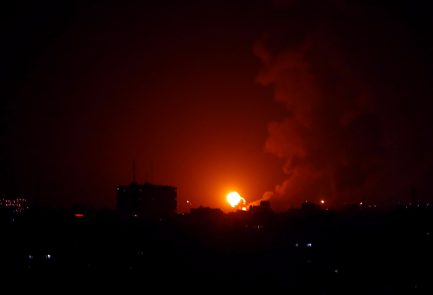
An explosion is seen during Israeli air strikes in Gaza, overnight Tuesday
|Photo: Reuters
|
Israeli tanks shelled Hamas targets in the Gaza Strip on Tuesday, killing one Hamas terrorist after an IDF officer was shot and wounded by a Palestinian sniper near the border. Armed Palestinian factions in Gaza later convened “to discuss a proper response to the crimes of the Zionist occupier.”
Later Tuesday, Israeli aircraft carried out multiple strikes on a Hamas military site in northern Gaza.
Reports that largely cited Hamas sources inside the coastal enclave, however, said the commander of Iran’s Quds Force, Maj. Gen. Qassem Soleimani, is behind the current efforts to escalate hostilities in Israel’s south.
In all likelihood, it was also Soleimani who gave the “green light” to the Palestinian sniper who shot the IDF officer, who miraculously was only lightly wounded after the bullet hit his helmet.
Palestinian Islamic Jihad has orchestrated the provocations along the border in recent days and unlike Hamas, it is beholden first and foremost to its patrons in Iran. As a reminder, Soleimani’s forces in Syria were dealt a resounding operational blow on Sunday by Israel, which destroyed numerous Iranian military targets in response to an Iranian missile fired at the Golan Heights.
Prime Minister Benjamin Netanyahu also canceled a Qatari donation of $15 million for the impoverished enclave that had been due on Wednesday as part of international efforts to head off an escalation. The prime minister made the decision after consulting with senior defense officials and convening an emergency meeting of the Diplomatic-Security Cabinet.
Hamas spokesman Fawzi Barhoum said: “Israel is solely responsible for the latest escalation in Gaza. Israel continues to hurt our people and the brave resistance will not agree to a situation where Netanyahu uses elections for his personal interests and harms the Palestinian people in a premeditated manner.”
Worried about a potential flare-up escalating into a full-on conflict, Egypt and the United Nations have sought to calm the situation in Gaza, while Qatar in November pledged $150 million in donations, to be transferred via Israel over six months, in the hope of easing economic pressure.
The Israeli official who announced the postponement did not say when the next $15 million payout might now take place. Netanyahu has previously stipulated that the cash injection was contingent upon calm along the Gaza border.
In a statement, the IDF said it “sees the Hamas terror organization as being solely responsible for what happens in and originates from Gaza. The IDF is prepared and willing to act against all acts of terror from Gaza and is determined to defend the citizens of the State of Israel.”
‘A disgrace to the residents of the south and the IDF’
Also on Tuesday, residents of southern Israel protested against the transfer of the Qatari funds to Hamas.
One protester, a member of Kibbutz Ruhama, said that transferring the third Qatari payout would be a slap in the face to the residents of the south and the IDF.
“When you see the deterrence in the north, it’s hard to understand the weak policy in the south. The IDF is very capable of coping on all fronts, and here we have an evil organization whose might is equal to one one-hundredth of the might of the enemy in the north, so what’s the problem with preventing Hamas terror?” he said. “Why surrender and give them $15 million when they use some of the money for terror in Gaza and in Judea and Samaria? It’s absurd.”
Source: How Iran walked into Israels trap
Sunday’s rocket fire at Mount Hermon revealed the fact that the Iranians are apparently holding an arsenal of Ra’ads in Syria. And despite the bombing raids by the Israel Air Force, there remains the concern that some of these missiles may yet reach – or have already reached – their destination in Lebanon, which would lead to a fundamental change in the threat from the north. For while only one rocket was fired on Sunday, that was likely down to the limitations on this particular model and its truck-mounted launcher.

But the Iranians have again fallen into a well-hidden trap laid by Israel: The events of the past two days are an almost exact replica of Operation House of Cards from May 2018. In both cases, the Iranians tried to punish Israel for bombing Revolutionary Guards targets in Syria. In Operation House of Cards, Israel tracked Iran’s preparations to avenge the killing of Iranian soldiers at a Syrian airport on February 4, 2018. It took the Iranians three months to organize the plan, all the while under the watchful eye of Israel. And in early May, Israel carried out its preliminary attack at al-Kiswah base near Damascus, ostensibly to destroy missiles aimed at its territory. After the attack, the Iranians had no option but to respond, launching rockets a few days later from the Damascus region towards the Golan Heights.

Israel had stage-managed this chain of events thanks to its intelligence. The Iranian rockets did not cause any damage, but did provide a pretext as well as legitimacy for what followed: Israel used its own response to the Iranian violation of its sovereignty to eliminate the bulk of Iran’s military infrastructure in Syria in one fell swoop. The Iranians fell for Israel’s poker face.
This sequence played out again over last two days: At the end of December, Israel reportedly attacked Damascus airport, killing a number of Iranian fighters. And in this instance too, the Iranians plotted their revenge under Israel’s watchful eye, setting up a surface-to-surface missile in an autonomous Iranian area among Syrian bases in al-Kiswah.

On Sunday, just as in the first attack in May, the Israel Air Force struck the area. The Iranians, just as in the first attack in May, were pushed into a pre-planned response, firing their missile at Mount Hermon. Israel had predicted this response, and had an Iron Dome battery in place to shoot down the rocket. It also used this attack as an opportunity for “revenge”. Just as in the first attack in May, the Syrians reported parallel air and surface-to-surface strikes on targets in Damascus, several hours later and under the cover of darkness.
Despite Israel’s apparent control of the situation, a sense of failure could well make Qassem Suleimani, commander of the Quds Force in Syria, respond irrationally. The Iranians in Syria are at a disadvantage to Israel – and the only way it can harm Israel from Syria is through terrorism. Indeed, the rocket fire on Mount Hermon is a form of targeted terrorist attack, inasmuch as it was an attempt to kill as many Israelis as possible and to damage national morale. Iran can launch terror attacks from the Syrian border through its proxies or within Israel via Palestinian cells in Gaza and the West Bank. But here too, its infrastructure is capable of major impact.
Iran views terror attacks against Israeli targets abroad as problematic in light of its sensitive relations with European countries. But it could conduct an effective campaign against Israel from the Lebanese front through Hezbollah, or from Iran or western Iraq. Yet all of these options, in particular the Lebanon option, would be a declaration of war on Israel that a country like Lebanon simply cannot afford.
“The Iranian regime’s obsession with Israel is not just well-known. It is expensive. Seven billion dollars annually are directed towards the never ending attempts to destroy Israel,” Danon said.
Iran has spent $7 billion annually on terror in the Middle East, including in the West Bank, where it wants to open a fourth front against Israel, Ambassador to the United Nations Danny Danon told the Security Council on Tuesday.
“The Iranian regime’s obsession with Israel is not just well-known,” he said. “It is expensive. Seven billion dollars annually are directed toward the never-ending attempts to destroy Israel.” Danon spoke before the council’s monthly meeting on the Middle East.
Iran’s spending broke down was divided as $4 billion to Syria, $1 billion to Lebanon, $50 million to Hamas in Gaza and $70 million to the Islamic Jihad, Danon explained.
Tens of millions of Iranian dollars have gone to Yemen and hundreds of millions of dollars to Shi’ites in Iraq, he said. The money trail starts in Tehran, moved to Iraq, then across the Arab Gulf to Yemen, into Damascus and into Hezbollah bank accounts. The international community must halt the flow of money to Tehran if it wants to stop regional terrorism, he said.
He warned that Iran is using those funds to turn the West Bank into a fourth battle ground against Israel. The other three fronts are Gaza, Lebanon and Syria.
“With the help of Saleh Al-Arouri, Hamas’s deputy political chief, and Saeed Izadi, the head of the Palestinian branch of the Iranian Quds Force, Iran is trying to turn Judea and Samaria into a fourth military front against Israel,” Danon said.
Danon took the Palestinians to task for not speaking up about the link between Palestinian terror organizations and Iran, including Hamas and Islamic Jihad in the Gaza Strip and Judea and Samaria.
“Iran, all of a sudden, is now speaking publicly about training Palestinian terrorists. High-profile terrorists of Hamas and Islamic Jihad are meeting with high ranking officials in Tehran,” Danon said.
Hamas is also working to build a military front against Israel from Lebanon, and Iran invested millions of dollars to help Hezbollah build attack tunnels in Lebanon that stretched into Israel, he added.
“The world’s silence allows Iran to continue with its operations and aggression to undermine stability in the Middle East,” Danon said. He called on the UNSC to recognize Hamas, the Islamic Jihad and Hezbollah as terror organizations and to impose sanctions upon them as well as on Iran.
In specific, he asked the UNSC to condemn Iran’s launch from Syria earlier this week of a medium range surface-to-surface missile into northern Israel which was intercepted by the Iron Dome missile defense system. Israel holds both Syria and Iran responsible for this missile, he said.
“The Security Council must condemn Iran for this act of aggression,” he said. “The firing of this missile proves, once again, Iran’s deep entrenchment in Syria.” He called on Iran to fully withdraw its military presence and militia forces from Syria, and that it must do so immediately.
“The European Union has taken a crucial step forward by imposing new sanctions against Iran,” he said. “It is now the council’s turn to take a leap.” Danon warned that Israel would take action if needed, even without the international community.
“We will respond with force and remove any threat to our people,” he said. “If Israel must act, Israel will not hold back.”
Quds Force commander Qasem Soleimani visit to Syria triggered the Israeli-Iranian conflict, and Russia notified the Iran on upcoming Israeli airstrikes, Kuwaiti paper Al-Jarida revealed.
Iran threatened to escalate the situation in the Middle East if Israel continues to attack in Syria, according to a report by Kuwaiti paper Al-Jarida.
“Quds Force commander Major-General Qasem Soleimani visited southern Syria and that was the trigger to the Israeli-Iranian conflict. Soleimani’s visit violated the American-Russian-Israeli agreement, arriving at a Syrian own located less than 40km from the ceasefire line in the Golan Heights,” the report stated.
Soleimani’s visit occurred during the evening and lasted two hours, as it was monitored by intelligence officials, according to sources.
Syria warned in advance
The Iranian Supreme National Security Council convened on Monday night and listened to Soleimani’s report on his visit to Syria and the Israeli attacks, a senior Iranian official told the paper.
The source also conveyed that the Russians notified the Iranians 30 minutes in advance of the targets Israel will attack. The Iranians managed to evacuate the areas and minimizing the damage.
Soleimani said that the only way to stop the Israeli attacks is to respond with three missiles for every Israeli one, and attempt to intercept any Israeli fighter jets, even those flying over Lebanon. He stressed the need to pressure the Syrian government in to respond to the Israeli attacks, especially after Netanyahu admitted Israel committed the attacks, which according to International Law, legitimizes Syrian retaliation, the source revealed.
Soleimani also related to the Israeli elections and said that an Iranian attack in Israel would destroy Netanyahu’s chances at the elections, otherwise he will continue the Israeli aggression until he wins the elections.
According to the source, the Iranian Supreme National Security Council decided upon pressuring the Syrian government to respond to future Israeli attacks, and to send an announcement to Russia that Iran will retaliate as it sees fit if any Iranian force is targeted.
“The UNSC’s failure to act against Israel and the support it receives from permanent members of the UNSC has encouraged the Israeli aggression,” the Syrian Ambassador to the United Nations Bashar Ja’afari said Tuesday night. “There were no calls to halt such acts by this UNSC, in light of the position of the US, Britain and France, who are partners and supporters of Israel…[but] Syria intends to exercise its right to self-defense and to work to take back the Golan Heights.”
Ja’afari also threaSyria threatened to attack Ben-Gurion Airport in response to Israel’s aerial strike against a weapons storage site at Damascus International Airport earlier this week.
Source: US: Upcoming Middle East conference not aimed at demonizing Iran | The Times of Israel
Deputy envoy to UN says Poland gathering will address cross-border Hezbollah tunnels, ‘unacceptably provocative’ firing of rocket from Syria at Israel
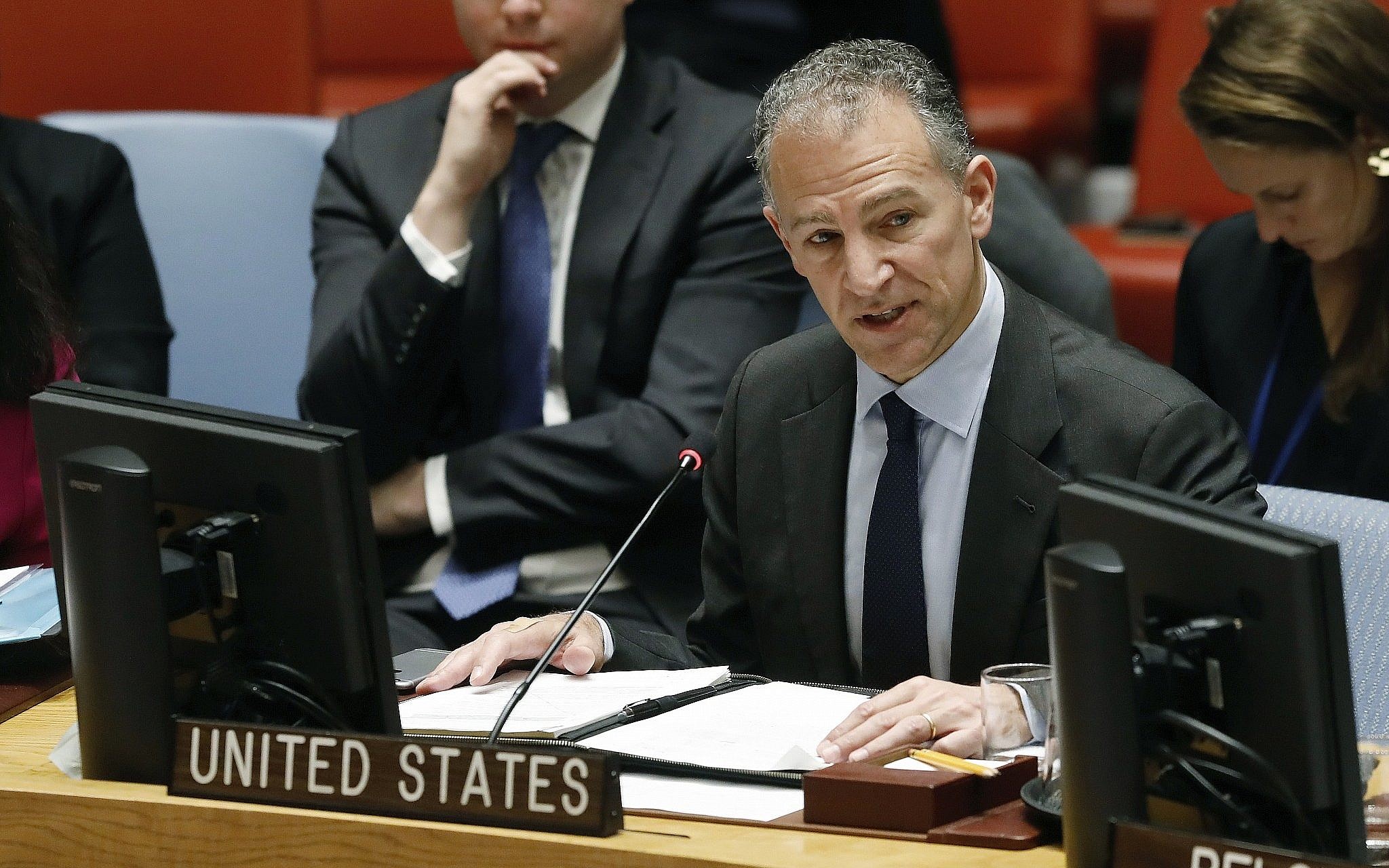
UNITED NATIONS (AP) — The United States said Tuesday an international conference next month to promote peace and stability in the Middle East is not aimed at demonizing Iran, which has denounced the gathering as America’s anti-Iran “circus.”
US deputy ambassador Jonathan Cohen told the Security Council that the conference in Warsaw on February 13-14 sponsored by the United States and Poland is also not aimed at discussing the merits of the 2015 Iran nuclear deal known as the JCPOA, which US President Donald Trump withdrew from in 2018.
He called the ministerial meeting a brainstorming session to “develop the outline of a stronger security architecture” in the Mideast with sessions on the humanitarian crises in Syria and Yemen, missile development, extremism and cybersecurity.
Cohen’s comments followed complaints from Iran directed at Poland for co-hosting the conference and a tweet by Iran’s Foreign Minister Mohammad Javad Zarif denouncing it as a US anti-Iran “circus.” Poland’s foreign minister Jacek Czaputowicz said in remarks published Monday that Iran wasn’t invited and Russia would not attend.
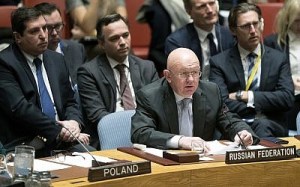
Russia’s UN Ambassador Vassily Nebenzia told the Security Council later that Moscow would like to believe the conference isn’t just aimed at one country. He then asked: “Why has that conference not invited Iran, which is one of the most significant and large countries in the region?”
“Attempts to create some kind of military alliances in the region, holding different conferences and focusing on having a simplified unilateral approach to the region that is clearly linked just to Iran, is counterproductive,” he said, “and just pushes further away the prospects of finding a genuine security architecture for the region.”
Nebenzia also asked how it’s possible to have “a genuine architecture without solving the Palestinian issue.” He reiterated Russia’s offer to host talks between the Israeli and Palestinian leaders, stressing that this is the only way to solve so-called final status issues and achieve a two-state solution.
Looking ahead to the Warsaw conference, Cohen said there will be “a dynamic discussion and collaborative thinking with the goal of contributing to a more peaceful, stable and prosperous Middle East.” He added that this would be “a more productive approach” than the Security Council’s monthly Mideast meetings focusing on the Israeli-Palestinian conflict.
“It’s also important to state clearly what this ministerial (conference) is not: It is not a forum to re-litigate the merits of the JCPOA. While we’ve made our concerns with the JCPOA clear, we respect other states’ decisions to support it,” the US envoy said. “It is also not a venue to demonize or attack Iran.”
Cohen said Secretary of State Mike Pompeo “has outlined a clear strategy to reach a new comprehensive deal with Iran built on the shared global understanding that Iran must cease its destabilizing activities.”
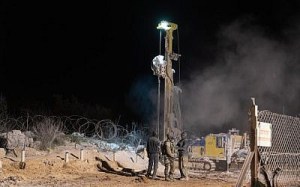
But he said the conference will acknowledge the need for action against Iran’s missile program, Iranian proxy Hezbollah’s tunnels from Lebanon into Israel, and the “unacceptably provocative act by the Iranian and Syrian regimes” in launching a rocket from Syria at Israel over the weekend.
Cohen said these activities, among others, are “drivers of instability in the Middle East, but the scope of the discussion will be much broader than any one country or set of issues.”
“As a testament to this, countries from around the world have been invited to participate,” he said.
Pompeo, who recently completed a Mideast tour bringing the Trump administration’s anti-Iran message to the region, said Sunday in Qatar that he hoped the Warsaw conference will allow the world to see “the enormous coalition that is prepared to assist in creating stability and peace here in the Middle East.”
“We’ll work on many issues including how it is we can get the Islamic Republic of Iran to behave more like a normal nation,” Pompeo said.




 anneinpt
 artaxes
 danmillerinpanama
 davidking1530
 Peter Hofman
 Joseph Wouk
 Peter
Peter Louisiana Steve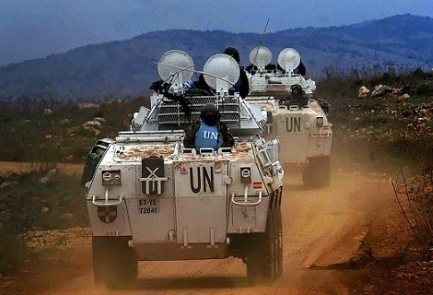

 WarSclerotic
Recent Comments