Archive for January 21, 2019

Israel confirms strikes on Iranian targets in Syria, 11 dead 

January 21, 2019

Source: Israel confirms strikes on Iranian targets in Syria, 11 dead – Israel Hayom


The world no longer fears Erdogan 

January 21, 2019

Source: The world no longer fears Erdogan – Israel Hayom

Prof. Eyal Zisser

In a tweet last week, U.S. President Donald Trump brought Turkish President Recep Tayyip Erdogan to his knees. In early January, when he announced his decision to pull U.S. forces out of Syria, the American president hailed Erdogan as someone who could fight and even defeat the Islamic State group on his own. Now Trump has decided to take a whack at Erdogan and put him in his place.

The Turkish president deserved the dressing down he received. Drunk with his success at breaking Washington’s alliance with the Kurds in Syria, he threatened to pummel the Kurds, while other Turkish officials even threatened to “slaughter” them. In the eyes of Ankara, the Kurds are simply terrorists – worse than the Islamic State and Syrian President Bashar Assad – and  must be fought.

Trump’s response to Ankara’s brazenness was short to follow, and the president took to Twitter to warn Erdogan that he would destroy the Turkish economy if the Kurds were harmed. The next day, the Turkish lira lost about two percent of its value, and it could keep falling. We can assume the welfare of the Kurds wasn’t the only purpose of Trump’s tweet, and that he was looking for an opportunity to show Erdogan, not for the first time, “who’s boss.”

Like many statesmen before him, Trump came to the conclusion that Erdogan only understands the language of force. It turns out he was right: In Ankara, Turkish officials quickly lowered the flames. The last time the two leaders clashed, the Turkish president was also the first to blink. Three months ago, Trump imposed economic sanctions on Turkey after Erdogan refused to release an American priest who had been arrested and jailed there. Within a matter of days, the Turks let the priest go.

Russian President Vladimir Putin has also flogged Erdogan into submission. Four years ago, the Turks shot down a Russian fighter jet that had entered their airspace. At first, Ankara refused to apologize, but after Putin imposed painful sanctions on Turkish imports, and after Russian tourists stopped flocking to Turkish resorts, Erdogan quickly backtracked and dispatched a letter of apology to Moscow.

Turkey has also been put over the barrel by Egyptian President Abdel Fatah el-Sissi, who deposed previous president and Erdogan ally Mohammed Morsi of the Muslim Brotherhood – a kindred movement to Erdogan’s own ruling party. The Turkish president incessantly lambasted el-Sissi and Egypt, and Cairo responded by severing diplomatic ties with Ankara.

The Egyptians, it appears, put absolutely zero stock in Erdogan. Last week, Cairo hosted an energy and natural gas conference to promote cooperation with Mediterranean countries that either have natural gas resources or intend to build pipelines to Europe. Israel was one of the guests of honor, along with delegations from Italy, Greece, Cyprus, Jordan and the Palestinian Authority.

Only the Turks weren’t invited, and the Egyptians took pains to ensure they would also have no part in the project to transfer natural gas from the eastern Mediterranean basin to Europe. The supply route, therefore, will pass through Cyprus, Greece and Italy – not through Turkey, as Erdogan wanted.

The willingness of Trump, Putin, el-Sissi and others to take swings at Erdogan is important to note, particularly in light of his reputation in Israel and in Europe as a powerful, even omnipotent, leader. These leaders know that Erdogan is toothless; that he’s a paper tiger who is strong only against the weak, especially in his own country. And they understand that when he’s challenged and his already struggling economy is threatened with disaster, he submits. This is an important lesson for all the Turkish sultan’s enemies.

Eyal Zisser is a lecturer in the Middle East History Department at Tel Aviv University.


Iran and Israel are on a collision course 

January 21, 2019

Source: Iran and Israel are on a collision course – Israel Hayom

Yoav Limor

The past 24 hours show that Israel and Iran are on the brink of a direct military confrontation. First came the Israeli strike in Damascus, which triggered a missile launch toward Israel on Sunday afternoon. Sunday night and early Monday, Israel retaliated by attacking Iranian targets in Syria.

The Israeli strike that began the latest flare-up, which targeted Iranian assets in Syria, was highly unusual because it was carried out during the day.This suggests that the targets were of high value. Otherwise, Israel would have preferred to attack at night, when the risk of collateral damage and casualties is much lower.

The fact that Prime Minister Benjamin Netanyahu was visiting Chad when the attack took place only underscores the importance of those targets and the urgency involved. Just minutes after the strike, Israel’s Iron Dome system intercepted a medium-range missile fired at the Golan Heights. The short interval between the attack and the retaliation suggests that someone was just waiting for an opportunity.

Since Syrian forces only fired surface-to-air missiles against the Israeli aircraft, it is safe to assume that some other entity fired the rocket toward Israel.

In February last year, Iran sent an unmanned aerial vehicle toward Israel that was intercepted just minutes after entering Israeli airspace. Israel retaliated by targeting several Iranian assets, during which Syrian air defense managed to down an Israeli F-16.

In the wake of that flare-up, Israel significantly increased its attacks on Iranian targets in Syria, even though it knew Iran was looking for revenge, which came soon. Iran fired 30 rockets, four of which hit Israeli territory without causing casualties or damage. Israel then launched a massive strike against dozens of Iranian assets in Syria, as well as against Syrian air defense forces. Since that escalation, Iran has chosen not to engage Israel directly.

In September, Syrian air defense shot down a Russian Ilyushin 20 military plane off the Syrian coast after mistaking it for an Israeli jet. In the immediate aftermath of that incident, Israeli action in Syria decreased significantly. But over the past several weeks, Israeli military action against Iranian targets has intensified. Netanyahu even took responsibility for those actions.

The latest tit-for-tat suggests Iran is no longer going to remain passive to Israeli action. It is safe to assume that the recent escalation is not over yet.

This is the first time that new IDF Chief of Staff Lt. Gen. Aviv Kochavi has had to deal with such an escalation. In this matchup with Quds Force commander Maj. Gen. Qassem Soleimani, Kochavi will have to be extra careful not to step on Russian toes.

It took months for Moscow to calm down after the incident last September, and now Israel and Russia have a more comprehensive mechanism for deescalation. Israel must make sure the arrangement with Russia remains strong, as it is of paramount importance.

Although it is unlikely that the latest escalation will not spiral out of control, the IDF is not going to take any chances and will most likely remain on high alert in the near future to prepare for any Iranian response, which could also come from various Iranian proxies, including Hezbollah.

So tension in the north will remain a constant fixture for the foreseeable future and might very well play a major role in the election campaign.

Rivlin says Israel will show ‘no patience’ to threats to its security

January 21, 2019

Source: Rivlin says Israel will show ‘no patience’ to threats to its security – Arab-Israeli Conflict – Jerusalem Post

Energy Minister Yuval Steinitz said Israel is taking the Iranian threats very seriously.

BY ILANIT CHERNICK
 JANUARY 21, 2019 11:03
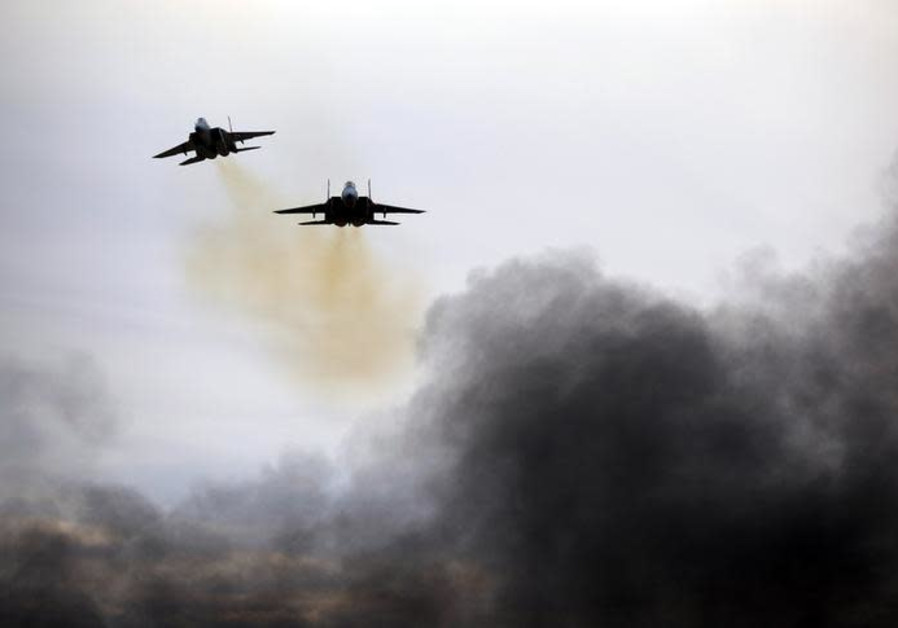
Israeli Air Force F15 planes.

President Reuven Rivlin warned on Monday morning that Israel “will not show patience in the face of any breach of Israeli citizens’ security.”

He made the statements following overnight airstrikes targeting Iranian Quds forces in Syria in which weapons storage sites, an Iranian intelligence site and an Iranian training camp were targeted.

Rivlin said that the airstrikes in Syria “are a direct response to the unacceptable rocket fire carried out yesterday [Sunday] by Iranian forces from Syrian soil – a living testimony of Iranian consolidation in Syria and the region as a whole.”

“We will not show patience in the face of any breach of the security of the citizens of Israel,” he said in a statement. “We will act with determination and with all the force that will be required in the face of all attempts at the attack.”

Energy Minister Yuval Steinitz also responded to the airstrikes, saying that Syrian President Bashar Assad and his regime were in danger “if he allows Iran to attack Israel from Syria.”

“There is no situation in which Iran will act against us in Syria, and Assad will [just] sit quietly in his palace… We are taking the Iranian threats very seriously,” he added.

Head of the Institute for National Security Studies Maj.-Gen. (Res.) Amos Yadlin also weighed in on the airstrikes, saying that the Israel Air Force’s attack on Syria “sends an important message to Lebanon.”

“Israel acted against the Iranian Quds Force, not only in response to the surface-to-surface missile shot at the Golan Heights and to hold the Syrians responsible for firing at Israel, but also to send an important message to Lebanon,” he said. “This is an essential component of shaping the northern campaign.”

The overnight attacks were in response to the launch on Sunday afternoon of a surface-to-surface rocket from Syria aimed at Israel’s Golan Heights. The missile was launched by Iranian Quds Forces entrenched in Syria.

Meanwhile, the commander of the Iranian Air Force claimed on Monday morning that Iran was prepared for a decisive war with Israel, “which will bring an end to the IDF’s attacks on Syria.”

“Our armed forces are prepared for a war that will bring the crushing destruction of Israel,” he said, according to media reports. “We are ready for the day when we will see the end of Israel.”


Iranian air chief: ‘We’re ready for war that will destroy Israel’

January 21, 2019

Source: Iranian air chief: ‘We’re ready for war that will destroy Israel’ | The Times of Israel

IDF says attack on Hermon with Iranian rocket, which prompted Israeli airstrikes on Iranian installations, was planned ‘months ago’ and approved by Syria

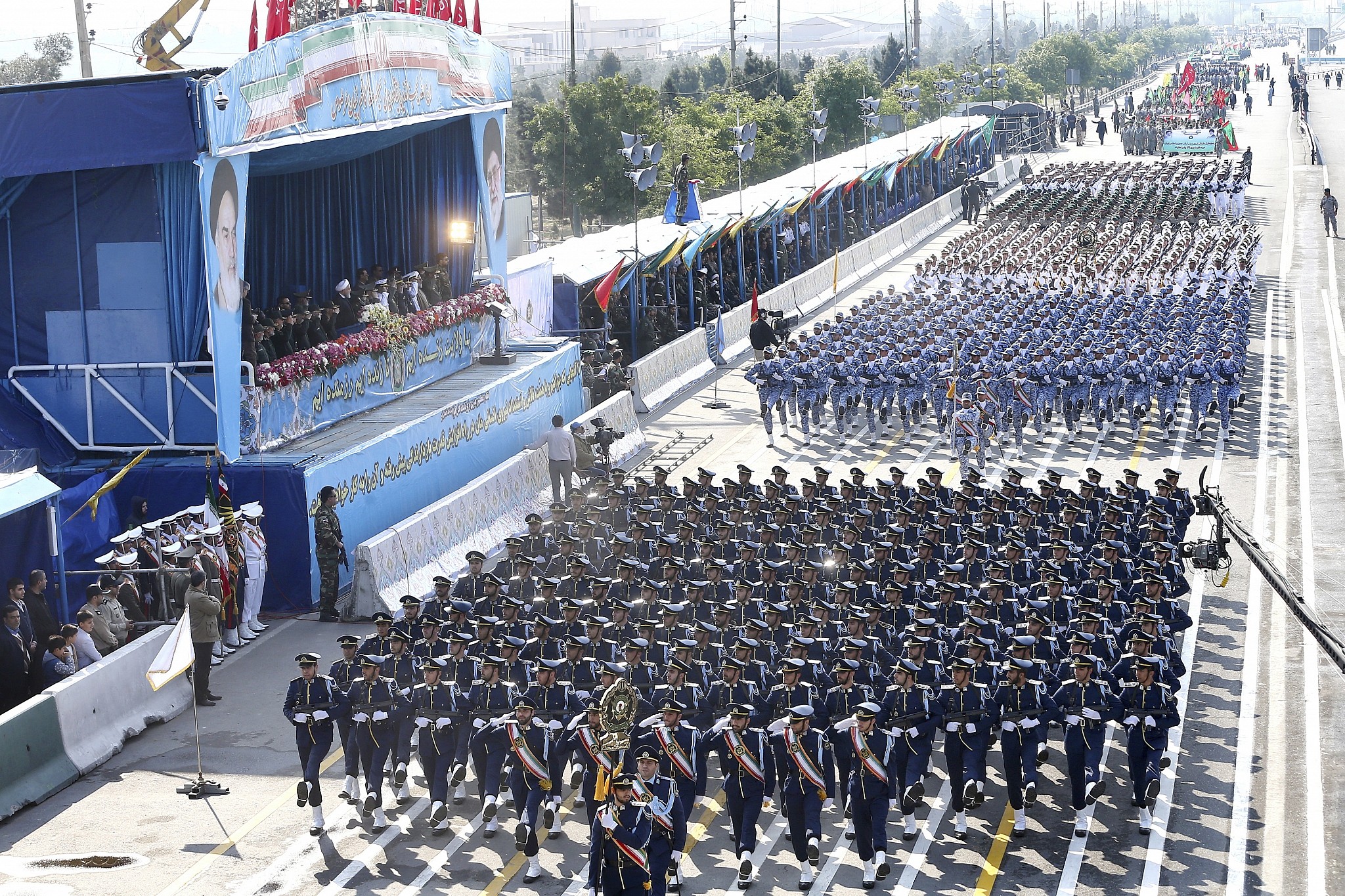
Iranian army troops march during a parade marking National Army Day in front of the mausoleum of the late revolutionary founder Ayatollah Khomeini, just outside Tehran, Iran, April 18, 2018. (AP Photo/Ebrahim Noroozi)

Amid fears of escalation, hours after Israeli airstrikes destroyed Iranian installations and reportedly killed military personnel in Syria, Iran’s air force chief said Monday morning the country’s military was ready to fight a war for “Israel’s disappearance.”

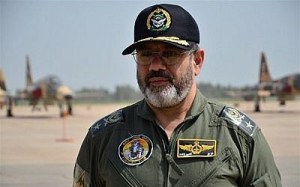
“We’re ready for the decisive war that will bring about Israel’s disappearance. Our armed forces are prepared for the day when Israel will be destroyed,” Brig. Gen. Aziz Nasirzadeh said, according to an Iranian news site.

A former fighter pilot, Nasirzadeh was named Iran’s air chief by Ayatollah Ali Khamenei in August after serving as the acting commander for several months.

Israeli fighter jets targeted Iranian weapons storehouses, intelligence facilities and a training camp near Damascus during the massive overnight bombardment, the Israel Defense Forces said earlier in the morning, accusing Iran of firing a missile at the Hermon ski resort a day earlier.

The head of the Iranian Air Force, Brig. Gen. Aziz Nasirzadeh, in an undated photograph. (Iranian Air Force)

In addition, the Israeli Air Force bombed a number of Syrian air defense systems that fired on the attacking fighter jets, the military said.

“During the attack, dozens of Syrian surface-to-air missiles were fired, despite the clear warnings expressed [by Israel] to refrain from attacking. As a result, a number of Syrian air defense batteries were also attacked,” the IDF said in a statement.

According to Russia, four Syrian servicemen were killed in those strikes. The Syrian Observatory for Human Rights war monitor said at least seven other people were killed in the Israeli raid, likely Iranian and pro-Iranian troops.

The missile fired on the Hermon, which was intercepted by Israel’s Iron Dome system, appeared to come in retaliation for an alleged Israeli strike earlier Sunday against targets in the Damascus International Airport and in the town of al-Kiswah, south of the capital.

But IDF Spokesman Brig. Gen. Ronen Manelis said Monday that the rocket attack had been planned months in advance.

“The Iranian [rocket] launch took place after very lengthy preparations and a decision-making process that concluded months ago,” Manelis said in a statement.

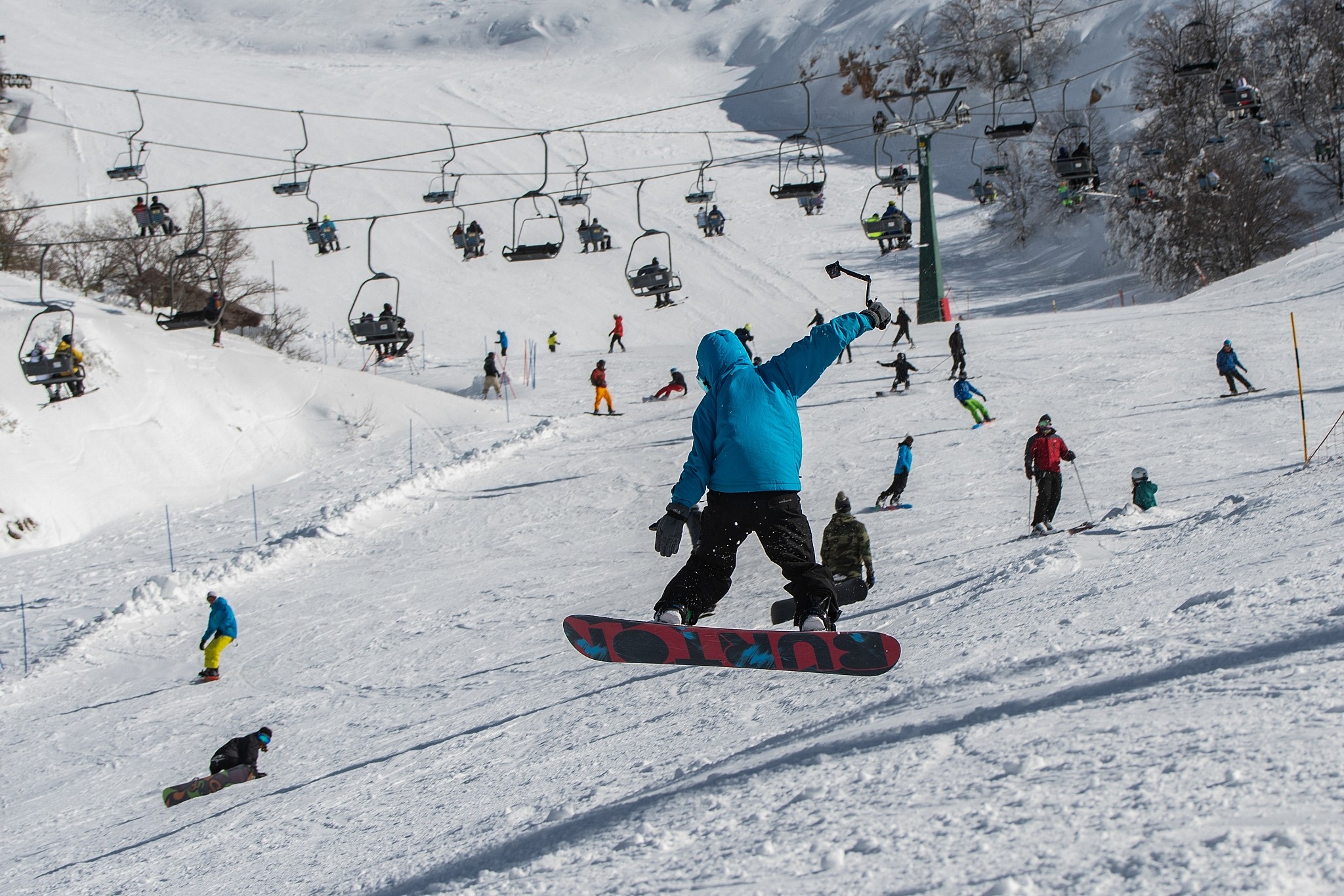
Israelis ski and snowboard on Mount Hermon on January 11, 2019. (Basel Awidat/Flash90)

The rocket was launched “by an Iranian force from the Damascus area, from inside territory that [the Syrian government] promised would not host an Iranian presence,” he charged.

“Syria is paying a heavy price for its approval of the [rocket] operation, and the fire yesterday toward the northern Golan,” Manelis added. “The Syrians had prepared for the operation, which was planned beforehand. The attack was an Iranian attempt to strike at Israel.”

In response to the Iranian missile attack, according to the IDF, jets bombed weapons warehouses, including at least one at the Damascus airport, an intelligence facility and a training camp, all belonging to Iran’s Quds Force, the expeditionary arm of the Islamic Revolutionary Guard Corps, which Israel and the West accuse of trying to gain a military foothold in Syria.

All of the targets, including the Syrian air defense batteries, were located around Damascus, according to the IDF.

“The Iranian attack on Israeli territory yesterday was more clear proof of the purpose of Iran’s efforts to entrench itself in Syria, and the danger this poses to the State of Israel and regional stability,” the army said in a statement Monday.

Israel has long accused Iran of seeking to establish a military presence in Syria that could threaten Israeli security, and attempting to transfer advanced weaponry to the Hezbollah terror group in Lebanon.


Germany sanctions Iranian airline over attacks in Europe – report 

January 21, 2019

Source: Germany sanctions Iranian airline over attacks in Europe – report | The Times of Israel

Federal Aviation Office said to suspend operating license of Mahan Air, which Israeli defense officials suspect is helping fly advanced weapons from Iran to Syria

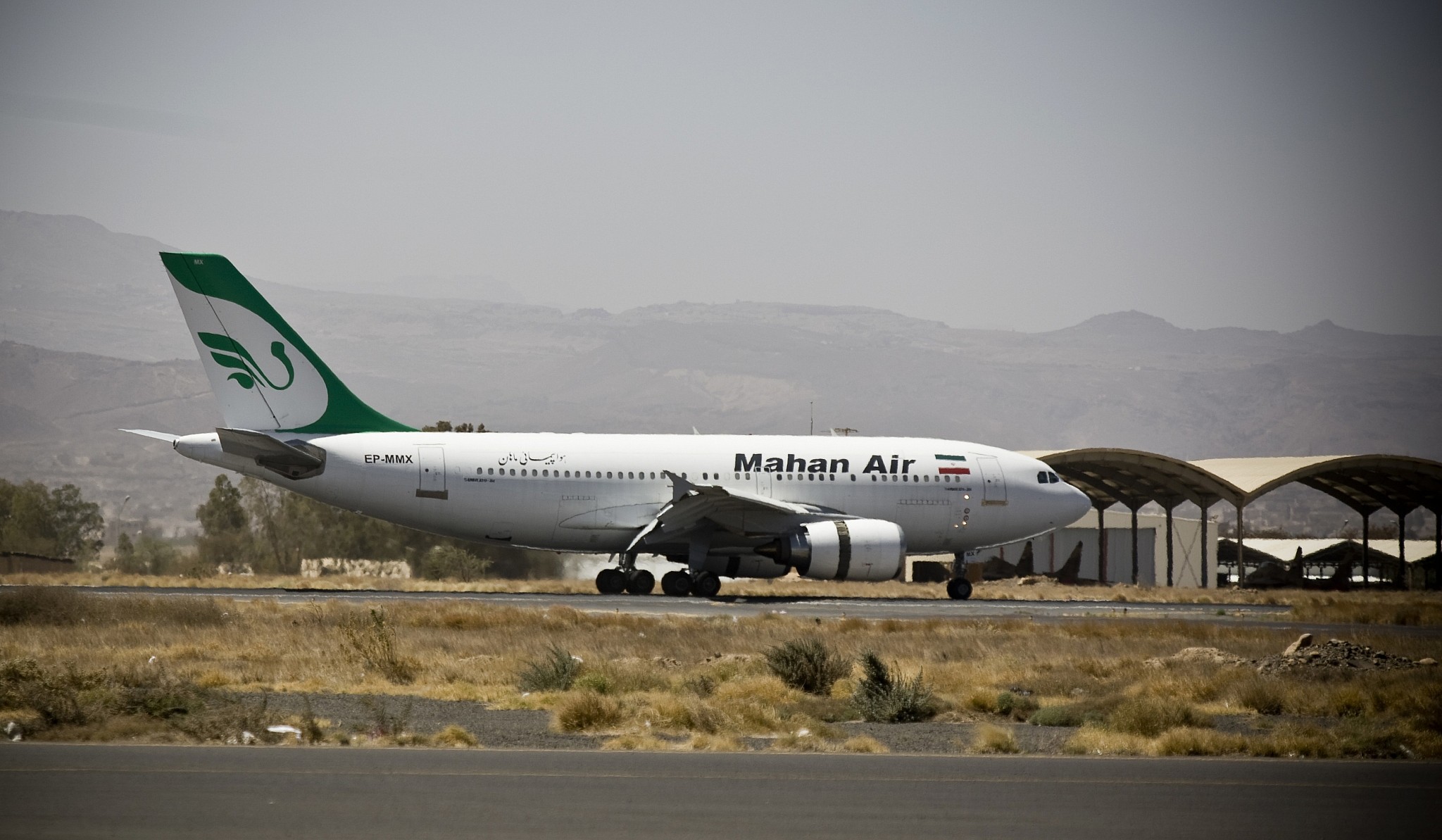
A plane from the Iranian private airline, Mahan Air lands the international airport in Sanaa, Yemen, March 1, 2015. (Hani Mohammed/AP)

A plane from the Iranian private airline, Mahan Air lands the international airport in Sanaa, Yemen, March 1, 2015. (Hani Mohammed/AP)

Germany plans to ban Iranian airline Mahan Air from its airports, media reported Monday, in an escalation of sanctions adopted by the European Union against Iran over attacks on opponents in the bloc.

“The Federal Aviation Office (LBA) will this week suspend the operating license of Iranian airline Mahan,” reported Munich-based daily Sueddeutsche Zeitung.

A spokesman for the foreign ministry in Berlin told the paper it “does not inform about internal political decision-making processes.”

Mahan, Iran’s second-largest carrier after Iran Air, operates four flights a week between Tehran and the German cities Duesseldorf and Munich. It has been identified by Israeli defense officials as one of the cargo carriers suspected of ferrying war materiel from Iran to its proxy militias in Syria. As a result, it is subject to sanctions by the US Treasury Department.

A Mahan Air flight was en route to Syria on Sunday afternoon but turned back following reported Israeli strikes in and around the Syrian capital Damascus, according to flight data. The airline makes almost daily flights between Iran and Syria.

The EU earlier this month targeted sanctions at Iran’s security services and two of their leaders, accused of involvement in a series of murders and planned attacks against Tehran critics in the Netherlands, Denmark and France.

Brussels’ measures included freezing funds and financial assets belonging to Iran’s intelligence ministry and individual officials, but did not target any companies.

By contrast Mahan Air was blacklisted by the US in 2011, as Washington said the carrier was providing technical and material support to an elite unit of Iran’s Revolutionary Guards known as the Quds Force.

The US treasury has threatened sanctions against countries and companies offering the airline’s 31 aircraft landing rights or services such as on-board dining.

German firms have come under especially intense pressure from American Ambassador Richard Grenell, a close ally of US President Donald Trump, over sanctions against Iran.

Rail operator Deutsche Bahn, Deutsche Telekom, Mercedes-Benz parent Daimler and industrial group Siemens have all said they will stop their operations in the country.

Last week German authorities said they had arrested a German-Afghan military adviser on suspicion of spying for Iran.


IDF: Iranian troops fired missile at Israel as a warning against future attacks

January 21, 2019

Source: IDF: Iranian troops fired missile at Israel as a warning against future attacks | The Times of Israel

Army says launch planned long in advance, meant to deter Israel from striking Iran’s forces in Syria; Israeli troops on high alert amid rising tensions

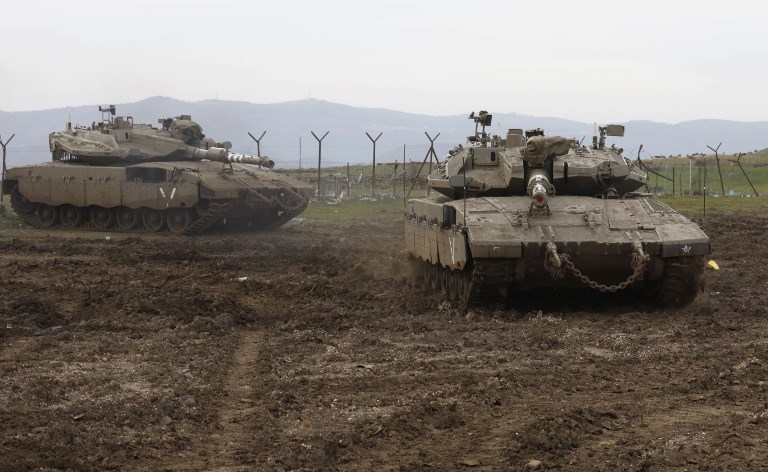
Israeli army Merkava tanks take positions on the Golan Heights, on January 20, 2019. (Jalaa Marey/AFP)

Israeli army Merkava tanks take positions on the Golan Heights, on January 20, 2019. (Jalaa Marey/AFP)

The Israel Defense Forces on Monday said the missile that was intercepted over the Hermon ski resort the previous day was launched by Iran in a “premeditated” attack aimed at deterring Israel from conducting airstrikes against the Islamic Republic’s troops and proxies in Syria.

According to the Israeli military, the missile was an Iranian-made medium-range model that was fired from the outskirts of Damascus at approximately three in the afternoon. Conflicting reports emerged about the intended target of the missile, with some politicians claiming it was the Hermon ski resort and the IDF saying it could have been heading to either a civilian or a military area.

The attack came shortly after the IDF allegedly conducted a number of rare daylight airstrikes nearby.

In response to the missile attack from Syria, which was intercepted before it breached Israeli airspace, the Israeli military launched three waves of airstrikes that targeted first Iranian sites in and around Damascus, and then Syrian air defense batteries, which had fired on the Israeli fighter jets that had attacked earlier, the IDF said.

Israeli troops on Monday remained on high alert in the north. The Hermon ski resort was closed to visitors, but no other special safety instructions were given to residents of the area.

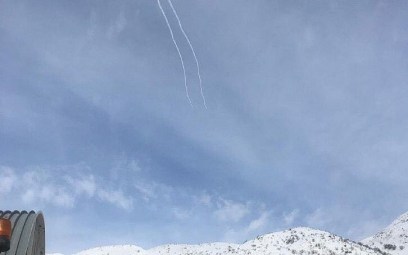
Trails left by the Iron Dome air defense system intercepting a Syrian projectile over Mount Hermon in the Golan Heights, on January 20, 2019. (Israel Defense Forces)

Military spokesperson Jonathan Conricus said the three response sorties destroyed a number of Iranian intelligence sites, training bases and weapons caches, including one of the Islamic Republic’s largest depots near the Damascus International Airport, which triggered secondary explosions.

The Syrian Observatory for Human Rights war monitor reported that 11 pro-regime fighters were killed in the Israeli raids. Of those, according to Russia, at least four were Syrian military personnel, apparently killed in the strikes on the country’s air defenses.

On Monday morning, the IDF released video footage of its airstrikes on Syrian air defenses, including on social media.

Embedded video

צבא ההגנה לישראל

@idfonline

תיעוד מתוך תקיפת חלק מסוללות ההגנה האווירית הסוריות לאחר שביצעו ירי הלילה:

According to Conricus, the Iranian retaliatory strike aimed at the northern Golan was “not a spur-of-the-moment” response, but had been planned months in advance, based on intelligence collected by the IDF.

“We understand that the Iranians are trying to change the context and deter us from our policy and our strategy of fighting Iranian troops in Syria,” Conricus said. “They thought they could change the rules of engagement. Our response was a rather clear one, with a message to Iran and Syria that our policies have not changed.”

He acknowledged that while the military believed it was planned in advance, the trigger for Sunday’s attack was likely the airstrikes reported moments before.

Israeli defense analysts attributed both Sunday’s alleged daylight airstrike and the large magnitude of the overnight bombings to an attempt by incoming IDF Chief of Staff Aviv Kohavi, whose tenure began last week, to demonstrate his willingness to use force against Iran in Syria.

For years, Israel has maintained a policy of actively opposing Iranian military entrenchment in Syria, as well as attempts by the Islamic Republic to supply terrorist groups like Hezbollah with advanced weaponry. As a result, the IDF has conducted hundreds of airstrikes in Syria — generally late at night — in order to prevent violations of its “red lines.”

Initially, Israel refused to acknowledge those raids, but politicians and defense officials have been increasingly vocal about the activity in recent months.

Typically, such Israeli airstrikes pass without a retaliation by Iran, with the exception of a rocket barrage in May 2018 and an attempted drone attack in February 2018. Syria regularly fires anti-aircraft missiles at the attacking Israeli fighter jets, including in February, when it successfully shot down an F-16 aircraft.

Israel Defense Forces

@IDF

This is what’s been happening:
On Sunday, Iranian Quds Forces operating in Syria launched a surface-to-surface rocket from Syria aimed at Israel’s Golan Heights. The Iron Dome Aerial Defense System intercepted the rocket.

Embedded video

Israel Defense Forces

@IDF

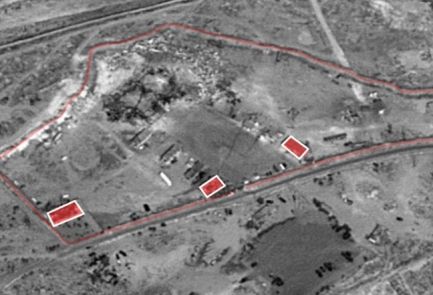
These are the Iranian Quds military sites in Syria that we targeted in response:
🎯 Munition storage sites
🎯 Military site located in the Damascus International Airport
🎯 Iranian intelligence site
🎯 Iranian military training camp pic.twitter.com/pzHQv81l1C

View image on TwitterView image on Twitter

The spokesman disputed reports that the projectile had been fired by pro-Iranian militias or by the Syrian regime.

According to the spokesman, the mid-range missile, which traveled dozens of kilometers before being shot down by an Iron Dome missile defense battery, was launched “by Iranian troops, not by proxies, not by Shiite militias, not by Syrian troops, but Iranian troops with an Iranian missile.”

Conricus said the location from which the missile was fired was “an area that we have been promised that the Iranians would not be in.”

That assurance appeared to have been made by Russia — Syrian dictator Bashar Assad’s prime ally in the civil war — but Conricus said he “won’t go into who made the promise.”

Israel has reached a number of understandings with Russia about the permitted location of Iranian troops in Syria, mostly about their deployment along the Golan border with Syria.

The IDF spokesperson said the military ultimately holds Syria responsible for the attack and warned that the country would “pay the price” for allowing Iran to establish a permanent military presence in its territory. Iran officially denies having troops in Syria beyond a small number of advisers — a claim that is widely disregarded among Western intelligence officials.

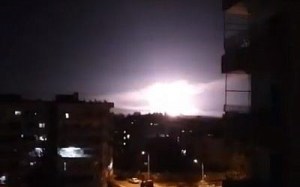
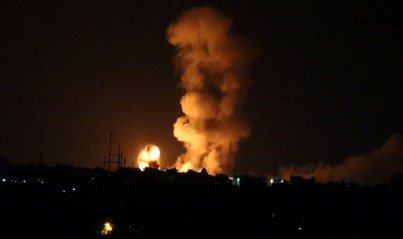
An explosion, reportedly during Israeli airstrikes near Damascus, Syria, on January 21, 2019. (screen capture: YouTube)

According to Conricus, the three Israeli Air Force response sorties targeted sites connected to the Quds Force, the expeditionary arm of Iran’s Islamic Revolutionary Guard Corps.

The IDF refused to designate the specific number of locations bombed in the strikes.

According to Conricus, one of the targets of the raids was “the main storage hub for Quds Force.”

He said Iran had been bringing weapons into that facility near the airport over the past two weeks in order to distribute them to the Hezbollah terrorist army and other pro-Iranian Shiite militias in Syria.

Sunday’s alleged daytime strike came hours after a Syrian cargo plane touched down in the Damascus International Airport from Tehran, according to publicly available flight data.

Israeli and American defense officials have said ostensibly civilian planes are often used to transport advanced weaponry from Tehran to pro-Iranian militias fighting in Syria, including Hezbollah.

Another flight from Iran, flown by Tehran’s Mahan Air carrier, was en route to Syria on Sunday afternoon, but turned back following the reported Israeli strikes, according to flight data. Mahan Air has been identified by defense officials as one of the cargo carriers suspected of ferrying war materiel from Iran to Syria. As a result, it is subject to sanctions by the US Treasury Department.

Times of Israel staff contributed to this report.


Report: 11 dead in Israeli airstrikes in Syria

January 21, 2019

Source: Report: 11 dead in Israeli airstrikes in Syria – Israel National News

Russia reports that four Syrian soldiers killed by Israeli strikes, while monitor group says total of 11 people dead in attack.

David Rosenberg, 21/01/19 08:50
Airstrike (archive)

Airstrike (archive)

Reuters

A total of 11 people were killed in Israeli airstrikes in Syria overnight, a monitor group claimed Monday morning.

Israeli fighter planes hit a number of Iranian positions in Syria, the IDF said Monday morning, in response to the launching of a surface-to-surface rocket that was carried out on Sunday by Iranian Quds forces operating in Syrian territory.

The targets of the predawn Israeli strikes Monday morning included Iranian weapons depots, an Iranian intelligence site, and a military training camp used by Iranian forces in Syria. The Israeli strikes also targeted multiple Syrian surface-to-air missile batteries.

According to the UK-based Syrian Observatory for Human Rights, an anti-Assad NGO, a total of 11 people were killed in the Israeli attacks.

Of the 11 people killed, two were Syrians, the SOHR claimed.

“Israeli strikes targeting Iranian and Syrian military positions near and south of Damascus killed at least 11 fighters including two Syrians,” SOHR chief Rami Abdel Rahman said.

Russia’s military claimed four Syrians were killed in the attacks, with another six injured. It did not specify how many Iranians were killed in the strikes.

The Israeli attacks included both fighter jets and long-range cruise missiles, Russia claimed, adding that Syria’s air defense network downed more than 30 Israeli missiles.


Israel will defend Syria red lines ‘with full force,’ intelligence minister vows 

January 21, 2019

Source: Israel will defend Syria red lines ‘with full force,’ intelligence minister vows | The Times of Israel

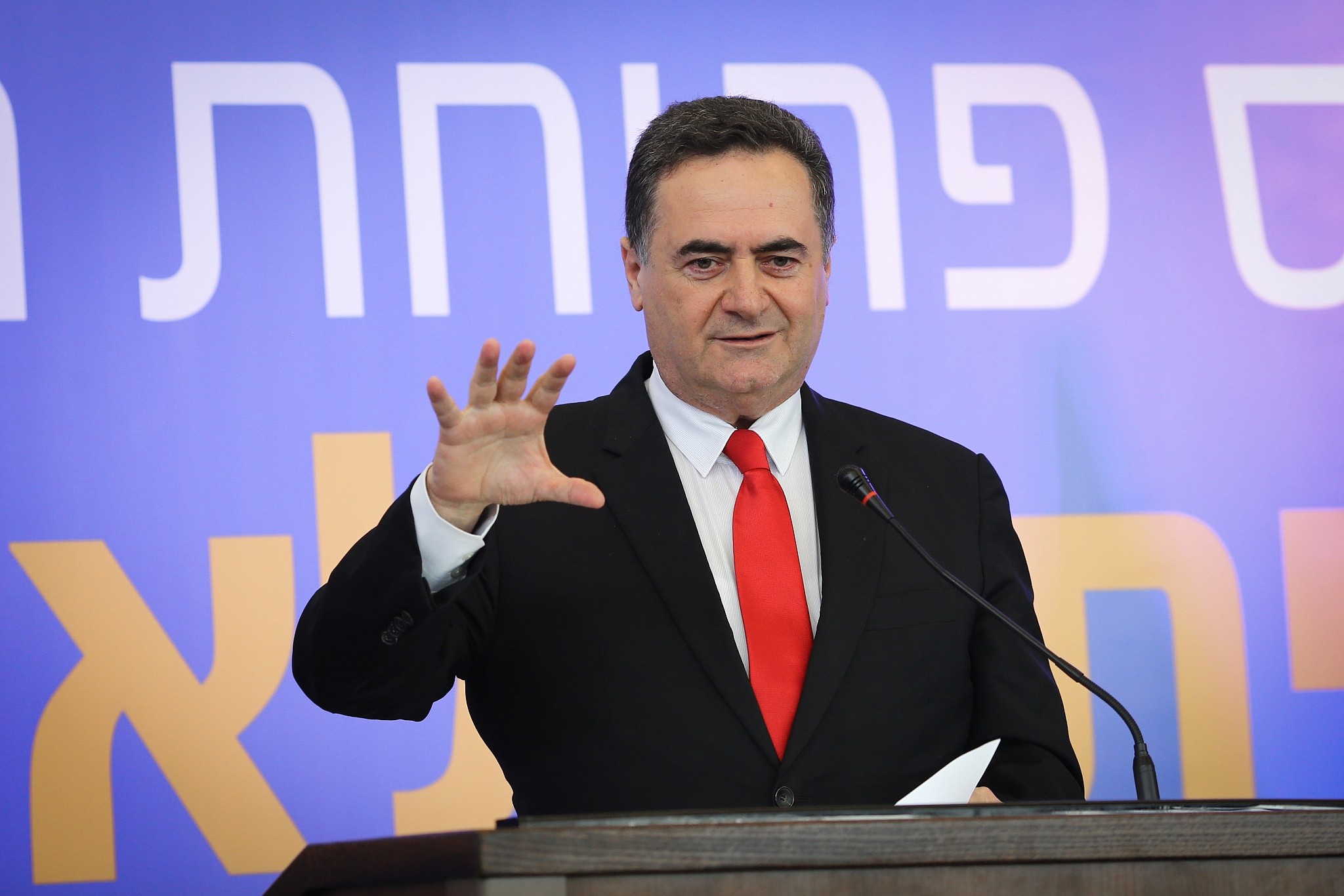
Israel Katz warns that those who launch attacks like Sunday’s rocket strike from Syria on Israeli Hermon ‘will pay a high price’

Intelligence and Transportation Minister Israel Katz speaks during the inauguration ceremony for the new train station in the southern Israeli town of Kiryat Malachi, on September 17, 2018. (Flash90)

Intelligence and Transportation Minister Israel Katz speaks during the inauguration ceremony for the new train station in the southern Israeli town of Kiryat Malachi, on September 17, 2018. (Flash90)

Israel’s early-morning raids on Monday against Iranian installations in Syria demonstrated that Jerusalem’s “red-line policy to prevent Iranian entrenchment in Syria is being upheld with full force,” a senior Israeli minister said Monday morning.

“The IDF attack tonight against Iranian Quds Force targets are a clear message to [Quds Force commander] Qassem Souleimani and the Iranian Revolutionary Guard,” Transportation and Intelligence Minister Israel Katz said in a statement.

Katz’s comments followed an apparently massive Israeli air bombardment of Iranian weapons storehouses, intelligence facilities and a training camp near Damascus in the early hours of Monday, a strike that the Israel Defense Forces, in a rare move, publicly announced a few hours later.

The army said the airstrikes were in response to a surface-to-surface missile fired at the Golan Heights a day earlier, which was intercepted by an Iron Dome anti-missile battery.

The Iron Dome missile defense system intercepts a rocket over the Mount Hermon ski resort on January 20, 2019. (Screen capture/Twitter)

Israeli jets attacked Iranian weapons storehouses, intelligence facilities and a training camp near Damascus during a massive overnight bombardment, the Israel Defense Forces said, accusing Iran of firing a missile at Israel a day earlier.

Quoting a dictum of the Talmudic sages — “He who comes to kill you, rise up and kill him first” — Katz said “anyone who fires a rocket at the Israeli Hermon will pay a high price.”

He told Army Radio in an interview Monday morning that the rocket attack targeted the ski resort on the Hermon.

According to the IDF, Israeli jets bombed weapons warehouses, including at least one at Damascus International Airport, an intelligence facility and a training camp, all belonging to Iran’s Quds Force, the expeditionary arm of the Islamic Revolutionary Guard Corps, which Israel and the West accuse of trying to gain a military foothold in Syria.

“The Iranian attack on Israeli territory yesterday was more clear proof of the purpose of Iran’s efforts to entrench itself in Syria, and the danger this poses to the state of Israel and regional stability,” the IDF said in a statement Monday.

The IDF has increasingly taken to announcing its strikes against Iranian forces in Syria, after years in which it maintained a policy of ambiguity, with reports of Israeli strikes coming from within Syria or from foreign news outlets.

It released video footage of the attack, including on social media.

Embedded video

צבא ההגנה לישראל

@idfonline

תיעוד מתוך תקיפת חלק מסוללות ההגנה האווירית הסוריות לאחר שביצעו ירי הלילה:

lEarlier on Monday morning, the Britain-based Syrian Observatory for Human Rights said the strikes caused casualties and extensive damage to Iranian and Hezbollah forces.

“The Israeli missiles managed to destroy weapons depots and military posts of the Iranians and the Lebanese Hezbollah in the vicinity of Damascus International Airport and the area of Al-Kiswah and Jamraya,” the group said in a statement.

In all, 11 people were reported killed in the strikes, including Iranian and Iranian-allied forces, and Syrian army soldiers.


Israel Confirms Another Attack on Iranian Targets in Syria – The New York Times

January 21, 2019
Syrian air defenses being launched to counter Israeli missiles near Damascus, the Syrian capital, on Monday.CreditCreditYoussef Badawi/EPA, via Shutterstock

By Mike Ives

The Israeli military said early on Monday that it had started attacking Iranian military targets in Syria, in another apparent sign of Israel’s growing willingness to acknowledge specific attacks on the country after years of ambiguity.

“We have started striking Iranian Quds targets in Syrian territory,” the military said in a statement, referring to the branch of Iran’s Islamic Revolutionary Guards Corps that is responsible for foreign operations, The Associated Press reported. “We warn the Syrian Armed Forces against attempting to harm Israeli forces or territory.”

The attacks near Damascus, Syria’s capital, which came within hours of Israel intercepting an incoming missile over the Golan Heights, occurred a week after Prime Minister Benjamin Netanyahu of Israel acknowledged that Israeli forces had just attacked Iranian weapons warehouses in Syria.

Israeli officials have previously acknowledged carrying out hundreds of strikes against weapons convoys and Iranian targets in Syria. But Mr. Netanyahu’s comments last week were a milestone because Israeli officials normally refuse to confirm responsibility for specific attacks immediately after they take place to avoid pushing the other side into having to retaliate.

The Syrian military confirmed Israel’s attacks on Monday, but said that Syrian air defenses had destroyed most of the Israeli missiles before they hit their targets, The Associated Press reported. The Syrian state news media reported separately on Sunday that Israeli missile strikes took place near the international airport south of Damascus.

The Britain-based Syrian Observatory for Human Rights said in a Twitter post on Monday that Israeli missiles had “caused substantial material damage” in Syria and destroyed weapons depots and military posts belonging to Iran and the Lebanese militant group Hezbollah.

#المرصدالسوري #SOHR@syriahr

In commenting publicly on its strikes in Syria, Israel may be trying to convey confidence that it had controlled the threats from across its northern frontiers, and perhaps also that it would not be deterred from acting in Syria despite Russia having supplied the Syrian military with the a sophisticated S-300 ground-to-air missile system.

Relations between Israel and Russia frayed after a Russian military plane was shot down over Syria in September, killing 15 Russian service members. The plane was accidentally shot down by Syria in response to an Israeli airstrike, and Russian officials blamed Israel.