Source: Islamic State targets US convoy in northeast Syria | The Times of Israel
American military official says there are no casualties among US-led coalition forces, but Britain-based monitoring group claims 5 were killed

BEIRUT — An Islamic State suicide bomber targeted a joint convoy of US and allied Kurdish forces in northern Syria on Monday, the second attack against US troops in less than a week.
US military Col. Sean Ryan said there were no casualties among the US-led coalition members. He added: “We can confirm a combined US and Syrian partner force convoy was involved” in the suicide bomb attack.
“We will continue to review the situation and provide updates as appropriate,” he added.
The Kurdish Hawar news agency, based in northern Syria, said Monday’s blast targeted a Syrian Kurdish checkpoint as a coalition convoy was passing near the town of Shaddadeh. It said two Kurdish fighters were lightly wounded in the blast.
The Britain-based Syrian Observatory for Human Rights said the blast killed five people and wounded others.
Monday’s attack came days after a suicide attack killed 16 people, including two US service members and two American civilians, in the northern Syrian town of Manbij. It also came a month after US President Donald Trump announced his intention to withdraw troops from the war-torn country, declaring that IS had been defeated.
Islamic State claimed both attacks in statements carried by its Aamaq news agency.
Source: Israel strikes in Syria in more open assault on Iran
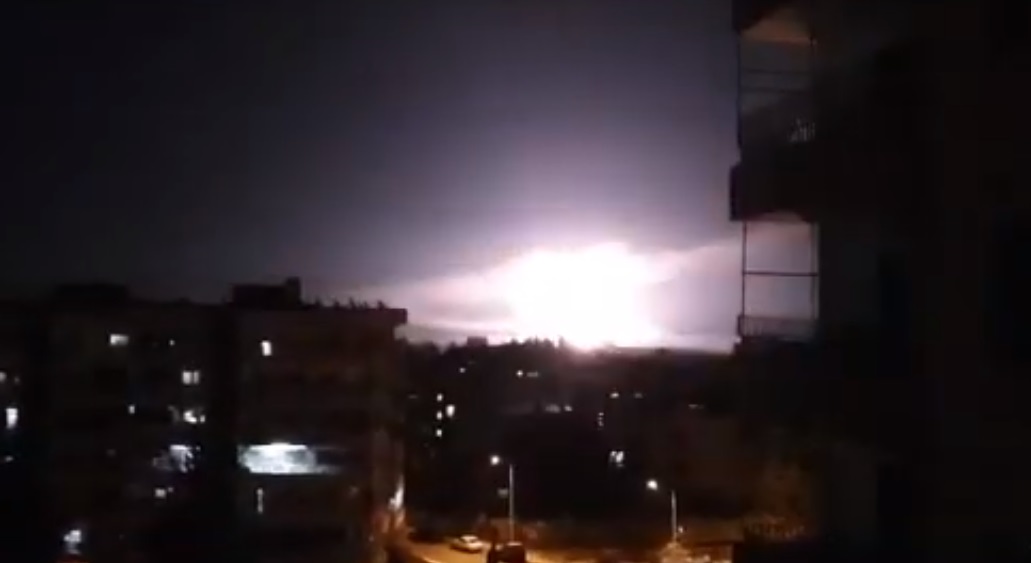
BEIRUT/JERUSALEM (Reuters) – Israel struck in Syria early on Monday, the latest salvo in its increasingly open assault on Iran’s presence there, shaking the night sky over Damascus with an hour of loud explosions in a second consecutive night of military action.
Damascus did not say what damage or casualties resulted from the strikes. The Syrian Observatory for Human Rights war monitor said 11 people were killed. Syria’s ally Russia said four Syrian soldiers had died and six were wounded.
Israeli Prime Minister Benjamin Netanyahu said the air raid had mostly targeted Iranian forces, but also hit Syrians helping them. “We will strike at anyone who tries to harm us,” he said.
Israel, regarding Iran as its biggest threat, has repeatedly attacked Iranian targets in Syria and those of allied militia, including Lebanon’s Hezbollah.
With an election approaching, Israel’s government has begun discussing its strikes more openly, and has also taken a tougher stance towards Hezbollah on the border with Lebanon. It said a rocket attack on Sunday was Iran’s work.
The Israeli shift comes a month after U.S. President Donald Trump unexpectedly announced a sudden plan to pull the 2,000 U.S. troops from Syria, a move long sought by Assad and his Russian and Iranian allies. Trump’s decision shocked American allies in the region and was opposed by top U.S. officials including Defense Secretary Jim Mattis who quit in response.
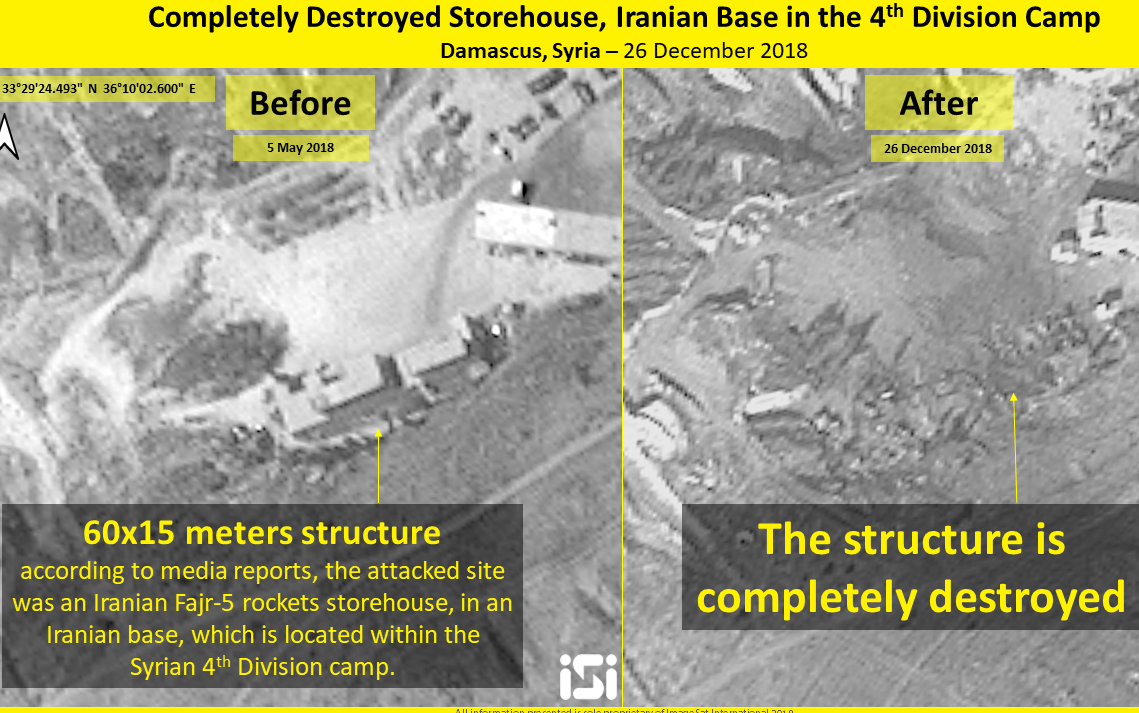
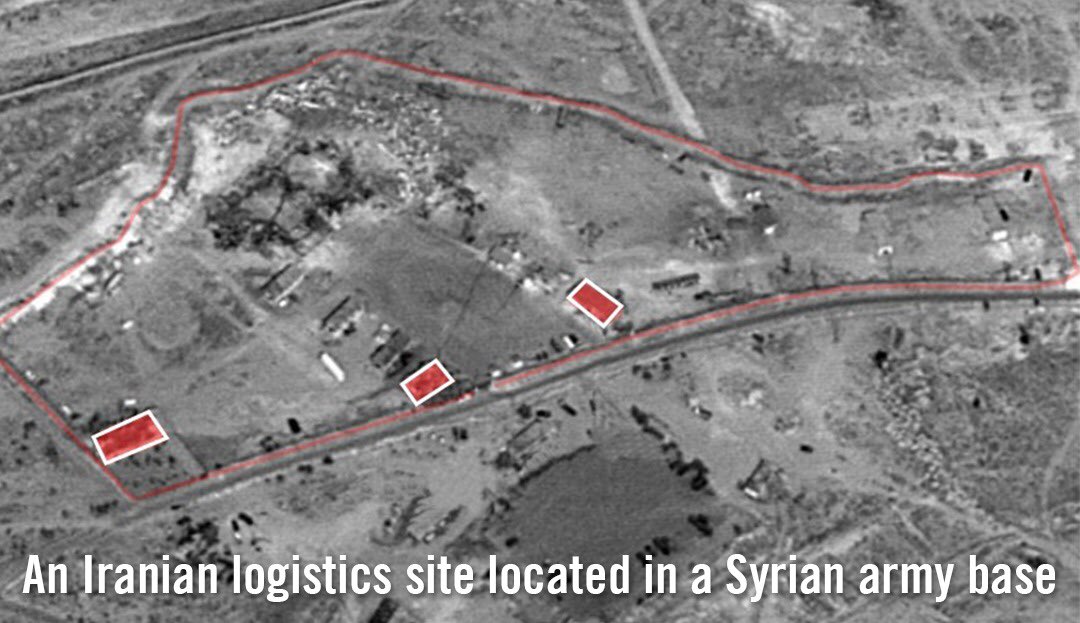
The Israeli military said its fighter jets had attacked Iranian “Quds Force” targets early on Monday, including munition stores, a position in the Damascus International Airport, an intelligence site and a military training camp. Its jets then targeted Syrian defence batteries after coming under fire.
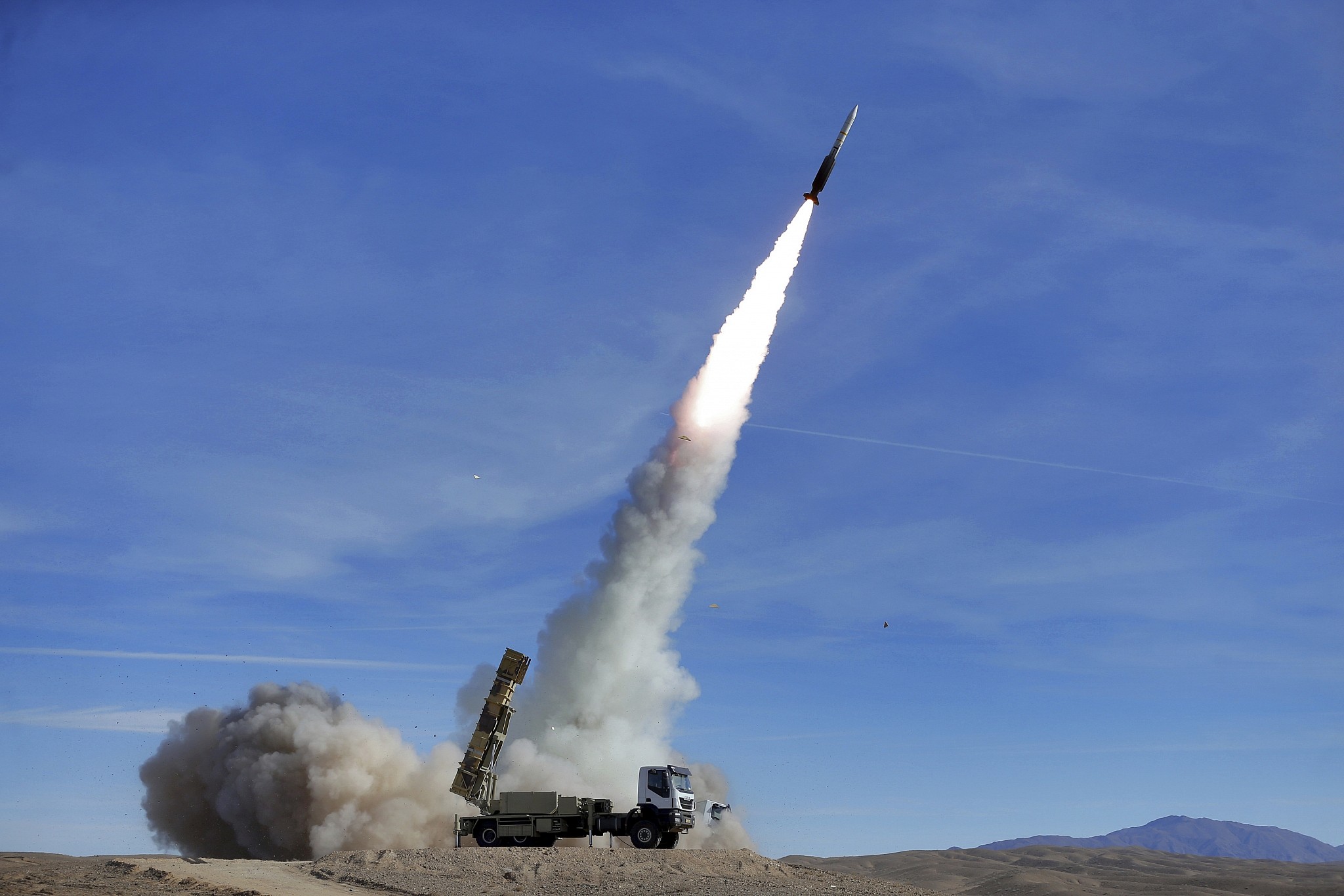
It followed a previous night of cross-border fire, which Israel said began when Iranian troops fired an Iranian-made surface-to-surface missile from an area near Damascus at a ski resort in the Israeli-occupied Golan Heights.
Syria said it was Israel that had attacked and its air defences had repelled the assault. Syria had endured “intense attack through consecutive waves of guided missiles”, but had destroyed most “hostile targets”, state media quoted a military source as saying.
In Tehran, airforce chief Brigadier General Aziz Nasirzadeh said Iran was “fully ready and impatient to confront the Zionist regime and eliminate it from the earth”, according to the Young Journalist Club, a website supervised by state television.
Assad has said Iranian forces are welcome to stay in Syria after years of military victories that have brought most of the country back under his control. Just two big enclaves are still outside Assad’s grip, including the area Trump plans to exit.
Netanyahu, who is hoping to win a fifth term in the April 9 election, last week told his cabinet Israel has carried out “hundreds” of attacks over recent years.
“We have a permanent policy, to strike at the Iranian entrenchment in Syria and hurt whoever tries to hurt us,” he said on Sunday.
The Israeli military distributed footage of what it said were missiles hitting the Syrian defence batteries, as well as satellite images showing the location of the alleged Iranian targets. Syrian state media showed footage of explosions.
In a highly publicised operation last month, the Israeli military uncovered and destroyed cross-border tunnels from Lebanon it said were dug by Hezbollah to launch future attacks.
Israel last fought a war with Hezbollah, on Lebanese soil, in 2006. It fears Hezbollah has used its own role fighting alongside Iran and Assad in Syria to bolster its military capabilities, including an arsenal of rockets aimed at Israel.
Tensions have also risen with Israel’s construction of a frontier barrier that Lebanon says passes through its territory.
Washington has sought to reassure allies it still aims to eject Iran from Syria despite pulling its own troops out. U.S. Secretary of State Mike Pompeo, who visited the region this month, has vowed to expel “every last Iranian boot” from Syria.
Israel has sought reassurances from Moscow that Iranian forces in Syria would not be a threat. Israeli military spokesman Lieutenant Colonel Jonathan Conricus said the missile fired at the ski resort was launched from “an area we were promised the Iranians would not be present in”.
(The refiled story fixes ‘tried’ to ‘tries’ in paragraph three.)
Reporting by Ellen Francis in Beirut, Ari Rabinovitch and Dan Williams in Jerusalem and Maria Kiselyova in Moscow; writing by Angus McDowall; Editing by Nick Macfie and Raissa Kasolowsky
“The Norwegian government does not see boycott of Israel as a contribution to dialogue, understanding and a peaceful development in the Middle East.”

Israel’s relations with Norway, which improved significantly in 2013 with the election of a center-right government, are likely to improve even more following a reshuffling on Thursday, said Conrad Myrland, head of a pro-Israel group in the country.
The coalition government of Erna Solberg was expanded on Thursday with the addition of the small Christian-Democratic Party. Solberg was quoted as calling the formation of the government a “historic day,” since it marks the first time since 1985 that Norway would be ruled by a non-socialist majority government.
Though foreign policy was not the reason for bringing in the new party, Myrland – whose organization With Israel for Peace (Med Israel for Fred), the largest non-religious, pro-Israel organization in Norway – said the Christian Democrats now headed by a pro-Israel leader named Kjell Ingolf Ropstad have inserted some pro-Israel paragraphs in the new government guidelines.
The government guidelines calls for Norway to have “a balanced attitude to the Middle East-conflict, actively support the goal of Israel and Palestine as two states within secure and international recognized borders, and support democratic development in the Middle East.”
Myrland said the paragraph is not new, and that something similar appeared in the previous government guidelines. What is new, he said, is a clause calling for the government to “lay the ground for strengthened research and development cooperation, trade, tourism and cultural exchange with Israel. The government does not see boycott of Israel as a contribution to dialogue, understanding and a peaceful development in the Middle East.”
Furthermore, the guidelines call for the government to “mark a clear critical stand against all form of antisemitism and actively work against economic contributions to terrorism, including reward of prisoners.”
In the chapter about international aid, the platform said the “government will not support organizations that encourages violence or promote hateful expressions, racism or antisemitism, specifically in the Palestinian areas.”
Myrland called these additions to the government guidelines a “further step in the right direction” toward Israel that began with Solberg’s election in 2013.
Norway has for years been a major donor to the Palestinians, and chairs the Ad Hoc Liaison Committee that is the main coordination mechanism for development assistance to them.
Source: Defense site: Iran has a stronger military than Israel – Arab-Israeli Conflict – Jerusalem Post
GlobalFirePower ranks Iran as 13th strongest military and placed Israel as 16th, below Brazil and Indonesia.
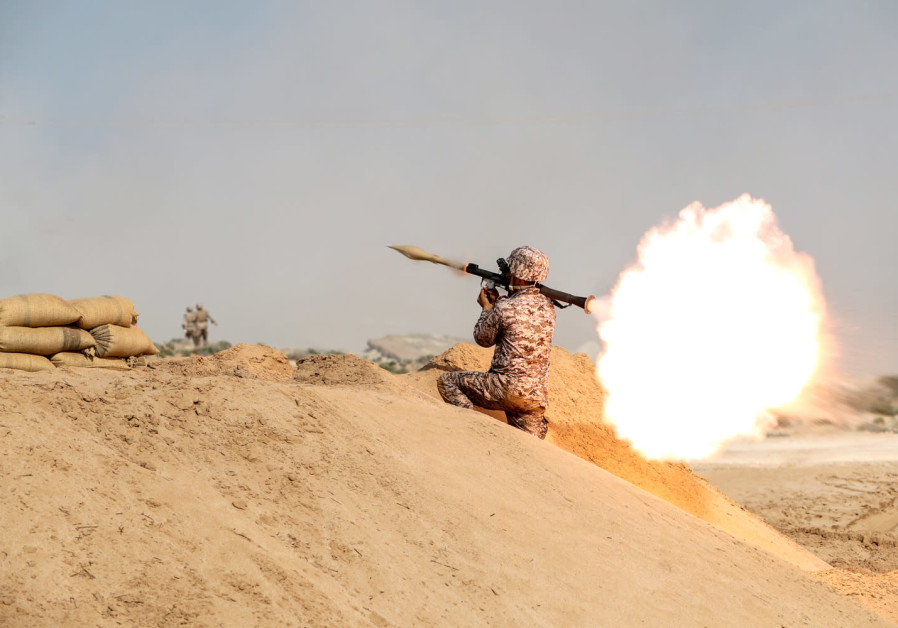
Israel’s military has slipped below its arch-nemesis Iran in the ranking of military powers, ranking 16 out of 137 countries, according to the international defense site Global Firepower (GFP).
It was the third year in a row that Israel fell in the site’s ranking, falling one spot from the previous year and down five spots when it ranked 11th in 2016. Iran, meanwhile, climbed to 13th in 2018 from 20th in 2017.
“The unique, in-house formula allows for smaller, more technologically-advanced nations to compete with larger, though lesser-developed ones,” the site said, adding that “a perfect PwrIndex (Power Index) score is 0.0000 which is realistically unattainable in the scope of the GFP formula.”
The site also allows for one to compare two specific countries against each other, showing military data such as total manpower available, active personnel, total amount of reservists, and total military personnel. The site also shows the total amount of arms such as aircraft, tanks, naval assets as well as artillery strength.
A comparison between Iran and Israel shows that while Iran has significantly more naval assets than Israel (398 versus 65), Iran has a total coastline of 2,440 km. compared to Israel’s 273 km.
Israel has far greater tank strength (2,760 assets versus 1,650) and has some 10,575 armored fighting vehicles, compared to Iran’s 2,215. The total amount of aircraft between the two countries are close, with Israel having 596 aircraft versus Iran’s 505.
According to the site, Israel’s total military personnel stands at 615,000, compared to Iran’s 934,000. But Iran’s total population is significantly larger than Israel, with 82 million people versus Israel’s 8.3 million people. Jerusalem meanwhile has a defense budget of $20 billion versus Tehran’s budget of $6.3 billion. The United States topped the defense site’s list as the strongest military force, followed by Russia and China in second and third places, respectively. India placed fourth, followed by France and the United Kingdom.
In the Middle East, while Israel was outranked by Iran, Egypt (12) and Turkey (9), it continued to outrank other countries in the region, including Saudi Arabia (26), Syria (49), Jordan (76) and Lebanon (106).
While the Jewish state placed higher than other Western countries, like Canada (25) and Poland (22), it nevertheless ranked below Germany (10), Italy (11) Brazil (14) and Indonesia (15).
As Israel continues to strike at Iran more publicly the Syrian conflict enters a new phase.

For eight years, since the Syrian rebellion began in 2011, Syria has been the center of great power politics, and an attempt by various forces to control the region through proxies in the conflict. It also became a battlefield between different ideologies, and quests for autonomy amid the chaos and the rise of Islamic State. Now that era is drawing to a close and a new battlefield shift is taking place.
Eventually, with the rise of Islamic State in 2014, the war in Syria became a series of wars within the civil war. This included a conflict between ISIS and most of the other players in the conflict, a conflict between various rebel groups and ISIS and the regime, a rising Kurdish autonomous region in the east and greater involvement by Iran. Israel was at first cautious and operated in the shadows regarding its policy. Only rarely did news of airstrikes emerge, until 2016 when reports in foreign media indicated an increase in targeting of Iranian arms transfers via Syria.
For Israel, the main concern was not just who would win the Syrian civil war and thus end up as new neighbors on the Golan, but also how Iran might exploit the conflict to create a direct frontline in Syria between Iranian-backed forces and Israel. Iran was focused mainly on propping up the Syrian regime until 2016, sending militias, some of whom were recruited from Shi’ite minorities in faraway Afghanistan and Pakistan, to fight in Syria.
But in 2017, things began to change. It was revealed via satellite images published by foreign media that Iran was constructing sites and stocking warehouses. Iranian “entrenchment,” as Jerusalem calls it, was growing. Washington indicated in 2018 that it shared Israel’s concerns not only about entrenchment, but also about Iran’s “road to the sea,” a corridor of influence stretching from Tehran across Iraq and Syria to Lebanon. This corridor would knit together Iranian-backed militias, many of them established on the Hezbollah model and connected to the Islamic Revolutionary Guards Quds Force.
Israel revealed in the fall of 2017 that it had carried out 100 airstrikes against weapons transfers in Syria, and later said in 2018 that this number had increased to 200. Israel also warned Iran against remaining in Syria after the Syrian civil war ended. Iran replied that it had been invited to Syria by the government.
This began a complex shadowy and violent dance between Damascus, Moscow, Tehran and Jerusalem. Tehran wanted to stay in Syria. Moscow, which enjoyed unprecedented and increasingly warm and personal relations between Russian President Vladimir Putin and Prime Minister Benjamin Netanyahu, sought to balance its interests. Its main agenda was to help Damascus win the civil war, but it was cautious in that approach. Russia worked on ceasefire deals with the US and Jordan in 2017 regarding southern Syria, and also with Turkey in 2018 regarding Idlib in the north.
Russia indicated that Syria’s regime would incrementally take back the country, but that there would be compromises. For instance, Russia played a key role in the return of Syrian army units to areas near the Golan. Reports indicated that Israel continued to warn throughout the summer of 2018 that Iranian forces must keep away from the border.
Russia became more clear in its warning to Israel after the Syrian air defense mistakenly downed a Russian IL-20 in September 2018. Moscow said Israel’s actions had created the dangerous conditions in which the Syrians mistakenly shot down the plane. Russia gave the regime its S-300 air defense system and claimed it would train the Syrians to use it. But so far that has not happened. In the recent round of strikes, the Syrians relied on the Pantsir air defense system.
As Israel’s winter of discontent about Iran’s entrenchment has unfolded in 2018 and headed into 2019, Jerusalem has become more open about the war being waged in Syria against Iran’s role there. This is a warning to Tehran that Jerusalem takes its actions seriously and that it is not just blustering about Iran needing to leave Syria “quickly,” as Netanyahu said in mid-January.
However, the current battlefield in Syria is made more complex by the lack of chaos. This appears counterintuitive. The chaos of the Syrian conflict enabled Israel to act in the shadows because other countries were also participating. But the end of the conflict means more focus on these airstrikes.
Peter Lerner, the former IDF spokesman, tweeted that “Israel sent a clear message to Iran that their hostilities from Syria will not be tolerated.” The clarity of the message is clearly related to the US withdrawal from Syria, which was announced on December 19. That appears to have accelerated the degree to which these strikes became more public. Since the September IL-20 downing, reports indicated almost three months of a hiatus in strikes. Then, between late December and the second week of January, Syrian media accused Israel of at least two rounds of airstrikes. Israel took responsibility for one of those on January 13. But the January 20-21 round of strikes was immediately published by the IDF on the morning of January 21.
For the Syrian regime, the cost of continuing to use its air defense to defend Iran’s positions in Syria may be increasing. The “Within Syria” blog noted Israel’s “claim to be targeting Iran, yet hit only four Iranian positions and more than 6 Syrian army positions.”
The IDF statement said that “dozens of Syrian surface-to-air missiles were launched, despite clear warnings to avoid such fire. In response several of the Syrian Armed Forces aerial defense batteries were targeted.” The message here appears clear. Despite direct warnings, Syria sought to defend the Iranians and its defense infrastructure paid a price.
The new Syrian battlefield is being drawn on a canvas of increased Syrian government responsibility. The Syrian government wants to return to eastern Syrian areas that the US plans to withdraw from. The war against ISIS waged by the US-led coalition, and also by the Syrian regime, appears to be winding down. Hundreds of ISIS members and civilians fled the last ISIS enclave in Hajin on Saturday and Sunday night. Syria’s government is still overstretched though. How can it return to eastern Syria and challenge the growing extremist threat in Idlib, while dealing with a simmering conflict between Israel and Iran? The regime doesn’t want that and neither does its Russian ally. This puts Damascus in a difficult position: the more it defends Iran’s interests in Syria, the more it squanders in its ability to manage the US withdrawal and issues in Idlib.
Even with the Syrian battlefield becoming less chaotic and the starker realities of Iran-Israel tensions emerging into a new phase of potential conflict, major region implications remain. Moein Al-Kazemi, a Popular Mobilization Unit (PMU) commander, was quoted as saying that the PMU would respond to any Israeli “aggression.” The PMU is a group of mostly Shi’ite militias linked to Iran’s IRGC.
“Any act of hostility against the Hashd al-Sha’abi (PMU) could backfire on Tel Aviv as thousands of missiles in southern Lebanon were already aimed at Israeli targets,” Kazemi warned, according to Iran’s Press TV. The message from Iran therefore is that Iraqi Shi’ite forces and Hezbollah could be drawn into any escalating conflict. That would link the Syrian battlefield to a regional conflagration and Iran’s corridor of influence that Jerusalem has warned about for the past two years.
Source: Israel and Iran escalate their war of messages in Syria

Indeed, things have already happened that had never happened before. On May 10 of last year, the Revolutionary Guards fired dozens of surface-to-surface missiles at Israeli territory. Most of the rockets landed inside Syria, but four were intercepted by Iron Dome as they were about to enter Israeli territory. The IDF had been well-prepared for this incident, which came in retaliation for the killing of several members of the Revolutionary Guards and the destruction of hundreds of precision Iranian missiles inside Syrian territory. The IDF assessed that the Iranians would respond, and prepared for Operation Chess (or Operation House of Cards depending on whether you use the name given by the General Staff or the Air Force). The blow the Revolutionary Guards sustained at the time was designed to make an impact, for in response to the Iranian attack, the Israel Air Force struck and destroyed some 60 Iranian targets in Syrian territory.
This operation created an effective deterrent, and for a long while Iran refrained from direct confrontation with the Israelis. But there has been a recent shift. Iran has itself felt forced to respond to Israeli actions against it, perhaps because Suleiman was embarrassed when Israel ended the veil of ambiguity over its Syrian operations, and time and again more than hinted to the ayatollahs in Tehran, including Supreme Leader Ali Khamenei, that their general was failing in his efforts to entrench himself in Syria, despite the enormous sums they had invested in this endeavor.
Therefore, it seems, Suleimani himself prepared another launch of an Iranian surface-to-surface missile by members of his Quds Force, the elite external arm of the Revolutionary Guards. Perhaps he did it to ensure that the launch was carried out properly and perhaps to make clear to Israel that Iran was no less determined to continue its consolidation in Syria. It’s reasonable to assume that the Iranians only prepared a single surface-to-surface missile to make clear that this was not a revenge attack, but rather as a signal to Israel. Otherwise, they likely would have launched a number of missiles. Perhaps under Russian pressure not to inflame the area, Suleiman sufficed with his one-missile signal, assuming that the Israeli response would be limited. And this is indeed what happened.
In contrast to what took place in mid-May, Israel on Monday morning only struck three or four Iranian targets, not dozens. Here too the message is clear: Israel is telling the Iranians that it wants to halt the entrenchment of the Quds Force in Syria, but is not interested in a war with Iran on Syrian soil.
A similar signal was sent Sunday afternoon, when according to foreign reports, Israel attacked Syria, apparently in order to prevent the landing of a plane owned by the Iranian airline Mahan at Damascus International Airport. It is fair to assume that the plane was transporting members of the Revolutionary Guards and Iranian munitions from Tehran. The attack attributed to Israel took place shortly before the plane was due to land in Damascus, and the Russians were given a short time in advance, offering Moscow the option of instructing the plane to turn back to its starting point in Tehran. In other words, Israel acted in line with the rules of coordination with Russia, and as such Moscow did not condemn the actions attributed to Israel either on Sunday afternoon or Monday morning.
But Iran decided to use the Sunday afternoon attack as a pretext for further action, and two hours after the plane returned to Tehran, the Iranians launched at Israel the surface-to-surface rocket that had been prepared in advance. Iron Dome batteries intercepted the rocket, and while it caused no damage and the skiing at the Hermon site continued as usual, Israel saw this as a severe provocation. As such, hours later it attacked Iranian logistical or intelligence targets in Syria.
And this time, too, Israel’s conduct was unusual. Before the pre-dawn attack Monday morning, Jerusalem apparently warned the Syrian regime via Russia not to activate its anti-aircraft batteries during the strikes. The Syrian regime did not heed this uncharacteristic message, sending dozens of anti-aircraft missiles at Israel’s planes and munitions, according to Syrian sources. Some of them hit several of the Israeli missiles launched at the Iranian targets.

The IDF Spokesperson’s Unit said Monday morning that since the Syrians did not comply with the warning, the Israel Air Force attacked and destroyed several Syrian batteries and launchers. According to Syrian reports, a large number of anti-aircraft batteries of all types, especially the modern ones, were partially damaged or completely destroyed.
The photographs published by the IDF Spokesperson’s Unit clearly show a Russian-made Panstir S1 anti-aircraft launcher, also known as SA-22. The S1 combines a missile launcher, an anti-aircraft cannon and radar all on one vehicle. Furthermore, the pictures show Syrian anti-aircraft missiles that were struck by the IAF, causing them to fly from their launchers and detonate nearby.
Russia said that four Syrian soldiers were killed in the IAF strikes near Damascus early Monday. The announcement said that the first Sunday afternoon attack attributed to the IAF was carried out by four planes firing from over the Mediterranean Sea.
Such announcements illustrate Russia’s growing involvement in protecting Syrian skies and perhaps even the command of some Syrian antiaircraft. This is bad news, even though the Russians did not take a stand on Sunday and Monday and condemn Israeli actions (apparently because Israel acted according to the newly set rules), but it is clear that Russian involvement in Syrian airspace is increasing, which means that Israel’s freedom is decreasing.
The main question now is whether this is the end of the current round of fighting or not. Israel has a vested interest in continuing the campaign against Iranian entrenchment in Syria, but at the same time it also has a vested interest in returning to the ambiguity that for so long characterized the war between wars. It was this ambiguity that granted the Syrians and the Iranians the cover of plausible deniability, making it easier for them not to respond to attacks attributed to Israel.
It is also in Israeli interests not to provoke the Russians, thereby preserving the IAF’s freedom of movement in the skies above Syria. It is apparent that Israel is now firmly focused solely on the center of Syria, something that it is fair to surmise is part of the understandings with the Russians. Indeed, Israel is now focused on Iranian targets near Damascus, making it clear to the Russians that it will not accept a breach of understandings on their part.

The Russians promised Israel that the Iranians would be kept to a distance of 80 kilometers from the Israeli border on the Golan Heights, eastwards and northwards in Syrian territory. But in practice, the Iranians are at Damascus International Airport and in the Al-Kiswah area, just 40 kilometers from the border. They have storage facilities for missiles and other weaponry there, as well as the intelligence installations that Israel just attacked, sending a signal not only to the Iranians but also to the Russians that must abide by their word.
In the past, the Russians claimed that the IAF had endangered their people in Syria, and that Israel should be focusing its activities in the area of Damascus airport, where there are no Russian military personnel, but there are multiple Iranian storage facilities, as well as to the north and south of Damascus. This is a delicate and brittle game in which Israel and the IDF try not to upset the applecart as they work to achieve their strategic goals of preventing an Iranian military base on the Syrian side of the shared border, and stopping Hezbollah from acquiring high quality weaponry, in particular precision rockets.
Following rocket attack from Syria on Golan and massive morning retaliatory strikes by Israel, PM praises air force’s ‘powerful blows,’ vows to hurt ‘anyone who tries to hurt us’
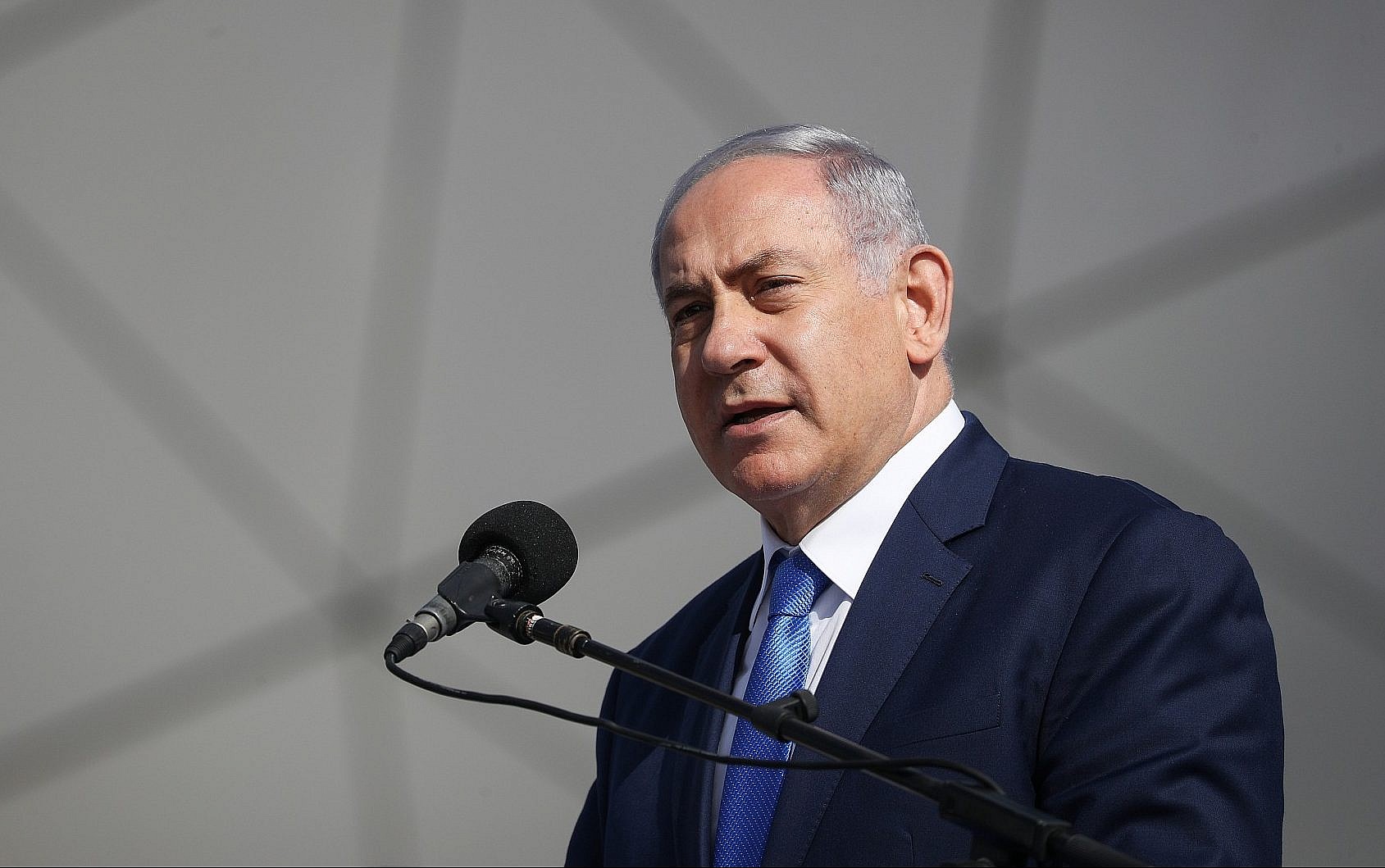
Amid rising tensions between Israel and Iran-backed forces in Syria on Monday, Prime Minister Benjamin Netanyahu issued a warning to leaders in Tehran, saying, “Anyone who tries to hurt us, we will hurt them.”
Speaking at the inauguration of a new international airport in the country’s south, Netanyahu said Israel’s air force had “delivered powerful blows to Iranian targets in Syria, after Iran fired a rocket from that area toward our territory.”
Netanyahu was referring to three waves of airstrikes by Israel early Monday that targeted first Iranian weapons storehouses, intelligence facilities and a training camp near Damascus, and then Syrian air defense batteries that the IDF said had opened fire on the attacking Israeli fighter jets.
The Israeli strikes were a response to a missile launched from the Damascus area the previous day at the Israeli Golan, but was intercepted before penetrating Israeli airspace by an Iron Dome missile-defense battery.
Referring to the rocket attack, which Israel has attributed to an Iran-backed Shiite militia, Netanyahu vowed that Iran-linked forces “won’t get a pass for such acts of aggression, for Iran’s efforts to entrench itself militarily in Syria, and for Iran’s explicit declarations that it intends to destroy Israel, as Iran’s air force commander just said.”
He added: “Anyone who threatens to destroy us will have to bear the responsibility” for that threat.
According to the IDF, the missile fired from Syria on Sunday was an Iranian-made medium-range model that was launched from the outskirts of Damascus at approximately three in the afternoon. Conflicting reports emerged about the intended target of the missile, with some politicians claiming it was the Hermon ski resort and the IDF saying its exact target was unclear.
The attack came shortly after the IDF allegedly conducted a number of rare daylight airstrikes on Damascus on Sunday.
The IDF said Monday it had placed troops on the Syrian frontier on high alert. The Hermon ski resort was closed to visitors, but no other special safety instructions were given to residents of the area.
Shortly after the Israeli strikes on Monday, Iran’s air force chief said the country’s military was ready to fight a war for “Israel’s disappearance.”
“We’re ready for the decisive war that will bring about Israel’s disappearance. Our armed forces are prepared for the day when Israel will be destroyed,” Brig. Gen. Aziz Nasirzadeh said, according to an Iranian news site.
Netanyahu spoke at the inauguration of the Ramon Airport, located some 18 kilometers (11 miles) north of the Israeli Red Sea resort of Eilat and the adjacent Jordanian port of Aqaba, and is meant to boost tourism to the nearby Red Sea and serve as an alternative to Tel Aviv’s Ben Gurion Airport.
Earlier, Intelligence Minister Israel Katz said that Israel’s early-morning raids on Monday against Iranian installations demonstrated that Jerusalem’s “red-line policy to prevent Iranian entrenchment in Syria is being upheld with full force.”
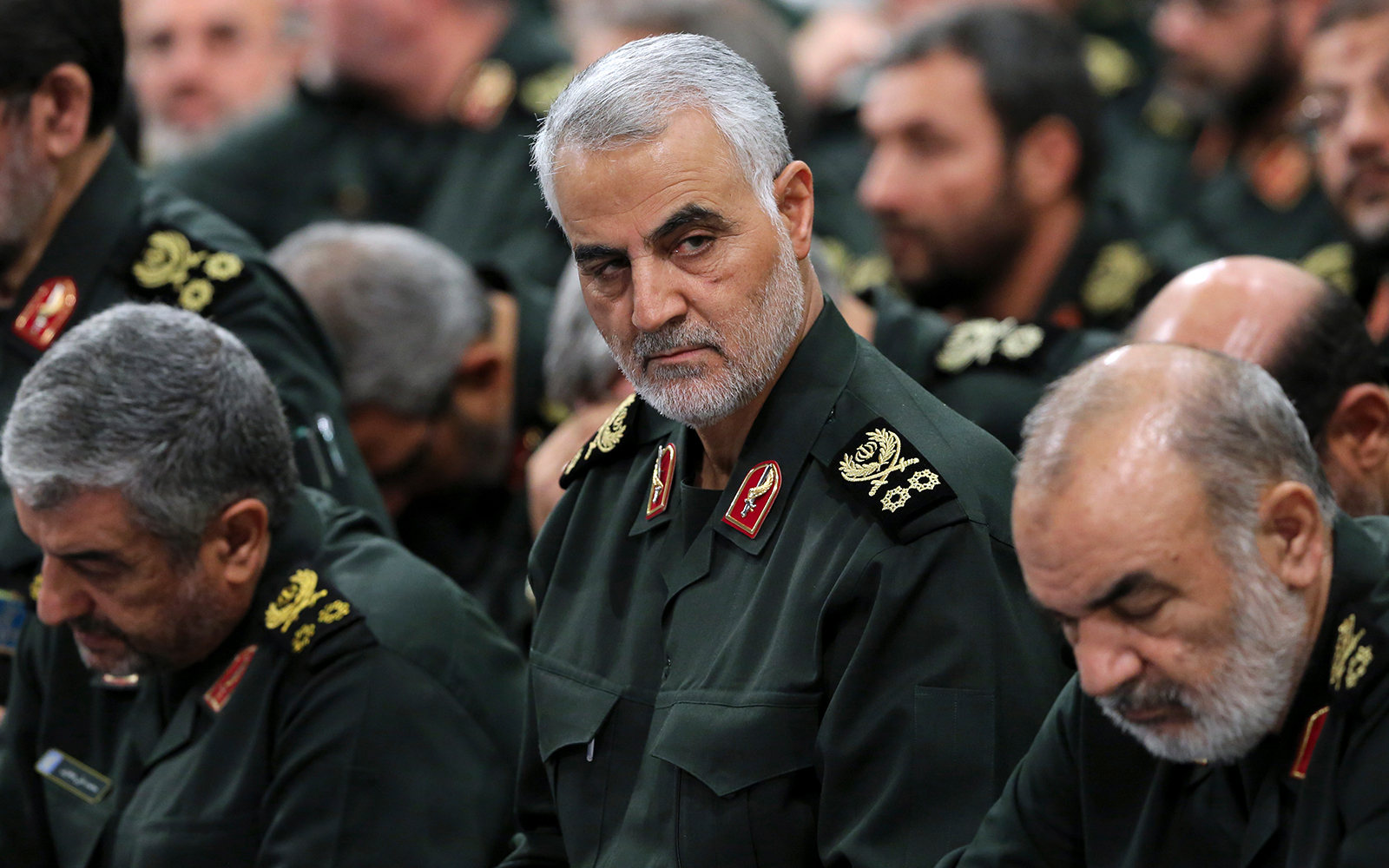
“The IDF attacks tonight against Iranian Quds Force targets are a clear message to [Quds Force commander] Qassem Souleimani and the Iranian Revolutionary Guard,” Katz said in a statement Monday morning.
Likud’s Absorption Minister Yoav Gallant, a retired IDF major general, vowed on Monday, “We will expel Iran from Syria. We won’t allow the establishment of an Iranian army in Syria and won’t allow the formation of another Hezbollah front on the Golan Heights.”
AFP contributed to this report.
Source: Firing on Golan, Iran seeks new balance of deterrence with Israel; it may fail | The Times of Israel
Expansive IDF assault on Iranian installations reveals to all parties, and especially Tehran, that the Jewish state retains the upper hand on its northern frontier
The Israeli assault on Syrian territory early Monday morning was one of the broadest in recent years, and certainly the most substantial since an IDF airstrike last September during which Syrian air defenses shot down a Russian spy plane, killing its 15-member crew.
The tension that incident sparked between Moscow and Jerusalem led to limits on Israeli activities in Syrian territory, and any action in Syrian airspace attributed to Israel in its aftermath drew vigorous condemnations from the Kremlin.
Monday’s operation, then, wasn’t just another airstrike. Israel was sending a message not only to Damascus but also to Moscow that rocket attacks such as Sunday’s targeting of the Hermon ski resort (which was thwarted by Iron Dome) won’t go unanswered.
The rocket from Syria, which the military attributed to Iran, was fired by one of the pro-Iranian groups operating inside Syria, likely a Shiite militia backed by the Islamic Revolutionary Guard Corps and its Quds Force expeditionary arm, commanded by Qassem Soleimani. The attack was carried out in the wake of an airstrike in the Damascus area on Sunday morning attributed to Israel.
Some Israeli pundits have argued that the Iranian attack was a response to the apparent end of Israel’s longstanding policy of ambiguity, under which Israeli officials refrained from taking explicit responsibility for airstrikes or other military operations in Syria over the years.
But this may be a naive view. There is no reason to assume that the rocket fire from Syria was triggered simply by an outgoing chief of staff’s interview or a prime minister’s comment about strikes in Syria. The Syrians themselves have publicized each Israeli strike in their own media, and Israel’s supposed policy of ambiguity (a relic of the 2007 strike on the Syrian nuclear reactor) hasn’t been much more than a slogan for quite a while. It certainly no longer shapes the response from Damascus to Israeli attacks. The reality of online news reporting has changed dramatically in the past 12 years, and it is no longer possible to conceal significant airstrikes, especially those carried out in Damascus, Syria’s capital.
The rocket fire at Israel from Syria is probably better understood as an Iranian attempt to create a new balance of power on the Israeli-Syrian front — to generate the expectation that an Israeli attack in Syrian territory will result in fire on Israeli territory. In other words, it marked a new effort to create deterrence against Israel.
Yet those who fired the rocket clearly were trying to avoid getting dragged into a larger war; otherwise they would have launched dozens of projectiles. The goal, it seemed, was to begin to construct a new architecture of deterrence, while limiting the chances of sparking a broader confrontation.
As of Monday afternoon, it remained to be seen how the Syrians or Iranians would respond, in turn, to the unexpectedly strong Israeli reaction. Though human rights monitors say 11 people were killed in the Israeli strikes early Monday, four of them reportedly Syrian soldiers and the rest possibly Iranians, and though Iran’s air force chief was quoted as vowing Israel’s “destruction” on Monday, it is still too soon to know if Bashar Assad and his Iranian allies plan to respond at all.
Russian television, meanwhile, reported on the strike, and explained how it was carried out. But as of midday Monday, there was no condemnation of it from the Kremlin. That’s a stark change from previous attacks attributed to Israel in recent months. Russia may now be trying to dial back the tension with Jerusalem that it has worked for months to stoke. The two militaries have even exchanged delegations recently, with Israeli officials traveling to Moscow and a Russian military delegation reciprocating with a visit to Israel last week. Moscow seems to be trying to get its relationship with Israel back on track.
The limited Syrian response, thus far, to the Israeli airstrike is best understood by taking in the broader strategic problems facing Syria.
First, despite US President Donald Trump’s recent announcement of a withdrawal of US forces from Syria, it appears that for the next few months Washington does not intend to fully remove its troops in the east of the country. It’s possible the delay is the result of opposition to the move from Secretary of State Mike Pompeo and National Security Adviser John Bolton. In any case, for the time being US forces will continue to operate in the area of al-Tanef, where the Syrian, Iraqi and Jordanian borders meet.
That fact places limits on any Iranian response, as it leaves in place a key obstacle to Iran completing its land corridor from Tehran to the Mediterranean coast in Lebanon, and thus limits the transfer of the kind of significant Iranian forces to Syrian territory it would need for a confrontation with Israel. Thus far, neither the Revolutionary Guards nor the Quds Force have managed to bring to Syria aircraft, helicopters, tanks or advanced missiles for use by Iranian forces there. Efforts to ship precise weapons to Syria continue, but a significant Iranian entrenchment on Syrian territory has, for the time being at least, been staved off.
The second development limiting the response to Israel is the growing strife within Iran as the fight between the conservative elements in the regime and the relatively moderate camp around President Hassan Rouhani fight over control of the country’s Syria policy. The former group, which includes the leadership of the Revolutionary Guards and the Quds Force, are urging a deepening and expanding of Iran’s involvement in Syria, while the latter are calling for an “Iran first” policy amid the expectation that new US sanctions will further weaken an already fragile economy.
A third issue involves Turkey. After Trump’s announcement of an impending American withdrawal, Turkish President Recep Tayyip Erdogan prepared his forces for a ground assault on Kurdish militias in northeast Syria that had been protected because they were allied with the US in the war against Islamic State.
But then American policy abruptly changed, again — and, of course, may shift yet again without notice, given the unpredictability of the US president — and Erdogan faced not only a delay in the promised US withdrawal, but aggressive rhetoric from Washington condemning a Turkish assault on the groups that have fought loyally alongside the US throughout the Syrian civil war.
Erdogan hesitated. He understood, and for the time being appears to still understand, that an attack on Kurds is one thing; a direct confrontation with American forces in the region is quite another.
Israel’s robust response to Sunday’s rocket fire suggests Israel believes its opponents in Syria are constrained by all these factors, giving Israel an excellent opportunity to work to downgrade the military assets at Iran’s disposal so close to the Golan frontier. The quiet from Russia and overt backing from the US, not to mention Syrian and Iranian foot-dragging in delivering their own responses, suggest that assessment may be correct.




 anneinpt
 artaxes
 danmillerinpanama
 davidking1530
 Peter Hofman
 Joseph Wouk
 Peter
Peter Louisiana Steve
 WarSclerotic
Recent Comments