Source: Report: Syrian air defense repels Israeli attack in south
Russia’s National Defense Control Centre said the attack was carried out by four Israeli jets and targeted an airport in southeastern Damascus, RIA news agency reported. There were no victims and the airport was undamaged in the attack, RIA cited the centre as saying.
The smoke trails of Iron Dome interceptor were clearly seen over the Mount Hermon ski resort that opened its doors to tourists earlier on Sunday. Although the site was not evacuated following the rocket attack, heavy military presence was reported in the area following the events. The new IDF Chief of Staff Aviv Kochavi was also making his way to the northern border immediately after the incident.
The Al Quds Al Arabi newspaper reported on Friday that Russia had conveyed to Israel its intent to renovate Damascus International Airport and warned the Israeli government against striking targets, believed to be Iranian arms depots, in the airport’s proximity. According to the report, the Israel Air Force attacks prevent various Russian airlines from resuming their operations in the region.
Prime Minister Benjamin Netanyahu confirmed last week in a rare admission that the Israel Air Force struck Iranian targets in Syria last weekend, following Syrian reports of successful interceptions over Damascus.
The prime minister said that “in the past 36 hours,” the IAF hit Iranian arms depots near Damascus airport. “The wave of recent attacks proves that we are determined more than ever to act against Iran in Syria,” he told the weekly cabinet meeting in Jerusalem.

Netanyahu also said that the IAF has hit “hundreds” of targets belonging to Iran and its proxy Hezbollah in Syria since the start of Israel’s campaign to thwart Iranian military entrenchment in the region.
The prime minister’s statement came after Syria’s state-run news agency SANA said the country’s air defenses intercepted missiles fired by Israeli fighter jets last Friday night. The attacks reportedly caused damage but no casualties. SANA reported that “over eight targets” exploded over the capital, adding that most of the Israeli missiles had been intercepted.

An ammunition warehouse at the Damascus airport was reportedly hit, but a Syrian Transport Ministry official said to SANA airport activity continues as normal.
“At 11:15 before midnight Israeli warplanes coming from Al-Jalil area launched many missiles towards Damascus area and our air defenses intercepted them and downed most of them,” a Syrian military source told SANA.
Syrian state media broadcast footage of what it said were the air defenses firing, with bright lights seen shooting across the night sky. Explosions were heard in one of the videos.
The terrorist organization also demanded that the fishing area be expanded and to stop the blockade prohibiting goods into Gaza.

Hamas threatened Israel through western and regional mediators on Sunday because of the delay of the Qatari money transfer, according to Hadashot News.
“If Israel does not transfer the Qatari money, Hamas will escalate the situation on the ground,” a report from Asharq Al-Awsat, an Arabic international newspaper located in London, quoted Hamas as saying. The terrorist organization also demanded that the fishing area be expanded and the blockade on prohibiting goods into Gaza be stopped.
After delaying the third installment of the $15 million, the payment was scheduled to be delivered to Hamas on Sunday or Monday.
Former defense minister and chairman of the Yisrael Beytenu party MK Avigdor Liberman bashed Prime Minister Benjamin Netanyahu for leaving to Chad as the Qatari money is scheduled to be transferred to Hamas.
“Prime Minister Benjamin Netanyahu went tonight for an important political visit to Chad. And who comes in his place? The Qatari envoy, who brings in an additional $15 million in cash earmarked for Hamas,” Liberman said. “This is the continuation of the process of surrendering to terrorists and Hamas, and no political visit to Africa can cover that up.
“The government of Israel must stop the transfer of Qatari money, fuel and any additional equipment to Gaza and make sure every concession to Gaza is only in return for the release of our soldiers and citizens who are held by Hamas!”
Source: Netanyahu: Iran tried to stop my trip to Chad but failed – Israel News – Jerusalem Post
Visit follows Déby’s surprise visit to Jerusalem two months ago, and the two leaders are expected to announce the establishment of formal diplomatic ties.

Upon landing Sunday morning for the first ever visit by an Israeli prime minister to the Central African country, Netanyahu was met at the airport by Chad’s foreign minister, and huddled with him before going to the presidential palace for a meeting with President Idriss Deby.
The two leaders met privately for about an hour. Netanyahu is scheduled to return to Israel at about 3 in the afternoon, some 7 hours after landing.
“The Iranians and Palestinians were upset about the trip and tried to stop it but failed,” Netanyahu said, adding that there would be additional trips in the future to Muslim states.
Source: Iran says it has a new tank that equals the best in the world – Middle East – Jerusalem Post
According to Iran’s Tasnim news agency a tank dubbed the Karrar (striker) that was initially announced in 2017 is based on models going back to the 1970s.
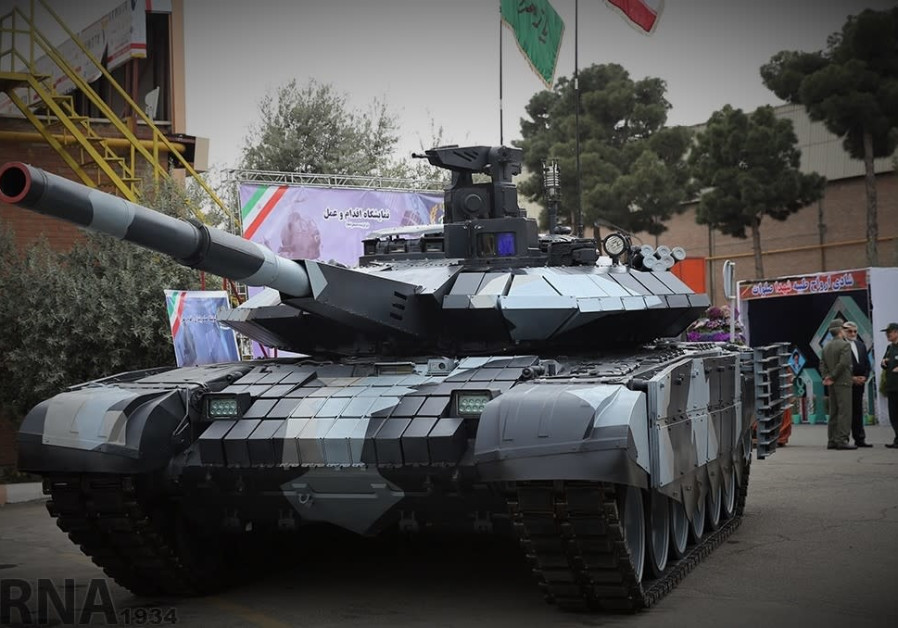
Iran’s latest model of its domestically built Karrar tank puts it at the level of other world powers, Iranian media said over the last week. In recent years Iran has built up an impressive list of new weapons systems, including ballistic missiles, and sought to improve its navy and air force.
According to Iran’s Tasnim news agency a tank dubbed the Karrar (striker) that was initially announced in 2017 is based on models going back to the 1970s. It was developed from the platform of a Russian T-72.
Iran’s deputy Defense Minister General Qassem Taqizadeh discussed the latest version of the tank alongside a new Soumar cruise missile on January 13. The Karrar was destined to be delivered both to the army and the Islamic Revolutionary Guard Corps (IRGC).
“The tank is at the level of the most. Advanced. Global tanks and can be compared to the Russian T-90 tank, even having superiority over it,” Former Defense Minister Hossean Dehqan was quoted in Shabestan news.
“It is a tank that, if we want to compare, is on the American Abrams scale.” The T-90 has been in service since the 1990s and the Abrams since the 1980s but both have received major upgrades since then.
Dehqan played a central role in developing the latest Karrar line of tanks. According to Press TV they are built in the city of Dorud in Lorestan province. IRGC commander Muhammed Pakpour told Shabestan news that the IRGC is excited about the tank if it ever makes its final debut. It is supposed to have an electro-optical fire control system, and the ability to fire at moving targets at night and in the day, as well as be able to shoot missiles with laser guidance. Like the T-90 its man gun is a 125mm cannon. The tank is supposed to have armor effective against RPG-7s and similar ordinance.
So far Iran hopes to build 800 of the tanks to bolster its armed forces, while at the same time Iran claims that its expanding arsenal of weapons does not make it a threat to its neighbors.
The tank, like Iran’s claims of having build a fighter jet and new ships, may end up being merely a bad copy of a foreign weapon system. Iran has shown in the past that while it has impressive achievements in ballistic missiles and missile technology, that larger weapons platforms built domestically face many hurdles. Iran also has been unable to test these systems against an opponent since it is unwilling to confront the US, it’s main enemy, on the field of battle, and its other enemies consist of terrorist groups such as ISIS.
Source: Iran says it has a new tank that equals the best in the world – Middle East – Jerusalem Post
According to Iran’s Tasnim news agency a tank dubbed the Karrar (striker) that was initially announced in 2017 is based on models going back to the 1970s.
According to Iran’s Tasnim news agency a tank dubbed the Karrar (striker) that was initially announced in 2017 is based on models going back to the 1970s. It was developed from the platform of a Russian T-72.
Iran’s deputy Defense Minister General Qassem Taqizadeh discussed the latest version of the tank alongside a new Soumar cruise missile on January 13. The Karrar was destined to be delivered both to the army and the Islamic Revolutionary Guard Corps (IRGC).
“The tank is at the level of the most. Advanced. Global tanks and can be compared to the Russian T-90 tank, even having superiority over it,” Former Defense Minister Hossean Dehqan was quoted in Shabestan news.
“It is a tank that, if we want to compare, is on the American Abrams scale.” The T-90 has been in service since the 1990s and the Abrams since the 1980s but both have received major upgrades since then.
Dehqan played a central role in developing the latest Karrar line of tanks. According to Press TV they are built in the city of Dorud in Lorestan province. IRGC commander Muhammed Pakpour told Shabestan news that the IRGC is excited about the tank if it ever makes its final debut. It is supposed to have an electro-optical fire control system, and the ability to fire at moving targets at night and in the day, as well as be able to shoot missiles with laser guidance. Like the T-90 its man gun is a 125mm cannon. The tank is supposed to have armor effective against RPG-7s and similar ordinance.
So far Iran hopes to build 800 of the tanks to bolster its armed forces, while at the same time Iran claims that its expanding arsenal of weapons does not make it a threat to its neighbors.
The tank, like Iran’s claims of having build a fighter jet and new ships, may end up being merely a bad copy of a foreign weapon system. Iran has shown in the past that while it has impressive achievements in ballistic missiles and missile technology, that larger weapons platforms built domestically face many hurdles. Iran also has been unable to test these systems against an opponent since it is unwilling to confront the US, it’s main enemy, on the field of battle, and its other enemies consist of terrorist groups such as ISIS.
Source: Syrian air defense missiles: Everything you need to know – Middle East – Jerusalem Post
The layers of air defense that Syria has should be able to confront some of the threats thrown at the regime.

Syrian air defense attempted to intercept an attack near the Damascus International Airport on Sunday. Like previous claims, this one is likely false or only partially accurate. Syrian air defense consists of multiple layers of weapons systems, including the S-300, which Russia supplied in early October.
The following is a list of the different systems Syria has and evidence as to which may have been used recently. Syrian air defense consists of Russian systems of surface-to-air missiles, some of them antiquated.
An anti-aircraft missile system, it is also called the Pantsir S-1 and is used to protect military bases and other targets. It is supposed to be used for low-altitude threats and has a mobile version that can be mounted on a truck.
Designed in Russia, it has been around since the mid-1990s. In 2000, the UAE purchased 50 units of the system and Syria bought $900 million worth of the system in 2007. Deliveries came in 2008, three years before the civil war broke out.
The system can threaten aircraft over the Golan. Iran supported the Syrian purchase. It reportedly downed a Turkish reconnaissance plane in 2012 and has been used to defend Syrian airspace over the years. One of its batteries was destroyed in May 2018 after Iran fired a salvo of rockets at Israel from Syria. It has a range of only 20 km.
S-125
Also called the SA-3, this antiquated system was developed in the 1950s and was supposed to deal with medium-altitude threats as part of a layered system that would include the S-200 and other defenses. It has a range of around 15 km. and is paired with a radar system.
Syrian Defense Ministry representatives attended a training session in Russia to improve their air defense in 2011. At the time, before the Syrian civil war broke out, Syria was alleged to have the S-200, S-125 and Buk. It was also seeking to modernize its air defense with supplies of two S-6 Tunguska air defense missile systems and 18 of the Buk-M2E as well as 36 Pantsir S-1. In this context, the S-125 was one of many systems the Syrians were attempting to use in their inventory. Russia has built other versions of it, but Syria’s air defense has not found the system to be very effective.
Buk missile system
Designed originally in the 1970s, the system is supposed to confront cruise missiles, small slow-moving aircraft, drones and smart bombs. Also called the SA-17 Grizzly, Syria acquired a mobile version of it called the Buk-M2. The mobile missile launcher has four missiles that are connected to a target-acquisition radar and a battle-management station. Hezbollah allegedly sought to acquire this system in 2015. The more advanced version has a range of up to 150 km. At least one of the systems was destroyed in May.
S-200
Also known as the SA-5 Gammon, it is designed to confront high-altitude targets and has a range of 150 km., with more modern variants extending that to 300km. With a 200-kg. warhead, it is bigger than those of the Buk (70 kg.) and the S-125 (60 kg.).
Syria has attempted to use the S-200 to defend itself against airstrikes. In March 2017, an S-200 missile reportedly carrying a 200-kg. warhead was headed for the Jordan Valley when Israel intercepted it with an Arrow missile. In another case, an S-200 followed an Israeli F-16 back from Syria in February, causing the plane to crash.
Syrian air defense is deployed extensively around Damascus, Homs and around the T-4 air base, in strategic locations. One report says that there are two Panstir S-1 systems at T-4, where Iranian forces have allegedly been based.
Tunguska
The Tunguska air defense system consists of a tracked vehicle with machine guns and missiles. Also known as the SA-19 Grison, the Russian made system was designed in the 1970s. It can fire 5,000 rounds a minute and is supposed to be used against helicopters, low-flying aircraft and cruise missiles. It’s not entirely clear how active the system is in Syria, or if the Syrians use it. A 2017 article by Russia’s Sputnik news agency noted that if it had been active, it would have been able to defend against various attacks.
S-300
The system was developed in the late 1970s and has an older and a more modern version. The S-300 PM-2 was first rolled out in the mid-1990s. It has modern radar and a command center, as well as mobile vehicles for the missiles. It has a range of up to 200 km. The S-300 PM-2 is the more advanced system and Russia provided it to Syria in October. The system was reported operational in early November but has not been used by Syrian air defense yet, according to reports.
THE LAYERS of air defense that Syria has should be able to confront some of the threats thrown at the regime. However, many of the systems are antiquated and cannot confront fifth generation airplanes, such as the F-35, nor have they proven to deal effectively with cruise missiles or other ordnance that can be fired from a long range.
The full details of the shadow air war that has gone on over Syria in the last seven years are not fully clear. Israel has said it carried out attacks on 200 targets in the last two years, and in separate statements indicated that it struck another 100 targets in the years before that. But the types of munitions used have not been released, except in rare cases such as the F-16 that was destroyed returning from one mission.
Russia must watch closely as its systems in Syrian hands do not prove to be effective. In one case, an S-200 destroyed a Russian IL-20. The slow moving IL-20 was an easy target at the time, but the S-200 was supposed to be targeting Israeli aircraft and failed in its mission. Russia also has its own more advanced S-400 system, radars and electronic warfare sites in northern Syria’s Latakia, but it has not used them.
According to the Institute for the Study of War, Russia believes that to cover all of Syria, two battalions of S-400s and three to four battalions of S-300s would be necessary. With Syria holding on to its S-300, either concerned about using it or not being fully trained to use it, the regime’s air defense lacks the layered and modern systems that it needs to confront the kind of adversary it has been facing.
Source: Airstrikes on Syria follow weeks of rising tensions – Arab-Israeli Conflict – Jerusalem Post
Israel has always viewed Iran’s role in Syria and its support for Hezbollah as a threat. However, developments in Syria have brought that into greater clarity in the past year.

The airstrikes on Syria reported Sunday morning came amid rising tensions in the region and followed Prime Minister Benjamin Netanyahu’s warning that Iran should leave Syria as “quickly as possible.”
Israeli officials have been more open in the last few weeks about past Israeli strikes on Iranian targets in Syria.
On January 13, Netanyahu said Israel was prepared to confront Iran’s activities in Syria, after admitting Israel carried out a January 12 strike on a warehouse. This was a message to Russia, as well as to Iran and Syria, because Russia is the main backer of the Syrian regime and has supplied the S-300 air defense system to Damascus in the wake of a September airstrike in Latakia that resulted in the downing of a Russian Il-20.
Israel has always viewed Iran’s role in Syria and its support for Hezbollah as a threat. However, developments in Syria have brought that into greater clarity in the past year.
Israel has warned repeatedly since 2017 about this presence. In November 2017, for instance, details of an Iranian base south of Damascus near El-Kiswah were leaked to Western media. In the fall of 2018, details about Iranian shipments to Hezbollah and Iran’s use of civilian cargo airliners as cover for weapons transport were also leaked by Western intelligence sources. Bit by bit, a picture of Iran’s activities have been revealed.
At the same time, as details emerged about Iran’s role in Syria and as Israel released official statements urging Iran to reduce its presence, airstrikes against Iranian targets have increased. At first, these airstrikes took place during the fog of war, with no one claiming credit for them. In August 2017, Israel Air Force head Maj.-Gen. Amir Eshel revealed that the IDF had struck arms convoys 100 times in Syria during the civil war. Iran was using the chaos of war to transport weapons over the mountains from Damascus to Hezbollah.
In September 2018, Israel said it had carried out 200 attacks on Iranian targets in Syria over a year-and-a-half period. This came after months of tension that included an Iranian drone entering Israeli airspace in February 2018 and the crash of the Israeli F-16 returning from airstrikes in Syria that month.
Full details of the shadow war being fought over Syria were never detailed. Foreign media, including Syrian regime media, reported on strikes here and there. Sometimes the spillover from the strikes was visible. In March 2017, for example, Israel activated its Arrow missile defense system to stop a missile fired from Syria. On December 25, 2018, pictures online showed an air defense missile activated near Hadera.
Speaking with The New York Times, outgoing IDF chief Lt.-Gen. Gadi Eisenkot said Israel had struck thousands of targets in Syria. He noted that Israel had not taken credit for these strikes at the time, but the numbers appeared far more than the 100 or 200 sites mentioned previously. The overall picture was of increased targeting of Iranian assets in Syria.
This has also impacted Israel-Russia relations, as Moscow has become more critical of Israel’s actions since last fall. Russia has warned against “hot heads” creating provocations in Syria. It also reportedly warned this month about more strikes near Damascus Airport. The warning came amid concerns that airstrikes might endanger civilian aircraft. On January 20, a Mahan Air flight allegedly turned around during daylight airstrikes. Syrian air defense has shown that it can make mistakes during alerts.
Syrian claims of a daytime airstrike during on Sunday show that while Iran wants to continue supplying Syria and Hezbollah, the Syrian regime’s air defenses are alert and now know that airstrikes might come in the daytime as well as at night. This comes as the US has warned Iran about its role in the region. US National Security Adviser John Bolton was in Israel this month, and US Secretary of State Mike Pompeo traveled to the Gulf and Cairo to condemn Iran’s activities.
Israel was reportedly concerned about the US withdrawal from Syria and the implications it might have for Iran’s foothold in Syria or its attempt to carve out a corridor to the sea via Syria and Iraq.
Source: Several said killed as ‘huge explosion’ rocks Damascus | The Times of Israel
Blast reportedly hits near a military intelligence office, is followed by gunfire
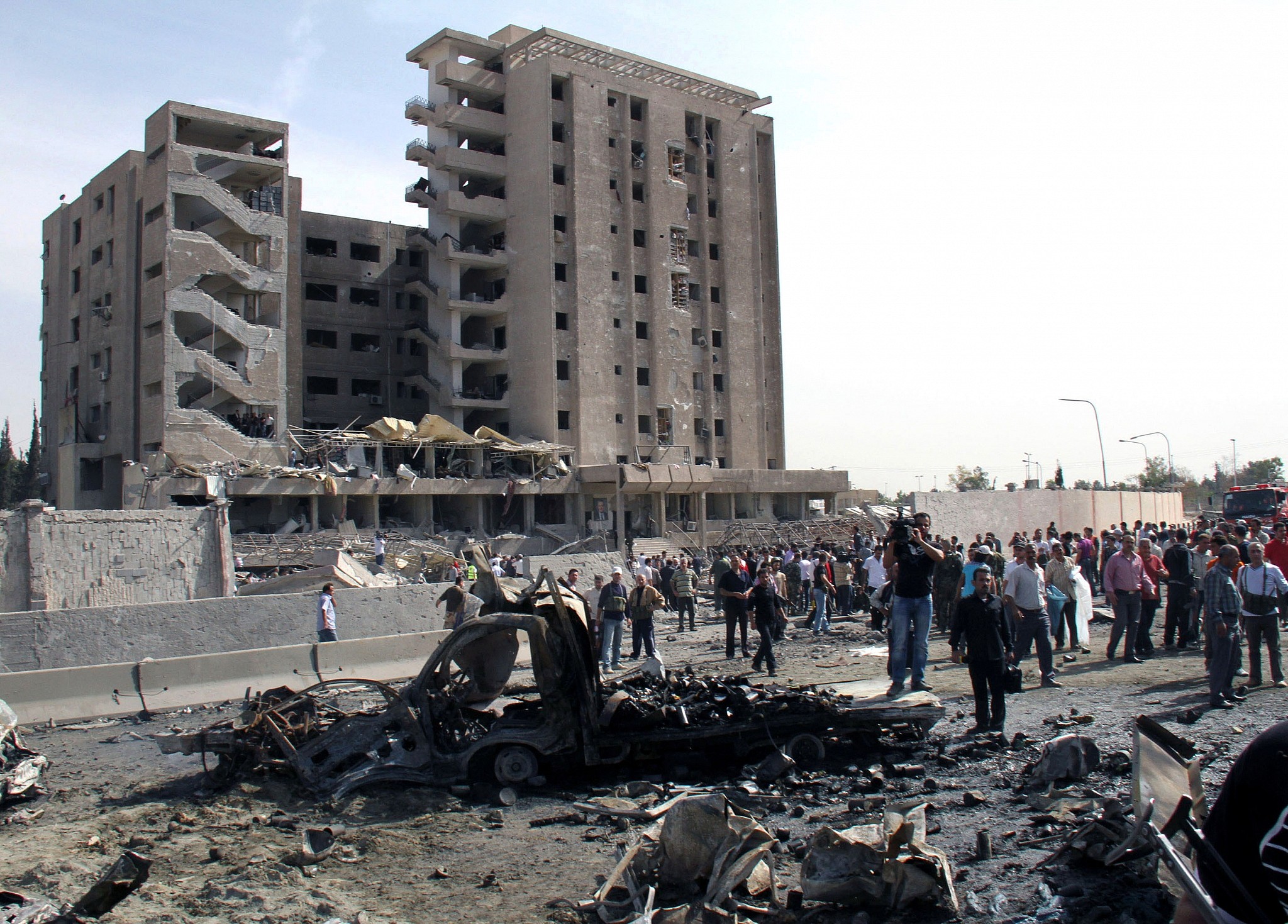
DAMASCUS, Syria — A bomb blast hit the capital of war-torn Syria on Sunday and a “terrorist” was arrested, state media said, in a rare attack in the city that has been largely insulated from violence.
A Britain-based war monitor said a “huge explosion” near a military intelligence office in southern Damascus had left a number of people dead and wounded.
State news agency SANA said that a “bomb blast” had caused an explosion “without leaving any victims.”
“There is confirmation of reports that a terrorist has been arrested,” it said.
The Syrian Observatory for Human Rights monitor told AFP that “the explosion took place near a security branch in the south of the city.”
“There are some people killed and injured but we could not verify the toll immediately,” it said.
It was unclear if the blast was caused by a bomb that was planted or a suicide attack, according to the monitor, which relies on a network of sources inside the country.
It said that shooting followed the explosion.
Syria is locked in a civil war that has killed more than 360,000 people and displaced millions since a brutal crackdown on anti-government protests in 2011 spiraled into full conflict.
Damascus has been largely spared the worst of the violence during the country’s brutal nearly eight-year war, but several bomb attacks have shaken the city.
Another bombing Sunday killed three people and wounded nine others in the northern Syrian city of Afrin on the first anniversary of a Turkish offensive on the Kurdish-majority region, the Observatory said
With key military backing from Russia, President Bashar Assad’s forces have retaken large parts of Syria from rebels and jihadists, and now control almost two-thirds of the country.
The Syrian regime in May reclaimed a final scrap of territory held by the Islamic State group in southern Damascus, cementing total control over the capital for the first time in six years.
Observatory chief Rami Abdel Rahman said that Sunday’s blast appeared to be the first attack in Damascus since a car bomb over a year ago that caused no casualties.
The city has been hit repeatedly by bloody bombings throughout Syria’s devastating conflict.
In March 2017 a double suicide attack claimed by Al-Qaeda’s former affiliate in the country killed 74 people, including dozens of Iranian pilgrims visiting religious sites in the historic Old City.
That was followed a few days later by bombings claimed by the Islamic State group at a courthouse and restaurant that killed 32 people.
One of the most high-profile attacks in the capital saw a bomb kill Assad’s brother-in-law Assef Shawkat, a top security official, and the minister of defense at a command center in July 2012.
Since regime forces reclaimed control of the Damascus and surrounding regions security forces have removed many of the security checkpoints that dotted the city.
Government troops have largely pushed remaining rebel and jihadist forces into the northwestern province of Idlib, while IS holds a few dwindling pockets of territory.
The Afrin blast was the result of a bomb placed in a bus in the center of the city, according to the Observatory.
Turkish troops and allied rebel groups seized the Afrin region from Kurdish forces in March last year after a two-month air and ground offensive.
Source: Syria accuses Israel of rare daylight strike, as IDF downs missile over Golan | The Times of Israel
Iron Dome intercepts incoming projectile over Golan Heights, as Russian military says Syrian air defenses block incoming Israeli attack
Syrian state media on Sunday accused Israel of conducting a rare daylight missile attack in and around Damascus, triggering the country’s air defenses.
The Russian military, which is allied with Syrian dictator Bashar Assad, reiterated the Syrian claims, saying the incoming attack had been blocked by the country’s air defenses. Israel refused to comment on the reported strike.
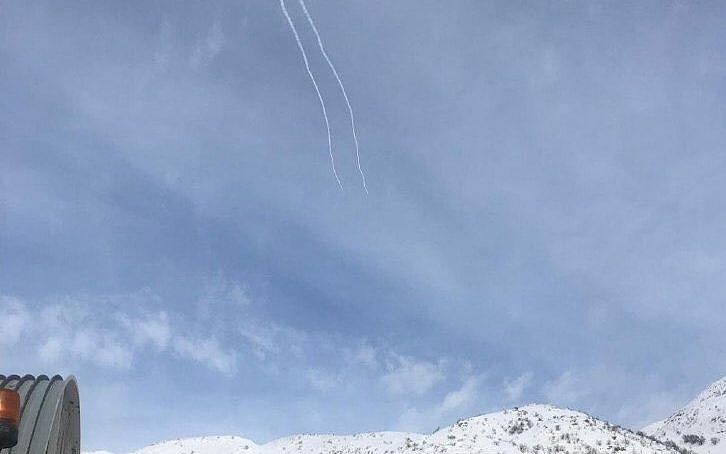
During the exchange, the Iron Dome missile defense system intercepted an incoming projectile from Syria, which was heading toward the northern Golan Heights, the Israel Defense Forces said.
An army spokesperson said it was not immediately clear if the incoming projectile was a retaliatory attack or a Syrian air defense missile that was heading toward a populated area, as has occurred several times in the past, including on Christmas Day.
Local Syrian media said the targets of strike were in Damascus International Airport and in the town of al-Kiswah, south of the capital, both of which have been hit by Israeli attacks in the past. Last year, the Israeli military said bases near al-Kiswah were used by pro-Iranian militias. An Iranian weapons depot at the airport was targeted in an airstrike a week and a half ago, Israel said.
According to Syrian opposition media, approximately 10 missiles were fired at targets near the airport and in al-Kiswah.
“Warehouses containing weapons for Syrian regime ally Hezbollah and Iranian fighters are located in that area,” said Rami Abdel Rahman, head of the Syrian Observatory for Human Rights war monitor.
The Syrian regime mouthpiece SANA said the military’s air defense systems had “effectively addressed” the incoming Israeli attack and “prevented it from achieving any of its objectives.” Defense analysts generally dismiss the Syrian military’s routine claims of successful interceptions as overstated or outright false statements.
The Russia military supported the official Syrian claim that the alleged Israel attack had not damaged the airport.
According to the the Kremlin-backed Sputnik news site, Syrian-operated Pantsir and Buk air defense systems destroyed seven incoming Israeli missiles launched from four F-16 fighter jets from over the Mediterranean Sea.
“The airport’s infrastructure was not damaged. There are no victims, and no damage,” a Russian military spokesman tells the news site.
It was not immediately clear what accounted for the conflicting reports on the number of missiles fired by the Israeli jets.
The interception of the incoming Syrian projectile was seen over Mount Hermon, Israel’s tallest peak, which was full of visiting skiers, following a stormy period that dusted the mountain with snow.
The ski resort area was not shut down, following the exchange, nor were residents of the area given additional security instructions, the army said.
 Israel Defense Forces
✔@IDF
A short while ago, a rocket was fired at the northern Golan Heights and was intercepted by the Iron Dome Aerial Defense System.
For years, Israel has conducted airstrikes against Iranian and Hezbollah targets in Syria, which it considers threats to national security. However, those attacks typically take place under the cover of darkness.
The alleged Israeli strike appeared to be the first major attack carried out by the Israel Defense Forces since Lt. Gen. Aviv Kohavi took over as chief of staff last week. Kohavi was visiting the IDF Northern Command at the time of the alleged Israeli strike.
The alleged strike came hours after a Syrian cargo plane touched down in the Damascus International Airport from Tehran, according to publicly available flight data. Israel and American defense officials have said these types of ostensibly civilian cargo planes are often used to transport advanced weaponry from Tehran to pro-Iranian militias, fighting in Syria, including the Hezbollah terror group.
Another flight from Iran, flown by Tehran’s Mahan Air carrier, was en route to Syria on Sunday afternoon, but turned back following the reported Israeli strikes, according to flight data. Mahan Air has been identified by defense officials as one of the cargo carriers suspected of ferrying war materiel from Iran to Syria. As a result, it is subject to sanctions by the US Treasury Department.
The Israel Defense Forces also carried out a similar strike following an apparent cargo drop earlier this month, bombing an Iranian weapons depot at Damascus International Airport. At last week’s Sunday cabinet meeting in Jerusalem, Prime Minister Benjamin Netanyahu said Israel was behind the strike two days before, a rare acknowledgement of such a raid.
“The Israel Defense Forces has attacked hundreds of Iranian and Hezbollah targets,” he said. “Just in the past 36 hours, the air force attacked Iranian depots full of Iranian weapons in the Damascus International Airport.”
Israel typically refrains from commenting on individual airstrikes in Syria, but does generally acknowledge that it carries out raids against Iranian- and Hezbollah-linked targets in the country.
Israel in recent years has carried out hundreds of airstrikes in Syria against targets linked to Iran, which alongside its proxies and Russia is fighting on behalf of the regime of Syrian President Bashar Assad.
The previous reported airstrike occurred on Christmas Day. On that occasion, a Syrian anti-aircraft missile flew into Israeli airspace, and was destroyed by Israeli air defenses.
Israel has accused Iran of seeking to establish a military presence in Syria that could threaten Israeli security and attempting to transfer advanced weaponry to the Hezbollah terror group in Lebanon.
Michael Bachner, Times of Israel staff and AFP contributed to this report.




 anneinpt
 artaxes
 danmillerinpanama
 davidking1530
 Peter Hofman
 Joseph Wouk
 Peter
Peter Louisiana Steve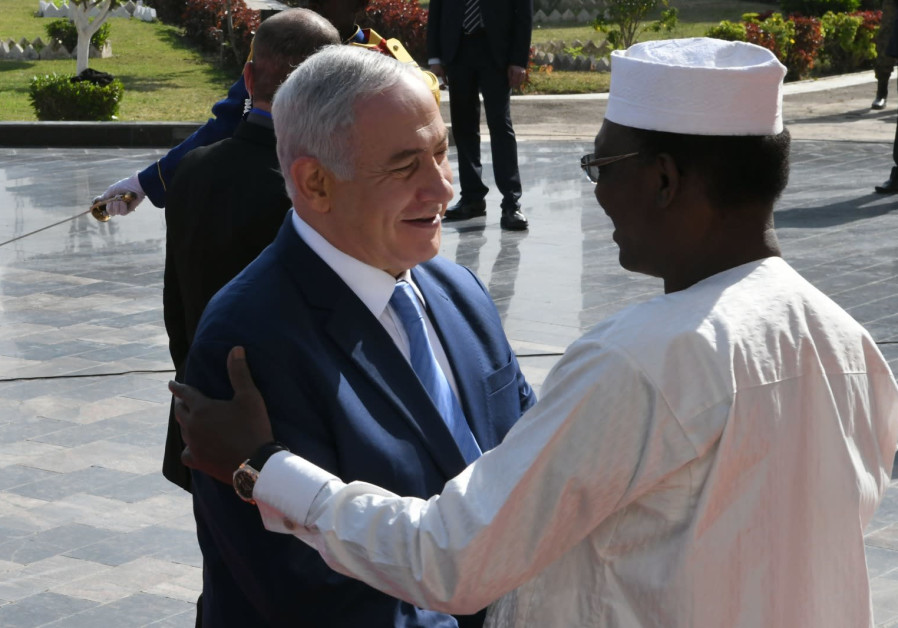

 WarSclerotic
Recent Comments