How the attack that killed U.S. forces in Syria could affect Trump’s pullout ■ The question of Iran’s nuclear program is set to make a comeback
The strategic reality facing the new chief of staff of the Israel Defense Forces, Lt. Gen. Aviv Kochavi, will depend largely on one factor – the political situation in the United States. More precisely, it will depend on the vagaries of U.S. President Donald Trump.
At the outset of 2019, the Trump administration continues to convey uncertainty and instability. The amount of news generated by the president in one week, like this past one, is equivalent to several months’ worth with previous presidents.
Trump hunkered down in the White House, telling interviewers that he hadn’t emerged in months, forgetting for a moment his frequent trips. He’s up to his neck in the crisis resulting from the government shutdown, continuing with his promises to build his wall on the Mexican border.
But the latest crisis is only a symptom. The deluge of headlines in recent days included the following.
The FBI investigation into Trump began right after he was sworn in two years ago, on suspicions he was a spy or acting on Russia’s behalf. There was a report he was considering an American withdrawal from NATO, an idea whose very mention sends shivers down the spines of strategic experts, Democrats and Republicans alike. There was also news of a secret plan initiated by the national security adviser, John Bolton, for attacking targets in Iran.
From Israel’s perspective, Trump’s Middle East policies will be affected by two interconnected factors: progress by Special Counsel Robert Mueller and the balance of power between the United States and Russia. The shattering of norms in Washington may get worse with the Democratic-led House of Representatives promoting further embarrassing investigations into Trump. It seems that, under pressure, the president will act even more erratically than during his first two years in office.
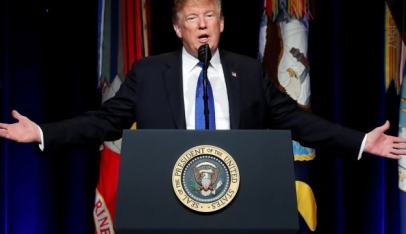
The president will have an even shorter attention span when it comes to foreign affairs. With the removal of any remaining restraints – after the withdrawal of generals John Kelly as White House chief of staff and Jim Mattis as defense secretary – Trump may be tempted to take strategic gambles to deflect attention from his legal troubles at home.
The timetable for implementing Trump’s decision to withdraw from Syria is still unclear. In recent trips to the Middle East by Bolton and Secretary of State Mike Pompeo, there was mention of a process that would take months. The evacuation of the American base at al-Tanf in southern Syria, near the borders with Iraq and Jordan, could take even longer.
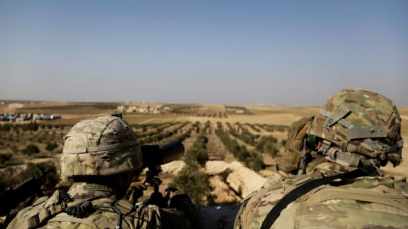
This is viewed in Israel as critical because the U.S. presence there is seen as an obstacle against creating a land bridge from Tehran to Iraq, Syria and on to Beirut. On the other hand, Trump is sticking to the principle of withdrawing. It’s possible that this week’s attack by the Islamic State, in which four American soldiers died in the Kurdish town of Manbij in northern Syria, will give him another reason to speed up the exit of U.S. troops.
IDF Chief of Staff Gadi Eisenkot, who ended his term this week, began his tenure in February 2015 amid hopes that the big powers’ negotiations with Iran over a nuclear accord would end well. A deal was then signed in July of that year, sending Prime Minister Benjamin Netanyahu into shock.
The IDF actually saw it in a positive light. This was a dramatic turning point, giving Eisenkot an interlude for launching the multiyear Gideon plan, whose main component was the diversion of resources from preparations for attacking Iran. Instead, Israel would contend with challenges closer to home such as Hezbollah and Hamas.

A second strategic turning point followed almost immediately, in September 2015, with the dispatch of two Russian fighter squadrons to help the Assad regime in Syria. This gift to Bashar Assad from Vladimir Putin not only tipped the scales in the civil war and saved the Syrian tyrant, Russia’s cooperation with Iran on Assad’s behalf accelerated Iranian moves to dig in militarily in Syria while smuggling weapons to Hezbollah in Lebanon.
This was confronted by the IDF, under Eisenkot, with considerable success. Last weekend’s news of airstrikes on thousands of targets in Syria wasn’t very informative. First, neither the targets nor the achievements were disclosed. Second, since Syria’s accidental downing of a Russian spy plane in September, Israel has reduced its number of strikes and is now meticulously avoiding areas near Russian bases in northwestern Syria.
Netanyahu, in his speech during the chief-of-staff changeover Tuesday, stressed again his real interest: Iran, Iran and Iran. Eisenkot focused his efforts on contending with Iran in Syria not terribly far from the Israeli border.
Trump’s decision to withdraw from the nuclear accord, with Netanyahu’s vigorous encouragement, raises anew the problem of Iran’s nuclear program. It’s likely that Netanyahu will again ask the military to upgrade its operational plans to contend with this problem, which requires a considerable investment of resources. Kochavi must now craft a new multiyear program, taking into account new directions laid out by Netanyahu in the context of an unpredictable regional and international situation.
Trump’s future is a big unknown factor in this equation. The Israeli political arena, with an election coming up on April 9, followed by what looks like a corruption indictment against the prime minister, doesn’t herald much stability or certainty.
Source: Israel’s new Global Strategy – Modern Diplomacy
If we want to study Israel’s political and military positions, we must at first analyse Syria.
For Israel the problem in Syria is Russia, although it is apparently Iran.
In fact, one of the de-escalation areas is in the Golan Heights and certainly the Jewish State does not like that Iran and Hezbollah can easily and quietly operate in the Golan area, even without warlike acts but under the protection of Russia, which is also the guarantor of the whole area.
In particular, the Israeli government wants the Russian Federation to never intervene in favour of Iran.
However, if Iran and the Shiite forces leave Syria, Russia’s control to ensure Syrian stability will weaken and probably even crumble.
Hence Israel wants Russia and even Syria to push Iran away from Syria, by threatening a real war on Syrian soil, along with the United States.
The United States and Israel could overthrow Assad and, in any case, remove Russia from the area, and hence from the Middle East. This is one of Russia’s primary aim, i.e. to stay in the Greater Middle East and in the Mediterranean region with strong and decisive power. But would the United States accept this anti-Russian operation? I do not think so. The United States would initially participate and later move away, after having completed the first operations successfully. After the first headlines on the New York Times, it would go back home. The United States either takes possession of an area for twenty years -as was the case in Afghanistan – or confines itself to quick strategic operations.
In the current Syrian situation, however, will the United States still be a reliable partner for Israel, apart from the possible war?
Probably not. The United States already has its Kurds who, after the US withdrawal from Syria, immediately decided to fall into Assad’s arms, with a view to opposing Turkey.
Furthermore, what would be the configuration of the Syrian-Iranian system after this attack on the Syrian Baathist regime? Probably more dangerous than it is today.
A great coalition is needed to destroy Shiite Iran’s hegemonic designs, certainly with the United States, but also and above all with Islamic partners, not only Saudi Arabia.
Russia would never accept such a project.
Russia wants to avoid not only the stabilization of current Syria, which, in fact, is now a Russian client State, but also a new war in the Greater Middle East.
Hence Israel’s friendship with Russia is possible and desirable, but the only true and realistic possibility of containing Iran within Syria, or on the Israeli borders, is anyway to strongly isolate the Shiite power within Assad’s area, which may also be Russia’s goal.
This also in view of strengthening Russia’s increasingly close relations with Saudi Arabia, a fierce competitor and opponent of Iran, which could be decisive in a post-war reorganisation and reconstruction of Syria.
Hence any realistic strategy for harshly containing Iran must be based on a preliminary agreement between Russia and Israel.
Moreover, it should be recalled that Russia absolutely needs the Jewish State at economic, technological and strategic levels.
These are some of the topics I had the opportunity of discussing openly and frankly with my friend Moshe Ya’alon, when I recently presented the Israeli edition of my latest book in Jerusalem.
Hence a preventive war on Syria to destroy the Iran-Hezbollah axis? Probably so. I also believe that, in all likelihood, there could be a substantial military disregard and disinterest of Russia, which would thus no longer have many contacts with a dangerous oil competitor, namely Iran, which has very different oil and gas policies from Russia.
Not to mention, however, that Saudi Arabia is already making its war in Yemen, certainly with a view to avoiding the pressure of a Shiite group such as the Houthi, but also and above all to taking possession of the new (huge) oil reserves of Kharkhir and Najran – apart from the fact that currently 60% of Yemeni oil is already “stolen” from Saudi Arabia, through former Yemeni President Mansour Hadi.
Obviously the clash in Yemen also regards control over the Bab-el-Mandeb Strait, through which 3,800 million barrels of Middle East crude oil transit.
Syria, however, is still a big, polymorphic country, which has always been politically unstable and, in any case, with Christian minority areas -Druze and Shiite or para-Shiite areas – that could turn out to be too hard a nut to crack in view of waging the blitzkrieg, the lightning war that has always been in the style of the Israeli strategic thinking.
Moreover, given the current presence of many Iranian armaments in the Lebanon and, probably, in the Golan Heights, a very quick attack should be based on an extremely careful analysis of the positions and forces of Shiite groups by the Israeli intelligence services.
Anyway, a quick attack should avoid Israel’s countermove on its Northern borders.
Hence, to date the only logical operation would be to define a Syrian geopolitics shared with Russia, which has parallel interests and controls the Shiite forces on the field.
Indeed Russia is looking for a reliable ally to counter Iran’s territorial claim on Syria itself.
The agreement signed by Israel with the USA and Russia, at the end of July 2018, also enabled Israel to accept the presence of the Syrian army on the Golan border, albeit over eighty kilometres away from the boundary line.
This implies that the Israeli Armed Forces will not wage war to undermine Russia’s prospects and Syrian operations outside the borders with Israel. A clear acceptance of Russian protection over Assad’s armies.
The United States has now abandoned its Southern client States, namely the “democratic jihadists”, if any, which is a sign of the clear US inability to think in a strategically correct way.
In fact, both Russia and Israel know that the Syrian clash is a war that can affect the whole world, not just the Middle East. It is not the usual story of “democracy” against “terrorism”.
The Syrian clash has been the trigger of a possible world war.
The United States has instead interpreted the war in Syria as a mere war on terror, a sort of geopolitical tranquilizer.
Obviously Israel has greatly strengthened its positions in the Golan area, but will it be enough? I do not think so.
The possibility for Iran (which funds and trains also the Islamic jihad south of Israel) to start a regional clash against the Jewish State also from the Gaza Strip is such as not to allow excessive confidence in the current status quo.
Meanwhile, in Asia there is Israel’s economic, but also political opening.
Obviously Israel’s motivation lies in the fact that Asia will be the dominant region at economic, but also at political and military levels.
Hence the opportunity – to be seized in the near future – of a geopolitical connection between China and Israel, which could easily influence also the Greater Middle East.
Except for Singapore and Burma, all Israeli official relations with the Asian countries date back to the period following the collapse of the USSR.
Trade with China and the other Asian powers is already significant: in fact, it amounts to 15 billion US dollars.
Considering the current trade tensions between China and the USA, the relationship between China and Israel could become crucial, especially in the high-tech field.
There is also a project at stake, i.e. the Med-Red, a Eilat-Ashdod railway line that could be a terrestrial alternative to the Suez Canal, with very noticeable strategic effects, which are barely imaginable today. Chinese investment would be relevant in this respect, considering the geographical and political symmetry of Red-Med with the New Silk Road.
While the EU – with its current trade laws, substantially punishing the Jewish State – remains a substantially enemy area, Israel is opening to Asian trade – and China’s, in particular – which largely replaces trade with the EU.
These economic facts have wide strategic implications: unlike the old “Rhine” Europe, not reached by the new “Silk Road”, Israel is connecting to Central Asia’s great development area and hence is slowing down its ties with the USA and, even more, with Europe, which is now hypocritically anti-Semitic.
Asia is therefore a sort of insurance policy – also at geopolitical level – of the Jewish State against the West, which will be ever less friendly in the future.
In any case, Israel can always open up preferential channels in the East, if they are closed in the West.
Nevertheless the Jewish State does not certainly want to diminish its relations with the USA and Europe today, although its relations with the East will certainly increase, including those having a security nature.
Hence if the relations with the USA cool down, even from a political viewpoint, Israel could establish good contacts with India while, due to its excellent relations with Iran, China may not be Israel’s exclusive partner in the East.
Again at regional level, a long-term – if not definitive – solution to the Palestinian issue could be useful.
If the borders between the Jewish State and the PNA are not made safe, that strategic link will always be used as a thorn in the flesh against Israel, which will never become a global player unless it quickly gets rid of the old geopolitical memories of so many regional wars.
How can we resolve tension with Palestine, which could be exploited in the future by anyone who wants to weaken the Jewish State?
The solution of placing the PNA in Jordan’s hands is not very rational.
The Hashemite Kingdom has not the economic, and probably not even the military, strength to swallow the whole Palestinian area up.
Jordan can certainly become an element of control over the Palestinian territories, but nothing more.
The solution of the State to be built, however, has now failed and certainly not because of Israel.
Hence what could be the solution? We could think about an area controlled and economically supported by Islamic countries – pro quota – but certainly not by Iran.
I see no other possible options.
It is certain, however, that the strengthening of good economic relations with Egypt, Jordan, even with Saudi Arabia, would be useful also for solving the Palestinian issue.
Another fact to be considered is the strategic superiority of the Jewish State in the field of active and passive cybersecurity, which can harshly remove many tensions before they arise.
Certainly, for the Jewish State, cyberwarfare gives the possibility of weakening the infrastructural and protective networks of the enemy so as to make it unable to fight.
It is also certain that Israel is a world leader in this sector, but it must always keep up, because the pace of change in this field is very fast.
Nevertheless cyber-mercenaries are also coming – and there will much work here.
Obviously, although the excellence of the Israeli cyberstrategy is well-known, we shall keep and further improve it and, above all, target and direct remote operations – even temporarily – against new enemies and adversaries, never targeted before.
Enemies change, but it is good to never trust eternal friendship.
It will be good, however, to currently move away from the Western model of the “showbiz society”, which does not make young people focus on technical, scientific, rational and historical education and training – as today happens also in Israel- and go back to of our parents’ and grandparents’ model, with better education and hence more effective “nationalization of the masses” also in the Armed Forces.
We also need to invest even more in schools and universities although Israel has not yet reached the disastrous situation of many European countries and, above all, of Italy.
It will also be very useful to improve the relationship between universities and the productive and military system.
This is very difficult, but I really believe that the Jewish State will succeed once again.
Iraq’s Prime Minister expressed his fear about the possible move and told Secretary Mike Pompeo that if this were to happen, it will have dire and dangerous consequences for the region.

The United States reportedly said it would not intervene if Israel were to bomb Shi’ite militias in Iraq.
A source in the Iraqi government told the Arabic RT network, a Russian television network, on Thursday that US Secretary of State Mike Pompeo had informed Iraqi Prime Minister Adil Abdul-Mahdi that Washington would not intervene if Israel bombed bases belonging to Shi’ite militias in Iraq.
Reuters reported last year that Iran had delivered ballistic missiles to Iraq, handing over some to Shi’ite militias and was trying to develop a missile manufacturing infrastructure in the country.
It’s believed Israel knows about the transference of the missiles from Iran to Iraq and has been monitoring the situation closely over the last few weeks, the source said.
Iran’s Foreign Ministry denied the report, saying that “this claim is false, incorrect and ridiculous.”
Pompeo responded to the issue on his Twitter account saying that he is “very concerned about the report that Iran has delivered ballistic missiles to Iraqi soil.
“If this is true, it is a blatant violation of Iraqi sovereignty and of the UN Security Council resolution, and Baghdad must decide what is happening in its territory – not Tehran,” he said.
Source: US-led coalition bombs Syrian mosque being used by IS | The Times of Israel
Airstrike comes day after four US soldiers killed in suicide bombing, underlining jihadist group’s continued presence despite looming troop pullout
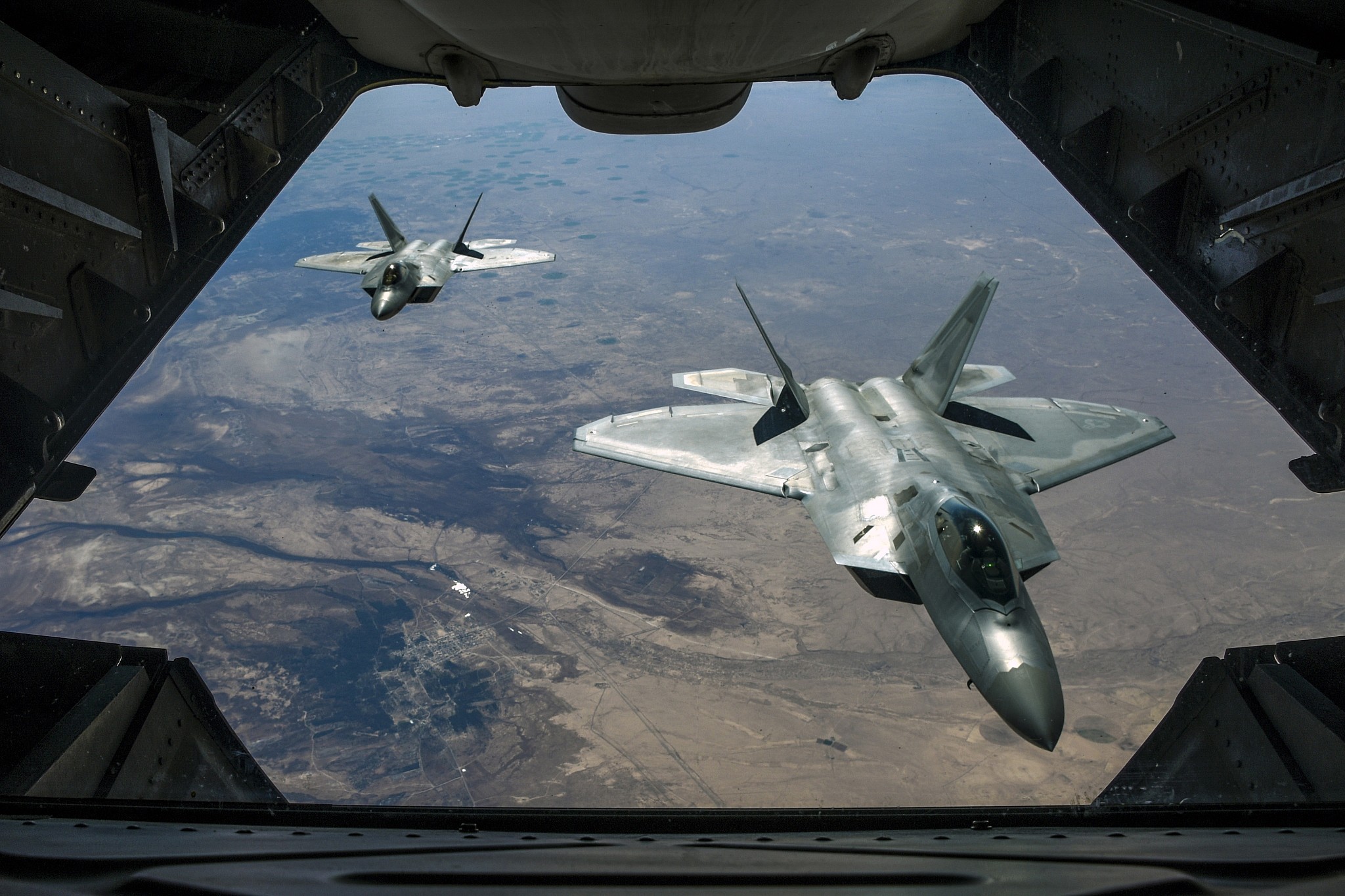
The US-led coalition fighting the Islamic State group destroyed a command center housed in a Syrian mosque on Thursday, officials said.
The strike is another indication that IS has not been “beaten” in Syria, as Trump claimed last month when he ordered the withdrawal of US forces from the country.
Coalition aircraft “destroyed an ISIS command and control facility in a mosque in Safafiyah,” a coalition statement read, using an alternate acronym for IS.
“ISIS continues to violate Law of Armed Conflict and misuse protected structures like hospitals and mosques, which cause a facility to lose its protected status,” the statement added.
IS holdouts in Syria are mainly in the eastern province of Deir Ezzor.
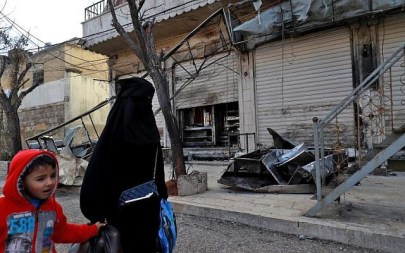
Four Americans, including two US soldiers, were killed Wednesday in a suicide blast claimed by IS in the northern city of Manbij.
It was the deadliest attack against US forces since they first deployed to Syria four years ago.

This would be the largest pro-Iranian military increment into Syria since the Hizballah intervention of 2014 – and Tehran’s rejoinder to Israel’s warnings.
The 10,000 troops massed on the Iraqi border belong to the large Iraqi Popular Mobilization Units (PMU) aka the Hashd Al-Shaabi militia, DEBKAfile’s military and intelligence sources report. They have been ordered to stand there by Iran’s Middle East commander, Al Qods chief Gen. Qassem Soleimani. Their commander is one of his deputies, Mahdi al-Muhandis, an Iraqi of Iranian descent. This Iraqi force awaits a green light to cross into northern Syria from President Bashar Assad.
It is intended to be Tehran’s response to Prime Minister Binyamin Netanyahu’s “advice” to Iran to “hurry up and get out of Syria” ahead of the IDF’s action. Soleimani has responded by “hurrying up” to top up Iran’s forces in Syria, before Lt. Gen. Aviv Kochavi has had three days to settle into his new job as IDF’s Chief of Staff.
Our sources note that permission for this large force to cross the border and link up with the Syrian government’s army would present Gen. Kochavi with his first major test. Tehran is anxious to find out whether Israel – or the US – means to actively halt this major troop buildup by bombing it from the air. If the PMU fighters are not stopped as soon as they set foot on Syrian soil, the Iranians will have won this round and feel able to safely augment the PMU force of 10,000 fighters by pouring thousands more into Syria.




 anneinpt
 artaxes
 danmillerinpanama
 davidking1530
 Peter Hofman
 Joseph Wouk
 Peter
Peter Louisiana Steve
 WarSclerotic
Recent Comments