Source: ANALYSIS: How Israel is Working to Defeat the Iranian Axis – Israel Today | Israel News
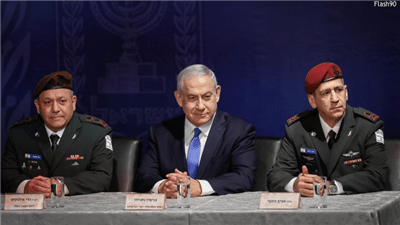
“I’m telling you, get out of there fast. We won’t stop attacking,” Netanyahu told participants in the ceremony.
His comments followed an official statement at the beginning of the weekly cabinet meeting in Jerusalem on Sunday in which Netanyahu confirmed the latest Israeli action against Iran in Syria.
“Just in the last 36 hours the air force attacked Iranian warehouses with Iranian weapons at the international airport in Damascus. The accumulation of recent attacks proves that we are determined more than ever to take action against Iran in Syria, just as we promised,” Netanyahu told his cabinet.
The Israeli leader claimed the IDF and IAF had “worked with impressive success to block Iran’s military entrenchment in Syria” and had struck “Iranian and Hezbollah targets hundreds of times.”
In interviews with Israeli broadcasters and The New York Times (NYT) the outgoing IDF Chief of Staff Gadi Eisenkot revealed more about how the Israeli military had succeeded to trim the Iranian military build-up in Syria and Lebanon.
Eisenkot said that the Israeli military had carried out “thousands of strikes” against the Iranian axis in Syria and in 2018 alone had used more than 2,000 missiles and bombs to stop Iran from building up its forces in the war-torn country.
The outgoing IDF commander also confirmed Israel could try to assassinate Qassem Soleimani the shrewd commander of the Quds Force of the Iranian Revolutionary Guards Corps (IRGC).
Soleimani is the driving force behind the attempt to encircle Israel and has established umbrella organizations of Shiite militias in both Syria and Iraq which are functioning as Iran’s proxy army in the region.
Eisenkot claimed the Israeli military had effectively stopped the Iranian military build-up in Syria and confirmed Iran is now increasing its entrenchment in Iraq where the IRGC-founded Hashd Al-Shaabi organization of predominantly Shiite militias is controlling the northern part of the country after the defeat of ISIS’ Caliphate.
The turning point in the covert war between Israel and Iran came when Soleimani ordered the launch of 30 missiles at northern Israel in the night of May 10, 2018.
None of these missiles reached their target but it gave the IAF the opportunity to deliver a devastating blow to the Iranian axis in Syria.
A fleet of 28 F-15 and F-16 warplanes launched missiles and dropped bombs at “80 separate Iranian military and Assad regime targets in Syria,” according to Eisenkot.
The former Chief of Staff claimed that as a result of the carefully prepared operation, which was dubbed ‘Operation Chess” by the IDF, Soleimani decided to withdraw his forces from the Golan Heights and to shift his focus from Syria to Lebanon and Gaza.
The destruction of Hezbollah’s attack tunnel project (Operation Northern Shield) and the revelation that Iran was actively helping Hezbollah with the conversion of crude rockets into GPS-guided missiles dealt another devastating blow to Soleimani’s Israel project, however.
The exposure of the underground missile facilities Hezbollah built with Iranian help in the Beirut area forced the Iranians and Hezbollah into dismantling the project, according to the Israeli government.
Operation Northern Shield has so far resulted in the destruction of six attack tunnels which were already crossing the Israeli border. The operation not only deprived Hezbollah from an important weapon but also delivered a mortal blow to the Iranian plan to surprise Israel in a future multiple-front-war.
The IDF operation also restored Israel’s deterrence vis a vis Hezbollah as it bore all the hallmarks of psychological warfare.
It was no coincidence Eisenkot waited for four years before ordering the destruction of the tunnels at the moment Hezbollah neared their completion.
The video of a scared Hezbollah operative who came to inspect an IDF robot which was equipped with a small explosive device and a camera was another example of the psychological warfare the IDF uses against the Iranian axis.
The images of the Hezbollah men fleeing after the device exploded in his face were very humiliating for the Iranian proxy.
Then there is Gaza where the Iranians acted via its IRGC branch Islamic Jihad and its newfound ally Hamas in the beginning of November 2018.
Soleimani reportedly ordered the escalation on November 9 and 10 and asked the Palestinian terror organizations to open up a new front in southern Israel.
Eisenkot now revealed why he opposed a new ground operation in Gaza.
The former IDF chief told NYT that he thought Israel should focus its attention on winning the war against Iran and called Hamas “a weak enemy”.
“When you fight for many years against a weak enemy, it also weakens you,” Eisenkot claimed while adding the IDF is making “continuous and kinetic efforts” to degrade the military capabilities of Hamas and Islamic Jihad in Gaza.
His successor Maj-Gen Aviv Kochavi is expected to continue Eisenkot’s sophisticated and intelligent warfare.
“The IDF is getting an excellent Chief of Staff,” President Reuven Rivlin said during the appointment ceremony of Kochavi while PM Netanyahu praised the incoming IDF chief of staff for his out-of-the-box thinking.
Source: Analysis: Israeli intelligence infiltrates ISIS in the Sinai
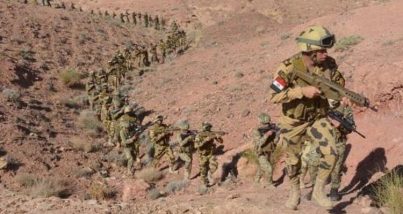
In spite of the Egyptian army’s success in significantly lowering the level of terror of the ISIS offshoot in northern Sinai, it has not managed to eradicate the organization, which, according to security sources in Israel, still has some 2,000 fighters in northern Sinai.
On January 11, 2019, the Egyptian army successfully used a drone to kill 11 terrorists who were driving in a car and on two motorcycles to carry out a terror attack in the vicinity of the town of Bir al-Abad in northern Sinai. However, terrorist attacks continue on a daily basis despite the massive presence of the Egyptian army in the area.
The Egyptian army’s main problem in dealing with the ISIS offshoot in Sinai is the lack of exact intelligence information about the ISIS fighters’ hiding places and plans for terror attacks, as well as the fact that they receive assistance from the local Bedouin population.
According to reports from Palestinian and Bedouin sources in northern Sinai, Israeli intelligence has managed to infiltrate, intelligence-wise, into the ranks of ISIS in the area. According to reports from the ISIS news agency Amaq and the newspaper Al-Araby Al-Jadeed, the Israeli air force managed to strike exactly and successfully, through aerial bombardments, the organization’s new sites and command posts. These were targets that the Egyptian army found it difficult to reach.
In an interview with the American TV channel CBS on January 3, 2019, Egyptian President Abdel Fattah el-Sisi confirmed that there is close cooperation between Israel and the Egyptian army in the war on terror against ISIS in the Sinai Peninsula. In 2018, The New York Times reported that Israel carried out around 100 aerial bombardments of terror targets in Sinai during 2017, with Egypt’s full coordination.
Egyptian publicist Majdi Sarhan published an article on January 5 in support of President Sisi’s statements in the Egyptian daily Al-Wafd in which he confirmed that there is coordination between Israel and Egypt against “terror gangs” in the Sinai. In his words, the Egyptian army’s military operations in Sinai would not have succeeded without coordination with Israel, in accordance with strategic and security agreements signed between both countries.
The objective of Israeli intelligence is to obtain information on the activities of the ISIS offshoot in Sinai, which has been operating against Israel over the past few years by firing rockets at Eilat and the Eshkol Regional Council. This was in the days when the organization was still called Ansar Bait al-Maqdis, before it swore allegiance to ISIS leader Abu Bakr al-Baghdadi.
The purpose of Israel’s intelligence gathering is to prevent terror attacks on Israel, assist the Egyptian army with its war on ISIS, and thwart the passage of arms deliveries for terror organizations in Gaza through the Sinai Peninsula.
The Hamas interior ministry in Gaza announced at the beginning of January 2019 that it had arrested 54 collaborators with Israel following an operation by a special IDF force in the area of Khan Yunis on November 12, 2018.
According to Hamas sources, some of these collaborators operated in the past in the ranks of the ISIS offshoot in northern Sinai in the service of ISA (Israel Security Agency, also known as the Shabak).
The Hamas television channel Al-Aqsa broadcast the confession of one of the collaborators, in which he said that he was sent by an ISA handler to join ISIS in Sinai to gather intelligence.
The newspaper Al-Araby Al-Jadeed reported on January 9 that dozens of foreign fighters joined the ranks of the ISIS branch in Sinai from Syria, Iraq, and Libya in recent years, without anyone investigating their security background, hinting that some could be working for Israeli intelligence.
The fact that Palestinians are joining ISIS in Sinai is particularly interesting. Some of them, who were residents of the Gaza Strip and active in the Hamas military wing, were even killed in clashes with the Egyptian army. The Palestinian problem is not even on the top of the organization’s agenda, which has raised the suspicion that they have ulterior motives and are working on behalf of Israel.
The ISIS offshoot in Sinai has also absorbed hundreds of new volunteers into its ranks from among the Sinai population. According to Gaza sources, these also include collaborators with Israel.
At first, ISIS in Sinai had a close connection with the military wing of Hamas, and it helped it to smuggle arms into Gaza. In exchange, it received military training from Hamas instructors sent to northern Sinai, as well as medical care for its men in Gaza hospitals, and shelter from Egyptian intelligence.
Therefore, Israel had a great interest in planting spies among the ranks of ISIS in Sinai to investigate the deliveries of weapons that were making their way from the Sinai Peninsula to the Gaza Strip and to destroy them from the air and prevent the strengthening of Hamas in Gaza.
According to foreign reports, in recent years, during the tenure of Chief of Staff Gadi Eizenkot, the IDF destroyed around 15,000 standard rockets that were making their way from Sinai toward the Gaza Strip. The destruction of these rockets in Sinai was enabled by very exact intelligence information. As a result, the military wing of Hamas increased the local manufacture of rockets in workshops and factories that it established in Gaza.
When ties were cut between the ISIS offshoot in Sinai and Hamas due to Hamas’ closeness to the Egyptian government, ISIS itself began to sabotage arms deliveries from Iran that passed through the Sinai Peninsula on their way to the Gaza Strip. The Kuwaiti newspaper Al-Jarida reported on November 24, 2018, that according to Egyptian security sources, ISIS fighters took control in Sinai of a large delivery of arms that had arrived from Iran. This weapons delivery was intended for the military wing of Hamas, and it included advanced Kornet anti-tank missiles and other accurate GPS-directed weaponry
According to sources in Gaza, ISIS executed one of its activists who had assisted in the smuggling of weapons from Sinai to Hamas in the Gaza Strip.
There has been a great change over the past two years in relations between ISIS and Hamas. ISIS hostility toward Hamas for collaborating with Egyptian intelligence against it is huge. Today, ISIS has an interest, as Israel does, in halting all arms deliveries that pass through Sinai on their way to Hamas in the Gaza Strip.
According to foreign reports, the Israeli intelligence service has managed to provide the IDF with important information that has allowed it to strike hard at ISIS targets in northern Sinai through aerial strikes, eliminating its commanders through targeted assassinations.
According to Egyptian sources, Israeli intelligence regularly taps the communications networks of ISIS in Sinai and monitors its movements around the clock using drones.
The planting of agents among the ranks of ISIS in Sinai completes the intelligence picture. The prevention of the passage of advanced weapons to Hamas in Gaza through Sinai is also in the interests of Egypt, who wants to weaken the organization’s strength, as it is a faction of the Muslim Brotherhood, which Egypt has designated as a terrorist organization.
It is in Israel’s interest to assist the Egyptian army with destroying the ISIS branch in northern Sinai to prevent the organization’s entrenchment along the Egypt-Israel border. The Egyptian army allows Israel freedom to operate militarily in the skies above Sinai, and Israel permits the Egyptian army to bring large forces into Sinai, beyond what was agreed upon in the peace treaty, to fight the Islamic terror that is endangering the security of both countries.
Yoni Ben Menachem, a veteran Arab affairs and diplomatic commentator for Israel Radio and Television, is a senior Middle East analyst for the Jerusalem Center. He served as Director General and Chief Editor of the Israel Broadcasting Authority.
Source: Nasrallah, Iran, and Israels end game
Nasrallah’s lack of comment and indeed his disappearance from the public eye over the past few weeks—aside from a courtesy visit he paid to the newly elected leader of the Palestinian Islamic Jihad, Ziad Nakhala (of which there was no footage)—are so peculiar that they sparked a wave of rumors and speculation about his medical condition.

Perhaps Hezbollah’s secretary-general really is not hundred percent well, or perhaps he is adopting a new media strategy of enigmatic silence.
Nasrallah loves to talk, and he loves to make threats even more. His decision to belittle and ridicule Operation Northern Shield is akin to his decision to dismiss Israeli strikes on Hezbollah targets in Syria. In both cases, Nasrallah avoids climbing tall trees. Instead of threatening retaliation, he prefers to sit and wait. In the meantime, he has other domestic issues that demand his attention.
Eight months have passed since elections were held in Lebanon, and a new government has yet to be formed, something that also influences Nasrallah’s conduct.
The Shiite terror organization understands that without the help of Lebanese Prime Minister Saad Hariri, who is favored by the West, the funds Lebanon so desperately needs will not be infused into the country. Any intransigence in coalition talks could raise questions about the Iranian-backed organization’s loyalty to the state. On the other hand, Hezbollah refuses to give up what it has accomplished in the elections, which creates a challenging and maybe even unsolvable equation. The result is a country at a standstill.
Some in Israel expected that the discovery of the tunnels would politically harm Hezbollah, portraying them as destabilizing warmongers. But the IDF’s decision to stay on the Israeli side of the border throughout the operation stirred sympathy for the terror organization among the Lebanese public.
Nasrallah’s personal silence over the tunnels was perceived as an indication of responsibility, while the Lebanese army—in Hezbollah’s service—observed the frontier to prevent IDF troops from crossing the border even by an inch. This inspired the respect of the Lebanese people, and maintained a balance of deterrence between both sides.

Hezbollah is monitoring the wall Israel is building along its northern border. This new barrier reflects the profound and ongoing change in the Jewish state’s outlook, which went from waging a war beyond enemy lines to standing its ground behind concrete or iron walls.
Instead of being dragged into a new operation every other day and investing useless and expensive efforts to harm Iran’s proxies—Hamas, Islamic Jihad, and Hezbollah—Israel’s new strategy is to directly target the Islamic Republic and its entrenchment attempts in Syria, while avoiding military adventure at all costs.
But Qassem Suleimani, commander of the elite Quds Force and the Iranian Revolutionary Guards’ strongman, has also adopted a different approach. Suleimani believes in an ongoing revolution—from Syria to Iraq to Yemen and even Israel or Palestine. He is preparing the ground for the day he takes command in the Galilee and the Golan Heights.
A chess cliché is useful when talking about Iran: Israel is moving its pieces into multiple, interlinked places to do battle against Suleimani. Gaza is connected to Lebanon, which is connected to Syria, and everything is connected to Iran.
Source: Arab League head: Importance of Palestinian cause ‘reduced’
“There are more pressing matters we (Arab countries) must contend with, since the Arab world has dramatically changed,” he said in a televised interview in Egypt.
“Arab nations have recently seen the hardest of times,” Aboul Gheit said in reference to war-battered countries Yemen, Libya and Syria. “We must not forget the mistakes made by Arab rulers, inflicting tragedies upon the region.”

An Egyptian political analyst, who spoke on condition of anonymity, said the secretary-general’s “statements are a clear attempt to prepare the ground for the normalization of relations with the Zionist entity.”
“The Arab street would never accept this entity,” he said, stressing that citizens have turned away from their leaders on this issue and remain committed to Arab concerns as a broader nation.
“Most Arabs see Israel as a foreign element and feel threatened by it. While politicians have their own agendas and interests with the Zionist entity, the wider Arab nation rejects it,” he said.
Moeen al-Taher, a Jordanian political analyst, said Aboul Gheit’s comments insinuated he is seeking to establish formal ties with Israel, while attempting to soften the Arab public opinion on that issue.
Qasem Qaseer, a Lebanese political analyst, said “the secretary-general represents the official position of the Arab League, which is trying to deprioritize the conflict with the Zionist entity.”
“He said he is not trying to prioritize other issues. Nevertheless, the Zionist entity is the main issue and the reason for all other problems in the region. Recent incidents prove that no matter how complicated internal issues in Arab nations are, they are solvable. This is not the case with the Zionist enemy, which is the region’s core problem,” he said.
“When the US recognized Jerusalem as Israel’s capital, citizens throughout the Arab world took to the streets and loudly protested against it, which shows that the ongoing conflict between the Zionist entity and the Palestinians is the most pressing issue on the agenda,” he said.
“Look at the countries that have signed peace accords with the enemy, including Palestine. This did not solve their problems, rather made them worse.”
Backing the Arab League’s secretary-general, a senior Palestinian Authority official said that Aboul Gheit made his remarks against the backdrop of political uncertainty and ongoing conflicts in the Arab world.
“The US has caused grave damage in Iraq, Syria and Libya, leaving the Arab world to handle many—and not any less urgent—issues than the Palestinian one,” Shaath said.
But the Arab world has not forgotten the plight of Palestinian nation or the risks involved in normalizing relations with Israel, according to Shaath.
Article written by Dima Abumaria.
Reprinted with permission from The Media Line.
Source: Bankrupt Iran – Opinion – Jerusalem Post
It has long been known that the Iranian regime under the rule of Ayatollah Ali Khamenei supports terrorism and exports violence, bloodshed and chaos.
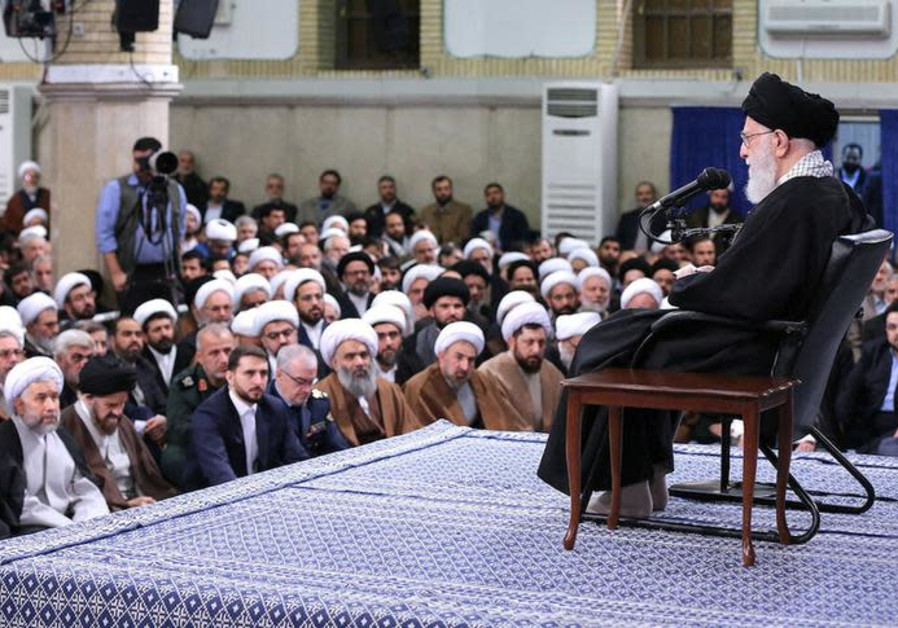
It has long been known that the Iranian regime under the rule of Ayatollah Ali Khamenei supports terrorism and exports violence, bloodshed and chaos. The frenzied mix is a toxic poison combining apocalyptic fanaticism with terrorism. In September 2010, this writer arranged the Fox News Channel’s first and only interview with then-Iranian president Mahmoud Ahmadinejad in New York City with the assistance of Iranian foreign minister Mohammad Javad Zarif. Just before the interview, all Iranian politicians were asked to leave the room as Iranian mullahs entered. They sat side by side in a line of chairs facing Ahmadinejad and, I suppose, prayed to the Mahdi, who they believe is the last descendant of Mohammad and will one day dominate a world under an Islamic caliphate, entreating the Mahdi to empower their leader.
In meeting with Iranian ministers at their hotels for four years during UN gatherings, I had noticed that the mullahs and their wives always shopped at high-end department stores. In my last meeting with the ministers, I observed that because of pressure from the US sanctions against Iran, their purchases, contained in cardboard boxes from various hardware stores, were filled with items unavailable in Iran. Yet Iran’s leaders were not shy in declaring that sanctions would not deter them from continuing with their goals for developing nuclear fusion.
Hoarding of US currency became de rigueur in aristocratic circles in the country. It was the currency to covet, but it soon required government permission to purchase dollars. The sanctions seriously worsened the value of the Iranian rial. One anonymous Iranian politician averred that the economy was the worst since the Iran/Iraq war.
The countries that joined forces to impose sanctions on Iran did so in hopes of restricting the amount of currency available to purchase the materials and expertise needed to continue its nuclear pursuits. The weaker rial triggered a run on gold and foreign currency and further exacerbated the problem as Iranians withdrew savings in order to make their purchases.
With the imposition of new sanctions by the US, it could be that we will see a repeat of the tactics used to overthrow the Shah of Iran in 1979. Ayatollah Ruhollah Khomeini engineered the overthrow of the shah with oil-related strikes. He took full advantage of the media for his purposes. The Ayatollah began to urge the workers in Iran – from oil workers to garbage haulers – to go on strike. Students were encouraged to riot in support of the working class. The strikes proved to be very effective at creating dissention. The strikes spread from the Tehran oil refinery to the oil refineries at Isfahan, Abadan, Tabriz and Sharaz. In one week, oil production fell by three million barrels.
Should the Iranian people again employ that strategy against their government, blood might well flow in the streets of the villages, towns, and cities of that country. When the people revolted following Mahmoud Ahmadinejad’s re-election in 2009, President Barack Obama did nothing to help them defend themselves against reprisals. They would, I imagine, be very reluctant to try a second time unless the US rallies behind them and the Western press is supportive. If that does not happen, then there is little chance of a successful revolution in Iran.
One of President Donald Trump’s initial objectives was to reverse the Obama nuclear deal with Iran. During his campaign, Trump called the Iranian deal the worst ever, and from his first day on the job, he would be determined to ascertain that Iran was in total conformity with all Joint Comprehensive Plan of Action (JCPOA) requirements. In hindsight, he should have immediately demanded transparency and accountability regarding any and all agreements made between Iran and the Obama administration. Mr. Trump needed to be certain that all ambiguities regarding site inspections, enrichment levels, and other issues were addressed and rectified.
Even with the sanctions in place, the question must be asked: What do China, India, Korea, Turkey, Italy, Japan, the UAE, Spain, France and Greece all have in common? In descending order, each country purchases crude and condensate from Iran. President Trump needs to inform these 10 countries that if they do business with Iran, the US will no longer do business with them. Within 90 days, it is highly likely that Iran would be bankrupt, and the Iranian people would be moved to overthrow the Khamenei regime as they did with the shah.
The writer is a No. 1 New York Times bestselling author with 89 published books. He is the founder of Friends of Zion Museum in Jerusalem of which the late President Shimon Peres, Israel’s ninth president, was the chair. He also serves on the Trump Evangelical Faith Initiative.
Source: In first, IAF to fly in British air exercise Cobra Warrior | The Times of Israel
Israeli pilots to fly alongside Royal Air Force counterparts in the aerial drill in September, as cooperation between the two militaries becomes more public
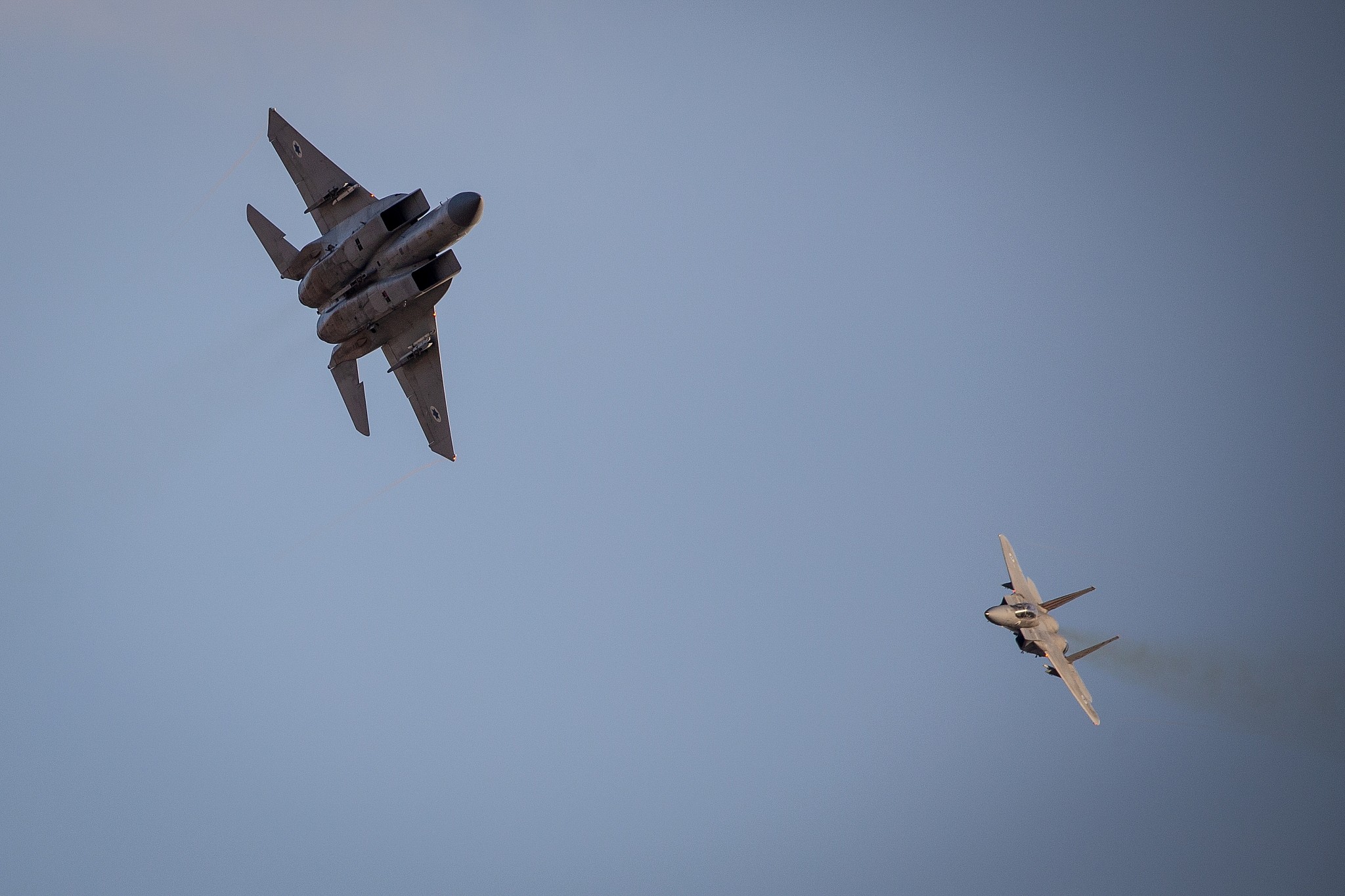
Israel was invited to take part in a British aerial drill later this year, in the first joint exercise of its kind between the two countries, the United Kingdom’s military said Thursday.
The Cobra Warrior exercise, scheduled for September, would be the first time that Israeli and Royal Air Force fighter jets openly train together.
“The Israeli Air Force will be participating in Exercise Cobra Warrior in September 2019,” a British Ministry of Defense spokesperson said, confirming unattributed reports in UK Jewish news sites.
The Israeli military refused to comment on its participation in the exercise.
Cobra Warrior, once known as the Combined Qualified Weapons Instructor exercise, serves as the culminating drill before pilots and navigators can be certified as a qualified weapons instructor, an expert in their field.
Germany participated in the Cobra Warrior exercise in September 2017.
The exercise, which is held near Lincolnshire, is designed to replicate real-world scenarios for the pilots.
The RAF and IAF have an extensive working relationship, but typically keep their cooperation quiet.
They are, for instance, among the few air forces in the world to operate the F-35 stealth fighter jet and thus share technical knowledge and experiences.
RAF pilots took part in Israel’s Blue Flag international exercise in 2017, but as spectators, not with their own aircraft. The British air force may fully participate in the upcoming Blue Flag exercise in 2020, which would be the first time RAF pilots openly flew in Israeli airspace — save for the cases of the RAF ferrying British dignitaries to the Jewish state for visits.
The Israeli military, and the air force in particular, is seen as a useful tool in expanding the Jewish state’s ties to foreign countries.
The air force often refers to this as “aerial diplomacy.”
Under the banner of military drills, Israeli pilots are able to do what Israeli politicians and diplomats cannot. The IAF, for instance, has participated in air exercises with the United Arab Emirates and Pakistan, two countries that do not formally recognize the State of Israel.
Source: American anchor for Iranian TV arrested on visit to US – Israel Hayom
Marzieh Hashemi, who works for Press TV’s English service, was detained in St. Louis, where she was working on a documentary about the Black Lives Matter movement • Son says family in the dark • Press TV launches hashtag campaign, promises legal aid.
|
Anchor Marzieh Hashemi in the Press TV studio in Tehran, Iran
| Photo: Press TV via AP
|
A prominent American anchorwoman on Iranian state television has been arrested by the FBI during a visit to the U.S., the broadcaster reported Wednesday, and her son said she was being held in a prison, apparently as a material witness.
Marzieh Hashemi, who worked for Press TV’s English-language service, was detained in St. Louis, where she had filmed a Black Lives Matter documentary after visiting relatives in the New Orleans area. She was then taken to Washington, according to her elder son, Hossein Hashemi.
The FBI said in an email that it had no comment on the arrest of the woman who was born Melanie Franklin in New Orleans and has worked for Iran’s state television network for 25 years.
Hossein Hashemi said his mother lives in Tehran and comes back to this country about once a year to see her family, usually scheduling documentary work somewhere in the U.S., as well.
“We still have no idea what’s going on,” said Hashemi, a research fellow at the University of Colorado who was interviewed by phone from Washington. He also said he and his siblings had been subpoenaed to appear before a grand jury.
The incident comes as Iran faces increasing criticism of its own arrests of dual citizens and other people with Western ties. Those cases have previously been used as bargaining chips in negotiations with world powers.
Federal law allows judges to order witnesses to be arrested and detained if the government can prove their testimony has extraordinary value for a criminal case and that they would be a flight risk and unlikely to respond to a subpoena. The statute generally requires those witnesses to be promptly released once they are deposed.
Marzieh Hashemi, an American citizen, had not been contacted by the FBI before she was detained and would “absolutely” have been willing to cooperate with the agency, her son said.
Asked whether his mother had been involved in any criminal activity or knew anyone who might be implicated in a crime, Hashemi said, “We don’t have any information along those lines.”
Hashemi said his mother was arrested as she was about to board a flight from St. Louis to Denver. A spokesman for St. Louis Lambert International Airport declined to comment and referred questions to the FBI.
The constitutionality of the material witness law has “never been meaningfully tested,” said Ricardo J. Bascuas, a professor at the University of Miami School of Law. “The government only relies on it when they need a reason to arrest somebody but they don’t have one.”
No matter the reason for Marzieh Hashemi’s detention, she should have been granted a court appearance by now, Bascuas said.
She apparently was unable to call her daughter until Tuesday night. The family is trying to hire an attorney, but it has been difficult because she has not been charged with a crime, her son said.
 AP
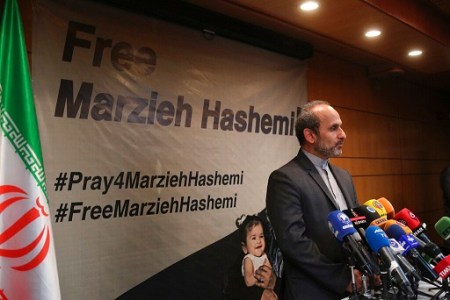
APIran’s state broadcaster held a news conference and launched a hashtag campaign for Hashemi, using the same techniques families with loved ones held in the Islamic Republic use to highlight their cases.
“We will not spare any legal action” to help her, said Paiman Jebeli, deputy chief of Iran’s state IRIB broadcaster. Iran’s Press TV aired footage of her anchoring news programs and discussing the war in Syria, set to dramatic music.
There were no references to any case against Hashemi in U.S. federal courts, nor in Missouri.
Hashemi describes herself online as having studied journalism at Louisiana State University in Baton Rouge. She converted to Islam in 1982 at age 22 after meeting Iranian activist students in Denver.
She married a man she met while in journalism school. They had two sons and a daughter. Her husband is dead, said Hashemi’s brother, Milton Leroy Franklin of the New Orleans suburb of Metairie.
At least four other American citizens are being held in Iran, including Iranian-American Siamak Namazi and his 82-year-old father, Baquer, both serving 10-year sentences on espionage charges. Iranian-American art dealer Karan Vafadari and his Iranian wife, Afarin Neyssari, received 27-year and 16-year prison sentences, respectively. Chinese-American graduate student Xiyue Wang was sentenced to 10 years in prison.
Also in an Iranian prison is Nizar Zakka, a permanent U.S. resident from Lebanon who advocated for internet freedom and has done work for the U.S. government. He was sentenced to 10 years on espionage-related charges.
Former FBI agent Robert Levinson, who vanished in Iran in 2007 while on an unauthorized CIA mission, remains missing as well. Iran says that Levinson is not in the country and that it has no further information about him. His family holds Tehran responsible for his disappearance.
Source: ‘Nairobi bombing was response to Trump recognizing Jerusalem’ – Israel Hayom
Islamist group Al-Shabaab claims attack, which killed 21 people, including a survivor of the World Trade Center bombing • 19 still unaccounted for • White House: Senseless act a “stark reminder” of why the US remains resolved to feat Islamist terrorism.
|
Civilians flee as security forces aim their weapons at the buildings of a hotel complex in Nairobi, Kenya, Tuesday
| Photo: AP
|
The Al-Qaida-linked Somali terrorist group Al-Shabaab is claiming responsibility for a bombing in Nairobi this week that killed at least 21 people. Al-Shabaab says that the attack was a response to U.S. President Donald Trump recognizing Jerusalem as the capital of Israel in December 2017.
Nineteen people remain unaccounted for two days after the bombing, which targeted a hotel complex in Nairobi, the Red Cross said on Thursday, raising the possibility of a considerably higher death toll.
In a two-page statement claiming responsibility for the attack, Al-Shabaab did not spell out why it had chosen to hit Kenya over Trump’s decision on Jerusalem.
It said the attack was “a response to the witless remarks of U.S. president, Donald Trump, and his declaration,” and that it was targeting “Western and Zionist interests worldwide and in support of our Muslim families in Palestine.”
Asked about the claim, a White House National Security Council spokesman said in a statement: “This senseless act is a stark reminder of why the United States remains resolved in our fight to defeat radical Islamist terrorism.”
Kenyan President Uhuru Kenyatta said on Wednesday evening that a 20-hour siege had ended with security forces killing all the Somali terrorists who had stormed the hotel complex, driving hundreds of people into terrifying escapes.
Kenya, the East African hub for multinational companies and the United Nations, became a frequent target for Al-Shabaab after Kenya sent troops into neighboring Somalia in 2011 to try to create a buffer zone along its border.
Sixteen Kenyans including a policeman, an American survivor of the World Trade Center bombing, and a British development worker were among the dead in the hotel complex, Nairobi Police Chief Joseph Boinnet said.
Source: Report: US sees Palestinian state on most of West Bank, some of east Jerusalem – Israel Hayom
U.S. President Trump’s Middle East peace plan proposes a Palestinian state on as much as 90% of the West Bank, with a capital in east Jerusalem, Israel’s Reshet 13 TV reports • U.S. Mideast envoy Jason Greenblatt says report “is not accurate.”
|
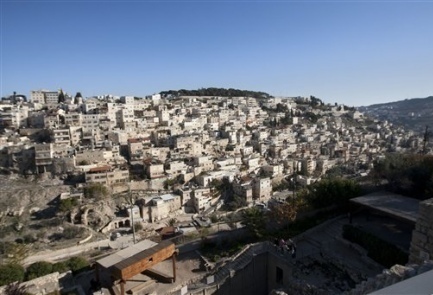
A view of east Jerusalem
| Archives: AP
|
Israeli television said on Wednesday that U.S. President Donald Trump’s Middle East peace plan would propose a Palestinian state on as much as 90% of the West Bank, with a capital in east Jerusalem – but not including holy sites in the Old City.
The White House, which has kept details of the plan under wraps and said its release could still be months away, dismissed the report by Israel’s Reshet 13 TV as inaccurate speculation.
Citing what it said was a source briefed by the Americans, the television report said the plan would entail Israel annexing Jewish settlement blocs in the West Bank while isolated settlements would either be evacuated or their construction halted.
Trump wants the proposed Israeli moves to be supplemented by territorial swaps with the Palestinians, and for east Jerusalem’s walled Old City – site of major Jewish, Muslim and Christian shrines – to be under Israeli sovereignty but jointly managed along with the Palestinians and Jordan, the report said.
The report said “most Arab neighborhoods” in east Jerusalem would be under Palestinian sovereignty as a future capital.
The report made no mention of the fate of Palestinian refugees, another core dispute in the decades-old conflict, or of how the Hamas-controlled Gaza Strip might fit into the plan.
Israeli and Palestinian officials did not immediately respond to the report.
Trump’s Middle East peace envoy Jason Greenblatt, a main architect of the plan along with the president’s son-in-law Jared Kushner, said in a message on Twitter that the report “is not accurate.” He did not specify, however, what in the report was incorrect.
“Speculation about the content of the plan is not helpful Very few people on the planet know what is in it … for now,” Greenblatt wrote. “Peddling false, distorted or biased stories to the media is irresponsible & harmful to the process.”
In separate remarks to reporters, Israeli Ambassador to the United Nations Danny Danon predicted that the Trump plan would not be released before the Knesset election on April 9.
“From what we understand, it will not be presented before the election,” Danon said. “It’s a smart decision because we don’t want it to become the issue of the elections.”




 anneinpt
 artaxes
 danmillerinpanama
 davidking1530
 Peter Hofman
 Joseph Wouk
 Peter
Peter Louisiana Steve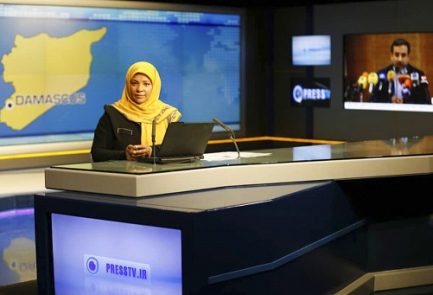

 WarSclerotic
Recent Comments