Archive for January 13, 2019

Iran: Nasrallah sick? ‘Biggest lie of the year’

January 13, 2019

Source: Iran: Nasrallah sick? ‘Biggest lie of the year’ – Israel National News

Adviser to Iranian parliament speaker blasts ‘Zionist claims’ that Hezbollah leader is suffering from health problems.

Tal Polon, 13/01/19 14:29
Hassan Nasrallah

Hassan Nasrallah

Reuters

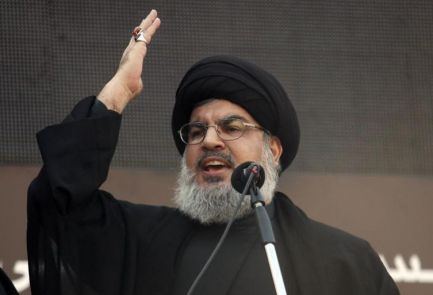
An adviser to the Iranian speaker of parliament rejected reports that Hassan Nasrallah, the leader of the Iranian-backed Lebanese terror group Hezbollah, was suffering from health problems.

Israeli media cited Lebanese reports over the weekend saying that Nasrallah was hospitalized in Beirut, having suffered a heart attack, while other reports added that he is also fighting cancer.

Nasrallah has not been seen in the media since November, and there has been speculation that his long public absence is tied to the IDF’s launch of “Operation Northern Shield” to neutralize Hezbollah terror tunnels infiltrating Israel. The reports on Nasrallah’s health would seem to provide another explanation for his absence.

According to Kan, however, reports that Nasrallah is sick were soundly rejected by the Special Adviser to Iranian Parliament Speaker Ali Larijani, who called such an assertion “the biggest lie of the year.”

“The recent claims by the Zionists that Nasrallah is sick are the biggest lie of the year,” he wrote.


White House ordered plans prepared for Iran strike – report 

January 13, 2019

Source: White House ordered plans prepared for Iran strike – report | The Times of Israel

‘Shocked’ Pentagon acceded to request after Baghdad mortar attack in September that US blamed on Tehran-backed militias, Wall Street Journal says

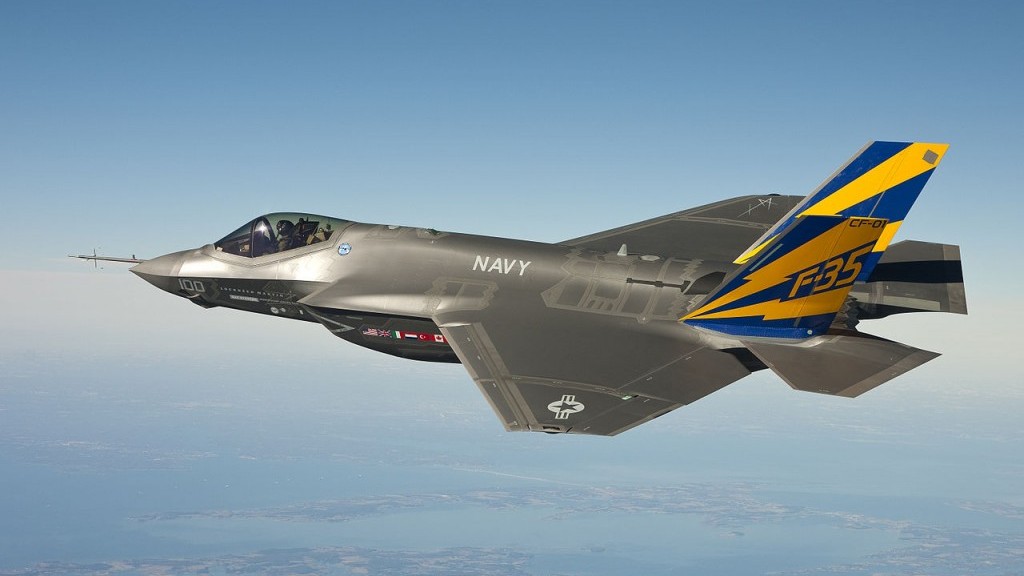
A US Navy F-35 fighter jet during a test flight. (US Navy/Wikimedia Commons)

A US Navy F-35 fighter jet during a test flight. (US Navy/Wikimedia Commons)

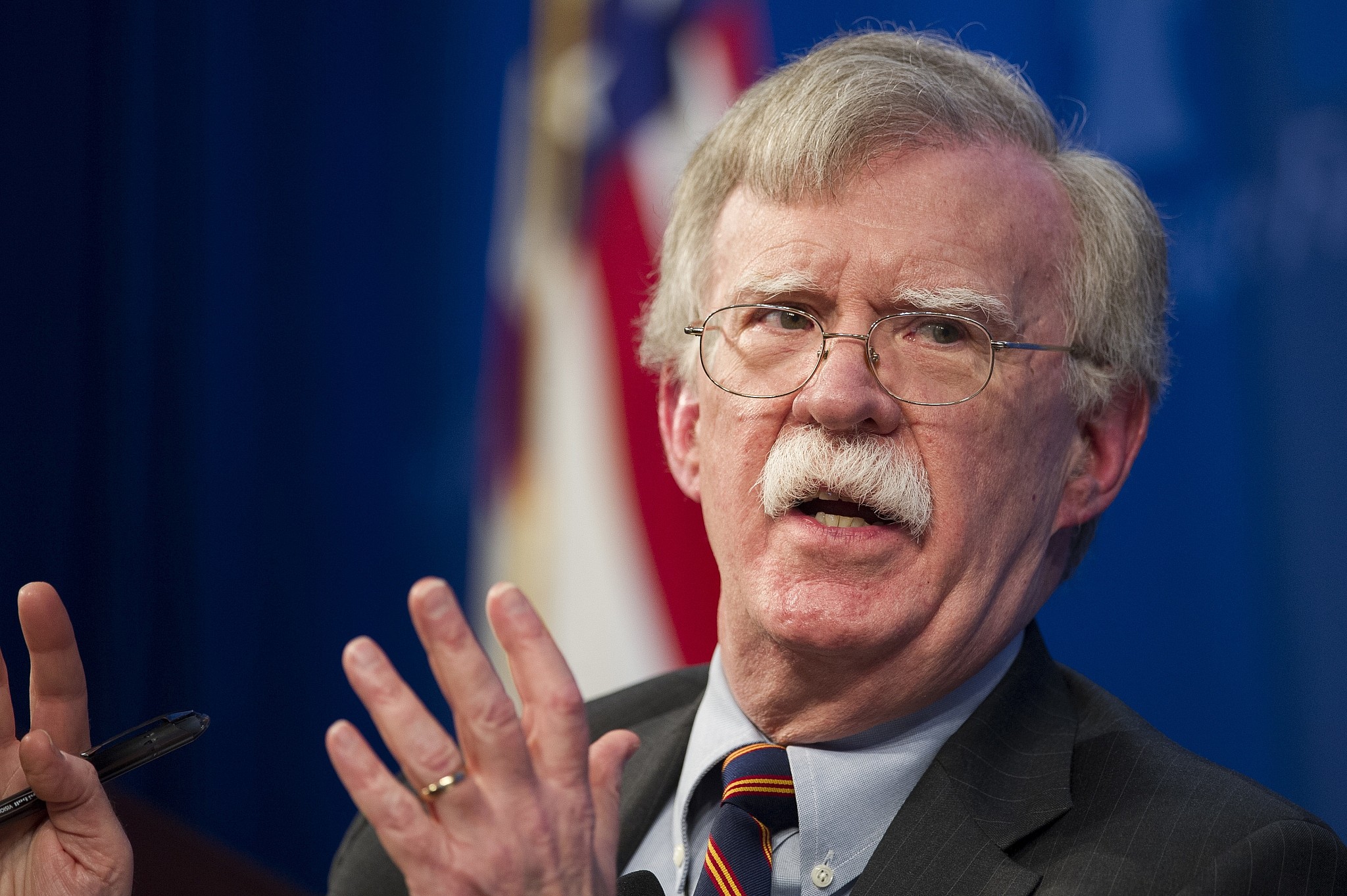
Following a September mortar attack near the US embassy in Baghdad that Washington blamed on Iran, US National Security Adviser John Bolton and the National Security Council he leads requested that the Pentagon provide options for striking Iran, the Wall Street Journal reported Sunday.

The Pentagon did so, though the report said it was not clear what became of those plans and how close such a potential strike actually was, or if US President Donald Trump was even aware of the exchange.

Still, officials in the Pentagon and State Department were said to have been shocked by the offhand nature of the request — to provide plans for military action against a major regional power in response to a minor attack that caused no casualties.

“It definitely rattled people,” a former senior official in the administration told the paper. “People were shocked. It was mind-boggling how cavalier they were about hitting Iran.”

US National Security Advisor John Bolton unveils the Trump administration’s Africa Strategy at the Heritage Foundation in Washington, December 13, 2018. (Cliff Owen/AP)

A spokesman for the NSC told the paper that the council “coordinates policy and provides the president with options to anticipate and respond to a variety of threats.”

Bolton is known for his particularly hawkish stances, and prior to his appointment as national security adviser had advocated preemptive strikes against North Korea and war with Iran.

In September he warned Iran of “hell to pay” and “serious consequences” if it acts against the US, using some of the most aggressive language employed by administration officials in recent decades.

The US embassy in Baghdad, Iraq seen from across the Tigris river on May 19, 2007. (AP/File)

He was also a major voice inside the George W. Bush administration in favor of the 2003 Iraq invasion. In the past he has also advocated for Israel bombing Iran to curtail its nuclear ambitions.

His combative approach to global conflict was previously seen as somewhat mitigated by the moderating voice of James Mattis, but the US defense secretary’s resignation last month has opened the door to more hardline policies by the administration.

The mortar attack in Baghdad, on September 7, saw three shells hit the ultra-secure green zone, which houses Iraqi authorities and the US embassy.

Washington blamed militias supported by Iran, and said it would “respond swiftly and decisively in defense of American lives,” though no action by US forces since has been directly linked to that attack.

Agencies contributed to this report.


IDF ends northern tunnel operation, strikes Gaza tunnels. Hizballah, Hamas threats remain – DEBKAfile

January 13, 2019

Source: IDF ends northern tunnel operation, strikes Gaza tunnels. Hizballah, Hamas threats remain – DEBKAfile

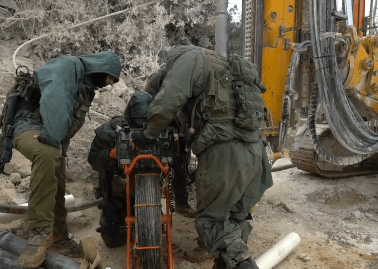
The IDF marked the end of Operation Northern Shield on Sunday, Jan. 13 by finding a sixth Hizballah cross-border tunnel, two days before Lt. Gen. Gady Eisenkot hands over the of Chief of Staff’s baton to his successor, Lt. Gen. Aviv Kochavi. It was the second “terror tunnel” found running from the Lebanese town of Ramaya. It was not in operational condition.

The timing was fitting, Gen. Eisenkot has hailed this operation as the crowning achievement of his four-year team as the head of Israel’s Defense Forces – a high evaluation not shared by most of the IDF high command. In fact, it was no more than a stop-go effort with few results. Above all, the operation which was meant to support a major Israeli diplomatic effort to disrupt the commanding influence Hizballah wields over the Lebanese government and army, failed to drive a wedge between them.

Nonetheless, in his parting interviews, Eisenkot claimed that Hizballah had dug those underground structures for its plan to smuggle 1,000-1,500 special operations troops into Israel, capture an Israeli village and retain it under cover of artillery fire. That scenario is hardly credible for four reasons:

  1. Hizballah devised this plan more than 10 years ago and has since moved on.
  2. Operation Northern Shield did not uncover a working tunnel network, or even a single passage large enough to carry a large force.
  3. No more than 6 tunnels, which the IDF had known about for years, were finally located, although the original military communiques spoke of sixteen.
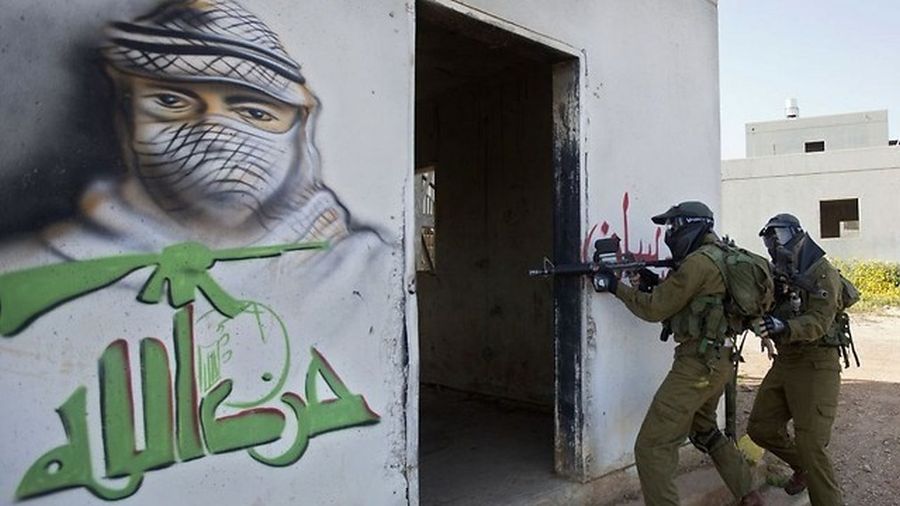
  4. The operation focused on mostly defunct tunnels, whereas the main threat which is very much alive was unaddressed. A year ago, Hizballah threw up  mockup  models of Israeli villages on the Lebanese-Syrian border to train its special Redwan forces for operations to storm overland across the border and seize IDF bases and civilian villages in Upper and Western Galilee. The IDF is therefore racing against time to build a strong wall along the Lebanese border, but has run into topographic impediments for the barrier to extend its full length. Operation Northern Shield was therefore of no relevance to the contemporary Hizballah threat.

In one interview, Eisenkot was asked about the destruction of the chain of observation and surveillance positions which Hizballah has deployed in Syria opposite the Israel Golan. He replied: “That line is no longer there.”  The difficulty with this reply is that not only Hizballah, but also members of the five militias Iran is establishing in Syria have begun taking up position opposite the Golan. DEBKAfile was the the first publication last year to uncover the ruse they employ of awarding these foreign pro-Iranian combatants Syrian army uniforms and IDs. They currently pose as members of the regular Syrian army stationed along the Israeli border. This subterfuge makes it almost impossible to differentiate between them.

In the Gaza Strip Saturday night, Israeli warplanes struck two Hamas “underground structures.” The IDF spokesman released this enigmatic statement without elaborating. Neither did he explain why, all of a sudden, after ten months in which Hamas had kept southern Israel under sporadic hails from Gaza of rockets, mortar shelling, incendiary balloons and ground assaults, the IDF command had decided to go for more telling targets than routine empty Hamas bases and lookout towers. This operation was accompanied by a caution to Hamas by an anonymous “senior official” that the monthly Qatari grant of $15m for January had not been cancelled, only frozen. In other words, the protection racket for buying Hamas’ non-escalation of violence against Israel goes on.


Pompeo: Good outcome possible for both Turks, Syrian Kurds 

January 13, 2019

Source: Pompeo: Good outcome possible for both Turks, Syrian Kurds – Israel Hayom


Nasrallah suffers heart attack, stroke, Lebanese media reports 

January 13, 2019

Source: Nasrallah suffers heart attack, stroke, Lebanese media reports – Israel Hayom


IDF uncovers sixth tunnel, completes operation on northern border 

January 13, 2019

Source: IDF uncovers sixth tunnel, completes operation on northern border – Israel Hayom


Netanyahu confirms IDF strike on Iranian targets in Damascus 

January 13, 2019

Source: Netanyahu confirms IDF strike on Iranian targets in Damascus – Israel Hayom


A full plate awaits Kochavi 

January 13, 2019

Source: A full plate awaits Kochavi – Israel Hayom

Yoav Limor

It’s not surprising that Lt. Gen. Gadi Eizenkot spent his last night as army chief in the command bunker underneath IDF headquarters in Tel Aviv, closely following the type of operation that has been synonymous with his tenure. It was full throttle up to the very last moment, one final mission before he hands in his dog tags.

As usual in the Middle East, nothing will change in two days when Eizenkot is replaced. There’s enough Syria for everyone (and Iran, Hezbollah, Gaza, and a few other headaches). Incoming IDF chief Lt. Gen. Aviv Kochavi wasn’t in the command bunker Friday night – he was enjoying his last worry-free Shabbat evening – but his deputy, Maj. Gen. Eyal Zamir, was there as part of the process fo passing the baton to the next IDF leaders.

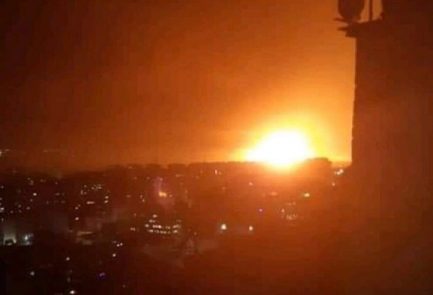
An airstrike in Damascus on Friday, which has already been attributed to Israel, apparently targeted the logistics center Iran operates at Damascus International Airport – a separate and secured loading dock, where Iran does as it pleases. Several hours before the attack, an Iranian military plane landed in Damascus and unloaded its cargo. This was quite possibly the impetus for the strike, which according to satellite images caused immense damage.

Syria, per its custom, claimed it shot down most of the missiles fired by Israeli warplanes. These claims don’t always need to be taken at face value. Assad also has to cater to public opinion – at home and abroad – and he has to explain (domestically) why Israel is still attacking unhindered even after the civil war has ended. As for the international community, he has to explain why Iran is operating its own secure terminal at the airport in Damascus airport, as if it were in Tehran. And why is Syria not stopping this activity, which is the foundation of Iran’s efforts to establish a presence in the country and transfer weapons to Hezbollah?

Russian silence

It was hard not to notice the Russian silence on Saturday in the wake of the rather obvious attack. Ever since the downing of the Russian spy plane last September, Israeli-Russian relations have chilled. Israel was strongly rebuked, including accusations that it was endangering Russian forces in Syria and regional security. Relations have warmed a bit in recent weeks, and Russia turning a blind eye to the attack Friday night (which didn’t jeopardize its personnel) is a possible indication of this.

Past experience teaches us that Israel, too, was most likely informed the Russians prior to the operation. With that, Israel would be wise to continue its recent policy of treading carefully as it pertains to operating in Syria, to avoid another clash with Russia. This is now Kochavi’s job.

The good tidings on the northern front were somewhat tempered on Saturday by Hamas’ revelations regarding the IDF’s botched operation in Gaza in November. Although Hamas invested a great deal in the video, it revealed nothing new of significance. It did provide another glimpse into the drama that unfolded that night – from the moment the undercover soldiers were detected at a Hamas roadblock, to their narrow escape under heavy air cover and the subsequent round of fighting between Israel and Hamas.

Considerable damage to national security

It’s safe to assume this story isn’t over. Hamas apparently has more information, some of which can potentially cause considerable damage to national security – in Gaza and other sectors. The mission inquiry is proceeding apace. Initial findings have already been presented twice to Eizenkot and to the head of the Military Intelligence Directorate. The investigators were asked to fill in certain blanks and on Monday, just before Eizenkot steps out the door, these additional findings will also be presented.

The final conclusions will be up to Kochavi. In television interviews on Saturday, Eizenkot said the operation wasn’t inherently flawed and that a chain of unfortunate events resulted in the outcome. But the information that has been accumulated thus far paints a different picture, one that raises serious questions about the operation, its approval, the conduct of the soldiers and the makeup of their team; not to mention questions about structural changes within the unit that carried out the operation and the chain of command.

The operational inquiry (headed by Maj. Gen. Nitzan Alon) will surely lead to many professional conclusions and perhaps personal ones as well. Within the unit there’s been bad blood for the past two months, which must also be drained quickly. The operation in Gaza has already failed. Along with mitigating the fallout, it’s now time to internalize the proper lessons and turn this failure into future operational success.
 

Alan Dershowitz:  The Case for Israel ( Full Documentary )

January 13, 2019


Israel is under attack – not only by terrorists who deny its basic right to exist, but also in the court of world opinion, which seeks to marginalize Israel as a human rights pariah that sanctions apartheid.

Rising in vigorous defense of the Jewish homeland in this landmark documentary, Alan Dershowitz, distinguished Harvard Law School professor and outspoken champion of human rights, presents evidence from leading diplomats, historians, legal experts and government officials on both sides of the political spectrum to make the definitive case for Israel’s legitimacy and right to self-defense.

Dershowitz argues forcefully that real peace in the Middle East can only occur when the Palestinians, Arabs, and their allies finally value the creation of a Palestinian homeland more than they oppose the presence of a Jewish state.

Through incisive conversations with commentators ranging from Ambassador Dennis Ross and former Israel Supreme Court President Aharon Barak to then Opposition Leader Bibi Netanyahu and historians Michael Oren and Benny Morris, Dershowitz refutes deeply entrenched misperceptions about Israel’s history, Jewish claims to a homeland, individual rights under Israel’s democratic system of government, the security fence, and military conduct in the face of terrorist attacks.

He closes with a formidable warning that the greatest threat to Israel is also the greatest threat to international peace and security: Iran’s aggressive nuclear ambitions.