Archive for October 2018

Court: US student in BDS case allowed to stay in Israel

October 19, 2018

Source: Court: US student in BDS case allowed to stay in Israel

Supreme Court rules American student Lara Alqasem can stay and study in Israel, despite past BDS ties; ruling overturns lower court decision backing government; Lawyers: Free speech victory; Deri: a disgrace.
A US student who was initially barred entry into Israel under a law against foreign pro-Palestinian activists who call for boycotts of Israel will be allowed to stay in the country, the Supreme Court ruled on Thursday.

Lara Alqasem, 22, flew to Israel on Oct. 2 on a student visa to pursue her graduate studies at Hebrew University but was refused entry by security officials who cited her role as president of a small local chapter of Students for Justice in Palestine at the University of Florida.

Alqassem in court (Photo: Motti Kimchi)

Alqassem in court (Photo: Motti Kimchi)

The Supreme Court in its ruling, seen by Reuters, overturned a lower court decision that initially backed the decision by Israeli authorities.

“The call for participation in a boycott against the state is likely to be considered as encouragement to participate in illegal activity …. There is no dispute that between 2014 and 2017, Alqasem was a member of a student organization and for two years served as its president,” Justice Erez Yekuel explained then in his ruling.

Supreme Court Judge Neil Hendel wrote that the state is correct in its intentions but not in its implementation, explaining that combating BDS is admirable and defending a democracy is part and parcel of democracy. However, Hendel asserted, preventing Alqasem’s entry does not serve the purpose of the anti BDS law passed by the Knesset.

However one justice wrote that if Alqasem “returns to her old ways” and promoted a boycott while she was in Israel her stay could be cancelled and she could be expelled.

“The Supreme Court’s decision is a victory for free speech, academic freedom, and the rule of law,” Alqasem’s lawyers said in a statement.

The Hebrew University, which supported Alqasem in her struggle to enter the country released a short statement: “The Hebrew University of Jerusalem looks forward to welcoming our newest student, Lara Alqasem, as she begins her M.A. in Human Rights & Transitional Justice at our law school next week.”
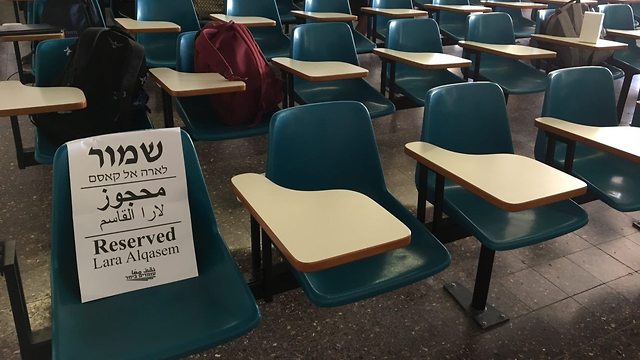
Hebrew University protest supporting Alqassem (Photo: "Standing Together" student movement)

Hebrew University protest supporting Alqassem (Photo: “Standing Together” student movement)

On Monday, students at the University protested the detention of Alqasem by placing signs on seats throughout the university’s Mt Scopus campus reading “Reserved (for) Lara Alqasem.” Their efforts were met with a response by activists from the right-wing “Im Tirtzu” movement who erased Alqasem’s name from several posters and replaced it with the names of recent terror victims Ari Fuld, Kim Yehezkel Lebengrond and Ziv Hagbi.

Many students also criticized the university’s stance on the matter. “The Hebrew University’s attitude towards the State of Israel, and even towards BDS, is simply pathetic,” said one student.

Alqasem’s case has touched off debate in Israel over whether democratic values have been compromised by a 2017 law that bars the entry of foreigners who publicly support boycotts over Israel’s policies towards the Palestinians.

Minister of Interior Aryeh Deri responded to the ruling calling it a disgrace. “Where is our national pride? Would she have dared act against the United States while seeking to study there? I intend to examine how to prevent this incident from setting a precedent,” he said.

Minister of Internal security Gilad Erdan declared that the court handed a “huge victory to BDS and emptied the law, barring boycott activists from entering the country, of any meaning.” He stated that he intends to close the “loophole” in the law so that those who seek to harm the State of Israel and its citizens cannot enter the country.

Tourism Minister Yariv Levin called the court’s decision “shameful” and said that the justices “were continuing to act against Israeli democracy and the clear lawmaking of the Knesset.”

It was not immediately clear whether the Israeli authorities would appeal the ruling.
 

Security Cabinet: Rules of the game have changed

October 18, 2018

Source: Security Cabinet: Rules of the game have changed

Air strikes against terror targets in Gaza, intensifying IDF’s response to breaching attempts and launching of incendiary balloons while showing containment are presented as operational plans at Cabinet meeting; DM Lieberman’s suggestion to take more aggressive approach is rejected.
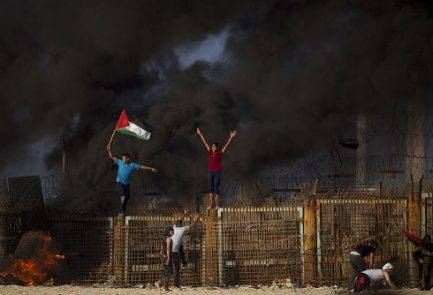
After concluding a five-hour meeting, the Security Cabinet decided Thursday to change its handling of the rampant violence on the Gaza border fence and the kite terrorism, implying that the rules of the game have changed.Nevertheless, the political echelon still views reaching a ceasefire agreement with the mediation of Egypt and UN envoy to the Middle East Nickolay Mladenov as an option.

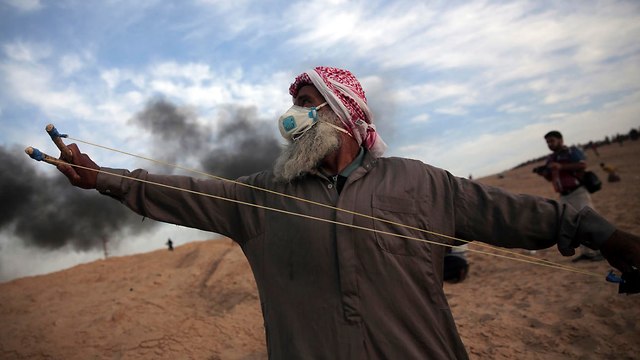
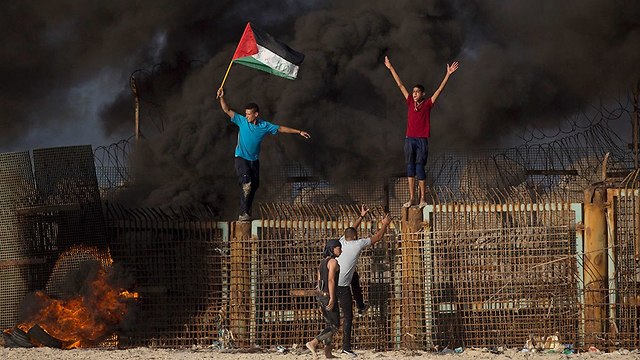
Gaza border violence    (Photo: AP)

Gaza border violence (Photo: AP)

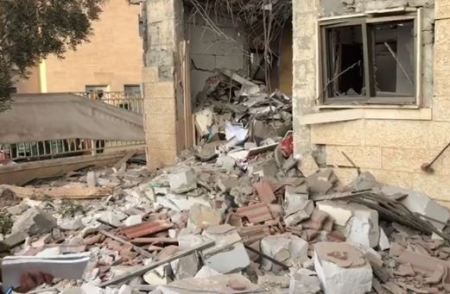
The Cabinet—which convened following a rocket attack launched from Gaza on a Be’er Sheva home and in the sea off the shores of a city in central Israel—instructed the IDF to gradually exacerbate its retaliatory actions to violence along the security fence and to demonstrate a zero-tolerance approach.

The new policy will come into effect on Friday, during which Hamas-led mass riots are expected on the border.

During the overnight meeting, the military brass presented two operational plans to tackle the violent border clashes and to handle the incendiary balloons launched from the strip into Israel, with the first being air strikes against terror targets in the strip, while the second is containment of the violence while gradually Intensifying the army’s response to breaching attempts and launching of incendiary balloons.

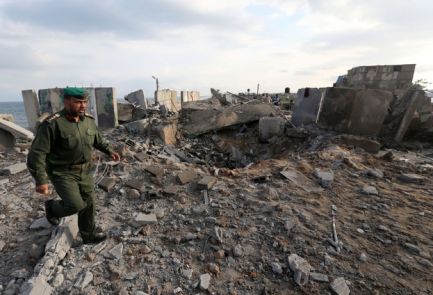
House in Be'er Sheva hit

House in Be’er Sheva hit

Nevertheless, Defense Minister Avigdor Lieberman suggested implementing a more aggressive approach against Hamas, as could have been expected in light of his remarks over the past few days.

Lieberman’s plan was rejected.

Prime Minister Benjamin Netanyahu instructed the Cabinet ministers no to speak with the media about the decisions taken at the meeting.

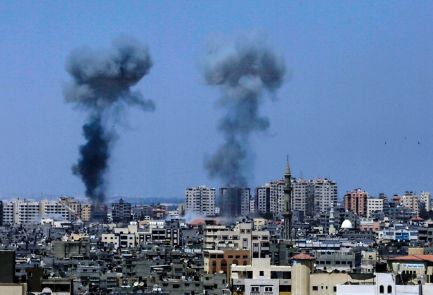
 (Photo: AP)

(Photo: AP)

Construction Mnister Yoav Galant addressed the recent escalation Gaza, saying, “I’m not going to talk about decision taken by the Cabinet. However, I can explicitly say that the rules of the game are about to change.

“We won’t accept violence on the Gaza border fence and the continuation of the kite terrorism,” Galant concluded.


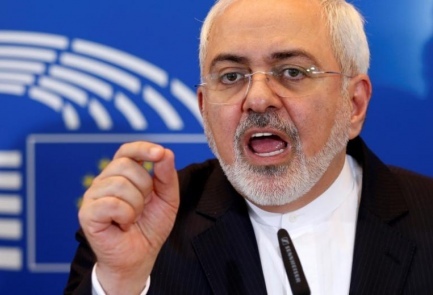
Iran calls latest US sanctions an ‘insult’ to world order 

October 18, 2018

Source: Iran calls latest US sanctions an ‘insult’ to world order – Israel Hayom


Egypt outraged by Gaza rocket launch amid truce mediation efforts

October 18, 2018

Source: Egypt outraged by Gaza rocket launch amid truce mediation efforts – Israel Hayom


Restore deterrence, but bet on mediation

October 18, 2018

Source: Restore deterrence, but bet on mediation – Israel Hayom

Dr, Eran Lerman

Who would benefit from a wide-scale military conflict in the Gaza Strip? And who would lose? What does weighing interests in the balance mean for Israel?

The smaller terrorist organizations in Gaza – Islamic Jihad, which operates as a satellite of Iran, and radical Sunni groups inspired by the Islamic State group – are the primary ones who want to ratchet up the violence into a full-scale war. For them, a major war in Gaza could be an opportunity to build themselves up on the ruins of Hamas. It also looks like Iran has an interest in escalating the situation in Gaza and pulling Israel into a war that will take away from its ability to focus on its main defense activity right now: keeping Iran from digging down in Syria.

The third player that is consistently working to worsen the situation in Gaza and torpedo Egypt’s efforts to broker a cease-fire is Palestinian Authority President Mahmoud Abbas, for whom – as he once said in Jenin – “the worse things are, the better.” Some in Israel see value in assisting the PA’s attempts to regain control of Gaza, but even if that were the right thing to do in principle (and that’s doubtful), it is not feasible without a full-blown war that would end with the IDF occupying Gaza for many years to come. What a war would not do would be to create a moderate, effective Palestinian leadership there.

All these considerations are counter-balanced, paradoxically, by Hamas’ interest in continuing to dictate the terms of any cease-fire with Israel while refraining from a war, which the Hamas leadership knows would be self-destructive. Its moves to escalate the conflict – arson balloons, breaches of the border fence – have been intentionally selected as ways of taking things to the brink without toppling over into the abyss.

Egypt also seems to have an interest in avoiding a war, despite the deep-seated mutual hatred between Hamas, who are the flesh and blood descendants of the Muslim Brotherhood, and the government of Egyptian President Abdel-Fattah el-Sissi. Slowly, Cairo has come to realize that it is better to contain and deter an organization like Hamas while gradually delegitimizing it than to take it on directly.

And Israel? A harsh, well-defined blow is vital for it to maintain its mechanism of deterrence. A missile hitting Beersheba is not a trivial occurrence.

However, as far as possible, given the broader considerations of the regional balance of power as well as Israel’s fundamental interest in avoiding a ground war, it would be best to make the most of Egypt’s mediation.

Col. (ret.) Dr. Eran Lerman, former deputy director of the National Security Council, is the vice president of the Jerusalem Institute for Strategic Studies.


Is Iran trying to drag Israel into a war in Gaza? 

October 18, 2018

Source: Is Iran trying to drag Israel into a war in Gaza? – Israel Hayom


Report: Hamas agrees to curb Gaza border violence to facilitate truce with Israel 

October 18, 2018

Source: Report: Hamas agrees to curb Gaza border violence to facilitate truce with Israel – Israel Hayom


The storm before the storm 

October 18, 2018

Source: The storm before the storm – Israel Hayom

Prof. Eyal Zisser

It did not take long for Hamas and Islamic Jihad to ‎deny any involvement in Wednesday’s rocket fire on ‎Israel, and the two Gaza Strip-based groups rushed ‎to express their commitment to Egypt’s efforts to ‎broker a cease-fire between Israel and Gaza. ‎

Hamas could be lying – it wouldn’t be the first time ‎‎– and its operatives may have been the one to fire ‎two Grad rockets at Beersheba and central Israel. At ‎the very least, Hamas probably encourage the rogue ‎groups in Gaza to fire on Israel. ‎

One must remember that while Hamas has no real ‎interest in provoking a full-fledged war with ‎Israel, it has every interest in improving its ‎position in the Egyptian-led mediation and maybe ‎even forcing Israel to accept a reality in which ‎sporadic rocket fire is a part of any future deal in ‎Gaza.‎

What is particularly troubling, however, is the ‎possibility that Hamas had nothing to do with ‎Wednesday’s rocket fire and that the attack was ‎mounted contrary to its direct orders.‎

This would mean that Hamas has lost its notorious ‎iron grip on the situation on the ground in Gaza. ‎Moreover, it would mean that any deal Israel signs ‎with it may not be worth the paper it is written on, ‎as it will not guarantee any calm on the border. ‎

Achieving some form of quiet on the border is a ‎prominent Israeli interest, as it wants to focus its ‎attention on the northern sector, where efforts to ‎curtail Iran’s attempts to cement its presence in ‎Syria and curb Hezbollah are paramount.‎

Iran, we must remember, is the only one that stands ‎to gain from a conflagration in Gaza, as it would ‎divert everyone’s attention from what it is doing in ‎Syria and what it is trying to do in the region.‎

Reaching a cease-fire is also in Hamas’ interest, as ‎it would grant it legitimization and all but ‎guarantee that it will rule Gaza for many years to come. ‎This is why Israel must ensure that in return to any ‎concessions offered Hamas, it would be guaranteed ‎absolute calm on the border. ‎

Israel will most likely choose to contain ‎Wednesday’s incident both because it did not result ‎in fatalities and over Hamas’ denouncing it. ‎But this does not bode well for the efforts to ‎achieve a cease-fire, as one cannot survive if one ‎of the parties involved has no intention of meeting ‎it. ‎It is important that Israel not lose sight of this ‎when it comes to the Gaza Strip, but also when it ‎comes to Judea and Samaria. ‎

The Trump administration is gearing up to present ‎the “deal of the century,” for the Israeli-‎Palestinian conflict, which would undoubtedly ‎require not only Israeli concessions but also a ‎demand to contain and tolerate the Palestinian ‎Authority’s incompetent counterterrorism efforts. ‎

Experience, however, has taught us that any deal ‎that does not guarantee security will not last.

Eyal Zisser is a lecturer in the Middle East History Department at Tel Aviv University.

A game-changing event 

October 18, 2018

Source: A game-changing event – Israel Hayom

Yoav Limor

The rocket that struck the house in Beersheba was a game-changing event, which obligates Israel and Hamas to decide which way we go from here.

The fact that the people living in the house managed to escape the attack unscathed, due to the mother’s resourcefulness, is either a miracle or a model for proper behavior or both. On a practical level, none of this should matter. The air force uses the stark term “near miss” to describe mishaps that didn’t end in a crash or tragedy; it’s the only way to understand, inquire and learn the lessons to help avoid similar events in the future.

This is how the rocket strike in Beersheba should be viewed: as if it were lethal. This is the only way Israel can prevent the next rocket, which could kill. Let’s for a moment put aside the matter of intelligence (which needs checking), and why no one thought rockets would be fired into the heart of Israel.

But the troubling question is a different one. Two rocket launchers were deployed in advance, pointed at Israel – one at Beersheba and the other at a city in central Israel. Hamas is supposed to properly protect its rockets, certainly those with strategic impact. If it isn’t doing so (which seems to be the case), then there’s one of two options: Either it looked the other way with a wink, which apparently didn’t happen, or it isn’t in control of its people.

This situation is disconcerting because the basic assumption pertaining to events in Gaza in recent months has been that Hamas is the sole power; that it can fan or lower the flames if it so chooses. The latest incident could reveal that Hamas is losing control; which if true could simplify Israel’s dilemma because it won’t have anyone on the other side to trust when it comes to implementing and preserving future agreements – if they are reached.

The way to determine this is to watch the ground level. Israel had three response options on Wednesday: The first, as bad as it sounds, is to do nothing; maintain the current course and hope for the best.

The second, problematic but gaining increasing support (mainly from Defense Minister Avigdor Lieberman, but also other ministers and high-ranking IDF officers), is to launch a comprehensive operation to alter the reality with Gaza. The third option, which looks to be preferred by Prime Minister Benjamin Netanyahu, is to try changing the situation via other means – primarily diplomatic.

Hamas, it appears, is prepared for the second option but would prefer the third. It was taken off guard by the Egyptian intelligence chief canceling his visit to Gaza (at Israel’s request) and passed on multiple messages that it will work to calm tensions. Israel needs to give Hamas the only and most important test: the results test. It must demand a complete cessation of border terror, including incendiary kites and balloons. If Hamas upholds its end of the bargain for a sufficient period of time, it will be possible to discuss moving forward – humanitarian gestures, opening border crossings, etc.

Such a move will transfer the dilemma to Gaza. If Hamas chooses war, it will be accused of starting it, in contravention of all understandings that have been reached, and it will immediately lose the support of Egypt and Arab countries. The alternative, from its perspective, is to swallow the bitter pill and bow its head – so it doesn’t get lopped off. This is the line currently being advocated by the leader of Hamas’ military wing, Yahya Sinwar, with an asterisk: Numerous casualties in Gaza will obligate him to respond, which could spark a chain reaction ending in a conflagration.

In the past, Israel preferred to start operations with a surprise opening move, one that would give it an advantage from the very beginning. Due to the already high alert levels in Gaza it will be hard to fashion a surprising opening salvo, which means that an operation – if Israel decides to launch one – could sputter, be protracted, drag on into the winter, and of course also result in considerable casualties, on the front lines and on the home front, and draw criticism due to the public’s natural tendency to lose patience.

This is a tough dilemma for the political echelon in an election year. Casualties in Beersheba would necessitate a very clear decision; even if the soldier tracking the rockets from the home front command center had sounded the sirens in Gush Dan (she didn’t because the radar calculated it would land in the sea), we would probably have woken up Wednesday morning to a different reality. The lesson is that decisions shouldn’t be made out of necessity, but out of choice. It’s still possible, but the sand in the hourglass looks to be running out quickly.

Egypt’s war on the Muslim Brotherhood 

October 18, 2018

Source: Egypt’s war on the Muslim Brotherhood – International news – Jerusalem Post

Morsi’s younger son has been detained because of his alleged support for the banned Muslim Brotherhood movement in Egypt

BY DIMA ABUMARIA/ THE MEDIA LINE
 OCTOBER 18, 2018 05:59
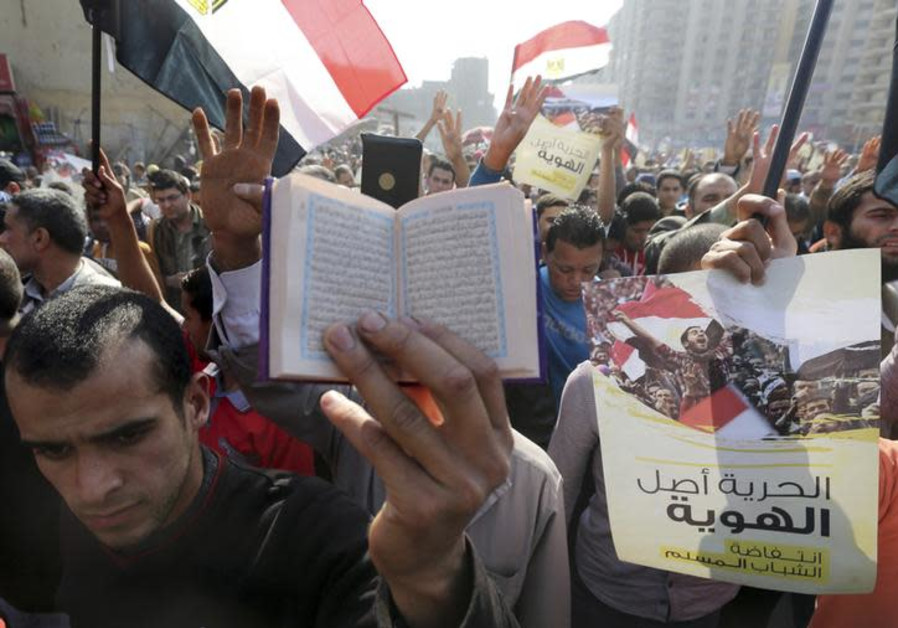
A supporter of the Muslim Brotherhood.

Egyptian police released the 25-year-old son of former president Mohammed Morsi Wednesday after he spent less than 24 hours in detention on charges of joining an outlawed organization and publishing “fake news.”

Abdullah Morsi Mohammed Morsi, a graduate business student, posted a bail of 5,000 Egyptian pounds [about $280] according to a statement by Attorney General Nabil Sadek.

“The Attorney General decided to release Abdullah until further investigations take place into the charges against him,” said Abdel-Moneim Abdel-Maqsoud, a member of Morsi’s defense team.

Abdullah frequently posts updates on social media about his father’s condition at the Tora maximum security prison, about eight miles south of downtown Cairo, as the family seeks more visitation rights and better health care for the jailed Brotherhood leader.

The London-based Arabi21 website published an interview with Abdullah just days before his arrest detailing the conditions of the family’s September visit at the prison.

Morsi is challenging a death sentence and 48 years in jail for five separate cases including espionage for Hamas, Hezbollah and Qatar as well as insulting Egypt’s judiciary.

The charge of joining a terrorist group refers to the Muslim Brotherhood, which was outlawed in 2013. Abdel Fattah al-Sisi, an Egyptian general who then became president, led a coalition to remove the elder Morsi from the presidential palace.

Egypt has been plagued by a violent insurgency since Sisi replaced Morsi. Egyptian officials have viewed the terrorist wave as part of a revenge campaign for the Brotherhood’s ousting.

Since 2013, the Egyptian army has also waged a fierce counter-terrorism operation against a Sinai-based Islamic State-affiliated group. It has seen an upsurge in attacks on the Coptic Christian community, as well as security personnel and senior officials in the Nile Valley. Last month, Sisi emphasized the need for a “global war” against terrorism during his address at the United Nations General Assembly in New York.

“There is no doubt that the Arab region is one of the most vulnerable to the dangers of nation-state disintegration, and the ensuing creation of a fertile environment for terrorism and exacerbation of sectarian conflicts,” Sisi declared at the UN.

Cairo has been working to contain Islamists throughout Egypt, making no distinction between their political and armed wings.

“Anyone who has anything to do with the Islamic movement can expect to be questioned and other times detained based on their activity within the movement,” an Egyptian political observer close to the Sisi administration told The Media Line.

“Mohammed Morsi supported and promoted the Muslim Brotherhood in Egypt and beyond—especially in Syria by urging Muslims join a jihad against the government of Syrian President Bashar Assad. Sisi ended that and is cleaning up the mess caused by Islamist political groups in Egypt,” the analyst added.

Ibrahim Haj Ibrahim, who heads the Political Science department at Birzeit University in Ramallah, believes the anti-terror rhetoric in Cairo is a core component of a Saudi-led effort, which includes Egypt and the UAE, to gain support for the ongoing boycott of Qatar, the Muslim Brotherhood’s chief state backer in the region.

“Saudi Arabia doesn’t want any other regional power, but itself,” Ibrahim told The Media Line. “Riyadh is doing the best it can to put the Muslim Brotherhood in the category of terrorism.”