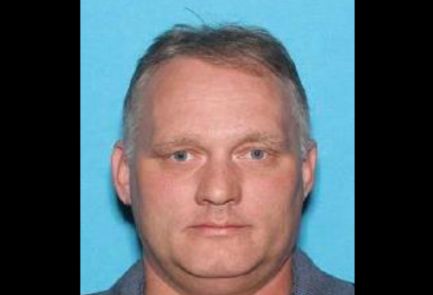
Police name gunman behind deadly Squirrel Hill shooting as Robert Bowers, 46 • Bowers posted anti-Semitic messages on social media in the past, including one just before the shooting • Bowers reportedly yelled “All Jews must die” during the attack.
News Agencies and Israel Hayom Staff
Pittsburgh synagogue shooting suspect Robert Bowers
|Screenshot: YouTube
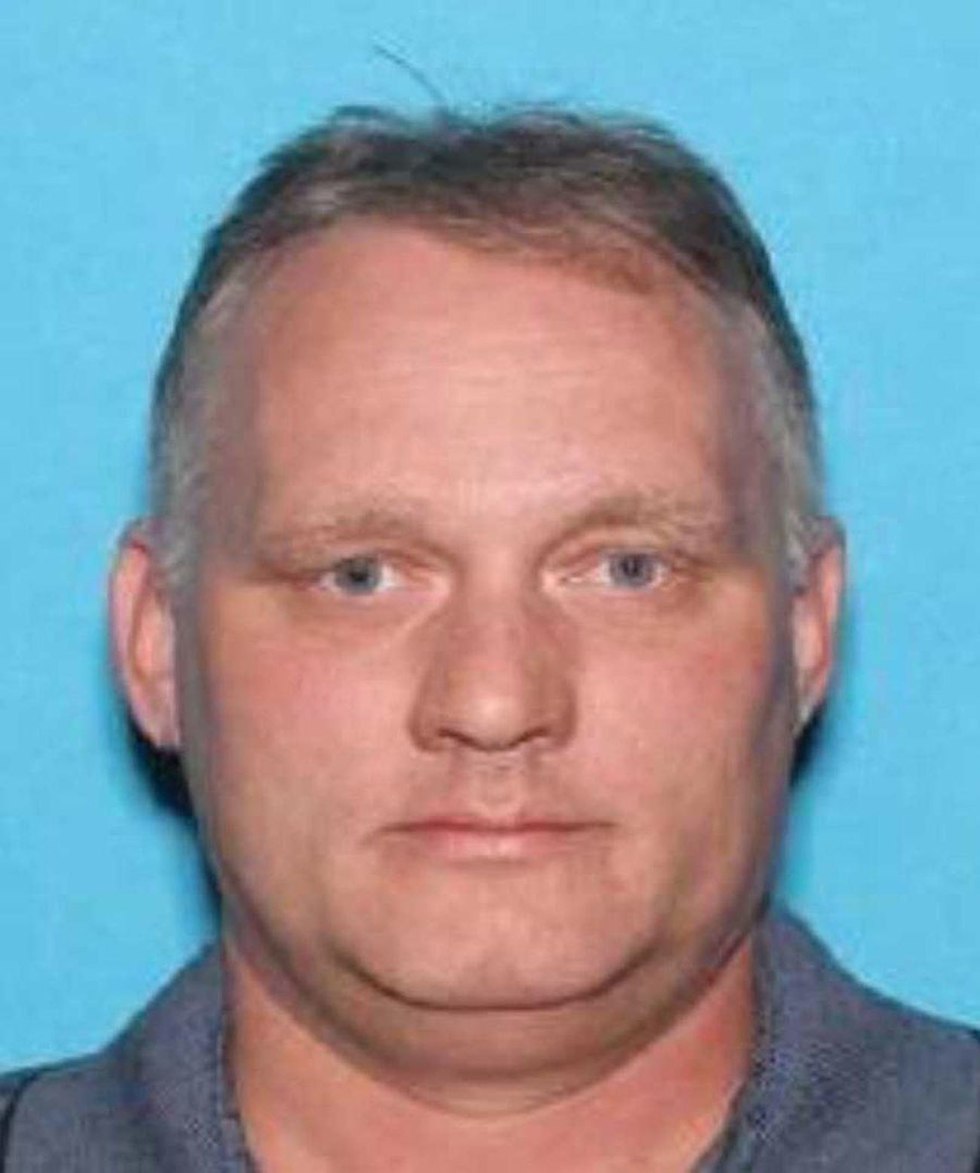
The suspect in Saturday’s mass shooting at a Pittsburgh synagogue, which left 11 people dead and six injured, is a 46-year-old local man named Robert Bowers who in the past had posted virulent anti-Semitic messages on social media filled with slurs and conspiracy theories, and had threatened Jewish groups.
Two hours before bursting into the Tree of Life synagogue in Squirrel Hill and opening fire during a Shabbat religious service, Bowers posted on chat site Gab.com about the Hebrew Immigrant Aid Society, a non-profit that once helped Jewish refugees relocate to the United States and now assists asylum seekers.
“HIAS likes to bring invaders in that kill our people. I can’t sit by and watch my people get slaughtered. Screw your optics, I’m going in,” Bowers wrote.
The gunman reportedly screamed anti-Semitic phrases during the shooting, including “All Jews must die.”
Bowers, a Pittsburgh resident, was shot and was in moderate condition at a local hospital, authorities said.
Gab.com said in a statement that when it learned of the shooting suspect’s profile on its site, it took “swift and proactive” action to contact law enforcement immediately.
Gab, which promotes itself as a free-speech alternative to the more heavily policed Twitter and has been a popular gathering space for the alt-right, said it backed up the user data and suspended the account, then told the Federal Bureau of Investigation about the data held by the company.
“Gab unequivocally disavows and condemns all acts of terrorism and violence,” the company said.
Bower has an active firearms license and has made at least six known gun purchases since 1996, a law enforcement official familiar with the investigation told CNN. He did not have a criminal record and was not known to police, law enforcement officials said on Saturday.
An archive of Bower’s Gab posts since he joined the site in January showed an angry, anti-Semitic man who shared messages such as: “Daily Reminder: Diversity means chasing down the last white person.”
About a month ago he posted pictures showing what appeared to the results of his target practice at a shooting range, and a collection of three handguns that he called his “Glock family.”
Police said the suspect had three handguns and an assault-style rifle at the shooting. It’s unclear whether they were the same handguns as the ones in the photo.
Bowers, who is a registered voter with “no affiliation” in Allegheny County, Pennsylvania, took aim in one post at U.S. President Donald Trump, accusing him of being a “globalist” who did nothing to stop the “infestation” of the United States by Jews.
“For the record, I did not vote for him nor have I owned, worn or even touched a MAGA hat,” he wrote. MAGA is an acronym for Make America Great Again that is frequently used by Trump.
“We stand together with the American people in the face of this horrendous anti-Semitic brutality,” Israeli PM says after gunman murders 11 people at Pittsburgh synagogue • Trump calls for death penalty, solidarity with “our Jewish brothers and sisters.”
News Agencies and Israel Hayom Staff
Prime Minister Benjamin Netanyahu
|Photo: Reuters
Prime Minister Benjamin Netanyahu said he was “heartbroken and appalled” after a shooter murdered at least 11 people and wounded six others, including four police officers, at a Pittsburgh synagogue Saturday.
“The entire people of Israel grieve with the families of the dead,” Netanyahu said in a statement. “We stand together with the Jewish community of Pittsburgh, we stand together with the American people in the face of this horrendous anti-Semitic brutality, and we all pray for the speedy recovery of the wounded.”
Local authorities and media said a gunman yelling “all Jews must die” stormed the synagogue during Saturday services and fired at worshippers.
Diaspora Affairs Minister Naftali Bennett said he would travel to Pittsburgh to offer his support to the Jewish community there. He added that he has instructed his team to provide any assistance that might be required.
“The State of Israel is deeply pained by this terrible anti-Semitic murder,” Bennett said in a statement Saturday. “Our Jewish brothers and sisters came under a murderous attack while at prayer. Our hearts go out to the families of those killed, and we pray for the swift recovery of the injured, as we pray this is the last such event.”
President Reuven Rivlin also extended his condolences, saying “We are thinking of ‘our brothers and sisters, the whole house of Israel, in this time of trouble,’ as we say in the morning prayers. We are thinking of the families of those who were murdered and praying for the quick recovery of those who were injured. I am sure that the law enforcement agencies and the legal authorities in the U.S. will investigate this horrific event thoroughly and that the despicable murderer will be brought to justice.”
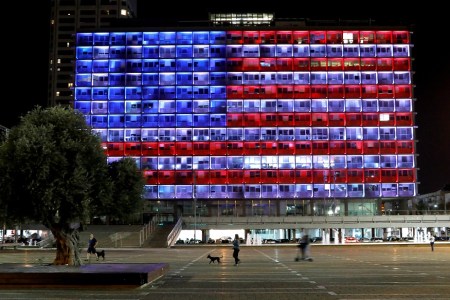
The Tel Aviv-Jaffa Municipality projected the flags of both the U.S. and Israel onto its city hall building on Saturday in a show of solidarity with the victims of the shooting attack.
Reuters
The municipality building in Tel Aviv is lit in the colors of the American flag in solidarity with the victims of a Pittsburgh synagogue attack
U.S. authorities said they planned to bring hate crime and other criminal charges against the murder suspect, 46-year-old Robert Bowers from Pittsburgh, who was arrested at the scene.
The shooting, for which one federal law enforcement official said Bowers used an AR-15 semi-automatic rifle, prompted security alerts at houses of worship around the country.
Shortly after reports of the shooting emerged, U.S. President Donald Trump said in a tweet he was watching what he described as a “devastating” situation.
Trump also called to bring back the death penalty hours after Bowers stormed the synagogue.
Speaking at a rally in southern Illinois, Trump said those responsible for the shooting in Pittsburgh and other similar crimes should pay the “ultimate price.”
“The world is a violent world,” he said before his speech. “And you think when you’re over it, it just sort of goes away, but then it comes back in the form of a madman, a wacko. … They had a maniac walk in and they didn’t have any protection and that is just so sad to see, so sad to see.”
Trump said lawmakers “should very much bring the death penalty into vogue” and people who kill in places such as synagogues and churches “really should suffer the ultimate price.”
Trump said “the hearts of all Americans are filled with grief, following the monstrous killing.” He also distanced himself from Bowers, who has voiced support for Trump in the past, calling him “sick” and saying “he was no supporter of mine.”
Trump called for solidarity with “our Jewish brothers and sisters,” adding that the U.S. would seek the “destruction” of those looking to harm Jews.
The president made his remarks before Bowers had been formally charged.
U.S. leaders have typically avoided commenting on the legal outcomes they would like to see following a mass shooting, choosing instead to focus on the suffering of the victims.
Before the shooting, Bowers posted many anti-Semitic comments online, including one early on Saturday. In one post, he slammed Trump for doing nothing to stop an “infestation” of the United States by Jews.
Trump told reporters that experiencing such events as president is “a level of terribleness and horror that you can’t even believe. It’s hard to believe.”
The White House said Trump was receiving regular briefings on the attack. He spoke with the governor of Pennsylvania and the mayor of Pittsburgh. He also spoke with his daughter Ivanka Trump and her husband, Jared Kushner, who are Jewish.
Shortly after returning to Washington late Saturday, Trump ordered flags at federal buildings throughout the country to be flown at half-staff until Oct. 31 in “solemn respect” for the victims.
Earlier in the day, Trump speculated that the death toll in Pittsburgh would have been curbed if an armed guard had been in the building. With both the number of deaths and details of the synagogue’s security still to be disclosed, Trump said gun control “has little to do with it” but “if they had protection inside, the results would have been far better.”
But the attack did not persuade him that tighter gun controls are needed.
“This is a case where, if they had an armed guard inside, they might have been able to stop him immediately,” Trump said. “Maybe there would have been nobody killed, except for him, frankly. So it’s a very, very – a very difficult situation.”
Former U.S. President Barack Obama said, “We grieve for the Americans murdered in Pittsburgh. All of us have to fight the rise of anti-Semitism and hateful rhetoric against those who look, love or pray differently. And we have to stop making it so easy for those who want to harm the innocent to get their hands on a gun.”
Jonathan Greenblatt, CEO of the Anti-Defamation League, said: “We are devastated. Jews targeted on Shabbat morning at synagogue, a holy place of worship, is unconscionable. Our hearts break for the victims, their families, and the entire Jewish community.”
Chuck Diamond, a former Rabbi at the Pittsburgh Tree of Life Synagogue where the shooting occurred, said, “This has always been a thought in the back of my mind, scenarios just like this. During the week the building is locked. We have a security camera to see who comes. But on Shabbat it’s an open door. And there are people right there where he would have walked in.”
The Simon Wiesenthal Center said in a statement: “We are sickened by this horrific attack at the Tree of Life synagogue in Pittsburgh’s historic Jewish neighborhood. Our thoughts and prayers are with the families of the dead and injured as well as the rest of the congregation and Jewish community.”
“Israel is a state in the region, we all understand this,” Omani foreign minister says after PM Netanyahu makes rare visit to Gulf state. “Maybe it is time for Israel to be treated the same [as other states] and also bear the same obligations,” he says.
Ariel Kahana, News Agencies and Israel Hayom Staff
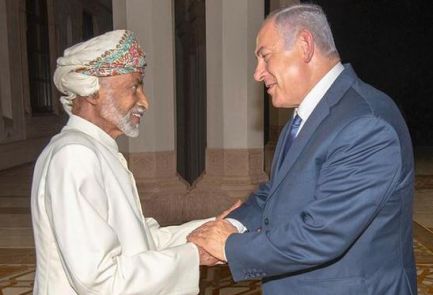
Omani leader Sultan Qaboos bin Said and Prime Minister Benjamin Netanyahu in Muscat, Friday
|Photo: Courtesy
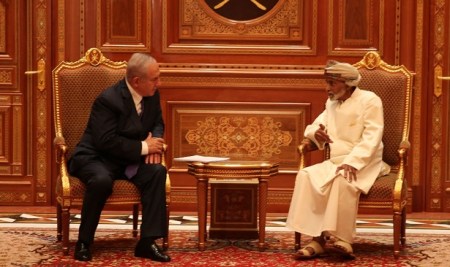
Prime Minister Benjamin Netanyahu visited the Persian Gulf state of Oman on Friday and discussed peace initiatives in the Middle East with Omani leader Sultan Qaboos bin Said, the Prime Minister’s Office said in a statement.
The rare visit by an Israeli leader to the Arabian Peninsula sultanate, which was not publicized in advance, came days after Palestinian Authority President Mahmoud Abbas returned from a three-day visit to Muscat, where he also met with bin Said.
A statement by the Prime Minister’s Office said Netanyahu and his wife, Sara, were invited to visit Muscat by the sultan following extensive communications between the two countries.
”Prime Minister Netanyahu’s visit to Oman is the first official meeting at this level since 1996,” the statement said. “He and his wife were accompanied by Mossad Director Yossi Cohen, National Security Adviser Meir Ben-Shabbat, Foreign Ministry Director General Yuval Rotem, the prime minister’s bureau chief Yoav Horowitz and the prime minister’s Military Secretary Brig. Gen. Avi Bluth.”
”The two leaders discussed, among other things, ways to advance the peace process in the Middle East as well as several matters of joint interest regarding the achievement of peace and stability in the region,” the statement continued.
“The prime minister’s visit is a significant step in implementing his policy on deepening relations with the countries in the region while leveraging Israel’s advantages in security, technology and economic matters,” it said.
Prime Minister’s Office
Prime Minister Benjamin Netanyahu and Omani leader Sultan Qaboos bin Said in Muscat, Friday
A statement by the Omani government described Israel as an “accepted Middle East state.”
Omani Foreign Minister Yusuf bin Alawi said his country could offer ideas to help advance the Israeli-Palestinian peace process. but stressed Muscat is not acting as a mediator in the talks, stalled since 2014.
”Israel is a state present in the region, and we all understand this,” bin Alawi told a security summit in Bahrain. “The world is also aware of this fact. Maybe it is time for Israel to be treated the same [as others states] and also bear the same obligations. We are not saying that the road is now easy and paved with flowers, but our priority is to put an end to the conflict and move to a new world,” he said.
Bahrain’s Foreign Minister Khalid bin Ahmed Al Khalifa voiced support for Oman over the sultanate’s role in trying to secure Israeli-Palestinian peace, while Saudi Foreign Minister Adel al-Jubeir said the kingdom believes the key to normalizing relations with Israel was the peace process.
U.S. Special Representative for International Negotiations Jason Greenblatt welcomed the “warming ties and growing cooperation between our regional friends,” tweeting, “This is a helpful step for our peace efforts and essential to create an atmosphere of stability, security and prosperity between Israelis, Palestinians and their neighbors. Looking forward to seeing more meetings like this!”
Israel and some Gulf states share an interest in curbing Iran’s influence in the region.
Oman has long been to the Middle East what neutral Switzerland is to global diplomacy. The sultanate helped to mediate secret U.S.-Iran talks in 2013 that led to the historic nuclear deal signed in Geneva two years later.
Earlier this year, bin Alawi visited Jerusalem’s Al-Aqsa Mosque and Netanyahu has, on several occasions, hinted at warmer ties with Gulf states. He told Israel’s parliament last week that due to fears of a nuclear threat from Iran, “Israel and other Arab countries are closer than they ever were before.”
Though uncommon, Israeli leaders have previously visited the Gulf state. In 1996, then-Prime Minister Shimon Peres visited the Gulf state and dedicate an Israeli trade representative office there. His predecessor, the late Yitzhak Rabin, made the first trip to Oman in 1994.
Categories: Uncategorized
Comments:Comments Off on Oman offers to aid Mideast peace efforts, says ‘time to accept Israel’
Analysis: Iran is worried by Netanyahu’s visit to Oman and the progress in ceasefire talks in Gaza. To disrupt these efforts, Tehran sent Islamic Jihad to fire a massive barrage of rockets. Islamic Jihad also stands to gain, it gets to have the final say and claim a victory.
Ron Ben Yishai|Published: 10.28.18 , 10:55
The Palestinian Islamic Jihad, which was behind the escalation in the Gaza Stripover the weekend, normally works in coordination with Hamas. As the second biggest and strongest military organization in Gaza, it feels responsibility towards the strip’s residents and serves as a silent partner to the Hamas regime. Ideologically and religiously speaking, the Palestinian Islamic Jihad is not much different to Hamas, which is another reason for the good, close cooperation between the two factions.
The main difference between Islamic Jihad and Hamas nowadays is mostly their relationship with Iran. Hamas receives financial support and technological aid from the Islamic Republic, despite the fact it is a Sunni organization and despite the “bad blood” between Hamas and the Ayatollah regime over the Syrian civil war.
Meanwhile Islamic Jihad, which is also Sunni, has subjugated itself almost completely to Iran. Like Hezbollah, Islamic Jihad receives not just money and weapons from Tehran, but also orders. This must also be why it initiated the escalation over the weekend.
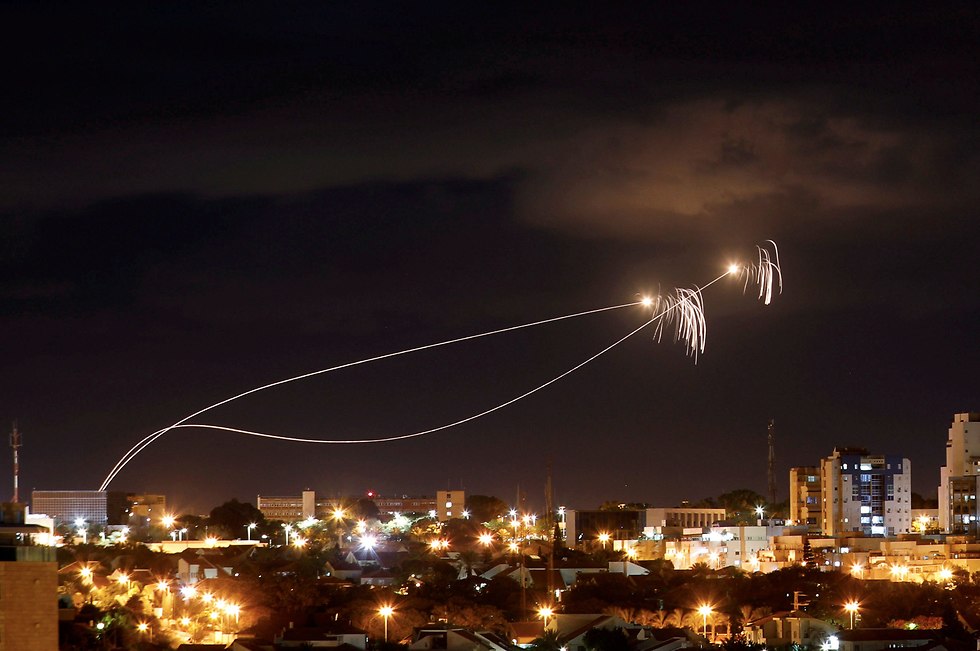
Gaza rockets launched and intercepted by Iron Dome (Photo: Reuters)
A senior security official shared that assessment, noting the organization’s new leadership—which now sits in Damascus—is far more extreme than that of Ramadan Shalah, and is more devoutly serving the Iranians. And so the Gazan Islamic Jihad is trying to create a new equation according to which it would respond with rocket fire to Palestinians deaths in the riots on the strip’s border.
“We won’t allow for a new equation of this type, and we won’t let Islamic Jihad launch rockets at Israel without us responding with a heavy military blow. We also won’t allow Islamic Jihad to do as it pleases with the silent consent of Hamas,” the senior security official said.
So what happened this weekend to make Islamic Jihad break away from the restraint imposed by Hamas under Egyptian pressure, with the hope of improving the living conditions of the Gaza residents? The main cause was the reports on Friday that the Egyptians have finally reached understandings with Hamas to restore calm in Gaza, more or less under the same parameters put in place after the 2014 Operation Protective Edge.
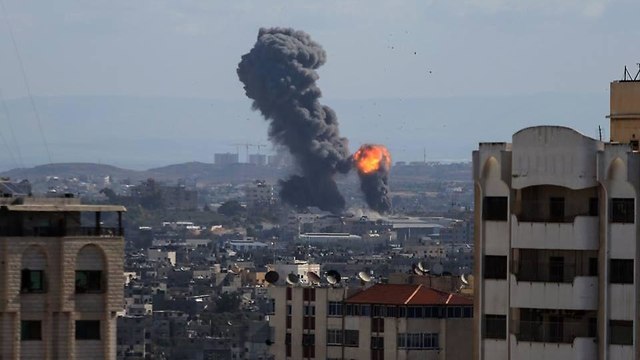
IAF bombs in Gaza
Another explanation lies in Prime Minister Benjamin Netanyahu’s trip to Omanand the diplomatic talks he had there with Sultan Qaboos. Several days before Netanyahu, Palestinian Authority President Mahmoud Abbas visited Oman, with Sultan Qaboos initiating this indirect dialogue between Netanyahu and Abbas and doing a great service to the American administration.
The Iranians, who saw and heard the reports from Gaza and Oman, are worried the arrangement in the strip would allow the Americans to make a bigger move to present their plan to end the Israeli-Palestinian conflict. They don’t want this to happen and are doing all they can to disrupt such a move. Tehran is also trying to put pressure on the Americans to prevent US President Trump from re-imposing a second wave of sanctions on November 6, targeting the export and sale of oil.
In other words, the Iranians are trying to pressure the Americans by sabotaging their interests concerning Israel, to spare themselves the harsh sanctions. It is therefore rather clear why Islamic Jihad would act against the interest of Hamas, which wants to bring the negotiations with the Egyptians to a successful end, by escalating the situation in the service of its masters in Tehran.
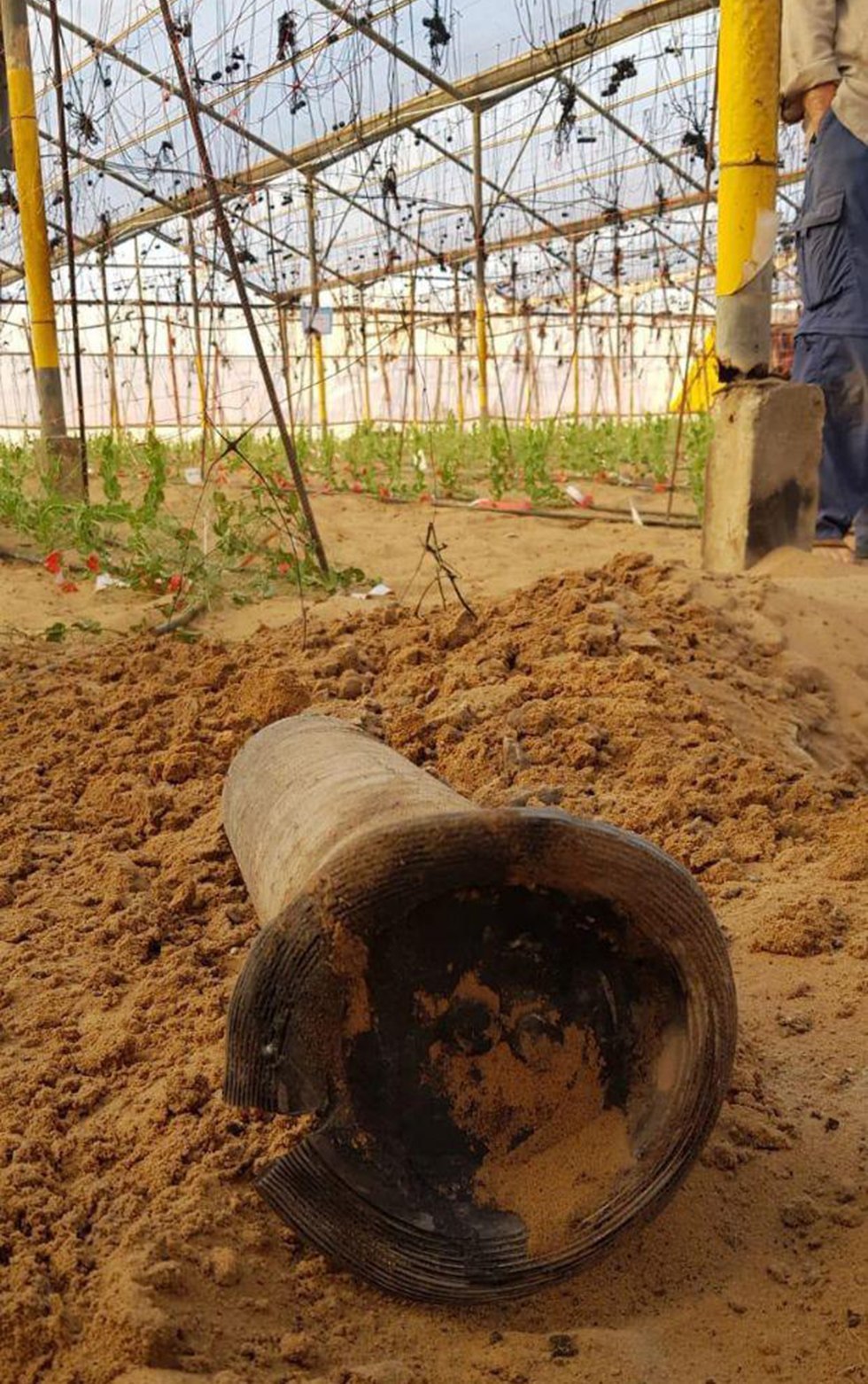
Rocket lands in Netiv HaAsara (Photo: Netiv HaAsara security )
The Islamic Jihad leadership also has its own reasons. All of the Palestinian factions in Gaza, and mostly Hamas and Islamic Jihad, want not only an arrangement that would lead to a truce and ease the humanitarian distress of the strip’s residents, but also a victory they can claim. They want to have an arrangement on their terms, which they could present as a military triumph of the “resistance” over Israel.
The Gaza factions don’t want to admit that the “March of Return” campaign, which led to more than 200 Palestinian fatalities and thousands of others wounded, was a complete failure. They want to show the Palestinian blood spilled on the border was not in vain, and so they need that psychological victory. Therefore, with the arrangement closer than ever, Islamic Jihad seeks to have the final say with the final shot, thus proving the “March of Return” campaign and the arson terrorism forced Israel to accept the terms of the agreement mediated by the Egyptians.
Islamic Jihad can afford to fire that final rockets barrage because it knows Israel has made a strategic decision not to launch a wide-scale ground operation and take over the strip. And so Islamic Jihad—and Hamas—are willing to suffer serious damage to their military facilities, for the sake of that psychological victory. That way, they don’t lose face in Gaza in case a ceasefire is reached, and their patrons in Tehran are pleased.
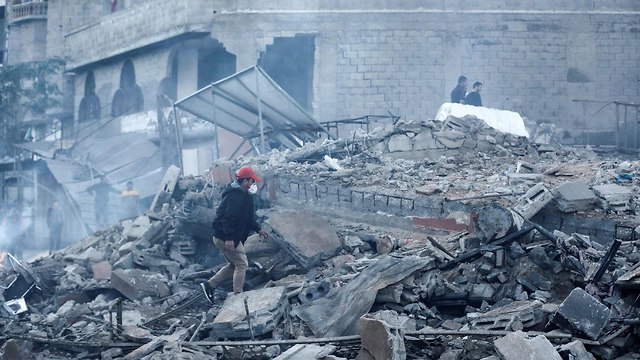
Destruction of Hamas headquarters in Gaza after IAF attack (Photo: AFP)
Israel accepts this pattern, which has cemented itself since August: the Egyptians negotiate with Hamas and Islamic Jihad. The two organizations promise restraint but continue with the March of Return riots and the incendiary balloons. From time to time, when there are difficulties in the negotiations with the Egyptians, Hamas, Islamic Jihad or the errant factions escalate with rockets—while the Hamas political leadership looks the other way—following which the talks with Egyptians resume with Israel giving Egypt as much leeway as necessary to reach a stable arrangement.
Iron Dome intercepts rockets over Sderot (Photo: Maor Shem Tov)
Israel’s security heads—primarily Prime Minister Netanyahu, Defense Minister Lieberman and IDF Chief Eisenkot—have decided that in any case it’s best to let the Egyptians exhaust their influence on Hamas. And as long as the negotiations continue, Israel can settle for measured responses to the rioting on the border, the incendiary balloons, and the rockets. The Iron Dome gives the security heads the feelings that we could tolerate an erosion of the Gaza border residents’ sense of security, so long as we don’t have to launch a large-scale war in the strip that would cost us in lives and economic damage and end exactly as Operation Protective Edge and its predecessors had ended.
This cold and cruel calculation is what causes the fire from the strip, the ongoing erosion of the Gaza border residents’ sense of security, the worsening humanitarian distress of the Palestinians in the strip and the rocket fire.
Destruction of Hamas headquarters in Gaza after IAF attack (Photo: AP)
Israel accepts this situation, inter alia, because it wants the close cooperation with Egypt to continue and because its security heads realize there is no point in a large military campaign in the strip right now without the decision to take over Gaza and hold it for over a year in order to establish a different regime there. After all, it’s not even guaranteed that we could find a different and better regime that would stop the rocket fire.
Israel therefore uses these rounds of escalations to systematically destroy considerable parts of Hamas’s quality military capabilities—both to make an example out of them, but also because when the IDF does go to war, large parts of Hamas’s military assets (mostly its tunnels, naval commandos and special aerial measures) will be out of commission and won’t harm us.
Among the victims of the shooting attack at the Tree of Life Synagogue in Pittsburgh were two brothers, and a husband and wife. The oldest among them was 97 years old; attacker Robert Bowers ‘wanted all Jews to die,’ telling officers ‘Jews were committing genocide to his people.
PITTSBURGH – The suspect in the mass shooting at a Pittsburgh synagogue expressed hatred of Jews during the rampage and told officers afterward that Jews were committing genocide and he wanted them all to die, according to charging documents made public Sunday.
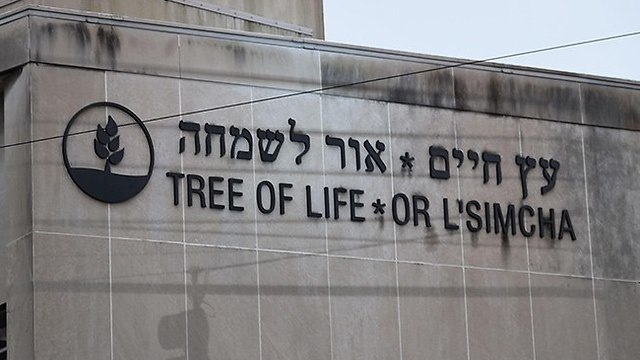
Robert Gregory Bowers killed eight men and three women inside the Tree of Life Synagogue on Saturday during worship services before a tactical police team tracked him down and shot him, police said in an affidavit, which contained some unreported details on the shooting and the police response.
Officials released the names of all 11 victims during a news conference Sunday, all of them middle-aged or elderly. The victims included a pair of brothers and a husband and wife. The oldest was 97.
(Photo: Reuters)
Mayor Bill Peduto called it the “darkest day of Pittsburgh’s history.”
Calls began coming in to 911 from the synagogue just before 10 am Saturday, reporting “they were being attacked,” court documents said. Bowers, 46, shot one of the first two officers to respond in the hand, and the other was wounded by “shrapnel and broken glass.”
A tactical team found Bowers on the third floor, where he shot two officers multiple times, the affidavit said. One officer was described as critically wounded; the document did not describe the other officer’s condition.
Two other people in the synagogue, a man and a woman, were wounded by Bowers and were in stable condition, the document said.
Bowers, who was armed with an AR-15 rifle and three handguns, told an officer while he was being treated for his injuries “that he wanted all Jews to die and also that they (Jews) were committing genocide to his people,” the affidavit said.
Bowers was charged late Saturday with 11 state counts of criminal homicide, six counts of aggravated assault and 13 counts of ethnic intimidation in what the leader of the Anti-Defamation League called the deadliest attack on Jews in US history.
Bowers was also charged Saturday in a 29-count federal criminal complaint that included charges of obstructing the free exercise of religious beliefs—a federal hate crime—and using a firearm to commit murder. US Attorney General Jeff Sessions said the charges “could lead to the death penalty.”
It wasn’t clear whether Bowers had an attorney to speak on his behalf.
(Photo: AFP)
The nation’s latest mass shooting drew condemnation and expressions of sympathy from politicians and religious leaders of all stripes. With the midterm election just over a week away, it also reignited a longstanding and bitter debate over guns.
Pope Francis led prayers for Pittsburgh on Sunday in St. Peter’s Square.
“In reality, all of us are wounded by this inhuman act of violence,” he said. He prayed for God “to help us to extinguish the flames of hatred that develop in our societies, reinforcing the sense of humanity, respect for life and civil and moral values.”
German Chancellor Angela Merkel’s spokesman quoted Merkel on Twitter as offering her condolences and saying that “all of us must confront anti-Semitism with determination—everywhere.”
German President Frank-Walter Steinmeier wrote in a condolence message to President Donald Trump that “this abhorrent crime reminds us all to do what is in our power to advocate against hatred and violence, against anti-Semitism and exclusion, and to counter with determination those who incite them.”
(Photo: Reuters)
Trump on Saturday said the outcome might have been different if the synagogue “had some kind of protection” from an armed guard, while Pennsylvania’s Democratic Gov. Tom Wolf, up for re-election, noted that once again “dangerous weapons are putting our citizens in harm’s way.”
Calling the shooting an “evil anti-Semitic attack,” Trump ordered flags at federal buildings throughout the US to be flown at half-staff in respect for the victims. He said he planned to travel to Pittsburgh, but offered no details.
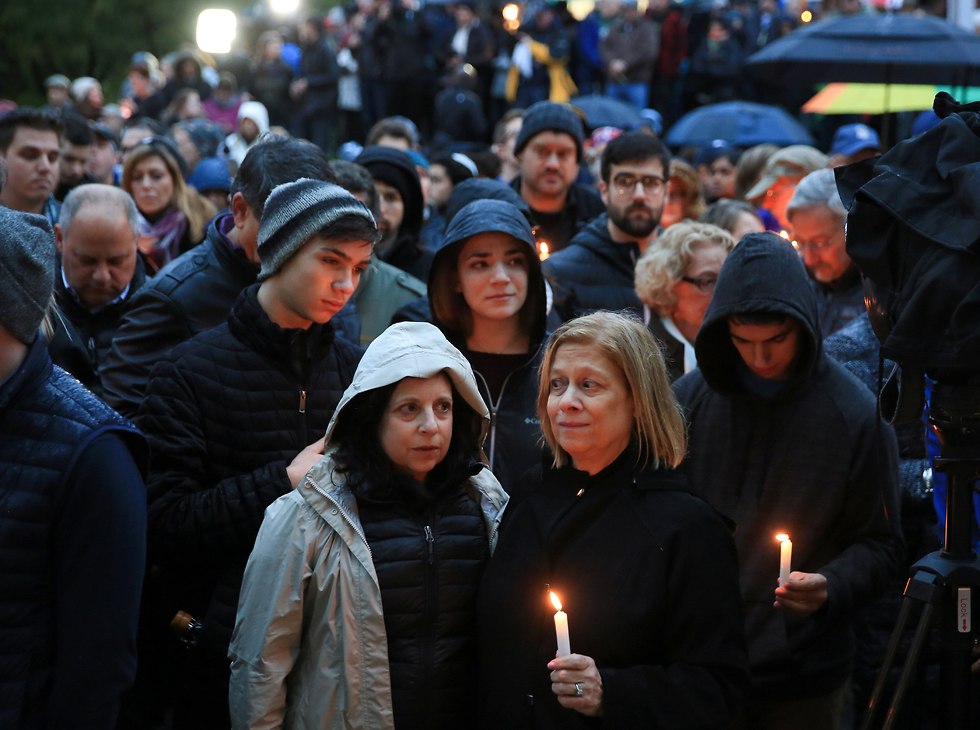
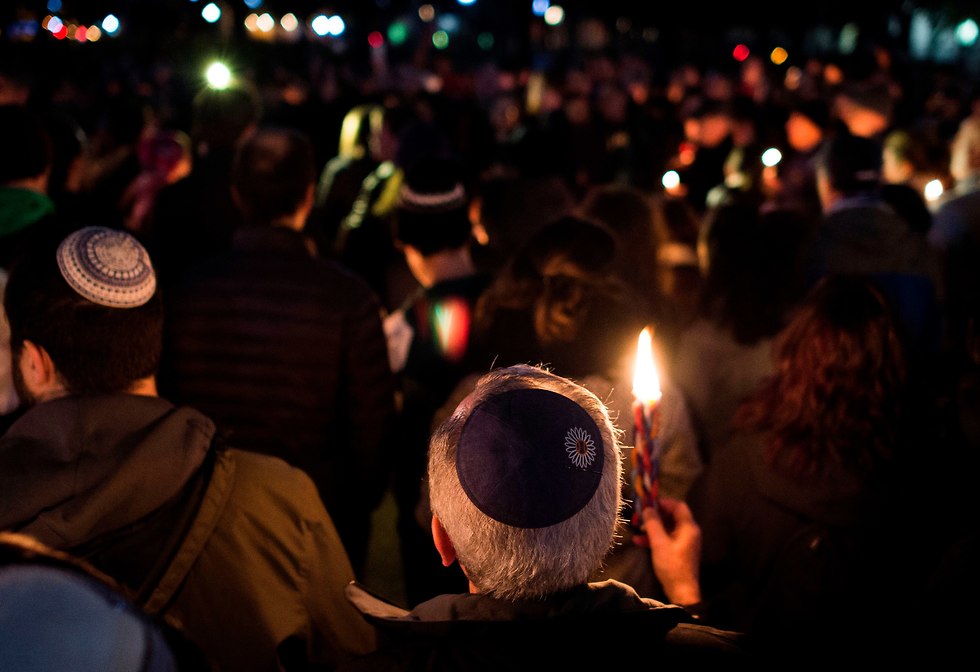
In the city, thousands gathered for a vigil Saturday night. Some blamed the slaughter on the nation’s political climate.
“When you spew hate speech, people act on it. Very simple. And this is the result. A lot of people dead. Senselessly,” said Stephen Cohen, co-president of New Light Congregation, which rents space at Tree of Life.
(Photo: AFP)
Little was known about Bowers, who had no apparent criminal record but who is believed to have expressed virulently anti-Semitic views on social media. Authorities said it appears he acted alone.
Worshippers “were brutally murdered by a gunman targeting them simply because of their faith,” Bob Jones, head of the FBI’s Pittsburgh office, said Saturday, though he cautioned the shooter’s full motive was not yet known.
Scott Brady, the chief federal prosecutor in western Pennsylvania, pledged that “justice in this case will be swift and it will be severe.”
The gunman targeted a building that housed three separate congregations, all of which were conducting Shabbat services when the attack began just before 10 am in the tree-lined residential neighborhood of Squirrel Hill, about 10 minutes from downtown Pittsburgh and the hub of Pittsburgh’s Jewish community.
During the week, anyone who wanted to get inside Tree of Life synagogue had to ring the doorbell and be granted entry by staff because the front door was kept locked. Not so on Saturday—the Jewish holy day of rest—when the building was open for worship.
(Photo: AFP)
The synagogue door was unlocked on Shabbat “because people are coming for services, and the bell would be ringing constantly. So they do not lock the door, and anybody can just walk in,” said Marilyn Honigsberg, administrative assistant for New Light. “And that’s what this man did.”
Michael Eisenberg, the immediate past president of the Tree of Life, said synagogue officials had not gotten any threats that he knew of before the shooting. But security was a concern, he said, and the synagogue had started working to improve it.
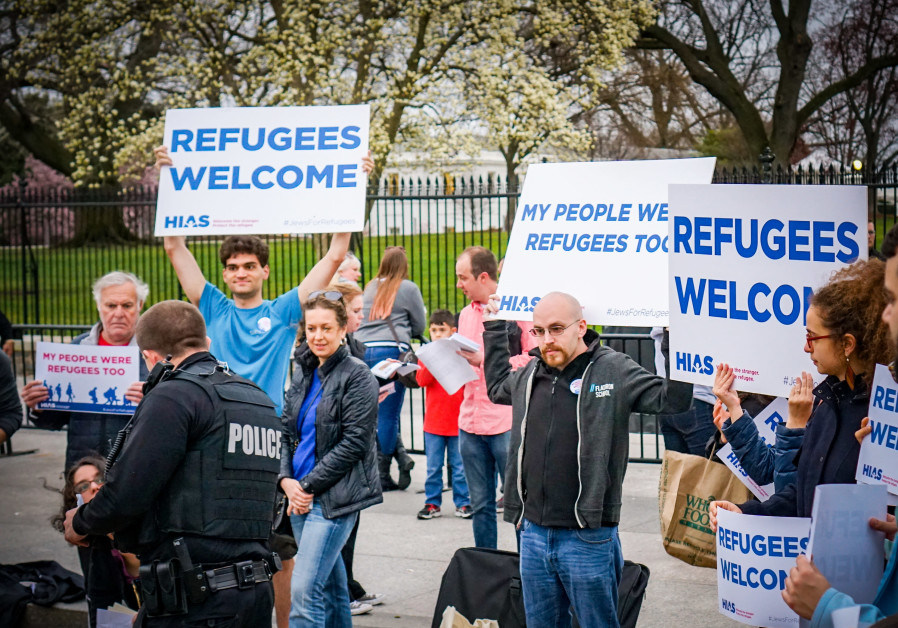
HIAS SUPPORTERS take part in a pro-immigration rally in Washington last year.. (photo credit: TED EYTAN)
In 1881, the Hebrew Immigrant Aid Society was founded to assist Jews fleeing pogroms and violence in eastern Europe.
In 2018, a murderer killed 11 people in a synagogue in Pittsburgh, Pennsylvania, citing his hatred of HIAS as justification for his heinous crime.
What has HIAS done in its 137 years of operation, and why did it motivate such horrific violence?
The organization has its roots on the Lower East Side of Manhattan, a neighborhood which served as a hub and home for Jewish immigration for many decades. HIAS worked to facilitate the legal, financial and physical needs of Jewish immigrants arriving in the United States.
The organization offered language services, resettlement aid, hot meals, legal representation, job training and much more for new Jewish arrivals in the United States.
In 1905, according to The New York Times, HIAS offered aid to a Jewish family arriving from Poland who was told that their 10-year-old son was not fit to enter the country. In 1923, according to JTA, HIAS organized a mass protest against then-president Calvin Coolidge against the detention of 3,000 Jewish immigrants on Ellis Island who surpassed the immigration quota. After World War II ended, HIAS set about aiding and resettling the tens of thousands of displaced persons and refugees in Europe after the Holocaust. In 1967, HIAS aided thousands of Jews fleeing riots that broke out in Libya after the Six Day War.
For more than 100 years, HIAS has operated around the globe to bring Jewish refugees to safety. The organization estimates that it has aided “more than 4.5 million people escape persecution” since it was established. While HIAS’s operations have often centered around Eastern European Jews, it has also worked to help and rescue Jews in Egypt, Cuba, Morocco, Ethiopia, Iran, Syria and more.
The group has also faced criticism over the years, including charges that it did not do enough to aid Soviet Jewish refugees seeking to relocate to the United States, and instead attempted to persuade many to immigrate to Israel.
Over the years, HIAS consulted with other groups and with the US government to aid in the resettlement on non-Jewish refugees. And beginning in the early 21st century, with the needs of global Jewish refugees waning, “HIAS expanded our resettlement work to include assistance to non-Jewish refugees,” the organization said. That decision also drew criticism from some sectors of the Jewish community.
Robert Bowers, the man who walked into a synagogue on a Saturday morning and opened fire, was a virulent antisemite with an online history of incitement against Jews. And he also hated HIAS and everything it stood for, in particular its stated goals of aiding and resettling refugees from around the globe. Last weekend, HIAS organized “National Refugee Shabbat,” with events hosted at hundreds of synagogues around the country. One such community was Dor Hadash in Pittsburgh, which holds its services inside the Tree of Life synagogue.
“HIAS likes to bring invaders in that kill our people,” wrote Bowers the morning of the shooting. “I can’t sit by and watch my people get slaughtered. Screw your optics, I’m going in.”
And then he murdered 11 people in cold blood for the crime of attending prayer services on a Saturday morning.
“There are no words to express how devastated we are by the events in Pittsburgh this morning,” HIAS said in a statement on Saturday. “This loss is our loss, and our thoughts are with Tree of Life Congregation, our local partner Jewish Family and Community Services (JFCS) of Pittsburgh, the city of Pittsburgh and all those affected by this senseless act of violence. As we try to process this horrifying tragedy, we pray that the American Jewish community and the country can find healing.”
The statement noted that HIAS “rescues people whose lives are in danger for being who they are.”
The founders of HIAS probably never imagined that would include Jews in Pittsburgh in 2018.
Police vehicles block off the road near the home of Pittsburgh synagogue shooting suspect Robert Bowers’ home in Baldwin Baldwin borough, suburb of Pittsburgh, Pennsylvania, October 27, 2018. (photo credit: JOHN ALTDORFER/REUTERS)
The Palestinian Ministry of Foreign Affairs said in a tweet on Sunday that it “condemns the terrorist attack against the Tree of Life synagogue in #Pitttsburgh, USA, and expresses solidarity with American people.”
The Palestinian Authority’s Foreign Ministry also referred to the attack as an act of terrorism by those who hold to a fascist doctrine based on the supremacy and dominance of the white race.
It’s a particularly dangerous form of terrorism because it exists with the society itself and targets any who disagrees with it, the PA said.
PLO Ambassador Husan Zomlot, who heads the PA mission to the United Kingdom tweeted in English.
“This murderous attack is pure evil & must unite Jews, Christians and Muslims for an uncompromising fight against all forms of hatred and racism. My heart goes with the families of the victims and the American people,” Zomlot said.
The Saudi Embassy in Washington tweeted, “The Embassy expresses its sincere condolences to the American people and to families of victims of the violent incident at a synagogue in Pittsburgh today. Houses of worship are meant to provide safe and spiritual refuge. Those who desecrate their sanctity attack all humanity.”
US President Donald Trump. (photo credit: REUTERS/LEAH MILLIS)
WASHINGTON – US President Donald Trump unequivocally condemned the mass shooting of Jews at a synagogue in Pittsburgh, Pennsylvania, on Saturday, characterizing antisemitic violence amounted to an “assault on humanity.”
His remarks, at a rally and on Twitter, were the strongest yet on the slaughter at the Tree of Life Synagogue – and more broadly on the scourge of antisemitism, a subject on which he has been accused of being soft from political critics and civil rights organizations.
“All of America is in mourning over the mass murder of Jewish Americans at the Tree of Life Synagogue in Pittsburgh. We pray for those who perished and their loved ones, and our hearts go out to the brave police officers who sustained serious injuries,” he wrote.
“This evil antisemitic attack is an assault on humanity,” he continued. “It will take all of us working together to extract the poison of antisemitic from our world. We must unite to conquer hate.”
Trump added that he would visit Pittsburgh, although he did not specify when.
But the president has had trouble earning the trust of the American Jewish community, or of organizations that fight antisemitism and other forms of discrimination, ever since his 2016 presidential campaign. Throughout that race, he embraced terms such as “globalist” and “America First” first adopted by American fascists and neo-Nazis in years past, and referred to Jews as dealmakers and moneymen.
Then, as president, Trump infamously refused to condemn neo-Nazis that rioted in Charlottesville, killing a counterprotester, as exceptionally depraved or responsible for the spread of hatred.
The Tree of Life shooting, like so many others before it, took on political relevance as both parties head into a contentious and consequential midterm election just eleven days from now. Tom Perez, chairman of the Democratic National Committee, said in a statement that Americans should seize the moment to elect leaders in favor of gun control and who would combat – not give cover to – hate groups and their members.
“No community should be shattered by such bigotry,” Perez said. “As a nation, we must elect leaders who will fight for common-sense gun laws. And we must speak out against antisemitism and all those who enable it.”
Earlier in the day, Trump had proposed armed guards patrol America’s synagogues. He has frequently suggested armed guards in schools following successive shootings of children in classrooms.
“This is a case where if they had an armed guard inside, they might have been able to stop him immediately,” Trump said. “So this would be a case for, if there was an armed guard inside the temple, they would have been able to stop him. Maybe there would have been nobody killed, except for him, frankly.”
Trump also expressed surprise that antisemitic violence still takes place today, despite several organizations measuring a dramatic spike in attacks on Jews and Jewish institutions tracked with his own political rise.
“It looks definitely like it’s an antisemitic crime,” he later said. “That is something you wouldn’t believe could still be going on.”
But Jewish groups were not surprised. The Anti-Defamation League, which has seen a two-fold increase in antisemitic incidents since 2015, said in a statement that the shooting occurred amid an “historic increase in both antisemitic incidents and antisemitic online harassment.” And the American Jewish Committee noted that “incidents targeting Jews constitute the majority of religiously-based hate crimes in the US, according to the FBI, even as Jews constitute no more than two percent of the American population.”
“We call on political, religious, and civic leaders of all persuasions to join in issuing a clarion call for moderation and civility in our national discourse, for far more sustained attention to the repeated outbreaks of deadly mass shootings afflicting our country,” said David Harris, AJC’s CEO.
The Republican Jewish Coalition also expressed dismay at the political environment.
“There is no place in our society for violence against innocent people, especially violence motivated by race, religion, or sex,” the RJC said. “The level of hate in this country is out of control.”
Trump and his team debated whether to cancel a rally in Illinois scheduled for Saturday evening, but the president instead chose to use the event to address the attack.
Among his first calls after he learned of the shooting were Ivanka Trump and Jared Kushner, his daughter and son-in-law who are both practicing Orthodox Jews.
“America is stronger than the acts of a depraved bigot and antisemite,” she said. “All good Americans stand with the Jewish people to oppose acts of terror and share the horror, disgust and outrage over the massacre in Pittsburgh.”
“We must unite against hatred and evil,” she added.
Shouting “All Jews must die,” a gunman walked into the Tree of Life Congregation Synagogue in Pittsburgh, Penn. during the Sabbath service. He was taken into custody after killing 11 people and injuring at least six, including three police first responders, in a massacre.
The first task of the police was to evacuate worshipers trapped in the building, while under fire from the gunman. He also opened fire on the ambulances and police forces concentrated outside the building including a SWAT team and was finally captured after he staged a shootout from the third floor window of the building. Officers sheltered behind cars. Officers sheltered behind cars. Witnesses described a heavy-set white male armed with a semiautomatic assault rifle and two pistols, who entered the building during morning service. He then barricaded himself in a room at the synagogue.
President Donald Trump tweeted he was watching the event. In a second Twitter, he said the incident was “more devastating than was thought. It’s a terrible thing.”
Initial interrogation of the suspect must discover whether this was a lone crime. He may be charged with a hate crime or terrorism.
The Squirrel Hill synagogue is 150 years old and a popular Conservative place of worship in a predominantly Jewish neighborhood. Four congregations share the building. The doors were not locked during the Sabbath service and there were no guards on the door. These precautions are only taken on the High Holidays. Synagogue staff have taken training from Homeland Security instructors. Following the attack, US police posted special forces at Jewish institutions across the country.











 anneinpt
 artaxes
 danmillerinpanama
 davidking1530
 Peter Hofman
 Joseph Wouk
 Peter
Peter Louisiana Steve
 WarSclerotic
Recent Comments