Archive for October 27, 2018

Does Iran lurk behind Netanyahu’s historic visit to Oman? 

October 27, 2018

Source: Does Iran lurk behind Netanyahu’s historic visit to Oman? | The Times of Israel

Amid speculation Muscat may take a greater role in Israel-Palestinian peace talks, analyst say it’s more likely Jerusalem is using the Gulf nation to send a message to Iran
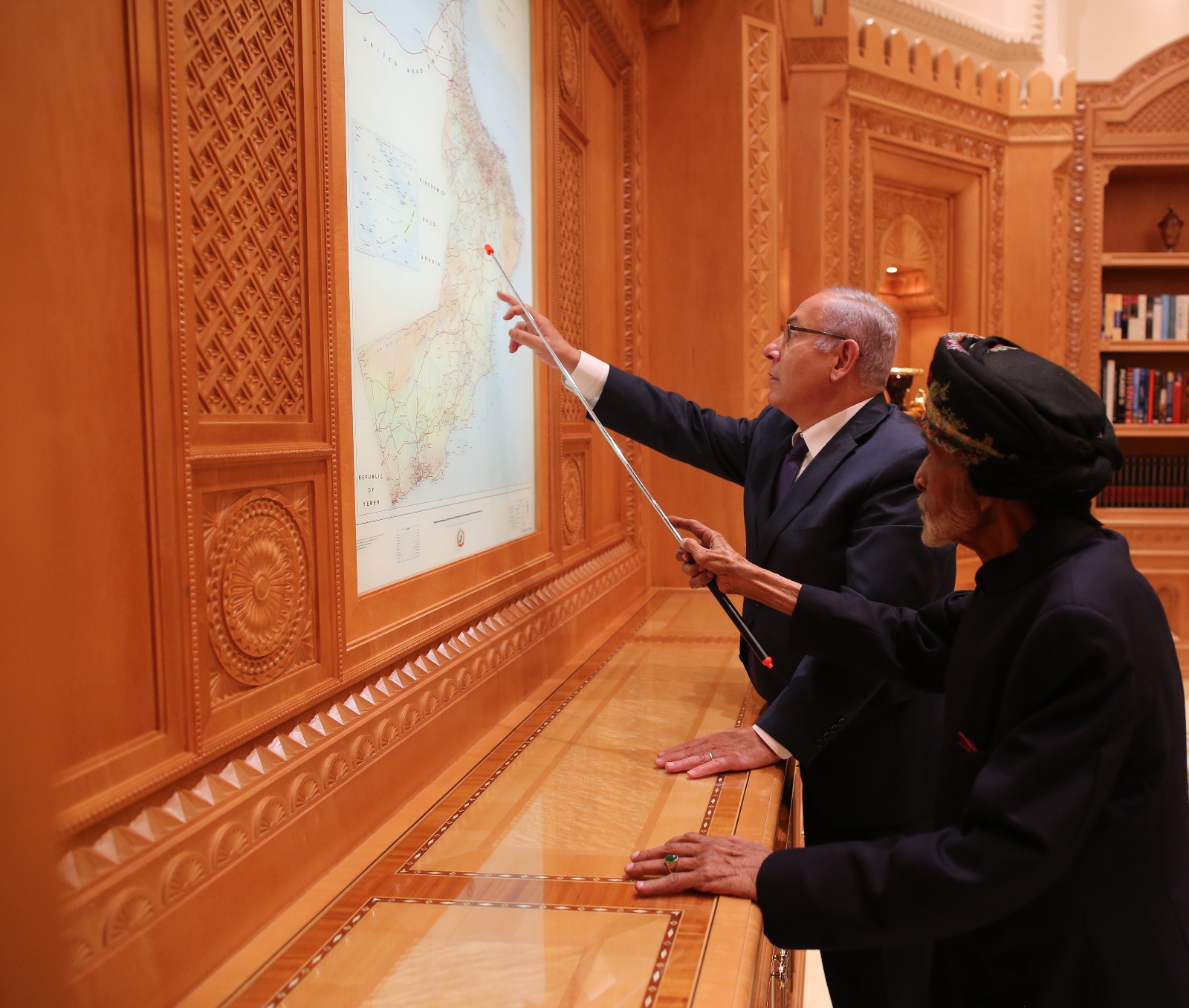
Prime Minister Benjamin Netanyahu with Sultan Qaboos bin Said in Oman on October 26, 2018 (Courtesy)

Prime Minister Benjamin Netanyahu with Sultan Qaboos bin Said in Oman on October 26, 2018 (Courtesy)

Prime Minister Benjamin Netanyahu announced a surprise visit to Oman on Friday, boosting his claim to be leading Israel into a new era in ties with Arab nations and prompting speculation about what lay behind the rare public interaction between Israel and a Gulf state with which it no longer has diplomatic relations.

There were few concrete details on his talks with Oman’s Sultan Qaboos bin Said beyond a joint statement issued by the Prime Minister’s Office on Friday afternoon, saying the two sides “discussed ways to advance the Middle East peace process and discussed a number of issues of mutual interest to achieve peace and stability in the Middle East.”

The sultanate has long had a low-key role in fostering negotiations between the Israelis and Palestinians. Days before Netanyahu’s visit, Palestinian Authority President Mahmoud Abbas also visited Oman, raising the possibility that Oman might be trying to help revive negotiations or push forward a troubled US peace plan.

But one leading Israeli analyst was skeptical that this was the true reason behind the visit, the first by an Israeli leader in over two decades.

“Oman wants to be a mediator between Israel and the Palestinians. However, Israel doesn’t need anyone’s help to be able to talk to the Palestinians,” said Hadashot TV news Arab affairs analyst Ehud Ya’ari, pointing to another role for Muscat. “Oman is a pipeline to Tehran.”
Prime Minister Benjamin Netanyahu (L) talks with Sultan Qaboos bin Said in Oman on October 26, 2018 (Courtesy)

Oman, which sits on the southeastern tip of the Arabian Peninsula, with Saudi Arabia to its north and Iran to its east, also has a long record of being a quiet broker in the region, opting to stay on the sidelines of the rivalry between the two regional powerhouses.

While Oman’s influence over Israel and the Palestinians is limited, its unique regional position could enable it to play a bigger role mediating between Israel and archenemy Iran.

Sultan Qaboos has managed to steer his country through choppy regional politics with a policy of non-interference, helping broker the release of Western hostages in Yemen and providing a back door for communications between Washington and Tehran under the Obama administration. Although it is a member of the Saudi-led six-nation Gulf Cooperation Council, it did not join the kingdom in its boycott of Qatar or the war in Yemen.

“Countries go to Oman if they have a message to give to Iran,” said Ya’ari, also referencing the back-channel work the Omanis did between the Obama administration and Tehran.
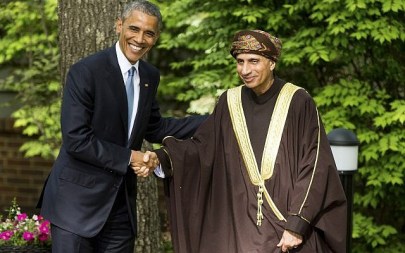
President Barack Obama shakes hands with Deputy Prime Minister of Oman, Sayyid Fahad Bin Mahmood Al Said after meeting with Gulf Cooperation Council leaders at Camp David in Maryland, Thursday, May 14, 2015. (AP Photo/Andrew Harnik)

Israel has repeatedly expressed concern about Iran’s military activities and support for Shiite terror groups in neighboring Syria and warned that it will not allow Iran to maintain a permanent military presence in Syria. In recent months, Israel has carried out a number of strikes on Iranian positions in Syria.

In addition, US sanctions on Iran are to soon go into effect after the Trump administration, with strong Israeli support, backed out of the international nuclear agreement with Iran negotiated by the Obama administration.

The idea of Oman potentially serving as a channel of some kind to Iran appeared to be reinforced by the Palestinians.

A senior Palestinian official said late Friday that the sultan had offered to play a role mediating between the Palestinians and Israelis, and that Abbas had said he welcomes any “meaningful” peace process. But the official said the visit was mostly connected to Oman’s “regional role.”

Netanyahu’s office said he had been invited by the sultan after lengthy communications. Oman state TV carried images of the two leaders meeting and Netanyahu shared a video of his visit on his official social media accounts, calling it “a special visit to Oman — making history!”

Israel and Oman do not have diplomatic relations. Israel is only officially recognized by two Arab states — Egypt and Jordan.

The meeting was the first between leaders of the two countries since then-prime minister Shimon Peres visited in 1996.

Israel and the Palestinians have not held substantive peace talks for the past decade. While US President Donald Trump has promised a Mideast peace plan, US relations with the Palestinians have deteriorated and his efforts to produce the “Deal of the Century” have so far proven fruitless.

The Palestinians cut ties with the US after the White House recognized Jerusalem as Israel’s capital and then moved the American embassy there in May. The US has also cut funding to the UN agency for Palestinian refugees and shuttered the Palestinian Liberation Organization office in Washington. These moves have further alienated the Palestinians.

The US has not released details of its peace plan, but it is widely expected to include a role for Saudi Arabia and other Gulf states.

Arab states, including Oman, remain publicly committed to calls for a Palestinian state with East Jerusalem as its capital. Oman has joined a chorus of Arab countries that have strongly condemned Israel’s killing of Palestinians in Gaza protests that erupted in May and continued Friday.
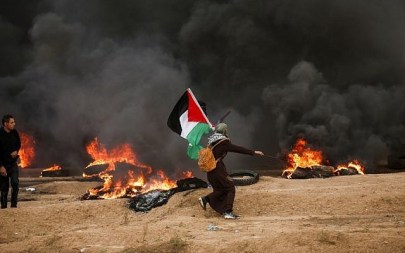
A Palestinian woman runs with a Palestinian flag, amid black smoke from tires burned by protesters, during clashes following a riot near the border with Israel east of Gaza City on October 26, 2018. (Mahmud Hams/AFP)

Netanyahu and his wife were joined on the trip by the head of Mossad, Israel’s intelligence agency, his national security adviser, his Foreign Ministry director-general, and other defense officials.

Netanyahu has repeatedly stated in recent years that Israel has developed good relations with several Arab states, despite a lack of official ties. But he rarely publicizes these contacts or identifies his partners.

In the lead-up to Friday’s surprise visit to Oman, there have been signs that Israel’s behind the scenes dialogue with Arab states is becoming more public.

In February, Oman’s foreign minister made a rare visit by an Arab official to Jerusalem’s Al-Aqsa Mosque compound and to the West Bank.
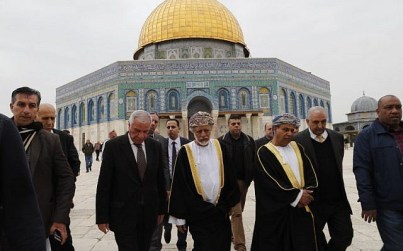
Omani Minister for Foreign Affairs Yusuf bin Alawi center, visiting the Al-Aqsa Mosque compound on the Temple Mount in the Old City of Jerusalem, February 15, 2018. (Ahmad Gharabli/AFP)

The following month, Omani officials joined their Arab counterparts from the United Arab Emirates, Saudi Arabia, Qatar and Bahrain at the White House for a meeting with Israeli national security officials to discuss the dire humanitarian situation in the Gaza Strip.

 

Islamic Jihad calls ceasefire as Israel hits back at 30-plus rockets from Gaza 

October 27, 2018

Source: Islamic Jihad calls ceasefire as Israel hits back at 30-plus rockets from Gaza | The Times of Israel

Iran-backed terror group says it will halt fire after talking with Egypt; no acknowledgement of deal by Israel, which strikes IJ targets in 95 raids

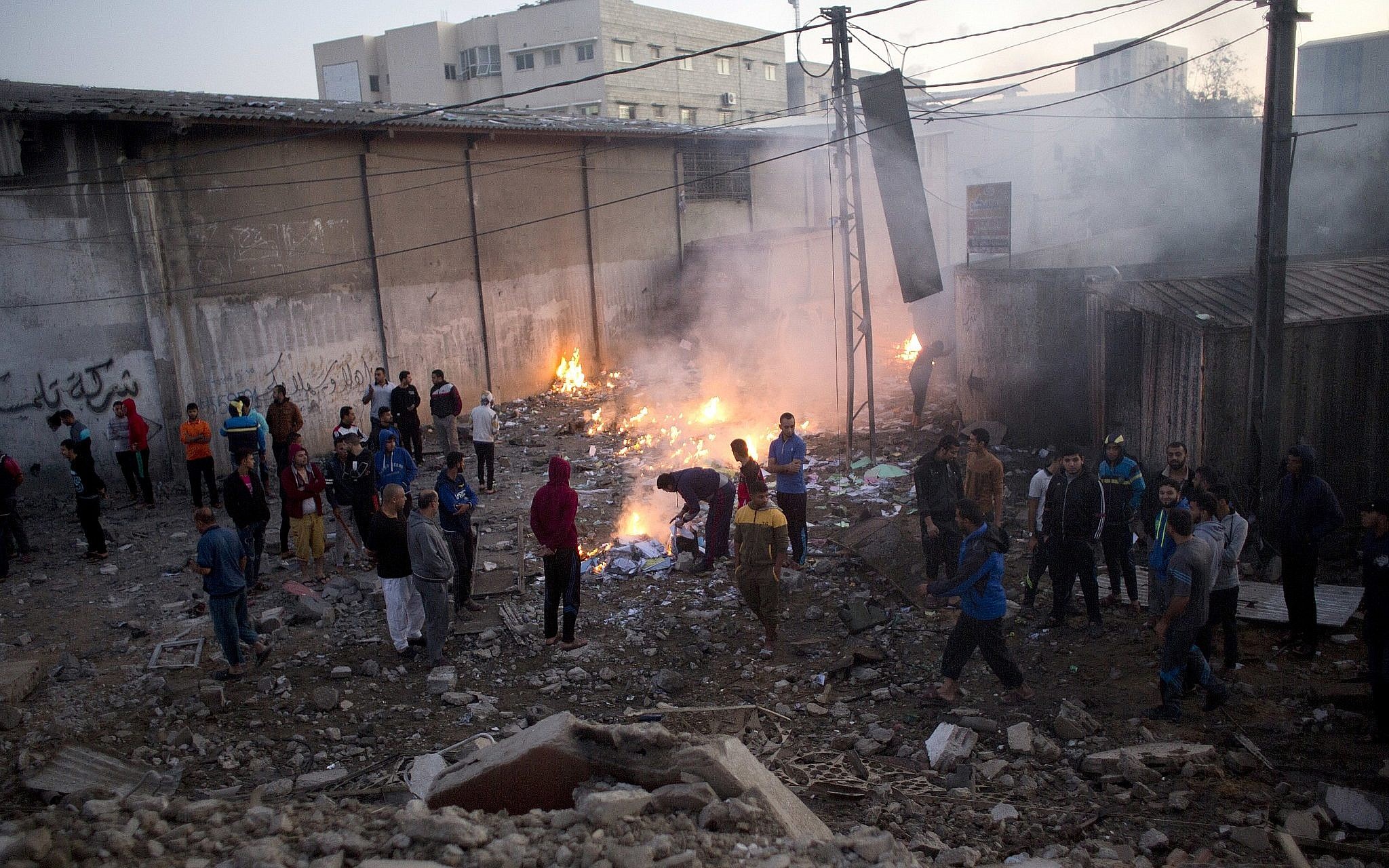
Palestinians check damage to buildings destroyed by Israeli airstrikes in Gaza City on October 27, 2018 after salvos of rocket fire from Gaza. (AP Photo/Khalil Hamra)

Palestinians check damage to buildings destroyed by Israeli airstrikes in Gaza City on October 27, 2018 after salvos of rocket fire from Gaza. (AP Photo/Khalil Hamra)

Islamic Jihad announced Saturday it had agreed to an Egyptian-brokered ceasefire to end an escalating exchange of fire with Israel, as Israeli jets struck sites in the Gaza Strip belonging to the Palestinian terror organization.

A spokesman for the group told the Gaza-based Safa news site that a ceasefire agreement went into effect following Egyptian communication with its leadership.

He said Islamic Jihad would remain committed to the ceasefire as long as Israel did likewise.ever miss our top storiesFREE SIGN UP

There was no immediate acknowledgement of the ceasefire declaration in Israel, which in the past has denied proclamations by Gaza-based terror groups regarding understandings to end fighting.

Defense Minister Avigdor Liberman was meeting with IDF Chief of Staff Gadi Eisenkot and other top security officials at the time of the announcement.

Defense Minister Avigdor Liberman meets with IDF Chief of Staff Gadi Eisenkot and other top military officers at Israel Defense Forces headquarters in Tel Aviv on October 27, 2018. (Ariel Hermoni/Defense Ministry)

A few hours after Islamic Jihad announced the ceasefire, the Eshkol Regional Council lifted orders that residents must remain in close proximity to bomb shelters.

Restrictions remained in place, however, limiting gatherings outdoors to 100 people and those indoors to 500.

The declaration by Islamic Jihad to end the rocket fire came as the Israel Defense Forces said fighter jets struck eight targets tied to the Iran-backed terror group in three separate military facilities after Israel was hit by salvos of rockets from Gaza overnight and on Saturday morning.

The Gaza targets included weapons production sites and a factory that makes parts for subterranean tunnels, the army said, adding that the later was near a school.

The top IDF spokesperson earlier blamed Iran and Syria for the Islamic Jihad rocket attacks. Though he did not accuse Hamas of taking part in the launches, Brig. Gen. Ronen Manelis reiterated that Israel considers the terror group responsible as Gaza’s rulers.

Another IDF spokesman, Lt. Col. Jonathan Conricus, said the rocket strikes were ordered by operatives from the overseas branch of Iran’s elite Islamic Revolutionary Guard Corps stationed in Syria and warned Israel may not limit its response to Gaza.

“From our perspective, part of the address by which we will deal with this fire is also in Damascus and the Quds Force,” he said. “Our response is not limited geographically.”

Israel Defense Forces

@IDFSpokesperson

1. This Palestinian Islamic Jihad cement factory, which was used to build cross-border terror tunnels, was built RIGHT NEXT TO a , putting the children of at risk.

View image on Twitter

Israel Defense Forces

@IDFSpokesperson

2. We also struck this Islamic Jihad weapons manufacturing facility – they use their weapons to try to kill innocent Israeli civilians, we use our weapons to destroy their weapons. pic.twitter.com/bKqyBsaZwf

34 rockets were fired at Israel overnight and Saturday morning, according to the IDF, 13 of which were intercepted by the Iron Dome anti-missile system.

Two of the rockets fell in Gaza and the rest landed in open areas.

The Defense Ministry’s liaison to the Palestinians said a mortar launched during the barrages struck the ambulance terminal at the Erez border crossing, the sole pedestrian passage between Gaza and Israel.

In response to the rocket fire, Israeli aircraft and attack helicopters attacked 95 targets in Gaza belonging to Hamas and Islamic Jihad.

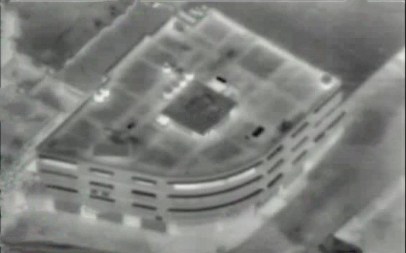
The army said the targets included military and weapons manufacturing facilities through the Strip, a factory in Khan Younis producing cement used in subterranean tunnels and a four-story building in Gaza City headquartering Hamas security services.

The IDF said in a statement Saturday morning it “views with great severity the rocket attacks tonight against Israeli communities.” It blamed Hamas for creating “a terror-enabling atmosphere…near the border fence which led terror groups in the Strip to carry out tonight’s attack.”

A four-story building in Gaza City’s Daraj neighborhood belong to Hamas’ General Security Services is seen on October 27, 2018, moments before it was destroyed in an Israeli airstrike. (Israel Defense Forces)

Palestinian sources speaking to the Ynet news website claimed the attacks were carried out against the objections of the Hamas terror group that rules Gaza, though this had no official confirmation.

Israel views Hamas as ultimately responsible for any attacks emanating from the territory it controls, regardless of the source.

In response to the rocket barrages, the IDF’s Home Front Command overnight issued instructions restricting gatherings in the Gaza periphery: up to 100 people in open areas and 500 people in closed spaces.

The rocket fire comes amid a deadly flareup in violence in the Gaza Strip. Earlier on Friday, thousands of Palestinians gathered at five locations along the border, burning tires and throwing rocks and firebombs at Israeli troops who responded with tear gas and occasional live fire.

Five protesters were killed and another 170 were injured in the clashes with IDF troops, the Hamas-run health ministry in Gaza said. One of those killed was blown up by his own hand grenade, which exploded prematurely, witnesses said.

Earlier this week, a rocket was launched at southern Israel from Gaza, triggering sirens in a number of communities in the Eshkol region, ending a week-long stretch of relative calm in the coastal enclave. In response to that attack, the IDF said it hit eight Hamas targets in the Gaza Strip, including training bases and a weapons production facility.

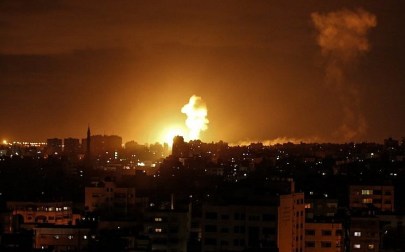
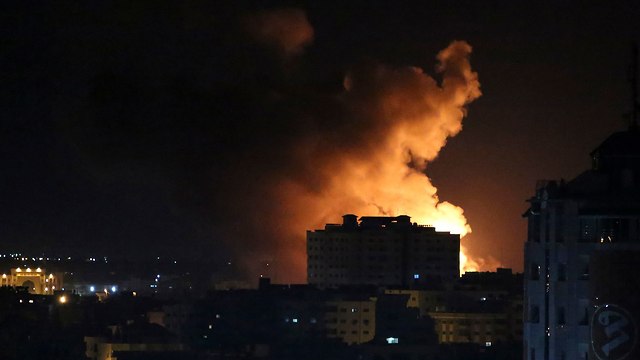
A picture taken on on October 27, 2018 shows an explosion caused by an Israeli airstrike in Gaza City. (Mahmud Hams/AFP)

The ramped up tensions are likely to complicate the mission of Egyptian mediators, who have intensified their shuttle diplomacy to achieve calm and prevent a full-blown conflict between Gaza’s Hamas rulers and Israel.

Weekly large-scale riots by Gazans, and clashes between Palestinians and Israeli soldiers, have become a mainstay along the Strip’s security fence since March 30, as part of a Hamas-led effort known as the “March of Return.”

These demonstrations take place each Friday, regularly sending massive amounts of thick smoke into the Israeli communities nearby, as Palestinians burn tires along the border and send incendiary devices affixed to balloons into Israel to spark fires.

The period since March 30 has also included a number of significant flareups and extended clashes. Another rocket launched from the Gaza Strip last week struck a home in the southern Israeli city of Beersheba, causing significant damage, but no injuries as the family inside had reached their bomb shelter in time.

In recent weeks, the situation along the border has grown more precarious, as indirect negotiations between Israel and Hamas — with the Egyptian military and United Nations acting as intermediaries — have reached a critical turning point.

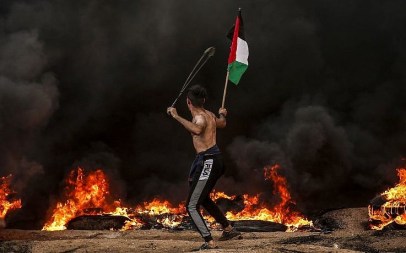
A Palestinian holds a Palestinian flag as he uses a slingshot to hurl rocks at Israeli troops during clashes near the border with Israel, east of Gaza City, on October 26, 2018. (Mahmud Hams/AFP)

Israel has called for a cessation to all violence, including both the clashes on the border and the daily arson attacks that have burned large swaths of land in the south, in exchange for certain economic incentives and an easing of the blockade around the coastal enclave, which is imposed by Israel to prevent Hamas importing weapons.

At least 160 Palestinians have been killed and thousands more have been injured in the clashes with IDF troops, according to AP figures. Hamas, an Islamist terror group that seized control of the Strip in 2007 and seeks to destroy Israel, has acknowledged that dozens of the dead were its members. One Israeli soldier was shot dead by a sniper on the border.

The Associated Press and Adam Rasgon contributed to this report.


After Gaza strikes, Israel threatens Iranian forces in Syria

October 27, 2018

Source: After Gaza strikes, Israel threatens Iranian forces in Syria

IDF threatens to expand its air campaign to Syria after accusing Iranian forces in Damascus of orchestrating the rocket attacks; IDF spokesman: ‘We have seen and established a clear link between Gaza and Damascus, the Iranian Revolutionary Guard Quds Force is involved. Our response is not limited geographically.’
Associated Press |Published:  10.27.18 , 15:04
The IDF on Saturday struck dozens of targets across the Gaza Strip in response to heavy rocket fire and threatened to expand its air campaign to Syria after accusing Iranian forces in Damascus of orchestrating the rocket attacks.

The threats toward Iranian forces in Syria added a new dimension to what was already the heaviest fighting between Israel and Gaza militants in several weeks. Opening a new front in Syria could put Israel in open confrontation with heavily armed Iranian and Hezbollah forces, along with recently deployed Russian anti-aircraft systems.

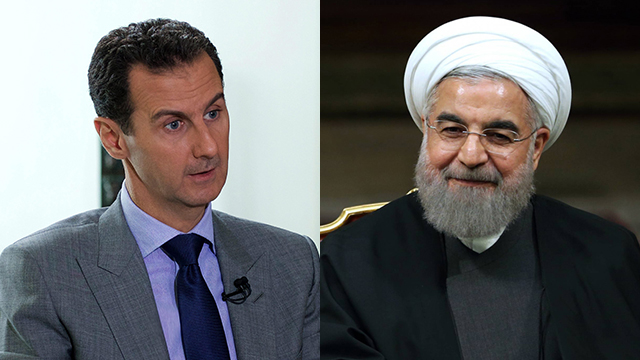
Syrian President Assad and Iranian President Rouhani (Photos: AP, EPA)
Syrian President Assad and Iranian President Rouhani (Photos: AP, EPA)

IDF spokesman Lt. Col. Jonathan Conricus told reporters that 34 rockets had been fired at Israel throughout the night. Israel’s Iron Dome rocket-defense system intercepted 13 rockets, two landed in Gaza and the remainder fell in open spaces in southern Israel, he said. In response, Israel hit over 80 targets in Gaza.

Conricus said Islamic Jihad, an Iranian-backed militant group, had fired the rockets under instructions from Iran’s “Al Quds” force based in Syria and said that Israel was considering taking action against the Iranians in response.

“We have seen and established a clear link between Gaza and Damascus,” he said. “We know that the orders incentives were given from Damascus with the clear involvement of the Iranian Revolutionary Guard Quds Force. From our perspective, part of the address by which we will deal with this fire is also in Damascus and the Quds Force. Our response is not limited geographically,” he added.

Later, Islamic Jihad agreed to stop firing its rockets toward Israel in an agreement brokered by Egypt. Israel did not immediately respond, however, and past cease-fires in the conflict have not always stuck.

Iron Dome intercepts rocket

Iron Dome intercepts rocket

Iran has sent its forces, along with those of Hezbollah and other Shiite militias, to Syria to back President Bashar Assad in the civil war there. As the war winds down, Israel has repeatedly warned that it will not allow its archenemy Iran to establish a permanent military presence in postwar Syria.

Throughout the seven-year war, the IDF carried out scores of airstrikes in Syria, mostly against suspected Iranian weapons shipments to Hezbollah but also against the Iranians themselves.

But Israel’s mission could become much more complicated following Russia’s decision to transfer sophisticated S-300 anti-aircraft missiles to Syria.

Russia deployed the missiles after a Russian warplane was shot down over Syrian skies last month. Russia has blamed Israel for the mishap, saying that Syria accidentally shot down the plane while reacting to an Israeli air raid. Israel and Russia have maintained a hotline to prevent their air forces from coming into contact with one another over Syrian skies. According to media reports, Russia has become less cooperative since the downing of the plane.

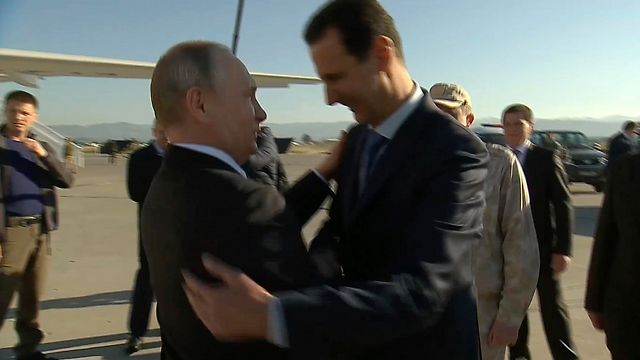
Putin (L) and Assad's meeting at Russia's Hmeymim air base in Syria's Latakia Province (Photo: AP, Presidential TV)

Putin (L) and Assad’s meeting at Russia’s Hmeymim air base in Syria’s Latakia Province (Photo: AP, Presidential TV)
The fighting in Gaza followed a bloody day of border protests Friday.16,000 demonstrators hurled Molotov cocktails, hand grenades, burnt tires and stones at the security forces, and four Palestinians were killed by IDF during the protest along the perimeter fence.The sudden burst of fighting complicated the mission of Egyptian mediators who have been trying to prevent a full-blown conflict between Hamas and Israel.

Conricus said that Israel had struck over 80 sites across Gaza, including training camps, weapons storage facilities and a Hamas security headquarters building.

COGAT, an Israeli defense body that handles Palestinian civilian issues, said one of the rockets had hit an ambulance crossing used to transfer Gazans out of the strip in emergency humanitarian cases. “To what low have the terrorist organizations in the Gaza Strip reached?” wrote the Coordinator of Government Activities in the Territories (COGAT) Maj. Gen. Kamil Abu Rokon, in his Facebook page.

 (Photo: AP)

(Photo: AP)

Although Islamic Jihad often acts independently of Hamas, officials hold Hamas, which has ruled Gaza since 2007, responsible for all fire emanating from the territory.Conricus said there had been no signs of Hamas trying to rein in Islamic Jihad. He also criticized Hamas for escalating the border protests after Israel had tried to defuse tensions by allowing special fuel shipments into Gaza to improve the supply of electricity. The territory suffers from chronic power outages.

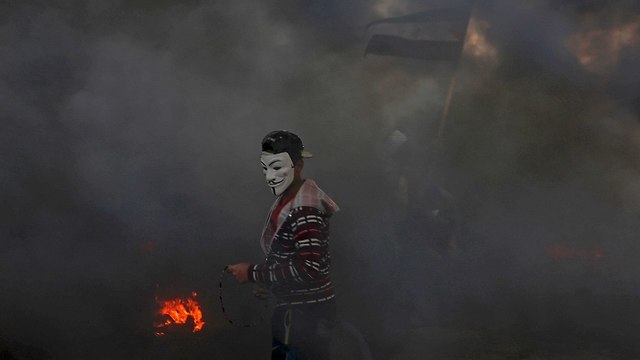
Gaza border riot (Photo: AP)

Gaza border riot (Photo: AP)

After they fired the heaviest rocket salvoes across the border since August, a spokesman for the Palestinian Islamic Jihad, one of the armed groups that operates in Gaza, said understandings had been reached for a ceasefire with Israel with the help of Egyptian mediation.”After contacts between the Islamic Jihad leadership and the brothers in Egypt it was agreed that a comprehensive ceasefire will begin immediately,” spokesman Daoud Shehab said. “The Islamic Jihad will abide by the ceasefire if the occupation (Israel) does the same.”

Earlier the organization said that “If the aggression and bombing continued, we will respond to each incident,” and even threatened to “expand the range” of rocket fire.

There were no reports of injuries on either side.

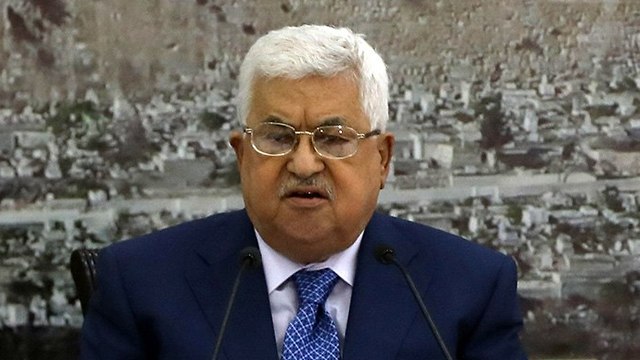
Palestinian  President Mahmoud Abbas (Photo: EPA)

Palestinian President Mahmoud Abbas (Photo: EPA)
On Wednesday, Egyptian intelligence officials met representatives of Palestinian factions in Gaza, the latest in a round of shuttle diplomacy between the sides.Egypt wants to restore calm in order to pursue the broader goal of Palestinian reconciliation between Hamas and the West Bank-based administration of President Mahmoud Abbas.


Massive Gaza missile volley greets new IDF chief. IAF strikes 87 Hamas targets – DEBKAfile

October 27, 2018

Source: Massive Gaza missile volley greets new IDF chief. IAF strikes 87 Hamas targets – DEBKAfile

Wave upon wave of Palestinian missiles were aimed at Israeli communities from Gaza on Friday night and Saturday morning, Oct. 26-27, gaining impetus from IDF air strikes at some 87 Hamas targets.

The IDF spokesman spoke of 30 Palestinian missiles during the night, although the number was more than 50, of which Iron Dome intercepted 13 that directly threatened residential areas. This Palestinian assault focused on the town of Sderot and the Shear Hanegev Council communities rather than widely-spaced targets.

The IDF reported Saturday that IAF fighters hit the new Hamas General Security headquarters in the Derej district of Gaza City although they admitted the building was empty at the time of the attack.

In the streets of Sderot meanwhile householders and their children huddled in shelters and fortified rooms after a day of listening to howling mobs of some 16,000 Palestinians close by, trying to force their way through the Gaza fence at three points, while hurling small bombs, grenades and rocks at the soldiers. Five rioters were killed and dozens injured by IDF gunfire before they were pushed back.

But Palestinian missile fire continued unabated into Saturday morning. The latest IDF bulletin held Syria and the Iranian al-Qods responsible for the Palestinian barrage of Friday night and Saturday morning. This onslaught powerfully debunked the reports of an Israeli-Hamas deal,  brokered by Egypt, for the Palestinian terrorists to gradually de-escalate the border outbreaks, provided Israel held back and gave Hamas time for the process.

It also served as a greeting card from Hamas and Islamic Jihad to Israel’s next military chief of staff, whom Defense Minister Avigdor Lieberman named on Friday as  Maj. Gen. Aviv Kochavi, 54. Kochavi is currently deputy chief of staff to Lt. Gen. Gady Eisenkot, after spending three years as OC Northern Command. He served in many key combat and staff capacities during his military career, although evaluations of his capabilities are mixed.

As commander of the Paratroop Brigade (in 2001), he led successful operations against terrorist concentrations (in 2002-2003) in major Palestinian towns for breaking the back of the Second Intifada (Palestinian uprising) that terrorized Israeli civilian centers for two years. Kochavi designed an effective counter-terror raid technique for saving Israeli troops raiding houses for suspects from being exposed to attack in the street. They were given a tool, which was named after him, for smashing through interior walls between rooms.

As head of AMAN (Military Intelligence), while faulted for certain missed strategic evaluations, he had the foresight to develop the unit’s technological capabilities for its leap into cyber warfare.
Kochavi is still remembered as commander of the Gaza Division 13 years ago, when Israel withdrew finally from the Palestinian enclave under the late Prime Minister Ariel Sharon. On Sept. 12, 2005, Kochavi shut the door on the last evacuated Israeli community in the Gaza Strip with the pledge: “If a single shot, or bullet is ever fired from here against Israel, the IDF’s response will be crushing!”

During the subsequent 13 years, that vow stayed in the history books. Only this week, Prime Minister Binyamin Netanyahu noted that, whereas in 2005, Hamas had only 3,000 armed men, the number has since soared to 65,000!  However, in 2009, a year after he assumed the premiership, the Hamas militia numbered no more than 12,000 men.

Policy-making and military thinking in Israel for dealing with unending Hamas terror has remained frozen in place for 13 years. In 2005, Egypt promised to deploy troops on the strategic “Philadelphi Corridor” to prevent the newly-independent and demilitarized Palestinian enclave in Gaza from smuggling in weapons for rearming. That undertaking was not honored, any more than today, Cairo is capable of forcing Hamas to accept a truce.

As for the incoming chief of staff, Kochavi’s critics evaluate his performance as OC Northern command in charge of the Syrian and Lebanese border areas as falling short of his earlier operational and innovative promise. The question now is: Will Kochavi rise above Israel’s long conceptual paralysis with regard to Gaza and resort to action for stopping the increasingly unbridled Palestinian violence? This weekend, the terrorists of Gaza threw down another gauntlet for the IDF, clearly a challenge for Gen. Kochavi to see if he will finally make good on his 13-year oath of a “crushing response”


IDF: Islamic Jihad Rockets were directed from Iran, Syria – Israel News

October 27, 2018

Source: IDF: Islamic Jihad Rockets were directed from Iran, Syria – Israel News – Jerusalem Post

“We have delivered clear messages of this fact to the relevant parties,” he said, adding that, in the IDF’s response, “no one is immune, not in the Gaza Strip nor outside of it.”

BY HAGAY HACOHEN
 OCTOBER 27, 2018 10:05
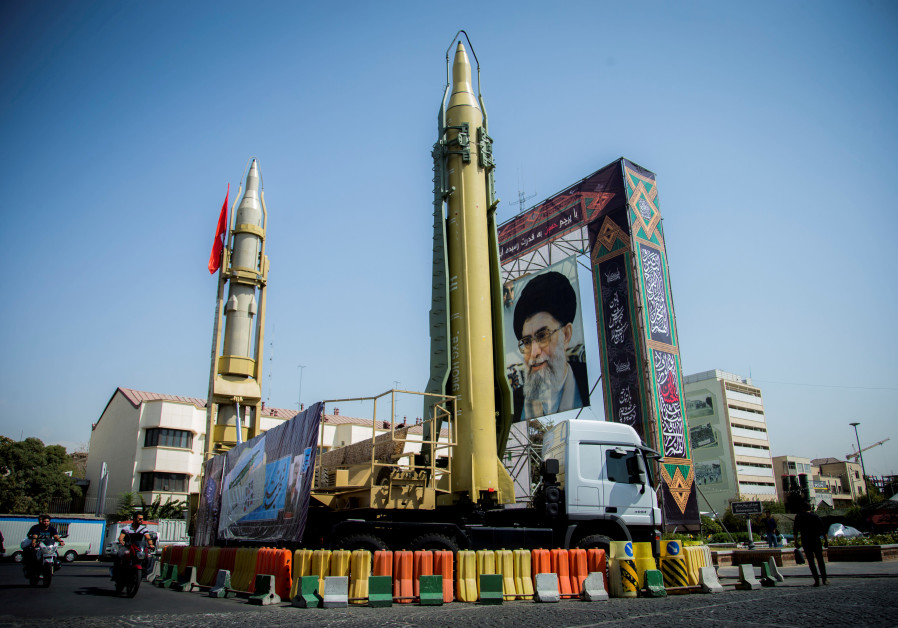
Missiles and a portrait of Iran's Supreme Leader Ayatollah Ali Khamenei in Tehran, Iran

Hamas rockets fired at Israel Friday night were “directed from Damascus and the Iranian Quds Force,” IDF Spokesperson Ronen Manelis said during a press conference Saturday morning.

“We have delivered clear messages of this fact to the relevant parties,” he said, adding that, in the IDF’s response, “no one is immune, not in the Gaza Strip nor outside of it.”

He also warned that the IDF is ready for a “scenario in which we will expand our strikes.”

Manelis said that Israel had hoped that the situation in the Gaza Strip will change following the decision by Defense Minister Avigdor Liberman to allow Qatar-bought petrol into Gaza.

Islamic Jihad fired 34 rockets at Israel, he said, out of which 13 were intercepted by Iron Dome.

Islamic Jihad claimed responsibility for the Friday night rocket attack on southern Israel, announcing on Saturday morning that “we can not stand with our hands tied.”

Manelis said that the IDF expects Hamas to maintain control over events in the Gaza Strip.

“Islamic Jihad did not wait to get a green light from Hamas to fire rockets,” he said. However,  he added that “once [Hamas] allow violence near the security fence, they can’t be surprised other factions fire [rockets].”

Some 16,000 protesters participated in Friday’s March of Return protests, in which four Palestinians were killed by IDF sniper fire and 85 were injured, the Palestinian Ministry of Health reported.

Protesters burned tires and threw explosive devices, hand grenades and Molotov cocktails at IDF soldiers. The IDF responded with protest dispersal methods.


30+ Rockets Fired at Israel

October 27, 2018