=
=
Source: Defense officials: Hezbollah will hide its activities in Syrian Golan – Israel Hayom
Terror group commander Mustafa Mughniyeh, son and brother of assassinated Hezbollah leaders, may be forced underground now that his bid to resurrect Hezbollah military infrastructure in Syrian Golan has been exposed • Israel blamed for both killings.
|
|
Israeli defense officials believe Iranian proxy Hezbollah will try to conceal its activities to resurrect its military infrastructure and capabilities in the Syrian Golan Heights, which were exposed by Israel Hayom Thursday.
Mustafa Mughniyeh, the commander of Hezbollah activities in the Druze village of Khader, 3.5 kilometers (2 miles) from the Israeli border, could be forced to go underground in fear for his life, the officials say.
Mughniyeh is the eldest son of Imad Mughniyeh, Hezbollah’s former military chief who was assassinated in February 2008 in Damascus in an operation attributed to Israel and the CIA.
Mustafa Mughniyeh’s younger brother, Jihad Mughniyeh, was assassinated in 2015 in the Golan Heights after trying to establish terrorist infrastructure there. Reports at the time said Jihad Mughniyeh had been building up the organization’s military and terrorist infrastructure in Khader. That assassination was also attributed to Israel.
Hezbollah’s current efforts in the Golan Heights consist primarily of manning lookout posts and providing equipment to local residents who report back to the organization.
According to information gathered by Israel, Mustafa Mughniyeh held a key position in Hezbollah’s arms smuggling apparatus until recently.
Since the battles between Syrian rebels and government forces in the Syrian Golan Heights ended last July, the border area has been calm. The rebels surrendered or fled, and the Syrian army now controls the area.
Source: Trump signs new Hezbollah sanctions bill in anti-Iran push – Israel Hayom
Move expands list of parties facing sanctions for dealing with Iran-backed Lebanese terror group • Marking 35th anniversary of Hezbollah attack that killed 241 U.S. Marines, Trump says he aims to “starve Hezbollah of their funds, and they are starving.”
|
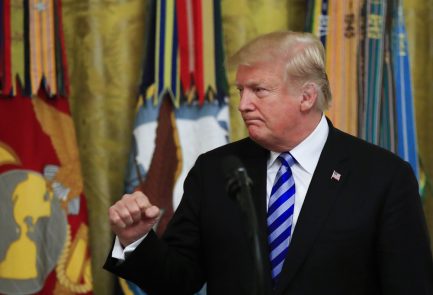
U.S. President Donald Trump speaks at the White House event marking the 35th anniversary of the Hezbollah attack that killed 241 U.S. Marines, Thursday
| Photo: AP
|
U.S. President Donald Trump on Thursday signed new sanctions targeting Iran-backed Lebanese terrorist group Hezbollah.
“Over the past year, we have levied the highest sanctions ever imposed on Hezbollah – in a single year, by far,” Trump said at an event commemorating the 35th anniversary of the Hezbollah attack on a U.S. Marines barracks in Beirut, which killed 241 U.S. peacemakers.
“Just a few moments ago, I signed legislation imposing even more hard-hitting sanctions on Hezbollah to further starve them of their funds. And they are starving for them,” he said.
“We will target, disrupt and dismantle their operational and financing efforts, of which they have plenty.
“We will never forget what they did to our Marines in Beirut. No terrorist group other than al-Qaida has more American blood on its hands.”
Speaking of Hezbollah’s Iranian benefactors, Trump touted the reimposition of sanctions on Iran by his administration since withdrawing from the 2015 nuclear accord between Iran and world powers.
“Iran was instrumental in founding Hezbollah” and remains the group’s “main patron today,” Trump said.
Trump has promised even tougher action against Iran after most of the U.S. sanctions that were lifted under the nuclear accord are reinstated in November.
The latest legislation expands the list of parties that can be subjected to sanctions for doing business with Hezbollah.
Source: A dynasty of terror – Israel Hayom
Hezbollah wants to tighten its grip on the Syrian Golan Heights and has tasked the son of archterrorist Imad Mughniyeh, Mustafa, with this mission • Israel is aware of the threat and is bracing for the possibility of Hezbollah growing stronger.
|
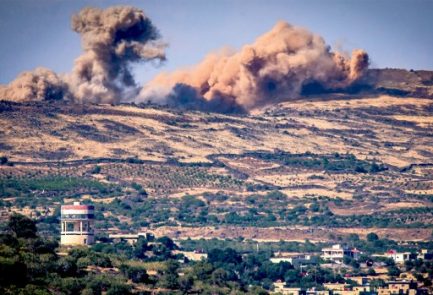
The Druze village of Hader, across the border from Israel’s Golan Heights, being bombed in 2015
| Archives: Ancho Gosh/JINI
|
A tour along the Israel-Syria border on the Golan Heights reflects nothing of what transpires on the other side. The seemingly quiet, pastoral vistas do not give away so much as a hint of the fact that right across the border, a brutal and bloody civil war raged for seven years, claiming hundreds of thousands of lives, displacing millions and inflicting untold damage on the infrastructure.
In early August, the Syrian army completed its takeover of the area near the Golan border and the region resumed its prewar routine almost immediately. Rebel strongholds in some villages continued fighting for a short period of time, but the majority of the rebels fled the area, protected by the regime’s pledge of safe passage.
Others made their way to the northwestern city of Idlib, the only rebel stronghold still standing. Under an agreement between Syria, Russia and Turkey, no fighting is currently taking place in the area, as the parties try to reach an agreement that would satisfy Syrian President Bashar Assad and prevent his forces from staging a massacre.
On the Israeli side, the calm was felt at once. Only three months ago one could hear the not-so-distant echoes of the fighting on the Syrian side of the border and see smoke billowing over the area. Once the Syrians were back in control of the border, the sights of war vanished as well, especially the midnight convoys of wounded Syrians seeking treatment in Israel.
The latter was provided as part of Israel’s Operation Good Neighbor, which saw the IDF provide humanitarian relief to the war-torn country.
This aid, which included mostly food, medicine and clothing, sought to truly help the stricken Syrian people, but it was not free of political interest. Hostility toward Israel in the Syrian border-adjacent communities diminished, and some residents even expressed cautious support for the Jewish state, which proved to be anything but the demonic entity their own murderous regime had painted it out to be.
Slowly but surely all areas of the Syrian Golan resumed their prewar routine. United Nations Disengagement Observer Force troops redeployed in the buffer zone between the two countries, Russian Military Police joined Syrian forces patrolling the border to ensure the peace, and on Oct. 15, the strategic Quneitra crossing between Syria and Israel partially reopened after a four-year shutdown.
The crossing currently serves UNDOF forces, but if peace and quiet prevail, it will resume its role as a full-fledged border crossing.
The triple-phase approach
Hezbollah presence on the Syrian side of the Golan Heights remained constant throughout the war. Some of its activities targeted Israel, but mostly, it was there to prop up Assad’s regime, sustaining significant losses in the process. As the war waned, the majority of Hezbollah operatives returned to Lebanon.
Israel followed Hezbollah movements in the sector carefully. A security situation assessment held in July said that Hezbollah would try to reassert itself on the Golan under the guise of civilian activities, using the infrastructure and contacts previously established in the area. Some of these infrastructures were targeted in recent years, including in May, when Israel launched a wide-scale raid on Iranian assets, and in July, in another, similar strike.
These strikes sought to make the most of the remaining fog of war with aim of postponing Hezbollah’s re-entrenchment in the area.
At that time, Hezbollah was believed to be planning a “triple-phase approach”: The first phase was exploiting the close ties it has fostered with the Syrian army during the war to have it turn a blind eye to Hezbollah’s efforts to assimilate in the area; the second phase entails introducing tactical capabilities, such as observation points, supplies, explosives, and sniping and anti-tank capabilities, to the area; and the last stage includes importing a show of force – operatives, rockets and missiles – to the area near the border.
This is how Hezbollah operated in Lebanon, executing its plan slowly but surely until it became a force to be reckoned with there.
The military’s assessments proved accurate. Hezbollah wasted no time resuming its nefarious activities on Syrian Golan, focusing its efforts in Hader, a Druze border town that Israel went to great lengths to protect during the Syrian civil war. The residents’ cooperation with Hezbollah has irked many in Israel, who say the residents are “ungrateful” or at the very least, very interest-driven.
Recently, the IDF has noticed an uptick in the activity in Hader. Hezbollah has set up new observation points there and it is training the locals to conduct surveillance on Israel, which the Shiite terrorist group gets directly, proving the Syrian army’s presence in the area is merely a formality.
Hezbollah activity in Hader is nothing new. The group has set up infrastructure there in 2014, headed by Jihad Mughniyeh, who was assassinated in January 2015 along with other senior terrorists during a tour of the Syrian Golan in a hit attributed to Israel.
Jihad was the son of Hezbollah archterrorist Imad Mughniyeh, the group’s military chief, who was killed in Damascus in February 2008 in an operation also attributed to Israel.
Mughniyeh junior joined Hezbollah’s offensive operations in Lebanon following his father’s death and was given command of the Golan sector. The 24-year-old emerged as a highly skilled, extremely dangerous commander who, once the Syrian civil war erupted in March 2011, sought to exploit the chaos to launch a series of attacks against Israel, ranging from placing roadside bombs by the border to trying to stage soldiers’ abductions.
Israel never admitted it had a hand in his assassination, but Hezbollah was quick to retaliate, firing an anti-tank missile at an IDF patrol near Mount Dov, on the Israel-Lebanon border, and killing two IDF soldiers.
Mughniyeh junior’s assassination dealt a serious blow for Hezbollah, but the group refused to relinquish its strategic ploy of establishing terrorist infrastructure in Hader. This time, the mission fell to notorious Lebanese Druze terrorist Samir Kuntar, who was release from Israeli prison in 2008, some 30 years after being convicted of the gruesome murder of three Israelis, including a father and two of his young children.
Infamy aside, Kuntar proved to be a poor excuse for a commander. His ties with Hezbollah did not grant him immunity and he was assassinated in December 2015. Hezbollah again pointed the finger at Israel, but did not retaliate, perhaps over Kuntar’s insignificance to the organization.
These hits, and the effort Hezbollah had to invest in other sectors to ensure Assad emerged from the civil war victorious, afforded Israel something of a reprieve from Hezbollah on both the Lebanese and Syrian borders, as since the young Mughniyeh and Kuntar were eliminated, the Shiite terrorist group has not carried out any terrorist attacks in the Golan sector.
But all that, it seems, is about to change. The IDF revealed this week that Hezbollah has renewed its activities in Hader, this time tasking Imad Mughniyeh’s eldest son – Mustafa – with heading it.
A man of shadows
Mustafa, the eldest of Mughniyeh’s eight children, is a veteran Hezbollah operative but until 2015 he kept to the shadows. Intelligence blog IntelliTimes revealed he was tasked with orchestrating the organization’s clandestine operations in Syria, including smuggling weapons, and Israeli intelligence still has him focused on the group’s force-building efforts on the line running between Hezbollah, Syria and Iran.
Mughniyeh’s mission in Hader cannot be spotted from the border, certainly not with untrained eyes, as Hezbollah is using the renewed Syrian activity in the area to disguise for its operations.
There is little Assad can do to oppose Hezbollah activities on his soil. The regime is too week from fighting to mount any resistance and it is doubtful the latter is in Assad’s interest, as he owes Hezbollah his regime’s survival – a debt he can never really repay.
On the ground, this commitment is even stronger. Syrian soldiers and commanders fought side by side with Hezbollah operatives, fostering the kind of camaraderie that can only be created on the battlefield. Hezbollah is now using this solidarity to establish its presence in the area and the Syrian army seems more than willing to look the other way.
Hezbollah’s renewed activity in Hader is very troubling to Israel, not only because of the determination the organization is showing in its efforts to re-entrench itself in the Golan Heights – that was expected, as evident by Israel’s repeated warnings, especially to Russia – but mostly because Israel senses that as the civil war in Syria draws to an end, the rules of the game on the ground are changing.
Under the auspices of the Syrian civil war, Israel enjoyed considerable leeway in its operations there, as the chaos allowed all interested parties to wage a near-total war in the country, eliminating almost every enemy without paying a price, or at worst, paying a relatively cheap one.
Now Israel has to literally choose its battles and carefully so, especially in the wake of the Sept. 17 downing of a Russian plane by Syrian air defenses trying to counter an Israeli airstrike. The ensuing crisis with Moscow mandates extra prudence in every step Israel takes in Syria.
Over the past few weeks, various foreign media reports alleged that Israel was involved in recent incidents in Syria, but reality indicates effort are now being made to apply international and domestic pressure on Hezbollah.
The most prominent expression of this policy was during Prime Minister Benjamin Netanyahu’s Sept. 28 address before the U.N. General Assembly, during which he revealed that Hezbollah was building precision-missile production sites in the heart of the Lebanese capital.
Hezbollah denied the allegations, but it stands to reason they spurred the group into action, as it was required to either hide its operations, relocate them elsewhere, or suspend them until the controversy blows over.
This will likely also happen now: Hezbollah will try to deny any activity in Hader, and it will certainly deny Mustafa Mughniyeh’s involvement, but it will understand that it has been exposed, and may also be wary that a third member of the Mughniyeh family will be made to pay for his actions.
This will leave Hezbollah with three potential courses of action: suspend its operations on the Syrian Golan Heights; abandon Hader and focus on other sectors; or pretend it is business as usual. The Shiite terrorist group is likely to opt for the first two options, at least temporarily, but in the long run, Hezbollah chief Hassan Nasrallah will not abandon his strategic plan and will strive to resume it as soon as possible.
This means that the ball will remain in Israel’s court, which will require investing resources, especially intelligence, in monitoring developments on the Syrian side of the border, so as to eliminate the element of surprise.
In addition, this situation will require the use of restraining forces in the region, from Russia to the United Nations, in order to try and deter Hezbollah and perhaps its patrons in Damascus and Tehran. If these efforts prove futile, Israel may have no choice but to act, taking risks it has been able to avoid in recent years.
This complex puzzle, which centers on Hezbollah’s renewed activities in Hader, is a key part in Israel’s decision not to decrease the military’s deployment on the Golan border at this time.
The Syrian civil war may be waning, but the relatively quiet frontier remains a war zone. Tensions on the northern border are palpable, despite what may be a deceptive calm. Winter is coming to the area, both figuratively and literally, and all is clouded by a family that has become synonymous with terrorism and the war against Israel – Mughniyeh.
source: Report: Egypt brokers ‘understandings’ between Israel and Hamas – Israel Hayom
Understandings call for complete cessation of violence, including incendiary balloons and weekly border riots, in exchange for easing of restrictions on Gaza Strip • Hamas and Islamic Jihad reportedly accept the terms, PA to make crucial decision Sunday.
|
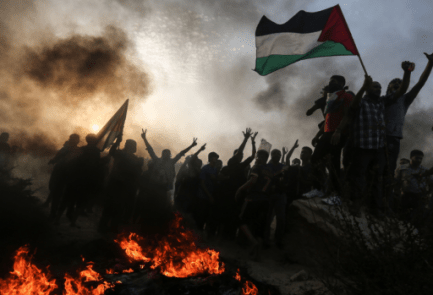
Violence on the Gaza-Israel border would be expected to cease in the Egyptian-brokered understandings
| Photo: AFP
|
Understandings have been reached between Israel and armed Palestinian groups in the Gaza Strip, sources familiar with Egyptian mediation efforts in the enclave told the London-based Al-Hayat newspaper on Friday.
The understandings call for a complete cessation of violence, including incendiary balloons and weekly border riots, in exchange for an easing of the restrictions imposed on Gaza.
According to the report, Egypt issued a message that all sides must avoid escalating the situation, and stressed that the understandings do not constitute a cease-fire and the Palestinians are not required to cease their demonstrations along the border, only to stop the violent aspects such as the attempts to breach the border, the throwing of rocks and firebombs at Israeli soldiers, and the launching of incendiary devices at Israel.
According to the report, in return, Israel has promised to expand the fishing zone off the Gazan coast, allow fuel to enter Gaza, and provide additional electricity to Gazans.
Abbas Kamal, the head of Egyptian intelligence who has spearheaded mediation efforts, is expected to announce the development soon, Al-Hayat reported.
The report also said that both Hamas, which rules the Gaza Strip, and Palestinian Islamic Jihad have accepted the terms of the Egyptian proposal.
Egyptian officials also presented the plan to Palestinian Authority leaders, who have opposed any agreement that excludes the PA. PA President Mahmoud Abbas has conditioned his acceptance of such a deal on renewing and reimplementing inter-Palestinian reconciliation and the PA’s return to Gaza as the sole arbiter of understandings with Israel.
The PA leadership is expected to convene in Ramallah on Sunday to decide whether to sever ties with Gaza completely, which would exacerbate the situation and likely make a cease-fire more difficult to maintain.
On Wednesday, Prime Minister Benjamin Netanyahu vowed to maintain a permanent Israeli military force in the West Bank, saying that if not for the Israeli troops stationed there, Abbas would be “overrun in two minutes” by Hamas.
Addressing the General Assembly of the Jewish Federations of North America in Tel Aviv, Netanyahu said that Israel does not have the luxury of repeating the mistake it made in Gaza, where Hamas seized control in a violent coup against Fatah in 2007, two years after Israel withdrew entirely from the coastal strip.




 anneinpt
 artaxes
 danmillerinpanama
 davidking1530
 Peter Hofman
 Joseph Wouk
 Peter
Peter Louisiana Steve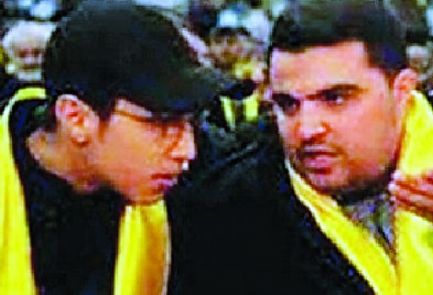
 WarSclerotic
Recent Comments