The late Prime Minister Yitzhak Rabin saw the 1994 peace treaty with Jordan as one of his most important diplomatic achievements, if not the most important one. Unlike the skepticism he expressed over the Oslo Accords and then-PLO Chairman Yasser Arafat’s commitment to them, Rabin was sure that King Hussein would live up to his word.
There is something symbolic in the fact that on the anniversary of Rabin’s assassination according to the Hebrew calendar, King Abdullah announced that he would not renew one of the annexes his father signed 24 years ago, leasing agricultural borderlands to Israel.
The Jordanian announcement is neither a big surprise nor a move that has far-reaching strategic significance. After all, these are Jordanian lands and it stands to reason that Jordan would have reimposed its sovereignty over them at some point, as no country in the Middle East would ever agree to relinquish territories over time.
Saudi Arabia did the same with respect to Tiran and Sanafir islands, which were administered by Egypt for years before Riyadh reimposed its sovereignty over them in 2017.
The problem, therefore, is not in the move per se, but in the manner and timing in which the Jordanians chose to declare they were essentially disavowing the spirit of the 1994 peace agreement and turning their backs on the partnership forged between Rabin and Hussein.
This was not a complete surprise. After all, the Jordanians are very hostile toward Israel compared to populations in other Arab countries and regrettably, the Jordanian regime does not even try to deal with this hostility. Facing a myriad of domestic challenges, the regime prefers to allow public opinion to lash out at Israel and hopes this will soften the criticism leveled at it on other issues.
At the same time, no Arab country is as dependent on Israel as Jordan, certainly in terms of energy and water resources and on questions of national security.
Moreover, no Arab state maintains such tight – albeit clandestine – strategic cooperation with Israel, as Jordan. Israel welcomes this cooperation and its importance is immeasurably greater than the acres of agricultural land over which Jordan now seeks to regain control.
Overall, this is not a move that truly harms Israel’s interest, which is why Jerusalem shows patience toward the hostile winds that are blowing in its direction from Jordan.
Nevertheless, the Jordanian move is as much a show of Abdullah’s weakness as signing the peace deal was a show of his father’s strength. Israel should maintain the same strategic cooperation with Jordan as it always has, but now, our eyes have been opened.
Eyal Zisser is a lecturer in the Middle East History Department at Tel Aviv University.
Amid rising domestic pressure, King Abdullah says he will not renew clauses in 1994 peace deal that lease borderlands to Israel • PM Netanyahu: Israel will enter negotiations with Jordan on the issue • Local farmers vow to “fight for our lives.”
Ariel Kahana, Daniel Siryoti, Adi Hashmonai, Ronit Zilberstein, News Agencies and Israel Hayom Staff
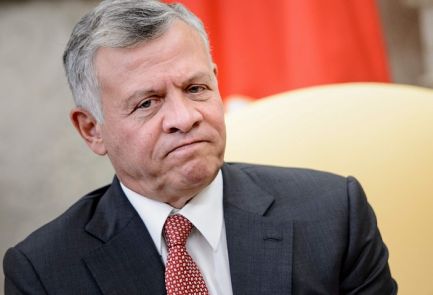
Jordan’s King Abdullah
|Photo: AFP
Jordan’s King Abdullah on Sunday said he has decided not to renew parts of his country’s landmark 1994 peace treaty with Israel.
The king released a statement saying that he intends to pull out of clauses in the agreement that allow Israel to lease two small areas comprising 1,000 acres of agricultural land – Baqura, known as Naharayim in Hebrew, in the northern Jordan Valley, and Ghamr in the south – from the Jordanians for 25 years.
The leases expire next year and the deadline for renewing them is Thursday.
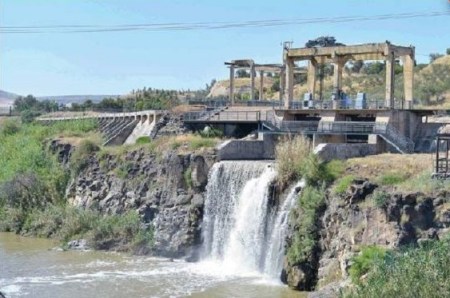
In Baqura, Israeli ”rights” date back to the 1920s, when Russian Jewish engineer Pinhas Rutenberg obtained a concession in British Mandate Palestine to build a power plant there.
Both areas became part of Jordan after the kingdom gained independence in 1946. Israel seized control of Baqura in 1950 and Ghamr in the 1967 Six-Day War. Jordan regained sovereignty over the areas as part of the 1994 peace deal and agreed to grant Israeli farmers and military officers free access to both.
In the wake of the agreement, the power plant in Naharayim was named “Isle of Peace.” In 1997, it became the scene of a gruesome terrorist attack, when a Jordanian soldier opened fire at a group of Israeli schoolgirls on a field trip, killing seven and injuring six others.
Gil Eliyahu / JINI
The Isle of Peace power plant near the Israel-Jordan border
”These are Jordanian lands and they will remain [Jordanian lands]. We are practicing our full sovereignty on our land. Our priority in an era of regional turmoil is to protect our interests and do whatever is required for Jordan and the Jordanians,” Abdullah said in a statement Sunday.
The king did not give a reason for his decision, but he has faced escalating domestic pressure to end the lease and return the territories to full Jordanian control.
A statement by the Jordanian Foreign Ministry said that “under the terms of the peace treaty, the lease would be automatically renewed unless either of the parties notified the other a year before expiry that it wished to terminate the agreement.”
Jordan and Egypt are the only two Arab states to have peace treaties with Israel.
Jordan and Israel have a long history of close security ties and have also been expanding economic ties in the last year, including a major deal to export billions of dollars of Israeli natural gas to the kingdomthrough a pipeline that crosses their northern borders.
However, the peace treaty with Israel is unpopular and pro-Palestinian sentiment widespread in Jordan. Activists and politicians have been vocal against a renewal of the lease, which they say is ”humiliating” and perpetuates “Israeli occupation” of Jordanian territory.
Tensions between Israel and Jordan have mounted in recent months over such issues as the contested status of Jerusalem and its holy sites, the stalled Middle East peace talks, and last year’s shooting of two Jordanian citizens by an Israeli Embassy guard in Amman, which ignited a diplomatic crisis. Relations thawed after Israel replaced its ambassador.
Prime Minister Benjamin Netanyahu acknowledged that Jordan wanted to exercise its option to end the arrangement, but stressed the Israel “will enter negotiations with it on the possibility of extending the current arrangement.”
Netanyahu said the “accord as a whole is an important thing” and called the peace deals with Jordan and Egypt “anchors of regional stability.”
Kobi Gideon / GPO
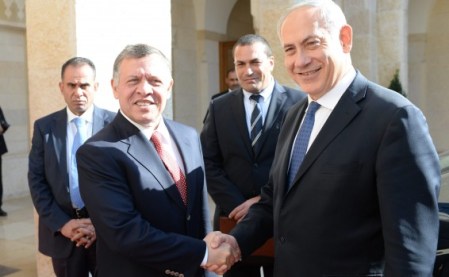
King Abdullah of Jordan and Prime Minister Benjamin Netanyahu in Amman, last summer
Former Israeli Ambassador to Jordan Oded Eran said he was not surprised by Jordan’s decision, and said there was still time for the two countries to renegotiate the agreement.
He dismissed the possibility that Jordan might pull out of other parts of the broader peace treaty.
”For its own interests, the continuation of the adherence to the peace treaty is in Jordan’s interest as indeed it is in the interest of Israel,” Eran said.
Dr. Abdullah Swalha, founder and director of the Center for Israel Studies in Amman, told Israel Hayom that ”there have been calls in Jordan to cancel these clauses for two years. Recently, 86 MPs signed a petition demanding this. There is no economic gain for Jordan here, so the king did it to appease public opinion.”
He said he believed a deal could be reached regarding the leasing of lands in Ghamr, but stressed that ”there is no scenario where Jordan relinquishes sovereignty over Baqura. Jews have some rights there and monetary compensation will probably be discussed, or Jordanian farmers would lease the land from the Jews, but we will not give up the land.”
A senior Jordanian official denied reports that the move stemmed from Palestinian or Arab pressure.
”These lands belong to the Kingdom of Jordan, and in light of the regional reality in recent years, it is not appropriate for them to be leased [to a foreign entity],” he said.
He said Jordan’s position was not a violation of the peace treaty, saying, “The king acted in accordance with the terms outlined in the clauses signed 24 years ago.”
Israeli farmers were stunned to learn of the move.
”It’s like a bomb hit us. This means that years of work will go down the drain,” said Dr. Eyal Blum, head of the Central Arava Regional Council.
”The agricultural lands here are very significant in terms of the area’s security, national security and the agricultural sector in the Arava [Desert]. This means 30 agricultural farms in an area covering 345 acres will collapse. It is inconceivable that after all these years the order will change.”
Erez Gibori, a farmer from Moshav Tzofar, said the area’s farmers “are now fighting for our lives. If they close the gates to our lands, there’s nothing for us here. We will leave. The state cannot abandon us.”
The news “was a big surprise,” said Jordan Valley Regional Council head Idan Greenbaum.
“We were very disappointed and saddened to learn of the king’s decision. This came as a shock to us because we have a very good relationship with our Jordanian neighbors.
”This isn’t the end of it, though. We expect the government to sit down with the Jordanians and reach an agreement that will allow us to continue farming these lands, as we have been doing for the past 70 years,” he said.
The video remains posted on Twitter, which said last week that it does not violate company policies.
BY JTA
OCTOBER 22, 2018 08:46
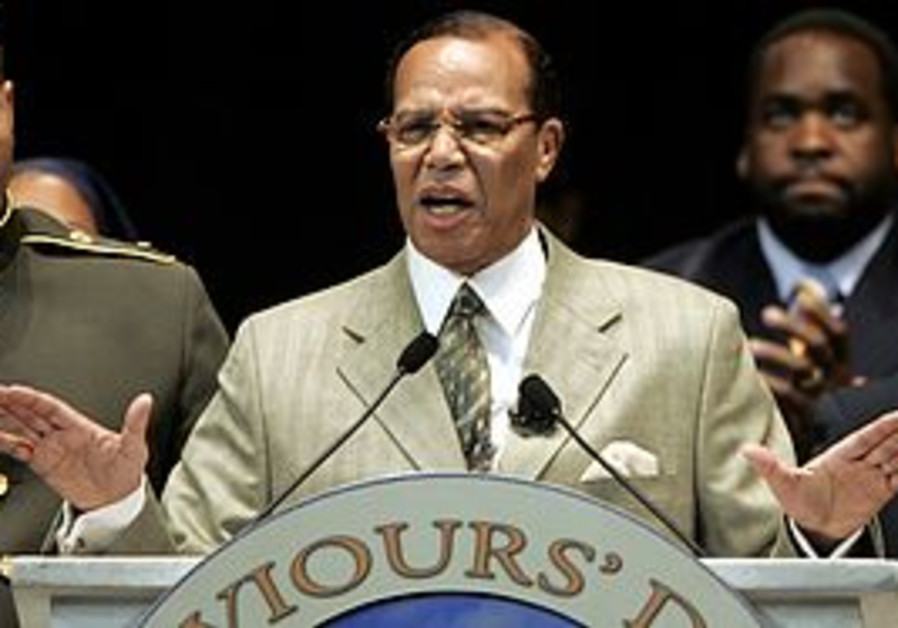
louis farrakhan 311 REUTERS. (photo credit: REUTERS)
A video posted to the Facebook account of Louis Farrakhan in which the Nation of Islam leader compares Jews to termites was removed for violating the social media platforms hate speech policies.
It remains posted on Twitter, which said last week that it does not violate company policies.
The video represents a Tier 1 violation for Facebook, The Wrap first reported. A Tier 1 violation includes attacks comparing a person or group of people to “animals that are culturally perceived as intellectually or physically inferior.” Tier 1 infractions also prohibit “violent” and “dehumanizing speech,” according to Facebook’s community standards,
Farrakhan had posted the video to his 960,000 followers, according to The Wrap, with a comment reading: “To members of the Jewish Community that don’t like me. Thank you very much for putting my name all over the planet. Because of your fear of what we represent, I can go anywhere in the world and they’ve heard of Farrakhan. Thank you very much.”
A link to the video on YouTube also was deleted, with a message that it was removed for violating YouTube’s policy on hate speech, whose parent company is Google. A video of the full speech remains available on the Nation of Islam website.
Farrakhan’s tweet posted Tuesday was attached to video of a speech he gave Monday marking the 23rd anniversary of the Million Man March, his 1995 rally advocating empowerment for black men.
“To the members of the Jewish community that don’t like me, thank you very much for putting my name all over the planet because of your fear of what we represent I can go anywhere in the world — I’m not mad at you because you’re so stupid,” he said at the speech in Detroit. “So when they talk about Farrakhan, call me a hater — you know what they do — call me an anti-Semite, stop it! I’m anti termite!”
The video clip of his remarks about Jews remains up on Twitter. A BuzzFeed reporter on Wednesday quoted a spokesperson for the company as saying that “Louis Farrakhan’s tweet comparing Jews to termites is not in violation of the company’s policies. The policy on dehumanizing language has not yet been implemented.”
I thought I’d seen just about all the doco’s on Youtube about the Mossad, then this one popped up in the suggestions generated for me by Youtube…
It focuses on the hunt for this scumbag, Yahya Ayyash aka ‘The Engineer’ (responsible for making the bombs for the suicide bomber attacks on Israeli buses in the 90’s):
Housing Minister and former IDF Southern Commander Yoav Gallant hinted on Thursday that Israel will carry out a stronger response against Hamas in the Gaza strip.
“I do not refer to the content of the cabinet discussions, but I can say one thing very explicitly – The game is about to change. We will no longer accept the fire terror,” Gallant said.
According to the Israeli news sources, the implementation of how Israel will deal with the demonstrations by the Gaza Strip fence will begin on Friday.
The security cabinet met in the early hours of Thursday morning in Jerusalem to discuss the latest developments in the south after a rocket hit and damaged a residential home in Beersheba.
Hamas denied responsibility for the attack, but IDF Spokesperson Brig.-Gen. Ronen Manelis stated that “Only Hamas and Islamic Jihad have these type of rockets.”
Southern Command Maj.-Gen. Herzl Halevy said that “Hamas claims to control the Gaza Strip and tells Gazans that it is trying to improve their situation. In truth, the lack of restraint at the fence, the launching of explosive devices, incendiary balloons and rockets, are making the situation for Gaza residents worse.”
Prime Minister Benjamin Netanyahu and Defense Minister Avigdor Liberman traveled to the South to hold security assessments at the IDF’s Gaza Division on Wednesday. They spoke with Deputy IDF Chief of Staff Maj.-Gen. Aviv Kochavi, National Security Council Director Meir Ben-Shabbat, ISA Director Nadav Argaman and senior security establishment officials.
Gallant was the only minister to make a statement after the security cabinet meeting.
Defense Minister Avigdor Liberman . (photo credit: MARC ISRAEL SELLEM/THE JERUSALEM POST)
The US sanctions enacted on November 4 will not stop Iran from getting a nuclear bomb, but they willpressure the regime and significantly reduce its ability to finance regional terror, Defense Minister Avigdor Liberman said on Sunday night.
Speaking at the Jerusalem Institute for Strategic Studies, Liberman explained that “the first round of US sanctions had a big impact on Iran” causing “inflation [and] reducing foreign investments.”
“So the second round of sanctions will obviously have an even bigger impact. The fact that Iran will not be able to fund terror” is crucial and will negatively impact “Hezbollah, Hamas, proxies in Yemen and proxies in Iraq,” he said.
Still, he believes that Iran has made a political decision to eventually obtain a nuclear weapon and that sanctions alone could not force it to change its mind, although he hoped they would pressure the regime internally.
The defense minister also holds that the current regime of the ayatollahs will fall like many former communist regimes connected with the USSR, but implied this could take time. In that light, he said “we need to deter Iran” from trying to get a nuclear bomb “and be ready for all scenarios.”
Liberman reiterated his position that Israel must “strike a great blow” against Hamas to achieve quiet in Gaza and insisted on evacuating the Bedouin village of Khan al-Ahmar, while leaving room to negotiate the evacuation.
Earlier at the conference, former National Security Council Chief Yaakov Amidror and a JISS fellow proclaimed that the IDF would overcome the challenge of the S-300 antiaircraft missile system that Russia recently provided to Syria.
Amidror was certain when he said Russian President Vladimir Putin had made an uncharacteristic blunder by presenting the S-300 as Russia’s unbeatable answer to the IDF’s air power. He noted this would lead to embarrassment for Russia when the IDF succeeds at striking Syria despite the presence of the S-300.
Amidror continued by saying that in several decades, “there is not a single Russian-made weapon that we have not figured out a technical-tactical solution for confronting. There is no reason to think Israel will not find a solution to the S-300.” Regarding overcoming the S-300, he said “there are different S-300 models. It is a tactical [item] which has never been in the Middle East. We are not familiar with it. We need a deep intelligence process to know exactly which S-300 model was provided” to the Syrians.
He also asked, ”Who is operating the S-300? The Russians? The Syrians? The Iranians?…We will act differently depending on…who pulls the trigger,” implying that the IDF could act more aggressively if those manning the S-300 were not Russians.
Another thing that assured Amidror was that “Israeli intelligence has been doing incredible work with both long-range surveillance and [covert] forces going in and out [of Syria,]…to make sure the IDF hits targets exactly…and without hitting any of the Russian” advisers stationed near Syrian troops.
At the same conference, Strategic Affairs Minister Gilad Erdan advocated Israel widen its targets in Syria to include Iranian communication units and not just weapons transfers to Hezbollah and Syria.
Erdan called on the US to publicly announce it will back any Israeli operations against Iran in Syria.
Finally, he expressed hope that from recent talks with England’s new interior minister, once the UK leaves the EU, it will become the first Western European country to declare both Hezbollah’s political and military wings to be terroristic in nature (currently only the EU declares the military wing to be so.)
Speaking at the conference, former national security council official and JISS fellow Micky Ahronson asserted that the Russia-Iran team could be broken with the right set of incentives, like appeasing Russia in other geopolitical areas it remains concerned about, such as Ukraine.
JISS Vice President, former national security council officer and IDF Col. (ret.) Dr. Eran Lerman said that it appears that the Trump administration would keep some troops in Syria, which would help Israel hold back Iran.
However, the US defense establishment would be unlikely to support an attack on Iran if it tried to attain a nuclear weapon in light of the difficult situations in Iraq and Afghanistan. This would leave Israel to attack in a worst case scenario, Lerman said.
“If Hezbollah succeeds in converting these missiles, the new situation would represent a significant risk to Israeli airports, power stations, the Dimona nuclear reactor, and more.”
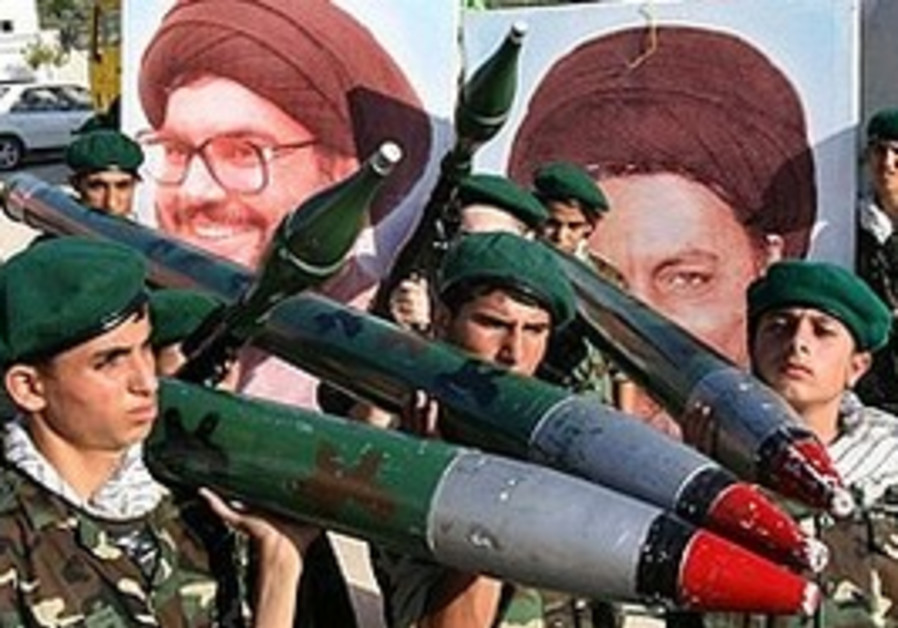
Iran reportedly delivered GPS components to Hezbollah in Lebanon that will allow the group to transform rudimentary projectiles into precision-guided missiles, thereby increasing the threat to Israel. Western intelligence services believe Tehran has shifted its strategy by increasingly shipping weaponry directly to its proxy in Beirut, with a view to evading Israeli air strikes.
The Israel Defense Forces has over the past two years conducted hundreds of attacks in Syria to prevent such arms deliveries.
Meanwhile, Russia last week upped its military support to the Assad regime with the transfer of three S-300PM-2 missile batteries whose radar and communication technologies are more sophisticated than those of the model deployed to Syria at the beginning of the month.
That move, in turn, followed the downing of a Russian reconnaissance plane by Syrian forces, an incident the Kremlin blamed on Israel which minutes before had conducted an aerial operation against an Iranian military installation in Latakia.
“Russia’s delivery of advanced air defense systems to Syria has emboldened Iran to ramp up its shipments of weaponry to Hezbollah,” Meir Litvak, Director of the Alliance Center for Iranian Studies at Tel Aviv University, contended to The Media Line.
“While Israel can deal with the military threat posed by the S-300PM-2,” he elaborated, “the problem is that the government does not yet know how the Russians will operate. Will they tell Syrians when an Israeli jet takes off and will they intercept the planes? Until the reaction becomes clear, Israel is limited.”
“Most [of Hezbollah’s rockets] are not precise enough, making their potential threat tolerable to Israel,” Dr. Litvak continued. “If Hezbollah succeeds in converting these missiles, the new situation would represent a significant risk to Israeli airports, power stations, the Dimona nuclear reactor, and more.”
During his speech last month to the United Nations General Assembly, Prime Minister Binyamin Netanyahu revealed satellite imagery of three sites in the Lebanese capital where Hezbollah, at the behest of its Iranian masters, allegedly has built underground missile manufacturing facilities. According to analysts, the weapons produced are capable of hitting within a few meters their intended target and can reach almost anywhere in Israel.
Hezbollah has an arsenal of more than 100,000 rockets and missiles, many of them housed in residential areas to protect them from attack.
“The increased Russian presence in Syria and the mounting threats from Lebanon indicate a significant level of danger from a diplomatic point of view,” Jonathan Spyer, a Fellow at the Jerusalem Institute for Strategic Studies, conveyed to The Media Line. “The consolidation of Iranian power in Syria is becoming Israel’s number one priority in the region.”
To this end, Prime Minister Netanyahu is slated to meet with Russian President Vladimir Putin in the near future to discuss the latest developments.






 anneinpt
 artaxes
 danmillerinpanama
 davidking1530
 Peter Hofman
 Joseph Wouk
 Peter
Peter Louisiana Steve
 WarSclerotic
Recent Comments