Archive for October 17, 2018

Poll: 77% of Israelis favor strikes on Iranian ‎assets in Syria

October 17, 2018

Source: Poll: 77% of Israelis favor strikes on Iranian ‎assets in Syria ‎ – Israel Hayom


Report: Egypt able to broker Israel-Hamas truce in Gaza 

October 17, 2018

Source: Report: Egypt able to broker Israel-Hamas truce in Gaza – Israel Hayom


IDF attacks over 20 Gaza targets after rocket fire

October 17, 2018

Source: IDF attacks over 20 Gaza targets after rocket fire

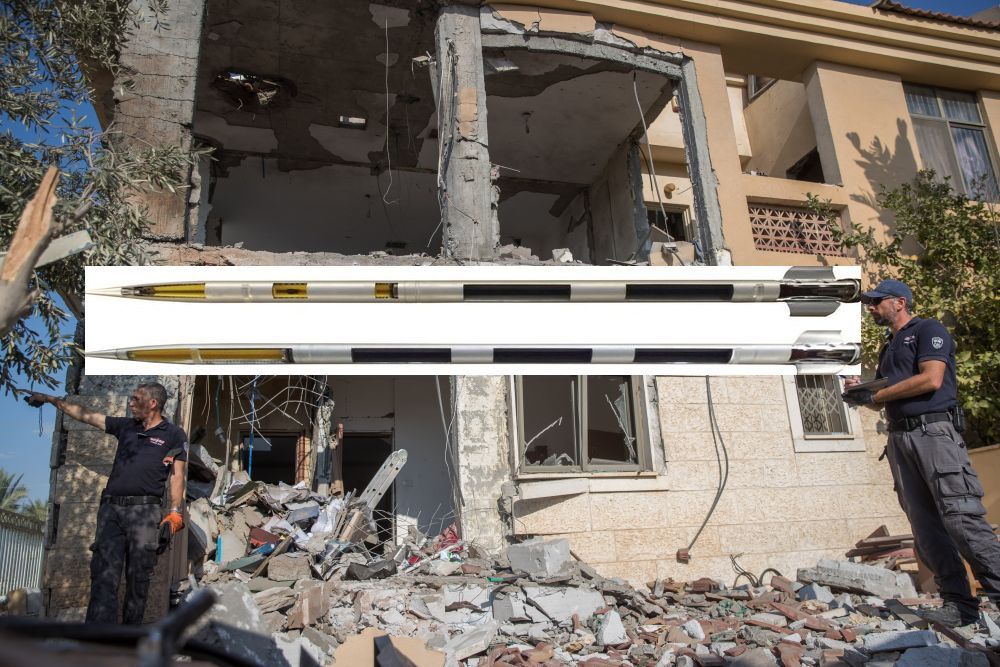
With strikes still ongoing, Israeli aircraft hit Hamas military bases, rocket manufacturing sites, underground infrastructure including a terror tunnel and tunnel dig sites in retaliation for early morning rockets that landed on a home in Be’er Sheva and off the coast of central Israeli city; one Palestinian killed, 3 others wounded.
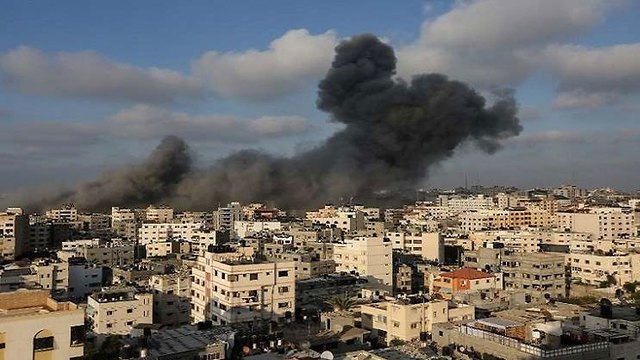
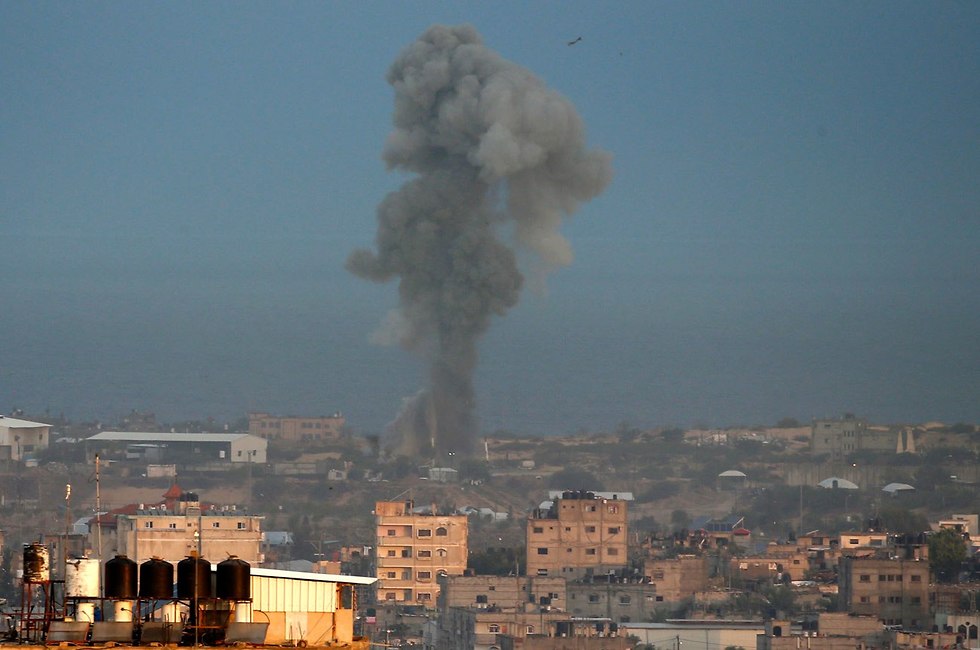
The IDF attacked over 20 targets, including a terror tunnel, in the Gaza Strip on Wednesday morning in retaliation for rocket fire that hit a home in Be’er Shevaand the water off the coast of a central Israeli city.
 IDF Spokesman Brig. Gen. Manelis said the retaliatory attacks will continue.At least one 25-year-old Palestinian fighter was killed inside one of the posts and three others moderately wounded in the strikes, according to the Gaza health ministry.

Among the targets hit all over the strip were Hamas military bases, rocket manufacturing sites, underground infrastructure, an offensive tunnel, and tunnel dig sites in other areas, including one of a sea terror tunnel.

An IAF aircraft also attacked a terror cell in the northern Gaza Strip that tried to launch rockets at Israel.

The cell is said to belong to an “errant” radical faction, which was formerly part of Fatah and now has close ties to Iran.

The Palestinians reported extensive Israeli airstrikes, with IAF fighter jets attacking Hamas and Islamic Jihad posts east and south of Gaza City, on the beach near Beit Lahia (which may have belonged to Hamas’s naval commando unit) and targets near the border fence.The IDF placed the blame for the rocket fire on Hamas. “The rockets that were fired are self-produced and medium-ranged. Only two organizations in Gaza have such rockets: Hamas and Islamic Jihad. It doesn’t matter who fired, Hamas bears the responsibility,” Manelis added.

 (Photo: AFP)

(Photo: AFP)

IDF Spokesman Manelis said the Iron Dome missile-defense system did not stop the rocket that hit Be’er Sheva because “the system’s abilities are non-hermetic.”

Egypt has been trying to mediate a long-term cease-fire to stave off another confrontation. An Egyptian delegation arrived in Gaza on Tuesday to continue the talks and Kamel Abbas, the head of Egyptian intelligence, is due to arrive in Israel on Thursday.

After the early morning rockets, Hamas and Islamic Jihad released a statement from the “joint coordination room of resistance factions,” in which they said they “reject all irresponsible attempts that try to change the direction and sabotage the Egyptian efforts, including the overnight firing of the rocket.”

The military factions in Gaza also later informed the Egyptian delegation that they are not interested in an escalation with Israel, but are “ready to confront the Israeli aggression.”

 (Photo: AFP)

(Photo: AFP)
The rocket alert siren went off at 3:39am in Be’er Sheva and surrounding communities in the Negev region, sending residents running for shelter.One rocket landed on a Be’er Sheva home while another landed in the sea off the shores of a city in central Israel.

Seven people were treated for shock after the attack, including a 39-year-old mother and her three children aged 9, 10, and 12, who were in the house when it was hit. In addition, three people were taken to the Soroka Medical Center in the city suffering from light bruising sustained when falling as they were running for shelter.

Due to the size of the rocket and the force of the impact, heavy damage was caused to the house that was hit and it is at risk of collapse. A house next door was hit by shrapnel from the rockets, and its balcony collapsed.

IDF Chief of Staff Gadi Eisenkot decided to cut short his trip to the United States following the rocket attack, while Defense Minister Avigdor Lieberman ordered the closure of the Kerem Shalom and Erez border crossings and the reduction of the strip’s fishing zone to three nautical miles.

Be’er Sheva, which is some 40 kilometers from Gaza, is the biggest city in southern Israel, with a population of around 200,000.

The Associated Press contributed to this report.


Analysis: Major escalation as Gaza calculates conflict with Israel

October 17, 2018

Source: Analysis: Major escalation as Gaza calculates conflict with Israel – Arab-Israeli Conflict – Jerusalem Post

Palestinian riots and clashes along the Gaza border have now entered their seventh month, with thirty weeks of clashes that have killed almost two hundred in Gaza and led to thousands of wounded.

BY SETH J. FRANTZMAN
 OCTOBER 17, 2018 10:33
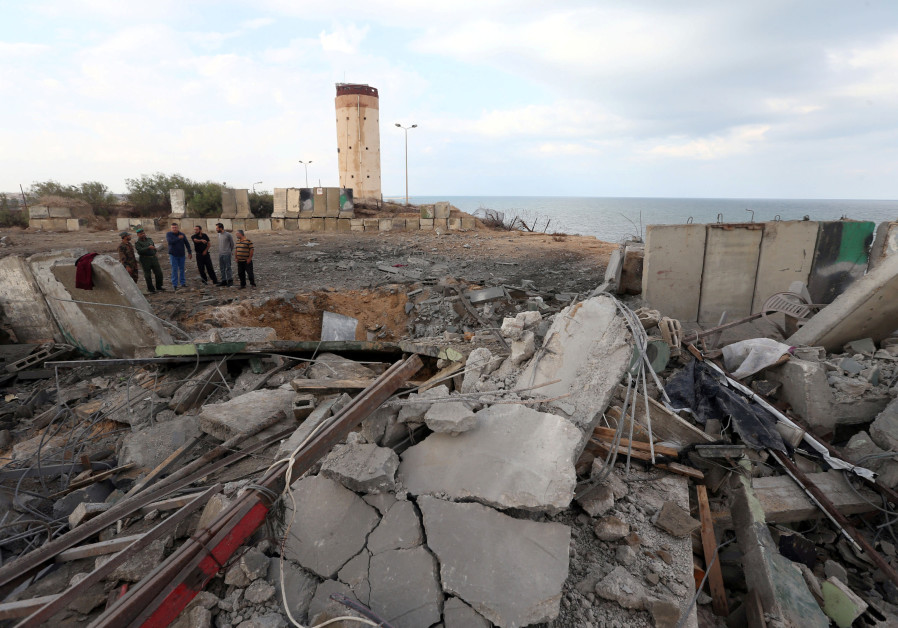
Palestinians inspect the scene of an Israeli air strike on a Hamas security forces site

The Wednesday morning rocket fire from Gaza was a major escalation, and the first time a rocket was fired at Beersheba since early August. Within hours of two large rockets being fired, Hamas and other Palestinian factions in Gaza had denied firing the rockets, pointing to a desire for continued calm.

This leaves many questions about what happened Wednesday morning and how the Palestinians in Gaza, Israel and the region will respond.

Palestinian riots and clashes along the Gaza border have now entered their seventh month. Thirty weeks of clashes have killed almost two hundred in Gaza and left thousands wounded.

Israeli politicians have also been pushing for a stronger response as the clashes continue. Incendiary balloons have  burned half of the forests and green areas around Gaza, according to a report Tuesday. Increasingly Palestinian teams launching the balloons have been targeted by the air force.

Hamas has been attempting to play both sides in recent weeks. It seeks to bolster attempts to reach a deal through Egyptian efforts to broker a ceasefire and it wants to insert itself into West Bank politics. It has been putting out press releases discussing the West Bank, including critiquing the Palestinian Authority. It also talks tough in Gaza.

“The Israeli threats do not deter the Palestinian people, nor do they break their will,” it said in response to Jerusalem’s calls for tougher action on the Gaza border on October 15.

On the morning of October 17, after the rockets had been fired, it took Hamas six hours to put out a statement saying it was not responsible for the rockets. Why did it take six hours for Hamas to understand its own “militant arm” had not fired on Israel? Obviously it knew what had happened hours ago. Journalist and analyst Neri Zilber postulated on Twitter that the rockets were likely fired by the Mujahadeen Shura Council a “breakaway Al Qaeda-tinged Gazan jihadi group. They do have rocket capacity.”

A Joint Operations command, associated with Hamas and the other Gazan groups such as Islamic Jihad, claimed that the rockets were an “irresponsible attempt to sabotage the Egyptian effort [at a ceasefire],” but also claimed Hamas was ready to confront aggression.

Gaza is not the main issue on the region’s agenda as Turkey and Saudi Arabia are in the midst of a major crises over missing Saudi journalist Jamal Khashoggi. US Secretary of State Mike Pompeo flew from Riyadh to Turkey on Wednesday, seeking to find a way past the imbroglio in which Saudis are accused of murdering the journalist in their Istanbul consulate.

With all eyes on Ankara, including Qatar and Egypt, major regional allies of both countries, the situation in Gaza is being seen more narrowly. Qatari-purchased fuel was recently delivered to Gaza, but Qatar appears to be taking a back seat publicly on the crises in Gaza. This means there are less constraints on both Hamas and Israel in the calculations of what comes next and is likely why Hamas has chosen to deny any role in the rocket fire.

If the rockets were not fired by Hamas, then it will also show the weakness of Hamas and its inability to control the Gaza Strip. It will also show that dangerous weapons, able to target areas in Israel, are in the hands of other groups.

Neither of this is good for Hamas, which is seeking a ceasefire and wants to show that it can call off the weekly protests in favor of quiet. Hamas wants the blockade reduced, but how can it guarantee quiet and security while allowing rockets that threaten areas far from Gaza to be fired? If Hamas’s real calculation was to want it both ways, to threaten and also play at a ceasefire deal, neither Jerusalem or Cairo will accept this Janus-faced stance.

Hamas knows it is out of options in Gaza. It has tried tunnels and rockets and naval commandos and 30 weeks of riots and achieved almost nothing, except the burning of fields in southern Israel. The rocket fire, including a house being hit in Beerhsheba, will provide encouragement for those in Gaza who think terrorism could be effective. This comes at a problematic time for Hamas leader Yahya Sinwar who, despite his reputation as a hard fighter, has indicated he wants a ceasefire and is trying to salvage 12 years of Hamas failures in Gaza.


Why isn’t Avigdor Liberman talking about victory over Hamas in Gaza? 

October 17, 2018

Source: Why isn’t Avigdor Liberman talking about victory over Hamas in Gaza? – Arab-Israeli Conflict – Jerusalem Post

Both Israel and Hamas wanted quiet, they simply couldn’t agree on the terms for such a cessation of hostilities, settling instead of a series of minimal understandings.

BY TOVAH LAZAROFF
 OCTOBER 17, 2018 12:57
hamas

Defense Minister Avigdor Liberman sounds strong when he talks about a Gaza “military operation” and dealing Hamas “the harshest of blows.”
His words stoke the fantasy that Hamas violence, such as rockets and incendiary devices, would disappear if only the IDF would unleash its full military powers.
The Palestinian launch of two powerful rockets Wednesday morning – one that hit a home in the southern city of Beersheba and one that landed near the coast in the center of the country – almost seemed to be a way of egging Liberman on.
MK Michael Oren (Kulanu), Israel’s former ambassador to the United States, quickly noted that Hamas was exploiting Israel’s unwillingness for a full-out war, the kind that leads to victory.
Liberman has not even used the word, nor has he even made reference to a cease-fire, let alone peace.
His best assessment of an outcome from a military operation was four to five years of quiet, not even a decade. Liberman’s war-hawk talk has not included a strategy of how to end the threat from Hamas, but rather an assessment of the quagmire regarding Israel’s policy toward Hamas and the Gaza Strip in general.
It’s a quagmire fed by the perceived existential threats attached to the most basic of conditions for any form of a cease-fire. It is for this reason that the guns of the last war fell silent without any formal cease-fire agreement.
Both Israel and Hamas wanted quiet, they simply couldn’t agree on the terms for such a cessation of hostilities, settling instead of a series of minimal understandings.
The IDF is likely strong enough to defeat Hamas and if necessary reoccupy the Gaza Strip, which was under its military control from 1967 to 2005.
But Israel is not willing to pay the heavy diplomatic price such a step would cost, or the domestic price of the resulting loss of Israeli soldiers’ lives.
Nor can it risk meeting Hamas’s most basic demand – that it rescind all its border restrictions – including the naval and air blockades that were imposed in order to halt the free flow of arms into Gaza.
The military blockade pre-dates Hamas’s rule of Gaza, which began in 2007 when it ousted Fatah in a bloody coup.
Israel holds that this blockade is more vital now than ever, in order to prevent Iran from gaining the same military foothold on the southern borders that it holds near Israel’s northern border.
Hamas in turn has no desire sign its own death warrant by agreeing to Israel’s demand that it demilitarize the Gaza Strip. The terrorist group’s military wing, with its rockets and infiltration tunnels, remains the only form of an army that the Palestinians have.
Israel had hoped that the economic sanctions it has imposed on Gaza for the last 11 years would help lead to its domestic demise. Instead, those restrictions, plus Palestinian Authority President Mahmoud Abbas’s stricter economic measures, have led to a Hamas-led popular, low level violent uprising along Israel’s borders for the last half-year, with no end in sight.
Efforts by Egyptian General Intelligence Services chief Abbas Kamel to restore calm have intensified this week.
The security cabinet, which already met Sunday regarding Gaza, was expected to meet again on Wednesday.
Opinions there are harshly divided, between a limited military response, such as Liberman is advocating, and another round of sanctions and appeasements, such as has been done in the past.
What the ministers are unlikely to green-light is a plan – any kind of a plan – that will lead to full victory or defeat, thereby ensuring for now that the Gaza conflict will remain an endlessly repeating Groundhog Day.


Israel surprised by Palestinian upgraded missile attack on two major cities. Iron Dome didn’t react – DEBKAfile

October 17, 2018

Source: Israel surprised by Palestinian upgraded missile attack on two major cities. Iron Dome didn’t react – DEBKAfile

How did Hamas get hold of the advanced Tornado-G Grad missiles aimed at Beersheba and Greater Tel Aviv early Wednesday, Oct. 17? Serious casualties and more extensive damage were only avoided by good luck when one of the missiles wrecked a home in Beersheba and the second landed in the sea.
These improved Grad types are serious deadly weapons, carrying boosted warheads containing 70-80 kilos of explosives to a distance of 40-60km. They are copies of the high-explosive fragmentation of HE-FRAG  warheads, and made their first appearance in Palestinian terrorist hand in Gaza on Wednesday.

Were Israel’s government heads and security chiefs over-preoccupied with the never-ending Egyptian efforts to mediate a truce? Is that why they missed Hamas’ and the pro-Iranian Islamic Jihad’s preparations in Gaza to catch the IDF off guard, trusting Israeli officers to obey official directives to avoid any major escalation?

To divert attention from this lapse, Israel’s media, fed by official sources, focused on questioning which Palestinian terrorist group was responsible for the dual missile attack, when only two militias, Hamas and Islamic Jihad were armed with advanced Grads. As though it made any difference. Both trotted out denials of involvement in the attack.

The IDF and defense ministry spokesman claim this missile is the product of Palestinian workshops in Gaza. This is highly unlikely. The two missiles fired Wednesday were fitted with sophisticated automatic positioning navigation, a capability which neither Hamas nor Jihad has been able to manufacture unaided. They were most likely smuggled into the Gaza Strip through Sinai and supplied by Iran or fellow terrorist groups in eastern Libya. The synchronized launch of two advanced missiles in opposite directions – east to Beersheba and north to the Tel Aviv district – called for professional preparation, advanced training and precise coordination between two missile teams. How come all this was missed by the IDF’s intelligence watchers and the country was left to be caught by surprise?

After the event, a senior IDF officer admitted when asked why Iron Dome did not respond, that even that wonder system is “not hermetic.” But he did not explain how one of the Palestinian missiles missed buildings in the Tel Aviv district – not because it was intercepted , but because it was mis-aimed and fell in the sea, nor how all the city’s alert sirens were silent.

The prime minister Binyamin Netanyahu cancelled the security cabinet meeting scheduled for Wednesday morning and was closeted instead with army and security chiefs for long hours of consultation, while the air force conducted its usual, mostly useless, tit-for-tat strikes at terrorist targets in the Gaza Strip. While a decision on what happens next was awaited, political correspondents speculated that Hamas would be given another “last chance” to behave on Friday, and hold back its regular violent rampage, before Israel’s biggest military stick landed on its head; or, alternatively, until Egypt has another chance to broker a long-term truce, or even until the IDF chief of staff Lt. Gen. Gady Eisenkot returns from his visit to the United States in the next 24 hours.


Israel, US send secret delegation to Ukraine to train against S-300 – report

October 17, 2018

Doesn’t surprise me one bit.

https://www.timesofisrael.com/israel-us-send-secret-delegation-to-ukraine-to-train-against-s-300-report/

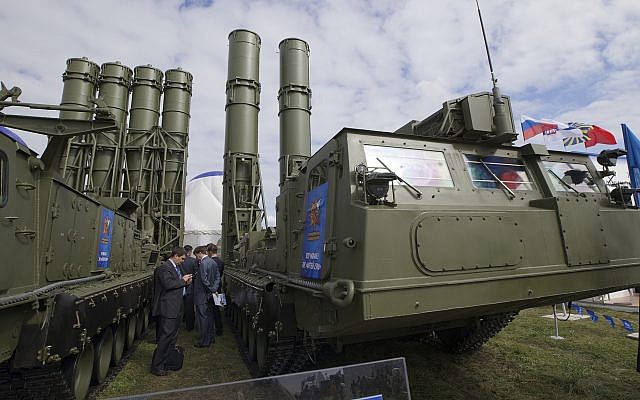
In this illustrative photo taken on August 27, 2013, a Russian S-300 air defense system is on display at the opening of the MAKS Air Show in Zhukovsky outside Moscow, Russia (AP Photo/Ivan Sekretarev, File)

Russian, Syrian outlets say the teams got instruction from their Ukrainian counterparts on capabilities of advanced missile defense system that Putin just gave Assad

Israel and the United States sent a secret military delegation to Ukraine to test the Russian-made S-300 missile defense system, which Moscow recently provided to Syria, Hadashot TV news reported Monday, citing Syrian and Russian news outlets.

There was no comment on the reports from either Israel or the US.

According to the reports, members of the Ukrainian military instructed their US and Israeli counterparts on the capabilities of the system, as well as running through various possible scenarios.

One Russian report said that F-15 planes are training in Ukraine against the S-300 as part of an international exercise that includes Israeli pilots. It wasn’t immediately clear if the Israeli pilots were flying or merely observing from the ground.

Tensions remain high between Russia and Ukraine since Moscow’s 2014 annexation of Crimea and the subsequent conflict in eastern Ukraine. The Kremlin has been known to direct misinformation as a tool in the conflict.

It has been widely reported that the Israeli Air Force has been training against the S-300 in exercises in Greece, perhaps since 2007. Israel and the US are both thought to be using stealth aircraft in Syrian maneuvers.

The IAF returned its fleet of F-35 stealth fighters to full service on Sunday, after grounding it last week in light of the state-of-the-art aircraft’s first-ever crash, which took place in the United States, the army said. The pilot ejected safely.

Israeli planes have carried out hundreds of strikes in Syria against what it says are Iranian and Hezbollah targets, but there have been no reports of suspected Israeli airstrikes since the accidental Syrian downing of a Russian plane during an Israeli airstrike in Syria, an incident that raised tensions between Israel and Russia.

Fifteen Russians were killed in the September 17 incident, which Moscow blamed on Israel, accusing its pilots of using the larger Russian plane as cover.

Israel disputes the Russian findings and says its jets were back in Israeli airspace when the plane was downed.

In response, Moscow announced new measures to protect its military in Syria, including equipping Damascus with S-300 air defense systems.

Russia and Israel set up a hotline in 2015 to avoid accidental clashes in Syria, but the new measures have led to concern among Israelis that their strikes will now be limited there.

At the opening of the Knesset’s winter session on Monday, Prime Minister Benjamin Netanyahu hailed ties with Russia, saying he is in “direct, frequent contact with Russian President Vladimir Putin” to confront the “complex, very difficult challenges in our region.”

Netanyahu said his personal relationship with Putin has enabled unprecedented “trust” between the two countries.

“This is very important for Israel’s security,” he said.

The prime minister said last week that he had told Russia’s vice premier that Israel must continue to hit hostile targets in neighboring Syria despite Moscow’s decision to equip Damascus with the S-300.

Netanyahu said at a press conference that he told Maxim Akimov in talks in Jerusalem that Israel would continue to fight what it says are Iranian attempts to entrench itself militarily in Syria and channel advanced weaponry to its Lebanese ally, the Hezbollah terror group.

Despite the delivery of the S-300 air defense systems to the Syrian military, Israel was committed as a matter of self-defense to continue its “legitimate activity in Syria against Iran and its proxies, which state their intention to destroy us,” Netanyahu said.

The tunnel hunters

October 17, 2018

https://www.ynetnews.com/articles/0,7340,L-5370114,00.html
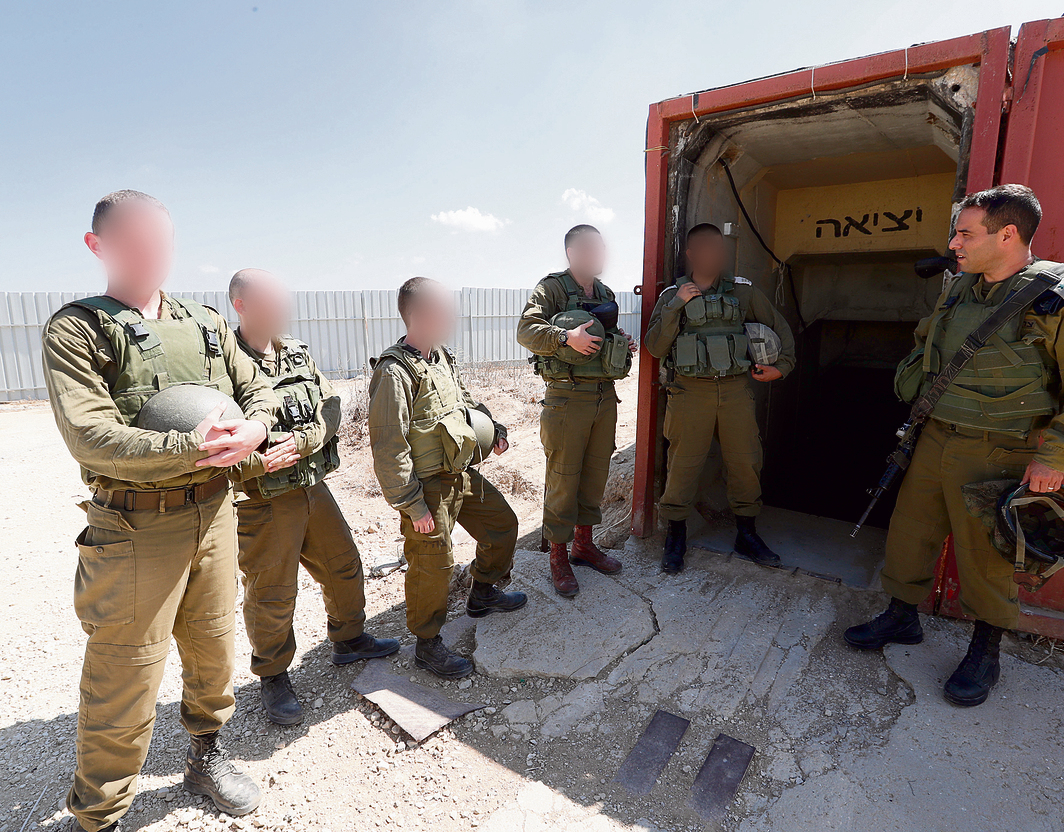
The lab's team with Col. Avitan

‘We spend days and nights in the field until we find the tunnel’

Based in three trailers near the Gaza border, with advanced computers and technologies, is ‘the lab’: 10 soldiers—some of whom finished their physics degree in high school—who already found 15 terror tunnels, the latest neutralized this week; when the need arises, they go out to the field and under the ground; ‘finding a tunnel is not a scavenger’s hunt. It’s a game of chest against Hamas,’ says one.

One day, while working at the autoshop, Lavi felt he couldn’t do this anymore. “I was just in the middle of replacing a gear stick, and I dropped it. I left the stick in pieces, and left.” Shortly after that, he called his father and said: “Dad, do everything to get me out of here. I’m not meant to be a car mechanic.”

Sgt. Lavi, 20, a genius who finished his BS in physics and mathematics while still in high school, enlisted in the IDF about two years ago and was sent to a car mechanics’ course in the Ordnance Corps. Like many soldiers who were assigned to positions that don’t fit their skills, his father intervened—with good reason—and searched for a place that would be better suited to his son’s talents, where the army could also benefit from him. And so the State of Israel gained one of the IDF’s few experts on locating underground tunnels.

At the time, some two years after Operation Protective Edge, the IDF and the defense establishment were at a loss when trying to find ways to locate Hamas’s tunnels, which crossed the border and got all the way to Israeli communities. The first project that was launched was the underground obstacle under the border fence, which will be completed next year. The second project, which was launched almost in tandem, was the “technological laboratory to locate tunnels,” or, in short, “the lab.”

“The idea began to take shape even before Protective Edge,” says Col. Yaniv Avitan, the head of the Collection and Assault Unit in the Technological Division of the Ground Forces. “The first steps were made in February 2016, when we started concentrating the efforts to develop technological capabilities to locate tunnels. The beginning was difficult. Many were surprised and couldn’t understand why the Ground Forces’ Technological Division was dealing with tunnels. But despite the surprise, everyone very much wanted to find a solution, and so we got all of the tools and backing.”

While they were working, they realized that to succeed in realizing the advantages of the technology, it wasn’t enough to merely develop it from afar, it must be tested again and again in the field. This is how the “technological laboratory to locate tunnels” came to be—a small group of less than 10 soldiers, with Lavi being one of them, who may be part of the Technological Division, but were physically far away from there, at the Gaza Division’s base, right on the strip’s border.

This group was joined early on by the best minds recruited for this project from the Technion, the Weizmann Institute of Science and other universities, including geologists, physicists and mathematicians. The technological side was bolstered with the intelligence capabilities of the collection unit 8200 and other units from the Military Intelligence Directorate (MID) and the Shin Bet, as well as the operational capabilities of the Gaza Division.

“The unit’s move to the field was met with quite a few raised eyebrows, but nowadays people understand it’s vital,” says Col. Avitan. “The decisions happen here, in the division, and we cooperate with the intelligence and operational personnel here. We have to carry out research activities in the field. We’re the technological arm of the Gaza Division’s situation assessment, and if we’re not here, we won’t be able to influence decisions.”

To this day, over two years after it was established, the lab is still located in a complex of three trailers you need a code to enter, inside of which are computer terminals.

“When I first got here, there was hardly anything here,” Lavi remembers. “A few computers, even less people than now. Slowly we started getting into the thick of it. Everything was done through trial and error. Such a project, a different kind of project, incorporates physics with other fields.”

“Because it was all so brand new, and that this was the only body in Israel of its kind, it started with amorphous missions—to find tunnels—which later took shape and became concrete missions,” explains Cpt. Bar, 27, the lab’s commander. “The entire development of technological measures to locate tunnels was done with real links to the field, to the ground. Sometimes things succeeded, as we thought they would, and sometimes the exact opposite happened.”

The soldiers who joined the lab’s team got there through the Palmach’s word-of-mouth method. “We got a ‘carte blanche’ from the Manpower Directorate to bring in anyone we wanted,” reveals Brig. Gen. Yehuda Fuchs, the commander of the Gaza Division, who treats the lab as his “baby.”

“We created a working environment for them that is unusual for the division,” he says with notable pride.

The lab’s soldiers were handpicked. Amir, who did his degree in physics during high school alongside Lavi, also came to the lab and is currently in officers’ course on his way to becoming the lab’s first homegrown officer. Some seven months ago, they were joined by Sgt. Adam, who also, unsurprisingly, studied for his BS in physics with Lavi and Amir while he was in high school.

Like Lavi, Adam was also not initially placed there, and was first sent to the C4I Corps to serve as a quartermaster clerk. “Locating the people for this place is a focused project, much like locating the tunnels,” Adam says. “You need people who are smart, who have the initiative, independence and determination. I learned about the lab from Amir and spoke to anyone I could just to get here. Thanks to the combination of luck and operational needs, I succeeded.”

Each of the lab’s soldiers is called a “decipherer,” and with the combined analysis of three triggers—technological sensors, geological sensors, and intelligence—they point to the location of the tunnels. So far, they’ve successfully uncovered no less than 15 tunnels, the latest of which was neutralized on Thursday. And it’s not the last one.

“At this stage we’re holding onto information on several other tunnels Hamas has planned to use to carry out terror attacks inside Israel,” a military official says.

This achievement has won them several important awards this year: an award from the head of the Ground Forces’ Technological Division, a certificate of appreciation from the Gaza Division’s commander, and the best of the best: the Israel Defense Prize, which was awarded to the tunnel discovery project in June.

What is the secret? How do you uncover a tunnel?

“I don’t know yet that there’s an actual formula for this,” admits Cpt. Bar, the lab’s commander. “The most accurate thing to say would be that what helps find the next tunnel is the previous tunnel that was uncovered. After the euphoria of finding a tunnel dies down, we analyze whether we could’ve found it sooner, and what it had that others didn’t. That way we learn more new details that help us find where other tunnels are.”

“After the discovery of a tunnel, we critique our own work,” says Sgt. Asher, 21. “We start going back to spots we suspected but ruled out in the past in order to see, based on the tunnel we uncovered, whether there are details that match and maybe there is something there.”

Sgt. Asher is the driving force of the lab, but unlike his comrades, he does not have a degree in mathematics, physics or geology. “I joined the Kfir Brigade as a combat soldier in the Haruv Battalion,” he says. “After a year, I was wounded in my eye, my combat profile was lowered, and I couldn’t continue as a combat soldier in the battalion. I was worried I wouldn’t be able to get somewhere meaningful, but when the lab project began I managed to get here.”

“At first it was stressful. I have no technological background and everyone else here have a degree done during high school. There was someone here who tried to cheer me up and told me he got ‘only’ 98 percent in the highest level high school matriculation test,” he continues.

“In the first stage, I started teaching myself. I did online courses in physics, programming, mathematics. The guys here also helped me a lot,” Asher elaborates.

“At the same time, as the project progressed, I identified my advantage in the field. With my experience as a combat soldier, I’m very comfortable in the field. I understand how a combat soldier thinks. We work with a lot of other units, with combat soldiers who place the technological measures we develop in the field for us. We need to explain to them how to place the equipment, what to press, how to operate it. It’s very easy for me to work with them, we speak the same language.”

The lab team discovered their first tunnel in March 2016. “There were still questions about our efficiency,” Col. Avitan says. “We had to prove, to ourselves as well, that we weren’t wrong. The first commander of the lab, Lt. A., was with me at a location we were certain there was a tunnel. We drilled there and the drill found nothing. I went home feeling like a failure. We were sure we were onto a tunnel, and it didn’t succeed. We were disappointed.”

“The next morning I was at the Tel HaShomer base and A. called and said we were onto another spot and found the tunnel. We realized the system we were working with was the right one. It was exciting. We realized we had it. It wasn’t a magical solution, not a complete system, but we realized our approach was correct,” he continues.

It’s a massive responsibility, to point to a location and say “this is it.”

“In the lab, we get an endless flow of information,” says Cpt. Bar. “Physical, logistic, intelligence information. We’re the ones who are supposed to decipher it and then look the division commander in the eyes and convince him this is where we need to invest resources and manpower at a high priority, and explain to him where to put the driller and dig. There’s a feeling of great satisfaction to mark a spot in the field and see a driller hit it. Until that happens, you don’t know for 100 percent whether you were right. It’s a gray area. You don’t see what you estimate is underneath. You make determinations based on how one sensor or another behaves.”

“There were also failures,” Sgt. Lavi admits. “It’s a bummer, but you have to learn from them how to improve.”

Hamas is also constantly trying to interrupt and thwart the lab’s work. “They see us and they try to react,” says Cpt. Bar. “This isn’t just about putting together a puzzle or a ‘scavenger hunt.’ This isn’t a game we play alone. It’s chess.”

Work at the lab has no defined hours. It’s operational 24/7, and when its team members feel like they’re on the verge of uncovering a tunnel, they can simply forget to sleep or even eat out of eagerness.

“I remember my first tunnel,” Lavi says. “There was immense excitement. Real craziness. An experience I’ll never forget. Later, when we calmed down a little, we started thinking what we could learn from it.”

The lab’s soldiers leave the trailers at the division’s base quite a lot and travel to the different spots in the Gaza border area where, according to the different sensors and the intelligence collected, there’s suspicion a tunnel is located. “We stay in the field for days and nights on end, with a laptop and algorithms, and check it out,” Asher says.

“This place is extreme when it comes to the techno-operational work,” Adam says. “And the fact we’re here in the field physically is a great advantage. We can see and study every detail.”

Tamir, 20, is an academic officer in the Technological Division who joined the lab some 10 months ago. “This is the best job a technologist can have,” he says. “The path from the development stage to use in the field is the shortest I know.”

“You develop and decipher at the same time,” Asher explains. “We can be in the field all night with a team of combat soldiers to test our tools. We work with specific forces, and some of the technologies we ask them to operate can be very sensitive. That’s why it’s very important to us to maintain the personal and direct contact with the team commanders—go with them, demonstrate to them, be with them. That way we can see for ourselves what makes sense to ask of them and what doesn’t. We have constant dialogue with them.”

Michal, 25, the only woman in the lab, is a new emigrant from the US who studied electrical engineering in Pennsylvania. She also goes out to the field with the troops.

“She’s hardcore, lives and breathes the field,” Asher says.

“I immigrated to Israel a year ago and enlisted,” Michal says. “I was looking for an opportunity to use the knowledge from my degree in my military service, so I came to the lab. This is a special experience: a significant, operational, challenging and fun service. I work with the most ambitious and professional people there are. My service gives me an opportunity both to contribute and to integrate into Israeli society. The very first time I went out to the field, I understood the meaningful nature of the job, and how it contributes to the security of the state.”

The lab’s decipherers also go into the tunnels they discovered and conduct tests for the different tools they’re developing. “This is our training grounds,” they explain.

Though sometimes, despite having uncovered a tunnel, they’re in no rush to go in. “There are some cases, at the decision of the senior command of course, that we decide to be covert,” Cpt. Bar explains. “We identified the tunnel, we know for certain it exists, but we prefer to hold onto the information.”

Despite the simplicity of the lab’s trailers and office furniture, and the AC that’s about to break down, the resources invested in the team’s operations are almost unlimited, and the best experts from all security industries are recruited to work alongside them every time the need arises.

How do conscript soldiers work with senior and experienced scientists?

Lavi: “After a trial period, they learned to respect us.”

Asher: “A senior engineer in one of the industries was talking to me about deciphering something we were working on together, and during the discussion he told me: ‘I trust what you think more, you see hundreds of examples in the field every day.’ We’re actually a resource to them as well. We can contribute to them.”

“We threw out the rule book,” Col. Avitan says. “We cancelled the whole issue of ego. We created a body that breaks all of the rules of the traditional military organization.”

And indeed, despite the fact these are junior soldiers when it comes to their rank, their proven professional abilities in the field lead to them being highly regarded even by the most senior officers.

“There’s no distance here,” division commander Brig. Gen. Fuchs says. “They’re the experts. I don’t understand anything about it. The discovery of the next tunnel will be done by this 20-year-old kid. At situation assessment meetings, they sit with the highest-ranked officers—division commanders, unit commanders—and explain the situation on the ground with regards to their field.”

The lab, which uncovers one tunnel after the other, is also garnering a lot of interest among senior IDF officers, who have made the underground threat their top priority since Operation Protective Edge. “Because this is a topic that’s at the center of attention, there was a time that if less than two major generals visited the lab, it was considered a slow week,” says Cpt. Bar.

“For me, as someone who came from the battalions where every lieutenant was a half-god, it was shocking to suddenly see a division commander, a brigadier general, walking into your office and talking to you. I’m still in shock from this,” Asher says.

“It’s nice that a major general comes in, listens to an explanation, and shakes your hand,” Lavi says with a smile.

“It also contributes to important cooperation opportunities,” Bar adds. “The head of the Computer Service Directorate, for example, came for a visit, was impressed and offered technology he has and could help us, and an excellent cooperation was created.”

Bar, who studied electrical engineering and physics at the IDF’s expense, was in his previous position a technical officer in the Artillery Corps’ Meitar Unit during Operation Protective Edge, and later served in the Technological Division’s Missile and Rockets Department, before he was called upon to command the lab.

“I completely fell in love with this position,” he says. “In the field of ordnance, the development is a lot more long-term. Here, the satisfaction is immediate.”

Do your families know what you’re doing here?

“I tell them I deal with tunnels, but not beyond that,” Lavi says. “I don’t want to worry my parents. I don’t tell them I go out to the field. But I know and feel they’re very proud of me. They think I’m doing an important and honorable job.”

“In my home, as well, they know I’m dealing with tunnels, but they don’t believe I’m in a technological unit,” Asher says, laughing. “They’re mostly angry with me, because when there are busy and stressful periods, I can forget to call mom. But then she sees a story in the news about a tunnel that was uncovered, and she understands.”

What do you do after you uncover a tunnel? A party? Go out for a drink? A celebratory dinner?

“After a discovery, you go to sleep,” Asher admits. “It usually happens after a super busy period, and there’s a crazy adrenaline drop. But even then there’s no peace of mind, because you start with the self-reflection. Drawing conclusions, analyzing. Did I truly and completely understand what really helped me find the tunnel? But at the end of the week, when you go home after such a discovery, it suddenly sinks in and you realize you saved a life. Not many get to have this feeling and it’s a great privilege.”

“Finding a tunnel is a feeling of a spiritual high,” Adam says. “But immediately after that comes the serious work. The examination of why this technology worked better or not as well. That is why, thanks to proper examination, we improve from one incident to the next.”

Is there a prize for whoever finds a tunnel? A certificate? A medal?

“There are trophies,” they laugh and point to the cupboards in the trailer. “Our medals are rocks from every tunnel we uncovered.”

‘Our medals are rocks from every tunnel we uncovered’

Gaza Division commander Brig. Gen. Fuchs has five jars on display in his office, each filled with sand of different colors and textures. “Only in the Gaza Division there are five types of earth,” he explains and points to the jars. “Each type has different conductivity, and requires different technological measures and different drills. It’s a very complex field.”

“When I became the commander of the division, there were two or three outside experts in the lab from the Defense Ministry’s Administration for the Development of Weapons and Technological Infrastructure. Everything was still in its early days,” he explains. “We brought an intelligence officer in the rank of major, not a lieutenant or a captain, who was assigned solely to the lab. We also brought in a geologist in the rank of major. This lab has become a household name. The biggest experts in the country are happy when we invite them to come and help: from the Technion, Tel Aviv University, the Weizmann Institute.”

“I’m constantly excited until the discovery of the next tunnel. Sometimes, during discussions on the possible route of a tunnel—which is indicated by either technological or intelligence measures—I give them a challenge. I tell them: ‘As far as I’m concerned, I see this as a cross-border tunnel. Now prove to me otherwise,'” Brig. Gen. Fuchs elaborates.

According to Fuchs, what pushed him to promote this issue were IDF Chief of Staff Gadi Eisenkot’s end of the year speeches. “At the end of 2015, 2016 and 2017, when the IDF chief spoke to senior commanders about the year that had passed, he always said: ‘I failed in the mission to eliminate the underground threat.’ To see the commander of the military say this gave everyone an immense challenge to push this forward,” he says.

Col. Avitan says the Technological Division needs more people and he can already see the demand to join the lab is increasing. “We need creative people for this field, with the ability to think outside the box, daring and nerve. People are starting to realize they have the ability, at a young age, to make a difference to state security in a vast variety of ways. In the end, what they’re doing opens the news broadcast. To expand the unit and to meet the challenges we’ll face in the future, we need good people,” he says.

The lab’s team promises that those who do join them will—in addition to the great contribution to state security—get extraordinary personal satisfaction. “You can’t describe this feeling,” says Cpt. Bar. “It’s hard for me to think of something to compare it to.”

Like scoring a goal in soccer?

“Perhaps, but only if it’s the victory goal in the Champions League Final.”
Nikki Haley: Memorable Quotes

October 17, 2018

Sadly, one of the toughest warriors for Israel has departed the front line.

Nikki Haley has stood proud and strong and true at the centre of the shield wall, fighting off the forces of destruction and hate.

A true warrior, unflinching in the face of attacks and unwavering in her resolution to defend freedom, justice and life.

Raise your drinking horns in a toast to Nikki! May her replacement also be a noble warrior.

Nikki Haley: Memorable Quotes

The outspoken pro-Israel diplomat will be sorely missed.

The world was taken by surprise with the announcement that Nikki Haley, the U.S. Ambassador to the UN, will be resigning at the end of the year. The outspoken pro-Israel diplomat, dubbed “Hurricane Haley” by Prime Minister Benjamin Netanyahu for her strong defense of the Jewish state, viewed standing up to the UN’s anti-Israel bias and defending moving the US embassy to Jerusalem among her main achievements in her diplomatic posting.

Here is a selection of some her most memorable quotes.

“The days of Israel-bashing are over…For anyone who says you can’t get anything done at the UN, they need to know there is a new sheriff in town.”

“I wear heels. It’s not for a fashion statement. It’s because if I see something wrong, we’re going to kick ’em every single time.”

“I have seen so many similarities between the Israeli culture and the Indian culture. We’re very close-knit. We love our families. We have a strong work ethic. We believe in professionalism and philanthropy and giving back. It’s very true. So that’s all the good things. We’re aggressive. We’re stubborn. And we don’t back down from a fight.” AIPAC Policy Conference, March 2017

“I encourage people to find and use the power of their voices just as much when I do not agree with those voices as when I do agree with them.”

“All I’ve done with Israel is tell the truth. So when I saw something wrong, I called it out.”

“The people of Iran are crying out for freedom. … All freedom-loving people must stand with their cause.” – Aljazeera, 3 January 2018

“Israel has been forced to live under constant security threats like virtually no other country in the world. It should not have to live that way. And yet, Israel has overcome those burdens. It is a thriving country, with a vibrant economy that contributes much to the world in the name of technology, science, and the arts.” UN Security Council session, February 2018

“I went to Israel [in June 2017] to see firsthand the country the United Nations spends half its time on. Unfortunately, I’m not kidding – it’s ridiculous. It seems like the rough breakdown at the UN is half the time on Israel and half the time on the other 192 countries.” Israeli-American Council, November 2017

“I’ve often wondered why, in the face of such hostility, Israel has chosen to remain a member of this body. And then I remember that Israel has chosen to remain in this institution because it’s important to stand up for yourself. Israel must stand up for its own survival as a nation; but it also stands up for the ideals of freedom and human dignity that the United Nations is supposed to be about.” Ahead of Security Council session on U.S.’ recognition of Jerusalem as Israel’s capital, December 2017

“The Security Council is supposed to discuss how to maintain international peace and security. But at our meeting on the Middle East, the discussion was not about Hezbollah’s illegal build-up of rockets in Lebanon. It was not about the money and weapons Iran provides to terrorists. It was not about how we defeat ISIS. It was not about how we hold [Syrian President] Bashar Assad accountable for the slaughter of hundreds and thousands of civilians. No, instead, the meeting focused on criticizing Israel, the one true democracy in the Middle East.” Press conference after attending first Security Council meeting, February 2017

“Nowhere has the UN’s failure been more consistent and more outrageous than in its bias against our close ally Israel.” Senate Confirmation Hearing, January 2017

“Some people think that you have to be the loudest voice in the room to make a difference. That is just not true. Often, the best thing we can do is turn down the volume. When the sound is quieter, you can actually hear what someone else is saying. And that can make a world of difference.”

“We will not tolerate a situation that a world body of 198 countries can spend half their time attacking one country: Israel. What used to be a monthly Israel-bashing session now at least has more balance. But we’re never gonna put up with bullying.” AIPAC Policy Conference, March 2018

“Freedom and human dignity cannot be separated from peace and security. When the rights of the people are denied, the people rightly resist. If the concerns are not acknowledged, then peace and security are inevitably threatened. We have seen that repeatedly throughout human history. The case of Syria provides a horrible recent testament to this fact.” – Emergency UN Security Council Briefing on Iran, January 5, 2018

“The capital should be Jerusalem and the embassy should be moved to Jerusalem, because [Israel’s] government is in Jerusalem. So much of what goes on is in Jerusalem. We have to see that for what it is.” Interview on Christian Broadcasting Network, May 2017

Inside Iron Dome’s secret manufacturing plant

October 17, 2018

A fascinating look at the inside of the factory for the Iron Dome interceptor missile “Tamir”.

Inside Iron Dome’s secret manufacturing plant

Iron Dome Photo: Uri Scop

“Globes” visits the complex of bunkers where Rafael produces Israel’s short range missile interceptors.

The complex of bunkers in which Rafael Advanced Defense Systems Ltd. is producing the Iron Dome missile interceptors looks just like you would imagine: it is well protected and guarded, the safety procedures in it are rigorous, and access to it is strictly limited to people with authorization. Those entering are received at a locked iron gate opened only by arrangement after being properly identified, even if the person involved is the head of the project himself. There are illuminated signs on the high fences enclosing the secret bunkers reading, “Work with explosives is taking place in this compound.”

The condition for entering the bunker in which final assembly of the missile takes place is leaving behind any device capable of broadcasting or creating static electricity. Cameras, telephones, and recording devices are out of bounds. A heavy door opens, showing long white corridor leading to workspace whose purpose is unmistakable: Tamir Iron Dome interceptor missiles that Rafael employees have been manufacturing for the past seven years are piled on a cart in the center of the room.

Only a few people working at Rafael and the Ministry of Defense know just how many of these missiles have been produced to date. They are keeping this number secret; they merely give a wink to the curious, as if to say, “Don’t worry; we’ve got enough.”

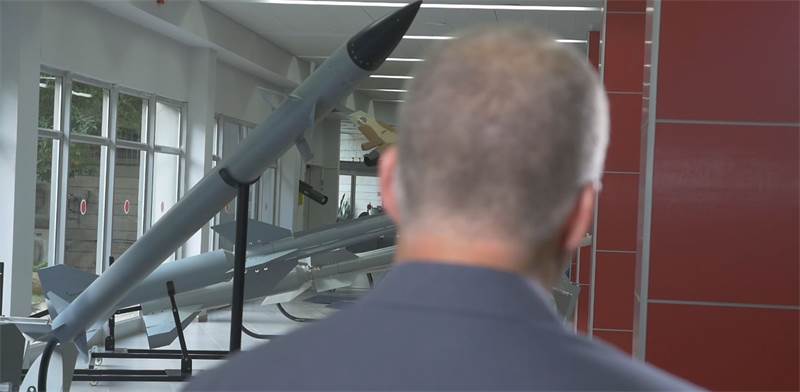
The well-built Tamir is colored in glittering silver and gold, weighing 90 kilograms with a three-meter length. It has earned great praise with 1,800 interceptions of rockets fired against vulnerable human and property targets in populous areas in southern and northern Israel.

“Every missile leaving here gets a pat and a kiss”

We are stopped two meters away from the Tamir by those responsible, who want to make sure that Iron Dome’s secret is kept. “Stop right here, man. Keep a safe distance away,” says the polite but assertive security officer accompanying every step we take along the assembly line for Israel’s most esteemed product. “You’re already too close.”

“For us, everyone of these missiles is like a person’s body,” says Rafi, a production system engineer who has been working at Rafael for 20 years. “It has a head – the sensory and homing systems. It has hands – wingtip devices that are used to aim it. It has legs – the engine. Each of these parts is made separately. They bring all of them here, and we put it together, like Lego.”

Rafi’s full name, like those of Yuval, Michal, and Ben, each of whom holds a very responsible senior position in the Israeli defense industry’s flagship program, cannot be revealed. It is a matter of information security. Rafael and the Ministry of Defense are fully aware of Israel’s enemies’ hunger for any scrap of information involving this project, and the rare glimpse of the bunkers containing the system’s assembly line afforded to “Globes” by Rafael is accordingly measured and controlled.

While Rafi anthropomorphizes the missiles that he and his colleagues are assembling, drills tightening the last screws in the body of the Tamir are audible in the background. They expertly tighten its parts, aware of the curiosity and interest created by the product emerging from their bunker to defend people living in the most attacked house in the jungle. They contain this curiosity with understanding and an ocean of patience. They only asked that they not be disturbed too much, because nevertheless, with all due respect to the general excitement and with true gratitude for the praise, someone here still has to work.

As in any other workplace, here, too, someone has hung a sign reminding people to observe an internal rule: “Don’t leave missiles in the corridor.” [!!!!]

“It’s a factory for all intents and purposes,” Rafi says. “The fact that we’re producing Iron Dome here doesn’t mean that we do whatever we feel like. We’re always committed to the cost of every missile, the safety of its production process, and staying within the budget framework and timetables for delivery to the customer.”

The production bunker is the point of no return for the Tamir. This is the last point at which it is exposed and visible, before four more interceptor missiles are packed into a special case, or as they call it at Rafael, a “cassette.”

The next time that this missile is exposed to the human eye will be when an order is given by the command and control center to break open the case in which it is stored and launch it at some target in southern Israel, the hills around Eilat, the Upper Galilee, or the Golan Heights. There is no lack of troubles here. When that happens, it will be exposed to the naked eye for only a few seconds before become a disappearing point in the sky, leaving behind it a white trail outlining its path on the way to the target – it can be any target, a rocket or a mortar. It ends in an explosion in the sky of two objects filled with explosives: good versus bad, defender against attacker, modern versus primitive. When the sky is dark, this encounter is spectacular. When the sky is clear, it creates a small gray cloud and a good enough reason to aim a smartphone upwards for documentation and sharing on the social networks.

In the yard outside the bunker, two cassettes are resting on wooden pallets. “That’s it. There are already ready for delivery to another satisfied customer,” Yuval announces proudly. “Another satisfied customer” means the only customer, at least as of now, for Iron Dome: the Israel air force defense system, which is responsible for deploying it and operating batteries of the defense system throughout Israel, depending on the situation assessments and operational needs in the field. It is possible that the army of another large country will also enter the list of customers for these missiles.

$50,000 per missile interceptor

Every sharp technician knows that there is no margin for error. A carelessly produce missile is liable to go anywhere when fired in battle. If the missile is an ordinary one designed to destroy a target, negligence means failure that can ruin a rare operational opportunity, or in a worse situation, destroy a place that must not be damaged, such as a place where civilians gather – and then you have another international complication, investigatory committee, and a wave of condemnations. When lifesaving missiles are involved, such as those fired by Iron Dome, such failure is very likely to result in the loss of human life.

Several stops before the assembly bunker, we found parts of mechanisms and components that will be part of the next missiles leaving the bunker. As of now, these missiles-in-the-making are still in the infant stage, with the general shape of random parts collected for the annual metals conference somewhere in Israel. The systems are lying near electronic cards, plugs with the appearance of USB plugs, mini-connectors, and glittering wires, some of which are sticking out here and there. Each of these plays a critical role in the interceptor’s hurried path to the threatening target rocket.

Every component and part is separately monitored and tested, put next to electrodes connected by cables to monitoring systems, computers, and screen full of news and figures. It is doubtful whether anyone who has not excelled in the study of algorithmics, mathematics, physics, etc. at Technion, Israel Institute of Technology is capable of understanding what they are for.

While the numbers change rapidly on the control screens, the mechanism that operates the wingtip devices of the missile is attached to a device monitoring its function for an extended time. They explained to us that this is an essential test due to the critical function of the wingtip devices when the Tamir leaves the launcher and travels in the sky: the wingtip devices compare the ability to maneuver left or right and increase or decrease altitude at enormously high speeds, depending on the location of the target and its position relative to the area being defended by the battery.

“We never go backwards in the production process, so every production station has a laboratory that tests the function of every single unit. They test the durability of each part to changes in temperature and in a state of tremor, and all are connected to one missile that operates flawlessly,” Rafi declares.

Every launch of a Tamir is aimed exclusively at a rocket whose flight trajectory the systems have calculated will hit a populated area, military base, or important facility requiring protection. No interceptor will be fired at a rocket that the system has concluded will fall outside the defense areas defined for it.

The company’s engineers claim that they are able to calculate with great precision the extent of damage to the Israeli economy, human life, and property saved by the 1,800 Tamir interceptions that destroyed Gazan rockets in flight to date.

Rafael is not disclosing the full figures, and repeated attempts to tease the information out of them by a curious correspondent were unsuccessful. “It is many billions,” says Rafael EVP air superiority systems division head Brig. Gen. (res.) Pini Yungman. “Believe me, you don’t want to imagine what would have happened here without Iron Dome. In Operation Pillar of Defense, a single Fajr missile got through and destroyed a house in Rishon Lezion. Had it not been for Iron Dome, there would have been thousands of such cases. What would we have done then?”

The defense establishment calls Iron Dome’s selective interception capabilities “battle economics.” This situation can make it a little easier to accept the cost of reach interception. It is believed that the Ministry of Defense pays Rafael $50,000 or a little more for each interceptor missile delivered. Rafael does not state the price, but emphasizes that since the first interceptor was supplied to the Ministry of Defense, the price has not been raised by even one shekel – “and this is despite the enormous difference in capabilities between the first interceptor and those of the more up-to-date interceptor now leaving the assembly line. It’s an enormous difference,” Yungman says.

At the beginning of the Iron Dome era, the cost of a single interceptor was a big headache for Rafael and the Ministry of Defense. They wondered how it was that for every ridiculous rocket produced on a primitive lathe in the Gaza Strip costing at most a few hundred shekels Israel was launching a missile that cost as much as an expensive car. This criticism faded almost by itself when Iron Dome provide its spectacular capabilities in the field. Even if its critics were not completely silenced, they were marginalized and classified as nuisances.

At least 90% of the cases in which Tamirs were launched at threatening rockets ended in a successful interception, according to Ministry of Defense figures. “This is great,” Yungman says. “Defense systems of various types developed around the world guarantee users defense rates in the 60-70% range. The figures here are completely different; it’s a whole other world. In Operation Protective Edge, a rocket was launched at Tel Aviv from the Gaza Strip. People sitting in cafes heard the siren and entered the protected rooms while Iron Dome was intercepting the threat. The coffee cups left on the tables did not even get cold before activity returned to normal. That’s huge.”

“This is a sign that we’re doing this right,” one of the production workers says in response to the figures, while pushing a cart bearing one of the missile’s rear parts. The engine is already inside.

“The people we’re up against don’t rest for a moment”

The production process is taking place simultaneously with continuation of Iron Dome System’s development process and deep research into its performance in the recent rounds of conflict in the south, even though seven years have passed since the first interceptor was launched. “The first interceptor launching was crossing the Rubicon, but I admit that I am honestly grateful that the today’s Iron Dome doesn’t resemble the one from 2011,” Yuval says. “It’s confusing, because from a distance, the launcher looks the same, and even the missile’s form hasn’t changed, but they are completely different. The first iPhone that went to market also looks similar to the new iPhone X, but everyone knows that these are completely different devices.”

The upgrades installed in Iron Dome in recent years have made it a multi-purpose defense system capable to destroying Grads and Kassams in the air, but also, as has been learned in recent months in the Jewish communities around the Gaza Strip, mortar barrages that were hitherto difficult to intercept because of their short flight path.

The need to frequently install upgraded and revised versions arises from the situation on the ground. The terrorist organizations in the Gaza Strip are frustrated by the system’s success, after years of basing their offensive force building on high-trajectory weapons supplied by Iran or produced in the local arms industry. It is clear that this frustration is only motivating the terrorist organizations to look for weak points in Iron Dome and challenge it with various and sundry attack plans, such as large dense barrages aimed at finding loopholes that will enable them to hit a home in Tel Aviv with a missile or two.

“The people we’re up against don’t rest for a moment,” Yuval says, and explains why he and his colleagues are not resting on their laurels. “The terrorist organizations are trying every day to overcome Iron Dome. They’re evaluating it and looking for weak points, and challenging it. We’ve got to stay two steps ahead of them. In practice, this means that we have to detect the weak points that they’re looking for, eliminate them, and provide Iron Dome with new capabilities that will be put into operation in the future.”

The production and development personnel from Leshem Institute are working together. One of Rafael’s main challenges is found near Karmiel in the pastoral vista of a natural thicket.

Two cranes lifting heavy loads high above the ground indicate accelerated construction of a new site. “They’re probably constructing a building here,” people from the company answer one after another with clear unwillingness to answer and evading the obvious question of what is being built here. “We’re developing and growing constantly,” adds one of the Rafael people.

The most veteran of the Institute’s workers remembers the summer of 2006 during the Second Lebanon War, when their work was disturbed by a five rocket barrages against the area. “There were days when we stopped working every hour and went down to the bomb shelters,” Yuval remembers. No rockets landed on the site itself. At that time, Iron Dome was only a wild idea in the head of a few scientists in the company; it made it to the drawing board only a year later. He himself was absorbed at the time in the company’s other missile plans.

“From the time we started this development, there was no doubt that we’d succeed,” he says, explaining that this feeling of confidence was already then based on the enormous knowledge accumulated by the company over decades of research and development, mainly in the air-to-air missile sector, which made Rafael a national focus on knowledge on the subject.

Rafael invested NIS 400 million from its budget at the beginning of Iron Dome’s development. Later the US entered the picture, and the Obama administration opened the faucet and gave Israel hundreds of the millions of dollars that turned Iron Dome from a technologically proven idea into a product deployed in the field shooting precise interceptors at an impressive rate.

The minimal return from Israel for all the benefits provided by the US is reflected in the fact that today, 70% of the interceptor missile’s components are produced in the US at a series of companies and factories and imported to Israel for final assembly. “At the same time, we’re preserving independent and immediate production capabilities here,” says Yungman.

“All of our telephones have a “Color Red” app”

A few minutes of travel separate the secret bunker complex from the Iron Dome administrative offices – the defense system’s nerve center. “Even if the system makes an interception in the south in the middle of the night, within half an hour at most, this corridor is alive and bustling. A random check is made by telephone of everyone here. Everyone has a ‘Color Red’ app, and when they aren’t sleeping in the communities near the Gaza Strip, no one sleeps here, either. Everyone shows up. They come to test the system’s performance in real time and answer questions arising from the batteries in the field and the air defense system. There are always dilemmas that have to be solved,” Yuval says. “In all honesty? We’re less caught up with the system’s successes. It’s obvious that we find the numbers and achievements of the system heartwarming, but what really interests us is analyzing every possible figure and installing another update and another improvement in the system.”

Michal, the head of the Iron Dome project in the air force, lives five minutes away from the missile plant at Leshem Institute, and the “Color Red” app has already summoned her enough times to work in the middle of the night or during an evening run. “I’ve even had to come here on the Sabbath. I live close by, so I get here quickly,” she says. “Sometimes, in rounds of escalation in the south, we find ourselves here sitting in groups and analyzing recordings from interceptions from an hour before. Questions always arise from the field, and sometimes we travel to the batteries themselves in order to instruct the soldiers in various matters.”

During Operation Pillar of Defense in 2012, long before the defense system had accumulated the necessary mileage, Michal and her team went down south in order to install an urgent up-date in the system in an attempt to improve its performance. “We gave the soldiers a short course in the field and then sat at the battery for another two hours. Shooting from the Gaza Strip was detected and the battery launched interceptors, which worked exactly according to the upgrade we had installed for the scenario for which we had prepared. To this day, when I hear on the news that Iron Dome has made a successful interception, I get very emotional,” she says.

The walls of the Iron Dome administration corridor are decorated with photographs of successful interceptions in the south, pictures of launchers deployed in the field, and pictures of the Tamir interceptor – all of them reflecting the unit’s pride and spirit of mission among the workers there.

On one of the prominent walls, someone has hung the Israel Defense prize awarded to Rafael in 2012 for developing of the system in record time of only three and a half years. “In the development process, we building several missiles simultaneously, and we eventually selected the Tamir, which was the best for this mission,” Yungman reveals.

Rafael says that Iron Dome as we have known it up until now has yet to utilize most of its capabilities. On the other hand, it can also be said that we also deserve a little more peace and quiet and breathing easily. Yungman? He predicts more great years for the system: “Iron Dome is far from saying its last word. It’s turning into an entire family of products.”

At age 34, married with three small children, two degrees, and seven years of seniority at Rafael, Ben is leading on the company’s behalf one of the biggest projects linked to Iron Dome – development of a naval version to be installed in the Israel navy’s missile boats in the framework of the IDF’s preparation for the mission of protecting Israel’s economic waters.

He was hired at Rafael to work in algorithmics after finishing his BS in aeronautics and space at Technion. “Later, I wanted to see the bigger picture and moved to administration, so I did an MBA at Technion and came to Iron Dome,” he says.

He lives in the Western Galilee, and while leading the naval Iron Dome program at Rafael, he also spends time raising his three year-old twins and his four and a half year-old daughter. “Completely hardcore, but four years of aeronautics and space studies are far more tiring, he says. “How do we maneuver between functions? The mutual backup that exists here is very helpful and makes things easier. We share things among the employees. Someone works a half-day, goes home to take care of their kids, and comes back in the evening to Iron Dome. We work in a harmonious atmosphere of great team spirit, and that’s what enables us to make progress on the development plans. This dynamic is essential. Iron Dome is a startup within Rafael, a plan that works at a very rapid pace, and the managers flow with our enthusiasm.”

At the end of last year, the naval Iron Dome system completed a series of trials, after the Iron Dome launcher was placed on the deck of a navy Saar 5 missile boat and carried out successful interceptions. The system itself will be structurally installed on the new Saar 6 missile boats that the navy will receive from Germany in the coming years.

As an ex-navy man who frequently went on long voyages with missile boats during the course of his service, Ben feels that he is closing a circle: “These boats are now better protected and the areas for which they are responsible are better protected, thanks to a technological breakthrough we have achieved in recent years, while applying the land-based Iron Dome capabilities to naval Iron Dome.”