Archive for August 2018

Fatah leader: Israel is offering Hamas an airport near Eilat 

August 24, 2018

Source: Fatah leader: Israel is offering Hamas an airport near Eilat – Arab-Israeli Conflict – Jerusalem Post

The Israeli offers are part of US President Donald Trump’s yet-to-be-unveiled plan for peace in the Middle East.
BY KHALED ABU TOAMEH
 AUGUST 23, 2018 21:59
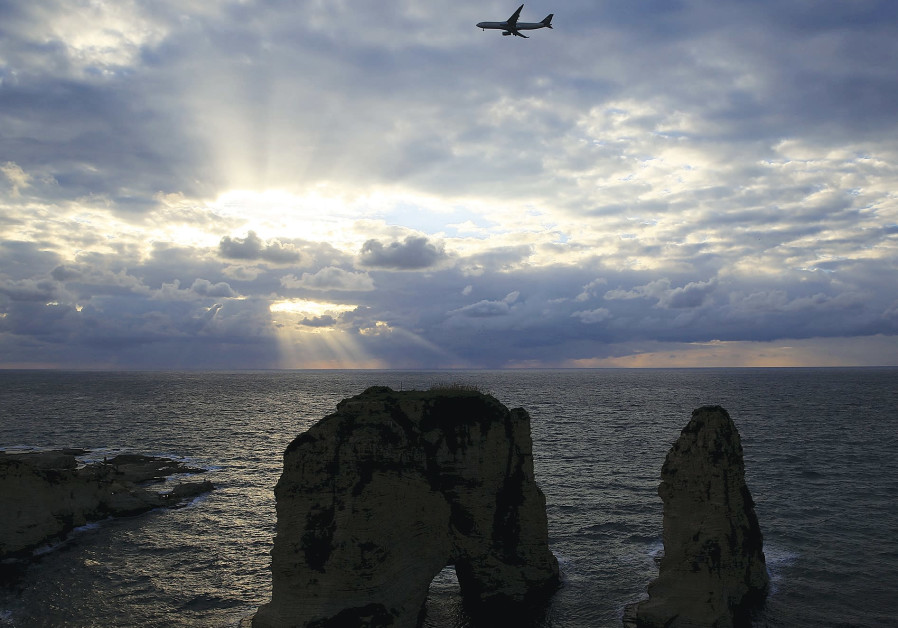
An airplane flies out of Beirut’s International Airport.

According to Aloul, the Israeli offers are part of US President Donald Trump’s yet-to-be-unveiled plan for peace in the Middle East. “I doubt this plan will succeed,” he said.

Aloul said that the current efforts to achieve a long-term truce between Israel and Hamas in return for humanitarian and economic projects in the Gaza Strip were not being made only by Egypt. “There are many contradictions,” he said. “You also have Qatar, Turkey and Iran.”

Israel, he said, is seeking a truce with Hamas so that it can impose a new reality to pave the way for the implementation of Trump’s unseen plan.

“There are American efforts to liquidate the Palestinian cause,” Aloul charged. “They tried to pass their schemes through our Arab brothers without our consent. Our firm position forced the Arabs to backtrack and tell the Americans that they should deal with the legitimate party, and that’s why there’s a stalemate now. However, the Americans are continuing with their attempts.”

Aloul’s “revelations” were made in an interview with Egyptian journalist Jihan Husseini.

The senior Fatah official, who is touted as a potential successor to ailing PA President Mahmoud Abbas, said the PA favors a truce in the Gaza Strip. “A truce is a Palestinian national act,” he added.

Aloul claimed that the Americans and other parties were using the humanitarian issue as a distraction and “to pass suspicious schemes,” adding that last year, Abbas told donor countries to continue with their projects in the Gaza Strip.

He said that Abbas has told the Egyptians that Hamas should either manage the affairs of the Palestinians in the Gaza Strip or allow the Ramallah-based government to do so. The Egyptians, according to Aloul, requested that Hamas be permitted to collect some taxes and tariffs in the Strip as part of a reconciliation deal with Abbas’s Fatah faction.

Aloul said that a Fatah delegation would head to Cairo soon to hold discussions with Egyptian intelligence officials on ways of ending the power struggle with Hamas. “We are [for] reconciliation [with Hamas],” he stressed. “Reconciliation is a main goal for us. But there are many suspicions nowadays concerning the reconciliation – that’s why the Palestinians are very cautious. We believe that the current efforts [to achieve a truce agreement between Israel and Hamas] are politically motivated and aimed at consolidating divisions among the Palestinians. The division [between the West Bank and Gaza Strip] was created by Israel.”

Aloul said he found it “absurd” that Israel was prepared to forgo important issues in the current truce discussions, such as Hamas’s heavy weapons and rockets. Qatar, he claimed, has received instructions from the US administration not to hinder the Egyptian and United Nations efforts to achieve a truce with Israel and reconciliation between Hamas and Fatah.

Meanwhile, the London-based Al-Hayat newspaper reported on Thursday that the truce agreement was almost ready and could be signed as early as next Sunday.

The paper said that the deal may require some minor amendments. Senior Hamas leader Saleh Arouri will sign the truce agreement on behalf of his movement in Cairo next Sunday, it added.

According to the report, after the signing of the truce deal, Egypt will invite representatives of various Palestinian factions to discuss ways of implementing the reconciliation agreement that was signed between Hamas and Fatah in Cairo in October 2017.

The paper said that an Egyptian delegation will travel to Israel after obtaining Hamas’s approval of the truce agreement to get Jerusalem to sign on to it.

Quoting informed Egyptian sources, the paper said that the agreement calls for a one-year truce between Israel and the Palestinian factions in the Gaza Strip, which will be automatically extended for another four years. The agreement envisages the lifting of the economic blockade on the Gaza Strip; the permanent reopening of the Kerem Shalom border crossing; linking Gaza City’s harbor with a seaport in Cyprus; launching steps to reopen the Palestinian airport in the southern Gaza Strip; and handing the remains of two IDF soldiers and two Israeli civilians held in the Gaza Strip to Israel. In return, the sources said, Israel would release Palestinian prisoners, including those who were rearrested after being freed in the 2011 Gilad Schalit prisoner exchange agreement.

The agreement, the sources added, also calls for the establishment of a financial and economic fund comprising Arab countries, the US and the EU to rebuild the Gaza Strip according to a detailed plan.

Turkey Prepares For First Batch Of Russian S-400 Air Defense Missiles

August 23, 2018

Rosoboronexport’s Director General Alexander Mikheev said that the defense company would begin implementing a contract for the supply of its advanced S-400 missile defense systems to Turkey in 2019, the RIA Novosti reported.

By by Tyler Durden Thu, 08/23/2018 Zerohedge

Source Link: Turkey Prepares For First Batch Of Russian S-400 Air Defense Missiles

{I wonder if these systems will respond to another Russian infraction into Turkish air space. – LS}

“The contract [on the S-400 supplies to Turkey] will be implemented within the agreed time limits. In 2019 we will start implementing the contract,” the company’s director general and CEO Aleksandr Mikheev told reporters on Tuesday.

Washington has expressed great concern that NATO member Turkey’s upcoming deployment of the Russian S-400s could pose a serious security risk for U.S.-made weapons used by Turkey, including the Lockheed Martin F-35 Lightning II, a fifth-generation combat aircraft.

Rosoboronexport told Turkey it would switch to the Lira, instead of using the dollar to complete the transaction, the RIA news agency reported.

In April, Turkish President Recep Tayyip Erdogan and Russian President Vladimir Putin had agreed to expedite the delivery of the missile systems for 2019.

The S-400 system also called the Triumph Mobile Multiple Anti-Aircraft Missile System (AAMS), is an advanced Russian missile system designed to detect, track, and destroy aircraft, drones, missiles as far as 402 kilometers (250 miles) away. Moscow had previously sold the missile systems to China and India. The Economist described the S-400 in 2017 as “one of the best air-defense systems currently made.”

Ankara’s decision to acquire the missile systems stems from last year after Moscow and Turkey signed a $2.5-billion deal for the transfer of the technology.

Washington immediately threatened to halt delivery of the F-35 stealth jets if Ankara finalized the agreement with Russia. With the recent passage of the 2019 National Defense Authorization Act (passed by the Senate earlier this month), it warned about the US supplying fifth-generation fighters to Turkey amid declining diplomatic relations.

President Erdogan told Washington that it did not want to depend on Western technology, which is why the country had been turning towards Russia.

“We will not just buy the S-400s and place them in a storehouse. We will use them if need be,” Erdogan said in June.

President Trump’s response was to sign a Pentagon bill into law restricting the delivery of F-35 jets. The bill also called for the US Secretary of Defense to submit a report within three months addressing the impacts of Turkey’s purchase of S-400s on US-made weapon systems in the region.

Both NATO allies have discussed various ways on how to resolve this dispute but it seems that has failed with Turkey migrating towards Russia.

Diplomatic ties between Turkey and the US have plummeted in the last month over the detention of US evangelical pastor Andrew Brunson, which could likely be a front for a much larger issue: Washington wants to destroy the Eurasia integration via economic warfare.

The first victim? Well, of course, it was Turkey, as President Trump launched economic and political sanctions on the country, which collapsed the Turkish Lira against the US dollar.

As to why Turkey is buying the world’s most advanced missile system, well, it is preparing for military conflict.


EU agrees 18 million euro development aid for Iran

August 23, 2018

Source: EU agrees 18 million euro development aid for Iran – Middle East – Jerusalem Post

The EU is working to maintain trade with Iran, which has threatened to stop complying with the nuclear agreement if it fails to see the economic benefits of relief from sanctions.

BY REUTERS
 AUGUST 23, 2018 14:19
IRAN PRESIDENT Hassan Rouhani and Austrian Chancellor Sebastian Kurz attend a news conference at the

BRUSSELS – The European Union agreed 18 million euros ($20.6 million) in aid for Iran on Thursday, including for the private sector, to help offset the impact of US sanctions and salvage a 2015 deal that saw Tehran limit its nuclear ambitions.

The announcement is part of the bloc’s high-profile efforts to support the nuclear accord that President Donald Trump abandoned in May. It is part of a wider package of 50 million euros earmarked for Iran in the EU budget.

The EU is working to maintain trade with Iran, which has threatened to stop complying with the nuclear agreement if it fails to see the economic benefits of relief from sanctions.

The bloc’s foreign policy chief Federica Mogherini said in a statement the bloc was committed to cooperation with Iran.

“This new package will widen economic and sectoral relations in areas that are of direct benefit to our citizens,” she said.

The bloc will spend 8 million euros on the Islamic Republic’s private sector, including assistance for small and medium-sized enterprises and Iran’s Trade Promotion Organization.

A further 8 million euros will go to environmental projects and 2 million euros to fighting harm caused by drugs. ($1 = 0.8744 euros)

Bolton defends Israeli strikes in Syria against Iranian targets 

August 23, 2018

Source: Bolton defends Israeli strikes in Syria against Iranian targets – Middle East – Jerusalem Post

Bolton added that what is central to US policy in Syria is not only to defeat of the Islamic State and the elimination of its territorial caliphate, but also to deal with Iran’s presence.

BY HERB KEINON
 AUGUST 23, 2018 01:06

Israel has struck in Syria in recent months “every time Iran has brought missiles or other threatening weapons” into the country, US National Security Adviser John Bolton said on Wednesday. He added that he viewed those strikes as “a legitimate act of self-defense.”

Bolton’s comments came at a press conference on the final day of a three-day visit here dominated by talks with Prime Minister Benjamin Netanyahu and other top Israeli officials about Iran and Syria.

Bolton revealed that in discussions he had with Russian President Vladimir Putin three weeks before Putin and US President Donald Trump met in Helsinki, the Russian leader told him that Russian and Iranian interests were not the same in Syria, and that he would be “content to see the Iranian forces all sent back to Iran.”

“It was not a question of where they would be inside Syria,” Bolton said, referring to the current 85-km. buffer zone from the Israeli border, from where Moscow said it has pushed back Iranian forces and Shia militias.

“We were talking about the complete return both of regular and irregular Iranian forces,” Bolton said, adding that Putin said he could not do it himself.

“So the point was that perhaps joint US-Russian efforts might be sufficient. Now I don’t know if that is right either, but it is certainly one of the subjects I will be talking about with my Russian counterpart in Geneva tomorrow.” Bolton is scheduled to meet with Nikolai Patrushev for follow-up talks to the Trump-Putin summit last month.

Saying that Syria is “extraordinarily complicated” because there are so many different actors involved there, Bolton said that what is central to US policy there is not only the defeat of Islamic State and the elimination of its territorial caliphate, but also to deal with Iran’s presence there.

Bolton said that when the Obama administration set out on its anti-Islamic State campaign, it did not foresee “that Iran obviously had a strategic plan to create an arc of control from Iran through the Shia areas in Iraq and Syria, linking them up with Hezbollah in Lebanon. That is not something we want to see.”

Bolton noted that since Trump came to power, the US has acted twice militarily in Syria when Syrian President Bashar Assad used chemical weapons, and that as Assad gets ready for another offensive campaign in Idlib province, there should be no ambiguity: the US will respond if he uses chemical weapons again.

Regarding Iran, Bolton said that “regime change” there is not America’s policy, but “what we want is massive change in the regime’s behavior.” He said that the premises of the Obama administration’s policy regarding Iran – that if the nuclear issue were solved, Iran would behave like a “normal country” – have proven completely wrong.

Iran’s economy has been mismanaged for years, Bolton said, adding that the 2015 nuclear deal “mitigated the effects of this management of the economy, and gave the regime new life. It gave this regime – which has been the central banker of international terrorism since 1979 – new assets that could be used for its nuclear weapons program, for its ballistic missiles program, for its terrorist support activities, for its conventional military activities.”

Bolton said the lifting of the sanctions under the deal gave the Iranians a feeling that they had a “free hand” in the region. “By bringing the hammer down again and reimposing American sanctions, we have seen a profound negative effect on Iran – I think more significant than we would have predicted.”

Bolton said that what is significant about the demonstrations taking place now in Iran is that they are not organized but, rather, “just regular people saying they are fed up with the government.”

Bolton said that he briefed Netanyahu and other senior Israeli officials during his talks here on “the whole range of issues connected to Iran.”

This included US talks with Europeans to encourage them to increase pressure on Iran; efforts to make sure that various countries around the world that have been dependent on Iranian oil have other sources, “so we can drive exports down to zero”; and efforts to enforce the sanctions more stringently – with less waivers – than was done under the Obama administration.

BOLTON, IN an interview with Reuters, said that the Trump administration is not discussing possible US recognition of Israel’s sovereignty over the Golan Heights.

“I’ve heard the idea being suggested, but there’s no discussion of it, no decision within the US government,” he said.  “Obviously, we understand the Israeli claim that it has annexed the Golan Heights – we understand their position – but there’s no change in the US position for now.”

Netanyahu asked the US to recognize Israeli sovereignty over the area in February 2017, but has not publicly been actively lobbying over the issue.

In July the House Subcommittee on National Security held a hearing on the matter under the title: “A new horizon in US-Israel relations: From an American embassy in Jerusalem to potential recognition of Israeli sovereignty over the Golan Heights.”
The purpose of the hearing, according to an announcement put out by the subcommittee, was “to discuss the potential for American recognition of Israeli sovereignty over the Golan Heights, in furtherance of US national security interests.”

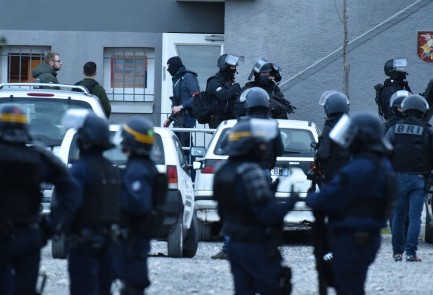
ISIS claims responsibility for deadly knife attack in France 

August 23, 2018

Source: ISIS claims responsibility for deadly knife attack in France – Israel Hayom

White House sources: US to present limited Mideast plan 

August 23, 2018

Source: White House sources: US to present limited Mideast plan – Israel Hayom

IDF unveils new Merkava IV Barak tank

August 23, 2018

Source: IDF unveils new Merkava IV Barak tank

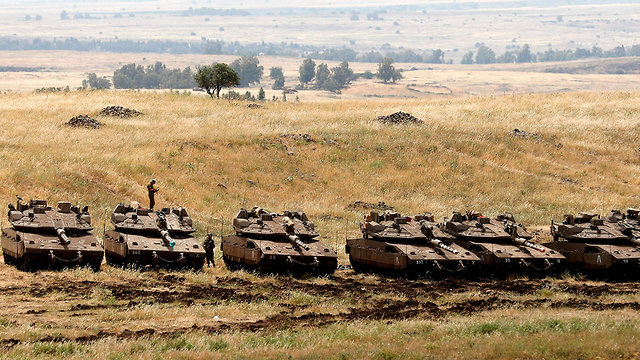
The new and improved version of the Merkava IV, which will make its debut on the battlefield in 3 years, will be kitted with advanced systems offering extra crew protection, increased strike efficiency.
The Merkava Mark IV tank, currently used by the IDF’s Armored Corps, is undergoing a series of improvements that will be seen on the battlefield in three years in the form of its successor tank—the Merkava Mark IV Barak.
The new tank will include advanced technology systems that are expected to make it more lethal, faster and more secure than the current Merkava Mark-4.
It will also be kitted with an artificial intelligence system that includes a smart task computer to integrate the various tasks being carried out by the tank’s systems.

The mission computer will be responsible for receiving all data from the operational network and tank systems, analyzing the information, and bringing it to the attention of the commander in accordance with the urgency and relevance of the information.

“In this way, the computer will reduce the burden on the crew members, improve the reliability of the system, pinpoint targets and improve the chances of hitting them,” the IDF explained. “The Barak tank will also come with an improved cannon and commander’s gun sight.”

The new tank will also be equipped with a series of sensors and new gear, such as the Iron Vision helmet, which will enable the fighters to maneuver in dense urban areas without removing their heads from the tank and exposing themselves to enemy fire, while enjoying a 360 degree view of their surroundings.

Merkava Mark-4 tanks (Photo: AFP)

Merkava Mark-4 tanks (Photo: AFP)

The internal operational qualities of the tank will also undergo an unprecedented technological facelift. With modern touch screens replacing the chunky switch pads, the work environment inside the tank will be more convenient and simple to operate for a generation unfamiliar with outdated buttons.

With advanced defense capabilities (an improved anti-missile Trophy system) and process automation, the tank will ease the burden on the crew by directing them according to mission urgency.

 (Photo: IDF Spokesmans unit)

(Photo: IDF Spokesmans unit)

In addition to the new tank, the tradtional composition of an armored company will soon be changed with the addage of a tenth tank and an additional commanding officer to each company. Most of the tanks in the corps will be commanded by a commissioned officer.

The IDF noted that “this change allows for a greater impact on the battlefield as well as flexibility in broad operations. This change comes from the understanding that the future battlefield will require having more people with decision making abilities and a broad understanding of the operational environment.”

Meanwhile, senior officers in the Armored Corps said that after last year’s ‘crisis of motivation’ to join the Armored Corps ranks, there has been an improvement among recent recruits who want to serve in tank brigades, owing to public relations efforts.

Tank touch screen (Photo: IDF Spokesmans unit)

Tank touch screen (Photo: IDF Spokesmans unit)

According to army figures, for every available spot in the Armored Corps, there is slightly more than one recruit competing for it. In the March 2018 draft, 83% of new recruits indicated that they wanted to serve in the Armored Corps, while in November 2016 the number was only 54%.

As part of the efforts to increase motivation, potential recruits were told about the many operational activities carried out by the tank units—even during relatively peaceful periods.

Since the beginning of the year, the Armored Corps has hit more than 20 terrorists in the Gaza Strip and destroyed about 30 terrorist infrastructure targets. These actions included the firing of 81 shells, the killing of 12 terrorists and the wounding of ten.

Left happy at Trump saying Israel will pay a price – Arab-Israeli Conflict 

August 22, 2018

Source: Left happy at Trump saying Israel will pay a price – Arab-Israeli Conflict – Jerusalem Post

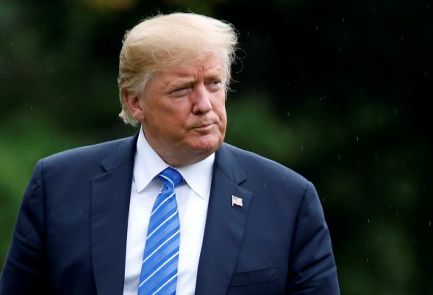
Addressing a rally in West Virginia, Trump said that the Palestinians would soon “get something very good” in return for the May embassy move “because it’s their turn next.”

BY GIL HOFFMAN
 AUGUST 22, 2018 12:14
Left happy at Trump saying Israel will pay a price

US President Donald Trump’s statement that Israel will pay a “high price” in its negotiations with the Palestinians because it won something “very big” with America’s relocation of its embassy to Jerusalembrought joy Wednesday to the Israeli Left, which praised him.

Addressing a rally in West Virginia, Trump said that the Palestinians would soon “get something very good” in return for the May embassy move “because it’s their turn next.”

Zionist Union MK Amir Peretz said that “when dealing with a president who thinks like a businessman it was clear it would only be a matter of time until he asked for something in return” for the embassy move.

“No one can claim that this is a hostile president with demands that are not legitimate,” Peretz said in a reference to statements made about Trump’s predecessor, Barack Obama. “Netanyahu cannot deny the need to make courageous decisions. Solving the dispute and dividing the land into two states for two peoples is not a deal with the US but an Israeli interest that will allow our state to remain both Jewish and democratic.”

His Zionist Union colleague, MK Eitan Cabel, said it was “time for the Right to wake up from its misconception that if Israel will merely keep waiting, the diplomatic issue will resolve itself.” He said Israel should preempt Trump’s plan with steps to save the two-state solution like freezing construction in isolated settlements and compensating those willing to leave them.

On the Right, Bayit Yehudi MK Moti Yogev said Israel must tell Trump that just like he realized Jerusalem belonged to Israel, the rest of the Land of Israel also belongs to the Jewish state and must remain under Israeli sovereignty forever.

Trump should be told that Israel should retain all their land for several reasons, including a promise from God, the history of Jewish control of the land, the fact that Arabs fare better under Jewish rule than Arab rule, and strategic and security reasons

Zehut Party leader Moshe Feiglin accused Prime Minister Benjamin Netanyahu of persuading Trump to support the creation of a Palestinian state after it initially appeared the US president would be open to other alternatives.

“Netanyahu led Trump to the views he expressed in his Bar-Ilan speech, his terrible two-state idea, and the continuation of the Oslo process,” Feiglin said. “The result will be that in return for moving the embassy sign from Tel Aviv to Jerusalem, our capital will be divided and there will be an additional US embassy in Jerusalem, the capital of Palestine.”

US ready to drive Iranian oil exports to zero, says US national security adviser

August 22, 2018

Donald’s Trump’s sanctions would drive Iranian oil exports down in order to force behaviour change on Tehran regime


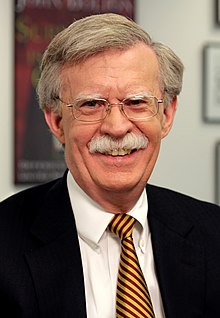
US national security adviser John Bolton.

By Patrick Wintour Diplomatic editor The Guardian Wed 22 Aug 2018

Source Link: US ready to drive Iranian oil exports to zero, says US national security adviser

{The Mother of All Economic Bombs is fixing to drop. – LS}

The US is prepared to use sanctions to drive Iranian oil exports down to zero, the US national security adviser, John Bolton, has said.

“Regime change in Iran is not American policy, but what we want is massive change in the regime’s behaviour,” Bolton said on a visit to Israel, as he claimed current sanctions had been more effective than predicted.

Donald Trump took the US out of Iran’s nuclear deal with the west in May and is imposing escalating sanctions, both to force Iran to renegotiate the deal and to end Tehran’s perceived interference in Yemen, Syria and Lebanon.

Complete removal of Iranian oil from world markets would cut oil supply by more than 4% probably forcing up prices in the absence of any new supplies.

Bolton was speaking as the new UK foreign secretary, Jeremy Hunt, met the US secretary of state, Mike Pompeo, for the first time in Washington to discuss how to reduce Iranian influence, despite Britain’s continued support for the nuclear deal.

In an interview with Axios, a US political website, Hunt praised Trump’s willingness to talk with leaders deemed to be hostile to the US, denying he was an isolationist. Trump has already met the North Korean leader, Kim Jong-un, and has even hinted at talks with the Iranian leadership.

“The traditional western foreign policy has been that if we disapprove of something someone’s done, we don’t just take action but we stop the engagement as well,” he said. “[Trump] takes the view that actually you need to engage with people. I think it’s a business mentality. He’s always looking for a way to recast the deal.”

Hunt is maintaining UK support for the deal signed in 2015, and according to Iran, the UK has even stepped in to advise Tehran on how to remain compliant with the deal by limiting plutonium from one of its heavy nuclear reactors.

Hunt has suggested the existing level of US sanctions already has the potential to change Iran’s “destabilising regional behaviour”, but additional pressure that led Iran to pull out of the nuclear deal completely might lead only to a more dangerous anti-western government being installed in Tehran.

Hunt stressed that the UK would not withdraw from the 2015 nuclear deal, but acknowledged it was an open question whether Tehran would decide if the remaining economic benefits warranted remaining inside the deal.

Sweeping US secondary sanctions on businesses that trade with Iran make it difficult for European governments to persuade EU companies it is worth the risk of continuing to do business with the country.

Bolton was bullish about the growing impact of sanctions. “We expect that Europeans will see, as businesses all over Europe are seeing, that the choice between doing business with Iran or doing business with the United States is very clear to them,” he said.

“[Trump] has made it very clear – his words – he wants maximum pressure on Iran, maximum pressure, and that is what is going on.”

British officials acknowledge that the US administration policy for the moment has secured Trump the best of both worlds – Iranian refusal to restart its nuclear programme due the EU’s continued support for the deal, and the imposition of a regime of secondary economic sanctions that is placing great pressure on the Iranian economy.

Fuller US sanctions, including actions against countries that trade in Iranian oil are due to come into force on 5 November, 180 days after the initial Trump announcement to withdraw.

The measures against Iranian oil importers, and banks that continue to trade with the Central Bank of Iran, will ratchet the pressure to a higher level.

Pompeo has set up an Iran Action group inside the US State Department to coordinate US leverage on companies and countries that cannot show that their trade, including in oil, has fallen significantly by November.

Measures may also be taken against firms that insure ships carrying Iranian crude.

It is expected some of the major Iranian oil importers, such as Russia, China and Turkey, will either ignore the threat of US sanctions, or, possibly in the case of Iraq, Japan and South Korea, seek exemptions.

China takes a quarter of all Iran’s oil exports, and with Chinese banks little exposed to the US it can avoid the impact of Trump’s sanctions.

Major importers of Iranian crude in Europe include Italy’s ENI and Saras, Spain’s Repsol, France’s Total, and Greece’s Hellenic Petroleum. All these companies depend on access to US dollar financing and US suppliers, and most have significant operations in the US.

The EU in August introduced a blocking statute designed to give European firms immunity from US sanctions for trading with Iran. But its legal force is questionable since it requires EU firms to sue the US government for any losses caused by US sanctions. The statute is untested in court.

EU foreign ministers will meet at the end of the month to discuss the measures they have taken to protect the deal.

Iran’s foreign minister, Javed Zarif, this week demanded clearer practical steps from Europe to protect the deal, saying: “Europeans have been very good in declaring their positions, but to pay that price they need to make a decision and they have only a limited time for that decision and cannot wait for ever.”

The German foreign minister, Heiko Maase, in an article in the German business daily, Handelsblatt, on Wednesday called for the EU to protect itself from secondary sanctions by increasing its autonomy from the US financial system.

The German chancellor, Angela Merkel, said she agreed with her foreign minister that relations with the US were changing but she stopped short of backing his call for a separate EU system for cross-border payments system to save the nuclear deal with Iran.


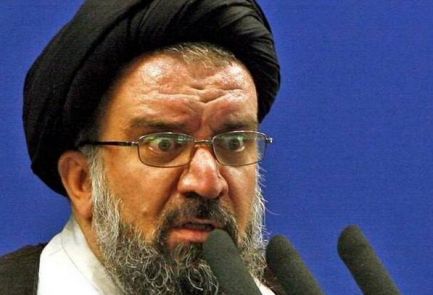
Iranian cleric: If US attacks Iran, we will target Israel, US 

August 22, 2018

Source: Iranian cleric: If US attacks Iran, we will target Israel, US – Israel Hayom