Archive for August 2018

Pro-Iran militias turn on Assad, try to establish land corridor to Mediterranean

August 26, 2018

Source: Pro-Iran militias turn on Assad, try to establish land corridor to Mediterranean | The Times of Israel

Israel worriedly follows developments around key border crossing in eastern Syria, where battles between longtime civil war allies have been reported for first time
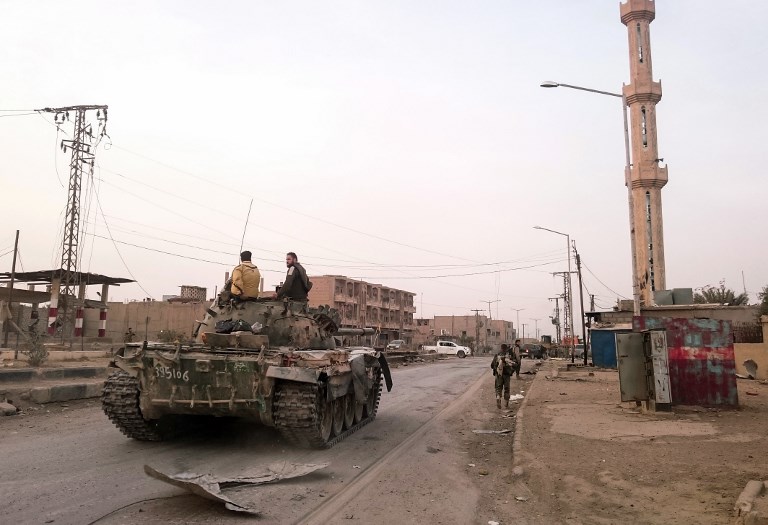
Members of the pro-Syrian government forces ride on a tank as it drives down a street in the Syrian border town of Albu Kamal, on November 20, 2017. (AFP/ STRINGER)

Members of the pro-Syrian government forces ride on a tank as it drives down a street in the Syrian border town of Albu Kamal, on November 20, 2017. (AFP/ STRINGER)

Pro-Iran Shiite militias have been observed fighting Syrian army forces several times over the last two weeks, in what has been described as a battle for one of Syria’s key strategic areas, with developments closely followed by a concerned Israel.

It is the first time the two sides have been reported to be fighting, with fatalities and casualties on both sides, after years of cooperation during Iran’s involvement and support for Syrian President Bashar Assad in the country’s civil war.

The reports came from various media outlets in the eastern area of Al-Bukamal and from credible Syrian opposition websites.

The fighting is focused around the town of Al-Bukamal, next to the Al-Qa’im border crossing between Syria and Iraq, which is considered a key strategic point in securing trade between Iraq and Syria — and indirectly, between Iran and the Mediterranean Sea.

Al-Bukamal is located on the eastern border of the Deir Ezzor region, on the banks of the Euphrates River.
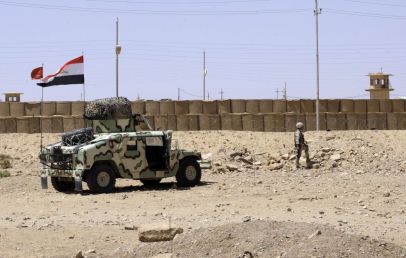
An Iraqi soldier stands guard in Qaim, near the Syrian border, in the Euphrates river valley 200 miles (320 kilometers) west of Baghdad, Iraq. (photo credit: AP Photo/Khalid Mohammed)

The fighting between Shiite militia forces and the Syrian military’s forces began more than two weeks ago, and are in an all-out battle over control of the town, its various neighborhoods and the border crossing. Similar exchanges of fire were reported in the nearby town of Al-Mayadin.

In both towns there were reports of fighters killed and wounded, although the exact number isn’t clear. Among the dead was a high-ranking officer of Iranian origin and fighters from the Afghan Fatemiyoun Division, which is funded, equipped and trained by Iran’s Revolutionary Guards.

One of the reports said more than 25 people have been killed in the battles, but that number hasn’t been confirmed by credible sources.

The fighting resumed over the weekend, local media reported, with the Iranians bringing reinforcements to the area and making threats to Assad’s loyalists that those identified with the military would be eliminated if they don’t retreat from the town.

It is likely part of the Iranian effort to gain control of the key route without the Syrian army — or any other force — being able to have any influence.

Israel has been following the developments in that area, fearing that Iran could succeed in establishing a land corridor to the Mediterranean that would pose a significant threat to the Jewish state. Prime Minister Benjamin Netanyahu has long been campaigning internationally against Iranian presence and influence in Syria, and has lately been seeking to convince Russia to expel all Iranian forces from Syria.

Arab media reports said the Shiite militias have in the last several weeks been setting up Shia religious institutions in Al-Bukamal, and militia members have taken over homes belonging to Syrian refugees who can’t return to their homes.
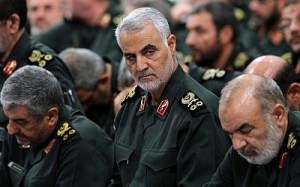
Revolutionary Guard Gen. Qassem Soleimani, center, attends a meeting with Supreme Leader Ayatollah Ali Khamenei and Revolutionary Guard commanders in Tehran, Iran. September 18, 2016. (Office of the Iranian Supreme Leader via AP)

Over the last few months there has been an Iranian effort to establish a presence around the border crossing, and the commander of the Islamic Revolutionary Guard Corps’ Quds Force, Qassem Soleimani, has been seen there several times.

On June 18 there were reports of a large-scale airstrike on Shiite militias operating in the area that killed dozens, with several media outlets claiming Israel was behind the attack.

One report said there was another strike in recent days that killed more than 25 members of the Iran-backed Iraqi Shiite militia Hezbollah Brigades, while they were on their way to Baghdad.
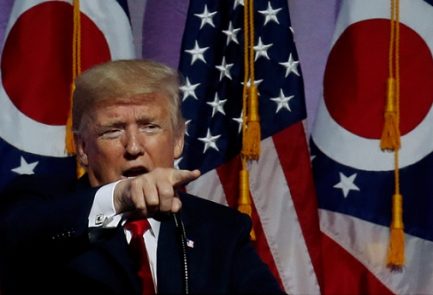
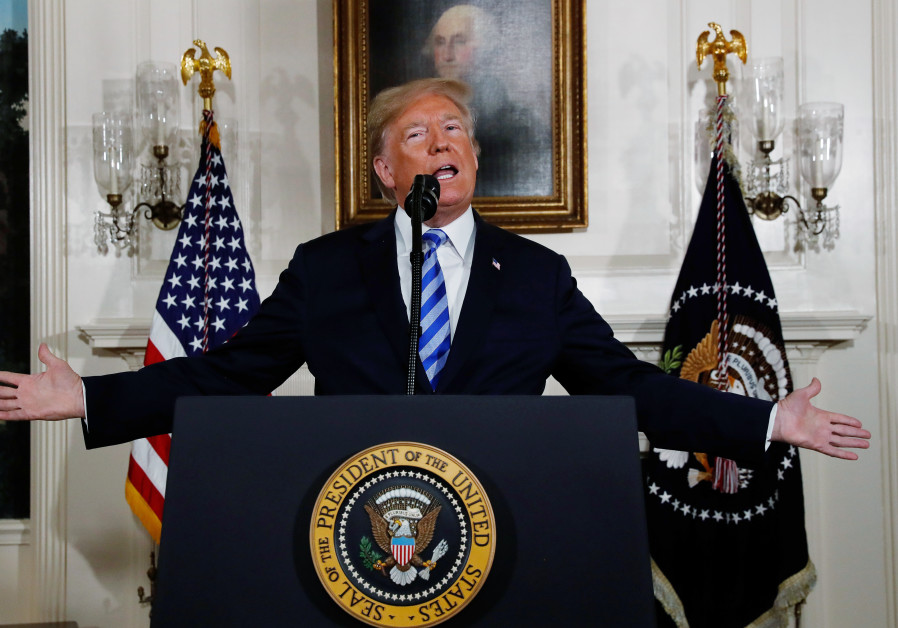
Trump cuts more than $200 million in U.S. aid to Palestinians

August 26, 2018

Source: Trump cuts more than $200 million in U.S. aid to Palestinians – Israel Hayom

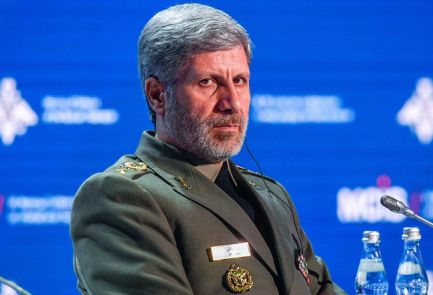
Iranian defense minister arrives in Syria amid clashes – Israel Hayom

August 26, 2018

Source: Iranian defense minister arrives in Syria amid clashes – Israel Hayom

Three Russian warships steaming to Syria for Idlib operation. Hizballah opts out – DEBKAfile

August 26, 2018

Source: Three Russian warships steaming to Syria for Idlib operation. Hizballah opts out – DEBKAfile

 Turkey sighted 3 Russian warships passing through the Bosporus on Thursday, Aug. 23, on their way to the Syrian port of Tartus for the start of the offensive to take Idlib, the last Syrian rebel stronghold. The flotilla consists of three Russian Black Sea Fleet warships: the Krivak Class Pytlivy missile frigate; the Tapir class LST Orsk; and the largest landing craft in the fleet, the Nikolai Filchenko, which is capable of transporting 300 soldiers and either 20 tanks and trucks or 40 armored personnel carriers.

It is not known if these vessels are carrying combat personnel or just equipment. However, DEBKAfile’s military sources conclude that the two large Russian landing craft consigned from the Black Sea to Syria are almost certainly carrying Russian marines or special forces for attacking rebel groups in Idlib from the sea or the coast.
This province, which is situated on Syria’s northern border with Turkey, is ruled by the Hay’at Tahrir al-Sham militia (ex-Al Qaeda offshoot Nusra Front) under the command of Abu Mohammad al-Julani. Its fighting strength numbers between 60,000 and 70,000. This militia is supported militarily and financially by Turkey which has ringed the bastion round with 13 military positions and compounds,.
Ankara has sent its top officials to Moscow to try and avert the combined Russian-Iranian-Syrian offensive to recover Idlib for the Assad regime, now that most other parts of the country have been subdued by the three allies. This dispute is a bone of contention between Presidents Vladimir Putin and Tayyip Erdogan. However, Turkey may find itself no more able to prevent Idlib from being captured than Israel could stop Syrian forces from taking Quneitra on its Golan border last month. On the other hand, whereas Israel was forced to relinquish its military footholds and influence along Syria’s southern border in the face of a concerted US-Russian front, Moscow is likely to allow Turkey to maintain its military presence around Idlib while the US has no cause to interfere.

Another big difference between the two arenas of operation is this: In contrast to the offensives for capturing Daraa and Queneitra, Hizballah has opted out of the Russian-Iranian-Syrian lineup. This is happening for the first time in the Syrian war, during which Iran’s Lebanese proxy led one battle after another on behalf of the Assad regime at Tehran’s behest.  DEBKAfile’s exclusive military and intelligence sources have discovered  that Hizballah’s leader Hassan Nasrallah has finally had enough and and decided to stop obeying Tehran’s orders for sending Hizballah fighters into the brutal Syrian warfront. This mutiny by Iran’s most loyal and able Shiite surrogate is of profound concern to Iran’s war strategists. Its full impact is yet to be seen. Our sources have learned that Nasrallah, who is in the process of pulling back and sending home some of the contingents which led the capture of southwestern Syria, is not prepared to throw them back into battle on fresh Syrian killing fields.

E.U. pushes back against U.S. ‘economic pressure’ campaign on Iran

August 26, 2018

Source: E.U. pushes back against U.S. ‘economic pressure’ campaign on Iran – International news – Jerusalem Post

The EU aid, intended to fuel private sector growth and trade promotion in Iran, “sends the wrong message at the wrong time,” US Special Representative for Iran Brian Hook said in a statement.

BY MICHAEL WILNER
 AUGUST 25, 2018 19:49
E.U. pushes back against U.S. 'maximum economic pressure' campaign on Iran

Both Israel and the US slammed an EU decision Thursday to give Iran $20.7 million in economic aid, with Prime Minister Benjamin Netanyahu calling it a “poison pill” to the Iranian people and to efforts to curb Iranian aggression in the region.

“I think that the decision yesterday by the EU to give €18 million to Iran is a big mistake,” Netanyahu said in Vilnius at a press conference with the leaders of the three Baltic states: Lithuania, Estonia and Latvia.

“Iran tried to conduct a terror attack on the soil of Europe just a few weeks ago while Iran’s foreign minister was meeting with European leaders. That is incredible,” he said.

“Where will the extra money go? It’s not going to go to solve the water problem in Iran. It’s not going to go for Iranian truck drivers. It’s going to go to the missiles and to the revolutionary guards in Iran, in Syria and elsewhere in the Middle East,” he added.

The EU money is part of its efforts to support the Iranian nuclear deal, following US President Donald Trump’s withdrawal from it in May. The 18 million euros delivery is only the first part of a larger package of 50 million euros earmarked in the EU budget for Iran, which has threatened to restart its nuclear program unless world powers – including the EU, Russia and China – continue to provide it with economic benefits.

Netanyahu said Iran is an issue “not fully understood” in the EU.

“The nuclear deal with Iran threatened Europe as well because it didn’t really stop the race to a nuclear weapon,” he said, adding that it enabled Iran to pursue the enrichment of uranium unlimited within a few years and added billions of dollars to its coffers.

Iran used this money, he said, to oppress its own people and to expand its conquest of Syria, Yemen, Lebanon and “many other places.”

The Trump administration also attacked the EU for the move, with US Special Representative for Iran Brian Hook saying it “sends the wrong message at the wrong time.” He said the aid from European taxpayers “perpetuates the regime’s ability to neglect the needs of its people and stifles meaningful policy changes.”

“More money in the hands of the ayatollah means more money to conduct assassinations in those very European countries,” Hook said, referring to Iran’s supreme leader. “The Iranian people face very real economic pressures caused by their government’s corruption, mismanagement, and deep investment in terrorism and foreign conflicts.”

The Trump administration has adopted a policy of “maximum economic pressure” on the Iranian government since pulling out of an international nuclear accord with Tehran in May. Sanctions previously lifted by that 2015 agreement have begun springing back into effect, forcing European businesses to choose between engagement in the US and Iranian markets.

The EU has attempted to keep its businesses engaged in Tehran with minimal success.

The US and the EU “should be working together instead to find lasting solutions that  truly support Iran’s people and end the regime’s threats to regional and global stability,” Hook added.

Palestinians: ‘We will not surrender to U.S. blackmail’ 

August 25, 2018

Source: Palestinians: ‘We will not surrender to U.S. blackmail’ – Arab-Israeli Conflict – Jerusalem Post

Saeb Erekat denounced the decision as “disgraceful” and accused the US administration of “meddling in the internal affairs of other people in an attempt to impact their national options.”

BY KHALED ABU TOAMEH
 AUGUST 25, 2018 17:25
PALESTINIANS CELEBRATE Nakba Day at Jerusalem’s Damascus Gate in 2014

Palestinian officials on Saturday strongly condemned the US administration for its decision to cut more than $200 million in economic aid to the Palestinians and said they will not surrender to “American blackmail.”

On Friday, a US official said that President Donald Trump had ordered the State Department to “redirect” the fundingfor programs in the West Bank and Gaza Strip to unspecified “high-priority projects elsewhere.”

According to the official, the decision took into account “the challenges the international community faces in providing assistance in Gaza, where Hamas control endangers the lives of Gaza’s citizens and degrades an already dire humanitarian and economic situation.”

PLO Secretary-General Saeb Erekat denounced the decision as “disgraceful” and accused the US administration of “meddling in the internal affairs of other people in an attempt to impact their national options.”

The financial aid, he said, was not a “favor to the Palestinians, but a due duty of the international community that bears responsibility for the continuation of the occupation, which is blocking the possibility of development and growth of the Palestinian economy and society.”

Erekat said that by slashing the funds, the US was “insisting on abandoning this international commitment, as it had previously abandoned its commitment to international resolutions, especially with regards to the issues of Jerusalem and refugees.”

Another senior PLO official, Hanan Ashrawi, accused the US administration of using “cheap blackmail as a political tool.”

The Palestinians and their leadership, she said, “will not be intimidated and will not succumb to coercion. The rights of the Palestinian people are not for sale.”

Ashrawi said that there is “no glory in constantly bullying and punishing a people under occupation.” The US administration, she charged, “has already demonstrated meanness of spirit in its collusion with the Israeli occupation and its theft of land and resources.”

She accused the US administration of exercising “economic meanness by punishing the Palestinian victims of this occupation.”

Husam Zumlot, head of the PLO delegation to the US, also condemned the US decision and accused the Americans of “political blackmail.”

The US administration, he said, “is dismantling decades of US vision and engagement in Palestine. After Jerusalem and UNRWA (the United Nations Relief and Works Agency for Palestinian Refugees), this is another confirmation of abandoning the two state solution and fully embracing [Prime Minister Binyamin] Netanyahu’s anti peace agenda.”

Zumlot said that “weaponizing humanitarian and developmental aid as political blackmail does not work. Only a recommitment from this administration to the long held US policy of achieving peace through the two state solution on the 1967 borders with East Jerusalem the capital of the state of Palestine and respecting international resolutions and law will provide a way forward.”

The Palestine National Council (PNC), the PLO’s legislative body, said that the US decision was an extension of the “war of financial sanctions practised by the Trump administration against our people and their leadership” to force them to accept the US president’s yet-to-be-announced plan for peace in the Middle East.

“The American policy of blackmail and pressure will never succeed,” the PNC said in a statement. “The Palestinian people and their leadership are committed to the principles of our cause, first and foremost the right of return of Palestinian refugees to their homes and the establishment of an independent and sovereign state with Jerusalem as its capital. The dignity and rights of the people are not subject to bargain. The US administration is proving every day that it is in full partnership with the the Israeli occupation’s policies and crimes.”

Palestinians accuse US of ‘blackmail’ over aid cut

August 25, 2018

Source: Palestinians accuse US of ‘blackmail’ over aid cut | The Times of Israel

Abbas spokesman: Washington seeks to force us to abandon Jerusalem; PLO envoy blasts White House for ‘fully embracing Netanyahu’s anti-peace agenda’

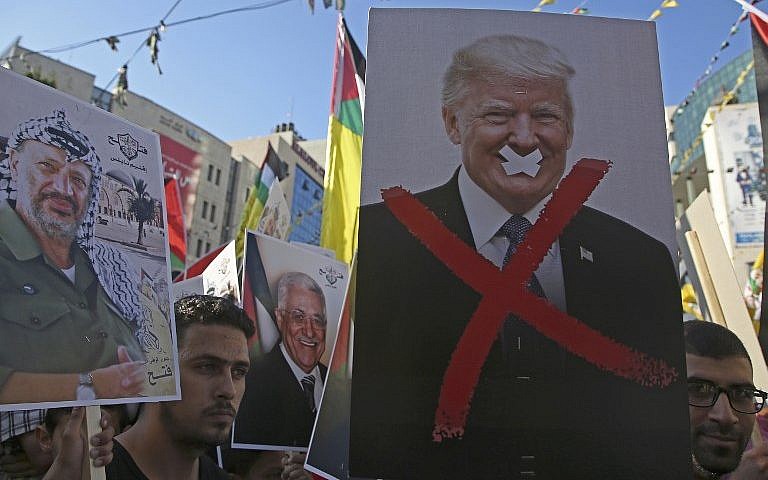
In this photo from July 17, 2018, Palestinian protestors hold portraits of late Palestinian leader Yasser Arafat and US President Donald Trump during a rally in support of the Fatah party in the West Bank city of Nablus. (AFP Photo/Jaafar Ashtiyeh)

In this photo from July 17, 2018, Palestinian protestors hold portraits of late Palestinian leader Yasser Arafat and US President Donald Trump during a rally in support of the Fatah party in the West Bank city of Nablus. (AFP Photo/Jaafar Ashtiyeh)

Top Palestinian officials accused the United States of engaging in “blackmail” following the State Department’s announcement Friday it would cut $200 million in aid to the Palestinians.

Palestinian Authority President Mahmoud Abbas’s spokesman said the US decision was meant to force the Palestinians to abandon their claim to Jerusalem.

Nabil Abu Rudeineh said the move was part of continuing political and financial pressure on the Palestinian leadership. He said the Americans must be fully aware that there will be no peace without East Jerusalem as capital of a Palestinian state.

“This administration is dismantling decades of US vision and engagement in Palestine,” Husam Zomlot, the Palestinian Liberation Organization’s envoy to the US, said in a statement.

He charged that following US President Donald Trump’s recognition of Jerusalem as Israel’s capital and decision to freeze funding for the United Nations agency for Palestinian refugees, the decision was “another confirmation of abandoning the two-state solution and fully embracing Netanyahu’s anti-peace agenda.”

PLO Secretary General Saeb Erekat called the move “a provocation” and “bullying” by Trump.

The move by the State Department was the ostensible result a review of US assistance to the Palestinian Authority that Trump ordered in January, following Palestinians’ boycott of the administration over the recognition of Jerusalem as the capital of Israel, as well as the decision to move the US embassy there.

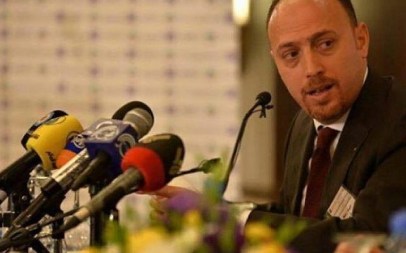
Dr. Husam Zomlot, the head of the Palestine Liberation Organization’s General Delegation to the US. (Courtesy)

This is not the first time Trump has cut longstanding aid bound to the Palestinians. It has also cut assistance to the UN relief agency for Palestinians, at a reported total of around $300 million.

Earlier this month, the administration released millions of dollars in frozen aid to the PA, but only for Israeli-Palestinian security cooperation, an administration source said.

“Weaponizing humanitarian and developmental aid as political blackmail does not work,” Zumlot said.

“Only a recommitment from this administration to the long-held US policy of achieving peace through the two-state solution on the 1967 borders with East Jerusalem the capital of the state of Palestine and respecting international resolutions and law will provide a way forward,” he added.

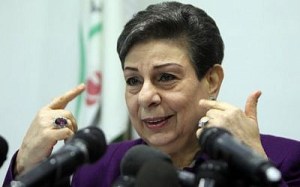
Palestine Liberation Organization executive committee member Hanan Ashrawi speaks during a press conference on February 24, 2015 in the West Bank city of Ramallah. (AFP/Abbas Momani)

Zumlot’s statement was echoed by Hanan Ashrawi, a member of the PLO’s Executive Committee, who also accused the US of “cheap blackmail.”

“The Palestinian people and leadership will not be intimidated and will not succumb to coercion,” she said in a statement. “There is no glory in constantly bullying and punishing a people under occupation.”

“The US administration has already demonstrated meanness of spirit in its collusion with the Israeli occupation and its theft of land and resources,” Ashrawi continued.

“Now it is exercising economic meanness by punishing the Palestinian victims of this occupation.”

The move was also criticized by some in the US, among them Vermont Senator Patrick Leahy.

“It is the Palestinian people, virtual prisoners in an increasingly volatile conflict, who will most directly suffer the consequences of this callous and ill-advised attempt to respond to Israel’s security concerns,” said Leahy, a Democrat.

The left-wing Middle East advocacy group J Street said Trump’s decision would “have a devastating impact on innocent women, children and families,” arguing that they were intended to “cruelly punish Palestinian civilians and marginalize and undercut Palestinian leadership.”

The funds withheld Friday are directed toward health and educational programs, as well as initiatives to make Palestinian governance more efficient. They are used both in the PA-administered West Bank and the Hamas-ruled Gaza Strip.

The Trump administration said the terror group’s control of Gaza was one of the main reasons it wanted to cease its aid to the coastal enclave.

“This decision takes into account the challenges the international community faces in providing assistance in Gaza, where Hamas control endangers the lives of Gaza’s citizens and degrades an already dire humanitarian and economic situation,” the State Department official said.

The official did not give an exact amount of the funds to be cut, but said it is more than $200 million that was approved in 2017. The US had planned to give the Palestinians $251 million for good governance, health, education and funding for civil society in the current budget year that ends September 30. But with just over a month to go before that money must be used, reprogrammed to other areas or returned to the Treasury, less than half has actually been spent.

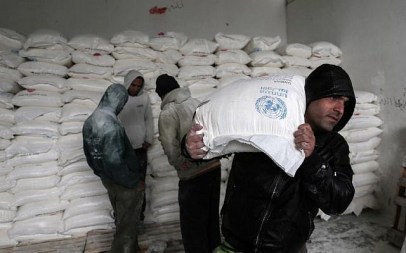
Palestinians collect food aid at a United Nations food distribution center in Khan Younis in the southern Gaza Strip on January 28, 2018. (Said Khatib/AFP)

Washington’s withdrawal of the aid comes as Trump’s team tasked with brokering an Israeli-Palestinian accord is expected to release its long-awaited peace plan.

Trump’s son-in-law and senior adviser Jared Kushner and special envoy for Middle East peace Jason Greenblatt are expected to roll out the proposal in the near future, though they have provided no timetable for when that might happen.

The Associated Press Contributed to this report.

Under fire for economic hardships, Iranian president calls for unity

August 25, 2018

Source: Under fire for economic hardships, Iranian president calls for unity | The Times of Israel

With even his reformist base against him, Rouhani states ‘now not the time’ to lay blame, says ‘all efforts’ being made to improve economy

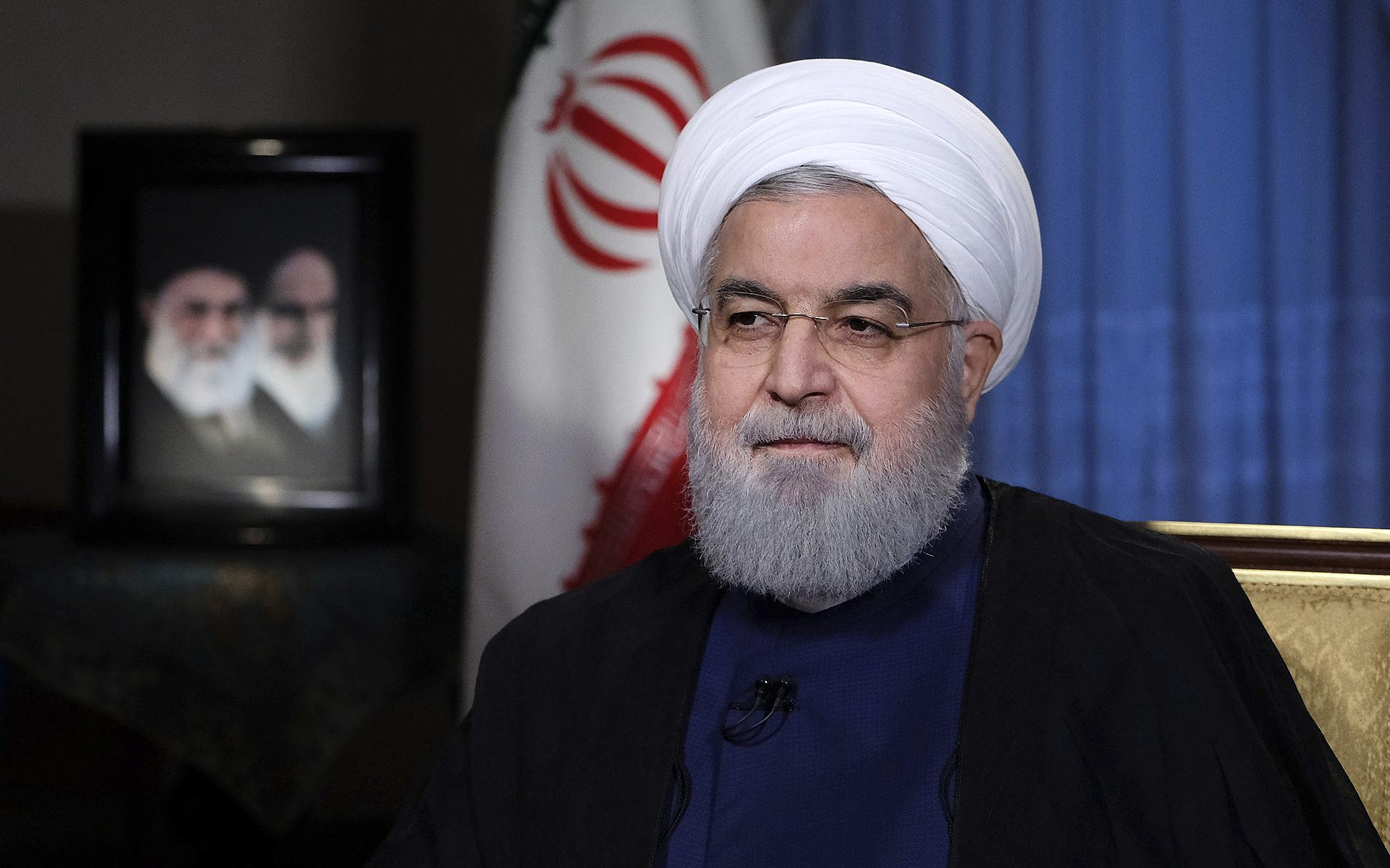
Iran's President Hassan Rouhani addresses the nation in a televised speech in Tehran, Iran, Monday, Aug. 6, 2018 (Iranian Presidency Office via AP)

Iran’s President Hassan Rouhani addresses the nation in a televised speech in Tehran, Iran, Monday, Aug. 6, 2018 (Iranian Presidency Office via AP)

TEHRAN — Iranian President Hassan Rouhani called for unity on Saturday in the face of criticism from all sides of his handling of an economic crisis and tensions with the United States.

“Now is not the time to unload our burdens on to somebody else’s shoulders. We must help each other,” Rouhani said in a televised speech at the shrine of late revolutionary leader Ruhollah Khomeini.

“The country’s problems and resisting foreigners’ conspiracies is the responsibility of every one of us,” he said.

With rapidly rising food prices, a dramatic currency collapse and the reimposition of US sanctions after it abandoned a 2015 nuclear deal, many Iranians are in a bleak mood.

Much of his electoral base among reform-minded urbanites has lost faith in him, while working-class areas have seen months of sporadic strikes and protests that have occasionally turned violent.

Some of the most virulent criticism has come from the hardline religious establishment who long opposed Rouhani’s efforts to rebuild ties with the West.

On August 16, an image went viral of a protest by seminary students in the shrine city of Qom, at which one placard warned Rouhani would meet the same fate as former president Akbar Hashemi Rafsanjani, who was found dead in a swimming pool last year.

Rouhani sought to play down the differences, saying: “The clerical, religious institutions and the government are alongside each other.”

But he added a typically cryptic warning: “No one can walk into the sea and not expect to get his feet wet.”

Hardliners have been blamed for stoking economic protests that have sometimes turned against the Islamic system as a whole.

Rouhani still has the support of supreme leader Ayatollah Ali Khamenei, who says he must remain in power to avoid further disorder.

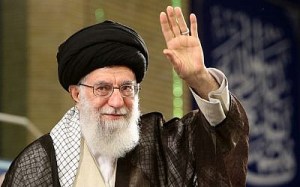
A handout picture provided by the office of Iran’s Supreme Leader on April 30, 2018, shows Ayatollah Ali Khamenei waving to the crowd as he delivers a speech during Labor Day. (AFP PHOTO / Iranian Supreme Leader’s Website / HO)

But Khamenei has also blamed government mismanagement, rather than foreign hostility, for the current crisis.

“We are aware of people’s pain, suffering and problems and all our efforts are geared at reducing these problems,” Rouhani pledged.

Since the US pulled out of the nuclear deal with Iran in May, the Iranian rial has slipped to record lows, which has consequently led many in the authoritarian country to explicitly call for an end to the rule of Iran’s Islamist leadership.

Protests have sprung up in several major cities including Isfahan, Shiraz, Mashhad and Tehran, driven by concerns over the economy as well as wider anger at the political system.

Videos have shown demonstrators cry out against “the dictator” in reference to Khamenei.

The numerous protests are a continuation of sorts of a nationwide anti-government movement that started gaining ground in late December and continued protesting sporadically throughout the year.

On Thursday the EU announced a first financial support package to Iran of 18 million euros ($21 million), as part of the bloc’s commitment to keeping the nuclear deal alive.

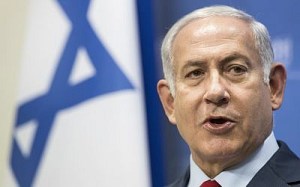
Prime Minister Benjamin Netanyahu speaks during a news conference following his meeting with Lithuania’s Prime Minister Saulius Skvernelis at the government’s headquarters in Vilnius, Lithuania, Thursday, August 23, 2018. (AP Photo/Mindaugas Kulbis)

Israeli Prime Minister Benjamin Netanyahu on Friday slammed the move, calling it a “big mistake” and saying it was like a “poison pill” for the Iranian people.

“Giving money to this regime, especially at this time, is a big mistake and it must be stopped. [The regime] isn’t going to use it to solve their water problems, it’s not going to help an Iranian truck driver,” he said. “After all, where is their money going? For missiles, and to the Revolutionary Guard. All countries need to act together to renew sanctions on Iran,” he said.

Where is the U.S.-Turkey crisis headed? 

August 25, 2018

Source: Where is the U.S.-Turkey crisis headed? – Middle East – Jerusalem Post

As Trump and Erdogan dig in, the chances that the two countries can return to a stable relationship is shrinking.

BY SETH J. FRANTZMAN
 AUGUST 24, 2018 20:15
Turkish President Tayyip Erdogan attends the opening session of the World Climate Change Conference

‘Turkey buying the Russian S-400 missile defense system would threaten the security of our F-35 aircraft and let Putin collect critical intelligence on us. We must pass my provision in the defense bill this week to block the F-35 delivery until Turkey ends its deal with Russia,” wrote US Sen. Chris Van Hollen on Wednesday.

His comments came a day after US National Security Adviser John Bolton, visiting Jerusalem, said that Ankara made a “big mistake” by not releasing US Pastor Andrew Brunson. “Every day that goes by, that mistake continues. This crisis could be over instantly if they did the right thing as a NATO ally, part of the West, and release pastor Brunson without condition.”

In Turkey the comments by Bolton were met with anger. Ibrahim Kalin, spokesman and adviser to President Recep Tayyip Erdogan, said that Turkey’s judicial independence was being challenged by Washington.

“There is a rule of law in Turkey, and the Andrew Brunson case is a legal issue. There is an ongoing legal process related to this individual,” Kalin said.

Turkey and the US face their greatest diplomatic crisis in recent memory as both countries engage in a war of words that has also harmed the Turkish economy. Five years ago $1 was worth two lira. Now you can get six lira for the same dollar. In the last month the lira lost almost a quarter of its value against the dollar.

This has caused a crisis in Turkey, in which Qatar has now pledged $15 billion to support the Turkish economy, further tying Ankara and Doha together. It has also caused Turkey to strengthen its ties to Moscow. Over the last three years Turkey has increasingly grown closer to Moscow, Qatar and Iran on a variety of issues. But Ankara had hoped briefly that Donald Trump’s election in October 2016 would bring warmer relations.

The view from Ankara is that the US has been working with allies of the Kurdistan Worker’s Party (PKK) in Syria. The PKK’s Syrian affiliate is named the People’s Protection Units (YPG). The YPG has been the main force fighting ISIS in Syria since 2014, and the US helped the YPG push ISIS back from Kobani in 2015 and then began to work closely with the YPG in its rebranded form as the Syrian Democratic Forces (SDF). The SDF liberated Raqqa last year, and the US is increasing its footprint in Syria, sending new special envoys and diplomatic staff, as well as securing hundreds of millions in assistance for stabilization from Saudi Arabia and the United Arab Emirates.

TURKEY’S CONDUIT to Trump’s White House was supposed to be Michael Flynn, Trump’s first national security adviser. According to the BBC Ankara asked for Flynn’s help in getting a cleric named Fethullah Gulen deported from the US back to Turkey, where he faced charges connected to the 2016 coup attempt. But Flynn was fired by Trump and got snared in the Russia collusion investigation of Robert Mueller.

Erdogan flew to Washington in May 2017 to meet Trump. But the visit turned sour when Turkish security personnel were filmed beating up protesters next to the Turkish Embassy in an embarrassing and unprecedented incident. Things went downhill slowly from there.

Turkish officials repeatedly warned that Turkish forces and their Syrian rebel allies wanted to move on Manbij in northern Syria, a town held by the SDF east of the Euphrates. Instead, in January 2018, Turkey and its Syrian rebels invaded Afrin in northwestern Syria, a small Kurdish canton held by the YPG. This angered the SDF, which shifted forces from fighting ISIS and warned the Americans that they shouldn’t abandon their friends in Syria. After Turkey took Afrin in March 2018, it set its sights again on Manbij.

In June 2018 Secretary of State Mike Pompeo flew to Ankara and worked up a “road map” on Manbij with Ankara. There would be independent patrols around the town, with Turkish and US troops coordinating. These were supposed to lead to “joint patrols,” but in August Secretary of Defense James Mattis said there were more details to be ironed out.

The problems in Manbij were playing out against the larger dispute between Ankara and Washington. The pawn in this dispute became Brunson, who had been arrested in Turkey and accused of being connected to the coup plot.

“A fine gentleman and Christian leader in the United States is on trial and being persecuted in Turkey for no reason,” Trump tweeted on April 17. “A total disgrace that Turkey will not release respected US Pastor,” he tweeted again on July 18.

According to a report on Ynet, Trump’s team sought out a deal with Ankara where Israel would release a Turkish woman detained for ties to Hamas, in exchange for Brunson. She was released and flew back to Turkey on July 15. But although Brunson was let out to house arrest on July 25, he wasn’t released. Trump, apparently feeling betrayed, announced a doubling of tariffs on steel and aluminum on August 10.

Since then the Turkish economy has been damaged. Average Turks have taken to the Internet to express anger, bashing iPhones, cutting up dollars and encouraging Muslims around the world to support the lira as a form of religious support for Turkey. This is part of the current mood in Ankara that is increasingly one that views the world through the lens of political Islam.

But at the same time that Turkey asserts that the charges against Brunson are just an “independent” judicial issue, a report on The Wall Street Journal website claimed on August 20 that Ankara had proposed freeing the pastor in exchange for the end of a US investigation into a Turkish bank. Probably the story is more complex than that. Turkey also wants Gulen deported. The fact that two “deals” regarding Brunson were reportedly in the works seems to indicate that the story of “judicial independence” is not entirely rock solid. Turkey is willing to negotiate. That calls into question what exact evidence there is regarding Brunson.

The Trump administration has made Brunson the centerpiece of its policy, as opposed to discussing wider issues such as why Turkey is buying the S-400 from Russia and Turkey’s role in Syria.

US media have begun to discuss whether the NATO alliance with Turkey is beneficial. “Time for Turkey and NATO to go their separate ways,” reads a piece in The Washington Post. Another piece at Foreign Policy says “Trump is the first president to get Turkey right.” The rift was already there, says The National Interest. Indeed, the rift has been growing for more than a decade since the US invasion of Iraq in 2003, when Turkey rejected a proposal to base US troops on its soil.

The problem with the Trump administration’s crackdown on Turkey relations is that it could be reversed easily if the pastor is released. It could also change dramatically when Trump leaves office, as the next US administration will seek to do the opposite of everything Trump did.

In US foreign policy circles, there is a vibrant pro-Turkey lobby that argues for “engagement” with Ankara, that worries that any pressure from the US will result in Turkey’s growing embrace of Iran and Russia. It sees the SDF as a temporary ally, a group that was convenient when fighting ISIS but which can be quietly abandoned in the next few years, as Washington maneuvers back to Ankara, which is seen as a 70-year ally since the start of the Cold War.

These voices ignore Turkey’s own agency and independent policy. They don’t see Turkey as a full-fledged country making its own choices. They see it as only reacting to whatever the US is doing.

But Turkey’s crackdown on the press and frequent outbursts in Ankara harshly slamming various European countries or the US are not just reactions; they represent a growing Turkish national wand religious consensus.

Trump could make a deal, but the long-term relationship will likely remain unstable.

Off Topic: Trump calls off Pompeo North Korea trip, blasts China 

August 25, 2018

Source: Trump calls off Pompeo North Korea trip, blasts China | The Times of Israel

US president instructs top diplomat to delay visit to Pyongyang, claims Beijing stalling denuclearization efforts due to emerging trade war with Washington

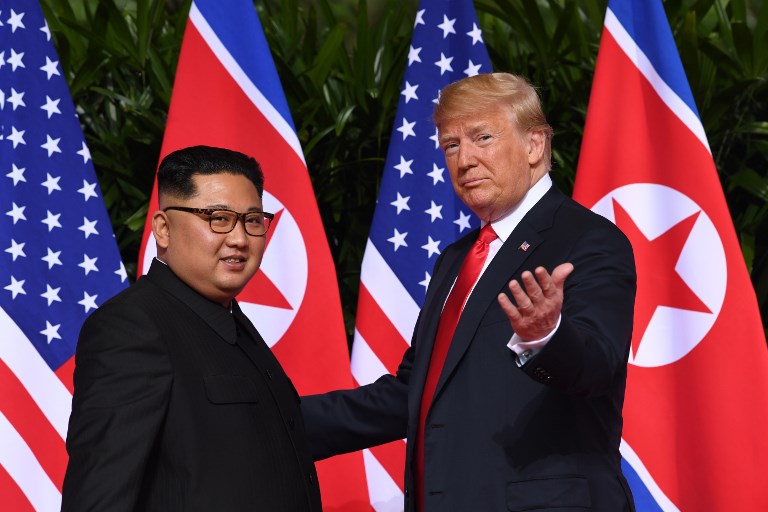
US President Donald Trump (R) gestures as he meets with North Korea’s leader Kim Jong Un (L) at the start of their historic US-North Korea summit, at the Capella Hotel on Sentosa island in Singapore on June 12, 2018. (AFP/Saul Loeb)

WASHINGTON (AP) — US President Donald Trump said Friday he has directed Secretary of State Mike Pompeo to delay a planned trip to North Korea, citing insufficient progress on denuclearization.

Trump put some blame on Beijing, saying he does not believe China is helping “because of our much tougher Trading stance.”

The surprise announcement appeared to mark a concession by the president to domestic and international concerns that his prior claims of world-altering progress on the peninsula had been strikingly premature.

“I have asked Secretary of State Mike Pompeo not to go to North Korea, at this time, because I feel we are not making sufficient progress with respect to the denuclearization of the Korean Peninsula,” Trump tweeted Friday, barely two months after his June meeting with the North’s Kim Jong Un in Singapore.

Trump’s comment followed a report issued Monday by the International Atomic Energy Agency outlining “grave concern” about the North’s nuclear program. It came a day after Pompeo appointed Stephen Biegun, a senior executive with the Ford Motor Co., to be his special envoy for North Korea and said he and Biegun would visit next week.

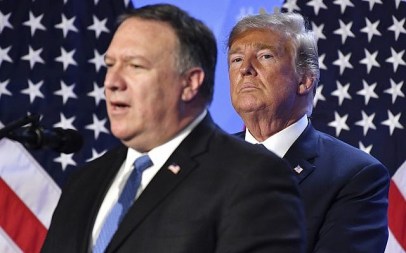
US President Donald Trump, right, listens to US Secretary of State Mike Pompeo during press conference after a summit of heads of state and government at NATO headquarters in Brussels, Belgium, July 12, 2018. (Geert Vanden Wijngaert/AP)

The State Department never confirmed details of the trip, but it had been expected that Pompeo would be in Pyongyang for at least several hours Monday, according to several diplomatic sources familiar with the plan.

White House officials did not immediately comment on what prompted Trump to call off Pompeo’s trip. The State Department had no immediate comment on the matter and referred questions to the White House.

Trump laid unspecified blame on China, North Korea’s leading trade partner, which is widely believed to hold the greatest sway over Kim’s government.

The US and China have been locked in a trade dispute for months, with each side ratcheting up tariffs on imports from the other country in what may be the opening salvos of a trade war.

Trump tweeted that “Pompeo looks forward to going to North Korea in the near future, most likely after our Trading relationship with China is resolved.” He added: “In the meantime I would like to send my warmest regards and respect to Chairman Kim. I look forward to seeing him soon!”

After more a year of escalating tensions defined by nuclear and missile tests, new sanctions and “fire and fury” rhetoric, Trump made history meeting Kim earlier this year. In the run-up to the summit both nations engaged in hard-nosed negotiation, with Trump publically calling off the meeting in an effort to push Kim to agree to nuclear concessions. During the summit, the pair signed a vague joint statement in which the North agreed to denuclearize, but which left nearly all details undefined.

“There is no longer a Nuclear Threat from North Korea,” Trump declared on Twitter after the meeting.

“Before taking office people were assuming that we were going to War with North Korea. President Obama said that North Korea was our biggest and most dangerous problem,” he added. “No longer – sleep well tonight!”

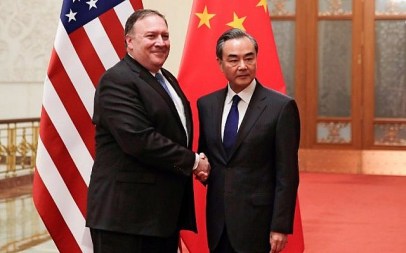
US Secretary of State Mike Pompeo (L) shakes hands with Chinese Foreign Minister Wang Yi before their meeting at the Great Hall of the People in Beijing on June 14, 2018. (AFP/Pool/Andy Wong)

Pompeo would have been hard pressed to return from Pyongyang with anything resembling progress on the denuclearization front.

Although it has halted nuclear and missile testing and taken some unrelated steps — dismantling portions of a missile engine facility and returning the suspected remains of American servicemen killed during the Korean War — its nuclear weapons program and ballistic missile development remain intact, according the UN’s atomic watchdog and intelligence agencies.

In addition, recent statements from North Korean officials have ruled out any new concessions until it sees a reciprocal gesture from the US beyond suspending military exercises with South Korea. North Korea has been demanding that the U.S. ease or lift crippling sanctions — something Pompeo and national security adviser John Bolton have flatly ruled out until the its nuclear program is fully and verifiably dismantled.

Other than sanctions relief, the North, backed by South Korea, has been seeking a declaration of the end of the Korean War. The conflict stopped with the signing of an armistice rather than a peace treaty, meaning the war is not technically over. Both the North and South have vowed to end the open state of hostilities, and Seoul had been hoping to persuade the Trump administration to sign off on a non-binding end-of-war declaration as a goodwill gesture that would give Kim Jong Un domestic cover to proceed with denuclearization moves.

Pompeo and other administration officials have suggested some concessions short of easing or lifting sanctions are possible before verified denuclearization, but have refused to be specific about what they could be. And they have been skeptical about an end-of-war declaration in the absence of any progress on the nuclear matter.

At the same time, lawmakers from both parties, including GOP hawks who generally support Trump, have expressed concerns about such a move, as it could be used by the North to demand the removal of US troops from South Korea and potentially Japan without anything in return.

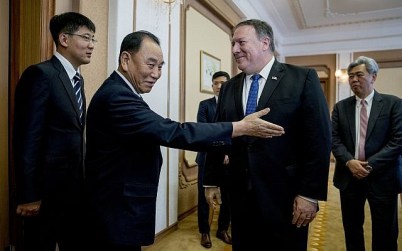
US Secretary of State Mike Pompeo, left, and Kim Yong Chol, right, a North Korean senior ruling party official and former intelligence chief, meet at the Park Hwa Guest House in Pyongyang, North Korea, Friday, July 6, 2018. (AP Photo/Andrew Harnik, Pool)

Trump had kept up the positive tone as recently as Tuesday at a campaign rally in West Virginia. There Trump maintained “we’re doing well with North Korea.”

“There’s been no missile launches. There’s been no rocket launches,” he added.

At the same rally, Trump seemed to take a different tone too on China, saying he had withheld some criticism of China because “I wanted them to help us with North Korea and they have.”