Archive for August 2018

Playing chicken: US and Iran locked in stalemate 

August 4, 2018

Source: Playing chicken: US and Iran locked in stalemate – International news – Jerusalem Post

There will be another round of mostly oil sanctions in November that in some ways may hurt Iran far more, but August 6 is already viewed as bringing the world into a new reality.

BY YONAH JEREMY BOB
 AUGUST 3, 2018 17:47
IRANIANS BURN US and Israeli flags during a protest in Tehran in June

On August 6, the first round of mostly non-oil US sanctions against Iran kicks in.

This was the key 90-day moment that US President Donald Trump spoke of in his May speech leaving the Iran nuclear deal.

There will be another round of mostly oil sanctions in November that in some ways may hurt Iran far more, but August 6 is already viewed as bringing the world into a new reality. Companies and countries all over the world are having to realign their policies and business as the sanctions kick in.

How much of a game-changer are these sanctions following Trump’s leaving the Iran nuclear and what happens next between the US and Iran?

This week only muddied the waters.

Following the whirlwind offer of talks – and rejection of talks – between the Trump administration and Iran this week, almost all that can be said with any certainty is that observers should hold on to their seats.

With characteristic unpredictability and dizzying tactics, Trump one moment seemed to be threatening to bomb Iran into the Stone Age, and the next moment offering a presidential summit to negotiate with no preconditions.

Iran quickly rejected the offer. Then multiple Trump aides quickly rejected the idea that Trump had made the offer or qualified the offer so completely such that they rendered the offer meaningless.

What was Trump’s sudden offer of talks about?

Was Trump having second thoughts and looking for a way out of his original brinksmanship strategy? Did he just want to feign flexibility in order to be able to claim that he tried to talk to Iran, before he escalates further? Was he so excited by his near-term summit success with North Korea that, on a whim, he just figured he would try the same tactic with Tehran?

There are no clear answers yet. And the truth is that while this exchange dominated the headlines and could hint at some unexpectedly more cooperative outcome down the road, at this stage it seems like it could also be a passing whim with little significance.

Several items relegated to the back pages of less prominent publications probably gave a more serious forecast about what is to come.

There was a report that, even as China, Russia and India are backing Iran despite US sanctions and the cost that backing Iran will incur, South Korea has preemptively massively cut oil imports, even before the sanctions have kicked in.
This is something to watch.

Though the EU has made lots of noise about wanting to support the Iran deal and keep it alive with a variety of actions, many experts say that given a zero-sum choice, the EU will have to choose business with the US over business with Iran. The likelihood of this only increased with movements of the EU and US trying to deescalate their trade wars.

If the EU does abandon Iran, as many EU businesses have already done on their own, Asia is Iran’s last bulwark to keep its economy running.

There were news reports about Iran’s currency continuing to be devalued as the impending sanctions take their toll.

There are periodic reports of ongoing protests against the government, given the worsening economic situation and protests against ongoing Iran’s adventurism in the Middle East, using up state funds which Iranians want to see invested at home.

But there is no real indication that the regime is in danger.

The more specific that Trump officials have gotten about regime change, the more exposed the holes and inadequacies in the plan appear to be.

This is not to say that many parties globally might not hope for regime change – only that many experts say such an outcome is unlikely and that it is unclear what the strategy is if that does not work out.

THERE WAS some concern about Iran’s recent announcement that it finished a new facility to manufacture rotors for more advanced IR-6 uranium centrifuges.

Some experts viewed this as a potential game-changing threat, since models of how fast Iran might breakout to a nuclear weapon are generally based on the idea that it would be using less-advanced centrifuges.

If it uses more advanced centrifuges, could six to 12 months until breakout suddenly become a few months or less?

Yet, other experts viewed the threat as still more Iranian mere saber-rattling to try to outmaneuver the US in the current conflict over Iran’s nuclear program. They said that merely building more rotors at a facility, which was itself old news, and without actually using the rotors to assemble a new army of IR-6 centrifuges, fell far short of a major escalation.

At the end of the day, despite Iranian threats, the country has stayed in the deal for close to three months since the US left. This is despite it having no clear economic guarantees from Europe to prop up its economy – guarantees which months ago it demanded immediately.

The Islamic Republic has also stayed in the deal despite its past promises that if the US left the deal it would immediately leave.
On one hand, Iran wants and needs the deal economically.

On the other, most experts say it is unlikely the US can quickly crack Tehran’s resistance to new concessions or bring about regime change.

What seems to connect all of these disparate reports and trends is that the US and Iran have been playing chicken for three months already, and even as things escalate leading into August 6, there still seems to be a stalemate.

Some thought that the Mossad’s appropriating Iran’s secret record of its nuclear weapons program and giving it to the world would turn the tide and break the stalemate. They thought maybe this would lead the IAEA or other countries to turn up the pressure on the Islamic Republic.

In that light, it is interesting that the IAEA recently visited an Iranian university connected with the nuclear weapons program. It is also interesting that a former Iranian atomic energy chief criticized the government for endangering national security by allowing the visit.

But this is likely also no more than a blip. The IAEA may be trying to show a bit more backbone to keep the deal together, but it is likely too little, too late to get the Trump administration to back down. The IAEA certainly has not had a change of heart and accepted Israel’s narrative regarding Iran’s nuclear program.

So if nothing has yet broken the stalemate, even with August 6 hovering nearby, what will?

It needs to be remembered that Iran plays the long game. Experts have suggested that Tehran might not yet have even decided what its real red lines are and when and where it might show flexibility.

Just as Trump may have been thinking about North Korea this week when he made the summit offer, Iran may want to sit back and watch whether Pyongyang or Trump blinks first in the current standoff between the sides that may derail those talks. It may want to know the outcome there before it decides its real position.

If that situation takes months or even some years to develop – and if Iran can stay afloat with Asia’s support – maybe it will keep waiting to decide.

In the meantime, the more the Islamic Republic hurts from sanctions, the more it might push the envelope on the nuclear deal’s limits, while trying to avoid overtly leaving the deal.

And if Trump blinks in the meantime for lack of patience, all the better from the ayatollahs’ perspective.

This means that short of Trump or Israel setting a dramatic military ultimatum or Iran moving much closer to a real economic collapse (not just generally hurting economically), August 6 is more likely to be a marker for aggravating tensions than an endpoint.

In that case, the current stalemate or game of chicken may draw out for quite a while.
As UN forces return to Israel-Syria border, Iran’s presence still felt

August 3, 2018

Source: As UN forces return to Israel-Syria border, Iran’s presence still felt – Israel Hayom

Israel-Hamas truce efforts shift into high gear with Egypt mediation 

August 3, 2018

Source: Israel-Hamas truce efforts shift into high gear with Egypt mediation – Israel Hayom

The ball is in Iran’s court

August 3, 2018

Source: The ball is in Iran’s court – Israel Hayom

Syria claims Israel hit 3 Iranian targets ‎on its soil 

August 3, 2018

Source: Syria claims Israel hit 3 Iranian targets ‎on its soil – Israel Hayom

Caroline Glick: Trump’s Offer to Talk to Iran Was Shrewd Move in Complicated Showdown

August 3, 2018

By Caroline Glick – August 2, 2018 Breitbart

Source Link: Caroline Glick: Trump’s Offer to Talk to Iran Was Shrewd Move in Complicated Showdown

Sowing the seeds of discontent. – LS}

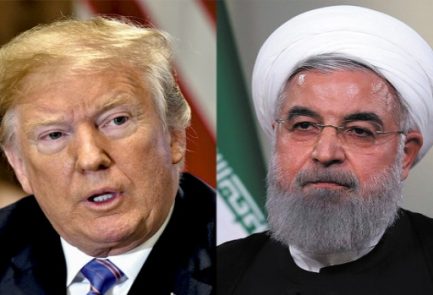
President Donald Trump’s offer Monday to meet with Iranian President Hassan Rouhani caught senior administration officials as well as U.S. allies off guard. Many wondered what Trump could possibly be thinking.

Trump’s offer needs to be seen in the context of events in Iran. Iran is in the throes of rapidly growing, country-wide protests which may be the largest it has seen since the 1979 revolution. And worse is yet to come.

Beginning next week, U.S. will begin reimposing sanctions suspended by the Obama administration. Iran’s economy, already in a tailspin, stands a good chance of collapsing.

Trump made his offer in the context of an overall U.S. policy towards the Iranian regime. That policy was set out explicitly by Secretary of State Mike Pompeo in a speech in May and in another last month.

In May, Pompeo told an audience at the Heritage Institute that the U.S. sanctions against Iran would remain in place until the regime abided by twelve U.S. demands. The major demands require Iran to end all of its nuclear activities and come clean about its past nuclear operations; end its sponsorship of terrorism regionally and worldwide; respect the human and civil rights of the Iranian people; and end the aggression it is carrying out against its neighbors both directly and through its terror proxies.

In July, Pompeo spoke explicitly in favor of the Iranian people now protesting against the regime. He signaled clearly that the U.S. supports efforts by the Iranian people to overthrow the regime in Tehran.

So when Trump offered to meet with Rouhani without preconditions, it did not mean that he does not expect Iran to change its behavior. It meant that he was willing to meet with Rouhani while leading a policy whose goal is the fundamental transformation of Iran (to borrow a phrase from Barack Obama).

Trump would be happy if that transformation comes in the framework of a massive change in regime behavior. He would also be happy if it comes through a revolution that overthrows the regime.

As for the Iranians, their behavior in recent days probably gave Trump reason to believe they may be desperate enough to at least consider the former option.

On Sunday, Iran’s Supreme National Security Council reportedly decided to free the country’s two top political prisoners from house arrest.

Hossein Karroubi, the son of Mehdi Karroubi, told the Kalameh website in Iran that the council had decided to free his father and Mir Hossain Mousavi from house arrest. The two have been confined to their homes since 2009, when they led the Green Revolution in the wake of Iran’s 2009 presidential elections. The two men each won far more votes than the incumbent president, Mahmoud Ahmadinejad. But in a mark of the regime’s contempt for the public, and for the very concept of democracy, Ahmadinejad was declared the winner. The mass countrywide protests that followed the stolen election represented the gravest threat the regime faced since the 1979 revolution.

To save itself, the regime sent its Basij paramilitary forces into the crowds of hundreds of thousands of protesters that gathered throughout the country demanding its overthrow. The Basij forces brutally repressed the protesters. Mousavi, his wife, and Karroubi were confined to their homes. Then President Obama, who was keen to reach an accord with the regime, refused to back the protesters.

The regime’s decision to free its top political prisoners is not a sign that it is willing to admit its crimes or make amends to the Iranian public. It is a sign of desperation.

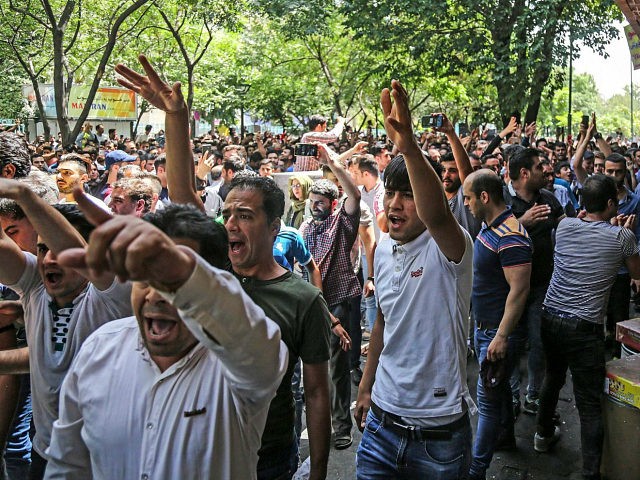
With each passing day, the size of the crowds in the streets protesting against the regime, and the number of cities in Iran that are experiencing major protests, grows. The slogans they shout are not limited to demands that the regime bear down on corrupt officials and lower inflation. Protesters are calling for the overthrow of the regime.

Throughout the country, protesters are calling out, “Death to the Dictator,” meaning “supreme leader” Ali Khamenei. In Isfahan on Tuesday, protesters shouted out, “Reza Shah, may your soul and spirit be happy!”

Reza Shah was the founder of the dynasty that was overturned in the 1979 Islamic revolution. It is also the name of the Shah’s son in exile.

Protesters also insisted that they are done with the regime as a whole. They called for the death of both “reformists,” and “hardliners.”

As for Mousavi and Karroubi’s announced release, although the movement they led in the wake of the 2009 presidential election morphed into an attempted revolution that was brutally suppressed, Mousavi and Karroubi are not revolutionaries themselves. They are reformists deeply embedded in the regime.

In the 1980s, Moussavi served as prime minister and foreign minister, and Karroubi served as speaker of the parliament.

Khamenei and his advisors no doubt view the two men as a bridge to the protesters in the streets, who can moderate their demands and so stabilize the regime. But the fact that the protesters are now insisting there is no distinction between reformers like Mousavi and Karroubi and hardliners like Iranian Revolutionary Guards Corps Al Quds Force commander Qassem Suleimani indicates that the regime may be a day late and a dollar short.

It isn’t just that the protesters want revolution and not reform. They also want America. They hate the regime more than they hate the United States.

In Karaj, outside Tehran, anti-regime protesters were filmed shouting, “Our enemy is here, they are lying when they say it is America.”

Under the circumstances, attempts by regime officials to blame Iran’s economic problems on the U.S. are doomed. After failing to convince the Europeans to bypass U.S. sanctions, the only way the regime can save even a semblance of a normal economy is to beat a path to Washington.

And so, over the past week, Suleimani and Foreign Minister Javad Zarif beat a path to Muscat, Oman, in the hopes of working something out. Muscat served as a mediator between the Tehran regime and the Obama administration in the early stages of their contacts, so it was a natural place for the Iranians to turn to renew contacts with Washington today.

Immediately after his meetings with Zarif and Suleimani, Oman’s Foreign Minister Yusuf bin Alawi bin Abdullah flew to Washington for meetings with Secretary of State Mike Pompeo and Secretary of Defense James Mattis.

The Iranians deny that they are using Oman as a mediator. But the confluence of meetings makes it difficult to accept their claims. It is all the more difficult to take their position seriously when Trump made his offer to meet with Rouhani during bin Abdullah’s visit to Washington.

This, then brings us to the purpose of Trump’s offer, and what it tells us about Trump’s view of how to achieve the American goal of fundamentally transforming the regime — either by coercing it to abide by Pompeo’s twelve conditions or by supporting a popular revolution.

Only time will tell if Zarif’s and Suleimani’s attempts to open channels of communication with Washington signalled regime willingness to consider such a transformation. The fact that Pompeo repeated the U.S. position on CNBC after Trump made his offer for talks suggests that the administration thus far has not been lured by the regime into changing its policy.

Although the media portrayed Pompeo’s statement as contradicting Trump’s assertion that there are no preconditions for negotiations, Pompeo simply restated the administration’s position when he told CNBC that the Iranians need to accept the basic parameters of the U.S. position set out in his speech at the Heritage Institute as a basis for negotiations.

One of the things that distinguishes Trump from Obama, as well as from George W. Bush and Bill Clinton, is how he views negotiations. When his predecessors sought diplomatic channels with Iran and North Korea, they willingly discarded all the other levers of statecraft, including military and economic pressure.

The Bush administration took North Korea off the State Department list of state sponsors of terrorism and withdrew economic sanctions on Pyongyang. Clinton provided North Korea with fuel and food. The Bush administration downplayed Iran’s role in fomenting and maintaining the insurgency against U.S. forces in Iran and Afghanistan, and Iran’s role in the September 11 attacks. And Obama gave Iran an open road to regional hegemony in the Middle East through a host of economic, military, and political concessions at the expense of U.S. allies and interests throughout the Middle East.

Trump, in contrast, uses diplomacy in tandem with economic and military pressure to foment a change in behavior in his opponents. As Breitbart News’ Joel Pollak explained, the difference between Trump’s offer to negotiate with the Iranians and Obama’s offer to negotiate with them is that Trump’s offer was made from a position of strength while Obama’s offer was made from a position of weakness.

If Trump senses that the Iranians are willing to make a deal along the lines set out by Pompeo — that is, if the regime is willing to agree to curtail its sponsorship of terror and mayhem and end its nuclear program without war — he would be a fool not to pursue it. Assuming he handles them properly, if the talks fail, the Iranian public will be more than willing to blame the regime.

That said, there are two major risks to holding negotiations. First, the Iranian people may view such negotiations as a signal that the U.S. will sell them out. To mitigate that risk, it is imperative that any talks be conducted publicly. The regime will use secret channels as a means to signal that like the Obama administration, the Trump White House supports it against the Iranian public.

The second risk is not unique to discussions with Iran, but is a risk in all negotiations between Western democracies and authoritarian tyrannies.

All negotiations have a tendency to create a dynamic in which reaching a deal – any deal – becomes more important than achieving the goals that brought the parties to the negotiating table in the first place. Western leaders, who are subject to media scrutiny and election pressures, are more susceptible to the pressure to achieve a deal than leaders of dictatorial regimes like those in Iran and North Korea.

As a consequence, the dynamic of negotiations works against the interests of the Western powers and favors the interests of the authoritarians they face at the table. In the current context of U.S.-Iranian relations, we will know that we should be concerned about this dynamic if and when the administration diminishes its public support for the anti-regime protesters in Iran.

On Wednesday, U.S. Central Command warned that Iran is about to launch a massive military exercise in the Straits of Hormuz. Suleimani and other regime leaders have threatened repeatedly in recent weeks to seal the maritime choke point through which 20 percent of world oil shipments transit if the U.S. blocks Iranian oil exports.

This Iranian move, like the missiles its Houthi proxies shot at two Saudi oil tankers in the Bab el Mandab choke point in the Red Sea least week, shows that the Iranians also know how to talk and shoot at the same time.

Obviously, it is too early to know where Trump’s offer will lead. But what is clear enough is that Trump’s offer to negotiate with Iran is no fluke. It is a shrewd, albeit high-risk move made in a complex and highly dynamic and dangerous standoff between the U.S. and its allies — and a lethal, menacing regime whose back is up against the wall.

Caroline Glick is a world-renowned journalist and commentator on the Middle East and U.S. foreign policy, and the author of The Israeli Solution: A One-State Plan for Peace in the Middle East. Read more at www.CarolineGlick.com.

Russia’s 8 military Golan positions – problematic for Israeli security. Hizballah creeps ever closer 

August 3, 2018

Source: Russia’s 8 military Golan positions – problematic for Israeli security. Hizballah creeps ever closer – DEBKAfile

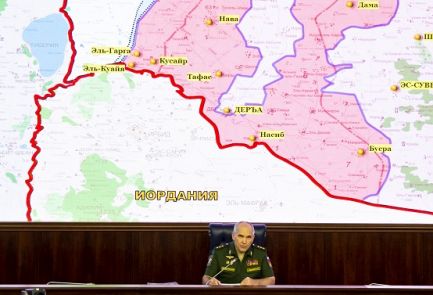
The Russian decision to set up 8 military positions along the Syrian-Israeli Golan border will impede rather than help consolidate security on Israel’s northern front – in more ways than one:

  • The positions will be manned by Chechen recruits in Russian uniforms. (By the law of Chechnya, nationals are barred from fighting in foreign wars.)
  • They will serve alongside UNDOF monitors in the buffer zone without legal status. The presence of foreign forces is not covered in the 1974 Israel-Syrian disengagement agreement which created the buffer zone. The agreement was extended by the UN Security council a month ago.
  • This may be a mere formality until they are called into action. How and on behalf of which party they respond are moot questions.
  • What will Israel’s government and military decision-makers do if the Russian orders to their unit run contrary to Israel’s security interests – or, still worse, impede Israeli operations against aggressors? The Israeli Air Force, for instance, may be tied down from striking terrorists in the buffer zone by fear of Russian policemen getting in the way.
  • And what will happen if the IDF needs to cross into the buffer zone to terminate illicit Hizballah or pro-Iranian Shiite militia incursions? DEBKAfile’s military sources stress that these are not just hypothetical situations; they are already real, although Israel’s national leaders are keeping their intrusion under wraps. This is because they accepted the Russian police monitors without stipulating the prior removal from the buffer zone of all Hizballah and Shiite forces deployed there by Iranian Revolutionary Guards officers.
  • On Aug. 1, Russian Presidential Envoy for Syria Alexander Lavrentyev sold Sputnik News a fairy story. In deference to Israel’s concerns, he said “We have managed to achieve the pullback of Iranian units to within 85km from the border.” World media parroted this tale as solemn truth without checking its authenticity. DEBKAfile’s military sources can assert after investigation that the Russian envoy was not only wide of the mark, but in the 48 hours since he spoke, Shiite and Hizballah forces have crept further west and taken up new positions that are several meters closer than before to the Israeli border.
  • Since Vladimir Putin’s senior adviser on Syria is so free with falsehoods, how can Israel risk entrusting its security in the Golan buffer zone to the hands of a Russian military police force?

U.S. Issues New Warning to Europe: End Business With Iran or Face Harsh Sanctions

August 3, 2018

Trump admin, Congress issue warnings that could impact international financial institutions

Iran Foreign minister Mohammad Javad Zarif meets with representatives of the European Union for Foreign Affairs

Iran Foreign minister Mohammad Javad Zarif meets with representatives of the European Union for Foreign Affairs / Getty Image

BY:

U.S. Issues New Warning to Europe: End Business With Iran or Face Harsh Sanctions

Congress and the Trump administration are issuing a stern warning to European partners: End all business ties with the Iranian regime or face harsh new sanctions in the coming months, a move that could impact international financial markets and U.S. banks tied to foreign monetary institutions, according to multiple senior U.S. officials who spoke to the Washington Free Beacon about diplomatic efforts to pressure Europe on Iran.

The Trump administration and many in Congress have been working in tandem to pressure European partners over their ongoing financial ties to Iran ahead of efforts by the United States to fully reinstate harsh sanctions on Iran, including on its lucrative oil sector and banking systems, U.S. officials said.

Key European partners have expressed opposition to the new U.S. sanctions in recent months and have held a series of meetings with senior Iranian officials to discuss tactics for evading the new American sanctions, which follow on the heels on President Donald Trump’s decision to abandon the landmark nuclear deal.

The increased financial pressure if part of a larger effort by the Trump administration and its allies in Congress to further choke the Iranian economy as dissident protesters in the Islamic Republic continue to rail against the hardline regime for its spending on foreign interventionism in hotspots such as Syria and its continued support for international terror groups.

Diplomatic tensions over the new sanctions have heightened ahead of November, when the Trump administration expects to fully reinstate sanctions on Iran that could cripple its business ties to Europe and further strain the regime’s cash reserves.

Iranian officials have responded to the sanctions with threats of violence, including a possible military blockade of critical shipping routes in the Persian Gulf that has stoked fears of a potential war in the region. Top Israeli officials declared on Thursday that they would respond militarily should Iran take such actions.

Senior U.S. officials leading the efforts to pressure European partners over their business ties with Iran told the Free Beacon the Trump administration will not hesitate to sanction those who violate the new sanctions, warning that international banking institutions and even top U.S. banks could be hit with sanctions for not complying.

“The Iranian regime has and continues to use terrorism as a weapon in Europe,” Richard Grenell, the U.S. ambassador to Germany, told the Free Beacon. “We must be vigilant in finding out about their plans and stopping them before they succeed.”

Grenell and other top U.S. diplomats “are urging our partners to help stop the flow of money to this Iranian regime because it is used to fund malign activities,” the ambassador said.

Administration allies in Congress have been helping to bolster these efforts.

Ten U.S. senators recently wrote to the EU3—Britain, Germany, and France—warning them to comply with all new U.S. sanctions coming down the pike.

As these European countries work to preserve the nuclear deal and keep business with Iran open, the senators ensured these countries they will not be kept safe from new U.S. sanctions.

“We write to urge you to comply with all American sanctions, but also to emphasize we would consider it particularly troubling if you sought to evade or undermine American statutes,” write the 10 Republican senators, including Sen. Ted Cruz (R., Texas), Marco Rubio (R., Fla.), Tom Cotton (R., Ark.), and David Perdue (R., Ga.), among others.

“First, these statutes align with your governments’ commitment to deepen cooperation addressing Iran’s ballistic missile program and destabilizing activities,” the letter states. “Second, they were passed over several years by overwhelming bipartisan majorities—including in some cases via unanimous Senate passage—and Congress is obligated to ensure their implementation.”

“Any attempt to evade or undermine them could well prompt Congressional action, in coordination with other elements of the U.S. government, to ensure their integrity,” the letter continues.

Senior congressional sources working on the matter who spoke to the Free Beacon said the decision is clear: Europe must choose between the United States and Iran.

“Everyone has gone out of their way to be nice to the Europeans while they’ve been working through the stages of grief over the Iran deal,” said one senior congressional official who has been working on the matter. “There’s deep appreciation across Congress for the importance of NATO and the other elements of the transatlantic relationship.”

“But enough is enough,” said the source, who would speak only on background when discussing efforts to pressure Europe. “Iran is threatening to shut down Gulf energy exports, they’re promoting sectarian warfare across the Middle East, and they’re launching terrorism globally and even in Europe. It’s inexplicable and unacceptable for the Europeans to choose Iran over us.”

A Treasury Department official, responding to queries from the Free Beacon on upcoming sanctions actions, said the administration could not specifically comment on potential actions, but pointed to wide-ranging sanctions guidance recently issued by the administration.

A full range of sanctions on Iran are expected to be put back in place by Nov. 4, with a range of new actions expected early this month.

The new sanctions will not only hit Iran and its global terror operations, but also international financial systems such as the Society for Worldwide Interbank Financial Telecommunication, or SWIFT, the major provider of global financial services.

American and European leaders on SWIFT are being told that they, too, will not be spared from new sanctions if they continue to facilitate business with Iran.

“There’s no question the banks represented on the board of SWIFT are in serious jeopardy—both the American banks and the foreign ones,” said Richard Goldberg, a senior adviser to the Foundation for Defense of Democracies and former senior Senate aide who was one of the architects of the initial SWIFT sanctions in early 2012.

“Congress authorized the president to take a wide range of actions against directors personally and against their financial institution employers,” Goldberg explained. “The Trump administration understands how crucial it is to sever Iran from SWIFT so you can bet they will seek maximum enforcement of the sanctions.”

Diplomatic warnings to SWIFT members have already been issued, according to sources familiar with ongoing actions to lay the groundwork for new sanctions.

“Let’s just say that if I was a director or senior employee at SWIFT, I’d make sure I had all my money accounted for and didn’t plan any vacations to the United States for a while,” said one veteran foreign policy adviser familiar with the Trump administration’s thinking on the issue.

“For the two American banks—Citi and JP Morgan—well, I wouldn’t want to be in their C-Suites when Squawk Box is wall-to-wall covering the massive government action that just came their way for non-compliance,” the source warned.

Israel will join coalition against Iran if it blocks Red Sea, PM warns

August 2, 2018


Prime Minister Benjamin Netanyahu at the naval officers’ graduation in Haifa, Wednesday

If Iran blocks Bab el-Mandeb Strait, which leads into Red Sea, it will face international coalition that includes “all of Israel’s military branches,” PM Netanyahu says • Defense Minister Lieberman: Israel has “heard of threats to harm Israeli ships.”

Lilach Shoval, Eli Leon, News Agencies and Israel Hayom Staff

Source Link: Israel will join coalition against Iran if it blocks Red Sea, PM warns

{Wow! It appears the days when Israel was asked to step aside are finally over. – LS}

Israel would deploy its military as part of an international coalition to stop an attempt by Iran to block the Bab el-Mandeb Strait that leads into the Red Sea from the Gulf of Aden, Prime Minister Benjamin Netanyahu warned on Wednesday.

“If Iran tries to block the strait of Bab el-Mandeb, I am certain that it will find itself confronting an international coalition that will be determined to prevent this, and this coalition will also include all of Israel’s military branches,” Netanyahu said. He was speaking at a graduation parade for new Israeli Navy officers in Haifa.

Last week, Saudi Arabia said it was suspending oil shipments through the strategic strait after Yemen’s Iran-aligned Houthis attacked two ships in the waterway.

Saudi Arabia and Iran are engaged in a three-year-old proxy war in Yemen, which lies on one side of Bab el-Mandeb.

Yemen’s Houthis, who have previously threatened to block the strait, said last week they had the naval capability to hit Saudi ports and other Red Sea targets.

Iran has not threatened to block Bab el-Mandeb but has said it will block the Strait of Hormuz, at the mouth of the Persian Gulf, if it is prevented from exporting oil.

Speaking at a separate event, Israeli Defense Minister Avigdor Lieberman said Israel had “recently heard of threats to harm Israeli ships in the Red Sea.” He gave no additional details.

Ships mainly from Asia pass through Bab el-Mandeb heading for Eilat in Israel. Ships also pass through the strait heading for Aqaba in Jordan and some Saudi destinations, as well as to continue on through the Suez Canal to the Mediterranean Sea.

The strait is just 29 kilometers (18 miles) wide, making hundreds of ships potentially an easy target. The U.S. Energy Information Administration said an estimated 4.8 million barrels per day of crude oil and products flowed through it in 2016.

Israel has previously attacked Iranian forces in Syria and has insisted that they leave Syria completely. They have withdrawn to a distance of 85 kilometers (53 miles) from the Israeli Golan Heights, Russia’s special envoy to Syria said on Wednesday.

Meanwhile, senior Iranian officials and military commanders on Tuesday rejected U.S. President Donald Trump’s offer of talks without preconditions as worthless and “a dream,” saying his words contradict his actions in reimposing sanctions on Iran.

Israeli officials dismissed allegations that the declaration caught Israel by surprise.

Iran’s currency plummeted to new depths on Monday, dropping below 120,000 rials to the dollar, but Trump’s expressed willingness to negotiate with Iran sparked a minor recovery on Tuesday to 110,000 rials on the unofficial market.

Videos on social media showed hundreds of people rallying in Isfahan in central Iran, and Karaj near Tehran, in protest against high prices caused in part by the rial’s devaluation under heightened U.S. pressure.

Crane: Iran’s ‘Chicken Dance’ on the High Seas Looks Very Similar to the One on Twitter

August 2, 2018

By Eli Crane – August 1, 2018 Breitbart

Source Link: Crane: Iran’s ‘Chicken Dance’ on the High Seas Looks Very Similar to the One on Twitter

{Sink an Iranian ‘fast boat’ and see what happens…probably not much. – LS}

Threatening rhetorical exchanges on Twitter have once again inflamed tensions between Iran and the United States. In tone and effectiveness, Iran’s false bravado on social media reminds me of my personal experience with threatening Iranian naval behavior in the Strait of Hormuz.

Last week, Iranian President Hassan Rouhani boldly cautioned American President Donald Trump, saying, “Mr. Trump, don’t play with the lion’s tail, this would only lead to regret” and suggesting that “war with Iran is the mother of all wars.”

President Trump fired back that Tehran would face very serious consequences, “the likes of which few throughout history have suffered before,” if further threats were made against the United States.

I don’t believe this major Twitter fight is a surprise to anyone who has been paying attention since the introduction of then-candidate Trump and his campaign promise to pull out of the horrible nuclear deal struck by President Obama and reinstate a hard line with the world’s largest sponsor of terrorism.

Iran’s behavior, meanwhile, follows years of a policy to threaten and bully as far as their enemies will allow. I have personally witnessed this kind of Iranian false bravado and posturing followed by immediate retreat on a much smaller scale in the Strait of Hormuz many years ago.

My first experience with the “Iranian chicken dance” occurred in 2003 while a gunner’s mate 2nd class on board the USS Gettysburg (CG-64). It was my first overseas deployment. I’ll never forget the mission brief before our first transit into the gulf. We were told by the weapons officer that we would most likely see a swarm of small, fast Iranian attack craft heading full steam for the battle group as we made our way through the strait, but that they would most likely reverse course and retreat back to their coast before intercepting and engaging our warships.

We were told that we were cleared to fire warning shots if the enemy craft closed within 150 yards.

I thought, really? That is odd. I was brand new to the fleet and had zero exposure to any of this. My station during the transit was as the gunner on the port side twenty-five-millimeter chain gun, so I had a front-row seat for the entire show and, to be honest, the ability to stop them dead in the water. I remember hearing calls coming over coms as we got close to the tightest point in the transit alerting us that the fast attack craft were headed our way. I thought to myself, “you have got to be kidding me.”

Here we are, the most powerful Navy ever created, with several warships accompanying an aircraft carrier with enough firepower to pose a serious threat to the security of the entire Iranian regime, and they are sending a handful of speedboats armed only with crew served and handheld weapons, straight towards us in a game of suicidal chicken.

Sure enough, here they came. There were close to 30 in number and they were so small that you could see their linear wake trailing behind them long before you could spot the actual craft. They were headed straight towards us in a direct line of interdiction with our battle group. Our helicopter immediately headed out to meet them and deter them from doing something very foolish and deadly. To the disappointment of many within the crew that day, the attack boats did exactly what we were briefed they would do.

No shots were fired, nobody was wounded. They puffed out their chest, realized that we were ready for them and unwilling to change our course, and so they turned tail and I-ran back to their shores. Many U.S. sailors, airmen, and Marines have witnessed this dance fight so often that it rarely makes the news or the nightly conversation on the mess decks.

I am far from a subject matter expert on Iranian military capabilities or U.S.-Iranian relations. However, after several years in the surface fleet and close to a decade in the SEAL teams, I can tell you this: a real war with the Iranians would hardly be the mother of all wars. Quite simply, they do not have the weaponry, manpower, defense budget, or world-class training to compete with the top-ranked United States military. It would be over very shortly and, despite the tough talk and bluster by the Iranian regime this week, they are well aware of this fact, which is why an all-out war will likely never happen.

To make a comparison, the Iraqi vs. Iran war lasted 8 years and ended in a cease-fire. How long did it take the U.S. to defeat the Iraqi army in the first Gulf War? You get my point.

I can also tell you this: the episode we saw not too long ago where the Iranians boarded a U.S. vessel and held an American crew hostage will NOT happen while President Trump is our commander-in-chief. That was only a reality because the wise and very observant regime sensed weakness permeating from the Obama White House as the Middle East on fire caused by our poorly planned and telegraphed withdrawal from the region.

Never mind that shameful episode where our commander-in-chief drew a red line in the sand on national television and then did nothing when our adversaries called our bluff and danced all over it. The sleeping tiger the Japanese were afraid of waking up was found spineless, toothless, and unwilling to engage. Just like the fast boats that never attacked our battle groups during my time in the service under the leadership of George W. Bush, the Iranians will never launch a direct military assault on the U.S. under this president. With this regime, we must be mindful of indirect and covert threats.

The Iranians will continue to attack us, aka the “great Satan,” with terrorism and unconventional and cyberwarfare to avoid openly doing exactly what they warned us of, playing with the real lion’s tail. I do believe that when the dust from this international Twitter spat settles, punctuated with all caps, our citizens will once again be reminded that peace through strength works just as much today as it did under the great Ronald Reagan.

Eli Crane is the founder and CEO of Bottle Breacher, a former Navy SEAL, and a current Fox News Analyst. He is a Christian, Husband, Father, keynote speaker, contributor at entrepreneur.com, and member of the Advisory Committee Veterans Business Affairs (ACVBA).