Archive for August 2018

Hamas says Gaza cease-fire reached; Israel denies claim – Israel Hayom

August 10, 2018

Source: Hamas says Gaza cease-fire reached; Israel denies claim – Israel Hayom

Anger in south over ceasefire

August 10, 2018

Leaders of communities beset by Hamas rockets slam government for ceasefire instead of putting a final end to Hamas terror.

Arutz Sheva Staff, 10/08/18 12:32
http://www.israelnationalnews.com/News/News.aspx/250338
Reuters

Council heads and mayors in southern Israel are furious at Prime Minister Binyamin Netanyahu and Defense Minister Avigdor Lieberman for their desire to seek a cease-fire with Hamas instead of launching a military operation to destroy Hamas and restore Israeli deterrence after Hamas launched about 200 rockets against Israel in under two days.

Tamir Idan, head of the Sdot Negev Regional Council, said that “no one has informed us of the cease-fire. There was no hesitation. Hamas determines when fighting will begin, and when it will end.”

“We expect a military operation that will remove Hamas, or a comprehensive and long-term arrangement that will include all kinds of terror,” Idan added.

Sderot Mayor Alon Davidi echoed Idan’s sentiments: “I understand the desire to reach negotiations, but in my opinion the cease-fire is a mistake. We will have to reach an operation, to eradicate this terror. The intermittent war is unhealthy for us and not good for the State of Israel,” Davidi said.

Gadi Yarkoni, head of the Eshkol Regional Council, expressed the hope that any peace agreement with the Gaza Strip would include economic support for the communities surrounding the Gaza Strip. “An ongoing reality of four months of security tension reached an extreme point yesterday. We went through a day of heavy barrage of fire to our communities and canceled educational activities and cultural and community events.”

“In the past few hours there has been quiet and we hope that the latest tension has been ‘the storm before the calm’, after which there will be an arrangement that will ensure long-term calm,” Yarkoni said.

Jewish Home MK Bezalel Smotrich slammed Defense Minister Liberman for failing to take decisive action against Hamas.

“Defense Minister Avigdor Liberman is proving to a ceaseless prattler. He is one of the weakest and strategically ignorant people in the State of Israel, and the one who has the greatest gap between his words and his actions. He cannot to serve as defense minister in the next term,” Smotrich said.

Southern mayors say Gaza truce a ‘mistake,’ call for long-term solution

August 10, 2018

Residents who spent two days in bomb shelters want government to secure a permanent end to rocket fire; Sderot leader calls for military operation

Today, 12:44 pm

https://www.timesofisrael.com/southern-mayors-say-gaza-truce-a-mistake-call-for-long-term-solution/

The head of the IDF’s Southern Command Maj. Gen. Herzl Halevi, center-left, speaks with Sderot mayor Alon Davidi, center-right, during a visit to the southern town, which was hit repeatedly with rocket fire from the Gaza Strip on August 9, 2018. (Israel Defense Forces)

Leaders of Israeli cities and towns near the Gaza border on Friday criticized the government over an apparent ceasefire with Hamas and called for a long-term solution, after a two-day bout of violence saw the heaviest exchange of fire between Israel and the Gaza terrorist organization since the 2014 war.

Hours after fighting grounded to a halt, local officials called on the government to secure a permanent end to rocket fire from the Palestinian coastal enclave, whether by military or diplomatic means.

Residents of southern Israel for several months have been rattled by a series of one or two-day rounds of fighting between Hamas and Israel, sending them scrambling to their bomb shelters and raising fears of war. In all cases, violence later subsided under ceasefires negotiated by Egypt and the UN, before resuming weeks later.

Alon Davidi, the mayor of Sderot, which suffered the brunt of the rocket fire from Gaza, said the effective truce was a “mistake” and that the IDF must decisively curb attacks on Israel through military action.

“I understand the desire to enter negotiations, but in my opinion the ceasefire is a mistake,” Davidi said. “We need to a military operation to eradicate this terror. The intermittent war is unhealthy for us and unhealthy for the State of Israel.”

The Hamas terror group said a ceasefire had been reached “on the basis of mutual calm” and went into effect at midnight. It said the deal was mediated by Egypt and other regional players.

Alon Davidi, mayor of the southern Israeli city of Sderot, attends a press conference in Jerusalem, March 27, 2017. (Hadas Parush/Flash90)

Israel denied there was a truce, but a senior Israeli official told Israel Radio that “quiet would be met with quiet.” There were no instances of violence reported along the border overnight.

Gadi Yarkoni, the head of the Eshkol Regional Council adjacent to the Gaza border, said that he hoped the sides would reach a permanent solution.

“This drawn-out reality of four months of security tension reached its climax yesterday,” he said. “We went through a day of heavy firing on our towns, we had to stop educational activities as well as cultural and communal events. In the past few hours there is quiet and we hope that the recent tension was ‘going up for the sake of coming down,’ and afterwards we will have an agreement which will guarantee quiet for the long term.”

He said the uncertainty was taking its toll on the local population.

Gadi Yarkoni (R) of the Eshkol Regional Council (Facebook)

“The events of the past few months and the sharp transitions from calm to emergency have a serious impact on the residents of the Gaza periphery.”

Tamir Idan, head of the Sdot Negev Regional Council in southern Israel, also said the reported ceasefire was a mistake.

“If we are really talking about a ceasefire, which has not yet been officially confirmed, it is in my opinion a serious mistake, creating a framework in which we have a new normality whereby Hamas controls the fire and decides when to end it,” he said, according to a Walla news report.

“We expect sharp, harsh and unequivocal action against Hamas which will end the terror in all its forms immediately, and which will allow the residents of the Gaza periphery to return to normal like all other citizens,” he added.

The leaders of Moshav Netiv Ha’asara, adjacent to the border, said the ceasefire was “simply an embarrassment” and made a mockery of those who lived in the area.

“The place looks like a ghost town this morning,” the council head said. “Because of irresponsible announcements like these most of the families have fled. Only the farmers remain, who cannot leave, and they’ve been told that if they work it will be their responsibility — as if they have any choice — because from their perspective it is do or die.”

On Friday morning, the IDF Home Front Command announced that all security restrictions in southern Israel had been lifted.

The reported ceasefire on Thursday came just an hour after the security cabinet completed a four-hour meeting on Gaza, instructing the military to “continue acting forcefully” against terror groups in the Strip,

IDF spokesman Lt. Col. Jonathan Conricus said Thursday that Gaza terror groups have fired about 150 rockets at Israel in the past 24 hours, while Israel has struck some 140 Hamas targets in Gaza.

He said the rocket that landed in Beersheba — some 40 kilometers (25 miles) from the Gaza border– required a more powerful, longer-range rocket, marking a significant escalation in violence.

Agencies contributed to this report.

Fight, truce, repeat: 10 things to know for August 10

August 10, 2018

Another ceasefire after a day of fighting; some are fed up, but there’s little agreement over whether the answer lies with guns or pens

Today, 11:54 am

https://www.timesofisrael.com/fight-truce-repeat-10-things-to-know-for-august-10/

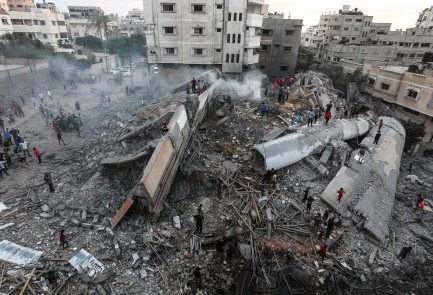
A picture taken on August 9, 2018, shows people inspecting the rubble of a building targeted by the Israeli Air Force in response to a rocket attack that hit southern Israel earlier in the day on August 9, 2018. (AFP Photo/Mahmud Hams)

1. Until we meet again: A day of rocket strikes and Israeli reprisal raids ended with a shaky ceasefire, but nobody is convinced the last projectile has been fired and the feeling that war is in the offing is stronger than ever.

  • If those words look familiar, it’s because I published them on July 15, but it’s just as relevant today, as it may be after the next round of fighting. If Israel and Hamas are stuck in a seemingly endless loop of bad decisions and worse consequences, then the two are currently in the hangover stage after another bender, searching blurry-eyed for their AA sponsor’s phone number, but instead finding a series of texts from their bros inviting them for another night out.
  • “Until next time,” reads a headline on a Yossi Yehoshua column in Yedioth Ahronoth, which kind of says it all.
  • As a sign of the frustration felt not only in the border region, at an outdoor performance of Verdi’s Nabucco in Tel Aviv Thursday night attended by tens of thousands, the conductor stopped the show before the famous “Va Pensiero” (The Hebrew slaves’ chorus) to dedicate the song to the residents of the south and demanded that “something must change so kids can sleep at night, on both sides of the border.” It received the largest applause of the night.

2. Keep it copacetic: Calm can be reached either through war or a long-term deal and it seems that while the army and Hamas prefer the latter, others are insistent that girding for battle may be the better choice.

  • The defense establishment thinks the chances of all-out war have decreased significantly, Haaretz reports.
  • A Hamas official says that the terror group is not interested in going to battle, but wanted to send a message that it won’t tolerate being attacked, according to Channel 10, citing Asharq al-Awsat.
  • The rescinding of special instructions keeping southerners close to their bomb shelters is seen by many as a sign that the army believes the ceasefire will remain in place, at least for a few days.
  • But Israel is clearly girding for the next round and trying to return what little is left of its deterrent capability, as evidenced by the front page of Israel Hayom, seen as a government mouthpiece, vowing with a large headline that “The attacks will continue until the rockets stop.”

3. The last bullet: While a ceasefire after a day of rockets seems de riguer at this point, it’s still a feat to get the sides to stop fighting, writes former national security adviser Yaakov Amidror in Israel Hayom.

  • “Both sides want to prove that they can keep firing, because a one-sided ceasefire will be seen as weak,” he writes.
  • “Neither side wants to lose control, nobody wants this to descend into war, but each side is fighting for the right to shoot the last bullet,” Nahum Barnea writes in Yedioth Ahronoth.

4. US pressure: That Egypt puts pressure on Hamas to stop firing rockets is an old story, but Haaretz’s Zvi Bar’el says that the US is also putting pressure on Israel to keep from hitting Gaza too hard.

  • “Both Washington and Cairo see ending Gaza’s humanitarian crisis as much more important than dealing with the tactical confrontation between Israel and Hamas,” he writes.
  • Bar’el also notes that both Egypt and Israel (and the US) want to rebuild Gaza with a responsible party in charge, a status they have all granted to Hamas: “In the past, Israel negotiated with Hamas only over prisoner exchanges and ceasefires. Now, it’s holding diplomatic and economic negotiations with Hamas over Gaza’s future. The fact that Israeli and Hamas officials aren’t negotiating directly doesn’t change the fact that talks are taking place.”

5. Aiming at the IDF: Not all Israelis are willing to view Hamas as a partner, even a secret one. Representing those — including many in the government — who want the IDF to go further against the terror group, Israel Hayom’s Amnon Lord issues a scathing attack on the military..

  • “The army doesn’t want to kill balloon and kite launchers and places itself as judge over someone who has been convicted of murder who says, ‘I was forced to pull the trigger, what can I do.’ But on the other side of the border is the body.”
  • “That’s how it is in the western Negev. On the Gazan side they are ‘kids’ but on our side is the destruction of thousands of dunams.”
  • He’s not alone. In the right-wing Israel National News website, columnist Boaz Shapiro also directs fire at the heads of the army — and the government — whom he says “have long shown weakness and inertia which are not understood on any level, and are not transparent.”
  • “Tell me… do important people not understand what even a child understands,” he writes, directing his message specifically at prime Minister Benjamin Netanyahu, Defense Minister Avigdor Liberman, and army head Gadi Eisenkot.

6. Scaredy rabbit: Channel 20, also on the right, put together a strange gag on Thursday in which anchor Boaz Golan interviewed a bunny (the Hebrew version of a scaredy cat), apparently to show how weak the army and government are.

  • “Netanyahu is doing great work in many fields, but with anything regarding Gaza, many feel he has failed,” presenter Boaz Golan wrote later.

צפו: הארנבת שכבשה את האולפן והמסר לממשלת ישראל

https://www.0404.co.il/?p=220192&embed=true

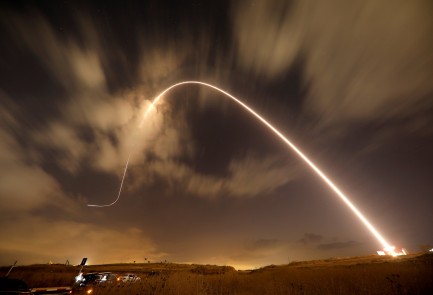
7. Dome of Arc: If there’s anything the Israeli press does agree on, it’s on the sublimity of this picture of an Iron Dome rocket interceptor, captured by Amir Cohen of Reuters.

  • The picture, or variations of it, grace the pages and screens of pretty much every media outlet (at least those that subscribe to Reuters).

8. Bogota bummer: Mystery still surrounds Colombia’s decision to recognize Palestine, just as the country seemed to be moving closer to Jerusalem, and came as a surprise to pretty much everybody.

  • Before the news became public (though after the outgoing government of Juan Manuel Santos signed the official recognition) Tzachi Hanegbi, representing Israel at the inauguration of new president Ivan Duque, wished the outgoing administration luck and happily gave interviews, a sign of how clueless Israel’s government was about the news, ToI’s Raphael Ahren reports.
  • Mixed messages were coming from Bogota, long considered Israel’s most staunch ally in Latin America, following the move, leaving Israel’s Foreign Ministry nonplussed and unable to answer reporters questions for 16 hours after the move was announced. The only one to make a statement was Israel’s Embassy in Bogota, which issued an angry denunciation, in Spanish.
  • “The fact that ministry spokesperson Emmanuel Nahshon did not even provide reporters with a Hebrew translation of the Bogota embassy’s angry statement led Israel’s Diplomatic Correspondents’ Association to send him a formal protest letter,” Ahren writes.
  • A Palestinian source tells ToI that the move was because Santos “agreed that Netanyahu doesn’t do anything to advance peace.”
  • Amichai Stein, a reporter for Israel’s public broadcaster, writes on Twitter that a Colombian official told him that the new government may yet reverse the cancellation.

9. Just say no: Haaretz Knesset correspondent Chaim Levinson jokes on Twitter that Likud lawmakers are now demanding Colombia stop importing drugs into Israel.

10. Who is Israel: With Sacha Baron Cohen continuing to make headlines each time a new episode of “Who is America” comes out, especially for the exploits of his Israeli macho character Erran Morad, Shmuel Rosner writes in the New York Times that the stereotype might reflect more on Americans than Israelis.

  • “Israel’s most avid supporters in America might like us more as crude machos than as start-up entrepreneurs. They might even prefer our satirized fossils to our real selves,” he writes.
  • But Rosner also says that the stereotype isn’t false and there are still many “Morads” roaming about Israel: “Every Israeli who serves in the military knows that we still have Morads. But for every idiotic Morad, we also have two prankish Cohens. That’s why we can afford a laugh.”

Pollak: If Israel Wants to ‘Free Palestine’ from Hamas, It’s Now or Never

August 10, 2018
By Joel B. Pollak

https://www.breitbart.com/jerusalem/2018/08/09/pollak-if-israel-wants-to-free-palestine-from-hamas-its-now-or-never/

JACK GUEZ/AFP/Getty

Terrorist groups in Hamas-controlled Gaza fired 180 rockets into Israel on Wednesday and Thursday, including a long-range rocket that landed near the southern Israeli town of Beersheba.

The Israel Air Force struck back, flattening a Hamas security headquarters.

The international media went into its usual anti-Israel spin mode, describing the violence as “clashes” instead of what it was: an unprovoked attack on civilians by Hamas, which is using the violence to gain diplomatic leverage and convince the world to send money.

Israeli leaders, and the Israeli public, are beyond frustrated — even though the U.S.-funded Iron Dome system has destroyed many of the rockets. Some are calling for Hamas leaders to be targeted. Many want Hamas itself to be crushed once and for all.

If Israel wants to destroy Hamas, and liberate the Gaza Strip from its iron-fisted Islamist rule — now more than a decade old — there will never be a better time. President Donald Trump is the most pro-Israel leader the United States has ever produced, and his team of Middle East negotiators are so frustrated with Palestinian intransigence that they have called for cutting economic aid to Gaza.

If Israel were to undertake a tough ground assault, with Hamas hiding behind civilians in hospitals and in booby-trapped buildings, it would — finally — have a friend in the White House who would withstand international pressure and allow it to fight until victory.

Moreover, Iran, the patron of regional terror, is in the midst of a crippling economic and political crisis. The Iranian regime, tied down in Syria, struggling with a collapsing currency, and facing mass protests in the streets, would hesitate before helping its proxy terror groups in Gaza. It would also be less likely than in the past to open a northern front by using Hezbollah to attack Israel.

The window of opportunity may not last long. Democrats have a good chance of winning back the U.S. House of Representatives in November. If they do, they will bring a new crop of anti-Israel politicians to Washington, along with a new hostility to Israel. Not one Democrat attended the opening of the new U.S. embassy in Jerusalem earlier this year, and none attended the party at the Israeli embassy in Washington, DC, to mark the occasion. The party rank-and-file are increasingly drawn to Israel-hating leaders.

One such is Alexandria Ocasio-Cortez, who will likely win New York’s 14th congressional district. She recently complained about the “occupation of Palestine” (despite not being able to explain what it was), and sided with Hamas over Israel in border clashes.

Another is Rashida Tlaib, a Palestinian-American who won the Democratic primary in Michigan’s 13th congressional district on Tuesday. She is close to antisemite Linda Sarsour, and backed Palestinian terrorist Rasmea Odea in her bid to avoid deportation.

A House controlled by Nancy Pelosi would make it harder for the Trump administration to support Israel. Republicans could still win, but Israel cannot afford to take that chance. If it wants to “free Palestine” from Hamas, the time may be now — or never.

Israel’s cabinet decides against a new Gaza campaign to halt Hamas rocket aggression – DEBKAfile

August 10, 2018

Source: Israel’s cabinet decides against a new Gaza campaign to halt Hamas rocket aggression – DEBKAfile

After 250 rockets from Gaza hit Israeli locations, one a heavy Grad, Israel’s security cabinet meeting Thursday, Aug. 9, directed the IDF to continue to pursue “powerful action against terrorist forces.”

This was tantamount to a decision against a major Israeli military campaign against Hamas at this time, while instead carrying on with tit-for-tat air strikes as before, and leaving the targeted communities to their despair. Some 19 people were injured in the last two days.

Hamas is therefore still allowed to call the shots, exactly as it has done in the last four months, while inflicting in Israel diverse brands of terror. It is still up to Hamas to decide whether to stop shooting rockets at Israel or continue the barrage ongoing for two days, as well as determining the level of its retaliation for Israeli reprisals.

Therefore, after an Israel air strike demolished the five-story Hamas internal security building in the Gaza City’s Rimal district – in return for the first Grad fired on Beersheba, a major city in southern Israel, in four years, Hamas is expected to ratchet up its rocket fire on Israeli civilian locations in the coming hours and days. Israel forewarned residents of the Rimal district of the bombardment. The building was therefore empty of Hamas officials, a repeat of the “knock on roof” tactic the Israeli Air Force used in the past to avert collateral civilian casualties in counter-terror attacks.

This practice is an element in the IDF-Hamas duel which has its own strange rules. In the heat of Wednesday’s rocket barrage, Chief of Staff Lt. Gen. Gady Eisenkot stated that the IDF “is better prepared than it has been in the past decades.” Prepared for what? No answer was forthcoming from the cabinet the next day. In the general’s judgment, Hamas has still not broken those unwritten rules. He therefore persuaded the prime minister Binyamin Netanyahu and Defense Minister Avigdor Lieberman to hold back from approving a full-scale campaign to halt Hamas’ nagging violence once and for all.

Realizing that this stance will offend the popular will, in the sight of the suffering of the targeted population of southwestern Israel, both have not been seen or heard in public for some days. Meanwhile, they are hoping against hope that something may come of the long term truce mediation effort conducted by the UN emissary and Egypt, although realistic chances of this are practically nil.

Iran, N. Korea Grow Stockpile of Ballistic Missiles Capable of Striking U.S. Troops, Allies, Israel

August 9, 2018

Iran, N. Korea continue to share missile tech, capitalizing on Obama-era sanctions loopholes

Iranian President Hassan Rouhani and North Korean Foreign Minister Ri Yong Ho

Iranian President Hassan Rouhani and North Korean Foreign Minister Ri Yong Ho / Getty Image

BY:

Iran, N. Korea Grow Stockpile of Ballistic Missiles Capable of Striking U.S. Troops, Allies, Israel

Iran and North Korea are growing their stockpile of ballistic missiles, including long-range missiles capable of striking U.S. assets, American allies, and even the continental United States, according to new congressional reports that shine a light on efforts by these rogue nations to advance their military capabilities.

North Korea continues to aid Iran with its advanced ballistic missiles program in defiance of international regulations barring such activity, according to the reports, issued by the Congressional Research Service. This includes an extensive proliferation network and multiple facilities dedicated to constructing short-range, medium-range, and long-range ballistic missiles.

Iran’s missiles, many of which are modeled off North Korean technology, are advanced enough to strike targets throughout the Middle East, including Israel, stoking fears that the next regional war—which many say is imminent—could present Iran an opportunity to show off its newest missile technology.

U.S. officials familiar with the Iranian and North Korean missile programs told the Washington Free Beacon that much of the recent technological progress by these rogue nations is the result of the Obama administration’s efforts to relax international regulations on such activity as part of the landmark nuclear agreement.

In the time since that agreement was reached, Iran has taken significant steps toward building, testing, and improving its ballistic missile technology, including long-range missiles that have been tested under cover of Tehran’s space program.

“The Obama administration gutted the international prohibitions against Iran’s ballistic missile development,” one U.S. official involved in efforts aimed at rolling back Iran told the Free Beacon on background. “Then, when Iran started racing to build a more sophisticated arsenal, they had Samantha Power make some noise at the United Nations before quietly standing aside. That’s how we find ourselves where we are.”

The latest reports on Iranian and North Korean missile technology paint a startling portrait of the sheer power of both countries, which continue to exchange technology on both the missile and nuclear front.

“Iran continues to invest in developing ballistic missiles and in building an extensive network of facilities, although missile inventory information is scarce,” the latest report on Iran states.

“Iran’s short- and medium-range ballistic missile tests indicate that Iran is focused on increasing the accuracy of its missiles,” according to the report, which includes both open source and U.S. intelligence community information.

However, Iran continues to experience delays in its more sophisticated missiles, including its long-range and intercontinental ballistic missile technology, though it continues to test and refine this hardware.

“The majority of Iran’s heavy artillery rockets and ballistic missiles are tactical or short-range (less than 500 kilometers),” according to the report.

The mobile nature of Iran’s shorter-range rockets has allowed it to share this technology with its allies in the region. Shorter-range missiles employed by Iran are more than capable of striking “U.S. and allied bases in the Gulf region if moved from their operating bases, as well as targets throughout Iraq,” the report notes.

After years of testing and refining this technology, “Iran has grown increasingly self-sufficient in producing SRBMs [short-range ballistic missiles], but still probably relies on outside sources, such as North Korea, for some key components and material,” according to the report.

Iran also has developed and produced medium-range ballistic missiles (MRBMs) estimates to reach distances of around 2,000 kilometers or more, “sufficient to strike targets throughout the Middle East.”

“Iran continues to develop, test, and build more capable and increasingly accurate MRBMs,” U.S. intelligence sources have noted. “Iran argues these missiles constitute an important deterrent and retaliatory force against U.S. and other forces in the region in the event of war.”

To support this missile program, Iran has built and underground network of facilities and missile launch sites that are protected by the country’s air defenses and technology such as Russia’s S-300 anti-aircraft missiles, which are currently believed to be operational. This would protect Iran’s missile technology from a preemptive strike.

Support for Iran’s program comes from North Korea and other rogue exporters that have skirted international sanctions and capitalized on the subsequent lifting of these sanctions by the Obama administration.

“Iran relies to some extent on others, particularly North Korea, for certain key missile components and materials in its MRBM program,” the report states. “Export controls and sanctions have made it increasingly difficult, but not impossible, for Iran to acquire the best of such items, causing Iran to try to exploit weaknesses in existing export and nonproliferation regimes, or to try to find foreign sellers willing to circumvent those laws.”

Iran’s Shahbab-3 ballistic missile, for instance, has been imported from North Korea and is based on that country’s own designs.

Tehran’s long-range and intercontinental ballistic missile technology is harder to pin down.

“Some have long believed Iran’s space launch program could mask the development of an intercontinental ballistic missile (ICBM) with ranges in excess of 5,500 km that could threaten targets throughout Europe, and even the United States (at least 10,000 km),” according to the report.

However, it remains unclear just how much progress Tehran has made in developing working technology.

Meanwhile, “North Korea has made rapid advancements in its nuclear weapons and ballistic missile programs,” according to a second congressional report. “North Korea is striving to build a credible regional nuclear war fighting capability that might evade regional ballistic missile defenses.”

As the United States pursues diplomacy with North Korea, there are encouraging signs the country has made moves to dismantle some of this technology, the report notes.

Egypt said to warn Hamas: Israel will renew assassinations if fire persists

August 9, 2018

Terror group’s leaders have reportedly turned off their phones, gone underground over fears of targeted killings by Israeli military

Today, 10:08 pm

https://www.timesofisrael.com/egypt-said-to-warn-hamas-israel-will-renew-assassinations-if-fire-persists/

Hamas chief Ismail Haniyeh (L) and Hamas leader in the Gaza Strip Yahya Sinwar attend a rally marking the 30th anniversary of the terror group’s founding in Gaza City, on December 14, 2017. (AFP Photo/Mohammed Abed)

Egypt has warned Hamas that Israel will seek to assassinate the terror group’s leaders if rocket fire from the Gaza Strip does not cease, according to an Israeli television report on Thursday.

Egyptian intelligence cautioned Hamas that Israel could renew targeted killings if the terror group further exacerbates tensions on the Gaza Strip border, Hadashot television news reported.

Previous media reports in recent months have indicated that Israel conveyed similar threats to Gaza rulers Hamas through Egyptian channels during periods of increased violence on the border.

Separately, Israel Radio on Thursday night quoted Hamas officials as saying political and military leaders from the terrorist group have turned off their cellphones over the last day and went into hiding for fear of being assassinated.

Hamas leaders were also signaling they were not responsible for a rocket attack targeting the southern city of Beersheba earlier on Thursday, Hadashot reported, in an apparent attempt to defuse the tensions.

The reported Egyptian warning to Hamas came amid a major flare-up in tensions on the Gaza border, with over 180 rockets and mortar shells fired at southern Israel since Wednesday night.

The projectiles injured at least seven people and caused damage to homes, businesses, and infrastructure throughout the region, according to the Israel Defense Forces.

In response, the Israeli Air Force struck over 150 Hamas “terror sites” in the Strip, the army said. Palestinian officials said a pregnant woman and her infant daughter were killed in the Israeli strikes, along with one Hamas fighter, who was reportedly in a car used by a rocket-launching Hamas cell that was targeted by an IDF aircraft.

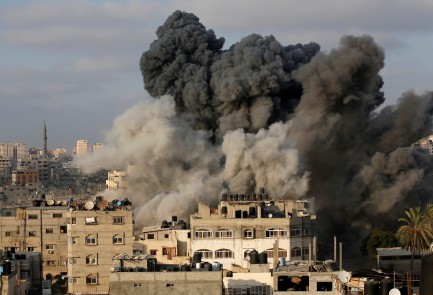
A plume of smoke rises from the remains of a building west of Gaza City that was targeted by the Israeli Air Force in response to a rocket attack that hit southern Israel earlier in the day on August 9, 2018. (AFP Photo/Mahmud Hams)

On Thursday evening, the Israeli Air Force flattened a five-story building in northern Gaza that served as a headquarters for Hamas’ internal security service, the army said.

The IDF said the strike on the building in the northern Gaza Strip, which also served as a cultural center in the coastal enclave, was in response to “rocket fire by the Hamas terror group against the city of Beersheba earlier in the day.”

The military threatened that the attack was “an expression of the IDF’s intelligence and operational capabilities, which will expand and intensify as necessary.”

Eighteen Palestinians were wounded in the Israeli strike, according to the Hamas-run Gaza health ministry. The degree of their injuries was not immediately known.

The attack on the building was one of the IDF’s first strikes on a site deep inside a city in Gaza since the 2014 war. Most of the strikes previously conducted by Israel targeted facilities outside major population centers. In addition, the Rimal neighborhood in which the building was located is one of the more upscale areas of Gaza City.

This decision was seen as an attempt by the military to show Hamas that it was prepared to step up its attacks against the terror group if rocket and mortar fire continued to strike southern Israel from the Gaza Strip.

The site where a mortar shell from the Gaza Strip hit an apartment building and cars in the southern Israeli city of Sderot, on August 9, 2018. (Yonatan Sindel/Flash90)

Minutes after the Israeli strike on the building began, incoming rocket sirens blared in the Eshkol region of southern Israel, sending thousands of residents into bomb shelters, where they had already spent much of the day in light of frequent attacks from the Gaza Strip throughout the previous two days.

A second wave of sirens were triggered shortly after the IDF confirmed that it had conducted the strike at 8:00 p.m. A third round of sirens went off an hour later.

There were no injuries or damage caused by any of those rocket attacks, Israeli officials said.

The renewed rocket attacks came amid a period of heightened tensions along the Gaza border, following months of clashes and exchanges of fire.

Earlier this week, there had been reports of intensive talks between Israel and Hamas for a long-term ceasefire.

Hamas Blackmail, Media Silence

August 9, 2018

‘There is no deterrence. Go to war now’

August 9, 2018

Former IDF chief says terror organizations like Hamas will only be deterred by threats to their existence after 180 rockets fired at Israel.

Shimon Cohen, 09/08/18 18:40
http://www.israelnationalnews.com/News/News.aspx/250303
General Uzi Dayan – Eliran Aharon

Major-General (Res.) Uzi Dayan, former deputy chief of staff, called for the restoration of Israeli deterrence in Gaza through a military operation against Hamas following the launching of 180 rockets and mortars from Gaza overnight.

“I hope there will be an operation in Gaza. This is something that needs to be done because our deterrence has been eroded to a point,” Dayan said in a conversation with Arutz Sheva.

“Even if there is a kind of ceasefire, Hamas will continue to operate below the threshold of response, to send kites and balloons, on the assumption that we will respond only with a small response, and even if it sends eighty rockets to the Gaza vicinity like yesterday, Israel will not launch an operation. This is called the loss of deterrence.

Dayan, the former head of the National Security Council, explained that a future operation that would end without Hamas being neutralized would be considered a loss for Israel. “It is important to respond strongly because Hamas must be deterred and if we want to deter it, it can only be done through a threat to [Hamas’] very existence. We need to decide whether to embark on a war in Gaza and decide whether the goal is to punish or topple Hamas.”

“Anything less than regime change is a victory for Hamas because then Hamas entered the bunkers and even if thousands of people in Gaza are killed, it will not matter to it. It will continue to be in the bunker for a week or two and then it will emerge from the ruins and declare victory. And that’s how it will show in the world that Israel did not succeed in eliminating Hamas. ”

Dayan estimates that without the support of Israeli public opinion, the IDF would not launch an operation against Hamas. “Why do we recoil? Because of the price to Israel. We fear losses. The main problem is Israeli public opinion. Israel is not going to begin a war that would result in casualties unless Israeli public opinion understands that there is no choice but to go to war.”

“Public opinion day is not like that. In the Gaza vicinity they say they hope the quiet will return, they do not support an operation in Gaza,” he said. “The IDF needs to present more aggressive plans that include the destruction of Hamas, whether by eliminating the leadership, no matter whether it is a political leadership or military leadership. or by making it leave the Gaza Strip, just as we removed the PLO from Lebanon.”

“And if we are determined to harm the leadership of Hamas, it means destroying governmental targets and houses belonging to leading families in Hamas. In this situation, some punishment will indeed be achieved, but there will not be such a deterrent that the masses in Gaza will say, ‘If this is the result then we have to stop shooting.’ A terrorist organization is deterred only by a threat to its very existence. This does not mean conquering all of Gaza but it would entail a ground invasion.”