Archive for August 2018

In possible message to U.S., Iran fires anti-ship missile during naval drills 

August 11, 2018

Source: In possible message to U.S., Iran fires anti-ship missile during naval drills – Middle East – Jerusalem Post

Iran’s Revolutionary Guards confirmed on Sunday it had held war games in the Gulf over the past several days.

BY REUTERS
 AUGUST 11, 2018 00:57
In possible message to U.S., Iran fires anti-ship missile during naval drills

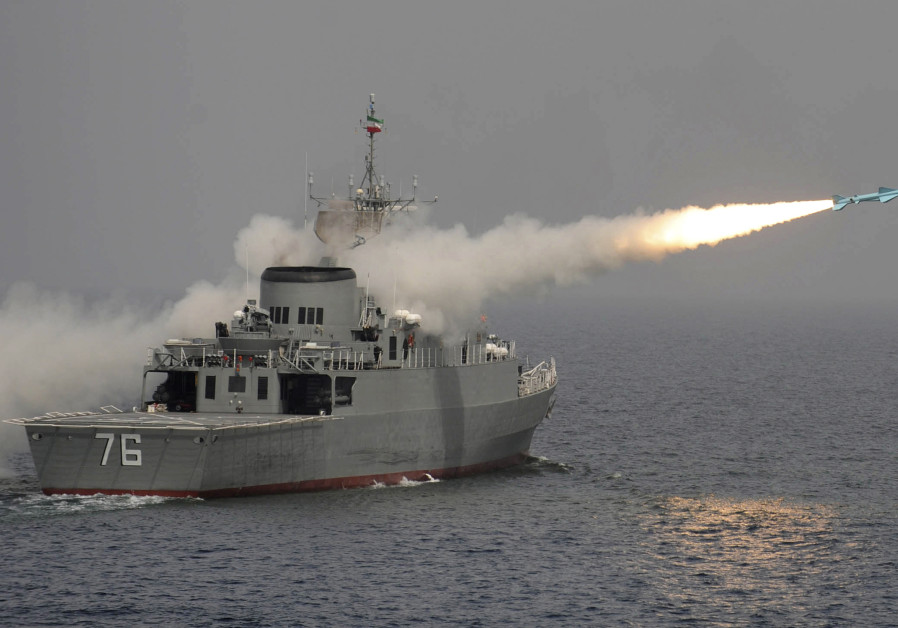
WASHINGTON – Iran test-fired a short-range anti-ship missile in the Strait of Hormuz during naval drillslast week that Washington believes were aimed at sending a message as the United States reimposes sanctions on Tehran, a US official said on Friday.

The official, however, did not suggest that such a missile test was unusual during naval exercises or that it was carried out unsafely, noting it occurred in what could be described as Iranian territorial waters in the Strait.

Iran’s Revolutionary Guards confirmed on Sunday it had held war games in the Gulf over the past several days, saying they were aimed at “confronting possible threats” by enemies.

US Army General Joseph Votel, head of the US military’s Central Command, said earlier this week the scope and scale of the exercises were similar to ones Iran had carried out in the past. But the timing of this particular set of exercises was designed to get Washington’s attention.

“It’s pretty clear to us that they were trying to use that exercise to send a message to us that as we approach this period of the sanctions here, that they had some capabilities,” Votel told reporters at the Pentagon.

Iran has been furious over US President Donald Trump’s decision to pull out of an international agreement on Iran’s nuclear program and re-impose sanctions on Tehran. Senior Iranian officials have warned the country would not easily yield to a renewed US campaign to strangle Iran’s vital oil exports.

Last month, Iran’s Supreme Leader Ayatollah Ali Khamenei backed President Hassan Rouhani’s suggestion that Iran may block Gulf oil exports if its own exports are stopped.

Votel said the US military was keenly aware of Iran’s military activities.

“We are aware of what’s going on, and we remain ready to protect ourselves as we pursue our objectives of freedom of navigation and the freedom of commerce in international waters,” Votel said.

German businesses suffering as U.S. sanctions and tariffs bite

August 11, 2018

Source: German businesses suffering as U.S. sanctions and tariffs bite – International news – Jerusalem Post

“Of course the US policies are impacting German foreign trade.”

BY REUTERS
 AUGUST 11, 2018 06:38
German businesses suffering as U.S. sanctions and tariffs bite

BERLIN – German companies are increasingly suffering from US President Donald Trump’s policy of sanctions – including those against Iran – and the tariffs he is pursuing in an escalating trade war with China, business associations said on Thursday.

Washington said on Wednesday it would also impose fresh sanctions on Russia by the end of August after it determined that Moscow had used a nerve agent against a former Russian agent and his daughter in Britain, something the Kremlin denies.

“Of course the US policies are impacting German foreign trade,” Holger Bingmann, head of the BGA trade association, told Reuters. “Individual companies are grinding their teeth and are severely affected.”

Volker Treier, foreign trade chief at the DIHK Chambers of Commerce, said the international environment was becoming increasingly complex for German businesses.

Treier said many of Germany’s trading partners were affected by the US measures and their effects, which was in turn hurting business with German companies. Exports were not faring as well as last year, he added.

He said DIHK’s forecast that German exports would increase by 5 percent this year “seems increasingly ambitious.”

Bingmann and Treier were reacting to the new US sanctions against Russia but also to punitive measures against Iran and reciprocal tariffs and trade threats by the US and China.

The United States will impose tariffs on another $16 billion of imports from August 23 and China plans to slap additional tariffs of 25 percent on the same amount of US imports ranging from fuel and steel products to autos and medical equipment.

On Wednesday China and Germany defended their business ties with Iran in the face of Trump’s warning that any companies trading with the Islamic Republic would be barred from the United States.

“It’s simply unacceptable that US laws are being enforced outside US territory,” Bingmann said.

He urged the German government to provide details on how it would protect German firms after the latest U.S. sanctions against Iran, adding that if Berlin did not do that, German firms would gradually cease doing business there.

On Monday German Foreign Minister Heiko Maas said Germany, France and Britain were determined to protect European companies engaged in business with Iran using an updated version of the EU’s so-called Blocking Statute, which bans any EU company from complying with US sanctions.

Bingmann said German trade with customers in other countries was doing well overall but that was largely due to good business in the EU.

When weighing Gaza actions, ministers reportedly looked to Iran threat in north

August 11, 2018

Source: When weighing Gaza actions, ministers reportedly looked to Iran threat in north | The Times of Israel

At security cabinet meeting Thursday on violence in the south, Netanyahu and allies said to have pushed for calm, citing need to focus on Tehran’s presence in Syria

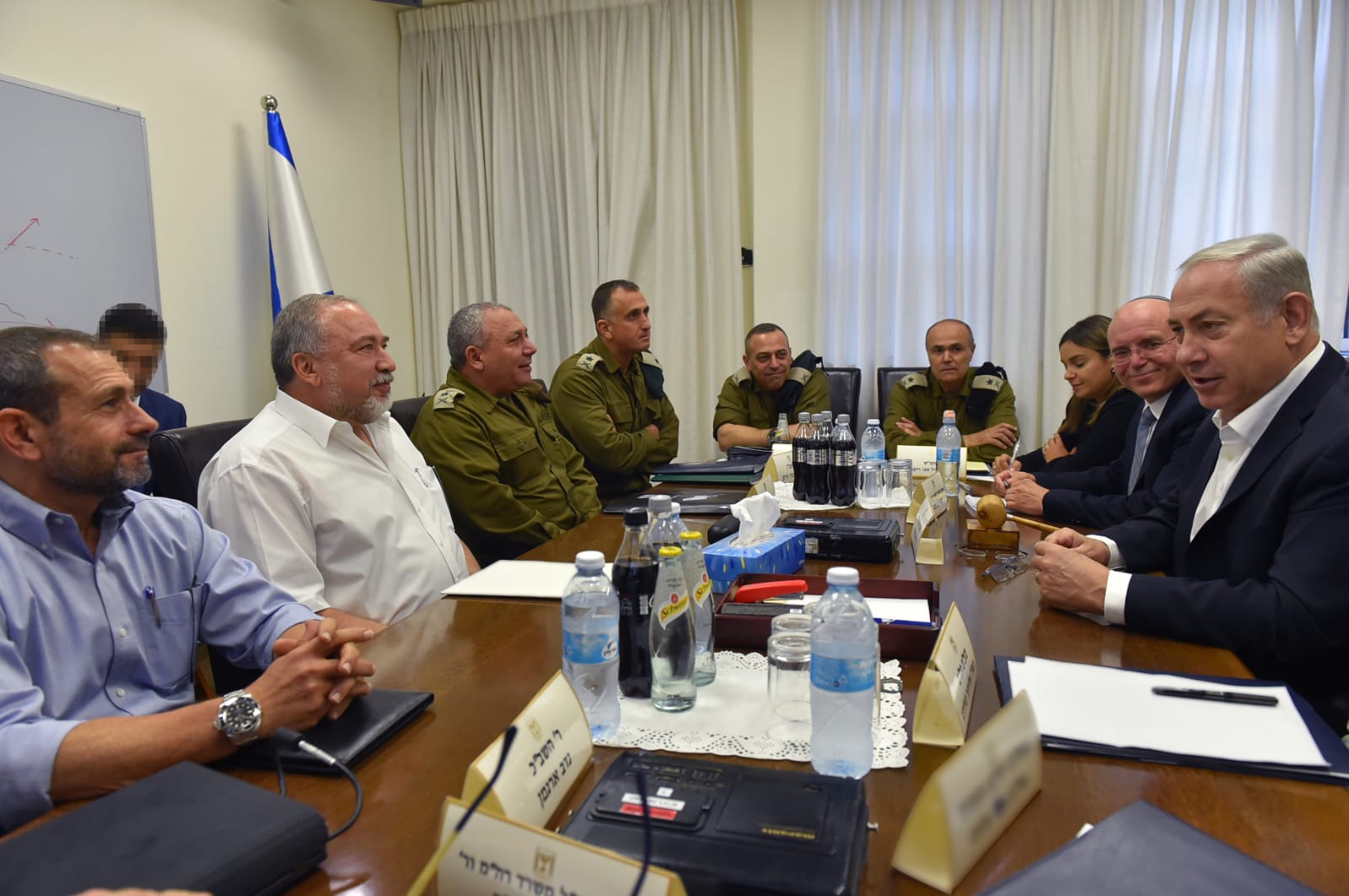
Prime Minister Benjamin Netanyahu (R) and Defense Minister Avigdor Liberman (2nd-L) meet with top IDF generals and Israeli security officials at the military's Kirya headquarters in Tel Aviv on August 9, 2018. (Ariel Hermoni/Defense Ministry)

Prime Minister Benjamin Netanyahu (R) and Defense Minister Avigdor Liberman (2nd-L) meet with top IDF generals and Israeli security officials at the military’s Kirya headquarters in Tel Aviv on August 9, 2018. (Ariel Hermoni/Defense Ministry)

A leading consideration as top ministers deliberated Thursday how to respond to ongoing rocket attacks from the Gaza Strip was the need to focus on the northern border with Syria and the Iranian threat emanating from there, Channel 10 news reported Friday.

According to the TV report, ministers at the emergency security cabinet meeting were informed that the Hamas terror group had made several appeals for a ceasefire through mediator Egypt as well as via the UN.

Unnamed ministers present at the meeting told the broadcaster that Prime Minister Benjamin Netanyahu pushed for an end to the latest round of fighting, rather than a widening of Israeli operations against Hamas and other Gaza terror groups.

Energy Minister Yuval Steinitz, a top ally of Netanyahu, reportedly championed that same line, telling ministers a war in Gaza would not serve Israeli interests, as Jerusalem now needed to focus on the chief threat to national security — Iran’s attempts to entrench itself in Syria along the Israeli border.

Israel has repeatedly vowed to prevent Iran establishing a permanent presence in Syria and Lebanon and has carried out dozens of air strikes against Iran-backed forces and attempts to smuggle advanced weapons to Hezbollah.

Channel 10 reported that IDF officials at the meeting agreed that Israel could content itself with the actions it had taken so far and not widen the campaign, noting that Hamas had suffered serious damage through Israeli strikes on key sites.

Most ministers agreed with Netanyahu and Steinitz’s line of reasoning, the report said.
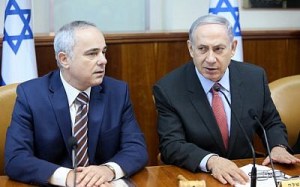
Prime Minister Benjamin Netanyahu (R) and Energy Minister Yuval Steinitz attend the weekly cabinet meeting in Jerusalem on August 16, 2015. (Marc Israel Sellem/POOL)

However, a key opponent was said to be Defense Minister Avigdor Liberman, who called for a tougher Israeli response, claiming stopping the military actions against Hamas targets now would harm Israeli deterrence. Jerusalem Affairs Minister Ze’ev Elkin was said to have sided with Liberman.

The security cabinet eventually elected to move to end the current round of violence, although an official statement issued after the forum adjourned said the army had been instructed to continue to act against terrorists in Gaza.

Some two hours later, Hamas announced that a ceasefire had been agreed upon. Israel later denied that it had signed onto any truce.

The Prime Minister’s Office and the Defense Ministry said Israel responded as long as Hamas was firing rockets, and halted its attacks when Hamas did the same.

The ministry and the PMO denied Channel 10’s account of the meeting, saying the military had been instructed to prepare for all eventualities. They refused to provide further details.
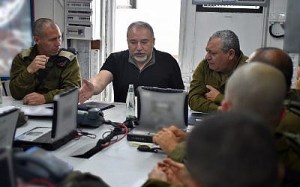
Defense Minister Avigdor Liberman (c) speaks at a briefing with IDF Chief of Staff Gadi Eisenkot (R) and Head of Northern Command Yoel Strick on August 7, 2018. (Ariel Hermoni/Defense Ministry)

The government came under criticism Friday for the alleged ceasefire from local community leaders near Gaza, who called the truce a “mistake” and said Israel must find a permanent solution to the recurrent rounds of violence, either through diplomacy or through military force.

Over Wednesday and Thursday, some 180 rockets and mortar shells were fired at southern Israel.

The projectiles injured at least seven people and caused damage to homes, businesses and infrastructure throughout the region, according to the Israel Defense Forces.

In response, the Israeli Air Force struck over 150 Hamas sites in the Strip, the army said. Palestinian officials said a pregnant woman and her infant daughter were killed in the Israeli strikes, along with one Hamas fighter, who was reportedly in a car used by a rocket-launching Hamas cell that was targeted by an IDF aircraft. The IDF said it only targeted military sites.

On Thursday evening, the Israeli Air Force flattened a five-story building in northern Gaza that served as a headquarters for Hamas’s internal security service, the army said.
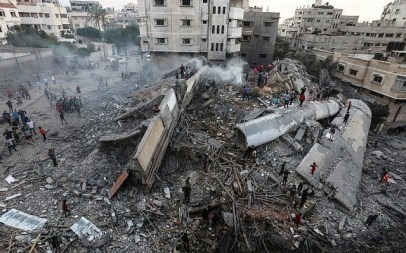
A picture taken on August 9, 2018, shows people inspecting the rubble of a building targeted by the Israeli Air Force in response to a rocket attack that hit southern Israel earlier in the day on August 9, 2018. (AFP Photo/Mahmud Hams)

The IDF said the strike on the building in the northern Gaza Strip, which also served as a cultural center in the coastal enclave, was in response to “rocket fire by the Hamas terror group against the city of Beersheba earlier in the day.”

Hamas announced the ceasefire hours after the bombing of the building in Gaza. The border remained quiet until Friday’s weekly border protest.

On Friday evening, Israeli tanks shelled two Hamas observation posts in Gaza in response to riots on the border, during which a grenade, bombs and Molotov cocktails were hurled at soldiers, and attempts were made to breach the security fence. Hamas had called for mass attendance at the protests.

Around 9,000 people participated in the protests. The Hamas-run Gaza health ministry reported that two Palestinians were killed in the riots. It said over 300 people were hurt, of whom dozens were shot by Israeli troops.

Hamas, an Islamist terror group that seeks to destroy Israel, seized control of the Gaza Strip in 2007.

Syrian air defense systems said activated against ‘hostile target’ 

August 11, 2018

Source: Syrian air defense systems said activated against ‘hostile target’ | The Times of Israel

Unidentified aircraft reportedly penetrates country’s airspace west of Damascus

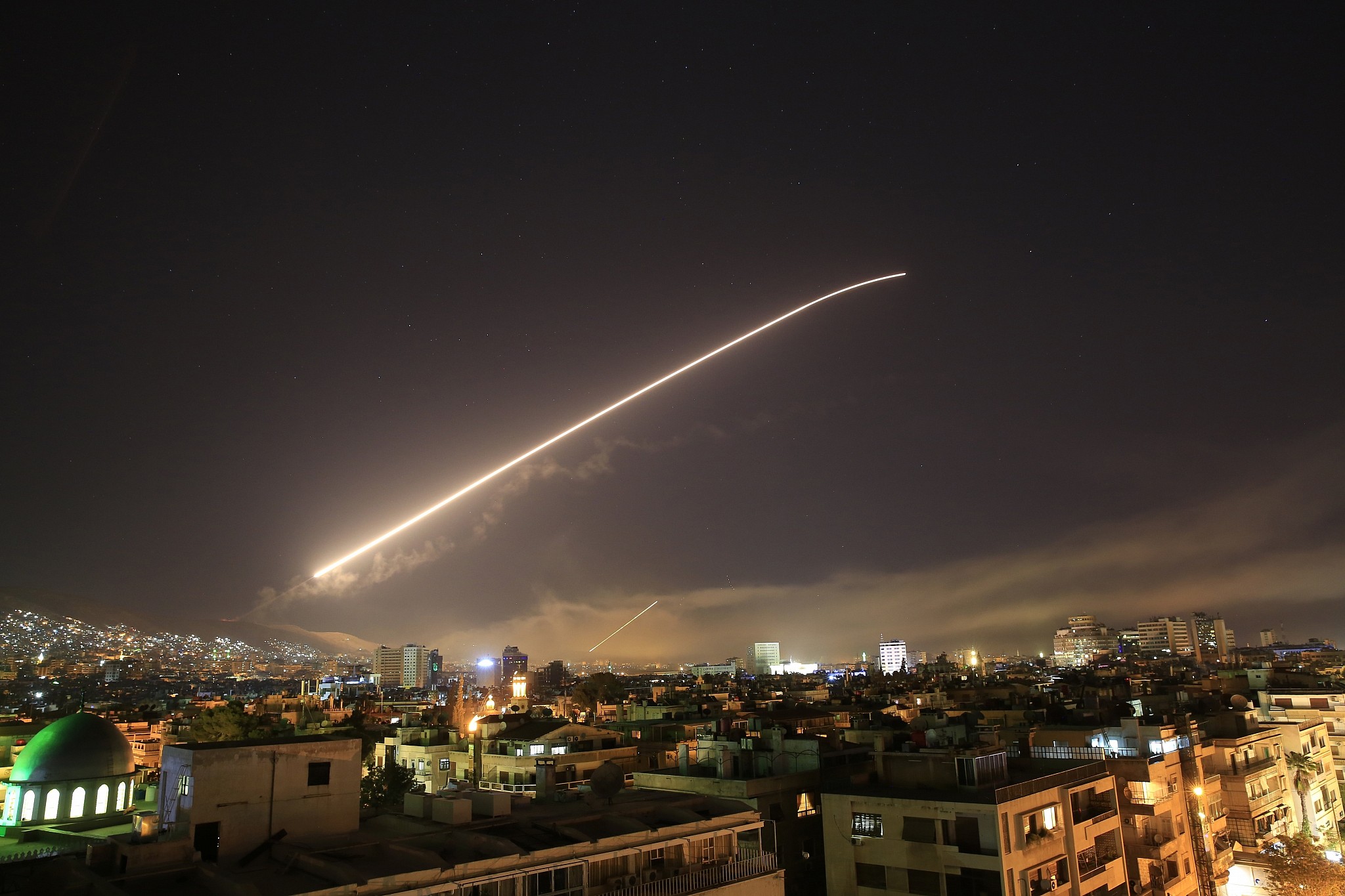
Illustrative - The Damascus sky lights up missile fire, as the US launches an attack on Syria targeting different parts of the capital, early Saturday, April 14, 2018. (AP Photo/Hassan Ammar)

Illustrative – The Damascus sky lights up missile fire, as the US launches an attack on Syria targeting different parts of the capital, early Saturday, April 14, 2018. (AP Photo/Hassan Ammar)

Syria’s air defense systems were activated overnight Friday-Saturday against a “hostile target” that penetrated the Syrian airspace west of Damascus, the country’s official news agency reported.

The report did not state if a strike on the capital had actually taken place.

The incident came eight days after Syria said its air defenses destroyed an unspecified enemy target during an attempted airstrike west of Damascus, as residents reported a series of loud explosions around the Syrian capital.

The pro-government al-Masdar news service said August 2 that air defenses fired several missiles to fend off an attack near the el-Kisweh region and that it was not clear if the Syrian missiles were fired at an aircraft, drone or incoming rockets.

Israel has been blamed for previous attacks on a suspected Iranian military base in the el-Kisweh area. An attack in May killed at least nine Iranians.

In February of this year, the Syrian military shot down an Israeli F-16 fighter jet as it was taking part in a bombing raid against an Iranian-linked airfield in central Syria after an Iranian drone penetrated Israeli airspace, according to the IDF. The F-16’s pilot and navigator were injured as they bailed out of the aircraft, which crashed to ground in northern Israel.

Last month, Syrian government forces reached the frontier with the Israeli Golan Heights after capturing territory from rebels and Islamic State fighters.

It was the first time government forces had taken up positions along the frontier since an uprising against Assad swept through the country in 2011, becoming a seven-year civil war. Islamic State fighters later seized territory from rebels along the frontier region.

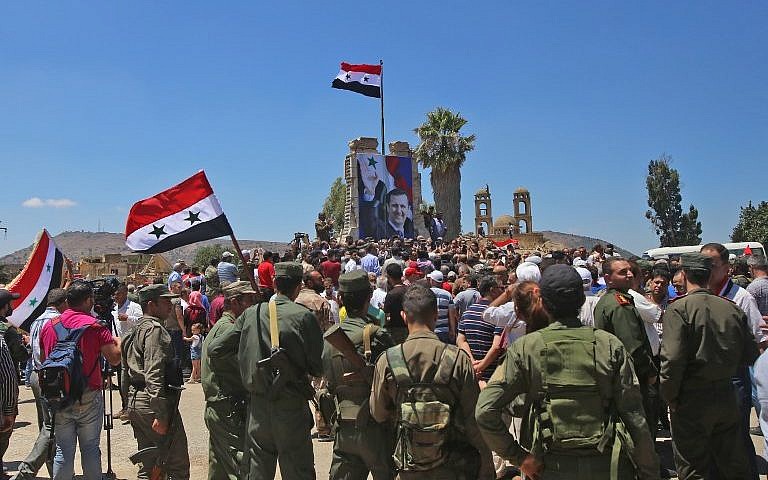
Syrian troops raise the Syrian flag in the border town of Quneitra in the Syrian Golan Heights on July 27, 2018. (AFP Photo/Youssef Karwashan)

Israel has sought to avoid direct involvement in the Syrian conflict but acknowledges carrying out dozens of airstrikes there to stop deliveries of advanced weaponry to its Lebanese enemy Hezbollah.

It has also pledged to prevent Iran from entrenching itself militarily in Syria, and a series of recent strikes that have killed Iranians in Syria have been attributed to Israel.

With Syrian forces now in close proximity, there have already been clashes between the two armies and Israel has insisted that the Syrian military respect the 1974 ceasefire agreement reached between Jerusalem and Damascus after the previous year’s Yom Kippur War. The agreement limits the forces each side can keep in the border region.

On July 24, a Syrian Sukhoi fighter jet entered Israeli airspace over the Golan Heights, traveling approximately two kilometers (one mile) before it was downed when the IDF fired two Patriot interceptor missiles.

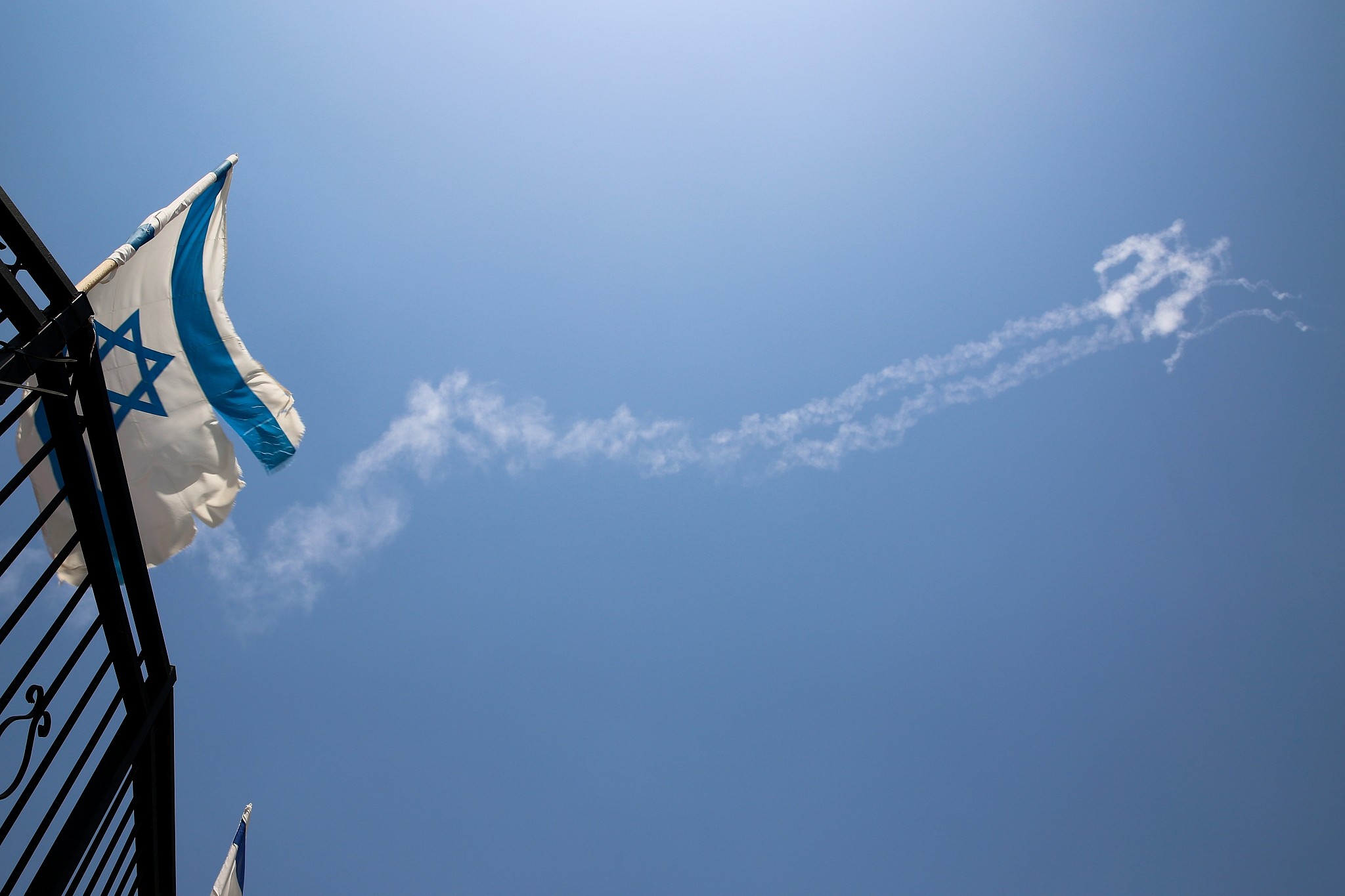
View of the trail left in the sky by a Patriot missile that was fired to intercept a Syrian jet entering Israel from Syria, as seen in the northern Israeli city of Safed, on July 24, 2018. (David Cohen/Flash90)

On July 13, the system shot down a Syrian army drone that was flying over the demilitarized zone separating Israel from Syria. Two days earlier, a Syrian military unmanned aerial vehicle penetrated some 10 kilometers (six miles) into Israeli territory before it too was shot down by a Patriot missile. The IDF said it had allowed the drone to fly so deeply into Israeli territory as it was not immediately clear if it belonged to the Russian military.

On Tuesday, a senior official from a Middle East intelligence agency pointed the finger at Israel’s Mossad for the killing of a top Syrian chemical weapons and rocket scientist over the weekend, The New York Times reported, reinforcing accusations from Syria.

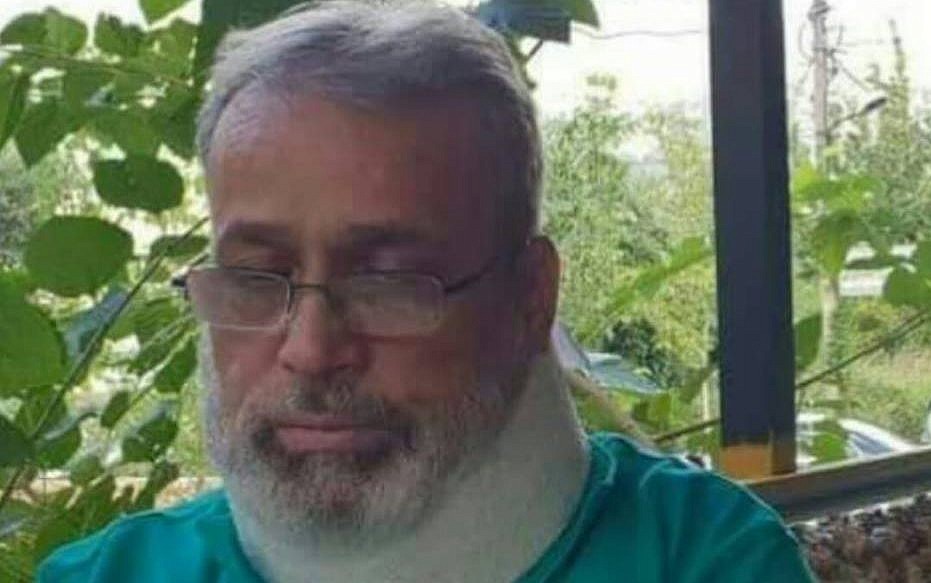
Aziz Azbar (via Facebook)

Aziz Azbar was killed when his car exploded in the northern city of Masyaf late last Saturday night. The unnamed official, speaking on condition of anonymity, told the paper that Israel was behind the attack and said his own intelligence agency had been informed of the Israeli operation.

A senior Israeli government official declined to comment on the report Tuesday, but noted it was “a good thing” that Azbar was dead.

The Syrian regime has been accused of dozens of gas attacks that have killed hundreds of civilians during the war, even after it said it was giving up its stockpile.

Iran said to test ballistic missile for first time in more than a year

August 11, 2018

Source: Iran said to test ballistic missile for first time in more than a year | The Times of Israel

US officials say Fateh-110 was fired during a military exercise last weekend, held as Trump reintroduced economic sanctions on Tehran

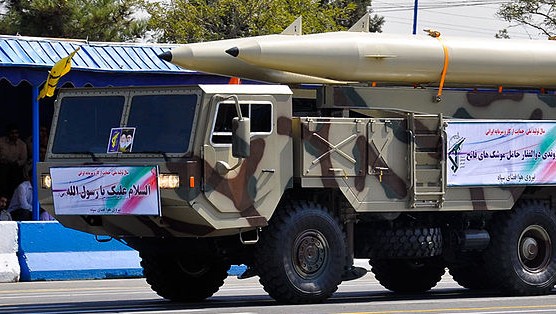
Illustrative: A Fateh-110 ballistic missile, displayed at an Iranian armed forces parade in 2012. (military.ir/Wikimedia Commons)

Illustrative: A Fateh-110 ballistic missile, displayed at an Iranian armed forces parade in 2012. (military.ir/Wikimedia Commons)

Iran carried out a ballistic missile test last week for the first time in 2018, US officials were quoted saying late on Friday.

The test of the Iranian Fateh-110 short-range ballistic missile was carried out at the Strait of Hormuz during a naval exercise in which at least 50 small ships took part, Fox News reported. According to the report, the missiles flew “shore to shore” for more than 160 kilometers (100 miles) over the Strait of Hormuz to a site in the desert.

While the US military knew of Iran’s naval activity in the region, the missile test detected by US spy satellites had not been previously reported.

The missile launch test is the first known test of the Fateh-110 in over a year. Last time such a missile was launched by Iran was in March, 2017.

Iran’s Revolutionary Guard Corps announced last weekend it had completed a “successful” naval exercise in the Persian Gulf, which was seen in the West as a provocation in response to the US reimposition of sanctions on Tehran.

Illustrative: The Iranian warship Alborz, foreground, prepares to leave Iran’s waters at the Strait of Hormuz, in this photo released by the semi-official Fars News Agency, Tuesday, April 7, 2015. (AP/Fars News Agency, Mahdi Marizad)

The timing was unusual, as the exercise appeared to be similar in scale and nature to an annual drill that ordinarily takes places later in the year, in the autumn.

The vessels taking part in the exercise were mostly small attack boats, and there were no interactions reported with US ships in the strait, one of the world’s most important oil shipping lanes.

In a statement regarding the drill, Captain Bill Urban, the US military’s Central Command spokesman, said the US was “aware of an increase” in Iranian naval operations in the Gulf, the Strait of Hormuz and the Gulf of Oman.

“We are monitoring it closely, and will continue to work with our partners to ensure freedom of navigation and free flow of commerce in international waterways,” Urban said.

The Fateh-110 test launch came in the same week as US President Donald Trump signed an executive order to restore nuclear-related sanctions on Tehran, increasing economic pressure on the country. Trump withdrew from the landmark P5+1 nuclear agreement with Iran in May, paving the way for sanctions to be reimposed.

Other signatories of the 2015 JCPOA opposed the America withdrawal from the landmark pact, and Russia and China criticized the reimposition of nuclear-related sanctions on Iran, arguing that Tehran had kept its part of the deal.

Iranian leaders have threatened several times in recent weeks to close the Strait of Hormuz in retaliation for the renewal of sanctions.

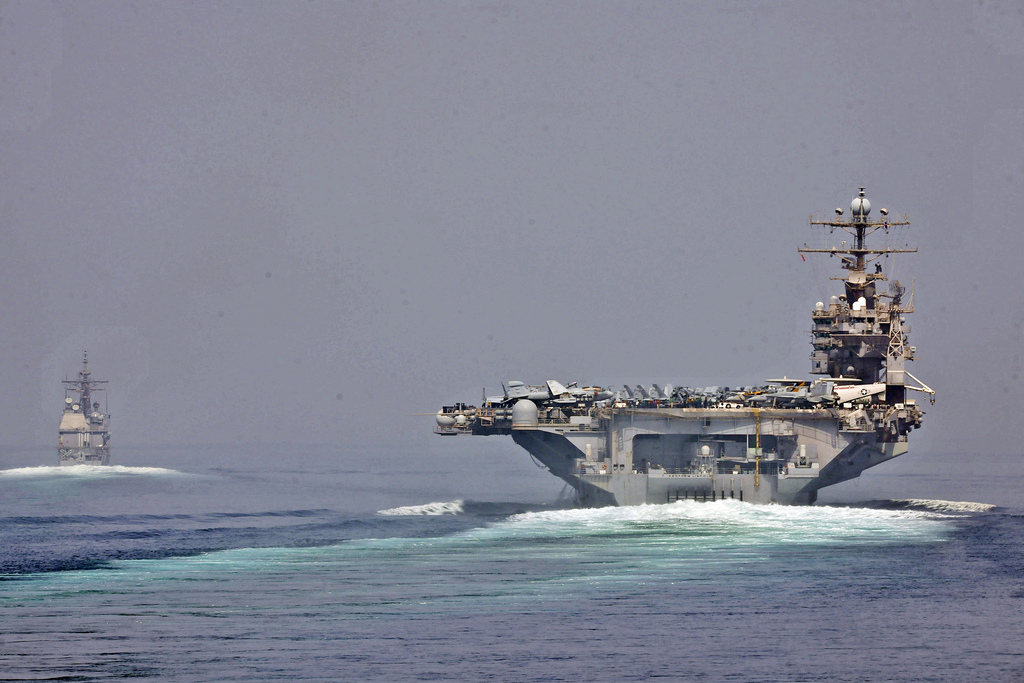
The guided-missile cruiser USS Cape St. George (CG 71) and the aircraft carrier USS Abraham Lincoln (CVN 72) transit the Strait of Hormuz (photo credit: CC BY Official U.S. Navy Imagery)

Illustrative: The guided-missile cruiser USS Cape St. George and the aircraft carrier USS Abraham Lincoln transit the Strait of Hormuz (CC-BY SA 3.0/Official US Navy Imagery)

US officials in recent years have accused both the regular Iranian navy and the IRGC of routinely harassing American warships in the Gulf.

But so far this year, there have been no such incidents.

The IRGC is a paramilitary force that answers directly to the Islamic Republic’s supreme leader, Ayatollah Ali Khamenei.

In January 2016, the Iranians briefly captured the crew of two small US patrol boats that strayed into Iranian waters.

Report: Two killed, 307 injured in clashes along Gaza border

August 11, 2018

Source: Report: One killed, 170 injured in clashes along Gaza border – Arab-Israeli Conflict – Jerusalem Post

A journalist was also said to have been wounded by Israeli fire.

BY ANNA AHRONHEIM
 AUGUST 10, 2018 19:40
Report: Two killed, 307 wounded in clashes along Gaza border

Two Palestinians were killed as thousands of Gazans gathered along the Gaza border fence on Friday as violent protests continued along the border fence with Israel after over 200 rockets and mortars were launched from the Hamas run enclave.

According to Palestinian reports a paramedic was shot and killed in the chest while providing medical attention to injured rioters east of Rafah in the southern Gaza Strip and another 307 demonstrators were wounded, including one man in critical condition after being shot in the head near Khan Younis.

A journalist was also said to have been wounded by Israeli fire.

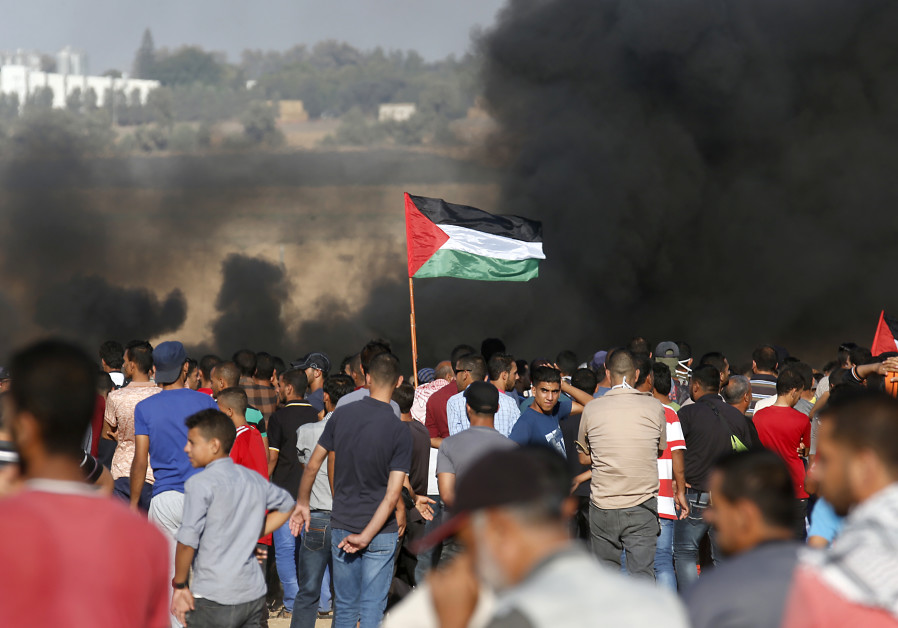
Protesters marking the 20th week of the “Return March” demonstrations rioted along five spots along the border throwing rocks at Israeli soldiers and burning tires and launching incendiary kites into Israel from the Strip, causing at least six fires.

The IDF spokesperson stated that 9000 rioters gathered along the Gaza border fence and threw stones, Molotov cocktails and other explosives.

It also reported that an attempt was made to cross the fence, but the suspect immediately backtracked back into the Gaza Strip. In response to a grenade thrown at Israeli forces, an IDF tank attacked a Hamas position in the northern Gaza Strip. No Israeli soldiers were injured.

Later on Friday the IDF targeted another Hamas position with tank fire in the southern Gaza Strip.

The deadly riots came after a 12-hour lull of fighting between Israel and Hamas which saw over 200 rockets and mortars fired from the coastal enclave towards southern Israeli communities and over 150 retaliatory strikes by Israeli jets.

While a ceasefire to end the escalation of violence was said to have been agreed upon by the two sides following Egyptian and UN mediation, Hamas vowed that the Return March demonstrations would continue.

“Every time the Israeli killing machine tries to break the strength and will of our people to continue its struggle, every time it will fail,” said a spokesman for the group.

The protests along the border dubbed have been the greatest threats to Israeli security in the region since operation Protective Edge due to the combination of terror tunnels, riots, attempted infiltrations and the use of incendiary items.

At least 160 Palestinians have been killed by Israeli fire since the protests began, one Israeli soldier was killed by a sniper and another officer was moderately wounded after he was shot by a sniper in the Kissufim area in an ambush after troops arrived to disperse a violent demonstration by 20 Palestinian youth close to the border fence.

On Tuesday IDF troops killed two Hamas snipers after the military thought troops came under fire near Beit Lahiya in the northern Gaza Strip. The IDF later acknowledged that the shooting did not target the army’s troops.

Maj.-Gen. Herzi Halevi, the head of the army’s Southern Command, concluded the IDF strike was made in error, as the gunmen, part of Hamas’s naval commando unit, were not shooting – as the army believed in real-time – at a border fence patrol by the Rotem Battalion of the Givati infantry brigade but was part of a drill being observed by senior Hamas leaders.

Following the incident the IDF shut Route 25 and several smaller service roads near the Gaza border in light of threats made by Hamas.

“In light of Hamas statements and the evacuation of Hamas outposts, the Southern Command decided to increase readiness and to close a number of roadways in the Gaza periphery,” read the statement released by the IDF Spokesperson’s Unit.

Despite the military significant barrage of projectiles on Wednesday and Thursday the army lifted all restrictions on Israeli residents in the south except for the closure of the roads along the Gaza border out of fear that Hamas snipers will target passing vehicles.

Report: One killed, 170 wounded in clashes along Gaza border

August 10, 2018

A journalist was also said to have been wounded by Israeli fire.

By Anna Ahronheim
August 10, 2018 19:40
Palestinian protesters wave their national flag as they gather during a demonstration at the Israel-Gaza border, in Khan Yunis in the southern Gaza Strip on August 10, 2018. (photo credit: SAID KHATIB / AFP)

One Palestinian was killed as thousands of Gazans gathered along the Gaza border fence on Friday as violent protests continued along the border fence with Israel after over 200 rockets and mortars were launched from the Hamas run enclave.

According to Palestinian reports a paramedic was shot and killed in the chest while providing medical attention to injured rioters east of Rafah in the southern Gaza Strip and another 110 demonstrators were wounded, including one man in critical condition after being shot in the head near Khan Younis.

A journalist was also said to have been wounded by Israeli fire.

Protesters marking the 20th week of the “Return March” demonstrations rioted along five spots along the border throwing rocks at Israeli soldiers and burning tires and launching incendiary kites into Israel from the Strip, causing at least six fires.

The IDF spokesperson stated that 9000 rioters gathered along the Gaza border fence and threw stones, Molotov cocktails and other explosives.

It also reported that an attempt was made to cross the fence, but the suspect immediately backtracked back into the Gaza Strip. In response to a grenade thrown at Israeli forces, an IDF tank attacked a Hamas position in the northern Gaza Strip. No Israeli soldiers were injured.

The deadly riots came after a 12-hour lull of fighting between Israel and Hamas which saw over 200 rockets and mortars fired from the coastal enclave towards southern Israeli communities and over 150 retaliatory strikes by Israeli jets.

While a ceasefire to end the escalation of violence was said to have been agreed upon by the two sides following Egyptian and UN mediation, Hamas vowed that the Return March demonstrations would continue.

“Every time the Israeli killing machine tries to break the strength and will of our people to continue its struggle, every time it will fail,” said a spokesman for the group.

The protests along the border dubbed have been the greatest threats to Israeli security in the region since operation Protective Edge due to the combination of terror tunnels, riots, attempted infiltrations and the use of incendiary items.

At least 160 Palestinians have been killed by Israeli fire since the protests began, one Israeli soldier was killed by a sniper and another officer was moderately wounded after he was shot by a sniper in the Kissufim area in an ambush after troops arrived to disperse a violent demonstration by 20 Palestinian youth close to the border fence.

On Tuesday IDF troops killed two Hamas snipers after the military thought troops came under fire near Beit Lahiya in the northern Gaza Strip. The IDF later acknowledged that the shooting did not target the army’s troops.

Maj.-Gen. Herzi Halevi, the head of the army’s Southern Command, concluded the IDF strike was made in error, as the gunmen, part of Hamas’s naval commando unit, were not shooting – as the army believed in real-time – at a border fence patrol by the Rotem Battalion of the Givati infantry brigade but was part of a drill being observed by senior Hamas leaders.

Following the incident the IDF shut Route 25 and several smaller service roads near the Gaza border in light of threats made by Hamas.

“In light of Hamas statements and the evacuation of Hamas outposts, the Southern Command decided to increase readiness and to close a number of roadways in the Gaza periphery,” read the statement released by the IDF Spokesperson’s Unit.

Despite the military significant barrage of projectiles on Wednesday and Thursday the army lifted all restrictions on Israeli residents in the south except for the closure of the roads along the Gaza border out of fear that Hamas snipers will target passing vehicles.


Thousands of Gazans protest at border, Palestinian medic said killed

August 10, 2018

Source: Thousands of Gazans protest at border, Palestinian medic said killed | The Times of Israel

Rioters hurl rocks, burn tires, fly incendiary kites at weekly rally, despite announced ceasefire; 84 Gazans said injured; at least 6 fires reported in Israel due to airborne arson

Palestinian protesters at the Israel-Gaza border, in Khan Yunis in the southern Gaza Strip, on August 3, 2018. (AFP/Said Khatib)

Palestinian protesters at the Israel-Gaza border, in Khan Yunis in the southern Gaza Strip, on August 3, 2018. (AFP/Said Khatib)

Several thousand Palestinians were participating in weekly border protests along the Gaza fence Friday evening.

Some protesters were rioting near the fence, throwing rocks at Israeli soldiers and burning tires to create a smokescreen. Some flew incendiary kites into Israel. Israeli officials said at least six fires had broken out in Israeli territory since the morning due to airborne arson attacks.

The army said around 5,000 people had amassed at the border, and that it was responding to rioters in accordance with open-fire guidelines.

The Hamas-run Gaza health ministry reported that a Palestinian medic was killed by Israeli fire. It said 84 people were hurt, of which 25 were shot by Israeli troops.

Hamas had earlier said the so-called “March of Return” border demonstrations would continue unimpeded, despite a cessation of hostilities with Israel clinched the night before.

The announcement came after a 12-hour lull in fighting, following two days that saw the heaviest exchange of Palestinian rocket fire and reprisal Israeli airstrikes since the 2014 Gaza war.

Hamas said a ceasefire had been reached “on the basis of mutual calm” and went into effect at midnight. It said the deal was mediated by Egypt and other regional players. Israel denied there was a truce, but a senior Israeli official told Israel Radio that “quiet would be met with quiet.” There were no instances of violence reported along the border overnight.

For the past four months there have been near-weekly, violent protests along the Israel-Gaza border organized by Gaza’s Hamas rulers.

The terror group’s spokesman Hazem Qassim tweeted that demonstrators would continue to “break the siege” on the Gaza Strip.

“Every time the Israeli killing machine attempts to break our people’s will to continue its struggle and marches, it fails to do so,” he wrote. “Today our people will head to the ‘Marches of Return’ to challenge the Israeli war machine.”

“Our Palestinian people has a long-lasting, struggling soul,” the Hamas spokesperson wrote. “It will continue its resistance in all of its forms until it gains its freedom, independence and right to a dignified life.”

Over the past four months the “March of Return” protests have led to deadly clashes which saw Israeli security forces facing gunfire, grenades, Molotov cocktails, and efforts — sometimes successful — to damage or cross the border fence.

At least 160 Palestinians have been killed by Israeli fire since the weekly protests began, the Hamas ministry says. Hamas has acknowledged that dozens of those killed were its members.

One Israeli soldier was shot dead by a Palestinian sniper.

In addition to the border clashes, southern Israel has experienced hundreds of fires as a result of incendiary kites and balloons flown over the border from Gaza. Over 7,000 acres of land have been burned, causing millions of shekels in damages, according to Israeli officials.

Adam Rasgon contributed to this report.

When the peace plan is ready, it will be unveiled

August 10, 2018

State Department spokeswoman rejects reports that Trump administration’s peace has been delayed.


Netanyahu meets Kushner and Greenblatt Amos Ben Gershom/GPO

By Elad Benari, 10/08/18 Arutz Sheva

Source Link: When the peace plan is ready, it will be unveiled

{Trump always walks from a bad deal. So far, Trump has not walked. I say we wait and see what’s in the final details. – LS}

State Department spokeswoman Heather Nauert on Thursday rejected reports that the Trump administration’s peace plan for Israel and the Palestinian Authority (PA) has been delayed.

Nauert was asked during her daily press briefing whether the plan, being prepared by President Donald Trump’s senior adviser Jared Kushner and his Middle East envoy Jared Kushner, was indeed being pushed back.

“We have not unveiled the peace plan at this time. That will be unveiled by Mr. Kushner and Mr. Greenblatt when it is ready. And when it’s ready to be unveiled, they will unveil it,” she promised.

Earlier this week, a source said that the U.S. National Security Council has published a tender to hire experts for a steering committee to be established for the plan. The committee would allegedly be chaired by Middle East special envoy Jason Greenblatt.

According to the source, the administration would not be able to present the final peace plan until 2019.

National Security Spokesperson Garrett Marquis later told Arutz Sheva that the report was false.

“No such committee is being established. Further, the report that we will not release the plan in 2018 is also false. As we have said before, the release of the plan is not related to domestic United States or Israeli politics but when the plan is complete and the timing is right,” said Marquis.

The U.S. peace plan, despite not having been made public yet, has thus far been met with resistance from PA chairman Mahmoud Abbas and his aides. They have refused to engage with the U.S. in protest over Trump’s recognition of Jerusalem of Israel’s capital and his relocating the U.S. embassy to the city.

Trump recently declined to offer a timetable for announcing the proposed peace plan, saying only that “progress” had been made in tackling the complex issue.

“A lot of progress has been made in the Middle East, a lot,” he said in late June after a meeting at the White House with King Abdullah II of Jordan.

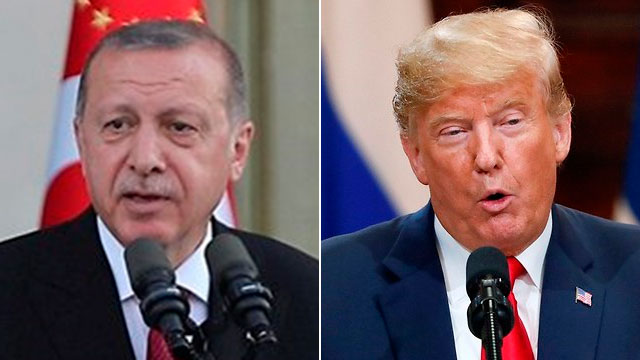
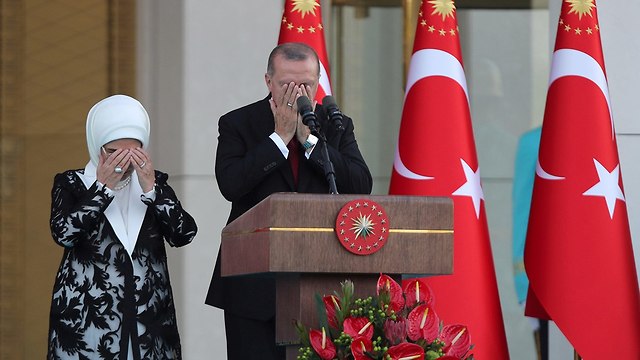
Erdogan tells Turks to buy free-falling lira as Trump doubles metals tariffs

August 10, 2018

Source: Erdogan tells Turks to buy free-falling lira as Trump doubles metals tariffs

( FINALLY the US is taking on Erdogan… – JW )

Following President Trump’s doubling of tariffs on Turkish metal imports, President Erdogan tells Turks to exchange gold, dollars into lira as investors sell off shares in European banks with large exposure to the Turkish economy; Lira dives more than 18 percent on Friday to hit a new record low after Trump took steps to punish Turkey over the detention of US citizens.
President Tayyip Erdogan told Turks on Friday to exchange gold and dollars into lira, with the country’s currency in free fall after President Donald Trump turned the screws on Ankara by doubling tariffs on metals imports.
The lira has been falling on worries about Erdogan’s influence over monetary policy and worsening relations with the United States. That turned into a rout on Friday, with the lira diving more than 18 percent on the day and more than 40 percent this year to a new record low after Trump took steps to punish Turkey in a wide-ranging dispute.Trump said he had authorised higher tariffs on imports from Turkey, imposing a 20 percent duty on aluminium and 50 percent one on steel. The lira, he noted on Twitter, “slides rapidly downward against our very strong Dollar!”

 (Photo: Reuters)

(Photo: Reuters)

“Our relations with Turkey are not good at this time!” he said in an early morning post.

While Turkey and the United States are at odds over a host of issues, the most pressing disagreement has been over the detention of US citizens in Turkey, notably Christian pastor Andrew Brunson who is on trial on terrorism charges. A delegation of Turkish officials held talks with their counterparts in Washington this week but there was no sign of a breakthrough.Waves from the crisis spread abroad, with investors selling off shares in European banks with large exposure to the Turkish economy.The lira sell-off has deepened concern particularly about whether over-indebted companies will be able to pay back loans taken out in euros and dollars after years of overseas borrowing to fund a construction boom under Erdogan.Erdogan’s characteristic defiance in the face of the crisis has further unnerved investors. The president, who says a shadowy “interest rate lobby” and Western credit ratings agencies are attempting to bring down Turkey’s economy, appealed to Turks’ patriotism.

“If there is anyone who has dollars or gold under their pillows, they should go exchange it for liras at our banks. This is a national, domestic battle,” he told a crowd in the northeastern city of Bayburt. “This will be my people’s response to those who have waged an economic war against us.”

“The dollar cannot block our path. Don’t worry,” Erdogan assured the crowd.

That is unlikely to mollify investors who are also worried by the growing dispute with the United States.

The tensions with Washington have, for investors, underscored Turkey’s authoritarian trajectory under Erdogan.

“The basic reason the exchange rate has gone off the rails is that confidence in the management of the economy has disappeared both domestically and abroad,” said Seyfettin Gursel, a prominent economist and a professor at Turkey’s Bahcesehir University.

“First of all, confidence needs to be regained. It is obvious how it will be done: since the final decision-maker of all policies in the new regime is the president, the responsibility of regaining confidence is on his shoulders.”

Turkey’s sovereign dollar-denominated bonds tumbled with many issues trading at record lows. Hard currency debt issued by Turkish banks suffered similar falls.

Meanwhile the cost of insuring exposure to Turkey’s sovereign debt through five year credit defaults swaps has spiralled to the highest level since March 2009, topping levels seen for serial defaulter Greece , which has three bailouts in the last decade.

 (Photo: Reuters)

(Photo: Reuters)

The lira’s relentless depreciation drives up the cost of imported goods from fuel to food for ordinary Turks.

New Finance Minister Berat Albayrak—Erdogan’s son-in-law—acknowledged that the central bank’s independence was critical for the economy, promising stronger budget discipline and a priority on structural reforms.

Presenting the government’s new economic model, he said the next steps of rebalancing would entail lowering the current account deficit and improving trust. There would be a transformation in the finance ministry with regards to taxation, he said.

This did nothing to revive the currency. “The tweet is mightier than the Turkish sword,” Cristian Maggio, head of emerging markets strategy at TD Securities, said in a note to clients. “Albayrak’s plan was uninspiring at best.”

Erdogan, a self-described “enemy of interest rates”, wants cheap credit from banks to fuel growth, but investors fear the economy is overheating and could be set for a hard landing. His comments on interest rates—and his recent appointment of his son-in-law as finance minister—have heightened perceptions that the central bank is not independent.

The central bank raised interest rates to support the lira in an emergency move in May, but it did not tighten at its last meeting.