Archive for August 2018

Israeli Air Force Gets First-Ever Female Squadron Commander

August 12, 2018

Another proud warrior, standing shoulder to shoulder in the shield wall, at the front line against the forces of hate and evil.

I raise my drink to you, Lieutenant Colonel G.

Israeli Air Force Gets First-Ever Female Squadron Commander

The Israeli Air Force has appointed the first female squadron commander in its 70-year history.

According to Israel’s Channel Two, the commander, who for security reasons is referred to only as “G.,” will be promoted to lieutenant colonel and put charge of the 122nd Squadron, known as “Nachshon.” The squadron is composed of planes specifically geared toward intelligence gathering.

The 34-year-old G. has been active in the Air Force since 2003, and has served in several command positions, including deputy commander of the “Nachshon” Squadron itself.

G. — currently a major — said that she was “happy with the appointment,” which she called “a great privilege alongside a great responsibility.”

“The real work is ahead of me,” she added. “I’m proud to serve in the Air Force.”

Galia Wallach, chairwoman of the Israeli women’s rights organization Naamat, hailed G.’s accomplishment, saying, “We are talking about another goal achieved and we must ensure that it’s not the last. I praise the IDF, the Air Force commander, and especially Lieutenant Colonel G. who won the post through merit and not pity. The IDF sent an important message today to Israeli women — even the skies are not the limit for you.”


Did Israel agree to a Gaza ceasefire with Hamas? Likud ministers say no 

August 12, 2018

Source: Did Israel agree to a Gaza ceasefire with Hamas? Likud ministers say no – Arab-Israeli Conflict – Jerusalem Post

It doesn’t matter who requested from whom, because there is no ceasefire,” Jerusalem Affairs Minister Ze’ev Elkin told Army Radio.

BY AVRAHAM GOLD
 AUGUST 12, 2018 10:36
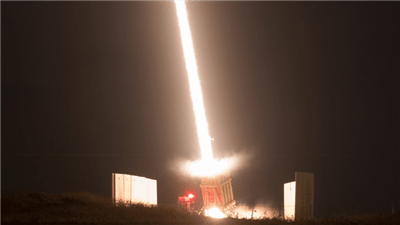
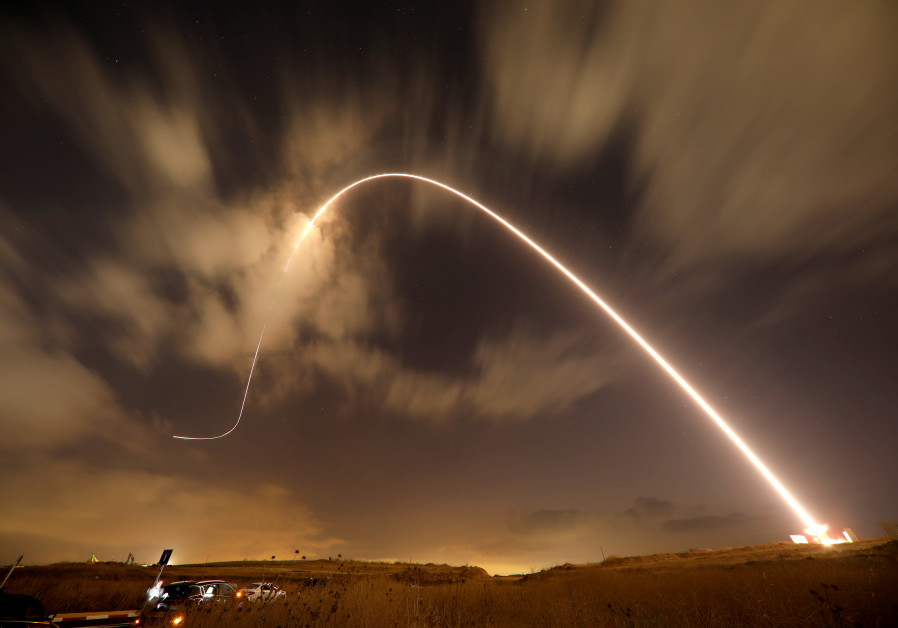
Iron Dome anti-missile system fires interceptor missile as rockets launched from Gaza 2018

Three days after the largest flareup in violence between Israel and Hamas in years, despite the relative quiet in the south, Likud ministers told a different tale Sunday morning as to whether a ceasefire was reached.

Israel agreed to a ceasefire during a four-hour security cabinet meeting Thursday night but neglected to publicize it to make it appear as though Hamas requested the cessation of violence, Army Radio reported on Sunday morning. However, multiple members from Prime Minister Benjamin Netanyahu’s Likud party said otherwise.

Nearly 200 projectiles fired into Israel between Wednesday evening and Thursday afternoon, including a Grad rocket fired at the southern city of Beersheba, nearly 25 miles from the Gaza Strip border. In response, Israeli jets struck at least 150 Hamas posts in the Strip, including a five-story security headquarters.

While Hamas maintains a “calm for calm” treaty has gone into effect while reserving action if Israel attacks and no rockets were fired over the weekend, Likud ministers said on Sunday no truce has been struck.

The Army Radio report cited an unnamed security cabinet official, who said Israel agreed to a ceasefire, as UN officials visited the coastal enclave over the weekend in the hopes of brokering a long-term truce.

Energy and Water Minister Yuval Steinitz, a member of the security cabinet, denied the reports of a ceasefire, telling Kan radio as much.

In the last round [of violence] we hit the [Hamas] missile production badly. We as a cabinet need to see the general picture – we have not signed a ceasefire agreement and we are keeping our cards close to our chests,” he said. “Ousting Hamas is an option we are closer to now than any time in the past… Not every time we are hit, we go to all-out war. Sometimes we go into smaller campaigns with acute reactions.”

It doesn’t matter who requested from whom, because there is no ceasefire,” Jerusalem Affairs Minister Ze’ev Elkin told Army Radio. “There’s no ceasefire as of now.”

Elkin, a Jerusalem mayoral candidate, surmised Hamas chose to not continue attacks because of the Israeli response.

“They just made a decision not to fire in the wake of the IDF attack,” he said.

Avi Dichter, Chairman of the Knesset Foreign Affairs and Defense Committee and former head of the Shin Bet, warned in an interview with Kan radio only Israel will dictate military options.

“Gaza will be dismantled by political arrangement or military action. No one will determine the timing of the military campaign except for the State of Israel,” he said.

Despite the lack of rocket fire, Gazans continued to send incendiary devices across the border that torched Israeli land over the weekend and Israel responded with aircraft strikes on Hamas positions.

Anna Ahronheim, Tovah Lazaroff and Khaled Abu Tomeh contributed to this report.

Is South America Turning Pro-Israel? 

August 12, 2018

Source: Is South America Turning Pro-Israel? – Diaspora – Jerusalem Post

BY CHARLES BYBELEZER/THE MEDIA LINE, DIMA ABUMARIA/ THE MEDIA LINE
 AUGUST 12, 2018 09:23
Is South America Turning Pro-Israel?

A day after Colombia’s foreign minister announced the country’s recognition of a Palestinian state, the government backtracked and vowed to review the move. The original decision was taken by former president Juan Manuel Santos right before he was replaced by Ivan Duque, who was sworn in on Tuesday.

The new leader—who has since promised to re-evaluate the position—reportedly was informed earlier this week of his predecessor’s behind-the-scene dealings, which were made official in an August 3 letter to the Palestinian representative in Bogota.

Colombia is the last country in South America to formally recognize the “State of Palestine,” a declaration made by some 130 nations worldwide.

“There may be excesses regarding the way this decision was taken by the outgoing president,” current Colombian Foreign Minister Carlos Holmes stated, adding that “the [Duque] government will carefully examine its consequences and act in accordance with international law.”

Hanan Jarrar, head of the Palestinian Government Directorate of the Americas & the Caribbean, contended to The Media Line that “the recognition is completely legal as the former president made the decision during his mandate.” She attributed the development to two years of hard campaigning by the Palestinian Ministry of Foreign Affairs.

Jarrar stressed that there is enormous pressure being placed on Duque to reverse the move, but “I doubt that the new government would cancel the recognition, a sovereign decision that no one can interfere with.”

Palestinian political analyst Hanna Issa believes that while the decision accords with international norms, it constitutes a diplomatic faux pas. “[Santos] should have given the new president some time and space, especially at the beginning of his tenure,” he explained to The Media Line, going so far as to compare the situation to then-U.S. president Barack Obama’s abstention from a vote on United Nations Security Council Resolution 2334 only days before left office.

That resolution, adopted on December 23, 2016, described the construction of Jewish communities in “Palestinian territories occupied since 1967, including East Jerusalem” as a “flagrant violation” of international law with “no legal validity.”

Colombia’s recognition of a Palestinian state came to light during United States Ambassador to the United Nations Nikki Haley’s trip to attend Duque’s inauguration, with Washington confirming that it is gathering more information on the matter from its close South American ally. Israeli Prime Minister Benjamin Netanyahu cancelled his own planned visit to the confirmation—which would have been his second to Bogota over the past year—citing ongoing tensions with Hamas.

When contacted by The Media Line, a spokesperson for the Israeli premier reiterated that the cancellation was made due to “security” reasons, and not over political disagreements.

The Israeli government has made South America—and, more broadly, Latin America—the focus of a major diplomatic push, with Netanyahu having become the first sitting premier to visit the region last September, making stops in Argentina, Paraguay, Colombia and Mexico.

Notably, all of these countries two months later abstained from a vote in the UN General Assembly on a resolution calling for the U.S. to reverse its recognition of Jerusalem as Israel’s capital.

Israel’s ties to countries such as Honduras, which voted against the UNGA resolution, and Guatemala, which followed the U.S.’ lead in May by moving its embassy to Jerusalem, also appear to be at all-time high levels.

Due to Israeli inroads, the Palestinian Authority may be facing another setback, as Brazil’s leading presidential candidate, Jair Bolsonaro, promised this week to close the Palestinian mission in Brasilia and move his country’s embassy to Jerusalem if he wins the elections slated for October.

“Is Palestine a country? Palestine is not a country, so there should be no embassy here,” Bolsonaro—nicknamed “Brazil’s Trump”—asserted.

By contrast, former Brazilian president Luis Inacio Lula da Silva recognized a Palestinian state in 2010 and at the time donated $10 million to Hamas, which rules the Gaza Strip and has pledged to destroy Israel. Lula’s political disciple, Dilma Rousseff, maintained pro-Palestinian policies until her impeachment two years ago.

Evidencing past tensions, Brazil’s former top diplomat, Maria Anguilla Holguin, was in 2014 denied permission from Israel to visit Ramallah. Instead of first traveling to Jerusalem as the Israeli government demanded, Holguin met with Riad al-Malki in Jordan.
A year later, Rousseff torpedoed Dani Dayan’s appointment as Israel’s ambassador to Brasilia over his past advocacy for Jewish settlement in the West Bank.

According to Professor Emmanuel Navon, a lecturer in International Relations at Tel Aviv University and a Fellow at the Jerusalem Institute for Strategic Studies, the approach of countries to the Israeli-Palestinian conflict “very much depends on who is in power. The Right in Latin America seems to be more like the evangelical community in the United States, whereas the Left seems to be getting more radical.

“So depending on who wins elections Israel must take a targeted approach,” he told The Media Line. “Also, the countries in question don’t have much of a democratic culture, so it is the leaders who make decisions without necessarily needing to sway public opinion. It is not something that voters care about anyway.

Dr. Navon emphasized that one of the main reasons for Israel’s diplomatic foray into the Americas is to thwart Iranian expansionism. “Hezbollah and Iran have a big presence in that region. Argentina is a good example, with the cover-up of by former leader Cristina Fernandez de Kirchner of Tehran’s role in the 1994 bombing of a Jewish community center in Buenos Aires.”
Today, President Mauricio Macri is trying to hold those responsible to account.

While many South American countries remain firmly in the anti-Israel camp, foremost Venezuela, a close Iranian ally, as well as Bolivia under Evo Morales, things seem to be trending in the other direction.

As such, the southern hemisphere could very well become the next major diplomatic battleground in the Israeli-Palestinian conflict.

Turkeys president: US waging “economic war” against Turkey

August 12, 2018

Source: Turkeys president: US waging “economic war” against Turkey

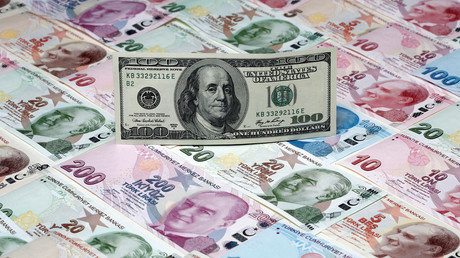
President Erdogan says there is a premeditated effort to derail the country’s economy following a financial shockwave that hit Turkey after Turkish lira fell 14 percent to 6.51 per dollar; Massive currency move comes in light of President Trump’s steps to punish Turkey over the detention of US citizens.
Turkey’s president on Saturday blamed the country’s economic downturn on the United States and other nations that he claims are waging “war” against his country.
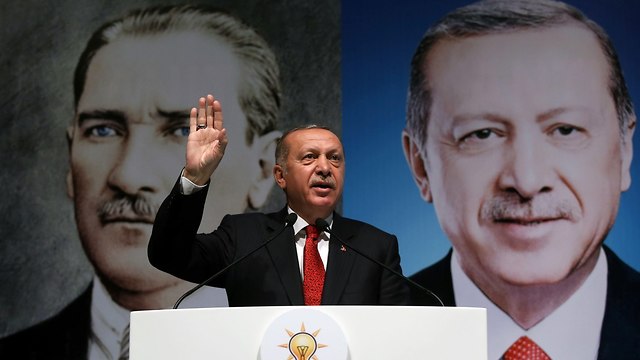
Speaking in the northeastern province of Rize, President Recep Tayyip Erdogan said that dollars, euros and gold were now “the bullets, cannonballs and missiles of the economic war being waged against our country.”Erdogan promised supporters that Turkey was taking the necessary precautions to protect its economy but added “the most important thing is breaking the hands firing these weapons.”

President Erdogan (Photo: AFP)

President Erdogan (Photo: AFP)

Turkey was hit by a financial shockwave this week as its currency nosedived over concerns about the government’s economic policies and a trade dispute with the United States.The lira tumbled 14 percent Friday, to 6.51 per dollar, a massive move for a currency that will make Turkish residents poorer and further erode international investors’ confidence in the country. The currency drop is particularly painful for Turkey because it finances a lot of its economic growth with foreign money.

The currency’s drop—41 percent so far this year—is a gauge of fear over a country coming to terms with years of high debt, international concern over Erdogan’s push to amass power, and a souring in relations with allies like the US

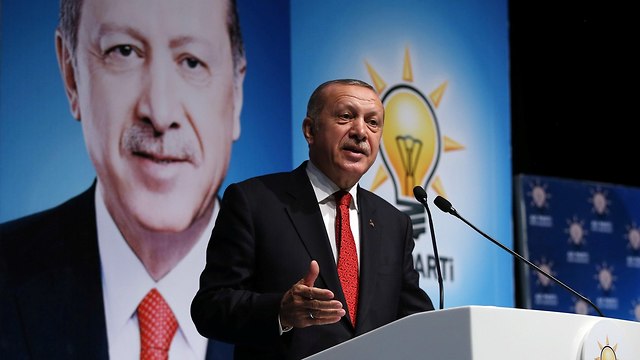
 (Photo: Reuters)

(Photo: Reuters)

In an opinion piece published in The New York Times on Friday, Erdogan criticized the tensions with the US, saying a “failure to reverse this trend of unilateralism and disrespect will require us to start looking for new friends and allies.”

Among the issues, Turkey has arrested an American pastor and put him on trial for espionage and terror-related charges linked to a failed coup attempt in the country two years ago. The pastor has proclaimed his innocence.

The US responded by slapping sanctions on Turkey and threatening more. The sides held talks in Washington this week but failed to resolve the spat.

President Donald Trump on Friday tweeted that he had authorized the doubling of steel and aluminum tariffs on Turkey. He said the tariffs on aluminum imports would be increased to 20 percent and those on steel to 50 percent as the Turkish lira “slides rapidly downward against our very strong Dollar!”

“Our relations with Turkey are not good at this time!” he wrote.

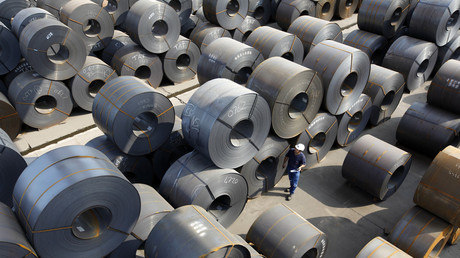
The United States is the biggest destination for Turkish steel exports, with 11 percent of the Turkish export volume. The lira fell further after Trump’s tweet.

 (Photo: AP)

(Photo: AP)

Turkey later said Erdogan had held a phone call with Russian President Vladimir Putin to discuss economic ties. It did not disclose details, but the move suggests Turkey might gravitate further from its NATO allies toward cooperation with Russia, whose relations with the West are at their lowest point since the Cold War.

Turkey’s woes have been aggravated by investor worries about the economic policies of Erdogan, who won a new term in office in June with sweeping new powers.

Erdogan has been putting pressure on Turkey’s central bank to not raise interest rates in order to keep fueling economic growth. He claims higher rates lead to higher inflations—the opposite of what standard economic theory says.

Independent analysts argue the central bank should instead raise rates to tame inflation and support the currency.

Amid the dispute, foreign investors could be spooked and try to pull their money out, reinforcing the currency drop and potentially leading to financial instability.

Iran taking back enriched uranium it sent out to Russia under nuke deal

August 12, 2018

Source: Iran taking back enriched uranium it sent out to Russia under nuke deal | The Times of Israel

Energy official says re-imposed US sanctions forcing Islamic Republic to return to nuclear fuel sources for domestic power needs

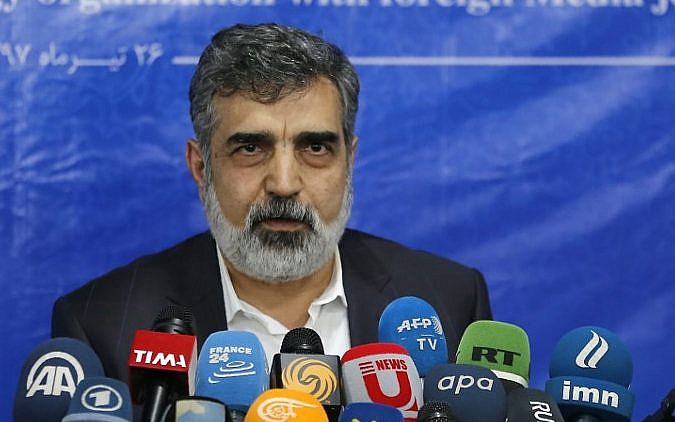
Spokesman of the Atomic Energy Organization of Iran (AEOI), Behrouz Kamalvandi answers the press in the capital Tehran on July 17, 2018. (AFP PHOTO / ATTA KENARE)

Spokesman of the Atomic Energy Organization of Iran (AEOI), Behrouz Kamalvandi answers the press in the capital Tehran on July 17, 2018. (AFP PHOTO / ATTA KENARE)

Iran on Saturday announced it was taking back another portion of the 20 percent enriched uranium stockpile it handed over to Russia as part of the nuclear deal signed in 2015 with world powers in exchange for sanctions relief.

Spokesman and vice-president of Iran’s Atomic Energy Organization Behrouz Kamalvandi said the re-imposition of US sanctions following President Donald Trump’s exit in May from the accord necessitated returning the uranium for domestic needs.

“If the fuel is sold to us, we do not need to produce it by ourselves,” Kamalvandi said, according to the semi-official Fars news agency.

“If the nuclear deal remains alive, the other sides should sell us the fuel and if the nuclear deal dies, then we would feel unimpeded to produce the 20% fuel ourselves,” he added.

Kamalvandi said Iran stopped producing 20% enriched uranium and transferred its stockpile to Russia in ten batches as per the 2015 deal. He said Russia had already returned one batch of the fuel earlier this year at Tehran’s request, and a second would be returned soon.

The multi-national accord brokered by the Obama administration stipulated that Iran ship out all but 300 kilograms (over 660 pounds) of its almost nine-ton stockpile of low-enriched uranium. Low-enriched uranium is suited to generate electricity but can be further enriched to arm nuclear warheads.

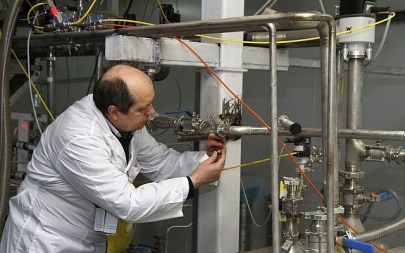
Illustrative: An unidentified International Atomic Energy Agency inspector cuts the connections between the twin cascades for 20 percent uranium enrichment at the Natanz facility, some 200 miles (322 kilometers) south of the capital Tehran, Iran, Monday, January 20, 2014. (AP/IRNA, Kazem Ghane)

In May, the US announced it was abandoning the 2015 agreement and reimposing nuclear-related sanctions, threatening global companies with heavy penalties if they continue to operate in Iran.

In a bid to salvage the accord, the EU and European parties to the deal — Britain, France, and Germany — presented a series of economic “guarantees” to Iran last month, but they were deemed “insufficient” by Tehran.

In recent weeks, Iran has prominently displayed its centrifuges and threatened to resume enriching uranium at higher rates. At one point, Iranian President Hassan Rouhani renewed a long-standing Iranian threat to close off the Strait of Hormuz, through which a third of all oil traded by sea passes.

US sanctions that had been eased by the Obama administration under the deal took effect again Tuesday, targeting US dollar financial transactions, Iran’s automotive sector, and the purchase of commercial planes and metals, including gold. Even stronger sanctions targeting Iran’s oil sector and central bank are to be re-imposed in early November.

Trump has offered talks on a “more comprehensive deal” but Iran has balked at negotiating under the pressure of sanctions and has instead leaned on its increasingly close ties with fellow US sanctions targets Turkey and Russia.

Iranian Foreign Minister Mohammad Javad Zarif told the conservative Tasnim news agency on Saturday there are no plans to meet with US Secretary of State Mike Pompeo or other US officials on the sidelines of the UN General Assembly in New York next month, which both Rouhani and Trump are due to attend.

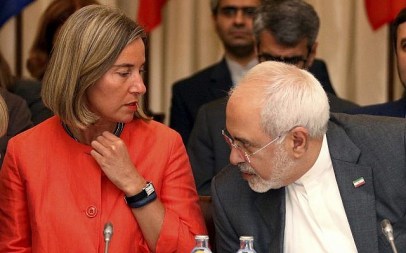
European Union High Representative for Foreign Affairs Federica Mogherini and Iranian Foreign Minister Mohammad Javad Zarif, from left, wait for the start of a bilateral meeting, as part of the closed-door nuclear talks with Iran at a hotel in Vienna, Austria, Friday, July 6, 2018. (AP Photo/Ronald Zak)

“On Trump’s recent proposal [of talks], our official stance was announced by the president and by us. Americans are not honest and their addiction to sanctions does not allow any negotiation to take place,” Zarif told Tasnim.

It was Iran’s most explicit rejection of renewed nuclear talks to date, after much speculation that economic pressure would force its leaders back to the table with Washington or at least to engage in backroom discussions in New York.

Turkish lawyers want US soldiers arrested for ‘ties to coup movement’

August 11, 2018

Published time: 11 Aug, 2018 16:28

https://www.rt.com/news/435730-turkish-lawyers-us-soldier-arrests/

© Friso Gentsch / Global Look Press

Turkish lawyers are calling for US soldiers at Incirlik Air Base to be arrested, alleging they have ties to the movement behind the 2016 coup attempt. They want the base searched via warrants and flights leaving it to be halted.

As the political row between Ankara and Washington intensifies, the attorneys from the pro-government Association for Social Justice and Aid ask for the “arrest of the commanders of the US Air Force who are the superiors of the soldiers based at Incirlik and took a role in the failed coup attempt on July 15, 2016.”

Read more

© Umit Bektas

The details of the demands have been outlined in court documents filed at the chief public prosecutor’s office in Adana, published online by the Stockholm Center for Freedom, a group of exiled Turkish journalists.

The lawyers accuse the US military of attempting to destroy constitutional order through their activities with a movement led by Fethullah Gülen, who Ankara claims was behind the failed coup attempt on July 15, 2016.

“We want to arrest American soldiers for serious ties to FETO (Gülen movement) or in other words global American terror,” Muhammed Gömük, president of TayDer (Social Justice and Aid) told RT, adding that there are 12 “suspicious persons” implicated.

“We believe that all blames are true, absolutely, because we provided very strong evidence.”

Gömük said the investigation could spread to “lots of American officials,” including soldiers, embassy and consulate personnel. He went on to mention John Bass, the former US ambassador, claiming he had been “chatting with the coup team, according to a video record.”

In addition to their detention, the complaint seeks search and seizure warrants for the base, in order to gather evidence. It also seeks the halting of all outbound US flights from the base. Incirlik, an important staging base for combat operations against Islamic State (IS, formerly ISIS), is home to roughly 2,200 Americans, according to RealClear Defense.

When asked by RT what kind of response it expected from Washington, Gömük said its reaction “is not important so much,” as Turkey does not respect the US.

Read more

© Murad Sezer

Meanwhile, US European Command spokesman Mark Mackowiak told the Air Force Times that “any reports that US government or military personnel had any previous knowledge or involvement in a Turkey coup attempt are baseless and completely false.”

The petition comes after the US levied economic sanctions on Turkish Interior Minister Suleyman Soylu and Justice Minister Abdulhamit Gul for their roles in the detention of American pastor Andrew Brunson, who has been held since October 2016 on charges of belonging to a terrorist organization – allegations which the US and international human rights organizations say are false.

Tensions between the US and Turkey, both NATO members, have steadily worsened in recent years, partly surrounding Ankara’s crackdown following the failed coup attempt. The situation declined again in October 2017, when Turkey arrested a US consulate worker for alleged ties to Gülen. The two have also recently been at odds over Turkey’s purchase of Russian S-400s, with the US holding back on its delivery of F-35 jets to Turkey over the issue.

Sweden’s Government Funds Anti-Semitism

August 11, 2018

ANALYSIS: What’s Behind the Latest Escalation in Israel’s South? 

August 11, 2018

Source: ANALYSIS: What’s Behind the Latest Escalation in Israel’s South? – Israel Today | Israel News

Friday, August 10, 2018 |  Yochanan Visser

The situation in southern Israel deteriorated significantly Wednesday night after Hamas started to pound the Israeli towns and communities in the Gaza belt with 180 rockets and mortar shells. Tens of thousands of Israelis spent several nights in bomb shelters, the IDF retaliated against over 150 terrorist targets, and Prime Minister Benjamin Netanyahu and his generals contemplated full-scale war.

According to Hamas, this brush with another destructive conflagration began as retaliation for an IDF attack on two of its snipers last Tuesday.

The two were taking part in an exercise that was attended by Hamas leaders and aimed their rifles at an IDF position opposite the border after which they were taken out by a Merkava tank.

However, the lead-up to this fresh outbreak of violence really started on July 20

th, when Hamas killed an IDF soldier close to the border fence in Gaza using a sniper.

Since then Hamas had been talking about a long-term truce with Israel which would include the full opening of the Keren Shalom border crossing which is used for the import of Israeli goods.

The demand Israel fully opens the Keren Shalom border crossing has nothing to do with Hamas’ desire to improve the dire humanitarian situation in the Gaza strip but everything with rampant corruption within the top of the terror organization.

The Gatestone Insitute just published an investigative article detailing this corruption which has filled the coffers of the Hamas top since it violently took over control of Gaza from the Palestinian Authority in 2007.

Corruption is one way for Hamas to stay in power maintaining a low-intensity conflict with Israel is another.

For this reason Hamas started the so-called ‘Great March of Return’ at the end of March the two-month-long violent confrontations along the border with Israel in Gaza which turned into the so-called ‘Kite Jihad’ the daily attacks with incendiary balloons and kites which have caused a ecological disaster in southern Israel.

Hamas started these violent confrontations to remain relevant and to curry favor with Iran that is using the terror group as another proxy army against Israel.

It is no coincidence Hamas leader al-Arouri, who is living in Lebanon and never visited Gaza, arrived in the coastal enclave last week officially to hold consultations with other Hamas leaders about the ‘imminent’ long-term ceasefire with Israel.

Al-Arouri, an arch terrorist who has spent years in Israeli prisons for organizing terror attacks, was responsible for the reconciliation between Hamas and the Islamist regime in Tehran in October 2017 and the resuming of Iranian aid to the Sunni Islamist terror organization.

Shortly after this reconciliation Hamas started to prepare for another round of violence with Israel but was careful not to enter into all-out war with the Jewish state.

Israeli politicians like Defense Minister Avigdor Liberman have repeatedly accused Iran of being behind the current round of violence in Israel’s south.

Al-Arouri’s presence in Gaza could be the reason Hamas suddenly escalated the hostilities against Israel.

After all, Iran is working to create three fronts against Israel via its proxies as a preparation for a major war against the Jewish State: Lebanon, Syria -where Iran has taken-over the military as reported by the Jerusalem Post on Wednesday- and Gaza.

Scenarios for a US-Iran detente 

August 11, 2018

Source: Scenarios for a US-Iran detente – Israel National News

There are two possible scenarios for what is going to transpire between the US and the Ayatollahs, one positive and the other disastrous.

Dr. Mordechai Kedar, 10/08/18 17:49 | updated: 17:40

What does the future hold for  Iran?

The American sanctions on Iran went into effect this week and a large number of companies stopped doing business with Iran so as not to lose their permission to continue to be active in America’s economy. The sanctions will turn more severe in three months time and will include banks and energy industries, with the result that Iran will lose much of its income, the major part of which stems from oil, gas and related products. It seems that only China intends to continue its regular – or almost regular – economic ties with Iran and Russia, too,will probably not entirely halt its economic ties with the Ayatollah regime.

This article will explore two possible scenarios that could take place over the next two years. Both are based on the following basic assumptions:

1. President Trump will continue to pressure Iran in every conceivable economic way and that  US pressure will bring the Iranian economy to its knees and possibly to a state of total collapse.

2. If Iran does not engage in armed violence, Trump will refrain from military action as well. If Iran employs military measures against sea travel in international waters – the Straits of Hormuz and Bab el Mandeb – the US armed forces will strike Iran mercilessly.

3. President Trump will get even with Iran if it uses “proxies” in order to attack American interests.

4. Iran will attempt to get through the coming two and a half  years quietly, hoping that Trump is to be defeated and followed by a Democratic president who will reinstate the nuclear agreement and remove the sanctions.

5. European leaders will continue to support Iran with words, but they will not be able to force European industries to do business with Iran.

6. European leaders are worried that Iran’s regime will collapse and lead to general chaos, with everyone fighting everyone else and a new wave of millions of immigrants attempting to reach Europe. That is the reason Europe’s leaders are trying to resuscitate the Iranian regime in every way they can.

There are two possible scenarios:

Scenario I: Negotiations

The best outcome for the Ayatollah regime and the worst for the Middle East and the entire world is a return to the negotiating table along with world powers in response to American demands.

Iran will use negotiations to gain time until the 2020 elections, in the hopes that Trump loses and a  Democrat wins the presidency. The Iranians are convinced that a Democratic president will return to the 2015 nuclear agreement and remove the sanctions renewed by Trump. The Ayatollahs are negotiating wizards and will succeed in dragging out negotiations for years while creating a false picture of progress, keeping Trump, American politicians and the world media calm. Iran knows that from the start of 2020, Trump will do anything that he feels will lead to his reelection and will therefore present Iranian flexibility as his negotiating achievement.

Anyone following the development of the US-North Korean affair sees a similar picture: During the Singapore meeting we saw Trump impressed by Kim, his “new-found friend” and optimistic declarations from both participants. However, during negotiations taking place far from the cameras, things are much more difficult and it is entirely unclear whether Kim will actually dismantle his nuclear project and the long range missiles threatening the US.  It is obvious that Kim wants to gain time in order to heighten the pressure on the United States, which even during the Trump era, prefers to stay out of war and has no desire to exchange salvos of ballistic missiles with a regime that has no restraints and puts no value on human life.

Iran’s rulers hope to travel a similar route with Trump: They will meet him, smile at the cameras, scatter optimistic declarations in order to achieve positive public opinion, while trying to blacken Trump’s name and create an image of him as a troublemaker – all this to lower his chances for reelection. They know all about the hatred leveled at him from large sections of the  American  public, and they will try to fuel the fire of that enmity during the negotiations. They will create an image of a country willing to compromise and ease up, in order to give the anti-Trumpers a weapon to use against a president who does not want to reach an agreement similar to that granted them by Obama.

Anyone with the slightest understanding of the Middle East realizes that the very fact of the United States entering into negotiations with the Iranians is an Iranian victory. They will use the negotiations to gain time while Trump’s political clock approaches November 2020.  The negotiations will leave the Ayatollah regime intact, and despite the dire economic situation, they will survive Trump’s four year term and then continue exactly as they did before his election: Resume their military nuclear project, continue manufacturing long range ballistic missiles and continue threatening the stability of the Middle East and the rest of the world.

Scenario II: A systemic collapse


Developments in Iran over the past several months are leading the country to a collapse of its economic system, from which it is a short road to the collapse of the regime.

Developments in Iran over the past several months are leading the country to a collapse of its economic system, from which it is a short road to the collapse of the regime. Inflation is rampant at about 130%, local currency has lost 80% of its value and is still going down. The reason behind this negative development is the public’s lack of faith in the Iranian currency and a general feeling of pessimism with regard to Iran’s economy’s ability to survive the severe and strict sanctions to which it is going to be subjected.

There are demonstrations taking place in a good many Iranian cities almost every day. The public has lost its fear and is turning its anger towards a regime that wasted the 150 billion dollars in cash it received from Obama in 2015 on the needless wars in Yemen, Syria and Iraq – let alone the pockets of Lebanon’s Hezbollah and Gaza’s Hamas, refilled with hard-to-get Iranian funds by the Ayatollahs.  Chants heard at the protests include “Death to the dictator” and “Not Falestin and Lebanon – Iran first!”

The drought that hit large parts of the country has turned millions of farmers, especially in the Asfahan Province, into hungry, thirsty and embittered citizens. They complain – justifiably so – that the country has not invested in improving the water infrastructure, in drilling for water, building dams and bringing water from other areas. Instead, it invested its monies in useless wars and the bank accounts of corrupt leaders.

Iran’s citizens know well that every one of the regime’s leaders took care of their own, buying homes in China, Russia, South America or other havens where no questions are asked, no one’s past is checked and no one is put on trial for involvement in human rights violations. The Iranian public knows that its leaders and their families will flee the country to those ready and waiting sanctuaries as soon as they feel the end of the game is near – and to hell with the country and everyone in it.

One of the unanswerable questions at this point is how loyal the armed forces will be to the Ayatollah regime and how much they will do to stop the protests. It is reasonable to assume that the Basij, the civilian guards, will be loyal to the regime while attempting to avoid confrontation with local citizenry in order to prevent fanning the flames. Over the last year, that restraint was evident when damage was inflicted on police stations that serve them. The Revolutionary Guards will probably show more cruelty, but will be held in reserve for last ditch fighting. The army will be called to suppress protests only as a last resort, as the regime is not entirely sure whether its loyalties lie with the people or the government.

If street demonstrations continue, it is probable that ethnic minorities will begin to get into the act with violent partisan activities against the regime. The Baluchi, in southwest Iran and their armed Jondrallah militia will be the first to take advantage of government weakness. The Arabs in the Ahwad region will probably be the next group to declare a rebellion against the regime and the Kurds in northwestern Iraq will soon follow suit.

World opinion is crucial at this point. Support, even in the form of declaratory words, will encourage the public to go out to the streets, and will be of immense help if real aid also arrives from the countries that wish to see the collapse of the Ayatollah regime:  Coded means of communication, arms, weapons, money and medical supplies for treating the wounded. The most effective and significant help is a credible threat to the Ayatollahs that any use of violence against protestors will be responded to by the bombing of Revolutionary Guard bases, communications centers and government institutions. That kind of threat will paralyze the regime’s ability to face a furious public and expedite the date its heads flee the country.

If there is a general systemic collapse in Iran, it might sink into a state of chaos with a battle raging and everyone fighting everyone else. People will take revenge on government leaders, their families and their property, thereby letting out their anger against the regime and its symbols.  We can expect loyalists to set intelligence, police and Revolutionary Guard archives on fire to prevent their falling into the hands of their opponents.

What next?


The best thing President Trump can do is send a Twitter message to the Ayatollahs to this effect: “My dear Iranian Leaders – Your time is up and the game is over.”
The best thing President Trump can do is send a Twitter message to the Ayatollahs to this effect:

“My dear Iranian Leaders – Your time is up and the game is over. You are disturbing the stability of the Middle East, scheming of war and causing indescribable suffering to many millions of people, in and out of Iran. You lie and cheat shamelessly so that no one has faith in you.  There will be no negotiating with you – not on anything. Because I do not believe a word you say. You have exactly a month to do the following:

1. Dismantle all the equipment at your nuclear sites, except for the Busheir power plant, removing all the dismantled equipment including centrifuges and enriched uranium to Russia.

2. Dismantle all the rocket and missile plants you have built

3. Dismantle all the ballistic missiles you have manufactured.

4. Bring back all the Iranian, Afghan and Iraqi forces from Syria, Iraq and Yemen.

5. Cease sending arms, weapons, communications and other military equipment to Yemen, Syria, Lebanon and Iraq.

6.  Cease sending funds to Lebanon’s Hezbollah,  to Shiite militias in Iraq and to Hamas.

7. Confiscate all the monies stolen by the regime’s leaders and return them to the national treasury.

8. Allocate the sums needed to develop water sources in the Isfahan region and to cleanse the earth and rivers in the Ahwaz region.

You have exactly a month to carry out every single one of these demands without exception, and do not request an extension because you will not be granted one.

If you do not meet any or all of these demands, all options will be open to us, including the use of force to defend ourselves and the peace of the region and the world against the revolution-fomenting ideology you have been exporting in such terrible fashion for 38 years. Read my lips because I mean every word I say and if you wish to survive, take me seriously.

A letter of this ilk will seen as a credible threat to the rulers of Iran. Ever since they seized the throne in 1979 they only act the way they should when they feel a tangible threat. That is what happened in 1980 when they unconditionally freed the US diplomats they had trapped in the American Embassy in Teheran because of the threat made by newly elected President Ronald Reagan, one which they perceived as authentic. It happened again in 1988 when they gave in to the Iraqis because the US downed an Iranian passenger plane by mistake. And so it was in 2003, when they froze their military nuclear plans because of the Western armies’ invasion of Iraq, fearing that they were next in line. Once that concern was gone in 2006, they returned to implementing their military nuclear program.

It is important to realize that the more credible the American threat, the more chance there is that there will be no need to make good on it. The Iranian regime is not suicidal and they know full well that absolutely no one will come to their aid if they are attacked by US planes or missiles. If President Trump sends them a message that makes it clear that he intends to take action against the Iranian regime if he must, they will give in, do what is demanded of them and possibly survive the angry Iranian masses.

This is the only way to achieve the desired result for 80 million Iranian citizens, the region and the world. Negotiating with them would be a disaster as it grants them a life insurance policy which they will exploit to its fullest on the backs of the Iranian common man, the region’s countries and the world. Only a believable threat can save Iran from total collapse and Europe from the influx of millions fleeing the Iranian hell. If Europe’s leaders want to avoid another wave of refugees, they will have to support the economic sanctions placed on Iran and join Trump’s credible threat – in the hopes of freeing the world from the Iranian nightmare during Trump’s first term of office.

Iran TV accused of muting ‘death to the dictator’ stadium chants at soccer game

August 11, 2018

Source: Iran TV accused of muting ‘death to the dictator’ stadium chants at soccer game | The Times of Israel

Sports commentators for the state broadcaster tell viewers low volume due to ‘network disruption’

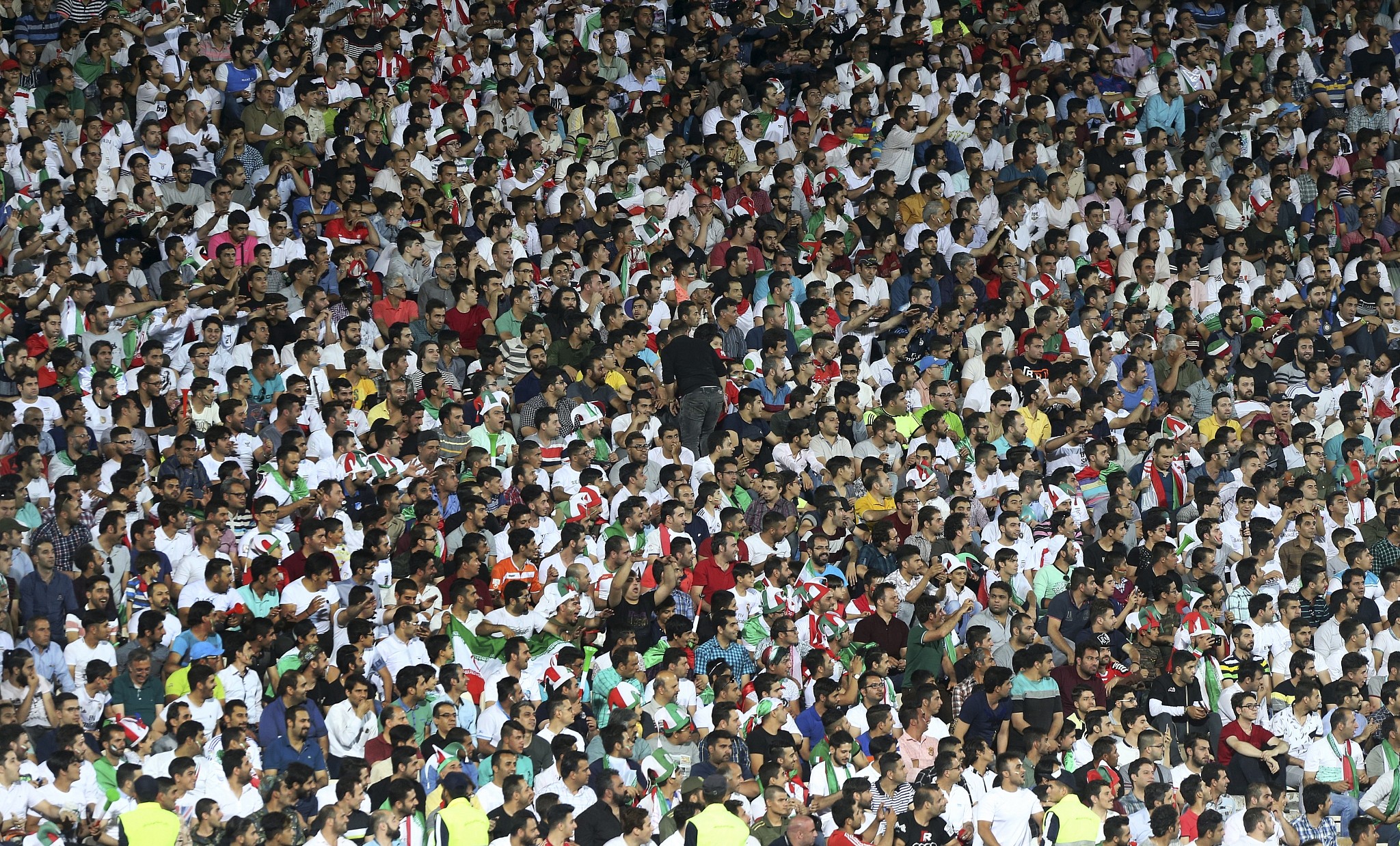
FILE -- Iranian soccer fans follow a qualifying match with Uzbekistan in their Asia Group A, 2018 Russia World Cup at the Azadi Stadium in Tehran, Iran, June 12, 2017 (AP Photo/Vahid Salemi)

FILE — Iranian soccer fans follow a qualifying match with Uzbekistan in their Asia Group A, 2018 Russia World Cup at the Azadi Stadium in Tehran, Iran, June 12, 2017 (AP Photo/Vahid Salemi)

TEHRAN, Iran — Iranians reported Saturday that the state broadcaster had muted stadium noise during the previous evening’s soccer match in Tehran, in an apparent attempt to drown out anti-government chants.

Mobile phone footage shared widely on social media showed thousands of fans in Tehran’s Azadi stadium chanting “Death to the dictator” during the fixture between the capital’s Esteghlal and Tractor Sazi from the northwestern city of Tabriz.

Although the video could not be independently verified, it coincided with a decision by state broadcaster IRIB to mute the sound and avoid shots of the crowd.

“Yesterday, when the football was being shown, the sound in the stadium was turned down to such a level that one would think they were playing in an alleyway,” said one Twitter user.

The Voice of America

@VOANews

Fans of visiting team Tractor Sazi of Tabriz chant “death to the dictator” as they await a match against local team Esteghlal at Tehran’s Azadi Stadium, August 10, 2018. http://dlvr.it/QfVsvY 

IRIB’s soccer commentators blamed “network disruption” for the low volume, without giving details.

“They turned down the volume so no one could hear the slogans,” said another Twitter user.

Iran has seen nationwide strikes and protests in recent weeks, focused on high prices and unemployment but also featuring radical political slogans.

The authorities have acknowledged anger over the economic situation — which has been exacerbated by the United States’ reimposition of sanctions on Tuesday following its abandonment of a landmark 2015 nuclear deal.

But they say any political agitation is the work of outside instigators, fomented by the US, Saudi Arabia and Israel.

Heavy reporting restrictions and reports of mobile internet blackouts in affected areas have made it difficult to verify claims by the authorities and on social media.