Archive for August 2018

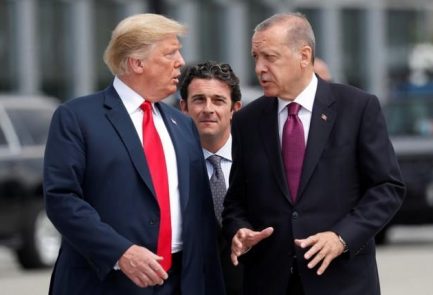
Turkey says ready to discuss issues with US without threats 

August 16, 2018

Source: Turkey says ready to discuss issues with US without threats – Israel Hayom

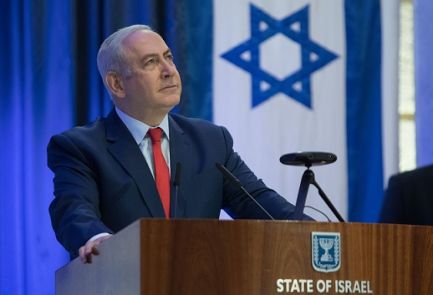
PM’s new security doctrine to boost defense spending by ‎billions

August 16, 2018

Source: PM’s new security doctrine to boost defense spending by ‎billions ‎ – Israel Hayom

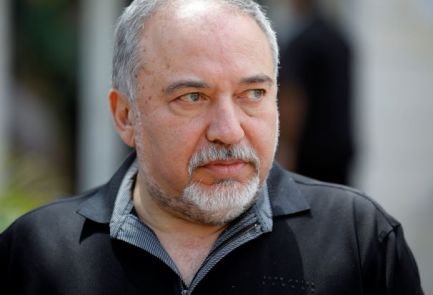
Defense minister: Israel prefers to see Gazans ‎topple Hamas regime ‎

August 16, 2018

Source: Defense minister: Israel prefers to see Gazans ‎topple Hamas regime ‎ – Israel Hayom

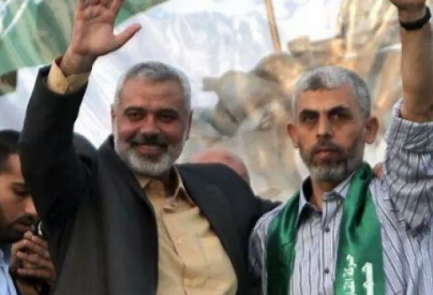
Report: Israel-Hamas deal to include one-year truce – Israel Hayom

August 16, 2018

Source: Report: Israel-Hamas deal to include one-year truce – Israel Hayom

Trump restricts delivery of F-35s to Turkey, deepening rift with NATO ally

August 16, 2018

Gotta love Trump’s resolve and willingness to act: Turkey imprisons US pastor, Turkey gets thumped with a doubling of tariffs, currency plummets.

Nice.

https://www.timesofisrael.com/trump-restricts-delivery-of-f-35s-to-turkey-deepening-rift-with-nato-ally/

Transfer of fighter jets halted over Ankara’s interest in Russian air defense system amid diplomatic crisis sparked by detained American pastor

US President Donald Trump has restricted the delivery of 100 F-35 fighter jets to Turkey, exacerbating the strain between the two NATO allies over Ankara’s continued detention of an American pastor.

Trump on Monday signed a defense authorization act that prohibits the delivery of F-35 Joint Strike Fighter aircraft to Turkey if it buys Russia’s S-400 air defense system.

The law requires a review of US-Turkey relations, including the US military’s use of Incirlik Air Base, and a risk assessment associated with delivering the stealth fighter jets.

Turkey has been a partner in the international consortium that financed the F-35 since 2002, and plans to purchase 100 of the stealth fighter jets from the US at a reported $1.2 billion.

Ties between the US and Turkey were already fraught over Washington’s support for Syrian Kurdish forces, but have been further strained by the trial of American pastor Andrew Brunson on terror-related charges linked to a failed coup attempt in the country two years ago.

Brunson has been held in Turkey since October 2016, and could face a jail term of 35 years if convicted. Trump has described his detention as a “total disgrace” and urged Ankara to free him immediately.

After Brunson’s appeal was rejected by a Turkish court earlier in August, Trump responded by doubling steel and aluminum tariffs on the country, causing its currency to plummet.

The diplomatic rift was further deepened after Turkey, despite being a NATO ally, entered into an understanding to buy Russia’s advanced S-400 air defense system.

Such a move would defy US sanctions on Moscow, and Turkey’s increasingly cozy relationship with Russian President Vladimir Putin has alarmed both the US and the European Union.

On Friday, Turkish President Recep Tayyip Erdogan wrote in The New York Times that unless Washington can “reverse this trend of unilateralism and disrespect,” Turkey will “start looking for new friends and allies.” [Please do! Shut the door behind you as leave, Turkey.]

The warning came after Erdogan held a phone call with Putin to discuss economic and trade issues, as well as the Syria crisis.

Turkey’s dialogue with Russia has led some to question its reliability as a NATO partner, and even whether it should remain in the alliance.

Key air base

Incirlik, a Turkish air base in southern Turkey, just 70 miles (110 kilometers) from the border with war-torn Syria, has been a frequent pawn during decades of ups and downs in US-Turkey relations.

Incirlik’s location relative to the Middle East makes it a key strategic asset for the US military and for NATO, and the United States until recently flew bombing runs from there as it fought the Islamic State group in Iraq and Syria.

Separately, the facility is thought to hold a stockpile of about 50 American nuclear bombs.

The arrangement works for Turkey too, as the US military provides Turks with intelligence and drone surveillance over the border region, and helps Ankara monitor the outlawed PKK.

Last year, Muharrem Ince, the main opposition candidate in Turkey’s presidential election, threatened to shut Incirlik unless the US extradited Fethullah Gulen, the exiled Muslim preacher Ankara blames for an attempted coup in 2016.

Ince went on to lose the election to Erdogan by a large margin, but Incirlik remains a key issue.

Following the coup attempt, the Turkish base commander at Incirlik was arrested on suspicion of complicity in the plot.

And according to Turkish newspaper Cumhuriyet, pro-Erdogan lawyers have filed a lawsuit calling for the arrest of US troops at Incirlik on similar suspicions.

Both sides stand to lose if US-Turkey military relations go south, but experts say it would hurt Turkey more.

Trump should release secret report on the true number of Palestinian refugees

August 16, 2018

Inshallah, the report gets released in full.

The shenanigans of the State Dept is interesting, but not surprising.

https://www.washingtonexaminer.com/opinion/op-eds/trump-should-release-secret-report-on-the-true-number-of-palestinian-refugees

Israel Palestinian Refugees

The Trump administration is supposedly considering declassifying a State Department report that tallies up the true number of Palestinian refugees.

If Trump does this, the repercussions could go a long way to settling the Arab-Israeli conflict.

The United Nations Relief and Works Agency for Palestinian Refugees, or UNRWA, classifies refugees unlike any other organization in the world, and in a way that contradicts common sense. Whereas the number of refugees from the original 1948 Arab/Israeli war would likely number in the tens of thousands, the UNRWA also counts people generations removed from the conflict, many of whom are citizens of new countries, in addition to everyone living in their internationally recognized homes of Gaza and the West Bank.

This politically motivated definition raises the number of “refugees” to an estimated 5.3 million. And that number is used by Palestinians to claim a “right of return” to Israel for a number greater than half of Israel’s entire population.

Until today, there has been no official acknowledgment of the true number of refugees. Governments and international organizations around the world instead pay lip service to UNRWA’s fiction that the number of refugees has expanded many times over since the 1948 war.

This will change if the Trump administration releases the classified report.

The origin of the report goes back to 2012, when the Middle East Forum’s Washington Project approached then-Sen. Mark Kirk, R-Ill. with the idea that America should adopt a policy that only recognized as refugees those who would fit its own legal definition of a refugee. Kirk proposed sweeping language to appropriations legislation to that effect, but President Barack Obama’s State Department objected that this would be prejudicial to Israeli-Palestinian negotiations. Deputy Secretary of State Thomas Nides wrote that the provision “would be viewed around the world as the United States acting to prejudge and determine the outcome of this sensitive issue.” Largely as a result, Kirk’s original language was not adopted.

But Kirk did manage to get compromise language, requiring the State Department to issue a report on the issue of the true definition, passed as part of the fiscal 2015 appropriations legislation. But then no one heard anything more about the report for over a year. Kirk assumed the State Department had simply ignored the committee’s direction.

But as it turns out, that wasn’t so. The Middle East Forum learned that the report had, in fact, been written. Committee staffers in the House of Representatives were even informed of its existence. But instead of making it public, the clear intent of the legislation, the State Department classified it. Moreover, it failed to inform Kirk’s office, which had the largest stake in the report, or relevant Senate committee staffers that it had been completed.

Upon learning this, Kirk moved in 2016 to pass another provision forcing the State Department either to produce a nonclassified version of the report, or to inform the Committee why it could not do so. State still chose not to declassify the report.

This year, Rep. Doug Lamborn, R-Colo., wrote a letter to President Trump signed by 50 other members of Congress, asking that the report be declassified. Rep. Chris Stewart, R-Utah, viewed the report, and said in a subsequent interview that “there’s no reason in the world it’s classified.”

The Foundation for the Defense of Democracies also called for declassification, as did Sen. Ted Cruz, R-Texas, saying “The American people deserve to see this reported State Department assessment, so Congress and the administration can have a transparent and productive debate about America’s role in the organization.”

In July, the American Center for Law and Justice obtained a version of the report via a Freedom of Information Act request and a subsequent lawsuit. Unfortunately, it was heavily redacted and omits the most crucial information — the true number of refugees. A recent story citing State Department sources pins the total at just 20,000 refugees, nowhere near the 5.3 million that UNRWA claims and the State Department has previously adopted. The public won’t know for sure unless the Trump administration finally releases an unredacted version of the report.

Hopefully, the Trump Administration will release this report. Telling the truth about the number of refugees, rather than the fictional number provided by UNRWA, would be a big step to unraveling expansive “right of return” claims, ending a threat to Israel’s existence.

Cliff Smith is Washington project director for the Middle East Forum.

Mystery Russian satellite’s behaviour raises alarm in US

August 15, 2018


The US says it does not know what the satellite is or why it is behaving strangely

By BBC News, 08/15/2018

Source Link: Mystery Russian satellite’s behaviour raises alarm in US

{Not a moment too soon for a formal Space Force. The race is on and I’m betting Russia can’t afford it no more than they did when challenged by Reagan years ago. – LS}

A mysterious Russian satellite displaying “very abnormal behaviour” has raised alarm in the US, according to a State Department official.

“We don’t know for certain what it is and there is no way to verify it,” said assistant secretary Yleem Poblete at a conference in Switzerland on 14 August.

She voiced fears that it was impossible to say if the object may be a weapon.

Russia has dismissed the comments as “unfounded, slanderous accusations based on suspicious”.

The satellite in question was launched in October last year.

“[The satellite’s] behaviour on-orbit was inconsistent with anything seen before from on-orbit inspection or space situational awareness capabilities, including other Russian inspection satellite activities,” Ms Poblete told the conference on disarmament in Switzerland.

“Russian intentions with respect to this satellite are unclear and are obviously a very troubling development,” she added, citing recent comments made by the commander of Russia’s Space Forces, who said adopting “new prototypes of weapons” was a key objective for the force.

Ms Poblete said that the US had “serious concerns” that Russia was developing anti-satellite weapons.

Alexander Deynko, a senior Russian diplomat, told the Reuters news agency that the comments were “the same unfounded, slanderous accusations based on suspicions, on suppositions and so on”.

He called on the US to contribute to a Russian-Chinese treaty that seeks to prevent an arms race in space.

‘Lasers or microwaves’

Space weapons may be designed to cause damage in more subtle ways than traditional weapons like guns, which could cause a lot of debris in orbit, explained Alexandra Stickings, a research analyst at the Royal United Services Institute.

“[Such weapons may include] lasers or microwave frequencies that could just stop [a satellite] working for a time, either disable it permanently without destroying it or disrupt it via jamming,” she said.

But it was difficult to know what technology is available because so much information on space-based capabilities is classified, she added.

She also said it would be very difficult to prove that any event causing interference in space was an intentional, hostile action by a specific nation state.

Ms Poblete’s comments were particularly interesting in light of President Donald Trump’s decision to launch a sixth branch of the US armed forces named Space Force, added Ms Stickings.

“The narrative coming from the US is, ‘space was really peaceful, now look at what the Russians and Chinese are doing’ – ignoring the fact that the US has developed its own capabilities.”

The BBC has asked the UK’s Ministry of Defence for comment.


Netanyahu picks the perfect time to lay a trap for Corbyn – and he fell for it – Haaretz.com

August 15, 2018

Source: Netanyahu picks the perfect time to lay a trap for Corbyn – and he fell for it – Israel News – Haaretz.com

( Sour grapes from the extreme leftist Haaretz… – JW )

The U.K. Labour leader is the only politician hapless enough to lose the moral high ground to Bibi

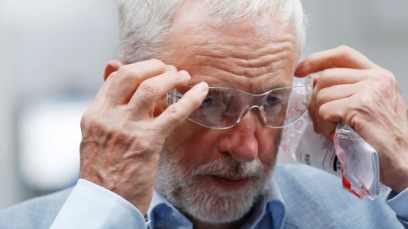
Jeremy Corbyn, leader of Britain's Labour Party, in Stoke-on-Trent, August 14, 2018
Jeremy Corbyn, leader of Britain’s Labour Party, in Stoke-on-Trent, August 14, 2018\ DARREN STAPLES/ REUTERS

Benjamin Netanyahu’s recent record of standing up for Jewish communities in the Diaspora that are facing anti-Semitism has hardly been a stellar one. Over the last two years he has failed American Jews by remaining silent as Donald Trump endorsed and legitimized white supremacists and neo-Nazis.

Despite the express wishes of the Hungarian Jewish community, he has embraced Prime Minister Viktor Orbán, who has launched an anti-Semitic-style campaign against Jewish financier George Soros and tried to expunge the pro-Nazi record of Hungary’s wartime regime.

And only two months ago, Netanyahu received a rare rebuke from Yad Vashem’s historians for signing a joint statement with Poland’s government clearing the Polish people of their well-documented abandonment of Polish Jews during the Holocaust. Also, he rushed to congratulate Austria’s new chancellor, Sebastian Kurz, when the center-right leader formed a government with the former neo-Nazi members of the Freedom Party.

On the basis of this record, it would take a particularly inept politician to lose the moral high ground against Netanyahu in a public spat about anti-Semitism. Arise Jeremy Corbyn, the man who constantly claims to have been a campaigner against racism all his life and to have not one anti-Semitic bone in his body. But he seems to have the incredible misfortune of being unable to keep himself from joining platforms with and endorsing blood libelers, Holocaust deniers and convicted terror bombers.

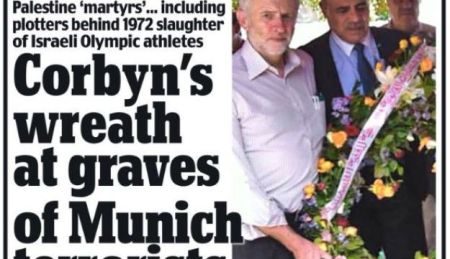
Cover of the Daily Mail reporting Jeremy Corbyn visited graves of Munich terrorists
Cover of the Daily Mail reporting Jeremy Corbyn visited graves of Munich terroristsScreen shot
Corbyn has been Labour Party leader for nearly three years now, but doesn’t seem to have appeared on Netanyahu’s radar before this week. Actually, Corbyn and politicians of his mold who can’t help themselves from insulting local Jewish communities with their open associations with anti-Semites are a godsend to Netanyahu. In his dysfunctional relationship with the Diaspora, a “progressive” leader who makes Jews feel unwanted in their own country bolsters Netanyahu’s siege-mentality brand of Zionism.

The euroskeptic Corbyn, who is defying the majority within Labour who want to resist Brexit, is useful to Netanyahu in this as well. Corbyn is doing nothing to prevent the United Kingdom from crashing out of the European Union without an orderly deal, weakening both Britain and the EU in the process. This is furthering Netanyahu’s goal of seeing the EU that has criticized his policies and upheld the Iran deal become a diminished voice on the global scene. It’s also strengthening the voices of his allies, the populist right-wing governments, within the EU.

A gift from Tunis

In recent weeks, some of Netanyahu’s media proxies have taken to talking up Corbyn and his anti-Semitic scandals, partly to deflect some of the criticism of their leader for his ties with right-wing populists like Orbán and the farce of the joint statement with the hard-right Polish government. But Netanyahu himself remained silent, anxious, as one aide said, “not to descend to Corbyn’s level. He’s just a party leader, not a prime minister.”

Still, the increasing interest in Corbyn in the Israeli media was galvanized this week by the reports that in 2014 he had lain a wreath at the Tunis graves of planners of the massacre of 11 Israeli athletes at the 1972 Munich Olympics. Netanyahu couldn’t remain silent. His advisers noted that Corbyn was by now featuring in the line-up of the evening news shows and that the only prominent Israeli politician responding to Corbyn was Israel’s Labor leader, Avi Gabbay, who four months ago announced that after decades of warm ties between the sister parties he was suspending all relations with Corbyn’s office.

As for Corbyn’s wreath laying in Tunis, his office initially denied that it ever happened, but then Corbyn himself owned up to having been there, his version of events evolving from eye-rolling and exasperated interviews to insisting that he had been paying his respects to “all victims.” This gave Netanyahu his opening. It wasn’t another round in the interminable flurry of insults to British Jews, but a direct insult to Israelis who still feel the trauma of the Munich massacre 46 years later. And who better than Netanyahu, the man whose entire career has been based on his fabled expertise in fighting terror, to deliver the rebuke?

Netanyahu is no Trump, tweeting in his pajamas from his bedroom. He doesn’t even own a smartphone. Instead he has a team planning and crafting tweets and Facebook posts, sometimes days and weeks in advance. And the tweet saying that the “laying of a wreath by Jeremy Corbyn on the graves of the terrorist who perpetrated the Munich massacre and his comparison of Israel to the Nazis deserves unequivocal condemnation from everyone – left, right and everything in between” was no exception.

Frustrated Labour MPs

No sooner had the flunky in the Prime Minister’s Office pressed “send” Monday evening, releasing Netanyahu’s first-ever acknowledgment of Corbyn’s existence, than political commentators in London were predicting that it was a mistake that would let Corbyn deflect attention from his troubles and pivot to attacking Netanyahu. And of course, he did so.

Corbyn’s Twitter feed has to be one of the slowest to the draw of any major Western politician. This time, with unusual alacrity, within less than two hours, Corbyn was hitting back at Netanyahu, lambasting him for the deaths of 160 Palestinians at the Gaza border in recent months and Israel’s passage of the nation-state law. But the swift deflection quickly backfired.

The followers of Corbyn’s cult leapt to his defense on Twitter. But they’re his die-hard supporters anyway. It may have been expected that given the choice between Corbyn and Netanyahu, Labour’s mainstream parliamentarians would stand up for their leader. But the MPs, tired and frustrated by the way Corbyn has run roughshod over their concerns with his repeated insults of British Jews, remained silent.

Much worse for Corbyn, if he had any hope that the furor over every new revelation about his checkered past would finally begin to die down, after dragging on for weeks, he walked into Netanyahu’s trap. Now the media was bound to continue harrying him about wreathgate for at least another 24 hours. And now it wasn’t just an internal British affair but a high-profile international feud.

It’s not that Netanyahu is a popular politician in Britain. Far from it. But Corbyn, despite his lifelong passion for foreign policy issues, failed to grasp that ultimately Netanyahu isn’t going to be on the ballot in Britain. By taking on Netanyahu in a Twitter spat, he didn’t gain any media sympathy beyond his hardcore base. But British papers don’t need Corbyn to remind them of Gaza; they’ve covered it extensively. A local political scandal in which a party leader visibly squirms as he tries to account for his actions is always a better story.

The Labour Party had a golden opportunity this summer to overtake the Conservative government in the polls. The Tories are an embarrassing shambles, with Prime Minister Theresa May under fire from the insurgent former Foreign Secretary Boris Johnson, increasingly incapable of controlling her wayward ministers and steering a clear course toward Brexit.

Corbyn’s predecessors as opposition leader enjoyed double-digit leads in the polls. But instead of making ground and presenting his own policies, Corbyn is digging an ever-deepening hole into his anti-Semitic morass. With one tweet, Netanyahu helped him dig a bit more, prolonging the Labour leader’s summer of misery.

Amid ethnic protests, Iran warns of foreign meddling

August 15, 2018

Source: Amid ethnic protests, Iran warns of foreign meddling – Modern Diplomacy

Iran has raised the spectre of a US-Saudi effort to destabilize the country by exploiting economic grievances against the backdrop of circumstantial evidence that Washington and Riyadh are playing with scenarios for stirring unrest among the Islamic republic’s ethnic minorities.

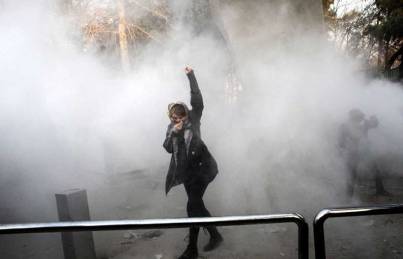
Iran witnessed this weekend minority Azeri and Iranian Arab protests in soccer stadiums while the country’s Revolutionary Guards Corps reported clashes with Iraq-based Iranian Kurdish insurgents.

State-run television warned in a primetime broadcast that foreign agents could turn legitimate protests stemming from domestic anger at the government’s mismanagement of the economy and corruption into “incendiary calls for regime change” by inciting violence that would provoke a crackdown by security forces and give the United States fodder to tackle Iran.

“The ordinary protesting worker would be hapless in the face of such schemes, uncertain how to stop his protest from spiralling into something bigger, more radical, that he wasn’t calling for,” journalist Azadeh Moaveni quoted in a series of tweets the broadcast as saying.

The warning stroked with the Trump administration’s strategy to escalate the protests that have been continuing for months and generate the kind of domestic pressure that would force Iran to concede by squeezing it economically with the imposition of harsh sanctions.

US officials, including President Donald J. Trump’s national security advisor John Bolton, a long-time proponent of Iranian regime change, have shied away from declaring that they were seeking a change of government, but have indicated that they hoped sanctions would fuel economic discontent.

The Trump administration, after withdrawing in May from the 2015 international agreement that curbed Iran’s nuclear program, this month targeted Iranian access to US dollars, trade in gold and other precious metals, and the sale to Iran of auto parts, commercial passenger aircraft, and related parts and services. A second round of sanctions in November is scheduled to restrict oil and petrochemical products.

“The pressure on the Iranian economy is significant… We continue to see demonstrations and riots in cities and towns all around Iran showing the dissatisfaction the people feel because of the strained economy.” Mr. Bolton said as the first round of sanctions took effect.

Mr. Bolton insisted that US policy was to put “unprecedented pressure” on Iran to change its behaviour”, not change the regime.

The implication of his remarks resembled Israeli attitudes three decades ago when officials argued that if the Palestine Liberation Organization were to recognize Israel it would no longer be the PLO but the PPLO, Part of the Palestine Liberation Organization.

In other words, the kind of policy changes the Trump administration is demanding, including an end to its ballistic program and support for regional proxies, by implication would have to involve regime change.

A string of recent, possibly unrelated incidents involving Iran’s ethnic minorities coupled with various other events could suggest that the United States and Saudi Arabia covertly are also playing with separate plans developed in Washington and Riyadh to destabilize Iran by stirring unrest among non-Persian segments of the Islamic republic’s population.

Mr. Bolton last year before assuming office drafted at the request of Mr. Trump’s then strategic advisor, Steve Bannon, a plan that envisioned US support “for the democratic Iranian opposition,” “Kurdish national aspirations in Iran, Iraq and Syria,” and assistance for Baloch in the Pakistani province of Balochistan and Iran’s neighbouring Sistan and Balochistan province as well as Iranian Arabs in the oil-rich Iranian province of Khuzestan.

A Saudi think tank, believed to be backed by Crown Prince Mohammed bin Salman, called in 2017 in a study for Saudi support for a low-level Baloch insurgency in Iran. Prince Mohammed vowed around the same time that “we will work so that the battle is for them in Iran, not in Saudi Arabia.”

Pakistani militants have claimed that Saudi Arabia has stepped up funding of militant madrassas or religious seminaries in Balochistan that allegedly serve as havens for anti-Iranian fighters.

The head of the State Department’s Office of Iranian Affairs met in Washington in June with Mustafa Hijri, head of the Kurdistan Democratic Party of Iran (KDPI), before assuming his new post as counsel general in Erbil in Iraqi Kurdistan.

Iran’s Revolutionary Guards said last weekend that they had killed ten militants near the Iranian border with Iraq. “A well-equipped terrorist group … intending to infiltrate the country from the border area of Oshnavieh to foment insecurity and carry out acts of sabotage was ambushed and at least 10 terrorists were killed in a heavy clash,” the Guards said.

The KDPI has recently stepped up its attacks in Iranian Kurdistan, killing nine people weeks before Mr. Hijri’s meeting with Mr. Fagin. Other Kurdish groups have reported similar attacks. Several Iranian Kurdish groups are discussing ways to coordinate efforts to confront the Iranian regime.

Similarly, this weekend’s ethnic soccer protests are rooted in a history of football unrest in the Iranian provinces of East Azerbaijan and Khuzestan that reflect long-standing economic and environmental grievances but also at times at least in oil-rich Khuzestan potentially had Saudi fingerprints on them.

Video clips of Azeri supporters of Tabriz-based Traktor Sazi FC chanting ‘Death to the Dictator” in Tehran’s Azadi stadium during a match against Esteghlal FC went viral on social media after a live broadcast on state television was muted to drown the protest out. A sports commentator blamed the loss of sound on a network disruption.

A day earlier, Iranian Arab fans clashed with security forces in a stadium in the Khuzestan capital of Ahwaz during a match between local team Foolad Khuzestan FC and Tehran’s Persepolis FC. The fans reportedly shouted slogans reaffirming their Arab identity.

Saudi Arabia and other Gulf Arabs have a long history of encouraging Iranian Arab opposition and troubling the minority’s relations with the government.

Iranian distrust of the country’s Arab minority has been further fuelled by the fact that the People’s Mujahedin Organization of Iran or Mujahedin-e-Khalq (MeK), a controversial exiled opposition group that enjoys the support of prominent serving and former Western officials, including some in the Trump administration, has taken credit for a number of the protests in Khuzestan. The group advocates the violent overthrow of the regime in Tehran.

Two of Mr. Trump’s closest associates, Rudy Giuliani, his personal lawyer, and former House speaker New Gingrich, attended in June a gathering in Paris of the Mujahedin-e-Khalq.

In past years, US participants, including Mr. Bolton, were joined by Saudi Prince Turki al-Faisal, the former head of the kingdom’s intelligence service and past ambassador to Britain and the United States, who is believed to often echo views that Crown Prince Mohammed bin Salman prefers not to voice himself.

“The mullahs must go, the ayatollah must go, and they must be replaced by a democratic government which Madam Rajavi represents. Freedom is right around the corner … Next year I want to have this convention in Tehran,” Mr. Giuliani told this year’s rally, referring to Maryam Rajavi, the leader of the Mujahedeen who is a cult figure to the group.

Tehran ‘categorically’ denies al-Qaida leaders growing stronger in Iran

August 15, 2018

Source: Tehran ‘categorically’ denies al-Qaida leaders growing stronger in Iran – Israel Hayom