Archive for August 2018

Bolton: U.S.’s highest priority is Iran never getting nuclear weapons

August 20, 2018

Source: Bolton: U.S.’s highest priority is Iran never getting nuclear weapons – Middle East – Jerusalem Post

Bolton began his brief comments by saying it was a “privilege and honor to be in Jerusalem, Israel’s capital,” to which Netanyahu joked: “Say that again.”

BY HERB KEINON
 AUGUST 20, 2018 11:25
Bolton: U.S.'s highest priority is Iran never getting nuclear capabilities

The United States is working with European countries to convince them of the need to take stronger steps against the Iranian nuclear weapons program, US National Security Advisor John Bolton said Monday.

Bolton was speaking at the Prime Minister’s Office prior to a meeting with Prime Minister Benjamin Netanyahu, his second meeting since arriving in Israel Sunday.

“I think it is of the highest importance for the United States that Iran never get nuclear weapons capabilities,” Bolton said.

“This is why President Trump withdrew from the wretched Iran nuclear deal. This is why he has imposed economic sanctions. This is why we are working with our friends in Europe to convince them of the need to take stronger steps against Iranian nuclear weapons,” he said.

This is also, Bolton added, the reason why we “continuously worry about Iran’s role as the central banker for international terrorism, this is why we worry about Iran’s belligerent military activity in Iran, in Syria, with Hezbollah in Lebanon, and in Yemen.”

Bolton, who is in Israel through Wednesday on his first visit to the country since taking office in April, said that all of the regional threats he mentioned were also “global threats that pose a risk of international terrorism, especially terrorists’ possible use of weapons of mass destruction.”

Bolton, long a strong supporter of Israel and a loud critic of the Iranian nuclear deal, said that the alliance between Israel and the US, and between the peoples of both countries, have “never been stronger.”

Trump, Bolton said, has made the alliance “a cornerstone of his foreign policy,” just as Netanyahu has made it a cornerstone of Israel’s policy. He said it was “very important and helpful for the United States” to have in-depth, extended conversations with Netanyahu and his senior advisors.

Bolton began his brief comments by saying it was a “privilege and honor to be in Jerusalem, Israel’s capital,” to which Netanyahu joked: “Say that again.”

“Israel’s capital,” Bolton repeated, adding that he looked forward to visiting the new US embassy in Jerusalem

Netanyahu welcomed Bolton by saying that Israel has no better friend and ally than the US, and that the US has no better friend and ally than Israel.

In reference to Trump’s constant criticism of NATO countries for not spending enough of their own GNP for their defense burden, and relying on the US, Netanyahu said that Israel was a “peculiar kind of ally.”

“We’ve consistently increased our defense spending,” he said. “We insist on defending ourselves by ourselves and appreciate all manner of American support, but we believe that the alliance is the alliance of the strong and like-minded and we share America’s values of freedom and liberty.”

Netanyahu said that under Trump the US-Israel alliance is stronger than ever, and that Bolton’s visit gives the two countries the opportunity to “align our policies even more closely on Iran, on Syria, on Gaza and on the many challenges that face both our countries in this region.”

He thanked Trump for withdrawing from the “terrible deal with Iran,” saying this was “nothing less than a hinge of history.” He also applauded the Trump administration’s “determination to re-impose tough sanctions on Iran and those doing business with Iran. I know that that view is shared by all our Arab neighbors, or practically everyone in this region.”

Netanyahu said that all countries who care about Mideast peace and security should follow the US and “ratchet up the pressure on Iran, because the greater the pressure on Iran, the greater the chance that the regime will roll back its aggression.”

The prime minister also thanked the US for its unequivocal support for Israel in international forums.

“We hear it every day, on the podiums in the White House, in the State Department, at the United Nations,” he said. “This is deeply, deeply appreciated, and deeply valued.”
Iran says U.S. ‘action group’ will fail to overthrow state

August 19, 2018

Source: Iran says U.S. ‘action group’ will fail to overthrow state – Middle East – Jerusalem Post

‘Americans are imposing sanctions but they claim they are supporting freedom, human rights, and global and regional security,’ said the Iranian Parliament Speaker.

BY REUTERS
 AUGUST 19, 2018 12:50

Mohammad Javad Zarif

LONDON – Iranian Foreign Minister Mohammed Javad Zarif said on Sunday that a new Iran Action Group in the US State Department aimed to overthrow the Islamic Republic, but would fail.

He was speaking on the 65th anniversary of a US-backed coup that overthrew a democratically elected Iranian prime minister, an occasion when anti-American sentiment runs particularly high in the Islamic Republic.

Comparing fresh US sanctions on Tehran imposed by President Donald Trump with the 1953 coup that ousted nationalist Iranian Prime Minister Mohammed Mossadegh, Zarif said Tehran will not let history repeat itself.

US Secretary of State Mike Pompeo on Thursday named senior policy adviser Brian Hook as special representative for Iran in charge of the Iran Action Group to coordinate Trump’s pressure campaign against the Islamic Republic following Washington’s withdrawal from an international nuclear deal with Tehran.

Zarif tweeted: “65 years ago today, the US overthrew the popularly elected democratic government of Dr. Mossadegh, restoring the dictatorship & subjugating Iranians for the next 25 years. Now an “Action Group” dreams of doing the same through pressure, misinformation & demagoguery. Never again.”

The United States and Britain orchestrated the removal of Mossadegh after he acted to nationalize Iran’s oil industry, restoring to power Shah Mohammed Reza Pahlavi. The Western-backed shah was toppled in Iran’s 1979 Islamic Revolution.

Iranian Parliament Speaker Ali Larijani said the coup was the best historical lesson that Americans cannot be trusted.

“How dare you talk about the freedom of the Iranian nation with your dark record of the Aug. 19 coup, and the appointment of a puppet totalitarian regime,” Larijani was quoted as saying by state news agency IRNA, referring to the shah’s rule.

“Americans are imposing sanctions but they claim they are supporting freedom, human rights, and global and regional security,” Larijani said.

The 1953 Anglo-American coup remains an open wound in Iran’s relations with the West. In March 2000, then-US Secretary of State Madeleine Albright became the first senior American official to acknowledge the American role in the coup, calling it “a setback for Iran’s political development.”

Washington and Tehran have had no diplomatic relations since the shah’s fall. Decades of hostility eased somewhat with the 2015 nuclear deal between Iran and then-US President Barack Obama’s administration and five other world powers. But high tensions resumed after Trump pulled Washington out of the deal, calling it flawed in Iran’s favor.

PA leader admits efforts to torpedo Israel-Hamas truce talks‎ 

August 19, 2018

Source: PA leader admits efforts to torpedo Israel-Hamas truce talks‎ – Israel Hayom

On the 25th anniversary of the Oslo Accords 

August 19, 2018

Source: On the 25th anniversary of the Oslo Accords – Israel Hayom

Prof Eyal Zisser

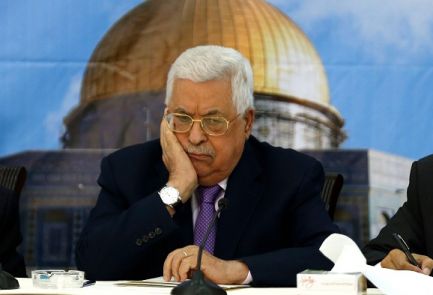
Monday will mark 25 years to the signing of the Oslo Accords between Israel and the Palestine Liberation Organization. The peace agreement was met with much enthusiasm both in Israel and around the world and was depicted as a historic breakthrough on the path to Arab-Israeli peace. The agreement earned its signatories a Nobel Peace Prize, but ultimately imploded, leaving Israel to pick up the pieces.

The agreement was secretly signed in Oslo on Aug. 20, 1993 by then-Foreign Minister Shimon Peres and Mahmoud Abbas, PLO leader Yasser Arafat’s representative at the time. Close associates of Peres would later testify that the decision to hold the covert negotiations in Oslo was not accidental, but rather aimed at improving Peres’ chances of winning the Nobel Price Prize, which is awarded in the Norwegian capital every year.

Three weeks after the secret meeting, Prime Minister Yitzhak Rabin and Arafat signed a joint declaration of principles at a festive ceremony attended by Prime Minister Yitzhak Rabin and Arafat on the White House lawn in Washington. With the signing of the joint declaration, PLO leaders returned to Judea, Samaria and the Gaza Strip, where they established the Palestinian Authority that governs there to this day.

The Oslo accord was defined as a four-year interim agreement for a transitional stage on the path to finding a permanent solution to the Israeli-Palestinian conflict. But the Israeli authors and proponents of the agreement had a clear idea of what this permanent situation demanded from the outset: Israel’s almost complete withdrawal from a majority of territory in Judea, Samaria and Gaza; Jerusalem’s division among the Israelis and Palestinians; and finally, a willingness to absorb some of the Palestinian refugees into Israeli territory.

Had they been able to, Israel’s representatives would have signed off on these conditions in Oslo. But they knew the Israeli public, and maybe even many of their colleagues in the Rabin-led government, would find it difficult to agree to such a far-reaching deal.

It was further unclear whether the Palestinians would have agreed to such a move, seeing as even for the Palestinians who took part in the dialogue with Israel and showed a willingness to live alongside it in peace, measures like forgoing the right of return for all Palestinian refugees to Israeli territory, declaring an end to the conflict and recognizing Israel as the state of the Jewish people were seen as painful.

For its initiators, the agreement served as leverage to gradually build trust between the sides. It was designed so that both sides would profit from the agreement and receive compensation that would make continuing the negotiations worthwhile, and in this manner, was aimed at accustoming both the Israeli and Palestinian public to a path to a resolution of the conflict, as envisioned by its authors.

But the experiment failed. As could be expected, the Palestinian leadership found it difficult – and quite possibly never even intended – to meet the commitments it took upon itself. The PA never tried to prepare the Palestinian public for the concessions that would be necessary in order to make peace. Worse still, it refused to abandon the use of violence and terrorism as a means to achieving its goals, leaving many Israelis skeptical of the plan.

An interview that Mohammed Dahlan, seen by many as a possible successor to Abbas, gave at the height of the Second Intifada illustrates this point quite well. When asked whether the Oslo Accords had been a mistake, Dahlan replied that the agreement had laid the groundwork for the struggle against Israel. As proof, he said hyperbolically, the number of Israelis killed in the Second Intifada was “100 times higher” than the number of Israelis killed in the first. (In fact, it was about three and a half times higher.)

This is all water under the bridge, but from Israel’s standpoint, the problem lies in the reality created by the accord; a reality that, while meant to be temporary in nature, has become permanent. The Palestinian Authority and the Hamas regime in Gaza have become faits accomplis and bones in Israel’s throat it can neither throw up nor swallow. This is a problematic reality, which continues to present endless political and security challenges for Israel.

A quarter of a century after the signing of the Oslo Accords, it seems it would be fitting for Israel to look for out-of-the-box solutions and find a way to escape the uncomfortable reality it has since found itself in.

Eyal Zisser is a lecturer in the Middle East History Department at Tel Aviv University.

Bolton to Discuss Syria, Iran, with Netanyahu Sunday Night 

August 19, 2018

Source: Bolton to Discuss Syria, Iran, with Netanyahu Sunday Night | The Jewish Press – JewishPress.com | David Israel | 8 Elul 5778 – August 19, 2018 | JewishPress.com

President Donald Trump’s national security adviser John Bolton will arrive in Israel on Sunday, to meet with Prime Minister Benjamin Netanyahu. The two are expected to hold a joint dinner at the Prime Minister’s Residence in Jerusalem, then meet again Monday morning for an official working session in Netanyahu’s office.

Bolton’s visit to Israel will be the first since his appointment in March.

Bolton will eventually continue to Geneva, where he will meet with his Russian counterpart, Director of the Russian Federal Security Service Nikolai Patrushev, in what the White House called a direct continuation of the July 16 Trump-Putin meeting in Helsinki.

The two security advisers are expected to discuss the situation in Syria and the relations between the United States and Iran.

Bolton, who served as US ambassador to the United Nations for the GW Bush administration, is known for his tough approach to Iran and is considered a major factor in the US withdrawal from the nuclear agreement. Prior to his appointment to his current post, Bolton called on Trump to attack North Korea.

Bolton’s appointment which was announced last April, was welcomed by many in the Israeli coalition government, including Justice Minister Ayelet Shaked, who tweeted: “President Trump continues to appoint true friends of Israel to senior positions,” noting that “John Bolton is one of the most outstanding among them, an excellent appointment, Bolton comes with great experience and original thinking. The Trump administration continues to emerge as the most supportive of Israel ever.”

Education Minister Naftali Bennett tweeted that Bolton is a “true friend” and an “extraordinary” expert on matters of security.

German firms in line with U.S. Iran sanctions 

August 19, 2018

Source: German firms in line with U.S. Iran sanctions – Middle East – Jerusalem Post

Several European companies have suspended plans to invest in Iran in light of the US sanctions.

BY REUTERS
 AUGUST 19, 2018 06:53
Euro (illustrative)

BERLIN – German rail operator Deutsche Bahn and Deutsche Telekom are ending projects in Iran after Washington imposed new sanctions against Tehran and said firms doing business with Iran would be barred from doing business with the United States.

New US sanctions against Iran took effect last week and several European companies have suspended plans to invest in Iran in light of the US sanctions, including oil major Total as well as carmakers PSA, Renault and Daimler.

State-owned Deutsche Bahn is involved in two projects in Iran via its subsidiary DB Engineering&Consulting, a spokeswoman said on Thursday.

“Both projects will be ended in August and September 2018 respectively,” she said. “Due to the altered banking practice we have sought to bring the contract to an amicable and timely conclusion.”

Deutsche Bahn signed a memorandum of understanding with the Iranian rail operator Bonyad Eastern Railways (BonRail) in May 2017 for the first project, which aimed to identify and address potential in rolling stock and organization, she said.

The second project, which started around 1-1/2 years ago, was a consulting contract for Iranian state railway RAI that included restructuring the company, the spokeswoman added.

Separately, Detecon, a subsidiary of T-Systems – Deutsche Telekom’s IT services arm – has terminated its business in Iran, a spokesman said. Detecon offers consulting services to companies in the telecommunications industry.

“Until the decision to stop operations was made, sales in Iran in 2018 amounted to around 300,000 euros,” he said.

“Given the sensitivity in relations with Iran worldwide, Detecon ended its business in Iran with immediate effect in mid-May 2018.”

The ending of Telekom’s involvement in Iran followed soon after the announcement that its US unit, T-Mobile, would buy Sprint Corp in a $26 billion deal that remains subject to the approval of US regulators.

Iran says will unveil new fighter jet, continue developing missiles

August 19, 2018

Source: Iran says will unveil new fighter jet, continue developing missiles | The Times of Israel

Tehran’s defense minister claims aircraft, believed to be the Qaher F-313, will fly over Iranian skies as part of National Defense Industry Day celebrations next week

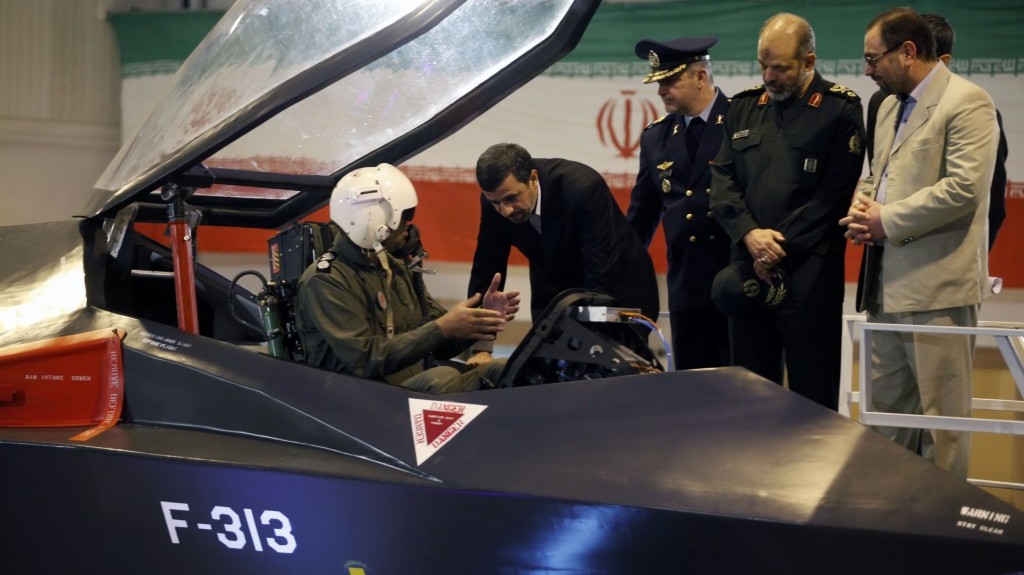
Former Iranian President Mahmoud Ahmadinejad, center, listens to an unidentified pilot during a ceremony to unveil Iran’s newest fighter jet, the Qaher-313, in Tehran, Iran, February 2, 2013 (AP/Mehr News Agency/Younes Khani)

Iran’s defense minister said Saturday that the Islamic Republic is set to unveil a new fighter jet next week and, despite new US sanctions, will continue developing its missile program.

“Our top priority has been development of our missile program. We are in a good position in this field, but we need to develop it,” Brigadier General Amir Hatami was quoted as saying by the Fars news agency, according to Reuters.

“We will present a plane on National Defense Industry Day, and people will see it fly, and the equipment designed for it,” he added, referring to the August 22 celebrations.

Hatami is believed to have been referring to the Qaher F-313 fighter plane which Tehran said it had began testing last year.

The Qaher is one of several aircraft designs the Iranian military has rolled out since 2007. Tehran has repeatedly claimed to have developed advanced military technologies in recent years, but its claims cannot be independently verified because the country does not release technical details of its arsenals.

In 2013, then president Mahmoud Ahmadinejad said that building the Qaher F-313, or “Dominant” F-313, shows Iran’s will to “conquer scientific peaks.”

Hatami’s announcement came after Iran’s navy on Saturday unveiled its first-ever advanced defense system for its warships, amid rising tensions with the US in the Strait of Hormuz.

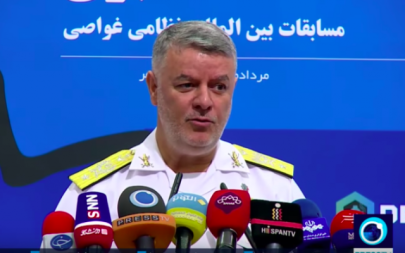
Navy Rear Admiral Hossein Khanzadi told reporters in Tehran the domestically made Kamand system would protect Iran’s naval destroyers against anti-ship cruise missiles.

In remarks carried by the semi-official Tasnim news agency, Khanzadi said the Kamand system was based on the American-made Phalanx CIWS, and could destroy any target up to 2 kilometers away.

For the time being, Khanzadi said, the defense system would only be installed on Iranian warships “that carry out missions in deep and distant waters.”

The announcement came two weeks after Iran launched naval exercises in the Strait of Hormuz as a show of force while Washington prepared to reimpose sanctions on Tehran.

Navy Rear Admiral Hossein Khanzadi speaks at a Tehran press conference on July 31, 2019. (screen capture: YouTube/PressTV)

Iran routinely operates small boats in the Strait of Hormuz and the surrounding area, and has often threatened to shut down the vital waterway where one third of all oil traded by sea passes.

In recent weeks, President Hassan Rouhani renewed the threat, saying that if US sanctions threatened Iran’s crude oil exports, the rest of the Mideast’s exports would be threatened as well.

Earlier in August, Iran’s Revolutionary Guard confirmed that it had carried out a naval exercise in the Gulf, days before the US re-imposed the economic sanctions that were eased under the 2015-Obama era nuclear deal.

The general overseeing US military operations in the Middle East said Tehran was trying “to use that exercise to send a message to us that as we approach the period of the sanctions here that they had some capabilities.”

The capabilities include ocean mines, explosive boats, coastal defense missiles and radars, US Central Command head General Joseph Votel said.

In May, the US announced it was abandoning the 2015 agreement and reimposing nuclear-related sanctions, threatening global companies with heavy penalties if they continue to operate in Iran.

In a bid to salvage the accord, the EU and European parties to the deal — Britain, France, and Germany — presented a series of economic “guarantees” to Iran last month, but they were deemed “insufficient” by Tehran.

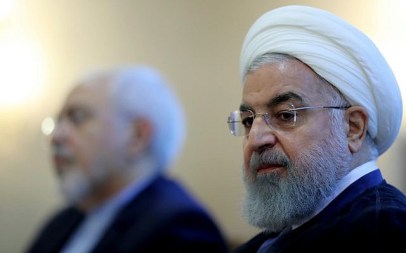
In this photo released by official website of the office of the Iranian Presidency, President Hassan Rouhani attends a meeting with a group of foreign ministry officials in Tehran, Iran. Sunday, July 22, 2018. (Iranian Presidency Office via AP)

The sanctions that went into effect earlier in August target US dollar financial transactions, Iran’s automotive sector, and the purchase of commercial planes and metals, including gold. Even stronger sanctions targeting Iran’s oil sector and central bank are to be re-imposed in early November.

US President Donald Trump has offered talks on a “more comprehensive deal” but Iran has balked at negotiating under the pressure of sanctions and has instead leaned on its increasingly close ties with fellow US sanctions targets Turkey and Russia.

Agencies contributed to this report.

Hedging Bets: Turkey Courts Europe Amid Row With U.S. 

August 18, 2018

Source: Hedging Bets: Turkey Courts Europe Amid Row With U.S. – International news – Jerusalem Post

Turkish officials say they want to engage the EU and Erdogan held a phone called with German Chancellor Angela Merkel this week and met with French President Emmanuel Macron.

BY KRISTINA JOVANOVSKI/ THE MEDIA LINE
 AUGUST 18, 2018 16:25
Hedging Bets: Turkey Courts Europe Amid Row With U.S.

As Turkey retaliates against the United States in their ongoing dispute over the detention of an American pastor, Ankara is mending ties with the European Union in an attempt to limit the damage to its economy, analysts told The Media Line.

Turkey’s currency recovered slightly after the government of President Recep Tayyip Erdogan released various high-profile prisoners; this, after the lira plummeted to a new low last week when President Donald Trump increased tariffs on the import of Turkish aluminum and steel.

The head of Amnesty International’s Turkey branch, who was behind bars for over 14 months, was released on Wednesday. A day before, two Greek soldiers, who were detained in March after crossing into Turkish territory, were sent back to Greece.

Turkish officials say they want to engage the EU and Erdogan held a phone called with German Chancellor Angela Merkel this week and was to set to speak to French President Emmanuel Macron on Thursday.

“I think that Turkey is so integrated into the global economic system that it has realized it cannot afford to have bad ties with both the United States and Europe,” Soner Cagaptay, Director of the Turkish Research Program at The Washington Institute, explained to The Media Line.

Cagaptay, author of The New Sultan: Erdogan and the Crisis of Modern Turkey, said the release of the Greek soldiers was especially notable because Turkey, which has had rocky relations with Athens, would not have unilaterally made the one-sided move unless Erdogan felt it was crucial.

Indeed, the stakes are high for Turkey, as the country’s economic problems extend well beyond the current crisis with the US

The lira had already plunged over 20 percent this year before Erdogan was re-elected in June.

Last month, the central bank increased its 2018 estimated inflation rate from 8.4% to 13.4%.

The currency rebounded following the prisoners’ release, and following an announcement by Qatar, a strong Turkish ally, that it will invest $15 billion in Turkey’s economy.

The lira’s free-fall was likewise stemmed by the implementation by Turkey’s central bank of policies that make it more difficult to borrow money. Experts are concerned that the country’s economy is overheated and that businesses will have a harder time paying back massive debts.

The currency strengthened by over three percent against the dollar on Thursday before Turkey’s finance minister was set to hold a conference call with investors. However, it was still down 34 percent in 2018.

Turkey’s image abroad is especially crucial because much of its growth has been fueled by foreign credit. That makes its decreasing currency even more problematic because businesses will have to spend more in liras to pay back debts that were given in dollars or euros.

But while relations with the E.U. are improving, there are no signs so far that Turkey or the US are willing to back down.

Despite the release of the Greek soldiers and the Amnesty International chair, a court ruled on Wednesday to extend US pastor Andrew Brunson’s from house arrest.

On the same day, Turkey announced it would be increasing tariffs on some US imports.

Erdogan has also called for a boycott of US electronic products like iPhones.

The Turkish leader’s communications director, Fahrettin Altun, wrote on Twitter, “We are fending off this economic coup attempt with the wisdom of the Turkish nation and the leadership of our president.”

The White House has said there could be more economic measures against Turkey if Brunson is not released. Brunson, who has lived in Turkey for over twenty years and led a small church in the southwestern coastal town of Izmir, was jailed for nearly two years following the failed 2016 coup. He is accused of having links to a group that Ankara says was behind the coup. The US says the charges are without merit.

On Wednesday, US Vice President Mike Pence tweeted, “Turkey would do well not to test [President Trump’s] resolve to see Americans who are wrongfully imprisoned in foreign lands returned home to the United States.”

Can Selcuki, an analyst with Istanbul Economics Research and former World Bank economist, believes that Erdogan could be forced to change course if the economic instability increases but, for now, has shown a clear unwillingness to make concessions to the US

“Despite the lira depreciation, he’s not backing down,” Selcuki told The Media Line. “I don’t know what the breaking point is.”

Elmira Bayrasli, who teaches international affairs with a focus on Turkey at Bard College, said that Erdogan is improving relations with Europe to increase confidence in the Turkish market.

She explained to The Media Line that Turkey’s economic growth under Erdogan was partly predicated on the fact that investors viewed him as a stabilizing force.

“The more he can show that he’s very interested in having relationships and he is the leader who can restore that stability, the better it’s going to be,” she concluded, By retaliating against the US, Bayrasli said that Turkey will give the perception that its cutting itself off from the largest economy in the world, which will be bad for Turkey’s financial markets and growing businesses.

However, it is not just Turkey that has something to lose in this crisis. The country is a vital NATO ally, bordering Syria and Iraq.

It makes Turkey both more susceptible to instability, as well as a geopolitically valuable.

The US used a military base in southeastern Turkey to launch air strikes against ISIS.

“I think the United States has a vastly huge interest in the stability and prosperity of Turkey,” Bayrasli said.

“Both sides need to climb down from their blustery rhetoric.”

Iranian-Backed ‘Sleeper Cell’ Militants Hibernating in U.S., Positioned for Attack

August 18, 2018

Source: Iranian-Backed ‘Sleeper Cell’ Militants Hibernating in U.S., Positioned for Attack

Iranian militants poised to attack U.S. homeland

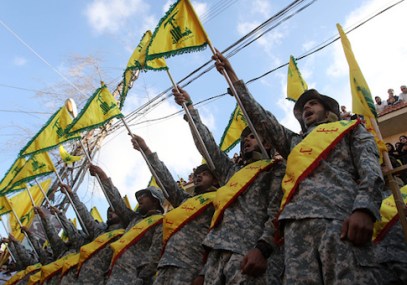
Members of Hezbollah

Members of Hezbollah / Getty Images

BY: 

Iranian-backed militants are operating across the United States mostly unfettered, raising concerns in Congress and among regional experts that these “sleeper cell” agents are poised to launch a large-scale attack on the American homeland, according to testimony before lawmakers.

Iranian agents tied to the terror group Hezbollah have already been discovered in the United States plotting attacks, giving rise to fears that Tehran could order a strike inside America should tensions between the Trump administration and Islamic Republic reach a boiling point.

Intelligence officials and former White House officials confirmed to Congress on Tuesday that such an attack is not only plausible, but relatively easy for Iran to carry out at a time when the Trump administration is considering abandoning the landmark nuclear deal and reapplying sanctions on Tehran.

There is mounting evidence that Iran poses “a direct threat to the homeland,” according to Rep. Peter King (R., N.Y.), a member of the House Homeland Security Committee and chair of its subcommittee on counterterrorism and intelligence.

A chief concern is “Iranian support for Hezbollah, which is active in the Middle East, Latin America, and here in the U.S., where Hezbollah operatives have been arrested for activities conducted in our own country,” King said, referring the recent arrest of two individuals plotting terror attacks in New York City and Michigan.

“Both individuals received significant weapons training from Hezbollah,” King said. “It is clear Hezbollah has the will and capability.”

After more than a decade of receiving intelligence briefs, King said he has concluded that “Hezbollah is probably the most experienced and professional terrorist organization in the world,” even more so than ISIS and Al Qaeda.

Asked if Iran could use Hezbollah to conduct strikes on the United States, a panel of experts including intelligence officials and former White House insiders responded in the affirmative.

“They are as good or better at explosive devices than ISIS, they are better at assassinations and developing assassination cells,” said Michael Pregent, a former intelligence officer who worked to counter Iranian influence in the region. “They’re better at targeting, better at looking at things,” and they can outsource attacks to Hezbollah.

“Hezbollah is smart,” Pregent said. “They’re very good at keeping their communications secure, keeping their operational security secure, and, again, from a high profile attack perspective, they’d be good at improvised explosive devices.”

Others testifying before Congress agreed with this assessment.

“The answer is absolutely. We do face a threat,” said Emanuele Ottolenghi, a senior fellow at the Foundation for Defense of Democracies who has long tracked Iran’s militant efforts. “Their networks are present in the Untied States.”

Iran is believed to have an auxiliary fighting force or around 200,000 militants spread across the Middle East, according to Nader Uskowi, a onetime policy adviser to U.S. Central Command and current visiting fellow at the Washington Institute for Near East Policy.

At least 50 to 60 thousand of these militants are “battle tested” in Syria and elsewhere.

“It doesn’t take many of them to penetrate this country and be a major threat,” Uskowi said. “They can pose a major threat to our homeland.”

While Iran is currently more motivated to use its proxies such as Hezbollah regionally for attacks against Israel or U.S. forces, “those sleeper cells” positioned in the United States could be used to orchestrate an attack, according to Brian Katulis, a former member of the White House National Security Council under President Bill Clinton.

“The potential is there, but the movement’s center of focus is in the region,” said Katulis, a senior fellow at the Center for American Progress.

Among the most pressing threats to the U.S. homeland is Hezbollah’s deep penetration throughout Latin America, where it finances its terror activities by teaming up with drug cartels and crime syndicates.

“Iran’s proxy terror networks in Latin America are run by Tehran’s wholly owned Lebanese franchise Hezbollah,” according to Ottolenghi. “These networks are equal part crime and terror” and have the ability to provide funding and logistics to militant fighters.

“Their presence in Latin America must be viewed as a forward operating base against America’s interest in the region and the homeland itself,” he said.

These Hezbollah operatives exploit loopholes in the U.S. immigration system to enter America under the guise of legitimate business.

Operatives working for Hezbollah and Iran use the United States “as a staging ground for trade-based and real estate-based money laundering.” They “come in through the front door with a legitimate passport and a credible business cover story,” Ottolenghi said.

The matter is further complicated by Iran’s presence in Syria, where it has established not only operating bases, but also weapons factories that have fueled Hezbollah’s and Hamas’s war on Israel.

Iran’s development of advanced ballistic missile and rocket technology—which has continued virtually unimpeded since the nuclear deal was enacted—has benefitted terror groups such as Hezbollah.

“Iran is increasing Hezbollah’s capability to target Israel with more advanced and precision guided rockets and missiles,” according to Pregent. “These missiles are being developed in Syria under the protection of Syrian and Russian air defense networks.”

In Iraq, Iranian forces “have access to U.S. funds and equipment in the Iraqi Ministry of Defense and Iraq’s Ministry of Interior,” Pregent said.

The Trump administration has offered tough talk on Iran, but failed to take adequate action to dismantle its terror networks across the Middle East, as well as in Latin American and the United States itself, according to CAP’s Katulis.

“The Trump administration has talked a good game and has had strong rhetoric, but I would categorize its approach vis-à-vis Iran as one of passive appeasement,” said Katulis. “We simply have not shown up in a meaningful way.”

Report: One killed, 100 wounded, in Gaza border clashes 

August 17, 2018

Source: Report: One killed, 100 wounded, in Gaza border clashes – Arab-Israeli Conflict – Jerusalem Post

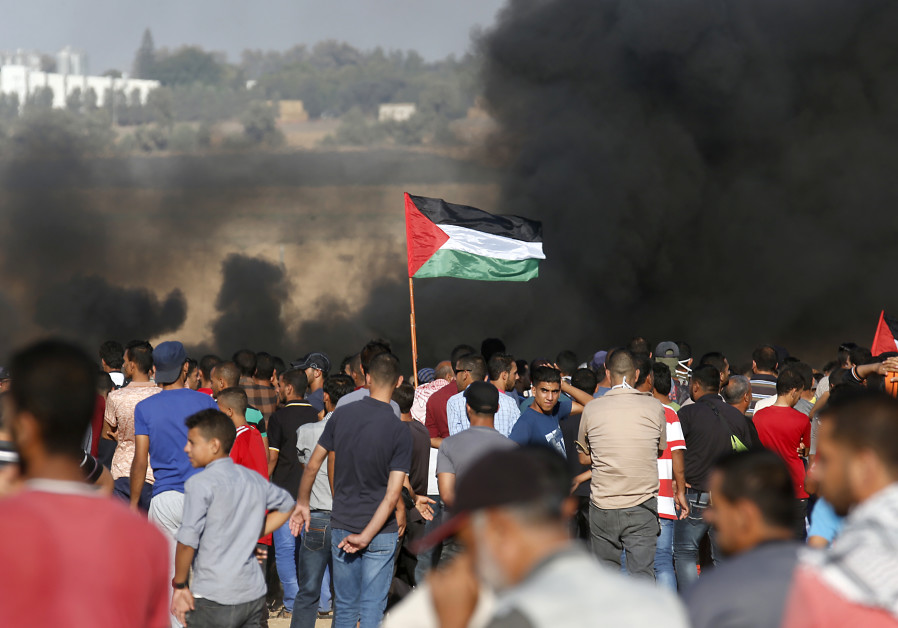
Palestinian reports say protestors have gathered along the border fence and are rioting and burning tires.

BY JERUSALEM POST STAFF
 AUGUST 17, 2018 16:55
Report: One killed, 100 wounded, in Gaza border clashes

Palestinian reports say protestors have gathered along the border fence and are rioting and burning tires.

In addition, KKL firefighters are working on putting out two fires caused by incendiary balloons launched from the coastal enclave, both in the Be’eri forest in southern Israel.

On Thursday, it appeared that Prime Minister Benjamin Netanyahu had met with Egypt’s intelligence minister to discuss possible terms for a ceasefire between Israel and Hamas.

According to one source, the proposed ceasefire would include a year-long period of calm which could potentially be elongated to four years. The possible return of two Israeli civilians and the bodies of IDF soldiers held by Hamas would be discussed in negotiations throughout the year.

Following three days of relative calm along the border, Israel reopened Gaza’s Kerem Shalom border crossing on Wednesday morning to allow for the passage of economic goods into the Strip.

Despite the attempts to broker a ceasefire, Hamas-affiliated sources stated Friday that its people would continue to engage in weekly “Great March of Return” protests along the border – demonstrations and oft-violent riots that have been happening every Friday since March 30.