Archive for August 29, 2018

Living in a State of Denial

August 29, 2018


President Hassan Rouhani of Iran, second from left, arriving in Parliament in Tehran on Tuesday to answer lawmakers’ questions. He blamed United States sanctions for Iran’s troubles. Credit Vahid Salemi/Associated Press

By Richard Pérez-Peña Aug. 28, 2018 New York Times

Source Link: Iran’s Parliament Gives President a Rare Rebuke

{When politics has the power to define reality, you’re in big trouble. – LS}

LONDON — Iran’s Parliament summoned President Hassan Rouhani to answer questions on Tuesday about the country’s economic crisis, and then voted to reject his explanation, in a remarkable rebuke of a sitting leader.

Mr. Rouhani blamed United States sanctions, not government management, for his country’s troubles. But after he answered five questions about economic challenges like high unemployment and the collapsing value of the national currency, the rial, a majority of lawmakers voted that they were “not convinced” by four of his answers.

Elected by wide margins in 2013 and 2017, Mr. Rouhani is seen as a moderate in Iranian politics, and he campaigned on easing hostilities between his country and the West, and increasing economic opportunity. In 2015, his government struck a deal with the United States and other powers to give up elements of its nuclear program in return for the lifting of some sanctions.

But this year, President Trump withdrew the United States from that agreement and reimposed sanctions not only on Iran but also on companies doing business with the country. That has persuaded many European businesses to stay away from the Islamic republic, though their countries’ governments still support the deal.

Iran experts say that unwinding the agreement could strengthen the hand of hard-liners who oppose both the deal and Mr. Rouhani’s reformist agenda. His government runs many of the country’s daily affairs, but the ultimate power rests with the supreme religious leader, Ayatollah Ali Khamenei, and the unelected Guardian Council.

The lawmakers’ vote came two days after Parliament dismissed the finance minister. In the last few weeks, the country’s central banker and its labor minister have also been fired.

It was not clear what impact the rebuke of Mr. Rouhani would have. Officials said the matter could be referred to the judiciary, which could, in theory, find grounds for impeachment proceedings against the president.

Some analysts, however, said that impeachment was unlikely. They pointed to Ayatollah Khamenei’s recent admonition against calls for Mr. Rouhani to resign — even though Mr. Khamenei himself has been more critical of the president lately.

“Khamenei, and other members of the Iranian leadership, likely believe that removing a sitting president would further destabilize the country’s already precarious economy and potentially undermine support in the Islamic Republic’s structure,” said Henry Rome, an Iran analyst at the Eurasia Group, a political risk consultancy.

More likely, Mr. Rome said, are further efforts to remove those members of Mr. Rouhani’s cabinet deemed responsible for Iran’s economic travails, including the agriculture and industry ministers.

Mr. Rouhani’s allies remain the largest faction in Parliament. And in a country where tensions are high and protests have cropped up in many places, the potential for civil unrest could tamp down any party’s appetite for trying to remove a president and call new elections.

In an arresting aside during the proceedings, Mr. Rouhani attributed much of the economic troubles to street protests that began on Dec. 26, “when people saw suddenly that some people were chanting on the streets, and the slogans little by little went out of bounds.”

The protests, he said, encouraged Mr. Trump to declare his intention to withdraw from the nuclear agreement. “His threat of withdrawal and the domestic turbulence and international threats frightened the people,” undercutting the economy, Mr. Rouhani added.

Lawmakers said that a decision on referral to the judiciary would not be made before next week, the Iranian news agency ISNA reported.

The agency quoted Mr. Rouhani as telling Parliament, “Nobody, including the noble people of Iran, our friends and enemies around the world, must think that today is the start of a rift between the government and the Parliament.”

 

Official: Israel won’t relent in effort to push Iran ‎away from its borders 

August 29, 2018

Source: Official: Israel won’t relent in effort to push Iran ‎away from its borders ‎ – Israel Hayom

HUGETUBE !

August 29, 2018

UGETube an alternative for YouTube !

https://videos.utahgunexchange.com/

Perhaps we can make it a HUGETUBE !

Iran vows to maintain military presence in Syria despite US pressure

August 29, 2018

Source: Iran vows to maintain military presence in Syria despite US pressure – Israel Hayom

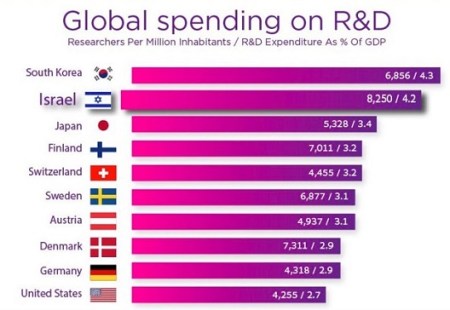
UNESCO: Israel‎ 2nd in global R&D spending as percentage of GDP 

August 29, 2018

Source: UNESCO: Israel‎ 2nd in global R&D spending as percentage of GDP – Israel Hayom

Arrest of Iranian Spies in U.S. Just ‘Tip of the Iceberg,’ Lawmaker Warns

August 29, 2018

Iran spies stationed across U.S. a result of Obama-era cash payouts

Rep. Peter Roskam

Rep. Peter Roskam / Getty Images

BY:

Arrest of Iranian Spies in U.S. Just ‘Tip of the Iceberg,’ Lawmaker Warns

The recent arrest of two Iranian agents alleged to have been running spy operations on U.S. soil is just “the tip of the iceberg” in terms of the Islamic Republic’s efforts to conduct intelligence operations in America that could result in a terrorist attack, according to a leading lawmaker and U.S. officials who spoke to the Washington Free Beacon about the matter.

Following the arrest of two Iranian individuals charged with spying on Jewish and Israeli facilities in the California area, Rep. Peter Roskam (R., Ill.) told the Free Beacon it is likely Iran has stationed multiple regime-tied agents in the United States to conduct intelligence operations.

While the arrest of the two Iranians was met with shock in the press, Roskam said he was not surprised by the arrests, which have unearthed concrete evidence of the Islamic Republic’s efforts to foment discord across the globe, including on American soil.

“This is the tip of the iceberg,” Roskam said in an interview. “This is not a surprise and this is a result of the Iran regime getting financial support from the Obama administration in the Iran deal.”

Iran has been emboldened by the lack of international repercussions on its malevolent behavior and may have increased its intelligence operations in America in the years since the landmark nuclear deal, he said.

Iran is “acting with impunity, that deal emboldened them,” Roskam said. “This is an unmasking of that. Unfortunately it’s all too predictable. Give a malevolent regime huge amounts of cash with no restraining influence and this is what happens.”

The Trump Justice Department announced last week it had arrested two Iranians and charged them with spying on behalf of the hardline regime, a discovery that has refocused attention on the Islamic Republic’s global spy operations.

Lawmakers and experts have been warning for some time that Iran has stationed what some described as “sleeper cell” agents across the United States. These agents are believed to operate with impunity and could lay the groundwork for a large-scale terror attack on American soil.

The two Iranian individuals—identified as Ahmadreza Mohammadi-Doostdar, a dual U.S.-Iranian citizen, and Majid Ghorbani, an Iranian citizen and resident of California—were formally charged by the Trump administration “with allegedly acting on behalf of the government of the Islamic Republic of Iran by conducting covert surveillance of Israeli and Jewish facilities in the United States, and collecting identifying information about American citizens and U.S. nationals who are members of the group Mujahedin-e Khalq (MEK),” an Iranian opposition group that promotes regime change in the Islamic Republic, the DOJ announced.

One U.S. official, agreeing with Roskam’s assessment, told the Free Beacon Iran has been running “vast espionage and information operations in the United States” with virtual impunity. The arrest of the two recently charged Iranians denotes a significant shift in policy that could result in the capture of more agents.

“If there’s anything that’s become obvious in the last few months, it’s that the Iranians are running vast espionage and information operations in the United States,” said the source, who could only discuss the situation on background. “The Trump administration has been warning since day one that some of the windfall Iran got from the nuclear deal has been going into malign cyber operations.”

“The propaganda network that Facebook, Twitter, and YouTube uncovered was doubling as a hacking network that had been ramping up in the last couple of years,” the source said, referring the recent uncovering of a massive social media influence campaign believed to be organized by Iran.

Sen. Marco Rubio (R., Fla.), also a vocal critic of the Iranian regime, told the Free Beacon the recent arrest of the two Iranians is cause for major concern.

“I am deeply alarmed by the Justice Department’s new indictment against alleged Iranian agents,” Rubio said. “Iran’s regime has sponsored terrorist attacks against Americans abroad and our allies, and may now be seeking to target American citizens, as well as Jewish or Israeli facilities, on U.S. soil.”

Roskam, in his comment to the Free Beacon, noted that “Iran’s malevolence” toward Israel and other countries it considers an enemy is well documented.

“What’s new here is a level of aggression against the United States and an impunity with which they’re operating,” the lawmaker said, referring to the spy operations on Jewish targets—a cornerstone of Iran’s global terror operations, particularly its 1994 bombing of a Jewish facility in Argentina that sent shockwaves through the global Jewish community.

The operations on U.S. soil are “incredibly provocative and an indication where the Iranian regime is,” Roskam said.

Iran has publicly stated multiple times over the past years that it has a vast espionage network that includes the United States. While many have dismissed these claims as posturing, Roskam said Iran should be taken at its word.

“The takeaway is we can take the Iranians at face value,” he said. “They were declarative during the Iran negotiations: They were not willing to make any commitments as it relates to their state sponsorship of terror. It’s clear they haven’t. This can’t be a surprise to anyone. It is entirely consistent with what they’ve been communicating. The surprise is the idea anyone thought they were slowing down or giving up their aggressive disposition.”

Congress will play a prominent role in investigating the matter in the months to come. This will include working with federal law enforcement to ensure Iranian agents are not able to coordinate terror attacks on Jewish or Israeli facilities.

Earlier this year, Congress heard testimony from a panel of experts of former U.S. officials about Iran’s “sleeper cell” networks in America.

Iran, through terrorists affiliated with Hezbollah, could easily launch strikes in America.

“They are as good or better at explosive devices than ISIS, they are better at assassinations and developing assassination cells,” Michael Pregent, a former intelligence officer who worked to counter Iranian influence in the region, said during the April hearing. “They’re better at targeting, better at looking at things,” and they can outsource attacks to Hezbollah.

Ambassador Haley: UNWRA Can Stay, But Must Offer Accurate Number of Refugees

August 29, 2018

Ambassador Haley: UNWRA Can Stay, But Must Offer Accurate Number of Refugees

US Ambassador to the United Nations Nikki Haley at the Foundation for Defense of Democracies, August 28, 2018

US Ambassador to the United Nations Nikki Haley on Tuesday questioned the figures on “Palestinian refugees” being offered by the United Nations Relief and Works Agency for Palestine Refugees in the Near East (UNRWA), suggesting they are significantly inflated.

Speaking at the pro-Israel think tank Foundation for Defense of Democracies, Haley was asked by FDD President Cliff May about the US relationship with UNRWA, following the restrictions imposed on the agency by the White House and statements from President Trump and others in the administration questioning its viability.

“UNRWA can stay there, and we will be a donor if it reforms what it does,” Ambassador Haley said. “If it goes and makes sure that they’re not doing those teachings [of hate] in textbooks, if they actually change the number of refugees to an accurate account. We will look back at partnering them. But otherwise, you’re just molding an organization that has flaws into another organization, and that’s not fixing the problem. I think we have to go further than that.”


UNWRA claims to provide services to five million “Palestinian refugees,” the vast majority of whom were not yet born in 1948. Most are descendants from individuals who fled their homes in Israel’s 1948 War of Independence.

May inquired about Haley’s definition of “who is a Palestinian.”

“Right now, you have this interesting and kind of illogical situation where somebody who is a Palestinian, living in a territory he considers to be Palestine, can also say, ‘And I’m a refugee from Palestine. Here I am in Ramallah, I’m a refugee from Palestine,’” May argued, wondering: “And why isn’t the Palestinian Authority, which claims to be governing these people, assuming some responsibility as opposed to saying no, there’s a UN agency that does it, it’s funded by the donor community, which means us and a few others, we don’t need to worry about this, we can worry about other things.”

“It’s bigger than that, even,” the ambassador responded. “When you look at UNRWA, there’s a couple of issues there. First of all, you’re looking at the fact that, yes, there’s an endless number of refugees that continue to get assistance, but more importantly, the Palestinians continue to bash America. This is the government, not the people, not the Palestinian people.

“So the government continues to bash America. They have their hand out wanting UNRWA money. We were supposed to […] give them $130 million. We cut it in half, saying that they really needed to reform and fix the things they were doing, because they teach anti-Israeli and anti-American things in their textbooks. They are not necessarily doing things that would cause peace…

“So instead of the $130 million, we give them $65 million. They didn’t say thank you. UNRWA had them protest in the streets that we didn’t give more. So at the last Security Council meeting we had on the Palestinian issue and UNRWA, I went and said, ‘You are all so quick to wag your finger at us for not giving more. Where is Saudi Arabia? Where is United Arab Emirates? Where is Kuwait? Where are all of those countries? Do they not care enough about Palestinians to go and give money to make sure these kids are taken care of?”

At this point the audience applauded the ambassador.

She continued: “If the region doesn’t invest in those areas, why are we being faulted for not investing in those areas? They have to have skin in the game. They have to – they’re the ones that fight me every day on Israel issues. But yet they don’t give a penny when it comes to – any more than they have to. They give tokens, and then we still are the largest donor of UNRWA at the same time.

“So it goes to a second set. Our job is not to take the beatings that you give us, saying we’re not kind to Palestinians and then turn around pay for them. Our job is to make sure that, look, we’ll be a partner with you, but only on a partner basis of something you believe in. So you show us you care, and then we’ll come back and decide if we’re going to give.”

Iran on Israeli spy: We controlled a cabinet member of hostile country

August 29, 2018

Source: Iran on Israeli spy: We controlled a cabinet member of hostile country

Tehran’s intelligence minister says ‘we brought under our control a member of a cabinet of a hostile country’ without elaborating; some Iranian media say he’s referring to Gonen Segev, former Israeli minister charged with serving as an Iranian agent.

LONDON – Security forces in Iran have arrested tens of spies working in state bodies, Intelligence Minister Mahmoud Alavi said on Tuesday, and also indirectly commented the arrest of former Israeli minister Gonen Segev, who was charged with spying for the Islamic Republic.

“You have recently heard that we brought under our control a member of a cabinet of a hostile country,” Alavi said, without specifying which country.

“The counter-espionage sector of the intelligence ministry is one the most powerful among world’s intelligence services,” he added.

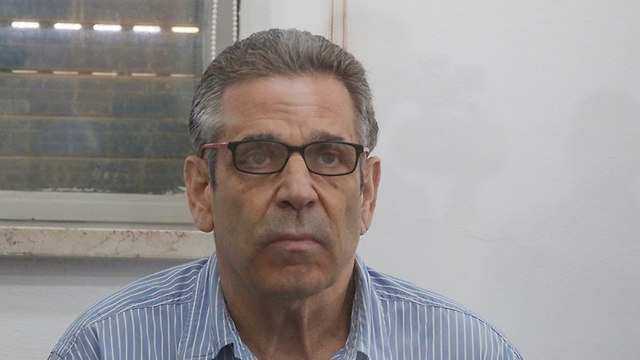
Gonen Segev in court (Photo: Olivier Fitoussi)

Gonen Segev in court (Photo: Olivier Fitoussi)

Some Iranian media said Alavi was referring to Israel’s former energy minister Gonen Segev, who was charged in Israel with serving as an Iranian agent in June.

Segev, energy minister from 1995 to 1996, had been living in Nigeria, where he made contact with officials at the Iranian embassy in 2012, according to Israeli investigators.

He had been jailed in Israel in 2004 after being convicted of attempting to smuggle Ecstasy pills into the country. He left Israel in 2007 after his release from prison.

Speaking of the spies Iran has allegedly captured, Alavi indicated that many of the detainees were dual nationals, but did not say when the arrests took place or which countries the spies allegedly were working for.

“I have repeatedly asked people to inform us if they know any dual national. The intelligence ministry’s anti-espionage unit has successfully identified and arrested tens of spies in different governmental bodies,” Alavi was quoted as saying by the semi-official news agency ISNA on Tuesday.

The arrest of dual nationals has increased since Iranian Supreme Leader Ayatollah Ali Khamenei said there had been “infiltration” of Western agents in Iranian decision-making bodies.
Reuters reported in 2017 that Iran’s elite Revolutionary Guards had arrested at least 30 dual nationals in recent years, mostly on espionage charges.
Tension between Tehran and some Western countries has risen since May when US President Donald Trump withdrew from an international nuclear deal with Tehran and reimposed some of the US sanctions that had been lifted after the 2015 accord in return for restrictions on the Iranian nuclear program.Iran does not recognize dual nationality and does not routinely announce arrests or charges of dual nationals, whose rights to consular assistance are enshrined in the UN Vienna Convention.

Alavi said that security forces arrested this month a member of the Islamic State militant group in southern Iran, and had disbanded a “terrorist cell” in the country’s north.

He said his ministry had foiled several plots to bomb metro stations and universities, without making any of the incidents public at the time.

Under Islamic State’s ultra-hardline Sunni Muslim ideology, Shi’ites—the majority in Iran—are considered apostates. Last year, Islamic State militants carried out attacks on the parliament in Tehran and the mausoleum of the founder of Iran’s 1979 Islamic Revolution, Ayatollah Ruhollah Khomeini. At least 18 people were killed in the attacks.

Iran-based political influence operation: bigger, persistent, global

August 29, 2018

Source: Iran-based political influence operation: bigger, persistent, global

After Facebook and other companies found multiple social media accounts and websites were part of an Iranian project to covertly influence public opinion in other countries, Reuters identifies 10 more sites and dozens of social media accounts that are part of the same campaign.
LONDON/WASHINGTON – An apparent Iranian influence operation targeting internet users worldwide is significantly bigger than previously identified, Reuters has found, encompassing a sprawling network of anonymous websites and social media accounts in 11 different languages.
 Facebook and other companies said last week that multiple social media accounts and websites were part of an Iranian project to covertly influence public opinion in other countries. A Reuters analysis has identified 10 more sites and dozens of social media accounts across Facebook, Instagram, Twitter and YouTube.US-based cyber security firm FireEye Inc and Israeli firm ClearSky reviewed Reuters’ findings and said technical indicators showed the web of newly-identified sites and social media accounts—called the International Union of Virtual Media, or IUVM—was a piece of the same campaign, parts of which were taken down last week by Facebook Inc, Twitter Inc and Alphabet Inc.

File photo (Photo: Getty Images)

File photo (Photo: Getty Images)

IUVM pushes content from Iranian state media and other outlets aligned with the government in Tehran across the internet, often obscuring the original source of the information such as Iran’s PressTV, FARS news agency and al-Manar TV run by the Iran-backed Shi’ite Muslim group Hezbollah.

PressTV, FARS, al-Manar TV and representatives for the Iranian government did not respond to requests for comment. The Iranian mission to the United Nations last week dismissed accusations of an Iranian influence campaign as “ridiculous.”The extended network of disinformation highlights how multiple state-affiliated groups are exploiting social media to manipulate users and further their geopolitical agendas, and how difficult it is for tech companies to guard against political interference on their platforms.

In July, a US grand jury indicted 12 Russians whom prosecutors said were intelligence officers, on charges of hacking political groups in the 2016 US presidential election. US officials have said Russia, which has denied the allegations, could also attempt to disrupt congressional elections in November.

Ben Nimmo, a senior fellow at the Atlantic Council’s Digital Forensic Research Lab who has previously analyzed disinformation campaigns for Facebook, said the IUVM network displayed the extent and scale of the Iranian operation.

“It’s a large-scale amplifier for Iranian state messaging,” Nimmo said. “This shows how easy it is to run an influence operation online, even when the level of skill is low. The Iranian operation relied on quantity, not quality, but it stayed undetected for years.”

Further investigations

Facebook spokesman Jay Nancarrow said the company is still investigating accounts and pages linked to Iran and had taken more down on Tuesday.”This is an ongoing investigation and we will continue to find out more,” he said. “We’re also glad to see that the information we and others shared last week has prompted additional attention on this kind of inauthentic behavior.”

 (Photo: AP)

(Photo: AP)

Twitter referred to a statement it tweeted on Monday shortly after receiving a request for comment from Reuters. The statement said the company had removed a further 486 accounts for violating its terms of use since last week, bringing the total number of suspended accounts to 770.

“Fewer than 100 of the 770 suspended accounts claimed to be located in the US and many of these were sharing divisive social commentary,” Twitter said.

Google declined to comment but took down the IUVM TV YouTube account after Reuters contacted the company with questions about it. A message on the page on Tuesday said the account had been “terminated for a violation of YouTube’s Terms of Service.”

IUVM did not respond to multiple emails or social media messages requesting comment.

The organization does not conceal its aims, however. Documents on the main IUVM website https://iuvm.org said its headquarters are in Tehran and its objectives include “confronting with remarkable arrogance, western governments and Zionism front activities.”

App store and satirical cartoons

IUVM uses its network of websites—including a YouTube channel, breaking news service, mobile phone app store, and a hub for satirical cartoons mocking Israel and Iran’s regional rival Saudi Arabia—to distribute content taken from Iranian state media and other outlets which support Tehran’s position on geopolitical issues.Reuters recorded the IUVM network operating in English, French, Arabic, Farsi, Urdu, Pashto, Russian, Hindi, Azerbaijani, Turkish and Spanish.

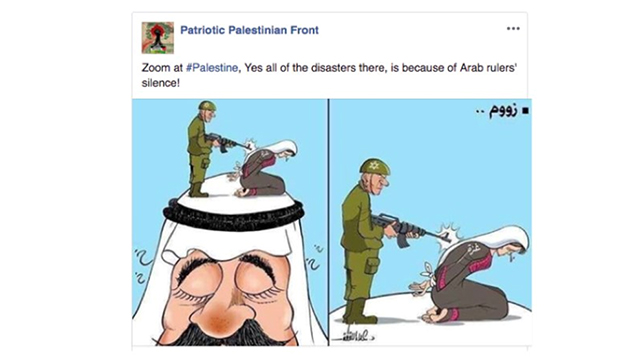
Anti-Israel cartoon removed by Facebook

Anti-Israel cartoon removed by Facebook

Much of the content is then reproduced by a range of alternative media sites, including some of those identified by FireEye last week as being run by Iran while purporting to be domestic American or British news outlets.

For example, an article run by in January by Liberty Front Press—one of the pseudo-US news sites exposed by FireEye—reported on the battlefield gains made by the army of Iranian ally Syrian President Bashar Assad. That article was sourced to IUVM but actually lifted from two FARS news agency stories.

FireEye analyst Lee Foster said iuvmpress.com, one of the biggest IUVM websites, was registered in January 2015 with the same email address used to register two sites already identified as being run by Iran. ClearSky said multiple IUVM sites were hosted on the same server as another website used in the Iranian operation.

Moshe Kahlon and Mnuchin form joint U.S.-Israel team to enforce Iran sanctions 

August 29, 2018

Source: Moshe Kahlon and Mnuchin form joint U.S.-Israel team to enforce Iran sanctions – Middle East – Jerusalem Post

Kahlon said the economic sanctions led by the US on Iran are proving themselves effective: “We should be thankful to the US.”

BY CASSANDRA GOMES-HOCHBERG
 AUGUST 29, 2018 10:46
Finance Minister Moshe Kahlon and United States Treasury Secretary Steven Mnuchin

Kahlon said that “the sanctions on Iran contribute to removing a threat to Israel’s security and to the security of the entire free world.”

Most of the meeting focused on the issue of Iran, concluding with the decision which pertains in particular to sanctions in the high-tech sector. Responsibility for economical sanctions rests with the ministries of finance of both countries. The joint ream will count with staff from both Israeli and US ministries.

This is the fourth time the finance minister and the US secretary have met in the past year.

In May, the US pulled out of the nuclear deal with Tehran in which sanctions were lifted. They were then reimposed reimposed upon US withdrawal. In addition to cutting off Iran from dollars and gold, the US sanctions enforced earlier this month also restrict Iran’s access to industrial metals and target the country’s automotive sector, its exports of carpets and its sale of pistachios.

Washington’s harshest sanctions will come back into effect on November 4, by which date the Trump administration hopes to decimate Iran’s oil export market. Protests have erupted in several cities in Iran.

Iran’s president Hassan Rouhani was pressured on live TV on Tuesday for his promised economic gains, his government’s corruption scandals and surging inflation.

“The economic sanctions led by the US on Iran are proving themselves [effective],” Kahlon said Wednesday.

“They contribute to the removal of the threat to Israel’s security and to the security of the entire free world, and this is why we should be thankful to the US. My meeting with Finance Secretary Steven Mnuchin is intended to further our strategic economic ties with the US. The joint team that we have established will be of great importance in tightening sanctions on Iran.”

Kahlon also addressed the new development in a tweet Wednesday morning, saying “We are working with true friends in Washington, and together are looking after Israel’s security interests.”

Michael Wilner contributed to this report