Archive for August 27, 2018

Iran’s Rouhani asks Europe for guarantees on banking channels and oil

August 27, 2018

Source: Iran’s Rouhani asks Europe for guarantees on banking channels and oil – International news – Jerusalem Post

Macron reiterated France’s commitment to maintaining the accord, a remark aimed at soothing Tehran.
BY REUTERS
 AUGUST 27, 2018 18:00
Iran's Rouhani asks Europe for guarantees on banking channels and oil

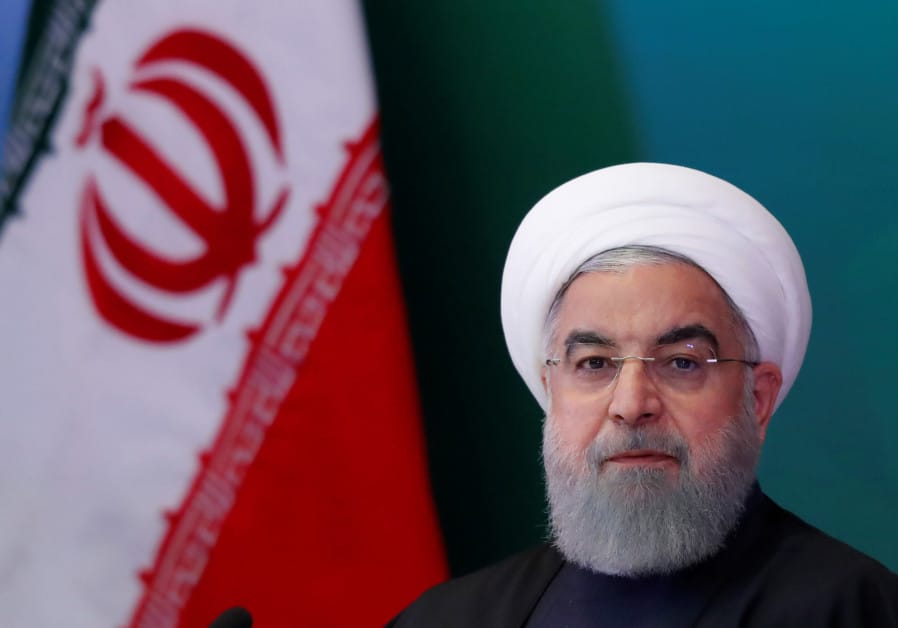
Iranian President Hassan Rouhani on Monday urged the remaining signatories to its 2015 nuclear agreement to act to save the pact, though France’s leader called again for broader talks on Tehran’s missile program and its role in the Middle East region.

In a phone call to French President Emmanuel Macron, Rouhani said Iran wanted the Europeans to give guarantees on banking channels and oil sales as well as in the field of insurance and transportation, according to the state-run Iranian news agency IRNA.

“Iran has acted upon all its promises in the nuclear agreement and, with attention to the one-sided withdrawal of America … expects the remaining partners to operate their programs more quickly and transparently,” Rouhani was quoted as saying.

Rouhani was speaking in the light of US sanctions re-imposed by Washington after President Donald Trump pulled out of a 2015 nuclear deal between Iran and world powers in May.

Macron reiterated France’s commitment to maintaining the accord, a remark aimed at soothing Tehran.

But he repeated his earlier calls for broader discussions with all relevant parties that would include Iran’s nuclear program after 2025, its ballistics program and its influence in the wider Middle East region.

“We will do everything so that the talks help avoid a serious crisis in the months ahead,” Macron said in an annual speech to French ambassadors.

Separately, the head of the navy of Iran’s Revolutionary Guards, General Alireza Tangsiri, said on Monday that Iran had full control of the Gulf and the US Navy did not belong there, according to the Tasnim news agency.

Tehran has suggested it could take military action in the Gulf to block other countries’ oil exports in retaliation for US sanctions intended to halt its sales of crude. Washington maintains a fleet in the Gulf that protects oil shipping routes.

Tangsiri said Iran had full control of the Gulf and the Strait of Hormuz that leads into it. Closing the strait would be the most direct way of blocking shipping.

“We can ensure the security of the Persian Gulf and there is no need for the presence of aliens like the US and the countries whose home is not in here,” he said in the quote, which appeared in English translation on Tasnim.

He added, “All the carriers and military and non-military ships will be controlled and there is full supervision over the Persian Gulf. Our presence in the region is physical and constant and night and day.”

The head of the Revolutionary Guards, Major General Mohammad Ali Jafari, said on Monday that Iran’s enemies would not prevail in a conflict.

“The enemies are strictly avoiding any conflict with Iran because they know that it will not be beneficial for them,” Jafari said, according to Tasnim.

As tension has escalated between Iran and the United States senior US officials have said they aim to reduce Iran’s oil exports to zero.

Iran’s Supreme Leader Ayatollah Ali Khamenei, the most senior authority in the Islamic Republic, said last month that he supported the idea that if Iran is not allowed to export oil then no country should export oil from the Gulf.
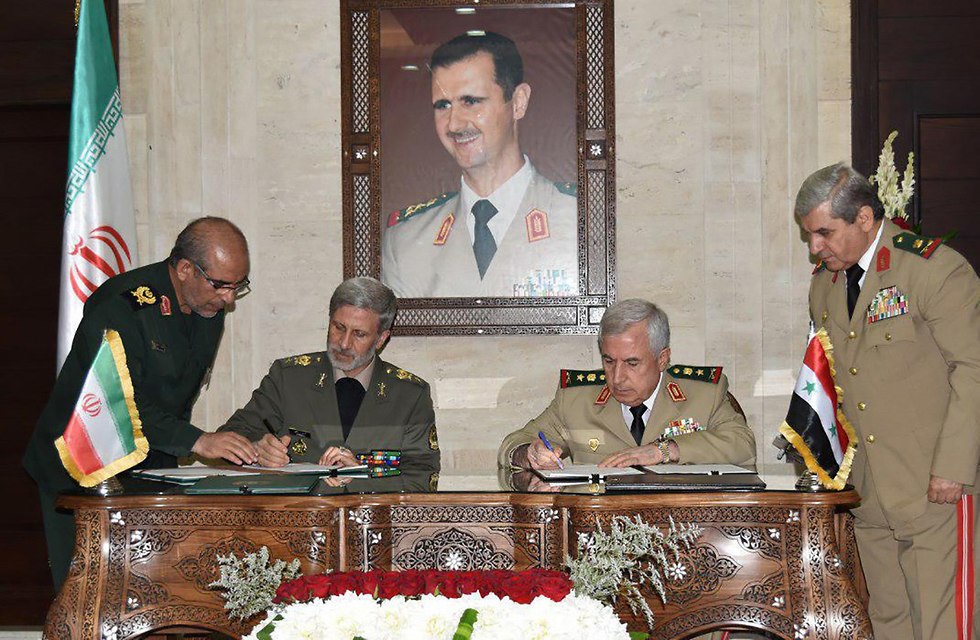
Iran and Syria sign deal for military cooperation

August 27, 2018

Source: Iran and Syria sign deal for military cooperation

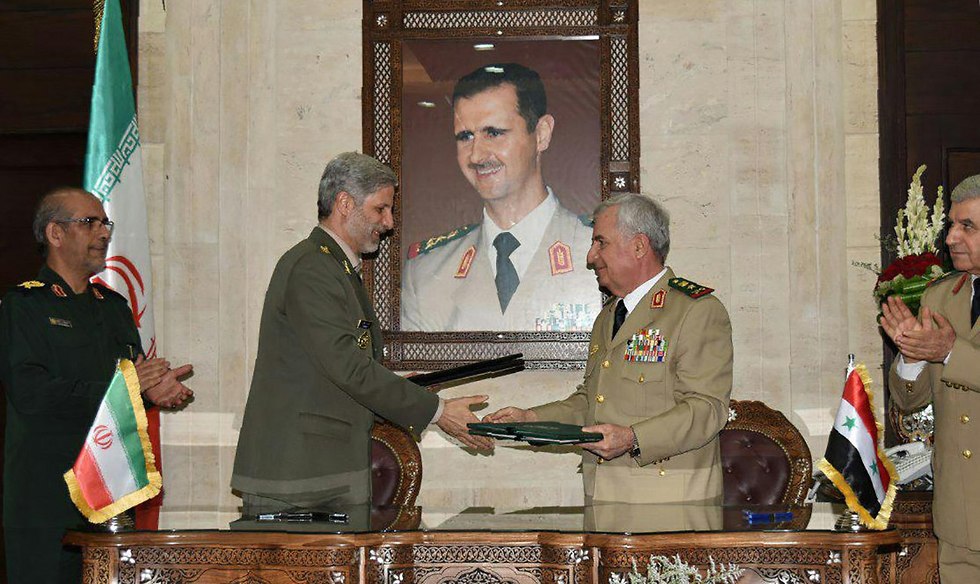
Defense ministers from the two countries meet in Damascus to sign military deal, with no details immediately available; Syrian official says visit is response to Israeli and American demands to remove Iranian forces from Syria.

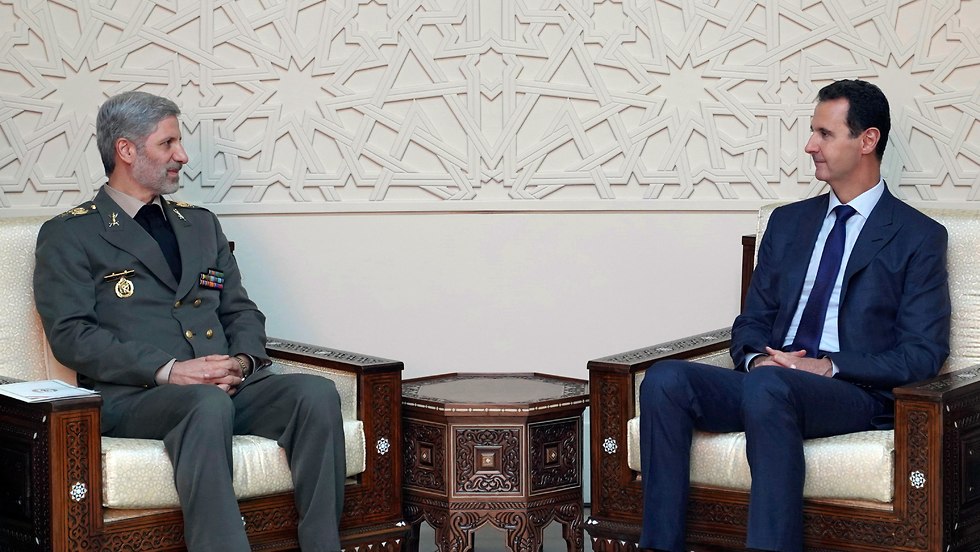
Iran and Syria signed a deal for military cooperation in a meeting between the defense ministers of the two countries in Damascus, the Tasnim news agency reported on Monday.

Iranian Defense Minister Amir Hatami travelled to Damascus on Sunday for a two-day visit, meeting Syrian President Bashar Assad and senior military officials, Tasnim reported.

“We hope to have a productive role in the reconstruction of Syria,” Hatami said on arrival in Syria, according to Fars News. Iran has previously made commitments to help rebuild Syria, including the construction of some 20,000 housing units.

 (Photo: AFP)

(Photo: AFP)

Tasnim did not provide any details about the military cooperation deal.

The Iranian defense minister told the Hezbollah-affiliated Al Mayadeen that Tehran will work to rebuild and rehabilitate Syria’s military industries as well as the Syrian armed forces.

A senior Syrian official told Russian news agency Sputnik that Hatami’s visit was not just about the reconstruction of Syria following the civil war, but also meant to send a message of increased military cooperation between the two countries in response to Israel and American demands to remove Iranian forces from Syria.

 (Photo: AFP)

(Photo: AFP)

Iranian forces have backed Assad in the country’s civil war. Senior Iranian officials have said their military presence in Syria is at the invitation of the Assad government and they have no immediate plans to withdraw.

Arab media have tied Hatami’s visit to Syria with the Assad army’s preparations for a big attack on Idlib in the north of the country, one of the last strongholds of the rebels seeking to oust the Syrian president.

Syrian Defense Minister Ali Abdullah Ayyoub said during the meeting with his Iranian counterpart that “We’ll free Idlib, with an agreement or fire power.”

 (Photo: AP)

(Photo: AP)

The Idlib region, a refuge for civilians and rebels displaced from other areas of Syria as well as powerful jihadist forces, was hit by a wave of air strikes and shelling this month, in a possible prelude to a full-scale government offensive.

US National Security Adviser John Bolton said last week that Iran should remove its forces from Syria. “Iranian activity in the region has continued to be belligerent: what they are doing in Iraq, what they are doing in Syria, what they are doing with Hezbollah in Lebanon, what they are doing in Yemen, what they have threatened to do in the Strait of Hormuz,” he said at a press conference in Jerusalem.The Trump advisor also defended Israel’s right to launch strikes on missiles or “other threatening weapons” brought into war-torn Syria by Iran as “a legitimate act of self defense on the part of Israel.”

IRGC Navy head: Iran has full control of Gulf and Strait of Hormuz

August 27, 2018

Source: IRGC Navy head: Iran has full control of Gulf and Strait of Hormuz

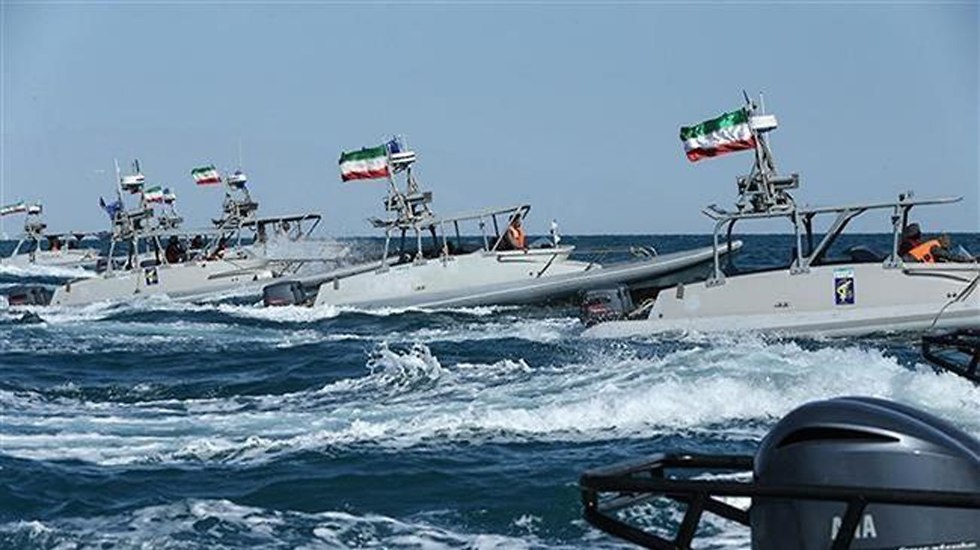
Following Iranian threats to block the Strait of Hormuz, a major oil shipping route, in retaliation for any hostile US action, head of the Revolutionary Guards navy says the Islamic Republic now fully controls the passage.
Iran has full control of the Gulf, and the US Navy does not belong there, the head of the navy of Iran’s Revolutionary Guards, General Alireza Tangsiri, said on Monday, according to the Tasnim news agency.The remarks come at a time when Tehran has suggested that it could take military action in the Gulf to block oil exports of other regional countries in retaliation for US sanctions intended to halt its oil sales. Washington maintains a fleet in the Gulf which protects oil shipping routes.

Tangsiri said Iran had full control of both the Gulf itself and the Strait of Hormuz that leads into it. Closing off the strait would be the most direct way of blocking shipping.

IRGC Navy holds drill in Persian Gulf (Photo: PressTV)

IRGC Navy holds drill in Persian Gulf (Photo: PressTV)

“We can ensure the security of the Persian Gulf and there is no need for the presence of aliens like the U.S. and the countries whose home is not in here,” he said in the quote, which appeared in English translation on Tasnim.

Tension between Iran and the United States has escalated since US President Donald Trump pulled out of a 2015 nuclear deal between Iran and world powers in May.

Senior US officials have said they aim to reduce Iran’s oil exports to zero.

Iran’s Supreme Leader Ayatollah Ali Khamenei, the most senior authority in the Islamic Republic, said last month that he supports the idea that if Iran is not allowed to export oil then no country should export oil from the Gulf

European Aid To Iran Sends Signal To United States 

August 27, 2018

Source: European Aid To Iran Sends Signal To United States – International news – Jerusalem Post

BY MAYA MARGIT/THE MEDIA LINE
 AUGUST 27, 2018 11:57
European Aid To Iran Sends Signal To United States

The European Union’s decision to transfer millions of dollars in aid to Iran is a symbolic move intended to undermine the United States’ strategy of pressuring Tehran into re-negotiating the nuclear deal, analysts said.

Last week, the bloc announced it would provide the Islamic Republic with 18 million euros ($21 million), part of a larger package of 50 million euros the EU has earmarked for the Iranian regime over the coming months. The move follows US President Donald Trump’s decision in May to withdraw from the atomic pact devised by world powers.

Foreign affairs experts believe the EU’s economic aid to Tehran sends a political message to Washington.

“Clearly, the United States has decided on a pressure campaign that involves the re-imposition of sanctions and trying to pressure Iran [into coming] back to the negotiating table to get a better nuclear deal,” Dr. Emily Landau, Senior Research Fellow at Israel’s Institute for National Security Studies, explained to The Media Line. “What we’ve seen from Europe is an attempt to undermine this pressure campaign.”

Dr. Landau noted that the sum would not have a significant impact on the Iranian economy, which was teetering on the brink even before new American sanctions took effect earlier this month. The Iranian rial, for example, has plummeted to record lows and on Sunday, Iranian Minister of Economic Affairs and Finance Masoud Karbasian was sacked amid mounting internal protests.

Dr. Esther Lopatin, Director of the Center for European Studies at the Interdisciplinary Center (IDC) in Herzliya, agrees that the aid package is mainly symbolic.

“The EU believes in soft power, which means they want to solve conflicts with diplomatic means, rather than by military means,” she elaborated to The Media Line. “The EU is in a very difficult position today and doesn’t have the luxury to go and fight against Iran,” especially since the bloc is occupied with other pressing problems like “homegrown terrorism, identity issues, and the refugee crisis.”

Dr. Lopatin predicted that so long as European leaders pursue a “Europe first” approach, they will continue to act in ways that “send a clear message” to the Trump administration.

Both Israel and the US slammed last week’s aid announcement, with Prime Minister Benjamin Netanyahu calling the move a “poison pill” for the Iranian people, and the White House arguing it “sends the wrong message at the wrong time.”

“In my view, this type of money will just incentivize Iran’s mullah regime to continue with their jingoism in the Middle East,” Benjamin Weinthal, a Research Fellow at the Washington-based Foundation for Defense of Democracy, contended to The Media Line. “There’s no way of ensuring this money won’t be used to sponsor terrorism.”

Though Weinthal concedes the amount disbursed is not very significant, he nevertheless described the bloc’s decision as “utterly absurd.”

“This sends a message to Iran’s struggling democracy movement at home that the EU has aligned itself with the Ayatollahs as opposed to the Iranian people,” he concluded.

The EU’s aid package comes as many European businesses are bolting from the Iranian market. Air France-KLM Group and British Airways revealed they were suspending flights to Iran, citing poor commercial results. Whereas the airlines did not cite US sanctions as a reason, most analysts believe they contributed to the decision-making process.

“At the level of businesses we see the US sanctions are actually working quite well,” Dr. Landau affirmed. “Companies respond to economic dictates, not to political ones.”

To counter this apparent reality, German Foreign Minister Heiko Maas advocated for the creation of an alternative to SWIFT, the global interbank payment network. However, Chancellor Angela Merkel shot the idea down, arguing that SWIFT was an invaluable tool in the fight against “terrorist financing.”

A second tranche of US sanctions targeting Iran’s crucial banking and oil sectors are set to take effect in November.

“The only thing that has worked against the Iranian regime is pressure,” Dr. Landau noted. “Pressure is what brought them to the table, fear of warfare is what brought them to suspend part of their military program back in 2003. It’s not clear that this pressure will work, but we don’t have anything else.”

Analysis: As N. Korea stalls, Trump follow through on nuke issues, Iran tested 

August 27, 2018

Source: Analysis: As N. Korea stalls, Trump follow through on nuke issues, Iran tested – Israel News – Jerusalem Post

If Trump stays tough or shows a soft side to North Korea, will that be a game-changing moment for the nuclear standoff with Iran?

BY YONAH JEREMY BOB
 AUGUST 27, 2018 10:34
U.S. President Donald Trump and North Korea's leader Kim Jong Un leave after signing documents that

On Friday, US President Donald Trump did an about-face on his North Korea policy when he told Secretary of State Mike Pompeo to cancel his planned visit.

For many North Korea and Iran analysts, this is the moment they have waited for: Will Trump stick to his guns and try to negotiate a tough deal with Pyongyang like he has said, even at the risk of his deal-cutting legacy being scattered to the wind? Or will he compromise more than he has said he would in order to secure a deal, even if it is less tough?

If Trump stays tough or shows a soft side to North Korea, will that be a game-changing moment for the nuclear standoff with Iran?

The coming days will be crucial, given Trump’s behavior leading into the historic June 12 Singapore Summit with the North’s leader, Kim Jong-un.

Shortly before the summit, Trump called it off, citing foot-dragging by Pyongyang in its readiness to compromise, while at the same time leaving an opening if Kim showed greater flexibility.

The gambit worked. Kim wanted the summit badly enough that he quickly agreed to sign on to further concessions, at least in principle. Trump then agreed the summit was back on.

Will history repeat itself? Trump called off Pompeo, but again left an opening and saved most of his criticism for China. He also gave Pompeo license to appoint a new and highly-respected North Korea envoy, Steve Biegun.

Usually, leaders do not appoint new envoys to lead negotiations for a process that they are going to completely walk out on a week later.

Likewise, to date when North Korea, or its state-sponsored microphones, have criticized the US, it has focused its anger on hawkish Trump advisers like Pompeo and National Secretary Adviser John Bolton. Pyongyang has carefully avoided criticizing Trump, and has mostly warned that the well-meaning president might be fooled by his advisers.

From Trump’s canceling Pompeo’s visit but refraining from any criticism of Kim, it appears that Trump has not committed to a digging in his heels position versus moving toward Pyongyang’s demands.

The main sticking point is Pompeo’s demand (consistent with prior US administrations) that North Korea significantly advance to nuclear disarmament before the US declares peace with Pyongyang.

In contrast, Kim is demanding the US move most of the way toward peace before it makes further dramatic denuclearization moves.

The sides are also fighting about who has made greater concessions to date.

Overall, if Kim does not make a dramatic gesture toward Trump, it’s likely the American leader will walk away and further ratchet up the pressure.

The worrisome signs are coming not only from his main advisers but from last week’s IAEA report that the North is not denuclearizing. Also of significance, Trump may be ready to admit negotiations are at a standstill two months after the summit.

With Trump’s penchant for defining foreign relations with his tweets, many analysts believed it would take half a year and a new North Korean missile test before he acknowledged the stalemate. But Trump has lost patience with Kim much faster.

Trump may still be willing to make concessions and withdraw US military forces in South Korea, something previous American presidents were not prepared to do. But not before Kim antes up.

The lesson for Iran is two-fold. From one perspective, Trump wants to deal. He may be willing to entertain concessions and ideas unacceptable to other American leaders. For example, unlike Obama he has offered to meet with Iran’s ayatollahs. However, he is likely to maintain his demand for the central concessions he expects from the other side, even if it means losing the ultimate deal.

Moreover, historically he has shown a greater affinity toward a deal with North Korea and greater interest in regime change regarding Iran.

After 20 months as president, Trump is getting close to defining his first-term legacy regarding North Korea and Iran.

Targeted killings credited with convincing Hamas leaders to negotiate 

August 27, 2018

Source: Targeted killings credited with convincing Hamas leaders to negotiate – Arab-Israeli Conflict – Jerusalem Post

Israel has threatened to assassinate high-ranking Hamas members if the violence along the Gaza Strip border continues.

BY JINITZAIL HERNANDEZ/THE MEDIA LINE
 AUGUST 27, 2018 07:56
hamas

The relative calm restored along the Gaza Strip border is being attributed to many factors, not least of which is that neither Israel nor Hamas currently are interested in the outbreak of full-blown war. In the interim, diplomats from the United Nations and Egypt are trying to devise a comprehensive long-term truce that would include a complete cessation of hostilities, the easing of restrictions and possibly the lifting of the blockade on Gaza and, eventually, a prisoner swap and the economic rehabilitation of the Palestinian enclave.

What went largely unnoticed amid months of fighting was a renewed threat by Israel to resume the targeted killing of Hamas leaders, a controversial tactic employed in the past. Some analysts believe the threat caused considerable fear among Hamas’ top brass and thus contributed to a reduction in tensions, whereas others maintain that the practice not only damages Israel’s international standing but also contravenes international law.

The issue gained widespread notoriety after the recent release of the book Rise and Kill First:The Secret History of Israel’s Targeted Assassinations. In it, Ronen Bergman, a seasoned Israeli military and intelligence correspondent, estimated that Israel has undertaken more than 2,300 assassinations over the past 70 years.

Maj. (res.) Elliot Chodoff, a political and military strategist specializing in the Middle East, stressed to The Media Line that targeted killings are, first and foremost, intended to prevent escalation in rapidly deteriorating situations. “Taking out the enemy’s key personnel has been a standard tactic since there has been warfare,” he explained. “It is part of a package of carrots and sticks, and in this case I think opening the Kerem Shalom [border] crossing [through which products enter Gaza] is part of the positive flip side. It basically says to Hamas, ‘Behave yourselves and you’ll get the goodies; if you don’t behave we’re going to harm you.'”

Chodoff noted that Israel has used the tactic even for what he described as “management” as “eliminating them directly impacts on an organization’s effectiveness, particularly skilled bomb-makers for example or experienced attack planners who are difficult to replace.” In this respect, he emphasized that Hamas does not have the same “personnel pool of a [traditional] army.”

Dr. Gal Luft, co-director of the Institute for the Analysis of Global Security, a Washington-based think tank, contended to The Media Line that “we cannot really determine the full scope of the benefits or the drawbacks” of targeted killings because retaliation could come years later. “You win a war by assassinating your enemies,” he elaborated, “but it will serve you in operational manners every now and then. Targeted killings are not a strategy in and of themselves but a tool that can be used during and to prevent a conflict.”

For his part, Bergman argued in his book that tactical victories achieved by targeted killings have caused Israel to rely too heavily on the practice and not enough on statesmanship or political discourse. Others counter that targeted killings are necessary when it comes to terrorist organizations with whom engagement is impossible.

As regards the legality of targeted killings, Professor Marco Sassoli, Director of the Geneva Academy, asserted to The Media Line that “the majority opinion among analysts today is that Hamas is a legitimate target [because they] have an armed contingent. But not every member can be targeted; only those with a continuous fighting function.”

Sassoli concluded that international humanitarian law permits targeted killings in hostile arenas but bars indiscriminate attacks. “The law stipulates that such killings must be directed against legitimate targets in an armed conflict.”

‘False flags’: War of words over ‘chemical weapon attack’ in Idlib

August 27, 2018

Source: ‘False flags’: War of words over ‘chemical weapon attack’ in Idlib – Middle East – Jerusalem Post

“All evidence suggests preparations are underway for a new chemical scenario in Idlib,” claimed Hezbollah leader Hassan Nasrallah on Sunday.

BY SETH J. FRANTZMAN
 AUGUST 27, 2018 08:57
Syria war

In a coordinated media campaign before the Idlib offensive begins, the Syrian regime, Hezbollah’s Hassan Nasrallah and pro-Russian commentators have all begun to warn of a chemical weapons attack. “All evidence suggests preparations are underway for a new chemical scenario in Idlib,” claimed Hezbollah leader Hassan Nasrallah on Sunday.

“Foreign specialists” have arrived in Syria and “may stage a chemical attack,” RT (media network), which is supported by Moscow, warned Sunday night. The report noted that the Russian Defense Ministry had said that these “specialists” might stage the attack in the next two days and “this will be filmed for international media to frame Damascus forces.”

The Russian embassy in the UK even tweeted specifics about the alleged upcoming attack. “Terrorists prepare fake chemical attack in Syria. Eight chlorine containers delivered to Hallouz near Jisr al-Shughur in Idlib province. ‘Victims’ to be saved by White Helmets, trained by UK-based Olive Group.” The embassy warned on August 25th that this would be the “pretext for new airstrikes by the US and the UK.” Predictably the claims have made their way around the media circuit of blogs and media connected to the Syrian regime or which are sympathetic to it. Al-Masdar News reported that “jihadists are preparing a chemical weapons provocation.”

Twitter accounts supportive of Damascus have been tweeting this “false flag” ferociously. One account even claims that the US shut down conspiracy theorist Alex Jones because he “exposes false flags,” and alleges that John Bolton is behind a conspiracy “encouraging Al Qaeda in Idlib to create a chemical attack.” Another RT commentator writes that “beyond the tattered veil of moral superiority that is US war propaganda, Bolton’s words were clearly a very public command to Al-Qaeda and co-extremists to stage yet another fake chemical attack.” Even China Xinhua News has an analysis about how “US aims to prolong Syria’s war by stirring chemical weapons threats again.”

The US has warned that Washington will strike the Syrian regime if it uses chemical weapons again, as they did in April 2017 and 2018. Elliot Higgins, founder of Bellingcat, a site that publishes investigations online — many connected to the Syrian conflict — compiled a long list of previous “false flag” claims made by pro-regime media before various offensives and pointed out that there have been over 200 chemical weapons attacks since 2012.

Sources in Idlib are also preparing for the worst, claiming the regime will drop chemical weapons on them in the upcoming offensive by Damascus to strike at rebel groups and Hayat Tahrir al-Sham, an extremist group that controls parts of Idlib. “Chemical gas alert as Idlib assault nears,” reads the headline at Arab News on August 27th. Journalist Danny Gold notes that “the Syrian regime will likely use chemical weapons. Idiots will again tout ‘false flag’ conspiracies. You really think Syrians would gas themselves (for the 200th-something time) in hopes of finally spurring intervention.”

The avalanche of stories about a chemical weapons attack put out by pro-regime sources appears to try to inoculate it against claims that it has carried out an attack, if one does happen. At the same time it will give the commentators an “I told you so” ready-made claim after the attack in case of US-led airstrikes. This will feed the narrative that the regime in Damascus is threatened by “regime change” and “imperialism” and that the West is part of a conspiracy against it. At the same time Western officials seem to be preparing for an attack as well, and warning the regime and its allies against even thinking of using chemical weapons. The lead-up to the battle for Idlib has already begun. It has begun with a battle over the narrative, whether a chemical weapons attack that hasn’t happened could be a “false flag” or a legitimate reason for Washington and its allies to strike at Assad’s army.

IDF acquiring new rockets to hit all targets with unprecedented precision 

August 27, 2018

Source: IDF acquiring new rockets to hit all targets with unprecedented precision – Israel News – Jerusalem Post

The acquisition of the new rockets follows the decision of Defense Minister Avigdor Liberman to equip the IDF with precision rockets for all ranges.

BY ANNA AHRONHEIM
 AUGUST 27, 2018 12:10
Rocket used by the IAF during tensions at Gaza border in August 2018

Israel’s Ministry of Defense has signed a deal to develop and acquire advanced precise short and long range rockets worth hundreds of millions of shekels with Israel Military Industries (IMI).

According to the Ministry of Defense, the precision firepower will significantly improves the IDF’s capabilities of accurately hitting a target from a distance at immediate availability and with a low mission cost relative to other combat systems.

The acquisition of the new rockets follows the decision of Defense Minister Avigdor Liberman to equip the IDF with precision rockets for all ranges.

“We are purchasing and developing high-precision systems that bolster the IDF’s offense capabilities,” said Defense Minister Avigdor Liberman on Monday, adding that some are already in production and others are in the end of the research and development stage.

“The deal for the missile system will allow for the coverage within a few year every point in short and far ranges,” said Defense Minister Avigdor Liberman on Monday of the new rockets which will have advanced technologies to adapt them to the modern battlefield with some of them having a range of 30-150 km.

With the majority of operations fought by the IDF being in urban areas, the accuracy of shells has become increasingly important.

According to IMI Systems Chairman Yitzhak Aharonovitch “the innovative rocket systems that the IDF will receive from this transaction reflects the company’s technological capabilities, which specialize in the ability to fire accurately, to strike at a variety of ground targets.”

Two years ago the surface-to-surface GPS-guided Romach rockets manufactured by IMI become operational in the IDF. Designed to strike targets at a range of 35 kilometers with an accuracy range of under 10 meters, the rockets allow the IDF to strike targets even in the heart of a urban center,

Earlier in August a senior officer in the IDF’s ground forces stated that the military plans to convert 50 percent of the army’s land-based ammunition stockpiles into precise weaponry.

During a large-scale drill held in the Golan Heights in early August the Golani Brigade 13th Battalion fired new precision-guided 122 mm mortar shell which has flight control capability and accuracy of up to five meters.

Israel’s defense establishment has for years been discussing the need for the IDF to have accurate surface-to-surface missiles with a range of 150 kilometers.

According to a February report by Yediot Aharonot establish a vast network of medium-range surface-to-surface missile system to be operated by the ground forces. The initial aspects of the planned missile corps was reported to be completed by 2020 and complement Israel’s multi-tiered missile defense system and an offensive counter to the missile and rocket arsenal held by Hezbollah in Lebanon.

Hezbollah’s arsenal of an estimated 130,000 rockets is comprised of mostly small, man-portable and unguided surface-to-surface rockets and missiles with ranges of between 10km-500km. The group also has several kinds of surface-to-air and land-to-sea missiles.

Israeli officials believe that the Lebanese Shiite terror group will possess over 1,000 precision-guided missiles within a decade.

Mr. President: The Palestinians Already Had ‘Their Turn’

August 27, 2018

A good, succinct summary of history.

Mr. President: The Palestinians Already Had ‘Their Turn’

JNS.org – President Donald Trump said this week that following the move of the US embassy to Jerusalem, the Palestinian Arabs “will get something very good because it’s their turn next.”

Somebody ought to explain to the president that the Palestinians have already had “their turn” — again and again and again.

They got their turn in 1921, when the British separated the eastern 78 percent of Palestine, declared it off-limits to Jews, and established the Palestinian Arab state of “Trans-Jordan,” whose name was later changed to “Jordan.”

They got their turn in 1937, when the British government’s Peel Commission proposed to give the Arabs a second Palestinian state, comprising most of western Palestine, with a tiny Jewish state alongside it.

They got another turn in 1938, when another British government body, the Woodhead Commission, proposed to give the Arabs an even larger part — and the Jews an even smaller part — of western Palestine.

They got yet another turn in 1939, when the British White Paper blocked off almost all Jewish immigration, precisely at the moment that the Jews in Europe were trying to flee from Hitler. All the British asked in return was that the Palestinian Arabs support the Allies, not the Nazis, in World War II. The Arabs supported the Nazis anyway.

Yet more turns were coming for the ever-coddled Arabs of Palestine.

In 1947, the United Nations proposed to turn half of western Palestine into an Arab state, leaving the Jews a truncated, indefensible state consisting of three easily dissected sections. The Palestinian Arabs said no to that, too.

As the Palestinian Arabs and their Arab neighbors waged jihad against the newborn state of Israel in 1948, the West decided that the Palestinian Arabs deserved another “turn.” British officers helped command the Arab forces in the war, while the Truman administration declared an embargo against sending any weapons to Israel.

In more recent times, the turns have kept on coming for the Palestinians.

In 1993, Israel agreed to the Oslo Accords — withdrawing from the areas where 98 percent of the Palestinians reside, creating the de facto state known as the Palestinian Authority, freeing thousands of imprisoned Palestinian terrorists, and giving tens of thousands of weapons to the de facto army known as the Palestinian security forces.

How did the Palestinians respond? By waging an intifada against Israel, slaughtering hundreds of Jews in suicide bombings and trying to smuggle in 50 tons of weapons on the SS Karine A.

Despite all that, the Palestinians got even more turns.

Israeli Prime Minister Ehud Barak gave them a turn in 2000, reportedly offering to create a Palestinian state in nearly all of Judea-Samaria. The Palestinians said no. Israeli Prime Minister Ariel Sharon gave them a turn in 2005, withdrawing from Gaza and permitting them to create a state there. They responded by firing thousands of rockets. Israeli Prime Minister Ehud Olmert gave them a turn in 2008, reportedly offering the Palestinians even more than Barak did. They still said no.

Israeli Prime Minister Benjamin Netanyahu gave them yet more turns. He froze settlement construction for 10 months. He freed hundreds of additional terrorists. He offered them a demilitarized state.

Despite all that, the Palestinian Authority (PA) still won’t fulfill its obligations in the Oslo Accords, such as disarming, outlawing and extraditing terrorists, or ending incitement. In fact, the PA won’t even negotiate with Israel.

Mr. President, you have it all wrong. The Palestinians don’t deserve to “get something very good” from Israel. They’ve already received plenty. They’ve already had their “turn” — again and again and again.

Stephen M. Flatow is a vice president of the Religious Zionists of America, an attorney in New Jersey and the father of Alisa Flatow, who was murdered in an Iranian-sponsored Palestinian terrorist attack in 1995. His book, “A Father’s Story: My Fight for Justice Against Iranian Terror,” will be published later this year.


Iran demands guaranteed Russian/Syrian backing against US-Israeli offensive in Syria – DEBKAfile

August 27, 2018

Source: Iran demands guaranteed Russian/Syrian backing against US-Israeli offensive in Syria – DEBKAfile

Iran’s Defense Minister Amir Hatami arrived in Damascus on Sunday, Aug. 26 demanding Russian and Syrian commitments to stand foursquare behind Al Qods under US-Israel assault. This was Iran’s response to the US-Israeli plan, finalized last week in Jerusalem by visiting US National Security Adviser John Bolton with Prime Minister Binyamin Netanyahu, for a joint offensive against the Iranian Al Qods Brigades and Shiite militias in Syria.

Hatami arrived in Syria with draft texts for those guarantees in his pocket. By this step, Iran’s supreme leader Ayatollah Ali Khamenei has pushed the four key players in the Syria arena into setting out their positions without delay.

The minister arrived just four days after the US and Israel conducted their first joint operation against Iranian Revolutionary Guards’ Al Qods Brigades and their allied Shiite militias. It targeted the Iraqi Shiite Khataib Hezballah near Abu Kamal on the highway between Syria and Iraq. While Israel, Syria and Iran, pretended the attack never happened, Russian President Vladimir Putin realized a troubling dilemma was at hand. Since the attack was timed to coincide with the meeting in Geneva of US and Russian national security advisers John Bolton and Nikolai Patrushov in Geneva last Thursday, their talks were a washout. They only widened the rift between Moscow and Washington on Syria.
On Friday, the Kremlin indicated which way it intended to jump: Deputy Foreign Minister Sergei Ryabkov warned America against rash steps in Syria, and Russian lawmakers called for the deployment of tactical nuclear weapons in that country. The five Russian warships detached from the Black Sea fleet and destined for the Syrian port of Tartus were described by Moscow as responding to the buildup of US, British and French naval forces in the region.

Clearly, the understandings on Syria forged by Presidents Trump and Putin at their Helsinki summit on July 16, which resulted in tacit US acceptance of Syrian and Iranian forces right up to Israel’s Golan border, had melted away. A US-Israeli deal for striking Iran in Syria has taken its place. Trump now views Syria as the main US arena for directly hitting the most extreme elements of Iran’s Revolutionary Guards, the Al Qods Brigades. Their leaders, Qassam Soleimani and other commanders of Iran’s Middle East war are also at the forefront of the camp in Tehran which opposes dialogue with Washington on an amended nuclear accord.

Putin, for his part, perceives Trump’s flip-flop as imperiling Russian interests in Syria and Iran and a possible threat to the Assad regime, whose rescue from a bloody insurgency he vaunts as the crowning success of his regional policy.

As the partners changed places, Iran’s rulers decided against putting its trust in Putin as senior architect of the Syrian scene – and even less in Bashar Assad – especially in the face of the approaching US-Israel offensive on their forces in Syria. Tehran wants a firm  guarantee that against this offensive, Assad will stand by Tehran with military strength and by letting loose with his anti-air missile batteries, rather than following Russia’s lead in turning a blind eye to US and Israel bombardments.

The Iranians are therefore squeezing Putin and Assad to take a stand at delicate moment for them. If they fail to come through with solid guarantees for defending Iranian forces and proxies against US-American attacks, Iran will withhold ground troops for the capture of the rebel stronghold of Idlib in northern Syria. Tehran has therefore drafted in writing a new defense pact between Iran and Syria for Hatami to present to Assad during his two-day visit. The Syrian ruler was told that if he wants to recover this large and important province, he had better sign on the dotted line and have Moscow undersign the document.

As seen from Israel, the Iranian defense minister’s visit to Damascus is an undesirable complication which neither Washington nor Jerusalem predicted last week when they finalized their plans to smash Iranian forces in Syria.