Archive for August 9, 2018

As 180 rockets pound Israel, IAF hits scores of Gaza targets – Israel Hayom

August 9, 2018

Source: As 180 rockets pound Israel, IAF hits scores of Gaza targets – Israel Hayom

Egyptian Intelligence: Israel Rejected the Terms of Armistice with Hamas

August 9, 2018

Hamas warns that if the Israeli attacks did not stop in Gaza, the radius of rocket attacks would be widened.

JOL Staff

http://www.jerusalemonline.com/news/politics-and-military/military/egyptian-intelligence-israel-rejected-the-terms-of-armistice-with-hamas-36445

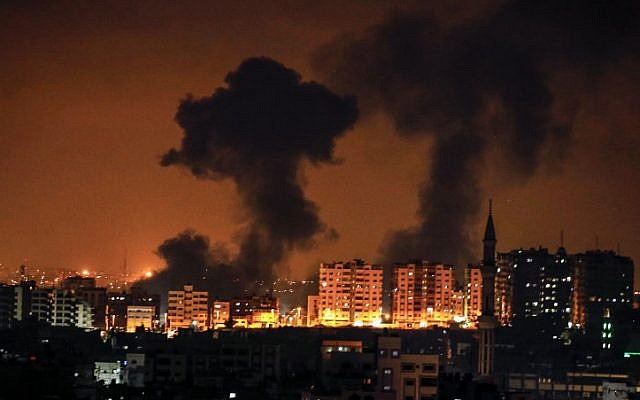
Smoke rises after Israeli warplanes carried out an air strike over residential areas in Gaza City (Flickr)

Palestinian sources, referring to the mediators from the Egyptian Muhabharata, disseminated information that Israel rejected the terms of the cease-fire proposed by him with Gaza.

At the same time, Israel allegedly put forward an ultimatum – if before 16:00 on August 9 rocket attacks from Gaza do not stop, a large-scale military operation against Hamas will begin.

Hamas, meanwhile, warned that if the Israeli attacks did not stop in Gaza, the radius of rocket attacks would be widened.

A correspondent for Arabic affairs of the 10th channel of Israeli TV Zvi Yekhezkeli commented on what was happening:

In the end, there is a “responsible adult” – either Egypt or Israel.

The logic of Hamas is very simple. He needs a limited conflict. In a limited conflict, he will always be the one who will say the last word – and create a “new level of containment.” And what else can they think of us when we began to blow up skyscrapers in Gaza only on the 48th day of Operation “Indestructible Rock”? Our attacks are so stereotyped that it always ends with this kind of “new equation of force.”

Egypt, for its part, is ruthless – unlike us. In Egypt, Hamas is defined as a terrorist organization, in Egypt they can not stand. But if you demolish Hamas, Gaza falls on them – and they absolutely do not need it. All they want is silence in Gaza, so that the situation in Sinai does not heat up.

ISRAEL PALESTINIANS EXPLOSIONS MORE – YouTube

August 9, 2018


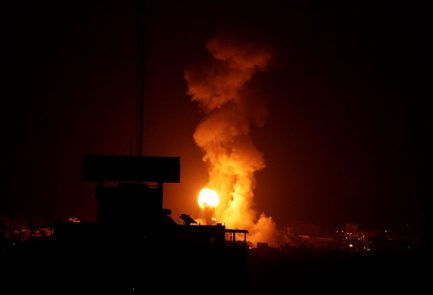
VIDEO SHOWS: EXPLOSIONS OVER GAZA CITY OVERNIGHT

Palestinian official says Gaza armed groups will end round of fighting if Israel reciprocates

August 9, 2018

Source: Palestinian official says Gaza armed groups will end round of fighting if Israel reciprocates

Following the most significant escalation on the southern border since Operation Protective Edge, a senior Palestinian official said that terror groups in Gaza are ready to negotiate a ceasefire; Joint command center in Gaza: ‘Factions of the resistance consider this round of escalation over as far as we are concerned.’

The official, at a joint command centre in Gaza, said the groups, in cross-border violence over the past two days, had been “responding to crimes” by Israel – a reference to the killing on Tuesday of two gunmen from the Hamas militant organisation.

Damage in Gaza following IDF attacks (Photo: AFP)

Damage in Gaza following IDF attacks (Photo: AFP)

“Factions of the resistance consider this round of escalation over as far as we are concerned, and the continuation of calm depends on the behaviour of the occupation,” the official said, using militant factions’ term for Israel.

South under fire: IDF attacks more than 140 Hamas targets 

August 9, 2018

Source: South under fire: IDF attacks more than 140 Hamas targets – Israel National News

More than 150 rockets launched at southern Israel. Woman seriously injured by rocket in Eshkol.

Elad Benari, 09/08/18 05:08 | updated: 06:50

IDF fighter jets targeted over 20 terror sites in military compounds and in a Hamas training camp early Thursday morning.

Among the sites targeted were a weapons manufacturing and storage facility, a complex used for the Hamas’ naval force, and a military compound used for rocket launching experiments.

Additionally, five training camps were targeted as well as a main warehouse and a meeting point used by the senior commanders of the Khan Yunis Brigade. Thus far, over 140 of Hamas’ strategic military sites have been targeted, the IDF Spokesperson’s Unit said.

“The strike was conducted in response to the rockets launched from Gaza at Israel throughout the night. We are determined to secure the safety of Israelis. The IDF is on high alert and prepared for a variety of scenarios. Hamas is responsible and bears the consequences for the ongoing events,” it added.

Also on Thursday morning, an IDF aircraft carried out an attack on a terrorist cell that fired rockets from southern Gaza into Israeli territory.

The strikes were in response to a barrage of at least 150 rockets that were fired from Gaza into southern Israel on Wednesday. The IDF said early Thursday morning that since midnight alone, about 80 launchings had been identified from the Gaza Strip toward Israeli territory.

The Iron Dome system intercepted a total of 25 launches. Most of the rockets exploded in open areas.

On Thursday morning, a 30-year-old woman was seriously injured when a rocket hit a building in the Eshkol Regional Council of southern Israel. Another man was lightly injured by shrapnel.

Overnight Wednesday, Israeli aircraft carried out more than 100 attacks on strategic positions belonging to the Hamas terrorist organization in Gaza, the IDF Spokesperson’s Unit said.

The IDF attacked ten military compounds of the Hamas terrorist organization along the Gaza Strip, including production complexes, intensification targets, advanced weapons and special capabilities.

Among the targets were:

– The headquarters of the Hamas battalion in Jabalya which contained dozens of terrorist targets.
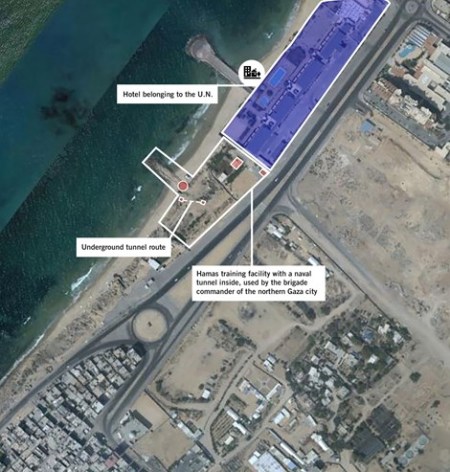
– A military compound used by the commander of the Northern Gaza City Division, which includes a marine tunnel.
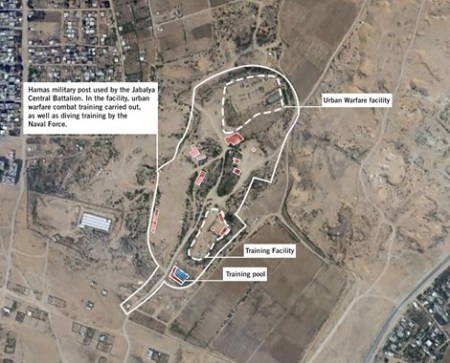
– A military post of Hamas used by the Al Jabalya Central Battalion, where combat training is carried out in built-up areas as well as training of divers of the Hamas naval force.
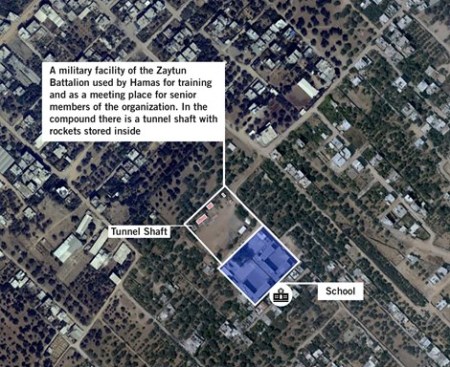
– A military compound of the Zaytun Battalion, which is used to store rocket weapons and to dig tunnels.
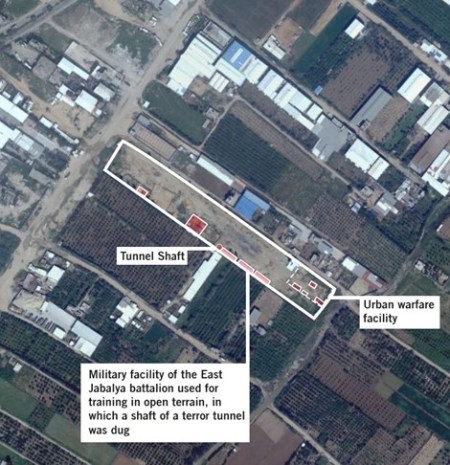
– A military compound of the East Jabalya battalion, which is used for training and fighting in a built-up area, where a shaft leading to the terrorist tunnels complex had been dug.
– A Hamas base in the northern Gaza Strip, which is used for training operatives in a built-up area and which contains a launching system.
– A training compound for fighting in a built-up area in central Gaza
– A battalion compound of the Jabalya battalion, where training and meetings of senior members of the battalion are held.
– A military compound used by the Hamas terrorist organization to store weapons and explosives. In the past, it served as a site for the digging of firing shafts.
– A Hamas military compound used by the Dir al-Balah battalion, where tunnels are being dug.

“The Hamas terrorist organization continues to carry out acts of terror against Israeli citizens and their defense infrastructures, violates Israeli sovereignty and endangers the citizens of Israel and the security forces. The IDF is prepared for a variety of scenarios and is determined to continue carrying out its mission to protect the citizens of Israel,” the IDF Spokesperson’s Unit said.

Attacks on Hamas IDF spokesperson

Attacks on Hamas IDF spokesperson

Attacks on Hamas IDF spokesperson

Attacks on Hamas IDF spokesperson

IDF says war in Gaza approaching, communities near Strip could be evacuated

August 9, 2018

Source: IDF says war in Gaza approaching, communities near Strip could be evacuated | The Times of Israel

Senior military officials say many troops will be sent to southern front after Palestinian terrorists launch more than 150 rockets, mortar shells overnight

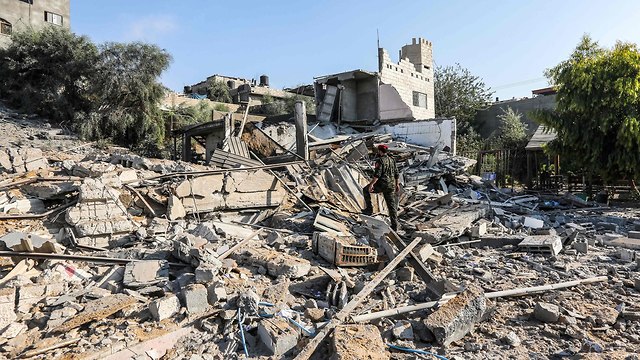
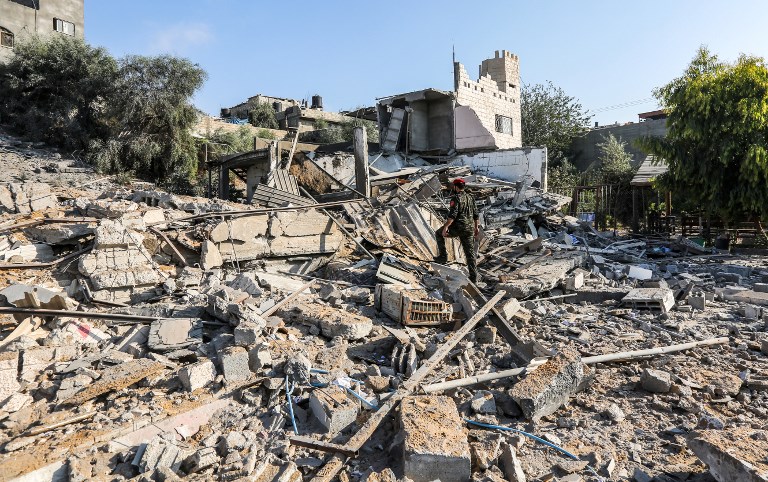
A member of the Hamas military police walks through rubble at a site that was hit by Israeli air strikes in Gaza City on August 9, 2018 (AFP PHOTO/MAHMUD HAMS)

A member of the Hamas military police walks through rubble at a site that was hit by Israeli air strikes in Gaza City on August 9, 2018 (AFP PHOTO/MAHMUD HAMS)

A senior army official warned Thursday morning that Israel was nearing a full-blown military confrontation in the Gaza Strip after hundreds of rockets were launched overnight by Palestinian terror groups, adding that the government could begin evacuating communities near the coastal enclave in preparation.

“We are nearing a confrontation in no small steps,” the IDF senior officer said, speaking on condition of anonymity. “Hamas is making serious mistakes, and we may have to make it clear after four years that this path doesn’t yield any results for it and isn’t worth it.”

Authorities said over 150 rockets and mortar shells were launched at Israeli communities since Wednesday evening. The barrages by the Hamas terror group continued throughout the night and into Thursday, seriously injuring a woman when a projectile hit a home in the Eshkol regional council.

According to IDF spokesperson Lt. Col. Jonathan Conricus, at least seven people in total were injured in southern Israel by the Gaza rocket attacks, including a woman who was seriously injured when a projectile struck her home in the Eshkol region of southern Israel.

In response to the attacks, the Israeli army said it struck over 140 Hamas targets in the Gaza Strip overnight.

The military said its raids targeted training compounds as well as weapons manufacturing facilities and storage warehouses. The air force also targeted sites from which rockets were being launched, including a car that the army said was being used by a cell of terrorists. One Hamas operative was reportedly killed in the airstrike. Unconfirmed reports claimed he was the relative of a senior Hamas commander.

Hamas said a 23-year-old pregnant woman and her infant daughter were killed in an IDF strike. The woman’s husband was reported moderately injured.

Conricus said he could not comment on the case, but stressed that the air force was bombing “only military targets” in the Gaza Strip.

At least six other Palestinians were injured as a result of the IDF strikes, according to the Hamas-run health ministry.

“We have more capabilities in our arsenal,” the anonymous senior officer threatened. “We are ready to continue attacking, attacking and attacking. Our strikes deeply affect Hamas, it would be better off returning to the understandings reached after Operation Protective Edge [in 2014].”

The military said a large number of additional forces were being deployed to the Gaza area. However, no additional reservist units have been called up as of Thursday morning, Conricus said.

According to the spokesman, the military was ready to evacuate communities in southern Israel if war breaks out.

“This is something that we are prepared to do, but this is not something that is in process or that we are eager to do,” Conricus said.

The woman who was seriously injured in Israel was a 30-year-old foreign worker from Thailand. She suffered injuries to her abdomen and limbs. Another person was lightly injured in the same barrage, and several were treated for shock.

Most of the rockets fired from Gaza hit open areas. The Iron Dome defense system — which targets only missiles projected to strike communities — destroyed 25 of the rockets.

Conricus said the system was operating as well as the military had expected, but stressed that it could not provide perfect, “hermetic” protection.

Indeed, several hit homes and factories in Israeli communities, causing damage. One barrage that slammed into the city of Sderot Wednesday evening injured at least three Israelis. Thirteen others were treated for panic attacks, including two pregnant women who went into premature labor.

The current round of violence “is definitely not over,” Conricus said.

“We are in the midst of a new round, the end of which I cannot see yet,” the anonymous official added. “We struck a range of targets, including tunnel shafts and many military compounds belonging to Hamas. What we wanted to destroy was done very well.

“Meanwhile, there are talks on calming the situation down and reaching an agreement. This morning, I understand, Hamas is distancing itself from an agreement, and nearing a conflict in which it will suffer a hard blow. Its two million hostages will be the ones suffering.”

Following the attacks from Gaza, Prime Minister Benjamin Netanyahu and Defense Minister Avigdor Liberman met overnight with senior officers from the IDF and other security services at the military’s headquarters in Tel Aviv, to discuss the situation and decide on a course of action.

The security cabinet was also due to hold a special session on Thursday afternoon regarding the ongoing violence.

Sirens sounded in Israeli communities throughout the night, and thousands of families slept in bomb shelters and protected spaces.
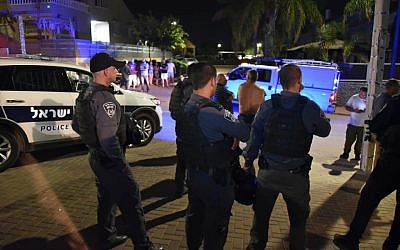
Israel Police officers search for pieces of rockets that were fired from the Gaza Strip and struck the southern Israeli town of Sderot on August 8, 2018. (Israel Police)

Overnight six rockets exploded in Sderot, including two that hit homes and one that hit a factory. Another hit a house in the Hof Asheklon regional council. In all cases the rockets caused damage but no casualties. In addition, a rocket hit a factory in the Sha’ar Hanegev region, breaking through the roof and damaging equipment inside, a spokesperson for the region said. The factory was empty of people at the time of the rocket attack.

Residents of southern Israel were told to remain close to bomb shelters in case of additional rockets or mortar shells from Gaza.

Hamas claimed responsibility for the rocket attacks, saying it was avenging the deaths of two operatives killed in an Israeli strike the day before — a strike that came in response to what the IDF initially identified as a shooting attack on its forces, but which was apparently an internal Hamas exercise.

The United Nations condemned the Hamas rocket fire.

Nikolay Mladenov, United Nations Special Coordinator for the Middle East Peace Process, speaks during a press conference at the UNESCO headquarters in Gaza City, September 25, 2017. (AFP/MOHAMMED ABED)

“I am deeply alarmed by the recent escalation of violence between Gaza and Israel, and particularly by today’s multiple rockets fired towards communities in southern Israel,” UN envoy Nickolay Mladenov said in a statement.

He called on all sides to step “back from the brink” and restore calm.

US Middle East envoy Jason Greenblatt also condemned Hamas in a tweet. “Another night of terror & families huddling in fear as Israel defends itself,” he said.

“This is the Hamas regime’s choice. Hamas is subjecting people to the terrifying conditions of war again.”

The recent rocket fire represented a major uptick in tensions along the border, amid intensive talks between Israel and Hamas for a long-term ceasefire.

Such an agreement is meant to end not only rocket launches and shootings from Gaza but also the regular incendiary kite and balloon attacks from the Palestinian enclave that have burned large swaths of land in southern Israel and caused millions of shekels of damage.

Judah Ari Gross and Adam Rasgon contributed to this report.

Sirens triggered in Ashkelon as rocket attacks go deeper into Israel

August 9, 2018

Source: Sirens triggered in Ashkelon as rocket attacks go deeper into Israel | The Times of Israel

Fresh barrage sends tens of thousands of Israelis into bomb shelters amid heaviest exchange of fire since 2014 Gaza war

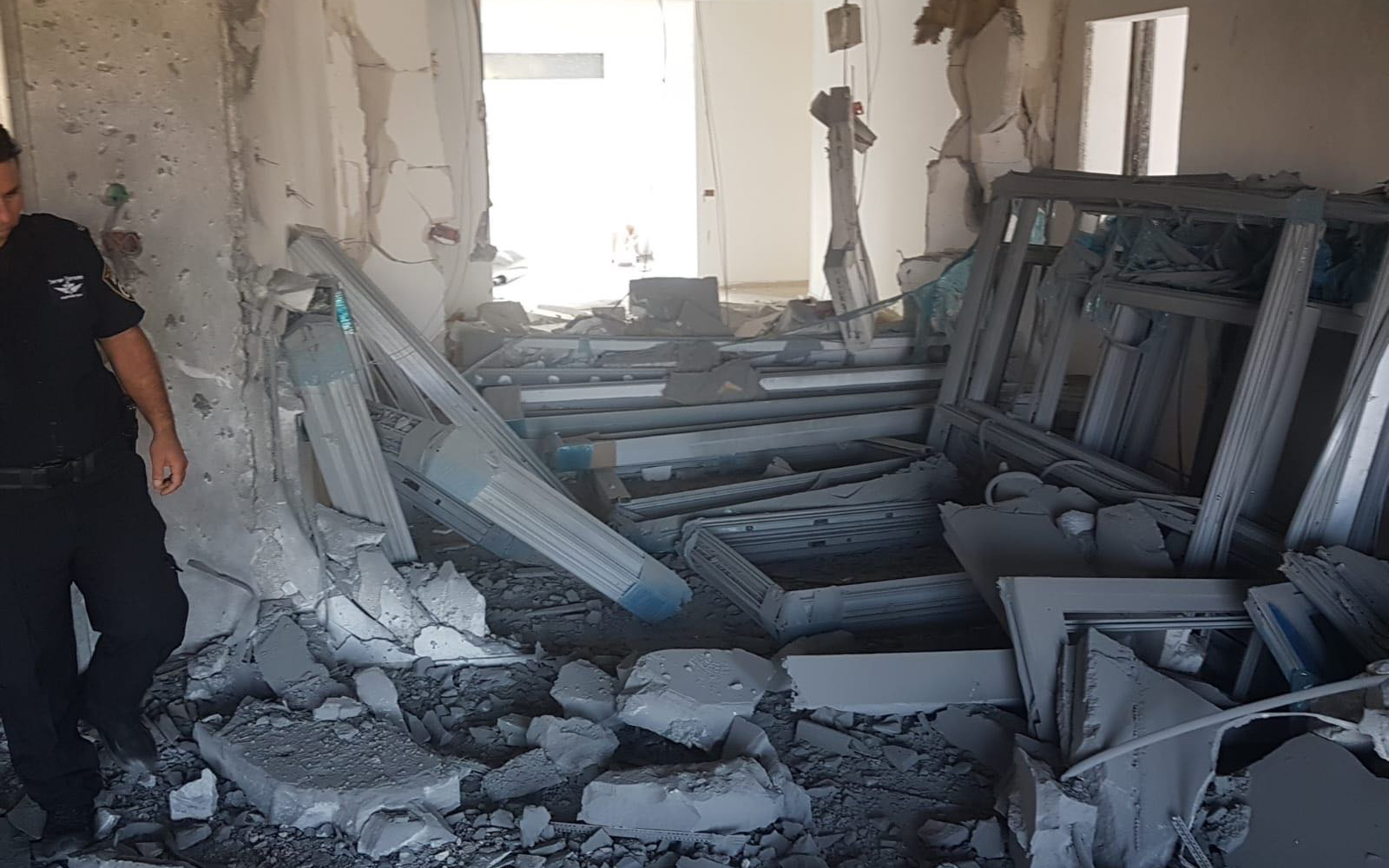
A police officer inspects the damage to a construction site in the southern Israeli town of Sderot near the Gaza border following a rocket hit, on August 9, 2018. (Israel Police)

A police officer inspects the damage to a construction site in the southern Israeli town of Sderot near the Gaza border following a rocket hit, on August 9, 2018. (Israel Police)

A fresh wave of incoming rocket sirens sounded throughout southern Israel on Thursday morning, including in the coastal city of Ashkelon, as rocket attacks from the Gaza Strip penetrated deeper into Israeli territory.

There were no immediate reports of injuries or damage from the latest attack.

Residents of southern Israel reported hearing explosions and seeing signs that the Iron Dome missile defense system had been used to intercept incoming projectiles.

Throughout Wednesday night and the predawn hours of Thursday morning, nearly 200 rockets and mortar shells were fired at southern Israeli communities by Hamas, which rules Gaza, and other terrorist groups in the coastal enclave, according to the Israel Defense Forces.

כאן חדשות

@kann_news

אזעקות צבע אדום נשמעו באשקלון, שדרות, נתיבות ועוטף עזה @Itsik_zuarets

כאן חדשות

@kann_news

יירוט רקטה בשמי נתיבות @Itsik_zuarets
(צילום: רפאל חיון, בטחון שדה) pic.twitter.com/N8wPEEzYzJ

Most of the rockets hit open fields, causing no damage. The Iron Dome, which targets only missiles projected to strike communities, destroyed 25 of the incoming rockets, the army said.

In response to the attacks, the Israeli Air Force targeted upwards of 100 “terror sites” in the Gaza Strip, including tunnels and weapons manufacturing facilities, the IDF said.

One woman was seriously injured early Thursday morning when a rocket launched from the Gaza Strip hit her home in the Eshkol region of southern Israel, just outside the Palestinian enclave.

The woman was a 30-year-old foreign worker from Thailand. She suffered injuries to her abdomen and limbs. Another person was lightly injured, and several were treated after they suffered panic attacks.

Throughout the night, rockets struck homes and factories in Israeli communities, causing damage. One barrage that slammed into the city of Sderot Wednesday evening injured three Israelis. At least eight others were treated for panic attacks, including two pregnant women who went into premature labor.

The military said its retaliatory raids targeted training compounds as well as weapons manufacturing facilities and storage warehouses. The air force also targeted one car that the army said was being used by terrorists to launch rockets at southern Israel from the Strip. One Hamas operative was reportedly killed in the airstrike. Unconfirmed reports claimed he was the relative of a senior Hamas commander.

Hamas said a 23-year-old pregnant woman and her infant daughter were killed in another strike. The woman’s husband was reported moderately injured. There was no immediate comment from Israel.

Following the attacks from Gaza, Prime Minister Benjamin Netanyahu and Defense Minister Avigdor Liberman met overnight with senior officers from the IDF and other security services at the military’s headquarters in Tel Aviv, to discuss the situation and decide on a course of action.

According to the Haaretz newspaper, the military was deploying additional Iron Dome batteries in the region in preparation for Hamas possibly increasing the range of its targets. During past wars rockets have reached as far as Tel Aviv, Jerusalem and Beersheba.

Sirens sounded regularly in southern Israeli communities throughout the night, and thousands of families slept in bomb shelters and protected spaces.

Israel Police officers search for pieces of rockets that were fired from the Gaza Strip and struck the southern Israeli town of Sderot on August 8, 2018. (Israel Police)

Overnight six rockets exploded in Sderot, including two that hit homes and one that hit a factory. Another hit a house in the Hof Asheklon regional council. In all cases the rockets caused damage but no casualties. In addition, a rocket hit a factory in the Sha’ar Hanegev region, breaking through the roof and damaging equipment inside, a spokesperson for the region said. The factory was empty of people at the time of the rocket attack.

Hamas claimed responsibility for Wednesday’s attacks, saying it was avenging the deaths of two operatives killed in an Israeli strike the day before — a strike that came in response to what the IDF initially identified as a shooting attack on its forces, but which was apparently an internal Hamas exercise.

“In response to Israel aggression, the Palestinian resistance has launched a large number of rockets in recent hours at the enemy,” a statement by the group said. “There was a promise [to respond] and now it has been fulfilled.”

The United Nations condemned the Hamas rocket fire.

Nikolay Mladenov, United Nations Special Coordinator for the Middle East Peace Process, speaks during a press conference at the UNESCO headquarters in Gaza City, September 25, 2017. (AFP/MOHAMMED ABED)

“I am deeply alarmed by the recent escalation of violence between Gaza and Israel, and particularly by today’s multiple rockets fired towards communities in southern Israel,” UN envoy Nickolay Mladenov said in a statement.

He called on all sides to step “back from the brink” and restore calm.

“If the current escalation…is not contained immediately, the situation can rapidly deteriorate with devastating consequences for all people.”

US Middle East envoy Jason Greenblatt also condemned Hamas in a tweet. “Another night of terror & families huddling in fear as Israel defends itself,” he said.

“This is the Hamas regime’s choice. Hamas is subjecting people to the terrifying conditions of war again.”

Jason D. Greenblatt

@jdgreenblatt45

Hamas regime again is launching rockets at Israeli communities. Another night of terror & families huddling in fear as Israel defends itself. This is the Hamas regime’s choice. Hamas is subjecting people to the terrifying conditions of war again.

According to the military, among the Hamas positions bombed by the fighter jets was a factory where the terror groups constructs the concrete blocks it uses for attack tunnels and a fully operational tunnel opening near the Gaza coast belonging to Hamas’s naval commando unit.

An IDF aircraft also targeted a car that the military said was being used by a terror cell launching rockets at Israel.

Israeli Air Force@IAFsite

צפו: כלי טיס של חיל-האוויר ביצע תקיפה לעבר רכב ששימש חולית טרור ששיגרה רקטות לעבר שטח ישראל

One Palestinian man was reportedly killed in the strike, 30-year-old Hamas operative Ali al-Ghandour was killed, according to the Hamas-run Gaza health ministry.

A Palestinian toddler and her pregnant mother were killed in another strike, according to the Hamas-run health ministry.

Enas Khammash, 23, and her 18-month daughter Bayan were killed in an airstrike in Jafarawi in central Gaza, the ministry said. The husband was moderately injured.

At least six other Palestinians were injured as a result of the IDF strikes, according to the ministry.

The Israeli military said the terror group, with which it was fought three wars in the past decade, would bear the consequences of any further violence from the Gaza Strip.
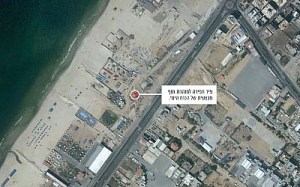
An aerial photograph distributed by the Israeli military showing what it says is the opening to a tunnel opening along the Gaza coast belonging to the Hamas terror group’s naval commando unit, which the IDF bombed on August 8, 2018, in response to rocket attacks from the Strip. (Israel Defense Forces)

“The IDF sees with severity the terrorist activities of Hamas. The IDF is prepared for a variety of scenarios and is determined to fulfill its mission of defending the citizens of Israel,” the army said in a statement.

Residents of southern Israel were told to remain close to bomb shelters in case of additional rockets or mortar shells from Gaza.

The rocket attacks came amid a period of heightened tensions along the Gaza border, following months of clashes and exchanges of fire. On Tuesday, Hamas vowed to avenge the deaths of two of its members killed by IDF tank fire after the army mistakenly thought a military exercise had been a cross-border attack.
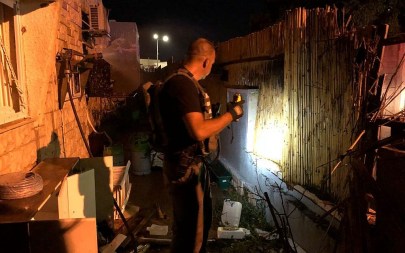
A police sapper searches the yard of a house the southern Israeli town of Sderot that was hit by a rocket attack from the Gaza Strip on August 8, 2018. (Israel Police)

On Wednesday afternoon, the military warned that it was anticipating a revenge attack by Hamas after spotting members of the terror group evacuating posts likely to be targeted by Israel in reprisal raids.

Hours later, shots were fired from the northern Gaza Strip at a number of civilian construction vehicles along the border, damaging one of them, the army said.
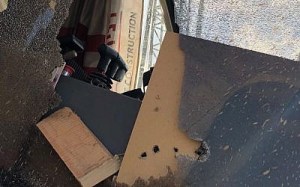
Damage to a construction vehicle outside the Gaza Strip, which the military says was caused by gunfire from the Palestinian enclave, on August 8, 2018. (Israel Defense Forces)

In response, an IDF tank shelled a nearby Hamas observation post.

Wednesday’s rocket fire represented a major uptick in tensions along the border, amid intensive talks between Israel and Hamas for a long-term ceasefire.

Such an agreement is meant to end not only rocket launches and shootings from Gaza but also the regular incendiary kite and balloon attacks from the Palestinian enclave that have burned large swaths of land in southern Israel and caused millions of shekels of damage.

Throughout Wednesday, at least 11 fires were sparked in southern Israel by airborne arson devices launched from the Gaza Strip. Israeli firefighters extinguished all of them, according to a spokesperson for Fire and Rescue Services.

Times of Israel staff and Adam Rasgon contributed to this report.
When a “Cease-Fire” is Not a Cease-Fire

August 9, 2018

An advisory to journalists in the Middle East.

https://www.frontpagemag.com/fpm/236310/when-cease-fire-not-cease-fire-david-bedein

In the current conflagration between Israel and Gaza, news agencies mistakenly report that a “cease fire” is being discussed with Hamas.

In the imagination of the media, such a “cease fire” might result in the kind of armistice that ended hostilities in World War I, on the 11th hour of the 11th day of the eleventh month on Nov. 11 1918, paving the way to the Versailles peace treaty and the genesis of the League of Nations.

However, the three Arabic nuanced terms being discussed with Hamas as a resolution to the current situation have nothing to do with a “cease fire”:

Those terms are Hudna, Tahadia and Hudaybiyyah. All three terms imply continued war, after a respite.

Hudna: a tactical pause intended only for rearmament, a temporary respite in the war between Islamic forces and non-Islamic forces.

The authoritative Islamic Encyclopedia (London, 1922) defines hudna as a “temporary treaty” which can be approved or abrogated by Islamic religious leaders, depending on whether or not it serves the interests of Islam; a hudna cannot last for more than 10 years.

Tahadia: a temporary halt in hostile activity which can be violated at any time.

Hudaybiyyah: An understanding that there will be no fighting for 10 years named for the “treaty of Hudaybiyyah” in 628 AD.

The Islamic Encyclopedia mentions the Hudaybia treaty as an “ultimate hudna.”

The late PLO leader Yasser Arafat often referred to “a hudna” in his speeches when he defined and described the nature of the Oslo Accords.

In the words of the Islamic Encyclopedia, “The Hudaybia treaty, concluded by the Prophet Mohammad with the unbelievers of Mecca in 628, provided a precedent for subsequent treaties which the Prophet’s successors made with non-Muslims.

Mohammad made a hudna with a tribe of Jews back then to give him time to grow his forces, then broke the treaty and wiped them out. Although this treaty was violated within three years from the time that it was concluded, most jurists concur that the maximum period of peace with the enemy should not exceed ten years, since it was originally agreed that the Hudaybia treaty should last ten years.”

Hudna, Tahadia and Hudaybiyyah – the only options on the table with Hamas – do not compare to the “mu’ahada” treaty of peace that Egypt signed with Israel in 1979, or the mu’ahada treaty of peace that Jordan signed with Israel in 1994.

How many people remember that three hudnas already occurred with Gaza?

How many people remember what occurred during those ‘hudnas”’?

Well, the people in Sderot and the Negev region of Israel remember.

Let us refresh our memories.

From November 26, 2006, until May 15, 2007, a Hudna between Hamas and Israel went on for almost six months. One cannot ignore the statement made by Hamas five days before the hudna went into effect: “Hamas’s military wing will stop the rocket fire when residents evacuate the city of Sderot.” (from November 21, 2006)

During that hudna, Gazans launched 315 missiles targeted at Sderot and the western Negev, according to an IDF spokesman.

And there was another hudna with Gaza which lasted until the end of Dedember . 2008, which witnessed 878 attacks fired from Gaza.

And there was a hudna from the end of Operation Cast Lead on January 18, 2009, to the first day of Operation Pillar of Defense on November 12, 2012.

During that period, approximately 2,000 rockets and missiles were fired from Gaza, sending one million Israelis running to shelters

And from the end of operation ‘Pillar of Defense’, through June 30th 2014, 300 aerial attacks were launched from Gaza towards southern Israel- during yet another tenuous Hudna.

What country would tolerate one missile fired into its territory — and agree to a Hudna, Tahadia and Hudaybiyyah that promises yet more aerial attacks?

IDF says war in Gaza approaching, communities near Strip could be evacuated

August 9, 2018

Senior military officials say many troops will be sent to southern front after Palestinian terrorists launch more than 150 rockets, mortar shells overnight

Today, 9:49 am

https://www.timesofisrael.com/idf-says-war-in-gaza-approaching-communities-near-strip-could-be-eva

A picture taken on August 8, 2018 in Gaza City shows smoke plumes rising following an Israeli air strike (AFP PHOTO / MAHMUD HAMS)

A senior army official warned Thursday morning that Israel was nearing a full-blown military confrontation in the Gaza Strip after hundreds of rockets were launched overnight by Palestinian terror groups, adding that the government could begin evacuating communities near the coastal enclave in preparation.

“We have more capabilities in our arsenal,” he threatened, speaking on condition of anonymity. “We are ready to continue attacking, attacking and attacking. Our strikes deeply affect Hamas, it would be better off returning to the understandings reached after Operation Protective Edge [in 2014].”

Authorities said over 150 rockets and mortar shells were launched at Israeli communities since Wednesday evening. The barrages by the Hamas terror group continued throughout the night and into Thursday, seriously injuring a woman when a projectile hit a home in the Eshkol regional council.

According to IDF spokesperson Lt. Col. Jonathan Conricus, at least seven people in total were injured in southern Israel by the Gaza rocket attacks.

In response to the attacks, the Israeli army said it struck over 140 Hamas targets in the Gaza Strip overnight.

The military said its raids targeted training compounds as well as weapons manufacturing facilities and storage warehouses. The air force also targeted sites from which rockets were being launched, including a car that the army said was being used by a cell of terrorists. One Hamas operative was reportedly killed in the airstrike. Unconfirmed reports claimed he was the relative of a senior Hamas commander.

Hamas said a 23-year-old pregnant woman and her infant daughter were killed in an IDF strike. The woman’s husband was reported moderately injured. There was no immediate comment from Israel.

At least six other Palestinians were injured as a result of the IDF strikes, according to the Hamas-run health ministry.

“We are nearing a confrontation in no small steps,” an anonymous IDF senior officer said. “Hamas is making serious mistakes, and we may have to make it clear after four years that this path doesn’t yield any results for it and isn’t worth it.”

The military said a large number of additional forces were being deployed to the Gaza area. However, no additional reservist units were called up, Conricus said.

According to the spokesman, the military was ready to evacuate communities in southern Israel if war breaks out.

“This is something that we are prepared to do, but this is not something that is in process or that we are eager to do,” Conricus said.

The woman who was seriously injured was a 30-year-old foreign worker from Thailand. She suffered injuries to her abdomen and limbs. Another person was lightly injured in the same barrage, and several were treated for shock.

Most of the rockets hit open areas. The Iron Dome defense system — which targets only missiles projected to strike communities — destroyed 25 of the rockets.

Conricus said the system was operating as well as the military had expected, but stressed that it could not provide perfect, “hermetic” protection.

Indeed, several hit homes and factories in Israeli communities, causing damage. One barrage that slammed into the city of Sderot Wednesday evening injured at least three Israelis. Thirteen others were treated for panic attacks, including two pregnant women who went into premature labor.

The current round of violence “is definitely not over,” Conricus said.

“We are in the midst of a new round, the end of which I cannot see yet,” the anonymous official added. “We struck a range of targets, including tunnel shafts and many military compounds belonging to Hamas. What we wanted to destroy was done very well.

“Meanwhile, there are talks on calming the situation down and reaching an agreement. This morning, I understand, Hamas is distancing itself from an agreement, and nearing a conflict in which it will suffer a hard blow. Its two million hostages will be the ones suffering.”

Following the attacks from Gaza, Prime Minister Benjamin Netanyahu and Defense Minister Avigdor Liberman met overnight with senior officers from the IDF and other security services at the military’s headquarters in Tel Aviv, to discuss the situation and decide on a course of action.

The security cabinet was also due to hold a special session on Thursday afternoon regarding the ongoing violence.

Sirens sounded in Israeli communities throughout the night, and thousands of families slept in bomb shelters and protected spaces.

Israel Police officers search for pieces of rockets that were fired from the Gaza Strip and struck the southern Israeli town of Sderot on August 8, 2018. (Israel Police)

Overnight six rockets exploded in Sderot, including two that hit homes and one that hit a factory. Another hit a house in the Hof Asheklon regional council. In all cases the rockets caused damage but no casualties. In addition, a rocket hit a factory in the Sha’ar Hanegev region, breaking through the roof and damaging equipment inside, a spokesperson for the region said. The factory was empty of people at the time of the rocket attack.

Residents of southern Israel were told to remain close to bomb shelters in case of additional rockets or mortar shells from Gaza.

Hamas claimed responsibility for the rocket attacks, saying it was avenging the deaths of two operatives killed in an Israeli strike the day before — a strike that came in response to what the IDF initially identified as a shooting attack on its forces, but which was apparently an internal Hamas exercise.

The United Nations condemned the Hamas rocket fire.

Nikolay Mladenov, United Nations Special Coordinator for the Middle East Peace Process, speaks during a press conference at the UNESCO headquarters in Gaza City, September 25, 2017. (AFP/MOHAMMED ABED)

“I am deeply alarmed by the recent escalation of violence between Gaza and Israel, and particularly by today’s multiple rockets fired towards communities in southern Israel,” UN envoy Nickolay Mladenov said in a statement.

He called on all sides to step “back from the brink” and restore calm.

US Middle East envoy Jason Greenblatt also condemned Hamas in a tweet. “Another night of terror & families huddling in fear as Israel defends itself,” he said.

“This is the Hamas regime’s choice. Hamas is subjecting people to the terrifying conditions of war again.”

The recent rocket fire represented a major uptick in tensions along the border, amid intensive talks between Israel and Hamas for a long-term ceasefire.

Such an agreement is meant to end not only rocket launches and shootings from Gaza but also the regular incendiary kite and balloon attacks from the Palestinian enclave that have burned large swaths of land in southern Israel and caused millions of shekels of damage.

Judah Ari Gross and Adam Rasgon contributed to this report.


As rockets fall, security cabinet met urgently about situation with Hamas

August 9, 2018

Source: As rockets fall, security cabinet met urgently about situation with Hamas – Israel News – Jerusalem Post

Netanyahu scheduled an urgent security consultation in the Kirya military headquarters.

BY HERB KEINON
 AUGUST 9, 2018 05:41
Prime Minister Benjamin Netanyahu, Minister of Defense Avigdor Liberman, Chief of Staff Eizenkot and

With rockets falling on Sderot and snipers firing from Gaza on civilians, the security cabinet was scheduled to meet Thursday to discuss a possible five-year truce with Hamas.

Now, in light of the escalating situation in Gaza, Prime Minister Benjamin Netanyahu scheduled an urgent security consultation after midnight Wednesday in Tel Aviv with Defense Minister Avigdor Liberman, Chief of Staff Lt.-General Gadi Eizenkot, Shin Bet head Nadav Argaman, and National Security Council head Meir Ben-Shabbat.

This was the second security cabinet meeting on the matter in five days.

Wednesday’s escalation came following the IDF’s killing of two Hamas snipers on Tuesday. The IDF said that the strike on the snipers was an error, since the snipers were conducting a training drill and not firing at Israelis. Hamas pledged retaliation for that action, and the communities in the South were on alert throughout the day Wednesday, waiting for Hamas to deliver on its threat.

Wednesday night’s intense rocket fire on Sderot led to an Israeli military response before and throughout the security cabinet meeting.

According to reports by the Israeli national new, the IDF carried out strikes against over 100 Hamas terror targets, including rocket launch pads and terror tunnels.

The incidents came even as Hamas was signaling that it was interested in a five-year truce. Hamas leaders, who met over the last few days in Gaza to discuss the cease-fire proposal brokered by Egypt and UN Mideast envoy Nickolay Mladenov, traveled back to Cairo Wednesday to deliver their response.

Turkey’s Anadolu news agency quoted a Hamas source as saying that the deal will be revealed before the end of August. According to the report, Hamas and Israel would observe a two-week trial cease-fire as part of the deal.

Before the security cabinet meeting on the Gaza issue on Sunday, Intelligence Minister Israel Katz posted on Twitter that “the situation in Gaza is nearing a decision, either an arrangement or war.”

That characterization remains as true before Thursday’s meeting as it was on Sunday. During that meeting the cabinet ministers were briefed on the truce negotiations, and told that the failure of Hamas and Fatah to reach a reconciliation agreement is a significant stumbling block to any deal.

That cabinet meeting also dealt with various scenarios that could lead to an escalation. At the end of the meeting, the Prime Minister’s Office issued a statement saying that the IDF “is prepared for any scenario.”

It is likely that Thursday’s meeting will also end without any conclusive decision.

The truce under consideration includes a number of phases, with the first one being an end to Hamas violence, including the incendiary kites and balloons and the violent Friday protests along the border fence.

In response, Israel would fully reopen the Kerem Shalom crossing, and Egypt would open the Rafah crossing into Gaza.

Another phase would be the building of major infrastructure projects to serve Gaza, such as a seaport and airport, in Egypt, at El Arish and Ismailia.

And the final phase would be the eventual easing of the Israeli blockade around Gaza, with suitable monitoring mechanisms in place, and international and Israel financial assistance to the coastal Strip.

The truce would also include the return to Israel of the bodies of the IDF soldiers being held by Hamas, as well as a return of the two Israeli citizens being held in Gaza. It is not clear, however, at what point of the truce this would be carried out.