Archive for August 2, 2018

Iranian security forces clash with Isfahan protesters for second day

August 2, 2018

Source: Iranian security forces clash with Isfahan protesters for second day – Middle East – Jerusalem Post

Eyewitnesses reported protestors throwing stones and fires burning at the sites of the demonstrations, and security forces using tear gas and water cannons against the demonstrators
BY SAMUEL THROPE
 AUGUST 1, 2018 20:50
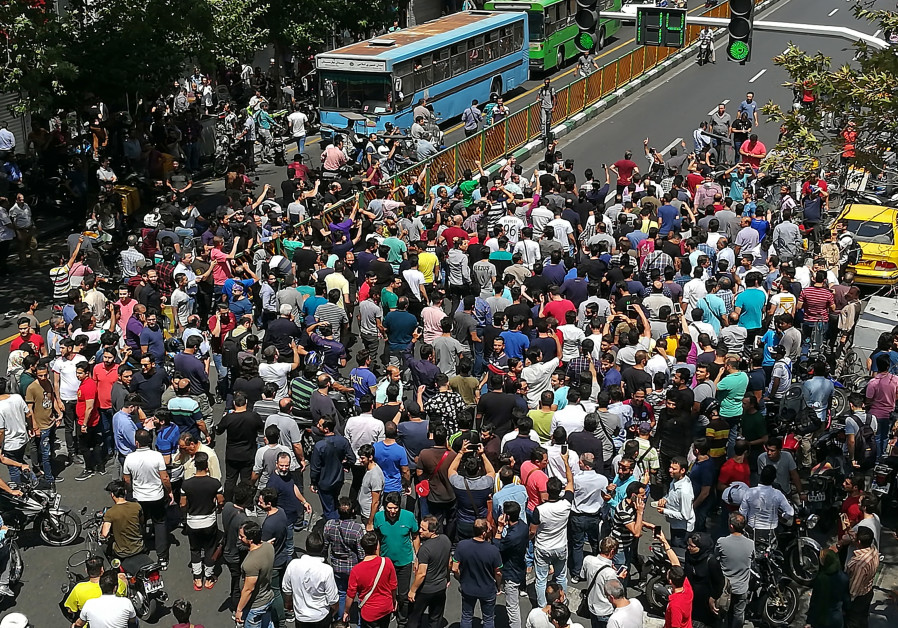
Iranian protesters shout slogans during a demonstration in central Tehran on June 25, 2018

For the second day in a row, Iranians in Isfahan protested rising inflation and unemployment in the country. Government security forces have been called out in force to quell the protests, the BBC’s Persian-language service reported Wednesday.

Eyewitnesses reported protestors throwing stones and fires burning at the sites of the demonstrations, and security forces using tear gas and water cannons against the demonstrators, according to the BBC.

Truck drivers and shopkeepers in the central Iranian city also protested the day before. Security forces were also present at the earlier demonstration, but did not disrupt the event or attack the protesters.

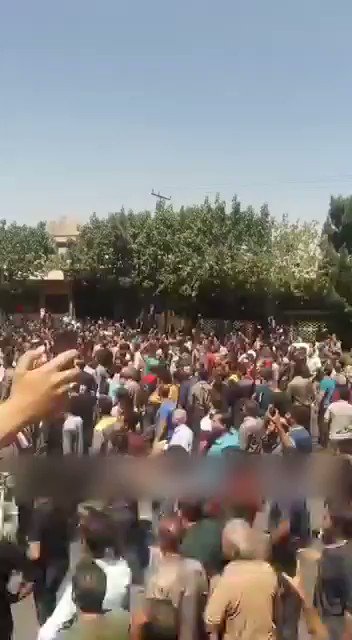
The protesters in Isfahan shouted “Reza Shah, may your soul be glad,” referring to the founder of the previous Pahlavi dynasty. Reza Shah’s son, Muhammad Reza Shah, was overthrown in the 1979 Islamic Revolution.

Videos of the protests chanting this slogan were shared on social media Tuesday.
IRANSHAHAB@iransararh3

فوری : التماس مزدوران خامنه‌ای از مردم برای جلوگیری از تظاهرات مردمی. ۱۰ مرداد

Iran’s dire economic situation has brought thousands of protesters to the streets over the past several months. Following the withdrawal of the United States from the 2015 six-country nuclear deal with Iran, international businesses have been wary of investing in the Islamic Republic for fear of running afoul of renewed American sanctions. The Iranian currency, the rial, has also experienced significant devaluation, which is disrupting business by driving up the cost of imports.

Demonstrators have also protested the government’s extensive military and financial investment in the ongoing conflicts in Syria, Yemen, and Iran’s support for Hamas.

“Death to Palestine,” “Help us, not Gaza,” and “Leave Syria alone and deal with Iran,” protesters shouted in a June demonstration in Tehran, calling on the Iranian regime to invest in its own economy rather than interfering in other spheres throughout the Middle East.

Juliane Helmhold contributed to this report.
PM: Israel will help open narrow strait in Red Sea if Iranian closes it

August 2, 2018

Source: PM: Israel will help open narrow strait in Red Sea if Iranian closes it – Israel News – Jerusalem Post

In a multi-front confrontation, he said, “we’ll be less selective, and the damage to our enemies will be more difficult. I hope they will take this into account.”

BY HERB KEINON
 AUGUST 2, 2018 02:50
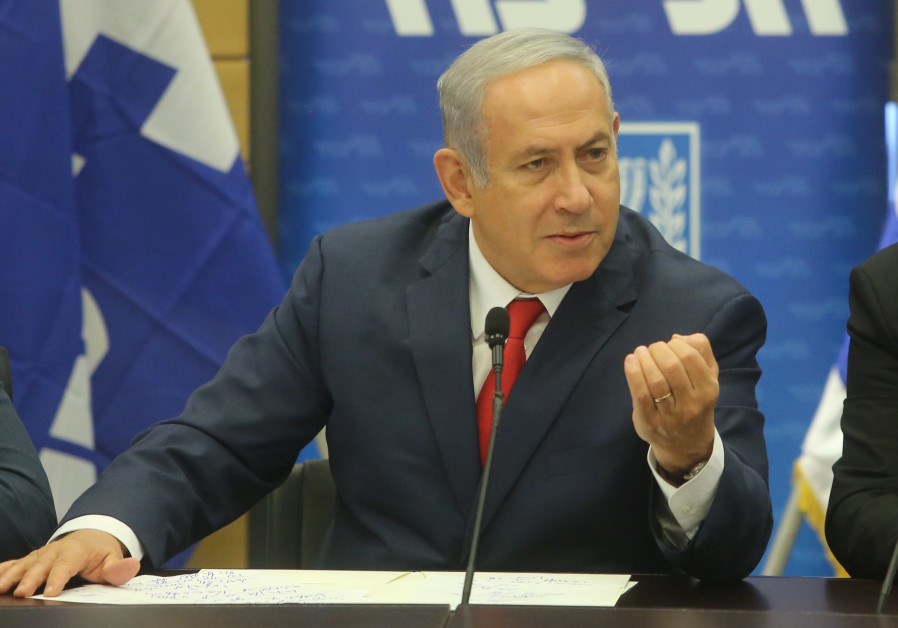
Prime Minister Benjamin Netanyahu gestures during a Likud faction meeting, July 2 2018

Israel will join a coalition of countries to open the narrow Bab al-Mandab Strait at the mouth of the Red Sea if the Iranians try to close it, Prime Minister Benjamin Netanyahu said Wednesday, on the heels of an attack last week on two Saudi oil tankers sailing through the narrow waterway.

“At the beginning of the week we were witness to a sharp clash between Iran’s proxies that tried to sabotage international shipping in the strait at the mouth of the Red Sea,” Netanyahu said at a graduation ceremony for naval officers at a naval base in Haifa.

“If Iran tries to block the Bab al-Mandab waterway, I am convinced that it will find itself against an international coalition determined to prevent that. This coalition will include the State of Israel and all of its branches.”

Last Wednesday, Yemen’s Iran-aligned Houthis attacked two Saudi tankers sailing through the waterway, with one of the ships suffering minimal damage. A day later Saudi Arabia announced it was suspending oil shipments through the strait, sending jitters through the world’s oil markets.

The Bab al-Mandab Strait links the Red Sea to the Gulf of Aden and the Indian Ocean and is a critical passageway for oil to the West and Asia. At its narrowest point, it is only 29 kilometers wide between Yemen on the eastern side and Djibouti and Eritrea on the west. Blocking the waterway would halt shipment of about 4.8 million barrels per day of crude oil and refined petroleum products.

While Western allies backing a Saudi-led coalition fighting the Houthis in Yemen expressed concern about the attacks on the Saudi tankers, they did not indicate they would take action to secure the strait, something that could risk deeper involvement in the proxy war in Yemen between Saudi Arabia and Iran.

This was the first time Netanyahu has said publicly that Israel would take part in efforts to secure the waterway.

The threat to shipping in Bab al-Mandab has been building for some time, with the Houthis targeting Saudi tankers in at least two other attacks this year.

On Tuesday, however, the Houthis announced that they were unilaterally halting attacks in the Red Sea for two weeks to support efforts to find a political solution to the war in Yemen.

Netanyahu told the new naval officers that a “significant part” of the campaign Israel is waging against terrorists is conducted at sea.
“Dozens of operations that you carry out each year extract a price,” he said. “While our enemies are also developing their capabilities, our goal is to preempt them, thwart threats and, if necessary, decide the battle.

“The sea provides us with many opportunities,” Netanyahu said. “Above all, it increases the small area of the State of Israel and allows us to deploy our vessels over the water and underwater in a vast space. This gives Israel tremendous power.”

Speaking at the same ceremony, Defense Minister Avigdor Liberman said, “We recently heard threats to attack Israeli ships on the Red Sea, and I look at the people around me who are here, and it’s a pity that our enemies cannot see you and understand that we are well prepared to respond to any threat. I want to emphasize: The IDF is prepared and ready to respond on two fronts simultaneously, and also in the Red Sea.”

In a multi-front confrontation, he said, “we’ll be less selective, and the damage to our enemies will be more difficult. I hope they will take this into account.”

Reuters contributed to this report.


