Archive for June 2018

Merkel backs Israel’s demand that Iranian troops be removed from Syria

June 4, 2018

Source: Merkel backs Israel’s demand that Iranian troops be removed from Syria | The Times of Israel

Meeting with Netanyahu in Berlin, chancellor says Iran’s regional influence is ‘worrying’; PM warns of ‘new religious war’ in Mideast

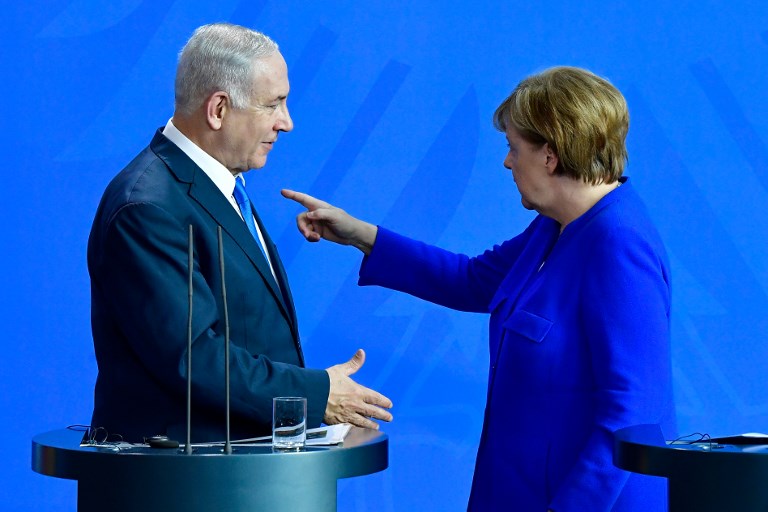
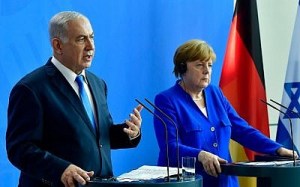
German Chancellor Angela Merkel and Prime Minister Benjamin Netanyahu arrive at a press conference after a meeting at the Chancellery in Berlin on June 4, 2018. (Tobias SCHWARZ / AFP)

German Chancellor Angela Merkel and Prime Minister Benjamin Netanyahu arrive at a press conference after a meeting at the Chancellery in Berlin on June 4, 2018. (Tobias SCHWARZ / AFP)

German Chancellor Angela Merkel on Monday told Prime Minister Benjamin Netanyahu that she agreed with Israel’s demand that Iranian troops be removed from Syria, especially the area close to the Israeli border.

“Iran’s regional influence is worrying,” she said.

Announcing at a joint press conference in Berlin that she and other government representatives planned to visit Israel in early October, Merkel said that “one has to discuss” Tehran’s presence in Syria. She also condemned the Islamic Republic’s heavily anti-Israel tweets.

On Sunday, Iranian Supreme Leader Ayatollah Ali Khamenei called the Jewish state the “cancerous tumor” of the region that must be “removed and eradicated.”

Still, Merkel defended the nuclear deal signed in 2015 by Iran and world powers — and opposed all along by Israel — arguing that it made the world a better place.

German Chancellor Angela Merkel and Israeli Prime Minister Benjamin Netanyahu address a press conference after a meeting at the Chancellery in Berlin on June 4, 2018. (AFP PHOTO / Tobias SCHWARZ)

US President Donald Trump withdrew from the deal on May 8, with Netanyahu’s enthusiastic encouragement and support.

Both the US and Israel hope that Trump’s withdrawal can lead all sides into addressing what they say are the deal’s shortcomings — including “sunset” provisions that eventually end restrictions on Iranian nuclear activities, such as enriching uranium, as well as permitting Iran to continue to develop long-range missiles.

Merkel, like other European leaders with whom Netanyahu is set to meet later this week, has urged Trump to remain in the deal, known as the Joint Comprehensive Plan of Action.

As he took off for Berlin on Monday, the first leg of a series of visits with European leaders, Netanyahu indicated that Iran would be the first and only subject on his agenda.

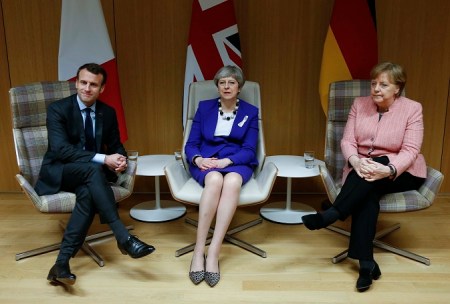
Intent on winning support for amending the nuclear deal with Iran and getting Iranian troops out of Syria, the prime minister will also meet with French President Emmanuel Macron and British Prime Minister Theresa May, both of whose countries are signatories to the deal.

At Monday’s press conference, the two leaders agreed that it was important for the International Atomic Energy Agency to review a secret Iranian nuclear archive that Israel smuggled out of Tehran earlier this year and which Netanyahu announced to the world with great fanfare at the end of April.

Netanyahu warned Merkel that Iran’s presence in Syria should also worry Germany, given that Shiite militias there were intent on converting Sunni Muslims to their creed, with the result that a “new religious war” would break out in the Middle East and send further waves of refugees to Europe.

Israel fears that as the Syrian civil war winds down, Iran, whose forces and Shiite proxies have backed President Bashar Assad, will turn its focus to Israel.

The Israeli Air Force is believed to have carried out a number of airstrikes on Iranian positions in Syria. Last month, the bitter enemies openly clashed when Iran fired dozens of rockets at Israeli positions in the Golan Heights, and Israel responded by striking several Iranian targets in Syria.

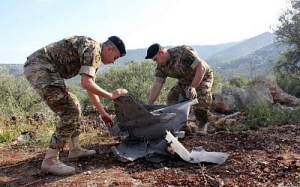
Lebanese soldiers inspect remains of a Syrian surface-to-air missile that had apparently been fired at Israeli jets during an extensive air campaign against Iranian targets in Syria, which landed in the southern Lebanese village of Hebarieh, on May 10, 2018. (Ali Dia/AFP)

Last week, it was reported that Israel and Russia had reached a deal to remove Iranian forces from southern Syria, while also giving Israel a green light to strike Iranian targets in Syria.

The reported agreement would see Iranian forces leave southwestern Syria, while allowing Israel to strike Iranian assets deep in the country. Israel agreed not to attack Syrian regime targets, a report in the Arabic Asharq Al-Awsat newspaper said.

Turning to the issue of long-dormant peace talks with the Palestinians, Netanyahu said, “Our hand is always extended in peace,” while arguing that Israel’s improving relationships with Arab states were “most promising route.”

Merkel said, “There isn’t agreement on all points. But we’re partners, we’re friends.”

While the German leader reiterated the need for a two-state solution, Netanyahu said there would be no progress until the Palestinians recognized the right of the Jewish state to exist.

WATCH: Trump’s pivot toward Israel felt in Judea and Samaria

June 4, 2018

   ti

Latest News from Israel

The Trump Administration has been very tolerant regarding the building of new homes for Israeli communities in Judea and Samaria. Will the current building plan cause Washington to object?

Russia Constrains Iran

June 4, 2018


Poster showing Hizbullah leader Hassan Nasrallah, Iranian President Hassan Rouhani, Syrian President Bashar Assad, and Russian President Vladimir Putin
(ABNA News – Iran)

BY Amb. Dore Gold June 3, 2018 VIA Jerusalem Center for Public Affairs

Source Link: Russia Constrains Iran

{Iran is like the house guest who never leaves, only worse. – LS}

In an astounding series of statements, Russia has made it clear that it expects all foreign forces to withdraw from Syria. Alexander Lavrentiev, President Putin’s envoy to Syria, specified on May 18, 2018, that all “foreign forces” meant those forces belonging to Iran, Turkey, the United States, and Hizbullah.

Russian Foreign Minister Sergey Lavrov added this week that only Syrian troops should have a presence on the country’s southern border, close to Jordan and Israel. Previously, Russia had been a party to the establishment of a “de-escalation zone” in southwestern Syria along with the United States and Jordan. Now, Russian policy was becoming more ambitious.  Lavrov added that a pullback of all non-Syrian forces from the de-escalation zone had to be fast.

The regime in Tehran got the message and issued a sharp rebuke of its Russian ally. The Iranians did not see their deployment in Syria as temporary. Five years ago, a leading religious figure associated with the Revolutionary Guards declared that Syria was the 35th province of Iran. Besides such ideological statements, on a practical level, Syria hosts the logistical network for Iranian resupply of its most critical Middle Eastern proxy force, Hizbullah, which has acquired significance beyond the struggle for Lebanon.

Over the years, Hizbullah has become involved in military operations in Iraq, Saudi Arabia, Yemen, and elsewhere. Without Syria, Iran’s ability to project power and influence in an assortment of Middle Eastern conflicts would be far more constrained. Syria has become pivotal for Tehran’s quest for a land corridor linking Iran’s western border to the Mediterranean. The fact that Iran was operating ten military bases in Syria made its presence appear to be anything but temporary.

Already in February 2018, the first public signs of discord between Russia and Iran became visible. At the Valdai Conference in Moscow, attended by both Lavrov and Iranian Foreign Minister Mohammad Javad Zarif (and by this author), the Russian Foreign Minister articulated his strong differences with the Iranians over their pronouncements regarding Israel: “We have stated many times that we won’t accept the statements that Israel, as a Zionist state, should be destroyed and wiped off the map. I believe this is an absolutely wrong way to advance one’s own interests.”

Iran was hardly a perfect partner for Russia. True, some Russian specialists argued that Moscow’s problems with Islamic militancy emanated from the jihadists of Sunni Islam, but not from Shiite Islam, which had been dominant in Iran since the 16th century. But that was a superficial assessment. Iran was also backing Palestinian Sunni militants like Islamic Jihad and Hamas. This May, Yahya Sinwar, the leader of Hamas in the Gaza Strip, told a pro-Hizbullah television channel that he had regular contacts with Tehran.

Iran Supports both Shiites and Sunnis

Iran was also supporting other Sunni organizations like the Taliban and the Haqqani network in Afghanistan and Pakistan. It harbored senior leaders from al-Qaeda. Indeed, when the founder of al-Qaeda in Iraq, Abu Musab al-Zarqawi, sought a regional sanctuary after the fall of Afghanistan to the United States, he did not flee to Pakistan, but instead, he moved to Iran. There is no reason why Iran could not provide critical backing for Russia’s adversaries in the future.

But that was not the perception in Moscow when Russia gave its initial backing for the Iranian intervention in Syria. In the spring of 2015, Moscow noted that the security situation in Central Asia was deteriorating, as internal threats to Uzbekistan, Kazakhstan, and Tajikistan were increasing. On top of all this, the Islamic State (IS) was making its debut in Afghanistan. An IS victory in Syria would have implications for the security of the Muslim-populated areas of Russia itself.

It was in this context that Russia dramatically increased arms shipments to its allies in Syria. It also coordinated with Iran the deployment of thousands of Shiite fighters from Iraq and Afghanistan under the command of Iran’s Revolutionary Guards Corps (IRGC). That also meant the construction of an expanded military infrastructure on Syrian soil for this Shiite foreign legion.

At the same time, Russia maintained and upgraded a naval base at the Syrian city of Tartus and an air facility at the Khmeimim Air Base near Latakia. Moscow also had access to other Syrian facilities as well.

Russia Achieved Its Main Goal and Changed Its Policy

What changed in Moscow? It appears that the Kremlin began to understand that Iran handicapped Russia’s ability to realize its interests in the Middle East. The Russians had secured many achievements with their Syrian policy since 2015. They had constructed a considerable military presence that included air and sea ports under their control in Syria. They had demonstrated across the Middle East that they were not prepared to sell out their client, President Bashar Assad, no matter how repugnant his military policies had become – including the repeated use of chemical weapons against his own civilian population. The Russians successfully converted their political reliability into a diplomatic asset, which the Arabs contrasted with the Obama administration’s poor treatment of President Hosni Mubarak of Egypt at the beginning of the Arab Spring in 2011. However, now Iran was putting Russia’s achievements at risk through a policy of escalation with Israel.

The Russian security establishment appeared to understand from the start that Israel’s strategy in Syria was essentially defensive. For example, Israel wanted to prevent the delivery of weapons to Hizbullah that could alter the military balance in its favor. One feature of Russian military policy at a very early stage was the carte blanche Moscow appeared to give Israel to strike at these weapons deliveries and later at Iranian facilities across Syria.

According to one report, a Moscow think tank, closely identified with President Putin, published a commentary blaming Iran for the deteriorating situation between Iran and Israel in the Syrian theater. The Sunni Arab states, which Russia was courting, were also voicing their concerns with growing Iranian activism. Undoubtedly, the Russians noticed the complaints that came from Tajikistan this year that Iran was seeking to destabilize the country by funding militant Islamists.


Russian President Putin meets with Iran’s Supreme Leader Ayatollah Mohammed Khatami in 2015 (Kremlin)

Putin seemed to have growing reservations about Iran’s policy of exporting the Islamic revolution from the soil of Syria. Now, with IS fundamentally vanquished, Iranian military activity in Syria lost its primary justification. And if Moscow was considering to more closely coordinate its Middle Eastern policy with Washington in the future, it needed to adjust its approach to Iran.

On May 22, 2018, U.S. Secretary of State Mike Pompeo listed aspects of Iranian activism which the United States was now demanding that Iran halt. It was not surprising to see in Pompeo’s list the demand that “Iran must withdraw all forces under Iranian command throughout the entirety [of] Syria.”

Russia is not cutting its ties with Iran. But it is clearly cutting back Iran’s freedom of action in Syria. The idea that Russia would back Iran’s use of Syria as a platform for operations against Israel or Jordan is not tenable. Still, Russia would remain the primary supplier of Bashar Assad’s army in Syria as well as his strategic partner. Unquestionably, Iran would need to reassess its Middle Eastern strategy after Moscow’s pronouncements calling for it to leave Syria and not continue to be perceived as the force that put at risk all that Russia had achieved as a result of the Syrian civil war.
Iran urges Europe to stand up to US, save nuclear deal

June 4, 2018

Source: Iran urges Europe to stand up to US, save nuclear deal – Israel Hayom

‘A fire starts every minute,’ say firefighters battling Gaza arson terror 

June 4, 2018

Source: ‘A fire starts every minute,’ say firefighters battling Gaza arson terror – Israel Hayom

Thousands celebrate Israel at unprecedented Times Square event

June 4, 2018

Source: Thousands celebrate Israel at unprecedented Times Square event – Israel Hayom

Israel shares key files from Iran nuclear archives with EU allies

June 4, 2018

Source: Israel shares key files from Iran nuclear archives with EU allies – Israel Hayom

Ex-Israeli officials: Why would we expect NATO to help us in an Iran war?

June 4, 2018

Source: Ex-Israeli officials: Why would we expect NATO to help us in an Iran war? – Israel News – Jerusalem Post

Alliance head saying NATO won’t provide assistance to a non-member is “strange,” “unhelpful.”

BY HERB KEINON
 JUNE 4, 2018 00:58
Ex-Israeli officials: Why would we expect NATO to help us in an Iran war?

An Israeli Air Force F-35 fighter jet flies during an aerial demonstration at a graduation ceremony for Israeli air force pilots . (photo credit: REUTERS/AMIR COHEN)

NATO chief Jens Stoltenberg’s remark that the North Atlantic Treaty Organization would not come to Israel’s aid in a war with Iran is “strange” considering that Israel has never requested or expected this type of assistance, former Foreign Ministry director-general Dore Gold said on Sunday.

“I think this just proves the wisdom of Israel’s security doctrine for all these years: that Israel will defend itself by itself and not rely on any kind of external security umbrella,” Gold said.

Stoltenberg was quoted during an interview on Saturday with Der Spiegel as saying that “the security guarantee [of NATO] does not apply to Israel” since it is not a member of the 29-country alliance.

Gold, the head of the Jerusalem Center for Public Affairs, said that Stoltenberg’s comments were “unhelpful” since they “feed into Israel’s suspicion that you cannot rely on the outside world in any way. In any event, we never thought that we could, which is why we always thought that we have to have the ability to defend ourselves by ourselves.”

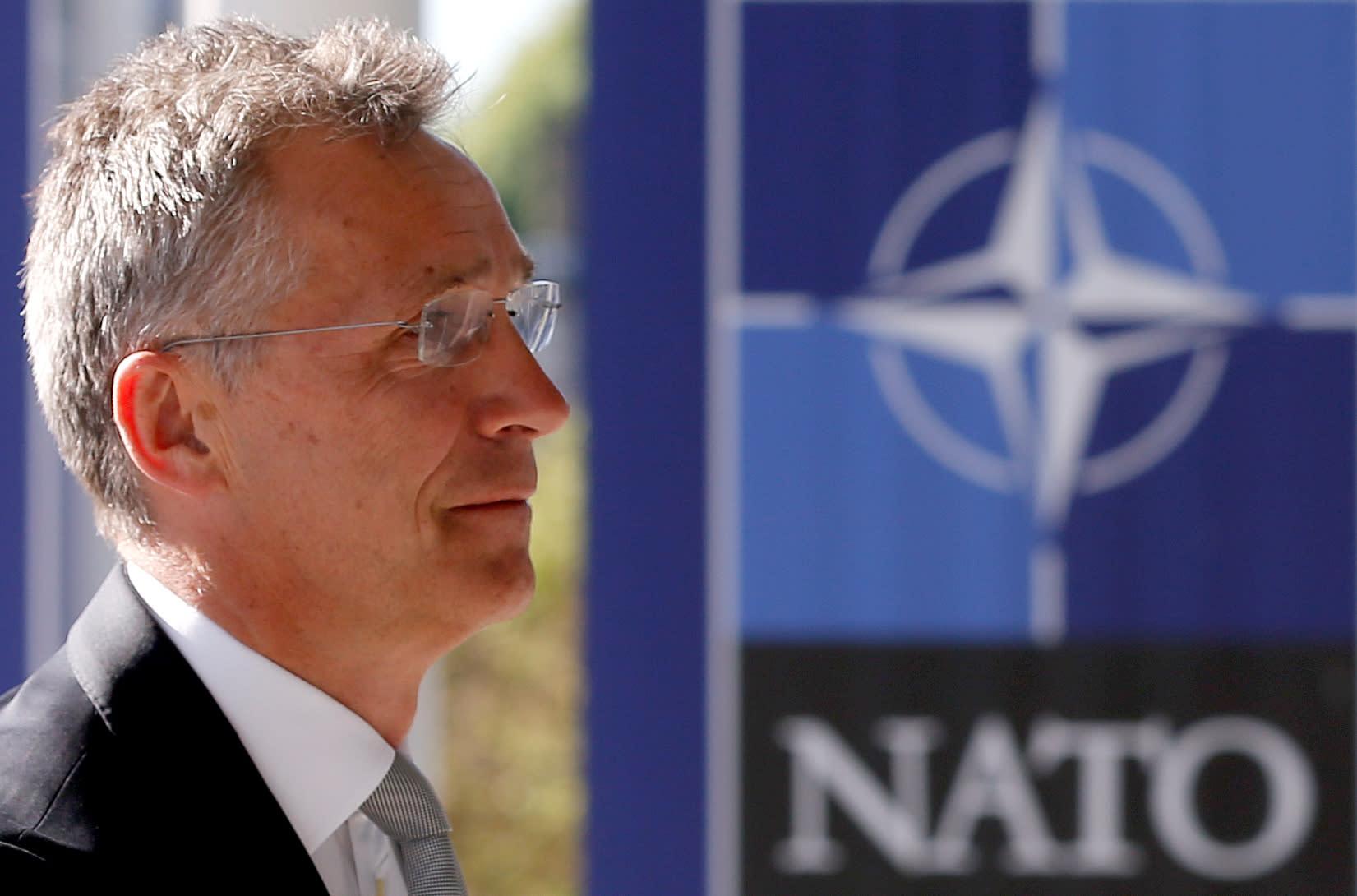
NATO Secretary-General Jens Stoltenberg enters the new NATO headquarters building in Brussels, Belgium, May 7, 2018 (FRANCOIS LENOIR / REUTERS)

NATO Secretary-General Jens Stoltenberg enters the new NATO headquarters building in Brussels, Belgium, May 7, 2018 (FRANCOIS LENOIR / REUTERS)

Eran Lerman, the vice president of the Jerusalem Institute for Strategic Studies, said that Stoltenberg was doing nothing more than stating a fact.

“NATO is an alliance only committed to the defense of other members of the alliance when attacked,” he said, noting that Israel – though it has increasingly good relations with the organization – is not a member.

Moreover, he pointed out, decisions inside the treaty organization are made by consensus, and that it is clear that NATO-member Turkey “would not raise their hand in support of sending troops to defend us.”

Lerman, who formerly served as deputy national security adviser, said he didn’t really know what to make of the entire discourse on this issue, since Israel has never asked for NATO to come to its defense.

“Not only have we never asked NATO,” he said, “but our American allies have never been asked to defend us. They volunteered to do so in 1991 [during the first Gulf War], but that was because they did not want us to get involved.”

When Winston Churchill said in a famous radio address in February 1941 “Give us the tools, and we’ll finish the job” – an appeal for military aid from the US – he did not mean it, Lerman said, as he clearly wanted the Americans to join the battle against the Nazis.

“But we mean it,” he stressed. “We never asked for anyone to defend us, this is essential to who we are.”

Stoltenberg’s comments were a “standard answer to a silly question,” Lerman said.

Lerman scoffed at the idea that the NATO chief’s statement would now whet the Iranian appetite for confrontation, knowing that a war with Israel would not bring any NATO intervention.

“The Iranians have just been treated to a demonstration of the depths of our intelligence penetration of things that matter to them,” Lerman said, in reference both to the Mossad’s coup of spiriting the Iranian nuclear archives out of the country, and the recent pounding Iranian positions took at the hands of the IAF inside Syria.

“Do they really want to tangle with us?” he asked. “I’m not just talking about the archive, but the level of pinpoint destruction of their capacities in Syria, which was also a demonstration of intelligence dominance – we know where they are, they don’t know where we are.”

“They fire blindly with essentially old weapons, and we hit them through the window of a building directly in their warehouses,” he said. “So do they really want to try it? And does NATO have anything to do with it? I doubt it.”

One senior diplomatic official pointed out that Israel holds Stoltenberg in the highest esteem, and views him as a serious professional and a friend of Israel.

The official added, however, that his answer to the Der Spiegel question was “clumsy,” and that rather than saying that NATO would not come to Israel’s aid in a war with Iran, he should have replied that the question is moot since Israel is not a member of the organization, nor has it ever asked or expected NATO to defend it.

On eve of Netanyahu visit, Oren accuses France of blood libel 

June 4, 2018

Source: On eve of Netanyahu visit, Oren accuses France of blood libel – Israel News – Jerusalem Post

“The French cannot fight antisemitism while sending their citizens this blood libel.”

BY GIL HOFFMAN
 JUNE 4, 2018 03:55
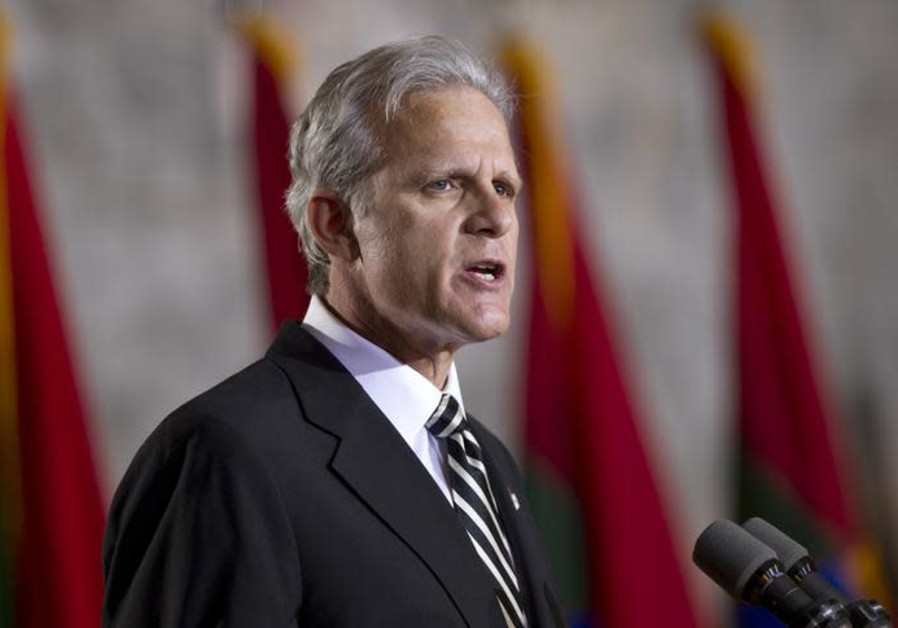
Michael Oren, former ambassador to the US, speaking infront of  Christians United for Israel.

On the eve of Prime Minister Benjamin Netanyahu’s visit to Paris, Deputy Minister Michael Oren accused France on Sunday of spreading an antisemitic “blood libel” against Israel and the IDF.

Oren expressed outrage that France was the only Western European country that voted for a Kuwaiti United Nations resolution that condemned the use of “excessive, disproportionate, and indiscriminate force” by the IDF against the Gazans and made no mention of Hamas.

“The resolution is nothing less than a blood libel,” Oren told The Jerusalem Post. “The French cannot fight antisemitism while sending their citizens this blood libel. If you’re a French antisemite, you draw encouragement from this vote. The point must be made that they need to send the right message when they are in the struggle against antisemitism. We have to be clear and proactive in calling out this kind of hatred.”

Oren warned that had the resolution passed, it could have been used to prosecute IDF soldiers in the International Criminal Court. He said it would have given a huge boost to Hamas and discouraged Israel from retaliating to rocket fire in the future.

“The protests were designed to get that resolution,” Oren said. “The protests are the new rockets and are more effective. The goal is the same – delegitimizing Israel. Hamas knows rockets can’t destroy Israel, but resolutions can delegitimize Israel. Resolutions like that not only encourage terror, they encourage Hamas to continue sending kids to the fence to get killed.”

Oren praised the US for proposing a counter-resolution condemning Hamas violence, which Oren said was the first UN resolution defending Israel in many years.

“Thank God for [US ambassador to the UN] Nikki Haley, and thank God for the US,” he said.

When Oren wrote on Twitter that France should be ashamed of its vote for the Kuwaiti resolution, French Ambassador to Israel Helen Le Gal responded forcefully.

“Shame on you M. Oren for insulting France on the eve of the visit of your prime minister to Paris,” Le Gal tweeted. “You didn’t read the resolution. It was not perfect but condemned all the violence against Israel. France is adamantly supporting Israel’s security.”

Netanyahu will be meeting in France with President Emmanuel Macron and attending a celebration for Israel’s 70th birthday.

Off Topic | Obama – Just Too Good for Us – The New York Times

June 3, 2018

( Says it all… – JW )

By Maureen Dowd

Opinion Columnist

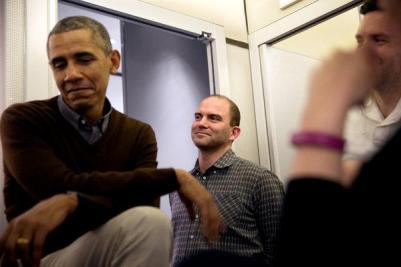
Ben Rhodes, a presidential adviser, with President Barack Obama on Air Force One in early 2016.CreditStephen Crowley/The New York Times

WASHINGTON — It was a moment of peak Spock.

Hours after the globe-rattling election of a man whom Barack Obama has total disdain for, a toon who would take a chain saw to the former president’s legacy on policy and decency, Obama sent a message to his adviser Ben Rhodes: “There are more stars in the sky than grains of sand on the earth.”

Perhaps Obama should have used a different line with a celestial theme by Shakespeare: “The fault, dear Brutus, is not in our stars, but in ourselves.”

As president, Obama always found us wanting. We were constantly disappointing him. He would tell us the right thing to do and then sigh and purse his lips when his instructions were not followed.

Shortly after Donald Trump was elected, Rhodes writes in his new book, “The World as It Is,” Obama asked his aides, “What if we were wrong?”

But in his next breath, the president made it clear that what he meant was: What if we were wrong in being so right? What if we were too good for these people?

“Maybe we pushed too far,” the president continued. “Maybe people just want to fall back into their tribe.”

So really, he’s not acknowledging any flaws but simply wondering if we were even more benighted than he thought. He’s saying that, sadly, we were not enlightened enough for the momentous changes wrought by the smartest people in the world — or even evolved enough for the first African-American president.

“Sometimes I wonder whether I was 10 or 20 years too early,” Obama mused to aides.

We just weren’t ready for his amazing awesomeness.

It is stunning to me, having been on the road with Barack Obama in the giddy, evanescent days of 2008, that he does not understand his own historic rise to power, how he defied impossible odds and gracefully leapt over obstacles.

He did it by sparking hope in many Americans — after all the deceptions and squandered blood and money of the Bush-Cheney era — that he was going to give people a better future, something honest and cool and modern.

But by the end of his second term, he had lost the narrative about lifting up people, about buoying them on economic issues and soothing their jitters about globalization. They needed to know, what’s in it for them?

He pushed aside his loyal vice president, who was considered an unguided missile, and backed a woman who had no economic message and who almost used the slogan, “Because It’s Her Turn.” Then he put his own reputation for rectitude at risk by pre-emptively exonerating Hillary Clinton on the email issue, infuriating federal agents who were still investigating the case.

The hunger for revolutionary change, the fear that some people were being left behind in America and that no one in Washington cared, was an animating force at the boisterous rallies for Donald Trump and Bernie Sanders.

Yet Obama, who had surfed a boisterous wave into the Oval, ignored the restiveness — here and around the world. He threw his weight behind the most status quo, elitist candidate.

“I couldn’t shake the feeling that I should have seen it coming,” Rhodes writes about the “darkness” that enveloped him when he saw the electoral map turn red. “Because when you distilled it, stripped out the racism and misogyny, we’d run against Hillary eight years ago with the same message Trump had used: She’s part of a corrupt establishment that can’t be trusted to change.”

Bad time to figure that out.

Where were the next Barack Obamas? Obama had never been about party building. He was the man alone in the arena.

Even though he could make magic — like the time he sang “Amazing Grace” at a funeral for black parishioners murdered by a white supremacist in South Carolina — Obama did not like persuading people to do what they didn’t want to do. And that is the definition of politics. He wanted them simply to do what he had ascertained to be right.

President Obama could be deliberative, reticent and cautious to a fault, which spurred an appetite for a more impulsive, visceral, hurly-burly successor. He got tangled in a cat’s cradle on the twin F.B.I. investigations into Hillary’s emails and Russian meddling; in retrospect, he probably should have been more transparent about both.

Rhodes says that weeks after the election, he warned Obama that a narrative was developing that they didn’t do enough about the Russians and fake news.

“And do you think,” Obama replied, “that the type of people reading that stuff were going to listen to me?”

Obama was well aware during the campaign that his chosen heir sometimes seemed to be phoning it in. Campaigning together in Charlotte, he was nonplused to find out that Hillary had quickly slipped out of a barbecue joint where they had stopped to get food and greet people, while the president was left on his own, shaking every hand.

Afterward he told his aides: “Most of the folks in these places have been watching Fox News and think I’m the Antichrist. But if you show up, shake their hand, and look them in the eye, it’s harder for them to turn you into a caricature. You might even pick up a few votes.”

The Clinton campaign, Rhodes reports, asked Obama to go the day before the election to Pennsylvania and Michigan, a state he had won by 10 points in 2012.

“Michigan,” Obama said in wonder. “That’s not good.”