Archive for June 2018

Danon: ‘Israel will not sit idly when facing new and old threats’ 

June 10, 2018

Source: Danon: ‘Israel will not sit idly when facing new and old threats’ – Israel News – Jerusalem Post

Israeli ambassador to the UN Danny Danon warned that Israel will not tolerate an Iranian-Hamas effort to bring the Gaza based terrorist group to South-Lebanon.

BY JPOST.COM STAFF
 JUNE 9, 2018 18:59
Bir Zeit

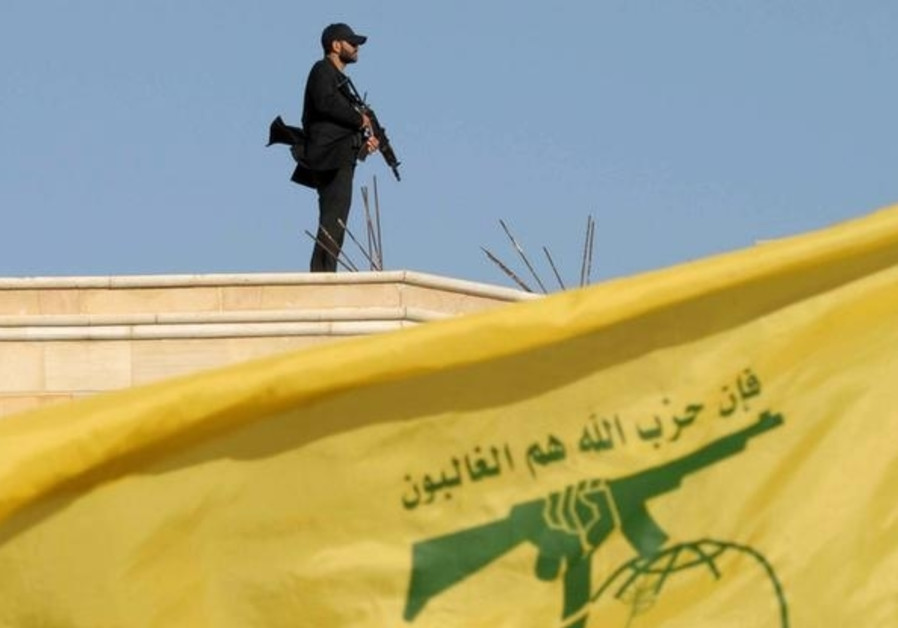
Israel claims that Hezbollah is working alongside the Palestinian terror group Hamas to build rocket launching capacities and missile production centers in South-East Lebanon after Hamas was unable to hit Israel with rockets from the Gaza Strip.

Defense Minister Avigdor Liberman warned of such developments in January, saying that “We will not allow [a situation where] on the one hand Hamas talks about the humanitarian crisis [in Gaza] and on the other hand it will try to carry out terrorist attacks from the West Bank or to build terrorist infrastructures in southern Lebanon.”

Israel argues that these attempts are violating UN Security Council Resolution 1701 which ended the Second Lebanese War of 2006.

“The cooperation between Hezbollah and Hamas crosses borders,” said Israeli ambassador to the UN Danny Danon. “The ramifications of the Hamas terror regime in Gaza extend to Lebanon where they are strengthening their relations with Hezbollah with the approval and support of Iran.”

“Israel does not intend to sit idly when facing new and old threats and will do whatever is necessary to protect its citizens,” Danon stated.

Report: Hezbollah is helping Hamas build rocket factories, training camps

June 10, 2018

Source: Report: Hezbollah is helping Hamas build rocket factories, training camps – Arab-Israeli Conflict – Jerusalem Post

Israel requested that the UN intervene to stop cooperation between the two groups.

BY ANNA AHRONHEIM
 JUNE 10, 2018 08:11
Report: Hezbollah is helping Hamas build rocket factories, training camps

Israel has complained to the UN Security Council, saying that Hamas is working with Hezbollah to establish missile factories and training camps in southern Lebanon, the Lebanese newspaper Al Joumhouria reported Saturday.

According to the report, Israel sent a letter to the UN Security Council and General Assembly that included intelligence showing the effort of the two terrorist groups to set up missile factories and training facilities for thousands of Palestinian fighters.

Israel requested that the UN intervene to stop cooperation between the two groups, charging it was a “blatant violation” of UN Security Resolution 1701, which set the terms to end the 34-day Second Lebanon War fought between Israel and Hezbollah in the summer of 2006.

“We are witnessing the implications of the Hamas terror regime in Gaza and now Hamas is strengthening its ties with Hezbollah. With the approval and support of Iran, Hamas is working to establish its capabilities on Lebanese territory as well,” said Israeli Ambassador to the UN Danny Danon.

“The cooperation between Hezbollah and Hamas crosses borders. Israel does not intend to sit idly when facing new and old threats and will do whatever is necessary to protect its citizens,” he stated.

Defense Minister Avigdor Liberman warned of such developments in January, saying Hamas was trying to strengthen its presence in South Lebanon to launch attacks against Israel from there.

“It must be understood that Hamas, which finds it hard to carry out attacks from the Gaza Strip, is currently trying to launch attacks from the West Bank – and is also trying in new arenas, first of all in southern Lebanon, to threaten the State of Israel,” he said, adding that Israel has been following developments in the growing relationship between Hamas and Hezbollah.

“We will not allow on one hand, Hamas talks about the humanitarian crisis [in Gaza] and on the other hand, that it will try to carry out terror attacks from the West Bank or to build terror infrastructures in southern Lebanon,” he said.

The report also said Israel claimed that Hamas Politburo Deputy Chairman Saleh al-Arouri meets with Hezbollah Secretary-General Hassan Nasrallah for military and political coordination and is reportedly in contact with Saed Izai, the head of the Palestinian branch of Iran’s Revolutionary Guard Corps.

In August, Liberman made similar comments when he met with US Ambassador to the United Nations Nikki Haley. He charged al-Arouri with attempting “to boost the relationship between Hamas and Hezbollah… under an Iranian umbrella, and with the assistance of the Revolutionary Guards and [its leader] Qassem Soleimani.”

Arouri led a Hamas delegation to Iran in October, meeting with senior Iranian officials, including international affairs adviser Ali Akbar Velayati and Foreign Minister Muhammad Javad Zarif. Arouri also met with Nasrallah in Beirut in early November, when the two agreed to strengthen their relationship.

Officials have repeatedly voiced concerns over the smuggling of sophisticated weaponry to Hezbollah, which has at least 100,000 short-range rockets and several thousand more missiles that can reach central Israel. In addition to its massive arsenal of rockets and missiles, Hezbollah is able to mobilize close to 30,000 fighters and has flouted its system of tunnels – complete with ventilation, electricity and rocket launchers.

Herb Keinon contributed to this report.

Top US, Russian generals fail to agree on Syrian-Israel, Syrian-Jordanian borders

June 10, 2018

Source: Top US, Russian generals fail to agree on Syrian-Israel, Syrian-Jordanian borders – DEBKAfile

At issue is the presence of Hizballah and other pro-Iranian units in growing numbers – disguised as Syrian troops – opposite Israel’s borders, DEBKAfile’s exclusive sources report.

Under the command of Iranian Gen. Qassem Soleimani, these units are being “absorbed” into the Syrian army as a ploy for supporting claims by Damascus and Tehran that no Iranian troops are present in Syria at all – only “Iranian military advisers.” Russian officers posted in Syria were apparently told not to interfere in this process.

Our military sources find Hizballah units deployed at the Mt. Hermon border town of Al Khadar opposite Israeli outposts, and the pro-Iranian Afghan Shiite militia (Liwa Ahu Fadi al-Abbas) positioned around Qunetra opposite Israel’s Golan border, under the command of Iranian Revolutionary Guards IRGC) officers.

These Hizballah troops are clad in the uniforms of the Syrian army’s 4th and 5th Syrian divisions, while the Afghan militiamen are wearing the uniforms, boasting the insignia, and driving the vehicles, some armored, of the Syrian presidential Republican Guard.

These details expand on DEBKAfile’s first exclusive disclosure of this trick disguise. We broke the story on May 31, a few hours before Defense Minister Avigdor Lieberman was due to meet his Russian counterpart Gen. Sergei Shoigu in Moscow. We revealed then for the first time that Iranian IRGC and Hizballah units in the regions of Quneitra, the Daraa border with Jordan, and Mt. Hermon were all clad in Syrian army uniforms.

This subterfuge was intended to dodge around Israel’s flat objections to their presence in its back yard. Moscow hoped that Washington would buy it.

On Saturday, June 9, the Wall Street Journal repeated DEBKAfile’s discovery of Hizballah fighters disguised as Syrian troops nearing Israel’s border.

The report came after the meeting on Friday, June 8, between Gen. Joseph Danford, Chairman of the US Joint Chiefs of Staff, and Russian General Staff chief Gen. Valery Gerasimov in Helsinki. The two generals discussed their respective military arrays in Syria, the situation in the de-escalation zones along its borders with Jordan and Israel and the military situation in Ukraine.

No communique was issued after the meeting.  DEBKAfile discloses, however, that Gen. Danford showed Gen. Shoigu the intelligence he had received about the Syrian uniform con practiced by Syria and Iran to pretend that the pro-Iranian troops taking up positions along Syrian’s southwestern borders were part of the Syrian army.
According to our information, the two generals parted without reaching a consensus on the military situation in Syria, especially for those border regions.

Five fires in Gaza border communities, terror kites resume

June 9, 2018

Source: Five fires in Gaza border communities, terror kites resume – Israel News – Jerusalem Post

Fires caused by terrorist activity have resulted in road closures in the south.

BY JPOST.COM STAFF, MAARIV ONLINE
 JUNE 9, 2018 17:16
REPORT: As terror kites resume, IAF attacks kite storage in Gaza Strip

Five fires have been reported in and around Kibbutz Nir Am and kibbutz Be’eri during Saturday as the floating of burning terror kites into Israel from the Gaza Strip continues. Unconfirmed Palestinian reports claim the Israeli Air Force attacked locations of terror kite storage in the Gaza Strip.

Four of the fires were extinguished by Firefighters teams but one fire, in kibbutz Be’eri, is still raging.

Further fires were reported along Highway 34, which runs close to the northeast corner of the Gaza Strip, and near Nachal Asaf and HaBesor Stream in the same area.

The highway is currently blocked for traffic between Yad Mordechai Junction and Sderot Western Entrance, Israel Police spokesperson reported.

Police officers are manning the roadblocks and arson terror is suspected.

In addition two fires were reported, in Nachal Asaf in the western Negev and HaBesor Stream in the Northern Negev.

The fires are a continuation of weeks of kite arson coming from Gaza. The IDF has begun operating drones to combat the attacks and protect the farm lands and residents of the south.

Marching for Terrorism in London? No Problem

June 9, 2018

How will next week’s U.S.-North Korea summit impact Iran-Israel issues? 

June 9, 2018

Source: How will next week’s U.S.-North Korea summit impact Iran-Israel issues? – International news – Jerusalem Post

How will all of this impact the Iran nuclear situation and Israeli security?

BY YONAH JEREMY BOB
 JUNE 9, 2018 08:54
Donald Trump and Kim Jong Un

To be even more accurate, we cannot even say with 100% certainty that the meeting will occur, as in the space of only a few days each leader recently seemed to call it off, before calling it back on.

But assuming it happens, what are the most likely outcomes, and how will all of this impact the Iran nuclear situation and Israeli security?

FIRST, ONE needs to dig under the verbiage.

Both Trump and Kim have talked about negotiating “denuclearization.” The ideal US deal would be that desperately poor North Korea gives up all of its nuclear weapons and its ability to produce new ones for an end to sanctions and a massive infusion of foreign aid and business deals. But from a variety of officials’ statements and analysis from pretty much all prior negotiators with Pyongyang, it defines this differently from Washington.

North Korean officials see two possibilities: a bigger deal and a smaller deal.

A bigger deal, assuming no North Korean cheating (a big “if”), means they really do give up all of their nuclear weapons and ability to produce them, but in exchange not just for economic aid, but for a full withdrawal of the US military from the Korean Peninsula and an end to US “interference.”

A smaller deal means the North gives up something undefined in the nuclear arena – maybe some weapons or some shuttering of some of its nuclear weapons productions facilities – but holds on to some of its nuclear capabilities, present or potential. In exchange, Pyongyang gets sanctions removed and the infusion of foreign aid, and the North, South Korea and the US all sign a peace treaty.

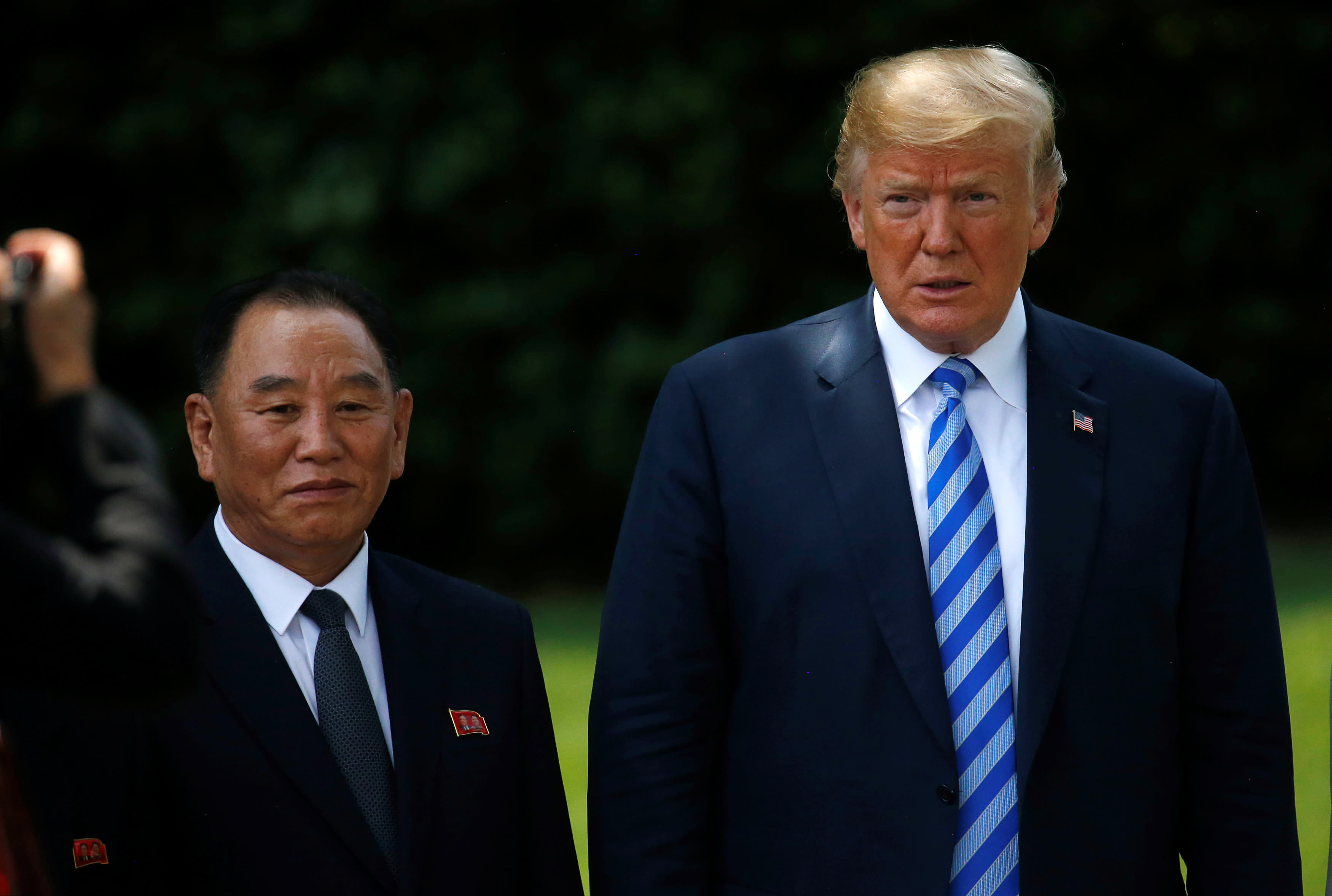
North Korea's envoy Kim Yong Chol poses with US President Donald Trump for a photo as he departs after a meeting at the White House in Washington, US, June 1, 2018 (Reuters/Leah Millis)

North Korea’s envoy Kim Yong Chol poses with US President Donald Trump for a photo as he departs after a meeting at the White House in Washington, US, June 1, 2018 (Reuters/Leah Millis)

But Kim would not have to fully give up all nuclear weapons or all nuclear production facilities (possibly, they would be shuttered, but could potentially be reopened) and the US would not withdraw from the Korean Peninsula.

There is a giant gulf between US and North Korean expectations. US National Security Adviser John Bolton joined the Trump administration largely to enforce a maximum pressure campaign for the North to irrevocably give up all nuclear capabilities, and fast.

His appointment was taken as a sign that Trump was leaning in that direction.

But Bolton has been recently sidelined on the North Korean issue, with US Secretary of State Mike Pompeo pushing him out of a key meeting between a top North Korean official and Trump last week because of his harder-line views.

In addition, Trump said publicly this week that he is no longer using the phrase “maximum pressure,” and Trump is giving Kim the gift of a visit with a US president, and all of the legitimacy that grants, without any significant concession from the North besides a halt to missile tests and promises about the future.

The North also may have dynamited its main underground nuclear test site, but it has a huge range of other nuclear facilities, other spots for testing, and many analysts have said that the site may have already been permanently damaged from overuse.

Furthermore, while Trump threatened briefly to end the summit, he rescheduled it as soon as the North made some public conciliatory statements but, again, without major concessions.

THE US position, then, is very unclear. Will Trump demand full actual denuclearization and within a short time, or will he become more flexible and settle for an eventual peace deal and some concessions on nuclear issues but not all, and over years instead of immediately? And what is likely to come out of the summit? It appears that Trump’s desire to show he is the ultimate deal-maker may overcome his tough bargainer image, which he has used in other areas of the world, such as Iran, and on some global trade issues.

From many prior rounds of negotiation, the North’s public vague statements about denuclearization are likely to devolve into its big and small deal visions.

The US secretary of defense and the US military establishment are dead set against a US military withdrawal from the Korean Peninsula.

That is because even if the North were to give up its entire nuclear weapons program, a major “if,” its conventional missile capacity and army could still pose a massive threat to South Korea and Japan – key US allies.

So the big deal is probably out.

That leaves the small deal. In the best case scenario, in light of Trump wanting a deal, Trump and Kim will make some kind of a vague joint statement about denuclearization, which will mean an eventual peace deal and some nuclear concessions drawn out over years, but not actual denuclearization.

NOW WE come to the Iran nuclear situation and Israel.

If Trump settles for a deal with North Korea, where it either gets to keep some bombs or gives up bombs but shutters nuclear facilities without eliminating them, and it is dragged out over years, and North Korea gets freed of the sanctions toward the beginning – isn’t that the same or worse than the Iran nuclear deal he just left? Would this kind of a weak US-North Korea deal undermine the US’s argument to the world for toughening the Iran nuclear deal? There are obvious differences between the cases.

One could say that the North is a bigger threat than Iran, so it should get a better deal because the threat needs to be averted. Pyongyang has many nuclear weapons and, according to some, a possibility of firing an ICBM to hit the US, whereas Iran at most has the potential to rush toward a nuclear weapon in a few months.

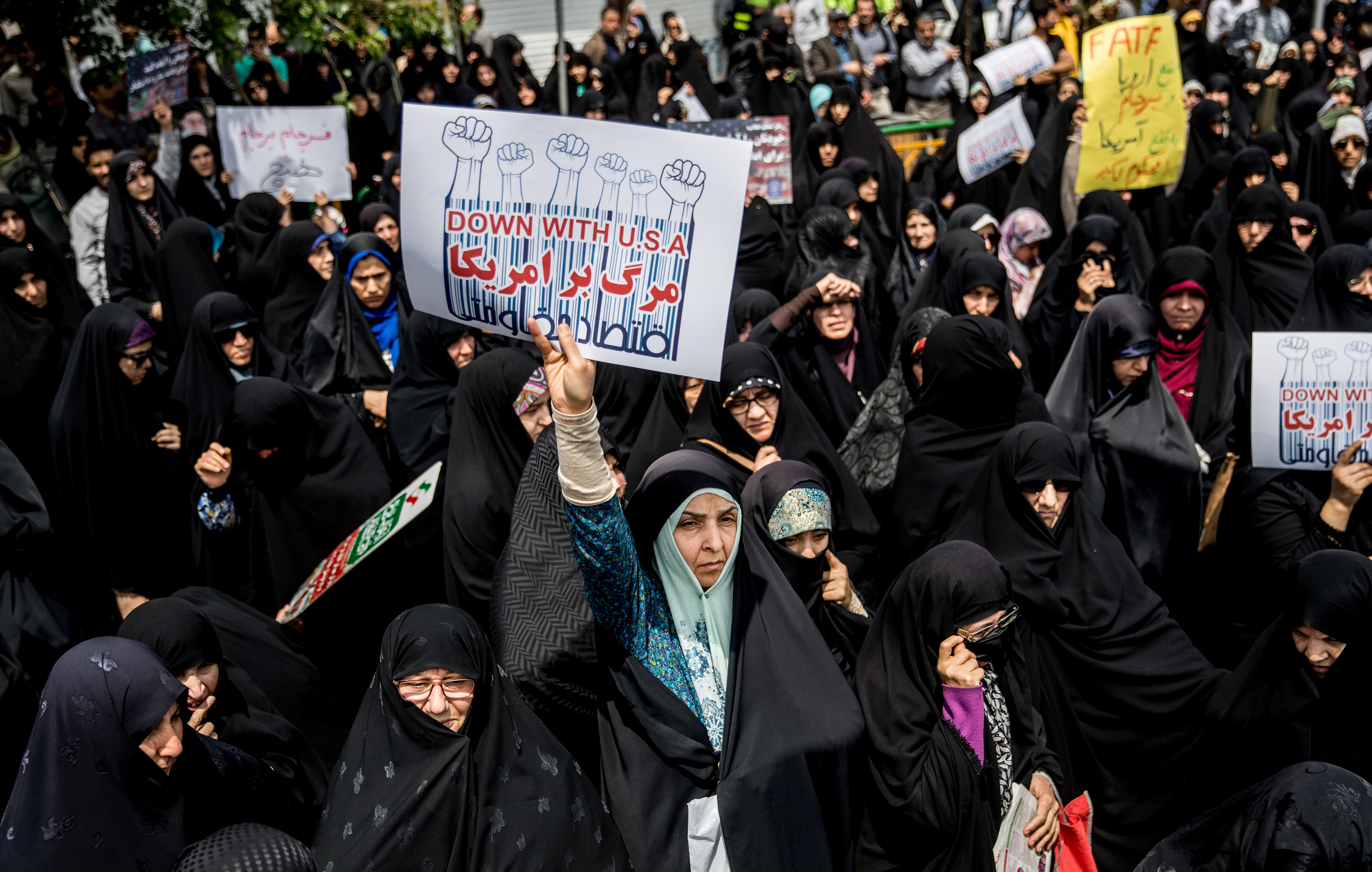
Iranian women gather during a protest against U.S. President Donald Trump's decision to walk out of a 2015 nuclear deal, in Tehran, Iran, May 11, 2018 (Reuters/Tasnim News Agency)

Iranian women gather during a protest against U.S. President Donald Trump’s decision to walk out of a 2015 nuclear deal, in Tehran, Iran, May 11, 2018 (Reuters/Tasnim News Agency)

Taking the opposite tack, one could say that the North is less dangerous than Iran, as Kim mostly seems focused on ensuring his regime-family’s control and survival, whereas Iran is aggressively sponsoring terrorist groups and instability all over the Middle East.

Based on these arguments, the US could say to the Europeans that it is not seeking a stricter double-standard with Iran as opposed to North Korea; rather, the cases are simply different.

Also, if a permanent bar on ballistic missile tests is part of the deal, that could be argued as achieving something that was left out of the Iran deal.

There might also be benefits of getting to learn from the North Koreans what exactly they have done over the years with Iran, Syria and others in the nuclear arena.

But the North does not need to test missiles as much as Iran anymore.

Many analysts feel they are far ahead of Iran in that nuclear area. And Pyongyang may not have to share any past history as part of the deal.

So the US could try to argue why it can be more lenient toward North Korea, but that argument would probably fall on deaf ears.

At the end of the day, the unavoidable consequence of a deal with Kim that only shutters and does not eliminate the nuclear program, while shuttering it over time and offering sanctions relief near the start, will be to undermine the argument for a tougher nuclear deal with Iran.

This could undermine Prime Minister Benjamin Netanyahu’s push for isolating Iran, right when he thought that Trump’s leaving the Iran deal and the Mossad’s spectacular appropriation of Iranian nuclear secrets had given Israel the upper hand in isolating Iran.

The Europeans are already worried about Iran’s threats to pull out of the deal and to escalate its uranium enrichment if the EU demands significant changes from them. Maximum pressure on Iran could fall apart.

There is another scenario. Trump could have his cake and eat it, too.

The Europeans may be angry with the inconsistency in the approaches to Iran and North Korea and may want to keep the Iran deal alive.

But the inescapable reality of US economic pressure may overcome their views of Trump’s move. Put differently, the EU may just follow the money.

In short, from the US perspective, any deal with North Korea, weak or strong, may be preferable to continued verbal sparring, which might unpredictably lead to a nuclear conflict.

Maybe very unexpectedly, Trump would back down on Iran following a deal with North Korea, and Iran would scrupulously follow the nuclear deal for many years to come.

But more likely from the Israeli perspective would be that a weak Trump deal with North Korea will make it harder to get Iran to agree to a tougher nuclear deal, and will put Israel, the US and Iran back on a track toward an escalating conflict.

Is the U.S.-Israel relationship in danger? 

June 9, 2018

Source: Is the U.S.-Israel relatnship in danger? – Israel News – Jerusalem Post

Despite appearances, former senior national security official Elliott Abrams warns that Democrats — and American Jews — are moving away from Israel.

BY HERB KEINON
 JUNE 9, 2018 03:33
Is the U.S.-Israel relationship in danger?

US President Donald Trump has steadfastly backed Israel at the UN, moved the embassy to Jerusalem and withdrawn from the Iranian nuclear deal.

As a result, Prime Minister Benjamin Netanyahu has praised him effusively.

But this, according to Netanyahu critics on the Left both in Israel and the US, is a mistake. They argue that Trump will not be there forever – in fact, he could be turned out of office in just over two years’ time – and that Netanyahu’s embrace of a deeply divisive Republican president will hurt Israel if a Democratic president comes next in line.

But Elliott Abrams, who held senior positions in the White House’s National Security Council under Ronald Reagan and George W. Bush, thinks otherwise.

“You have a party in the United States that is wildly pro-Israel,” Abrams said of the Republican Party. “It would be the sin of ingratitude not to show appreciation. And it is not just Trump, it is the Republicans.”

Abrams, in the country to deliver the keynote address last Tuesday night at the B’nai B’rith World Center-Jerusalem Award for Journalism Recognizing Excellence in Diaspora Reportage, said that his message to Netanyahu would not be to “step back from Trump.”

Rather, he said during an interview in the lobby of the King David Hotel, his message is to Yesh Atid leader Yair Lapid, Zionist Union head Avi Gabbay, and opposition leader Yitzhak Herzog: “You should embrace the Democratic Party; that is your job. The Republicans do not need to be told to be pro-Israel; the Democrats do. Why don’t you do that?”

Abrams, a fellow at the Council on Foreign Relations in Washington, DC, said that there are pro-Israel stalwarts in the Democratic Party, people like California’s Nancy Pelosi, Maryland’s Steny Hoyer, and New York’s Chuck Schumer.

The problem, he said, is that they are all in their sixties and seventies, and there is not an equally ardent pro-Israel cadre among the marquee Democratic names in their thirties and forties.

Turning again to Lapid, Gabbay and Herzog, Abrams said that they all have relationships with Schumer and Pelosi. “But do they have a relationship with the next generation? I don’t know the answer to that. But these are the people who have to go talk to [up-and-coming Democratic leaders] Kamala Harris and Gavin Newsom. That is their job. Their job is not to yell at Netanyahu for being close to the Republicans; their job is to get close to the Democrats.”

That, however, is no easy chore. Poll after poll shows that grassroots support for Israel in the Republican Party outpaces that in the Democratic Party, even though Jews still vote overwhelmingly for Democrats. Abrams said that the polls – both Pew and Gallup – show about a 30-point difference between the parties’ general memberships when it comes to Israel, with the Republicans far more supportive.

ABRAMS CHARACTERIZED this trend as a “problem,” and one for which there is no “magic wand.”

He said that there are two types of Democrats moving away from Israel: Jews and non-Jews.

Regarding the non-Jews, Abrams pointed out that Israel has been governed by a right-of-center government for the last 17 years.

“It is no great shock that such a government will get along better with a Republican rather than Democratic administration,” he said.

“Why is this a problem?” he asked. “Because there is a message sent by Bush and Trump that Israel is terrific. The message sent by [president Barack] Obama was not that Israel is terrific. It was about the need to create daylight; it was that we have a lot of criticism, and that if you are on the Left in the United States, don’t be so enthusiastic about Israel.”

Abrams said that some believe that the situation would improve if there were a left-of center government in Israel. But he has his doubts, and points out that Lapid, Gabbay, Herzog and their supporters were largely supportive of recent IDF action on the Gaza border and in Syria.

“I think that Americans on the Left would be surprised by the defense policies of those parties [Yesh Atid and Zionist Union],” he said. “They are not going to change much [from current defense policies].

So the notion that if there were a center-left government here, the American Left would immediately become pro-Israel, just does not seem to be correct.”

The Bernie Sanders wing of the Democratic Party, which has a decidedly left-wing outlook, is now a significant part of the Democratic Party, Abrams said. “The Left around the world attacks Israel, so why is it shocking that the Left in the United States is part of that?” The challenge, Abrams maintained, is to reach those constituencies that are part of the Democratic Party but are not squarely on the Left, such as Hispanics, Koreans and Indian Americans.

“You are not going to turn the Left pro-Israel,” he maintained.

“But you may be able turn people in the party who are not really on the Left, and who are swing communities.”

He said Israel may have an open door to the Hispanic and Korean communities because they include large numbers of Evangelical Christians, and there are many in the Indian community who are small businessmen and professionals with traditional values, with whom Israel’s arguments may resonate more loudly.

Abrams said that among both Jewish and non-Jewish Democrats, it is unlikely that any one policy change by the government – such as a settlement freeze – would fundamentally change attitudes. If the Netanyahu government would make such a move, and a week later face riots on the Gaza border and use lethal force, “no one would talk about the settlement freeze,” he argued.

THERE IS, however, another layer to the story among Jews inside the Democratic Party moving away from Israel. With them, Abrams said, Israel’s policies toward non-Orthodox streams of Judaism could have an impact in either accelerating or slowing down the erosion of their support.

“To the extent we are talking about Jews, it would help if Israel were more respectful of non-Orthodox parts of the Jewish community,” he said, referring primarily to the conversion issue and the issue of egalitarian prayer at the Western Wall. “This is an old argument, but it does alienate some groups in the Diaspora.”

Asked to identify where he fears this alienation could play out, Abrams said that people might become generally less enthusiastic about Israel, stop traveling here, and stop being pro-Israel activists in their own communities.

Abrams, however, rejected the claim, often made by critics of the government, that Israel’s policies are distancing young Jews from Israel.

“The larger problem is the percentage of the Jewish community that is leaving the Jewish community entirely, and that has nothing to do with Israeli policies,” Abrams said.

This trend has to do with America life, with assimilation and intermarriage, and not one Israeli policy or another. Children of Jewish parents who intermarry, whose spouses do not convert, and who do not raise their children as Jews – their children will leave the Jewish community completely, Abrams said.

“In fact, they already have. The couple has left the Jewish community, and their children will do the same, and this has nothing to do with settlements and occupied territory  – it is an American phenomenon.”

Abrams said that the bigger questions Israelis must ask themselves, however, is what obligations the country now has, since it’s what the US was for the last century, and Europe for a few centuries prior – namely, the center of world Jewish life.

“What responsibilities does that bring?” he asked.

On security matters, he maintained, Israel’s primary obligation is to its own survival.

“But on questions of religion, where you are dealing with Jews across the world, I think Israel has to ask itself what is its relationship – as the center of the Jewish world – going to be to the Diaspora and non-Orthodox Jews in the Diaspora?” Abrams said that he would like to see an Israeli campaign to raise the number of non-Orthodox students in non-Orthodox Jewish schools in the Diaspora, and to do more to promote Hebrew study around the world.

“What if you had places in a variety of locations in the Diaspora where the Israeli government paid people to learn Hebrew?” he said.

“It is an idea.”

If, in the past – when Israel was smaller and much weaker – the question often posed was what is the Diaspora’s relationship and responsibility toward Israel, Abrams now asks the question from the other side.

“Now what is needed,” he said, “is for Israelis to start thinking about their relationship to the Diaspora in the coming decades.”

Symbolic victories – and losses – are important

Elliott Abrams met The Jerusalem Post a day before the Argentinean national team and star Lionel Messi sent much of the country into the doldrums because of their decision not to play an exhibition game here Saturday night.

Nevertheless, what Abrams said about the upcoming visit of Prince William and the move of the US Embassy to Jerusalem resonates loudly in the context of the Argentinean team’s decision.

Prince William’s visit and the US Embassy move are “symbolic victories that send a message of Israel’s “acceptance and permanence,” Abrams said.

“You can live without symbolic victories,” he explained. “But given that there is a global movement against you, these symbolic victories contribute to the cause. Yes, you lived 70 years without the American Embassy in Jerusalem, and without a British Royal, but you are under attack here by Iran, a number of terrorist groups, and by the Left around the world; so you need political victories, symbolic victories, and friends.

“So when these victories come, when you win a song contest, it is better than losing because you are Israeli. And when the royal family comes, it is a big deal. It is better than the royal family refusing to set foot here officially.”

Prince William’s visit and the embassy move help to “normalize” Israel, Abrams argued.

“There is a still an effort to say that Israel is a criminal enterprise, that its creation was an offense, that it is not permanent and not acceptable. And all of these symbolic moves say, ‘No, we reject all of that.’” Abrams cited his mentor George Shultz, a former US secretary of state, as saying in 2003 that the US Embassy needed to move to Jerusalem because “as long as it is in Tel Aviv, it seems as if we are just camping out.”

Asked what Shultz meant, Abrams replied: “It looks as if you are temporary, your presence is temporary, your role in Jerusalem is temporary, so our embassy has to be temporary. So now we are saying, ‘No.’ There are daily attacks on this country’s legitimacy; these victories are not meaningless.”

Unfortunately, then, neither are the losses.

Iran Admits To Facilitating 9/11 Terror Attacks

June 9, 2018

Top Iranian official admits for first time Iran aided al Qaeda terrorists

9/11 / Getty Image

BY:

Iran Admits To Facilitating 9/11 Terror Attacks

Iranian officials, in a first, have admitted to facilitating the 9/11 terrorist attacks in the U.S. by secretly aiding the free travel of al Qaeda operatives who eventually went on to fly commercial airliners into the Twin Towers in New York City, according to new remarks from a senior Iranian official.

Mohammad-Javad Larijani, an international affairs assistant in the Iran’s judiciary, disclosed in Farsi-language remarks broadcast on Iran’s state-controlled television that Iranian intelligence officials secretly helped provide the al Qaeda attackers with passage and gave them refuge in the Islamic Republic, according to an English translation published by Al Arabiya.

“Our government agreed not to stamp the passports of some of them because they were on transit flights for two hours, and they were resuming their flights without having their passports stamped. However their movements were under the complete supervision of the Iranian intelligence,” Larijani was quoted as saying.

The remarks represent the first time senior Iranian officials have publicly admitted to aiding al Qaeda and playing a direct role in facilitating the 9/11 attacks.

The U.S. government has long accused Iran of playing a role in the attacks and even fined the Islamic Republic billions as a result. The U.S. 9/11 Commission assembled to investigate the attacks concluded that Iran played a role in facilitating the al Qaeda terrorists.

Larijani admitted that Iranian officials did not stamp the passports of the al Qaeda militants in order to obfuscate their movements and prevent detection by foreign governments. Al Qaeda operative also were given safe refuge in Iran.

“The Americans took this as evidence of Iran’s cooperation with al-Qaeda and viewed the passage of an airplane through Iran’s airspace, which had one of the pilots who carried out the attacks and a Hezbollah military leader sitting [next to] him on board, as evidence of direct cooperation with al-Qaeda through the Lebanese Hezbollah,” Larijani was quoted as saying in the May 30 interview, which is gaining traction on social media.

The U.S. government has not formally commented on the interview, but did highlight it in an official tweet from the State Department’s Arabic-only Twitter page.

Netanyahu said to snub EU foreign policy chief, causing her to nix Israel visit 

June 8, 2018

Source: Netanyahu said to snub EU foreign policy chief, causing her to nix Israel visit | The Times of Israel

Amid diplomatic tensions, PM reportedly rejects Mogherini’s request to meet on sidelines of Jerusalem event. Top Israeli source: ‘Her positions are very hostile to Israel’

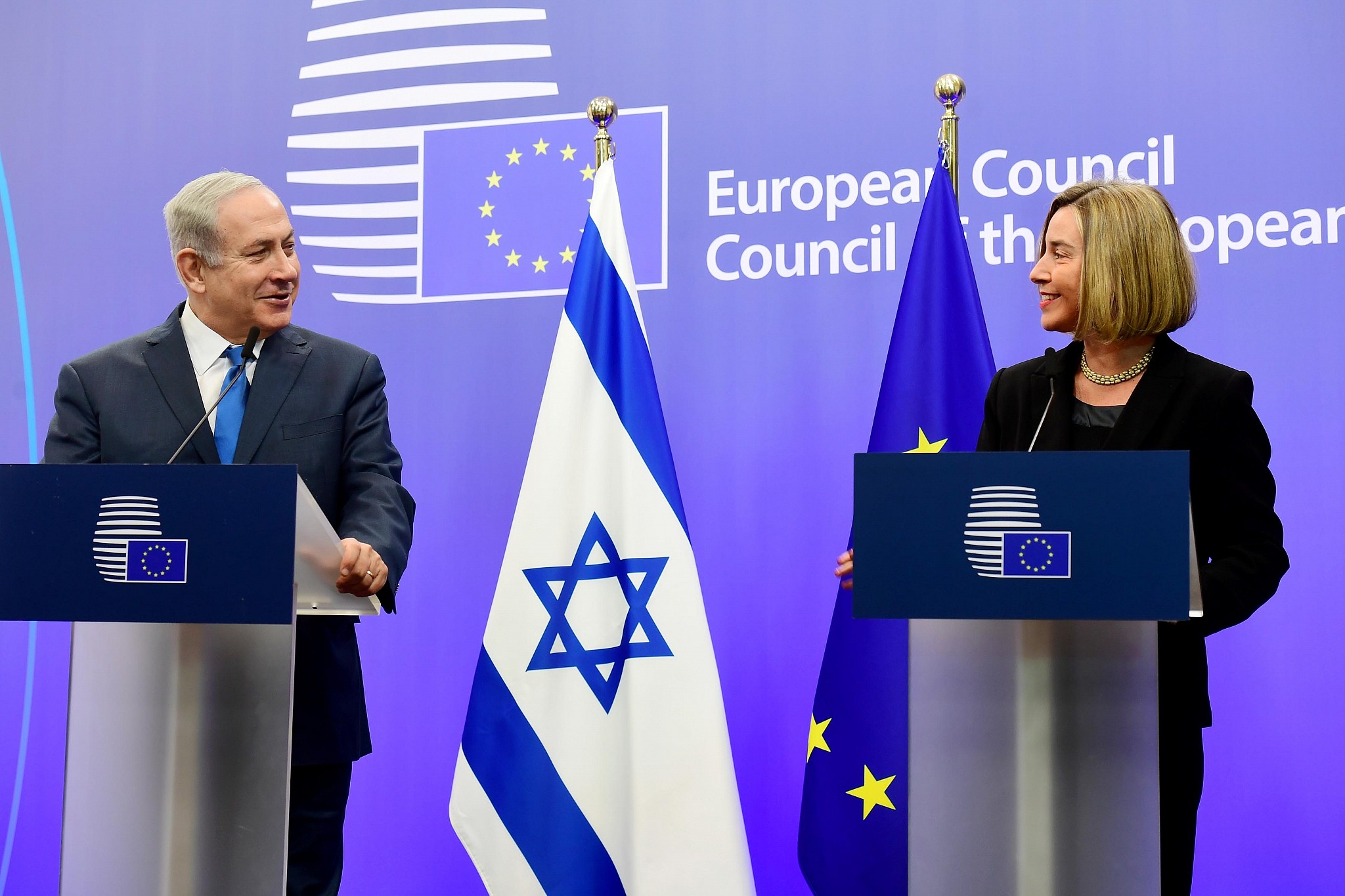
Prime Minister Benjamin Netanyahu (left)  holds a joint press conference with the European Union's foreign policy chief, Federica Mogherini in Brussels, Belgium, October 11, 2017.(Avi Ohayon/GPO)

Prime Minister Benjamin Netanyahu (left) holds a joint press conference with the European Union’s foreign policy chief, Federica Mogherini in Brussels, Belgium, October 11, 2017.(Avi Ohayon/GPO)

Prime Minister Benjamin Netanyahu refused a request by European Union Foreign Policy chief Federica Mogherini to meet in Jerusalem next week, causing her to cancel her planned trip to the country, Hebrew-language news outlets reported Friday.

Mogherini, currently in Jordan, was set to visit the Israeli capital to take part in the American Jewish Committee’s annual Global Forum conference in Jerusalem, which begins Sunday.

But her request to meet with Netanyahu on the sidelines of the conferences was reportedly turned down, leading her to cancel her trip.

A top diplomatic source told Hadashot TV news Mogherini “was invited by the conference” and not by Israeli leaders. “Her positions are very hostile to Israel,” he added.

Israel and the EU have lately been at loggerheads over the IDF’s handling of mass protests and riots on the Gaza border, as well as over the US decision to unilaterally withdraw from the Iran nuclear deal. Israel has also hailed the US relocation of its embassy to Jerusalem last week, a move Europe has rejected and reportedly sought to officially condemn.

Netanyahu has also fiercely condemned the European Union for its policies on Israel, including in hot mic comments last year that saw him lash European Union leaders for their “crazy” treatment of the Jewish state.

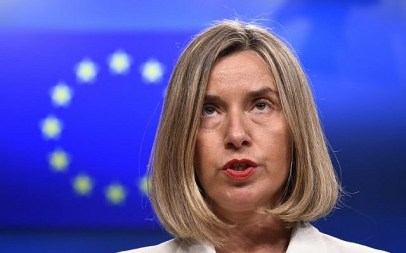
EU foreign policy chief Federica Mogherini gives a press conference after an EU-Tunisia Association Council meeting at the EU headquarters in Brussels, on May 15, 2018. (AFP PHOTO / JOHN THYS)

Last month Public Security Minister Gilad Erdan, a top Netanyahu ally, slammed the EU, saying the bloc shouldn’t “get involved in internal Israeli matters,” after it called for an investigation of alleged police brutality against Arabs at a demonstration in Haifa.

And last week the EU lashed out at Israel over its decision to build 2,000 new settlement homes and to demolish a Palestinian Bedouin village in the West Bank, saying it undermines “prospects for a lasting peace.”

Netanyahu toured Europe this week, meeting with leaders from Germany, France, and Britain in a bid to rally support for amending the international nuclear deal with Iran and for pushing Iranian forces out of neighboring Syria.

Report: US sought Saudi oil support before pulling from Iran deal 

June 8, 2018

Source: Report: US sought Saudi oil support before pulling from Iran deal – Israel Hayom