Archive for June 29, 2018

GOP Senator: Longstanding U.S. Alliance With Turkey ‘Slipping Away’

June 29, 2018

Turkish President Erdogan pivoting to Russia

Turkish president Recep Tayyip Erdogan

Turkish president Recep Tayyip Erdogan / Getty Images

BY:

GOP Senator: Longstanding U.S. Alliance With Turkey ‘Slipping Away’

Sen. James Lankford (R., Okla.) warned Wednesday the longstanding alliance between the United States and Turkey is crumbling amid President Recep Tayyip Erdogan’s pivot to Russia and ongoing detention of an American pastor.

In a nod to Erdogan’s crackdown on civil society in the wake of the country’s failed military coup in 2016, Lankford said the NATO ally can no longer be considered open or free as its government trends toward authoritarianism.

“We have an ally that we no longer know and we no longer recognize—we’d like to have our friend and our ally back,” Lankford said during a panel hosted by the Foundation for Defense of Democracies on Capitol Hill. “This is a long-term alliance that’s slipping away from us and we hope for a reengagement with the Erdogan government.”

Lankford, alongside Sens. Jeanne Shaheen (D., N.H.) and Thom Tillis (R., N.C.), earlier this month inserted an amendment into the National Defense Authorization Act that would prohibit the sale of F-35 join strike fighter jets to Turkey if Ankara moves forward with plans to purchase Russia’s S-400 air defense system.

Though U.S. defense contractor Lockheed Martin transported the first F-35 to Turkish officials in Texas last week, Assistant Secretary of State Wess Mitchell told the Senate Foreign Relations Committee on Wednesday that the plan to transfer dozens of the aircraft could still be put on hold.

Lankford said Turkey’s attempt to acquire F-35s from the United States while it reaches out to Russia for its S-400 system, which is not interoperable with NATO and American missile defense systems, “violates the most basic part of the NATO relationship.”

The 2016 jailing of U.S. pastor Andrew Brunson on charges of terrorism has also inflamed tensions between Ankara and Washington. Brunson, who has served in Turkey as a Christian missionary for 23 years, was accused of having ties to Fethullah Gulen, a Muslim cleric living in Pennsylvania who Erdogan claims masterminded the coup attempt.

Lankford accused Turkey of holding Brunson “hostage” as leverage for the United States to extradite Gulen. Still, he offered a conciliatory approach to the long-time U.S. ally, saying that above all he would like to see relations mended between the two NATO members.

“Our first challenge though is not to push Turkey away, it is to try to figure out who they are and to be able to work together,” he said. “They have very complicated issues and we acknowledge that. The threats to terrorism to them are on their border all the time everyday, we understand that completely and want to be able to partner with Turkey, to be able to resolve that for their national security and for our national security and the stability of the region.”

Tens of thousands of refugees fleeing Syrian offensive 

June 29, 2018

Source: Tens of thousands of refugees fleeing Syrian offensive – Middle East – Jerusalem Post

As the Syrian regime keeps up its bombardment of rebels in the south there are concerns that the refugees and spillover from the fighting will pressure Israel to intervene.

BY SETH J. FRANTZMAN
 JUNE 29, 2018 02:05
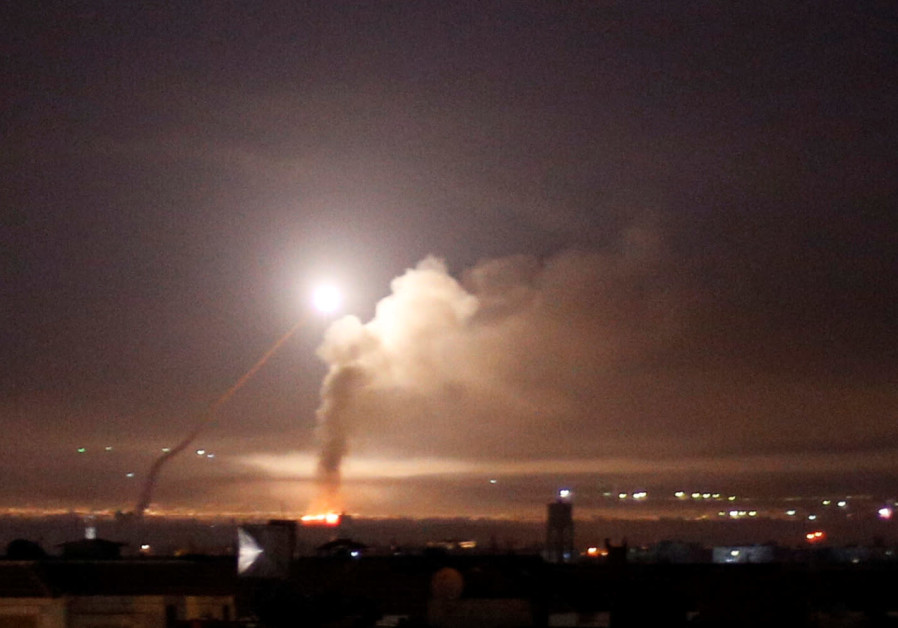
Tens of thousands of refugees fleeing Syrian offensive

Thousands of Syrian refugees have begun to crowd near Israel’s Golan Heights border in the Syrian town of Rafid near the historic cease-fire line between Syria and Israel. As the Syrian regime keeps up its bombardment of rebels in the south there are concerns that the refugees and spillover from the fighting will pressure Israel to intervene.

Aymenn Jawad al-Tamimi, an expert who did extensive research on the border area and is familiar with relations between Israel and the Syrian rebels, presents several scenarios as the crisis unfolds.

“I think the Syrian military operation will grow and a deal will be struck… Some [rebels will be] deported to the north… others will stay and some who stay may become enforcers for the Syrian government,” says Tamimi, a Research Fellow at the Middle East Forum.

The Syrian regime has been pounding rebel positions and overrunning villages and towns in southern Syria for a week. An estimated 45,000 people have fled, with as many as 5,000 or more fleeing toward the Israeli border, seeking shelter in an area they know the regime is loathe to bomb.

The Russian air force has also been active in southern Syria, claiming to be targeting extremist groups that are not party to a cease-fire it signed with Jordan and the US last July. With US President Donald Trump and Russian President Vladimir Putin scheduled to meet in July, the crisis in southern Syria could throw a wrench into discussions between their two countries. For Israel, the central concern is keeping Iranian-backed militias away from the Golan and managing the crisis.

“It is still early… and there is a sense that the Jordanians may pressure the rebels into negotiations,” says Tamimi. In other places in Syria the regime has signed reconciliation deals with local rebels and left them to run their own affairs even after the government reasserted control. This “soft” deal could be in store for the small rebel groups on Israel’s border.

However, another option is that the factions surrender and then end up being paid to be part of the regime’s government structures, such as military intelligence. A third, “harsher” deal would envision the rebels being deported and their supporters being shipped north to Idlib province, which is still controlled by rebels.

The problem for the villages near the Golan is that some are run by a single group – such as Fursan al-Jawlan, the “Knights of the Golan” – while other areas might have numerous rebel groups, including more extreme factions among them. “If there is a multiplicity of factions there could be problems with law and order,” Tamimi says. The more extreme groups such as the ISIS-affiliate Jaysh Khalid bin-Walid in the southern Golan will want to fight the regime, and Damascus will not want to reconcile with them. Instead they could be bused to the eastern desert where the regime has sent other ISIS members.

The rebels’ fate on the Golan is likely sealed, Tamimi argues. After the US made it clear they would not intervene, it is only a matter of time until they are defeated. “The outcome is predetermined and the rebels and their cause will lose one way or another.”

Russia has provided crucial support for Damascus in its drive to reconquer the country since 2015. The regime and Russia have sought deescalation agreements, like they had in the south, until they were ready to retake them. Through these salami tactics they have focused on defeating first one group and then another.

“Some in the US thought that Russia was interested in deescalation for its own sake rather than the actual goal, which is bringing back the government to the south,” Tamimi says. “They thought this agreement would hold due to Trump’s relations with Putin, but you see how Russia does these deals to game the system and advance the interests of their main ally.”

For those closest to Israel the expert predicts that some might try to cross over, but that Israel will not open the border. “I think the regime will be careful there near the border. If they bomb an area and a bomb or missile or mortar shell goes into Israeli territory accidentally then Israel will respond and hold the Syrian government responsible.”

Some of the rebels have been accused of working with Israel but Tamimi says that Syrian leader Bashar Assad has put on a magnanimous face, appearing ready to reconcile. He points to the example in Beit Jann near the Hermon where the former rebel commander had been in touch with Israel and was allowed to remain after the regime returned. He even gets a government salary today.

Some of the Syrians in the south, after seven years of war, are also ready to go back to regime control. The question is what the rebels think will happen. “They do talk a lot about the Iranian militias targeting them and they play that up because whether it is true or not, they want someone to intervene and say this is crossing a redline.”

The reality is that the Iranian-backed militias are more concentrated in the Euphrates Valley in Syria, not near the Golan, he says. However, there are elements of Hezbollah located in an area several kilometers from the Golan called the “triangle of death.” Hezbollah, like the Iranians, likely knows that if they approach the border, Israel may respond.

Economic pressure on Iran is bearing fruit, Netanyahu says

June 29, 2018

Source: Economic pressure on Iran is bearing fruit, Netanyahu says – Israel Hayom

Israel delivers tons of aid as Syrians flee for border

June 29, 2018

Source: Israel delivers tons of aid as Syrians flee for border – Israel Hayom