Archive for April 2018

Declaring the end of war, leaders of two Koreas aim for denuclearization 

April 27, 2018

Source: Declaring the end of war, leaders of two Koreas aim for denuclearization – International news – Jerusalem Post

Kim invited Moon to step briefly across the demarcation line into North Korea, before the two leaders crossed back into South Korea holding hands.

BY REUTERS
 APRIL 27, 2018 03:42
Declaring the end of war, leaders of two Koreas aim for denuclearization

 North Korean leader Kim Jong Un shakes hands with South Korean President Moon Jae-in as both of them arrive for the inter-Korean summit at the truce village of Panmunjom, April 27, 2018. (photo credit: HOST BROADCASTER VIA REUTERS TV)

SEOUL – North Korean leader Kim Jong Un and South Korean President Moon Jae-in embraced after pledging on Friday to work for the “complete denuclearization of the Korean peninsula,” punctuating a day of smiles and handshakes at the first inter-Korean summit in more than a decade.

The two Koreas announced they would work with the United States and China this year to declare an official end to the 1950s Korean war and seek an agreement to establish “permanent” and “solid” peace in its place.

The declaration included promises to pursue phased military arms reduction, cease hostile acts, transform their fortified border into a peace zone, and seek multilateral talks with other countries including the United States.

“The two leaders declare before our people of 80 million and the entire world there will be no more war on the Korean peninsula and a new age of peace has begun,” the declaration said.

Earlier, Kim became the first North Korean leader since the 1950-53 Korean War to set foot in South Korea after shaking hands with his counterpart over a concrete curb marking the border in the heavily fortified demilitarized zone between the countries.

Scenes of Moon and Kim joking and walking together marked a striking contrast to last year’s barrage of North Korean missile tests and its largest ever nuclear test that led to sweeping international sanctions and fears of a fresh conflict on the Korean peninsula.

Their dramatic meeting comes weeks before Kim is due to meet US President Donald Trump in what would be the first ever meeting between sitting leaders of the two countries.

Moon agreed to visit Pyongyang later this year, according to the declaration.

As part of efforts to reduce tensions, the two sides agreed to open a liaison office, stop propaganda broadcasts and leaflet drops along the border, and allow Korean families divided by the border to meet. Just days before the summit, Kim said North Korea would suspend nuclear and long-range missile tests and dismantle its only known nuclear test site.

But there was widespread skepticism about whether Kim is ready to abandon the nuclear arsenal his country has defended and developed for decades as what it says is a necessary deterrent against US invasion.

It’s not the first time leaders of North and South Korea have declared their hope for peace, and two earlier summits, in Pyongyang in 2000 and 2007, failed to halt the North’s weapons programs or improve relations in a lasting way.

“We will make efforts to create good results by communicating closely, in order to make sure our agreement signed today before the entire world, will not end as just a beginning like previous agreements before today,” Kim said after the agreement was signed.

FIRST ACROSS THE LINE

Earlier, Moon greeted Kim at the military demarcation line where the men smiled and shook hands.

In an unplanned move, Kim invited Moon to step briefly across into North Korea, before the two leaders crossed back into South Korea holding hands.

“I was excited to meet at this historic place and it is really moving that you came all the way to the demarcation line to greet me in person,” Kim said, wearing his customary black Mao suit.

“A new history starts now. An age of peace, from the starting point of history,” Kim wrote in Korean in a guest book in the South’s Peace House before talks began.

Minutes before Kim entered Peace House, a North Korean security team conducted a sweep for explosives and listening devices, and sprayed what appeared to be disinfectant in the air, on the chairs, and on the guest book.

The two leaders released their joint declaration before attending a dinner hosted by Moon.

During a private meeting in the morning, Kim told Moon he came to the summit to end the history of conflict and joked he was sorry for waking Moon up with his early morning missile tests, the official said.

People watch a TV showing a live broadcast of the inter-Korean summit, at a railway station in Seoul, South Korea, April 27, 2018 (Reuters/Jorge Silva)

People watch a TV showing a live broadcast of the inter-Korean summit, at a railway station in Seoul, South Korea, April 27, 2018 (Reuters/Jorge Silva)

UNENDING HOSTILITIES

The United States is hopeful talks will make progress on achieving peace and prosperity, the White House said in a statement as the two men began their summit.

The White House also said it looks forward to continuing discussions with South Korea in preparation for the planned meeting of Trump and Kim in the coming weeks.

Just months ago, Trump and Kim were trading threats and insults as the North made rapid advances in pursuit of nuclear-armed missiles capable of hitting the United States.

Impoverished North Korea and the rich, democratic South are technically still at war because the Korean War ended in a truce, not a peace treaty.

The United States stations 28,500 troops in South Korea as a legacy of the Cold War conflict, which pitted the South, the United States and United Nations forces against the communist North, backed by China and Russia.

Kim and Trump are expected to meet in late May or June, with Trump saying on Thursday he was considering several possible dates and venues.

The latest Korean summit has particular significance not least because of its venue: the Demilitarised Zone, a 160-mile (260-km) long, 2.5-mile (4-km) wide strip of land created in the 1953 armistice to serve as a buffer between the South and North.

Mattis, receiving Avigdor Liberman, warns of ‘likely’ conflict between Israel and Iran

April 27, 2018

Source: Mattis, receiving Avigdor Liberman, warns of ‘likely’ conflict between Israel and Iran – Arab-Israeli Conflict – Jerusalem Post

MATTIS, RECEIVING LIBERMAN, WARNS OF ‘LIKELY’ CONFLICT BETWEEN ISRAEL AND IRAN

“I can see how it might start, but I am not sure when or where,” the secretary told lawmakers.

BY MICHAEL WILNER
 APRIL 27, 2018 04:37
Mattis, receiving Liberman, warns of ‘likely’ conflict between Israel and Iran

WASHINGTON —  Direct conflict between Israeli and Iranian forces is increasingly likely in Syria as Tehran pursues a permanent military presence there, US Secretary of Defense James Mattis warned on Thursday.

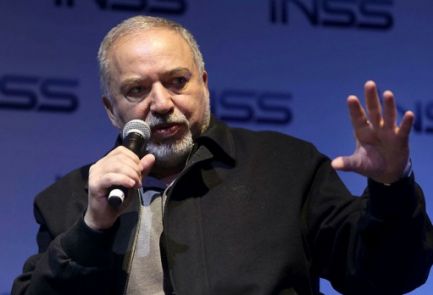
Addressing a congressional panel before hosting his Israeli counterpart, Avigdor Liberman, at the Pentagon, Mattis said it was “very likely” from his perspective, “because Iran continues to do its proxy work there through Hezbollah.”

Receiving Liberman, Mattis told reporters that he saw no reason for Iran to ship advanced missiles to Hezbollah through Syria except to threaten Israel.

“I can see how it might start, but I am not sure when or where,” the secretary told lawmakers. Mattis then echoed Liberman’s warning from earlier in the day, issued through a Saudi newspaper, in which he said Israeli forces would strike Tehran if Iranian missiles ever hit Tel Aviv.

The two met at the Pentagon after Liberman met with US President Donald Trump’s national security advisor, John Bolton; his special representative for international negotiations, Jason Greenblatt; and his son-in-law and senior adviser, Jared Kushner, at the White House.

Iran was the focus of conversation there, as well, according to a statement issued by Israel’s embassy in Washington.

At the hearing, Mattis seemed to question the wisdom of hastily withdrawing from the Iran nuclear accord, just two weeks shy of a May 12 deadline set by Trump for US and European diplomats to come up with “fixes” to its most controversial provisions.

Should they fail, Trump is threatening to withdraw the US from the agreement by reimposing nuclear-related sanctions on Iran lifted by the 2015 deal.

Mattis said that criticisms of the agreement are “valid,” but that, ” obviously, aspects of the agreement that can be improved upon.” The position appeared in sync with that of French President Emmanuel Macron, who at the White House on Tuesday proposed expanding on the existing nuclear deal rather than attempting to start from scratch.

​”​I will say it is written almost with an assumption that Iran would try to cheat,​”​ ​Mattis ​told the Senate panel.​ He said he had read the agreement in full several times, including its classified annexes.​

​”​T​he verification, what is in there, is actually pretty robust as far as our intrusive ability to get in​.​”

Trump says he wants new terms imposed onto the deal by France, Britain, Germany and the US that will grant international inspectors greater access to Iran’s military sites. He also hopes to impose new restrictions on Iran’s ballistic missile work – inextricably linked to the nuclear warheads they are built to deliver, his administration says– and to scrap “sunset clauses” in the deal that will allow Tehran to resume much of its nuclear enrichment work.

Analysis: US Rejection of Term ‘Occupied Territories’ Brings Peace Closer

April 27, 2018

The State Department’s omission of the word ‘occupied’ when referring to the territory of Judea and Samaria may ultimately facilitate a solution to the Arab-Israeli conflict.

By: Daniel Krygier, World Israel News

Latest News from Israel

A US State Department report recently dropped the word ”occupied” in reference to Judea and Samaria for the first time since 1979. In isolation, this move may seem insignificant, but it may also indicate a new US Middle East policy in the making that could facilitate a solution to the Arab-Israeli conflict.

Ever since the Arab countries failed to destroy Israel during the Six-Day War in 1967, the international community has increasingly framed the conflict as an “Israeli occupation of Palestine.” However, the international term “Occupied Palestinian Territories” is political and not rooted in international law or documented history. “Palestine” is the Roman name for occupied Judea, and no “Palestinian” Arab state has ever existed in the Land of Israel.

In his monumental work “The Legal Foundation and Borders of Israel under International Law,” late scholar Howard Grief argued that the legal title of the Jewish people to the Land of Israel was recognized by the international community at the San Remo Peace Conference in 1920.

Judea is not French Algeria

The implications of this recognition are that Jewish communities in Judea and Samaria are legal under international law even if regularly condemned by the politicized United Nations and the European Union. Unlike formerly French-occupied Algeria, Judea and Samaria constitute the ancestral heartland of Israel. Israel won the territories in a defensive war after being attacked by Arab forces. Since “Palestine” is fiction, Judea and Samaria should legally be defined as disputed rather than “occupied” territories. This means that Israel has legal rights in Judea and Samaria that the French colonialists in Algeria or Vietnam did not have.

This does not mean that Israel will annex the entire disputed territories anytime soon. It is not in the Jewish state’s interest to add another 2 million Arabs to its population. However, parts of Jewish-populated areas of Judea and Samaria could eventually be annexed by Israel in a future Arab-Israeli peace deal. This is consistent with the spirit of the key UN resolution 242, which envisions that Israel will retain some of the disputed territories.

Core of the Arab-Israel conflict

This brings us back to the State Department report’s omission of the word “occupied” when referring to Judea and Samaria. This is important because the core of the Arab-Israel conflict was never about “occupation,” but a deeply entrenched Muslim Arab opposition to a reborn Jewish state within any borders. It is the Arabs, not the Jews, who have systematically rejected a two-state solution since it was first suggested by the British Peel Commission in 1937.

Israel is not an “occupier.” Nor was it established as a “haven for refugees from the Holocaust,” as recently claimed by Hollywood actress Natalie Portman. Israel’s final borders are yet to be defined. However, what is beyond any doubt is the fact that modern Israel is the historical and legal realization of the Jewish people’s return to its ancestral homeland. The path to genuine peace requires a recognition of this fundamental truth.


UN Security Council Hears New Israeli Intel on Iran

April 26, 2018

UN Security Council Hears New Israeli Intel on Iran

Aerial photograph of the Iranian induction and recruitment center in Syria presented by Ambassador Danny Danon to the UN Security Council.

Israel’s Ambassador to the United Nations Danny Danon addressed the UN Security Council debate on the Middle East and presented new information about Iran’s presence in Syria, including an aerial photograph of an induction and recruitment center for Shia militants.

“There are over 80,000 extremists from all over the Middle East who are members of Shia militias in Syria under Iranian control,” he said. “What you see here in this image is Iran’s central induction and recruitment center in Syria. We are presenting this image to the world so you can understand the depth of Iran’s involvement in Syria. It is at this base, just over five miles from Damascus, where these dangerous extremists are trained and then assigned their missions of terror throughout Syria and the region.”

On the Iranian nuclear deal, Danon noted that in two and half weeks the United States will announce its decision regarding the fate of the Joint Comprehensive Plan of Action (JCPOA). “President Trump is focused on these important changes because he knows it will make the world safer. All the signatories of this agreement must now make a choice. Do you support these necessary changes? Or, will you choose to enable the Iranian regime that supports terror and is attempting to take over the Middle East?,” he asked.

“Israel has a very clear policy and it has been so since the administration of Prime Minister Menachem Begin. We will not allow regimes that seek our destruction to acquire nuclear weapons. Period.”

Earlier in his remarks, Danon spoke about the Hamas-driven violence being carried out at the security fence along Israel’s border with Gaza, and how the terrorist group is once again exploiting the most vulnerable of its population as human shields.

“Throughout the riots of the past month, Hamas has used innocent Palestinian women and children as human shields, while they cowered behind in safety,” he pointed out. “The terrorists are hiding while allowing, even hoping, for their people to die. This is evil in its purest form,” he said.

“Israel has an obligation to protect our citizens and we will do so while minimizing civilian casualties to the other side, but let me be clear: Israel will never apologize for defending our country. It is Hamas that is fully responsible for every Palestinian injury and death that has resulted from these incidents.”

Lieberman to Saudi-owned paper: We will bomb Tehran if Iran attacks

April 26, 2018

Source: Lieberman to Saudi-owned paper: We will bomb Tehran if Iran attacks – Israel Hayom

Iran’s Khamenei Urges Muslim Nations to Unite Against U.S.: State TV

April 26, 2018


By REUTERS APRIL 26, 2018, 4:58 A.M. E.D.T.

Source Link: Iran’s Khamenei Urges Muslim Nations to Unite Against U.S.: State TV

{Proxies wanted. Must be willing to engage in warfare with the US military and die for Iran. Apply within. – LS}

ANKARA — Iran’s supreme leader called on Muslim nations to unite against the United States, saying Tehran would never yield to “bullying,” state television reported on Thursday.

“The Iranian nation has successfully resisted bullying attempts by America and other arrogant powers and we will continue to resist… All Muslim nations should stand united against America and other enemies,” Ayatollah Ali Khamenei said.

Iran’s top authority criticized Trump for saying on Tuesday some countries in the Middle East “wouldn’t last a week” without U.S. protection.

“Such remarks are humiliation for Muslims … Unfortunately there is war in our region between Muslim countries. The backward governments of some Muslim countries are fighting with other countries,” Khamenei said.

Iran and Saudi Arabia have long been locked in a proxy war, competing for regional supremacy from Iraq to Syria and Lebanon to Yemen.

(Writing by Parisa Hafezi; Editing by Janet Lawrence)

Trump: Iran messed with Obama, they don’t mess with me

April 26, 2018

By Eric Sumner April 26, 2018 Jerusalem Post

Source Link: Trump: Iran messed with Obama, they don’t mess with me

{Direct and to the point, that’s Trump.   Furthermore, following through on threats to sink US ships would be a huge (yuge) mistake as well as restarting the nuclear program (which probably never stopped anyway).  Kind of makes you wonder what they fear will be revealed by a new agreement full of inspection requirments that’s worth starting a war.   One day we may see Iran begging for an agreement.  We shall see.  – LS}

US President Donald Trump boasted that his administration has kept Iran in check where former president Barack Obama had failed to do so in a special interview with Fox & Friends Thursday

“They used to scream ‘death to America,'” Trump said. “They don’t scream it anymore. They screamed it with him [Obama], but not with me.”

Earlier Thursday, Iran’s supreme leader called on Muslim nations to unite against the United States, saying Tehran would never yield to “bullying.”

“The Iranian nation has successfully resisted bullying attempts by America and other arrogant powers and we will continue to resist… All Muslim nations should stand united against America and other enemies,” Ayatollah Ali Khamenei said.

Iran’s top authority criticized Trump for saying on Tuesday some countries in the Middle East “wouldn’t last a week” without US protection.

“Such remarks are a humiliation for Muslims … Unfortunately there is war in our region between Muslim countries. The backward governments of some Muslim countries are fighting with other countries,” Khamenei said.

Shiite Iran and Sunni Saudi Arabia have long been locked in a proxy war, competing for regional supremacy from Iraq to Syria and Lebanon to Yemen.

President Trump’s Fox & Friends appearance piled on more to the saber-rattling between Middle Eastern powers in recent weeks. Earlier this month, senior Iranian cleric Ali Shirazi threatened to destroy Tel Aviv and Haifa if Israel takes any “stupid measures,” and Israeli Defense Minister Avigdor Liberman shot back on Thursday.

“If Iran strikes Tel Aviv, Israel will hit Tehran and destroy any Iranian military site in Syria that threatens Israel,” Liberman told London-based Saudi newspaper Elaph on Thursday.

Meanwhile, a top advisor to Khameni announced Thursday that the Islamic Republic will not accept any change to the Iran nuclear deal, as Western signatories of the accord prepare a package that seeks to persuade Trump to save the agreement.

“Any change or amendment to the current deal will not be accepted by Iran… If Trump exits the deal, Iran will surely pull out of it.. Iran will not accept a nuclear deal with no benefits for us,” Ali Akbar Velayati said.


Golan battalion commanders hold emotional reunion

April 26, 2018

77th Battalion commanders since its establishment gather in Valley of Tears: ‘Power stemming from joy of giving, love of Land.

Mordechai Sones, 26/04/18 14:39

Herewith i will pay my deepest respect for the bravery and offering from this battalion .(JK)

Generations of Battalion Commanders IDF Spokesman

Since its establishment, commanders of the Oz 77 Battalion have gathered together at Kibbutz Al-Rom, reminisced, shared photographs, and recalled shared experiences of the 7th Brigade.

7th Brigade Commander Col. Roman Gofman attended the latest meeting and spoke with gathered commanders of the 7th Brigade’s spirit, the brotherhood among the fighters, brigade operations, and today’s increased motivation to enlist in the IDF.

Current Battalion Commander Lt. Col. Shaul Yisraeli said “the Oz Battalion is an ethos that expresses the sense of responsibility and mutual accountability in the cleanest possible manner. A power that stems from the joy of giving and love of the Land.

Valley of Tears Flash 90

“I could feel the concern, the love, and the deep connection to the battalion, the 7th Brigade, and the IDF, as if everyone was really still the Commander,” related Lt. Col. Yisraeli.

From Kibbutz Al-Rom, the commanders continued to tour the Valley of Tears, where the battalion fought in the battles of the Yom Kippur War.

Golan Heights, Israel iStock

During the difficult battle, the Battalion’s soldiers demonstrated colossal courage and resourcefulness, blocking the attack of some 160 Syrian tanks. Later, the Battalion penetrated the Syrian border and assisted in the conquest and possession of an enclave on Syrian soil. Many of the battalion commanders received different medals for their performance in the war.

Today the battalion is deployed in the same sector as that difficult battle with unified commanders and fighters, and with best in technology and resources, standing in constant readiness.

Here soldiers are seen collecting remains of a rocket fired from Syria into Israel, landing near Kibbutz El Rom in the Golan Heights:

Soldiers collecting remains of rocket fired from Syria into Israel, Golan Hts

צילום: Flash 90

Soldiers collecting remains of rocket fired from Syria into Israel, Golan Hts

צילום: Flash 90

Soldiers collecting remains of rocket fired from Syria into Israel, Golan Hts

Flash 90

Macron: France Will Not Leave the Iran Nuclear Deal ‘Because We Signed It’

April 25, 2018

French president declares Tehran ‘shall never possess any nuclear weapons’

BY:

Macron: France Will Not Leave the Iran Nuclear Deal ‘Because We Signed It’

French President Emmanuel Macron told a joint session of the U.S. Congress on Wednesday that France will not leave the Iran nuclear deal and urged Washington to remain committed to the agreement.

“There is an existing framework called the JCPOA to control the nuclear activity of Iran,” Macron said, using the official acronym for the deal. “We signed it, at the initiative of the United States. We signed it, both the United States and France. That is why we cannot say we should get rid of it like that.”

“It is true to say that this agreement may not address all concerns and very important concerns—this is true,” Macron added. “But we should not abandon it without having something substantial and more substantial instead. That’s my position. That’s why France will not leave the JCPOA, because we signed it.”

During his address, Macron also vowed that “Iran shall never possess any nuclear weapons,” prompting loud applause from both Republicans and Democrats.

“As for Iran, our objective is clearer: Iran shall never possess any nuclear weapons,” Macron said. “Not now, not in five years, not in 10 years, never.”

Macron said that he and President Donald Trump should work on a “more comprehensive deal” addressing all of the concerns about the nuclear deal. The French president explained that four pillars should serve as the foundation for this plan: “the substance” of the existing nuclear deal; the JCPOA’s sunset clauses, key restrictions on Tehran’s nuclear program that are set to expire in about a decade; containing the Iranian regime’s military influence in the Middle East; and monitoring Iran’s ballistic-missile program.

France was a party to the nuclear deal, which it, the U.S. under the Obama administration, and four other world powers struck with Iran in 2015. The deal curbs Iran’s nuclear program in exchange for sanctions relief.

Germany Agrees with Palestinians: Jerusalem NOT Israel’s Capital

April 25, 2018

Although, according to Germany, every state has the right to choose its own capital, it doesn’t extend the same courtesy to Israel.

By: United with Israel Staff

Apr 25, 2018

https://unitedwithisrael.org/

Germany is refusing to recognize Jerusalem as Israel’s capital. Indeed, while its foreign ministry acknowledged that every country has the right to name its own capital, it said that this is not the case for Israel, insisting that the status of Jerusalem can be settled only through negotiations with the Palestinians.

“As a matter of principle, every state has the right to determine a city in its territory to be its capital,” Niels Annen, a minister of state in Germany’s Foreign Ministry, said in response to a query by a lawmaker from the far-right Alternative for Germany (AfD) party last week, The Times of Israel reported.

“Since the eastern part of Jerusalem that Israel occupied in 1967 contrary to international law is not part of Israel’s sovereign territory, the international community, including Germany, has not recognized this declaration,” he added.

He based his position on the 1980 United Nations Security Council’s (UNSC) Resolution 478, which proclaimed that Israel’s declaration on united Jerusalem being its capital “constitutes a violation of international law,” as well as on clauses for the 1995 Oslo Peace Accords.

“The federal government shares the view that the status of Jerusalem, just like other final status issues, can only be settled through negotiations to be durable and acceptable,” Annen affirmed.

Germany’s Chancellor Angela Merkel similarly stated, in an interview with Israel’s Channel 10, that Berlin will not move its embassy in Israel from Tel Aviv to Jerusalem.

‘Repeating the Arguments of Israel’s Enemies’

Petr Bystron, who submitted the query, responded that “the German government’s answer was almost identical with that of the Palestinian Authority, which has been protesting US President Donald Trump’s decision to move the US Embassy to Jerusalem.”

Since Trump’s announcement in December that the US recognizes Jerusalem as the Israeli capital and will move its embassy there, a number of countries have followed suit.

Bystron said he was “amazed that, even 70 years after the founding of the State of Israel, the German government has no idea what its capital is.” He was especially surprised, he said, that Foreign Minister Heiko Maas, who had just visited Jerusalem and emphasized Germany’s “special responsibility for, and solidarity with, the democratic, Jewish state of Israel,” was unwilling to support Israel’s position.

“Considering the special responsibility the German government keeps emphasizing it has toward Israel, it is strange they keep repeating the arguments of Israel’s enemies,” Bystron said.