Archive for March 2018

Humor at its best !

March 14, 2018

Palestinians to Sue US at International Criminal Court over Jerusalem Recognition

The Palestinians want to sue Trump over his recognition of Jerusalem as Israel\s capital. On what grounds?

By: United with Israel Staff

https://unitedwithisrael.org

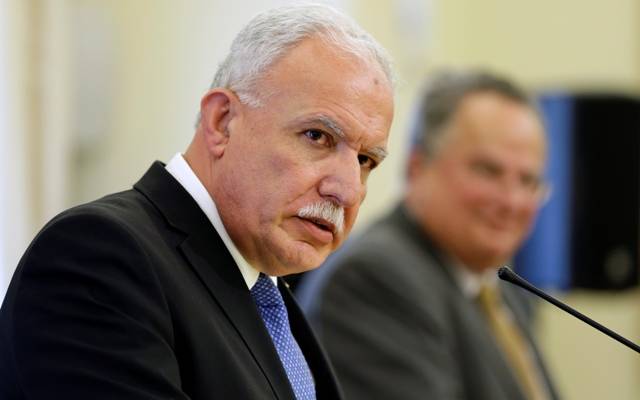
Palestinian Foreign Minister Riyad Al-Maliki. (AP/Thanassis Stavrakis

The Palestinian Authority (PA) plans to file a legal complaint against US President Donald Trump and Prime Minister Benjamin Netanyahu at the International Criminal Court (ICC), according to a Palestinian official, the Turkish Anadolu Agency reported Monday.

Palestinian Foreign Minister Riyad al-Maliki will fly to The Hague in the near future to file a suit against the US at the ICC over Trump’s official recognition of Jerusalem as Israel’s capital in December, Saleh Rafat, an executive committee member of the Palestine Liberation Organization (PLO), told the official Voice of Palestine radio.

Trump’s historic recognition has “violated all international laws and resolutions,” Rafat calimed, without giving further details about the legal basis for the complaint.

Al-Maliki will file another ICC complaint against Netanyahu and Defense Minister Avigdor Lieberman for “their involvement in crimes against the Palestinian people,” Rafat said.

Trump’s recognition of Jerusalem as Israel’s capital has triggered an outcry in the Arab world, but Arab states have failed to take any action beyond statements.

‘Political, Hypocritical and Cynical Maneuver’

The PA became an official member of the ICC in 2015. At the time, Jerusalem responded with rage and derided the (ICC), saying the PA’s decision to join the ICC, in order to initiate proceedings against Israel, is a “political, hypocritical and cynical maneuver.”

Ever since, the PA has been using the international body as a forum from which to launch diplomatic attacks against the Jewish state.

“The ICC was established in order to prosecute those responsible for the world’s gravest atrocities. It is not acceptable to cooperate with those attempting to abuse the ICC system and its limited resources to promote their political agenda,” Israel stated.

“Israel will continue to defend itself and its citizens while respecting international law and abiding by Israel’s independent, impartial and effective legal system,” Israel’s Foreign Ministry stated.

Breaking point in relations with US’ – Turkish FM

March 13, 2018
https://www.rt.com/news/421131-turkey-us-breaking-point/
Michael Reynolds / Global Look Press
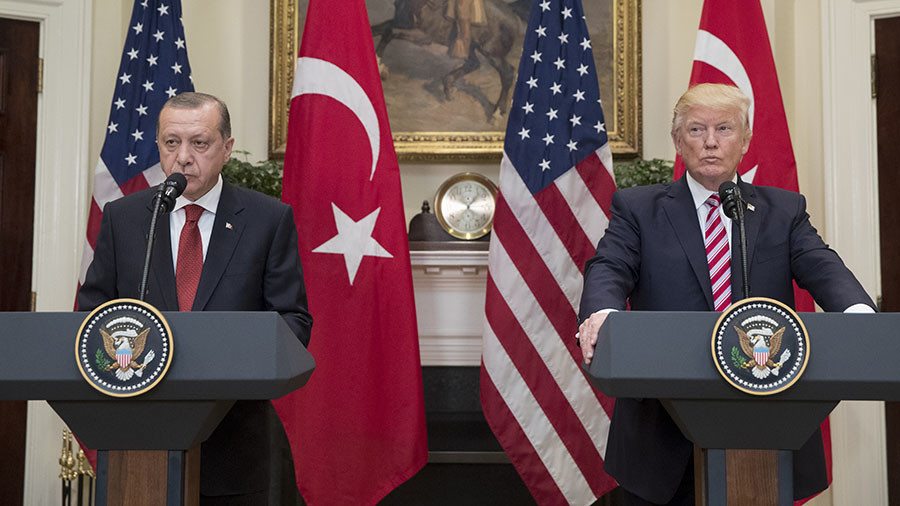
Turkey is “at breaking point in relations with the US,” Turkish Foreign Minister Mevlut Cavusoglu said. The two major NATO partners have recently been at loggerheads over various issues.

“People in Turkey have a very negative attitude towards the US because it doesn’t keep its word [and] constantly lies,” Cavusoglu stated addressing the students at Moscow State Institute of International Relations on Tuesday.

The relations between our countries are “at breaking point,” he said, reminding that back in February both states had established working groups to normalize bilateral ties.

Cavusoglu was apparently referring to teams set up earlier over the escalation in Manbij, where Turkey is currently conducting a military operation against the US-backed Kurds.

READ MORE: Tillerson in Ankara pledges limited weapon supplies to SDF, says Manbij ‘priority’ in Syria

Cavusoglu has repeatedly stated that strained relations between the allies are heading towards a critical juncture. The two sides “will either fix these relations or they will break [down] completely,” he said back in February. Ankara felt provoked by US military support for the Kurdish forces in Syria, including the YPG. Turkey considers the YPG an arm of the PKK movement, dubbed a terrorist organization by Ankara. Washington, however, promised to cease armed support for the Kurds earlier this year.

Turkey has right to buy arms from non-NATO states – Cavusoglu

Speaking in Moscow, the Turkish foreign minister also touched on another point of contention between Ankara and its NATO allies, namely the purchase of Russian-made S-400 missile systems.

“Turkey is a NATO member, but we are an independent state, we are not a satellite state. Other countries of the alliance can purchase weapons from non-NATO states, we have the same right and freedom,” the top Turkish diplomat stated.

READ MORE: Erdogan threatens US with ‘Ottoman slap,’ says all NATO countries created equal

Ankara will only use the S-400s if attacked, Cavusoglu said, adding that Turkey is not planning to use the weapons during its operation against Kurds in Afrin, Syria. Washington seems to be unsure about the deal.

Back in 2017 and before the deal was even confirmed, US Defense Secretary James Mattis suggested that S-400s were “not going to be interoperable with NATO systems.”

Turkish President Recep Tayyip Erdogan hit back, saying Turkey doesn’t want to wait for the protection of its NATO allies. “What do you expect? Should we wait for you?” he said in September 2017.

US warns Syria against ‘unwise’ gas attacks, hints at response 

March 12, 2018

Source: US warns Syria against ‘unwise’ gas attacks, hints at response – Israel Hayom

PM: Fixing Iran deal will prevent nuclearization of Middle East 

March 12, 2018

Source: PM: Fixing Iran deal will prevent nuclearization of Middle East – Israel Hayom

Netanyahu opens up about his history with America

March 12, 2018


The new Judaizers 

March 10, 2018

Source: The new Judaizers – International news – Jerusalem Post

( God bless America… My birthplace. – JW )

How American Pentecostals are adopting Jewish trappings in their theology, practices and politics.

BY DAN HUMMEL
 MARCH 10, 2018 02:18
 Then-Republican presidential nominee Donald Trump wears a tallit during a church service with Bishop

Then-Republican presidential nominee Donald Trump wears a tallit during a church service with Bishop Wayne T. Jackson at the Great Faith Ministries International in downtown Detroit.. (photo credit: CARLO ALLEGRI/REUTERS)

During the service, held on Saturday to coincide with the Jewish Sabbath, Jackson draped Trump in a tallit (Jewish prayer shawl), announcing that it had arrived “straight from Israel” and would convey “an anointing with the power of God.” Jackson also handed Trump a Jewish Heritage Study Bible – a version, explained its editor, Dr. Everette Gaddy, inspired by Jackson’s desire for a Bible that taught “all of the Jewish traditions.”

The gifts struck many Christians and Jews as bizarre or offensive.

Such reactions missed the growing trend that Jackson so clearly exemplified: the appropriation and adoption of Jewish symbols, practices and rituals among a growing segment of American Christians.

Jackson is a well-known Pentecostal Christian who, along with his large Detroit church, founded a television station, Impact Network, and is also a best-selling author. He is the quintessential Pentecostal leader in the early 21st century: fiercely independent – both institutionally and in how he interprets his faith – and convinced that Christians have historically ignored the Jewish roots of their faith at their own peril. His movement is part of the fastest growing form of Christianity, as Pentecostals number some 500 million followers worldwide.

Incorporating Jewish symbols and practices into Christianity has usually been regarded as dangerous to the gatekeepers of Christian orthodoxy. It is perhaps most widely known in English as “Judaizing,” from Paul’s rebuke of Peter to stop “forc[ing] gentiles to follow Jewish customs” (Galatians 2:14), which some translations rendered as “compel to Judaize.” As early as the year 100 CE, church father Ignatius pitted Judaizers against true Christians.

“It is absurd to profess Christ Jesus, and to Judaize,” he wrote in a letter to the church in Magnesia, “For Christianity did not embrace Judaism, but Judaism Christianity.”

As Christianity matured, it came to define itself more sharply in contrast to Judaism and Judaizing took on a distinctly pejorative meaning. Judaism was portrayed as being about laws, legalism and a chosen race; Christianity about grace and faith. The latter rejected the theological separation between Jew and gentile.

The contrasts still define much of Christian thinking about Judaism (and Jewish thinking about Christianity), but are now being challenged by Christians like Jackson. He is part of a movement beginning in the late 20th century that harks back to the “Jewish roots” of Christianity and hopes to Judaize – on Christian terms – the global Pentecostal church. It sees embracing parts of Judaism not as a danger, but as an overdue return to the genuine roots of the faith.

Rethinking Jesus 

The new Judaizers have been buoyed by longer-term outside help. Some of the most fundamental insights of biblical scholars studying the New Testament have legitimized their cause with increasing emphasis on the similarities between Jesus and the Judaism of Palestine in the first century.

One of the earliest contributors to this rethinking of Jesus was the Jewish historian Jacob Klausner, who completed a biography of Jesus in 1922 while in Palestine. Klausner claimed, “Jesus is the most Jewish of Jews… more Jewish even than Hillel” – a sharp break from centuries of pitting Jesus’s teachings against Judaism. Klausner was convinced of Jesus’s essentially Jewish character, though to the consternation of Christians, he depicted the Nazarene not as the foretold Messiah, but as an itinerant ethicist whom later followers turned into a demigod.

Nevertheless, Christian scholars picked up on Klausner’s basic insight and used new archeological and textual discoveries to Judaize Jesus and early Christian history.

The famed mid-century archeologist William F. Albright, upon assessing the significance of the Dead Sea Scrolls for understanding the Bible, concluded that there was an “indissoluble bond between pre-Christian Judaism and early Christianity.” In light of the scrolls, he added, “the New Testament becomes more Jewish than we had thought – as truly Jewish as the Old Testament is Israelite.”

In recent decades, the trend to Judaize Jesus has moved to the mainstream of Christian – and especially Pentecostal – focus.

Brad H. Young, a professor at Oral Roberts University in Tulsa, Oklahoma (founded and named after the Pentecostal evangelist) typifies this change. He was trained at the Hebrew University of Jerusalem under noted Israeli scholar David Flusser (who published his own friendly biography of Jesus in 1969). In books with titles like Jesus the Jewish Theologian, Young laments the process of “de-Judaization” that occurred when early Christians denounced their Jewish roots.

“Though the life of Jesus was originally compiled by the Jewish disciples and for the Jewish disciples,” Young writes, “it was preserved by the Gentile church and for the Gentile church.”

But the emphasis today is on the affinities between the two traditions. Scholars now compare Jesus, Paul and other early Christians to their contemporary rabbis; theologians insist on the compatibility of Jewish thought with Christianity; and Evangelical pastors speak of a “Judeo-Christian” tradition. All take as their basis a shared and enduring history, embodied in the Jewish identity of Jesus.

The Judaization of Jesus has set the basic parameters in other areas of religious life, including religious practice and politics. It isn’t confined to an intellectual debate among scholars and theologians: Instead, it now shapes how millions of Christians live their faith, from the places they travel to the religious objects they purchase.

Holy Land tourism and ritual objects 

Mike Huckabee, the Republican politician and pundit, is also a veteran tour guide to the Holy Land. He has led dozens of tours to Israel – packaged as “The Israel Experience” – where the Jewish roots of Christianity are drilled into tourists.

Huckabee often takes his groups to the top of Masada, where the last holdouts of the Jewish Revolt made their stand against the besieging Romans in 73 CE. While Masada has deep meaning for most Israelis, Huckabee urges his American Evangelical followers to see the ruins as part of their own religious history. He intones in his Arkansas drawl, “Welcome home!” before leading a rendition of the classic hymn “A Mighty Fortress Is Our God.”

In 2016, more than 300,000 Evangelicals visited Israel, making up more than 40% of all American Christian tourists. Many of them regard Israel as a “spiritual home,” evidence of a renewed appreciation for Jews and Judaism through their experiences. But Holy Land tourism is just one of the many Christian practices that reflect the influence of the new Judaizers.

Christian Evangelicals are increasingly drawn to Jewish ritual objects (including shofarot and tallitot), Torah study groups, Hebrew language for worship and prayer and observance of Shabbat.

Christians seeking to connect to their faith’s Jewish roots also have many products they can purchase along the way. They can buy kingly “anointing oil,” Hebrew-language Christian worship CDs, and even books by noted Jewish authors like Rabbi Jonathan Sacks. One online seller, New Day Christian Distributors, also offers an array of prayer shawls and shofarot.

Christian fascination with the Holy Land and the trappings of the Jewish religion are not confined to Pentecostals, of course. Holy Land tourism is popular among Catholics, Eastern Orthodox Christians and Protestants. Sites related to the Hebrew Bible are popular across the Christian spectrum. Many Pentecostals, however, have integrated these practices into the very fabric of their communal identity and practice.

At its most extreme, Judaization can shape the very struc-tures of Christian communities, especially in marginal or upstart Christian movements.

In 1900, the Chicago evangelist John Alexander Dowie named his new religious community on the shores of Lake Michigan “Zion” and claimed to be a reincarnation of the prophet Elijah. Dowie owned and wore a complete set of priestly robes designed to approximate the Temple “Kohanim” and enforced various aspects of Jewish law in his community.

Similar extreme examples are visible today.

Take the self-appointed “Rabbi” Ralph Messer. In 2012, Messer officiated a “crowning ceremony” for the controversial Georgia megachurch pastor Eddie Long, recently at the center of sex scandals involving minors, by wrapping him in a Torah scroll, lifting him in the air and declaring that “kingship is in him.”

Messer performed a similar ceremony in 2009 for Paula White, the popular televangelist and “spiritual adviser” to Trump.

Though these ceremonies are only vaguely related to actual Jewish practices, Messer capitalized on the Jewish veneer to convey spiritual authority.

He is a fringe figure and has been condemned by Jewish and Christian observers. Long was forced to apologize to the local Anti-Defamation League after it protested Messer’s claim to “speak for the Jewish people and the Land of Israel.”

Messer identifies as a “Messianic Jew,” a born Jew who regards Jesus as the prophesied Messiah. Messianic Jewish organizations, such as Jews for Jesus, are far less idiosyncratic than Messer, but they also represent a center of influence in the Judaization movement. To Pentecostals they are often purveyors of Jewish knowledge, experts in Jewish practice, and quite literally embodiments of the shared history between Jews and Christians. Messianic Jews have helped popularize “Yeshua” as the authentic Hebrew name to refer to Jesus among Pentecostals. Their Jewish heritage provides a compelling interpretation of Christian Judaization to the broader Pentecostal world.

Less extreme, but no less path-breaking, are the efforts undertaken by Orthodox Jews. Rabbi Shlomo Riskin, founder of the West Bank settlement of Efrat, has led the Center for Christian-Jewish Understanding and Cooperation since 2008. Partnering with Evangelical tour groups and Christian Zionist organizations, Riskin’s organization hosts interreligious Bible studies and prayer events that emphasize the benefits of Jewish insights to understanding the Bible.

Political ramifications

Judaization also has political ramifications, especially for Evangelical Christian Zionists. Judaization does not necessarily entail a certain politics toward Israel, but Christian Zionists see it as a powerful force in their favor.

A brief look at the logos of Christian Zionist organizations makes clear that Judaization is not just a commercial or theological venture; it is also integral to Christian Zionist politics. Organizations like Christians Standing for Israel and the International Christian Embassy regularly merge Jewish and Christian symbols, including crosses, the Magen David and doves, in their advertising and merchandise.

The point is not just cosmetic. These organizations cite Christian love or “comfort” for Israel as a core, and underappreciated, Christian duty.

Since 2015, longtime Christian Zionist and Messianic Jew Mike Evans has run the Friends of Zion Museum, located just a few blocks west of the Old City. Advertised as “the most unusual museum in Jerusalem,” the organization celebrates “the dream of restoration of the Jewish people to their historic homeland and the brave non-Jews who assisted them in realization of that dream.” In political terms, Evans sees his museum as a bulwark against antisemitism and the Boycott, Divestment and Sanctions movement.

In practical terms, Evans has thrown his lot in with the current US administration with a high-profile billboard campaign throughout Jerusalem thanking Trump and Vice President Mike Pence for their support of Israel.

Indicative of the way many Pentecostals have elevated support for Israel in their faith, the museum praises Christian “visionaries,” from 19th-century biblical scholar George Bush to Corrie ten Boom, the Dutch author whose family helped Jews escape the Holocaust, as underappreciated Christian heroes. These figures represent a tradition, according to Evans, of those who “courageously stood with, nurtured, and, in many cases, sacrificed their lives protecting the Jewish people” – a duty the museum asks each visitor to commit to as well.

The “everlasting bond” that the Friends of Zion Museum argues exists between Jews and Christians in fact sits at the core of the modern Christian Zionist movement.

John Hagee, the founder of Christians United for Israel, is perhaps the most famous Christian Zionist alive today. He is also an enthusiastic Judaizer. He has embraced Jewish symbols, including prayer shawls, anointing oils, and Hebrew-language singing (his church’s choir ventures into Jewish folk music, including “Hava Nagila”).

Hagee is also an avid supporter of Israel. Rejecting what he calls “replacement theology” that teaches Christianity and Judaism are opposed, with the church superseding the Jews in God’s plans in the first century, he insists, “The only theology God ever created was Judaism.” The State of Israel, still in covenant with God, deserves full Christian support, Hagee believes.

So central is Christian support for Israel that Hagee regards it as a decisive issue for salvation. “Israel is not a ‘take it or leave it’ subject,” Hagee wrote in 2002. “It is a life and death matter – eternal life!”

When he founded Christians United for Israel in 2006, he identified “Christian antisemitism” – by which he meant replacement theology and a general Christian hesitancy to embrace Judaized Christian teachings – as one of the leading threats to Israel’s security.

But for Hagee, as for most Pentecostal Judaizers, politics are a consequence of a more fundamental reevaluation of the Christian faith as deeply tied to Jewish history.

“Jesus was a rabbi,” Hagee insists in his 2007 book, In Defense of Israel, “and the basis of His teaching was consistent with Hebrew scriptures, or the Torah.”

The extent to which this logic will permeate the fastest growing segment of Christianity will influence the future of Jewish-Christian relations, and Israel and the United States, in coming years.

The writer is a Robert M. Kingdon Fellow at the Institute for Research in the Humanities at the University of Wisconsin-Madison. He is completing a history of the Christian Zionist movement to be published by the University of Pennsylvania in 2019.
Armed Men Raid Iranian Embassy in London

March 9, 2018

Fars News Agency Fri Mar 09, 2018 10:17

Source Link: Armed Men Raid Iranian Embassy in London

{The plot thickens. – LS}

TEHRAN (FNA)- Several Britain-based Shiite extremists affiliated to Sadeq Shirazi sect attacked the Iranian embassy premises in London minutes ago, while menacing the staffers with cold weapons.

Early reports said the raiders are four men who have opened their way into the embassy premises, while threatening people on the scene with machetes and baseball bats. The London Police have reportedly deployed around the embassy but took no action in the first couple of hours after the attack.

The slogans chanted by the raiders indicate that they are members of Sadeq Shirazi Shiite extremist sect, supported by London.

Iran’s Ambassador to Britain Hamid Baeedinejad confirmed the reports on the embassy attack minutes ago.

“A few followers of Shirazi have attacked the Islamic Republic of Iran’s Embassy in London and broke the flag mast,” the ambassador tweeted minutes ago, and added that the raiders are “chanting slogans against Iranian officials”.

He further confirmed that the raiders were carrying “sticks and machetes”, and said Police are deployed on the scene.

The Shirazi sect that has been labeled as “British Shiism” by the Iranian Supreme Leader operates mainly from London. The sect also runs a satellite network called ‘Fadak’ from London and promotes Shiite extremism against Sunni Islam. The sect is also known to be the religious opposition of the Islamic Republic.

Meantime, Iranian Foreign Ministry Spokesman Bahram Qassemi told FNA that “we are investigating into the case and will keep in contact with the Iranian embassy in London and the British embassy in Tehran”.

“The British government is duty-bound to seriously and decisively fulfill its responsibility to protect the Islamic Republic of Iran’s diplomats and diplomatic centers and immediately arrest and prosecute those who have trespassed the diplomatic sanctuary,” the spokesman reiterated.

U.S. Will Pay $5 Million for Information on Taliban Suicide Bombing Trainer

March 9, 2018

OAN Newsroom UPDATED 9:20 AM PT — Fri. March 9, 2018 One America News Network

Source Link: U.S. Will Pay $5 Million for Information on Taliban Suicide Bombing Trainer

{Wanted: Dead or Alive. Well, just info on his location for now. – LS}

The United States places a bounty of $5 million for information regarding a top Taliban chief.

The bounty placed on Thursday is meant to aid in finding Mullah Fazlullah, who is the leader of the Pakistani arm of the Taliban.

Fazlullah is known for training suicide bombers, and was the target of a U.S. drone strike that killed over 20 militants on Wednesday. However, the operation failed to kill him.

Fazlullah and his Taliban militants are part of ongoing frustration from the U.S. and Kabul toward Pakistan’s efforts to combat insurgents.

The U.S. has been critical of Pakistan’s security efforts.

This comes while a Pakistani delegation meets with officials in Washington to increase cooperation.

Abbas: Peace with Israel is ‘treason’

March 9, 2018

March 8, 2018

Latest News from Israel

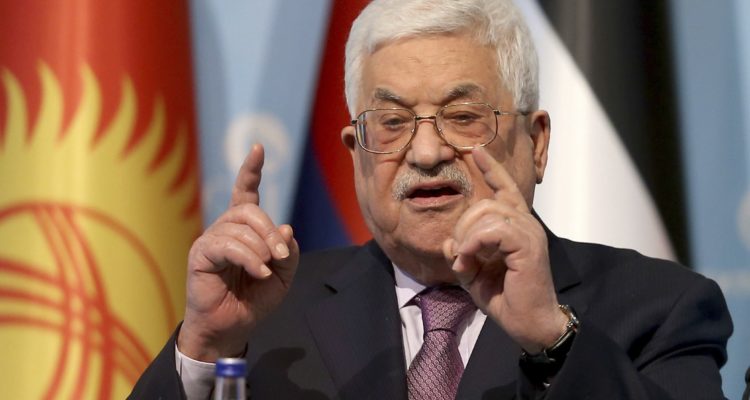
PA President Mahmoud Abbas (Onur Coban/Pool Photo via AP)

Why would the Palestinian leader make genuine peace with the Jews when the PA’s aspirations remain what they have always been, namely, the destruction of the Jewish state?

By: Daniel Krygier

Palestinian Authority (PA) President Mahmoud Abbas reportedly told the Fatah Revolutionary Council in Ramallah recently that he does not intend to end his life as a “traitor” by signing any agreement with the Jewish state that does not live up to Palestinian aspirations and demands. This was clearly a reference to the Trump administration’s peace plan, which is expected to be unveiled in the near future.

Briefly, Abbas’s statement illustrates why the Arab-Israeli conflict is perhaps the world’s most intractable conflict. In theory, it is easy to solve, but in reality virtually impossible under current circumstances. The reason is quite simple: Arab leaders like Mahmoud Abbas have incited their populations for decades against the very existence of Israel within any borders. Why would the Palestinian leader make genuine peace with the Jews when the PLO’s aspirations remain what they have always been, namely, the destruction of the Jewish state?

Many liberals in Israel and abroad have for years dismissed the PA’s hateful propaganda against Jews and Israel as “meaningless statements for internal consumption.” Self-appointed liberals also believe that, magically, peace can be achieved by Israeli concessions alone. This self-delusion is rooted in desperation and the refusal to recognize the vast cultural and mental gulf separating the Middle East from Western democracies. Abbas is at the same time instigator as well as a hostage of a culture of hatred against the Jewish state that does not leave any room for compromise.

The difference between Abbas and his predecessor, Yasser Arafat, is more in style than in content. Abbas has carefully cultivated an image of “moderation” in the international arena by claiming that he seeks the establishment of an Arab state along the 1967 ceasefire lines, with “East Jerusalem” as its capital. However, Abbas has himself admitted that he rejected the peace offer from former Israeli Prime Minister Ehud Olmert. This offer from 2008 gave Abbas everything the Palestinians say they want – in English: a state next to Israel with a capital in “East Jerusalem.” The problem is that nothing short of Israel’s destruction will satisfy Abbas’ despotic regime in Ramallah.

In 1979, Egyptian President Anwar Sadat became the first Arab leader to sign a peace agreement with Israel. Nearly 40 years later, the peace remains cold, and hatred against Israel and Jews is endemic in Egyptian society. From the point of view of the “Arab Street,” Sadat was a “traitor” for signing a peace deal with the Jews. The price for treason in the Arab world is usually death, and Sadat paid with his life for the Camp David peace agreement with the Jewish state.

Abbas is in no hurry to end his luxurious and internationally funded lifestyle for a signed paper with the Jews that would endanger his own life. As long as it is considered “treason” in Ramallah, Gaza and elsewhere to make peace with the Jewish state, the Arab-Israeli conflict will continue, and Israeli concessions will only make it worse.


Trump-Kim summit plan draws positive reactions from key players

March 9, 2018


By Matt Richardson, Brooke Singman | Fox News March 9, 2018

Source Link: Trump-Kim summit plan draws positive reactions from key players

{You have to ask yourself, what would the impact be on Iran in the event the Norks denuclearize? Personally, I believe it would pull the rug out from under them, especially when you consider the Norks took on the role of research and development years ago.

Something else to consider is this…Somehow, this seems to connect with Xi’s lifetime appointment as President. Coincidence? I don’t think so. Remember when Obama said to the Ruskies that I’ll have more flexibility after the elections? Well. Xi will no longer be subjected to those pesky ‘elections’. Just a thought, nothing more, nothing less. – LS}

The decision to meet with Kim Jong Un in the coming weeks was one that President Donald Trump made “himself,” U.S. Secretary of State Rex Tillerson said Friday, attributing the move to a “dramatic” change in posture by the North Korean leader.

“President Trump has said for some time that he was open to talks and he would willingly meet with Kim when conditions were right,” Tillserson said during a visit to the African nation of Djibouti. “And I think in the president’s judgment that time has arrived now.”

According to Tillerson, the U.S. has seen a shift in Kim from “not just willingness but really his desire for talks.”

Kim Jong Un talked about denuclearization with the South Korean Representatives, not just a freeze. Also, no missile testing by North Korea during this period of time. Great progress being made but sanctions will remain until an agreement is reached. Meeting being planned!
— Donald J. Trump (@realDonaldTrump) March 9, 2018

The news that Trump had accepted the North Korean leader’s invitation to meet was greeted positively Friday by officials in China, Russia and South Korea — three major players in efforts to resolve the ongoing dispute between the U.S. and North Korea over the Hermit Kingdom’s nuclear ambitions.

China’s foreign ministry said it hopes all parties to the dispute will “show their political courage” in restarting negotiations, and pledges its support in working toward that goal.

Russian Foreign Minister Sergey Lavrov was quoted by Russian state news agency Tass on Friday saying — during a visit to the Ethiopian capital Addis Ababa — that Russia considers the move by Trump and Kim to be “a step in the right direction.”

South Korean Foreign Minister Kang Kyung-wha said, during a visit to Hanoi, Vietnam, that her government was consulting with the U.S. on the planned summit — and hopes that if it does take place, “it’s a meaningful meeting with good outcome.”

News of the planned meeting between Trump and Kim, which the White House confirmed Thursday night, was a dramatic development after months of saber-rattling between the two world leaders.

Kim extended the invitation and the president agreed that the two would meet by May, South Korean National Security Adviser Chung Eui-yong announced at the White House.

“Kim Jong Un talked about denuclearization with the South Korean Representatives, not just a freeze,” Trump tweeted. “Also, no missile testing by North Korea during this period of time. Great progress being made but sanctions will remain until an agreement is reached. Meeting being planned!”

Trump, according to White House press secretary Sarah Sanders, “will accept the invitation to meet with Kim Jong Un at a place and time to be determined.” But, Sanders added, “in the meantime, all sanctions and maximum pressure must remain.”

Earlier Thursday, Chung announced that Trump would meet with Kim to “continue the goal of denuclearization.”

Kim “expressed his eagerness to meet President Trump as soon as possible,” Chung said. “President Trump appreciated the briefing and said he would meet Kim Jong Un by May to achieve permanent denuclearization.”

Kim, according to Chung, understands that joint military exercises between South Korea and the U.S. would continue. The North Korean leader, according to recent talks with Chung, also claimed to be “commited to denuclearization.”

“He (Kim) pledged that North Korea will refrain from any further nuclear missile tests,” Chung said, adding that Trump’s “leadership” and “maximum pressure” brought us “to this juncture.”

Chung said that “along with President Trump,” he is “optimistic of continuing a diplomatic process.” But he added that “the pressure will continue until North Korea matches its words with concrete actions.”

News of the willingness of Kim to meet with Trump follows recent high-profile talks between North Korea and South Korea.

Earlier Thursday, Trump announced that South Korea would be making a “major statement” about North Korea. Chung met at the White House earlier in the day with U.S. National Security Adviser H.R. McMaster.

Chung and other South Korean officials briefed the White House Thursday on a potential diplomatic opening with North Korea after a year of escalating tensions. Chung told reporters Tuesday that he had received a message from North Korea intended for the United States, but did not disclose what it was.

Trump and Kim have had a contentious relationship during the last year as both men dramatically increased the rhetoric against the other amid the backdrop of increased nuclear and missile testing by the North Korean regime.

In August Trump warned Kim that, if pressed, the U.S. would unleash “fire, fury and frankly power, the likes of which this world has never seen before.” At the time, the president argued that Kim had “been very threatening beyond a normal state,” adding that the regime “best not make any more threats to the United States.”

However, threats and counter-threats continued into 2018.

“The U.S. should know that the button for nuclear weapons is on my table,” Kim said during a Jan. 1 speech, according to a translation. “The entire area of the U.S. mainland is within our nuclear strike range,” he continued, adding that “the United States can never start a war against me and our country.”

The next day Trump hit back against Kim by claiming that the U.S. nuclear arsenal was more powerful. “North Korean Leader Kim Jong Un just stated that the ‘Nuclear Button is on his desk at all times,'” Trump tweeted. “Will someone from his depleted and food starved regime please inform him that I too have a Nuclear Button, but it is a much bigger & more powerful one than his, and my Button works!”

The last round of significant talks involving the U.S. and North Korea concluded in 2009. The so-called six-party talks, which involved the U.S., North Korea, South Korea, Japan, Russia and China, ended when North Korea walked out.