Authorities to probe Facebook activities after revelations that firm gained access to millions of users’ personal data.
Contact Editor
David Rosenberg, 22/03/18 17:12
Israeli investigators announced Thursday that they have launched a probe into the Facebook social media network, following reports that the personal information of tens of millions of users was compromised and transferred to a private consulting firm.
According to the allegations, in 2014, the UK-based firm Cambridge Analytica gained access to the personal data of some 50 million Facebook users, taking advantage of a loophole in the system which permitted a personality quiz application to gain access not only to the data of the 270,000 users who took the quiz, but all of their Facebook friends’ accounts as well.
The data had been sold to Cambridge Analytica by the author of the quiz, University of Cambridge academic Aleksandr Kogan.
Cambridge Analytica then used the data to engage in “micro-targeting” for clients, mining a wealth of personal information to determine which users are most receptive to particular messages. Among Cambridge Analytica’s clients following the acquisition of the Facebook user data was the Donald Trump presidential campaign.
The revelation has sparked a popular backlash against the social media giant, leading CEO Mark Zuckerberg to initiate an internal investigation into the matter.
“We will learn from this experience to secure our platform further and make our community safer for everyone going forward,” Zuckerberg wrote.
On Thursday, the Israeli Privacy Protection Authority announced they it had “informed Facebook today that it had opened an investigation into its activities, following the publications on the transfers of personal data from Facebook to Cambridge Analytica, and the possibility of other infringements of the privacy law regarding Israelis.
“According to the Israeli Privacy Law personal data may only be used to the purpose for which it was given, with the consent of the individual.
“Therefore, the authority will investigate whether personal data of Israeli citizens was illegally used in a way that infringes upon their right to privacy and the provisions of the Israeli Privacy Law.”
International Atomic Energy Agency must inspect the Qusayr site in western Syria as all signs point to it being a nuclear facility, Institute for Science and International Security warns • North Korea probably involved in construction, think tank says.
Eli Leon and Israel Hayom Staff
New facility may house equipment or materials associated with nuclear fuel fabrication and plutonium separation, report says
|Illutration: GettyImages
A Washington-based think tank said Wednesday that Syria may be building a new, underground nuclear facility, but stressed that as satellite images of the activity in the site’s suspected area are inconclusive, the purpose of the site remains unknown.
The Institute for Science and International Security issued its review just hours after Israel officially claimed the 2007 bombing of a suspected nuclear reactor in Al-Kubar, in the Deir ez-Zor region in eastern Syria.
In a statement on its website, the Institute for Science and International Security said that the Qusayr site in western Syria “warrants inspection by the International Atomic Energy Agency, even though accomplishing such inspections may have to wait until the Syrian conflict ends,” and warned that “any nuclear-related facility in Syria could involve considerable assistance from North Korea, given that Pyongyang provided extensive assistance in the construction of the Al-Kubar reactor.”
The review of the issue, penned by former IAEA official David Albright together with Sarah Burkhard, Allison Lach and Frank Pabian, said that the institute decided to “revisit a series of claims made in a 2015 Der Spiegel report regarding the Qusayr site in Syria,” and noted that Israel’s action in 2007 “serves to highlight once again the lack of accounting for Syria’s past nuclear weapons program and the location of any assets remaining from that program.
“This includes possibly tens of metric tons of uranium fuel and other equipment or materials associated with nuclear fuel fabrication and plutonium separation, that likely existed as key elements of the Al-Kubar reactor project.”
Available satellite images of the Qusayr site show three buildings that appear to be hiding underground. While the images do not provide any concrete information about the purpose of the site, it may hold nuclear or nuclear-related materials and equipment, or serve other military purposes.
The review said that building a nuclear reactor that is fully located underground “is not impossible,” and that an engineering challenge of this nature “would likely require secret, ongoing assistance from North Korea. Similarly, an enrichment plant would require extensive foreign assistance, likely from North Korea or possibly from Iran, since there is no available evidence of Syria buying the necessary equipment and materials from abroad.”
Understanding Pyongyang’s role in Syria’s pursuit of a nuclear program is extremely important as the United States weighs the prospects of negotiations with North Korea, the institute said.
n response to headlines in the Israeli media Wednesday acknowledging the 2007 airstrike that destroyed Syria’s nuclear reactor in Deir ez-Zor, after having kept quiet for over a decade, the Arab world, including Syria, was deafeningly silent.
Although the general consensus from day one has been that Israel carried out the aerial assault that knocked out Syria’s clandestine nuclear reactor, developed with North Korean assistance, Israel waited until Wednesday to confirm the strike.
Damascus’ silence, at least, is completely understandable. Syrian President Bashar Assad has much more pressing matters on his agenda than media hype in Israel over something everyone already knew – he is a little too busy waging a war of survival, rather successfully, against his countrymen who have rebelled against him. In addition, the nuclear reactor episode is no source of pride for the Syrian regime, specifically not the way Assad’s nuclear adventure ended and his decision to refrain from leveling any kind of response to the Israeli airstrike.
Moreover, the Israeli confirmation included no new information, aside from petty squabbling over credit – namely between then-Defense Minister Ehud Barak and then-Prime Minister Ehud Olmert and the heads of Military Intelligence and the Mossad. Other than that, the information was widely reported over a decade ago and attributed to reliable American sources. At most, the information that Israel made public on Wednesday will be used by Syrian intelligence agents or by Iran, who will pore over the previously classified material in search of details to help them prepare for the next clash.
The few Arab networks that did inform their viewers about the Israeli media frenzy, were noticeably overjoyed at Assad’s misfortune. They gloated at the humiliation of the Syrian leader who used chemical weapons on his own people but was too intimidated to face Israel.
Alongside the gloating, there was also palatable relief in the region’s capitals at the thought that Assad was kept from developing nuclear weapons. Is there any doubt regarding his willingness to use nuclear weapons on his own people or against his opponents in the region?
But the silence in Damascus and the Arab networks low profile regarding the Israeli news in no way suggests that the Arab world isn’t closely monitoring Israel’s every move. Today, thanks to social media, this task is easier than ever before.
Even the Arabs who believe in far-fetched conspiracy theories interpreted the timing of Israel’s publication as a clear and simple message to Iran: that Jerusalem is determined, just as it was in the past, to nip any security threat in the bud. This message is also addressed to the many other hostile Arab states.
Eyal Zisser is a lecturer in the Middle East History Department at Tel Aviv University.
Ahead of their White House talks on Tuesday, March 20, President Donald Trump and the Saudi Crown Prince agree on a new Supreme Committee to coordinate military and diplomatic efforts for curbing Iranian expansion. The United Arab Emirate is the third member. This committee, to focus on coordinated operations, will consist of the three governments’ national security advisers. For final decisions, they will call in President Trump, Saudi Crown Prince Muhammed bin Salman (MbS) and the UAE Emir Sheikh Muhammed bin Zayed Al Nahyan (MbZ). White House sources reported that the new group would be ceremonially launched in Washington this week. The Emirates national security adviser Sheikh Tahnoon bin Zayed Al Nahyan will come over to join the event. The emir himself is expected in Washington soon.
US and Saudi officials confirmed Tuesday that the new Supreme Committee’s mission would be to execute the goal shared by the three governments, namely, to stall Iran’s expansionist designs across the oil-rich Gulf and the Middle East.
DEBKAfile’s sources report that this move is consistent with the decision which President Trump is widely believed to have reached for taking the United States out of the 2015 nuclear with Iran. Intensive discussions are taking place in the White house on timing; whether Trump should make the announcement when the next deadline for re-certificating the accord comes up in mid-May or jump the gun in March or early April. The US, the Saudis and the UAE are meanwhile checking to make sure that their military assets are in sync and ready for potential repercussions.
The new Supreme Committee will fill the cohesion void left in the Gulf Cooperation Council by the refusal of two of its members, Qatar and Oman, to go along with the tough policies pursued by Saudi Arabia and the UAE since MbS took over the reins of government in Riyadh three years ago.
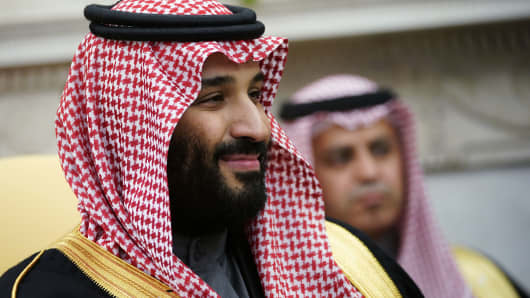
Saudi Arabia’s Crown Prince Mohammed bin Salman, nicknamed MBS, has rapidly consolidated power within the kingdom.
With his position secured and his rivals vanquished, he is moving on to his next target: Iran.
With hostilities rising, war is seeming more inevitable, which increases the likelihood of rising oil prices.
The new face of Saudi Arabia makes his Washington D.C. debut this week, and you better take a good look because, at 32-years old, he will very likely be with us for a while.
Saudi Arabia’s Crown Prince Mohammed bin Salman, nicknamed MBS, has rapidly consolidated power within the kingdom. He iced out his rivals by charging many of them with corruption, extracting forfeitures of great sums of wealth that the Saudi government claims were ill-gotten.
With his position secured and his rivals vanquished, he is moving on to his next target: Iran.
The topic of Iran is a key agenda item for his meeting with President Trump on Tuesday. President Trump should find himself well-versed on the topic, which he discussed at-length with Israel’s Prime Minister Netanyahu, earlier this month.
Iran is serving as a unifying force among its Middle East neighbors. Both Israel and Saudi Arabia see Iran as a grave threat, to such a degree that the two countries, once fierce enemies, are now sharing intelligence and cooperating in other ways. Netanyahu has alluded to this budding friendship by noting that Israel “has friends in the Middle East.”
MBS compared Iran’s Ayatollah Khamenei to Adolf Hitler in an interview over the weekend, and he termed the Iran nuclear deal as a “flawed agreement” echoing President Trump’s position. President Trump’s nominee for Secretary of State is expected to push hard to see the U.S. terminate the Iran nuclear deal, which had been favored by former Secretary of State Tillerson.
We are now dealing with a much more forward-leaning Saudi Arabia that is also seeking to modernize.
But, has the leopard really changed its spots?
The recent corruption purge took on a hint of irony, when it was revealed recently that MBS himself has some extravagant tastes that include a palace in Versailles, France, and the purchase of the most expensive art work in history, Da Vinci’s depiction of Jesus, for $450 million, among other goodies.
MBS is being championed, in some circles, as standing against radical Islam, but he is also standing as Sunni Muslin against Islam’s other faction, the Shia branch, which Iranians, mostly, adhere to, and there is nothing new about that.
There has been a proxy war raging between Iran and Saudi Arabia in Yemen and Syria. The Saudis recently trotted out an unexploded rocket that was launched from Yemen into the kingdom that bore Iranian markings. Saudi air sorties regularly bomb Iran-backed Houthi rebels in Yemen.
The situation vis-à-vis Iran is escalating. A second “coalition of the willing,” the term used to describe allies in the second U.S. war with Iraq, may be forming to take on Iran more directly, and the roster looks to include Saudi Arabia, U.A.E, Israel, and the United States. Look for triparty agreement on Iran among the U.S., Saudi Arabia, and U.A.E. to be announced this week, as a prelude to a broader grouping.
Saudi Arabia used to be a quiet giant in the Middle East, more than happy to be the world’s largest source of oil, minting petrodollars and spreading the wealth, internally, to keep the powers that be in charge and the populace placated.
MBS is making it clear that is no longer the case. Get ready to hear Saudi Arabia roar, with all that brings with it.
Saudi Arabia will look to use its power and influence to remake the Middle East in its image. The kingdom will not sit idly by and allow Iran to gain de facto control of Iraq, which has parliamentarian elections in May. Iran is actively trying to engineer the return of former Prime Minister Maliki.
The new Saudi doctrine is also being seen in the form of the blockade of Qatar, which several other Gulf nations have joined in.
It does appear that policies and regional ambitions of Saudi Arabia and Iran are putting them on a collision course that will result in direct hostilities, and Saudi Arabia has partners willing to assist it with such a fight, that coalition of the willing.
The rhetoric and apparent intentions of MBS have reinflated the risk premium in oil prices. If it keeps up and if the U.S. withdrawal from the Iran nuclear deal becomes a reality, WTI oil prices will head higher, upwards of $70-plus. Absent these tensions, the prices is more appropriately in the low $50 area.
Israel will not allow development of enemy capabilities that threaten its very existence. That was our message in 2007 and it is our message now, says Lt. Gen. Gadi Eizenkot • IAF chief: Strike was one of the most important decisions ever taken by Israel.
Israel Hayom Staff
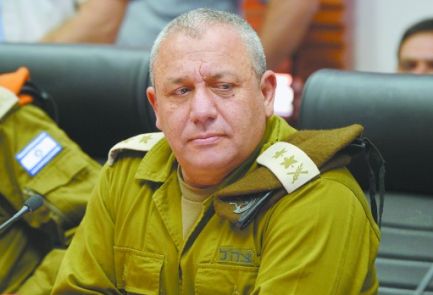
IDF Chief of Staff Lt. Gen. Gadi Eizenkot
|Photo: Yossi Zeliger
The message from the strike on the Syrian nuclear reactor is clear: Israel will not tolerate existential threats, IDF Chief of Staff Lt. Gen. Gadi Eizenkot said Wednesday, after the Israeli military confirmed it carried out the 2007 airstrike that destroyed a nuclear reactor b eing built in eastern Syria.
Although Israel was widely believed to have been behind the airstrike on the Deir ez-Zor facility on Sept. 6, 2007, it has never before commented publicly on it.
Intelligence Minister Yisrael Katz suggested Wednesday that the timing of the revelation meant to send a message to Iran.
“The operation and its success made clear that Israel will never allow nuclear weaponry to be in the hands of those who threaten its existence – Syria then, and Iran today,” he wrote on Twitter.
A statement by Eizenkot said, “The message from the attack on the nuclear reactor in 2007 is that the State of Israel will not allow the development of capabilities that threaten its very existence. That was our message in 2007, this remains our message today, and it will remain our message to the enemy in the future.”
The chief of staff described the attack as “the most significant strike in Syria since the [1973] Yom Kippur War.”
Eizenkot, who was GOC Northen Command at the time, recalled learning of the reactor’s existence from a Military Intelligence official.
“I understood this was an unusual matter because he didn’t want to discuss it over the phone. When we met, he laid out the intelligence and all the details, the big picture, if you will, and I knew this was a significant event,” Eizenkot said.
“As a result, we adjusted the training program in the Northern Command. It was agreed that the only people who would be looped in would be me and the command’s intelligence officer, while the official story as far as the other senior commanders are concerned would be ‘improving war readiness.’
“In the summer of 2007, I briefed the senior commanders. I gave them a general overview of the intelligence on hand – nothing specific about the target and its nature – but I told them that there was going to be a very significant strike in the next 24 to 48 hours, and that there was a chance, albeit a low one, that it could lead to war.”
Eizenkot stressed that “the message was that the IDF had to be prepared for rapid escalation that could result in war. The past concept, that there is a ‘window’ during which the military can catch up – I don’t think that exists anymore in our neighborhood.
“Israel has been blessed with an outstanding intelligence community. The integration of forces is a multiplier of power with respect to our capabilities. This was clear then and I think that it has intensified since.
“There is always room for improvement, but this is a great example of intelligence cooperation that starts in one organization, moves to another organization and demonstrate an effort by the entire intelligence community to provide the military with the best intelligence in order to enable an optimal execution of the mission,” he said.
Gideon Markowicz
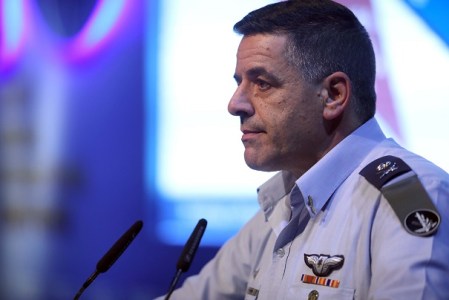
Israeli Air Force chief Maj. Gen. Amikam Norkin
Israeli Air Force chief Maj. Gen. Amikam Norkin said the current turmoil in Syria has further vindicated the strike, particularly since the reactor was in an area later captured by Islamic State militants.
“Marking 10 years since that operation and looking at the Middle East, we fully understand how much it has affected reality,” he said.
“Imagine what situation we would be in today if there was a nuclear reactor in Syria. In historic hindsight, I think Israel’s decision to destroy the reactor is one of the most important decisions taken here in the last 70 years.”
Norkin said the operation “began as a mission that could have dragged Israel into war, and culminated in a low-signature method of action that expressed the power and precision of the air force.
“This was a complex nighttime mission that required the type of courage and creativity we weren’t accustomed to before, especially considering that we were using fight jets that were only declared operational a few years prior. All these things combined – the cooperation within the IDF, the advanced technology used by the IAF at the time, the skill of the fighters and the decisions made within the military – led to a situation in which, at the moment of truth, it was possible for us to receive the green light and carry out the strike.”
Norkin said that “we focused our work on two axes: preparing all the scenarios for the strike, and preparing the IAF for a potential subsequent war. Only a handful of individuals were privy to the actual intelligence and many others were part of the preparation, but had no knowledge of the target. In each squadron, there was only one pilot who was the point man – the rest of the crews learned of the target only a few hours before the operation.
“Some of the fighters that led this mission currently man high-ranking positions in the military and air force, which attests to the quality of these individuals. To a certain extent, this was a double journey in terms of the inherent secrecy and the sense of national responsibility,” he said.
Perhaps the most dramatic Saudi reform is the one that has received virtually no attention in America. Saudi Crown Prince Mohammed bin Salman (MBS) has led an effort to sweep out the Muslim Brotherhood from teaching and leadership positions in elementary, middle and high schools as well as colleges and universities.
MBS is kicking a dragon and he knows it.
The stakes of his fight with the Brotherhood could not be higher. If MBS succeeds, Saudi Arabia returns to pre-1979 roots, with movie theaters, women in the workplace, and features of a modern developing country. If MBS fails, he will be killed by the Brotherhood and Saudi Arabia will become more repressive than ever.
The global stakes of MBS’s internal fight with the Brotherhood are large, too. If the crown price wins, nearly all Saudi funding for violent Islamic radicals ends — and if he dies, it grows to new heights.
His “Vision 2030” is the biggest planned change in any country since Turkey’s Ataturk or Singapore’s Lee Kuan Yew. With America’s encouragement, Saudi Arabia could lead a regional transformation that would be truly historic.
Saudi Arabia, with the visit of the Saudi Crown Prince Mohammed bin Salman to the United States this week, opens a new front in its war with Iran.
The visit is a collection of firsts. It is the first trip by Prince Mohammed bin Salman — known universally as “MBS” — to the U.S. since becoming the heir to the oil kingdom’s throne in June 2017. (President Trump’s first presidential trip to the Middle East began with a stop in Saudi Arabia.) More importantly, it is the first time a senior Saudi official, let alone a ruling royal, will venture outside the U.S. capital to make official visits to Wall Street, Hollywood and Silicon Valley. Never before has a crown prince — especially one who runs Saudi Arabia’s government on a daily basis — come to America’s financial and cultural capitals to do business. Indeed, MBS is hoping to drum up support for his plan to offer five percent of ARAMCO, the Saudi oil producer, to Western investors as well as to make investments in software upstarts and media empires. This is a Saudi royal who sees no division between commerce and statecraft, between diplomacy and investment.
President Donald Trump (right) shakes hands with Saudi Crown Prince Mohammed bin Salman at the White House on March 20, 2018, in Washington, D.C. (Photo by Kevin Dietsch-Pool/Getty Images)
For Americans, the three most important items on MBS’s agenda are Saudi Arabia’s internal reforms, its new kinetic role in the war on terror from Yemen to Syria and its evolving relationship with Israel.
While much has been made of MBS’s opening “drivers ed” schools for women (which quickly attracted some 70,000 students) as part of the kingdom’s June 2018 move to allow women to drive, the domestic reforms have been far more rapid and sweeping than the conservative kingdom has ever seen.
Perhaps the most dramatic reform is the one that has received virtually no attention in America. The crown prince has led an effort to sweep out the Muslim Brotherhood from teaching and leadership positions in elementary, middle and high schools as well as colleges and universities. The Brotherhood, founded in Egypt in 1928, has been the birthplace of nearly every radical Islamist group in the past century — from Egyptian Islamic Jihad to al Qaeda. The Brotherhood came to power in Cairo, following the departure of Hosni Mubarak, and only lost its grip due to a Saudi-funded coup. Inside Saudi Arabia, the organization’s intellectual and financial influence is vast. It has shaped the thought of at least two generations of Saudis, and it counts many allies among the kingdom’s 15,000 princes and even more among its 20,000 major clerics. It also has a literal army of armed supporters. MBS is kicking a dragon and he knows it.
The stakes of his fight with the Brotherhood could not be higher. If MBS succeeds, Saudi Arabia returns to pre-1979 roots, with movie theaters, women in the workplace, and features of a modern developing country. If he fails, he will be killed by the Brotherhood and Saudi Arabia will become more repressive than ever. The global stakes of MBS’s internal fight with the Brotherhood are large, too. If the crown price wins, nearly all Saudi funding for violent Islamic radicals ends — and if he dies, it grows to new heights.
MBS is betting his life that he can reform his country and offer it a future beyond its dangerous dependency on oil. He wants to build 18 nuclear power plants over the next two decades, thereby safeguarding his nation’s electricity prices from the rollercoaster of world oil prices. He wants to diversify the economy, allowing men and women to leave their subsidized and static lives for new roles as professionals, executives and entrepreneurs. His “Vision 2030” is the biggest planned change in any country since Turkey’s Ataturk or Singapore’s Lee Kuan Yew. And Saudi Arabia is larger in terms of both people and land than 1920s Turkey or 1960s Singapore. If he succeeds, his achievement will be studied for centuries. America should get behind MBS’s bold vision — it is the best roadmap for regional peace and security as well as domestic modernization.
Regarding the war on terror, Saudi Arabia has been one of America’s most steadfast allies. Since the September 11 attacks, it has killed or captured hundreds of al Qaeda operatives and provided intelligence on thousands more. It has cracked down hard on sheikhs who once financed terror outfits, seized bank accounts and jailed malefactors.
America would also do well to support Saudi Arabia’s peaceful attempts to reform its neighbor, Qatar.
Finally, MBS’s visit allows the Saudi royal to talk about his nation’s increasingly warm relationship with Israel. The two nations have a common enemy (Iran) and a shared interest in thwarting terrorism. Together with MBS’s apparently close friendship with Jared Kushner, Trump’s son-in-law, a new and less confrontational relationship with Israel could pay dividends for peace.
America should welcome MBS. With America’s encouragement, Saudi Arabia could lead a regional transformation that would be truly historic. Missing this opportunity to engage would be beyond tragic.
Ahmed Charai is Chairman and CEO of Global Media Holding. He sits on the Board of Directors of The Atlantic Council in Washington and International Councilors at TheCenter for Strategic and International Studies. He is also Board of Trustees of theThe Foreign Policy Research Institute in Philadelphia, a member ofThe National Interest‘s Advisory Council and a member of the Advisory Council of Gatestone Institute in New York.
Israel lifted the censorship gag on details surrounding the daring operation that destroyed a Syrian nuclear threat.
By: Aryeh Savir, World Israel News
An IAF F-15 (IAF)
A decade after the crucial secret operation, Israel officially acknowledged that it attacked and destroyed the Al-Kibar nuclear facility in Syria, which was in its last stages of construction at the time.
During the night between September 5 and 6, 2007, Israel secretly bombed the nuclear reactor, in accordance with the Begin Doctrine, which states that no Israeli adversary in the Middle East would be allowed to acquire a nuclear weapon.
In a secret mission known as operation “Out Of The Box,” authorized by then-Prime Minister Ehud Olmert, eight Israeli Air Force (IAF) aircraft flew along the Syrian-Turkish border shortly before 1 a.m. and destroyed the Syrian nuclear facility.
The Syrian nuclear project operated under a heavy cloak of secrecy for about six years prior to its destruction. The Al Kibar reactor was situated 900 yards from the Euphrates River and halfway between the borders with Turkey and Iraq, far from Syria’s biggest cities, in the Deir ez-Zor region, 280 miles northeast of Damascus.
For two years prior to the attack, officials in the IDF Military Intelligence Directorate were monitoring the Syrian nuclear project. Their intelligence suggested that the facility would become active toward the end of 2007, which prompted the IDF to initiate an attack.
In March 2007, the Mossad – Israel’s national intelligence agency – raided the home of the head of Syria’s atomic energy commission in Vienna, where they discovered conclusive information about the reactor.
The information recovered by the Mossad operatives included some three dozen color photographs taken from inside the Syrian building, indicating that it was a top-secret plutonium nuclear reactor. The photographs obtained by the Mossad also showed workers from North Korea at the site. The sole purpose of this kind of plutonium reactor, in the Mossad’s analysis, was to produce an atomic bomb.
Olmert: With or without US support
The attack was launched after intense discussions between the American administration, under the leadership of President George W. Bush, and the Israelis.
At a meeting in Washington on June 19 that year, Olmert told Bush that if the US did not destroy the reactor, Israel would do it, even if it lacked US support. Finally, the US declined to participate but did not prevent the Israelis from carrying through with the raid.
The IAF had very little time to prepare for the attack or to account for possible contingencies, such as retaliation by the Syrian forces. Once the attack plan was ready, however, it was possible to execute it within 12 hours from the moment the order would be given.
Prior to the attack, then-IAF Commander, Maj. Gen. (Res’) Eliezer Shkedi personally addressed the combat crews, feeling it was of operational significance, in order to emphasize the transition from routine security measures to a strategic operation while stressing the pilots’ responsibility. At around 7 p.m., hours before the attack commenced, the target was revealed to the aircrews.
“Combatants, today you will be sent to participate in a mission of great importance to the State of Israel and the Jewish people. The mission is to destroy the target and disengage without aircraft losses, as stealthily as possible. The mission is kept under the highest secrecy, both before and after execution, until further notice. I trust you, believe in you, and am convinced of your capabilities. Good luck, Eliezer Shkedi”
The attack
Shortly after midnight, Olmert, Defense Minister Ehud Barak, Minister of Foreign Affairs Tzipi Livni, Chief of General Staff Gabi Ashkenazi, the deputy Chief of the General Staff, the head of the Military Intelligence Directorate and the head of the Operations Directorate assembled in the aerial war room, the Bor, in the heart of Tel Aviv. From there, they followed all aircrafts’ aerial locations and the communication systems.
The “Ra’am” (F-15I) formation that led the assault took off from Hatzerim Air Force Base in the south at around 10 p.m. The second formation left two minutes later, joined by the rest of the “Sufa” (F-16I) fighter jets, and they refueled together in the air. The aircraft took off in radio silence.
The jets flew low to remain undetected. The entire operation took four hours. At around midnight, the leading formation had reached the necessary distance from the target and began ascending in preparation for the attack maneuver. The ordnance drop occurred minutes later. The aircraft broke contact, and the next formations followed in order to attack. After all the munitions were dropped, the final “Sufa” fighter pilot radioed “Arizona from all of us,” meaning that all of the bombs hit their target and exploded as planned.
The Military Intelligence Directorate estimated that the nuclear facility was damaged beyond repair. As the IDF was preparing for Syrian retaliation, it decided that information about the operation should not be disclosed to the general public at the time.
The operation was deemed a success. The nuclear facility was destroyed and an escalation in the region was prevented.
Only a few years later, the Islamic State (ISIS) terror group captured the Deir ez-Zor region. One can only imagine how much havoc they could have wreaked with a nuclear facility in their hands. The scenarios range from an existential threat to the Jewish state to the disruption of the area’s strategic balance.
‘One of the best decisions made in Israel’
The destruction of the Syrian reactor was an historic operation of great significance for the State of Israel and the Jewish People and one of the most important military operations in the IAF’s history.
“When faced with today’s reality, the decision to destroy the reactor is one of the best decisions made in Israel over the past 70 years”, declared Lt. Gen. Amikam Norkin, current commander of the IAF. “The principles according to which the IAF prepared for the attack are also the IAF’s principles today. They help the air force maintain its relevance.”
Two months after the operation, Olmert concluded: “There were many disputes regarding all sorts of alternatives, but in the end, we all know one thing – the strategic force, which makes the difference in Israel’s international strength, is the aerial force. Our aerial force will be the determining factor in all possible confrontations that we will possibly – hopefully not – deal with in the future.”
Lifting of censorship coincided with the publication of Olmert’s memoirs and follows a petition to the High Court of Justice by Israel’s Channel 10, which is now permitted to air an interview with Olmert and the then-Mossad chief, the late Meir Dagan, on the bombing of the reactor.
Current Chief of Staff, Lt.-Gen. Gadi Eisenkot, OC Northern Command at the time of the operation, said the message that should be taken from the incident is that “Israel will never accept an existential threat against it. That was the message in 2007, and that is the message to our enemies in both the near and distant future.”
{I wouldn’t recommend engaging in a war of words with DJT. – LS}
WASHINGTON — The White House forcefully pushed back on Monday night against a fresh round of insults from Palestinian Authority President Mahmoud Abbas hurled at a senior member of the Trump administration, after remaining quiet for months through his attacks following their decision to recognize Jerusalem as Israel’s capital.
Since that December policy move, Abbas and his aides have repeatedly attacked President Donald Trump and his senior staff. Administration officials have declined to engage. But Abbas’ decision on Monday to target the US ambassador to Israel, David Friedman, as a “son of a dog” and a vestige of the settler movement, was seen in the West Wing as too extreme to ignore.
“The time has come for President Abbas to choose between hateful rhetoric and concrete and practical efforts to improve the quality of life of his people and lead them to peace and prosperity,” said Jason Greenblatt, the president’s special representative for international negotiations. “Notwithstanding his highly inappropriate insults against members of the Trump administration, the latest iteration being his insult of my good friend and colleague Ambassador Friedman, we are committed to the Palestinian people and to the changes that must be implemented for peaceful coexistence.”
“We are finalizing our plan for peace,” he added, “and we will advance it when circumstances are right.”
Heather Nauert, spokesperson and acting undersecretary for public diplomacy, called Abbas’ comments “outrageous and unhelpful.”
“We urge the Palestinian Authority to focus its efforts on improving the lives of the Palestinian people and advancing the cause of peace,” Nauert said. “The administration remains fully committed to those goals.”
Over the last three months, Abbas has said that Trump’s decision to recognize Jerusalem as Israel’s capital and move the US embassy there from Tel Aviv as the “slap of the century” – a move that, in Abbas’ view, disqualifies him from any role in future peace talks between the PA and Israel. His aides have dismissed Greenblatt as a “Zionist,” told US ambassador Nikki Haley to “shut up,” and have repeatedly criticized Friedman over his sympathy for the settler movement.
In that time, Trump administration officials have accepted the rhetoric as an understandable venting of anger in light of the Jerusalem moves. But Greenblatt’s new remarks suggest they have reached their limit of tolerance, as they put final touches on the president’s peace plan.
The plan “won’t be loved by either side, and it won’t be hated by either side,” Haley told a Chicago university last month.
The administration has declined to say when details of the plan will be published.
Anna Campbell believed to be the first British woman to die alongside Kurdish forces in Syria
A British woman fighting alongside Kurdish forces in Afrin, northern Syria, has been killed, her Kurdish commanders have said.
Anna Campbell, from Lewes, East Sussex, was volunteering with the US-backed Kurdish Women’s Protection Units (YPJ) – the all-female affiliate army of the People’s Protection Units (YPG) – in the besieged city of Afrin when the convoy she was travelling in was struck by a Turkish missile on 16 March.
Sources say the 26-year-old initially travelled to Syria to join the Kurdish struggle against Islamic State, but begged her Kurdish commanders to send her to the Afrin front after Turkey launched a ground and air offensive to oust Kurdish forces from its borderlands in January.
“They refused at first, but she was adamant, and even dyed her blonde hair black so as to appear less conspicuous as a westerner,” a YPJ source told the Guardian.
In a statement to the Guardian on Sunday, YPJ commander and spokesperson Nesrin Abdullah said: “[Campbell’s] martyrdom is a great loss to us because with her international soul, her revolutionary spirit, which demonstrated the power of women, she expressed her will in all her actions … On behalf of the Women’s Defence Units YPJ, we express our deepest condolences to [her] family and we promise to follow the path she took up. We will represent her in the entirety of our struggles.”
Her father, Dirk Campbell, described her as a “beautiful and loving daughter” who “would go to any lengths to create the world that she believed in”.
“Anna was very idealistic, very serious, very wholehearted and wanted to create a better world. She wasn’t fighting when she died, she was engaged in a defensive action against the Turkish incursion.”
In recent months Turkey has shifted its focus from fighting Isis in Syria to preventing the YPG from establishing a foothold along its border, arguing that the YPG is linked to its own insurgent group, the Kurdistan Workers’ party (PKK). The US, EU and Britain, however, do not consider the YPG a terrorist group, which it has supported in its fight against Isis since 2014.
Dirk Campbell said his daughter had dedicated her life to the fight against “unjust power and privilege”.
He said she was a committed human rights and environmental campaigner who would “put herself on the line for what she believed in”.
“It seems a small thing, but I remember when she was 11, she protected a bumblebee from being tormented by other kids at school,” he recalled. “She did it with such strength of will that they ridiculed her. But she didn’t care. She was absolutely single-minded when it came to what she believed in, and she believed what Turkey is doing is wrong.”
He said his daughter’s passion for campaigning was inspired by her mother, Adrienne, who was well-known on the south of England’s activism scene and died of breast cancer five years ago. “Anna was a credit to her mum, my wife, and was carrying on a lot of the kind of work that she was doing,” he added.
Campbell told her father of her plans to travel to northern Syria last May after she heard about the grassroots feminist and socialist revolution that has swept Rojava (the semi-autonomous Kurdish region of northern Syria and heartland of the YPG/J) and inspired the Kurds’ fight against Isis.
“I didn’t try to stop her,” Mr Campbell said. “Because I knew, once she had decided to do something, she was unstoppable. That’s why she went to Rojava: to help build a world of equality and democracy where everyone has a right to representation. When she told me she was going I joked: ‘It’s been nice knowing you.’ I just knew it might be the last time I’d see her.”
Upon arrival in Rojava, Campbell completed the YPJ’s mandatory month-long military training course, in which new recruits learn basic Kurdish, weaponry and battlefield tactics on top of a crash course in the egalitarian and feminist ideology of the YPG/J, and was assigned to an infantry division, comprising a mix of Kurdish and international fighters. There she was given the nom-de-guerre Helîn Qerecox and sent to the front.
YPJ sources said she spent her first months in the country fighting in Deir ez-Zor, Isis’s last major stronghold and scene of the jihadist group’s bitter last stand. But with Isis now on the brink of defeat, foreign fighters within Kurdish ranks have faced a choice: return home or remain in Syria to help the YPG repel Turkey’s attack.
“After the initial attacks on Afrin, comrade Helîn insisted on joining the operation to defend Afrin,” said Abdullah. “Before leaving, she had already received her military training, and, although we wanted to protect her and did not agree with her decision … she incessantly insisted on her wish to leave for Afrin. She even gave us a condition: ‘Either I will go home and abandon the life as a revolutionary or you send me to Afrin. But I would never leave the revolution, so I will go to Afrin’.”
She added: “For us, as the YPJ, comrade Helîn will always be a symbol as a pioneering internationalist woman. We will live up to her hope and beliefs. We will forever pursue her aim to struggle for women, for oppressed communities.”
Mark Campbell, activist and co-chair of the Kurdistan Solidarity Campaign, added: “Anna, by all accounts, was taken deep into the heart of the Kurdish people as she stood side by side with them in their darkest hour. Our thoughts and condolences are with Anna’s family and friends as this time.”
Campbell is believed to be the eighth British citizen killed while serving with Kurdish forces in Syria.



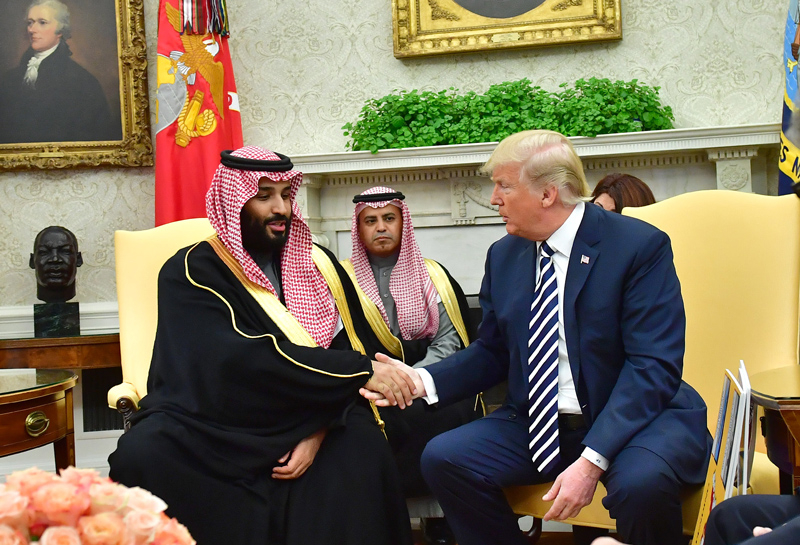 President Donald Trump (right) shakes hands with Saudi Crown Prince Mohammed bin Salman at the White House on March 20, 2018, in Washington, D.C. (Photo by Kevin Dietsch-Pool/Getty Images)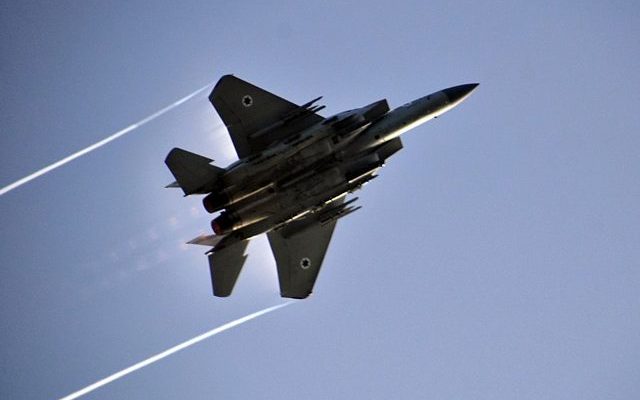






 anneinpt
 artaxes
 danmillerinpanama
 davidking1530
 Peter Hofman
 Joseph Wouk
 Peter
Peter Louisiana Steve
 WarSclerotic
Recent Comments