Archive for March 21, 2018

Crown Prince Mohammed bin Salman is moving on to his next target: Iran

March 21, 2018

John Kilduff Published 2:02 PM ET Tue, 20 March 2018 via CNBC

Source Link: Crown Prince Mohammed bin Salman is moving on to his next target

{A good time to buy Exxon stock, IMHO. – LS}

  • Saudi Arabia’s Crown Prince Mohammed bin Salman, nicknamed MBS, has rapidly consolidated power within the kingdom.
  • With his position secured and his rivals vanquished, he is moving on to his next target: Iran.
  • With hostilities rising, war is seeming more inevitable, which increases the likelihood of rising oil prices.

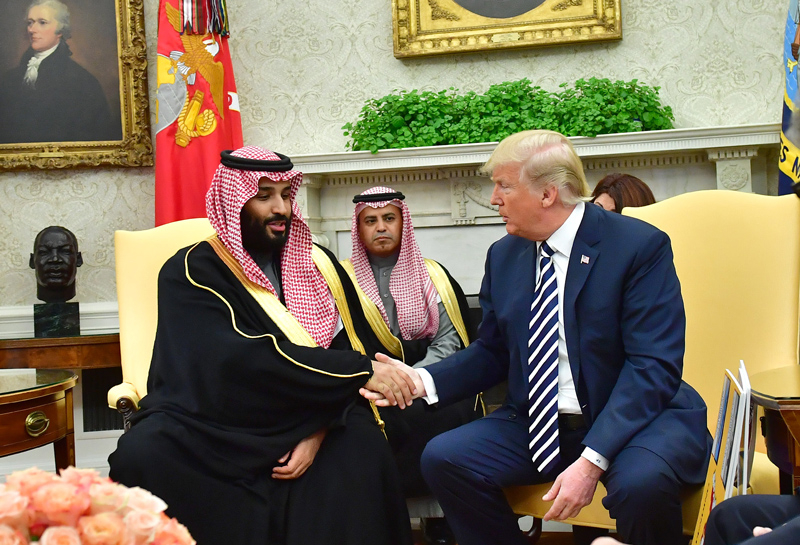
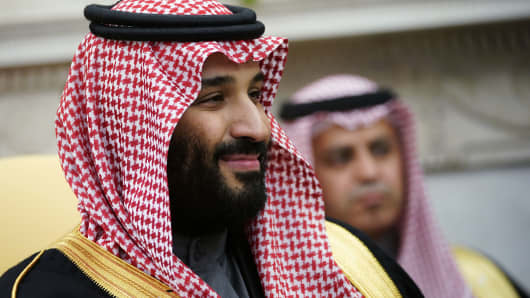
The new face of Saudi Arabia makes his Washington D.C. debut this week, and you better take a good look because, at 32-years old, he will very likely be with us for a while.

Saudi Arabia’s Crown Prince Mohammed bin Salman, nicknamed MBS, has rapidly consolidated power within the kingdom. He iced out his rivals by charging many of them with corruption, extracting forfeitures of great sums of wealth that the Saudi government claims were ill-gotten.

With his position secured and his rivals vanquished, he is moving on to his next target: Iran.

The topic of Iran is a key agenda item for his meeting with President Trump on Tuesday. President Trump should find himself well-versed on the topic, which he discussed at-length with Israel’s Prime Minister Netanyahu, earlier this month.

Iran is serving as a unifying force among its Middle East neighbors. Both Israel and Saudi Arabia see Iran as a grave threat, to such a degree that the two countries, once fierce enemies, are now sharing intelligence and cooperating in other ways. Netanyahu has alluded to this budding friendship by noting that Israel “has friends in the Middle East.”

MBS compared Iran’s Ayatollah Khamenei to Adolf Hitler in an interview over the weekend, and he termed the Iran nuclear deal as a “flawed agreement” echoing President Trump’s position. President Trump’s nominee for Secretary of State is expected to push hard to see the U.S. terminate the Iran nuclear deal, which had been favored by former Secretary of State Tillerson.

We are now dealing with a much more forward-leaning Saudi Arabia that is also seeking to modernize.

But, has the leopard really changed its spots?

The recent corruption purge took on a hint of irony, when it was revealed recently that MBS himself has some extravagant tastes that include a palace in Versailles, France, and the purchase of the most expensive art work in history, Da Vinci’s depiction of Jesus, for $450 million, among other goodies.

MBS is being championed, in some circles, as standing against radical Islam, but he is also standing as Sunni Muslin against Islam’s other faction, the Shia branch, which Iranians, mostly, adhere to, and there is nothing new about that.

There has been a proxy war raging between Iran and Saudi Arabia in Yemen and Syria. The Saudis recently trotted out an unexploded rocket that was launched from Yemen into the kingdom that bore Iranian markings. Saudi air sorties regularly bomb Iran-backed Houthi rebels in Yemen.

The situation vis-à-vis Iran is escalating. A second “coalition of the willing,” the term used to describe allies in the second U.S. war with Iraq, may be forming to take on Iran more directly, and the roster looks to include Saudi Arabia, U.A.E, Israel, and the United States. Look for triparty agreement on Iran among the U.S., Saudi Arabia, and U.A.E. to be announced this week, as a prelude to a broader grouping.

Saudi Arabia used to be a quiet giant in the Middle East, more than happy to be the world’s largest source of oil, minting petrodollars and spreading the wealth, internally, to keep the powers that be in charge and the populace placated.

MBS is making it clear that is no longer the case. Get ready to hear Saudi Arabia roar, with all that brings with it.

Saudi Arabia will look to use its power and influence to remake the Middle East in its image. The kingdom will not sit idly by and allow Iran to gain de facto control of Iraq, which has parliamentarian elections in May. Iran is actively trying to engineer the return of former Prime Minister Maliki.

The new Saudi doctrine is also being seen in the form of the blockade of Qatar, which several other Gulf nations have joined in.

It does appear that policies and regional ambitions of Saudi Arabia and Iran are putting them on a collision course that will result in direct hostilities, and Saudi Arabia has partners willing to assist it with such a fight, that coalition of the willing.

The rhetoric and apparent intentions of MBS have reinflated the risk premium in oil prices. If it keeps up and if the U.S. withdrawal from the Iran nuclear deal becomes a reality, WTI oil prices will head higher, upwards of $70-plus. Absent these tensions, the prices is more appropriately in the low $50 area.
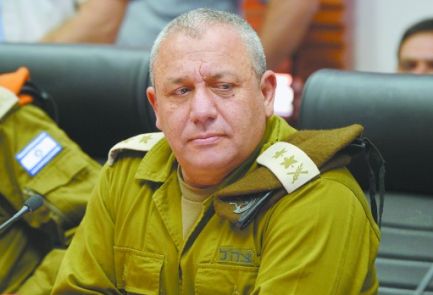
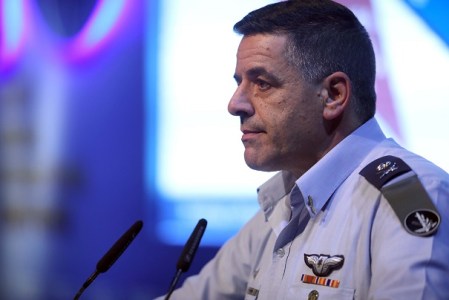
 

IDF chief: Reactor strike showed Israel will not tolerate existential threats 

March 21, 2018

Source: IDF chief: Reactor strike showed Israel will not tolerate existential threats – Israel Hayom

What the Saudi Prince’s Visit Really Means

March 21, 2018

Israel confirms it destroyed Syria’s nuclear reactor a decade ago

March 21, 2018

Israel lifted the censorship gag on details surrounding the daring operation that destroyed a Syrian nuclear threat. 

By: Aryeh Savir, World Israel News

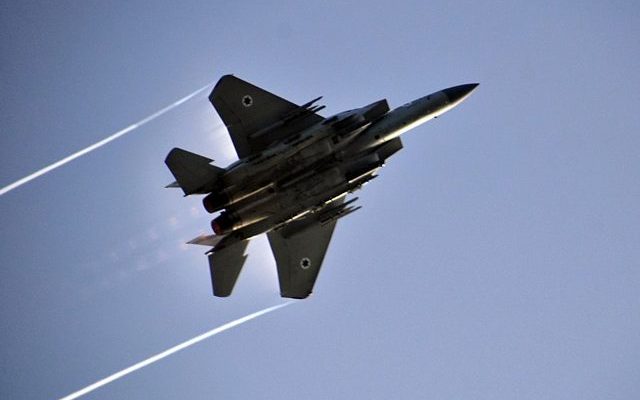
An IAF F-15 (IAF)

A decade after the crucial secret operation, Israel officially acknowledged that it attacked and destroyed the Al-Kibar nuclear facility in Syria, which was in its last stages of construction at the time.

During the night between September 5 and 6, 2007, Israel secretly bombed the nuclear reactor, in accordance with the Begin Doctrine, which states that no Israeli adversary in the Middle East would be allowed to acquire a nuclear weapon.

In a secret mission known as operation “Out Of The Box,” authorized by then-Prime Minister Ehud Olmert, eight Israeli Air Force (IAF) aircraft flew along the Syrian-Turkish border shortly before 1 a.m. and destroyed the Syrian nuclear facility.

The Syrian nuclear project operated under a heavy cloak of secrecy for about six years prior to its destruction. The Al Kibar reactor was situated 900 yards from the Euphrates River and halfway between the borders with Turkey and Iraq, far from Syria’s biggest cities, in the Deir ez-Zor region, 280 miles northeast of Damascus.

For two years prior to the attack, officials in the IDF Military Intelligence Directorate were monitoring the Syrian nuclear project. Their intelligence suggested that the facility would become active toward the end of 2007, which prompted the IDF to initiate an attack.

In March 2007, the Mossad – Israel’s national intelligence agency – raided the home of the head of Syria’s atomic energy commission in Vienna, where they discovered conclusive information about the reactor.

The information recovered by the Mossad operatives included some three dozen color photographs taken from inside the Syrian building, indicating that it was a top-secret plutonium nuclear reactor. The photographs obtained by the Mossad also showed workers from North Korea at the site. The sole purpose of this kind of plutonium reactor, in the Mossad’s analysis, was to produce an atomic bomb.

Olmert: With or without US support

The attack was launched after intense discussions between the American administration, under the leadership of President George W. Bush, and the Israelis.

At a meeting in Washington on June 19 that year, Olmert told Bush that if the US did not destroy the reactor, Israel would do it, even if it lacked US support. Finally, the US declined to participate but did not prevent the Israelis from carrying through with the raid.

The IAF had very little time to prepare for the attack or to account for possible contingencies, such as retaliation by the Syrian forces. Once the attack plan was ready, however, it was possible to execute it within 12 hours from the moment the order would be given.

Prior to the attack, then-IAF Commander, Maj. Gen. (Res’) Eliezer Shkedi personally addressed the combat crews, feeling it was of operational significance, in order to emphasize the transition from routine security measures to a strategic operation while stressing the pilots’ responsibility. At around 7 p.m., hours before the attack commenced, the target was revealed to the aircrews.

“Combatants, today you will be sent to participate in a mission of great importance to the State of Israel and the Jewish people. The mission is to destroy the target and disengage without aircraft losses, as stealthily as possible. The mission is kept under the highest secrecy, both before and after execution, until further notice. I trust you, believe in you, and am convinced of your capabilities. Good luck, Eliezer Shkedi”

The attack

Shortly after midnight, Olmert, Defense Minister Ehud Barak, Minister of Foreign Affairs Tzipi Livni, Chief of General Staff Gabi Ashkenazi, the deputy Chief of the General Staff, the head of the Military Intelligence Directorate and the head of the Operations Directorate assembled in the aerial war room, the Bor, in the heart of Tel Aviv. From there, they followed all aircrafts’ aerial locations and the communication systems.

The “Ra’am” (F-15I) formation that led the assault took off from Hatzerim Air Force Base in the south at around 10 p.m. The second formation left two minutes later, joined by the rest of the “Sufa” (F-16I) fighter jets, and they refueled together in the air. The aircraft took off in radio silence.

The jets flew low to remain undetected. The entire operation took four hours. At around midnight, the leading formation had reached the necessary distance from the target and began ascending in preparation for the attack maneuver. The ordnance drop occurred minutes later. The aircraft broke contact, and the next formations followed in order to attack. After all the munitions were dropped, the final “Sufa” fighter pilot radioed “Arizona from all of us,” meaning that all of the bombs hit their target and exploded as planned.

The Military Intelligence Directorate estimated that the nuclear facility was damaged beyond repair. As the IDF was preparing for Syrian retaliation, it decided that information about the operation should not be disclosed to the general public at the time.

The operation was deemed a success. The nuclear facility was destroyed and an escalation in the region was prevented.

Only a few years later, the Islamic State (ISIS) terror group captured the Deir ez-Zor region. One can only imagine how much havoc they could have wreaked with a nuclear facility in their hands. The scenarios range from an existential threat to the Jewish state to the disruption of the area’s strategic balance.

‘One of the best decisions made in Israel’

The destruction of the Syrian reactor was an historic operation of great significance for the State of Israel and the Jewish People and one of the most important military operations in the IAF’s history.

“When faced with today’s reality, the decision to destroy the reactor is one of the best decisions made in Israel over the past 70 years”, declared Lt. Gen. Amikam Norkin, current commander of the IAF. “The principles according to which the IAF prepared for the attack are also the IAF’s principles today. They help the air force maintain its relevance.”

Two months after the operation, Olmert concluded: “There were many disputes regarding all sorts of alternatives, but in the end, we all know one thing – the strategic force, which makes the difference in Israel’s international strength, is the aerial force. Our aerial force will be the determining factor in all possible confrontations that we will possibly – hopefully not – deal with in the future.”

Lifting of censorship coincided with the publication of Olmert’s memoirs and follows a petition to the High Court of Justice by Israel’s Channel 10, which is now permitted to air an interview with Olmert and the then-Mossad chief, the late Meir Dagan, on the bombing of the reactor.

Current Chief of Staff, Lt.-Gen. Gadi Eisenkot, OC Northern Command at the time of the operation, said the message that should be taken from the incident is that “Israel will never accept an existential threat against it. That was the message in 2007, and that is the message to our enemies in both the near and distant future.”


Video added by JK