Archive for February 2018

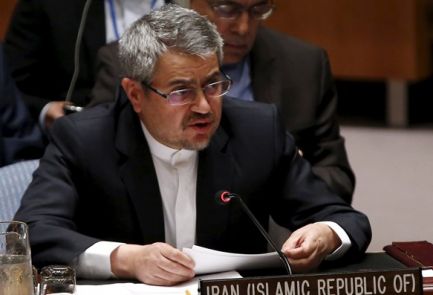
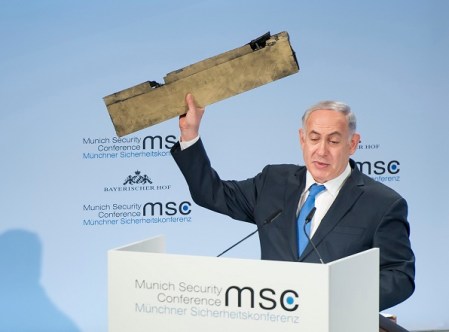
Iran files UN grievance against Israel over PM’s ‘threats’ in Munich speech 

February 26, 2018

Source: Iran files UN grievance against Israel over PM’s ‘threats’ in Munich speech – Israel Hayom

IAF pilot error determined as cause of fighter jet crash 

February 26, 2018

Source: IAF pilot error determined as cause of fighter jet crash – Israel News – Jerusalem Post

Israeli Air Force investigation reveals F-16 pilot and navigator failed to follow a precise action sequence due to stress.

BY ANNA AHRONHEIM
 FEBRUARY 25, 2018 19:32

The downing of the F-16i jet on February 10 by a Syrian antiaircraft missile was due to an operational mistake on the part of the pilots, the IDF announced Sunday.

“Between the tension of completing the mission while facing enemy missiles, there was an operational mistake on the part of the team whose actions did not match the order of priorities required by the threat it was facing,” a senior Israel Air Force officer said, explaining that the pilots did not take the proper evasive measures.

“The moment that there is a missile threat, they had to leave their targets in the mission and react properly to the threat.”

The jet was part of two four-plane formations that were taking part in retaliatory air strikes following the infiltration of an advanced Iranian drone into Israeli airspace earlier that morning.

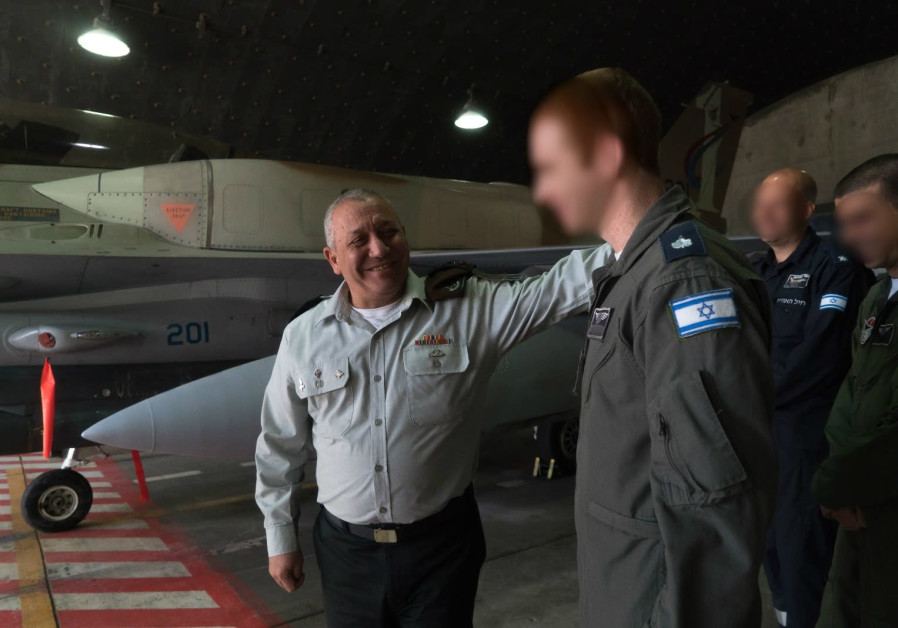
IDF Chief of Staff Gadi Eisenkot stands with anonymous IDF soldiers. (IDF Spokesperson's Unit)

IDF Chief of Staff Gadi Eisenkot stands with anonymous IDF soldiers. (IDF Spokesperson’s Unit)

Thirteen Syrian antiaircraft missiles were fired at the jets during that operation and a total of 27 missiles were fired at Israeli planes on the retaliatory missions following the Iranian drone infiltration.

While the one jet was hit during the operation, another one had a missile locked onto it but was able to evade it.

IDF chief of the General Staff Lt.-Gen. Gadi Eisenkot visited the Ramon air force base Sunday morning, where he was a presented with the full investigation of the event which dealt with the entire sequence of the events of the day.

“More than once, the road to successfully carry out significant operational missions requires us to take risks,” he said. “My expectation of every fighter is that during a mission he will take the fate of the task onto his shoulders.”

According to a senior IAF officer, the infiltration of the drone was not meant to draw the Israeli planes into an ambush and that the warning systems in the downed aircraft functioned as required and provided timely warnings to the pilot.

The air force was not surprised that Syrian anti-aircraft missiles were fired at the planes as “it has occurred before,” the senior officer said, but the number of missiles fired towards Israeli jets that night was “a significant increase” from previous missions.

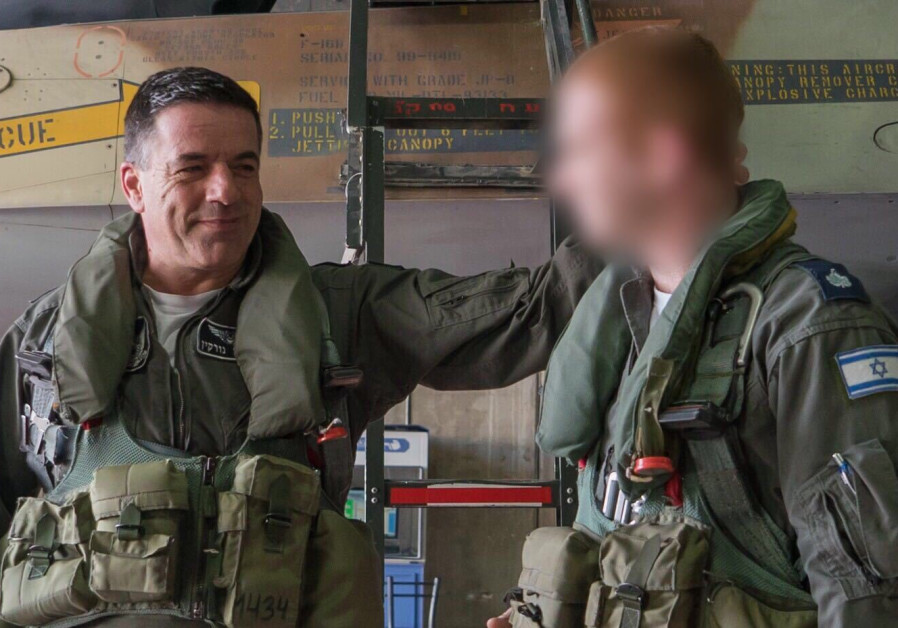
Injured navigator returns to service flying with IAF Chief Major General Amikam Norkin / IDF SPOKESMAN’S UNIT

Injured navigator returns to service flying with IAF Chief Major General Amikam Norkin / IDF SPOKESMAN’S UNIT

ISRAEL RARELY comments on foreign reports of military activity in Syria but IAF Air Division Brig.-Gen. Amnon Ein-Dar admitted that the IAF has carried out thousands of missions over the wartorn country in the past year alone. Israel has admitted to carrying out at least 100 air strikes on Hezbollah targets in Syria.

The intelligence that was in the possession of the mission planners and pilots was sufficient and provided the required response to the mission they were flying, the senior officer continued, adding that the decision to abandon the plane when it was struck by the Syrian SA-5 missile was the correct decision.

It was the first time that Israel lost an aircraft in a combat situation since 2006 and the first time in 30 years that an Israeli fighter jet was lost in a combat situation.

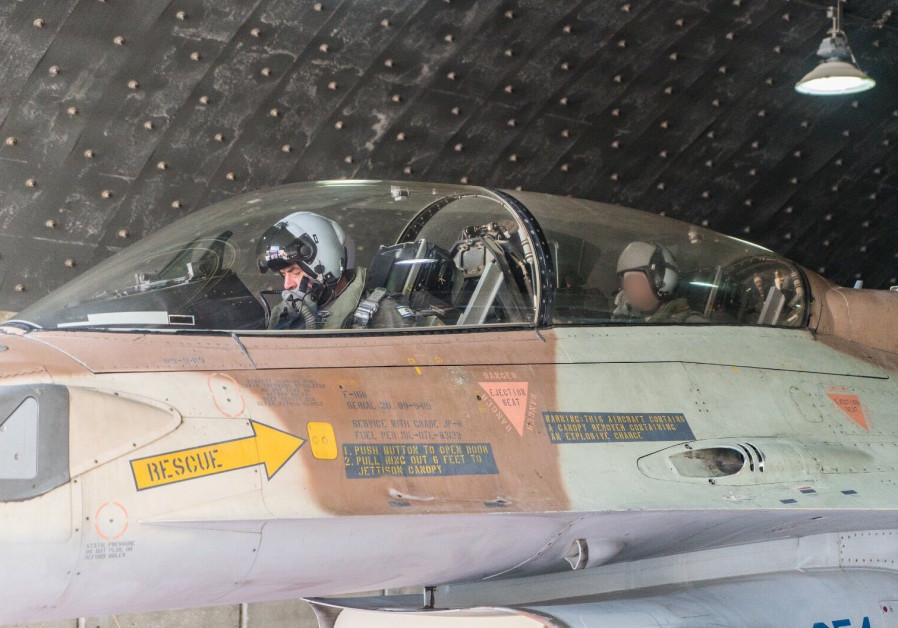
Injured navigator returns to service / IDF SPOKESMAN’S UNIT

Injured navigator returns to service / IDF SPOKESMAN’S UNIT 

In leaked transcripts of their debrief, Channel 2 News quoted the pilots as saying they had no time to report on their radio that they were bailing out of the plane.

“We were very focused on the mission. Then there was an explosion and we understood we were hit. It is a very uncomfortable feeling, the loss of control,” read the transcript.

“There is no long process and also there is no time. A few seconds. The understanding [was] that we need to quickly eject as a result of the physical damage to us and also as a result of the damage to the plane that ceased to function,” they were quoted as saying.

“We were extremely lucky. The missile exploded close to the plane and the force of the explosion could have killed us. The missile exploded at a certain distance from the plane and its shrapnel was enough to damage the plane,” the transcript said.

IAF commander Maj.-Gen.Amikam Norkin emphasized in his summary of the investigation into the crash that the episode “is an opportunity for the IAF” to learn, adding that the “in-depth investigation reflects the learning at all levels, both at headquarters and in the field, and it will make the IAF better.”

Both the pilot and the navigator, who were both injured during the incident, have since been released from the hospital.

Last week, the navigator, Maj. A, who was lightly wounded, returned to his squadron and flew his first returning flight with Norkin.

The pilot, who was seriously injured, is expected to return to full operational duties following his recovery.

Iran talks 2.0: Trump battles Europe on the nuclear deal

February 26, 2018

Source: Iran talks 2.0: Trump battles Europe on the nuclear deal – Middle East – Jerusalem Post

Last month, Trump gave Paris, London and Berlin a mid-May deadline to come up with a new sanctions framework around the nuclear accord.

BY MICHAEL WILNER
 FEBRUARY 26, 2018 11:40
Iran talks 2.0: Trump battles Europe on the nuclear deal

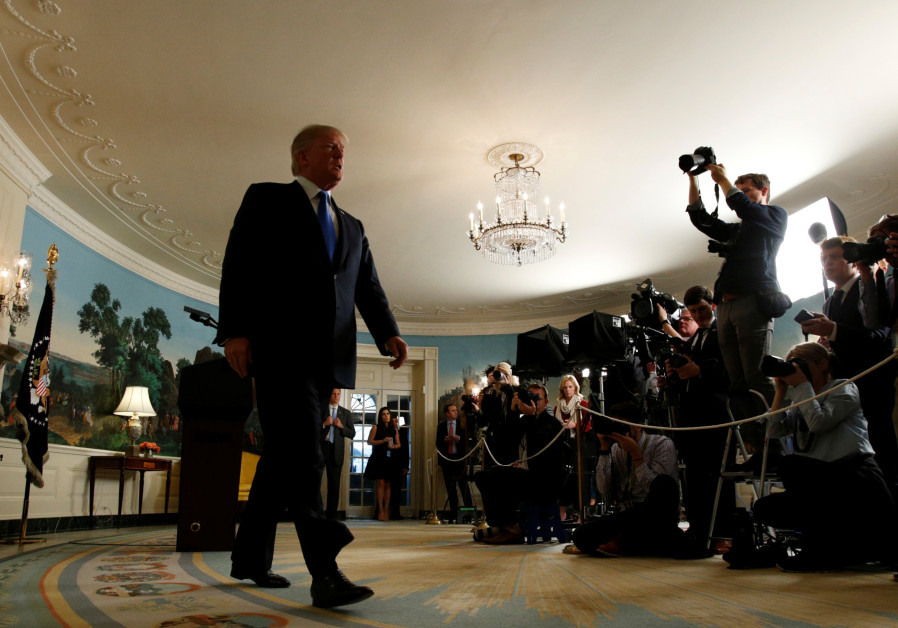
 US President Donald Trump walks from the Diplomatic Reception Room after speaking about the Iran nuclear deal at the White House in Washington, US, October 13, 2017. . (photo credit: REUTERS)

NEGOTIATIONS THAT led to a landmark nuclear deal with Iran in 2015 were lavish and public affairs. Over a two-year period, diplomats from six world powers and Tehran camped out in Europe’s finest hotels, surrounded by legions of press from all across the world eager for details from behind gilded conference room doors.

The new Iran talks, on the other hand – quietly announced last month by US President Donald Trump’s secretary of state, Rex Tillerson – are shaping up to be quite different. These negotiations do not include the press. They do not include Iran. And they are up against a very short deadline of 120 days.

These talks, held directly between State Department officials and their counterparts from Britain, France and Germany, or the E3, are over whether it is possible to broker an addendum agreement to the 2015 nuclear accord that will keep Trump from killing it outright.

European governments know the stakes are high. But they don’t know the standard for success they are working toward, given the president’s imprecise threats, his political interest in scrubbing the deal and his seemingly vague understanding of the nonproliferation agreement in the first place.

Last month, Trump gave Paris, London and Berlin a mid-May deadline to come up with a new sanctions framework around the nuclear accord, formally known as the Joint Comprehensive Plan of Action, agreeing “for the last time” to waive nuclear-related sanctions critical to US participation in the deal.

“My administration has engaged with key supplemental agreement that would impose new multilateral sanctions if Iran develops or tests long-range missiles, thwarts inspections, or makes progress toward a nuclear weapon – requirements that should have been in the nuclear deal in the first place,” Trump said.

“Today, I am waiving the application of certain nuclear sanctions, but only in order to secure our European allies’ agreement to fix the terrible flaws of the Iran nuclear deal,” he added. “This is a last chance. In the absence of such an agreement, the United States will not again waive sanctions in order to stay in the Iran nuclear deal. And if at any time I judge that such an agreement is not within reach, I will withdraw from the deal immediately.”

Trump’s deadline caught European leaders off guard. Does the president expect them to complete a new, supplemental agreement that “fixes” the agreement to his liking in four short months? Would a framework for negotiations suffice? Or is this simply Trump posturing, preparing the world for his inevitable withdrawal?

Europe’s diplomats are preparing for both. They are asking Tillerson’s team to explicitly outline what it will take to keep Trump within the deal for the time being. But they are also preparing a backup plan if he pulls out: the imposition of “blocking regulations,” a mechanism that would protect European businesses engaged in Iran from US secondary sanctions should they snap back into place.

It’s a controversial move that would spark heated internal debate within Europe – and one that, if executed, would set up a direct confrontation with Washington, and a potential trade war. Europeans are generally in agreement that US secondary sanctions, which they refer to as “extraterritorial,” violate international law and the spirit of their historic alliances with the US.

Europe has imposed blocking regulations to protect their businesses working in Cuba from US penalties. But the case of Iran is wholly different, involving a bigger market drawing larger companies exposed to greater risk – and a country the US deems a top national security threat.

Trump’s team is working directly with the E3 after giving up on the EU’s high representative for foreign affairs, Frederica Mogherini, whom they view as politically invested in the survival in JCPOA. The EU organized the original 2013-15 Iran talks, which included the US, Britain, France, Germany, Russia, China and Iran.

Mogherini has warned that the EU will not take part in any supplemental deals that impose new terms onto the nuclear agreement. And she opposes new European action against Iran’s ballistic missile work – one of Trump’s baseline requirements for remaining within the JCPOA.

Trump has also asked European powers to address Iran’s regional behavior, noting that its aggressive tactics in the Middle East have been emboldened by the nuclear deal itself.

“I also call on all our allies to take stronger steps with us to confront Iran’s other malign activities. Among other actions, our allies should cut off funding to the Islamic Revolutionary Guard Corps, its militant proxies, and anyone else who contributes to Iran’s support for terrorism,” Trump said. “They should designate Hezbollah – in its entirety – as a terrorist organization. They should join us in constraining Iran’s missile development and stopping its proliferation of missiles, especially to Yemen. They should join us in countering Iran’s cyber threats. They should help us deter Iran’s aggression against international shipping. They should pressure the Iranian regime to stop violating its citizens’ rights. And they should not do business with groups that enrich Iran’s dictatorship or fund the Revolutionary Guard and its terrorist proxies.

“No one should doubt my word,” he continued. “I said I would not certify the nuclear deal – and I did not. I will also follow through on this pledge. I hereby call on key European countries to join with the United States in fixing significant flaws in the deal, countering Iranian aggression, and supporting the Iranian people. If other nations fail to act during this time, I will terminate our deal with Iran.”

SINCE THE president’s ultimatum, administration officials have offered mixed messages on what they will accept as adequate progress in talks with Europe to continue negotiations, justifying for Trump one more sanctions waiver. One official said he expects an agreement that “enshrines certain triggers that the Iranian regime cannot exceed related to ballistic missiles; related to a nuclear breakout period, to hold them to one year or less, and to inspection; and that would have no sunset clause.”

Their bullish rhetoric has born some fruit: France and Britain have already called for additional action against Iran’s “malign activities” regionwide, and warned that Tehran is in violation of existing international laws banning its ballistic missile work.

But they continue to insist on protecting the “fundamentals” of the nuclear deal itself, and on “compartmentalizing” talks such that the core of the JCPOA – its basic text – remains unaffected. And that position may prove irreconcilable with the Trump administration’s stance. It may be that no amount of time for negotiations would alter it.

Despite the president’s threats, Tillerson cautioned recently that Washington cannot force Europe to act one way or another, much less in a matter of weeks.

“The US is under a bit of a timetable to deliver on what the president is looking for, but we don’t – we can’t set timetables for others,” he told reporters on January 22, announcing his intent to “formalize” working groups on the matter.

Tillerson, who toured the Middle East this month, is leading an effort within the administration to keep Trump from tearing up the nuclear accord, hoping instead that he will leverage his threats to bring Europe to a meaningful compromise.

“It’s always darkest before the dawn,” Tillerson said.

Russia to Israel: We will defend you if Iran attacks, but also defend Iran’s presence in Syria 

February 26, 2018

Source: Russia to Israel: We will defend you if Iran attacks, but also defend Iran’s presence in Syria – DEBKAfile

( We will defend ourselves BY ourselves, thank you.  That includes in Syria,,, – JW )

“If Iran attacks Israel, Russia will stand alongside the US to defend Israel,” said Russian ambassador to Israel Alexander Shein at the Munich security conference last week –  in a mixed message from Moscow. This assurance is part of the effort Moscow has been making for some time to allay Israel’s concerns and stop the Netanyahu government from agitating against the peril posed by an Iranian military presence in Syria.  The Russian Defense Minister Sergey Shoigu carried this message when he paid an unprecedented visit to Jerusalem last October.

DEBKAfile’s sources note, however, that since the Kremlin is broadcasting contradictory messages, Israel’s concerns are far from being allayed. One the one hand, the Russians, knowing they can’t alter Tehran’s implacable aspiration to “wipe Israel off the map,” are promising to defend the Jewish State and even line up with the United States for this purpose. But on the other, Russian policy-makers seem to believe that Israel ought to be satisfied with their guarantee of safety and understand that it has nothing to fear from the Iranian military sitting permanently in its Syrian back yard. That being so, Israel has no reasonable cause to attack Iranian targets in Syria. Therefore, Iran’s Revolutionary Guards Corps may continue to establish bases under their command in Syria.

Moscow’s affirmation of the Iranian presence in Syria as a fact of life is also intended to reach Washington. If Iranian military bases in Syria are no threat to Israel, because of Moscow’s guarantee, neither should it concern the United States.

Our sources report that Moscow like Tehran are gravely concerned by the Trump administration’s deployment of more than 2,500 Marines to maintain US control of a defense line on the 1,320 km long Syrian borders with Iraq, Jordan and Turkey. The line stretches north from the Syrian-Iraqi-Jordanian border intersection along the Iraqi border in the east (1,000km) and turns round at Hasakah and Manbij to run parallel to northern Syria’s border with Turkey (320km). This American line blocks the passage for pro-Iranian Iraqi Shiite forces to be moved into Syria. It also severs the land corridor coveted by Iran for linking Tehran via Iraq to Syria and Lebanon.

The Russians and Iranians are determined not to let the US get away with its plans to maintain control of eastern Syria while sitting on the Iraqi border to disrupt Iranian influence in Baghdad, ahead of Iraq’s coming elections. Ali Velayati, senor strategic adviser to supreme leader Ayatollah Ali Khamenei, said bluntly: “The Islamic resistance must prevent the deployment of US forces east of the Euphrates into Iraq.”

Iran and its Russian and Syrian allies tried to break through the American line on Feb 7, and were repelled. Certain that this attempt will be repeated, Moscow last week deployed a strong deterrent: four elite Russian Su-57 stealth fighters are now in place at the Khmeimim air base in Latakia. A Russian aerial shield is therefore ready to defend Iranian operations in Syria, capable of taking on the stealth aircraft wielded by the US – the F-22 Raptors and the Israeli Air Force’s F-35.  Iran can continue to expand its military presence into Syria under Russian protection..

CBS 60 minutes – IAF (Israeli Air Force) – 2011 

February 25, 2018

https://www.youtube.com/watch?v=TemidB340AQ


Planes of Fame – The Israeli Airforce

February 25, 2018

https://www.youtube.com/watch?v=OzsTZ7jP3CA


PM Netanyahu remarks on President Trump’s decision to move the American Embassy to Jerusalem 

February 25, 2018


Trump’s precarious hope for Middle East peace

February 25, 2018

Source: Trump’s precarious hope for Middle East peace

President Trump, as he prepares to unveil his peace plan to resolve the Israeli-Palestinian conflict, has all the instruments for a deal. But he lacks the materials to see it built.While running for president, the businessman quickly came to see Middle East peace as a sort of geopolitical mega-prize, a job only the master of dealmakers could win.

 But speaking with the Israeli newspaper Israel Hayom this month, after more than a year facing harsh geopolitical realities as president, Trump offered a warier appraisal of the prospects for progress. “Right now,” Trump said, “I would say the Palestinians are not looking to make peace, they are not looking to make peace. And I am not necessarily sure that Israel is looking to make peace. So we are just going to have to see what happens.”

Trump was also clear about his personal desire for an agreement. “I think it is very foolish for the Palestinians and I also think it would be very foolish for the Israelis if they don’t make a deal.”

When Trump returns to the American Israel Public Affairs Committee Policy Conference this week, he’ll probably lay out the successes his administration has notched over the past year, including creating a friendly atmosphere among neighbors in the Middle East by taking a hard line on Iran.

But after Trump changed the calculus in the region by declaring that the American embassy would move from Tel Aviv to Jerusalem, he is expected to run into massive obstacles thrown in his way by both of the other parties at the negotiating table. There, he faces Israeli and Palestinian leaders who, despite generations of conflict, nevertheless have nothing to gain and much to lose by offering concessions.

[Trump to open Jerusalem embassy in May]

“This is not a question of putting a chicken in every pot and a computer in every home; it’s a terribly complicated conflict. It ain’t a commercial proposition,” said Aaron David Miller of the Wilson Center. “That’s not to say money couldn’t be used to help the two sides make difficult decisions, but money can’t be a substitute for the substance.”

Stalemates in the Middle East are nothing new. But Trump, ever the dealmaker, will expect something from Israel in return for his stunning announcement about moving the U.S. diplomatic mission to Jerusalem. If he doesn’t get what he wants, the question becomes, how will he react?

Reasons for optimism

The president’s drive to make a deal should surprise nobody. After all, his ambition for an agreement has burned steadily for nearly three years.

In a December 2015 Associated Press interview, Trump declared that a peace agreement “would be something I’d really like to do,” explaining that “as a single achievement, that would be a really great achievement.”

Then, in February 2016, Trump shook up the bipartisan pro-Israel consensus by declaring that he would “be sort of a neutral guy” in brokering between Israeli and Palestinian interests. Then-primary opponent Ted Cruz was quick to distance himself from the future president’s pledge. In those same February remarks, Trump also added insight as to why an Israeli-Palestinian peace deal is so high on his agenda. “…. of all agreements,” he said, “I would say if you can do that deal, you can do any deal.”

After entering office, Trump ordered his senior adviser, son-in-law Jared Kushner, and his chief negotiator, Jason Greenblatt, to put together a peace plan.

It is now near completion. But Trump has not decided when to make it public, and it faces much skepticism from observers who have seen so many efforts by skilled diplomats fail in the past.

But it would be a mistake to treat the Trump-Kushner-Greenblatt effort with light derision. That’s because after many trips to the Middle East, including repeated visits to the key cities of Cairo and Riyadh and dozens of meetings with Israeli, Palestinian, and Arab officials, administration officials have secured at least the keys to door of the negotiating room.

It’s not simply Kushner’s and Greenblatt’s doing. In his first year in office, Trump met Palestinian Authority President Mahmoud Abbas three times. This month, Secretary of State Rex Tillerson visited Jordan, Turkey, Lebanon, Egypt, and Kuwait to try to smooth those governments’ anger at Trump’s decision about the embassy.

Tillerson’s trip, in the context of peace talks, was a success. Meeting with the Jordanian foreign minister in Amman, the secretary of state clarified that “when President Trump made his decision to recognize Jerusalem as the capital of Israel, he first committed to respecting Jordan’s role as the custodian of the holy sites. And secondly, he made clear that the positions on the final boundaries or borders of Jerusalem is a matter that’s left for the parties to negotiate and discuss and would be dealt with in the final status of issues, all of which are subject to negotiation.”

Last Tuesday, Kushner and Greenblatt followed up Tillerson’s work by sitting behind Nikki Haley, the U.S. Ambassador to the United Nations, as Abbas addressed the Security Council in New York. The presence of the two top negotiators speaks of a quiet but constant administration effort to improve its relations with the Palestinian Authority.

Other areas working

While Abbas was clearly angered at the U.N., Washington’s effort to resuscitate relations with other Arab leaders is working.

It is clear, for example, that Trump has won the favor of the Sunni Arab monarchies. Part of that success comes from promises to send financial aid; in Amman two weeks ago, Tillerson pledged to increase the flow of American aid to Jordan by $275 million.

But it is Trump’s clear change of Washington policy toward Iran that has done most to win support for his peace plan from Sunni monarchies, led by Saudi Arabia. The president has ended former President Barack Obama’s deliberately warm relations with Tehran and has adopted a much tough stance toward Iran and its nuclear program. The the Sunni monarchies that are Iran’s neighbors like what they see, and have moved closer to Trump as a result.

The Sunni monarchies view regional politics almost entirely through the prism of the threat from Iran, and they are deeply grateful to Trump for what they see as the restoration of America’s guarantee of a balance of power in the Middle East. It is in this context that one must view the reforms of Saudi crown prince Mohammed bin Salman. He is likely soon to replace his ailing father as king, and has shown more determination than any of his predecessorts to undertake genuine changes in the oil-dependent kingdom. He is expanding women’s rights and pursuing an aggressive counterterrorism strategy.

Most importantly, bin Salman has little interest in the Palestinian resistance narrative that has long defined Saudi political populism. In consequence and in order to win Trump’s favor, bin Salman is pressuring Abbas to support the American peace drive. The crown prince’s influence is extended by the fact that Abbas desperately needs the hard cash that on bin Salman will offer in abundance.

No U.S. ally in the region is willing to support Abbas by offering serious resistance to Washington’s move toward negotiations. This leaves the Palestinian leader isolated and shoves him closer to the peace table.

“The Palestinians have lost their best allies, those who have always supported them, namely Saudi Arabia and Egypt,” Ahron Bregman of King’s College London said. “The Saudis and the Egyptians are by now, though not too openly, firm allies of Israel in the fight against Iran and terrorists in the Sinai and elsewhere.”

All of this means that Abbas is under a lot of pressure at least to sit down at a U.S.-brokered negotiation.

Netanyahu’s words vs. action

But Abbas is, of course, not the only man who needs to be persuaded that negotiation is a good idea. There is also Prime Minister Benjamin Netanyahu, of Israel, a leader who has expressed repeated rhetorical sympathy for Trump’s ideal of peace.

This probably gives Trump what he needs to restart peace talks.

But starting talks is very different from reaching a deal, and both the Israelis and Palestinians have reasons to avoid giving up what is needed to bring negotiations to a successful conclusion.

Trump’s plan will in “no way, shape, or form … be able to address the competing interests of the Israelis and Palestinians … There is no conflict-ending agreement available now,” said Miller of the Wilson Center, a former State Department official who worked intimately on these issues for over a decade. Miller said the current situation lacks the three prerequisites for a deal: leaders who are masters of their political constituencies; leaders who care to make the necessary concessions for peace; and effective U.S. mediation.

Considering that Abbas doesn’t trust Trump and is far weaker domestically than Hamas in Gaza, he has an extremely limited ability to deliver material concessions necessary for any deal. Hamas is openly using the U.S. embassy relocation as a tool to whip up anti-Israel fervor. If Abbas were to offer meaningful concessions, his Fatah party would probably oust him and Hamas would almost certainly declare war on him.

Netanyahu also has his hands tied. The politics of Jerusalem undermine his ability to make concessions. No deal is remotely likely unless Israel stops building settlements in the West Bank.

Coalition partners view this as crucial, and Netanyahu can’t lose those partners. If allies such as Defense Minister Avigdor Lieberman and his Yisrael Beiteinu party, or Education Minister Naftali Bennett and his Jewish Home party were to abandon him, Netanyahu would be out of the job.

These parties share Netanyahu’s pro-Trump views and his desire to improve U.S.-Israeli relations. But their own political support evaporate if they agreed to make big concessions. Perhaps reflecting this difficulty, spokesmen for the prime minister, for Yisrael Beiteinu, and for the Jewish Home, failed to give any comment when repeatedly asked by the Washington Examiner what Israel might feasibly concede to further peace negotiations. Israeli politicians don’t want to upset Trump, but also don’t want to give him anything of substance.

Trump’s ambassador to Israel, David Friedman, summed up the consensus on the Israeli right. Barak Ravid of Israel’s Channel 10 reported on Feb. 18 that Friedman said an effort to force as mass evacuation of Israelis from West Bank settlements “could result in a civil war,” and the settlers “are not going anywhere.”

Bregman summed up Netanyahu’s situation in similar terms: “There’s no incentive [for him] to make any meaningful concessions to the Palestinians as he now, more than before, needs his coalition partners to stick with him. Any wrong move and he will lose such partners as Naftali Bennett.” Bennett is of particular concern to Netanyahu because the Jewish Home controls the Justice Ministry. That gives Bennett influence over whether Netanyahu is forced to step down if prosecutors decide to accept a police recommendation and charge him with corruption.

In this context, only the most coercive of U.S. tools, withholding American financial aid, might alter the Israeli cabinet’s calculation of interests. But that option is a non-starter. Even if Trump threatened it, lawmakers on Capitol Hill would overwhelmingly resist such a move. As Miller notes, “Nobody is willing to do that. Nobody has ever done that.”

The only other scenario in which Israel might offer major concessions is if a new election brought the Zionist Union coalition to power, with its greater willingness to make concessions to the Palestinians.

So, that leaves the world with a peace plan that will get in the door, lip service, and perhaps even a meeting between Netanyahu and Abbas. It might even get a few low-level commitments.

But it won’t get anywhere close to the near-success of the Camp David 2000 talks between President Bill Clinton, Ehud Barak, and Yasser Arafat.

Trump may have aligned the instruments for a deal, but the Israeli government and the Palestinian Authority have no interest in giving the president what he needs.
Go to Israel with The Rebel! Join Ezra Levant, Katie Hopkins & More!

February 24, 2018

https://www.youtube.com/watch?v=AgGNh_1pVcE

Want to get the “straight dope” on the middle east and Israel?

SIGN UP to VISIT Israel with fellow Rebels! http://www.RebelIsrael.com

Rebel Commander Ezra Levant invites you to travel to Israel with him, Katie Hopkins, Sheila Gunn Reid and other Rebel commentators from June 25 to July 5, 2018:


Turkey says US decision to open embassy in Jerusalem damaging peace

February 24, 2018

Ankara reacts with scathing condemnation of US announcement of inaugurating new Jerusalem embassy in May, says US ‘insistence on damaging peace, ignoring UN resolutions was worrying’; Palestinian chief negotiator Saeb Erekat said Friday decision showed ‘determination to violate international law, destroy two-state solution and provoke the feelings of Palestinians.’

News agencies and Ynet reporters|Published:  02.24.18 , 14:24

https://www.ynetnews.com/articles/0,7340,L-5129364,00.html

The Turkish Foreign Affairs Ministry attacked the United States Saturday over its announcement the previous day of its intention to inaugurate the US Embassy in Jerusalem this coming May, to coincide with Israel’s 70th Independence Day celebrations.

The ministry’s message said the American decision insisted on damaging peace and disregarded decisions objecting to the move by the United Nations and Organization for Islamic Cooperation (OIC).

In a statement, Turkey’s Foreign Ministry said the decision was “very worrying”. The US State Department said on Friday it would open an embassy in Jerusalem in May to coincide with Israel’s 70th Independence Day and that the embassy will operate out of the current American consulate building in the capital’s Arnona neighborhood.

Turkish President Erdogan's Foreign Affairs Ministry said the American decision to move the US embassy to Jerusalem was damaging peace (Photo: AFP, EPA)

Turkish President Erdogan’s Foreign Affairs Ministry said the American decision to move the US embassy to Jerusalem was damaging peace (Photo: AFP, EPA)

The consulate’s work will continue as usual, and the US will continue providing consular services at the premises of the existing building, including issuing visas and receiving American citizens.

In December, President Recep Tayyip Erdogan hosted an OIC summit of more than 50 countries in Istanbul, where Muslim leaders condemned the US decision to recognize Jerusalem as Israel’s capital.

State Department spokeswoman Heather Nauert said that US Ambassador to Israel David Friedman will begin working at the Jerusalem complex and that a new embassy will open by the end of 2019, while the search for a permanent site for the embassy was ongoing.

“We are excited about taking this historic step, and look forward with anticipation to the May opening,” Nauert said.

Palestinians were irate upon learning of the American announcement, and said it could destroy the prospect of a two-state solution to the Israel-Palestinian conflict.

Saeb Erekat, the Palestinian’s chief negotiator in peace talks that have been frozen since 2014, said the US move showed a “determination to violate international law, destroy the two-state solution and provoke the feelings of the Palestinian people as well as of all Arabs, Muslims and Christians around the globe.”

Erekat, who is also secretary-general of the Palestine Liberation Organization, went on to say that US President Donald Trump and his team “have disqualified the US from being part of the solution between Israelis and Palestinians; rather, the world now sees that they are part of the problem.”

He further lamented the fact the move would coincide with the Nakba Day—the 1948 Palestinian exodus, or how the Palestinians refer to the establishment of Israel.

Nabil Abu Rdainah, a spokesman for Palestinian President Mahmoud Abbas, also slammed the move, saying, “This is an unacceptable step. Any unilateral move will not give legitimacy to anyone and will be an obstacle to any effort to create peace in the region.”

Hamas official Sami Abu Zuhri said the decision by President Trump's administration was tantamount to a declaration of war on Arabs (Photo: Reuters)

Hamas official Sami Abu Zuhri said the decision by President Trump’s administration was tantamount to a declaration of war on Arabs (Photo: Reuters)

In Gaza, a Hamas official, Sami Abu Zuhri, said that “Moving the US Embassy to Jerusalem is a declaration of war against the Arab and Muslim nation, and the US administration must reconsider its move.”

Prime Minister Benjamin Netanyahu, meanwhile, praised the US decision, saying it “will turn Israel’s 70th Independence Day into a much greater celebration.”

“This is a great day for the people of Israel,” Netanyahu noted in a statement released Friday night. “Thank you, President Trump, for your leadership and your friendship.”

Elior Levy, Moran Azulay, Itamar Eichner, Reuters and The Associated Press contributed to this report.