Archive for February 2018

Erdogan: Turkey’s Syria op will move to Idlib after mission completed in Afrin

February 8, 2018
https://www.rt.com/news/418196-erdogan-afrin-operation-idlib/
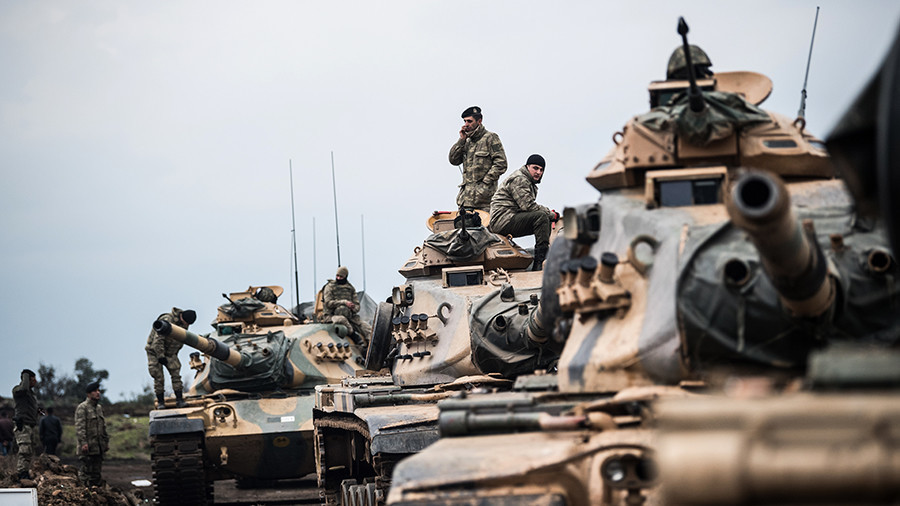
Turkish President Recep Tayyip Erdogan has promised to take Ankara’s Syria operation to Idlib after completing the current mission in Afrin, where they are targeting Kurdish militants.

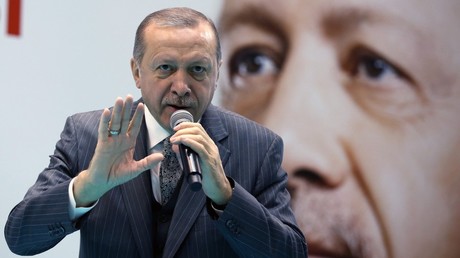
We want our Syrian brothers and sisters to return to their land, and now we want to do the same in Idlib what we have done in Afrin,” Erdogan said.

It’s not the first time the Turkish leader has stated that the campaign against Kurdish militia in Syria could actually spread beyond Afrin.

Read more

Erdogan in Amasya on January 28

Our heroic soldiers…are making history today in Afrin. And they will make history tomorrow wherever there are terrorists along our borders,” the Turkish President said late last month.

On January 20, the Turkish General Staff officially declared the start of the military campaign in Syria’s northwestern Afrin region, calling it ‘Operation Olive Branch’. Ankara launched airstrikes against Kurdish positions, with Turkish troops advancing into the Kurd-held territories. The Turkish armed forces are supported by the Free Syrian Army (FSA) – an Ankara-backed paramilitary opposition group which consists mainly of Syrian Arab and Syrian Turkmen groups, which hold the territories in Afrin.

The Turkish General Staff said last week that as many as 899 fighters of the Syrian Kurdish militias – which they said included the People’s Protection Units (YPG), Kurdistan Workers’ Party (PKK) militants and Islamic State (IS, former ISIS) terrorists – were “neutralized” since the launch of Operation Olive Branch.

Formed as an armed wing of the Syrian Kurdish Democratic Union Party, the YPG rapidly expanded during the Syrian civil war. The group also fought against IS and received backing from the US-led coalition, which supplied them with weapons.

Such US support has greatly contributed to ongoing hostilities in the Afrin region, the Russian Foreign Ministry said in a statement on Thursday.

“The US backing of their ‘clients’ in violation of Washington’s statements in support of the Syrian Arab Republic’s territorial integrity have led to the escalation in the Afrin region, where there are no government troops at all at the moment,” the Ministry said.

In a telephone conversation earlier on Thursday, Erdogan spoke with Russian President Vladimir Putin regarding the situation in Syria. They agreed to hold another three-way summit on Syria with Russia, Turkey and Iran; a source in Erdogan’s administration said. The event is expected to take place in Istanbul.

Erdogan and Putin have also discussed the need to expedite the establishment of observation posts in the de-escalation zone of Idlib governorate, Turkish media report.

In early October, Turkish military forces were deployed to Idlib province to monitor one of four de-escalations zones located there. The proposal to establish the zones, championed by Russia, was finalized in September at a round of Syrian peace talks in Astana.

The first three-way summit between the leaders of Russia, Turkey and Iran, which was aimed at ending the bloodshed in Syria, took place in the southern Russian resort of Sochi in November.

Turkey, Russia and Iran leaders to discuss Syria in Istanbul: Turkish source

February 8, 2018

Reuters staff February 8, 2018

Source: Turkey, Russia and Iran leaders to discuss Syria in Istanbul: Turkish source

{Hopefully, they will be discussing a way out of the money pit called Syria.  Must be costing a lot of money, especially with Turkey providing sanctuary for all those refugees from Syria.  Meanwhile, Turkey appears to have formed new alliances at NATO’s expense. – LS}

ANKARA (Reuters) – The leaders of Turkey, Russia and Iran agreed on Wednesday to meet in Istanbul to discuss the conflict in Syria, a Turkish presidential source said.

Turkish President Tayyip Erdogan discussed the meeting in two phone calls on Wednesday with the Russian and Iranian presidents, the source said. The date of the summit would be set in coming weeks.

The three countries have worked together in recent months to try to reduce violence in Syria, even though they have backed rival sides in the nearly seven-year civil war and remain deeply involved in the conflict.

Iran-backed militias and Russian air power have supported a Syrian army offensive in Syria’s northwestern province of Idlib since November, and Turkish forces last month launched an offensive in northern Syria’s Kurdish region of Afrin.

On Monday, Iran urged Turkey to halt the Afrin operation, saying it breached Syrian sovereignty and would increase tension. It was not immediately clear whether Erdogan and Rouhani discussed Afrin in their telephone call on Thursday.

Erdogan and Putin also agreed to speed up the establishment of military observation posts in Syria’s Idlib region under an accord reached by Ankara, Tehran and Moscow last year to reduce fighting between President Bashar al-Assad’s forces and rebels.

After the phone call, the Kremlin said in a statement that Putin and Erdogan agreed to strengthen coordination between the two countries’ military and security services in Syria in the fight against terrorism.


Feminism, Swedish Style

February 8, 2018

Secret Iranian missile factory in Lebanon requires preemptive Israeli attack

February 8, 2018

February 7, 2018

Latest News from Israel

While Netanyahu declares “Israel is not seeking war,” top Israeli analysts say that the conflict over a secret Iranian missile plant in Lebanon makes an Israeli strike almost inevitable.

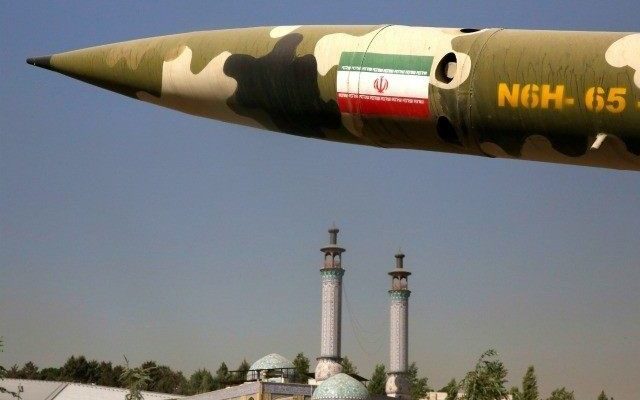
An Iranian missile. (AP/Vahid Salemi/File)

By: Steve Leibowitz, World Israel News

Analysts looking at Prime Minister Netanyahu’s Sunday briefing to the Cabinet on the subject of his recent talks with Russian President Putin pointed at the particular significance of a remark he made after usual comments about Israeli readiness in the face of military threats. Netanyahu told the ministers that he and Putin, discussed “Lebanon, which is becoming a factory for precision-guided missiles that threaten Israel. These missiles pose a grave threat to Israel, and we will not accept this threat.”

Netanyahu went on to say that the weapons factories are currently “in the process of being built” by Iran and Israel is “determined to do whatever is necessary to prevent those two developments.”

Indeed top Israeli analysts say that the Iranian “missile factory” being built in Lebanon is a game changer that has placed Israel and Hezbollah on a collision course that could lead to a third Lebanon war. The analysts also say that the coming conflict in Lebanon could spill over into Syria. As Netanyahu said to reporters, “The question is: Does Iran entrench itself in Syria, or will this process be stopped. If it doesn’t stop by itself, we will stop it.”

Lebanese officials have not issued any comment concerning the alleged Iranian plan According to Smadar Perry from Ynet, “Either Lebanon is not in on the secret or they’re choosing to keep quiet.” According to Perry, the Revolutionary Guards are building the factory in Lebanon without asking Iranian leadership for permission.”

Meir Javadanfan who teaches Iranian Studies at the IDC told World Israel News (WIN), “The story could be true, but the Iranians have never confirmed the existence of a Lebanese missile plant.”

Asked about the possibility of another war with Hezbollah in Lebanon, Professor Ephraim Inbar, Director of the Jerusalem Institute for Strategic Studies told WIN, “This is entirely possible. The Iranians are building a plant in Lebanon to produce long range missiles. They are doing so because they have difficulties transporting those missiles from Iran to Lebanon because Israel strikes and destroys their convoys time and time again. Iran is advancing on two fronts…the Syrian border and Lebanon. I don’t think Hezbollah wants a conflict now, but they want the missiles and this is unacceptable to Israel.”

According to Inbar, Israel is now considering its options. “We must decide if we will preempt to prevent this plant from becoming operational. Already Hezbollah has 100 thousand missiles aimed at Israel. No army in the world has more missiles. There is growing support for a preemptive strike because if we allow this plant to be built on Lebanese soil without an Israeli reaction, it will be a clear sign of weakness. Israel knows where the missiles plant is located and the air force is capable of destroying it. “This cannot be hidden from our intelligence and a preemptive attack is an option. ” Inbar said.

Israel’s problem in the war in 2006 was in identifying the short range missile launchers, and that is still a problem today because the short range missiles are hidden among the civilian population and can be moved. “The way to shorten the war is to occupy south Lebanon. Capture the territory and then hunt for the missile launchers,” Inbar said. Beyond 40 kilometers is less of a problem because that’s where long range missiles are deployed and they are easier to find and destroy. It took only one day to destroy Hezbollah’s long-range missile arsenal in the second Lebanon war in 2006. “The other problem is the quantity of missiles. They have over 100 thousand missiles loaded with warheads. We now have the capacity to intercept missiles. But it will difficult to intercept all the missiles fired in large salvos.

Is the world watching Hezbollah?

French Intelligence Online reported that the “Hezbollah terrorist group is constructing at least two underground facilities in Lebanon for manufacturing missiles and other weaponry.” The French magazine quoted sources saying that one of the factories is being built in northern Lebanon, near the town of Hermel in the eastern Bekaa Valley. The second facility is reportedly being constructed along the southern coast, between the towns of Sidon and Tyre. They also report that the Hermel facility is being used to produce the Fateh 110, a medium-range missile and the southern facility will be used to make smaller munitions.

Dr. Martin Sherman, Director of the Israel Institute for Strategic Studies believes that the inevitable conflict would have come sooner if not for the civil war in Syria.

“I think the conflict was only delayed because of the civil war. Otherwise Hezbollah would have attacked Israel during the Gaza war in 2014 with Hamas. Things are worse now because the Iranians feel empowered. The mistake was to leave Hezbollah intact in the second Lebanon war in 2006. These are the bitter fruits of President Obama’s policy including the ill-conceived Iran deal strengthening Iran financially,” Sherman said.

According to Sherman, “There needs to be a credible military response inflicting major damage. Hezbollah is not deterred by war. They have increased their missile stockpile by tenfold. They were distracted by the war in Syria but now they are back, and they can make the 2006 war look like a picnic. The only option is preemption. Israel has been led into a grave situation. Trying to avoid the inevitable confrontation can result in even heavier loses.”

“At this time Hezbollah is not ready to coordinate a two front conflict along with Hamas in Gaza. But the tensions are escalating and the thing that ties it all together is the support both receive from Iran. If they launch a two front war in a coordinated assault, it could be a real problem for Israel. Preemption is the answer,” Sherman said.

One of the few press reports on the Iranian missile plant in Syria came from the London-based daily Asharq al-Awsat. They reported, “Russia has prevented an inevitable Israeli attack” on what the daily characterizes as “Iran’s missile factories in Lebanon and Syria.” Israel and Russia have not reacted to Asharq al-Awsat’s report.


5 reasons why Israel is ready for war with Hezbollah in Lebanon

February 8, 2018

Source: 5 reasons why Israel is ready for war with Hezbollah in Lebanon – Arab-Israeli Conflict – Jerusalem Post

BY JTA/RON KAMPEAS
 FEBRUARY 8, 2018 08:09
12 years ago, Hezbollah and Israel were left gutted by a summer war that was costly for both sides.

5 reasons why Israel is ready for war with Hezbollah in Lebanon

 Israeli soldiers hold an Israeli flag as they leave Lebanese territory during a second day of ceasefire during the Second Lebanon War, near the town of Menara August 15, 2006.. (photo credit: REUTERS)

WASHINGTON — Israeli Prime Minister Benjamin Netanyahu had a simple, straightforward message this week when he toured Israel’s border with Syria and Lebanon with top security officials.

“Our face is turned toward peace, we are ready for any eventuality, and I don’t suggest anyone test us,” he said Tuesday in a video message he posted on Twitter, the sound of helicopter blades whirring in the background.

The mixed message signaled Israel’s ambivalence about taking on the terrorist group Hezbollah 12 years after Lebanon and Israel were left gutted by a summer war.

The 2006 war was costly for both sides: Hezbollah, the preeminent militia in Lebanon, lost political capital for inviting a devastating response to its provocations along Israel’s border. Israel’s military and political class at the time paid a price for not decisively winning a war that precipitated a mass internal movement of civilians southward.

Yet the sides are making increasingly belligerent noises. Here are five factors contributing to increasing tensions along the border.

Syria may be winding down, and Iran is winding up.

The Assad regime, along with its allies Russia, Iran and Hezbollah — Iran’s proxy in the region — have the opposition in Syria’s civil war on the run. Iran and Hezbollah are striking while the iron is hot, establishing preeminence in the region. Iranian brass recently toured southern Lebanon and Tehran, according to Israeli reports, and Iran is financing a military factory in Lebanon.

Israeli officials reject a permanent Iranian presence on its border — a message that Netanyahu delivered to Russian President Vladimir Putin when they met last month in Moscow.

“I told him that Israel views two developments with utmost gravity: First is Iran’s efforts to establish a military presence in Syria, and second is Iran’s attempt to manufacture – in Lebanon – precision weapons against the State of Israel,” he said after the meeting. “I made it clear to him that we will not agree to either one of these developments and will act according to need.”

A U.S. leadership vacuum is creating anxiety.

President Donald Trump ordered a missile strike on a Syrian missile base last year after it was revealed that Syria used chemical weapons against civilians, but otherwise the U.S. engagement with shaping the outcome of Syria’s civil war has been desultory. Russia is filling the vacuum, which is stoking Israeli anxieties. Despite generally good relations between the Netanyahu and Putin governments, Israel cannot rely on Russia to advance Israeli interests in the same way it has with the United States.

“As the shape of the Syrian war changes, Israel may find its working relations with Russia undermined by Moscow’s desire to exercise influence in Syria generally from afar, and by its shifting relations with Iran,” Shoshana Bryen, the senior director at the Jewish Policy Center, wrote this week in The Algemeiner.

Absent focused U.S. leadership, Israel may strike out on its own to prevent Hezbollah from becoming the preeminent force in the nations to its north.

There are signs that the Trump administration, albeit belatedly, is noticing what its absence has wrought: Last month, Secretary of State Rex Tillerson said 2,000 U.S. troops currently in Syria to assist pro-Western rebels would remain stationed there to mitigate against a permanent Iranian presence in Syria.

New fences make restive neighbors.

Israel is building a wall on its northern border along a line demarcated by the United Nations in 2000, when Israel ended its 18-year occupation of southern Lebanon. Israel is building the wall in order to prevent the deadly Hezbollah incursions that spurred the 2006 war, which claimed 1,200 Lebanese lives and more than 60 Israeli lives.

But neither Lebanon nor Hezbollah accepted the demarcation as a permanent outcome, citing disputes over small patches of land that extended back to the 1949 armistice, and the Lebanese government and Hezbollah have threatened action.

Oil and gas

Lebanon last month approved a joint bid by Italian, French and Russian oil companies to explore seas off its coast. Israel claims a portion of the waters. Israeli leaders have called for a diplomatic solution to the dispute, but the competing claims are aggravating tensions between the countries.

Hezbollah, intermittently, has also threatened to attack Israeli platforms in the Mediterranean extracting natural gas.

Gaza

The Gaza Strip also is restive, with an increase in rocket attacks from Hamas and Israeli retaliatory strikes after Trump in December recognized Jerusalem as Israel’s capital. An Israel distracted by an engagement with Hamas and other terrorist groups in the south could be seen by Hezbollah as an opening to strike in the north.

Sharyl Attkisson on FISA Surveillance Abuses.

February 7, 2018

Sharyl Attkisson on FISA Surveillance Abuses, Fox News via YouTube, February 7, 2018

(Please see also, The FISA Court ‘Title-One’ Application, Re-authorizations, and The “Clinton-Steele Dossier”…

Four Corners of the demonstrable justice dept. conspiracy:

  1. Exonerate Clinton
  2. Investigate/execute, IC surveillance of Trump.
  3. Collect and redistribute opposition research of Trump.
  4. The Insurance Policy.

Following the exoneration of Hillary Clinton, the next phase, the “Trump Operation”, was the need for the DOJ/FBI “small group” to have access to surveillance of Hillary Clinton’s political opposition, Donald Trump.  This was the U.S. government conducting political opposition research through a weaponized intelligence apparatus (DOJ and FBI).


Turkish court jails 64 for life over 2016 coup attempt: Anadolu

February 7, 2018

by Reuters Wednesday Feb 7, 2018 9:40am The Foreign Desk

Source: Turkish court jails 64 for life over 2016 coup attempt

{Such a nice guy that Erdogan…uh, no. – LS}

ISTANBUL (Reuters) – A Turkish court on Wednesday sentenced 64 military academy officers and trainees to life in prison for involvement in a failed military coup in 2016, the state-run Anadolu news agency said.

Another 100 defendants were acquitted in the case, it said.

Those sentenced were involved with plotters of the coup and had flown unsuspecting military academy trainees to a military headquarters to confront civilians opposing the attempted putsch, Anadolu said, citing the indictment.

Four of the sentenced were given “aggravated life” sentences, the harshest punishment possible under Turkish law because it raises the minimum required for parole. The four were found guilty of attempting to overthrow the constitutional order.

More than 240 people, most of them unarmed civilians, were killed on the night of the July 15, 2016, when a group of rogue soldiers commandeered tanks and warplanes in an attempt to attack parliament and overthrow President Tayyip Erdogan.

Since the coup attempt, Erdogan has embarked on a sweeping crackdown, jailing some 50,000 people and sacking or suspending 150,000. Under the purge, Turkey shut down all of its military academies, schools that had been once seen as a pillar of the secular state.

The scope of the crackdown has alarmed European allies and rights groups, who fear Erdogan has used the coup as a pretext to quash dissent. Turkey says the measures are necessary, given the extent of the security threats it faces.

The government blames the network of Gulen, a former ally of Erdogan, for orchestrating the failed coup. Gulen, who has lived in self-imposed exile in Pennsylvania since 1999, has denied involvement and condemned the coup.

Israel – between the US and Russia

February 7, 2018

Source: Israel – between the US and Russia – Israel Hayom

Zalman Shoval

Let there be no mistakes, Israel is identified and identifies itself with the United States insofar as the fundamental, value-based nature of their relationship and their shared predominant interests are concerned.

Unlike the Non-Aligned Movement in its time, Israel does not “sit on the fence” when it comes to its relationships with America and Russia. Policy and diplomacy, however, are not a zero-sum game, and the interests Israel shares with the U.S. do not come at the expense of its shared interests with Russia. At the very least, there is minimal conflict.

As the saying goes, why choose when you can have both. Benjamin Netanyahu appears to be the first prime minister since David Ben-Gurion to take a comprehensive view of Israel’s relationships with the world, friends and enemies alike, rather than strictly through the lens of the Israeli-Palestinian conflict. In his opinion, Israel must always try to find ways to advance its diplomatic, security and economic objectives while heeding the realities of a world where past conventions are mired in ever-expanding processes of evolution and change – for better and for worse.

Netanyahu saw, for example, that despite the small differences, there is no inherent contradiction between the American interest in stabilizing the situation in Syria while curbing Iran’s geopolitical aspirations, and the Russian interest in limiting its alliance with Iran to specific goals, rather than broadening that alliance into sweeping support for all of the Islamic republic’s belligerent and hegemonic goals. Russia has not forgotten the trauma of its disastrous embroilment in Afghanistan, which in President Vladimir Putin’s mind was one of the factors that led to the Soviet Union’s collapse. Therefore, he will do everything in his power to make sure Syria does not become another Afghanistan. This directly impacts Israeli-Russian relations.

Netanyahu was able to realize, then, the importance of cultivating good relations with Putin’s Russia – parallel, not in contrast, to Israel’s intimate relationship with Trump’s United States, and acted accordingly. Israel, for example, sees Iran’s ongoing presence in Syria and Lebanon, whether directly or through its various proxies, as a severe security threat that must be eradicated before it spreads. That is why Israel has acted on several fronts – covert and overt – to prevent it from happening, likely with Russia’s knowledge.

It would be an exaggeration to say that Israel is acting under a Russian umbrella (or an American one) in this regard. It’s safe to assume, though, that Moscow is sufficiently troubled over the possibility that Iran’s measures and Israel’s countermeasures could drag it diplomatically and perhaps even militarily to a place it does not want to be. Russia was also dubious over Iran’s machinations in Syria. According to reports, an immediate “trigger” for a possible all-out conflagration on the northern border is the intention of Iran and Hezbollah to transfer the bulk of their activity to Lebanese territory, including the manufacturing of precision missiles and other sophisticated weapons.

During his brief visit to Moscow, Netanyahu apprised Putin about these potential scenarios. He did so to avoid any misunderstandings if Israel has to act militarily to disrupt these Iranian plans. The Russian military delegation’s visit to Israel, headed by Gen. Nikolai Patrushev, immediately after Netanyahu’s meeting with Putin, testifies to Russia’s alertness regarding Israel’s concerns and intentions. Moreover, despite the overall increased tensions between the U.S. and Russia these days, on the matter of Iranian activity in Syria and its possible expansion to Lebanon, there is a modicum of alignment between the two powers, and between each of them and Israel.

One final word of note: In international relations, one must tread cautiously. Painting the nature and scope of cooperation between Israel and Russia in such a positive light is not always accurate, particularly when it comes from people who are not in the know. It can even be detrimental to Israel’s relationship with Russia and even the United States.

Missile crisis still under control 

February 7, 2018

Source: Missile crisis still under control – Israel Hayom

Amnon Lord

By now, we can call these rapidly unfolding events the “Lebanese missile crisis.” The players are Israel, Iran, Russia, Hezbollah and Lebanon. On Tuesday, Lebanon inserted itself into the equation, when leaders of various factions convened in Beirut and made demands of Israel.

The demands pertain to the barrier Israel is constructing along the Lebanese border, and the borders of Lebanon’s territorial waters. Almost simultaneously, IDF Chief of Staff Lt. Gen. Gadi Eizenkot guided cabinet ministers on a tour of the northern border.

Perhaps counterintuitively, the declarations from cabinet ministers over the past week, threatening as they may have been, along with their very visible border tour, could in fact point to a willingness to manage the “missile crisis” in a manner that would not lead to a military confrontation. What Israel has gradually done in recent months – and in the past week more intensively – is make its position very clear. Officials in Israel view Iran’s efforts to build precision missile factories in Lebanon as evidence of its failure to transfer those weapons in convoys via Syria. Prime Minister Benjamin Netanyahu drove the point home in his meeting with Russian President Vladimir Putin in Moscow a week and a half ago. The Russian president was told unequivocally that there are specific targets that at some point or another Israel will have to hit, similar to its actions in Syria. If a mistake occurs, these surgical strikes have the potential to spiral out of control and spark a conflagration. None of the sides want this missile crisis to result in a war.

However, Israel has an advantage. It has already voiced its position, and the border tour on Tuesday elucidated its message. If the Iranians do not take a step back on the issue of precision missiles and their production on Lebanese soil, they will essentially leave it to Israel to choose when the next round of fighting begins.

Another advantage Israel has is its well-established reputation in the region as the only power that sets red lines and enforces them. In this regard, the political and defense echelon’s policies have been a complete success. Therefore, Israel’s messages are credible; even the recent reports of an Israeli air campaign against Islamic State in Sinai serve to punctuate its deterrence messages.

The Russians visited Israel to rein it in. Now they need to move the Iranians. The impression left by the mutual border tours – one by Ayatollah Ali Khamenei’s apparent successor and the other by the Israeli cabinet – is of a bargaining ploy, not a process that has spun out of control.  Because both players are tied to the Russians, a military clash is reasonably unlikely. If Israel had a different prime minister in power today – one who flaunts actions instead of valuing dialogue – concerns would be far greater. According to the IDF’s recent assessments, we are not going to war.

Lebanon’s Higher Defense Council orders army to stop Israeli border wall

February 7, 2018

Council says if Israel continues building its border wall on territory Beirut considers to be Lebanese, it would be seen as an act of aggression against Lebanon; Israeli energy minister: ‘Israel seeks diplomatic solution to border disputes.’

Attila Somfalvi and Nir Cohen

Published:  02.07.18 , 15:13

https://www.ynetnews.com/articles/0,7340,L-5096426,00.html

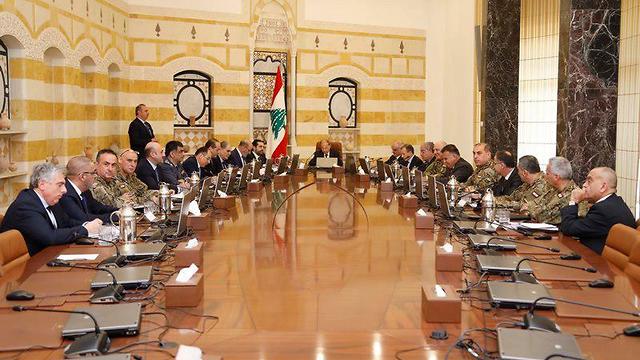
Lebanon’s Higher Defense Council said Wednesday it has ordered the army to prevent Israel from building a border wall on Lebanese territory.

The council also announced that if Israel does build its border wall on what Beirut views as Lebanese territory, it would be considered an Israeli act of aggression.

“We grant the army forces with the political backing to act against any Israeli aggression on the border—on land and at sea,” the council said in a statement. “The Israeli fence on our border constitutes a violation of our sovereignty and of Resolution 1701. We will continue acting on all levels, the regional and international, to oppose and prevent Israel from building the separation fence.”
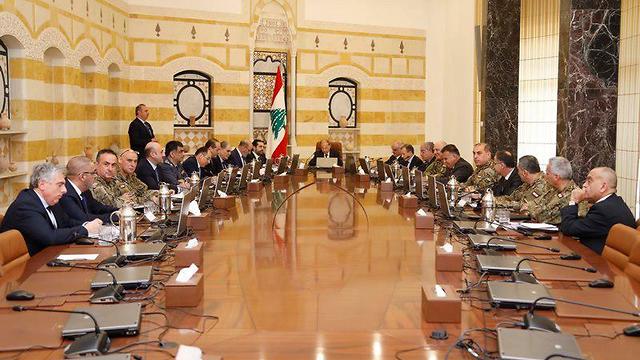
Lebanon's Higher Defense Council

Lebanon’s Higher Defense Council

Lebanon’s Higher Defense Council is headed by President Michel Aoun and also includes Prime Minister Saad Hariri and the ministers of defense, foreign affairs, finance, interior and economics.

Earlier Wednesday, Energy Minister Yuval Steinitz stressed that Israel seeks a diplomatic solution to the dispute with Lebanon over territorial and maritime boundaries, but warned any aggression will be met with force.

“I think both Israel and Lebanon are interested in a diplomatic solution. They should not make any threats, though, and definitely not infiltrate our economic waters,” Steinitz told Ynet.

He warned that “if heavens forbid we are attacked, the response would be a lot more severe, quick and unequivocal than in the past.”

Energy Minister Yuval Steinitz (Photo: Avi Moalem)

Energy Minister Yuval Steinitz (Photo: Avi Moalem)

Lebanon’s leadership vowed on Tuesday to act to prevent Israel from building a wall on Lebanese land at the frontier, and threatening an offshore energy block in disputed waters.

Israel says the wall it is building is on Israeli sovereign land. The Lebanese government says it passes through territory that belongs to Lebanon but which lies on the Israeli side of the Blue Line, where the UN demarcated Israel’s withdrawal from southern Lebanon in 2000.

Lebanon also has an unresolved maritime border dispute with Israel over a triangular area of sea of around 860 sq km (330 square miles) that extends along the edge of three of five blocks Lebanon put to tender early last year.

Lebanon in December approved a bid by a consortium of France’s Total, Italy’s Eni and Russia’s Novatek for two blocks. One of the awarded blocks, Block 9, borders Israeli waters, and Israel claims it belongs to it.
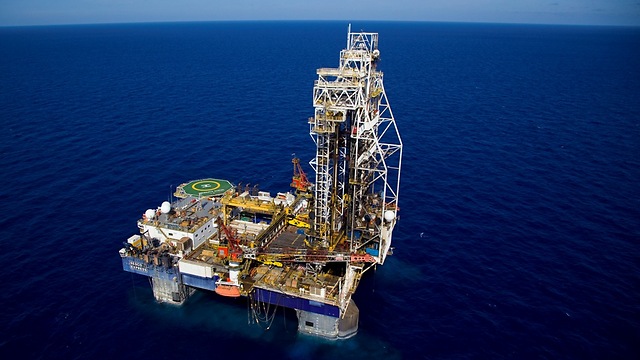
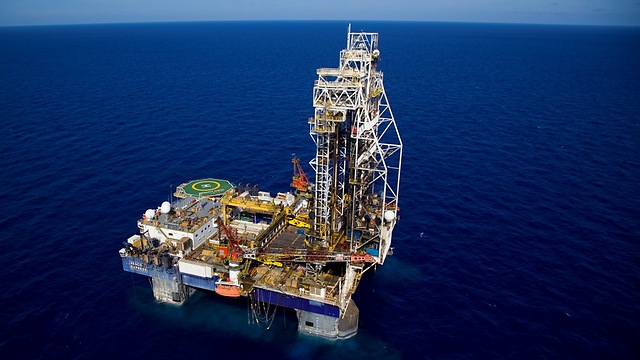
The Leviathan gas field

The Leviathan gas field

Steinitz said Israel was willing to accept American mediation to resolve the issue diplomatically. “There was international mediation on the matter in the past. We were close to reaching a compromise in 2013, but the whole thing collapsed at the eleventh hour,” he said.

The energy minister stressed, however, that “let there be no doubt, the State of Israel is the strongest nation in the region, and we will defend our economic waters and our gas rigs and fields.”

US Secretary of State Rex Tillerson is expected to visit the Middle East, and particularly Lebanon, soon to help in mediation between Jerusalem and Beirut over the two issues.

Washington has already sent the Assistant Secretary of State for Near Eastern Affairs, David Satterfield, to Lebanon for a surprise visit. He met with senior government officials on Tuesday to discuss the border disputes.

The United Nations Interim Force in Lebanon (UNIFIL) is also trying to calm down the tensions by facilitating talks between IDF representatives and their counterparts in the Lebanese army.

The Shiite Lebanese terror group Hezbollah, meanwhile, began disseminating flyers Tuesday with an overt threat to Israel, saying, “Whoever harms gas and oil sites in Lebanese economic waters, their own sites will be harmed, and they know Lebanon is fully capable of doing so.”

“I didn’t need these explicit threats,” Steinitz said. “Energy security and the protection of our energy installations—and to a great extent the gas rigs as well—is at the top of our list of priorities,” he said.

Describing the threat of anti-ship and ballistic missiles from Lebanon, Steinitz said that “On this matter, there is also a lot being done to defend ourselves. Israel is more or less the world champion in anti-missile technology: The Iron Dome, David’s Sling, Barak 8, and other things we will no doubt develop in the future. But we are definitely concerned, and we are not idle on this matter.”

Steinitz stressed that despite the threats from Hezbollah, Israel will continue drilling for gas.

“We have to open up our energy sources, primarily the massive gas fields we found in the Mediterranean Sea—Leviathan, Karish and Tanin,” he said. “It’s important not just for economic and geopolitical reasons, but also for diplomatic reasons—our ability to sell gas to Europe.”

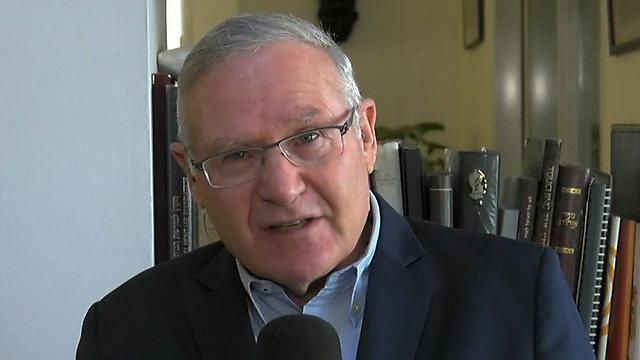
Maj. Gen. (res.) Amos Yadlin, the head of the Institute for National Security Studies (INSS) and the former head of Military Intelligence, said Hezbollah was merely trying to find other pretenses to attack Israel.

“The Iranians and Hezbollah are planning on building a precision missiles factory in Lebanon. Hezbollah can’t justify this to the Lebanese people and is looking for other reasons that it could possibly explain. One of these reasons is the gas field, and the other is an overground obstacle that Israel is building on the border,” Yadlin said.
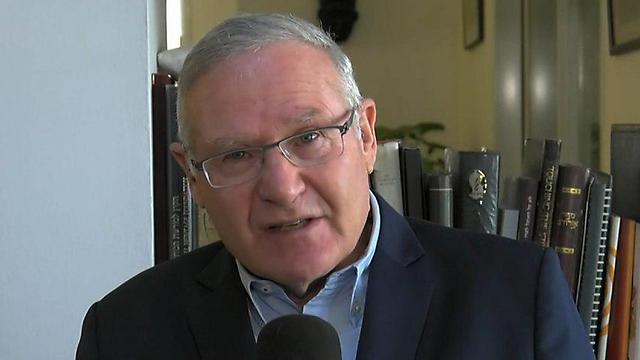
Amos Yadlin (Photo: Matan Turkia)

Amos Yadlin (Photo: Matan Turkia)

Yadlin rejected Lebanese claims that the Israeli border wall was being built on Lebanese territory. “There is no complete overlap between the border as it was determined by the UN as part of Resolution 425 in 2000 and the security fence Israel built,” he explained. “Between the fence and the real border there is an area referred to as an enclave. The Lebanese got used to it being theirs, even though it’s ours. The obstacle… is definitely south of the line marked by the UN. Hezbollah is trying to create a border dispute that doesn’t exist. It’s the same with the gas field.”

 The INSS chief said that while Hezbollah has precise Russian P-800 Oniks (Yakhont) missiles they got from Syria, which could hit the gas rigs, Israel has its own defensive and offensive measures against such missiles. “We’ll see the results if a conflict breaks out,” he said.