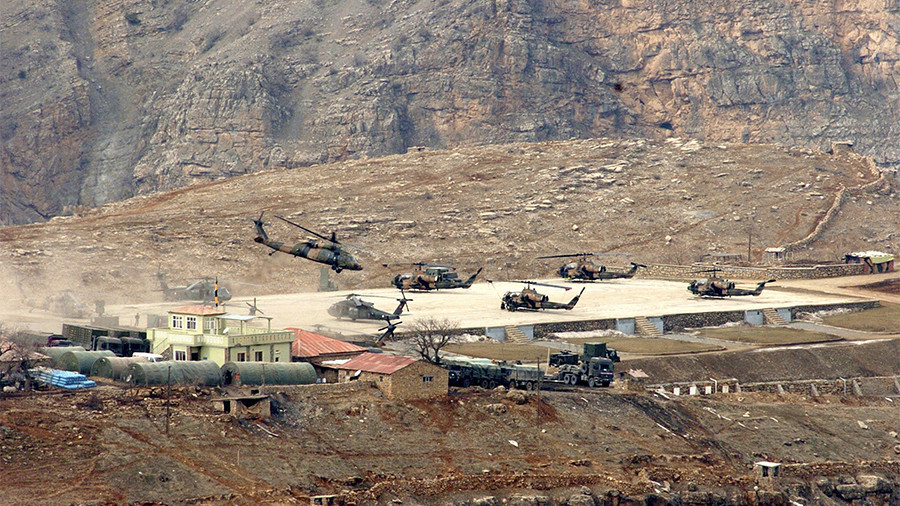
“One of our helicopters was downed just recently,” Erdogan said as he spoke to a member of the ruling Justice and Development Party (AKP) in Istanbul. “These things will happen, we are in a war,” the president said, adding that even though Turkey “might lose a helicopter,” the perpetrators of the attack will “pay a heavy price.”
The president also said the Turkish Armed Forces “destroyed many missile depots” of the Kurdish militias they are battling in the Afrin region.Turkish Prime Minister Binali Yildirim later told journalists that two soldiers were killed in the crash. However, he said that the cause of the incident is still unclear.
“We don’t have exact evidence or document to determine that it went down with any outside interference,” Yildirim told reporters on Saturday, as cited by AP. A representative of the Kurdish militias said that the chopper was shot down by Kurdish fighters over an area located northwest of Afrin, as reported by AP.
The Turkish Armed Forces also confirmed the incident and the deaths, saying that the helicopter had “crashed.” It is also unclear where the incident took place. Yildirim said that it occurred in Syria’s northern Afrin province. However, Anadolu Agency earlier reported that the helicopter crashed in the southern Turkish province of Hatay.
The Turkish General Staff also said on Saturday that the armed forces “destroyed” 36 targets and “neutralized” 79 militants in the airstrikes carried out in the Afrin region overnight.The Turkish Operation Olive Branch in the Afrin region in northern Syria entered its fourth week on Saturday. The campaign followed Ankara’s promises to “strangle” the new Border Security Force (BSF) in Syria.

Earlier in January, the US-led coalition announced that it would help create the 30,000-strong BSF, half of which would be made up of the Kurdish Syrian Democratic Forces (SDF) alliance. Ankara was angered by the fact that the main force behind the SDF is the Kurdish People’s Protection units (YPG), linked to the Kurdistan Workers’ Party (PKK). The latter is designated as a terrorist group by Turkey.
Erdogan has recently stated that once the Afrin operation is over, Turkey’s next target could be Idlib.“We want our Syrian brothers and sisters to return to their land, and now we want to do the same in Idlib what we have done in Afrin,” he said on Thursday.
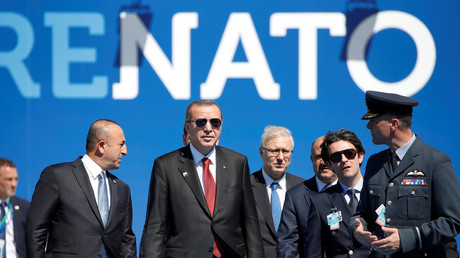
As the operation in northern Syria continues, Turkey, a NATO member since 1952, now seems to be straining the patience of its allies. During the first week of the campaign, Germany froze all decisions on supplying weapons to Ankara, including upgrades to the German-made Leopard tanks currently used by Turkey.
Earlier this week, the French president and foreign minister warned Ankara against the invasion and accused it of “adding war to war” – albeit in interviews, not official statements. Ankara’s operation in Afrin has also caused serious tensions with its major ally, the US. Washington later said it would cease providing military aid to the Kurds. The US’ arming of the Kurdish Forces – especially the YPG – has been repeatedly slammed by Turkey.
Source: After downing of Israeli F-16, Iran warns: ‘Era of Israeli strikes over’ | The Times of Israel
Tehran, Syria deny ‘lies’ that Iranian UAV that sparked northern clashes entered Israeli territory, insist it was gathering intel on IS; IDF issues footage of drone’s destruction
Iranian foreign ministry spokesman Bahram Ghasemi said Syria “has the right to legitimate self-defense. To cover their crimes in the region, Israeli officials are resorting to lies against other countries.”
The deputy chief of Iran’s Revolutionary Guards warned, meanwhile, that his country could “bring hell upon the Zionist regime.”
Brigadier General Hossein Salami refused to confirm to the Tasnim news agency that an Iranian drone had been shot down. “We cannot confirm this report on the drone because Israelis are liars … if Syrians confirm it, Iran will confirm it as well,” said Salami, according to a Reuters translation.
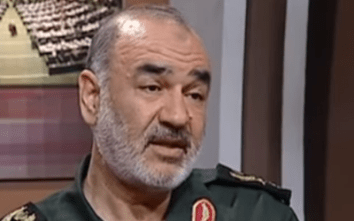
But he warned that Tehran had the capability to destroy all US army bases in the region and to “bring hell upon the Zionist regime.”
A Syrian military official said that his country would continue to respond in kind to all attacks on its soil.
“Our defense systems hit a number of missiles as well as an Israeli aircraft that had been carrying out attacks south of the Damascus capital, to its west and on the outskirts of Homs,” the Syrian official told the Lebanese El Nashra news outlet.
He added that the damage sustained from the Israeli aircraft fire was limited to property, but acknowledged that a number of soldiers had been injured as well.
The Hezbollah-affiliated Al Mayadeen TV station claimed that the Syrian military had managed to intercept 70 percent of the dozens of missiles fired by Israel’s warplanes.
The Israeli army responded to the drone infiltration with strikes on Iranian targets, including the drone’s launch site — the Tiyas Military Airbase near Palmyra — which the army said it hit in “a complicated surgical strike.” The strike reportedly targeted a facility housing the unmanned aircraft’s Iranian operators.
Israeli warplanes flying over Syria met heavy anti-aircraft fire. The military said one of its pilots was seriously wounded as a result of an emergency evacuation from his F-16 jet targeted by missiles. The F-16 crashed in northern Israel. One pilot was evacuated to a hospital in serious condition. A second pilot was lightly wounded.
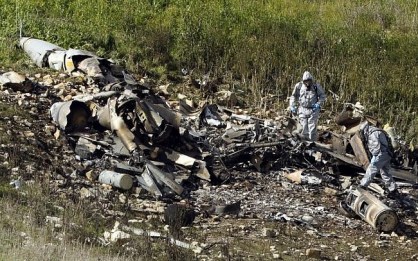
If the plane was in fact shot down by enemy fire, it could mark the first such instance for Israel since 1982 during the first Lebanon war.
Damascus residents celebrated the news.
Wassim Elias, 39, a government employee, called it retribution for the many Israeli raids on Syrian soil before. “This earned the Syrian army and every Syrian citizen prestige. This is what we have always demanded,” he said.
Firas Hamdan, 42, a public servant, said such Syrian responses will ensure no more Israeli attacks in Syria. “Such attacks should be confronted and the response should be tougher to give the Israelis a lesson.”
A Syrian lawmaker, Feras Shehabi, said the response marked a “major shift in the balance of power in favor of Syria and the axis of resistance.” He said “Israelis must realize they have no longer superiority in the skies or on the ground.”
Military spokesman Jonathan Conricus said the army had information on the drone’s mission, but would not go into details, saying only that it was “on a military mission sent and operated by Iranian military forces.”
He warned that Syria and Iran were “playing with fire,” but stressed that his country was not seeking an escalation.
Watch: IDF pilot parachutes down after ejecting from aircraft
“This is the most blatant and severe Iranian violation of Israeli sovereignty in the last years,” Conricus told journalists in a phone conference. “That’s why our response is as severe as it is.”
The confrontation was the most serious between Israel and Iran since the start of the civil war in Syria in 2011.
Diplomatic sources said Israel has appealed to Russia to intervene and prevent further escalation. Similar calming messages were reportedly passed on to Washington.
Sirens sounded in northern Israel throughout the morning as a result of the massive Syrian anti-aircraft fire. Several Syrian anti-aircraft missiles fell inside Israeli territory, causing no damage.
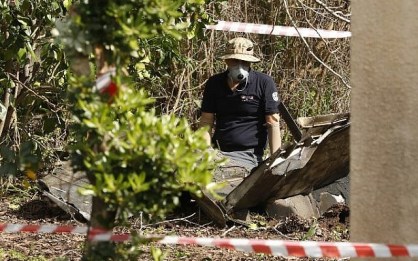
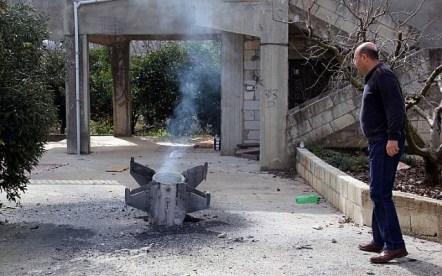
Photos from Jordan showed the remains of anti-aircraft missiles that exploded in a field.


In Lebanon, too, missile parts rained down from the sky.
IDF Spokesman Brig. Gen. Ronen Manelis said Israel held Iran directly responsible for the incident.
“This is a serious Iranian attack on Israeli territory. Iran is dragging the region into an adventure in which it doesn’t know how it will end,” he said in a special statement. “Whoever is responsible for this incident is the one who will pay the price.”
IDF Chief of Staff Lt. Gen. Gadi Eisenkot and Air Force chief Maj. Gen. Amikam Norkin were leading operations from army headquarters in Tel Aviv, with Prime Minister Benjamin Netanyahu holding security assessments and approving operations in real time.
By noon Defense Minister Avigdor Lieberman was convening the top brass at military headquarters in Tel Aviv to discuss a further response.
“The IDF is following events and is fully prepared for further action according to decisions and need,” the military said.
Retired Lt. Col. Reuven Ben-Shalom, a former Air Force pilot, said the fierce Israeli response was meant not only to counter the immediate threat but also to send “very clear messages” to show Iran how deep Israel’s knowledge was of its activity in Syria.
“The fact that a drone like this is identified, tracked and intercepted so smoothly by the Israeli air force demonstrates our capabilities, demonstrates our resolve not to allow the breach of Israeli sovereignty,” he said. “I think it’s good that our enemies learn and understand these capabilities.”

Israel has been warning of late of the increased Iranian involvement along its border in Syria and Lebanon. It fears Iran could use Syrian territory to stage attacks or create a land corridor from Iran to Lebanon that could allow it to transfer weapons more easily to Hezbollah.
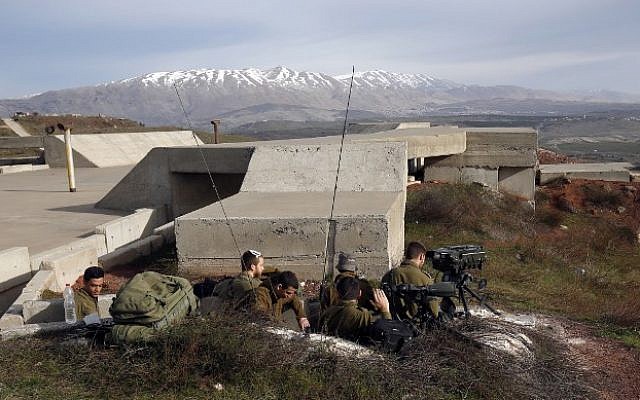
The Israeli Cabinet recently held a meeting on the Golan Heights near the border with Syria to highlight new threats, which are attributed to Iran’s growing confidence given Assad’s apparent victory in Syria thanks to their help.
Agencies contributed to this report.
The Israeli Cabinet recently held a meeting on the Golan Heights near the border with Syria to highlight new threats, which are attributed to Iran’s growing confidence given Assad’s apparent victory in Syria thanks to their help.
Agencies contributed to this report.
In a major flare up on Israel’s northern border, Israel carried out a large-scale attack against Syrian air defenses and Iranian targets in the war-torn country after an Israeli F-16 crashed during operations to strike Iranian targets in Syria early Saturday morning.
The operation, which was carried out by eight Israeli jets struck 12 targets in Syria, including thee Syrian SA5 and SA17 air defense batteries and four Iranian targets.
According to Syrian media reports, Israel struck the Abu Al-Thaaleb airbase near the town of Kiswah, which is home to Syria’s 1st armored division and part of the Islamic Republic’s buildup in Syria.
The Israeli attack was met with anti-aircraft fire, triggering air raid sirens in the Golan Heights and upper Galilee, warning residents of potential rocket strikes. According to IDF Spokesman Brig.-Gen. Ronen Manelis, several missiles hit open areas in northern Israel.
“Iran and Syria are playing with fire,” he said. “The results of our strikes are not yet fully known to them (Iran), and they may be surprised when they discover what we targeted.”
https://maphub.net/embed/24774
Early on Saturday morning, an Iranian drone, which was launched from a Syrian base in the Homs desert, was identified approaching Israeli airspace by the IDF around 4am, setting off alarms across Golan Heights and the Jordan Valley. The drone entered Israel via Jordanian airspace and flew for a minute and a half before it was intercepted by an Israeli Air Force Apache helicopter near the town of Beit She’an.
“We waited for it to cross into our territory,” said IAF chief of air staff Brigadier General Tomer Bar who stressed that it was important for Israel “to get our hands on the drone that was operated by the Iranians.”
According to Manelis, while the drone was Iranian and navigated by Iranian operators, Syria’s choice to fire its air defenses against Israeli jets shows that it has chosen to interfere in Israel’s fight against Iranian activity in the country.
“Iran’s mask has been removed. It is clear that they are using Syria as a launchpad for activity against Israel,” he said. “Iran is dragging the region into an adventure and will pay the price for it.”
In response, Israeli aircraft targeted the drone’s launch site deep inside Syrian territory in a “complicated surgical strike,” in which heavy anti-aircraft missile fire was launched by the Syrians against the Israeli jets.The pilots of the F-16 shot down in northern Israel arrive at Rambam hospital. (SHAI VAKNIN / TPS)
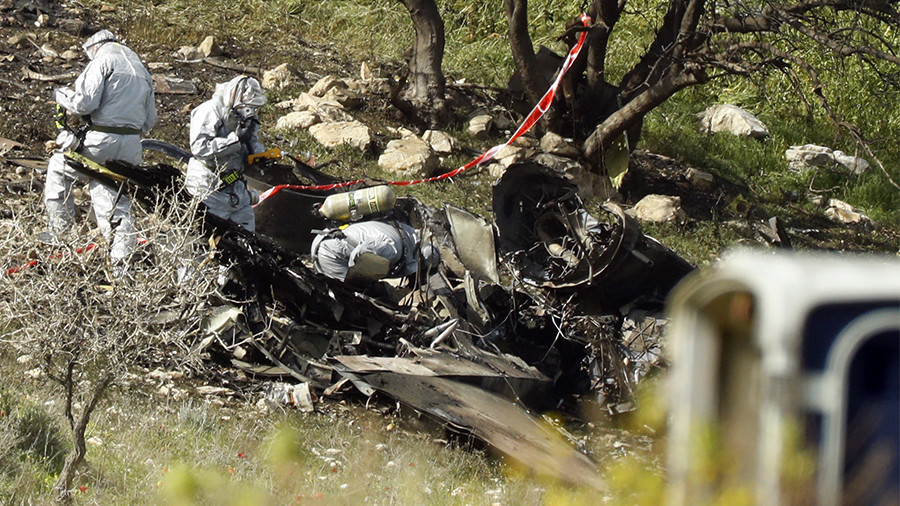
During the operation, Syrian anti-aircraft missiles were fired at the aircraft and the pilots of one of the planes ejected themselves when they recognized that one of the missiles had locked onto their jet.
The pilots fell inside Israel and were evacuated to hospital. The army later cleared for release that one of the pilots was severely wounded while the other one was slightly injured.
The IDF could not confirm whether the jet, which crashed in Beit Netofa Valley in the Lower Galilee, was hit by the anti-aircraft missiles or if it crashed for other reasons. Brig.-Gen. Bar stated that the entire incident is under investigation.
An unidentified Syrian military source was cited as saying that the Syrians hit more than one Israeli plane. However, the IDF denied this report and confirmed that only one aircraft was damaged.
It was the first time that Israel lost an aircraft in a combat situation since 2006 when an Israeli Yasour (Sikorsky CH-53) helicopter was shot down over Lebanon, killing the entire crew including the first female flight mechanic in Israel’s heavy transport helicopter fleet.
“The IDF will continue to operate against attempts to infiltrate Israeli airspace and will act with determination to prevent any violations of Israel’s sovereignty,” read an earlier statement by the IDF’s Spokesperson’s Unit. “The IDF is prepared for a variety of scenarios and will continue to act as necessary.”
Israel’s top military brass and intelligence services held high-level consultations at headquarters in Tel Aviv with Prime Minister Benjamin Netanyahu,Defense Minister Avigdor Liberman and members of the security cabinet briefed on the situation by IDF Chief of Staff Lt.-Gen. Gadi Eisenkot.
Tensions on Israel’s northern border have been rising in recent months as Israel fears that Iran is entrenching itself deeper into war-torn Syria with its presence on Israel’s borders growing in strength. The smuggling of sophisticated weaponry and the building a precision missile factory in Lebanon for Hezbollah has also been a growing concern for Jerusalem.
On Thursday, regime forces fired at an IDF drone with shrapnel hitting a home in the Druse village of Majdal Shams in the Golan Heights.
Earlier in the week, Israel was reported to have struck an Iranian base west of the capital of Damascus. Syria’s official news agency SANA said Israeli fighter jets flying in Lebanese airspace fired a number of missiles towards the area of Jamraya research center targeting an Iranian base. While a number of missiles did hit their intended targets, several others were intercepted by the Syrian air defenses, the report said.
Israel rarely comments on foreign reports of military activity in Syria but has publicly admitted to having struck over 100 Hezbollah convoys and other targets in Syria, with Netanyahu saying that strikes will continue when “we have information and operational feasibility.”

Debka File February 10, 2018
Source: Russian troops were involved in Iranian-Syrian clash with Israel
{Is there any doubt now? Do you get the feeling this was a setup? – LS}
The Syrian anti-air missiles which hit an Israeli F-16 early Saturday, Feb. 10, are part of a system operated with and commanded by the Russians from their Kheimim air base. The F-16 was shot down during an Israeli air strike against the Iranian facility at the T-4 air base near Palmyra, which launched a UAV into Israeli airspace that morning. The ongoing clash has therefore gone way beyond an Israeli confrontation with Syria and Iran and marks a serious deterioration in the security situation on Israel’s northern border.
It is unlikely that Israel’s attempt through its diplomatic channels to calm the situation and “restore the status quo ante” will succeed. This situation underwent a fundamental strategic change when Iran sent a UAV over Israel from a Syrian base it shares also with the Russians. It may be assumed that the Russian command, which keeps a close eye on all Syria’s air facilities, was in the know about the Iranian operation and was not surprised when Israeli warplanes retaliated. One of those jets was shot down and its two pilots landed safely in northern Israel. One of them was badly injured.
Whether or not the Russians and Iranians discussed likely Israeli retaliation and decided to ambush one of the planes has yet to be investigated. But it is significant that the second, much broader wave of Israeli air strikes against a dozen Syrian and Iranian targets later Saturday morning, was also attacked by air defense missiles that were fired from Lebanon as well. This has brought Hizballah into the Syrian-Iranian-Russian equation, and even the Lebanese army. Civilian air traffic was consequently halted in northern Israel.
The parties involved in the incident don’t yet appear ready to call it a day. Each is holding out to have the last word, say DEBKAfile’s strategic analysts.
As matters stood at 11 a.m. Saturday morning, Israel and the IDF had come off worst, although another wave of Israeli air strikes was then launched against a broad range of Iranian and Syrian targets. The downing of an air force jet by a Syrian anti-air weapon, mostly likely an SA-5 (whose range extends into northern Israel) has not been lightly dismissed. All the same, Jerusalem reportedly appealed to Washington and Moscow to use their good services for cutting the clash short. This set a tone in direct contrast to the recent, over-the-top rhetoric of Defense Minister Avigdor Lieberman, especially his unnecessary comment that a two-front conflict is in store in both Syria and Lebanon; and Prime Minister Binyamin Netanyahu’s warnings to hostile forces, “Don’t test us.”
That is exactly what Iran and Syria tried to do on Saturday morning. It is too soon to tell how this confrontation will play out. It is still ongoing. As for Russia, DEBKAfile has repeatedly stressed that the regular dialogue Netanyahu conducts with President Vladimir Putin is of limited value. The two leaders have achieved a certain measure of understanding but, in any situation, Putin is sue to be guided solely by Moscow’s strategic interests – even at Israel’s expense.
“Iran and Syria are playing with fire,” the Israel Defense Forces (IDF) said in a statement on Twitter. The military added that it acts “with determination” against “the attempt of the Iranian-Syrian attack and the violation of Israeli sovereignty.” “The IDF is prepared for a variety of scenarios and will continue to act as necessary.”
The IDF lashed out at the Syrian military, accusing the state of interference in the Israeli-Iranian incident, as well as at Iran for “using Syria as a launchpad for activity against Israel.”
However, the IDF insisted that Israel does not seek escalation with the two states. “We are willing, prepared and capable to exact a heavy price from anyone that attacks us, however we are not looking to escalate the situation,” the IDF said, insisting that what they’ve done was merely “a defensive effort triggered by an Iranian act of aggression and we are defending our airspace our sovereignty and civilians.”
Tensions between Israel, Iran, and Syria have been heating up since early Saturday after the IDF intercepted an Iranian UAV, which crossed from the territory of Syria into Israel. The Israeli military responded by targeting a Syrian military base, where they believed the operator of the drone to be located. Later that day, an Israeli F-16 fighter jet crashed after Damascus responded with anti-aircraft fire to an Israeli operation in its territory. The pilots ejected and survived the incident.
In response, the IDF said it struck 12 Iranian and Syrian targets in Syria, including air defense batteries, adding that that during the attack, “anti-aircraft missiles were fired towards Israel, triggering alarms that were heard in Northern Israel.”
Following an exchange of fire, Israeli Prime Minister Benjamin Netanyahu held security consultations, approving the necessary actions in real time following the incidents, official Israeli sources told Haaretz.
Air traffic at Ben Gurion International Airport, 20km from Tel Aviv, was halted for around 15-20 minutes amid security tensions, Israeli media reported.
Iran and Syria on Saturday denied that the unmanned drone Israel said it shot down violated the Jewish state’s airspace, calling Israeli allegations “lies” and saying the drone was on a regular mission gathering intelligence on Islamic State.
A statement on Central Military Media, which is allied with the Syrian military, called a subsequent Israeli attack on a drone station in Syria’s central Homs province a “terrorist act,” warning of “a tough and serious response.”
The Israeli military called the drone infiltration a “severe and irregular violation of Israeli sovereignty” and said Iran would be held responsible for its outcome, marking a dramatic escalation in tensions along Israel’s northern border.
The drone incident led to a barrage of Israeli airstrikes on Iranian and Syrian targets in Syria. Syria responded with heavy anti-aircraft fire that set off multiple warning sirens in Israel and managed to down one Israeli F-16 in Israeli territory, seriously wounding a pilot.
A spokesman for Iran’s Supreme National Security Council said the Syrian response to Israel’s air force was “a clear warning to Israel. The era of Israeli strikes on Syria is over.”
He vowed a “relentless response” to “all further aggression.”
A Syrian statement said Israeli jets targeted a drone base in central Syria whose mission is to gather intelligence on IS in the area. It said the station was hit while drones were on regular missions in the country’s desert in Homs province. The statement said it was “a lie and misleading” to say the drone had entered Israel’s airspace.
Iranian foreign ministry spokesman Bahram Ghasemi said Syria “has the right to legitimate self-defense. To cover their crimes in the region, Israeli officials are resorting to lies against other countries.”
The deputy chief of Iran’s Revolutionary Guards warned, meanwhile, that his country could “bring hell upon the Zionist regime.”
Brigadier General Hossein Salami refused to confirm to the Tasnim news agency that an Iranian drone had been shot down. “We cannot confirm this report on the drone because Israelis are liars … if Syrians confirm it, Iran will confirm it as well,” said Salami, according to a Reuters translation.
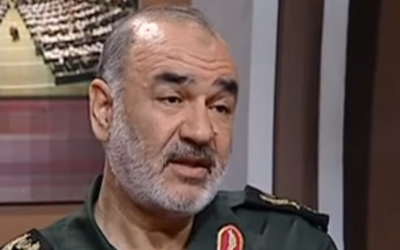
But he warned that Tehran had the capability to destroy all US army bases in the region and to “bring hell upon the Zionist regime.”
A Syrian military official said that his country would continue to respond in kind to all attacks on its soil.
“Our defense systems hit a number of missiles as well as an Israeli aircraft that had been carrying out attacks south of the Damascus capital, to its west and on the outskirts of Homs,” the Syrian official told the Lebanese El Nashra news outlet.
He added that the damage sustained from the Israeli aircraft fire was limited to property, but acknowledged that a number of soldiers had been injured as well.
The Hezbollah-affiliated Al Mayadeen TV station claimed that the Syrian military had managed to intercept 70 percent of the dozens of missiles fired by Israel’s warplanes.
The Israeli army responded to the drone infiltration with strikes on Iranian targets, including the drone’s launch site — the Tiyas Military Airbase near Palmyra — which the army said it hit in “a complicated surgical strike.” The strike reportedly targeted a facility housing the unmanned aircraft’s Iranian operators.
Israeli warplanes flying over Syria met heavy anti-aircraft fire. The military said one of its pilots was seriously wounded as a result of an emergency evacuation from his F-16 jet targeted by missiles. The F-16 crashed in northern Israel. One pilot was evacuated to a hospital in serious condition. A second pilot was lightly wounded.
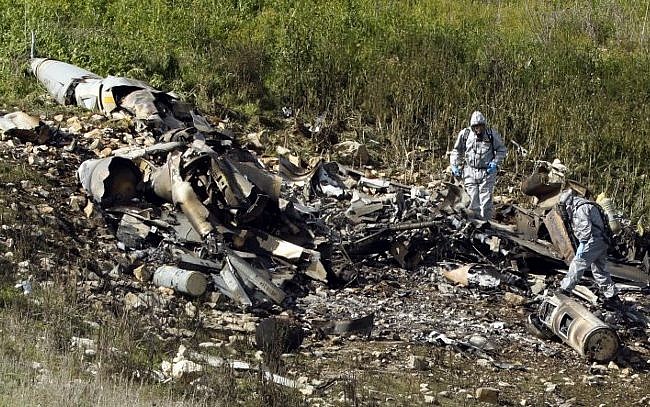
If the plane was in fact shot down by enemy fire, it could mark the first such instance for Israel since 1982 during the first Lebanon war.
Damascus residents celebrated the news.
Wassim Elias, 39, a government employee, called it retribution for the many Israeli raids on Syrian soil before. “This earned the Syrian army and every Syrian citizen prestige. This is what we have always demanded,” he said.
Firas Hamdan, 42, a public servant, said such Syrian responses will ensure no more Israeli attacks in Syria. “Such attacks should be confronted and the response should be tougher to give the Israelis a lesson.”
A Syrian lawmaker, Feras Shehabi, said the response marked a “major shift in the balance of power in favor of Syria and the axis of resistance.” He said “Israelis must realize they have no longer superiority in the skies or on the ground.”
Israel said it later targeted at least 12 other sites “including three aerial defense batteries and four Iranian targets that are part of Iran’s military establishment in Syria,” according to a military statement.
Military spokesman Jonathan Conricus said the army had information on the drone’s mission, but would not go into details, saying only that it was “on a military mission sent and operated by Iranian military forces.”
He warned that Syria and Iran were “playing with fire,” but stressed that his country was not seeking an escalation.
Watch: IDF pilot parachutes down after ejecting from aircraft
“This is the most blatant and severe Iranian violation of Israeli sovereignty in the last years,” Conricus told journalists in a phone conference. “That’s why our response is as severe as it is.”
The confrontation was the most serious between Israel and Iran since the start of the civil war in Syria in 2011.
Diplomatic sources said Israel has appealed to Russia to intervene and prevent further escalation. Similar calming messages were reportedly passed on to Washington.
Sirens sounded in northern Israel throughout the morning as a result of the massive Syrian anti-aircraft fire. Several Syrian anti-aircraft missiles fell inside Israeli territory, causing no damage.

Photos from Jordan showed the remains of anti-aircraft missiles that exploded in a field.
In Lebanon, too, missile parts rained down from the sky.

IDF Spokesman Brig. Gen. Ronen Manelis said Israel held Iran directly responsible for the incident.
“This is a serious Iranian attack on Israeli territory. Iran is dragging the region into an adventure in which it doesn’t know how it will end,” he said in a special statement. “Whoever is responsible for this incident is the one who will pay the price.”
IDF Chief of Staff Lt. Gen. Gadi Eisenkot and Air Force chief Maj. Gen. Amikam Norkin were leading operations from army headquarters in Tel Aviv, with Prime Minister Benjamin Netanyahu holding security assessments and approving operations in real time.
By noon Defense Minister Avigdor Lieberman was convening the top brass at military headquarters in Tel Aviv to discuss a further response.
“The IDF is following events and is fully prepared for further action according to decisions and need,” the military said.
Retired Lt. Col. Reuven Ben-Shalom, a former Air Force pilot, said the fierce Israeli response was meant not only to counter the immediate threat but also to send “very clear messages” to show Iran how deep Israel’s knowledge was of its activity in Syria.
“The fact that a drone like this is identified, tracked and intercepted so smoothly by the Israeli air force demonstrates our capabilities, demonstrates our resolve not to allow the breach of Israeli sovereignty,” he said. “I think it’s good that our enemies learn and understand these capabilities.”

Israel has been warning of late of the increased Iranian involvement along its border in Syria and Lebanon. It fears Iran could use Syrian territory to stage attacks or create a land corridor from Iran to Lebanon that could allow it to transfer weapons more easily to Hezbollah.
The Israeli Cabinet recently held a meeting on the Golan Heights near the border with Syria to highlight new threats, which are attributed to Iran’s growing confidence given Assad’s apparent victory in Syria thanks to their help.
Agencies contributed to this report.
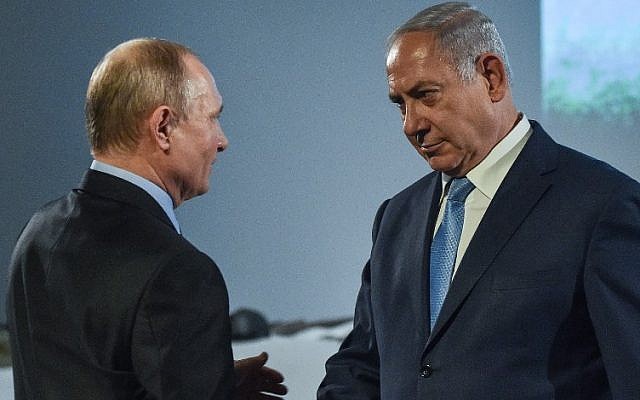
Israel has appealed to Russia to intervene and prevent further escalation after an Iranian drone was shot down over Israel Saturday, leading to “large-scale” Israeli strikes in Syria and heavy Syrian counterfire.
Diplomatic sources said Israel was in contact with officials in Moscow, seeking to convey a message to Syria and Iran that though it had landed a heavy blow in response to the drone incident, it was not interested in further violence.
Similar calming messages were reportedly passed on to Washington.
Moscow, in a statement, called for “restraint” of all parties in Syria and said it considered risking the lives of Russian soldiers “absolutely unacceptable” following large-scale Israeli air strikes inside Syria.
“We strongly call on all sides involved to show restraint and avoid all acts that could lead to complicating the situation further,” the Russian foreign ministry said.
“It is absolutely unacceptable to create threats to the lives and security of Russian soldiers that are in the Syrian Arab Republic on the invitation of the legal government to assist in the fight against terrorism,” it added.
Israel has told Moscow that Saturday’s events are proof that its warnings of Iranian entrenchment and growing boldness in Syria were merited, sources told the Ynet news site.
Israeli Prime Minister Benjamin Netanyahu has held a series of meetings in recent months with Russian President Vladimir Putin on Iran’s influence in war-torn Syria and Lebanon.
Netanyahu has been seeking to persuade Russia to limit Iran’s presence near Israeli territory and to stop it from entrenching itself militarily in Syria.
Israel struck a dozen Syrian and Iranian targets inside the civil war-torn country on Saturday in what it said was a “large-scale” attack, after the Iranian drone was shot down over Israeli territory, and an Israeli fighter jet subsequently crashed under fire from Syrian air defenses in a severe increase in tensions.
The confrontation was the most serious between Israel and Iran since the start of the civil war in Syria in 2011.
Russia, Iran and Lebanon’s Hezbollah — which is backed by Tehran — all support Syrian President Bashar Assad in the civil conflict.
In a meeting in Moscow last month, Netanyahu reiterated Israel’s concerns with what he described as Iranian attempts to establish a military presence in Syria and produce weapons capable of precision strikes against Israel there.
“We won’t accept either of those, and will act according to our needs,” Netanyahu said following the meeting with Putin.
Israel remains technically at war with Syria and occupies a swathe of the strategic Golan Heights that it seized in the Six Day War of 1967 and later annexed in a move never recognized by the international community.
On Tuesday, Netanyahu took members of his security cabinet for a tour of the Israeli side, where they were briefed by the military on the situation.
“We want peace, but are prepared for any scenario, and suggest that nobody tries us,” he said.
Israel has sought to avoid direct involvement in the Syrian war, but acknowledges carrying out air strikes there to stop what it says are advanced arms deliveries to Hezbollah.

An Iranian unmanned aircraft entered Israeli territory from Syria early Saturday morning and was shot down by the Israeli Air Force, the army said. In response to the breach, the air force struck Iranian targets in Syria.
The Syrian army targeted Israeli jets with anti-aircraft missiles during the raid, setting of alarm sirens across the Golan Heights and the Jordan Valley. One anti-aircraft missile fell inside Israeli territory, causing no damage.
An Israeli F-16 went down during the incident. The army said the pilots ejected after being targeted by missiles. The two pilots landed safely and the plane fell in a field near a road in Israeli territory, in the Jezreel valley.
In a statement, the military said the drone incident was “a serious breach of Israeli sovereignty by Iran.” Tehran, it added, was “dragging the region into an adventure, and will pay the price.”
The drone was identified approaching Israeli airspace at around 4 a.m., setting off alarms in the Beit Shean area near the Sea of Galilee. It was identified by air defenses and downed by an Apache helicopter upon entering Israeli territory. The army said the drone’s remains were in Israeli hands.
The IDF said it attacked the drone’s launch site in Syria, the Tiyas Military Airbase near Palmyra, in “a complicated surgical strike.” The strike reportedly targeted a facility housing the unmanned aircraft’s Iranian operators.
Syrian state media said air defenses repelled an Israeli raid, hitting more than one warplane.
Watch: F-16 pilots evacuated after ejecting from plane
Shaul Pinkerfeld, a security officer at Kibbutz Harduf, told Walla news: “A little bit after 6 a.m. we heard explosions. We woke up and understood that there was a plane or the remains of a plane on fire near the kibbutz entrance.
“There have been no special instructions for residents but there is no entering or leaving the kibbutz, and we don’t know for how long.”
Residents of northern Israel reported multiple alarm sirens in the early morning hours, which apparently came both in response to the drone and to Syrian missile launches. Some posted videos of the smoke-filled early morning skies.
The army said Chief of Staff Lt. Gen. Gadi Eisenkot and Air Force chief Maj. Gen. Amikam Norkin were leading operations.
“The IDF is following events and is fully prepared for further action according to decisions and need,” the military said.




 anneinpt
 artaxes
 danmillerinpanama
 davidking1530
 Peter Hofman
 Joseph Wouk
 Peter
Peter Louisiana Steve
 WarSclerotic
Recent Comments