Archive for December 2017

The State Department blinks in the face of Palestinian threats

December 3, 2017

Posted under a slightly different title: The State Department reverts to form | Anne’s Opinions, 3rd December 2017

Last week we were cheering on the State Department, that bastion of anti-Israel attitudes in every American administration, for telling the PLO that their mission was to be closed due to their non-engagement in the “peace process” and for their threats to bring Israeli officials before the International Criminial Corut.

As expected the Palestinians huffed and puffed. Unfortunately they blew the State Department down (metaphorically speaking – so far)/ The State Department blinked, and gave in to the Palestinian threats. As Caroline Glick writes, the State Department dropped the ball:

in response to Tillerson’s notification, the PLO lashed out as the US. Abbas and his advisers launched an all-out assault against President Donald Trump and his team of Middle East envoys led by his son-in-law and senior adviser Jared Kushner and his senior negotiator Jason Greenblatt.

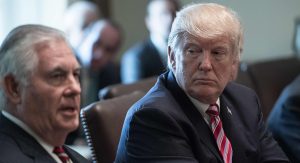
Secretary of State Rex Tillerson and President Donald Trump


PLO-controlled media outlets published a flood of stories which trafficked in antisemitic conspiracy theories against Trump and his Jewish American advisors. The PLO media renewed its allegations that Kushner, Greenblatt and US Ambassador David Friedman are more loyal to Israel than to the US.

Abbas’s media outlets also escalated their criticism of Saudi Arabia, Egypt and the UAE for their focus on combating Iranian aggression. These regimes are selling the Palestinians down the river, the PLO outlets have proclaimed, as Abbas’s flacks have insisted that the PLO will not accept any regional peace.

Relations between Arab states and Israel, the PLO insists, cannot be fostered so long as Israel fails to capitulate to all of the PLO’s demands.

In commentary published at the Gatestone Institute website, Palestinian commentator Bassam Tawil alleges that the Palestinian rejection of the requirements of US law and its assaults against the Trump administration and Sunni Arab states may serve as a pretext for another Palestinian terror campaign against Israel, which will be justified as a response to an American-Israeli-Saudi-Egyptian plot against the Palestinians.

Given that the US is a superpower and the largest state financier of the PA, not to mention the foundation of the PLO’s claim to legitimacy on the world stage, the US might have been expected to respond harshly to the PLO’s threats and slanders. But then, that isn’t the State Department’s way of doing things with the PLO.

Saturday, The Hill online newspaper reported that the State Department had changed its mind. It is no longer interested in following the law. Instead, it has rewritten the law. Now, it’s fine for the PLO to operate in Washington while trampling US law. It just needs to pretend it isn’t doing what it is doing.

According to the State Department spokesman who revealed State’s about face to the media, the PLO mission can continue to operate, but its operations must be “related to achieving a lasting, comprehensive peace between the Israelis and Palestinians.”

And if they aren’t, well, under this new interpretation of the law, the State Department can pretend it hasn’t noticed.

By empowering the PLO to continue to breach US law – with the full expectation of continuing to receive US assistance to the tune of more than $500 million a year – the US has made itself a laughingstock. Neither Hamas nor the PLO will take the US seriously. Any pressure the US attempts to apply toward the PLO to moderate its stand toward Israel will be ignored by Abbas and his cronies in the PLO and Hamas alike.

The Palestinians have taken the Trump administration’s measure. By beating a hasty retreat from its initial decision to stand with the law against the PLO, the State Department has told the PLO that the Trump administration is a paper tiger, at best.

The Trump administration will do nothing against them. Instead, in the face of this contemptuous slap in the face to the US, Vice President Mike Pence will travel to Ramallah next month and have his picture taken with Abbas the “moderate” leader and peace partner.

This then brings us to the second question of how surrendering to PLO threats will influence the US’s regional position. As Tawil reported, Al Quds, a Palestinian paper that reflects the views of Abbas and his associates, blasted the Arab League for focusing on Iran at its most recent foreign ministers’ meeting in Cairo.

For more than a generation, the State Department, and through it US Middle East policy as a whole, have been captivated by the myth that nothing can happen in the Middle East without Israel first capitulating to PLO demands.

By reversing course on closing the PLO mission, and groveling to the threatening PLO, the State Department made a laughingstock of the US and President Trump. The decision to reverse course should itself be reversed, in accordance with US law and in the interest in restoring what it is still possible to restore of US credibility in the Middle East.
There is still a chance for the Untied States to recover its credibility – by moving its embassy to Jerusalem. All it needs is for Donald Trump to refuse to sign the waiver which permits the embassy to remain where it is. Will he refuse to sign and thus move the embassy at last? The media is rife with reports and rumours that Vice President Mike Pence is going to make the fateful announcement on Wednesday – but given the State Department’s record, can we actually rely on this happy event taking place? I’m not so sure. From Arutz Sheva’s account:

Will President Donald Trump fulfill his campaign promise of moving the US embassy in Israel from Tel Aviv to Jerusalem, as recent reports citing unnamed administration officials claim? Or will the president settle with a symbolic move of recognizing Jerusalem as Israel’s capital, as other senior sources have claimed?

Last week, a number of unnamed senior US and Israeli officials were cited in reports claiming that the Trump administration is planning on finally implementing 1995 law requiring the executive branch to relocate the US embassy from Tel Aviv to Jerusalem, and to recognize Jerusalem as Israel’s undivided capital.

Other reports claimed that the White House was not planning an embassy move in the near future, but was poised to declare that it recognized Jerusalem as Israel’s capital.

While White House officials publicly refused to verify the claims, officials in Jerusalem have noted the timing of Vice President Mike Pence’s comments at the 70th anniversary of the United States General Assembly vote on Resolution 181, endorsing the establishment of a Jewish state.

The Palestinians, as expected, have reverted to form and are issuing threats in all directions:

Palestinian President-for-life Mahmoud Abbas has called on the leaders of eight Arab and other nations to intervene with Trump to prevent the embassy move. As with the closure of the PLO offices, the Palestinians threatened to abandon the peace process – which is surely the most cynical move ever made given that the only reason the peace process has stalled is because of the refusal of the Palestinians themselves to accept a Jewish presence anywhere in the Middle East:

Abbas “warned categorically that taking such a step would lead to the destruction of the peace process and would bring the region into an uncontrollable situation,” according to his spokesperson Nabil Abu Rudeineh.

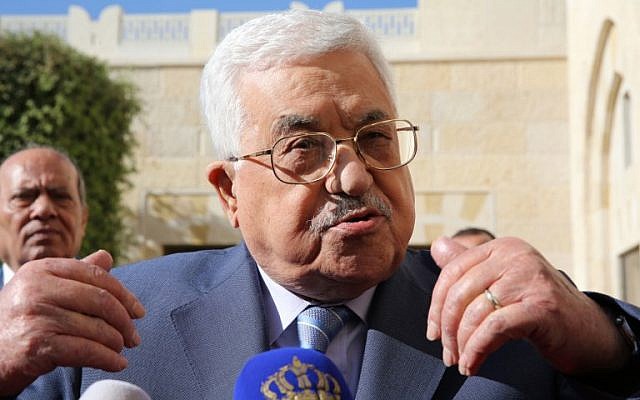
Mahmoud Abbas, President for life

On Wednesday Abbas ordered his foreign minister to demand the Arab League and the Organization of Islamic Cooperation hold emergency sessions regarding the possible US measures.

On Friday, a delegation from the Palestinian Authority reportedly met with presidential adviser Jared Kushner to warn that if the White House announces the relocation of the US Embassy from Tel Aviv to Jerusalem, or if Trump makes remarks acknowledging Jerusalem as Israel’s capital, this would mark the end of the peace process, according to Israeli news reports.

Any such steps “will kill the negotiations,” the PA delegation — which included Majed Faraj and Saeb Erekat, senior officials close to Abbas — told Kushner, Hadashot news reported.
Hamas is still determined to remain relevant (even while begging Fatah to take over the running of the Gaza strip), and has threatened another intifada if the US recognizes Jerusalem as Israel’s capital.

Caroline Glick had plenty to say about this as well in her article “From Amman to Jerusalem“. She starts by reminding us of a diplomatic incident that almost spiralled out of control, which King Abdullah did nothing to quell:

Five months ago, 28 year old Ziv Moyal, an Israeli security officer at Israel’s embassy in Amman, was stabbed in his apartment by a Jordanian assailant, whom he shot and killed.

Moyal also accidentally killed his Jordanian landlord, who was present on the scene.

In the immediate aftermath of the incident, incited by the state-controlled media, the Jordanian public was whipped into an anti-Israel frenzy. In short order, a mob surrounded the embassy, to which Moyal and another 20 Israeli diplomats fled immediately after the shooting.

Violent demonstrations outside the Israeli embassy in Amman

For 24 hours, those Israeli diplomats, led by Ambassador Einat Schlein were besieged.

Despite the fact that they are barred from doing so under the Vienna Convention, Jordanian authorities demanded to interrogate Moyal. By refusing to enable the diplomats to safely return to Israel until Moyal submitted to questioning, they effectively held Schlein and her colleagues hostage.

Jordan is still playing its duplicitous game:

But Jordan isn’t interested in ending the crisis it deliberately precipitated.

On Thursday, Reuters quoted a Jordanian diplomatic source saying that a new Israeli ambassador “will not be welcome in Jordan until a due legal process takes its course [against Moyal] and justice is served.”

So, unless Israel criminally prosecutes its diplomat who was attacked in his home by a terrorist, Jordan will continue to breach its peace treaty with Israel and bar the Israeli embassy from operating in Amman.

Jordan’s latest round of diplomatic war against Israel took place while Abdullah was in Washington on a “working visit.”

And here is where this story ties in with the State Department, the Trump administration and recognition of Jerusalem as Israel’s capital:

According to the Jordanian media – which he controls – Abdullah is devoting significant time in his meetings with senior administration and Congressional officials to attacking Israel.

Specifically, Abdullah is lobbying against President Donald Trump’s intention to move the US embassy to Jerusalem, in accordance with US law.

According the Times of Jordan, Abdullah told senior US lawmakers that “moving the embassy… could be potentially exploited by terrorists to stoke anger, frustration and desperation in order to spread their ideologies.”

Jordanian King Abdullah meets with American VP Mike Pence

During his visit, Abdullah also met with Pence, Secretary of State Rex Tillerson and Trump’s national security adviser, H.R. McMaster.

Although Jordanian media reports of those visits did not include information regarding the possible move of the US embassy, it stands to reason that Abdullah made similar points to Pence, Tillerson and McMaster.

It can only be hoped that Abdullah’s warnings were rebuked by his American interlocutors.

Because, if terrorists are motivated to act in the wake of a US decision to move the embassy, Jordan will hold a significant share of the blame.
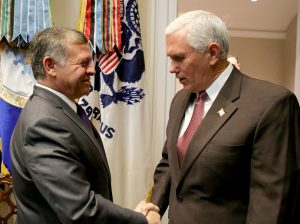
Glick reveals more of the nasty side of Jordanian politics, including a deep-seated antisemitism (stoked by the media with the encouragement of the elites), which can clearly be seen in the following story:

Last March, for instance, Abdullah rejected the US’s extradition request for Hamas terrorist and mass murderer Ahlam Tamimi, the mastermind of the 2001 Sbarro bombing in Jerusalem.

Fifteen people, including eight children were murdered in the attack. Tamimi selected the Sbarro pizzeria as her target because of the large number of children who frequented the eatery during summer vacation.

She was sentenced to 16 life-in-prison sentences, but was released in Israel’s exchange of Hamas terrorists for captive IDF sergeant Gilad Schalit in 2011. Upon her release, she moved to Amman where Abdullah gave her the red carpet treatment. In her new home, Tamimi hosts a show on Hamas’s television station. She uses her platform to incite terrorism and indoctrinate her viewers to aspire to murder Israelis, as she did.

Several of Tamimi’s victims at Sbarro were American citizens, including 15-year-old Malki Roth and 31-year-old Shoshana Judy Greenbaum.

Greenbaum was five months pregnant when her body was blown apart.

The vile terrorist Ahlam Tamimi who murdered 15 Israelis in the Sbarro bombing – publicly thanks Jordan’s judiciary and leaders for getting her off the hook with the FBI and the US Department of Justice – though the pursuit continues [Source]

By harboring Tamimi, Abdullah tells his subjects they are right to hate Israelis and to work toward Israel’s destruction.
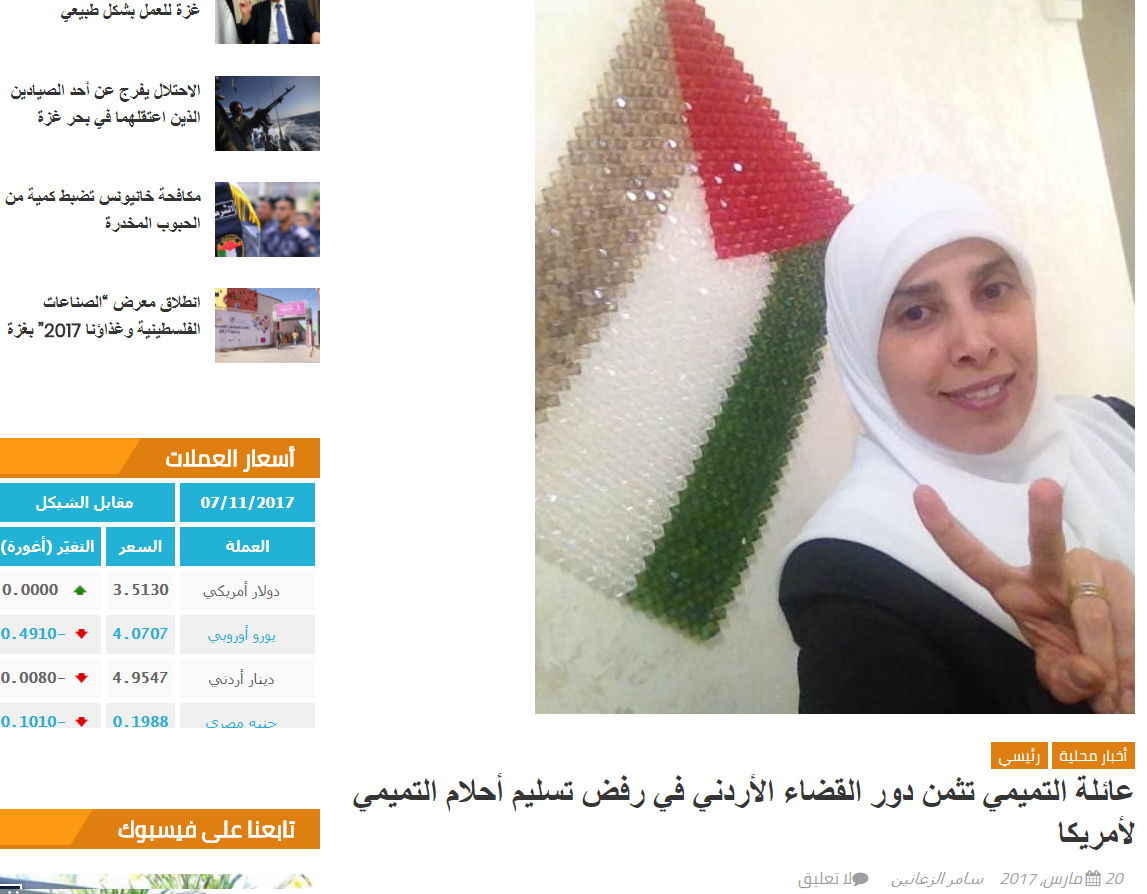
Arnold and Frimet Roth, the parents of Malki Roth who was murdered in that terror attack, have been relentless in following Tamimi’s doings and pulling every string, contact every diplomat and politician possible, in order to have her extradited – all to no avail so far. You can follow their endeavors at their blog This Ongoing War.

Returning to Caroline Glick’s article:

This brings us to the question of Trump’s possible decision to move the US embassy in Israel to Israel’s capital.

By having his media spew a constant diet of genocidal antisemitism, Abdullah is all but guaranteeing that the terrorism he warns of will occur if Trump enforces US law and moves the embassy. So he is not speaking as a worried friend when he tells his American hosts of the dire consequences of moving the embassy. He is threatening them with an outcome for which he will have significant responsibility.

One of the reasons Abdullah feels comfortable making the argument that moving the embassy will provoke terrorism is because that is the argument that has been used successfully to block the transfer of the US embassy to Israel in the past.

But, in October, we received a clear indication that these Chicken Little warnings are untrue.

In October, Trump overruled Secretary of Defense James Mattis, Tillerson and McMaster, and chose not to tell Congress that Iran was in compliance of the nuclear deal the Iranians were breaching. Supporters of the nuclear deal in the administration and outside of it warned that such a move would have a deeply destabilizing impact on the region and endanger the US.

As the past three months have shown, those warnings were entirely wrong.

The world did not explode after Trump rejected the received wisdom of the foreign policy establishment in Washington. Instead, the US’s Sunni-Arab allies have been empowered to join forces to combat Iran. Economically and diplomatically, Iran is far more isolated globally today than it was three months ago.

… if Trump disregards Abdullah’s threats posing as warnings, and disregards the advice of Abdullah’s many friends in Washington, and moves the US embassy to Jerusalem, the sky will not fall. By recognizing the basic fact that Jerusalem is and always will be Israel’s capital, Trump will give himself the ability to develop Middle East policies that are similarly grounded in reality.

Unfortunately, the State Department did not follow through on Trump’s new strategy. They blinked in the face of Palestinian threats of violence, and retracted their threat to close down the PLO offices.

Will they blink again when it comes to moving the US Embassy to Jerusalem? I fear they will but am prepared to be pleasantly surprised.
Nunes blows up, threatens contempt after FBI stonewalls House on Russia investigator demoted for anti-Trump bias

December 3, 2017

OPINION: Nunes blows up, threatens contempt after FBI stonewalls House on Russia investigator demoted for anti-Trump bias, Washington ExaminerByron York, December 2, 2017

(Please see also, FBI Stonewalls Corruption Probe, which opens with this sentence:

The Obama administration corrupted everything it touched, including the FBI. A scandal is brewing, and the FBI, predictably, is responding with the Obama playbook: it is stonewalling. Byron York has the story:

— DM)

Stories in both the Washington Post and New York Times on Saturday reported that Peter Strzok, who played a key role in the original FBI investigation into the Trump-Russia matter, and then a key role in Mueller’s investigation, and who earlier had played an equally critical role in the FBI’s Hillary Clinton email investigation, was reassigned out of the Mueller office because of anti-Trump texts he exchanged with a top FBI lawyer, Lisa Page, with whom Strzok was having an extramarital affair. Strzok was transferred to the FBI’s human resources office — an obvious demotion — in July.

The Post reported that Strzok and Page exchanged text messages that “expressed anti-Trump sentiments and other comments that appeared to favor Clinton.”

Word of the messages and the affair were news to Nunes, even though the committee had issued a subpoena that covered information about Strzok’s demotion more than three months ago. The committee’s broadly worded subpoena for information related to the so-called Trump dossier went to the FBI and DOJ on Aug. 24. In follow-up conversations on the scope of the subpoena, committee staff told the FBI and DOJ that it included information on the circumstances of Strzok’s reassignment.

On Oct. 11, Nunes met with deputy attorney general Rod Rosenstein. In that meeting, Nunes specifically discussed the committee’s request for information about Strzok.

In an Oct. 31 committee staff meeting with the FBI, bureau officials refused a request for information about Strzok.

On Nov. 20, the committee again requested an interview with Strzok. (Three days earlier, on November 17, Strzok met with the Senate Intelligence Committee.)

On Nov. 29, Nunes again spoke to Rosenstein, and again discussed Strzok.

On Dec. 1, the committee again requested to speak with Strzok.

After each occasion, the FBI and DOJ did nothing. Now, in what appears to be an orchestrated leak, both the Post and Times published the reason for Strzok’s demotion, along with concerns that the revelation might help President Trump. “Among federal law enforcement officials, there is great concern that exposure of the texts they exchanged may be used by the president and his defenders to attack the credibility of the Mueller probe and the FBI more broadly,” the Post reported. The Times reported that “the existence of the text messages is likely to fuel claims by Mr. Trump that he is the target of a witch hunt.”

Well, yes. It will be of concern to Trump’s defenders, and to defenders of fair investigations generally, that such an important figure in both the Clinton and Trump probes privately expressed bias. It will be important for investigators — and the public — to see Strzok’s and Page’s texts to assess the extent of the problem. But in any event, Nunes is extremely unhappy — not only with the revelation of bias but with the FBI’s resistance.

“By hiding from Congress, and from the American people, documented political bias by a key FBI head investigator for both the Russia collusion probe and the Clinton email investigation, the FBI and DOJ engaged in a willful attempt to thwart Congress’ constitutional oversight responsibility,” Nunes said in a statement Saturday afternoon. “This is part of a months-long pattern by the DOJ and FBI of stonewalling and obstructing this committee’s oversight work, particularly oversight of their use of the Steele dossier. At this point, these agencies should be investigating themselves.”

To add insult to injury, at just the moment the leaked stories appeared, the Justice Department out of the blue notified Nunes that it would meet some of the committee’s demands for information that it had been refusing for months. That didn’t make the chairman happy, either.

“The DOJ has now expressed — on a Saturday, just hours after the press reports on Strzok’s dismissal appeared — a sudden willingness to comply with some of the committee’s long-standing demands,” Nunes said in the statement. “This attempted 11th-hour accommodation is neither credible nor believable, and in fact is yet another example of the DOJ’s disingenuousness and obstruction.”

As a result, Nunes said he has instructed committee staff to draw up a contempt of Congress citation for Rosenstein and for FBI Director Christopher Wray. The chairman promised to take action on the citation before the end of December unless the FBI and DOJ meet all the committee’s outstanding demands.

Obviously Nunes is angry that he did not know about the real reasons for Strzok’s demotion. And he is equally angry with the FBI’s and DOJ’s treatment of the committee. Contempt of Congress is a big move for lawmakers to take, especially against an agency controlled by the same party as leaders of the House. But remember, House Speaker Paul Ryan has already said the FBI and DOJ “stonewalled” the House, and he demanded that it comply immediately. That was five weeks ago. Now, after this latest episode, it seems likely that leaders in Congress are becoming increasingly frustrated with what they see as the FBI and DOJ jerking lawmakers around. At some point, they will act.


Netanyahu to the Saban conference re: Iran

December 3, 2017


New US military moves in the Mid-East & Israel’s Syria air raid were coordinated

December 3, 2017

New US military moves in the Mid-East & Israel’s Syria air raid were coordinated, DEBKAfile, December 3, 2017

(Please see also, Trump’s strategic vision. — DM)

By mid-week, the Trump administration should have reached a decision that indicates whether or not it has caved in under Palestinian threats. The next few days will also show whether the new US Middle East momentum is a flash in the pan or a fresh start to be continued.

*****************************************

The US hands-off to Iran’s top general in Iraq, Ali Abdullah Saleh’s changeover of sides in the Yemen war and Trump’s’ thinking on Jerusalem – all signal a new, proactive US strategy for the region.

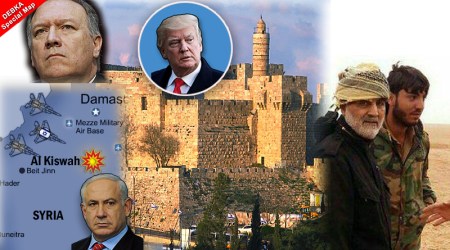
Central Intelligence Agency chief Mike Pompeo was uncharacteristically frank when he addressed high-ranking US military and security officials on Saturday, Dec. 2, at the Reagan Presidential Foundation. He revealed that he had sent a note to the Iranian Revolutionary Guards Al Qods chief, Gen. Qassem Soleimani, and explained: “I sent it because he had indicated that forces under his control might in fact threaten US interests n Iraq.”

Soleimani replied that he had refused to open the letter, commenting: “It didn’t break my heart to be honest with you.” Pompeo went on to elaborate: “What we were communicating to him in that letter was that we will hold him and Iran accountable… and we wanted to make sure that he and the leadership of Iran understood that in a way that was crystal clear.”

Since words clearly don’t mean much without deeds, the United States, after being frozen in place for months in the Middle East, suddenly sprang into action in the past 48 hours, along with its senior Middle East allies, Israel and Saudi Arabia, on four fronts: Iraq, Syria, Yemen and the Palestinians.

IRAQ:  Large-scale US forces arrived at the Kaywan base-K1 west of the oil city of Kirkuk and then split into two contingents: several hundred troops stayed on base while the second contingent headed east on Friday, Dec. 1 towards Tuz Khumatu in eastern Iraq (See attached map)  and took control of the Siddiq military airport 35km to the west. Tuz Khumatu lies 100km west of the Iraqi-Iranian border and 163km north of Baghdad. DEBKAfile’s military sources report that American troops have never been deployed so close to the Iranian border since the 2003 US invasion of Iraq. This movement was meant to strongly advise Iraqi Prime Minister Haydar al-Abadi to stop playing ball with Iran to the extent that he did in mid-October, when he allowed pro-Iranian forces to grab Kirkurk and its oilfields from the Kurds. Washington was chiefly drawing a large X on Soleimani’s plan for bringing  Northern Iraq’s oil under Iranian control.

SYRIA: Early Saturday, Dec. 2, Israeli warplanes dropped missiles on a secret meeting of pro-Iranian Shiite militia chiefs taking place at the Syrian army’s 91st Brigade HQ, outside al-Kiswah – 14km southwest of Damascus and 50km from the Golan. These militias, which have been fighting for Bashar Assad under Gen. Soleimani’s command, were being briefed by Iranian and Hizballah officers on their next offensive. This was Israel’s first attack on any of his forces.

YEMEN: On Saturday, Ali Abdullah Saleh, former president of Yemen, the mainstay of the Iranian-backed Houthi insurgency, announced he was “turning the page.” He was ready to ditch the Houthis and their backer, Iran – provided that the coalition (Saudi Arabia and the United Arab Emirates) lifted the blockade they had imposed on Yemen to cut off incoming Iranian weapons and halted its attacks. Saleh’s announcement sparked violent clashes between his followers and the Houthis.

DEBKAfile’s military sources recall that Yemen’s ex-president had long maintained ties with the CIA. His change of sides was timed to coincide with a fresh US-Saudi intelligence push to restore Saleh to the pro-Western Arab camp and topple pro-Iranian positions in Yemen and the Arabian Peninsula.

ISRAEL AND THE PALESTINIANS: The Trump administration is fed up with dodgy Palestinian tactics on peace negotiations. Egyptian President Abdel-Fatteh El-Sisi and Saudi Crown Prince Muhammad bin-Salman are likewise ready to wash their hands of the Palestinian Authority Chairman Mahmoud Abbas (Abu Mazen). US officials tried threatening to shut down the PLO office in Washington unless the Palestinians finally came to the table for peace talks and are now holding over Palestinian heads a possible decision – either to move the US embassy from Tel Aviv to Jerusalem or recognize the city as Israel’s capital.

To ward off these actions, all Abu Mazen needs to do is to pick up the phone to the White House, the royal palace in Riyadh and the presidential residence in Cairo and declare his willingness to cooperate with their initiatives to restart the peace process. But so far, Abbas is holding out, resorting instead to his outdated tactics: threatening that the entire Middle East will go up in flames and Palestinian terrorism will again raise its head if the Trump administration goes through with new decisions on Jerusalem.

By mid-week, the Trump administration should have reached a decision that indicates whether or not it has caved in under Palestinian threats. The next few days will also show whether the new US Middle East momentum is a flash in the pan or a fresh start to be continued.

Trump’s strategic vision

December 3, 2017

Trump’s strategic vision, Israel National News, Ted Belman, December 2, 2017

Former Minister of Defense for Israel, Moshe Yaalon, just wrote a major opinion piece titled United States Policy in the Middle East: The Need for a Grand Strategy, which was published by the Institute for National Security Studies. In it, he claimed:

“The first year of the Trump administration has been characterized by the lack of clear policy guidelines vis-à-vis the Middle East. The great hopes that many countries in the region hung on the change of administration and a new proactive president in the White House have slowly been eclipsed by a sense of confusion, given United States behavior that shows little consistency and no clear strategic objectives.”

Yaalon, who has been out of office now for two years doesn’t know what is going on. On the contrary, the Trump administration does have a grand strategy, grander than imagined.

Many countries in the region, including Israel, Saudi Arabia and Egypt have never been more hopeful about what they understand to be his strategic objectives and his plans for achieving them.

Remember Trump has consistently refused to telegraph his foreign policy moves while at the same time has consistently repeated that he intends to push back against Iran expansionism.

Saudi Arabia

When President Trump was campaigning, he kept saying that he wanted to defeat ISIS and its ideology. He was ridiculed for thinking he could eradicate the ideology.  It didn’t take him long to make good on his word.

His administration got to work immediately with the Sunni states, but principally with Mohamed ben Salman (MBS) of Saudi Arabia.  Al Sisi of Egypt was already on board as evidenced by a speech he made two years ago in which he said:

“I am addressing the religious scholars and clerics. We must take a long, hard look at the situation we are in. It is inconceivable that the ideology we sanctify should make our entire nation a source of concern, danger, killing, and destruction all over the world. It is inconceivable that this ideology… I am referring not to ‘religion,’ but to ‘ideology’– the body of ideas and texts that we have sanctified in the course of centuries, to the point that challenging them has become very difficult.

“It has reached the point that [this ideology] is hostile to the entire world. Is it conceivable that 1.6 billion [Muslims] would kill the world’s population of seven billion, so that they could live [on their own]  [..]. You cannot see things clearly when you are locked [in this ideology]. You must emerge from it and look from outside, in order to get closer to a truly enlightened ideology. You must oppose it with resolve. Let me say it again: We need to revolutionize our religion.”

Four months after his inauguration, Pres Trump made his historic trip to Riyadh, Saudi Arabia in which he addressed 50 Arab and Muslim leaders:
“Later today, we will make history again with the opening of a new Global Center for Combatting Extremist Ideology – located right here, in this central part of the Islamic world. This groundbreaking new center represents a clear declaration that Muslim-majority countries must take the lead in combatting radicalization”

“But above all we must be united in pursuing the one goal that transcends every other consideration. That goal is to meet history’s great test — to conquer extremism and vanquish the forces of terrorism.

“Young Muslim boys and girls should be able to grow up free from fear, safe from violence, and innocent of hatred.”

His message was clear and had already been agreed upon.

“Yesterday, we signed historic agreements with the Kingdom that will invest almost $400 billion in our two countries and create many thousands of jobs in America and Saudi Arabia.“This landmark agreement includes the announcement of a $110 billion Saudi-funded defense purchase – and we will be sure to help our Saudi friends to get a good deal from our great American defense companies. This agreement will help the Saudi military to take a greater role in security operations.”

The last sentence suggests that the fighting will be done by the Sunnis with American backing rather than the other way around.

“But this (prosperous) future can only be achieved through defeating terrorism and the ideology that drives it.”

The Arab world understands this and is all for it. With the price of oil being what it is and likely to stay low, the Saudis will be bankrupt in a 5 years as they are eating into their surplus of $750 billion at an alarming rate. By jointly agreeing to spend $400 billion to achieve prosperity, they are putting their money where their mouth is. They are committed and so is the US.

As further evidence of their commitment, MBS announced the Vision 2030.

Essentially this is an economic vision that requires Saudi Arabia to open up to the world to create an environment conducive to foreign investment. Thus, it must westernize.

“Our Vision is a strong, thriving, and stable Saudi Arabia that provides opportunity for all. Our Vision is a tolerant country with Islam as its constitution and moderation as its method. We will welcome qualified individuals from all over the world and will respect those who have come to join our journey and our success.”

They also can’t take on Iran without Israel.

Egypt is in a worse position. She needs Israel’s help in building her economy and in defeating the terrorists in Sinai and Libya.

Saudi Arabia, United Arab Emirates, Bahrain, and Egypt cut off diplomatic relations with Qatar in June 2017. The severing of relations included withdrawing ambassadors, and imposing trade and travel bans.

The crisis is an escalation of the Qatar–Saudi Arabia proxy conflict. The Saudi-led coalition cited Qatar’s support for terrorism and open alliance with the Muslim Brotherhood (MB) as the main reasons for their actions. Saudi Arabia and other countries have criticized Al Jazeeraand Qatar’s relations with Iran.
Qatar is a big supporter of the Muslim Brotherhood (MB) and Hamas, whereas Saudi Arabia, Egypt and the others have banned the MB as a terrorist organization and are coming down hard on Hamas.

In October 2017, Saudi Arabia announced plans to build a $500 Billion city to be called Neom in the north west corner of Saudi Arabia. It will reach into Jordan and Egypt.

Bloomberg reported:

“It would be a microcosm of Saudi Arabia 2.0 while its new 32-year-old leader reconfigures the rest of the economy to make it fit for the modern world in a way that past rulers have failed to do. Other massive cities in the desert have been announced with much fanfare, then have floundered short of expectations, like the $10 billion office park on the outskirts of Riyadh sitting largely unoccupied and unfinished.

“The city “constitutes an attempt to create an economic zone that is more efficient and streamlined than the overall economy that will take time to reform,” said James Dorsey, a Middle East specialist at Singapore’s Nanyang Technological University. “The question is whether one can isolate a megacity from the inefficiencies of the country’s economy.””

As you can see, it is a huge gamble, born no doubt out of the huge need to to transform Saudi Arabia.

Jordan

Jordan too is a supporter of the MB, who have their headquarters in the country. While King Abdullah has enjoyed a good reputation among Congressmen and Members of Knesset, his reputation has been greatly tarnished in the last two years, so much so that the White House and the Netanyahu government are ready to ditch him.

What may have been the straw that broke the camel’s back for them is the fact that Jordan’s king very own security agencies, which he controls with an iron-fist, have been caught red-handed stealing US and British weapons and selling them to ISIS.

Here are some recent articles which tell the tale.

Another Jordanian-made knife in the back of Israel.

Israel-Jordan peace agreement: The emperor has no clothes 

They see King Abdullah as an obstacle to peace rather than a guarantor of peace. They also believe that civil war is coming to Jordan unless they make a move to prevent it. While they may not say so publicly, some Israeli journalists do.

The US made their first move this week by announcing:

“Now, according to Stars and Stripes, Congress has added $143 million to the Pentagon budget, to upgrade the strategic Muwaffaq Salti Air Base, close to Jordan’s border with Syria and Iraq. The base has played a key role in the US military in its war with ISIS, and requires urgent upgrades, according to the Air Force, being overwhelmed as it is by the increased numbers and scope of operations.”

This is just the first step in moving the base in Qatar with its 11,000 US airmen to the base in Jordan.

General Charles Wald, USAIR, told Fox News US doesn’t need Qatar air base if Qatar won’t support our fight against terrorism .

This has been done to forestall a civil war in Jordan. The King has lost control of Jordan and the US is calling the shots. Watch for the drama to unfold.

The Arab/Israeli Conflict.

The right in Israel are very unhappy that Trump won’t move the Embassy to Jerusalem, won’t let Israel build though out Judea and Samaria, won’t let her expand the boundaries of Jerusalem and won’t let her demolish illegally build Arab structures. They are also unhappy that Trump keeps working on a plan, a process, for achieving “peace”.

But as the Economist pointed out in a recent article, Whatever the administration produces, Saudi Arabia is likely to support it.

“For Prince Muhammad, it seems, Palestinian aspirations to statehood are less important than countering Iran.”

“Prince Muhammad may calculate that a viable peace process would give him political cover to make the alliance more overt.”

And one might conclude that that is what the purpose of the process is.

Lebanon

Prime Minister Saad Harari resigned his post in Lebanon and then travelled to Saudi Arabia where he made a speech denouncing Hezbollah. On returning to Lebanon, he withdrew his resignation. But all is not lost.

BESA reports, “Hariri is believed to be demanding that Hezbollah halt its support to Houthi rebels in Yemen and withdraw from Syria, where its fighters supported the regime of President Bashar al-Assad. “ and argues that this goal may yet be achieved.

Iraq Kurdistan

The US reprimanded them for holding the referendum against its wishes and allowed Iraq to take back Kirkuk. Do not fear for the independence of Kurdistan. Their day will come. America has a strategic plan which mandates dealing with Jordan first.

The US wants to cement the alliance of Israel, Saudi Arabia and Egypt before pushing back on Iran.

Syria Kurdistan

According to the Washington Post, no friend of Pres Trump, The U.S. must prepare for Iran’s next move in Syria

“A task force of senior former U.S. diplomatic and military officials has come up with suggestions for how Trump could prevent Iran from taking over what’s left of liberated Syria and fulfill his own promise to contain Iranian influence in the region”.

“First, the United States needs to declare a clear Syria policy that removes suspicions that the United States is going to pull up stakes now that the Islamic State caliphate has fallen. The policy should make clear that a U.S. military presence will remain on the ground and in the air, to ensure that the Islamic State doesn’t reemerge and Assad doesn’t retake the entire country, and to provide security for reconstruction.

“Second, the Trump administration must increase its assistance to Sunni communities lucky enough to live outside Assad’s rule and help U.S.-supported local groups hold valuable territory in Syria’s southeast. This territory can provide local communities economic benefits now and political leverage down the line.

“Third, the United States should work with regional allies to stop Iran from moving weapons and troops into Syria. That would require interdicting shipments by sea and ensuring that U.S.-supported forces control key border towns in Syria and Iraq. Such moves could check Iranian aggression without triggering armed conflict with Tehran.”

“Accordingly, Defense Secretary Jim Mattis pledged last week that U.S. forces would remain to prevent the emergence of “ISIS 2.0” and until the political process gets off the ground, but he stopped short of saying America would keep Iran’s aggression at bay.”

As Caroline Glick rightly points out, in Portents of Quagmires in Syria, recently published:

“If Trump keeps US forces in Syrian Kurdistan, and if he refuses to help pay for Syrian reconstruction so long as Assad remains in power and Iranian and Hezbollah forces remain on the ground and if the US ends its civilian and military assistance to Lebanon, the US and its allies will be strengthened, and Russia and its allies will be weakened.

“If the Americans do not interfere as Syrian “freedom fighters” defend against Iranian or Russian “aggression,” it won’t matter what terms the Iranians give Putin for gas, or oil or nuclear deals. He will seek a way out of Syria.“

And she concludes:

“If the Americans do not save them, the situation on the ground augers quagmire, not triumph, for their axis and for their separate regimes.”

So rather than United States behavior showing “little consistency and no clear strategic objectives” as Yaalon writes, I would argue that Trump, does indeed, have a strategic vision. That vision involves the US fostering an open alliance of Saudi Arabia, Egypt, Jordan and Israel so that they can do the heavy lifting in pushing back Iran and its allies and ultimately to prevent Iran from getting the bomb.

US pulls out of UN’s Global Compact on Migration

December 3, 2017

United Nations (United States) (AFP) – The administration of President Donald Trump has withdrawn the United States from a United Nations pact to improve the handling of migrant and refugee situations, deeming it “inconsistent” with its policies, the US mission to the global body announced Saturday.

“Today, the US Mission to the United Nations informed the UN Secretary-General that the United States is ending its participation in the Global Compact on Migration,” the Americans said in a statement.

In September 2016, the 193 members of the UN General Assembly unanimously adopted a non-binding political declaration, the New York Declaration for Refugees and Migrants, pledging to uphold the rights of refugees, help them resettle and ensure they have access to education and jobs.

“The New York Declaration contains numerous provisions that are inconsistent with US immigration and refugee policies and the Trump Administration’s immigration principles. As a result, President Trump determined that the United States would end its participation in the Compact process that aims to reach international consensus at the UN in 2018,” the US statement said.

US Ambassador Nikki Haley said the country would continue its “generosity” in supporting migrants and refugees around the world, but that “our decisions on immigration policies must always be made by Americans and Americans alone.”

“We will decide how best to control our borders and who will be allowed to enter our country. The global approach in the New York Declaration is simply not compatible with US sovereignty.”

Under Trump and his “America First” policies, the United States has withdrawn from several global commitments made under the administration of president Barack Obama, including the Paris climate deal.

More recently, American pulled out of the Paris-based culture and education body, UNESCO, accusing it of “anti-Israel bias.”

Ezra Levant: PM May should be fired for lying about Trump tweets

December 2, 2017

Ezra Levant: PM May should be fired for lying about Trump tweets, Rebel Media via YouTube, December 2, 2017

Compare and contrast two British Prime Ministers:

Instead of Sir Winston, Formerly Great Britain is stuck with Theresa May. Where is Sir Winston when Britain, and indeed the world, need him? — DM)


Deep Meaning of the Mueller Probe

December 2, 2017

Deep Meaning of the Mueller Probe, Power LineScott Johnson, December 2, 2017

Conclusion: “Mueller’s investigation is a semblance of law-enforcement disguising the brute reality that Trump is being punished for winning the election and defying Obama policy.

************************

The reporters covering developments in the ongoing special counsel investigation conducted by Robert Mueller are so excited by the prospect of President Trump’s removal from office impeachment that they can barely keep their tongues from hanging out of their mouths. They demonstrate what it’s all about even if they don’t have a clue what’s going on.

It is a striking fact that the charge to which Michael Flynn pleaded yesterday involves lying about conversations that were not themselves illegal. Flynn was not charged with any substantive criminal offense under the Logan Act or anything else. Rather, he pleaded guilty to lying to the FBI.

Andrew McCarthy has distinguished himself among the observers commenting on the case. An experienced former federal prosecutor himself, he knows what he is talking about. He is familiar with the ground rules that are to govern such matters. He reviews them in his weekly NRO column today as he has before, finding once again that Mueller has undertaken an essentially unlimited criminal investigation in the guise of a counterintelligence probe.

None of the ground rules applicable to a special counsel criminal investigation have been followed. Mueller’s investigation partakes of the wrongs committed by special counsels in past cases — wrongs reflected in the Department of Justice Procedures that are to govern these matters, but that have been thrown out the window.

What’s going on? McCarthy draws the inferences:

See, we’re not following the normal rules, in which a prosecutor is assigned only after evidence of an actual crime has emerged. We’re in the wooly realm of counterintelligence, where anything goes. And in the event our aggressive prosecutor can’t find any crimes — which would be no surprise, since the investigation was not triggered by a crime — no matter: The special counsel is encouraged to manufacture crimes through the investigative process. Misleading assertions by non-suspects made to investigators probing non-crimes can be charged as felony false statements.

The end game of the investigation is the removal of Donald Trump from the presidency, either by impeachment (which does not require proof of a court-prosecutable crime) or by publicly discrediting Trump to such a degree that his reelection becomes politically impossible. The latter can be accomplished by projecting the appearance of a cri[min]al investigation (notwithstanding that there is no underlying crime), turning administration officials into suspects, and hopefully generating the false-statement prosecutions that help depict the administration as dishonest and icky.

One more thing:

There is no evidence that Flynn or any other Trump associate was involved in Russia’s election interference. Instead, after being elected on the promise of significant policy shifts from the Obama administration, President-elect Trump directed Flynn, his incoming national-security adviser, to make contact with foreign counterparts, including but not limited to officials from Russia. This is standard operating procedure when administrations change — that’s why they call it a transition.

Conclusion: “Mueller’s investigation is a semblance of law-enforcement disguising the brute reality that Trump is being punished for winning the election and defying Obama policy.

McCarthy’s column expands on his comments immediately following the news of Flynn’s plea yesterday. In addition to his biting analysis, McCarthy frames his column with a (non-satirical) modest proposal about how President Trump might fight fire with fire. If you want to understand what is happening the whole thing is must reading.

Anti-Saudi alliance in Yemen splitting as ex-President Saleh makes overtures to Riyadh

December 2, 2017

Published time: 2 Dec, 2017 16:32

https://www.rt.com/news/411738-yemen-coalition-rift-saleh/

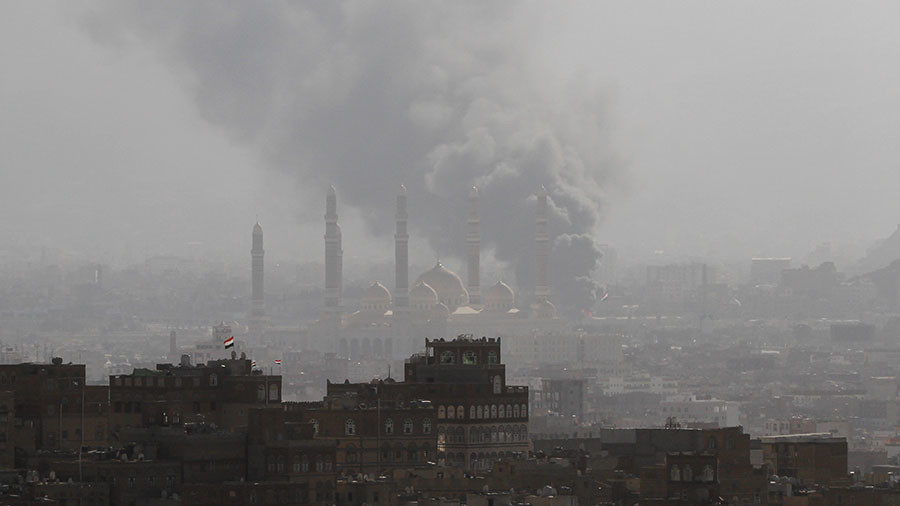
Smoke rises during the battle between former Yemeni President Ali Abdullah Saleh’s supporters and the Houthi fighters in Sanaa, Yemen December 2, 2017 © Mohamed al-Sayaghi / Reuters

The alliance between the Houthi rebels and former Yemeni President Ali Abdullah Saleh seems to be on the verge of a split. Together these groups have been fighting against the Saudi-backed forces of ousted President Abdrabbuh Mansur Hadi since 2015.

Saleh on Saturday said he was ready to turn a “new page” in relations with the Saudi-led coalition, which had intervened to place his successor back in power. He said his offer would require Riyadh to stop attacks on Yemen. “I call upon the brothers in neighboring states and the alliance to stop their aggression, lift the siege, open the airports and allow food aid and the saving of the wounded and we will turn a new page by virtue of our neighborliness,” Saleh said in a televised speech.

The address came as forces loyal to Saleh were engaged in battle with the troops of Ansar Allah, or the Houthi rebels, in the capital Sanaa. Hostilities between the two sides broke out on Wednesday.

Saleh was forced to surrender his office in 2012 amid a wave of mass protests in the country, abandoning the presidency to his Vice-President Hadi. Hadi ran uncontested, won a landslide victory and was expected to resign two years later, but failed to do so amid increasing pressure from the Houthi rebels. In 2015 he fled to Saudi Arabia, which used its military force in a bid to place him back in power in Yemen. The coalition is supported by some Western nations, including the US and the UK, which provide intelligence, refueling and weapons for the war effort. The Houthi allied themselves with the forces loyal to Saleh and have fought a devastating war against forces loyal to Hadi and his foreign backers.

Read more

The European Parliament in Strasbourg, France © Christian Hartmann

Saleh’s statements were welcomed by the Saudi coalition, which said it was “confident of the will of the leaders and sons” of Saleh’s General People’s Congress (GPC) party to return to the Arab fold. The former president’s alliance with the Shiite rebels, who are presumed in Riyadh to be a proxy force of Iran, was perceived in the Arab kingdom as a betrayal of Sunni Islam.

The Houthi rebels denounced what they described as “sedition,” meaning Saleh’s behaviour towards the Saudi coalition. “Saleh’s speech is a coup against our alliance and partnership… and exposed the deception of those who claim to stand against aggression,” a spokesman for the group said in a statement carried by the rebels’ Al Masirah TV. Abdel-Malek al-Houthi, the leader of the rebels, called on Saleh to “show more wisdom and maturity” in a separate statement.

Saleh may be a noticeable player in the Yemeni conflict, but one should not overestimate the role he plays, Sergey Balmasov, senior analyst at the Centre for Crisis Society Studies, told RT. His support has dwindled over the past two years, so his potential decision to break up with the Houthis would not result in a quick end to the war. “The escalation of violence is overarching there. There is a patchwork of forces, including Al-Qaeda in the Arab Peninsula, Hezbollah, whatever ragtag troops Saudi Arabia brought in like Senegal units. There is in fact no Yemen as a country: It has been torn apart.”

He added that some speculators claim that Saleh’s statements are actually a proposition by Saudi Arabia to roll down the hostilities in a manner which would save face. “Riyadh is facing serious financial difficulties. The reserves they accumulated during the fat years are melting like a snowball in the sun,” he explained.

The war in Yemen, the poorest country of the Arab world, is one of the biggest humanitarian disasters of our times. It has claimed over 10,000 lives, left millions with scant access to food, fresh water and medicine and caused the largest outbreak of cholera in modern history. The civilian suffering was exacerbated by the Saudi naval and air blockade of Yemen, human rights groups say. The coalition has also been accused of committing war crimes through indiscriminate attacks on residential areas in cities controlled by the rebel forces.

The OIC’s Long March Through American Institutions

December 2, 2017

The following report by our D.C. correspondent Frontinus concerns the use of foreign money by the Organization of the Islamic Conference (OIC) to buy American public opinion and change government policy. There’s no secret about what the OIC is doing — they planned it at their annual conference last December, and posted a policy paper (PDF) with the details. It’s a blatant, in-your-face operation.

Frontinus’ report is designed as a game plan for grassroots organizations and think tanks to use to expose and counter the subversion of American journalists and our public officials

The OIC’s Long March Through American Institutions

The OIC’s Long March Through Western Institutions

by Frontinus

The Tactic:

In late December 2016, the OIC announced plans to pay American and European journalists and influential political leaders in order to change government policies based on OIC instructions and coordination.

This isn’t against the law in the United States, but anyone taking the OIC funds — a journalist or an influential person — should register as a foreign agent under the U.S. Foreign Agents Registration Act (FARA). These three criteria are required:

1) Foreign money,
2) foreign instructions, and
3) an intent to influence public opinion and change policy to align with foreign interests.

— for an organization or individual to have to register as a foreign agent under FARA. And, given the OIC’s statements in the linked document (also excerpted below), they are indeed in place.

We just don’t know who in the U.S. is taking the money to do the OIC’s bidding. Which brings us to…

The Asks:

1. For the media and other advocates for the OIC’s policy positions: Journalists, and political leaders probably won’t announce that they have been paid by the OIC. But when they clearly ARE writing and advocating for OIC positions, we can ask them outright if they’ve accepted money from the OIC, either directly or indirectly — and demand that they register as Foreign Agents, if they have in fact been paid.
2. For Congress: Let Congressmen know that the OIC has announced it’s going to do exactly what the FARA legislation was written to cover: it’s a foreign entity purchasing influence and journalists in order to change US opinion and government policies. FARA has come up in the news recently, with the failures by both Paul Manafort and Tony Podesta to register as foreign agents. The State Department needs to demand that the OIC provide lists of any American citizens it is paying, and how much, so that the FARA office can implement the FARA legislation. And of course, the FARA office needs much stronger congressional oversight.

Background:

On December 21, 2016 in Jeddah Saudi Arabia, the OIC held the 11th Session of the Islamic Conference of Information Ministers, titled “Session of the New Media to Counter Terrorism and Islamophobia”. The goal of the meeting was to develop the “OIC Media Strategy in Countering Islamophobia and its Implementation Mechanisms.” The document is here. It’s only ten pages long, and various sections may be useful for organizations dedicated to opposing Islamization.

As always with OIC documents, the English can be a bit odd — presumably badly translated from the Arabic.

Somewhat arbitrarily, I quote the following bits, starting with the Long Term Goals (emphasis added):

III. Long Term Goals:

1. To call media professionals to develop, articulate and implement voluntary codes of conduct to counter Islamophobia. The OIC and its Member States should be vocal in calling media professionals to use the power they have with responsibly through accurate reporting.
2. To assess successful media campaigns with a view to understanding the strong factors to be replicated and review the unsuccessful ones for avoiding the weak contents and procedures.
3. To engage with western governments in creating awareness against the dangers of Islamophobia by addressing the responsibility of media on the issue.

The Actions are also worth noting — Page 2:

3. To enhance the presence of Muslims on the internet and benefit from the experiences of successful Islamic institutions in this regard, as the success of Islamophobes in the West is the failure of Muslims online. However, extra care should be considered while investing on this enhancement, as there is a need to be aware of unintended consequences of the increased presence of Muslims on the internet. In addition, there is a need to identify and support non-Muslim bloggers and researchers from outside the mainstream media positively disposed towards Islam and Muslims.

Page 7:

This campaign proposes that the OIC plays a leading role in fostering effective anti-Islamophobia initiatives across the western world and achieve through a range of interlinked actions designed to accomplish both short-term and long term-targets. These include seeding a proactive anti-Islamophobia grassroots media network in the United States and specific European countries, overseen by OIC – appointed regional public relations offices (PR); researching and identifying the key misconceptions about Islam and Muslims, and refuting these through a comprehensive online resource supported with social media; building alliances with scholarly, journalistic and media communities, and civil societies. In addition, the project would seek to develop an “Ambassadors’ Programme” or “OIC Friends Program” to recruit local public figures and celebrities to support the initiative; organize key engagements between western delegates and figures from the Muslim world; create a fund to support local anti-Islamophobia initiatives; media monitoring and high impact media positioning to place commentary and news stories in key western publications; arranging a high profile advertising campaign to leverage this work through mass market publicity, and developing broadcast quality documentaries to explore how Islamophobia has affected Muslim communities and western societies alike.

Pages 9-10:

5— Anti-Islamophobia Ambassadors or OIC Friends Network

  • Identify and recruit leaders, opinion-formers and public figures in western politics, media and the art [sic] for the anti-Islamophobia “ambassadors” network.
  • Apply “ambassadors” network to other aspects of internal OIC anti-Islamophobia work.
  • Engage with specific projects, events, and other publicity generating activities elsewhere that are suitable for ambassadors.

6— Anti-Islamophobia Independent Projects Fund

  • Determine scope and potential recipients for anti-Islamophobia fund.
  • Create application materials, determine application process, and solicit projects.
  • Determine methodology for assessing projects and selecting recipients.
  • Disburse grants on the basis of assessments and determine criteria for delivery.
  • Institute review / monitoring and evaluative mechanism of the process of media campaign and apply to recipients to ensure delivery of results within deadline.

7— Examples of Mass Media Campaigns and public relations

  • A two-week television campaign and a two-week advertising campaign targeting public transport (bus and metro), famous newspapers and magazines for each country two times in one year.
  • Produce and/or commission and television and transport media campaigns.
  • Promote media campaigns through social media, ambassadors, and through secondary or internal networks.
  • Reporters Exchange program (ten reporters and journalists per year).
  • Arranging three talk shows per year in key TV channels in US and Europe about Islam, with the participation of selected members from the Muslim countries.
  • Holding ten lectures per year in each country (universities, unions and suggested important centers) about Islamic role in building cultures and connect between religions.
  • Visits to schools and universities and educational search by specialist team from our side.
  • Arranging 100 Guest programs per year to be organized through the OIC with the Cooperation of its Member Countries to host a 100 – western activist from various fields in selected Muslim countries where they can interact with intellectuals, politicians, media figures, and religious scholars.

8— Documentary Productions

  • Produce a broadcast quality one-hour documentary examining the growth of Islamophobia in the West and its impact on Muslims around the world and interfaith relations.
  • Facilitate broadcast on mainstream networks such as Britain’s BBC and Channel 4 or America’s PBS.
  • Promote documentary through social media, conventional advertising, ambassadors, and through secondary or internal networks.

One last point: The OIC’s institutions and policies are currently in flux, given the changes in Saudi Arabia’s governance, the Sunni-Shia wars, etc., all of which will affect the OIC’s policy positions and ability to function.

The OIC is just barely keeping it together, since so many members are at war with each other, and alliances keep shifting. The one thing they may be able to agree on is the need to use the Islamophobia campaign to open the West to hijra, to enable the onslaught of “refugees” from the Islamic countries’ civil wars and their regional wars against each other. The more that chaos descends in the Muslim world, the more they may project “Islamophobia” and make demands of the West.

And that’s why this is important.