Archive for December 30, 2017

Expect America’s Tensions with China and Russia to Rise in 2018

December 30, 2017

Expect America’s Tensions with China and Russia to Rise in 2018, Gatestone Institute, John Bolton, December 30, 2017

Yesterday’s 2017 review and forecast for 2018 focused on the most urgent challenges the Trump administration faces: the volatile Middle East, international terrorism and the proliferation of nuclear, chemical and biological weapons. Today, we examine the strategic threats posed by China and Russia and one of President Trump’s continuing priorities: preserving and enhancing American sovereignty.
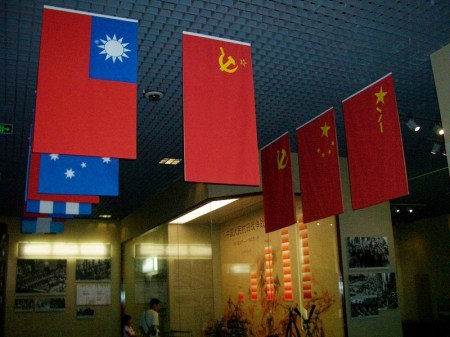
Russia and China will be among the Trump administration’s key strategic challenges in the coming year. Photo: Wikipedia.

China has likely been Trump’s biggest personal disappointment in 2017, one where he thought that major improvements might be possible, especially in international trade. Despite significant investments of time and attention to President Xi Jinping, now empowered in ways unprecedented since Mao Tse Tung, very little has changed in Beijing’s foreign policy, bilaterally or globally. There is no evidence of improved trade relations, or any effort by China to curb its abuses, such as pirating intellectual property, government discrimination against foreign traders and investors, or biased judicial fora.

Even worse, Beijing’s belligerent steps to annex the South China Sea and threaten Japan and Taiwan in the East China Sea continued unabated, or even accelerated in 2017. In all probability, therefore, 2018 will see tensions ratchet up in these critical regions, as America (and hopefully others) defend against thinly veiled Chinese military aggression. Japan in particular has reached its limits as China has increased its capabilities across the full military spectrum, including at sea, in space and cyberwarfare.

Taiwan is not far behind. Even South Korea’s Moon Jae In may be growing disenchanted with Beijing as it seeks to constrain Seoul’s strategic defense options. And make no mistake, what China is doing in its littoral periphery is closely watched in India, where the rise of Chinese economic and military power is increasingly worrying. The Trump administration should closely monitor all these flash points along China’s frontiers, any one of which could provoke a major military confrontation, if not next year, soon thereafter.

North Korea’s nuclear weapons program is where China has most disappointed the White House. Xi Jinping has played the United States just like his predecessors, promising increased pressure on Pyongyang but not delivering nearly enough. The most encouraging news came as 2017 ended, in the revelation that Chinese and American military officers have discussed possible scenarios involving regime collapse or military conflict in North Korea. While unclear how far these talks have progressed, the mere fact that China is engaging in them shows a new level of awareness of how explosive the situation is. So, 2018 will be critical not only regarding North Korea’s nuclear weapons threat but also whether Sino-American relations improve or take a distinct turn for the worse.

On Russia, the president has not given up on Vladimir Putin, at least not yet, but that may well come in 2018. Putin is an old-school, hard-edged, national interest-centered Russian leader, defending the “rodina” (the motherland), not a discredited ideology. Confronted with U.S. strength, Putin knows when to pull back, and he is, when it suits him, even capable of making and keeping deals. But there is no point in romanticizing the Moscow-Washington dynamic. It must be based not on personal relationships but on realpolitik.

No better proof exists than Russia’s reaction to Trump’s recent decision to supply lethal weapons to Ukraine, which is now a war zone entirely because of Russian aggression. To hear Moscow react to Trump’s weapons decision, however, one would think he was responsible for increased hostilities. President Obama should have acted at the first evidence of Russia’s military incursion into Ukraine, and even Trump’s aid is a small step compared to President Bush’s 2008 proposal to move Kiev quickly toward NATO membership. Nonetheless, every independent state that emerged from the Soviet Union, NATO member or not, is obsessed with how America handles Ukraine. They should be, because the Kremlin’s calculus about their futures will almost certainly turn on whether Trump draws a line on Moscow’s adventurism in Ukraine.

Just as troubling as Russia’s menace in Eastern and Central Europe is its reemergence as a great power player in the Middle East. Just weeks ago, the Russian Duma ratified an agreement greatly expanding Russia’s naval station at Tartus, Syria. In 2015, Obama stood dumbfounded as Russia built a significant air base in nearby Latakia, thus cementing the intrusion of Russia’s military presence in the Middle East to an extent not seen since Anwar Sadat expelled Soviet military advisers and brought Egypt into the Western orbit in the 1970s.

This expansion constitutes a significant power projection for the Kremlin. Indeed, it seems clear that Russia’s support (even more than Iran’s) for Syria’s Assad regime has kept the dictatorship in power. Russia’s assertiveness in 2017 also empowered Tehran, even as the ISIS caliphate was destroyed, to create an arc of Shia military power from Iran, through Iraq and Syria, linking up with Hezbollah in Lebanon. This Russian-Iranian axis should rank alongside Iran’s nuclear-weapons program on America’s list of threats emanating from the Middle East.

Finally, the pure folly of both the U.N. Security Council and the General Assembly crossing the United States on the Jerusalem embassy decision was a mistake of potentially devastating consequences for the United Nations. Combined with the International Criminal Court’s November decision to move toward investigating alleged U.S. war crimes in Afghanistan, there is now ample space for the White House to expand on the president’s focus on protecting American sovereignty.

Trump’s first insight into the rage for “global governance” among the high minded came on trade issues, and his concern for the World Trade Organization’s adjudication mechanism. These are substantial and legitimate, but the broader issues of “who governs” and the challenges to constitutional, representative government from international bodies and treaties that expressly seek to advance global governing institutions are real and growing. America has long been an obstacle to these efforts, due to our quaint attachment to our Constitution and the exceptionalist notion that we don’t need international treaties to “improve” it.

No recent president has made the sovereignty point as strongly as Trump, and the United Nations and International Criminal Court actions in 2017 now afford him a chance to make decisive political and financial responses in 2018. If 2017 was a tumultuous year internationally, 2018 could make it seem calm by comparison.

John R. Bolton (@AmbJohnBolton) served as U.S. ambassador to the United Nations and as undersecretary for arms control and international security affairs at the U.S. Department of State under President George W. Bush. He is now a senior fellow at the American Enterprise Institute.

This article first appeared in The Hill and is reprinted here with the kind permission of the author.

Trump’s Energy Success

December 30, 2017

Trump’s Energy Success, American ThinkerJeffrey Folks, December 30, 2017

The president’s accomplishments are many, but energy stands out.  America is now the world’s premier producer of fossil fuels.  In just one year, we have gone from a dismal future, in which the government planned to shut down fossil fuels almost entirely by mid-century, to a nation on the cusp of total energy independence.  “Make America Great Again” was not just a clever campaign slogan; it is a reality in the field of energy production, as in so many other areas under President Trump.

**************************

Just six months ago, the Trump administration was attacked for its “slow start.”  It was said to be “in disarray,” in “chaos,” “at war” with itself, and incapable of governing.  Now the list of successes has piled up, making it clear that, if the trend continues, President Trump will become one of our more important presidents.  Far from being a do-nothing administration, the Trump team is a White House on steroids.

One of the president’s major successes is in the area of energy policy.  Along with energy secretary Rick Perry, the president is overseeing the recovery of the American energy sector from the low point it hit under the Obama administration.  By a combination of executive orders totally restrictiong drilling on federal lands and EPA assaults on fracking and coal-mining, including a total ban on mountaintop-mining, Obama prosecuted a “war” not just on coal, but on fossil fuels generally.

Now America has become the largest producer of oil and gas and a major exporter of natural gas.  The U.S. now produces significantly more hydrocarbons than second-place Russia and twice as much as Saudi Arabia.  As coal-mining is restored, pipelines are laid, and new wells are drilled, hundreds of thousands of jobs are being created across the economy, not just in drilling and mining, but in support services.

The effect on the economy is already being felt.  According to Monster.com, a leading employment recruitment site, oil jobs are making a “huge comeback,” with “100,000 new jobs by 2018.”  And these are high paying jobs: “the average pay of the oil and gas industry is 85% higher than the national average.”  Each new job in the energy field creates others in areas like steel production, rig technology, transportation, and general services.  And the money earned in these high paying fields circulates through the economy.

With the passage of a provision in the Tax Cuts and Jobs Act allowing oil exploration in ANWR, the president has another success.  The Arctic National Wildlife Refuge contains vast reserves of recoverable oil currently estimated at10.4 billion barrels.  Development has been blocked by misguided and ill informed opposition from environmental groups.  Now, with great care for the environment, oil companies will have the opportunity to produce vast amounts of energy while drilling only 3% of ANWR.

According to a report from the House Committee on Natural Resources, “total governmental revenue” from ANWR drilling will run $440 billion.  ANWR alone will create between 55,000 and 130,000 new high paying jobs.

It is not just ANWR.  By removing unnecessary restrictions on fracking and by opening other federal lands to drilling, President Trump is promoting energy independence rather than standing in its way.  He has opened federal lands for drilling, including land in two national monuments in southern Utah.  Vast federal lands in the Western U.S. offer other opportunities.

In April, the president signed an executive order reversing Obama’s ban on new offshore drilling in the Arctic and Atlantic.  Current estimates show that almost 90 billion barrels of oil and 327 trillion cubic feet of natural gas lie under the U.S. Outer Continental Shelf.  Those estimates have a way of being revised upward, especially for regions such as these that have not been explored with modern technology due to past restrictions.  Offshore drilling has the potential to produce ten times the number of jobs and government revenue projected for ANWR.  At the high end, that would be 1,300,000 high paying jobs and $4.4 trillion in state and federal revenue.

Under President Obama, American coal-mining suffered a near-death experience.  Now, under EPA director Scott Pruitt, the Trump administration is taking steps to restore coal to its rightful place in America’s energy supply mix.  Though it will take years to complete, the reversal of Obama’s Clean Power Plan that began back in October will take government out of the frame of “picking winners and losers.”  Coal will still have to compete with natural gas, but at least it will be allowed to compete.

The president’s accomplishments in the field of energy policy are not limited to fossil fuels.  His Energy Department recently committed $100 million to promoting Transformative Energy Projects intended to spur early-stage innovators.  The department continues to promote alternative energy sources and energy conservation, important contributors to energy independence.  Energy conservation in particular can go a long way toward making America energy-independent.

With the opening of new lands to fracking and conventional drilling and the restoration of mining in the Appalachian region, the energy sector has gone from moribund to robust practically overnight.  One of the president’s first actions wasthe elimination of the Steam Protection Rule, which imposed crippling burdens of regulation on the industry.  As a result, production has begun to increase.

As the U.S. Energy Information Agency’s annual “Outlook” makes clear, the future for American energy production is bright.  The Outlook models future production across a wide range of different scenarios, and it concludes that the U.S. “is projected to become a net energy exporter by 2026” in its Reference Case projections but that it may do so earlier under three side cases.  After 2026, the scale of exports expands rapidly in all cases.

Perhaps the most consequential of the president’s actions in the field of energy is his decision to withdraw from the Paris climate accord.  While withdrawal from the accord does not have significant immediate consequences, its long-term effect is great.  Its most important effect will be to reduce the possibility of a deluge of environmental lawsuits based largely on the agreement signed by President Obama.  These lawsuits would have blocked American energy production to gratify a self-appointed global environmental elite – at the expense of the American people.

The president’s accomplishments are many, but energy stands out.  America is now the world’s premiere producer of fossil fuels.  In just one year, we have gone from a dismal future, in which the government planned to shut down fossil fuels almost entirely by mid-century, to a nation on the cusp of total energy independence.  “Make America Great Again” was not just a clever campaign slogan; it is a reality in the field of energy production, as in so many other areas under President Trump.

Saving up !

December 30, 2017

SO…how much money would American taxpayers save if Trump made good on his threat to cut aid to any country that voted against us on the Jerusalem move?

http://barenakedislam.com/2017/12/30/so-how-much-money-would-american-taxpayers-save-if-trump-made-good-on-his-threat-to-cut-aid-to-any-country-that-voted-against-us-on-the-jerusalem-move/

There was a global outcry after President Trump announced his intention to move the U.S. Embassy in Israel from Tel Aviv to Jerusalem. However, that might actually turn out to be good for America’s economy if the White House stopped giving billions of dollars every year to countries that take it for granted.

Daily Caller

(h/t Marvin W) What if Trump actually gutted funding for those 128 countries? Well, The Daily Caller did the math.

According to USAid.gov, which catalogs all country-by-country financial obligations the U.S. holds with the rest of the world, Trump’s threat would save the United States more than $24 billion — in just one year.

Here are the countries that voted against the U.S., listed alphabetically, along with America’s 2016 financial obligation to each country:

Afghanistan — $5,060,306,050

Albania — $27,479,989

Algeria — $17,807,222

Andorra — $0

Angola — $64,489,547

Armenia — $22,239,896

Austria — $310,536

Azerbaijan — $15,312,389

Bahrain — $6,573,352

Bangladesh — $263,396,621

Barbados — $5,442,370

Belarus — $11,166,107

Belgium — $3,101,636

Belize — $8,613,838

Bolivia — $1,378,654

Botswana — $57,252,922

Brazil — $14,899,949

Brunei — $354,829

Bulgaria — $20,066,715

Burkina Faso — $74,469,144

Burundi — $70,507,528

Cabo Verde — $5,044,716

Cambodia — $103,194,295

Chad — $117,425,683

Chile — $2,266,071

China — $42,263,025

Comoros — $1,057,063

Congo — $8,439,457

Costa Rica — $14,650,552

Cote d’Ivoire — $161,860,737

Cuba — $15,776,924

Cyprus — $0

Democratic People’s Republic of Korea (North Korea) — $2,142,161

Denmark — $3,455

Djibouti — $24,299,878

Dominica — $616,000

Ecuador — $26,014,579

Egypt — $1,239,291,240

Eritrea — $119,364

Estonia — $15,937,295

Ethiopia — $1,111,152,703

Finland — $33,492

France — $4,660,356

Gabon — $31,442,404

Gambia — $3,197,858

Germany — $5,484,317

Ghana — $724,133,065

Greece — $8,508,639

Grenada — $690,300

Guinea — $87,630,410

Guyana — $9,691,030

Iceland — $0

India — $179,688,851

Indonesia — $222,431,738

Iran — $3,350,327

Iraq — $5,280,379,380

Ireland — $0

Italy — $454,613

Japan — $20,804,795

Jordan — $1,214,093,785

Kazakhstan — $80,418,203

Kuwait — $112,000

Kyrgyzstan — $41,262,984

Laos — $57,174,076

Lebanon — $416,553,311

Liberia — $473,677,614

Libya — $26,612,087

Liechtenstein — $0

Lithuania — $15,709,304

Luxembourg — $0

Madagascar — $102,823,791

Malaysia — $10,439,368

Maldives — $1,511,931

Mali — $257,152,020

Malta — $137,945

Mauritania — $12,743,363

Mauritius — $791,133

Monaco — $0

Montenegro — $2,118,108

Morocco — $82,023,514

Mozambique — $514,007,619

Namibia — $53,691,093

Nepal — $194,286,218

Netherlands — $0

New Zealand — $0

Nicaragua — $31,318,397

Niger — $144,122,239

Nigeria — $718,236,917

Norway — $100,000

Oman — $5,753,829

Pakistan — $777,504,870

Papua New Guinea — $14,836,598

Peru — $95,803,112

Portugal — $207,600

Qatar — $95,097

Republic of Korea (South Korea) — $3,032,086

Russia — $17,195,004

Saint Vincent and the Grenadines — $612,000

Saudi Arabia — $732,875

Senegal — $99,599,642

Serbia — $33,062,589

Seychelles — $223,002

Singapore — $468,118

Slovakia — $2,585,685

Slovenia — $715,716

Somalia — $274,784,535

South Africa — $597,218,298

Spain — $81,231

Sri Lanka — $27,192,841

Sudan — $137,878,835

Suriname — $232,672

Sweden — $1,269

Switzerland — $1,168,960

Syria — $916,426,147

Tajikistan — $47,789,686

Thailand — $68,182,970

The Former Yugoslav Republic of Macedonia — $31,755,240

Tunisia — $117,490,639

Turkey — $154,594,512

United Arab Emirates — $1,140,659

United Kingdom — $3,877,820

United Republic of Tanzania — $628,785,614

Uruguay — $836,850

Uzbekistan — $20,067,933

Venezuela — $9,178,148

Vietnam — $157,611,276

Yemen — $305,054,784

Zimbabwe — $261,181,770

TOTAL — $24,485,383,599

AVERAGE PER COUNTRY — $205,795,526

Liberal Humiliation: Trump vs. Obama on Iran

December 30, 2017

Liberal Humiliation: Trump vs. Obama on Iran, PJ MediaRoger L Simon, December 29, 2017

(Please see also, Iranian Officials Inconsistent in Describing Protestors’ Motives and Goals. — DM)

Hundreds of thousands of supporters of opposition presidential candidate Mir Hossein Mousavi turn out to protest the result of the election at a mass rally in Azadi (Freedom) square in Tehran, Iran in 2009. (AP Photo/Ben Curtis, File)

Back in those pre-9/11 days when I identified as a liberal, the one thing I was sure drew all my then cohort together was opposition to fascism, whether secular or religious.

Boy, was I wrong and never was that more clear than in 2009 when the Green Movement demonstrators were marching through the streets of Tehran and other Iranian cities, demanding freedom from the mullahs. The whole world was watching, as we used to say in the sixties, only their cause was purer than ours was then. The horrifying theocrats who ran the “Islamic Republic” regularly raped women in prison before they killed them, hanged homosexuals in the streets and tortured just about everyone else who didn’t comply with the edicts of their Islamofascist regime.

The students and others marching in the streets to overthrow these tyrants desperately wanted America’s help, specifically the support of our “oh-so-liberal-progressive” president. they shouted, “Obama, Obama, are you with us or are you with them?”

Obama was silent.

I can’t think of a moment I was more disgusted by the acts (inaction actually) of an American president. What did he stand for? What did we stand for?

Well, who knows? What we do know is he wanted to deal with Iran his way — whether to get the glory for himself or for other even less attractive reasons we will never know. He was secretly communicating with Ahmadinejad and Khamenei even before he took office, hinting at accommodation.

He wanted an Iran deal and he got it, the Iranian people and the U.S. Constitution be damned. (I have met several of the student demonstrators from that period who spent years being tortured in Tehran’s Evin Prison. Their faces resembled Picassos of the Cubist Period. They were the lucky ones. Their brothers and sisters just disappeared.)

Obama was silent for those students and millions of other decent Iranians. He wanted his deal so much that, as we know, he sent still more millions to the mullahs in cash, so they could use those dollars in any untraceable manner they wished — such as funding Hezbollah and the Houthis.

And speaking of Hezbollah, we all know now, due to reporting about Project Cassandra by Josh Meyer at Politico, that Obama was so determined to make his creepy deal that he acceded to the mullahs’ demand to pull the FBI off a detailed investigation of the Hezbollah thugs’ extensive involvement in the U.S. drug trade. Are we sick yet?

Now, it is being widely reported, the demonstrators are back in the streets of various cities in Iran. We don’t know the extent of the protests or where they are going. I’m a bit skeptical. The time was probably more ripe in 2009, but we can be hopeful. What we do know is that these demonstrators are complaining that money garnered from the Iran nuclear deal is not going to them, the Iranian people, to make their lives better, as promised, but to carry out the mullahs’ murderous military adventures across the Middle East. Was anything ever more predictable? (For ongoing updates, I recommend the Islamic State of Iran Crime Research Center.)

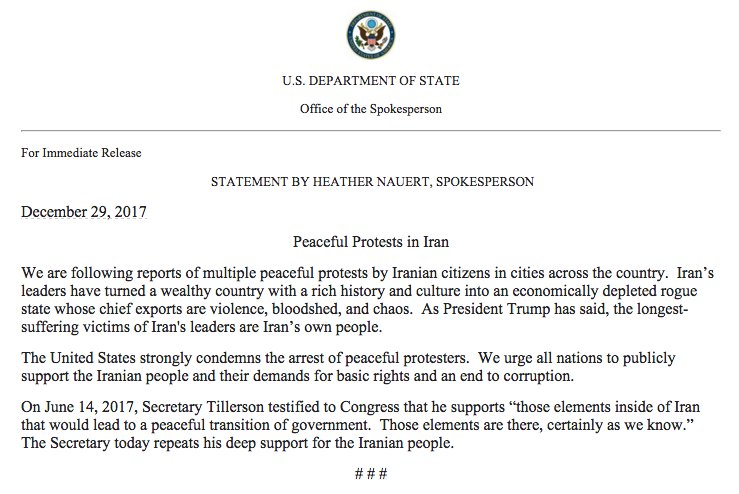
What we also know is that the Donald J. Trump administration has taken the exact opposite approach from the Obama administration to events in Iran. They are unqualifiedly — and immediately — supporting the demonstrators and democracy. Bravo!

Iranian Officials Inconsistent in Describing Protestors’ Motives and Goals

December 30, 2017

Iranian Officials Inconsistent in Describing Protestors’ Motives and Goals, Iranian News Update, Edward Carney, December 30, 2017

Please see also, The First Anti-American President, the thrust of which is

Donald Trump is certainly the opposite of an anti-American president, and he has no affection for our enemies. He has enabled the Ukrainians to fight, perhaps effectively, against the Russians. So why can’t he enable the Iranians to fight against the ayatollahs?

In the Ukrainian case we’re talking about military weapons; in the Iranian conflict the weapons are political.

If the Iranians rose up against the regime when Obama entered the White House, you can be sure they are at least equally motivated to do it with Trump in office. There are many protests in Iran today, and the Khamenei/Rouhani regime has responded by executing half as many Iranians as in the past. We should relentlessly expose this mass murder, and we should publicize the ongoing protests.

The target audience for such exposes is the great mass of the population. Paradoxically, Iranians are better informed about events in Jerusalem and Washington than in Iranian Kurdistan, the southern oil regions, and cities like Mashad and Qom.

— DM)

[T]he protest against foreign intervention has taken on a life of its own, with activists chanting such slogans as “forget about Syria; focus on us” and “no Gaza, no Lebanon; I will give my life only for Iran.” Despite the prevalence of these sorts of messages in social media and public accounts of the demonstrations, Iranian officials continue to maintain that the regional military prestige of the Islamic Republic remains broadly popular. For instance, the Huffington Post quotes hardline cleric Ahmad Alamolhoda as claiming that only about 50 protestors had expressed regional concerns within a gathering of several hundred.

**************************************

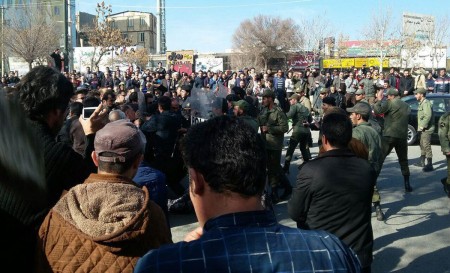
On Friday, mass protests continued throughout Iran after having started the previous day in reaction to rising rates of inflation and other uncontrolled economic conditions that had contributed, for instance, to a doubling of the price of eggs in just one week’s time.

Deutsche Welle quotes one Iranian lawmaker as blaming these problems on “illegal financial institutions” that had been established under the administration of former President Mahmoud Ahmadinejad. The closure of one such bank, called Mizan, reportedly had a particularly marked impact on Iran’s second most populous city, Mashhad, which has been the focal point of protests that spanned much of central and northern Iran as of Thursday.

The lawmaker’s account of the protests seemingly absolves the current government of responsibility for the conditions that are being protested by victims of a widening income gap in the Islamic Republic. But the DW article also points out that a major target of those protests has been current President Hassan Rouhani’s slow progress in following through on a promise to reimburse citizens whose investments were wiped out by the collapse of state-linked financial institutions.

https://www.youtube.com/watch?v=mGDCH3lWA3E


At the same time, DW and various other outlets have highlighted a trend toward broader focus in those protests, targeting not just rising prices and not just financial indicators as a whole but also the Rouhani administration’s failure to uphold a wide variety of promises regarding domestic reform. Insofar as the abandonment of these promises represents closure of the political gap between Rouhani’s political allies and those of hardline authorities like Supreme Leader Ali Khamenei, the protests seemingly double as an expression of opposition to the clerical system as a whole.

Indeed, the BBC refers to the demonstrations as “anti-government” protests in its reporting on Friday, as well as identifying them as the most serious and widespread such gatherings since the 2009 Green Movement, which emerged out of protests against Ahmadinejad’s disputed reelection. Those protests lasted for eight months and ended with a severe crackdown by government authorities, but many Iran watchers have observed that the resentments voiced by that movement continued to simmer under the surface in anticipation of another mass demonstration.

https://www.youtube.com/watch?v=JKrV_VJ-1Bk


This is not to say that there have been no major protests in the ensuing year. Indeed, the National Council of Resistance of Iran has identified thousands in the past year alone. But these have tended to be more geographically confined than the current demonstrations, and many have been focused not on politics but on specific demands such as the payment of overdue wages.

The content of Thursday’s and Friday’s protests was evidently broad enough in scope that even some Iranian officials were compelled to acknowledge the “anti-government” nature of chants and slogans, even while downplaying the scope of their appeal. The Associated Press reports that the governor of Tehran, Mohsen Hamedani, had acknowledged the spread of the protests to the Iranian capital, yet insisted that the gathering involved fewer than 50 people, most of whom dispersed after being warned by police.

Hamedani added that those who remained were “temporarily” arrested, and these remarks seemed also to downplay the severity of the government’s response to what might be regarded as a serious threat to its legitimacy. However, social media posts from various cities depicted peaceful protests being met with tear gas and water cannons, and the crowds in each of those gatherings numbered in the hundreds or in the thousands. By the end of Thursday, there had been at least 52 arrests in Mashhad alone, according to the BBC.

This is not to say that there have been no major protests in the ensuing year. Indeed, the National Council of Resistance of Iran has identified thousands in the past year alone. But these have tended to be more geographically confined than the current demonstrations, and many have been focused not on politics but on specific demands such as the payment of overdue wages.

The content of Thursday’s and Friday’s protests was evidently broad enough in scope that even some Iranian officials were compelled to acknowledge the “anti-government” nature of chants and slogans, even while downplaying the scope of their appeal. The Associated Press reports that the governor of Tehran, Mohsen Hamedani, had acknowledged the spread of the protests to the Iranian capital, yet insisted that the gathering involved fewer than 50 people, most of whom dispersed after being warned by police.

Hamedani added that those who remained were “temporarily” arrested, and these remarks seemed also to downplay the severity of the government’s response to what might be regarded as a serious threat to its legitimacy. However, social media posts from various cities depicted peaceful protests being met with tear gas and water cannons, and the crowds in each of those gatherings numbered in the hundreds or in the thousands. By the end of Thursday, there had been at least 52 arrests in Mashhad alone, according to the BBC.

https://www.youtube.com/watch?v=8LBt9pr-Vow


Political imprisonment is rampant in the Islamic Republic, and the BBC report also indicates that this was one of the topics that had been advanced by some protestors. But political focus of any given participant in the demonstrations might be different from those of any other, as evidenced by media reports identifying chants as targeting economic issues, political imprisonment, Iran’s paramilitary interventions in the surrounding region, and so on.

This latter topic is closely related to the economic issues that reportedly sparked the protests, since the Iranian government has spent billions of dollars in recent years on propping up the Syrian dictatorship of Bashar al-Assad, as well as on promoting the growth of the Houthi rebellion in Yemen and the various Shiite militias operating in Iraq. A recent editorial in Forbes points out that the new Iranian national budget, introduced by Rouhani in early December, includes the provision of 76 billion dollars to the Iranian Revolutionary Guard Corps and its foreign special operations Quds Force, at a time when tens of thousands of victims of a November earthquake are still awaiting basic shelter and government services.

https://www.youtube.com/watch?v=fPs6Z4N7R1M


But the protest against foreign intervention has taken on a life of its own, with activists chanting such slogans as “forget about Syria; focus on us” and “no Gaza, no Lebanon; I will give my life only for Iran.” Despite the prevalence of these sorts of messages in social media and public accounts of the demonstrations, Iranian officials continue to maintain that the regional military prestige of the Islamic Republic remains broadly popular. For instance, the Huffington Post quotes hardline cleric Ahmad Alamolhoda as claiming that only about 50 protestors had expressed regional concerns within a gathering of several hundred.

Interestingly, the same report also quotes Alamolhoda as advocating for an intensified crackdown on the protestors. In absence of this, he suggested, enemies of the regime would claim that the government had lost its “revolutionary base”. The Huffington Post indicates that Tehran security personnel have promised that any demonstrations in the capital would be “firmly dealt with”. This seems to be at odds with the Tehran governor’s commentary about temporary arrests and also with the initial reaction from Mashhad Governor Mohammad Rahim Norouzian, whom the AP quoted as saying that security forces had shown “great tolerance”

https://www.youtube.com/watch?v=ESosshsoUYc


Since that initial reaction, Iranian officials seem to have increasingly justified crackdowns through acceptance of the broader characterizations of the protests’ grievances and goals. Norouzian himself came to describe the protests as having been organized by “counter-revolutionaries”, according to DW. According to other sources, officials have also referred to the organizers as “hypocrites,” a term often applies to members of the leading Iranian opposition group the People’s Mojahedin Organization of Iran.

The PMOI has also been a driving force in a number of activist campaigns within the Islamic Republic, including the push for international attention and independent inquiry into the 1988 mass execution of political prisoners, which primarily targeted that same resistance organization. In a Huffington Post editorial on Friday, former US Ambassador Ken Blackwell sought to connect that massacre, which killed an estimated 30,000 people, to the current protests. He said that Thursday’s and Friday’s chants of “death to the dictator” emerged out of “a political climate punctuated by growing demands for justice for the regime’s massacre.”

But even if the initial economic focus of the latest protests had been voiced in isolation, there is an argument to be made that this also would constitute an expression of opposition to the continued rule of the clerical regime. In fact, this argument was made by historian Ellen Ward on Friday in an editorial published by Forbes. Ward observes that despite some officials’ efforts to blame the previous presidential administration for ongoing problems, it is really the underlying clerical system that is responsible for the economic future of the Iranian people.

This is to say that it is the clerical authorities, and not the elected branches of government, who establish and enforce policies with tremendous economic impact, including the interventionist foreign policy. Ward’s argument is reminiscent of the statement put out on Thursday by the PMOI’s parent coalition the National Council of Resistance of Iran. That statement quoted NCRI President Maryam Rajavi as saying that the economic prospects of the Iranian people cannot be expected to improve until the resistance movement has brought about the emergence of democratic governance in place of the theocratic dictatorship.

https://www.youtube.com/watch?v=LZxePyDYAcg