Archive for October 31, 2017

Al-Nusra terrorists may have received Syria ‘aid’ sent to rebels by Qatar, US, Saudis – Qatari ex-FM

October 31, 2017

Source: Al-Nusra terrorists may have received Syria ‘aid’ sent to rebels by Qatar, US, Saudis – Qatari ex-FM — RT World News

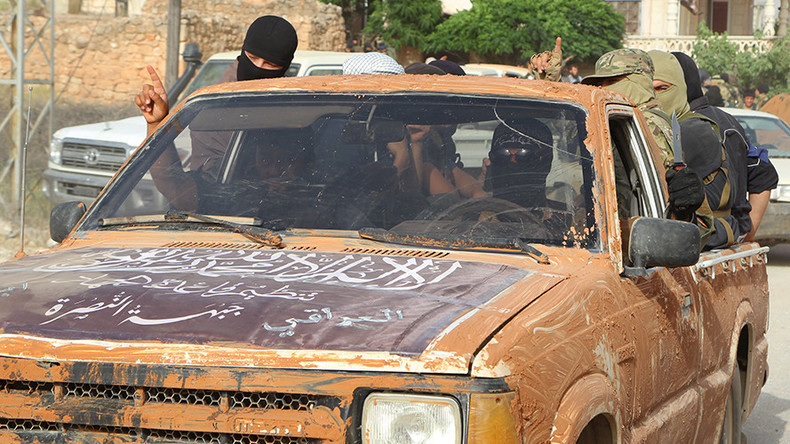
© Ammar Abdullah / Reuters

Some of the military aid sent to the Syrian opposition by Qatar, Turkey, Saudi Arabia and the US may have ended up in the hands of Al-Qaeda-affiliated Al-Nusra terrorists, the Qatari foreign minister has admitted.

According to the former minister, all aid destined for the Syrian rebels passed via Turkey and was coordinated with the US forces. “All aid distributed on Syrian territory was also coordinated by the US forces,” said Hamad bin Jassim who also served as Qatari prime minister between 2007 and 2013.

He did not specify who exactly was to receive the aid, but the US – together with Qatar, Saudi Arabia and Turkey – have repeatedly voiced their support for Syrian opposition and issued both humanitarian and military aid to anti-government militants.

READ MORE: US using Al-Nusra terrorists to undermine Astana peace talks progress – Syrian FM

Distributing aid wasn’t always smooth and on at least one occasion the shipment might have fallen into the hands of terrorists, which the former official suggested were from the group formerly known as Al-Nusra Front.

“Maybe there was some ‘interaction’ with Al-Nusra militants,” Hamad bin Jassim said. He did state that Islamic State (IS, formerly known as ISIS/ISIL) terrorists were not the ones who received this unspecified aid.

At the same time, he stressed that Qatar “stopped” all interactions with Al-Nusra Front after the group was formally recognized as a terrorist organization by the international community. However, he did not specify whether the group had been supported by Doha and its allies prior to this decision.

The politician apparently likened Assad and his government to “prey” that was hunted by the Gulf monarchies and their allies but eventually got away: “We’ve all focused on liberation of Syria, but we all were fighting over the prey [Syria] and now the prey is gone. And many people in Syria died,” he said.
Read more

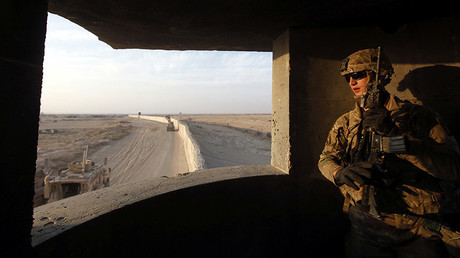
© Alaa Al-Marjani

With Syrian President Bashar Assad still in power after years of war, many countries have suggested that he should remain, the Qatari ex-minister said. He voiced his frustration that the then-allies did not coordinate their policy shift with Doha: “I don’t object to one changing his mind if he finds that he was wrong, but at least inform your partner.”

The Syrian war, which triggered a major refugee crisis, entered its sixth year last March. The Damascus government has repeatedly dubbed the US-led campaign in the region as “illegitimate.” In September, Syrian Foreign Minister Walid Muallem said that the US was enabling former Al-Nusra jihadists to subvert the Astana peace process.

According to data from Russian Defence Ministry, an offensive launched by Al-Nusra terrorists and their allies in Syria in September was orchestrated by US security services, aimed at derailing the Syrian Army operation near Deir ez-Zor.

READ MORE: US security services behind Al Nusra offensive in Syria’s Idlib – Russian MoD

This is not the first time that US aid has been found to have ended up in the wrong hands. In May, a declassified audit from the US Department of Defense showed that negligent accounting by the US military had resulted in the Pentagon not knowing what happened to more than $1 billion in arms and equipment meant for the Iraqi Army. The findings were made public as a result of a Freedom of Information Act (FOIA) request from human-rights group Amnesty International.
Saudi Arabia to Extract Uranium for ‘Self-Sufficient’ Nuclear Program

October 31, 2017

BY:

Source: Saudi Arabia to Extract Uranium for ‘Self-Sufficient’ Nuclear Program

By Sylvia Westall

ABU DHABI (Reuters) — Saudi Arabia plans to extract uranium domestically as part of its nuclear power program and sees this as a step towards “self-sufficiency” in producing atomic fuel, a senior official said on Monday.

Extracting its own uranium also makes sense from an economic point of view, said Hashim bin Abdullah Yamani, head of the Saudi government agency tasked with the nuclear plans, the King Abdullah City for Atomic and Renewable Energy (KACARE).

In a speech at an international nuclear power conference in Abu Dhabi, he did not specify whether Saudi Arabia seeks to also enrich and reprocess uranium—steps in the fuel cycle which are especially sensitive as they can open up the possibility of military uses of the material.

The world’s top oil exporter says it wants to tap atomic power for peaceful purposes only in order to diversify its energy supply and will award a construction contract for its first two nuclear reactors by the end of 2018.

“Regarding the production of uranium in the kingdom, this is a program which is our first step towards self-sufficiency in producing nuclear fuel,” Yamani told a conference organized by the International Atomic Energy Agency (IAEA). “We utilize the uranium ore that has been proven to be economically efficient.”

Atomic reactors need uranium enriched to around 5 percent purity but the same technology in this process can also be used to enrich the heavy metal to higher, weapons-grade levels.

This issue has been at the heart of Western and regional concerns about the nuclear work of Iran, Saudi Arabia‘s foe, and led to the 2015 deal in which Iran agreed to freeze the program for 15 years for sanctions relief.

On Monday, IAEA chief Yukiya Amano said Iran was complying with the nuclear deal signed with world powers and which U.S. President Donald Trump has called into question.

Under the agreement, Iran can enrich uranium to 3.67 percent purity, around the normal level needed for commercial power-generation.

MOMENTUM

Saudi Arabia would be the second country in the Gulf Arab region to tap nuclear after the United Arab Emirates, which is set to start up its first, South Korean-built reactor in 2018. The UAE has committed not to enrich uranium itself and not to reprocess spent fuel.

Industry sources have told Reuters Saudi Arabia is reaching out to potential vendors from South Korea, China, France, Russia, Japan, and the United States for its first two reactors.

The plans have received extra momentum as part of Saudi Arabia‘s Vision 2030, an ambitious economic reform program launched last year by Crown Prince Mohammed bin Salman.

Yamani said Saudi Arabia will soon pass laws for its nuclear program and will have set up all of the regulations for its nuclear regulator by the third quarter of 2018.

“The IAEA also has been requested to conduct an integrated review of our nuclear infrastructure during the second quarter of 2018,” he said, which will allow the agency to assess efforts to prepare Saudi infrastructure “to introduce nuclear power for peaceful purposes.”

Saudi Arabia is considering building some 17.6 gigawatts of nuclear capacity by 2032, the equivalent of about 17 reactors, making it one of the strongest prospects for an industry struggling after the 2011 nuclear disaster in Japan.

Preliminary studies have estimated Saudi Arabia has around 60,000 tons of uranium ore, Maher al Odan, the chief atomic energy officer of KACARE said at an electricity forum in Riyadh on Oct 11.

Secret visit to Saudi Arabia by Trump’s son-in-law focused on Israeli-Arab peace

October 31, 2017

Source: Secret visit to Saudi Arabia by Trump’s son-in-law focused on Israeli-Arab peace

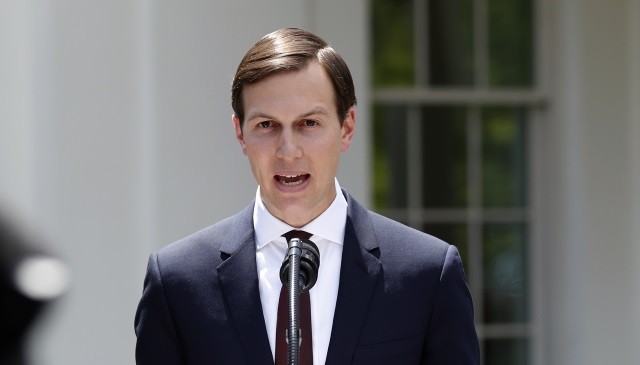
White House senior adviser Jared Kushner (AP/Alex Brandon)

A senior White House official confirmed reports Monday that President Trump’s son-in-law Jared Kushner and fellow envoy Jason Greenblatt secretly visited Saudi Arabia last week to further the Israeli-Palestinian peace process.

In a statement, the source said the visit is part of President Trump’s efforts to broker a deal between Ramallah and Jerusalem and repeated that President Trump “is personally committed to achieving a peace deal between Israelis and Palestinians that would help usher in an era of greater regional peace and prosperity.

The talks followed meetings between U.S. representatives and counterparts from Egypt, the United Arab Emirates, and “other regional partners” on the sidelines of last month’s United Nations General Assembly, the State Department said.

Following the talks in Saudi Arabia, which Deputy National Security Adviser for Strategy Dina Powell also reportedly attended, Kushner is believed to have returned to the United States while Greenblatt remained in the region to visit Cairo, Amman, and Ramallah, and met with US Ambassador to Israel David Friedman and Prime Minister Binyamin Netanyahu Sunday.

Also Sunday, Palestinian officials said they believed the White House was moving towards a “dramatic announcement” that the Trump administration has adopted the two-state solution as its preferred option for solving the Israel-Palestinian stand-off, Israel Broadcast Corporation (Kan) reported. State Department officials in Jerusalem refused to comment on the report.

Apart from acknowledging that the talks had taken place, State Department officials in Israel and Washington declined to give details of the talks but reaffirmed the president’s view “that peace between Israelis and Palestinians can only be negotiated directly between the two parties and that the United States will continue working closely with the parties to make progress toward that goal.”

“No deal will be imposed on Israelis and Palestinians; We are committed to facilitating a deal that improves conditions for both parties,” the statement said.

By: TPS


Iran’s president turned down Trump invitation to meet

October 31, 2017

October 30, 2017

Source: Iran’s president turned down Trump invitation to meet

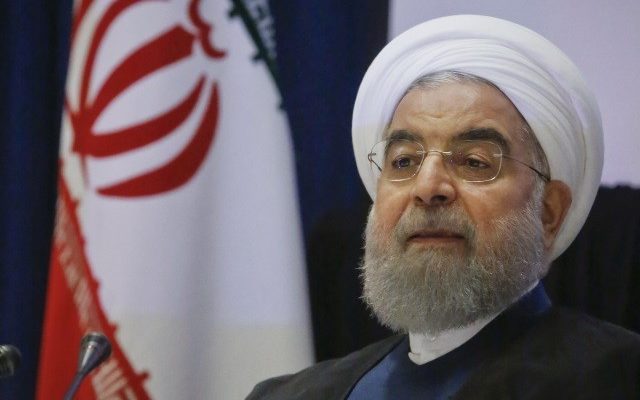
Iran’s President Hassan Rouhani (AP/Bebeto Matthews)

A spokesman for the Islamic Republic confirmed Iranian reports that Trump allegedly tried to meet Rouhani for a face-to-face meeting. 

Iranian President Hassan Rouhani rejected an invitation by US President Donald Trump for a face-to-face meeting on the sidelines of the UN General Assembly conference in New York last month, a senior Iranian analyst disclosed on Sunday.

“US President Trump has invited President Rouhani to a face-to-face meeting during Mr. Rouhani’s visit to New York to participate in the UN annual conference in September but our president has turned down the offer,” Mahdi Faza’eli wrote on Sunday, according to Iran’s Fars news service.

Faza’eli said Trump extended the invitation a day after Trump’s powerful speech at the United Nations, during which he stated that the Iran nuclear deal was “one of the worst and most one-sided transactions the US has ever entered into. Frankly, that deal is an embarrassment to the United States, and I don’t think you’ve heard the last of it. Believe me.”

Iranian media perceived Trump’s address as an insult.

Faza’eli also said that French President Emanuel Macron had also tried to persuade Rouhani to accept the meeting, but failed.

Faza’eli claimed that US efforts to hold talks with Iran are nothing new, saying that “the Americans are sure that such negotiations will benefit them, but they will have no achievements for Iran but harm.”

Iranian Foreign Ministry Spokesman Bahram Qassemi confirmed Faza’eli’s revelation, saying that the willingness to meet was exclusively American, “but was rejected by the Islamic Republic of Iran’s president”.

However, Qassemi denied that Macron made efforts to mediate.

In 2013, then President Barack Obama and Rouhani spoke by telephone, the highest-level contact between the two countries in decades.

By: World Israel News Staff


