Archive for October 26, 2017

Mexican Drug Cartels Are ‘Greatest’ Criminal, Opioid Threats to U.S., Says DEA

October 26, 2017

Mexican Drug Cartels Are ‘Greatest’ Criminal, Opioid Threats to U.S., Says DEA, BreitbartIldefonso Ortiz and Brandon Darby, October 26, 2017

Breitbart Texas / Cartel Chronicles

The report does not seem to mention the complicity of Mexican officials at various levels of the government. As Breitbart Texas reported, two former governors of Tamaulipas are current fugitives of the U.S. Department of Justice on money laundering charges, while several other governors and politicos were outed as cartel surrogates. Current Mexican president Enrique Peña Nieto was named by various news outlets in Mexico for receiving campaign money from Juarez Cartel operators, Breitbart Texas reported.

***********************************

Mexican drug cartels continue being the greatest criminal threat to America and are largely to blame for the current opioid crisis striking most of the nation, a new assessment by the U.S Drug Enforcement Administration revealed.

In their 2017 National Drug Threat Assessment, the agency claims that Mexican drug cartels remain unchallenged in their hold of the drug market in the U.S. and continue to expand their territory from the Southwest border into areas like New England. Once the drugs are crossed into the country, they are distributed by gangs managed or influenced by Mexican cartels. The DEA claims that the greatest drug threat to the city of Chicago comes from cartels since they control the flow of heroin, methamphetamines, marijuana, and cocaine without competition. Other areas that have seen a stronger influence by Mexican drug cartels include Pittsburgh and Indiana.

According to the DEA, in the past 10 years, the drug landscape has changed with the dramatic increase of opioids; the agency claims that drug poisoning deaths typically tied to overdose or to emerging drugs like fentanyl are spiking. In 2015, 140 died every day from drug poisoning, the report revealed.

One of the alarming admissions made in the assessment points to the Sinaloa Cartel having active cells and at least one leader operating in Phoenix, Arizona, to oversee the distribution of drugs. While drug cartels tend to avoid carrying out brazen acts of violence in the U.S. in order to not attract attention, violent cases have taken place in the country, the DEA claims. For the most part, cartels will hire out U.S.-based gangs to carry out other attacks and not draw attention.

The report does not seem to mention the complicity of Mexican officials at various levels of the government. As Breitbart Texas reported, two former governors of Tamaulipas are current fugitives of the U.S. Department of Justice on money laundering charges, while several other governors and politicos were outed as cartel surrogates. Current Mexican president Enrique Peña Nieto was named by various news outlets in Mexico for receiving campaign money from Juarez Cartel operators, Breitbart Texas reported.

The report identified six major drug cartels as being the ones with the most influence north of the border:

Sinaloa Cartel — Once led by the famed Joaquin “El Chapo” Guzman, the criminal organization is currently led by Ismael “El Mayo” Zambada, El Chapo’s family, and Rafael Caro Quintero. The drug cartel is considered to be the one with the largest footprint in the U.S., where the criminal organization has established routes into Phoenix, Los Angeles, Denver, and Chicago.

Cartel Jalisco Nueva Generacion (CJNG) — An offshoot of the Sinaloa Cartel, the CJNG has rapidly become one of the most powerful cartels in Mexico. According to the DEA, CJNG’s rapid expansion is characterized by their willingness to engage in violent confrontations with Mexican Government security forces and rival cartels. The drug cartel operates in border cities in Chihuahua, Tamaulipas, and Baja California and has distribution hubs in the U.S. cities of Los Angeles, New York, and Atlanta.

Juarez Cartel — Based out of the Ciudad Juarez, Chihuahua, the criminal organization operates primarily through West Texas and New Mexico. It’s drug distributions hubs include El Paso, Denver, Chicago and Oklahoma City. A turf war between the Juarez and Sinaloa Cartels is to blame for the 2010 spike in murders in that city.

Gulf Cartel — Another of the older cartels in Mexico, the criminal organization operates primarily out of South Texas moving marijuana, cocaine, heroin, and methamphetamine to Houston, Detroit, and Atlanta. In South Texas, the Gulf Cartel coordinates with local gangs to not only handle local distribution, but also carry out attacks and assassinations against targets throughout the nation, the DEA revealed.

Los Zetas — An offshoot of the Gulf Cartel, the criminal organization crosses their drugs through the states of Coahuila and Tamaulipas to deliver them to Laredo, Dallas, New Orleans and Atlanta. The cartel underwent a series of schisms that led to the criminal organization’s diminished influence, but still maintains busy smuggling corridors.

Beltran Leyva Cartel — Another offshoot of the Sinaloa Cartel, the criminal organization operates in the Mexican states of Guerrero, Morelos, Nayarit, and Sinaloa and has working relationships with Juarez , Los Zetas, and CJNG to access smuggling corridors. The BLO runs distribution hubs in Phoenix, Los Angeles, Chicago, and Atlanta.

While the assessment identifies cartels as the biggest threat, the study provides a dark forecast where the criminal organizations will continue to expand their operations in the country.

It is anticipated that Mexican TCOs (drug cartels) will continue to grow in the United States through expansion of distribution networks and interaction with local criminal groups and gangs. This relationship will insulate Mexican TCOs from direct ties to street-level drug and money seizures and drug-related arrests made by U.S. law enforcement.”
Tillerson: Assad family reign coming to end, only issue is how to bring it about

October 26, 2017

Source: Tillerson: Assad family reign coming to end, only issue is how to bring it about — RT World News

US Secretary of State Rex Tillerson says the “reign of the Assad family” in Syria is coming to an end, and the “only issue is how that can be brought about.”

Tillerson’s comments were made following a meeting with UN envoy Staffan de Mistura in Geneva.

The United States wants a whole and unified Syria with no role for Bashar al-Assad in the government,” Tillerson said, as quoted by Reuters. “The reign of the Assad family is coming to an end. The only issue is how that should that be brought about.”

The secretary said he reaffirmed Washington’s commitment to revive the Geneva peace process for Syria during a meeting with de Mistura.

He also said that “the only reason Syrian forces have been successful has been because of the air support they have received from Russia.”

At the very beginning at his term as secretary of state, Tillerson said that the fate of Syrian President should “be decided by Syrian people,” signaling late in March an apparent drift from the “Assad must go” narrative which prevailed during the Obama era.

Tillerson, however, changed his stance a week later in April, following the chemical attack in Idlib, which was attributed by Western powers, without any investigation, to the Syrian government.

Read more

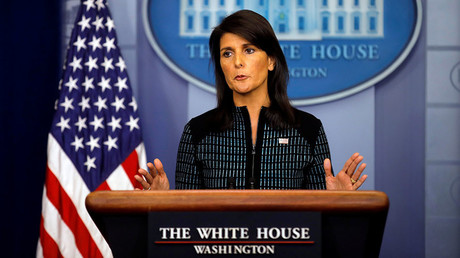
U.S. Ambassador to the UN, Nikki Haley © Carlos Barria

“There is no doubt in our minds, and the information we have supports, that the Syrian regime under the leadership of Bashar al-Assad are responsible for this attack,” Tillerson said back then.

The US stance then effectively reverted to the position voiced years ago by then-President Barack Obama back in 2011, who listed the ousting of Syria’s president as one of the main preconditions for establishing peace in Syria.

“The transition to democracy in Syria has begun and it’s time for Assad to get out of the way,” Obama said in a statement when the war in Syria was only beginning. “For the sake of the Syrian people, the time has come for President Assad to step aside.”

Moscow has repeatedly stated that the fate of President Assad can only be decided democratically by the Syrian people, following the defeat of the terrorist groups in Syria and peace talks between the government and the moderate opposition.

Draining the swamp !

October 26, 2017

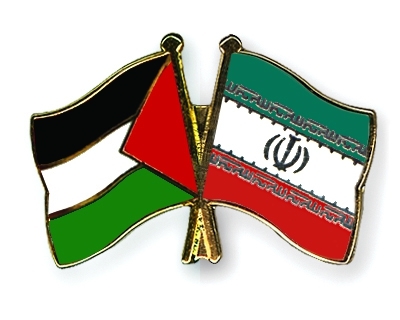
Hamas Rejoins Iran’s Terrorist Axis

October 26, 2017

Hamas Rejoins Iran’s Terrorist Axis, Investigative Project on Terrorism, Yaakov Lappin, October 26, 2017

(Please see also, The Iran-Hamas Plan to Destroy Israel. — DM)

One immediate result of the Iranian-Hamas reconciliation is the new Hamas outpost being built in Lebanon.

Lebanon is under the firm control of Iran’s proxy, Hizballah. It is now seeing the arrival of Hamas members who have set up a new command center. From there, Hamas could set up terrorist cells in the West Bank.

Hamas’ new presence in Lebanon could also be used to create a rocket-firing base, or cross-border terror cells operating from Lebanon, with Hizballah’s and Iran’s approval.

******************************

Hamas is deepening its ties with Iran and its radical Shi’ite axis. Iranian cash is once again expected to fund Gaza’s war preparations and arms build-up program.

Before the 2011 outbreak of the war in Syria, Sunni Hamas and Shi’ite Iran were united by their goal to destroy Israel. Iran helped arm and fund Hamas’ terrorist-guerilla army in Gaza.

But the two fell out after finding themselves on opposite sides of the sectarian fence in the bloody Syria war. Iran, largely through its Lebanese proxy Hizballah, has committed troops and weapons to prop up dictator Bashar Al-Assad.

Now, out of cash and isolated, Hamas is in search of backing from a major regional power, and it is returning to Iran’s orbit.

The Iranians have been indicating that past fall-outs are history, and that Hamas will get all of the help it needs to prepare for future war against Israel. Israel’s intelligence community is closely monitoring these developments.

The Islamic Republic will grant Hamas “all assistance that it requests,” a senior Iranian official told the Lebanon-based Al Mayadin TV network, according to Israel’s Ynet website.

“Relations with Iran are excellent and Iran is the largest supporter of the [Hamas armed wing] Izz Al-Din Kassam Brigades with money and arms,” Hamas’ chief in Gaza, Yehya al-Sinwar said.

“The relationship today is developing and returning to what it was in the old days,” Sinwar told Reuters.

“This will be reflected in the resistance [against Israel] and in the agenda to achieve the liberation,” he said. “Liberation” is a reference to Hamas’ ideological long-term commitment to destroy Israel and replace it with a Palestinian-Islamist state.

One immediate result of the Iranian-Hamas reconciliation is the new Hamas outpost being built in Lebanon.

Lebanon is under the firm control of Iran’s proxy, Hizballah. It is now seeing the arrival of Hamas members who have set up a new command center. From there, Hamas could set up terrorist cells in the West Bank.

Hamas’ new presence in Lebanon could also be used to create a rocket-firing base, or cross-border terror cells operating from Lebanon, with Hizballah’s and Iran’s approval.

One of the Hamas members seen in Beirut recently is its No. 2 man, Saleh Al-Arouri. He has been responsible for remotely setting up terrorist cells in the West Bank. Until recently, Al-Arouri operated out of Hamas’ headquarters in Turkey.

Al-Arouri has been appointed Hamas deputy leader. He took part in a senior Hamas delegation to Iran earlier this month.

Those ties with Iran are one reason why Israel’s cabinet rejected recognition of a fledgling Hamas-Fatah unity government. Israel will not recognize the new Palestinian government until Hamas agrees to give up its weapons, recognize Israel, and cut links with Tehran.

“Our presence in Iran is the practical denial of the third precondition — cutting ties with Iran,” Arouri said. “Undoubtedly, the Palestinian resistance forces will never give up… their arms,” he was quoted by Reuters as saying.

Iran’s Supreme Leader, Ayatollah Khamenei, praised Hamas’ stance. Khamenei’s representative congratulated Hamas “for declaring that you will not set your weapons aside,” according to the semi-official Fars news agency.

Renewed Iranian support probably will take the form of suitcases of cash entering Gaza via smuggling tunnels.

Some tunnels linking Gaza to the Sinai Peninsula remain, though many others have been demolished by Egypt.

Iranian know-how in producing rockets, RPGs, mortars, and drones will also, once again, be used to train Hamas engineers, who are in charge of Hamas’ domestic weapons industry.

Iranian guerilla combat doctrines, which already have influenced Hamas greatly, could also reappear in Gaza, in updated forms.

Iran might also try to smuggle materials to make weapons into Gaza via small fishing boats.

Hamas has been open and frank about its intentions in renewing Iranian sponsorship. A senior Hamas official said it was about securing “Iranian financial and logistical support,” according to the Agence France-Presse.

Hamas’ new relationship with Iran will displease Sunni Arab countries who, like Israel, view the Iranians and their regional destructive behavior as a top threat.

But this is a risk Hamas’ leadership is prepared to take in its quest to replenish cash supplies for its military and terrorist operations.

Hamas’s isolation – the force that drove it into Iran’s arms – is also what caused it to enter a reconciliation agreement with its arch Palestinian rival, Fatah.

Seeking to avoid a collapse of its regime in Gaza due to dwindling cash and energy resources, and under pressure from Palestinian Authority President Mahmoud Abbas, who had been reducing Gaza’s electricity flow, Hamas decided to feign compromise with Fatah.

This is a short-term tactical move designed to serve the longer-term radical vision. Both Hamas and Iran would like to eventually use the Palestinian reconciliation to depose Fatah from power in the West Bank.

Hamas can be expected to use the coming years to build up its political power in the West Bank, Fatah’s home turf, and then try to take it over through elections. Hamas’s end goal is to create two armed fronts against Israel – from Gaza and the West Bank – with Iran creating the third and most potent third front from Lebanon, in the form of Hizballah.

Hamas and Iran still have their differences, but Hamas’s new leadership, and its distress stemming from isolation, have led it firmly back into Iran’s orbit. So long as Egypt remains under a government that is hostile to Islamists and jihadists, Hamas will continue to see Iran as its state backer, despite the Shi’ite-Sunni divide.

Meanwhile, a senior Hamas member with a history of funneling tens of millions of dollars from Iran to the organization’s military wing has recently been unveiled as a new top-level overseas liaison, according to Israel’s Kan television news service.

Maher Salah, a senior Hamas financier, recently appeared at a Turkish rally for the deceased Egyptian former Muslim Brotherhood leader Mohammed Mahdi Akef, in which he eulogized Akef as one who “loved jihad fighters and the jihad for Allah.”

The U.S. Treasury Department sanctioned Salah, together with Al-Arouri, in 2015.

“The fate of your country is to pass from the world,” Salah said, addressing Israeli Prime Minister Benjamin Netanyahu. “The fate of your kingdom is to be eliminated. I promise him that his country will not live to celebrate 100 years.”

Salah could use his ties in Iran to restart large-scale terrorist financing efforts.

The Gaza Strip is the quietest it has been in 30 years, and Hamas today remains deterred by Israel’s military might.

But its recent actions and statements show that Hamas is exploiting the ceasefire to gear up for long-term and destructive conflict with Israel. It is returning to Iran’s fold to help it in this effort.

Yaakov Lappin is a military and strategic affairs correspondent. He also conducts research and analysis for defense think tanks, and is the Israel correspondent for IHS Jane’s Defense Weekly. His book, The Virtual Caliphate, explores the online jihadist presence.

Carlson Exposes Russia Story the Rest of Mainstream Media Missed

October 26, 2017

Carlson Exposes Russia Story the Rest of Mainstream Media Missed, Accuracy in Media, Brian McNicoll, October 25, 2017

(Please see also, DOJ lifts gag order; former FBI informant can tell Congress about 2010 uranium deal. — DM)


Carlson’s source said he had also been interviewed by Mueller, whom the source said is now more interested in those who facilitated Russian involvement in our political system as opposed to electoral collusion.

“Manafort was crystal clear Russia wanted to cultivate Hillary,” Carlson quoted the source as saying. Manafort, Tony and John Podesta, who went on to manage Clinton’s campaign, were “operatives on behalf of Russian business interests.”

“And now it turns out two people very close to Hillary Clinton were working for them. Obama administration in its effort to seek a closer relationship with Russia acquiescing in the sale of materials that are strategic and place American security interests at some risk.”

The last remark referred to other reporting this week that President Obama worked with Clinton during her time at the State Department to sell a fifth of the U.S. uranium supply to the Russians – another event that has received almost no coverage.

****************************

Nowhere in the New York Times or Washington Post will you find it, but Tucker Carlson might have pulled off the scoop of the year on his show on Fox.

Paul Manafort has long been known to be at or near the center of the investigation by Special Counsel Robert Mueller.

The FBI searched Manafort’s house, he was at the meeting with Donald Trump, Jr., and the Russian lawyer who offered dirt on Hillary Clinton and his past as a lobbyist for foreign governments means he likely knows the people might collude with.

But the assumption has been that Manafort, who served as Donald Trump’s campaign manager for a brief period in the summer of 2016, was a problem for Trump and perhaps a link from underground Russian dealings to the Oval Office itself.

Carlson said that a former senior employee at the Podesta Group with “direct personal knowledge” of the Mueller investigation contacted the show because he was “motivated … by the disgust he felt watching media coverage.”

Not only are the media getting it wrong, he said, they are getting it backwards. 

The man told Carlson the Russians were deeply involved in American politics, but the real story – perhaps now even the focus of the Mueller investigation – has “almost nothing to do with the 2016 presidential campaign.”

Instead, it is about Manafort working for years with the Podesta Group on behalf of Russian government interests, the source told Carlson. Manafort was a regular in the Podesta offices and sought to influence the Obama administration, Congress and the Hillary Clinton State Department on behalf of Russian government interests.

Tony Podesta, in turn, was a constant voice in Hillary Clinton’s ear when she was secretary of state, working through David Adams, whom he hired from the State Department to improve access.

The man said he knows of at least one meeting held to “determine how to help Uranium One, whose board members gave $100 million to the Clinton Foundation.”

Carlson’s source said he had also been interviewed by Mueller, whom the source said is now more interested in those who facilitated Russian involvement in our political system as opposed to electoral collusion.

“Manafort was crystal clear Russia wanted to cultivate Hillary,” Carlson quoted the source as saying. Manafort, Tony and John Podesta, who went on to manage Clinton’s campaign, were “operatives on behalf of Russian business interests.”

The Podestas “are in the crosshairs,” Carlson concluded.

He then brought on Brit Hume, who agreed this revelation changed the story completely by complicating everyone’s idea of Manafort’s place in it and by revealing that Mueller “is on this” and may now be involved in “a more broad-gauged effort to determine the extent and depth of Russian efforts to influence American politics going back several years.”

But then raised perhaps an even more significant question.

The story “suggests what collusion that have been was between Paul Manafort and the Podesta Group on behalf of Russian interests,” Hume said. “What you’re coming around and getting at this now … how could it be that all these journalists chasing this story for lo these many months and never ran across this thing? How can that be?”

“It’s pretty striking, and it suggests the work done on this story has not been of the best quality or this would have turned up. I’d also suggest you have a pack of journalists who are so determined to follow one storyline that they completely missed this.

“And now it turns out two people very close to Hillary Clinton were working for them. Obama administration in its effort to seek a closer relationship with Russia acquiescing in the sale of materials that are strategic and place American security interests at some risk.”

The last remark referred to other reporting this week that President Obama worked with Clinton during her time at the State Department to sell a fifth of the U.S. uranium supply to the Russians – another event that has received almost no coverage.

“The tide may be turning in political terms and hopefully in journalistic tones,” Hume said.

Trump Directs State, USAID to Bypass United Nations, Deliver U.S. Aid More Directly to Christians, Yazidis In Iraq

October 26, 2017

Trump Directs State, USAID to Bypass United Nations, Deliver U.S. Aid More Directly to Christians, Yazidis In Iraq, Washington Free Beacon, October 26, 2017

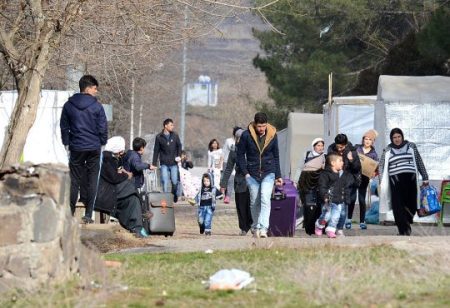
Yazidi refugees carry their belongings / Getty

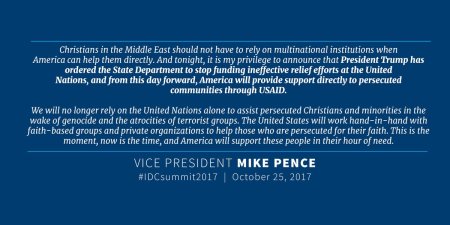
“The United States will work hand in hand from this day forward with faith-based groups and private organizations to help those who are persecuted for their faith,” he said. “This is the moment, now is the time, and America will support these people in their hour of need.”

The White House decision is at least six months in the making and comes after several lawmakers and human rights activists have repeatedly argued their case to top officials at the State Department and USAID, which have resisted any change to their “religion-blind” policy of channeling most of the aid money to the United Nations.

That policy, the two U.S. agencies have argued, is “needs-based” and does not give priority to Christians and Yazidis and other religious minorities in Iraq, even though both the Obama and the Trump administrations have publicly declared that both groups, as well as Shiite Muslims and others, have suffered genocide at the hand of ISIS.

*********************************

President Trump has issued a White House directive forcing the State Department and USAID to bypass the United Nations and stop its “ineffective” relief efforts aimed at helping Iraqi Christians, Yazidis, and other persecuted religious minorities, and instead to provide the assistance either directly or through “faith-based groups.”

Vice President Mike Pence, in a speech at the In Defense of Christians annual Solidarity Dinner highlighting the plight of persecuted Christians in the Middle East and elsewhere, announced the directive and lambasted the United Nations, arguing the international body has “often failed to help the most vulnerable communities, especially religious minorities.”

“We will no longer rely on the United Nations alone to assist persecuted Christians and minorities in the wake of genocide and the atrocities of terrorist groups,” Pence said.

.@POTUS ordered @StateDept to stop funding ineffective relief efforts at @UN & will support persecuted communities thru USAID 

“The United States will work hand in hand from this day forward with faith-based groups and private organizations to help those who are persecuted for their faith,” he said. “This is the moment, now is the time, and America will support these people in their hour of need.”

The White House decision is at least six months in the making and comes after several lawmakers and human rights activists have repeatedly argued their case to top officials at the State Department and USAID, which have resisted any change to their “religion-blind” policy of channeling most of the aid money to the United Nations.

That policy, the two U.S. agencies have argued, is “needs-based” and does not give priority to Christians and Yazidis and other religious minorities in Iraq, even though both the Obama and the Trump administrations have publicly declared that both groups, as well as Shiite Muslims and others, have suffered genocide at the hand of ISIS.

Pence said the United Nations has repeatedly denied funding requests from faith-based groups “with proven track records” working most directly with Christians in Iraq to help provide basic necessities.

“Those days are over,” he said. “Our fellow Christians and all who are persecuted in the Middle East should not have to rely on multinational institutions when America can help them directly.”

Pence said the plight of Christians in Iraq and the Middle East more broadly is dire, and that they are on the verge of extinction in northern Iraq, an area where Christian communities have thrived for thousands of years.

ISIS murders and kidnappings have decimated the Christian population in Iraq, which numbered between 800,000 and 1.4 million in 2002 and is below 250,000 now, according to human rights groups.

Pence also repeatedly referred to ISIS and other extremist Muslim terrorist groups as “radical Islamic terrorism” and held them responsible for the genocide against Christians and other religious minorities.

“Let me assure you tonight, President Trump and I see these crimes for what they are: vile acts of persecution animated by hatred for Christians and the gospel of Christ,” he said. “And so too does this president know who and what has perpetrated these crimes, and he calls them by name: radical Islamic terrorists.”

Catholic charities and activists who have spent years urging the Obama administration and now Trump administration to better assist Christians, Yazidis, and other minority communities in Iraq cheered the move and Pence’s strong words.

“A year ago the United States used the right word to describe what was happening to Christians and other religious minorities in the Middle East. That word was genocide. Tonight, those words were put into action,” said Carl Anderson, CEO of the Knights of Columbus.

“For almost two years, the K of C has warned that Christians and other religious minorities in the Middle East have been falling through the cracks in the aid system, and has been urging the United States government to provide aid directly to genocide-targeted communities. We are pleased that tonight, the administration has promised to do just that.”

Anderson added that the “real impact” the new Trump policy would have to help Christians in the Middle East and the survival of minority communities “cannot be underestimated.”

Other activists who helped chronicle the genocide against religious minority communities in Iraq also applauded the move.

Activists who have spent years chronicling the mass slaughter of Christians, Yazidis and other religious minorities in Iraq cheered the move and Pence’s strong words.

“This is good news and we want to thank President Trump, Vice President Pence, and all those who have been working diligently on this issue,” said former representative Frank Wolf, (R., Va.), who spent decades as a human rights champion in Congress and is now serving as a senior fellow at the 21st Century Wilberforce Initiative.

“This should impact humanitarian aid for those living as internally displaced persons and refugees and stabilization assistance for the Christians and Yazidis returning to areas seized from them by ISIS.”

Wolf recently returned from Iraq and testified earlier this month before both the House and Senate about the dire situation facing Christians, Yazidis, and other religious minorities in Iraq.

The Knights of Columbus, one of the largest Catholic charities, and Aid to the Church in Need, another global Catholic charity, have sent millions of dollars in donations to the Catholic archdiocese in northern Iraq, one of the few groups on the ground working to house and feed displaced Christians and Yazidis and help rebuild their homes.

Stephen Rasche, an attorney for the Catholic archdiocese in Erbil and the director of internal displaced people resettlement programs, in early October accused the U.N. of squandering U.S. taxpayer aid for reconstruction projects.

The aid programs are so mismanaged that some U.S. dollars are going to benefit Iraqis who took over areas that persecuted Christians fled even though the United Nations says the project is aimed at helping Christians, Rasche testified before a House Foreign Affairs panel Oct. 4.

The Washington Free Beacon obtained photos of United Nations Development Program projects in Christian and Yazidi towns in northern Iraq, showing “completed” school-rehabilitation projects that amounted to a thin coat of paint on exterior walls with freshly stenciled UNICEF logos every 30 feet.

Inside the building, the rooms remained untouched and unusable, without running water, power or any furniture, Rasche testified.

Several lawmakers and human rights activists for months have argued that U.S. agencies have a responsibility to intervene more directly and effectively.

Republican Reps. Jeff Fortenberry of Nebraska, Robert Aderholt of Alabama, and Chris Smith of New Jersey, along with Democrat Rep. Anna Eshoo of California, recently sent a letter to USAID Administrator Mark Green last week arguing that these communities now face “dire conditions where they desperately need assistance if they are to survive.”

“USAID has an immediate opportunity to partner with entities committee to the appropriate reconstruction of damaged homes and public buildings in several key towns in the Nineveh Plain of Iraq,” they wrote in the letter dated Oct. 12.

“Timely action would address provisions outlined in the genocide declarations and mirror the current administration’s desire to help the survivors,” they argued.

The State Department and USAID repeatedly stood by their religion-blind policy of dispensing aid without giving any priority to Christians, Yazidis, and other U.S.-genocide designated religious minorities in Iraq.

Late last week, a U.S. official told the Free Beacon that State Department and USAID plan to continue their policy of dispensing aid “based on need” and did not address criticism about U.N. corruption or the funds not appearing to help Christians, Yazidis and others on the ground.

“As the world’s humanitarian leader, the United States is committed to providing life-saving assistance to those in need,” the U.S. official said. “When providing the assistance, the United States does not discriminate based on race, religion or creed—we provide the assistance based on need.”

As ISIS is driven from Iraq, the lawmakers and activists argue that it is also critical to U.S. national security that that these indigenous communities are supported to prevent Iran from gaining influence in the region.

“Repatriation has a strategic advantage of heading off potential conflict between the KRG and Baghdad while barring an Iranian land bridge to the Mediterranean, which presently threats to fill the vacuum in the Nineveh Plain created by the removal of ISIS,” the lawmakers wrote. “This land bridge will be occupied by forces loyal to Tehran if security and rebuilding fails to come from other quarters.”

Thousands of Christians in the town of Teleskof who had successfully returned home and were trying to rebuild their community after the area was freed from Islamic forces were forced to flee Tuesdayafter Kurdish forces swarmed the town and engaged in a standoff with the Iraqi army.

Sources in touch with the community said late Wednesday the situation in Teleskof was improving as a direct result of U.S. intervention.

Over the last year, Congress has taken several steps to try to provide direct assistance to the minority populations in Iraq. Earlier this year, Congress allocated more than $1.4 billion in funds for refugee assistance and included specific language to ensure that part of the money would be used to assist Yazidis, Christians, and Shia Muslims in Iraq.

The House passed legislation, cosponsored by Smith and Eshoo, that would explicitly authorize the State Department and USAID to direct aid to faith-based entities, such as the Archdiocese of Erbil following congressional delegations to the region.

More recently, the House and Senate have held hearings about the need for the Trump administration to act quickly to get the funds where they are needed.

“We implore you to review proposals from credible organizations on the ground in the region who are committed to these goals, and if deemed worthy, to move swiftly to empower the through available resources to rebuild the region,” they lawmakers wrote.

Update 9:29 a.m.: This post has been updated with comment from the Knights of Columbus.

Israel willing to take military action to stop Iran’s nuclear armament, warn…

October 26, 2017

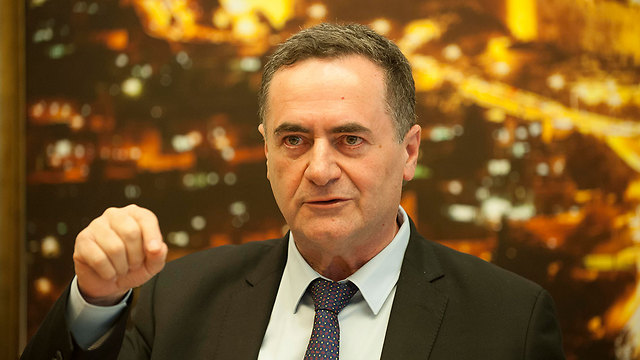
If international efforts led these days by US President Trump don’t help stop Iran attaining nuclear capabilities, Israel will act militarily by itself,’ threatens Min. Katz in interview; the intelligence min. is currently in Japan, where he is seeking backing for US Pres. Trump’s tougher stance against Tehran.

Reuters|Published:  26.10.17 , 18:02

Source: Ynetnews News – Israel willing to take military action to stop Iran’s nuclear armament, warn…

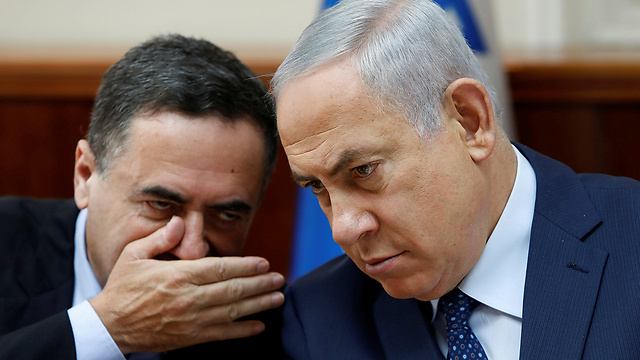
Intelligence Minister Yisrael Katz said stated that Israel is willing to resort to military action to ensure Iran never acquires nuclear weapons  on Thursday while in Japan, where he is seeking backing for US President Donald Trump’s tougher line against Tehran.

Trump said on Oct. 13 he would not certify Iran is complying with an agreement on curtailing its nuclear program, signed by his predecessor, Barack Obama, opening a 60-day window for Congress to act to reimpose sanctions.

“If international efforts led these days by US President Trump don’t help stop Iran attaining nuclear capabilities, Israel will act militarily by itself,” Katz said in an interview in Tokyo. “There are changes that can be made (to the agreement) to ensure that they will never have the ability to have a nuclear weapon.” 

 (Photo: Reuters)

(Photo: Reuters)

Israel has taken unilateral action in the past without the consent of its major ally, the United States, including air strikes on a suspected nuclear reactor in Syria in 2007 and in Iraq in 1981. A strike against Iran, however, would be a risky venture with the potential to provoke a counter strike and roil financial markets.

An Israeli threat of military strikes could, nonetheless, galvanize support in the United States for toughening up the nuclear agreement but it could also backfire by encouraging hardliners in Iran and widening a rift between Washington and European allies. 

So far, none of the other signatories to the deal—Britain, France, Germany, Russia, China, Iran and the European Union—has cited serious concerns, leaving the United States isolated. 

Japan relies on the US military to help defend it against threats from North Korea and elsewhere. Tokyo’s diplomatic strategy in the Middle East, where it buys almost all its oil, is to maintain friendly relations with all countries, including Iran. 

 (Photo: Yoav Dudkevitch)

(Photo: Yoav Dudkevitch)


“I asked the Japanese government to support steps led by President Trump to change the nuclear agreement,” said Katz, who is a member of Prime Minister Benjamin Netanyahu’s right-wing Likud party. “The question of whether Japanese companies will begin to work in Iran or not is a very important question.” 

Katz’s visit to Tokyo comes ahead of a planned trip by Trump from Nov. 5 for a summit with Prime Minister Shinzo Abe. Officials at Japan’s Ministry of Foreign Affairs were not immediately available to comment. 

Israel, Katz said, wants the nuclear agreement to be revised to remove an expiration date, and to impose tighter conditions to stop Tehran from developing new centrifuges used to make weapons-grade nuclear material. 

He also urged sanctions to stop Iran from establishing Syria as a military base to launch attacks on Israel and action to put a halt to Tehran’s development of ballistic missiles. 

“We will not allow Iran to transform Syria into forward base sea harbors, air bases and Shia militias,” he said. “We will act together with the United States and other countries in the world until they stop the ballistic missiles that threaten Israel.” 

The US House of Representatives on Wednesday backed new sanctions on Lebanon’s Iran-backed Hezbollah militia. 

How Obama Used Hillary’s Dossier to Spy on Trump

October 26, 2017

How Obama Used Hillary’s Dossier to Spy on Trump, FrontPage Magazine, Daniel Greenfield, October 26, 2017

(Please see also, We Need an Investigation of the Entire Justice Department Now. — DM)

Hillary and the DNC hire Fusion GPS. Fusion GPS hires Steele. Steele contacts an FBI pal. The FBI takes up the dossier. And then it’s turned into a pretext for eavesdropping.

But there isn’t supposed to be a link between the Democrats and the eavesdropping. 

That’s why Marc Elias, the Clinton campaign and DNC lawyer who hired Fusion GPS, had denied it in the past. It’s why Fusion GPS fought the investigation so desperately. Opposition research isn’t a crime. A conspiracy to eavesdrop on your political opponents however is very much a criminal matter.

***********************************

How do you legally spy on your political opponents?

At some point in time that question was asked in the White House, at the DNC or in the hotel suites where Hillary and her staff were staying during her speaking tours. It wasn’t exactly asked that way.

But it was asked. And now we know more of the answer.

What Hillary and Obama did wasn’t Watergate. That was amateur hour. Its sophistication is a tribute to the left’s deep knowledge and control of the workings of Washington, D.C. The men and women who planned this and carried it out understood not only government, but had an intimate familiarity with the loopholes in the laws and the networks of contacts that could realize their highly illegal plans.

The eavesdropping on Trump officials carried the ‘fingerprints’ of an administration that bypassed Congress to fund left-wing groups by blackmailing banks into huge settlements paid out to political allies in a billion dollar slush fund and sent pallets of foreign currency to Iran on unmarked planes. A complete lack of ethical norms was combined with the careful use of legal loopholes to protect the actions of the perpetrators even while they were engaging in a criminal conspiracy.

The revolutionary cell is embedded into left-wing organizing. These cells combined into networks across government, the media and the non-profit sector to pursue a collective agenda. The latest revelations about the Trump dossier give us greater insight into how Obama and Hillary’s people conspired to legally eavesdrop on political opponents by breaking up that eavesdropping into a series of legal actions carried out across different cells.

The road that led to Susan Rice and Samantha Power ‘unmasking’ Trump officials began with the Clinton campaign and the Democratic National Committee funding a dossier pushing Trump-Russia conspiracies. The dossier was sourced through Fusion GPS which is notorious for handfeeding material to reporters.

The Clinton campaign was seeing to it that whatever Fusion GPS produced would make its way into media stories without having Hillary’s fingerprints on it. Indeed the only reason we learned that Hillary and the DNC were ultimately behind the dossier was a congressional subpoena that risked exposing other Fusion GPS clients.

But the second reason was far more devious and devastating.

Fusion GPS’ man for the job was Christopher Steele. The former British intelligence figure had connections with FBI people. Hillary Clinton wasn’t just doing “opposition research” as her former press secretary has claimed.  The best way to do opposition research in an American election doesn’t involve hiring a Brit in London with contacts in Russian intelligence and the FBI.

That is however the best way to independently produce information that can be injected into an intelligence investigation. (It’s also, perhaps not coincidentally, a great way for the Russians to inject their own material into a presidential election without getting their fingerprints on it.)

Hiring Fusion GPS and then Steele created two degrees of separation between the dossier and Hillary. A London ex-intel man is a strange choice for opposition research in an American election, but a great choice to create a plausible ‘source’ that appears completely disconnected from American politics.

What would an ex-M.I.6 agent have to do with Hillary, Obama or Trump?

The official story is that Steele was a dedicated whistleblower who decided to message an FBI pal for reasons “above party politics” while the Fusion GPS boss was so dedicated that he spent his own money on it after the election. Some figures in the FBI decided to take Steele’s material, offering to pay him for his work and reimbursing some of his expenses. Portions of the dossier were used to justify the FISA eavesdropping on Trump officials and were then rolled into the Mueller investigation.

That is how cells coordinate by breaking up a larger plot into a series of individual actions that just happen to produce the ideal result. Hillary and the DNC hire Fusion GPS. Fusion GPS hires Steele. Steele contacts an FBI pal. The FBI takes up the dossier. And then it’s turned into a pretext for eavesdropping.

But there isn’t supposed to be a link between the Democrats and the eavesdropping.

That’s why Marc Elias, the Clinton campaign and DNC lawyer who hired Fusion GPS, had denied it in the past. It’s why Fusion GPS fought the investigation so desperately. Opposition research isn’t a crime. A conspiracy to eavesdrop on your political opponents however is very much a criminal matter.

A forensic examination of the dirty dossier’s journey shows us that this modern Watergate was a collaborative effort between an outgoing Democrat administration and its expected Dem successor. The effort was broken up into two big pieces. The Clinton side would generate the material. The Obama side would make use of it. Steele was positioned as the interface between the two sides of the effort.

The London detour created and laundered the dossier. Moving the operation offshore tangled the connection between the Clinton side and the Obama side. This was important because what Steele produced wasn’t really opposition research, but a pretext for a government investigation.

That pretext couldn’t come directly from Hillary. But the FBI was too politically divided to generate it.

Obama Inc. needed that pretext, but it also didn’t want to generate it internally. Any investigation of the political opposition was inherently explosive. It was better if the intelligence came from outside and especially overseas. That was why Fusion GPS brought in Steele.

The first FISA request was filed in June. It was shot down by the Foreign Intelligence Surveillance Court. That was the same month we were told that Fusion GPS hired Steele. The second FISA request came through in October. That was the month, Steele did his first media interview with Mother Jones.

Two birds were being killed with one stone.

Obama’s Watergate depended on extensive compartmentalization. The process that led to the eavesdropping on Trump officials and their unmasking at the hands of his officials had to appear as ‘clean’ as possible. Susan Rice and Samantha Power could make unmasking requests to the NSA, but they couldn’t be involved in generating the investigation that led to those requests.

Seeding the media with an astroturf campaign through Fusion GPS created the appearance of an organic push to investigate Trump-Russia ties. Targeting the lefty fringe of the media, Mother JonesThe Guardian, would bake in the narrative among a demographic already prone to conspiracy theories.

The operation was vastly more sophisticated than the crude ugliness of Watergate. But it was not unique in that regard. The fusion of government loopholes, political campaigns, media operations, opposition research and covert funding had occurred more than once during the Obama era.

The most recent example of such a fusion before Trump-Russia was the Iran Deal in which members of Congress were eavesdropped on, money was moved around through non-profits to influence the media, a White House operation planted stories in the media and billions were smuggled to Iran. This mixture of influence operation, propaganda, eavesdropping and laundering has likely happened far more often in the previous administration than we know.

The IRS targeting of conservatives, shutdown theater and the Libyan War offer more examples.

Obama’s eavesdropping on Trump didn’t break the norms. They had already been thoroughly broken. The network that is being uncovered, the interfaces between media insiders, top government officials and private interests, demonstrates why Obama Inc. believed that it could get away with it.

It had gotten away with all its old abuses. There was no reason to doubt it could do so again.

America still has elections. The rule of law exists. In theory. But the network being uncovered in the dossier investigation looks very much like something that would be found in a totalitarian state.

The combination of media propaganda, government surveillance and contrived investigations of political opponents is the sort of thing you would expect to find in… Russia. The key players were wary enough that they compartmentalized their conspiracy, breaking it up across the private and public sector, the media, private firms, law enforcement figures and even another country. But that just makes it look like a cross between terrorist cells and organized crime.

And that is what we are dealing with here.

The left’s networks are becoming increasingly malignant. They executed a sophisticated attack on the political process while contriving to blame it on their victims. What the attack reveals is just how much the levers of power in our political system are embedded in the shadowy networks that operate in and around government. And what those networks are willing to do to win.

N. Korea advises US to take warning of hydrogen bomb test ‘literally’

October 26, 2017

North Korea says words of a possible hydrogen bomb test over the Pacific Ocean should be taken “literally” ahead of Donald Trump’s visit to Asia.

Source: N. Korea advises US to take warning of hydrogen bomb test ‘literally’ — RT World News

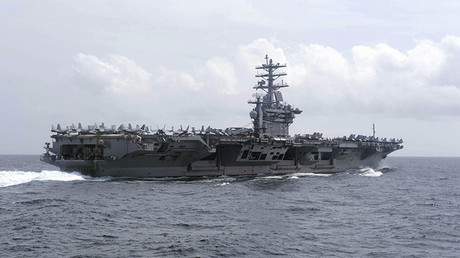
USS Theodore Roosevelt (CVN 71) © c7f.navy.mil

The US and its allies could indeed witness a hydrogen bomb test over the Pacific, unless they stop devising military options against Pyongyang, a senior North Korean diplomat has warned. This, as the US Navy beefs up its presence ahead of Donald Trump’s visit in the region.

Speaking on the sidelines of United Nations General Assembly last month, North Korean FM Ri Yong-ho said that if backed into a corner, Pyongyang could conduct“the most powerful detonation” of a hydrogen bomb over the Pacific Ocean. On Wednesday, Ri Yong Pil, a senior diplomat in North Korea’s Foreign Ministry, told CNN that the minister’s warning should be taken “literally” as tensions with Washington continue to rise.

READ MORE: Pyongyang threatens ‘old psychopath’ Trump with turning ‘America into a sea of flames’

“The foreign minister is very well aware of the intentions of our supreme leader, so I think you should take his words literally,” Ri told the US news outlet, warning that Pyongyang “has always brought its words into action.”

Read more

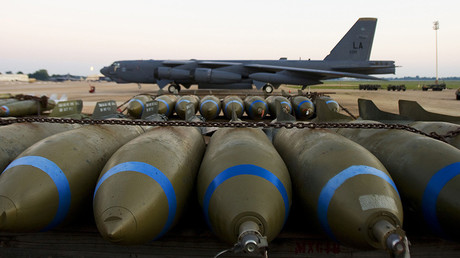
FILE PHOTO: Bombs wait to be loaded on to a B-52H long range bomber (BACKGROUND), part of the US Eight Air Force, at Barksdale Air Force Base in Louisiana © Pual J. Richards

“The US is talking about a military option and even practicing military moves. They’re pressuring us on all fronts with sanctions. If you think this will lead to diplomacy, you’re deeply mistaken,” Ri said.

The warning from the North Korean Foreign Ministry official, who is also the vice president of the Foreign Ministry’s Institute for American Studies, comes amid increasingly belligerent rhetoric from the White House.

In a recent interview with Fox News last Sunday, Trump once again reminded Pyongyang that the US is “totally prepared” to use military options against North Korea.

You would be shocked to see how totally prepared we are if we need to be,” Trump said. “Would it be nice not to do that? The answer is yes.”

Trump is set to arrive in the region for his scheduled East Asia trip next week, where he plans to discuss the ongoing Korean tensions with Seoul and Tokyo.

Ahead of the visit, the US Navy has bolstered its presence off the Korean peninsula in a move which forced Pyongyang to call on the UN Security Council (UNSC) to urgently discuss the recent US naval drills near the Korean peninsula and continued military presence near the Korean border.

“The joint military exercises conducted by the US one after another all the year round on the Korean peninsula are clearly aggressive war exercises in their nature and scale,” North Korea’s Permanent Representative to the United Nations, Ja Song-nam, said in Pyongyang’s most recent letter addressed to France’s UN Ambassador Francois Delattre, the current President of the UNSC.

North Korea maintains that the US and their regional allies are preparing for a pre-emptive strike which could escalate into a possible nuclear war.

Addressing the UNSC after the conclusion of the Maritime Counter Special Operations exercise (MCSOFEX), which involved the participation of vessels from the US Navy and the Republic of Korea (ROK) Navy between October 17-20, the diplomat said the “naval rehearsal has further strained the tension on the Korean peninsula.”

“No other country in the world than the DPRK has ever been subjected to such an extreme and direct nuclear threat from the US for such a long time and witnessed on its door such nuclear war exercises which are the most vicious and ferocious in their scale, style, aim and essence,” the letter to the UNSC read.

Read more

The aircraft carrier USS Nimitz (CVN 68) © Tyler Preston / Navy Office of Information

The large-scale US-led joint military exercises are staged several times every year “with a mobilization of more nuclear strategic assets on a larger scale.” The dispatch to the UN called the drills a “clear threat to international peace and security.”

Yet, and despite repeated appeals to avoid escalating tensions, the US is increasing its military buildup in the region. On Wednesday, the US 7th Fleet stationed in Japan announced that a third aircraft carrier, the USS Nimitz strike group, arrived to join the USS Ronald Reagan and USS Theodore Roosevelt strike groups already there.

North Korea conducted its sixth nuclear test on September 3, forcing the UNSC to introduce new sanctions. The move, however, did not stop Pyongyang from launching a series of ballistic missiles later in September, while vowing to destroy the US and their allies with nuclear weapons if attacked.

With Pyongyang and Washington whipping up tensions, Moscow and Beijing have repeatedly called on both parties to remain calm. Russia and China have called for the implementation of the so-called “double freeze” initiative that envisages North Korea suspending its nuclear and missile program in exchange for the US and South Korea abandoning their military exercises in the region. The proposal has been rejected by Washington.

The Kurdish test

October 26, 2017

The Kurdish test, Israel Hayom, Clifford D. May, October 26, 2017

It’s essential that Trump make clear that further threats to the security and integrity of the Kurdish region will not be countenanced, and that any advance on Erbil will be met with stiff sanctions and, if necessary, force. The U.S. should insist that all military operations cease immediately and that negotiations between Baghdad and Kurdish leaders commence under American auspices.

Anything less will be interpreted as acquiescence to the Islamic republic’s drive to impose its brand of jihadism and Islamism on its neighbors and, in due time, far beyond.

To make America great again requires demonstrating that America is the best friend and the worst enemy any nation can have. During the Obama years, the opposite seemed to be the case. If aligning with the U.S. comes to be viewed as a chump’s game no matter who is in the White House, the U.S. will end up with no friends. It will have a growing list of emboldened enemies instead.

**********************************

In a just world, the Kurds would have a state of their own. Their culture is ancient. They speak a distinctive language. They have a homeland, Kurdistan, ruled for centuries by Arabs, Turks and Persians – foreigners and oppressors all.

After the defeat of the Ottoman Empire in World War I, the victorious British and French created new Arab nation-states and put in motion a process that would lead to the restoration of a Jewish nation-state. But the Kurds – they got nothing.

In 1992 following the Gulf War, the U.S., along with Britain and France, set up a no-fly zone over the Kurdish region in northern Iraq. The goal was to protect the Kurds from Saddam Hussein whose genocidal war against the Kurds included a chemical weapons attack in the Kurdish city of Halabja four years earlier.

When Americans invaded Iraq in 2003, the Kurds greeted them as liberators. The Kurdistan Regional Government began to diligently nation-build, establishing the institutions and infrastructure necessary for independent statehood.

I don’t mean to oversell: The KRG has not become a democracy. Corruption is reportedly rampant – this is still the Middle East. Kurdish leaders, divided among themselves, have made mistakes.

Most recently, they held a referendum on independence. The results were no surprise. More than nine out of 10 Kurds want self-determination. The government in Baghdad won’t let them go without a fight. And the U.S., which is invested in a unitary Iraq, doesn’t want them to leave. Predictably, the referendum provoked the rulers of Turkey and Iran, who are adamant that their Kurdish subjects not get any big ideas.

Still, Kurdish society is open and tolerant. Kurdish schools actually educate young people. Nowhere in the so-called Muslim world will you find a people more pro-American. The Kurdish peshmerga forces have long been a reliable U.S. partner. In recent days, they have often – and bravely – taken point against Islamic State.

And now the Kurds are imperiled. Here’s what’s happened: On Oct. 13, U.S. President Donald Trump announced his Iran strategy. He declined to recertify the nuclear arms deal concluded by his predecessor. Among the reasons: Iran’s compliance cannot be verified so long as international inspectors are barred from the regime’s military facilities.

The president also is unwilling to turn a blind eye to Iran’s continuing development of missiles designed to deliver nuclear warheads, the “sunset” clauses that legitimize the mullah’s nuclear weapons program over time, and the terrorism that those mullahs sponsor. Notably, he designated the Iranian Revolutionary Guards Corps as a terrorist organization.

The Iranian response has been more than merely rhetorical. On Oct. 16, Iraqi forces, over which Iran’s rulers now exercise considerable influence, and Shia militias, many of them Iranian-backed, drove Kurdish troops out of oil-rich Kirkuk. According to credible reports, Maj. Gen. Ghasem Soleimani, the commander of foreign operations for the IRGC, was on hand to personally coordinate the operation.

Though Kirkuk is beyond the de facto borders of the KRG, Kurds have long viewed it as the Jerusalem of their homeland. It was a Kurdish-majority city until the Saddam regime determined to “Arabize” it, not least through population transfers.

In 2014, however, when Islamic State was on the march, Iraqi government forces abandoned Kirkuk. The peshmerga quickly filled the vacuum, defending the city and holding it ever since.

By orchestrating the taking of Kirkuk, Iran’s rulers are testing Trump. They are betting that, despite the tough talk, he won’t have the stomach to do what is necessary to frustrate their neo-imperialist ambitions.

In the end, they think he will attempt to appease and accommodate them as did former President Barack Obama. Trump reinforced that conviction when, in response to the fighting in Kirkuk, he said his administration was “not taking sides, but we don’t like the fact that they’re clashing.”

Over the weekend, Hossein Amir-Abdollahian, the Iranian Parliament’s director general for international affairs, tweeted that Iraqi government troops “will return Erbil to the united Iraq easier than Kirkuk, just within minutes.” Erbil is the capital of the KRG. On Tuesday, Shia militias launched an offensive against Kurdish troops near the Turkish frontier.

It’s essential that Trump make clear that further threats to the security and integrity of the Kurdish region will not be countenanced, and that any advance on Erbil will be met with stiff sanctions and, if necessary, force. The U.S. should insist that all military operations cease immediately and that negotiations between Baghdad and Kurdish leaders commence under American auspices.

Anything less will be interpreted as acquiescence to the Islamic republic’s drive to impose its brand of jihadism and Islamism on its neighbors and, in due time, far beyond.

To make America great again requires demonstrating that America is the best friend and the worst enemy any nation can have. During the Obama years, the opposite seemed to be the case. If aligning with the U.S. comes to be viewed as a chump’s game no matter who is in the White House, the U.S. will end up with no friends. It will have a growing list of emboldened enemies instead.

In a just world, Iran’s theocrats would have appreciated the fact that Obama reached out to them in a spirit of respect and reconciliation. In a just world, skilled diplomats would devise elegant power-sharing formulas that all sides would embrace in the interest of peace and stability. In a just world, the Kurds would have a right to self-determination.

But we don’t live in a just world. By now, that should be glaringly obvious.

Clifford D. May is president of the Foundation for Defense of Democracies and a columnist for The ‎Washington Times.‎