Archive for October 19, 2017

Edmonton Terrorist’s Movements Highlight Threat to U.S. Southern Border

October 19, 2017

Edmonton Terrorist’s Movements Highlight Threat to U.S. Southern Border, Investigative Project on Terrorism, John Rossomando, October 18, 2017

He entered Canada in 2012 and obtained refugee status, Canadian officials said. It isn’t clear why Canadian officials were unaware of Sharif’s deportation from the United States. Privacy laws in both countries could keep that information secret, adding to widespread speculation that he received asylum in the U.S. Asylum applications are confidential, which further complicates the public’s right to know.

Reports of Sharif’s radicalism, including his open support for ISIS, first surfaced in 2015 after coworkers reported him to the Royal Canadian Mounted Police. Sharif would rant about how “polytheists” needed to die and how he hated Shiite Muslims, a coworker told the Canadian Broadcasting Company (CBC).

Many Somalis travel from Kenya to South Africa on the first leg of their trip to the U.S. From there they make their way to Brazil and then made his way northward through Latin America until they reach the U.S.-Mexican border.

Sharif’s penetration of the U.S.-Mexican border isn’t unique, Bensman wrote. He notes that others with ties to Al-Shabaab have also been identified but were apprehended before they could do anything.

*************************************

Fears about a terrorist using the U.S.-Mexican border as a gateway for an attack have been realized. Evidence shows that Somali Edmonton terrorist Abdulahi Hasan Sharif crossed the U.S.-Mexican border from Tijuana into San Diego at the San Ysidro border crossing on July 12, 2011.

Sharif allegedly hit an Edmonton police officer with a white Chevrolet Malibu on Sept. 30. He then got out of his car and stabbed the officer with a knife. A police manhunt ensued. The attacker then stole a U-Haul and drove it into four pedestrians before police apprehended him.

Investigators found an ISIS flag in his car, but the jihadist group has not claimed responsibility for his attacks.

Canadian press reports indicate that when he entered the U.S in 2011, Sharif lacked valid travel documents and almost immediately ended up in the hands of Immigration and Customs Enforcement (ICE). An immigration judge ordered Sharif deported to Somalia. But ICE released him because Somalia lacks a functioning government. He fell off the radar and U.S. authorities were unable to locate him.

He entered Canada in 2012 and obtained refugee status, Canadian officials said. It isn’t clear why Canadian officials were unaware of Sharif’s deportation from the United States. Privacy laws in both countries could keep that information secret, adding to widespread speculation that he received asylum in the U.S. Asylum applications are confidential, which further complicates the public’s right to know.

Reports of Sharif’s radicalism, including his open support for ISIS, first surfaced in 2015 after coworkers reported him to the Royal Canadian Mounted Police. Sharif would rant about how “polytheists” needed to die and how he hated Shiite Muslims, a coworker told the Canadian Broadcasting Company (CBC).

The other question is how Sharif got to the U.S.-Mexican border – nearly 10,000 miles from Somalia.

Sharif likely worked with “long haul smugglers,” national security expert Todd Bensman theorized in a recent post on his LinkedIn account, using prior court-established smuggling patterns as a baseline. Bensman wrote his Master’s thesis for the Naval Postgraduate School on Somali smuggling patterns.

Many Somalis travel from Kenya to South Africa on the first leg of their trip to the U.S. From there they make their way to Brazil and then made his way northward through Latin America until they reach the U.S.-Mexican border.

Sharif’s penetration of the U.S.-Mexican border isn’t unique, Bensman wrote. He notes that others with ties to Al-Shabaab have also been identified but were apprehended before they could do anything.

What do North Korean Nukes Have to Do with Israel? – YouTube

October 19, 2017


Uranium One Means Mueller Must Recuse Himself from Russia Probe

October 19, 2017

Uranium One Means Mueller Must Recuse Himself from Russia Probe, PJ MediaRoger L Simon, October 18, 2017

(Please see also, How Much Did Mueller and Rosenstein Know about Uranium One? — DM)

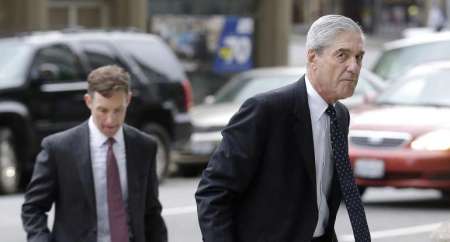
(AP Photo/Jeff Chiu)

At the end of their lengthy editorial regarding the new Uranium One revelations —  “Team Obama’s stunning coverup of Russian crimes” — the New York Post editorial board writes:

Until September 2013, the FBI director was Robert Mueller — who’s now the special counsel probing Russian meddling in the 2016 election. It’s hard to see how he can be trusted in that job unless he explains what he knew about this Obama-era cover-up.

I’ll go the Post one better. Virtually whatever Mueller has to say about his involvement or non-involvement in this metastasizing scandal, he must recuse himself immediately for the most obvious reasons of propriety and appearance. Frankly, it’s outrageous that he, Ron Rosenstein, or anyone who even touched the Uranium One investigation now be involved with the current probe — unless the real name of the FBI is actually the NKVD.  This is not how a democracy is supposed to work, even remotely.  Forget transparency — this was deliberate occlusion.

The collusion Trump & Co have been accused of is chickenfeed compared to twenty percent of U.S. uranium ending up in Putin’s hands under the aegis of Barack Obama, Hillary Clinton and Eric Holder, the latter two members of CFIUS (the inter-agency committee that reviews the transfer of U.S. companies to foreign entities and was then chaired by Timothy Geithner).  We have heard disturbing allegations of this for some time, via “Clinton Cash” and even from the New York Times, but the new disclosure that a 2009 FBI investigation of this possible nucleardeal uncovered kickbacks, money laundering, and bribes from the Russian company involved (Rosatom) and yet it still was given the go-ahead by the Obama administration is — I can think of no better word — appalling.  How could it have come to pass that this occurred?  Why are we supposed to believe anyone now?

On Wednesday, Senator Grassley asked Attorney General Jeff Sessions: “What are you doing to find out how the Russian takeover of the American uranium was allowed to occur despite criminal conduct by the Russia company that the Obama administration approved the purchase?”

Evidently, not much.  At least so far. In fact Sessions said that Deputy Attorney General Ron Rosenstein, who led this long-hidden investigation, should “investigate himself.”

No, Jeff.  You may have properly recused yourself from the Russian investigation, despite Trump’s criticism, but this one is your job.  You run the Department of Justice and therefore the FBI.  Something is rotten as much as it ever was in Denmark.  Indeed it’s worse, since nuclear weapons were not even dreamed of in Hamlet’s time.  So don’t be like Hamlet.  Act now.

For starters, Mueller must step down.  We cannot have an investigation of this magnitude that half the country will completely disrespect — and for increasingly good reason.  History will mock it, also for good reason.  On top of that, with our country as split as it is, the results could be catastrophic.

Equally important, the reputation of the FBI must be resuscitated.  Speaking entirely as a private citizen, I do no trust the FBI anymore. To be honest, it scares me. And I am certain I am not alone.  It feels like an often-biased organization so bent on self-preservation that it hides evidence and lets the powerful off the hook. That’s the royal road to totalitarianism.  No, it’s not the NKVD yet.  No one that I know of is being hauled off in the middle of the night.  But very few of us know what it is really up to, how it makes its frequently dubious decisions, or whether it is working for the good of the citizenry at all.  Almost everything we learn of its investigations is so heavily redacted, no one but one of the myriad leakers seems to know what it means — and they’re usually lying.  This, as they say, will not end well.

People can dismiss my view by claiming I am a right-wing ideologue, but the problem transcends administrations, as have FBI directors.  Something is wrong with the system.  No one seems to be watching the watchers, from the FBI to the NSA.  Other than Senator Grassley, will anyone have the guts to save us?

China’s Xi Jinping Slams the Door on Taiwanese Appeals for Independence

October 19, 2017

China’s Xi Jinping Slams the Door on Taiwanese Appeals for Independence, Washington Free Beacon, October 19, 2017

(Please see also, Chinese Official Says China Might Invade Taiwan If “Peaceful Reunification Takes Too Long and China’s Secret Military Plan: Invade Taiwan by 2020. — DM)

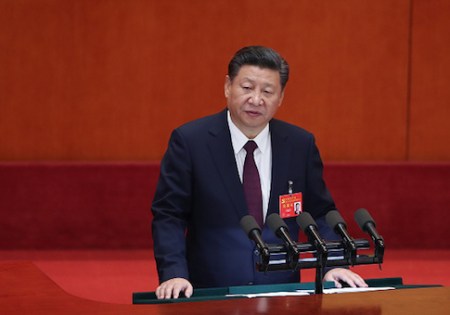
Chinese President Xi Jinping delivers a speech during the opening session of the 19th Communist Party Congress / Getty Images

Chinese President Xi Jinping on Wednesday made clear his administration will stifle any attempt by self-governed Taiwan to declare independence from Beijing as appeals for complete autonomy intensify in Taipei.

“We will never allow anyone, any organization, or any political party, at any time or in any form, to separate any part of Chinese territory from China,” Xi said at the opening of the annual Communist Party Congress.

“We have the resolve, the confidence, and the ability to defeat separatist attempts for Taiwan independence in any form,” Xi continued.

Xi’s tough talk on regions creeping toward formal declarations of independence drew the longest applause of his three-hour speech and prompted immediate backlash from officials in Taipei, who said it was “absolutely” the right of the island’s more than 23 million people to vote on independence.

Taiwanese sovereignty is a sensitive issue in China. Beijing views Taiwan as a breakaway province that will eventually reunify with mainland China and has refused to renounce the option of deploying force against the democratic state should it pursue independence.

Chinese officials in June suspended regular diplomatic contact with their Taiwanese counterparts when the island’s new leader refused to publicly embrace the principle of a single Chinese nation that encompasses Taiwan.

Taiwan’s Mainland Affairs Council last week renewed calls on China to reinstate diplomatic contact with the island.

“The Republic of China is a sovereign state and we will protect our sovereignty,” Chiu Chiu-cheng, deputy head of the Mainland Affairs Council, told a group of international reporters in Taipei on Thursday.

“If China wants to have peace and a stable relationship, we need to sit down and talk. China needs to understand Taiwan is a sovereign state and we need to figure out how to cooperate under this condition,” Chiu said.

Tensions between Taiwan and mainland China have escalated over the past year following the presidential election of Tsai Ing-wen, leader of the pro-independence Democratic Progressive Party.

Beijing is wary of Tsai’s open criticism of senior Chinese officials and refusal to denounce calls for Taiwanese independence.

Though she has vowed to maintain the delicate cross-strait status quo based on the historical fact that in 1992 Taiwan and the mainland agreed to consider themselves part of one Chinese nation with respective interpretations, Tsai has stopped short of endorsing the One China policy.

In a bold National Day address in Taipei last week, Tsai reinforced her commitment to upholding Taiwan’s sovereignty and said the island will not bend to pressure from Beijing, such as China’s ongoing efforts to isolate Taipei from the international community.

“Since May 20 last year, we have exerted maximum goodwill in order to safeguard the peaceful and stable development of cross-strait ties,” Tsai said, before adding, “We will continue to safeguard Taiwan’s freedom, democracy, and way of life, as well as assure the Taiwanese people’s right to decide our own future.”

How Much Did Mueller and Rosenstein Know about Uranium One?

October 19, 2017

How Much Did Mueller and Rosenstein Know about Uranium One? American ThinkerDaniel John Sobieski, October 19, 2017

Back in July, I called for a criminal investigation into Hillary Clinton’s collusion with Russia to turn over control of 20 percent of our uranium supplies to Russian interests in return for some $145 million in donation to the Clinton Foundation. Now it turns out that there was one, an FBI investigation dating back to 2009, with current Deputy Attorney General Rod Rosenstein and Special Prosecutor Robert Mueller up to their eyeballs in covering up evidence of Hillary’s collusion, bordering on treason, with Vladimir Putin’s Russia:

Prior to the Obama administration approving the very controversial deal in 2010 giving Russia 20% of America’s Uranium, the FBI had evidence that Russian nuclear industry officials were involved in bribery, kickbacks, extortion and money laundering in order to benefit Vladimir Putin, says a report by The Hill….

John Solomon and Alison Spann of The Hill: Federal agents used a confidential U.S. witness working inside the Russian nuclear industry to gather extensive financial records, make secret recordings and intercept emails as early as 2009 that showed Moscow had compromised an American uranium trucking firm with bribes and kickbacks in violation of the Foreign Corrupt Practices Act, FBI and court documents show….

From today’s report we find out that the investigation was supervised by then-U.S. Attorney Rod Rosenstein, who is now President Trump’s Deputy Attorney General, and then-Assistant FBI Director Andrew McCabe, who is now the deputy FBI director under Trump.

Robert Mueller was head of the FBI from Sept 2001-Sept 2013 until James Comey took over as FBI Director in 2013. They were BOTH involved in this Russian scam being that this case started in 2009 and ended in 2015.

If evidence of bribery, kickbacks, extortion, and money laundering in the Uranium One affair are not grounds for a special prosecutor assigned to investigate Hillary Clinton, what is? Rosenstein and Mueller, by their silence on this investigation hidden from Congress and the American people, are unindicted co-conspirators in Hillary’s crimes and should be terminated immediately.

One can understand the Obama Justice Department covering up and slow-waking this investigation, but what about the Trump DOJ and our missing-in-action Attorney General Jeff Sessions? Was this the reason Democrats were hot-to-trot on him recusing himself from all things Russian? How could Rosenstein sit before Congress and not say anything, only to appoint Mueller to investigate Team Trump? Rosenstein and Mueller are poster children for duplicity and corruption.

Collusion itself is not a crime but jeopardizing American national security by conspiring to supply the Russian nuclear program with our uranium is a crime of the highest order. No one to date has provided any evidence that any favor was granted as a result of that meeting or that the Trump campaign benefited in any way from the meeting.

One cannot say the same thing about Hillary Clinton and her role in the Uranium One deal with Russia. Clinton played a pivotal role in the UraniumOne deal which ended up giving Russian interests control of 20 percent of our uranium supply in exchange for donations of $145 million to the Clinton Foundation. That, ladies and gentlemen, is a federal crime. As Clinton Cash author Peter Schweitzer has noted:

Tuesday on Fox Business Network, “Lou Dobbs Tonight,” Breitbart editor at large and the author of “Clinton Cash,” Peter Schweizer said there needs to be a federal investigation into the Russian uranium deal then-Secretary of State Hillary Clinton’s State Department approved after the Clinton Foundation receiving $145 million from the shareholders of Uranium One…

Discussing the Clinton Foundation receiving $145 million from the shareholders of Uranium One, he continued, “Look, there are couple of things that are extremely troubling about the deal we touched on. number one is the amount of money $145 million. We are not talking about a super PAC giving a million dollars to support a candidate. We are not talking about campaign donations. We are talking about $145 million which by the way is 75 percent or more of the annual budget of the Clinton Foundation itself so it’s a huge sum of money. Second of all we are talking about a fundamental issue of national security which is uranium — it’s not like oil and gas that you can find all sorts of places. They are precious few places you can mine for uranium, in the United States is one of those areas. And number three we are talking about the Russian government. A lot of people don’t realize it now, in parts of the Midwest American soil is owned by Vladimir Putin’s government because this deal went through. And in addition to the $145 million Bill Clinton got half a million dollars, $500,000 for a 20-minute speech from a Russian investment bank tied to the Kremlin, two months before the State Department signed off on this deal. It just stinks to high heaven and I think it requires a major investigation by the federal government.”

Yet seemingly the only thing warranting a major federal investigation is a wasted 20 minutes of Donald Trump Jr’s life that he will never get back. Democrats and the media and, again, apologies for the redundancy, had no problem with Bill Hillary Clinton brokering deals giving Russia and Putin 20 percent of our uranium supply to benefit Clinton Foundation donors, including Canadian billionaire Frank Giustra.

Giustra earlier had a cozy relationship with Bill Clinton and participated in and benefitted from his involvement in a scam run by the Clinton Foundation in Colombia.

Clinton donor Giustra benefited significantly from his association, even if the people of Columbia didn’t:

When we met him (Senator Jorge Enrique Robledo) in his wood-paneled office in Colombia’s Capitol building in May, his desk was stacked high with papers related to Pacific Rubiales’s labor practices, the result of years of investigative work by his staff. He did not see the Clinton Foundation and its partnership with Giustra’s Pacific Rubiales as either progressive or positive. “The territory where Pacific Rubiales operated,” he said, thumbing through pages of alleged human-rights violations, “was a type of concentration camp for workers.”…

In September 2005, Giustra and Clinton flew to Kazakhstan together to meet the Central Asian nation’s president. Shortly thereafter, Giustra secured a lucrative concession to mine Kazakh uranium, despite his company’s lack of experience with the radioactive ore. As Bill Clinton opened doors for Giustra, the financier gave generously to Clinton’s foundation.

As the New York Times reported, this mutual back-scratching gave Clinton donor Giustra control of a significant portion of the world’s uranium supply:

Late on Sept. 6, 2005, a private plane carrying the Canadian mining financier Frank Giustra touched down in Almaty, a ruggedly picturesque city in southeast Kazakhstan. Several hundred miles to the west a fortune awaited: highly coveted deposits of uranium that could fuel nuclear reactors around the world. And Mr. Giustra was in hot pursuit of an exclusive deal to tap them.

Unlike more established competitors, Mr. Giustra was a newcomer to uranium mining in Kazakhstan, a former Soviet republic. But what his fledgling company lacked in experience, it made up for in connections. Accompanying Mr. Giustra on his luxuriously appointed MD-87 jet that day was a former president of the United States, Bill Clinton…

Just months after the Kazakh pact was finalized, Mr. Clinton’s charitable foundation received its own windfall: a $31.3 million donation from Mr. Giustra that had remained a secret until he acknowledged it last month. The gift, combined with Mr. Giustra’s more recent and public pledge to give the William J. Clinton Foundation an additional $100 million, secured Mr. Giustra a place in Mr. Clinton’s inner circle, an exclusive club of wealthy entrepreneurs in which friendship with the former president has its privileges…

In February 2007, a company called Uranium One agreed to pay $3.1 billion to acquire UrAsia. Mr. Giustra, a director and major shareholder in UrAsia, would be paid $7.05 per share for a company that just two years earlier was trading at 10 cents per share.

Now isn’t that special? Both the Clintons and their donor made out handsomely. Uranium One, which was gradually taken over by the Russians, would later be involved in a curious deal involving Hillary Clinton when she was Secretary of State. As the New York Times reported:

At the heart of the tale are several men, leaders of the Canadian mining industry, who have been major donors to the charitable endeavors of former President Bill Clinton and his family. Members of that group built, financed and eventually sold off to the Russians a company that would become known as Uranium One.

Beyond mines in Kazakhstan that are among the most lucrative in the world, the sale gave the Russians control of one-fifth of all uranium production capacity in the United States. Since uranium is considered a strategic asset, with implications for national security, the deal had to be approved by a committee composed of representatives from a number of United States government agencies. Among the agencies that eventually signed off was the State Department, then headed by Mr. Clinton’s wife, Hillary Rodham Clinton.

As the Russians gradually assumed control of Uranium One in three separate transactions from 2009 to 2013, Canadian records show, a flow of cash made its way to the Clinton Foundation. Uranium One’s chairman used his family foundation to make four donations totaling $2.35 million. Those contributions were not publicly disclosed by the Clintons, despite an agreement Mrs. Clinton had struck with the Obama White House to publicly identify all donors. Other people with ties to the company made donations as well…

Soon, Uranium One began to snap up companies with assets in the United States. In April 2007, it announced the purchase of a uranium mill in Utah and more than 38,000 acres of uranium exploration properties in four Western states, followed quickly by the acquisition of the Energy Metals Corporation and its uranium holdings in Wyoming, Texas and Utah.

So in exchange for donations, Secretary of State Hillary Clinton, along with husband Bill, gave Vladimir Putin’s Russia, a nuclear power, control of 20 percent of the world’s uranium supply. Is that what Hillary Clinton meant by a “Russian reset”? Yet neither Congressional Democrats, who accuse Trump and his son of being too cozy with Moscow, nor their wholly owned subsidiary, the mainstream media, are eager to talk about the Clinton uranium deals with Russia.

Actually, we no longer need an investigation of Hillary Clinton and Uranium One. This FBI investigation in conjunction to what we already knew is prima facie evidence of criminal corruption and intentionally putting of American national security at risk for personal financial gain. If an indictment of Hilary Clinton is not forthcoming, then Jeff Sessions should also be fired.

Daniel John Sobieski is a freelance writer whose pieces have appeared in Investor’s Business Daily, Human Events, Reason Magazine and the Chicago Sun-Times among other publications.

Israel’s Cyberwar Unit 8200 – World’s Best ! 

October 19, 2017

https://www.youtube.com/watch?v=ghXyMHCO-50


US in agreement with Israel on PA-Hamas reconciliation

October 19, 2017

US in agreement with Israel on PA-Hamas reconciliation, Israel National News, Uzi Baruch, October 19, 2017

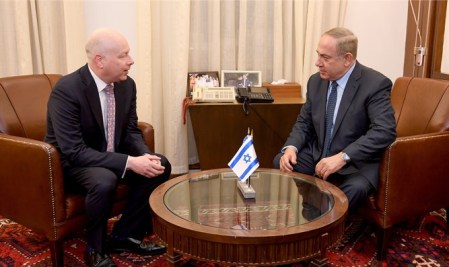
Netanyahu and GreenblattMati Shtern, US Embassy, Tel Aviv

US Special Envoy to the Middle East Jason Greenblatt on Wednesday issued a statement regarding the Palestinian Authority’s (PA) recent reconciliation agreement with the Hamas terror group.

“All parties agree that it is essential that the Palestinian Authority be able to assume full, genuine, and unhindered civil and security responsibilities in Gaza and that we work together to improve the humanitarian situation for Palestinians living there,” Greenblatt said.

“The United States reiterates the importance of adherence to the Quartet principles: any Palestinian government must unambiguously and explicitly commit to nonviolence, recognize the State of Israel, accept previous agreements and obligations between the parties – including to disarm terrorists – and commit to peaceful negotiations.

“If Hamas is to play any role in a Palestinian government, it must accept these basic requirements.”

Education Minister Naftali Bennett (Jewish Home) said, “I thank Special Envoy Jason Greenblatt and the US government for their clear message: A Palestinian government must disarm all terror organizations and recognize the State of Israel.”

“I emphasize our government’s stance: The State of Israel will not negotiate with a Palestinian government dependent on the Hamas terror organization, until Hamas disarms, recognizes Israel, and returns to Israel captured citizens and the bodies of fallen Israeli soldiers.”

Israel’s Diplomatic-Security Cabinet on Tuesday decided that it will not negotiate with a PA-Hamas unity government should it be established, and will not maintain contact with a PA government which rests on Hamas support.

In an announcement released by the Prime Minister’s Office, a number of Israeli conditions necessary for negotiations with a PA resting on Hamas were outlined, including adherence to the Quartet conditions.

Additional conditions included the return of soldiers’ bodies and civilians being held in Gaza to Israel, complete security control of the PA over Gaza, and the prevention of smuggling and Hamas terror infrastructure in Judea and Samaria.

The cabinet also demanded that Hamas cut ties with Iran, and announced that it will allow the flow of humanitarian aid and supplies to Gaza only through the PA and the bodies established for this purpose.

Iran has given US ‘slap in the face’ with Kirkuk: expert

October 19, 2017

Iran has given US ‘slap in the face’ with Kirkuk: expert, RudawRebaz Ali, October 17, 2017

Iran has delivered the US a “slap in the face” by backing Hashd al-Shaabi’s march on Kirkuk within just 60 hours of US President Donald Trump’s speech, says Michael Pregent.

Speaking to Rudaw’s Rebaz Ali on Monday as events were unfurling in Kirkuk, Pregent expressed frustration over Washington’s stance on the Kurds, believing Washington is too close to the ruling Dawa party of Prime Minister Haider al-Abadi and former prime minister Nouri al-Maliki.

Answering questions from the media later in the day, Trump refused to take sides, simply stating “We don’t like the fact that they’re clashing. We’re not taking sides, but we don’t like the fact that their clashing.”

A Middle East analyst, Pregent is a former intelligence officer for the US Departments of Defense and State. He embedded as an advisor to the Peshmerga in Mosul in 2005-2006

Rudaw: Why is the US so silent on the situation happening in Kirkuk and Hashd al-Shaabi using American weapons against Peshmerga?

Michael Pregent: We’re surprised. We issued an order, not an order but a warning to Baghdad not to use military force against Kurdish positions in and around Kirkuk. Secretary Mattis said that, the president gave a very strong speech on Friday designating the Revolutionary Guard Corps as a terrorist organization and the Hashd al-Shaabi are commanded by IRGC affiliates, Revolutionary Guard Corps affiliates. We pay money to the Iraqi Ministry of Interior and they’re shifting American resources and equipment to these Iranian-led militias. We had a statement today that the Baghdad spokesman said Qassem Soleimani is an advisor to the Hashd al-Shaabi.

We are watching. I know we’re watching. The DoD (Department of Defense) is aware, the Pentagon’s aware and we’re going to see the results tomorrow morning in DC of what happened in the last six hours and through the night. We’re likely to see that this is exactly what the United States cannot allow. But more importantly, this just shows that we’re losing leverage with Baghdad. If you warn Baghdad and they do it anyway, it’s because Tehran is telling them to do it and they are okay with it, they agree. But this is an opportunity now for the United States, especially after the president’s speech, where he was very tough on Iran, to do something because this is testing American resolve by a Qassem Soleimani-led force moving against our allies, allies we’ve had since the Gulf War, even before that, moving against our allies less than 60 hours after the president designated them a terrorist group*.

So tomorrow, Washington DC will wake up and see what happens and everybody hopefully holds their positions tonight, the Iraqi security forces stop, the Hashd al-Shaabi are declared an illegal military, an illegal militia and moved out. But tomorrow, veterans of the Iraq war, myself and others, veterans in Congress that I speak to will be making our voices as loud as we can for the US to do something. This is, as an American who fought with the Peshmerga, to see this is… uh… I don’t have any words. So, we’ll see what happens tomorrow.

We just saw a statement from the Pentagon asking both sides to be calm and to restrain from using violence, but in fact, it’s the Hashd al-Shaabi who started attacking the Peshmerga and they started the violence that the Pentagon is talking about. What do you think about that?

Well, I saw the statement and the language I didn’t like was ‘we urge both sides to stop, yet we still condemn the Kurdish referendum’. That language actually gives Tehran, Baghdad, and Ankara a green light to do these types of actions. The United States needs to have a strong statement. The vote was a democratic vote. The vote was not an illegal vote. It should not be met with force. It should not be met with violence. I don’t believe that that was crafted by Mattis. I believe it was crafted by the DoD communications department, because the language is not Mattis-like. The language is very Brett McGurk-like… and [it’s a problem].

So people like yourself, the veterans, how do you think they’re going to respond to this? You fought against this in Iraq for years and now you see this happening. This must be frustrating for you and people like yourself. What do you think you need to do? 

Well, the thing we’ve been fighting for for two years is the designation of the Revolutionary Guard corps as a terrorist organization and the decertification of the Iran deal. We got that Friday. That needs to mean something. Our Sunni regional allies heard the president’s message. It was very strong. This should restore confidence in our regional allies.

Pillar number one is to neutralize the Revolutionary Guard Corps’ destabilizing activities across the region. The Kirkuk operation is a destabilizing activity. You can’t give a tough speech and then allow Iran less than 60 hours later to move against an ally. So I would hope that veterans are upset as well, civilians alike.

The Kurdish people are built for western democracy support. They’re built for democratic support. They’re tolerant, they’re accepting, and I find it ironic that the United Nations and other non-government organizations choose to operate out of Kurdistan in order to help Iraqis throughout. When there’s instability in Baghdad, when ISIS invaded Iraq, people go to Kurdistan. Why do they go to Kurdistan? Because it’s an accepting region, it takes care of its own security. It’s an ally of the West. There’s problems, yes, but let’s talk about the problems. We don’t use military action to solve them.

We saw the speech by the president on Iran, but now we see that Qassem Soleimani has been going around in Iraq, meeting with the prime minister and ordering the Hashd al-Shaabi and other militias against the Kurdish Peshmerga, as you said, less than 60 hours after the president’s speech. What does that say about the US involvement in Iraq? Do you think after this or tomorrow, are we going to see less support for the government of Iraq and Prime Minister Abadi from the US government, after what they have seen in the last couple of days, the Iraqis dealing with Qassem Soleimani and the IRGC?

Well, this shows the president that the Iranians didn’t take him seriously. They heard the speech and they’re scoffing at it. This is a slap in the face to a US president by conducting these types of activities after this speech.

Baghdad is part of this, so Baghdad is doing the same thing. I don’t know what’s going on behind closed doors, but I do know that Secretary Mattis issued a statement and Abadi promised the United States he would not conduct an offensive operation against the Kurds. That operation is ongoing now. I truly believe that even if Abadi didn’t want to do it, the Iranians could still make this happen. The Quds force commander on the ground, I don’t know his name, but he actually told KDP officials and PUK officials, “Listen, either work with us or we can bring the whole Iraqi army here.”

So this is an Iranian commander telling Kurdish political parties that we can tell the Iraqi army what to do, we can tell the Iraqi government what to do. And I think that everybody believes that, because we’re seeing it. We’re witnessing it.

So you said this is a slap in the face for President Trump. How do you think President Trump would react to this slap in the face? Do you think that he’s going to accept it?

I don’t think President Trump knows he’s been slapped in the face. The president needs to know who the Kurds are. The president needs to know that the Kurds have been our strongest US ally in Iraq. That the Kurds have helped us fight ISIS, they helped us decimate al-Qaeda. They’ve protected Sunnis, Christians, Shiite nationalists from reprisal attacks from Shia militias as civilians fled to Kurdistan after the violence in Baghdad in 2005-06.

I was actually in Duhok and a family came up to me and said, ‘We can’t talk to you in Baghdad, and thank you, because we’ll get targeted, but thank you for being here.’ I didn’t know who they were. I said ‘Where are you from?’ They said, ‘We’re from Sadr city.’ So that means something.

But I think the president needs to know who the Kurds are and I don’t think he does. [Secretary James] Mattis does, H.R. McMaster does, I don’t think [Rex] Tillerson does. And I think Brett McGurk knows exactly who the Kurds are, but he’s already picked sides. And that’s not coming from me necessarily. That’s coming from everybody I’ve talked to on the ground in Iraq, from Sunni nationalists, Kurdish nationalists, Shiite nationalists, they say the biggest problem is the US government is listening more to the Dawa party than they are to anybody else in Iraq.

What’s happening now is all going on in front of the US government’s eyes. They see how Prime Minister Abadi and the government of Iraq have been declining calls for negotiation from the KRG in order to avoid violence. There has been a blockade, international flights have been banned. And the KRG have been trying to do everything to start negotiations in order to avoid violence, but Prime Minister Abadi and the government in Iraq have declined that. What do you think the United States should do? Why have they been so silent against this?

I think the biggest problem is we’ve given the Iraq portfolio to a man from the Department of State – to Brett McGurk. Now Brett McGurk told DC, Baghdad, Tehran, and Ankara that he could stop the Kurdish people from voting, that the US had enough leverage with the Kurds to get them to stop. Last night, he probably told DC that he had enough leverage with Baghdad to get Baghdad to stop, to not go into Kirkuk. Either that, or he’s signaled some sort of green light.

I’m frustrated by this, because this does not bode well for the relationships we’ve established with Kurds. The Peshmerga that I know, I’ve known for almost 12 years now, and I don’t ever want to put a time limit on a friendship or an alliance. And I think this is a moment where the United States… you know we got the strong statement on Iran, we got a designation of the IRGC, we’re talking about their destabilizing activities. This is what it looks like less than 60 hours after the speech. This is a provocation. This is a slap in the face.

How do you envision the future relationship between the US and the Kurdish government after what’s happening now? A lot of people believe that they have been betrayed by the US government.

Well if this continues and Baghdad conducts a military operation like they have against ISIS-held territory, if you start seeing mortars and artillery like we’re seeing tonight in – what’s the name of the city?

Tuz.

Yes. We’re seeing that now. I would hope that this gets taken care of tomorrow, that this stops. But our relationship with Kurdistan – basically, every US soldier that has ever worked with a Peshmerga is now looking to our US government, saying ‘Don’t do this to this ally of ours, you can’t do it.’ I don’t even have the words for this.

* On Friday, President Trump authorized sanctions on the IRGC for its support of terrorism, but stopped short of designating the force a terror organization.