Archive for September 2017

Arab League Opposition to Kurds Only Fuels Iran

September 24, 2017

Arab League Opposition to Kurds Only Fuels Iran, Clarion ProjectZach Huff, September 24, 2017

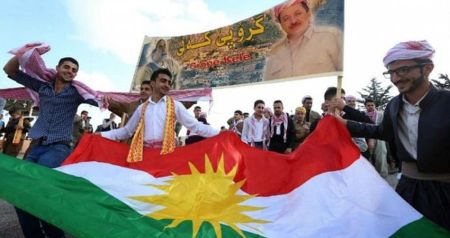
A rally for Kurdish independence in Erbil ahead of the Sept.25, 2017 referendum (Photo: Chris McGrath/Getty Images)

Sunni Arab leaders have largely been silent on the September 25 Iraqi Kurdish independence referendum, but Arab League Secretary General Ahmed Abdul Gheit visited the Iraqi Kurdish capital last week to dissuade the Kurds from holding the vote.

In a recent letter to Kurdistan Region President Massoud Barzani, Ahmed described his fears of “disintegration and fragmentation,” noting in his plea that the Arab League is “strongly keen on ensuring the territorial integrity of the Arab states.”

What seems lost on Ahmed is the strategic pragmatism in allowing the Kurds to further solidify their proven bastion against Iran and successive waves of regional instability.

The Kurdistan region is an effective vanguard against Iran, the chief instigator of regional division. At the same time, it has been the Kurds who have beaten back ISIS from their other borders.

The region has also weathered simultaneously a collapse in oil prices, a total cut of support from Baghdad, the arrival of two million refugees and the onslaught of ISIS. Standing in stark contrast to their surroundings, the Kurds are the model for stability.

Tellingly, who else vehemently opposes Kurdish self-determination in Iraq and Syria? Iran and her shadow proxies.

The regional balance continues to tilt in favor of Iran’s aspirations to create a Shiite crescent from Iran to Syria to counter the Sunni world, the West and Israel, all under a nuclear umbrella and aided by Russia. Kurdish independence would stymie that.

Competing regional designs, whether pan-Arab irredentism or America’s “freedom agenda,” now lay in tatters with Iran picking up the pieces.

With Iraq, Syria, Yemen, Qatar and Lebanon now overrun with Iranian influence, and with Iran’s expansionist sights now set on unprecedented relations with Turkey, it may not be long before the remaining Gulf States meet the full brunt of Iran and her proxies. In just the last year, Iran established a new pathway to the Mediterranean and strongholds on the Red Sea.

The Arab League in 2016 likewise condemned the Syrian Kurdish federalization, again citing fears of “disunity.” What “unity” does Secretary General Ahmed hope to preserve?

In addition to untold civilian casualties, is “Syria” still the Syrian Arab Republic if it requires massive, ongoing intervention by Russian, Iranian and Hezbollah militants to “restore” this “unity”? After all, the Arab League suspended Syria in 2011 on the basis of what the league saw as government suppression of protestors.

If an Arab city such as Aleppo can be leveled, then one cannot imagine what awaits intransigent Kurdish population centers. Indeed, Syrian officials recently warned of the “price” that the Syrian Kurdish democratic administration will pay for refusing to return to the fold.

Yet, it has only been Kurdistan region President Barzani and the Syrian Kurdish forces that have declared they will not allow the Iranian-backed Popular Mobilization Units to operate in their respective areas — which the Iranian-influenced central governments of Baghdad and Damascus fully welcome, and which Ahmed is intent on defending.

Barzani has received warm welcomes in regional capitals, including Riyadh and Amman. While his desire for independence has been met with measured silence from Sunni Arab leaders, this silence is far from the vocal condemnation by the Arab League chief.

In May, Ahmed made a wise observation when he said, “Iran is enjoying what the Arab world is going through. There are those in Iran who are watching and waiting for us to destroy ourselves.”

Ahmed should consider whether he seeks a self-fulfilling prophecy by playing into Iran’s aspirations. It’s time for the Arab League to reexamine the source of this position on the “unity” of the failed states of Iraq and Syria, and whether this opinion truly reflects the strategic pragmatism and moral clarity that the region.

Negotiation, not dialogue (or negation) [Venezuela]

September 24, 2017

Negotiation, not dialogue (or negation), Venezuela News and ViewsDaniel Duquenal, September 23, 2017

The fact of the matter is that the regime is on the defensive. The sanctions are starting to work. The latest sign that credit is withheld on gasoline import is that there are growing lines at gas stations. If it is true that the forced election of the constituent assembly had a perverse way to boost provisionally the regime it is also true that one month and a half has passed since the assembly was [seated] and there is no evidence that it is doing something positive to solve the problems of the country.  The regime is in denial but the truth is that the world that counts is united against the regime.  Russia and China, when all is said, may have a limited role since what will bring down the regime is its economic failure. Russia cannot save Maduro with bombers like in Syria…

Meanwhile the week ended with Canada imposing sanctions on 40 high ranking dictatorship personnel.  The symbolism does not escape us, the 40 thieves of Ali Baba finally starting to suffer consequences.

******************************

This past week has been eventful. It started with a new attempt at dialogue that nobody but the regime wants, to the strong words against Venezuela dictatorship from TrumpMacronSantosMichetti, and more, taking place at the UN general assembly.

That dinner table was certainly better supplied than those of Caracas

There were all sorts of activities during the festivities, like Trump hosting a dinner for the heads of a few Latin American states highly critical of Venezuela’s dictatorship.  Venezuela was mentioned in several speeches at the tribune, invariably condemnatory, except from the usual suspects like Evo’s speech, very poorly attended for that matter.  We even have the money quote from Trump, who may be wrong and obnoxious a lot of the time, but when he is right, he is right, hands down:

“The problem in Venezuela is not that socialism has been poorly implemented,
but that socialism has been faithfully implemented”

These expected actions against Maduro’s regime are what explains why a few days ago the regime asked for “dialogue” with the opposition, to be held in Santo Domingo.

Certainly, as it has become usual, the regime starts dialogue as a dilatory instrument to bring down Venezuelan opposition when the going gets too intense. But this time around it is different and the regime is not going to get once again a free pass: months of protests, political prisoners and political murders cannot be dismissed by the world democracies. What in last century would have been considered as collateral effect cannot be ignored anymore in the XXI century.

As usual a volley of declarations and counter declarations has been launched since the “dialogue” started. No point going over the confusing details.  The summary is as follow:

– all seems to indicate that it is the regime that this time around truly asked for a new dialogue and went out of their [way] to effect it, as the opposition this time around was not in the mood (at least not as long as the regime fulfills at least one of its previous commitments).

– if the regime succeeded in bringing back allies like the Dominican Republic to host the talks, and Zapatero ready for a new failure, it did not go as planned. First, the opposition announced that it would talk only to Santo Domingo president. Second, that a new set of countries would be guarantors of any new talk, not anymore the more complaint countries or devious double agents like Zapatero. e.g., now at least France will be attending for Europe.

– before the talks the head of the National Assembly, Julio Borges, came from a very successful tour in Europe’s main capitals (Paris, Berlin, Madrid and London, only Rome missing, for now).  He received full support from those who matter: Macron, Merkel, Rajoy and May. On the other hand Venezuela sent its foreign minister to do a counter tour and he was only receive by foreign ministers at best, and scolded each time.

– even though everywhere Arreaza was told that the constituent assembly would not recognized, the regime keeps trying to force its recognition by sending the president of that illegal assembly as its chief negotiation in Santo Domingo. To little effect so far we must say.

– eventually, in front of a losing strategy, as more and more inside the opposition state that there should be no talk until AFTER the state elections, the regime has started sabotaging the process with all sorts of manipulations and lies. The thing here is that the radicals inside the regime do not want any negotiation and the opposition, and the world, only wants a negotiation. Not a dialogue, a negotiation. There is a difference.

The fact of the matter is that the regime is on the defensive. The sanctions are starting to work. The latest sign that credit is withheld on gasoline import is that there are growing lines at gas stations. If it is true that the forced election of the constituent assembly had a perverse way to boost provisionally the regime it is also true that one month and a half has passed since the assembly was sat and there is no evidence that it is doing something positive to solve the problems of the country.  The regime is in denial but the truth is that the world that counts is united against the regime.  Russia and China, when all is said, may have a limited role since what will bring down the regime is its economic failure. Russia cannot save Maduro with bombers like in Syria…

But at least the regime has one satisfaction: the “dialogue” has divided deeply the opposition, before the crucial elections of next months. Those elections will be fraudulent and more, but going in disperse order with too many promoting abstention will not help. For some reason the lies of the regime about dozens of “secret” meetings, those that the opposition is willing to recognize the constituent assembly (without describing what the opposition will get in exchange) have found a wide public of, well, hysterical oppos. Then again the resurrection of Rosales or Zambrano as envoys to Santo Domingo has not been a PR coup for the MUD…..

So we have all sorts of people that preach that we should not go to vote because this would give some legitimacy to the regime. True, but in part at best for the regime. International opinion at the government levels will not be swayed by an election where harsh handed tactics of the regime will be closely monitored by their embassies.

But that saddest part of it all is that the abstention party virulence, from Maria Corina Machado to twitter warriors of the nebulous “resistencia”, is not offering any other strategy. They do not want to vote yet they are not telling us what to do, and even less, are not willing to place themselves in the front lines of whatever it is that they have in mind. Well, Maria Corina would go on the front line, but she is unable to say where the fucking front line is.

I do not know where all of this will lead us. We cannot even be certain whether the regional elections will be held. We can be sure that the regime is following a close pulse of the electoral mood, and in particular the abstention movement who thank the deities seems to peter some already.  The point is that the regime must balance the risk of losing badly the regional elections but proving to the world that a democratic transition is coming, or stick to a goal of at least 40% governors, no trickery spared, no political violence too gross.  In short, a lose lose of sorts for the regime, with a radical and radicalizing constituent assembly which nobody seems really in control of.

Meanwhile the week ended with Canada imposing sanctions on 40 high ranking dictatorship personnel.  The symbolism does not escape us, the 40 thieves of Ali Baba finally starting to suffer consequences.

And Europe sanctions are expected any time soon…………

Iraqi Kurds vote for independence. Barzani: Our borders lie where our tanks stop

September 24, 2017

Iraqi Kurds vote for independence. Barzani: Our borders lie where our tanks stop, DEBKAfile, September 24, 2017

(Please see also, The Kurdish Referendum Imbroglio. — DM)

The 5.2 million eligible voters of the semiautonomous Kurdish Republic of Iraq avow their desire on Monday, Sept. 25 to establish the first independent Kurdish state in history. An estimated 15-20 percent of the Iraqi population, the Kurds of Iraq won their autonomy in 1991. This was the halfway mark to their final goal which, too, was denied their brothers in Syria, Turkey or Iran.

“Yes” voters are expected to pack polling booths in Dahuk, Irbil and Sulaimaniya the three official provinces of KRG, plus “areas outside its administration,” such as Kirkuk, Makhmour, Khanaqin and Sinjar, where the Kurdish Peshmerga established control after expelling the Islamic State invaders.

Most world powers, including the UN Security Council, warned KRG President Masoud Barzani to back off the referendum because of its potentially destabilizing impact on the region and as a distraction from the main war on ISIS.

Iraq, Turkey and Iran threatened “counter-measures,” fearing the impact on their own Kurdish minorities.  Doubling down on their threats, their armies staged military exercises around the borders of the Kurdish Republic on various pretexts.

Barzani’s reply: “Our borders lie where our tanks stop.”  Furthermore, Kurdish leaders explained the referendum was not Kexit on the model of Brexit. It had no built-in declaration of secession from Iraq. “On the road to independence, the referendum is only one step,” said Hoshyar Zebari, former Iraqi foreign minister.

Neither Turkey, Iran or Iraq, while making threatening motions, are unlikely to take on the fierce Kurdish Peshmerga in a full-fledged war, especially when it has the backing of the US, Russia, Germany and up to a point, Israel.

With this card in hand, Iraq’s Kurdish leaders are in no hurry. They find that their people’s commitment to the independence, even though it is unconsummated, arms them with an ace in the hole for the lengthy negotiations ahead with the Baghdad government on separation – and possibly on rights for their fellow communities as well, with Ankara, Tehran and Syria.

These negotiations are likely to wind back and forth and erupt into violent outbreaks, with the potential for inflaming the national ambitions of the Kurdish communities outside Iraq. Turkey has the largest Kurdish minority – 15 million; Iran around 6 million; and Syria 2 million – together with Iraq a total of 35 million, who dwell in regions fragmented among the four neighboring countries. The Kurdish national struggle carries the potential of being caught up in a bloody conflict with Sunni Arab or Shiite Iranian opponents, with unpredictable consequences.

The most immediate prospect now is an Iraqi-Kurdish confrontation, triggered not just by the Kurds’ national referendum, but by the battle for control of Iraq’s northern oilfields, centering on Kirkuk.

The Kurds cherish Kirkuk as their Jerusalem, whereas for Baghdad, it represents one-quarter of the oil produced in the northern region.

Russia is the only world power which has not publicly condemned the Kurds for their referendum  – for the very good reason that the Russian energy giant, Rosneft, last week announced a pledge estimated at $4 billion for the development of Kurdish oil and gas fields for domestic consumption and eventual export.

Barzani not only has his tanks on the ready, but also a timely big-power insurance guarantee  Moscow is hardly likely to let the Iraqi army attack Kirkuk, after successfully planting there Russia’s first strategic foothold in Iraq, since the Americans toppled Saddam Hussein in 2003.

And so the Kurds can continue to safely pump around 600,000 barrels of oil a day under their tricolor red, white and green flag, set with a blazing sun.

The Kurdish Referendum Imbroglio

September 24, 2017

The Kurdish Referendum Imbroglio, Gatestone Institute,> Amir Taheri, September 24, 2017

What is the first thing you should do when you have dug yourself into a hole? The obvious answer is: stop digging. This is the advice that those involved in the imbroglio over the so-called independence referendum in Iraqi Kurdistan, due to be held on September 25. But still in the suspense of writing this column, would do well to heed.

The idea of holding a referendum on so contentious an issue at this time is bizarre, to say the least. There was no popular demand for it. Nor could those who proposed it show which one of Iraq’s problems such a move might solve at this moment. In other words, the move was unnecessary, in the sense that Talleyrand meant when he said that, in politics, doing what is not necessary is worse than making a mistake.

If by independence one means the paraphernalia of statehood, the three provinces that form Iraqi Kurdistan lack nothing: They have their president, prime minister, cabinet, parliament, army, police, and, even, virtual embassies in key foreign capitals. They are also well-furnished with symbols of statehood, including a flag and national anthem.

Having said all that, one could hardly deny the Kurds a desire for independence.

In a sense, some Kurds have dreamt of an independent state since over 2000 years ago, when the Greek historian Xenophon ran into them in the mountains of Western Asia. (See his account in his masterpiece Anabasis).

Right now, however, all indications are that any attempt at a unilateral declaration of independence by the Kurds could trigger a tsunami of conflicts that the region, already mired in crisis, might not be able to handle. In other words, the hole dug by Erbil may become an ever-deepening black hole, sucking a bigger chunk of the Middle East into the unknown; hence the need to stop digging.

Yet, almost everyone is doing the opposite.

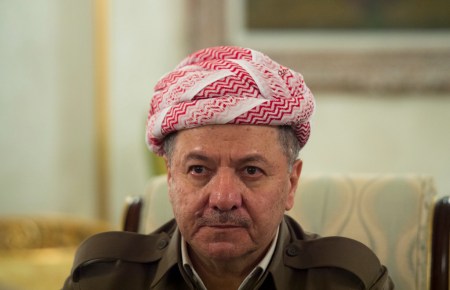
Massoud Barzani, the president of the autonomous Kurdistan Regional Government, has lashed out against Turkey and Iran while threatening military action to seize disputed areas in Iraq. Barzani’s tough talk may please his base but could strengthen chauvinist elements in Baghdad, Ankara and Tehran who have always regarded Kurds as the enemy.

Massoud Barzani, president of the autonomous Kurdistan Regional Government. (Image source: U.S. Department of Defense)

For his part, Iraqi Prime Minister Haidar al-Abadi has come close to threatening the use of force to stop a process that remains unclear.

Threats have also come from Tehran, where National Security Adviser Ali Shamkhani says the Islamic Republic would cancel all security accords concerning the Kurdish region and might intervene there militarily to deal with anti-Iran groups.

For its part, Ankara has branded the referendum a “red line”, using a discredited term made fashionable by former US President Barack Obama in 2014 over Syria.

Just days before the referendum, the Turkish army staged a highly publicized military demonstration on the border with the autonomous Iraqi Kurdistan, presumably as a warning to Erbil.

As for Russia, the sotto voce support given to the referendum is more motivated by hopes of juicy oil contracts than sober geostrategic considerations. Such a stance might win President Vladimir Putin more support from the oligarchs, but risks dragging Russia into a risky process over which it won’t have any control.

Washington’s mealy-mouthed comments on the issue are equally problematic.

Iraqi Kurds have been the United States’ best allies in dismantling the Saddamite system in post-liberation Iraq and in the current fight against ISIS. The US would gain nothing by casting itself as an opponent of Kurdish self-determination.

Tackling the problem from a legal angle, Iraq’s Supreme Court has declared the proposed referendum in violation of the Iraqi constitution. For its part, Iraq’s national parliament has invited the Erbil leadership to postpone the referendum, echoing a message from the United States and the European Union.

It is not clear where all this talk of canceling the referendum at the 11th hour may lead. However, I think cancellation at this time could do more harm than good.

First, it could discredit the Erbil leadership at a time it needs to prop up its authority, indeed its legitimacy. Whether one likes the Erbil leadership or not, sapping its authority is neither in the interest of Iraqi Kurds nor, indeed, of Iraq as a whole. Encouraging splits in the Kurdish ranks and promoting a political vacuum in the autonomous region is the last thing Iraq needs.

Secondly, a last-minute cancellation could strengthen elements who still believe that force and threat of force are the most efficient means of dealing with political problems. Almost 14 years after the demise of Saddam Hussein, Iraq isn’t yet free of past demons who dream of a monochrome Iraq dominated by a clique.

Thirdly, a last-minute cancellation could be seen as a legitimization of the right of Ankara and Tehran to intervene in Iraqi domestic affairs through a mixture of military pressure and thinly disguised blackmail.

So, what is the best way to stop deepening the hole?

A possible answer may be built around the position taken by Iraqi President Fouad Maasoum, himself an ethnic Kurd but, apparently at least, genuinely committed to building a pluralist system in Iraq. Maasoum has not offered an elaborate scheme. But his suggestion that the imbroglio be tackled through talks between Baghdad and Erbil could be used as the basis for a compromise.

In such a compromise, the referendum would go ahead unhindered while it is made clear that its outcome would in no way be legally binding on anyone. In other words, the referendum, whatever its result, would be accepted as a political fact that could and should be taken into consideration in designing the road-map Iraq would need once it has wiped out ISIS.

Iraqi Kurds cannot impose their wishes by force, especially when they are far from united over national strategy. On the other hand, Iraq cannot revert to methods of dealing with its “Kurdish problem” that led to so many tragedies for the Kurds and derailed Iraqi national life for decades.

The September 25th referendum was unnecessary. The best one could do at the 11th hour is to help morph it into a mistake. Politics cannot deal with the unnecessary, but it can deal with mistakes.

Amir Taheri, formerly editor of Iran’s premier newspaper, Kayhan, before the Iranian revolution of 1979, is a prominent author based on Europe. He is the Chairman of Gatestone Europe.

This article first appeared in Asharq Al Awsat and is reprinted here with the kind permission of the author.

It Was the Deep State that Colluded with the Russians, not Trump

September 24, 2017

It Was the Deep State that Colluded with the Russians, not Trump, American ThinkerClarice Feldman, September 24, 2017

(Lots of questions that require answers. — DM)

With each leak of his conduct – designed, I suppose, by his team to terrify honest men into lying to redeem the special counsel’s misbegotten efforts — Mueller looks more and more like a petrified enlistee in  the secretive repressive state force — the Stasi — as the wall is coming down and their conduct made public.

************************************

As more and more leaks about the ongoing “Russian collusion” witch hunt by Robert Mueller appear in print, it seems to me that if Russia had been trying to erode our faith in our institutions, the Deep State is accomplishing what Russia failed to do.

The Obama claque’s efforts were initially intended to help Clinton when they thought she would win and no one would know about their crimes. Then they continued the unlawful spying to cover up their role in the worst case of misuse of federal power in our history, to effect the removal or emasculation of the President, and now they are desperate to cover up their illegal actions when all that failed.

A. Where we are today on “Russian collusion”?

Instapundit tweeted the answer succinctly: “The election was hacked!” turns out to mean, “Russia bought some ads on Facebook.”

Facebook is turning over ads presumably purchased by Russians during the campaign. Good — let’s see them. As the article notes:

The announcement that Facebook would share the ads with the Senate and House intelligence committees came after the social network spent two weeks on the defensive. The company faced calls for greater transparency about 470 Russia-linked accounts  — in which fictional people posed as American activists — which were taken down after they had promoted inflammatory messages on divisive issues. Facebook had previously angered congressional staff by showing only a sample of the ads, some of which attacked Hillary Clinton or praised Donald J. Trump.

As Tom Maguire reminds us, it would be unwise to assume this was a one-sided campaign: “Let’s see all the ads and find out whether Russia was winding up both sides. Back in the day it was believed Russia backed anti-fracking groups in Europe. Why not also in the US?”

Best of the Web’s James Freeman thinks that, in any case, the notion that these ads swung the election is ridiculous on its face:

So the spending on fake Russian political ads identified by Facebook amounted to around 1/7,000th of what Mrs. Clinton spent on advertising. And of course these fake ad buys were not material in the context of Facebook’s total advertising revenues, which amounted to nearly $27 billion last year.

Is a $150,000 ad buy even big enough to require sign-off from Mr. Putin? If as some believe, Russian meddling was simply intended to discredit the likely winner, some poor Russian agent may now be headed to Siberia for engineering the election of a U.S. President who seems determined to drive down the price of oil.

Let’s hope Congress gets to the bottom of this. If $150,000 amounts to the entire iceberg, and it still managed to sink the S.S. Clinton, marketing majors will be studying these ads for years to come.

B. Using the Full Force of FISA to spy on a political opponent
Obama has a long history of spying on his opponents and releasing information damaging to them. It’s a lifelong pattern. He got two opponents’ sealed divorce records unsealed in order to use unsubstantiated claims in pleadings by estranged spouses against them. As President, he continued this practice. By way of example, the Obama Administration did that with IRS, collecting information about the activities and donors of conservative and pro-Israel citizen groups while it refused to grant them the tax-exempt status to which they were entitled. The EPA collected private information from farmers and ranchers and released it to environmental groups to help them in their battles against those farmers and ranchers. There’s no reason to suppose that this pattern didn’t carry over to the 2016 election, and plenty of evidence that it did. As Sharyl Attkisson points out, they did it with reporters and Congressmen.

Nobody wants our intel agencies to be used like the Stasi in East Germany; the secret police spying on its own citizens for political purposes. The prospect of our own NSA, CIA and FBI becoming politically weaponized has been shrouded by untruths, accusations and justifications.

You’ll recall DNI Clapper falsely assured Congress in 2013 that the NSA was not collecting “any type of data at all on millions or hundreds of millions of Americans.”

Intel agencies secretly monitored conversations of members of Congress while the Obama administration negotiated the Iran nuclear deal.

In 2014, the CIA got caught spying on Senate Intelligence Committee staffers, though CIA Director John Brennan had explicitly denied that.

There were also wiretaps on then-Congressman Dennis Kucinich (D-Ohio) in 2011 under Obama. The same happened under President George W. Bush to former Congresswoman Jane Harman (D-Calif.).

Journalists have been targeted, too. [snip]

The government subsequently got caught monitoring journalists at Fox News, The Associated Press, and, as I allege in a federal lawsuit, my computers while I worked as an investigative correspondent at CBS News.

As Attkisson reminds us, other Trump associates General Michael Flynn and Carter Page were also under government surveillance. As bad as that was, it was ”discovered [that] multiple Trump “transition officials” were “incidentally” captured during government surveillance of a foreign official. We know this because former Obama adviser Susan Rice reportedly admitted “unmasking,” or asking to know the identities of, the officials. Spying on U.S. citizens is considered so sensitive their names are supposed to be hidden or “masked,” even inside the government, to protect their privacy.”

She also specifically unmasked Steve Bannon, who met in the transition period with a UAE official so it’s altogether possible they were spying on him generallyas well.

If so, that would mean that four Trump associates had been spied on, multiplying the number of conversations with the President these people were listening in on.

Even more “unmasking”– revealing the names of those innocents scooped up in this broad surveillance — about 300 people had their privacy violated when the dyspeptic-looking UN Ambassador Samantha Power was revealed to have made almost one unmasking request a day, rapidly adding to the list as the inauguration approached.

Samantha Power, the former U.S. ambassador to the United Nations, was ‘unmasking’ at such a rapid pace in the final months of the Obama administration that she averaged more than one request for every working day in 2016 — and even sought information in the days leading up to President Trump’s inauguration, multiple sources close to the matter told Fox News.

Two sources, who were not authorized to speak on the record, said the requests to identify Americans whose names surfaced in foreign intelligence reporting, known as unmasking, exceeded 260 last year. One source indicated this occurred in the final days of the Obama White House.

C. The FISA Court surely was misled in order to get information to surveil and to continue surveilling Trump and his associates.

FISA (the Foreign Intelligence Surveillance Act) permits blunderbuss intelligence gathering. It’s not designed to gather information on crimes in general, but only to act as a tool of counterintelligence or counterterrorism. And it certainly would be suspicious if efforts were made to misuse it to conduct domestic political spying. There’s only one legitimate reason to conduct surveillance on a U.S. citizen under FISA — to find out more about the activities of a foreign power or terrorist organization. Since in the process of scooping up so much information, other matters might be revealed, “minimization” procedures are used to mask the identities of those caught up in the sweep who are not involved in such activities.

CNN reported — with some obvious omissions and errors of law — that former FBI director James Comey secured secret FISA orders to wiretap Paul Manafort, who briefly served as Trump’s campaign manager, and that having received nothing from that order, then secured another FISA warrant in 2016 (after Manafort joined the Trump campaign) and continued that surveillance into 2017, after the election.

Further, CNN reported that two attempts were made in the summer of 2016 to obtain a FISA order, both of which were rejected, and an order was issued only after the third try. FISA rarely rejects such requests, so I think it fair to assume the court was suspicious of these requests, which smelled like political, not national security matters. I think it almost a certainty that the final request received the personal imprimatur of Comey (as Director of the FBI) and Attorney General Loretta Lynch.

And what, you may ask, was different about the third and ultimately successful third attempt? I suggest it was the phony Steele dossier, which credible reports indicate was partially financed by Comey’s own FBI.

The House Intelligence Committee’s investigation took a sharp and notable turn on Tuesday, as news broke that it had subpoenaed the FBI and the Justice Department for information relating to the infamous Trump “Dossier.” That Dossier, whose allegations appear to have been fabricated, was commissioned by the opposition-research firm Fusion GPS and then developed by a former British spook named Christopher Steele. [Ed: Sources for the most scurrilous allegations in it were from unnamed sources in Russia, most likely Russian government intelligence agents or liars working on a pay for dirt basis.]

The Washington Post in February reported that Mr. Steele “was familiar” to the FBI, since he’d worked for the bureau before. The newspaper said Mr. Steele had reached out to a “friend” at the FBI about his Trump work as far back as July 2016. The Post even reported that Mr. Steele “reached an agreement with the FBI a few weeks before the election for the bureau to pay him to continue his work.”

Who was Mr. Steele’s friend at the FBI? Did the bureau influence the direction of the Trump dossier? Did it give Mr. Steele material support from the start? The timing matters because it could answer the vital question of why the FBI wanted the dossier. Here’s one thought: warrants.

The Foreign Intelligence Surveillance Court, which oversees spying activities, is usually generous in approving warrants, on the presumption law-enforcement agencies are acting in good faith. When a warrant is rejected, though, law enforcement isn’t pleased.

Perhaps the FBI wanted to conduct surveillance on someone connected to a presidential campaign (Carter Page?) but couldn’t hit what was — and ought to be — a supremely high bar for getting such a potentially explosive warrant. A dossier of nefarious allegations might well prove handy in finally convincing the FISA court to sign off. The FBI might have had a real motive to support Mr. Steele’s effort. It might have even justified the unjustifiable: working with a partisan oppo-research firm and a former spook to engineer a Kremlin-planted dossier that has roiled Mr. Trump’s entire presidency.

True Pundit claims that FBI connivance with GPS Fusion to create the dossier was not all it did to secure the final 2016 FISA warrant — it also set up a meeting in Trump Tower and used information gleaned from Britain’s GCHQ in NSA headquarters to unlawfully gather information on U.S. citizens.

From the beginning it was a set up to find dirt on Trump campaign insiders and if possible to topple Donald Trump’s presidential aspirations.

Before and after the 2016 election. And while this operation had many moving parts and alternating players, the mission to unseat Trump never changed. And it remains ongoing.

And none of it was very legal.

[snip]

Six U.S. agencies [the FBI, NSA, CIA, Office of the Director of National Intelligence, Treasury financial crimes division under DHS, Justice Department]created a stealth task force, spearhead by CIA’s Brennan, to run domestic surveillance on Trump associates and possibly Trump himself.

To feign ignorance and to seemingly operate within U.S. laws, the agencies freelanced the wiretapping of Trump associates to the British spy agency GCHQ.

The decision to insert GCHQ as a back door to eavesdrop was sparked by the denial of two FISA Court warrant applications filed by the FBI to seek wiretaps of Trump associates.

GCHQ did not work from London or the UK. In fact the spy agency worked from NSA’s headquarters in Fort Meade, MD with direct NSA supervision and guidance to conduct sweeping surveillance on Trump associates.

[snip]

The Justice Department and FBI set up the meeting at Trump Tower between Trump Jr., Manafort and Kushner with controversial Russian officials to make Trump’s associates appear compromised.

Following the Trump Tower sit down, GCHQ began digitally wiretapping Manafort, Trump Jr., and Kushner.

After the concocted meeting by the Deep State, the British spy agency could officially justify wiretapping Trump associates as an intelligence front for NSA because the Russian lawyer at the meeting, Natalia Veselnitskaya, was considered an international security risk and prior to the June sit down was not even allowed entry into the United States or the UK, federal sources said.

By using GCHQ, the NSA and its intelligence partners had carved out a loophole to wiretap Trump without a warrant. While it is illegal for U.S. agencies to monitor phones and emails of U.S. citizens inside the United States absent a warrant, it is not illegal for British intelligence to do so. Even if the GCHQ was tapping Trump on U.S. soil at Fort Meade.

The wiretaps, secured through illicit scheming, have been used by U.S. Special Counsel Robert Mueller’s probe of alleged Russian collusion in the 2016 election, even though the evidence is considered “poisoned fruit.”

Veselnitskaya, the Russian lawyer who spearheaded the Trump Tower meeting with the Trump campaign trio, was previously barred from entering the United Sates due to her alleged connections to the Russian FSB (the modern replacement of the cold-war-era KGB).

Yet mere days before the June meeting, Veselnitskaya was granted a rare visa to enter the United States from Preet Bharara, the then U.S. Attorney for the southern district of New York. Bharara could not be reached for comment and did not respond the a Twitter inquiry on the Russian’s visa by True Pundit.

(More on the unusual visa granted to Veselnitskaya here. More on GCHQ operating from NSA headquarters here.)

In July, Bharara’s former associate US Attorney Andrew Goldstein was added to Mueller’s army of largely Clinton backers and contributors to the special counsel’s enormous team.

In sum, the contention by True Pundit is that the government first spied on Trump and then concocted a national security ruse and desperately sought a FISA warrant to cover up the political spying which occurred before the FISA warrant was ever issued.

The editors of the Wall Street Journal also suspect that the dossier was used to obtain the FISA warrant, and, if so, that requires a congressional investigation:

The FISA court sets a high bar for warrants on U.S. citizens, and presumably even higher for wiretapping a presidential campaign. Did Mr. Comey’s FBI marshal the Steele dossier to persuade the court?

All of this is reason for House and Senate investigators to keep exploring how Mr. Comey’s FBI was investigating both presidential campaigns. Russian meddling is a threat to democracy but so was the FBI if it relied on Russian disinformation to eavesdrop on a presidential campaign. The Justice Department and FBI have stonewalled Congressional requests for documents and interviews, citing the “integrity” of Special Counsel Robert Mueller’s investigation.

But Mr. Mueller is not investigating the FBI, and in any event his ties to the bureau and Mr. Comey make him too conflicted for such a job. Congress is charged with providing oversight of law enforcement and the FISA courts, and it has an obligation to investigate their role in 2016. The intelligence committees have subpoena authority and the ability to hold those who don’t cooperate in contempt.

I agree with Daniel Greenfield. Based on what I’ve read and observed, while the initial surveillance was to stop Trump and help Clinton, Obama used FISA to provide a “national security” cover for politically spying on Trump right up to the inauguration. As he notes, the first 2016 application was made the month after Trump obtained the nomination and the second in October, the month before the election.

As the unmasking picked up pace after the election, the reasonable assumption is that its purpose was to undo the results of the election or hamstring the incoming President.

Now Obama and his allies are or should be terrified that the scope of the illegal surveillance is revealing their criminal acts.

This is why I believe Mueller is growing increasingly desperate to find one crime by one person he can force by threat of jail to provide any shred of anything that might be used to justify their illegal espionage. Greenfield’s conclusion is apt: “The left is sitting on the biggest crime committed by a sitting president. The only way to cover it up is to destroy his Republican successor. A turning point in history is here. If Obama goes down, the left will go down with him. If his coup succeeds, then America ends.”

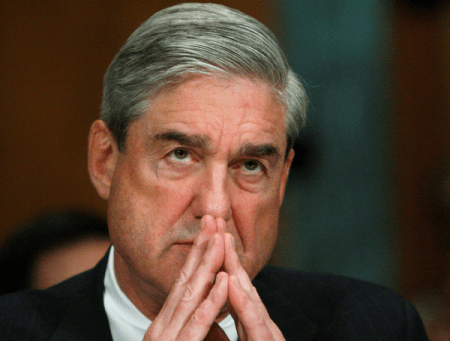
Why do I say that Mueller seems increasingly desperate? How else does one explain a middle-of-the-night pick-lock armed entry (and the search of his bedclothes-garbed wife) into the home of a man who by all accounts had been fully cooperating and turning over all requested documents? How else to explain requesting a court grant such a necessary special warrant on the ground that otherwise documents evincing a purported eleven-year-old crime would suddenly be destroyed? How else to explain the effort by Mueller to find out client information from the Skadden Arps and Akin Gump law firms, materials probably covered by attorney-client privilege? With each leak of his conduct – designed, I suppose, by his team to terrify honest men into lying to redeem the special counsel’s misbegotten efforts — Mueller looks more and more like a petrified enlistee in  the secretive repressive state force — the Stasi — as the wall is coming down and their conduct made public.

Trump says Iran ‘working’ with North Korea after Tehran tests missile that can reach Israel

September 24, 2017

Source: Trump says Iran ‘working’ with North Korea after Tehran tests missile that can reach Israel – Africa, Asia and Australia – Haaretz.com

Trump’s tweet comes after North Korea said that firing its rockets at the U.S. mainland was ‘inevitable’

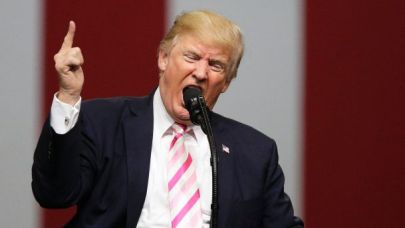
U.S. President Donald Trump speaks at a campaign rally in support of Sen. Luther Strange in Huntsville, Alabama, September 22, 2017.
U.S. President Donald Trump speaks at a campaign rally in support of Sen. Luther Strange in Huntsville, Alabama, September 22, 2017. Brynn Anderson/AP

U.S. President Donald Trump accused Iran of collaborating with North Korea on Saturday after Tehran succesfully tested a new ballistic missile that could reach Israel.

“Iran just test-fired a Ballistic Missile capable of reaching Israel.They are also working with North Korea.Not much of an agreement we have!” Trump tweeted.

Trump’s tweet follows a week of heightened rhetoric from Washington and Pyongyang, with Trump and Kim Jong Un trading insults. Trump called the North Korean leader a “madman” on Friday, a day after Kim dubbed him a “mentally deranged U.S. dotard.”

On Saturday, North Korea’s foreign minister said that firing its rockets at the U.S. mainland was “inevitable” after Trump called Pyongyang’s leader “rocket man.”

North Korean Foreign Minister Ri Yong Ho’s remarks before the United Nations General Assembly came hours after U.S. Air Force B-1B Lancer bombers escorted by fighter jets flew in international airspace over waters east of North Korea, in a show of force the Pentagon said demonstrated the range of military options available to Trump.

“Through such a prolonged and arduous struggle, now we are finally only a few steps away from the final gate of completion of the state nuclear force,” Ri told the annual gathering of world leaders.

“It is only a forlorn hope to consider any chance that the DPRK (Democratic People’s Republic of Korea) would be shaken an inch or change its stance due to the harsher sanctions by the hostile forces,” he said.

Trump announced new U.S. sanctions on Thursday that he said allow targeting of companies and institutions that finance and facilitate trade with North Korea. Earlier this month the UN Security Council unanimously adopted its ninth round of sanctions on Pyongyang to counter its nuclear and ballistic missiles programs.

Ri, who said Pyongyang’s ultimate goal was to establish a “balance of power with the U.S.”, retorted that Trump himself was on a “suicide mission” after the U.S. president said Kim was on such a mission.

The U.S. bombers’ flight was the farthest north of the demilitarized zone separating North and South Korea that any U.S. fighter jet or bomber has flown in the 21st century, the Pentagon said.

“This mission is a demonstration of U.S. resolve and a clear message that the President has many military options to defeat any threat,” said Pentagon spokeswoman Dana White, calling North Korea’s weapons program “a grave threat.”

“We are prepared to use the full range of military capabilities to defend the U.S. homeland and our allies.”

Ri warned Pyongyang was ready to defend itself if the U.S. showed any sign of conducting a “decapitating operation on our headquarters or military attack against our country”.

North Korea has launched dozens of missiles this year, several flying over Japan, as it accelerates its program aimed at enabling it to target the United States with a nuclear-tipped missile.

Pyongyang conducted its sixth and largest nuclear test on Sept. 3 and has launched dozens of missiles this year as it accelerates a program aimed at enabling it to target the United States with a nuclear-tipped missile. The North has threatened to test a hydrogen bomb over the Pacific.

The Pentagon said the B-1B Lancer bombers came from Guam and the U.S. Air Force F-15C Eagle fighter escorts came from Okinawa, Japan. It said the operation showed the seriousness with which it took North Korea’s “reckless behavior.”

The patrols came after officials and experts said a small earthquake near North Korea’s nuclear test site on Saturday was probably not man-made, easing fears Pyongyang had exploded another nuclear bomb just weeks after its last one.

China’s Earthquake Administration said the quake was not a nuclear explosion and had the characteristics of a natural tremor.

The CTBTO, or Comprehensive Test-Ban Treaty Organization, which monitors nuclear tests, and officials of the South Korean meteorological agency also said they believed it was a natural quake.

An official of South Korea’s Meteorological Agency said acoustic waves should be detected in the event of a man-made earthquake.

“In this case we saw none. So as of now, we are categorizing this as a natural earthquake.”

The earthquake, which South Korea’s Meteorological Agency put at magnitude 3.0, was detected 49 km from Kilju in North Hamgyong Province, where North Korea’s known Punggye-ri nuclear site is located, the official said.

All of North Korea’s six nuclear tests registered as earthquakes of magnitude 4.3 or above. The last test registered as a 6.3 magnitude quake.

Tensions have continued to rise around the Korean Peninsula since Pyongyang carried out its sixth nuclear test, prompting a new round of UN sanctions.

Trump told the UN on Tuesday the United States would “totally destroy” North Korea if it threatened the United States or its allies.

North Korea’s nuclear tests to date have all been underground, and experts say an atmospheric test, which would be the first since one by China in 1980, would be proof of the success of its weapons program.


wisdom !

September 23, 2017

Russia Warns US In Unprecedented “Secret” Face-To-Face Meeting Over Syria, But What’s The Endgame?

September 23, 2017

by Tyler Durden
Sep 22, 2017 9:00 PM”>Sep 22, 2017 9:00 PM

Source: Russia Warns US In Unprecedented “Secret” Face-To-Face Meeting Over Syria, But What’s The Endgame? | Zero Hedge

The moment the first Russian jet landed in Syria at the invitation of the Assad government in 2015, Putin placed himself in the driver’s seat concerning the international proxy war in the Levant. From a strategic standpoint the armed opposition stood no chance of ever tipping the scales against Damascus from that moment onward. And though US relations with Russia became more belligerent and tense partly as a result of that intervention, it meant that Russia would set the terms of how the war would ultimately wind down.

Russia’s diplomatic and strategic victory in the Middle East was made clear this week as news broke of “secret” and unprecedented US-Russia face to face talks on Syria. The Russians reportedly issued a stern warning to the US military, saying that it will respond in force should the Syrian Army or Russian assets come under fire by US proxies. 

The AP reports that senior military officials from both countries met in an undisclosed location “somewhere in the Middle East” in order to discuss spheres of operation in Syria and how to avoid the potential for a direct clash of forces. Tensions have escalated in the past two weeks as the Syrian Army in tandem with Russian special forces are now set to fully liberate Deir Ezzor city, while at the same time the US-backed SDF (the Arab-Kurdish coalition, “Syrian Democratic Forces”) – advised by American special forces – is advancing on the other side of the Euphrates. As we’ve explained before, the US is not fundamentally motivated in its “race for Deir Ezzor province” by defeat of ISIS terrorism, but in truth by control of the eastern province’s oil fields. Whatever oil fields the SDF can gain control of in the wake of Islamic State’s retreat will then used as powerful bargaining leverage in negotiating a post-ISIS Syria. The Kurdish and Arab coalition just this week captured Tabiyeh and al-Isba oil and gas fields northeast of Deir Ezzor city.

The race is underway for Syria’s most oil rich province. Syrian War Report (9/22/17) courtesy of  SouthFront.

At various times the Syrian-Russian side has come under mortar fire from SDF positions, even as Russia and the US are theoretically said to coordinate through a special military hotline. The SDF for its part claims it too has come under attack from the Syrian Army. The most significant event occurred just over a year ago when the US coalition launched a massive air attack on Syrian government troops in Deir Ezzor near the city’s military airport at the very moment they were fighting ISIS. The US characterized it as a case of mistaken identity while Syria accused the US coalition of directly aiding ISIS by the attack. The end result was about 100 Syrian soldiers dead and over a hundred more wounded while ISIS terrorists were able to advance and entrench their positions.

Though US officials disclosed few elements of this week’s unusual meeting, the US side did confirm Russia’s threat of returning fire should Syrian soldiers come under attack. US coalition spokesman Colonel Ryan Dillon confirmed that, “They had a face-to-face discussion, laid down maps and graphics.” But the Russians publicly delivered further details outlining its message to the US military. Russian Major-General Igor Konashenkov said in a statement,“A representative of the U.S. military command in Al Udeid (the U.S. operations center in Qatar) was told in no uncertain terms that any attempts to open fire from areas where SDF fighters are located would be quickly shut down.” He added that, “Fire points in those areas will be immediately suppressed with all military means.” Russia has further openly accused the US of violating previously agreed to ‘de-escalation’ zones in Idlib (as part of Astana talks) using al-Qaeda proxies to engaged the Syrian Army in Idlib.

The US coalition hinted in its statements that future military-to-military talks could continue regarding coordination in Syria. Though Russian warnings sound alarmist, and though the situation is increasingly very dangerous for the prospect of escalation, the US side appears to be in a vulnerable enough position to listen. The fact that the meeting occurred in the first place and was publicly acknowledged by the Pentagon is hugely significant as a US ban on such direct military talks was put in place after the collapse in relations between the two nations following the outbreak of the Ukraine proxy war in 2014.

In reality some degree of US-Russian back channel communication and intelligence sharing probably existed long before the SDF made gains in Syria’s east – this according to Seymour Hersh’s 2016 investigation entitled, “Military to Military”. Though (ironically) the CIA’s push for regime change against Damascus was still operational and presumably in full gear at that time, the Pentagon’s actions in Syria were always perhaps more humble regarding pursuit of regime change.

But what are current Pentagon plans for its SDF proxy?

It’s no secret that the core component force of the SDF – the Kurdish YPG – has at times loosely cooperated with the Syrian government when the situation pragmatically served both sides. At the same time Damascus has over the past few years recognized the Kurds as a militarily effective buffer against both ISIS and other powerful jihadist groups like al-Nusra Front and Ahrar al-Sham. While many Russian and pro-Damascus analysts have accused the SDF of being a mere pawn of US imperialism meant to permanently Balkanize the region, this is only partially true – the truth is likely more nuanced.

No doubt, the US is laying plenty of concrete in the form of forward operating bases across Kurdish held areas of northern and eastern Syria (currently about a dozen or more). And no doubt the US is enabling the illegal seizure of oil fields formerly held by the Islamic State, but Kurdish and US interests are not necessarily one and the same. The Kurds know that the best they can hope for in a post-war Syria is a federated system which allows Kurdish areas a high degree of autonomy. They also know, as decades of experience has taught them, that they will eventually be dumped by the US should the political cost of support grow too high or become untenable. For now the Kurds are gobbling up as many oil fields as possible before they are inevitably forced to cut deals with Damascus.

Though the US endgame is the ultimate million dollar question in all of this, it appears at least for now that this endgame has something to do with the Pentagon forcing itself into a place of affecting the Syrian war’s outcome and final apportionment of power: the best case scenario being permanent US bases under a Syrian Kurdish federated zone with favored access to Syrian oil doled out by Kurdish partners. While this is the ‘realist’ scenario, there’s of course always the question that an independent Iraqi Kurdistan could one day be realized out of the merging of Kurdish northern Iraq and Syria. But this would be nothing less than a geopolitical miracle. For now, early voting has begun in the Kurdish diaspora ahead of the planned for September 25th referendum on Kurdish independence, with the very first votes reportedly being cast in China.

“I Think There Will Be War” – Iraqi Kurds Fear Conflict After Referendum

September 23, 2017

class=”submitted_username”>by Tyler Durden

22, 2017 3:30 AM”>Sep 22, 2017 3:30 AM

Source: “I Think There Will Be War” – Iraqi Kurds Fear Conflict After Referendum | Zero Hedge

Authored by Tom Westcott via Middle East Eye,

Official fears violence after 25 September independence vote, as disputes grow in areas controlled by Kurd forces outside original KRG borders.

Fears of fresh conflict in northern Iraq are bubbling to the surface weeks before Iraqi Kurds hold a contentious vote on independence, with warnings of war over disputed, ethnically mixed border regions and reports of Shia forces pushing Kurd officials from a town to prevent voting.

The Kurdistan Regional Government, or KRG, has refused repeated requests from Baghdad, the US and regional powers to postpone its 25 September referendum, saying it would only do so if an alternative was presented by Iraq’s central government.

Tensions have risen in areas liberated by KRG forces outside the region’s original 2003 borders, including the city of Kirkuk. On Monday the KRG’s president, Massoud Barzani, said “any attempt to change the reality using force” in Kirkuk “should expect that every single Kurd will be ready to fight.”

Dr Jutyar Mahmoud, a member of the region’s independence referendum commission, told Middle East Eye that disputed territories such as Kirkuk were the focus of fears of a new conflagration after the referendum.

 “We will face border problems in the near future and I definitely think there will be another war, and soon,” he said.

He described Iraq as “militarily weak,” after three years of battling the Islamic State (IS), during which time forces have suffered extensive losses, particularly in the recent nine-month fight to liberate Mosul.

A greater threat, he said, was posed by Iraq’s other army – the Iranian-backed paramilitary Hashd al-Shaabi, or Popular Mobilisation force.

 “The Hashd are another threat and maybe Iran will push them to fight us,” Mahmoud said, adding that Iraq’s prime minister, Haider al-Abadi, “doesn’t control the Hashd, but Iran can.”

Jutyar Mahmoud considered the Hashd a greater threat than Iraq’s regular army (AFP)

Hostile acts

His comments preceded bouts of recent unrest in some of the contested border regions. On Saturday, local Arabs pulled the KRG flag from a council building in Mandali, in the province of Diyala, and staged an armed, albeit peaceful, protest in the town.

The next day, the town council sacked the Kurdish mayor and overruled a previous vote that agreed to the town’s participation in the referendum, according to the Kurdish news service Rudaw. Claims that the Hashd were involved were denied by a well-placed source, who said such actions were not in line with the force’s policies.

The source told MEE that if local fighters affiliated with the Hashd were involved, they were representing themselves, not the Hashd al-Shaabi.

Also on Saturday, Kurdish Turkmen were urged to boycott the referendum by eight Turkmen parties in Kirkuk, who repeated Baghdad’s line that the vote is unconstitutional.

In Sinjar, 2,000 Yazidis have joined the Hashd, according to the force’s spokesman Ahmed al-Asadi.

Yazidi refugees living in camps said the move was prompted by dissatisfaction with the Kurdish peshmerga forces for failing to protect them from IS in 2014, and what they said was ongoing neglect and marginalisation of Yazidis under the KRG.

Adding to extant tensions are limitations of voter eligibility. Although northern Iraq has long been ethnically mixed, Arabs relocated under former Iraqi leader Saddam Hussein’s Arabisation schemes are not eligible to vote in the referendum, said the KRG referendum commission’s Mahmoud.

Voting in the disputed territories would also be limited to areas controlled by the peshmerga, Mahmoud said, adding that Hashd forces had made it clear that they would not accept ballot boxes being placed in any areas under their control.

Kirkuk’s tinderbox

Both the peshmerga and Hashd forces are maintaining a strong military presence in several disputed territories, including Kirkuk province.

Several thousand Turkmen Hashd fighters reportedly control what Hashd spokesman Asadi said was the lion’s share of the province, but he insisted any talk of war was political bluster.

“The Hashd al-Shaabi were founded to ensure the stability and security of Iraq, not to ignite sectarian or regional wars,” he told Middle East Eye.

“Anyone who promotes these ideas about war between Iraq and Kurdistan are outsiders intent on destabilising the security and stability of Iraq.

“The affairs in Kurdistan are not going to lead to a war and such talk is nothing but a passing political tempest to satisfy some political matters for some Kurdish politicians.

“We view Kurdistan as an Iraqi land and we will defend it as we continue to defend all of Iraq.”

Asadi said “brotherly ties” between Hashd fighters and the Kurds had been proved by how they stood united in one trench to defend Iraq in the battle against IS.

Baghdad, the US and regional powers have urged the KRG to postpone its referendum (Reuters)

Brotherly ties

Dr Kemal Kerkuki, a peshmerga commander stationed near IS-occupied Hawija, echoed this sentiment, saying the chance of war with Iraq was “very, very narrow, if not impossible” – but was keen to reiterate the strength of the peshmerga.

“The peshmerga forces are always ready to defend our lands and I think the fight against IS has shown the whole world what our forces are capable of,” he said.

“However, we are determined to use the referendum and all democratic tools in our negotiations with Baghdad for an amicable divorce.”

Kerkuki insisted defeating IS remained a priority for both the KRG and Baghdad, and said there was ongoing cooperation between Iraqi and peshmerga forces.

Having swiftly defeated IS in Tal Afar, Iraqi forces are now preparing to begin their operations to retake Hawija, in one of the many disputed areas along the border regions between the KRG and Iraq.

Kerkuki admitted there were recurrent problems between rival Iraqi forces but remained adamant that the referendum would help resolve rather than exacerbate problems in the border regions.

 “The referendum is a peaceful and democratic tool to solve the chronic problems between the Kurdistan region and Iraq,” he said.

“The referendum is a tool to defuse war and intra-city conflicts in the newly liberated areas, particularly the so-called ‘disputed areas’.”

Iran too “shoots rockets all over the place” with no US action. Another NKorean nuclear test?

September 23, 2017

Sep 23, 2017 @ 13:12

Source: Iran too “shoots rockets all over the place” with no US action. Another NKorean nuclear test? – DEBKAfile

The nuclear twinning of North Korea and Iran is a long established fact. Shortly after Iran’s ballistic missile test Saturday, Sept. 23, North Korea is suspected of conducting another nuclear test. A magnitude-3.4 zero-depth quake was detected in North Korea, at roughly the same site as the shallow quake on Sept. 3 that was caused by nuclear test. China’s seismic service, says the quake is likely caused by an explosion.

Two dictators, supreme leader Ayatollah Ali Khamenei and Kim Jong-il, followed by his son, Kim Jong-un, have for years used their nuclear and missile collaboration to fertilize their programs while taunting the world.

As recently as Aug. 3, a delegation from Pyongyang, led by parliament speaker Kim Yong Nam, who ranks as number 2 in the North Korean hierarchy, spent 10 days in Tehran as guests of the government. DEBKAfile reported at the time that the visitors sat down with the heads of Iran’s army, security authorities and military industry, to explore ways of expanding their military cooperation in general and their nuclear and ballistic missile programs, in particular.
The interplay between Pyongyang and Tehran came to the fore in the last 48 hours. While the Kim regime indicated on Friday, Sept. 22, that it was considering a hydrogen bomb test in the Pacific Ocean, the Islamic regime went forward the next day to conduct a test of a 2,000km range ballistic missile, which is capable of carrying multiple warheads and dropping them at any point in the Middle East, including Israel

Airspace chief, Gen. Amir Ahajizadeh of the Revolutionary Guards Corps, which runs the program, is quoted as saying that the new Khoramshahr missile “can carry several warheads for various uses.”

Translated into military terms, this means that even if American or Israeli anti-air missiles posted in the region can intercept one or two of those warheads, the rest will hit their target.
The in-flight video implanted in the Khoramshahr’s nose cone was stressed by the Iranian general because it was Tehran’s answer to Israel’s Chief of Staff, Lt. General Gady Eisenkott. He stated in his New Year message on Wednesday that the IDF is focusing on preventing Hizballah from obtaining high-precision Iranian missiles.
However, a missile carrying a video in its nose cone can be steered precisely by ground stations to hit within a few meters of target.  Therefore, even if Israel can prevent their delivery to Hizballah, those missiles can be guided to target from stations in Iran.
President Donald Trump said in Alabama Friday: “We can’t have mad men out there shooting rockets all over the place. He should have been handled long ago.”

He was referring to the North Korean dictator, but the rejoinder came the next day from Tehran: the test of the missile showcased in a military parade in Tehran Friday.
As of Saturday, the US president finds that the twin perils he faces from the two rogue regimes, dumped in his lap by his predecessors, have reached a point which can’t be addressed by trading playground insults. Threats of “total destruction” and assurances that they will be handled are beginning to sound like pretexts for Trump’s failure to confront the provocative threats posed by Kim Jong-in and Ayatollah Khamenei.
Trump has the option of trashing the nuclear deal with Iran – for better or for worse.

But Prime Minister Binyamin Netanyahu can no longer get away with strong speeches against Iran taking up an established position in Syria, or with threats that the imported pro-Iran Shiite militias fighting there “will never go home.”

Israel is too close to the line of fire to be able to passively follow the Trump administration’s lead on whether or not to react to a peril which has already reached its threshold. Jerusalem can’t continue to rely on Washington for solving its most immediate security threats without serious loss to its deterrence capacity and military credibility.T