Archive for September 2017

‘Big fish’ Debbie Wasserman Schultz watches as ‘small fish’ start to cut deals

September 7, 2017

‘Big fish’ Debbie Wasserman Schultz watches as ‘small fish’ start to cut deals, American ThinkerThomas Lifson, September 7, 2017

It’s starting to look as though Imran Awan and his wife Hina Alvi are making plea deals and incriminating people above them in the food chain.  Both of them were I.T. staffers for Democrats in the House of Representatives, earning substantial multiples of customary wages, raising intense suspicions of blackmail.

Ms. Alvi reportedly has already made a deal and will be returning to the U.S. from her native Pakistan, where she earlier fled.  Her husband was arrested at Dulles Airport, attempting to do the same.  Todd Shepherd reports in the Examiner:

A document filed in the U.S. District Court for the District of Columbia indicates that federal prosecutors have struck a deal with Alvi that would allow her to return to the U.S., but would also require her to surrender her passport and afterwards not book any international travel. The deal only surrounds how Alvi will turn herself in, and is structured so that she can avoid being arrested in front of her children when she returns to the U.S., “during the last week of September 2017.”

Alvi, and Awan in particular, are the focus of investigations by the FBI and Capitol Police regarding irregularities for purchases of some computers and other equipment which was later discovered to be missing. The pair, and their associates, could have had access to sensitive government information over the years.

We don’t know if Awan has made a deal yet, but his wife would not be returning if that were unlikely.  In fact, thanks to the work of Luke Rosiak of the Daily Caller, we have to consider the possibility that Awan has been playing a double- or triple-game since last April.
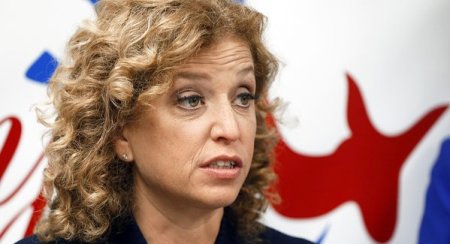
A laptop that Rep. Debbie Wasserman Schultz has frantically fought to keep prosecutors from examining may have been planted for police to find by her since-indicted staffer, Imran Awan, along with a letter to the U.S. Attorney.

U.S. Capitol Police found the laptop after midnight April 6, 2017, in a tiny room that formerly served as a phone booth in the Rayburn House Office Building, according to a Capitol Police report reviewed by The Daily Caller News Foundation’s Investigative Group. Alongside the laptop were a Pakistani ID card, copies of Awan’s driver’s license and congressional ID badge, and letters to the U.S. attorney. Police also found notes in a composition notebook marked “attorney-client privilege.”

This happened four months after Awan had been banned from the House I.T. network, so he had realized he was in trouble for quite some time, even if DWS kept paying him his salary and he was able to get access to the network via her office.  It was enough time for him to plot and plan.  And it does look as if the material was intended to be discovered, not somehow accidentally left behind:

The laptop was found on the second floor of the Rayburn building – a place Awan would have had no reason to go because Wasserman Schultz’s office is in the Longworth building and the other members who employed him had fired him. (snip)

Leaving important items there accidentally would seem extremely unlikely, according to Rep. Louie Gohmert, a Texas Republican, former prosecutor, and member of the House Judiciary Committee.

“Imran Awan is a calculating person who made great efforts to cover his tracks, both electronically and physically,” Gohmert told TheDCNF. “Placing that laptop with his personal documents, which may well incriminate him, those he worked for, or both, in the dead of night in a House office building, was a deliberate act by a cunning suspect, and it needs to be investigated.”

If Awan thought he was better off with his crimes documented, that suggests he feared something worse than prison, that this was a matter of life insurance.

There are signs that DWS is panicking.  Wasserman Schultz first claimed that the laptop was hers and notoriously harangued the Capitol Police to return it to her on that basis.

Now she is claiming that it was Awan’s and that she had never seen it.  Yet:

Wasserman Schultz has hired an outside counsel, William Pittard, to argue that the laptop not be examined. Pittard argued that the speech and debate clause – which only protects a member’s information directly related to legislative duties – should prevent prosecutors from examining the laptop’s contents, TheDCNF has learned. Pittard did not respond to requests for comment.

Pittard, a partner with KaiserDillon, is the former acting general counsel of the House. Hiring an outside counsel to argue the speech and debate clause on behalf of Wasserman Schultz is highly unusual, because the general counsel of the House offers opinions on speech and debate issues for free.

That can’t be cheap. There must be material on that laptop that that is incriminating.  Very incriminating.  Perhaps of DWS, perhaps of some of the other House Democrats who hired the Awan gang.

Debbie is already distancing herself from Awan:

Conservatives in America — Like Marranos in Medieval Spain

September 7, 2017

Conservatives in America — Like Marranos in Medieval Spain, Front Page MagazineDennis Prager, September 7, 2017

(It’s real. My wife and I have both experienced it. I have lost friends by vocalizing my support for President Trump and my wife generally remains silent when with friends and relatives in California. Talking with them would not change their views on President Trump or conservative principles in general. — DM)

Had anyone predicted that in America — the land more renowned than any other for liberty and free speech — the word “Marrano” would ever accurately characterize citizens, let alone close to half the voting population, that individual would have been regarded as a charlatan.

But given the intolerance and hatred on the left, and its dominance over almost every area of American life, that individual would have been a prophet.

****************************

For those unfamiliar with the term, Marranos was the name given to Jews in medieval Spain and Portugal who secretly maintained their Judaism while living as Catholics in public, especially in the 15th century during the Spanish Inquisition.

There is, of course, no Spanish Inquisition in America today — no one is being tortured into confessing what they really believe, and no one is being burned at the stake. But there are millions of Marrano-like Americans: Americans who hold conservative views — especially those who hold conservative positions on social issues and those who voted for Donald Trump for president.

Millions of Americans who hold conservative and/or pro-Trump views rationally fear ostracism by their peers, public humiliation, ruined reputations, broken families, job loss and the inability to work in their field. Under these circumstances, they have decided that coming out as conservative or pro-Trump is not worth the persecution they would endure.

In terms of the percentage of the population effected, there is no parallel in American history. Coming out as a homosexual prior to the 1960s and 70s, or publicly announcing oneself as a member of the Communist Party in the 1950s would have often led to similar dire consequences in one’s social, work and family life. But gays and Communist Party members comprised a tiny percentage of the American population. And Communists supported true evil.

I wish I could share all the emails sent to me from professional musicians who play in some of the premier orchestras in America. They wrote to me following the nationally publicized attempts by left-wing members of the Santa Monica Symphony Orchestra and the Santa Monica city government to prevent me from conducting a Haydn symphony at the Walt Disney Concert Hall three weeks ago. These people publicly called on members of the orchestra to refuse to play and members of the public to refuse to attend.

These people wrote to encourage me and tell me how they are compelled to hide their conservative views — how, in effect, they live as Marranos.

A violist with one of the most prestigious orchestras in the country (I figured out which orchestra using the internet; she was even afraid to tell me ) wrote to me last week about how quiet she is about her conservatism. While she could not be fired for it, she said, she would be socially ostracized within the orchestra for which she has played for decades.

A middle-aged professional musician told me that he wears his hair very long in order to appear hippie-like and camouflage his conservative politics. He is no more likely to tell fellow musicians that he supports President Trump than a Marrano in medieval Spain would have been to go public with his Jewish beliefs.

One musician in Minnesota wrote to me: “I was a professional musician from the age of 17. I wanted you to know that I, too, lost my career because of my views. My choice, actually; I just could no longer take the abuse.”

I’m fortunate. As a radio talk-show host and columnist, I’m paid to express my opinions. As for my avocation of conducting orchestras, I’m lucky there, too. Because the permanent conductor of the Santa Monica Symphony Orchestra and the orchestra’s board remained principled, and because so many people support me and my values, the efforts to thwart me failed. The Disney hall, with 2,000-plus seats, was sold out — a first for a community orchestra in that venue.

Of course, American conservative Marranos don’t just live in the world of music. They are in every profession. We know about the high-profile cases, the conservatives whose careers have been ruined by saying the “wrong” thing, or supporting the “wrong” candidate or ballot proposition; we know about the conservative speakers who have been physically attacked and prevented from speaking on college campuses. But we don’t know about the millions who are just afraid to speak up, who remain silent in a business meeting or at a dinner party when someone casually expresses a view with which they strongly disagree. These Americans live in fear, legitimately so in many cases, that if they do speak out, there will be severe consequences — a job lost, a promotion not given or even a child who will no longer speak to them.

This is all new in our country.

Had anyone predicted that in America — the land more renowned than any other for liberty and free speech — the word “Marrano” would ever accurately characterize citizens, let alone close to half the voting population, that individual would have been regarded as a charlatan.

But given the intolerance and hatred on the left, and its dominance over almost every area of American life, that individual would have been a prophet.

With alleged airstrike, Israel punctuates opposition to Syria ceasefire pact

September 7, 2017

Source: With alleged airstrike, Israel punctuates opposition to Syria ceasefire pact | The Times of Israel

Bombing of Syrian precision missile, chemical weapons facility sends clear message to world: We’ll take action when necessary, no matter what

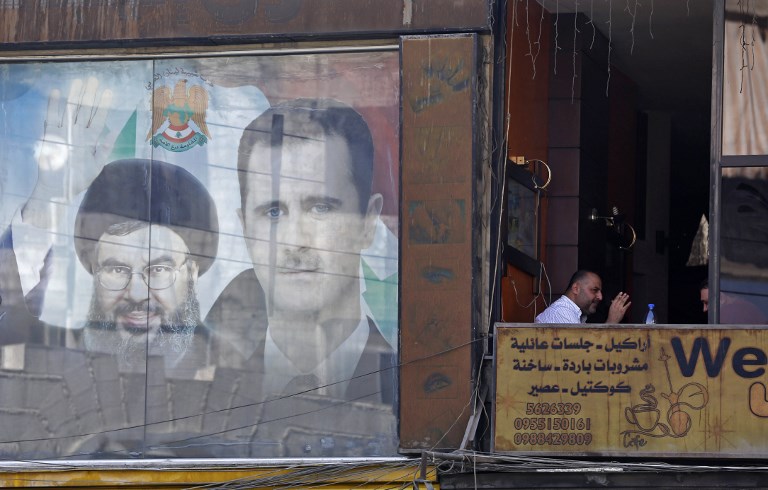
A poster bearing an image of Syrian President Bashar al-Assad (R) and Hassan Nasrallah, head of Lebanese Shiite movement Hezbollah, is seen in Damascus on September 7, 2017. (AFP/LOUAI BESHARA)

The timing of the airstrike allegedly carried out by the Israel Air Force against a Syrian advanced weapons development facility early Thursday morning could not have been more apt.

The aerial attack came nearly 10 years to the day after Israel allegedly destroyed a Syrian nuclear reactor; a few weeks after Hezbollah leader Hassan Nasrallah visited Damascus; two weeks after a meeting between Russian and Israeli heads of state; a day after a United Nations report formally blamed the Bashar Assad regime for a sarin gas attack earlier this year; and in the midst of the IDF’s largest exercise in nearly two decades, in which tens of thousands of soldiers are simulating a war with Hezbollah, a key part of the Syrian-Iranian Shiite axis.

In addition to whatever tactical value was gained from destroying such a facility, the early Thursday morning bombing run also presented a message to Syria, Iran and Hezbollah, as well as to the United States and Russia, that Israel would continue to act in the war-torn country if necessary — ceasefire between the regime and rebels be damned.

The target was a Scientific Studies and Research Center (CERS) facility, which reportedly produces and stores both chemical weapons and precision missiles, located outside the city of Masyaf, in Syria’s northwestern Hama region, nearly 300 kilometers away from Israel’s northernmost air base.

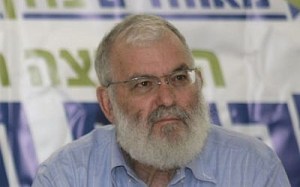
Amos Yadlin speaks at an IsraPresse event for the French-speaking community at the Menachem Begin Heritage Center, Jerusalem, February 22, 2015. (Hadas Parush/Flash90)

“It targeted a Syrian military-scientific center for the development and manufacture of, among other things, precision missiles which will have a significant role in the next round of conflict,” wrote Maj. Gen. (res.) Amos Yadlin, a former head of Israel’s Military Intelligence, on Twitter.

Maj. Gen. (res.) Yaakov Amidror, a former national security adviser, also noted that the rockets fired by Hezbollah at a Haifa train station during the 2006 Second Lebanon War, which killed eight people, were manufactured at the Masyaf facility.

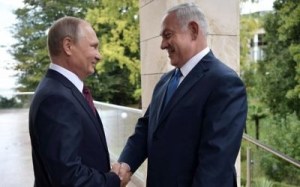
Prime Minister Benjamin Netanyahu said he told Russian President Vladimir Putin explicitly that Israel would act in Syria, during their meeting last month in the Russian city of Sochi.

Russian President Vladimir Putin (L) greets Prime Minister Benjamin Netanyahu ahead of their meeting in Sochi on August 23, 2017. (AFP Photo/Sputnik/Alexey Nikolsky)

“We will act when necessary according to our red lines,” Netanyahu told reporters after the meeting. “In the past, we have done this without asking permission, but we have provided an update on what our policy is.”

But while declaring a policy publicly might send a message to Israel’s allies and enemies about its intentions, nothing can state that position more clearly than a missile.

Yadlin noted that Russia and the US, which are helping negotiate and maintain a ceasefire in Syria, have been “ignoring the red lines that Israel has established.”

For instance, last week, the Arabic daily Asharq Al-Awsat reported that the US agreed to let Iran-backed militias take positions within 10 kilometers of Israel’s border with the Syrian Golan Heights, a troubling notion for the Jewish state as it would open up yet another potential front for terrorist groups in a future conflict.

According to Yadlin, the overnight airstrike also served to show that the presence of Russian troops — and their advanced air defense systems — “do not prevent actions, which are attributed to Israel, in Syria.”

Israeli airstrikes in Syria, while not quotidian, have been a fairly common occurrence over the course of the country’s civil war, which began in 2011. The Jewish state has long-held a public policy of maintaining “red lines” and taking action if they are violated.

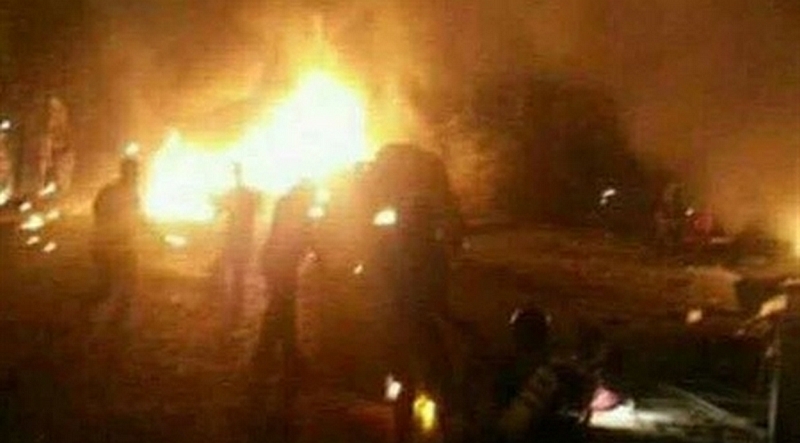
A Syrian facility reportedly attacked by Israeli aircraft early on Thursday, September 7, 2017 (screen capture: Twitter)

Yet Thursday’s strike also represented a change in tack for Israel, Amidror said during a phone briefing with reporters organized by the Israel Project.

Yadlin wrote that the attack was “not routine.” Indeed, it was the first airstrike apparently conducted by the IAF since the Russian-American brokered ceasefire went into effect earlier this summer.

Israel has cast doubts over the agreement, which it says allows Iran to entrench itself near the Golan border in southern Syria.

Former Israeli national security adviser Yaakov Amidror. (Olivier Fitoussi/Flash90)

According to Amidror, the strike on the CERS base was the first time Israel targeted not a Hezbollah weapons convoy nor a Hezbollah warehouse on a Syrian base, but an Assad regime production facility.

The former national security adviser connected the airstrike to Nasrallah’s visit to Damascus last week. He said that during the terrorist leader’s visit to Syria, he likely secured a deal in which Assad would either “transfer the facility to Hezbollah or at least supply weapons to Hezbollah.”

Amidror noted he did not have access to intelligence to confirm that estimation, but said the “only logical explanation for this attack” was that weapons from the Masyaf base were going to be given to the terrorist group, in violation of one of Israel’s “red lines.”

He added that the target of the strike was likely the missile production facilities on the base, not necessarily the chemical weapons. While Hezbollah is believed to have a stockpile of over 100,000 missiles, Amidror said he was unaware of the terrorist group having significant quantities of chemical weapons in its possession.

Some aspects of the timing of the strike are more than likely coincidence. The 10-year anniversary of Operation Orchard, as the strike on the Syrian nuclear core is known, and the publication of the UN report accusing Assad of a war crime were likely non-factors in conducting the bombing.

According to Amidror, the massive IDF exercise might have served as a certain degree of back-up for the strike, but was probably not a consideration either.

But intentional or not, these factors drive home the point that while Thursday night’s airstrike attributed to Israel might have adhered to the established “red lines” policy, but it was not just more of the same.


Ancient Hebrew Seals From Judean Kingdom Unearthed in Jerusalem Excavations

September 7, 2017

Ancient Hebrew Seals From Judean Kingdom Unearthed in Jerusalem Excavations, Algemeiner, September 6, 2017

First Temple-period seals discovered during excavations in Jerusalem’s City of David. Photo: Eliyahu Yanai, City of David.

JNS.org – A collection of First Temple-period seals has been discovered during excavations in Jerusalem’s City of David.

Several of the seals are emblazoned with Hebrew inscriptions, and dozens of the ancient seals reference the names of officials from the Judean kingdom who lived before the Babylonian destruction of Jerusalem, including “Pinchas” and “Achiav ben Menachem.”

The seals, which are small pieces of clay used to close letters, were well-preserved due the raging fires ignited in the holy city by the invading armies of Babylon thousands of years ago.

The findings were discovered during excavations overseen by the Israel Antiquities Authority (IAA) in the City of David National Park. The excavations were funded by the Ir David Foundation. The artifacts will be displayed at the City of David’s annual archaeology conference this week.

“Through these findings, we learn not only about the developed administrative systems in the city (Jerusalem), but also about the residents and those who served in the civil service,” said Ortal Chalaf and Dr. Joe Uziel, excavation directors for the IAA.

Why an Obscure Strip of Land in the Himalayas is Important for the Free World

September 7, 2017

Why an Obscure Strip of Land in the Himalayas is Important for the Free World, Gatestone InstituteLawrence A. Franklin, September 7, 2017

India’s withdrawal already has served China’s interest: to pressure Bhutan and Nepal to resist seeking help from New Delhi to defend their sovereignty. China wants these small Himalayan countries to view India as an unreliable ally, and probably hopes they will begin looking to Beijing for protection and leadership.

Where the wider region is concerned, China most likely considers India’s capitulation as a signal to other countries engaged in territorial disputes with it — such as Vietnam, Indonesia, Malaysia, the Philippines, Brunei and Japan — to succumb to bilateral negotiations with Beijing, rather than solicit international or multilateral organizations to negotiate for them. All of these states, which are either U.S. allies or have friendly relations with America, are keenly aware of their vulnerability in the face of China’s growing military power.

The United States must not allow China to intimidate India and other friendly regional states. Rather, it must support the banding together of those countries to defy Beijing and contain Chinese expansionism. American influence in the Pacific is at stake.

A months-long confrontation between China and India over an obscure piece of land — the Doklam plateau in the Himalayas — has serious implications that should not be minimized or ignored.

China’s decision to pick a fight with India near their mutual border with the Buddhist kingdom of Bhutan is not just a local issue: the regional altercation could have global repercussions.

The crisis was sparked early in the summer of 2017, when China constructed a road inside Bhutan, an ally of India’s. (Bhutan’s border is internationally recognized, but China rejects its legitimacy, claiming that the area is really part of southern Tibet.) In response, Indian troops entered the disputed territory on June 12 and faced off with Chinese soldiers and road construction crews. No shots were fired, however brawling ensued.

(Image source: Nilesh shukla/Wikimedia Commons)

China’s behavior, which reflects its ultimate objective of achieving hegemony in the Pacific, runs counter to the U.S. policy imperative to protect freedom of navigation on the high seas, through which one-third of the world’s commerce passes. To this end, the U.S. Pacific Fleet conducts regular and frequent multilateral naval exercises to keep these waters free of Chinese control. One such exercise was conducted jointly with the Indian Navy during the recent standoff with China.

The upshot of the standoff was that India backed down. On August 28, New Delhi withdrew its troops from Doklam, a move that China has touted as a victory and deployed as a warning. As a Chinese Defense Ministry spokesman triumphantly announced, “We remind the Indian side to learn the lesson from this incident.”

India portrayed the temporary resolution to the conflict differently, claiming the crisis was defused as a result of a mutually agreed-upon diplomatic decision, which it called an “expeditious disengagement of border personnel.” In any event, as no territorial issues were resolved along the 3,500-kilometer China-India border, future incidents are likely to erupt.

In the meantime, India’s withdrawal already has served China’s interest: to pressure Bhutan and Nepal to resist seeking help from New Delhi to defend their sovereignty. China wants these Himalayan countries to view India as an unreliable ally, and probably hopes they will begin looking to Beijing for protection and leadership.

Where the wider region is concerned, China most likely considers India’s capitulation as a signal to other countries engaged in territorial disputes with it — such as Vietnam, Indonesia, Malaysia, the Philippines, Brunei and Japan — to succumb to bilateral negotiations with Beijing, rather than solicit international or multilateral organizations to negotiate for them. All of these states, which are either U.S. allies or have friendly relations with America, are keenly aware of their vulnerability in the face of China’s growing military power. If they become disillusioned and weaken their resistance to Beijing’s ambitions, the United States’ standing in the Pacific will be damaged irrevocably.

This is precisely the indirect message that China has been conveying to the powers-that-be in Washington, while warning India not to participate in any possible U.S. strategy to contain Chinese influence. Speaking on August 1 at an event to mark the 90th anniversary of the founding of the People’s Liberation Army, Chinese President Xi Jinping hinted at this when he said, “We will never permit anybody, any organization, any political party to split off any piece of Chinese territory from China at any time in any form.”

The United States must not allow China to intimidate India and other friendly regional states. Rather, it must support the banding together of those countries to defy Beijing and contain Chinese expansionism. American influence in the Pacific is at stake, which should be of great concern to the rest of the free world.

Dr. Lawrence A. Franklin was the Iran Desk Officer for Secretary of Defense Rumsfeld. He also served on active duty with the U.S. Army and as a Colonel in the Air Force Reserve, where he was a Military Attaché at the U.S. Embassy in Israel.

Europe Is Killing Itself 

September 7, 2017

Pat Condell at his best.


..

No words !

September 7, 2017

http://knuckledraggin.com/2017/09/you-saw-it-here-first-2/

Who hit NKorean-linked Syrian chemical plant?

September 7, 2017

DEBKAfile Special Report September 7, 2017, 10:51 AM (IDT)

Source: Who hit NKorean-linked Syrian chemical plant?

Syrian opposition media named Israel as responsible for air strikes over Syria before dawn Thursday, Sept. 7 – in particular the attack which targeted the Scientific Studies Researchers Center, or Centre D’Etudes et de Recherches Scientifiques (CERS), at Masyaf, 38km west of Hama in central Syria.

This facility has overseen the government’s chemical warfare and missile programs since the 1970s. Casualties were reported in this attack. The reports were accompanied by photos showing high flames from an explosion, although there were no signs that it took place at the Masyaf plant.

debkafile’s military sources note that the Masyaf plant lies 70km southeast of the Russian Khmeimim air base in Latakia, which also houses advanced S-400 air defense missiles.
There was no official word on the attack until later Thursday, when the Syrian government charged that a military position near Masyef was struck by Israeli warplanes and missiles and two of its soldiers were killed.
On Aug. 24, the German Algemeiner cited a confidential UN report confirming that two North Korean shipments were intercepted in the past six months on their way to Syria, with reason to believe that their cargo was part of a Korea Mining Developing Trading Corp. (KOMID) contract with Syria. KOMID is Pyongyang’s primary exporter of prohibited chemical, missile engines and conventional arms. It was blacklisted by the UN Security Council in 2009 along with its two representatives in Syria.

The UN report, according to the German newspaper, did not name the two nations which intercepted the North Korean shipments or specify their contents. According to other sources, North Korean engineers or technicians were employed at the Syrian CERS plant, which the UN experts had reported as cooperating with KOMID in previous transfers of prohibited items.  It is not known whether they were working on a Syrian project or an outsourced North Korean program.
A major precedent was exposed exactly a decade ago by an earlier Israeli attack, which destroyed a Syrian nuclear plant built by North Korea on Sept. 7, 2007. That plant, hit while still under destruction, was destined to produce plutonium for the nuclear programs of North Korea and Iran.
If it is confirmed that the target of the latest air strike was the Syrian research center at Masyaf, which was the recipient of the North Korean shipments, Israel would automatically be suspected of a repeat operation. However, the United States would also have a strong interest in conducting a strike.
After the US Tomahawk attack on the Syrian Sharyat air base on April 7, punishment for the Assad regime’s use of chemical weapons that killed 90 people in Idlib, US President Donald Trump vowed that never again would Syria be permitted to wage chemical warfare against its citizens. The US has diectly accused the CERS facility of helping to develop the sarin gas used in that attack.

debkafile‘s analysts suggest that since the confidential UN report strongly indicates that Syria and North Korea have long collaborated in the development of chemical and other prohibited weapons of mass destruction, the Trump administration would have more than one justification for going after the Syrian CERS facility. Indeed, with all eyes on the highly inflammable tensions over North Korea’s nuclear and missile tests, the US would have found it more convenient to get at Kim Jong-un through his back-door partner, rather than going for a direct military attack.

House Intel Committee Subpoenas FBI, DOJ Over Trump Dossier

September 6, 2017

House Intel Committee Subpoenas FBI, DOJ Over Trump Dossier, PJ MediaDebra Heine, September 6, 2017

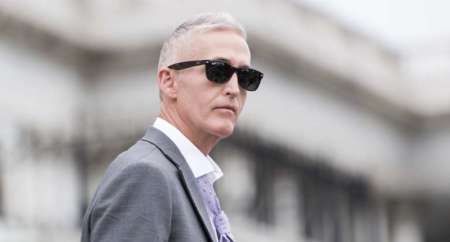
Rep. Trey Gowdy, R-S.C., . (Photo By Bill Clark/CQ Roll Call) (CQ Roll Call via AP Images)

The House Intelligence Committee has subpoenaed the FBI and the Justice Department for documents relating to the Trump “dodgy dossier,” the Washington Examiner reported Tuesday evening. The committee is seeking information regarding the FBI’s relationship with dossier author Christopher Steele and its possible role in funding what started out as an opposition research project by shady lefty research firm Fusion GPS.

While it has been widely reported that “a wealthy GOP donor” originally funded the anti-Trump dossier, the managers of the Ted Cruz, Marco Rubio, Jeb Bush, and John Kasich campaigns have all told the Examiner’s Byron York that they knew nothing about a GOP-funded oppo-research project on Trump. Meanwhile, Fusion GPS founder Glenn Simpson has refused to answer the question about who bankrolled the dossier.

The House Intel Committee is one of several congressional committees looking into Russian interference in the 2016 presidential election. Additionally, Justice Department Special Counsel Robert Mueller is leading a separate investigation into alleged collusion between the Trump campaign and Russia.

The subpoenas to the FBI and DOJ are a sign of the GOP’s frustration with the lack of cooperation they are getting from even the Trump Justice Department.

“I’m sure you’re noting with the same irony I’m noting the difficulty that a Republican Congress is having getting information from a Department of Justice run by Jeff Sessions,” Gowdy told York.

The committee issued the subpoenas — one to the FBI, an identical one to the Justice Department — on August 24, giving both until last Friday, September 1, to turn over the information.

Neither FBI nor Justice turned over the documents, and now the committee has given them an extension until September 14 to comply.

Illustrating the seriousness with which investigators view the situation, late Tuesday the committee issued two more subpoenas, specifically to FBI Director Christopher Wray and Attorney General Jeff Sessions, directing them to appear before the committee to explain why they have not provided the subpoenaed information.

The subpoenas are the result of a months-long process of committee investigators requesting information from the FBI and Justice Department. Beginning in May, the committee sent multiple letters to the FBI and Justice requesting information concerning the Trump-Russia affair.

“We got nothing,” said committee member Rep. Trey Gowdy, R-S.C., who is taking a leading role in the Russia investigation. “The witnesses have not been produced and the documents have not been produced.”

In a telephone interview Tuesday, Gowdy said the FBI has said it needed more time to comply, and also that complying might interfere with the investigation of special counsel Robert Mueller. Whatever the reason, the documents haven’t been produced.

“A subpoena is a tool of last resort in Congress,” Gowdy, a former federal prosecutor, said.

Like investigators with the Senate Judiciary Committee, who are also pursuing information about the dossier, the House committee wants to know the origin of the FBI’s involvement in the creation of the document. They are particularly interested to know whether the FBI or Justice Department ever presented information from the dossier — unverified, possibly from paid informants — to a court as a basis for obtaining a surveillance warrant in the Russia investigation.

“I want to know the extent to which it was relied upon, if at all, by any of our intelligence agencies or federal law enforcement agencies,” Gowdy said, “and to the extent it was relied upon, how did they vet, or either corroborate or contradict, the information in it?”

The House intelligence panel, like the Senate Judiciary Committee, has had so-called “de-confliction” discussions with Mueller’s office and believes the special counsel does not object to the House seeking information on the dossier.

The committee believes that seeking information on the origin of the FBI’s role in the dossier, and the bureau’s relationship with dossier compiler Steele, a former British spy, will lead to a better understanding of the FBI’s entire counter-intelligence probe on the question of Russian interference in the 2016 campaign.

“Several of our lines of questions centered on the dossier, or, if you don’t like the word ‘dossier,’ just insert ‘the origin of the Russia investigation,'” said Gowdy.

The former prosecutor seems determined to get to the bottom of the Trump dossier mystery.

“Congress created the FBI, we created the Department of Justice, we’re the ones who passed the laws that set the boundaries of their jurisdiction, and and we’re the ones that fund them,” he said. “It is not illegitimate for us to ask what prompted this investigation, and it is certainly not illegitimate for us to test and probe the reliability of that underlying information, particularly if, in theory, there are either charging decisions and/or court filings that relied upon that information.”

According to CNN, the reason the Justice Department has been been refusing compliance with the subpoenas is because they don’t want to interfere with the Mueller investigation.


FDR’s ‘Rattlesnake’ Rule and the North Korean Threat

September 6, 2017

FDR’s ‘Rattlesnake’ Rule and the North Korean Threat, Gatestone Institute, John R. Bolton, September 6, 2017

(FDR may have honored his “Rattlesnake Rule” vis a vis Germany. He did not do so vis a vis Japan. We should honor it vis a vis North Korea and its enablers. –DM)

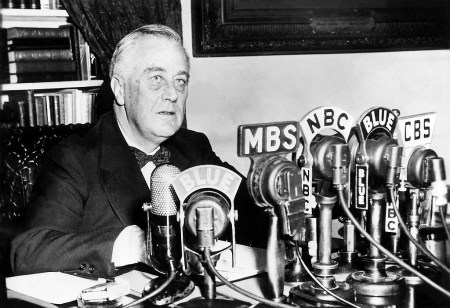
“When you see a rattlesnake poised to strike, you do not wait until he has struck before you crush him.” By these words in a Sept. 11, 1941, fireside chat, Franklin Roosevelt authorized US warships to fire first against Nazi naval vessels, which he called “the rattlesnakes of the Atlantic.”

Roosevelt’s order applied whenever German or Italian ships entered “waters of self-defense” necessary to protect the US, including those surrounding US outposts on Greenland and Iceland.

Franklin D. Roosevelt. (Image source: National Archives and Records Administration/Wikimedia Commons)

Uttered 60 years to the day before 9/11, and less than three months before Pearl Harbor, Roosevelt’s words still resonate. North Korea’s sixth nuclear test last weekend, along with its significantly increased ballistic-missile testing, establishes that Pyongyang is perilously close to being able to hit targets across the continental United States with nuclear warheads, perhaps thermonuclear ones.

The Nazi threat to US shipping, both normal commercial traffic and war supplies destined for Great Britain, was undeniably significant, and the Axis powers’ broader totalitarian threat was existential. Nonetheless, right up to Dec. 7, 1941, many American leaders urged caution to avoid provoking the Axis and thereby risking broader conflict. Pearl Harbor followed.

In his chat, Roosevelt observed that others had “refused to look the Nazi danger squarely in the eye until it actually had them by the throat.” We shouldn’t commit that mistake today. North Korea’s behavior, and its lasting desire to conquer the South, have created the present crisis.

Letting Kim Jong-un’s bizarre regime “have America by the throat,” subjecting us and our allies to perpetual nuclear extortion, is not an acceptable outcome.

We have endured 25 years of US diplomatic failure, with endless rounds of negotiations, presenting North Korea with the choice between economic incentives or sanctions. During this time, which certainly constitutes “not looking the danger squarely in the eye,” North Korea has repeatedly breached commitments to abandon its nuclear-weapons program, often made in return for handsome compensation.

Nonetheless, we hear echoes from Roosevelt’s day that “there is no acceptable military option” when it comes to Pyongyang. This means, as Susan Rice said recently, “we can, if we must, tolerate nuclear weapons in North Korea,” as we did with the Soviets in Cold War days. The US should not accept such counsels of despair, based on dangerously facile and wildly inaccurate historical analogies.

Why accept a future of unending nuclear blackmail by Pyongyang, whose governing logic is hardly that of Cold War Moscow, and which would entail not that era’s essentially bipolar standoff, but a far-more-dangerous world of nuclear multipolarity?

If Washington lets Kim retain his nuclear weapons and ballistic missiles, his regime will happily sell these materials and technologies to Iran, other rogue states or terrorist groups for the right price. This is another key difference from the Cold War; Moscow was substantially more worried about nuclear proliferation than Pyongyang now is.

It would be, as Roosevelt understood, “inexcusable folly” to ignore North Korea’s pattern of behavior over the last quarter century: “We Americans are now face to face not with abstract theories but with cruel, relentless facts.” For America in 1941, hope of sheltering behind the oceans was fast disappearing, forcing Roosevelt to extend our maritime defense perimeter effectively across the Atlantic to Europe.

In the age of ICBMs, there’s no “perimeter”; we are at risk in agonizingly short time frames of a missile’s flight launched anywhere, whether from North Korea or Iran. It is completely unacceptable to say we must await a first strike by Pyongyang before we will resort to military force. Roosevelt dismissed such arguments peremptorily: “Let us not say: ‘We will only defend ourselves if the torpedo succeeds in getting home, or if the crew and passengers are drowned.’ ”

The remaining diplomatic options are few, and the time to exercise them dwindling fast. Convincing China that its national interests would be enhanced by reunifying the two Koreas, thus ending what Beijing itself believes is a threat to peace and security in northeast Asia, remains possible. Unfortunately, this is increasingly hard to accomplish before North Korea becomes a fully mature nuclear-weapons state.

We’re moving rapidly to the point where Roosevelt said squarely, “It is the time for prevention of attack.” George W. Bush spoke equally directly in 2002: “Our security will require all Americans to be . . . ready for preemptive action when necessary to defend our liberty and to defend our lives.” The alternative is potentially global proliferation of nuclear weapons, with the attendant risks lasting beyond our power to calculate.

John R. Bolton, former U.S. Ambassador to the United Nations, is Chairman of Gatestone Institute, a senior fellow at the American Enterprise Institute, and author of “Surrender Is Not an Option: Defending America at the United Nations and Abroad”.

This article first appeared in The New York Post and is reprinted here with the kind permission of the author.