Archive for September 18, 2017

FULL MEASURE: September 17, 2017 – The Wall

September 18, 2017

FULL MEASURE: September 17, 2017 – The Wall via YouTube, September 18, 2017


The blurb beneath the video states,

One of the first things President Trump did in office was to sign an executive order on January 25th to begin building the border wall. But a new wall between the U.S. and Mexico remains both myth and metaphor because to date there’s no funding to pay for it. We went down to the border between Texas and Mexico to hear how people there feel.

Syrian/Hizballah may call up Russian air strikes as cooperation deepens

September 18, 2017

Syrian/Hizballah may call up Russian air strikes as cooperation deepens, DEBKAfile, September 18, 2017

Russian air crews in Syria are under new orders to respond directly and immediately to Iranian and Syrian demands for air bombardments, without confirmation from the high commands in Latakia or Moscow.

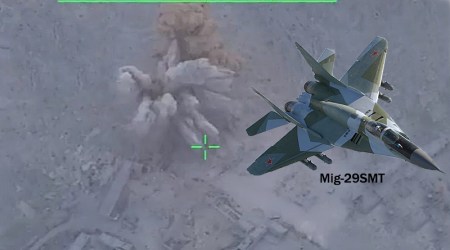
This has enormously empowered Syrian and Hizballah officers on the ground for taking the war into their own hands. It led directly to Russian planes suddenly bombing a pro-US Syrian force in the Deir ez-Zour province of eastern Syria on Saturday, Sept. 16, and accounts for Moscow’s repudiation of the attack after its confirmation by the Pentagon.

Before the new orders, requests for Russian air cover went through command channels and were not automatically approved.

The license now awarded to Syrian and pro-Iranian Hizballah commanders to contact the operations rooms of Russian air squadrons, without going through the main Russian air base at Hmeimim in Latakia or the Syrian high command in Damascus, dramatically boosts the autonomy of Syrian, Hizballah and Iranian commanders in the field. It also gives sharp teeth to Moscow’s decision in August to place the Russian and Syrian air defense commands under unified command.

Word of this game-changer was delivered by Russian Defense Minister Sergei Shoigu, when he sat down with Syrian ruler Bashar Assad in Damascus last Thursday, Sept. 14. According to DEBKAfile’s sources, they decided the next Syrian army and Hizballah steps after crossing to the eastern bank of the Euphrates River, which were to head for the Syrian-Iraqi border and prepare to seize the towns of Abu Kamal and Mayedin from the Islamic State. The time table was established and Russian air, intelligence and logistic support laid on.

The Russian defense minister then flew to Tehran – this time in secret – to discuss Russia’s new operation plans for Syria with Iran’s Revolutionary Guards and Military leaders.

DEBKAfile’s military sources note that the actions set in train by Shoigu have radically ramped up Russia’s military cooperation in Syria with Iran, Syria and Hizballah. They were timed to take place shortly before President Donald Trump’s meeting with Israeli Prime Minister Binyamin Netanyahu at UN Center in New York on Monday, Sept. 19.

Although their conversation was generally billed as focusing on the Iranian nuclear deal, our sources expect this major turn in the Syrian crisis to figure large in their talks. Washington clearly has no practical plans for countering the assertive Russian-Iranian advances in Syria.

Their ruthlessness was demonstrated Saturday, Sept. 16, by a Russian bombardment of the US-backed Kurdish-led SDF near Deir ez-Zour. Moscow was telling Washington that the US would not be permitted to impede the Syrian-Hizballah initiative for the capture of areas east of the Euphrates and Russia was ready to confront US-backed forces on the ground if they got in the way – while ruling a clash in the air.

The Kremlin was also putting Washington on notice that, after investing massive military and financial resources in Syria, it had no intention to let pro-American forces share in the kudos of the final victory over the Islamic State in Syria, which belonged solely to the Russian-Syrian-Iranian-Hizballah war alliance.

For now, the Russian maneuver is heading for a successful outcome. The Pentagon, aside from a lame response to the Russian bombardment, has taken no counteraction.

McMaster Says Iran Has Violated Parts of Nuclear Deal: ‘They’re Crossing the Line’

September 18, 2017

McMaster Says Iran Has Violated Parts of Nuclear Deal: ‘They’re Crossing the Line’, Washinton Free Beacon, September 18, 2017

(Please see also, Trump considers ending Iran deal ahead of key deadline.– DM)

National Security Adviser H.R. McMaster said Sunday that Iran has already violated parts of the nuclear deal, adding, “They’re crossing the line at times.”

“Fox News Sunday” host Chris Wallace noted that President Donald Trump, who lambastes the deal brokered by the Obama administration, has had the opportunity to re-impose sanctions that were lifted as part of the agreement but has not yet done so.

“I know he has to recertify in October whether or not they are complying with it, all this talk about tearing up the agreement, in fact, isn’t he going to live with it and try to find other ways to confront Iran on other fronts?” Wallace asked.

Well, we have to see what live with it means, right?” McMaster said. “Live with can’t be giving this regime cover to develop a nuclear capability. And so, a lot of things have to happen immediately, rigorous enforcement of that agreement. It is under-enforced now. We know Iran has already violated parts of the agreement by—”

“But the IAEA says that they’re complying with it, sir,” Wallace said.

Well, the IAEA has identified and we’ve identified some of these breaches that Iran has then corrected,” McMaster said. “But what does that tell you about Iranian behavior? They’re not just walking up to the line on the agreement. They’re crossing the line at times.”

McMaster said there has to be far more rigorous enforcement of the Joint Comprehensive Plan of Action and recognition of its flaws.

“As the president said, it is the worst deal,” McMaster said. “It gave all these benefits to the Iranian regime up front, and these benefits now they’re using to foment this humanitarian catastrophe in the greater Middle East.”

The Washington Free Beacon reported last month that Iran was caught violating the deal by shipping soldiers to Syria on commercial flights. It has also expanded its ballistic missile technology.

Iran is the world’s largest state sponsor of terrorism, lending support to groups such as Hezbollah and Hamas. It has proxy forces in Iraq and bolsters the Bashar al-Assad regime in Syria.

Trump has reportedly been weighing a strategy to more aggressively respond to Iranian forces and its terror support.

President Barack Obama insisted the deal was the best way to stop Iran’s path to a nuclear weapon, although he acknowledged in 2015 that the theocracy’s breakout time could well be zero months when the deal’s provisions expire.

Islamic Rules in Danish Schools

September 18, 2017

Islamic Rules in Danish Schools, Gatestone Institute, Judith Bergman, September 18, 2017

The Nord-Vest Private School in Copenhagen, came under investigation by Danish authorities during an unannounced visit after teaching materials were found extolling and encouraging young people to commit jihad. Luqman Pedersen, a Danish convert to Islam, admitted to the authorities that the school wishes to create a parallel Muslim society.

Two former teachers at the Nord-Vest school described how the children at the school spoke of Danes in terms of “them and us”. In a school poetry contest, several of the children composed poems that detailed their wish to beat up and break the legs and hands of the “Danish pigs”.

“I teach religion, but I was not allowed to teach Christianity. Instead, a visiting imam from Iraq taught Christianity… I could imagine that some of the boys I taught could have been radicalized,” a teacher said. The teachers tried to alert both politicians and authorities to some of the problems they had witnessed, but no one would listen.

Some Muslim schools in Denmark appear to be employing anti-Semitic teachers, enforcing gender inequality, employing violence against students, offering poor education in general, and teaching jihad.

There are 26 Muslim schools in Denmark. While they operate independently of the public schools, the state sponsors them heavily — as it does other independent schools in Denmark — covering 75 % of their budget. The demand for Muslim schools in Denmark has grown in the last decade, as Muslim schools have increased their number of pupils by almost 50% since 2007; they now cater to almost 5,000 pupils. (It is unknown, however, how many Muslim children learn in the so-called “Koran schools,” where Islam and Arabic are taught after school to those children who do not attend a Muslim day school. Koran schools — as revealed in the Danish TV documentary “Sharia in Denmark“) — are not under any supervision from state or municipal authorities).

Danish educational authorities are currently investigating seven Muslim schools for failing to follow the laws of independent schools, including the requirement that they prepare the students for life in Danish society, and teaching them about democracy and gender equality. That amounts to more than one quarter of all Muslim schools. The first Muslim school opened in Denmark in 1980. Nearly forty years later, Danish politicians appear to be only beginning to comprehend or take seriously the challenges that several of these schools present to Danish society.

Danish news outlets exposed some of those challenges this summer:

The school leader at Al Quds School in Copenhagen, Waleed Houji, posted anti-Semitic images from the Muslim terrorist organization Hamas on his Facebook profile. A class teacher at that same school, Naji Dyndgaard, a convert, wrote anti-Semitic posts on Facebook.

Another school, the Iqra School, is being investigated by Danish school authorities for not preparing children to become part of Danish society. The school’s former deputy leader, imam Shahid Mehdi, ran a website telling Muslims not to have non-Muslim friends. The school also toldits students that having a boyfriend or girlfriend was forbidden.

The Nord-Vest Private School in Copenhagen came under investigation by Danish authorities during an unannounced visit after teaching materials were found extolling jihad and encouragingyoung people to wage it.

The school is also being investigated for the sale of its buildings to Ali Laibi Jabbar in December 2016 — Jabbar is a leading member of the Almuntadar Muslim association in Malmö, Sweden, which is a part of Iranian Ayatollah Ali al-Sistani’s organization, the Imam Ali foundation. Jabbar claims he only bought the buildings for investment purposes. At the beginning of September, the former leader of the school, Luqman Pedersen, a Danish convert to Islam, admitted to the authorities that the school wishes to create a parallel Muslim society; he also told them that the plan of the new buyer is to transform the buildings into an Islamic cultural center, which would include the school.

Two former teachers at the Nord-Vest school, Henriette Baden Hesselmann and Gitte Luttinen Ørnkow, described how the children at the school spoke of Danes in terms of “them and us”. In a school poetry contest in 2008, several of the children composed poems that detailed their wish to beat up and break the legs and hands of the “Danish pigs”. The former teachers described a school culture of intimidation and violence, with the head of the school board yelling at the students in Arabic and beating them. The former teachers added that all their students admitted that they were also beaten at home. The Jew-hatred was unmistakable, as the geography teacher discovered when he almost had to give up teaching a lesson about Israel due to the students’ hostility. Another teacher was told not to draw stars in the children’s books as a way of showing the children that they had done well, since the star was reminiscent of the Star of David. The girls were not allowed to participate in swimming lessons, sports, or music lessons.

One of the former teachers said:

“In general, large portions of the teaching were censored. I teach religion, but I was not allowed to teach Christianity. Instead, a visiting imam from Iraq taught Christianity… I could imagine that some of the boys I taught could have been radicalized.”

The teachers tried to alert both politicians and authorities to some of the problems they had witnessed, but no one would listen.

Following these revelations, several Danish opposition parties, including the Social Democrats, now wish to outlaw Muslim schools completely. According to Mette Frederiksen, leader of the Social Democratic party:

“…it’s not a good idea with Muslim schools. When you are a child in Denmark, it is incredibly important that you grow up in Danish culture and Danish everyday life. No matter how you spin it, an independent school based on Islam is not part of the majority culture in Denmark… Nor do I like the lack of equality in schools and these very hateful words against our Jewish minorities. It emphasizes that we have parallel societies.”

The government, however, is not enthusiastic; it says it fears that closing the schools would be unconstitutional and contravene the European Convention on Human Rights.

Mette Frederiksen, leader of Denmark’s Social Democratic party, says “When you are a child in Denmark, it is incredibly important that you grow up in Danish culture and Danish everyday life… an independent school based on Islam is not part of the majority culture in Denmark… Nor do I like the lack of equality in schools and these very hateful words against our Jewish minorities.” (Image source: News Oresund/Flickr)


Look Who’s Fighting Extremism

September 18, 2017

Look Who’s Fighting Extremism, Clarion ProjectMeira Svirsky, September 18, 2117

(Perhaps it would help if President Trump’s “helpers” would stop trying to disassociate “fundamentalist” or “radical” Islam from terrorism. It could not hurt. — DM)

Austrian imams sign declaration against terrorism. (Photo: ALEX HALADA/AFP/Getty Images)

Yahya noted the damage done by that those who denounce any talk about the connection between fundamentalism and violence as Islamophobia.

“This must end. A problem that is not acknowledged cannot be solved,” he said.

***************************************

I. One of Indonesia’s most influential leaders, Yahya Cholil Staquf, is advocating for a moderate, modern Islam. He is the general secretary of the Nahdlatul Ulama, the country’s biggest Muslim organization with 50-million members. (See #2 below for more on the work of Nahdlatul Ulama to promote moderate Islam).

In a recent interview, Yahya spoke frankly, saying that to fight extremism, “Western politicians should stop pretending that extremism and terrorism have nothing to do with Islam.”

Yahya explained, “There is a clear relationship between fundamentalism, terrorism, and the basic assumptions of Islamic orthodoxy. So long as we lack consensus regarding this matter, we cannot gain victory over fundamentalist violence within Islam.”

Speaking words that would most likely be branded as bigotry if said by a non-Muslim, Yahya stated forcefully,

The relationship between Muslims and non-Muslims, the relationship of Muslims with the state, and Muslims’ relationship to the prevailing legal system wherever they live … Within the classical tradition, the relationship between Muslims and non-Muslims is assumed to be one of segregation and enmity.

Perhaps there were reasons for this during the Middle Ages, when the tenets of Islamic orthodoxy were established, but in today’s world such a doctrine is unreasonable. To the extent that Muslims adhere to this view of Islam, it renders them incapable of living harmoniously and peacefully within the multi-cultural, multi-religious societies of the 21st century.

Yahya noted the damage done by that those who denounce any talk about the connection between fundamentalism and violence as Islamophobia.

“This must end. A problem that is not acknowledged cannot be solved,” he said.

II. Yahya’s organization, the 50-million strong Nahdlatul Ulama, is partnering with the city government in Jakarta to train and educate Islamic preachers to spread non-extremist and tolerant messages.

His organization aims to train up to 1,000 preachers in programs beginning in November. The goal is to make the moderate and pluralist form of Islam called Islam Nusantara the dominant form of Islam in Indonesia, the largest Islamic country in the world. The program will especially try to place its preachers in mosques for Friday prayers, which have been targeted by extremists as prime fodder for spreading their ideology.

III. Also in Indonesia, parents have pulled their children out of a boarding school after authorities linked the school to ISIS. The parents further demanded the school be closed.

According to an investigation by the news agency Reuters, at least eight workers and four students in the school either left or tried to leave Indonesia to join ISIS between 2013-2016.

The school denied it supports ISIS or any other extreme groups or that it teaches any religious views that call for violence. One student from the school went to Syria when he was only 11 and died fighting on the front lines for Islamic State. His father, a jailed extremist, said teachers and students in the school that joined ISIS inspired his son to also join the brutal terror group as well.

In the past 10 years since the establishment of the school, 18 people who have links to the school were arrested and/or convicted for planning jihadi attacks inside Indonesia.

IV. In the summer of 2017, a group of 300 imams in Australia signed a declaration against “extremism, violence and terror,” and called ISIS the “black sheep” of Islam. The imams gathered outside a mosque in Vienna under a banner called “United against extremism and terror.”

The declaration also stated, “We, the Austrian imams, will continue to do everything they can to maintain peaceful coexistence here in Austria as part of this society.

“Nothing will stop us from using ourselves for peace, freedom, justice, equal opportunities for men and women, and social security based on reason and solidarity, and to make our active contribution to the preservation of society.”


V. Also in the summer, a group of 60 imams from across Europe initiated a “March of Muslims Against Terror.” The imams visited sites across Europe that had been hit by terror, from Paris to Berlin, Brussels, Toulouse and Nice.

The imams traveled by bus, stopping to pray for the victims of terrorism and make a statement that Islam could co-exist with other religions.

VI. In Germany this summer, hundreds of Muslims turned out for a peace march under banners of “Together against terror,” “Hatred makes the earth hell” and “Love for all, hatred for none.”

The march was led by Ahmadi Muslims.

VII. An anti-extremism summit is scheduled for October in Maguindanao, located in the Philippines. Organizers say that key Islamic leaders will participate along with youth, members of academia, professionals and other concerned sectors. The purpose of the summit is to help authorities “come up with a comprehensive remedy to the emerging growth of religious extremism in Muslim areas.”

VIII. After many years of closure because of political upheaval, Egypt’s Ministry of Endowments is reopening religious training camps to educate against extremism.

Al-Monitor reports, “In addition to targeting imams, administrative staff and mid-level department heads, the camps will target students of Al-Azhar institutes and, for the first time, female preachers.”

The move also marks the first time there will be female preachers appointed the ministry.

“The role of female preachers is as important as that of clerics,” said Sheikh Jaber Tayeh, head of the ministry’s religious department. “Their influence reaches society and mosques.”

The camps will address three basic themes: ethics and conduct; fighting extremism and raising awareness about plots to topple the state; and raising awareness about the risks of overpopulation.


Korean Peninsula Draws Range of Military Drills in Show of Force Against North Korea

September 18, 2017

Korean Peninsula Draws Range of Military Drills in Show of Force Against North Korea, Washington Free Beacon, Ben Blanchard and Hyonhee Shin, September 18, 2017

BEIJING/SEOUL (Reuters) – The U.S. military staged bombing drills with South Korea over the Korean peninsula and Russia and China began naval exercises ahead of a U.N. General Assembly meeting on Tuesday where North Korea’s nuclear threat is likely to loom large.

The flurry of military drills came after Pyongyang fired another mid-range ballistic missile over Japan on Friday and the reclusive North conducted its sixth and most powerful nuclear test on Sept. 3 in defiance of United Nations sanctions and other international pressure.

A pair of U.S. B-1B bombers and four F-35 jets flew from Guam and Japan and joined four South Korean F-15K fighters in the latest drill, South Korea’s defense ministry said.

The joint drills were being conducted “two to three times a month these days”, Defence Minister Song Young-moo told a parliamentary hearing on Monday.

In Beijing, the official Xinhua news agency said China and Russia began naval drills off the Russian far eastern port of Vladivostok, not far from the Russia-North Korea border.

Those drills were being conducted between Peter the Great Bay, near Vladivostok, and the southern part of the Sea of Okhotsk, to the north of Japan, it said.

The drills are the second part of China-Russian naval exercises this year, the first part of which was staged in the Baltic in July. Xinhua did not directly link the drills to current tension over North Korea.

China and Russia have repeatedly called for a peaceful solution and talks to resolve the issue.

On Sunday, however, U.S. Ambassador to the United Nations Nikki Haley said the U.N. Security Council had run out of options on containing North Korea’s nuclear program and the United States might have to turn the matter over to the Pentagon.

In response, Chinese Foreign Ministry spokesman Lu Kang said the most pressing task was for all parties to enforce the latest U.N. resolutions on North Korea fully, rather than “deliberately complicating the issue”.

Military threats from various parties have not promoted a resolution to the issue, he said.

“This is not beneficial to a final resolution to the peninsula nuclear issue,” Lu told a daily news briefing.

U.S. President Donald Trump has vowed that North Korea will never be able to threaten the United States with a nuclear-tipped ballistic missile.

Asked about Trump’s warning last month that the North Korean threat to the United States would be met with “fire and fury”, Haley said: “It was not an empty threat.”

Washington has also asked China to do more to rein in its neighbor and ally, while Beijing has urged the United States to refrain from making threats against the North.

FUEL PRICES SURGE

The U.N. Security Council unanimously passed a U.S.-drafted resolution a week ago mandating tougher new sanctions against Pyongyang that included banning textile imports and capping crude and petrol supply.

North Korea on Monday called the resolution “the most vicious, unethical and inhumane act of hostility to physically exterminate” its people, system and government.

“The increased moves of the U.S. and its vassal forces to impose sanctions and pressure… will only increase our pace toward the ultimate completion of the state nuclear force,” the North’s foreign ministry spokesman said in a statement carried by its official KCNA news agency.

Gasoline and diesel prices in the North have surged since the latest nuclear test in anticipation of a possible oil ban, according to market data analyzed by Reuters on Monday.

The international community must remain united and enforce sanctions against North Korea after its repeated launch of ballistic missiles, Japanese Prime Minister Shinzo Abe said in an editorial in the New York Times on Sunday.

Such tests were in violation of Security Council resolutions and showed that North Korea could now target the United States or Europe, he wrote.

Abe also said diplomacy and dialogue would not work with North Korea and concerted pressure by the entire international community was essential to tackle the threats posed by the north and its leader, Kim Jong Un.

However, the official China Daily argued on Monday that sanctions should be given time to bite and that the door must be left open to talks.

“With its Friday missile launch, Pyongyang wanted to give the impression that sanctions will not work,” it said in an editorial. “Some people have fallen for that and immediately echoed the suggestion, pointing to the failure of past sanctions to achieve their purpose.

“But that past sanctions did not work does not mean they will not. It is too early to claim failure because the latest sanctions have hardly begun to take effect. Giving the sanctions time to bite is the best way to make Pyongyang reconsider,” the newspaper said.

Pyongyang has launched dozens of missiles as it accelerates a weapons program designed to provide the ability to target the United States with a powerful, nuclear-tipped missile.

It says such programs are needed as a deterrent against invasion by the United States, which has 28,500 troops stationed in South Korea. On Saturday, it said it aimed to reach an “equilibrium” of military force with the United States.

The United States and South Korea are technically still at war with North Korea because the 1950-53 Korean conflict ended with a truce and not a peace treaty.

(Reporting by Ben Blanchard in BEIJING, Hyonhee Shin and Soyoung Kim in SEOUL; Editing by Paul Tait and Simon Cameron-Moore)

European Attacks Show the Difficulty in Tracking Soaring Terror Suspect Numbers

September 18, 2017

European Attacks Show the Difficulty in Tracking Soaring Terror Suspect Numbers, Investigative Project on Terrorism, September 18, 2017

Managed by the National Counterterrorism Center’s Terrorist Identities Datamart Environment (TIDE) the terror threat list has more than 1 million names on it. Other federal and state agencies have their own “persons of interest” list. Their information sometimes is not shared because of small-minded administrators and long-standing turf wars. This was a problem prior to 9/11.

Yet there are indications this continues to be an issue. The FBI’s National Data Exchange program, initiated in 2008 to foster cooperation among federal, state, and local law enforcement agencies, still does not have full participation due to longstanding mistrust between the groups.

***************************

Three separate radical Islamic terror attacks took place Friday in Europe. The most serious was caused by an improvised explosive device (IED) placed on a London underground train in the Parsons Green station which injured more than 30 people.

Witnesses spoke of hearing a “whooshing” sound and then seeing a fireball coming at them from a plastic bucket that was placed unattended on the floor of the rush hour train. The device’s failure to completely detonate was credited with saving lives. “There is no doubt that this was a serious IED (improvised explosive device) and it was good fortune that it did so little damage,” said UK Interior Minister Amber Rudd.

Two men, ages 18 and 21, are in custody. ISIS has claimed responsibility for the attack.

Until the second suspect’s arrest Saturday night, Prime Minister Theresa May raised the terror threat level from severe to critical, meaning that future attacks may have been imminent.

As the number of terror attacks in Europe increases, the question arises whether current counter terrorism strategies are working. Issues such as immigrant vetting, watch lists, and de-radicalization continue to be critical components that require, upon closer examination, changes. At least one of those components failed in each attack.

This was the UK’s fifth terrorist attack this year. Other attacks targeted the Westminster Bridge, Manchester, Borough Market, and Finsbury Park. The terrorists have used knives, vehicles, and bombs to kill and injure both police and civilians.

These incidents have contributed to a 68 percent increase in terrorism arrests in the UK. Authorities say as many as 3,000 people are under active investigation with 20,000 more causing concerns about radicalization and terrorist leanings.

Former New York Police Counter Terrorism Director Mitch Silber believes that some of the UK’s previous counter terrorism and de-radicalization programs have been insufficient. “One of the things the UK will have to do is hire more intelligence analysts, police investigators, and staff in order to be better prepared to match up with the numbers that they are up against,” he said.

Similar statistics are also showing up in France, which suffered two more terror attacks on Friday. A man with a knife shouting “Allah Akbar” attacked a French soldier at the Paris Chatelet subway station. Then, two women in Chalon-sur-Saone were attacked by a man wielding a hammer. He also shouted, “Allah Akbar” as he assaulted the women, witnesses said.

This was the tenth terrorist attack in France this year. France’s terror watch list has more than 18,500 names on it, up from 15,000 a year ago.

So far, the United States has seen only a minimal number of terrorism attacks compared to the EU. In March, the FBI said it had as many as 1,000 open terrorism cases. Many of these involve people returning from Syria and Iraq or ISIS sympathizers. A third of those cases reportedly involve refugees.

The Bureau has also admitted that some of the people who carried out recent terrorist acts in the U.S. were “previously known to authorities.” That includes Orlando nightclub shooter Omar Mateen, Boston Marathon bomber Tamerlan Tsarnaev, and would-be Garland, Texas shooter Elton Simpson.

People can become known to authorities in several ways. There may have been a prior allegation of radicalization, or an incident which caused federal or state law enforcement agencies to interview the subjects or their families. This creates a paper trail which may or may not be shared with other agencies.

We also have a watch list.

Managed by the National Counterterrorism Center’s Terrorist Identities Datamart Environment (TIDE) the terror threat list has more than 1 million names on it. Other federal and state agencies have their own “persons of interest” list. Their information sometimes is not shared because of small-minded administrators and long-standing turf wars. This was a problem prior to 9/11.

Yet there are indications this continues to be an issue. The FBI’s National Data Exchange program, initiated in 2008 to foster cooperation among federal, state, and local law enforcement agencies, still does not have full participation due to longstanding mistrust between the groups.

Any list is likely to include duplications and erroneous entries, but still the numbers are mind boggling. How do you keep track of more than 1 million potential suspects? It is critical to make resource sharing and information sharing priorities if the information contained on the lists is to be of any value in preventing future terror attacks.

It will require decisive action both from the congressional and executive branches. An agreement on how to properly vet individuals from countries ravaged by war or terrorist attacks seeking refugee status would help. A clear policy on what to do with people who commit terrorist acts would address the growing concern of what happens when someone who has been radicalized is released from prison.

If we do not address this issue sooner or later some that have been released will return to the battlefield. The environments where radicalization seem to thrive most – cyber chat rooms, websites, prisons and radical mosques – must be countered.

Otherwise we’re just fooling ourselves into thinking we can avoid the surge in terror attacks that we see in Europe. As coordinated military action continues to squeeze ISIS and regain territory in the Middle East, it undoubtedly will increase its call for followers to carry out attacks in their home countries.

The U.S. will not be immune from the threat.

PM to present Trump with ‘concrete ideas’ on Iran deal

September 18, 2017

PM to present Trump with ‘concrete ideas’ on Iran deal, Israel Hayom, Gideon Allon, September 18, 2017

(Please see also, Trump considers ending Iran deal ahead of key deadline. –DM)

As PM Benjamin Netanyahu prepares to discuss Iranian threat with U.S. President Donald Trump in New York, Israeli media reports that the IAEA failed to investigate undisclosed, suspected nuclear sites in Iran • Netanyahu meets with U.S. Jewish leaders.

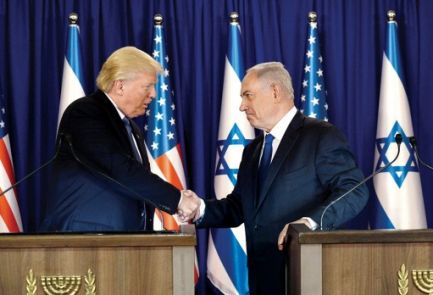
Prime Minister Benjamin Netanyahu welcomes U.S. President Donald Trump during the latter’s visit to Israel | Photo: GPO

Prime Minister Benjamin Netanyahu was busy Monday making final preparations for his meeting with U.S. President Donald Trump later in the day, where he was expected to lobby against the Iran nuclear agreement.

Netanyahu was scheduled to meet Trump at 1 p.m. (8 p.m. Israel time), where the Israeli premier is expected to reiterate his call on the American president to amend or scrap the agreement reached between Iran and Western powers in July 2015.

As another deadline to certify that Iran is adhering to the agreement looms – by law, Iran’s compliance must be certified every 90 days – it appears that Trump may be amenable to Netanyahu’s demands. Trump has declared in the past that he did not wish to certify Iran’s compliance next month, putting the future of the deal in question.

Netanyahu’s office said Sunday that the prime minister planned to present Trump with “concrete ideas” as to how to change or reverse the nuclear agreement.

Netanyahu was also preparing for his address to the United Nations General Assembly, scheduled for Tuesday. Efforts have reportedly been made to coordinate the key arguments of Netanyahu’s address, which will also focus on the Iranian threat, with those of the American president’s address, to avoid any obvious contradictions. This effort was a result of the gaps that emerged between the positions expressed by Netanyahu and Trump’s predecessor Barack Obama at last year’s general assembly.

Netanyahu’s address is expected to be shorter than in previous years, and include a direct appeal to Iranian Supreme Leader Ali Khamenei.

Netanyahu was preparing his address when Israeli paper Haaretz reported Sunday that International Atomic Energy Agency inspectors failed to investigate information regarding a number of undeclared, suspected nuclear sites in Iran. The paper quoted officials as saying that “almost all the suspected sites have not been visited by IAEA inspectors – either because of Iran’s refusal to grant entry or U.N. officials’ reluctance to confront Iran on the issue.”

Besides his strong opposition to the nuclear agreement with Iran, Netanyahu was expected to relay Israel’s concern over Iran’s presence in Syria, close to Israel’s northern border.

Upon landing in New York last week, Netanyahu reiterated the message that “Israel will not tolerate an Iranian presence at our northern border. It is a military presence that poses a threat not only to us, but also to our Arab neighbors and we will be forced to act against it.”

Meanwhile, Netanyahu met on Sunday with leaders of the U.S. Jewish community. Representatives of the Reform and Conservative Jewish movements voiced disappointment at not being granted meetings with Netanyahu, wanting to discuss Jerusalem’s recent decision to scrap plans for an egalitarian prayer plaza at the Western Wall – a decision that drew the ire of many Reform and Conservative Jews in the U.S.

Trump considers ending Iran deal ahead of key deadline

September 18, 2017

Trump considers ending Iran deal ahead of key deadline, Washinton ExaminerSarah Westwood, September18, 2017

The October benchmark will be the first recertification to occur without Bannon and Gorka, two strong opponents of the JCPOA, on the president’s team.

Gorka said he was unsure if anybody left in the West Wing is pushing for a full decertification of the Iran deal. But he noted Trump will ultimately make his own decision, regardless of their counsel.

“I think the president is an army of one,” Gorka said. “My prediction is the president will not want to recertify.”
************************************

President Trump is weighing whether to nullify the Iran nuclear deal next month, as proponents of the agreement rally to its defense ahead of a key deadline that will force Trump to reevaluate its future.

The president faces pressure to fulfill his campaign promise to end the Iran nuclear agreement, which he has called the “worst deal ever negotiated.” Known formally as the Joint Comprehensive Plan of Action, the deal requires the State Department to certify to Congress every 90 days that Iran is still complying with the agreement under the terms ironed out by the Obama administration in 2015.

Some top Trump aides have urged the president to preserve the Iran deal at the next 90-day mark in October. H.R. McMaster, his national security adviser, and Secretary of State Rex Tillerson have cautioned Trump against scrapping the JCPOA despite his deep skepticism of the agreement, a source familiar with the talks told the Washington Examiner.

But others close to the president have urged him to follow through on his threats to dismantle the deal and have attempted to craft a new strategy for dealing with Iran in the event Trump ends the JCPOA.

Sebastian Gorka, former strategist to the president, said Trump resisted the recertification process at the most recent 90-day deadline in July, when he requested more information from his aides about how he could end the agreement.

“The president didn’t want it recertified last time,” Gorka told the Washington Examiner.

The former White House adviser, who stepped down last month, suggested Trump did not undo the Iran deal this summer only because he had not yet received from his team a set of satisfying alternatives to the agreement.

“Last time, he didn’t do it because he hadn’t been given an adequate path, the scenario hadn’t been provided to him” to decertify the deal, Gorka said.

But soon after Trump requested a draft plan to dismantle the Iran deal, Gorka said he and another top aide tasked with overseeing the creation of the plan, former White House chief strategist Steve Bannon left the West Wing and were unable to pass on their findings to the president.

“Those options were never presented to him because of Steve’s resignation and my resignation,” Gorka said.

Bannon had enlisted the help of at least one outside adviser to give Trump options should he choose to exit the Iran deal.

John Bolton, former U.S. ambassador to the United Nations, wrote in a late August memo published in National Review that Bannon had approached him shortly after the most recent recertification and asked him to prepare a “game plan” for withdrawing from the JCPOA.

“[S]taff changes at the White House have made presenting it to President Trump impossible,” Bolton wrote of his Iran deal withdrawal plan. “Although he was once kind enough to tell me ‘come in and see me any time,’ those days are now over.”

Bolton’s memo advises Trump to conduct “early, quiet consultations,” beginning with private phone calls from the president, with key allies like Israel and countries that had signed onto the deal, such as France and Germany. Those early conversations should provide a friendly warning about the decision ahead and should help those countries understand why the administration was pulling back from the agreement, Bolton wrote. Then, Bolton advised Trump to undergo an expanded diplomatic campaign aimed at rallying support around the world for new sanctions against Iran once the deal was no longer in place.

Proponents of the JCPOA argue the independent inspections Iran must undergo as a condition of the deal have so far turned up no evidence of explicit violations, proving it has been a success. The International Atomic Energy Agency, the organization that perform the inspections, reportedly conducted more than 400 site visits in 2016 and has informed the international community that Tehran remains in compliance with limits on its centrifuges and uranium enrichment.

The Trump administration has publicly given little indication of where the president plans to go with the JCPOA in the coming weeks. Trump has already recertified the deal twice, although in April, he called for a sweeping review of whether the sanctions relief Iran won as part of the deal remains in the U.S. national interest.

“We’re continuing to conduct a full review of our Iran policy. That has certainly not changed,” State Department spokeswoman Heather Nauert told reporters on Sept. 12. “During the course of the review — and I’ll say this again — that we will continue to hold Iran accountable for its malign activities.”

U.S. Ambassador to the United Nations Nikki Haley began earlier this month to make the administration’s case for breaking with the deal. Instead of focusing only on whether Iran remains within the parameters of the JCPOA, Haley argued, the U.S. should take a broader view of all Iranian provocations, including the activity of the Iranian Revolutionary Guard Corps, support for Hezbollah, and ballistic missile development, and decide on a more comprehensive Iran policy.

“The question of Iranian compliance is not as straightforward as many people believe,” Haley said during a speech to the American Enterprise Institute on Sept. 5. “It’s not just about the technical terms of the nuclear agreement. It requires a much more thorough look.”

The administration moved quickly to signal its low tolerance for Iranian aggression after Trump took office. By early February, Trump had sanctioned more than two dozen people and groups in response to a ballistic missile test Tehran conducted in late January, and his then-national security adviser, Gen. Mike Flynn, had announced that Trump planned to put Iran “on notice” over its provocations.

Trump’s State Department reissued waivers in May that continued to lift sanctions on Iran, which the Obama administration had granted in exchange for compliance with the JCPOA. But Trump also hit several Iranian individuals and entities in May with fresh sanctions related to their aggression outside the terms of the nuclear deal.

And the Trump administration issued a new round of sanctions in July aimed at IRGC-affiliated groups that had engaged in ballistic missile development, among other provocative activities.

Fred Fleitz, senior vice president for policy at the Center for Security Policy, said some critics of the deal have presented options that would keep the JCPOA in place while punishing Iran more severely for bad behavior outside of it.

“They’re trying to find a way to allow the president to do something so he can make a big announcement without pulling out,” Fleitz said of that camp, noting their overall objection for the recertification next month would be to “wrap this in a big, new, anti-Iran policy.”

“The jury is out on what the president is going to do,” Fleitz said.

But Trump has spent months excoriating the deal and blasting the Iranian regime for its aggression. Fleitz said it would make little sense for Trump to continue approving an agreement he has described as dangerous.

“I just think it’s ridiculous to say the deal’s not in our interest and stay in it,” Fleitz said.

Any effort to abrogate the JCPOA would face fierce opposition from the Iran deal’s supporters, all of whom characterize the agreement as the only thing standing between the regime and a nuclear weapon.

However, Trump would earn applause from some members of Congress for following through on his threats to Iran.

Republican lawmakers — including Sens. David Perdue, Tom Cotton, Ted Cruz, and Marco Rubio — have urged Trump to reconsider the suspension of sanctions at the heart of the Iran deal.

Less than a month before the next recertification deadline, one source close to the administration told the Washington Examiner that Trump is “leaning towards decertifying” the Iran deal.

The October benchmark will be the first recertification to occur without Bannon and Gorka, two strong opponents of the JCPOA, on the president’s team.

Gorka said he was unsure if anybody left in the West Wing is pushing for a full decertification of the Iran deal. But he noted Trump will ultimately make his own decision, regardless of their counsel.

“I think the president is an army of one,” Gorka said. “My prediction is the president will not want to recertify.”