Archive for September 16, 2017

NKorea Seeks ‘Equilibrium’ With US, Says Nuclear Capability Nearly Complete

September 16, 2017

NKorea Seeks ‘Equilibrium’ With US, Says Nuclear Capability Nearly Complete, Newsmax, AP, September 16, 2017

South Korean President Moon Jae-in, a liberal who initially pushed for talks with North Korea, said its tests currently make dialogue “impossible.”

“If North Korea provokes us or our allies, we have the strength to smash the attempt at an early stage and inflict a level of damage it would be impossible to recover from,” said Moon, who ordered his military to conduct a live-fire ballistic missile drill in response to the North Korean launch.

********************************

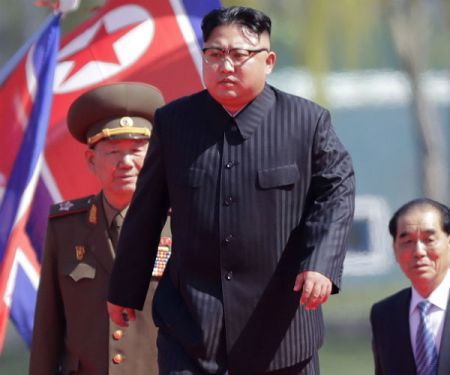
North Korean leader Kim Jong Un said his country is nearing its goal of “equilibrium” in military force with the United States, as the United Nations Security Council strongly condemned the North’s “highly provocative” ballistic missile launch over Japan on Friday.

The North’s official Korean Central News Agency carried Kim’s comments on Saturday — a day after U.S. and South Korean militaries detected the missile launch from the North Korean capital of Pyongyang.

It traveled 3,700 kilometers (2,300 miles) as it passed over the Japanese island of Hokkaido before landing in the northern Pacific Ocean. It was the country’s longest-ever test flight of a ballistic missile.

The North has confirmed the missile as an intermediate range Hwasong-12, the same model launched over Japan on Aug. 29.

Under Kim’s watch, North Korea has maintained a torrid pace in weapons tests, including its most powerful nuclear test to date on Sept. 3 and two July flight tests of intercontinental ballistic missiles that could strike deep into the U.S. mainland when perfected.

The increasingly frequent and aggressive tests have added to outside fears that the North is closer than ever to building a military arsenal that could viably target the U.S. and its allies in Asia. The tests, which could potentially make launches over Japan an accepted norm, are also seen as North Korea’s attempt to win greater military freedom in the region and raise doubts in Seoul and Tokyo that Washington would risk the annihilation of a U.S. city to protect them.

The KCNA said Kim expressed great satisfaction over the launch, which he said verified the “combat efficiency and reliability” of the missile and the success of efforts to increase its power.

While the English version of the report was less straightforward, the Korean version quoted Kim as declaring the missile as operationally ready. He vowed to complete his nuclear weapons program in the face of strengthening international sanctions, the agency said.

Photos published by North Korea’s state media showed the missile being fired from a truck-mounted launcher and a smiling Kim clapping and raising his fist while celebrating from an observation point. It was the first time North Korea showed the missile being launched directly from a vehicle, which experts said indicated confidence about the mobility and reliability of the system. In previous tests, North Korea used trucks to transport and erect the Hwasong-12s, but moved the missiles on separate firing tables before launching them.

The U.N. Security Council accused North Korea of undermining regional peace and security by launching its latest missile over Japan and said its nuclear and missile tests “have caused grave security concerns around the world” and threaten all 193 U.N. member states.

Kim also said the country, despite “limitless” international sanctions, has nearly completed the building of its nuclear weapons force and called for “all-state efforts” to reach the goal and obtain a “capacity for nuclear counterattack the U.S. cannot cope with.”

“As recognized by the whole world, we have made all these achievements despite the U.N. sanctions that have lasted for decades,” the agency quoted Kim as saying.

Kim said the country’s final goal “is to establish the equilibrium of real force with the U.S. and make the U.S. rulers dare not talk about military option for the DPRK,” referring to North Korea’s official name, the Democratic People’s Republic of Korea.

He indicated that more missile tests would be forthcoming, saying that all future drills should be “meaningful and practical ones for increasing the combat power of the nuclear force” to establish an order in the deployment of nuclear warheads for “actual war.”

Prior to the launches over Japan, North Korea had threatened to fire a salvo of Hwasong-12s toward Guam, the U.S. Pacific island territory and military hub the North has called an “advanced base of invasion.”

The Security Council stressed in a statement after a closed-door emergency meeting that all countries must “fully, comprehensively and immediately” implement all U.N. sanctions.

Japan’s U.N. Ambassador Koro Bessho called the missile launch an “outrageous act” that is not only a threat to Japan’s security but a threat to the whole world.

Bessho and the British, French and Swedish ambassadors demanded that all sanctions be implemented.

Calling the latest launch a “terrible, egregious, illegal, provocative reckless act,” Britain’s U.N. Ambassador Matthew Rycroft said North Korea’s largest trading partners and closest links — a clear reference to China — must “demonstrate that they are doing everything in their power to implement the sanctions of the Security Council and to encourage the North Korean regime to change course.”

France’s Foreign Ministry said in a statement that the country is ready to work on tougher U.N. and EU measures to convince Pyongyang that there is no interest in an escalation, and to bring it to the negotiating table.

Friday’s launch followed North Korea’s sixth nuclear test on Sept. 3 in what it described as a detonation of a thermonuclear weapon built for its developmental ICBMs.

The Hwasong-12 and the Hwasong-14 were initially fired at highly lofted angles to reduce their range and avoid neighboring countries. The two Hwasong-12 launches over Japan indicate North Korea is moving toward using angles close to operational to evaluate whether its warheads can survive the harsh conditions of atmospheric re-entry and detonate properly.

While some experts believe North Korea would need to conduct more tests to confirm Hwasong-12’s accuracy and reliability, Kim Jong Un’s latest comments indicate the country would soon move toward mass producing the missiles for operational deployment, said Kim Dong-yub, an analyst at Seoul’s Institute for Far Eastern Studies. He also said that the North is likely planning similar test launches of its Hwasong-14 ICBM.

South Korean President Moon Jae-in, a liberal who initially pushed for talks with North Korea, said its tests currently make dialogue “impossible.”

“If North Korea provokes us or our allies, we have the strength to smash the attempt at an early stage and inflict a level of damage it would be impossible to recover from,” said Moon, who ordered his military to conduct a live-fire ballistic missile drill in response to the North Korean launch.

Judicial Watch Presents: ‘Exposing the Deep State’

September 16, 2017

Judicial Watch Presents: ‘Exposing the Deep State’ via YouTube, September 15, 2017

The blurb beneath the video states,

Judicial Watch hosted a special educational panel on Friday, September 15, 2017, discussing “Exposing the Deep State.” The expert panelists include: Dr. Sebastian Gorka Former Deputy Assistant to the President Author of New York Times best seller Defeating Jihad: The Winnable War Diana West Journalist and Author of American Betrayal: The Secret Assault on Our Nation’s Character Todd Shepherd Investigative Reporter Washington Examiner James Peterson Senior Attorney Judicial Watch Moderated by Christopher J. Farrell Director of Investigations and Research Judicial Watch.

Right Angle – Watching Steve Bannon Making Sense – 09/14/17

September 16, 2017

Right Angle – Watching Steve Bannon Making Sense – 09/14/17, Bill Whittle Channel via YouTube

(The RINOs in Congress who “go along to get along” should go along back home and stay there. — DM)

The blurb beneath the video states,

Steve Bannon recently gave an interview in which he accused the establishment GOP of trying to nullify the results of the 2016 election by sabotaging President Trump at every turn. Bill, Steve, and Scott analyze the tension between Trump and Congressional Republicans and give their thoughts and reactions as to who is to blame for the failure of key legislation on Obamacare repeal and immigration.

Geert Wilders: “In My Opinion, Islam Is Not a Religion”

September 16, 2017

by Telegraaf and Geert Wilders

Source: Geert Wilders: “In My Opinion, Islam Is Not a Religion”

  • Not long ago Professor Koopmans found that as much as seventy percent of Muslims find Islamic rules more important than secular laws.” — Geert Wilders Research also points out that 11 percent of Dutch Muslims in the Netherlands are prepared to use violence on behalf of their religion. That is a 110,000 people, twice the size of the Dutch army!” – Geert Wilders I personally believe there are extremist people and moderate people. But I do not believe in two kinds of Islam. There is only one…. You get your head chopped off should you wish to interpret Islam….People who want to come to the Netherlands from Islamic countries should think: this is not a place we want to go to! And we do not do this to bully Muslims, but to keep the Netherlands of the future a free Netherlands.” -– Geert Widers

Party for Freedom leader Geert Wilders is deeply concerned about Muslim integration. In our series Islam in the Netherlands he is warning about the “perishing”of our culture. “It is not five to twelve or two to twelve, it is almost morning!” The leader of the second party in the country is pondering about very far-reaching measures.

Geert Wilders (54) is not surprised at the shocking poll results released by daily newspaper De Telegraaf. The fact that only thirteen percent of the Dutch population feel that the problem of integration will solve itself is a writing on the wall, according to him. And that only eleven percent of the Dutch see Islam as an enrichment proves in his opinion that what he has been calling for years. “If I had said that three years ago, I would have had tens of thousands of police reports thrown at me. But people are completely fed up with it. ”

How do you explain the figures?

“Decades ago, a few thousand people from Islamic countries would stay temporarily. But temporarily turned out to be permanently. Those thousands of guest workers became hundreds of thousands. And in Europe millions of people by now. Back then those people were called upon to integrate and assimilate. But Islam, the word says it already, seeks to dominate. Not long ago Professor Koopmans found that as much as seventy percent of Muslims find Islamic rules more important than secular laws. In Europe almost weekly innocent people are slaughtered in name of Allah and Islam. Proudly. We have been declared war and we refuse to defend ourselves.”

Who is responsible for this?

“I think that probably the worst of all is that Western European politicians have allowed this to happen. Last week Sybrand Buma of the Christian democratic party CDA was suddenly critical of Islam. That is like a bank robber who, twenty years after the robbery, has spent all the money and apologizes for doing so. He is the one who did it. CDA has been in power in the Netherlands for 50 years. ”

Is it not a bit blunt to say …

“No!”

… that Muslims do not integrate?

“I am talking about Islam. But research also points out that 11 percent of Dutch Muslims in the Netherlands are prepared to use violence on behalf of their religion. That is a 110,000 people, twice the size of the Dutch army! ”

But perhaps many Muslims in fact take Islam less serious and profess their faith behind the front door, peacefully. Secretary Asscher of Integration said in this paper last week that those people should not be held accountable for terrorist attacks.

“Do you know, secretary Asscher and Prime Minister Rutte are two sides of the same coin. After the second attack in June, Rutte said that Muslims are double the victim, because they are not only victims of attacks, but also blamed for it as a group. For all I care everyone is free to get all teary-eyed but we will perish if we continue. It reminds me of what happened after the murder of Theo van Gogh. Some people, even members of the Royal House, went to a mosque as a first response. That is total cowardice. We are the victims.”

Who are we? Does it not also include those Muslims not engaged in fanatism? This way people are categorized into a group they do not feel connected to at all.

“Then take your distance from that group. Of course I do not say that all Muslims are cheering at an attack. But I can hardly listen to it, the terror attack commemorations in Parliament. I think we have had ten to twelve this year. I am attending, out of respect for the relatives and the victims and will continue to do so. But every time Rutte reads the same a4-format paper, only altering the name of the city and country where the attack took place. The man does not show any action. ”

How do you liberate yourself from the Islamic yoke in your opinion?

“Leave Islam.”

So people must renounce their faith?

“There is nothing they must do. But I would tell: freedom is such a splendorous thing. You do not have anything like it in Islam. I can not force people to leave Islam. They must above all realize what is going on in their minds. But the real concern is what happens in the public space. What is happening in my country and whether we should have more or less of that. ”

There are also Muslims who were born in the Netherlands. The country is just as much their country as it is yours.

“For those people that could apply, but not to Islam.”
But according to the constitution it does, a Muslim born here is considered Dutch. According to the Constitution he or she has an equal right to express what the Netherlands should look like.

“We live in a free country. But in my opinion Islam is not a religion. It is a totalitarian, dangerous and violent ideology, dressed up as a religion. People are allowed to think whatever they like, but I also have the right to say that Islam should not be included in the constitutional freedoms.

Can a Muslim not just be moderate?

“According to the Quran that is not possible. I personally believe there are extremist people and moderate people. But I do not believe in two kinds of Islam. There is only one. One that is impossible to reform. And even if it would be the case, we can not afford to wait for another 150 or 300 years. I think it will never happen. You get your head chopped off should you wish to interpret Islam.”

What do you think should happen?

“Recognize the problem. Dare to say that Islam does not integrate. Define Islam as a violent totalitarian undemocratic thing. And stop immigration from Islamic countries. During cabinet Rutte II, a 100,000 Muslims were added. These are not all terrorists or bad people, but it is 100,000 times more Islam entering the Netherlands.”

There was a war. People were on the move, lost their homes.

“That was not the case. If they were refugees, they would have stopped in the first safe country after Syria. By the way, this is also part of the solution: all Syrians must return! Tomorrow! Why not? That country is safe. This is our country. Why would a Syrian be able to return from the refugee camps in Jordan or Lebanon and not from a refugee centre here? ”

Because the land is in ruins and dictator Assad uses poison gas against his own people for example.

“There are many countries in the world that have not very pleasant regimes.”

Back to the Netherlands. We also have a constitution in this country that protects such things as freedom of education and religion. Should that be altered?

“I do not see the word Islam in any constitution, but in jurisprudence Islam is considered to be a religion.”

Do you want to put into law that Islam is not a religion?

“We will have to see about legal possibilities Can it be done, how can it be done and what way can it be done. But it’s definitely worth studying”

So you want to ban Islam?

“I do not rule out that this may be necessary in the long run. It will concern the expressions. You can not ban an idea, that’s impossible. You can not ban communism either. ”

There is religious freedom in this country. But you want to record that Islam is not a religion.

“In my opinion it is not part of religious freedom. That is my political wish. How to execute such a thing is wish number two. ”

That is very useful for a politician if he makes a statement. What should we think of?

“That is what we have to look into. I have now lifted a tip of the veil. ”

Many people will be startled when they read this.

“We are not going to collect Qurans from people’s homes. What is going on behind their front door is their business. We are talking about public space, but it is too early to say anything about it now. ”

Does this not make it very casual?

“No. I have ventilated this for ten years.

Some things you mention you have. But banning Islam is something different.

“If it is possible to put it into law, we will put it into law. But it will be about expressions. Recently we have also drafted an administrative detention bill for jihadists. I realize all problems will not be solved tomorrowby closing a mosque. You must make it unattractive in this country to profess Islam. People who want to come to the Netherlands from Islamic countries should think: this is not a place we want to go to! And we do not do this to bully Muslims, but to keep the Netherlands of the future a free Netherlands.”

This interview was published in De Telegraaf today , the largest daily newspaper in The Netherlands and was translated by the Party for Freedom.

Party for Freedom leader Geert Wilders is deeply concerned about Muslim integration. In our series Islam in the Netherlands he is warning about the “perishing”of our culture. “It is not five to twelve or two to twelve, it is almost morning!” The leader of the second party in the country is pondering about very far-reaching measures.

Geert Wilders (54) is not surprised at the shocking poll results released by daily newspaper De Telegraaf. The fact that only thirteen percent of the Dutch population feel that the problem of integration will solve itself is a writing on the wall, according to him. And that only eleven percent of the Dutch see Islam as an enrichment proves in his opinion that what he has been calling for years. “If I had said that three years ago, I would have had tens of thousands of police reports thrown at me. But people are completely fed up with it. ”

How do you explain the figures?

“Decades ago, a few thousand people from Islamic countries would stay temporarily. But temporarily turned out to be permanently. Those thousands of guest workers became hundreds of thousands. And in Europe millions of people by now. Back then those people were called upon to integrate and assimilate. But Islam, the word says it already, seeks to dominate. Not long ago Professor Koopmans found that as much as seventy percent of Muslims find Islamic rules more important than secular laws. In Europe almost weekly innocent people are slaughtered in name of Allah and Islam. Proudly. We have been declared war and we refuse to defend ourselves.”

Who is responsible for this?

“I think that probably the worst of all is that Western European politicians have allowed this to happen. Last week Sybrand Buma of the Christian democratic party CDA was suddenly critical of Islam. That is like a bank robber who, twenty years after the robbery, has spent all the money and apologizes for doing so. He is the one who did it. CDA has been in power in the Netherlands for 50 years. ”

Is it not a bit blunt to say …

“No!”

… that Muslims do not integrate?

“I am talking about Islam. But research also points out that 11 percent of Dutch Muslims in the Netherlands are prepared to use violence on behalf of their religion. That is a 110,000 people, twice the size of the Dutch army! ”

But perhaps many Muslims in fact take Islam less serious and profess their faith behind the front door, peacefully. Secretary Asscher of Integration said in this paper last week that those people should not be held accountable for terrorist attacks.

“Do you know, secretary Asscher and Prime Minister Rutte are two sides of the same coin. After the second attack in June, Rutte said that Muslims are double the victim, because they are not only victims of attacks, but also blamed for it as a group. For all I care everyone is free to get all teary-eyed but we will perish if we continue. It reminds me of what happened after the murder of Theo van Gogh. Some people, even members of the Royal House, went to a mosque as a first response. That is total cowardice. We are the victims.”

Who are we? Does it not also include those Muslims not engaged in fanaticism? This way people are categorized into a group they do not feel connected to at all.

“Then take your distance from that group. Of course I do not say that all Muslims are cheering at an attack. But I can hardly listen to it, the terror attack commemorations in Parliament. I think we have had ten to twelve this year. I am attending, out of respect for the relatives and the victims and will continue to do so. But every time Rutte reads the same a4-format paper, only altering the name of the city and country where the attack took place. The man does not show any action. ”

How do you liberate yourself from the Islamic yoke in your opinion?

“Leave Islam.”

So people must renounce their faith?

“There is nothing they must do. But I would tell: freedom is such a splendorous thing. You do not have anything like it in Islam. I can not force people to leave Islam. They must above all realize what is going on in their minds. But the real concern is what happens in the public space. What is happening in my country and whether we should have more or less of that. ”

There are also Muslims who were born in the Netherlands. The country is just as much their country as it is yours.

“For those people that could apply, but not to Islam.”

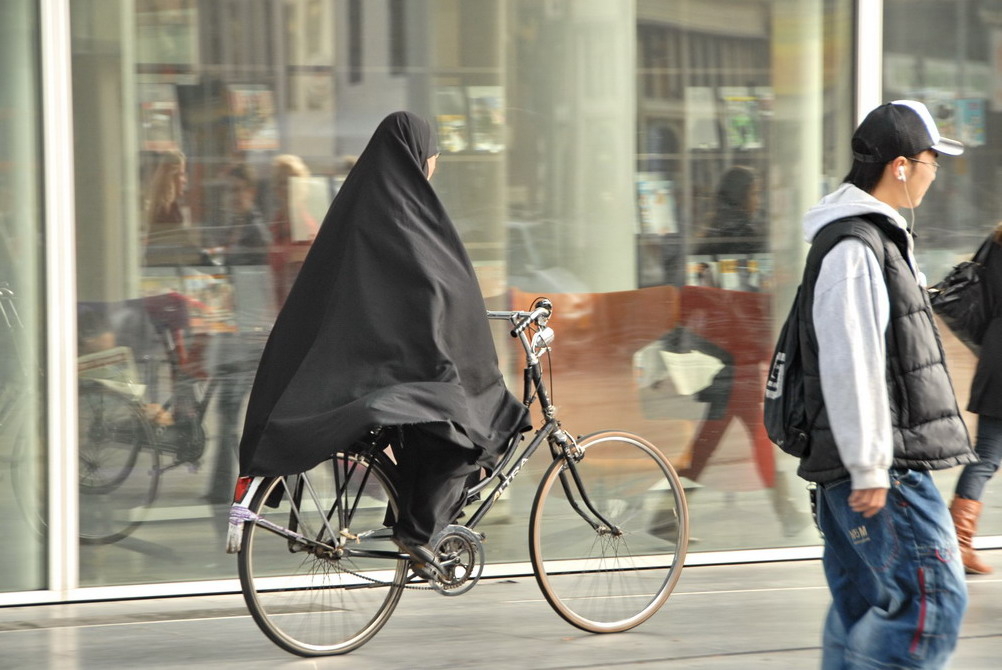
Are Islam and modernity compatible? Photo: Wikipedia.

But according to the constitution it does, a Muslim born here is considered Dutch. According to the Constitution he or she has an equal right to express what the Netherlands should look like.

“We live in a free country. But in my opinion Islam is not a religion. It is a totalitarian, dangerous and violent ideology, dressed up as a religion. People are allowed to think whatever they like, but I also have the right to say that Islam should not be included in the constitutional freedoms.

Can a Muslim not just be moderate?

“According to the Quran that is not possible. I personally believe there are extremist people and moderate people. But I do not believe in two kinds of Islam. There is only one. One that is impossible to reform. And even if it would be the case, we can not afford to wait for another 150 or 300 years. I think it will never happen. You get your head chopped off should you wish to interpret Islam.”

What do you think should happen?

“Recognize the problem. Dare to say that Islam does not integrate. Define Islam as a violent totalitarian undemocratic thing. And stop immigration from Islamic countries. During cabinet Rutte II, a 100,000 Muslims were added. These are not all terrorists or bad people, but it is 100,000 times more Islam entering the Netherlands.”

There was a war. People were on the move, lost their homes.

“That was not the case. If they were refugees, they would have stopped in the first safe country after Syria. By the way, this is also part of the solution: all Syrians must return! Tomorrow! Why not? That country is safe. This is our country. Why would a Syrian be able to return from the refugee camps in Jordan or Lebanon and not from a refugee centre here? ”

Because the land is in ruins and dictator Assad uses poison gas against his own people for example.

“There are many countries in the world that have not very pleasant regimes.”

Back to the Netherlands. We also have a constitution in this country that protects such things as freedom of education and religion. Should that be altered?

“I do not see the word Islam in any constitution, but in jurisprudence Islam is considered to be a religion.”

Do you want to put into law that Islam is not a religion?

“We will have to see about legal possibilities Can it be done, how can it be done and what way can it be done. But it’s definitely worth studying”

So you want to ban Islam?

“I do not rule out that this may be necessary in the long run. It will concern the expressions. You can not ban an idea, that’s impossible. You can not ban communism either. ”

There is religious freedom in this country. But you want to record that Islam is not a religion.

“In my opinion it is not part of religious freedom. That is my political wish. How to execute such a thing is wish number two. ”

That is very useful for a politician if he makes a statement. What should we think of?

“That is what we have to look into. I have now lifted a tip of the veil. ”

Many people will be startled when they read this.

“We are not going to collect Qurans from people’s homes. What is going on behind their front door is their business. We are talking about public space, but it is too early to say anything about it now. ”

Does this not make it very casual?

“No. I have ventilated this for ten years.

Some things you mention you have. But banning Islam is something different.

“If it is possible to put it into law, we will put it into law. But it will be about expressions. Recently we have also drafted an administrative detention bill for jihadists. I realize all problems will not be solved tomorrowby closing a mosque. You must make it unattractive in this country to profess Islam. People who want to come to the Netherlands from Islamic countries should think: this is not a place we want to go to! And we do not do this to bully Muslims, but to keep the Netherlands of the future a free Netherlands.”

This interview was published in De Telegraaf today , the largest daily newspaper in The Netherlands and was translated by the Party for Freedom.

Party for Freedom leader Geert Wilders is deeply concerned about Muslim integration. In our series Islam in the Netherlands he is warning about the “perishing”of our culture. “It is not five to twelve or two to twelve, it is almost morning!” The leader of the second party in the country is pondering about very far-reaching measures.

Geert Wilders (54) is not surprised at the shocking poll results released by daily newspaper De Telegraaf. The fact that only thirteen percent of the Dutch population feel that the problem of integration will solve itself is a writing on the wall, according to him. And that only eleven percent of the Dutch see Islam as an enrichment proves in his opinion that what he has been calling for years. “If I had said that three years ago, I would have had tens of thousands of police reports thrown at me. But people are completely fed up with it. ”

How do you explain the figures?

“Decades ago, a few thousand people from Islamic countries would stay temporarily. But temporarily turned out to be permanently. Those thousands of guest workers became hundreds of thousands. And in Europe millions of people by now. Back then those people were called upon to integrate and assimilate. But Islam, the word says it already, seeks to dominate. Not long ago Professor Koopmans found that as much as seventy percent of Muslims find Islamic rules more important than secular laws. In Europe almost weekly innocent people are slaughtered in name of Allah and Islam. Proudly. We have been declared war and we refuse to defend ourselves.”

Who is responsible for this?

“I think that probably the worst of all is that Western European politicians have allowed this to happen. Last week Sybrand Buma of the Christian democratic party CDA was suddenly critical of Islam. That is like a bank robber who, twenty years after the robbery, has spent all the money and apologizes for doing so. He is the one who did it. CDA has been in power in the Netherlands for 50 years. ”

Is it not a bit blunt to say …

“No!”

… that Muslims do not integrate?

“I am talking about Islam. But research also points out that 11 percent of Dutch Muslims in the Netherlands are prepared to use violence on behalf of their religion. That is a 110,000 people, twice the size of the Dutch army! ”

But perhaps many Muslims in fact take Islam less serious and profess their faith behind the front door, peacefully. Secretary Asscher of Integration said in this paper last week that those people should not be held accountable for terrorist attacks.

“Do you know, secretary Asscher and Prime Minister Rutte are two sides of the same coin. After the second attack in June, Rutte said that Muslims are double the victim, because they are not only victims of attacks, but also blamed for it as a group. For all I care everyone is free to get all teary-eyed but we will perish if we continue. It reminds me of what happened after the murder of Theo van Gogh. Some people, even members of the Royal House, went to a mosque as a first response. That is total cowardice. We are the victims.”

Who are we? Does it not also include those Muslims not engaged in fanatism? This way people are categorized into a group they do not feel connected to at all.

“Then take your distance from that group. Of course I do not say that all Muslims are cheering at an attack. But I can hardly listen to it, the terror attack commemorations in Parliament. I think we have had ten to twelve this year. I am attending, out of respect for the relatives and the victims and will continue to do so. But every time Rutte reads the same a4-format paper, only altering the name of the city and country where the attack took place. The man does not show any action. ”

How do you liberate yourself from the Islamic yoke in your opinion?

“Leave Islam.”

So people must renounce their faith?

“There is nothing they must do. But I would tell: freedom is such a splendorous thing. You do not have anything like it in Islam. I can not force people to leave Islam. They must above all realize what is going on in their minds. But the real concern is what happens in the public space. What is happening in my country and whether we should have more or less of that. ”

There are also Muslims who were born in the Netherlands. The country is just as much their country as it is yours.

“For those people that could apply, but not to Islam.”

But according to the constitution it does, a Muslim born here is considered Dutch. According to the Constitution he or she has an equal right to express what the Netherlands should look like.

“We live in a free country. But in my opinion Islam is not a religion. It is a totalitarian, dangerous and violent ideology, dressed up as a religion. People are allowed to think whatever they like, but I also have the right to say that Islam should not be included in the constitutional freedoms.

Can a Muslim not just be moderate?

“According to the Quran that is not possible. I personally believe there are extremist people and moderate people. But I do not believe in two kinds of Islam. There is only one. One that is impossible to reform. And even if it would be the case, we can not afford to wait for another 150 or 300 years. I think it will never happen. You get your head chopped off should you wish to interpret Islam.”

What do you think should happen?

“Recognize the problem. Dare to say that Islam does not integrate. Define Islam as a violent totalitarian undemocratic thing. And stop immigration from Islamic countries. During cabinet Rutte II, a 100,000 Muslims were added. These are not all terrorists or bad people, but it is 100,000 times more Islam entering the Netherlands.”

There was a war. People were on the move, lost their homes.

“That was not the case. If they were refugees, they would have stopped in the first safe country after Syria. By the way, this is also part of the solution: all Syrians must return! Tomorrow! Why not? That country is safe. This is our country. Why would a Syrian be able to return from the refugee camps in Jordan or Lebanon and not from a refugee centre here? ”

Because the land is in ruins and dictator Assad uses poison gas against his own people for example.

“There are many countries in the world that have not very pleasant regimes.”

Back to the Netherlands. We also have a constitution in this country that protects such things as freedom of education and religion. Should that be altered?

“I do not see the word Islam in any constitution, but in jurisprudence Islam is considered to be a religion.”

Do you want to put into law that Islam is not a religion?

“We will have to see about legal possibilities Can it be done, how can it be done and what way can it be done. But it’s definitely worth studying”

So you want to ban Islam?

“I do not rule out that this may be necessary in the long run. It will concern the expressions. You can not ban an idea, that’s impossible. You can not ban communism either. ”

There is religious freedom in this country. But you want to record that Islam is not a religion.

“In my opinion it is not part of religious freedom. That is my political wish. How to execute such a thing is wish number two. ”

That is very useful for a politician if he makes a statement. What should we think of?

“That is what we have to look into. I have now lifted a tip of the veil. ”

Many people will be startled when they read this.

“We are not going to collect Qurans from people’s homes. What is going on behind their front door is their business. We are talking about public space, but it is too early to say anything about it now. ”

Does this not make it very casual?

“No. I have ventilated this for ten years.

Some things you mention you have. But banning Islam is something different.

“If it is possible to put it into law, we will put it into law. But it will be about expressions. Recently we have also drafted an administrative detention bill for jihadists. I realize all problems will not be solved tomorrowby closing a mosque. You must make it unattractive in this country to profess Islam. People who want to come to the Netherlands from Islamic countries should think: this is not a place we want to go to! And we do not do this to bully Muslims, but to keep the Netherlands of the future a free Netherlands.”

This interview was published in De Telegraaf today , the largest daily newspaper in The Netherlands and was translated by the Party for Freedom.

Party for Freedom leader Geert Wilders is deeply concerned about Muslim integration. In our series Islam in the Netherlands he is warning about the “perishing”of our culture. “It is not five to twelve or two to twelve, it is almost morning!” The leader of the second party in the country is pondering about very far-reaching measures.

Geert Wilders (54) is not surprised at the shocking poll results released by daily newspaper De Telegraaf. The fact that only thirteen percent of the Dutch population feel that the problem of integration will solve itself is a writing on the wall, according to him. And that only eleven percent of the Dutch see Islam as an enrichment proves in his opinion that what he has been calling for years. “If I had said that three years ago, I would have had tens of thousands of police reports thrown at me. But people are completely fed up with it. ”

How do you explain the figures?

“Decades ago, a few thousand people from Islamic countries would stay temporarily. But temporarily turned out to be permanently. Those thousands of guest workers became hundreds of thousands. And in Europe millions of people by now. Back then those people were called upon to integrate and assimilate. But Islam, the word says it already, seeks to dominate. Not long ago Professor Koopmans found that as much as seventy percent of Muslims find Islamic rules more important than secular laws. In Europe almost weekly innocent people are slaughtered in name of Allah and Islam. Proudly. We have been declared war and we refuse to defend ourselves.”

Who is responsible for this?

“I think that probably the worst of all is that Western European politicians have allowed this to happen. Last week Sybrand Buma of the Christian democratic party CDA was suddenly critical of Islam. That is like a bank robber who, twenty years after the robbery, has spent all the money and apologizes for doing so. He is the one who did it. CDA has been in power in the Netherlands for 50 years. ”

Is it not a bit blunt to say …

“No!”

… that Muslims do not integrate?

“I am talking about Islam. But research also points out that 11 percent of Dutch Muslims in the Netherlands are prepared to use violence on behalf of their religion. That is a 110,000 people, twice the size of the Dutch army! ”

But perhaps many Muslims in fact take Islam less serious and profess their faith behind the front door, peacefully. Secretary Asscher of Integration said in this paper last week that those people should not be held accountable for terrorist attacks.

“Do you know, secretary Asscher and Prime Minister Rutte are two sides of the same coin. After the second attack in June, Rutte said that Muslims are double the victim, because they are not only victims of attacks, but also blamed for it as a group. For all I care everyone is free to get all teary-eyed but we will perish if we continue. It reminds me of what happened after the murder of Theo van Gogh. Some people, even members of the Royal House, went to a mosque as a first response. That is total cowardice. We are the victims.”

Who are we? Does it not also include those Muslims not engaged in fanatism? This way people are categorized into a group they do not feel connected to at all.

“Then take your distance from that group. Of course I do not say that all Muslims are cheering at an attack. But I can hardly listen to it, the terror attack commemorations in Parliament. I think we have had ten to twelve this year. I am attending, out of respect for the relatives and the victims and will continue to do so. But every time Rutte reads the same a4-format paper, only altering the name of the city and country where the attack took place. The man does not show any action. ”

How do you liberate yourself from the Islamic yoke in your opinion?

“Leave Islam.”

So people must renounce their faith?

“There is nothing they must do. But I would tell: freedom is such a splendorous thing. You do not have anything like it in Islam. I can not force people to leave Islam. They must above all realize what is going on in their minds. But the real concern is what happens in the public space. What is happening in my country and whether we should have more or less of that. ”

There are also Muslims who were born in the Netherlands. The country is just as much their country as it is yours.

“For those people that could apply, but not to Islam.”

But according to the constitution it does, a Muslim born here is considered Dutch. According to the Constitution he or she has an equal right to express what the Netherlands should look like.

“We live in a free country. But in my opinion Islam is not a religion. It is a totalitarian, dangerous and violent ideology, dressed up as a religion. People are allowed to think whatever they like, but I also have the right to say that Islam should not be included in the constitutional freedoms.

Can a Muslim not just be moderate?

“According to the Quran that is not possible. I personally believe there are extremist people and moderate people. But I do not believe in two kinds of Islam. There is only one. One that is impossible to reform. And even if it would be the case, we can not afford to wait for another 150 or 300 years. I think it will never happen. You get your head chopped off should you wish to interpret Islam.”

What do you think should happen?

“Recognize the problem. Dare to say that Islam does not integrate. Define Islam as a violent totalitarian undemocratic thing. And stop immigration from Islamic countries. During cabinet Rutte II, a 100,000 Muslims were added. These are not all terrorists or bad people, but it is 100,000 times more Islam entering the Netherlands.”

There was a war. People were on the move, lost their homes.

“That was not the case. If they were refugees, they would have stopped in the first safe country after Syria. By the way, this is also part of the solution: all Syrians must return! Tomorrow! Why not? That country is safe. This is our country. Why would a Syrian be able to return from the refugee camps in Jordan or Lebanon and not from a refugee centre here? ”

Because the land is in ruins and dictator Assad uses poison gas against his own people for example.

“There are many countries in the world that have not very pleasant regimes.”

Back to the Netherlands. We also have a constitution in this country that protects such things as freedom of education and religion. Should that be altered?

“I do not see the word Islam in any constitution, but in jurisprudence Islam is considered to be a religion.”

Do you want to put into law that Islam is not a religion?

“We will have to see about legal possibilities Can it be done, how can it be done and what way can it be done. But it’s definitely worth studying”

So you want to ban Islam?

“I do not rule out that this may be necessary in the long run. It will concern the expressions. You can not ban an idea, that’s impossible. You can not ban communism either. ”

There is religious freedom in this country. But you want to record that Islam is not a religion.

“In my opinion it is not part of religious freedom. That is my political wish. How to execute such a thing is wish number two. ”

That is very useful for a politician if he makes a statement. What should we think of?

“That is what we have to look into. I have now lifted a tip of the veil. ”

Many people will be startled when they read this.

“We are not going to collect Qurans from people’s homes. What is going on behind their front door is their business. We are talking about public space, but it is too early to say anything about it now. ”

Does this not make it very casual?

“No. I have ventilated this for ten years.

Some things you mention you have. But banning Islam is something different.

“If it is possible to put it into law, we will put it into law. But it will be about expressions. Recently we have also drafted an administrative detention bill for jihadists. I realize all problems will not be solved tomorrowby closing a mosque. You must make it unattractive in this country to profess Islam. People who want to come to the Netherlands from Islamic countries should think: this is not a place we want to go to! And we do not do this to bully Muslims, but to keep the Netherlands of the future a free Netherlands.”

This interview was published in De Telegraaf today , the largest daily newspaper in The Netherlands and was translated by the Party for Freedom.

Party for Freedom leader Geert Wilders is deeply concerned about Muslim integration. In our series Islam in the Netherlands he is warning about the “perishing”of our culture. “It is not five to twelve or two to twelve, it is almost morning!” The leader of the second party in the country is pondering about very far-reaching measures.

Geert Wilders (54) is not surprised at the shocking poll results released by daily newspaper De Telegraaf. The fact that only thirteen percent of the Dutch population feel that the problem of integration will solve itself is a writing on the wall, according to him. And that only eleven percent of the Dutch see Islam as an enrichment proves in his opinion that what he has been calling for years. “If I had said that three years ago, I would have had tens of thousands of police reports thrown at me. But people are completely fed up with it. ”

How do you explain the figures?

“Decades ago, a few thousand people from Islamic countries would stay temporarily. But temporarily turned out to be permanently. Those thousands of guest workers became hundreds of thousands. And in Europe millions of people by now. Back then those people were called upon to integrate and assimilate. But Islam, the word says it already, seeks to dominate. Not long ago Professor Koopmans found that as much as seventy percent of Muslims find Islamic rules more important than secular laws. In Europe almost weekly innocent people are slaughtered in name of Allah and Islam. Proudly. We have been declared war and we refuse to defend ourselves.”

Who is responsible for this?

“I think that probably the worst of all is that Western European politicians have allowed this to happen. Last week Sybrand Buma of the Christian democratic party CDA was suddenly critical of Islam. That is like a bank robber who, twenty years after the robbery, has spent all the money and apologizes for doing so. He is the one who did it. CDA has been in power in the Netherlands for 50 years. ”

Is it not a bit blunt to say …

“No!”

… that Muslims do not integrate?

“I am talking about Islam. But research also points out that 11 percent of Dutch Muslims in the Netherlands are prepared to use violence on behalf of their religion. That is a 110,000 people, twice the size of the Dutch army! ”

But perhaps many Muslims in fact take Islam less serious and profess their faith behind the front door, peacefully. Secretary Asscher of Integration said in this paper last week that those people should not be held accountable for terrorist attacks.

“Do you know, secretary Asscher and Prime Minister Rutte are two sides of the same coin. After the second attack in June, Rutte said that Muslims are double the victim, because they are not only victims of attacks, but also blamed for it as a group. For all I care everyone is free to get all teary-eyed but we will perish if we continue. It reminds me of what happened after the murder of Theo van Gogh. Some people, even members of the Royal House, went to a mosque as a first response. That is total cowardice. We are the victims.”

Who are we? Does it not also include those Muslims not engaged in fanatism? This way people are categorized into a group they do not feel connected to at all.

“Then take your distance from that group. Of course I do not say that all Muslims are cheering at an attack. But I can hardly listen to it, the terror attack commemorations in Parliament. I think we have had ten to twelve this year. I am attending, out of respect for the relatives and the victims and will continue to do so. But every time Rutte reads the same a4-format paper, only altering the name of the city and country where the attack took place. The man does not show any action. ”

How do you liberate yourself from the Islamic yoke in your opinion?

“Leave Islam.”

So people must renounce their faith?

“There is nothing they must do. But I would tell: freedom is such a splendorous thing. You do not have anything like it in Islam. I can not force people to leave Islam. They must above all realize what is going on in their minds. But the real concern is what happens in the public space. What is happening in my country and whether we should have more or less of that. ”

There are also Muslims who were born in the Netherlands. The country is just as much their country as it is yours.

“For those people that could apply, but not to Islam.”

But according to the constitution it does, a Muslim born here is considered Dutch. According to the Constitution he or she has an equal right to express what the Netherlands should look like.

“We live in a free country. But in my opinion Islam is not a religion. It is a totalitarian, dangerous and violent ideology, dressed up as a religion. People are allowed to think whatever they like, but I also have the right to say that Islam should not be included in the constitutional freedoms.

Can a Muslim not just be moderate?

“According to the Quran that is not possible. I personally believe there are extremist people and moderate people. But I do not believe in two kinds of Islam. There is only one. One that is impossible to reform. And even if it would be the case, we can not afford to wait for another 150 or 300 years. I think it will never happen. You get your head chopped off should you wish to interpret Islam.”

What do you think should happen?

“Recognize the problem. Dare to say that Islam does not integrate. Define Islam as a violent totalitarian undemocratic thing. And stop immigration from Islamic countries. During cabinet Rutte II, a 100,000 Muslims were added. These are not all terrorists or bad people, but it is 100,000 times more Islam entering the Netherlands.”

There was a war. People were on the move, lost their homes.

“That was not the case. If they were refugees, they would have stopped in the first safe country after Syria. By the way, this is also part of the solution: all Syrians must return! Tomorrow! Why not? That country is safe. This is our country. Why would a Syrian be able to return from the refugee camps in Jordan or Lebanon and not from a refugee centre here? ”

Because the land is in ruins and dictator Assad uses poison gas against his own people for example.

“There are many countries in the world that have not very pleasant regimes.”

Back to the Netherlands. We also have a constitution in this country that protects such things as freedom of education and religion. Should that be altered?

“I do not see the word Islam in any constitution, but in jurisprudence Islam is considered to be a religion.”

Do you want to put into law that Islam is not a religion?

“We will have to see about legal possibilities Can it be done, how can it be done and what way can it be done. But it’s definitely worth studying”

So you want to ban Islam?

“I do not rule out that this may be necessary in the long run. It will concern the expressions. You can not ban an idea, that’s impossible. You can not ban communism either. ”

There is religious freedom in this country. But you want to record that Islam is not a religion.

“In my opinion it is not part of religious freedom. That is my political wish. How to execute such a thing is wish number two. ”

That is very useful for a politician if he makes a statement. What should we think of?

“That is what we have to look into. I have now lifted a tip of the veil. ”

Many people will be startled when they read this.

“We are not going to collect Qurans from people’s homes. What is going on behind their front door is their business. We are talking about public space, but it is too early to say anything about it now. ”

Does this not make it very casual?

“No. I have ventilated this for ten years.

Some things you mention you have. But banning Islam is something different.

“If it is possible to put it into law, we will put it into law. But it will be about expressions. Recently we have also drafted an administrative detention bill for jihadists. I realize all problems will not be solved tomorrowby closing a mosque. You must make it unattractive in this country to profess Islam. People who want to come to the Netherlands from Islamic countries should think: this is not a place we want to go to! And we do not do this to bully Muslims, but to keep the Netherlands of the future a free Netherlands.”

This interview was published in De Telegraaf today, the largest daily newspaper in The Netherlands and was translated by the Party for Freedom.
 

Syrian/Hizballah troops cross Euphrates to east

September 16, 2017

Syrian/Hizballah troops cross Euphrates to east, DEBKAfile, September 16, 2017

It is worth noting in this regard that, in recent weeks, Israel’s generals and colonels have suddenly dropped references in their discourse to Iran and Hizballah as existential threats.

This may be the time to remind them of an unfortunate precedent. In the months leading up to the Yom Kippur War of 1973, Israel’s leaders brushed aside the Egyptian and Syrian armies as threats to the state’s survival –  only to find defeat at their hands staring the IDF in the face in the early days of that war.

No less dangerous would be a war fought by the Syrian army, Hizballah and Iran, with powerful Russian military support. By establishing a foothold on both banks of the Euphrates River and both sides of the Syrian-Iraqi border, Iran has taken a step towards pursuing its avowed goal of Israel’s destruction.

***********************************

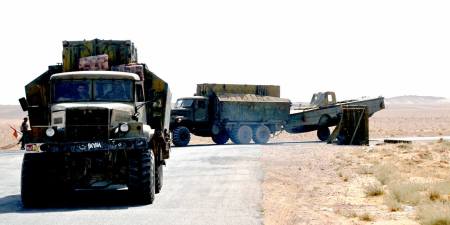
Shortly after the US-led coalition threatened to strike any Syrian Arab Army units if they crossed the Euphrates River, Syrian and Hizballah troops were marching across imported Russian pontoon bridges to reach the river’s eastern bank. By Friday, Sept. 15 they were able to establish a bridgehead there.

The attached photo shows the pontoons being lifted and set in place in a manner which recalls the method by which the IDF  was able to cross the Suez Canal for a landing in Egypt towards the end of the 1973 war.

Throughout the three-day operation, the Syrians and Hizballah worked under the cover of more newly-arrived Russian armaments, the MiG-29SMT (Nato-codenamed “Fulcrum),  whose landing in Syria was announced on Wednesday. This twin-engine jet fighter aircraft is a match for the F-18 in service with the US Air Force as well as the Israeli Air force’s F-15, F-16 and F-16 fighters.

The day the MiG-29s arrived in Syria, British Maj. Gen. Rupert Jones, Deputy Commander in Chief of the US-led Coalition in Syria, threatened to strike any units of the SAA if they crossed the Euphrates River.

The crossing operation, as well as deepening Russia’s military involvement in Syrian and Hizballah offensives, is a major boost for Iran’s objectives, with grave strategic implications for the US and Israel.

1. For the Trump administration, it trampled the principle Presidents Barack Obama and Vladimir Putin established exactly two years ago, i.e., for eastern Syrian across the Euphrates to be assigned to American military control and the west to the Russians.

2.  US satellites and reconnaissance planes watched the Russian army trucking the pontoons east and saw them being thrown over the river for the crossing. Nonetheless, no orders came from the White House or the Pentagon to make good on the coalition’s threat of a strike and to interfere.

3. Established on the east bank of the Euphrates, Syrian and Hizballah troops are in position to go forward for the operation to capture the Syrian-Iraqi border town of Abu Kamal from ISIS. They have moreover opened the way to link up with the Iraqi Population Mobilization Units (PMU), a surrogate of Iran’s Revolutionary Guards.

4. DEBKAfile’s military sources report that PMU units are already heading for this rendezvous on the Iraqi-Syrian border. This step is tantamount to opening up an Iranian-controlled military corridor between Iraq and Syria by cutting deep into the US-ruled region of eastern Syria.

5.  As recently as Thursday night, Sept. 14, President Donald Trump declared: “We are not going to stand for what they [Iran] are doing “

6.  The US president was not alone in refraining from lifting a finger to stop “what they are doing.” Prime Minister Binyamin Netanyahu likewise chose words over deeds. “Israel would not tolerate an Iranian presence on its northern border with Syria,” he reiterated Friday, Sept. 14, on his arrival in New York to address the UN General Assembly and meet Donald Trump.

But already Iran and its pawns were creating an accomplished fact, with massive logistical and military assistance from the Russian army.

It is worth noting in this regard that, in recent weeks, Israel’s generals and colonels have suddenly dropped references in their discourse to Iran and Hizballah as existential threats.

This may be the time to remind them of an unfortunate precedent. In the months leading up to the Yom Kippur War of 1973, Israel’s leaders brushed aside the Egyptian and Syrian armies as threats to the state’s survival –  only to find defeat at their hands staring the IDF in the face in the early days of that war.
No less dangerous would be a war fought by the Syrian army, Hizballah and Iran, with powerful Russian military support. By establishing a foothold on both banks of the Euphrates River and both sides of the Syrian-Iraqi border, Iran has taken a step towards pursuing its avowed goal of Israel’s destruction.

Weekly Update: It’s amateur hour at State

September 16, 2017

Weekly Update: It’s amateur hour at State, Judicial Watch, September 15, 2017

(The second part of the article deals with the failure of the Department of Justice to prosecute former IRS head Lois Lerner. I have not corrected typos in the article because my internet keeps going down and I want to get this posted promptly.– DM)

Clinton Emails Reveal Additional Mishandling of Classified Information

We continue to accumulate details of the communications abuses in the Hillary Clinton State Department, but after you read the following report pause and consider the big picture. For four years the inner workings of her department were porous to prying eyes. Is it just a coincidence that Hillary Clinton’s diplomatic efforts so often failed?

This week we released 1,617 new pages of documents revealing numerous additional examples of classified information being transmitted through the unsecure, non-state.gov account of Huma Abedin, Clinton’s deputy chief of staff, as well as many instances of Hillary Clinton donors receiving special favors from the State Department.

The documents included 97 email exchanges with Clinton not previously turned over to the State Department, bringing the known total to date to at least 627emails that were not part of the 55,000 pages of emails that Clinton turned over, and further contradicting a statement by Clinton that, “as far as she knew,” all of her government emails had been turned over to department.

The emails are the 20th production of documents obtained in response to a court order in a May 5, 2015, lawsuit we filed against the State Department (Judicial Watch, Inc. v. U.S. Department of State (No. 1:15-cv-00684)). We sued after State failed to respond to a March 18, 2015, Freedom of Information Act (FOIA) request seeking: “All emails of official State Department business received or sent by former Deputy Chief of Staff Huma Abedin from January 1, 2009 through February 1, 2013 using a non-‘state.gov’ email address.”

On September 11, 2009, the highly sensitive name and email address of the person giving the classified Presidential Daily Brief was included in an email forwarded to Abedin’s unsecure email account by State Department official Dan Fogerty. The State Department produced many more Clinton and Abedin unsecured emails that were classified:

  • On April 16, 2009, Deputy Assistant Secretary Jeffrey Feltman sent to Abedin’s unsecure email account classified informationabout an unknown subject.
  • On June 18, 2009, Abedin sent classified informationsummarizing a June 18, 2009, “Middle East Breakfast” meeting between various senators, representatives and State Department officials, at which Deputy Secretary Jack Lew and George Mitchell briefed the congressmen with “an update on our discussions with the [Middle East] parties.”
  • On June 23, 2009, U.S. diplomat Martin Indyk, who had his security clearance suspendedin 2000 for “possible sloppiness” in the handling of classified information, sent a memo containing classified information to Abedin’s unsecure email account. The memo, written for Clinton, pertained to Indyk’s discussions with top Israeli officials:

Could I ask you to review the memo below that I wrote yesterday on my return from Israel?  If you think it worthwhile, I’d be very grateful if you showed it to HRC (I have already shared it with Mitchell and Feltman). A confrontation with Bibi appears imminent.  I’ve never been one to shy away from that, as she may know.  But it has to be done carefully, and that doesn’t appear to be happening.  And I’m concerned that she will be tarred with the same brush if this leads to a bad end.  So I think she needs to make sure that the friction is productive.  I’ve made some suggestions at the end of the memo

  • On August 1, 2009, Abedin forwarded classified informationfrom State Department official Richard Verma to her unsecure email account. The email from Senator Russ Feingold was sent to Hillary Clinton regarding her upcoming Africa trip.
  • On August 4, 2009, Assistant Secretary Jeffrey Feltman sent classified informationabout discussions with Kuwaiti officials to Abedin’s unsecure email account. Feltman noted that the Kuwaitis felt a lunch they had with Obama was “chilly.” The discussions concerned Guantanamo as well as Kuwait’s treatment of detainees.
  • On Sept 20, 2009, Abedin forwarded classified informationto her unsecure email account. The email was from State Department official Esther Brimmer and concerned foreign leaders’ discussions regarding a UNESCO leadership appointment.
  • On November 1, 2009, U.S. Ambassador to the UAE Rick Olson sent classified informationto Abedin’s unsecure email account. The email shows that Olsen was traveling with Hillary in the Middle East, and Abedin asked him to “work on a list of everything covered in the mbz [presumably Mohammed bin Zayed bin Sultan Al-Nahyan, the Crown Prince of Abu Dhabi] meeting for Hillary.” Olson asks: “do you want it on this system (I can sanitize), or on the other system.” She replies: “This system easier. We are staying without class[ified] computers. Thx.”
  • On December 1, 2009, Abedin sent classified informationabout foreign military contributions to the Afghanistan war effort to her unsecure email account. The email originated with State official Sean Misko who wrote to Deputy Chief of Staff Jake Sullivan that he first “accidentally” sent it on the “high side” (secure) but was resending.
  • On December 25, 2009, Abedin sent to her unsecure email account classified informationprepared by Deputy U.S. Ambassador to Afghanistan Francis Ricciardone concerning the Afghan elections.
  • On December 26, 2009, U.S. Ambassador to Mexico Carlos Pascual sent a memo to Clinton, which was found on Abedin’s unsecure email account. It contained extensive classified information involving U.S. and Mexican counter-drug operations in Mexico.
  • On March 22, 2010, Abedin forwarded to her unsecure email account classified informationabout a telephone conversation between President Obama and Mexican President Felipe Calderon.
  • On April 13, 2010, Abedin forwarded to her unsecure email account classified informationfrom Ambassador Jeffrey Feltman regarding diplomatic discussions with the foreign ministers of Algeria and Morocco.
  • On May 24, 2010, Abedin forwarded to her unsecure email account classified informationabout the minutes of a State Department senior staff meeting regarding State Department officials’ meetings in Uganda.
  • Among Abedin’s unsecure email records is a document that is simply titled “NOTE” with the date September 12, 2010. The contents are entirely redacted as classified.
  • On January 28, 2011, Abedin sent Clinton an unsecure email containing classified informationrelating to a briefing White House Press Secretary Robert Gibbs gave.
  • On March 21, 2012, Clinton received a memo from State Department officials Joseph Yun and Derek Mitchell marked “Sensitive But Unclassified” and sent to Abedin’s unsecure email account. It contained classified informationabout elections in Burma.
  • Jake Sullivan emailed to Hillary’s unsecure email account classified informationin which Sullivan discussed the content of conversations with UK Prime Minister Gordon regarding “the situation” in Northern Ireland. The date of this email is not included on the document.
  • On April 8, 2012, Abedin sent classified informationto her unsecure email regarding a call sheet and an “Action Memo” for Clinton relating to a call with Malawi President Joyce Banda. On April 9, 2012, confidential assistant Monica Hanley again forwarded the classified information to Clinton’s unsecure email account.

Other emails contain sensitive information that was sent via Hillary Clinton’s unsecure email servers.

  • On August 18, 2009, Hanley provided Abedin with laptop and fob (a physical device that provides a login code) logins and passwordsto log onto a laptop, as well as a secure State Department website at https://one.state.gov. Included were a PIN number and instructions on how to access her email from the secure State Department website. Abedin forwarded this information to her unsecure account.

(The FBI interviewed Hanley in its probe of Clinton’s email practices, and State’s Diplomatic Security staff reprimanded her after she left classified material behind in a Moscow hotel room. Hanley was the staffer tasked with finding BlackBerry phones for Clinton to use.)

  • On August 19, 2009, Hanley asked Abedin to call her and provide Abedin’s computer passwordso that she could download a UN document for Cheryl Mills from Abedin’s computer. Instead of calling Hanley, Abedin apparently provided the computer password in her unsecure reply email, saying, “Its [redacted].”
  • On April 17, 2009, Clinton aide Lona Valmoro emailed Clinton’s sensitive daily schedulefor April 18 to various Clinton Foundation officials, including Doug Band, Terry Krinvic and Justin Cooper. She also forwarded Clinton’s daily schedule for July 16 to numerous Clinton Foundation officials. She did the same thing on September 8, 2009. She did so again on January 10, January 14 and April 11, 2010.
  • The details of Hillary’s arrivalon November 18, 2009, in war-torn Kabul, Afghanistan, for the inauguration of President Karzai, were found on Abedin’s unsecure email account. Included were precise times of landing at Kabul Airport, the occupants of her vehicle, arrival and departure times at the U.S. Embassy in Kabul, and meeting times with U.S. forces in Afghanistan.

The new documents show that Clinton donors frequently requested and received special favors from the State Department that were connected to the Clinton Foundation.

  • On July 14, 2009, Gordon Griffin, a XL Keystone lobbyist,sent an email to Clinton Foundation executive Doug Band, asking if Band could get him into a Council on Foreign Relations dinner at which Clinton was speaking. Band forwarded the email to Abedin, saying, “Can u get him in?” Abedin replied: “Yes will get him in.” Band was a top aide to President Bill Clinton and co-founder of Teneo. Griffin was a major donor to Hillary Clinton’s Senate and presidential
  • On July 16, 2009, Zachary Schwartz asked Band for help getting visas to travel to Cuba for a film production crew from Shangri La Entertainment. Band forwarded the requestto Abedin, telling her, “Please call zach asap on this. [Redacted.] Important.” Abedin responded, “I’ll call zach when we land in India.” Abedin concludes with “Enjoy. Cuba is complicated. Am sure you aren’t surprised to hear that.” Schwartz worked for Steve Bing, a mega-donor to the Clintons and owner of Shangri La Entertainment. Bing has reportedly donated $10-25 million to the Clinton Foundation and paid Bill Clinton personally $2.5 million a year to be an adviser to a green construction company Bing owned.
  • On September 11, 2009, Terrence Duffy, chairman of futures brokerage firm CME Group, a donor to the Clinton Foundation, asked Clinton to arrange “government appointments” for him in Singapore and Hong Kong. Clinton, using her HDR22@clintonmail.comaddress, forwarded the request to Abedin, “fyi.” Abedin responded to Duffy’s email, saying she would “follow up” with Duffy’s secretary, Joyce. Duffy gave $4,600 to Hillary’s 2008 presidential campaign; CME Group paid Hillary $225,000 for a speaking fee and has donated between $5,001 and 10,000 to the Clinton Foundation.Abedin, using her huma@clintonmail.com address, later told Joyce, “Would like to get some more information and details so we can try to help.” Further along in the exchange, Joyce responds “We would also like some help in arranging meetings with some key govt officials in both locations, such as the Prime Minister of Singapore, and would appreciate any help you may be able to provide.”

On September 29, 2009, Abedin followed up with Duffy, telling him that “we are happy to assist with any and all meetings” and that she had “discussed you and your trip with our assistant secretary of state for east asia and pacific affairs,” suggesting that Duffy write the assistant secretary, Kurt Campbell. Duffy replied, “Thank you very much. I did connect with Kurt Campbell today.”

  • On May 5, 2010, major Clinton Global Initiative member, Clinton Foundation donor and real estate developer Eddie Trump forwarded to “Dougie” Band a request for assistancefrom Russian American Foundation Vice President Rina Kirshner to get the Russian American Foundation involved in a State Department program. Band forwarded the request to Abedin, saying, “Can we get this done/mtg set.” As Judicial Watch previously reported, the State Department doled out more than $260,000 to the Russian American Foundation for “public diplomacy.”
  • Major Clinton donor Bal Das, a New York financier who reportedly raised $300,000for Hillary’s 2008 presidential campaign, asked Abedin on November 11, 2009 if Hillary Clinton could address the Japan Society at its annual conference in 2010. Clinton did speak to the Japan Society’s annual conference in 2011.

The emails also provide insight on the inner workings of the Clinton State Department, in particular her engagement with her staff.

  • In a May 19, 2009, “Global Press Conference” memo, Clinton was given in advance the “proposed questions” of four of the seven foreign reporters. Examples include: “What is the Obama administration’s view of Australian PM Rudd’s proposal to form an Asia-Pacific Community” and “Why can’t American drones not find, detect and destroy the insurgency supply line?”
  • In a document entitled “HRC Pakistan Notes” prepared for Clinton by her staff, Clinton apparently had to be reminded about all her trips to Pakistan and of “stories that you have told/remember.” Her reminder instructions include: “You loved Faisal mosque, and it was especially meaningful to have CVC [Chelsea] with you.” And: “Your first Pakistani friend was in College. She introduced you to Pakistani food and clothes.” And: “You have had lots of Pakistani and Pakistani American friends over the years. From Chicago to California to Washington, DC, you have friends all over the country. They know how much you love Pakistani food …”
  • On February 12, 2010, Case Button, a Clinton speechwriter, asked Abedin if her mother, a professor at Dar Al Hekma, a women’s university in Saudi Arabia where Clinton held a town hall meeting,would be willing to give him advice on talking points he was preparing for Clinton. Abedin responded, “Talk to my mom for sure. She will have good points for you.” After reviewing Hillary’s draft remarks, Huma’s mother, Saleha Abedin, (a controversial Islamist activist), offered some advice: “Do not use the political terms such as ‘democracy/elections/freedom.’ Do not use the term ‘empowerment of women’ instead say ‘enabling women’ Do not even mention driving for women! Don’t sound sympathetic to ‘women’s plight’ or be ‘patronizing’ as other visitors have done and made the students extremely annoyed. They rightly consider these as in-house issues …” No references to these issues appear in Clinton’s speech.

Abedin’s involvement in a major appointment at the State Department is controversial given that Abedin’s mother was an Islamist activist.

  • On July 24, 2009, Cheryl Mills forwarded to Abedin a CV for someone being considered for the position of Special Envoy to the Organization of Islamic Cooperation. It had been sent to Mills from State Department recruiter Margaret Carpenter. Rather than forwarding the resume on to Clinton for her approval, Abedin simply responds to Mills: “I’m a hundred percent fine with him.”

Abedin also offered her opinion to Clinton on administration leaders: On January 21, 2011, while on a trip to Mexico, Abedin emailed Hillary that, “Biden is a disaster here.”

  • On February 20, 2012, Clinton expresses outrage over an apparent wardrobe miscommunication for a meeting in Mexico and sent an emailto Abedin with the subject line “I’m venting.” Clinton admonished:

So, here I sit in the meeting surrounded by ever other person dressed in a white shirt provided by the Mexicans. Patricia is not wearing the exact style that all others are but her own white shirt. But, since no one ever told me about this, and instead assumed I didn’t need to know, I had no idea about any of this until I just walked into the large meeting in front of the entire press corps and I’m wearing a green top. So, what’s my answer when asked why I think I’m different than all my colleagues and why I’m dissing our hosts? I am sick of people deciding what I should know rather than giving me the info so I can make a decision. This really annoys me and I told Monica [Hanley] I just didn’t understand.

These emails show ‘what happened’ was that Hillary Clinton and Huma Abedin obviously violated laws about the handling of classified information and turned the State Department into a pay for play tool for the corrupt Clinton Foundation. The clear and mounting evidence of pay for play and mishandling of classified information warrant a serious criminal investigation by an independent Trump Justice Department.
To read more about Huma Abedin’s emails, click here.


The IRS Scandal Is Still a Scandal

In a baffling move, President Trump’s Justice Department has decided not to prosecute Lois Lerner, former director of the Exempt Organizations Unit of the IRS, whose own emails place her at the heart of the politicization of the IRS for the targeting of conservative groups:

When we learned of this, I issued this statement:

I have zero confidence that the Justice Department did an adequate review of the IRS scandal. In fact, we’re still fighting the Justice Department and the IRS for records about this very scandal. Today’s decision comes as no surprise considering that the FBI collaborated with the IRS and is unlikely to investigate or prosecute itself. President Trump should order a complete review of the whole issue. Meanwhile, we await accountability for IRS Commissioner Koskinen, who still serves and should be drummed out of office.

Let’s review the history.

Judicial Watch released 294 pages of FBI “302” documents revealing top Washington IRS officials, including Lois Lerner and Holly Paz, knew the agency was specifically targeting “Tea Party” and other conservative organizations two full years before disclosing it to Congress and the public. An FBI 302 document contains detailed narratives of FBI agent investigations. The Obama Justice Department and FBI investigations into the Obama IRS scandal resulted in no criminal charges.

The FBI 302 documents confirm the Treasury Inspector General for Tax Administration (TIGTA) 2013 report, which said, “Senior IRS officials knew that agents were targeting conservative groups for special scrutiny as early as 2011.” Lerner did not reveal the targeting until May 2013, in response to a planted question at an American Bar Association conference. The documents revealed that then-acting IRS Commissioner Steven Miller actually wrote Lerner’s response: “They used names like Tea Party or Patriots and they selected cases simply because the applications had those names in the title. That was wrong, that was absolutely incorrect, insensitive, and inappropriate.”

Our litigation forced the IRS first to say that emails belonging to Lerner were supposedly missing and later declare to the court that the emails were on IRS back-up systems. Lerner was one of the top officials responsible for the IRS’ targeting of President Obama’s political opponents.  Judicial Watch exposed various IRS record keeping problems:

  • In June 2014the IRS claimed to have “lost” responsive emails belonging to Lerner and other IRS officials.
  • In July 2014Judge Emmett Sullivan ordered the IRS to submit to the court a written declaration under oath about what happened to Lerner’s “lost” emails. The sworn declarations proved to be less than forthcoming.
  • In August 2014, Department of Justice attorneys for the IRS finally admitted Judicial Watch that Lerner’s emails, indeed all government computer records, are backed up by the federal government in case of a government-wide catastrophe. The IRS’ attorneys also disclosed that Treasury Inspector General for Tax Administration (TIGTA) was looking at several of these backup tapes.
  • In November 2014, the IRS told the court it had failed to search any of the IRS standard computer systems for the “missing” emails of Lerner and other IRS officials.
  • On February 26, 2015, TIGTA officials testifiedto the House Oversight and Government Reform Committee that it had received 744 backup tapes containing emails sent and received by Lerner.  This testimony showed that the IRS had falsely represented to both Congress, Judge Sullivan, and Judicial Watch that Lerner’s emails were irretrievably lost. The testimony also revealed that IRS officials responsible for responding to the document requests never asked for the backup tapes and that 424 backup tapes containing Lerner’s emails had been destroyed during the pendency of Judicial Watch’s lawsuit and Congressional investigations.
  • In June 2015, Judicial Watch forced the IRS to admitin a court filing that it was in possession of 6,400 “newly discovered” Lerner emails. Judge Emmet Sullivan ordered the IRS to provide answers on the status of the Lerner emails the IRS had previously declared lost. Judicial Watch raised questions about the IRS’ handling of the missing emails issue in a court filing, demanding answers about Lerner’s emails that had been recovered from the backup tapes.
  • In July 2015, U.S District Court Judge Emmet Sullivan threatened to hold John Koskinen, the commissioner of the Internal Revenue Service, and Justice Department attorneys in contemptof court after the IRS failed to produce status reports and recovered Lerner emails, as he had ordered on July 1, 2015.

While Washington spins in circles trying to find election rigging on the part of Donald Trump, it closes its eyes to genuine election skullduggery.

UNSCR 2375: What Just Happened Here?

September 16, 2017

UNSCR 2375: What Just Happened Here? 38 North, September 15, 2017

(This is about the watered-down UN Security Council resolution imposing more sanctions on North Korea. Essentially, the Security Council poked North Korea with a feather. North Korea’s response was probably to giggle. Please see also, H.R. McMaster: ‘There is a military option’ for North Korea and my parenthetical comment there about China — DM)

The bigger question is why the US went into this round of sanctions looking like it was ready to call China’s bluff by publicly putting forward a resolution that Beijing would have to veto. It appeared that Washington may have chosen to use the draft resolution as a way to justify applying secondary sanctions widely once the Chinese and/or Russians vetoed the draft. Instead, the US opted (wisely in this author’s view) to maintain Council and P-5 unity. But in terms of public perception, it now it appears to have blinked in the face of Chinese obstruction. It would be interesting to know what arrangements were made between the two capitals and whether this is an indicator of quiet Chinese action that will increase pressure on Pyongyang out of public view. There are reports, which this author cannot confirm, that several large state owned Chinese banks are winding up their North Korean operations. If it is not the case that more US-Chinese cooperation is going on behind the scenes, this author is left to wonder why the US put so much on the table publicly only to walk away with so little.

******************************

On Monday evening, the United Nations Security Council quickly and unanimously passed another sanctions resolution against North Korea in a rapid response to its sixth—and strongest—nuclear weapons test just days earlier. In the context of past international sanctions and diplomatic actions in dealing with the North Korean nuclear and missile programs one could have applauded the rapid and unanimous action that will increase the economic price North Korea pays for its actions. After all, the resolution did not have to suffer the usual lengthy US-PRC and P-5 negotiations that have frequently delayed or even halted past UNSC responses. But, because the US released a much tougher draft and appeared to be headed towards a show down with Russia and China in the Council, outside observers are scratching their heads a bit over what was achieved and whether the US “won” or “lost” on the resolution. It looks like the US backed down, but it is possible there is more going on behind the scenes. Certainly the resolution itself is unlikely to be decisive.

For those who had hoped the US had finally gotten fed up with Chinese and Russian efforts to shield Pyongyang from regime-threatening pressure and would present them with a choice of accepting a tough resolution in New York or dealing with draconian secondary sanctions aimed at Beijing and Moscow, this resolution is bad news. For those who feared a rupture of P-5 unity, the eruption of a US-China trade war to overshadow the North Korea crisis and an end to any reasonable path to a diplomatic solution to the crisis, the resolution puts those bad outcomes off for another day. From a technical point of view, the resolution marginally ratchets up pressure on Pyongyang—although far less than the resolution’s authors would have us think.

The most interesting question—one this author is in no position to answer—is what happened between Washington and Beijing that shifted the resolution from one of confrontation to one of minor evolution in sanctions. As we look now to crafting a response to North Korea’s latest provocation—a second test flight of the Hwasong-12 over Japanese territory—it is important to know if UNSCR 2375 reflected some new understanding of a way forward shared by Washington and Beijing. If not, it is unclear what just happened here.

What Does The UNSCR Do?

The press has already reported on the key components of the resolution. These include:

  • New language on interdiction of North Korean ships (Operative Paragraphs 7-12);
  • A cap on petroleum and refined product imports to North Korea and a ban on natural gas imports (Operative Paragraphs 13-15);
  • A sun setting of all North Korean labor export arrangements and a reduction of most joint ventures (Operative Paragraphs 17-18); and
  • A ban on North Korean textile exports (Operative Paragraph 16).

It is unlikely that anything in these provisions will break the back of the North Korean regime. Indeed, while the provisions on petroleum and refined product may build a base for future action, the remaining sanctions are unlikely to do very much at all, in and of themselves, to increase pain on the DPRK.

Take, for example, the interdiction language. While the language may increase psychological pressure on that floating crap game that is the international system of providing flags of convenience to questionable shipping operators, it gives no new authority to those interested in halting illegal North Korean shipments of conventional arms, missiles, missile production equipment, or chemical weapons precursors to clients in the Middle East and Africa. The US has long believed it already had authority under international law to board and inspect vessels on the high seas if it had sound reasons to suspect they were carrying material prohibited by UN Security Council Resolutions, so long as the state flagging the vessel gave its permission. This new resolution simply restates what already exists under international law. It is a far cry from what the US proposed in its draft, which would have given member states the right to use force to board and inspect vessels suspected of carrying prohibited cargo under authority of the UN Charter. While that draft provision gave many of us pause, given the current level of tensions, it would have had the virtue of giving the US and others authority to deal with North Korea’s use of long-distance cargo ships delivering prohibited goods to a number of African and Middle Eastern clients who currently refuse to shut down their prohibited arms, missile and chemical weapons deals with Pyongyang. This resolution will not.

Similarly, the ban on textile exports looks like it will hit the DPRK hard. Trade statistics indicate North Korea earns hundreds of millions of dollars on textile exports. This, unfortunately, is likely an economic mirage. In fact, the North Korean textile trade is largely a labor export without moving the laborers. Garment manufacture is driven by one central factor: labor costs. Chinese manufacturers send production machinery, cloth and even zippers and buttons to North Korea and allow cheap, abused North Korean workers to assemble garments that are then re-exported to China. So while statistics may show hundreds of millions of dollars of textile exports, they should also show machinery and textile imports of significant value. The only real foreign exchange earnings involved for North Korea, therefore, will be the wages of the North Korean workers and the payments to their employers—far less than the hundreds of millions of dollars of paper earnings. If enforced, it is likely the textile trade with China will end as Chinese garment manufacturers find another Asian country with cheap labor to use, but the net economic impact on North Korea will be not very great.

The sun setting of true labor exports could—if it were enforceable—have a significant impact on North Korea’s foreign exchange earnings. However, it—like all foreign labor arrangements—is quite hard to enforce. One need only ask oneself how many foreign workers are harvesting crops or doing home construction in the US or working in low level service jobs in Europe to know how hard it will be to enforce this ban. (Estimates vary by millions of workers in both cases.) Moreover, the US and Europe have competent and honest customs and immigration services; the same cannot necessarily be said for Russia, China or the Middle East where most North Korean workers operate. Sadly, while this provision in the resolution may slow down the North’s earnings from the uncompensated labor of its people, it is more likely to force the business underground so that the workers may be subject to even greater abuse. At least the cost of abusing these workers will rise as their employers will likely have to make significant payoffs to various inspectors to have them look the other way when it comes to paperwork like work authorizations.

Much the same could be written about joint ventures. However, it may well be that this is one area where increased sanctions scrutiny will persuade reputable firms to look to less risky markets for investment opportunities. This is especially the case if the US is serious about ramping up its use of secondary sanctions against Chinese investors.

The headline sanction in the resolution, of course, involved oil and refined petroleum products. The provisions in the resolution fall far short of a ban on oil supply. They seek to impose a cap on petroleum and perhaps a cut in refined product imports. But the convoluted language of Operative Paragraph 14 indicates that the drafters and those they were trying to persuade had to sacrifice clarity for comity in order to get consensus language. Since no one really knows how much petroleum or refined product the DPRK is importing (estimates vary by over 20 percent between US and IEA statistics for instance), the most important result of this provision will be to require suppliers to report on their exports of refined product. (Sadly, crude shipments have no such reporting requirement so the cap on shipments of crude is really on the honor system.)  It will be interesting to see who is willing to step up and state they are in the refined product business with North Korea. Suppliers have an incentive to do so since future exports will be based on past exports. (Of course, they also have a disincentive since some oil is possibly being used as compensation for illegal North Korean exports of missiles, chemical weapons precursors or conventional arms.)

At a minimum, the sanction will thus give us greater clarity on the refined product issue. Will the caps in the resolution pinch the DPRK? It is unclear. There are some reports that the DPRK is already having difficulty importing refined product, perhaps because it cannot find financial channels with which to pay for the imports. Other experts insist the DPRK has sufficient stockpiles to ride out sanctions for the short and medium term and that it could substitute coal (of which it will have large amounts now that exports are banned) for some of its oil needs. The DPRK has shown vulnerability to heavy fuel oil shortages in the past. But, it also has shown a hard hearted willingness to let much of its population freeze in the dark if that is what it takes to keep gas in the fuel tanks of the leadership’s Mercedes. The best way to look at this provision is as a marker for possible future bans on oil supply.

Bigger Picture

The bigger question is why the US went into this round of sanctions looking like it was ready to call China’s bluff by publicly putting forward a resolution that Beijing would have to veto. It appeared that Washington may have chosen to use the draft resolution as a way to justify applying secondary sanctions widely once the Chinese and/or Russians vetoed the draft. Instead, the US opted (wisely in this author’s view) to maintain Council and P-5 unity. But in terms of public perception, it now it appears to have blinked in the face of Chinese obstruction. It would be interesting to know what arrangements were made between the two capitals and whether this is an indicator of quiet Chinese action that will increase pressure on Pyongyang out of public view. There are reports, which this author cannot confirm, that several large state owned Chinese banks are winding up their North Korean operations. If it is not the case that more US-Chinese cooperation is going on behind the scenes, this author is left to wonder why the US put so much on the table publicly only to walk away with so little.

Observers of this long-running crisis should take some heart that by maintaining Council—particularly P5—unity that there are still possibilities for US-Chinese cooperation to end this crisis diplomatically. They should be less impressed by UNSCR 2375’s potential for immediate impact.


