Archive for August 2017

Nuclear Agreement Under Pressure, Though Methods are Uncertain

August 29, 2017

Nuclear Agreement Under Pressure, Though Methods are Uncertain, Iran News Update, Edward Carney, August 29, 2017

(Please see also, Discussion Of Iranian Violations Of JCPOA Is Futile; The Inspection Procedure Designed By The Obama Administration Precludes Actual Inspection And Proof Of Violations. The Iran scam was never ratified by the U.S. Senate and the Iran – IAEA deals remain secret. We should exit.— DM)

As was reported last week, various Iranian officials have responded to that pressure by saying that the country could dramatically increase its levels and quantities of nuclear enrichment in a matter of days.

Although intended as a threat against decertifying Iranian compliance, these remarks may also have the effect of raising questions about how the Islamic Republic could resume nuclear activities at such a high level if it had not been engaged in undisclosed activities while the JCPOA was being enforced.

*************************************

On Monday, The Guardian reported upon the pressure supposedly being exerted on American intelligence agencies by the White House as US President Donald Trump looks forward to the October deadly for the quarter-annual report to Congress on Iranian compliance with the 2015 nuclear agreement. On the campaign trail, Trump repeatedly referred to that agreement as one of the worst deals ever negotiated, and in recent weeks he has indicated that he would have deemed Iran to be out of compliance at his earliest opportunity, thus precipitating the deal’s cancellation, if not for the intervention of his foreign policy team.

The environment in which intelligence agencies are working is one in which the president has evidently made up his mind about how to proceed, even though US Ambassador to the UN Nikki Haley made statements to the contrary last week. Haley said that the White House is examining the evidence but still maintains that the Islamic Republic is generally untrustworthy and clearly out of compliance with parallel agreements such as UN Security Council Resolution 2231, which calls upon Iran to avoid work on nuclear-capable ballistic missiles.

Haley’s comments came in the context of a visit to the International Atomic Energy Agency, which is tasked with monitoring Iran’s nuclear activities and enforcing the Joint Comprehensive Plan of Action. This visit was met with harsh criticism by Iranian officials, several of whom asserted that the actual American intention was not a neutral assessment of the IAEA’s investigations, but rather the spreading of doubt about the compliance judgments that the IAEA has already made.

The Iranian Foreign Ministry has already sent a formal letter of complaint to the head of the nuclear monitoring agency over this issue, and Daily Trust reported on Monday that the Iranians had also declared their intention to call a meeting of the nuclear negotiating parties, known as the P5+1, within the context of the larger meeting of the UN General Assembly, which is set to take place between September 12 and September 25. The announcement was made by Ali Akbar Salehi, the head of the Atomic Energy Organization of Iran, following up on his previous letter referring to “the harassing acts of the Americans” with regard to the nuclear agreement.

On Sunday, Iranian Foreign Ministry spokesman Bahram Qassemi indicated that Tehran would use the planned meeting to reinforce the notion that inspections of Iranian compliance would only be carried out within the framework of Iran’s own policies. Primarily, this signifies rejection of the idea often voiced in the US and by harsh critics of the Islamic Republic, that effective verification of Iranian compliance depends upon unqualified access to suspect sites within the country, including military sites.

It is not clear whether President Trump is personally convinced that the Islamic Republic is carrying out nuclear research or development at these sites, but The Guardian indicates that focus on military sites is one means by which the White House could precipitate the cancelation or renegotiation of the JCPOA. If the US convinces the IAEA that there is evidence of illicit activities at those sites, the international body can push for and ultimately force inspector access under the terms of the deal. But having made this issue a prominent red line in the past, the Islamic Republic might simply walk away from the deal rather than allow this procedure to proceed.

Thus, suspicious activity at military sites is one piece of intelligence that the Trump administration would very much like to get its hands on. And according to The Guardian, the White House is actively pushing for the revelation of this or any other data that might justify Trump’s decertification of Iranian compliance on the basis of something other than violations of the deal’s “spirit.”

This apparent pressure has led to numerous unfavorable comparisons to the politicization of intelligence regarding weapons of mass destruction in the run-up to the US invasion of Iraq. But The Guardian also quotes David Albright of the Institute for Science and International Security as disputing this comparison and noting that “the Obama administration downplayed and even hid violations and problems,” leaving serious questions open about the true extent of Iranian compliance.

The same report quoted Richard Nephew, a member of the JCPOA’s American negotiating team, as saying that there is a responsible way of asking intelligence analysts to sift back through information that has already been looked at and that might have been unjustifiably dismissed.

It is an open question as to whether the Trump administration is following such responsible procedures, as opposed to pushing a pre-determined narrative. But at the same time, the mere existence of pressure on this matter may be leading to the Islamic Republic unwittingly exposing itself to additional scrutiny. As was reported last week, various Iranian officials have responded to that pressure by saying that the country could dramatically increase its levels and quantities of nuclear enrichment in a matter of days.

Although intended as a threat against decertifying Iranian compliance, these remarks may also have the effect of raising questions about how the Islamic Republic could resume nuclear activities at such a high level if it had not been engaged in undisclosed activities while the JCPOA was being enforced.

Congress Seeks to Cut U.S. Aid to Islamic Charity Tied to Terror

August 29, 2017

Congress Seeks to Cut U.S. Aid to Islamic Charity Tied to Terror, Washington Free Beacon, August 28, 2017

Getty Images

A new congressional measure seeks to cut all U.S. funding for an Islamic charity that has been banned in some countries for providing assistance to Hamas and other terror-tied organizations, including the Muslim Brotherhood, the Washington Free Beacon has learned.

The new measure, which was proposed as an amendment to Congress’s yearly appropriations bill, which sets U.S. expenditures, would ban any taxpayer funds from being provided to Islamic Relief Worldwide, or IRW, a global charitable organization that has been linked to Hamas and the Muslim Brotherhood.

IRW is banned in some Middle Eastern countries for its alleged support of terror organizations, though the United States has continued to provide taxpayer funds to the organization under the Obama administration, sparking outrage among some lawmakers and regional experts.

The move to ban U.S. funding to IRW was authored by Rep. Ron DeSantis (R., Fla.), a member of the House Foreign Affairs Committee, who told the Free Beacon that the U.S. taxpayers should not be giving to any organization tied to terror movements, particularly the Muslim Brotherhood, which continues to support extremist activities.

“U.S. tax dollars cannot go to groups involved in funding terrorism,” DeSantis told the Free Beacon. “Any group tied to Hamas or the Muslim Brotherhood should be ineligible for funding.  It is a slap in the face of the American taxpayer to allow such groups to receive federal funding.”

IRW has been a source of tension for some time. Congressional leaders and terrorism experts expressed shock at the Obama administration in 2015, when the Free Beacon disclosed the U.S. Agency for International Development, or USAID, a taxpayer funded group, had awarded IRW $100,000 in grants.

The Obama administration awarded IRW another $270,000 in 2016 via a grant from the Department of Health and Human Services.

The effort to ban IRW from receiving any further taxpayer funds is part of a larger effort by DeSantis and others to isolate Muslim Brotherhood-tied organizations and other terror groups that have cashed in on American taxpayer funds through a range of questionable third-party organization.

IRW is banned in both the United Arab Emirates and Israel after investigations determined the group has ties to Hamas, the Muslim Brotherhood, and other extremist entities bound up in terror financing schemes, according to multiple reports.

An independent investigation by the Israeli government sparked allegations the charity was providing material support to Hamas and its operatives.

The charity “provides support and assistance to Hamas’s infrastructure,” Israel’s Ministry of Foreign Affairs charged in 2006. “The IRW’s activities in Judea, Samaria, and the Gaza Strip are carried out by social welfare organizations controlled and staffed by Hamas operatives.”

IRW was also cited as a “hub for donations from charities accused of links to al Qaeda and other terror groups,” according to a separate investigation conducted by the Gatestone Institute.

The charity’s “accounts show that it has partnered with a number of organizations linked to terrorism and that some of the charity’s trustees are personally affiliated with extreme Islamist groups that have connections to terror,” according to report, which was authored by terrorism analyst Samuel Westrop.

Israeli authorities arrested IRW’s Gaza coordinator, Ayaz Ali, in 2006 due to his alleged work on Hamas’s behalf.

“Incriminating files were found on Ali’s computer, including documents that attested to the organization’s ties with illegal Hamas funds abroad (in the UK and in Saudi Arabia) and in Nablus,” Israel’s foreign affairs ministry said at the time. “Also found were photographs of swastikas superimposed on IDF symbols, of senior Nazi German officials, of Osama Bin Laden, and Abu Musab al-Zarqawi, as well as many photographs of Hamas military activities.”

China warns tensions on Korean Peninsula at ‘tipping point’ after Pyongyang missile launch

August 29, 2017

Source: China warns tensions on Korean Peninsula at ‘tipping point’ after Pyongyang missile launch — RT News

Read Also :

‘Overwhelming force’: South Korea conducts bombing drill in response to Pyongyang’s missile test

https://www.rt.com/news/401236-south-korea-bombing-drill/

UN sanctions no longer working on N. Korea, unilateral action worsens crisis – Russian officials

https://www.rt.com/news/401302-un-sanctions-nkorea-exhausted/

100% with Japan’: Trump, Abe agree to increase pressure on Pyongyang after missile test

https://www.rt.com/news/401235-us-japan-pyongyang-pressure/

Pedestrians watch the news on a huge screen displaying a map of Japan (R) and the Korean Peninsula, in Tokyo on August 29, 2017. © Toshifumi Kitamura / AFP

China has warned that the situation on the Korean Peninsula has reached “tipping point,” just hours after Pyongyang launched a ballistic missile. Meanwhile, North Korea has accused the US of driving the region towards an “extreme level of explosion.”

Speaking at a regular news briefing on Tuesday, Chinese Foreign Ministry spokeswoman Hua Chunying said the situation is “now at a tipping point approaching a crisis. At the same time there is an opportunity to reopen peace talks.

“We hope relevant parties can consider how we can deescalate the situation on the peninsula and realize peace and stability on the peninsula,” she added, as quoted by AFP.

Read more

© Kevin Lamarque

Hua went on to mention joint drills staged by the US and South Korea, the most recent of which began last week, saying the two sides “held one round after another of joint military exercises and they exerted military pressure on the DPRK (North Korea).

“After so many rounds and vicious cycles, do they feel they are nearer to peaceful settlement of the issue?

“The facts have proven that pressure and sanctions cannot fundamentally solve the issue,” Hua said, referring to UN sanctions imposed on Pyongyang.

The remarks came after North Korea launched a missile which, according to the Japanese and South Korean governments, passed through Japan’s northern airspace.

Seoul responded quickly following the launch, conducting bombing drills to demonstrate its “overwhelming” military force to the North. The show of force involved four F-15K fighter jets dropping Mk84 multipurpose bombs on a shooting range near the inter-Korean border in Taebaek, the presidential press secretary told reporters, according to Yonhap.

Tokyo also staged a pre-planned Patriot surface-to-air missile battery training exercise following the launch.

Hours after the launch, Han Tae-song, North Korea’s ambassador to the UN in Geneva, stressed Pyongyang’s right to defend against “hostile” actions by the US.

“Now that the US has openly declared its hostile intention towards the Democratic People’s Republic of [North] Korea, by waging aggressive joint military exercises despite repeated warnings… my country has every reason to respond with tough counter-measures as an exercise of its right to self-defense,” Han told the UN Conference on Disarmament, as quoted by Reuters.

Read more

© Kim Hong-Ji

“And the US should be wholly responsible for the catastrophic consequences it will entail,” he added, while failing to explicitly mention Tuesday’s missile launch.

Tensions between Washington and Pyongyang have worsened since US President Donald Trump took office, with the American leader repeatedly vowing to “solve the problem” of North Korea.

During a 40-minute phone call with Japanese Prime Minister Shinzo Abe following the Tuesday launch, Trump stressed that the US is “100 percent with Japan,” with the two leaders agreeing to increase pressure on Pyongyang.

Meanwhile, China and Russia have proposed a “double freeze” plan which would see North Korea suspend its missile launches in exchange for a halt in joint US-South Korea military drills.

The plan was rejected by the US, with State Department spokesperson Heather Neuert stating earlier this month that the “so-called double freeze, that’s not going to change. We’re allowed to do it (exercises). We’re allowed to do it with our ally, South Korea. We will continue to do that and that’s just not going to change.”

How Trump should respond to North Korea’s missile over Japan

August 29, 2017

How Trump should respond to North Korea’s missile over Japan, Washington ExaminerTom Rogan, August 29,2017

Ultimately, Kim has changed the dimensions of the crisis by this missile launch. While a diplomatic solution is both possible and preferable, Trump must ensure everyone knows that time for a peaceful solution is running out.

********************************

Early Tuesday morning Japan time, North Korea fired a missile over Japan’s northern Hokkaido island. The missile launch represents a major North Korean escalation in its ongoing standoff with the United States, South Korea, and Japan.

This is the first time in 8 years that North Korea has fired a missile over Japanese territory, and in doing so Kim Jong Un has seized back the strategic initiative.

Kim’s success in that regard is reflected by Japan’s apparent failure to try and shoot down the missile. In recent weeks, the Trump administration had suggested any launch against Japanese territory would be dealt with aggressively and immediately; implying the use of anti-ballistic missile weapons or retaliation. True, Japan might say that it didn’t act here because the missile’s trajectory was indicative of a Western Pacific impact, but Kim will feel his roll of the dice has been vindicated.

That puts the Trump administration in a difficult position. As I noted last week, while Trump’s tough-rhetoric on North Korea has been largely successful, there was a growing likelihood that Kim would launch a missile test against South Korea or Japan. That option, now rendered, allows Kim to preach defiance while avoiding Guam or another U.S. territory.

Still, the specter of a ballistic missile passing over one of America’s closest allies cannot be ignored. After all, it cuts to the heart of any realistic deterrent policy.

So what should Trump do?

I think four things. First, he should work to establish a consensus with Prime Minister Shinzo Abe of Japan on what to do if another launch takes place. Here, both leaders should state any further missiles on course to transit Japan will be shot down. North Korea must know that this activity cannot become the new norm. Absent that understanding, Kim will be emboldened to further acts of aggression.

Second, the president should direct Nikki Haley to work with the U.N. security council to pass new sanctions legislation on North Korea. This should include the sanctioning of North Korean government accounts used to support its diplomats around the world, and the North’s importation of machinery, electronics, and refined petroleum from China and Russia. While China and Russia might well veto such legislation, it would force China and Russia to take a stand against the international community. With export reliant economies, both nations would worry about the impacts of that vote. An able negotiator, Nikki Haley should call on allies like Britain and France to lobby on America’s behalf.

Third, Trump should order the deployment of additional forces to the U.S. Military’s Pacific Command. As I’ve explained, these deployments should be focused on air and naval striking capabilities. The intent here would not simply serve the prudent preparation for military action against North Korea’s ballistic missile program, but to remind China that the U.S. sees the end game on the horizon. North Korean nuclear-ballistic capabilities are growing in many areas, and China continues to take only mild action. Put simply, either that must change or the U.S. must strike.

Fourth, as soon as is feasibly possible (following his visit to Texas), Trump should visit Tokyo and make a speech in solidarity with U.S. allies in the region. Doing so wouldn’t simply calm our friends in the Asia-Pacific, it would personally stake Trump’s reputation on resolving this crisis. Knowing his ego is considerable, Trump’s arrival might deter those like China and North Korea who would accept the North’s conduct as the new norm.

Ultimately, Kim has changed the dimensions of the crisis by this missile launch. While a diplomatic solution is both possible and preferable, Trump must ensure everyone knows that time for a peaceful solution is running out.

North Korea fires missile through Japan’s airspace

August 29, 2017

Source: North Korea fires missile through Japan’s airspace — RT News

Pyongyang has launched a missile which, according to the Japanese and South Korean governments, passed through northern Japan’s airspace.

The Japanese government activated its J-Alert warning system after North Korea fired an unidentified missile early Tuesday morning.

The North Korean missile passed over Japanese territory around 6:06am local time. The Japanese military did not attempt to shoot down the missile but warned people to take precautions, Reuters reports citing local media.

The Japanese government announced the missile fell into the Pacific ocean just 14 minutes after the launch, some 1,180 km east of Hokkaido’s Cape Erimo, the Japan Times reports.

Japan’s atomic facilities suffered no damage, its Nuclear Regulation Authority said. No damage has been reported to ships or aircraft in the region as the missile broke off into three pieces before falling into the water, a NHK report added.

Read more

FILE PHOTO © KCNA

Japan’s Chief Cabinet Secretary described Pyongyang’s latest action as a “grave threat.”

“This ballistic missile launch appeared to fly over our territory. It is an unprecedented, serious and grave threat to our nation,” Yoshihide Suga told reporters, according to Reuters.

Suga added that Tokyo will work closely with Washington and Seoul, as well as other regional countries to issue an appropriate response. South Korea’s presidential office, Cheong Wa Dae, has already convened a National Security Council (NSC) session to discuss the issue.

Pentagon spokesman Col. Robert Manning confirmed that the “missile launch by North Korea flew over Japan” and that the US military was assessing its parameters.

“North American Aerospsace Defense Command, or NORAD, determined the missile launch from North Korea did not pose a threat to North America. We are working closely with Pacific Command, Strategic Command and NORAD, and we’ll provide an update as soon as possible,” he added, according to ABC news.

Meanwhile, South Korea’s Joint Chiefs of Staff said Pyongyang fired a “projectile… in the direction of the East Sea (Sea of Japan) at 5:57am,” according to Yonhap.

South Korea’s military also confirmed that the “ballistic missile” launched by Pyongyang flew over Japan.

“It passed through the sky over Japan,” the JCS said. It added that the American and S. Korean militaries are now analyzing the latest North Korean missile launch.

The latest incident comes just three days after the North fired three short-range missiles into the Sea of Japan. According to the Pentagon, two of the missiles fell into the water, while a third blew up on the launch pad on August 26.

Read more

North Korea's leader Kim Jong Un. © KCNA

Following Tuesday’s launch and flyby over Japanese territory, the country’s prime minister vowed to do everything in his power to protect his nation.

“We will make utmost efforts to firmly protect the lives of the people,” Shinzo Abe said Tuesday before convening an emergency session on the missile firing, Reuters reports.

The latest North Korean missile launches coincide with the annual US-South Korean Ulchi Freedom Guardian exercises which are set to wrap up on August 31.

The Pentagon previously stated that Pyongyang’s behavior is nothing short of a provocation amid the heightened tensions on the peninsula, after two missiles flew some 250 kilometers before falling into the Sea of Japan Saturday.

“You’re still firing missiles, so that’s a threat. We look at that as a threat,” Manning told reporters, according to Yonhap.

“If you’re asking if those three short-range missiles was less of a threat, the answer is no. It was a provocative action,” Manning added.

Stating that Saturday’s test did not exhibit advancements in Pyongyang’s ballistic missile technology, Manning however added that “we have to make the assumption that they continue to learn throughout each one of these missile launches.”

“We watch (North Korea) very closely and we’d be postured to respond,” the Pentagon spokesman concluded.

Tensions between Pyongyang and Washington reached new heights after US president Donald Trump recently threatened to unleash “fire and fury” on North Korea if it continues making threats against the United States.

Trump’s strong comments followed the July 28 Hwasong-14 ballistic missile launch by North Korea, after which Pyongyang boasted about having acquired the capability to strike the US mainland.

Pyongyang responded to Washington’s rhetoric by saying it was working on a plan to launch a medium-range ballistic missile close to the US territory of Guam, some 3,200km from North Korea. Guam, a tiny US territory located in Micronesia in the western Pacific, is home to two major American military bases housing over 6,000 personnel.

In a related development, South Korea’s National Intelligence Service warned Monday that its neighbor might be preparing its sixth nuclear weapon test from a nuclear test site in Punggye-ri. North Korea had conducted five nuclear tests – in 2006, 2009, 2013 and in January and September 2016. During the last test, the North claimed it had successfully detonated a small nuclear warhead.

Amid the ongoing North Korean ballistic tests, the UN Security Council earlier this month unanimously agreed on a new set of restrictive measures against Pyongyang. The new round of sanctions ban North Korean exports of coal, iron, iron ore, lead, lead ore and seafood. It also prohibits increasing the current numbers of North Korean laborers working abroad, new joint ventures with Pyongyang and new investments in joint ventures.

US denies yielding to Palestinian demands for a peace plan

August 29, 2017

August 28, 2017

Source: US denies yielding to Palestinian demands for a peace plan

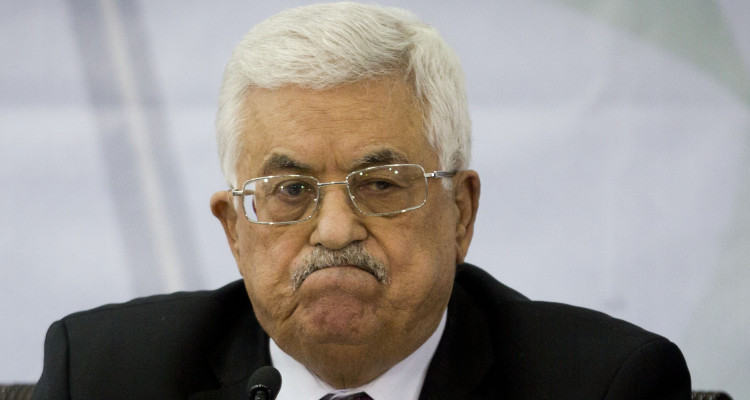
Palestinian Authority head Mahmoud Abbas. (AP/Majdi Mohammed)

The White House denied claims that it yielded to Palestinian threats and that it agreed to present a peace plan in the next four months.   

A senior White House official denied on Sunday reports that the US had made a commitment to submit a comprehensive diplomatic plan within a four-month time frame to advance the diplomatic process between Israel and the Palestinians, in exchange for a Palestinian commitment to hold back on their threat to take unilateral diplomatic initiatives against Israel.

On Sunday, the Israel Hayom daily quoted a senior Palestinian official who said that such a deal was reached between Jared Kushner, a top adviser to President Donald J. Trump, and Palestinian Authority (PA) head Mahmoud Abbas during their meeting in Ramallah on Thursday.

The unnamed White House official told Israel Hayon that the report’s “claim is incorrect and that such things were never said.”

However, a senior PLO official again insisted that such a commitment was made by the US, and that “Abu Mazen [Abbas] carries with him Kushner’s commitment to present a diplomatic plan within the next three to four months.”

“It is true we are pessimistic and disappointed by the American administration’s stance, but we have no other diplomatic alternatives,” the Palestinian official told Israel Hayom.

The Palestinians have expressed displeasure and set preconditions, including an ultimatum that unless progress towards a two-state solution is made within 45 days, the Palestinians will consider themselves no longer committed to US mediation. Kushner’s purported overture was supposedly a response to this ultimatum.

Abbas reportedly agreed in principle to Kushner’s request, but asked for Trump’s personal guarantee and commitment to the plan and the two-state vision.

Despite the seeming obstacles, Kushner and Netanyahu both expressed optimism about the possibility of successful negotiations.

By: World Israel News Staff


WATCH: Netanyahu complains to UN chief about ‘absurd obsession with Israel’

August 29, 2017

Netanyahu made a long list of complaints to UN Secretary-General António Guterres about the biased treatment of Israel by UN institutions.

August 28, 2017

Source: WATCH: Netanyahu complains to UN chief about ‘absurd obsession with Israel’

In televised remarks ahead of his meeting with UN Secretary-General António Guterres, Prime Minister Benjamin Netanyahu made a long list of complaints about the biased treatment of Israel by UN institutions.


Nikki Haley rumored for State after Tillerson distances himself from Trump

August 28, 2017

Nikki Haley rumored for State after Tillerson distances himself from Trump, DEBKAfile, August 28, 2017

Sources of Washington quote President Donald Trump as commenting recently: “Rex just doesn’t get it, he’s totally establishment in his thinking.” In an interview with Fox News’s Chris Wallace Sunday night, Secretary of State Rex Tillerson commented flatly: ”The president speaks for himself,” when asked if the president’s “both sides” comment on Charlottesville represented American values. He was the third senior cabinet member to distance himself from Trump’s response.

Some Washington insiders suggest that UN Ambassador Nikki Haley may be in line to replace Tillerson, with Deputy Secretary National Security Adviser Dina Powell possibly promoted to Haley’s job in New York.

Newsletter Distributed on College Campus Calls for Banning Veterans

August 28, 2017

Newsletter Distributed on College Campus Calls for Banning Veterans, PJ MediaTom Knighton, August 28, 2017

A newsletter distributed at the University of Colorado Colorado Springs says veterans shouldn’t be in college:

The newsletter reads as follows:

“A four-year, traditional university is supposed to be a place of learning, of understanding, of safety and security. However, there is an element among us who may be frustrating those goals: Veterans.

UCCS is known for its number of veterans who are full and part-time students. But these veterans of much of the school prides themselves on may be hurting the university.

First off, many veterans openly mock the ideas of diversity and safe spaces for vulnerable members of society. This is directly in contradiction to the mission of UCCS. Many veterans utter the mantra that they, “do not see color”. But the problem lies in their socialization into the military culture that is that of a white supremacist organization. They have been permanently tainted, and are no long fit for a four-year university.

Second, many students are frightened by the presence of veterans in their classrooms. Veterans usually have an overwhelming presence in the classroom, which can distract other students. This is usually true for vulnerable individual such as LGBTQQI2SAA, who have been known to be the butt of insensitive jokes made by veterans.

Finally, veterans usually are associated with extremists right-wing groups such as the tea party and the NRA. In order to provide a safe place for all students, extremist right-wing groups must be suppressed on campus. This would include their followers: veterans.

That is not to say that veterans should not be allowed an education. Veterans should be allowed to attend trade schools, or maybe even community college. But, in order to protect our academic institutions we must ban veterans from four-year universities.”

Oh, there is so much awful here.

Yes, veterans mock safe spaces. Especially the current batch of veterans who spent time being shot at in Iraq and Afghanistan. They’re not sympathetic to the idea that people might need a place to hide for fear of being looked at wrong.

Veterans aren’t mocking diversity in and of itself: after all, the military integrated prior to the rest of the nation, and it’s one of the most diverse bodies in the country. What veterans mock is the idea that diversity matters more than anything else. Something we all learn in the military is that competence matters more than skin color. Everything does. Just treat people as individuals.

I can’t help but laugh at the idea that the military is a white supremacist organization. The entity that named Gen. Colin Powell as the chairman of the Joint Chiefs.

This newsletter was apparently written in defense of people who are afraid of veterans on campus. I hate to break it to them, but there are veterans everywhere. They’re in almost every business, often succeeding in key roles because of their leadership and selflessness. If you feel unsafe, that’s on you. Because you’re safer with veterans than anyone else.

Further, veterans like myself served to protect these snowflakes’ right to free speech, and this is protected as that. However, make no mistake, none of us care that you’re bothered.

How to Get Out of the Iran Nuclear Deal

August 28, 2017

How to Get Out of the Iran Nuclear Deal, National Review, John R. Bolton, August 28, 2017

(A very dispiriting article appeared at MEMRI today. It notes that

Within three months, the U.S.’s position in the Middle East has changed from one of might and deterrence against Iran to one of weakness, retreat, and being deterred by Iran. This situation, of course, in no way reflects the real balance of power between the U.S. and Iran, neither generally nor regionally. It is an image created jointly by President Trump’s policies and Iran’s offensive approach.

. . . .

It is the approach of the Trump administration – which has agreed to Iran’s regional expansion, under the cover of the war on ISIS – that has prompted this huge shift in the attitude of Iran, which also is relying on Russian backing.

It appears that some in the National Security Council and elsewhere in the Trump administration have intentionally deprived President Trump of information he needs in order to deal resolutely with Iran and Iran scam. –DM)

Although candidate Donald Trump repeatedly criticized Barack Obama’s Iran nuclear agreement, his administration has twice decided to remain in the deal. It so certified to Congress, most recently in July, as required by law. Before the second certification, Trump asked repeatedly for alternatives to acquiescing yet again in a policy he clearly abhorred. But no such options were forthcoming, despite “a sharp series of exchanges” between the president and his advisers, as the New York Times and similar press reports characterized it. 

Many outside the administration wondered how this was possible: Was Trump in control, or were his advisers? Defining a compelling rationale to exit Obama’s failed nuclear deal and elaborating a game plan to do so are quite easy. In fact, Steve Bannon asked me in late July to draw up just such a game plan for the president — the option he didn’t have — which I did.

Here it is. It is only five pages long, but like instant coffee, it can be readily expanded to a comprehensive, hundred-page playbook if the administration were to decide to leave the Iran agreement. There is no need to wait for the next certification deadline in October. Trump can and should free America from this execrable deal at the earliest opportunity.

I offer the Iran nonpaper now as a public service, since staff changes at the White House have made presenting it to President Trump impossible. Although he was once kind enough to tell me “come in and see me any time,” those days are now over.

If the president is never to see this option, so be it. But let it never be said that the option didn’t exist.

I. Background:

The Trump Administration is required to certify to Congress every 90 days that Iran is complying with the July 2015 nuclear deal (the Joint Comprehensive Plan of Action — JCPOA), and that this agreement is in the national-security interest of the United States.1 While a comprehensive Iranian policy review is currently underway, America’s Iran policy should not be frozen. The JCPOA is a threat to U.S. national-security interests, growing more serious by the day. If the President decides to abrogate the JCPOA, a comprehensive plan must be developed and executed to build domestic and international support for the new policy. Under the Iran Nuclear Agreement Review Act of 2015, the President must certify every 90 days that:

(i) Iran is transparently, verifiably, and fully implementing the agreement, including all related technical or additional agreements;

(ii)  Iran has not committed a material breach with respect to the agreement or, if Iran has committed a material breach, Iran has cured the material breach;

(iii)  Iran has not taken any action, including covert activities, that could significantly advance its nuclear weapons program; and

(iv)  Suspension of sanctions related to Iran pursuant to the agreement is – (I)  appropriate and proportionate to the specific and verifiable measures taken by Iran with respect to terminating its illicit nuclear program; and (II) vital to the national-security interests of the United States.

(I)  appropriate and proportionate to the specific and verifiable measures taken by Iran with respect to terminating its illicit nuclear program; and

(II) vital to the national-security interests of the United States.

U.S. leadership here is critical, especially through a diplomatic and public education effort to explain a decision not to certify and to abrogate the JCPOA. Like any global campaign, it must be persuasive, thorough, and accurate. Opponents, particularly those who participated in drafting and implementing the JCPOA, will argue strongly against such a decision, contending that it is reckless, ill-advised, and will have negative economic and security consequences.

Accordingly, we must explain the grave threat to the U.S. and our allies, particularly Israel. The JCPOA’s vague and ambiguous wording; its manifest imbalance in Iran’s direction; Iran’s significant violations; and its continued, indeed, increasingly, unacceptable conduct at the strategic level internationally demonstrate convincingly that the JCPOA is not in the national-security interests of the United States. We can bolster the case for abrogation by providing new, declassified information on Iran’s unacceptable behavior around the world.

But as with prior Presidential decisions, such as withdrawing from the 1972 ABM Treaty, a new “reality” will be created. We will need to assure the international community that the U.S. decision will in fact enhance international peace and security, unlike the JCPOA, the provisions of which shield Iran’s ongoing efforts to develop deliverable nuclear weapons. The Administration should announce that it is abrogating the JCPOA due to significant Iranian violations, Iran’s unacceptable international conduct more broadly, and because the JCPOA threatens American national-security interests.

The Administration’s explanation in a “white paper” should stress the many dangerous concessions made to reach this deal, such as allowing Iran to continue to enrich uranium; allowing Iran to operate a heavy-water reactor; and allowing Iran to operate and develop advanced centrifuges while the JCPOA is in effect. Utterly inadequate verification and enforcement mechanisms and Iran’s refusal to allow inspections of military sites also provide important reasons for the Administration’s decision.

Even the previous Administration knew the JCPOA was so disadvantageous to the United States that it feared to submit the agreement for Senate ratification. Moreover, key American allies in the Middle East directly affected by this agreement, especially Israel and the Gulf states, did not have their legitimate interests adequately taken into account. The explanation must also demonstrate the linkage between Iran and North Korea. We must also highlight Iran’s unacceptable behavior, such as its role as the world’s central banker for international terrorism, including its directions and control over Hezbollah and its actions in Iraq, Syria, and Lebanon. The reasons Ronald Reagan named Iran as a state sponsor of terrorism in 1984 remain fully applicable today.

We must also highlight Iran’s unacceptable behavior, such as its role as the world’s central banker for international terrorism, including its directions and control over Hezbollah and its actions in Iraq, Syria, and Lebanon. The reasons Ronald Reagan named Iran as a state sponsor of terrorism in 1984 remain fully applicable today.

II. Campaign Plan Components

There are four basic elements to the development and implementation of the campaign plan to decertify and abrogate the Iran nuclear deal: 1.     Early, quiet consultations with key players such as the U.K., France, Germany, Israel, and Saudi Arabia, to tell them we are going to abrogate the deal based on outright violations and other unacceptable Iranian

1.     Early, quiet consultations with key players such as the U.K., France, Germany, Israel, and Saudi Arabia, to tell them we are going to abrogate the deal based on outright violations and other unacceptable Iranian behavior, and seek their input. 2.     Prepare the documented strategic case for withdrawal through a detailed white paper (including declassified intelligence as appropriate) explaining why the deal is harmful to U.S. national interests, how Iran has violated it, and why Iran’s behavior more broadly has only worsened since the deal was agreed. 3.     A greatly expanded diplomatic campaign should immediately follow the announcement, especially in Europe and the Middle East, and we should ensure

2.     Prepare the documented strategic case for withdrawal through a detailed white paper (including declassified intelligence as appropriate) explaining why the deal is harmful to U.S. national interests, how Iran has violated it, and why Iran’s behavior more broadly has only worsened since the deal was agreed. 3.     A greatly expanded diplomatic campaign should immediately follow the announcement, especially in Europe and the Middle East, and we should ensure

3.     A greatly expanded diplomatic campaign should immediately follow the announcement, especially in Europe and the Middle East, and we should ensure continued emphasis on the Iran threat as a top diplomatic and strategic priority.

4.     Develop and execute Congressional and public diplomacy efforts to build domestic and foreign support.

III. Execution Concepts and Tactics

1.     Early, quiet consultations with key players It is critical that a worldwide effort be initiated to inform our allies, partners, and others about Iran’s unacceptable behavior. While this effort could well leak to the press, it is nonetheless critical that we inform and consult with our allies and partners at the earliest possible moment, and, where appropriate, build into our effort their concerns and suggestions. This quiet effort will articulate the nature and details of the violations and the type of relationship the U.S. foresees in the future, thereby laying the foundation for imposing new sanctions barring the transfer of nuclear and missile technology or dual use technology to Iran. With Israel and selected others, we will discuss military options. With others in the Gulf region, we can also discuss means to address their concerns from Iran’s menacing behavior. The advance consultations could begin with private calls by the President, followed by more extensive discussions in capitals by senior Administration envoys. Promptly elaborating a comprehensive tactical diplomatic plan should be a high priority.

2.     Prepare the documented strategic case The White House, coordinating all other relevant Federal agencies, must forcefully articulate the strong case regarding U.S. national-security interests. The effort should produce a “white paper” that will be the starting point for the diplomatic and domestic discussion of the Administration decision to abrogate the JCPOA, and why Iran must be denied access to nuclear technology indefinitely. The white paper should be an unclassified, written statement of the Administration’s case, prepared faultlessly, with scrupulous attention to accuracy and candor. It should not be limited to the inadequacies of the JCPOA as written, or Iran’s violations, but cover the entire range of Iran’s continuing unacceptable international behavior.

Although the white paper will not be issued until the announcement of the decision to abrogate the JCPOA, initiating work on drafting the document is the highest priority, and its completion will dictate the timing of the abrogation announcement.

A thorough review and declassification strategy, including both U.S. and foreign intelligence in our possession should be initiated to ensure that the public has as much information as possible about Iranian behavior that is currently classified, consistent with protecting intelligence sources and methods. We should be prepared to “name names” and expose the underbelly of the Iranian Revolutionary Guard business activities and how they are central to the efforts that undermine American and allied national interests. In particular, we should consider declassifying information related to activities such as the Iran-North Korea partnership, and how they undermine fundamental interests of our allies and partners.

3.      Greatly expanded diplomatic campaign post-announcement

The Administration, through the NSC process, should develop a tactical plan that uses all available diplomatic tools to build support for our decision, including what actions we recommend other countries to take. But America must provide the leadership. It will take substantial time and effort and will require a “full court press” by U.S. embassies worldwide and officials in Washington to drive the process forward. We should ensure that U.S. officials fully understand the decision, and its finality, to help ensure the most positive impact with their interlocutors.

Our embassies worldwide should demarche their host governments with talking points (tailored as may be necessary) and data to explain and justify abrogating JCPOA. We will need parallel efforts at the United Nations and other appropriate multilateral organizations. Our embassies should not limit themselves to delivering the demarche, however, but should undertake extensive public diplomacy as well.

After explaining and justifying the decision to abrogate the deal, the next objective should be to recreate a new counter-proliferation coalition to replace the one squandered by the previous Administration, including our European allies, Israel, and the Gulf states. In that regard, we should solicit suggestions for imposing new sanctions on Iran and other measures in response to its nuclear and ballistic-missile programs, sponsorship of terrorism, and generally belligerent behavior, including its meddling in Iraq and Syria.

Russia and China obviously warrant careful attention in the post-announcement campaign. They could be informed just prior to the public announcement as a courtesy, but should not be part of the pre-announcement diplomatic effort described above. We should welcome their full engagement to eliminate these threats, but we will move ahead with or without them.

Iran is not likely to seek further negotiations once the JCPOA is abrogated, but the Administration may wish to consider rhetorically leaving that possibility open in order to demonstrate Iran’s actual underlying intention to develop deliverable nuclear weapons, an intention that has never flagged.

In preparation for the diplomatic campaign, the NSC interagency process should review U.S. foreign-assistance programs as they might assist our efforts. The DNI should prepare a comprehensive, worldwide list of companies and activities that aid Iran’s terrorist activities.

4.      Develop and execute Congressional and public diplomacy efforts

The Administration should have a Capitol Hill plan to inform members of Congress already concerned about Iran, and develop momentum for imposing broad sanctions against Iran, far more comprehensive than the pinprick sanctions favored under prior Administrations. Strong congressional support will be critical. We should be prepared to link Iranian behavior around the world, including its relationship with North Korea, and its terrorist activities. And we should demonstrate the linkage between Iranian behavior and missile proliferation as part of the overall effort that justifies a national-security determination that U.S. interests would not be furthered with the JCPOA.

Unilateral U.S. sanctions should be imposed outside the framework of Security Council Resolution 2231 so that Iran’s defenders cannot water them down; multilateral sanctions from others who support us can follow quickly.

The Administration should also encourage discussions in Congress and in public debate for further steps that might be taken to go beyond the abrogation decision. These further steps, advanced for discussion purposes and to stimulate debate, should collectively demonstrate our resolve to limit Iran’s malicious activities and global adventurism. Some would relate directly to Iran; others would protect our allies and partners more broadly from the nuclear proliferation and terrorist threats, such as providing F-35s to Israel or THAAD resources to Japan. Other actions could include:

End all landing and docking rights for all Iranian aircraft and ships at key allied ports;

End all visas for Iranians, including so called “scholarly,” student, sports, or other exchanges;

Demand payment with a set deadline on outstanding U.S. federal-court judgments against Iran for terrorism, including 9/11;

Announce U.S. support for the democratic Iranian opposition;

Expedite delivery of bunker-buster bombs;

Announce U.S. support for Kurdish national aspirations, including Kurds in Iran, Iraq, and Syria;

Provide assistance to Balochis, Khuzestan Arabs, Kurds, and others — also to internal resistance among labor unions, students, and women’s groups; Actively organize opposition to Iranian political objectives in the U.N.

IV. Conclusion

This effort should be the Administration’s highest diplomatic priority, commanding all necessary time, attention, and resources. We can no longer wait to eliminate the threat posed by Iran. The Administration’s justification of its decision will demonstrate to the world that we understand the threat to our civilization; we must act and encourage others to meet their responsibilities as well.

___________________________

1 Although this paper will refer to “the JCPOA,” the abrogation decision should also encompass the July 14, 2015, statement by the Security Council’s five permanent members and Germany, attached as Annex B to Security Council Resolution 2231. The JCPOA is attached as Annex A to Resolution 2231.