Archive for August 29, 2017

Congress Seeks to Cut U.S. Aid to Islamic Charity Tied to Terror

August 29, 2017

Congress Seeks to Cut U.S. Aid to Islamic Charity Tied to Terror, Washington Free Beacon, August 28, 2017

Getty Images

A new congressional measure seeks to cut all U.S. funding for an Islamic charity that has been banned in some countries for providing assistance to Hamas and other terror-tied organizations, including the Muslim Brotherhood, the Washington Free Beacon has learned.

The new measure, which was proposed as an amendment to Congress’s yearly appropriations bill, which sets U.S. expenditures, would ban any taxpayer funds from being provided to Islamic Relief Worldwide, or IRW, a global charitable organization that has been linked to Hamas and the Muslim Brotherhood.

IRW is banned in some Middle Eastern countries for its alleged support of terror organizations, though the United States has continued to provide taxpayer funds to the organization under the Obama administration, sparking outrage among some lawmakers and regional experts.

The move to ban U.S. funding to IRW was authored by Rep. Ron DeSantis (R., Fla.), a member of the House Foreign Affairs Committee, who told the Free Beacon that the U.S. taxpayers should not be giving to any organization tied to terror movements, particularly the Muslim Brotherhood, which continues to support extremist activities.

“U.S. tax dollars cannot go to groups involved in funding terrorism,” DeSantis told the Free Beacon. “Any group tied to Hamas or the Muslim Brotherhood should be ineligible for funding.  It is a slap in the face of the American taxpayer to allow such groups to receive federal funding.”

IRW has been a source of tension for some time. Congressional leaders and terrorism experts expressed shock at the Obama administration in 2015, when the Free Beacon disclosed the U.S. Agency for International Development, or USAID, a taxpayer funded group, had awarded IRW $100,000 in grants.

The Obama administration awarded IRW another $270,000 in 2016 via a grant from the Department of Health and Human Services.

The effort to ban IRW from receiving any further taxpayer funds is part of a larger effort by DeSantis and others to isolate Muslim Brotherhood-tied organizations and other terror groups that have cashed in on American taxpayer funds through a range of questionable third-party organization.

IRW is banned in both the United Arab Emirates and Israel after investigations determined the group has ties to Hamas, the Muslim Brotherhood, and other extremist entities bound up in terror financing schemes, according to multiple reports.

An independent investigation by the Israeli government sparked allegations the charity was providing material support to Hamas and its operatives.

The charity “provides support and assistance to Hamas’s infrastructure,” Israel’s Ministry of Foreign Affairs charged in 2006. “The IRW’s activities in Judea, Samaria, and the Gaza Strip are carried out by social welfare organizations controlled and staffed by Hamas operatives.”

IRW was also cited as a “hub for donations from charities accused of links to al Qaeda and other terror groups,” according to a separate investigation conducted by the Gatestone Institute.

The charity’s “accounts show that it has partnered with a number of organizations linked to terrorism and that some of the charity’s trustees are personally affiliated with extreme Islamist groups that have connections to terror,” according to report, which was authored by terrorism analyst Samuel Westrop.

Israeli authorities arrested IRW’s Gaza coordinator, Ayaz Ali, in 2006 due to his alleged work on Hamas’s behalf.

“Incriminating files were found on Ali’s computer, including documents that attested to the organization’s ties with illegal Hamas funds abroad (in the UK and in Saudi Arabia) and in Nablus,” Israel’s foreign affairs ministry said at the time. “Also found were photographs of swastikas superimposed on IDF symbols, of senior Nazi German officials, of Osama Bin Laden, and Abu Musab al-Zarqawi, as well as many photographs of Hamas military activities.”

China warns tensions on Korean Peninsula at ‘tipping point’ after Pyongyang missile launch

August 29, 2017

Source: China warns tensions on Korean Peninsula at ‘tipping point’ after Pyongyang missile launch — RT News

Read Also :

‘Overwhelming force’: South Korea conducts bombing drill in response to Pyongyang’s missile test

https://www.rt.com/news/401236-south-korea-bombing-drill/

UN sanctions no longer working on N. Korea, unilateral action worsens crisis – Russian officials

https://www.rt.com/news/401302-un-sanctions-nkorea-exhausted/

100% with Japan’: Trump, Abe agree to increase pressure on Pyongyang after missile test

https://www.rt.com/news/401235-us-japan-pyongyang-pressure/

Pedestrians watch the news on a huge screen displaying a map of Japan (R) and the Korean Peninsula, in Tokyo on August 29, 2017. © Toshifumi Kitamura / AFP

China has warned that the situation on the Korean Peninsula has reached “tipping point,” just hours after Pyongyang launched a ballistic missile. Meanwhile, North Korea has accused the US of driving the region towards an “extreme level of explosion.”

Speaking at a regular news briefing on Tuesday, Chinese Foreign Ministry spokeswoman Hua Chunying said the situation is “now at a tipping point approaching a crisis. At the same time there is an opportunity to reopen peace talks.

“We hope relevant parties can consider how we can deescalate the situation on the peninsula and realize peace and stability on the peninsula,” she added, as quoted by AFP.

Read more

© Kevin Lamarque

Hua went on to mention joint drills staged by the US and South Korea, the most recent of which began last week, saying the two sides “held one round after another of joint military exercises and they exerted military pressure on the DPRK (North Korea).

“After so many rounds and vicious cycles, do they feel they are nearer to peaceful settlement of the issue?

“The facts have proven that pressure and sanctions cannot fundamentally solve the issue,” Hua said, referring to UN sanctions imposed on Pyongyang.

The remarks came after North Korea launched a missile which, according to the Japanese and South Korean governments, passed through Japan’s northern airspace.

Seoul responded quickly following the launch, conducting bombing drills to demonstrate its “overwhelming” military force to the North. The show of force involved four F-15K fighter jets dropping Mk84 multipurpose bombs on a shooting range near the inter-Korean border in Taebaek, the presidential press secretary told reporters, according to Yonhap.

Tokyo also staged a pre-planned Patriot surface-to-air missile battery training exercise following the launch.

Hours after the launch, Han Tae-song, North Korea’s ambassador to the UN in Geneva, stressed Pyongyang’s right to defend against “hostile” actions by the US.

“Now that the US has openly declared its hostile intention towards the Democratic People’s Republic of [North] Korea, by waging aggressive joint military exercises despite repeated warnings… my country has every reason to respond with tough counter-measures as an exercise of its right to self-defense,” Han told the UN Conference on Disarmament, as quoted by Reuters.

Read more

© Kim Hong-Ji

“And the US should be wholly responsible for the catastrophic consequences it will entail,” he added, while failing to explicitly mention Tuesday’s missile launch.

Tensions between Washington and Pyongyang have worsened since US President Donald Trump took office, with the American leader repeatedly vowing to “solve the problem” of North Korea.

During a 40-minute phone call with Japanese Prime Minister Shinzo Abe following the Tuesday launch, Trump stressed that the US is “100 percent with Japan,” with the two leaders agreeing to increase pressure on Pyongyang.

Meanwhile, China and Russia have proposed a “double freeze” plan which would see North Korea suspend its missile launches in exchange for a halt in joint US-South Korea military drills.

The plan was rejected by the US, with State Department spokesperson Heather Neuert stating earlier this month that the “so-called double freeze, that’s not going to change. We’re allowed to do it (exercises). We’re allowed to do it with our ally, South Korea. We will continue to do that and that’s just not going to change.”

How Trump should respond to North Korea’s missile over Japan

August 29, 2017

How Trump should respond to North Korea’s missile over Japan, Washington ExaminerTom Rogan, August 29,2017

Ultimately, Kim has changed the dimensions of the crisis by this missile launch. While a diplomatic solution is both possible and preferable, Trump must ensure everyone knows that time for a peaceful solution is running out.

********************************

Early Tuesday morning Japan time, North Korea fired a missile over Japan’s northern Hokkaido island. The missile launch represents a major North Korean escalation in its ongoing standoff with the United States, South Korea, and Japan.

This is the first time in 8 years that North Korea has fired a missile over Japanese territory, and in doing so Kim Jong Un has seized back the strategic initiative.

Kim’s success in that regard is reflected by Japan’s apparent failure to try and shoot down the missile. In recent weeks, the Trump administration had suggested any launch against Japanese territory would be dealt with aggressively and immediately; implying the use of anti-ballistic missile weapons or retaliation. True, Japan might say that it didn’t act here because the missile’s trajectory was indicative of a Western Pacific impact, but Kim will feel his roll of the dice has been vindicated.

That puts the Trump administration in a difficult position. As I noted last week, while Trump’s tough-rhetoric on North Korea has been largely successful, there was a growing likelihood that Kim would launch a missile test against South Korea or Japan. That option, now rendered, allows Kim to preach defiance while avoiding Guam or another U.S. territory.

Still, the specter of a ballistic missile passing over one of America’s closest allies cannot be ignored. After all, it cuts to the heart of any realistic deterrent policy.

So what should Trump do?

I think four things. First, he should work to establish a consensus with Prime Minister Shinzo Abe of Japan on what to do if another launch takes place. Here, both leaders should state any further missiles on course to transit Japan will be shot down. North Korea must know that this activity cannot become the new norm. Absent that understanding, Kim will be emboldened to further acts of aggression.

Second, the president should direct Nikki Haley to work with the U.N. security council to pass new sanctions legislation on North Korea. This should include the sanctioning of North Korean government accounts used to support its diplomats around the world, and the North’s importation of machinery, electronics, and refined petroleum from China and Russia. While China and Russia might well veto such legislation, it would force China and Russia to take a stand against the international community. With export reliant economies, both nations would worry about the impacts of that vote. An able negotiator, Nikki Haley should call on allies like Britain and France to lobby on America’s behalf.

Third, Trump should order the deployment of additional forces to the U.S. Military’s Pacific Command. As I’ve explained, these deployments should be focused on air and naval striking capabilities. The intent here would not simply serve the prudent preparation for military action against North Korea’s ballistic missile program, but to remind China that the U.S. sees the end game on the horizon. North Korean nuclear-ballistic capabilities are growing in many areas, and China continues to take only mild action. Put simply, either that must change or the U.S. must strike.

Fourth, as soon as is feasibly possible (following his visit to Texas), Trump should visit Tokyo and make a speech in solidarity with U.S. allies in the region. Doing so wouldn’t simply calm our friends in the Asia-Pacific, it would personally stake Trump’s reputation on resolving this crisis. Knowing his ego is considerable, Trump’s arrival might deter those like China and North Korea who would accept the North’s conduct as the new norm.

Ultimately, Kim has changed the dimensions of the crisis by this missile launch. While a diplomatic solution is both possible and preferable, Trump must ensure everyone knows that time for a peaceful solution is running out.

North Korea fires missile through Japan’s airspace

August 29, 2017

Source: North Korea fires missile through Japan’s airspace — RT News

Pyongyang has launched a missile which, according to the Japanese and South Korean governments, passed through northern Japan’s airspace.

The Japanese government activated its J-Alert warning system after North Korea fired an unidentified missile early Tuesday morning.

The North Korean missile passed over Japanese territory around 6:06am local time. The Japanese military did not attempt to shoot down the missile but warned people to take precautions, Reuters reports citing local media.

The Japanese government announced the missile fell into the Pacific ocean just 14 minutes after the launch, some 1,180 km east of Hokkaido’s Cape Erimo, the Japan Times reports.

Japan’s atomic facilities suffered no damage, its Nuclear Regulation Authority said. No damage has been reported to ships or aircraft in the region as the missile broke off into three pieces before falling into the water, a NHK report added.

Read more

FILE PHOTO © KCNA

Japan’s Chief Cabinet Secretary described Pyongyang’s latest action as a “grave threat.”

“This ballistic missile launch appeared to fly over our territory. It is an unprecedented, serious and grave threat to our nation,” Yoshihide Suga told reporters, according to Reuters.

Suga added that Tokyo will work closely with Washington and Seoul, as well as other regional countries to issue an appropriate response. South Korea’s presidential office, Cheong Wa Dae, has already convened a National Security Council (NSC) session to discuss the issue.

Pentagon spokesman Col. Robert Manning confirmed that the “missile launch by North Korea flew over Japan” and that the US military was assessing its parameters.

“North American Aerospsace Defense Command, or NORAD, determined the missile launch from North Korea did not pose a threat to North America. We are working closely with Pacific Command, Strategic Command and NORAD, and we’ll provide an update as soon as possible,” he added, according to ABC news.

Meanwhile, South Korea’s Joint Chiefs of Staff said Pyongyang fired a “projectile… in the direction of the East Sea (Sea of Japan) at 5:57am,” according to Yonhap.

South Korea’s military also confirmed that the “ballistic missile” launched by Pyongyang flew over Japan.

“It passed through the sky over Japan,” the JCS said. It added that the American and S. Korean militaries are now analyzing the latest North Korean missile launch.

The latest incident comes just three days after the North fired three short-range missiles into the Sea of Japan. According to the Pentagon, two of the missiles fell into the water, while a third blew up on the launch pad on August 26.

Read more

North Korea's leader Kim Jong Un. © KCNA

Following Tuesday’s launch and flyby over Japanese territory, the country’s prime minister vowed to do everything in his power to protect his nation.

“We will make utmost efforts to firmly protect the lives of the people,” Shinzo Abe said Tuesday before convening an emergency session on the missile firing, Reuters reports.

The latest North Korean missile launches coincide with the annual US-South Korean Ulchi Freedom Guardian exercises which are set to wrap up on August 31.

The Pentagon previously stated that Pyongyang’s behavior is nothing short of a provocation amid the heightened tensions on the peninsula, after two missiles flew some 250 kilometers before falling into the Sea of Japan Saturday.

“You’re still firing missiles, so that’s a threat. We look at that as a threat,” Manning told reporters, according to Yonhap.

“If you’re asking if those three short-range missiles was less of a threat, the answer is no. It was a provocative action,” Manning added.

Stating that Saturday’s test did not exhibit advancements in Pyongyang’s ballistic missile technology, Manning however added that “we have to make the assumption that they continue to learn throughout each one of these missile launches.”

“We watch (North Korea) very closely and we’d be postured to respond,” the Pentagon spokesman concluded.

Tensions between Pyongyang and Washington reached new heights after US president Donald Trump recently threatened to unleash “fire and fury” on North Korea if it continues making threats against the United States.

Trump’s strong comments followed the July 28 Hwasong-14 ballistic missile launch by North Korea, after which Pyongyang boasted about having acquired the capability to strike the US mainland.

Pyongyang responded to Washington’s rhetoric by saying it was working on a plan to launch a medium-range ballistic missile close to the US territory of Guam, some 3,200km from North Korea. Guam, a tiny US territory located in Micronesia in the western Pacific, is home to two major American military bases housing over 6,000 personnel.

In a related development, South Korea’s National Intelligence Service warned Monday that its neighbor might be preparing its sixth nuclear weapon test from a nuclear test site in Punggye-ri. North Korea had conducted five nuclear tests – in 2006, 2009, 2013 and in January and September 2016. During the last test, the North claimed it had successfully detonated a small nuclear warhead.

Amid the ongoing North Korean ballistic tests, the UN Security Council earlier this month unanimously agreed on a new set of restrictive measures against Pyongyang. The new round of sanctions ban North Korean exports of coal, iron, iron ore, lead, lead ore and seafood. It also prohibits increasing the current numbers of North Korean laborers working abroad, new joint ventures with Pyongyang and new investments in joint ventures.

US denies yielding to Palestinian demands for a peace plan

August 29, 2017

August 28, 2017

Source: US denies yielding to Palestinian demands for a peace plan

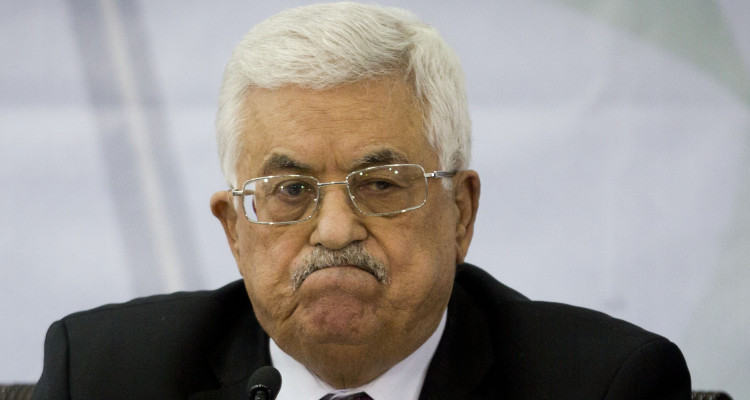
Palestinian Authority head Mahmoud Abbas. (AP/Majdi Mohammed)

The White House denied claims that it yielded to Palestinian threats and that it agreed to present a peace plan in the next four months.   

A senior White House official denied on Sunday reports that the US had made a commitment to submit a comprehensive diplomatic plan within a four-month time frame to advance the diplomatic process between Israel and the Palestinians, in exchange for a Palestinian commitment to hold back on their threat to take unilateral diplomatic initiatives against Israel.

On Sunday, the Israel Hayom daily quoted a senior Palestinian official who said that such a deal was reached between Jared Kushner, a top adviser to President Donald J. Trump, and Palestinian Authority (PA) head Mahmoud Abbas during their meeting in Ramallah on Thursday.

The unnamed White House official told Israel Hayon that the report’s “claim is incorrect and that such things were never said.”

However, a senior PLO official again insisted that such a commitment was made by the US, and that “Abu Mazen [Abbas] carries with him Kushner’s commitment to present a diplomatic plan within the next three to four months.”

“It is true we are pessimistic and disappointed by the American administration’s stance, but we have no other diplomatic alternatives,” the Palestinian official told Israel Hayom.

The Palestinians have expressed displeasure and set preconditions, including an ultimatum that unless progress towards a two-state solution is made within 45 days, the Palestinians will consider themselves no longer committed to US mediation. Kushner’s purported overture was supposedly a response to this ultimatum.

Abbas reportedly agreed in principle to Kushner’s request, but asked for Trump’s personal guarantee and commitment to the plan and the two-state vision.

Despite the seeming obstacles, Kushner and Netanyahu both expressed optimism about the possibility of successful negotiations.

By: World Israel News Staff


WATCH: Netanyahu complains to UN chief about ‘absurd obsession with Israel’

August 29, 2017

Netanyahu made a long list of complaints to UN Secretary-General António Guterres about the biased treatment of Israel by UN institutions.

August 28, 2017

Source: WATCH: Netanyahu complains to UN chief about ‘absurd obsession with Israel’

In televised remarks ahead of his meeting with UN Secretary-General António Guterres, Prime Minister Benjamin Netanyahu made a long list of complaints about the biased treatment of Israel by UN institutions.