Archive for June 2017

Pakistani Law Makes Ramadan a Dangerous Time for Religious Minorities

June 9, 2017

Pakistani Law Makes Ramadan a Dangerous Time for Religious Minorities, Investigative Project on Terrorism, Ammar Anwer, June 9, 2017

Irfan Masih

The unconscious man rushed to a Pakistani hospital was covered in filth. Irfan Masih was a sewer cleaner, and stricken by poisonous gases trapped inside a sewer hole. Time was of the essence. But emergency staff at the hospital in Pakistan’s Sindh province refused to treat Masih, a 30-year-old Christian, until he was thoroughly washed.

It is Ramadan and the doctors were fasting.

They cleaned Masih and pumped oxygen into him, but the pump was empty. Lying in the corner of the hospital, Irfan died gasping for air.

“My brother died during the process of cleansing the filth from his body,” Irfan’s brother, Parvez, told a local newspaper. Although Muslim medical professionals across the world do interact with patients in all sorts of conditions during Ramadan but according to Irfan’s mother, the doctors refused to treat him because they were fasting and said her son was ‘napaak’ (unclean).

In Pakistan, people from the Christian community face severe discrimination, and are often given jobs in sanitation. Angered at the doctors’ negligence, people from the Christian community staged a protest outside the press club in Umerkot.

During Ramadan, Muslims abstain from eating, drinking and having sex during daylight hours. For non-Muslims in Pakistan, the holiday can be a dangerous time. Last year, police severely beat an elderly Hindu man for eating publicly during the holiday. He was eating food given to him by a charity.

Similarly, a 2013 video showed a man who said he was beaten up for eating publicly during the Muslim fasting month.

Critics blame Pakistan’s Ehtram-e-Ramadhan ordinance for creating this intolerant environment. Enacted in 1981, the ordinance seeks to ensure that the sanctity of the month of Ramadan is preserved.

Minorities are attacked even though article 3 of the ordinance refers to people who follow Islam:

1. No person who, according to the tenets of Islam, is under an obligation to fast shall eat, drink or smoke in a public place during fasting hours in the month of Ramadhan.

2. Whoever contravenes the provisions of sub-section (1) shall be punishable with simple imprisonment for a term which may extend to three months, or with fine which may extend to five hundred rupees, or with both.

Although the law does not mention non-Muslims, the closing of all hotels, restaurants and even common food stores during the day does affect their lives.

The law defines a public place as “any hotel, restaurant, canteen, house room, tent, enclosures, road lane, bridge or other place to which the public have access.” It further requires that those places remain closed during fasting hours.

The ordinance states that it intends to protect the holiness of Ramadan, but while doing so it clearly violates the principles of fundamental freedoms. It forces all Muslims and non-Muslims not to eat in public, an act that could lead to fines and even imprisonment.

An amendment passed last month hikes the fine from Rs.500 to Rs.25,000 (about $388) for hotel owners who would violate the law. Television channels and theaters would pay a minimum fine of Rs.500,000 (about $7,7670) for violating the law.

I wonder whether we could protect the sanctity of any “blessed month” by adopting such harsh, coercive and tyrannical measures. Respect is earned, not imposed.

When the state starts legislating on religious grounds, it creates an environment of intolerance toward religious minorities and legitimizes discrimination. Pakistan has done this with the “Ehtram-e-Ramadhan ordinance.” Just last week, four people were arrested by the police for eating during fasting hours.

This ordinance enshrines intolerance and violates basic human rights. By closing down all the restaurants and food stores, it not only infringes upon the rights of various religious minorities in Pakistan, but also on those Muslims who do not want to comply with the ordinance.

Silence from the local media and Pakistani human rights groups over this controversial law that continues to allow maltreatment of minorities during the entire month of Ramadan is quite depressing.

Ammar Anwer is an ex-Islamist who writes for The Nation, Pakistan Today and other media outlets. He believes in secularism and democracy and aspires to see Pakistan become a pluralistic state.

Encouraging integration in united Jerusalem

June 9, 2017

Encouraging integration in united Jerusalem, Israel Hayom, David M. Weinberg, June 9, 2017

Koren and Avrahami believe that more and more residents of east Jerusalem understand that there is no alternative to Israeli control of the city on the horizon, and that they will always be better off under Israeli administration. In fact, the last Washington Institute survey in east Jerusalem, conducted in June 2015, found that 52% of Arab residents would prefer to become citizens of Israel, whereas only 42% would want to be citizens of the Palestinian state, even after a peace accord.

*************************************

Last week, I wrote about Turkey’s and other radical Islamist groups’ growing influence in east Jerusalem political and social affairs, as reported recently in the Israeli journal for thought and policy Hashiloach.

This week, I wish to present the more optimistic side of the situation, focusing on trends among east Jerusalem Arabs toward integration into Israeli society, and on the policies being implemented by Jerusalem Mayor Nir Barkat to increase an Arab sense of belonging in united Jerusalem.

There are some 320,000 Arab residents in Jerusalem (plus 50,000 West Bank Palestinians who reside in the city illegally or by virtue of family reunification). They constitute about 37% of Jerusalem’s population and 20% of the Israel’s overall Arab population. About 100,000 of Jerusalem’s Arabs live in chaotic neighborhoods that lie within the municipal boundaries of Jerusalem but are on the other side of the security fence.

The Arabs of Jerusalem are relatively young and impoverished. According to the National Insurance Institute, 83% of the children in east Jerusalem are below the poverty line, as opposed to 56% of Israeli Arab children and 39% of Israeli Jewish children in west Jerusalem.

Residents of east Jerusalem have the legal status of permanent residents, which in practice is the same as that of foreign nationals who want to live in Israel for an extended period. This status grants them the right to live and work in Israel without requiring special permits (unlike Palestinians in Judea and Samaria). It also entitles them to benefits under the National Insurance Law and the National Health Insurance Law. As permanent residents, they are eligible to vote in municipal but not in national elections.

Obviously, these social and health benefits rank high among the reasons why Palestinians prefer to live within the municipal boundaries of Jerusalem, even though they could obtain cheaper and better housing elsewhere.

East Jerusalem Arabs “are entangled in a thicket of contradictions,” Dr. David Koren and Ben Avrahami, the advisers on east Jerusalem affairs for the Jerusalem Municipality, write. “They assert their Palestinian national identity alongside an unprecedented demand for Israeli citizenship; throw stones at the light rail while using it; harass visitors to Hadassah Hospital on Mount Scopus but value the care that Arabs receive in its clinics and wards; protest the enforcement of planning and building laws in Arab neighborhoods while calling for an increased police presence there to maintain public order; campaign against any manifestation of normalization with Israel in tandem with a tremendous interest in learning Hebrew and an increasing preference for the Israeli rather than the Palestinian matriculation certificate…”

Koren and Avrahami believe that more and more residents of east Jerusalem understand that there is no alternative to Israeli control of the city on the horizon, and that they will always be better off under Israeli administration. In fact, the last Washington Institute survey in east Jerusalem, conducted in June 2015, found that 52% of Arab residents would prefer to become citizens of Israel, whereas only 42% would want to be citizens of the Palestinian state, even after a peace accord.

As mentioned, there has been a marked increase in the numbers of east Jerusalemites filing applications for Israeli citizenship; more than 1,000 in 2016. Other indicators of belonging are the many programs to learn Hebrew that have been established in east Jerusalem in recent years; the mounting preference to send children to schools that lead to Israeli high school matriculation; and the soaring demand in east Jerusalem for pre-university preparatory programs subsidized by the Israeli government.

Arab Jerusalemites have also enthusiastically welcomed the municipality’s initiatives in east Jerusalem, such as employment centers, community councils at the neighborhood level, and a high-tech incubator.

In addition, the Jerusalem municipality’s major effort to reduce disparities and improve the level of services and infrastructure in Arab neighborhoods, with an emphasis on roads (more than 50 million shekels — $14 million — a year) and classrooms (500 million shekels over the coming decade) has not gone without notice.

“In our eyes,” write the municipality Arab affairs advisers, “even the protest demonstrations by east Jerusalemites in Safra Square, in front of City Hall, are not nuisances, but rather a welcome phenomenon that expresses a de facto recognition that the municipality is the appropriate address for solving their problems. This is the fruit of normalization.”

“We believe that, despite their Palestinian national identity, broad sectors of the east Jerusalem Arab population have come around to a pragmatic attitude about Israeli authorities. Increasingly, they see Israel not only as a culprit to be blamed for their difficulties but as the only possible source for solving their problems and turning their lives around.”

“There are many Palestinians in east Jerusalem who have reached the instrumental level of exploiting the advantages offered by the western half of the city and would now like to participate in Israeli society at a deeper level — learning from it, mingling with it, and even joining it. An expression of this is the growing number of east Jerusalem teenagers who are enlisting to civil service programs after high school.”

Koren and Avrahami argue that Israel must invest in these propitious trends, for they have strategic implications both for the unity of the city and its security. “In another decade or two, the teenagers who today engage more deeply with Israeli society will be the pragmatists who moderate Palestinian society.”

During recent rounds of violence, they note, teachers and principals went out into the streets to get their pupils to curb their emotions and avoid attacking innocent persons, both Arabs and Jews. “In another decade, perhaps these teachers will be joined by businesspeople, community activists and cultural figures who endeavor to introduce mutual respect and sensitivity to the turbulent reality of Jerusalem.”

David M. Weinberg (http://davidmweinberg.com/) is director of public affairs at the Begin-Sadat Center for Strategic Studies.

Qatar – the end of the road?

June 9, 2017

Qatar – the end of the road? Israel National News, Dr. Mordechai Kedar, June 9, 2017

(Please see also, Qatar, Trump and Double Games. — DM)

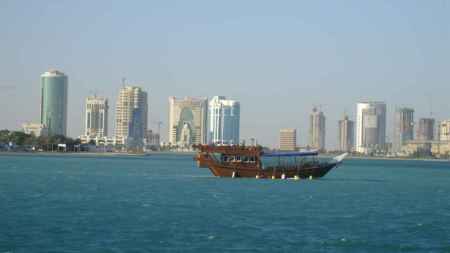
The Emirate of Qatar is a peninsula that juts out from Saudi Arabia into the Persian Gulf. The only overland route out of Qatar is by way of Saudi Arabia and if that route is blocked, the only way to reach Qatar or leave it is by air or sea. However, flights to and from Qatar pass over Saudi air space part of the time and ships from or to Qatar have to pass through Saudi territorial waters. This means that Saudi Arabia can in effect declare a total blockade on Qatar if it so desires. It has never done so before, but it began the process on June 5th.

In addition to a blockade, the Saudis, joined by the United Emirates, Bahrain, Egypt, Libya, Mauritius, the Philippines and the Maldives, cut off diplomatic and consular relations with Qatar.  Egypt, Libya and the Emirates declared that they would ban Qatari plans and ships from their air space and territorial waters. In 2014, these countries took much milder steps in order to punish Qatar, cancelling them once Qatar agreed to accept the dictates of the Umma and signed the Riyadh agreement along with the rest of the Arab nations.

The reasons provided by the countries involved for the unprecedented severity of the current steps against Qatar included: “Qatar aids the Muslim Brotherhood and other terror organizations such as Hezbollah, Hamas, ISIS and Jebhat al-Nusrah” and “The Emir of  Qatar has declared that Iran is a good nation” as well as “Qatar destabilizes our regime,” as well  as ” Qatar provides hiding places and shelter to Muslim Brotherhood leaders who fled there from Egypt,” and “Qatar is giving aid to  the Houthi rebels (read Shiites) in Yemen.”

Another and most subtle reason, whose source is a Kuwaiti commentator, appears on al Jazeera‘s site: “Qatar refused to meet Trump’s financial demands.” This odd remark relates to a rumor on Facebook and other social network sites claiming that before Trump agreed to come to the Riyadh Arab League Conference, he demanded the Gulf Emirates purchase US arms in the legendary sum of one and a half trillion dollars, to be divided among Saudi Arabia, Qatar and the United Emirates. The three agreed, but Qatar pulled out at the last minute, causing the Emirates to follow suit, and leaving the Saudis holding the bill demanded by Trump.   The falling through of this deal, the largest in history, may have been the reason for Trump’s noticeably grim face in Riyadh.

Claiming that Qatar causes the destabilization of regimes is a veiled hint referring to al Jazeera which broadcasts from Qatar. Every since it began broadcasting in 1996 from the capital city of Qatar, Doha, al Jazeera has infuriated Arab rulers because it constantly carries out a media Jihad against them also aimed at others such as  Israel, the US, the West and Western culture. The channel also promotes and supports the Muslim Brotherhood and its offshoots such as Hamas, al Qaeda and the Northern Branch of the Islamic Movement in Israel headed by Sheikh Raad Salah. Al Jazeera‘s media strategy is determined by Qatar’s Emir and is carried out down to the last detail by its very professional leading broadcaster and editorial policy setter, Jamal Rian, a Palestinian born in Tul Karem in 1953, who moved to Jordan where he was active in the Muslim Brotherhood until expelled by King Hussein.

Every so often other Arab regimes, chief among them Egypt under Mubarak, attempted to close down al Jazeera‘s offices in their countries after overly harsh criticism was aimed at the ruling government, only to reopen them when al Jazeera simply stepped up its attacks

The general feeling is that any government official – or anyone at all – who opposes a ruling regime (and there is no shortage of these people in any Arab country) leaks embarrassing information to  al Jazeera all the time, so that the channel is always poised to expose the information when the time is ripe and especially if the now-cornered victim has been unfriendly to it and to Islamists. The thought of this happening is enough to paralyze every Arab leader who would like to clamp down on al Jazeera in his country.

Every time a conflict erupts between Israel and Hamas, al Jazeera comes out in favor of the terrorist organization because of Qatar’s support of it. Hamas leader Haled Mashaal, makes his home in Qatar and the Qatari Emir is the only Arab leader so far to visit Hamas-ruled Gaza. The Emir has give billions to Hamas, enabling the organization to develop its  terror infrastructure.

Qatar has budgeted half a billion dollars to “buy” organizations such as UNESCO (whose next head will, unsurprisingly, be from Qatar), as well as media, academic and government figures to advance the goal of removing Jerusalem from Israeli hands. Al Jazeera runs a well publicized and organized campaign in order to ensure this outcome. This is the face of media jihad.

Saudi Arabia has never allowed al Jazeera‘s reporters to work from within the country, but does allow them to cover special events once in a while, mainly the Hajj. The Saudis know exactly what the Emir had up his sleeve when he founded a media network that would rule over Arab monarchs by means of recording their slip-ups, taking advantage of the Arab obsession with avoiding public humiliation by broadcasting from a satellite that can reach every house in the Arab world with no way of blocking it.

The last reports are that the Saudis blocked access to the al Jazeera internet site from their territory.  It is harder to block al Jazeera‘s satellite channel reception legally and it can still be accessed throughout the monarchy. Arab media attribute the blockage to declarations supportive of Hamas and Hezbollah made by the Emir of Qatar after Trump’s speech in Riyadh in which the US president included Hamas and Hezbollah in his list of terror organization, equating them with al Qaeda and ISIS.

Sorry, but I do not buy that story. Declarations about third parties (Iran, Hamas, Hezbollah) are ordinarily not the reason a public dispute erupts between Iranian monarchs. In my opinion, the reason for blocking the al Jazeera site in Saudi Arabia is a photograph posted on the al Jazeera site while Trump was in Riyadh.

This photo shows King Suleiman of Saudi Arabia awarding the Gold Decoration, the highest honor of the Saudi monarchy, to Donald Trump, but that is not the reason it was posted on al Jazeera. The reason has to do with the woman appearing in it and standing between Suleiman and Trump. I do not know what her name is, but she accompanied Trump during his entire stay in Riyadh standing just behind him and carrying a briefcase. Perhaps she is an interpreter. She is carrying a briefcase filled with important documents that have to be with Trump all the time in one picture as he, of course, would not be seen carrying a briefcase and standing be[hind her].

What is interesting about this woman is that she spent the entire time in the royal palace with her hair uncovered, like Melania Trump, the First Lady, did, even though women with uncovered hair are not to be seen in Saudi Arabia. In the palace, women are also not allowed to b e seen in the company of men. Al Jazeera posted this photo intentionally, in order to embarrass the king who granted Trump an award even though he was accompanied by women who, like those in the picture, who do not cover their hair. That photo of the king was the last straw and the Saudis blocked al Jazeera.

Qatar is now under great pressure. The nations that broke off relations with Qatar have stopped recognizing the Qatari Rial as a viable currency and have confiscated all the Qatari Rials in their banks. As a result, Qatar cannot purchase goods with its own currency and must use its foreign currency reserves. The supermarket shelves in Qatar have been emptied by residents hoarding food for fear that the blockade will not allow food to be imported. Long lines of cars can be seen trying to leave for Saudi Arabia to escape being shut up in the besieged, wayward country.

Qatar is trying to get the US to help improve the situation. The largest American air force base in the Gulf is located in  Qatar and it is from there that the attacks on ISIS are generated. Qatar also hosts the US Navy Fifth Fleet as well as the Central Command and Control of US forces in that part of the world. Qatari media stress the US concern about the siege that the Saudis have put on Qatar.

As part of its efforts to enlist US aid, Qatar has begun a counterattack: Qatar media have publicized that the U.A.E. ambassador, Yousef Al Otaiba , said on US election eve: “What star could make Donald Trump the president?” This is intended to cause a rift between the US and the Gulf Emirates, but will certainly not improve Qatar’s own relations with the Emirates.

Meanwhile, the Saudis and the Emirates have ejected Qatar from the coalition fighting the Houthis in Yemen, and there are rumors that they will also remove Qatar from the Council for Cooperation in the Gulf. The Saudis could suspend Qatar’s membership in the Arab League and other organizations if this dispute continues, raising the pressure on the Emir’s al-Thani clan.

The next few days will decide Qatar’s future. There  is a distinct possibility that the foreign ministers of Qatar and the Arab nations taking part in the boycott against it will meet in some neutral spot, perhaps Kuwait, Qatar will give in and new rules will be set by Arab leaders, that is by King Suleiman, to keep Qatar in line. They would include: toning down al Jazeera and perhaps even switching its managerial staff, ending the support for the Muslim Brotherhood and other terror organizations, ending cooperation with Iran and above all, listening to what the Saudi “Big Brother” says about issues, especially those having to do with financial dealings with the US. Once the conditions for Qatari surrender are agreed upon, we can expect the ministers to meet the press, publicize a declaration on the end of the intra-family dispute, shake hands before the cameras and smile – until the next crisis.

There is, however, another scenario: Qatar does not give in, the Saudis and its allies invade, their armies eject the Emir and Mufti of Qatar, and also Jamal Rian, the guiding brain behind Al Jazeera’s  policies. They would then appoint a new Emir from the ruling family, one who knows how to behave, one who listens to the Saudis.  No one except for Iran, the Muslim Brotherhood and Hamas would oppose this solution, and the soft-spoken condemnations will not succeed in hiding the world’s joy and sighs of relief if the Saudis actually carry out that plan.

Winners and Losers from Comey Hearing

June 9, 2017

inners and Losers from Comey Hearing, BreitbartTony Lee, June 9, 2017

The mainstream media, left-wing Democrats, and “Never Trump” Republicans all breathlessly hoped for weeks that former FBI director James Comey’s testimony on Thursday before the Senate Intelligence Committee would be the beginning of the end of President Donald Trump’s presidency.

Mainstream media cable networks like CNN had countdown clocks. Broadcast networks covered the hearing as if it would go down as one of the most seminal events in the history of the country. “Never Trump” Republicans were getting ready to be used as the mainstream media’s useful idiots and get their predictable television hits and quotes in mainstream media publications. Left-wing Democrats were dreaming of drafting articles of impeachment. They lionized Comey as their hero who would help them destroy Trump once and for all.

Not so fast.

After nearly three hours of testimony, Comey established that Trump did not collude with Russia and, as Breitbart’s Joel Pollak pointed out, “all but destroyed any hope Democrats had for bringing a case of obstruction of justice.”

The press and anti-Trump forces on the left and right were still hoping for “new information” that would destroy Trump. But to their surprise—and chagrin—the only new bits of information Comey revealed actually made Comey, the mainstream press, and Democrats, especially Hillary Clinton and then-President Barack Obama’s Attorney General Loretta Lynch, look bad before a captivated national audience.

In the end, Comey, Democrats, Never Trumpers, and the mainstream press turned out be losers while Trump, especially because the mainstream media so overhyped the hearing, emerged as the victor.

LOSERS:

Mainstream Media

NBC’s Chuck Todd set the table on Sunday for the mainstream media’s breathless coverage, predicting that Comey’s testimony “may well join those rare historic moments when the whole country stops to watch. Think Army-McCarthy hearings in 1954. Watergate hearings in 1973. Oliver North’s testimony in the Iran Contra hearings in 1987, and of course Anita Hill at the Clarence Thomas hearings in 1991.”

But the media got the sense that Comey’s testimony would be a dud for them on Wednesday when Comey released his introductory statement in which he confirmed Trump’s account that Comey had told Trump on multiple occasions that the President was not under FBI investigation.

Before, during, and after Comey’s testimony, the mainstream press looked as deflated as Cleveland Cavaliers superstar LeBron James did after Golden State’s Kevin Durant drained a go-ahead pull-up three-pointer in the waning moments of game three of the NBA Finals on Wednesday evening.

Trump felt “vindicated” by Comey’s introductory remarks, which may be why Comey conveniently decided not to read them before a captivated national audience.

“I’ve submitted my statement for the record, and I’m not going to repeat it here this morning,” he said.

Comey, though, revealed some information that further discredited the mainstream press that had deliberately ginned up talk of impeachment. They did so by using stories based solely on anonymous sources and double hearsay—some of which have since been discredited.

The former FBI director told Senators that the New York Times’ February 14 article, based on four anonymous sources, that suggested Trump’s campaign possibly colluded with Russians a year before the 2016 presidential campaign was “not true.”

Sen. James Risch (R-ID) pointed out that after the story’s publication, Comey “sought out both Republican and Democrat senators to tell them that, hey, I don’t know where this is coming from, but this is not the case. This is not factual.”

“In the main, it was not true,” Comey said of the story. “And again, all of you know this. Maybe the American people don’t. The challenge, and I’m not picking on reporters about writing stories about classified information, is the people talking about it often don’t really know what’s going on, and going on are not talking about it. We don’t call the press to say, hey, you don’t that thing wrong about the sensitive topic. We have to leave it there.”

Comey said there were many more mainstream media articles about the FBI’s Russia investigation, based on anonymous sources, that were “dead wrong.”

Sen. James Lankford (R-OK) asked Comey: “Have there been news accounts about the Russian investigation or collusion about the whole event or as you read the story you were wrong about how wrong they got the facts?”

“Yes, there have been many, many stories based on — well, lots of stuff but about Russia that are dead wrong,” Comey responded.

On Wednesday, ABC and CNN falsely reported, based on their anonymous sources, that Comey would dispute Trump’s claim that Comey told him he was never under investigation. When he fired Comey, Trump wrote: “While I greatly appreciate you informing me, on three separate occasions, that I am not under investigation, I nevertheless concur with the judgment of the Department of Justice that you are not able to effectively lead the Bureau.”

Before Comey released his introductory remarks, CNN’s Gloria Borger claimed “Comey is expected to explain to senators that those were much more nuanced conversations from which Trump concluded that he was not under investigation.” CNN, citing an anonymous source, reported that Comey would “refute” Trump during his testimony and “say he never assured Donald Trump that he was not under investigation, that that would have been improper for him to do so.” CNN then had to issue this embarrassing correction:

CORRECTION AND UPDATE: This article was published before Comey released his prepared opening statement. The article and headline have been corrected to reflect that Comey does not directly dispute that Trump was told multiple times he was not under investigation in his prepared testimony released after this story was published.

In addition, Sen. Marco Rubio (R-FL) pointed out that the only bit of information that the Deep State did not leak to the mainstream press was the fact that Trump was not under investigation.

Comey also revealed that former Attorney General Loretta Lynch pressured him into misleading the public about the FBI’s “investigation” of Hillary Clinton’s emails. And yet, the mainstream media never dug enough to report that bit of inconvenient news.

James Comey

Comey’s surprising revelation that he orchestrated the leaking of his “contemporaneous” memo to the mainstream media raised more questions than answers.

When Sen. Susan Collins (R-ME) asked Comey if he showed his memos to anyone outside the Justice Department, Comey matter-of-factly revealed that he asked his friend to leak his memo to the mainstream media.

“I asked a friend of mine to share the content of the memo with a reporter. Didn’t do it myself for a variety of reasons,” he said. “I asked him to because I thought that might prompt the appointment of a special counsel. I asked a close friend to do it.”

Comey revealed that his “close friend” is a professor at Columbia law school. Reporters later determined that that person is Daniel Richman. Richmond’s Columbia University bio states that he “is currently an adviser to FBI Director James B. Comey.”

“I asked—the president tweeted on Friday after I got fired that I better hope there’s not tapes,” Comey stated. “I woke up in the middle of the night on Monday night because it didn’t dawn on me originally, that there might be corroboration for our conversation. There might a tape. My judgement was, I need to get that out into the public square.”

George Washington University Law Professor Jonathan Turley said he found “Comey’s admission to be deeply troubling from a professional and ethical standpoint.”

“Would Director Comey have approved such a rule for FBI agents?” he asked. “Thus, an agent can prepare a memo during office hours on an FBI computer about a meeting related to his service . . . but leak that memo to the media. The Justice Department has long defined what constitutes government documents broadly.”

He added that “it is not clear if Comey had the documents reviewed for classification at the confidential level or confirmed that they would be treated as entirely private property. What is clear is that he did not clear the release of the memos with anyone in the government.”

“Comey’s statement of a good motivation does not negate the concerns over his chosen means of a leak. Moreover, the timing of the leak most clearly benefited Comey not the cause of a Special Counsel,” Turley added. “It was clear at that time that a Special Counsel was likely. More importantly, Comey clearly understood that these memos would be sought. That leads inevitably to the question of both motivation as well as means.” There are also questions about whether Comey may have lied under oath about when he actually leaked his own memo.

Comey, after accusing Trump of lying about and defaming the FBI, also tried to paint Trump as a serial liar.

“I was honestly concerned he might lie about the nature of our meeting so I thought it important to document,” he said. “That combination of things I had never experienced before, but had led me to believe I got to write it down and write it down in a very detailed way.”

He added, “my common sense, again I could be wrong, but my common sense told me what’s going on here is, he’s looking to get something in exchange for granting my request to stay in the job.”

But the bottom line is on the most important point—whether Comey told Trump on multiple occasions that he was not under investigation—Trump was telling the truth all along, even though mainstream media outlets like the Associated Press did everything to make American doubt Trump.

Obama Administration/Loretta Lynch

Comey’s testimony revealed that there may be just as many—if not more—questions surrounding the Obama administration regarding possible malfeasance.

When asked if former President Bill Clinton’s infamous tarmac meeting with then-Attorney General Loretta Lynch led him to go public with the FBI’s investigation of Hillary Clinton’s private email server, Comey said, “yes,” adding that the incident was conclusively “the thing that capped it for me, that I had to do something separately to protect the credibility of the investigation, which meant both the FBI and the justice department.”

Comey later revealed that he felt “queasy” when Lynch “had directed me not to call it an investigation, but instead to call it a matter, which confused me and concerned me, but that was one of the bricks in the load that led me to conclude I have to step away from the department if we’re to close this case credibly.”

“I don’t know whether it was intentional or not but it gave the impression that the attorney general was looking to align the way we talked about our work with the way it was describing that,” he said. “It was inaccurate. We had an investigation open for the Federal Bureau of Investigation, we had an investigation open at the time. That gave me a queasy feeling.”

Even CNN’s Chris Cilizza had to begrudgingly admit that Loretta Lynch “is having a surprisingly bad day in the Comey testimony.”

Loretta Lynch is having a surprisingly bad day in the Comey testimony

 As Breitbart’s John Hayward noted, the “big takeaway from the Comey hearing” may have been the “urgent need to investigate Loretta Lynch, Barack Obama, and Hillary Clinton for obstruction.”

Big takeaway from the Comey hearing: urgent need to investigate Loretta Lynch, Barack Obama, and Hillary Clinton for obstruction

 Left-wing Democrats and Never Trumpers

Liberals and left-wing activists in places like San Francisco reportedly took the day off of work to attend various “viewing parties.

As soon as Trump fired Comey, the usual “Never Trump” suspects like Ana Navarro, Jennifer Rubin, and Max Boot immediately started floating the idea of “impeachment.” Boot predicted that “if Democrats take control of Congress in 2018, the firing of Comey will form one of the articles of impeachment.” Rubin added that “House R’s should consider: Either a special pros/select committee now or impeachment if D’s take House.”

But it was a bad day for Democrats and Never Trumpers looking to ramp up their impeachment demands.

Even MSNBC’s Chris Matthews had to concede that Comey’s testimony revealed that there is no case to be made that Trump colluded with the Russians.

And as Breitbart’s Pollak pointed out, Comey’s exchange with Risch destroyed their hopes of bringing an “obstruction of justice” against Trump. Harvard lawyer Alan Dershowitz also declared that there is “no plausible case” that Trump obstructed justice. In his memo, Comey recalled that Trump told him, “I hope you can see your way clear to letting this go, to letting Flynn go. He is a good guy. I hope you can let this go.”

As Risch pointed out, Comey may have “taken it as direction but that’s not” exactly what Trump said:

RISCH: You may have taken it as a direction but that’s not what he said.

COMEY: Correct.

RISCH: He said, I hope.

COMEY: Those are his exact words, correct.

RISCH: You don’t know of anyone ever being charged for hoping something, is that a fair statement?

COMEY: I don’t as I sit here.

Having no case for impeachment after Comey’s Thursday testimony, it is not surprising that there has was not a peep about impeachment from left-wing Democrats like Rep. Maxine “Get Ready for Impeachment” Waters (D-CA). Instead, Waters was railing against Wall Street. Mainstream media journalists were complaining about Trump’s character, mendacity, and temperament. Showing her Trump Derangement Syndrome, Rubin, though, continued to bring up potential impeachment.

Senators confused if they think only spec pros decides if Comey or Trump truthful. House in impeachment and Senate in trial must decide

“The saturation of Watergate analogies in the media however seems wildly detached from either the actual testimony or history. If Watergate was a cancer growing on the presidency, this is still little more than a canker sore — not great to look at but hardly life threatening,” Turley continued. “It could get worse but what Comey described in his testimony was boorish and even brutish but not necessarily an indictable or impeachable offense. Article I is not a book of etiquette for presidents. If Trump said these things to Comey, they are incredibly improper and ill-advised. Yet, the Nixon comparison works in favor of the position of Trump more than it does Comey.”

WINNER: PRESIDENT DONALD TRUMP

Is he getting tired of winning yet?

Liberal anchors like MSNBC’s Chris Matthews conceded that there is no case for collusion. Comey’s exchange with Risch will make it difficult to bring an “obstruction of justice” against Trump. It turned out that Comey initiated the first one-on-one meeting with Trump during the transition period.

During his testimony, Comey reiterated that Trump never asked him to stop the FBI’s Russia investigation and was never under investigation in the first place. He also revealed that it is normal for foreign governments to reach out to officials in the incoming administration. He vindicated Trump’s claims about the “fake news” mainstream media. He reminded Americans that “the law required no reason at all” for Trump to fire an FBI director.

Comey testified that he was “confident” that no votes in the 2016 presidential election were altered. “When I left as director I had seen no indication of that whatsoever,” he said.

The bottom line is the media hyped Comey’s hearing so much that Trump would have emerged as the winner so long as Comey didn’t have a “smoking gun” or dropped a “bombshell” that proved Trump colluded with the Russians.

Though Trump reportedly decided the night before Comey’s testimony that he would not live-tweet rebuttals, the fact that he did not feel compelled to tweet during Comey’s testimony said it all. It turns out that when it came to the most important points, Trump did not have much to rebut.

Trump ends remarks on Comey Day without mentioning the word “Comey” or directly referencing the testimony.

Op-Ed: Israel’s F-35s may not be able to beat Iran

June 9, 2017

The lowdown on why the spanking-new US ‘stealth’ fighter may be a more dangerous proposition than old-fashioned F-15s.

Chana Roberts, 08/06/17 23:02

Source: Op-Ed: Israel’s F-35s may not be able to beat Iran – Israel National News

F-35 stealth fighter iStock

Israel has already acquired several F-35 stealth fighters from the US, and we’re set to acquire about fifty more, if the rumors are true.

But are F-35s in Israel’s best interest?

Assuming we don’t need F-35s to fight Hamas, Hezbollah, the Palestinian Authority, or “lone-wolf” terrorists, the main enemy our pilots will fight is Iran.

The problem is that the F-35 may not be able to eliminate Iran’ stockpile of nukes.

What’s so special about the F-35, and why does Israel want it?

The F-35 is a spanking-new stealth fighter, incredibly difficult to track via radar. Its stealth capabilities help pilots evade sophisticated missile systems, and the plane itself can carry a relatively wide array of weapons.

The F-35 travels at a supersonic speed of about 1,200 miles (1,900 kilometers) per hour (a speed of March 1.6).

Though the seat’s headrest partially blocks the pilot’s view, cameras mounted on the plane provide 360-degree vision. Plus, the stealth fighter has both night vision and thermal vision.

The pilot’s helmet includes an operating system, and the data appearing on its visor is also shared elsewhere.

In short, the F-35 is a plane with lots of advanced capabilities.

The dangerous catch? Easily spotted = easily reported.

While the F-35 is considered to be the best fighter in the world, in reality, it has a few serious flaws. First and foremost, it’s easily reportable. All Iran needs in order to know we’re there is an alert civilian living on the border.

Why? Because that plane makes a racket.

No, seriously. If you don’t live near enough to an army base for training to be going on over your head (I do), you don’t know. The F-35 may be flying a few kilometers above you, but you won’t be able to hear anything other than its noise until the plane has passed far enough away. Let’s say…for about 45 seconds.

Worse, its sound is different than any other plane’s. So different, in fact, that once you hear an F-35 a few times, you can’t mix it up with anything else.

Let’s say there’s an Iranian citizen living on the country’s border. He knows what the planes flying over his head sound like, because he hears them every day. They’re part of the background music.

Suddenly, he hears something much, much louder. By the time he looks out the window, he can’t see anything. But he sure can hear it – and he knows it’s a plane.

Our civilian goes over to the phone, calls the authorities, and says, “Are we at war? Did you get new planes? A massively loud plane just flew over my head, and it sure doesn’t belong to us!”

And not all of the Negev’s citizens are faithful to Israel. I’m sure some of my Bedouin neighbors have learned to recognize the F-35 – and I’m also sure that some of those neighbors are more faithful to Iran and terror groups than they are to the State which provides them with free health care, good education, and a Western lifestyle. Proof: They steal weapons from the IDF, right, left, and center.

Iran may not even need an alert citizen on the border, if they have intelligence from a Bedouin that our F-35s are heading their way.

Or maybe, our nice Bedouin will call his Iranian friend.

“Hey, Mahmoud! A bunch of F-35s just flew over my head. They seem to be going your way – keep your eyes peeled. If I’m right, they’ll reach you in about an hour and a half.”

Israel may be able to take out Iran’s nukes before that alert goes out to the Iranian Air Force. And it may not.

Either way, there’s a high chance our pilots will have to dogfight before coming home.

And that’s the other problem: If an F-35 pilot is forced to dogfight because a squadron of Iranian fighter planes has been called up to meet our squadron…

The F-35 pilot will lose. Can he outspeed his opponent? Possibly – that depends on what he’s facing. He may not be able to outrun an F-14, F-15, or F-22. And either way, we need to take out Iran’s nukes. Just because they found us out, doesn’t mean we can back down.

What it means is that some of our pilots will have to fight so the bombers can do their job. And if our pilots have to fight, some will die.

Why not borrow F-14s or use F-15s, disguise them as Iranian, and do the deed undercover?

No, seriously.

Qatar, Trump and Double Games

June 9, 2017

Qatar, Trump and Double Games, Front Page MagazineCaroline Glick, June 9, 2017

Originally published by the Jerusalem Post

Ahead of the 2016 US elections, WikiLeaks published documents which disclosed that the emir of Qatar presented Bill Clinton with a $1 million check for the Clinton Foundation as a gift for his 65th birthday. During Hillary Clinton’s tenure as secretary of state, Qatar reportedly contributed some $6m. to the Clinton Foundation.

Clinton, for her part, was deeply supportive of the regime and of Al Jazeera. For instance, in testimony before the Senate Foreign Relations Committee in 2011, Clinton praised Al Jazeera for its leading role in fomenting and expanding the protests in Egypt that brought down Mubarak.

Clinton wasn’t the only one that Qatar singled out for generosity. Since the 1990s, Qatar has invested hundreds of millions of dollars in US universities. Six major US universities have campuses in Doha.

Then there is the Brookings Institution. The premier US think tank had a revolving door relationship with the Obama and Clinton administrations.

**********************************

US President Donald Trump has been attacked by his ubiquitous critics for his apparent about-face on the crisis surrounding Qatar.

In a Twitter post on Tuesday, Trump sided firmly with Saudi Arabia, Egypt, the United Arab Emirates and the other Sunni states that cut diplomatic ties with Qatar and instituted an air and land blockade of the sheikhdom on Monday.

On Wednesday, Trump said that he hopes to mediate the dispute, more or less parroting the lines adopted by the State Department and the Pentagon which his Twitter posts disputed the day before.

To understand the apparent turnaround and why it is both understandable and probably not an about-face, it is important to understand the forces at play and the stakes involved in the Sunni Arab world’s showdown with Doha.

Arguably, Qatar’s role in undermining the stability of the Islamic world has been second only to Iran’s.

Beginning in the 1995, after the Pars gas field was discovered and quickly rendered Qatar the wealthiest state in the world, the Qatari regime set about undermining the Sunni regimes of the Arab world by among other things, waging a propaganda war against them and against their US ally and by massively funding terrorism.

The Qatari regime established Al Jazeera in 1996.

Despite its frequent denials, the regime has kept tight control on Al Jazeera’s messaging. That messaging has been unchanging since the network’s founding. The pan-Arab satellite station which reaches hundreds of millions of households in the region and worldwide, opposes the US’s allies in the Sunni Arab world. It supports the Muslim Brotherhood and every terrorist group spawned by it. It supports Iran and Hezbollah.

Al Jazeera is viciously anti-Israel and anti-Jewish.

It serves as a propaganda arm not only of al-Qaida and Hezbollah but of Hamas, Islamic Jihad and any other group that attacks the US, Israel, Europe and other Western targets.

Al Jazeera’s reporters have accompanied Hamas and Taliban forces in their wars against Israel and the US. After Israel released Hezbollah arch-terrorist Samir Kuntar from prison in exchange for the bodies of two IDF reservists, Al Jazeera’s Beirut bureau hosted an on-air party in his honor.

Al Jazeera was at the forefront of the propaganda campaign inciting against then-Egyptian president Hosni Mubarak in 2011 and against Libyan leader Muammar Gaddafi in 2012. Its operations were widely credited with inciting their overthrow and installing in their places regimes controlled by the Muslim Brotherhood and other jihadist groups.

As for the regime itself, it has massively financed jihadist groups for more than 20 years. Qatar is a major bankroller not only of al-Qaida and Hamas but of militias associated with ISIS in Iraq and Syria. In a State Department cable from 2009 published by WikiLeaks, US diplomats referred to Qatar as the largest funder of terrorism in the world.

According to the Financial Times, the straw that broke the camel’s back for the Saudis and their allies was their discovery that in April, Qatar paid Iran, its Iraqi militias and al-Qaida forces in Syria up to a billion dollars to free members of the royal family held captive in southern Iraq and 50 terrorists held captive in Syria.

Given Qatar’s destabilizing and pernicious role in the region and worldwide in everything related to terrorism funding and incitement, Trump’s statement on Tuesday in support of the Sunnis against Qatar was entirely reasonable. What can the US do other than stand by its allies as they seek to coerce Qatar to end its destabilizing and dangerous practices? The case for supporting the Saudis, Egyptians, the UAE and the others against Qatar becomes all the more overwhelming given their demands.

The Sunnis are demanding that Qatar ditch its strategic alliance with Iran. They demand that Qatar end its financial support for terrorist groups and they demand that Qatar expel terrorists from its territory.

If Qatar is forced to abide by these demands, its abandonment of Iran in particular will constitute the single largest blow the regime in Tehran has absorbed in recent memory. Among other things, Qatar serves as Iran’s banker and diplomatic proxy.

If the story began and ended here, then Trump’s anti-Qatari stance would have been the obvious and only move. Beyond being the right thing to do, if Qatar’s regime is overthrown or emasculated, the development would mark the most significant achievement to date against the Iranian axis of jihad.

Unfortunately, the situation is not at all simple.

First there is the problem of Doha’s relations with key Americans and American institutions.

Ahead of the 2016 US elections, WikiLeaks published documents which disclosed that the emir of Qatar presented Bill Clinton with a $1 million check for the Clinton Foundation as a gift for his 65th birthday. During Hillary Clinton’s tenure as secretary of state, Qatar reportedly contributed some $6m. to the Clinton Foundation.

Clinton, for her part, was deeply supportive of the regime and of Al Jazeera. For instance, in testimony before the Senate Foreign Relations Committee in 2011, Clinton praised Al Jazeera for its leading role in fomenting and expanding the protests in Egypt that brought down Mubarak.

Clinton wasn’t the only one that Qatar singled out for generosity. Since the 1990s, Qatar has invested hundreds of millions of dollars in US universities. Six major US universities have campuses in Doha.

Then there is the Brookings Institution. The premier US think tank had a revolving door relationship with the Obama and Clinton administrations.

In 2014, The New York Times reported that Brookings, which opened a branch in Doha in 2002, had received millions of dollars in contributions from Qatar. In 2013 alone, the Qatari regime contributed $14.8 million to Brookings.

Not surprisingly, Brookings’ scholars supported the overthrow of Mubarak, and supported the Muslim Brotherhood regime during its year in power. Brookings scholars urged the Obama administration to cut off military assistance to Egypt after the military overthrew the Muslim Brotherhood in 2013.

Brookings scholars have similarly written sympathetically of Qatar and its ally Turkey. As the Investigative Project on Terrorism revealed in a four-part series on Brookings’ relations with Qatar in 2014, Brookings’ scholars ignored human rights abuses by Qatar and praised Turkey’s Erdogan regime as behaving like the US in enabling religion to have a role in public life.

It is likely that given then-president Barack Obama’s strategic goal of reorienting US Middle East policy away from its traditional Sunni allies and Israel toward Iran and its allies in Qatar and Turkey, that Brookings, Clinton and other beneficiaries of Qatar’s generosity were simply knocking on an open door. Indeed, in 2014, during Operation Protective Edge, the Obama administration’s alliance with Qatar, Turkey and Iran against Sunnis and Israel came out of the shadows.

During the Hamas war with Israel, Obama sought to dislodge Egypt from its traditional role as mediator between Israel and Hamas and replace it with Qatar and Turkey. For their part, both regimes, which fund and support Hamas, accepted all of Hamas’s cease-fire demands against Israel and Egypt. As their partner, the Obama administration also supported Hamas’s demands.

Had Egypt and Israel bowed to those demands, Hamas would have achieved a strategic victory in its war against Israel and Egypt. To avoid buckling to US pressure, Egypt built a coalition with the same states that are now leading the charge against Qatar – Saudi Arabia and the UAE – and openly supported Israel.

In the end, the standoff between the two sides caused the war to end in a draw. Hamas was not dismantled, but it failed to secure Israeli or Egyptian acceptance of any of its demands for open borders and access to the international banking system.

Given that Trump is not aligned with Brookings, the Clinton Foundation or US academia, it could be argued that he is not beholden to Qatari money in any way.

But unfortunately, they are not the only beneficiaries of Qatari largesse.

There is also the Pentagon.

In the 1990s, Qatar spent more than $1b. constructing the Al Udeid Air Base outside of Doha.

It is the most sophisticated air force base in the region. In 2003, the base replaced Saudi Arabia’s Prince Sultan Air Base as headquarters for the US military’s Central Command. Since 2003, all US operations in Iraq, Afghanistan and Syria are controlled from the base.

Following Trump’s Twitter postings, the Pentagon was quick to say that operations at Al Udeid base had not been influenced by the crisis between Qatar and its neighbors. The Pentagon spokesman refused to say whether or not Qatar sponsors terrorism.

Instead, Capt. Chris Davis stated, “I consider them a host to our very important base at Al Udeid.” He commended Qatar for hosting US forces and for its “enduring commitment to regional security.”

Also on Tuesday, according to the Egyptian media, Iran deployed Revolutionary Guard Corps forces to Doha to protect the emir and his palace.

On Wednesday, Turkey’s parliament voted to empower Erdogan to deploy forces to Qatar to protect the regime.

The moves by Qatar’s allies Iran and Turkey significantly raise the stakes in the contest of wills now at play between Qatar and its Sunni neighbors and adversaries.

With Iranian forces guarding the palace and the emir, the possibility of a bloodless coup inside the Al Thani family has been significantly diminished.

Any move against the emir will raise the prospect of an open war with Iran.

So, too, if Egypt and Saudi Arabia invade or otherwise attack Qatar, with or without US support, the US risks seeing its Arab allies at war with its NATO ally Turkey.

Under the circumstances, Trump’s refusal to endorse Article 5 of the NATO treaty during his speech in Brussels appears wise and well-considered.

Article 5 states that an attack against one NATO ally represents an attack against all NATO allies.

With the Pentagon dependent on the Qatari base, and with no clear path for unseating the emir through war or coup without risking a much larger and more dangerous conflict, the only clear option is a negotiated resolution.

Under the circumstances, the best the US can probably work toward openly is a diminishment of Qatar’s regional profile and financial support for Iran and its terrorist allies and proxies. Hence, Trump’s announcement on Wednesday that he will mediate the conflict.

However, in the medium and long term, Trump’s statement on Twitter made clear his ultimate goal.

Former Official: Obama Admin ‘Systematically Disbanded’ Units Investigating Iran’s Terrorism Financing Networks

June 9, 2017

Former Official: Obama Admin ‘Systematically Disbanded’ Units Investigating Iran’s Terrorism Financing Networks, Washinton Free Beacon, , June 8, 2017

US President Barack Obama meets with veterans and Gold Star Mothers to discuss the Iran nuclear deal on September 10, 2015 in the Roosevelt Room of the White House in Washington, DC. AFP PHOTO/MANDEL NGAN (Photo credit should read MANDEL NGAN/AFP/Getty Images)

“We had operations that were denied overseas. We had funding that was cut,” he said. “People were making decisions that the counter-terrorism mission and the Iran nuclear deal was a central and all-important element whereas containing Iran’s malevolent forces was less important.”

******************************

The Obama administration “systematically disbanded” law enforcement investigative units across the federal government focused on disrupting Iranian, Syrian, and Venezuelan terrorism financing networks out of concern the work could cause friction with Iranian officials and scuttle the nuclear deal with Iran, according to a former U.S. official who spent decades dismantling terrorist financial networks.

David Asher, who previously served as an adviser to Gen. John Allen at the Defense and State Departments, told the House Foreign Affairs Committee Thursday that top officials across several key law enforcement and intelligence agencies in the Obama administration “systematically disbanded” law enforcement activities targeting the terrorism financing operations of Iran, Hezbollah, and Venezuela in the lead-up to and during the nuclear negotiations with Tehran.

“Senior leadership, presiding, directing, and overseeing various sections [of these agencies] and portions of the U.S. intelligence community systematically disbanded any internal or external stakeholder action that threatened to derail the administration’s policy agenda focused on Iran,” he testified.

Asher now serves on the board of directors of the Foundation for Defense of Democracies’ Center on Illicit Finance and is an adjunct fellow at the Center for New American Security, two national security think tanks.

He attributed the motivation for decisions to dismantle the investigative units to “concerns about interfering with the Iran deal,” a reference to the nuclear deal forged between the U.S., five other world powers, and Iran during the final years of the Obama administration.

As a result, “several top cops” retired and the U.S. government lost their years of expertise.

The United States squandered the chance “at a very low financial cost” to take apart Hezbollah’s finances, its global organization, and the Iran proxy’s ability to “readily terrorize us, victimize us, and run a criminal network through our shores, inside our banking systems—and in partnership with the world’s foremost drug cartels—target our state and society,” he said.

“We lost much of the altitude we had gained in our global effort, and many aspects including key personnel, who were reassigned, budgets that were slashed—many key elements of the investigations that were underway were undermined,” he said.

“Today we have to deal with the legacy of that and how we rebuild this capability—knowing that you can have a nuclear deal with Iran and you can contain and disrupt their illicit activities,” he continued.

The decision was a “mix of tragedy and travesty combined with a seriously misguided turn of policy that resulted in no strategic gain and a serious miscarriage of justice,” he said.

“Instead, in narrow pursuit of the [nuclear agreement], the administration failed to realize the lasting effect on U.S. law enforcement collaborative efforts and actively mitigated investigations and prosecutions needed to effectively dismantle Hezbollah and the Iran ‘Action Network,'” he said.

Asher defined the Iran “Action Network” to include groups and governments involved in crafting covert elements of Iran’s foreign policy, including terrorism, illicit finance, weapons and narcotics trafficking, and nuclear procurement and proliferation.

“The level of cooperation between the government of Venezuela, the government of Syria, and Lebanese Hezbollah that we observed in our operations—that we personally were involved with—including people in this room—was actually astonishing,” he said. “The evidentiary base to take down this entire global network exists. The facts are clear.”

Before the administration dismantled them, the collaboration between a small group of U.S. agencies was making great strides in targeting terrorist financial networks, Asher said.

“This combination of law enforcement’s criminal, civil, and regulatory authorities led to actions that provided a framework to deter, disrupt, and publicly illuminate Hezbollah’s global illicit network,” he said. “The result was the most successful path taken against Hezbollah to date after many years of inaction.”

The decision to dismantle the investigative units undermined the U.S. government’s success just as it was beginning, “perhaps because of fear of the consequences,” he said.

House Foreign Affairs Committee Chairman Ed Royce (R., Calif.) plans to introduce additional sanctions aimed at Hezbollah as soon as next week, according to a congressional aide.

After Asher’s testimony, Royce called the scenario a “striking lesson in life, which is the zeal for the deal, which becomes a deal for any cost, and people get caught up in that.”

The dismantling of these investigative units is just one of many aspects of the nuclear deal and its impact on U.S. Iran policy receiving new scrutiny in recent months.

Royce referred to the Obama administration’s release of seven Iranian-born prisoners in U.S. custody last year as part of a prisoner swap for dual U.S.-Iranian citizens. A Politico article in April detailed how several of the seven freed individuals were accused by the Obama administration’s own Justice Department of posing threats to national security.

Citing unpublicized court filings, the report said the Justice Department dropped charges and international arrest warrants against 14 other men.

Critics this week also are questioning why the administration never publicly disclosed an Iranian cyber-attack on the State Department in late September of 2015 that sent shockwaves through the department and private-contractor community. The Washington Free Beacon reported new details about the hacking Wednesday.

David Albright, a former U.N. weapons inspector who now runs the Institute for Science International Security, testified to the same panel recently that out of a “misplaced” fear of disrupting the nuclear deal, the Obama administration also interfered with U.S. law enforcement efforts against Iran’s terrorist network.

Royce asked Asher about some of his similar assertions—that the Obama administration aborted law enforcement operations against Iran’s terrorism network.

“There are many holes in this cheese and law enforcement didn’t need to be one of them,” Asher said.

Asher said the late-March Justice Department arrest of Kassim Tajideen, who he called a “super-facilitator” financier of Hezbollah, rattled the regime.

“The fact that we’ve got him in prison and he might cooperate—I’m sure that’s gotten their attention,” he said. “We had many more that we were prohibited from acting on for political reasons.”

“We had operations that were denied overseas. We had funding that was cut,” he said. “People were making decisions that the counter-terrorism mission and the Iran nuclear deal was a central and all-important element whereas containing Iran’s malevolent forces was less important.”

“I think you can do both—and we have to do both,” he said.

Asher also recalled a similar scenario during the Bush administration when it stripped the Justice Department of its authorities to indict the government of North Korea in order not to derail the proposed North Korea nuclear deal.

“I think this is a bipartisan syndrome—this is not blame the Obama administration, blame the Bush administration,” he said. “There’s something about people wanting a deal at any cost.”

Islamist Terror Attack in Canada All But Ignored by Media, Police

June 9, 2017

Islamist Terror Attack in Canada All But Ignored by Media, Police, Clarion ProjectJohn Goddard, June 8, 2017

The Canadian Tire Store where the attack occurred (Photo: Google Maps)

Toronto police said nothing on Saturday about the attack. Three days later, on Tuesday afternoon, after the Sun got wind of what happened, police issued a skeleton news release saying nothing about the niqab, the ISIS bandana or the common jihadi cry of “Allahu Akbar.”

“There is no need for the public to be concerned about safety in any way, shape or form,” Toronto Police Chief Mark Saunders said late Tuesday. “It was a very isolated situation.”

*********************

An Islamist terrorist attack in Toronto is going all but ignored by city police and most Canadian news outlets.

A woman wearing the full-face Islamic veil and an Islamic State-type flag as a bandana shouted “Allahu Akbar” and began swinging a golf club at employees and a customer late Saturday afternoon at a Canadian Tire big-box hardware store. She also shouted death threats and support for the Islamic State.

When employees and customers tried to restrain her, the woman pulled a large knife from her clothing. “The store employee [who wrestled the knife out of her hand] sustained non-life-threatening injuries,” police later said.

In court Tuesday, the woman again appeared in a niqab (face veil) and pledged allegiance to the Islamic State (ISIS/ISIL). When asked her name, she said through an Arabic interpreter, “ISIS — I pledge to the leader of the believers, Abu Bakr al-Baghdadi.”

The woman, whose name is actually Rahab Dughmosh, was charged with two counts of assault with a weapon, uttering death threats and weapons offenses.

Earlier Saturday afternoon, Dughmosh, 32 and from Toronto, stopped at a neighbor’s apartment to drop off a parcel, the Toronto Sun reported.

“Five Qurans with a sealed letter inside one,” the neighbor, Noshaba Raheel, said. Dughmosh asked Raheel to “hold on to them” and said she “would be back soon.”

Dughmosh’s husband and their two small children left the house with luggage the next day, Raheel also told the paper.

Toronto police said nothing on Saturday about the attack. Three days later, on Tuesday afternoon, after the Sun got wind of what happened, police issued a skeleton news release saying nothing about the niqab, the ISIS bandana or the common jihadi cry of “Allahu Akbar.”

“There is no need for the public to be concerned about safety in any way, shape or form,” Toronto Police Chief Mark Saunders said late Tuesday. “It was a very isolated situation.”

Canada’s joint terrorism task force, the Integrated National Security Enforcement Team, seems to be taking the matter more seriously.

“When somebody is wearing ISIS markings and yelling ‘Allahu Akbar’ while swinging a golf club… you have to do everything necessary and treat it as a terror attack,” a source close to the team told the Sun.

“No stone will be left unturned in her life,” an unnamed officer from the team also said, “her family, her computer and phone, the state of her mental health, where she worships and her past travel.”

Canada’s two Toronto-based national newspapers, The Globe and Mail and National Post, carried stories on a man wielding a hammer Tuesday at Notre Dame Cathedral in Paris. The man shouted, “This is for Syria!” On the Toronto attack, The Globe and Mail has said nothing. The National Post ran three paragraphs, lifted from its sister publication the Sun.

Similarly, CBC television and radio have remained silent on the attack, although the CBC’s website covered the court appearance.

The Toronto Star carried a brief story with the headline, “Toronto woman charged with assault at Scarborough mall.” (The attack took place at Cedarbrae Mall in the city’s east end.)

The Star suppressed all references to ISIS, including Dughmosh’s court statement. “When asked to identify herself for the record, she instead made reference in Arabic to ‘the leader of the believers,’” the paper said.

Almost all details reaching the public come from the Toronto Sun, but even in its coverage, with the exception of the neighbor, only nameless, faceless “sources” appear.

Where Dughmosh is from, who she knew, where she prayed, who her husband is, where she lives, who the injured person is and how badly the person is hurt — none of the usual questions are answered.

The judge issued a publication ban on most of the details of her court appearance. Exceptions included Dughmosh’s decision to waive her right to a bail hearing and the fact that until her case is dealt with, she elected to stay in jail.


Jordanian Columnist: The Manchester Bomber Is A Product Of His Society’s Culture Of Hate; Families Are Responsible For Their Sons’ Actions

June 8, 2017

Jordanian Columnist: The Manchester Bomber Is A Product Of His Society’s Culture Of Hate; Families Are Responsible For Their Sons’ Actions, MEMRI, June 8, 2017

(A comparison by the Jordanian author of the actions and motivations of the Manchester bomber and those of Palestinians terrorists would be interesting. Does he think — and could he say — that Palestinian terrorists are similarly infected by the “culture of hate” spewed daily by Palestinian schools, Palestinian media and Palestinian Authority leaders? — DM)

Following the May 22, 2017 Manchester bombing, which has been claimed by ISIS, Fahd Al-Khitan, a senior columnist for the Jordanian daily Al-Ghad, wrote an article in which he placed responsibility for the crime on the bomber’s family and on the immigrant society in which he grew up, which adhere to a culture of hate instead of assimilating in British society and adopting its values. Rejecting the claim often heard in the Arab and Muslim world, that the West is to blame for the emergence of ISIS, Al-Khitan stressed that this organization is the product of the culture of rejecting the other that permeates the Arab and Muslim society and which will continue to produce terrorists even when ISIS itself is eliminated.

The following are excerpts from his article.[1]

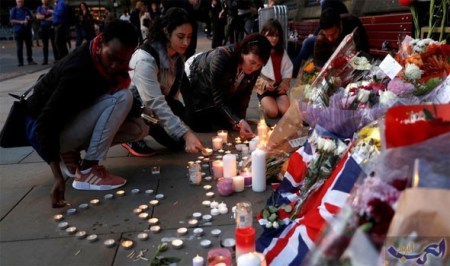
Mourning the Manchester victims (image: arabstoday.net, May 26, 2017)

“It was the natural outcome of the culture of hate. That is the only explanation for the heinous deed committed by the terrorist Salman Al-‘Abedi in the city of Manchester. The terrorist’s family fled the tyranny of [former Libyan ruler Mu’ammar] Al-Qadhafi and sought asylum in Britain, and Al-‘Abedi was born and grew up there, in a civilized and pluralist society that respected his right to live in dignity. But hatred for the other, which he absorbed in his closed-off environment, overcame the humanistic values he learned in British society.

“He [came to] support the most benighted stream in history and quenched his thirst by going back to the roots of his former culture, [the culture] of his country of origin. He left Britain for Libya, but then returned there to commit his heinous crime. He had no particular target; all he wanted to do was kill those who differed from him in their culture and beliefs, otherwise why would he choose [to bomb] a concert attended by teenaged girls and boys? [He chose it] just because it was a possible target for practicing his hobby of murder. Had [this target] been unavailable, he would have run people over in the street or spilled their guts in museums or restaurants.

“Loyalty to ISIS is not enough to explain what happened. [The bomber] had deeper motivations. The culture in which he was raised  allowed him to automatically find his place in an organizational framework that has become the authentic tool of expression for a wide stream in our societies, [a stream] that negates the other, defends [the act of] murdering him and is overjoyed whenever there is breaking news about a terror attack.

“The family of the terrorist Al-‘Abedi, and the families of previous terrorists, are not innocent, because they played a central role in what happened to their sons. [The sons] imbibed the culture of hate at home and in the closed-off environment that millions of immigrants in the West inhabit. [The immigrants] have their own schools, and their communities keep themselves to themselves, [living] in their own world isolated from the wider society. Al-‘Abedi is the authentic expression of the social schizophrenia that many [immigrants] suffer from and of the culture of seclusion that dominates millions of people in our societies.

“We are bound to hear [all kinds of] cheap justifications for his crime, most of them holding the West responsible for the current situation in our countries, and all of them falling into the rubric of treating murder and barbarity as normal…

“Al-‘Abedi’s case is perhaps the most typical example [of what I am saying], because his family members might have died or might have been jailed for life had they stayed in Libya.  His father and mother fled [Libya] and sought asylum in Britain to save their lives and find some peace. Do the British deserve to have a member of this family, which was a victim of the Al-Qadhafi regime, repay it with such a cowardly action [as this bombing]? Al-‘Abedi was born in Britain and was given a chance to build [the kind of] successful life that millions of his peers [in the Arab world] wish for themselves. But he remained loyal to his cultural roots and harbored intense hatred which exploded the minute he had a chance to fulfill his terrorist duty. ‘Abedi’s case [shows] that, in order to be a terrorist, one does not necessarily have to join ISIS physically. It is enough to drink from the well of the benighted ideology, because then ISIS becomes the predictable outcome…

“The ISIS caliphate in Mosul and Al-Raqqa will vanish soon, but Al-‘Abedi and his fellow terrorists will long continue to exist among us. Their cultural enterprise will thrive and grow every day and in every place.”


[1] Al-Ghad (Jordan), May 25, 2017.

Zuhdi Jasser: Apologists for Radical Islam ‘Coddle the Muslim Community, Use Them for Identity Politics’

June 8, 2017

Zuhdi Jasser: Apologists for Radical Islam ‘Coddle the Muslim Community, Use Them for Identity Politics’, BreitbartJohn Hayward, June 8, 2017

(If there is a successful Muslim reformation, it will start — and probably end — in America. I have serious doubts that it will happen in the near future even in America. — DM

“The Islam that I believe in and teach my kids is a personal faith. It’s not up to the government. It’s not up to the imam who is the teacher. I can talk to five, six imams and then make up my seventh decision, some different decision.”

“Remember, what people read as the Koran is interpretation. The only thing that is Koran is the Arabic. The battle over interpretation is, what are the original words in Arabic? How do we actually define them? Many of them are fake and intentionally misleading interpretations,” he argued.

“The others that are about wars and battles, we need to separate and say, ‘You know what? Maybe it made sense in 620, 625 C.E., but we need to circumscribe those and say we no longer apply to today.’ You have to separate the historical part of the passages from applies to today,” he advised. “Muslims have done that with the rejection of polygamy that’s permitted, with the rejection of the cutting of hands for stealing, things like that. There’s a way to separate those things, and other ways to reinterpret.”

“There are modern ways to reinterpret the exact same words in a non-Salafi, non-Wahabbi, more modern liberal way while staying true to the authenticity of the script,” he stressed, referring to two schools of Islam that reject modernization and insist on highly literal interpretations of the Koran.

***********************

Dr. Zuhdi Jasser, founder and president of the American Islamic Forum for Democracy, joined SiriusXM host Raheem Kassam on Thursday’s Breitbart News Daily to talk about the aftermath of the London Bridge terror attack, and the future of Britain’s struggle against radical Islamic terrorism.

Kassam commiserated with Jasser about the difficulties of being a Muslim reformer in a media environment where stern criticism of Islam, even from Muslims, is treated like racism.

Jasser said apologists for Islam’s excesses were “basically doing takfir on national television,” using the Muslim term for disinformation.

“My response is, I’m proud not to be part of their Islamist community, but these guys talk about Muslims like we’re a gang,” he said. “Like they own the gang, and we can’t participate, when in fact they want to shut down free speech, they want to deny that we’re a diverse community.”

“When people say ‘why do these radical attacks keep happening?’ it’s because the free world refuses to treat Muslims like adults,” said Jasser. “They want to coddle the Muslim community, use them for partisan purposes and identity politics, and ignore all of the signs and precursors of radicalization – which are, by the way, the signs are hallmarks of the principles of our free society.”

“Equality of men and women, respect for free speech, a denial of conspiracy theories, ownership of who we are – all of these principles, which are basic principles of human rights, in order to coddle Muslims they allow the Islamic supremacists, the sharia supremacists to speak for our community,” he elaborated.

“Meanwhile, they are basically telling Muslims like myself who love America, who want to stand up for our country, ‘Oh, go sit at the back of the bus. You don’t deserve any recognition. We’re going to let the men with the long beards and the apologists basically speak for your community.’ It’s bigoted. It is them who are the bigots. We are being told we don’t love our faith, when in fact it’s the tough love of Muslims like myself that really, I believe, should be honored in a free society,” said Jasser.

Kassam asked if the wave of terrorist attacks was a direct result of allowing Islamists and their apologists to “dominate the conversation” at the expense of reformists like Jasser, sometimes equating reformist criticism with apostasy.

“It definitely is,” Jasser replied. “ISIS, the Islamic State, is not only ISIS. Every one of the Islamic states of the 56 Muslim-majority countries that form the Organization of Islamic Cooperation is based on a sharia state platform. That sharia state basically says that you need to follow the laws as determined by the clerics who define what is and is not Islam, what is and is not permitted speech. If you don’t fit in that construct, then you are not a Muslim. Therefore, how do you control that state? You control it by limited free speech and rejecting those who fall outside the confines of their theocracy.”

“People need to understand, political Islam’s goal is not to dominate Muslim-majority countries, but to evangelize, spread their ideas globally and defeat secular states, defeat non-Muslim states,” he warned. “They divide the world into the land of Islam and the land of War.”

“We in the West, by virtue of not evangelizing liberty, being offensive in pushing back – not only against terror, which is a symptom, but against the theocratic ideology of political Islam – are being sheepish. Appeasing, if you will. By not pushing for our ideas of universal human rights, we have been basically unarmed, and we’re starting to see a sonic boom of the lack of assimilation,” he said.

“Those within our society that are Islamists reject who we are. When Britain looks and says wow, there’s almost more jihadis from Britain going to Syria than there are Muslims loving Britain and serving in their own military – just look at the numbers. It should be 99 percent for one, serving in the British military, versus going to jihad. It is almost 50 to 50. That is why we’re losing this war,” said Jasser.

Kassam asked how adherents of a Westernized Muslim could reconcile themselves to the portions of Koranic doctrine that conflict with Western ideals, such as freedom of speech.

“That’s a great question, especially now in this month of Ramadan where we fast and reflect, and seek atonement and humility,” Jasser replied. “The Islam that I believe in and teach my kids is a personal faith. It’s not up to the government. It’s not up to the imam who is the teacher. I can talk to five, six imams and then make up my seventh decision, some different decision.”

“Remember, what people read as the Koran is interpretation. The only thing that is Koran is the Arabic. The battle over interpretation is, what are the original words in Arabic? How do we actually define them? Many of them are fake and intentionally misleading interpretations,” he argued.

“The others that are about wars and battles, we need to separate and say, ‘You know what? Maybe it made sense in 620, 625 C.E., but we need to circumscribe those and say we no longer apply to today.’ You have to separate the historical part of the passages from applies to today,” he advised. “Muslims have done that with the rejection of polygamy that’s permitted, with the rejection of the cutting of hands for stealing, things like that. There’s a way to separate those things, and other ways to reinterpret.”

As a much more delicate example, Jasser noted there is a passage in the Koran about the permissibility of beating women, but he suggested it could be reinterpreted in a modern context as “going on strike” (i.e. separating from her) instead of physically “striking” her.

“There are modern ways to reinterpret the exact same words in a non-Salafi, non-Wahabbi, more modern liberal way while staying true to the authenticity of the script,” he stressed, referring to two schools of Islam that reject modernization and insist on highly literal interpretations of the Koran.