Archive for June 19, 2017

Missile strike on ISIS turning Iran into a world power

June 19, 2017

Analysis: By firing surface-to-surface missiles with a range of up to 700 kilometers into Syria, Iran is both avenging the terror attacks in Tehran and claiming the status and prestige of a military, regional and maybe even global power. This should set off alarm bells not only in Israel, but also in the Arab Gulf states and in the US.

Ron Ben-Yishai|Published:  19.06.17 , 13:15

Source: Ynetnews Opinion – Missile strike on ISIS turning Iran into a world power

The Iranian strike in Syria on Sunday night must set off alarm bells not only in Israel, but also in the Arab Gulf states and even in the United States. The missile attack marks an escalation in Iranian involvement in Syria, and if the missiles did hit their targets—600 kilometers away—this essentially indicates Iran has other options for dealing with Israel, apart from using Hezbollah.

Iran tried to accomplish several goals with this missile attack. The main goal was to improve the ayatollah regime’s image, after the blow it suffered when ISIS terrorists carried out attacks against Iranian symbols in Tehran, killing 17 Iranian citizens and wounding more than 50.

The Tehran attacks undermined the Iranian citizens’ sense of security and eroded the indestructible image of the ayatollah regime and the Iranian Revolutionary Guard Corps (IRGC). The Iranian response is therefore complex, continuous and is carried out on two main levels.
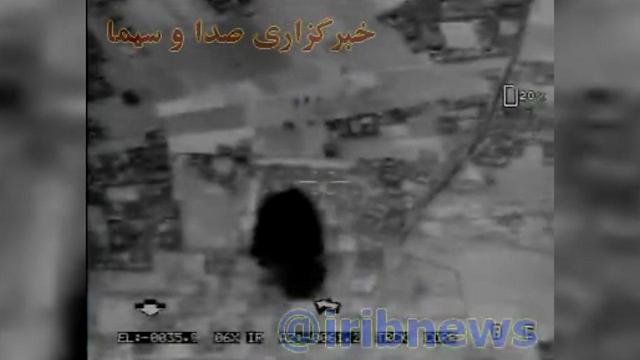
 
Iranian missile attack on ISIS targets in Syria

In one, the regime has been trying to figure out who sent the perpetrators, Sunni Arab Iranian citizens who acted openly on behalf of the Islamic State. The perpetrators were from the Baluchestan province in eastern Iran and from the Ahvaz province in the west. The Revolutionary Guards and other Iranian security organizations raided cities and villages in those provinces and meted out collective punishment, including death, on Iranians of Arab descent who were not necessarily involved in the Tehran attacks.

The second level entailed dealing ISIS itself a blow. The Iranian surface-to-surface missile strike was aimed at killing ISIS fighters in their strongholds and showing them they cannot escape Iran’s long arm. This blow to ISIS facilities in the Syrian cities of Deir ez-Zor and Palmyra helps the Syrian regime and the Russians as well.

Together, they are trying to reconquer Palmyra, Deir ez-Zor and the surrounding areas for the umpteenth time. These two cities and the military facilities around them have changed hands several times, and there is currently a combined Russian-Syrian offensive taking place for the two cities.
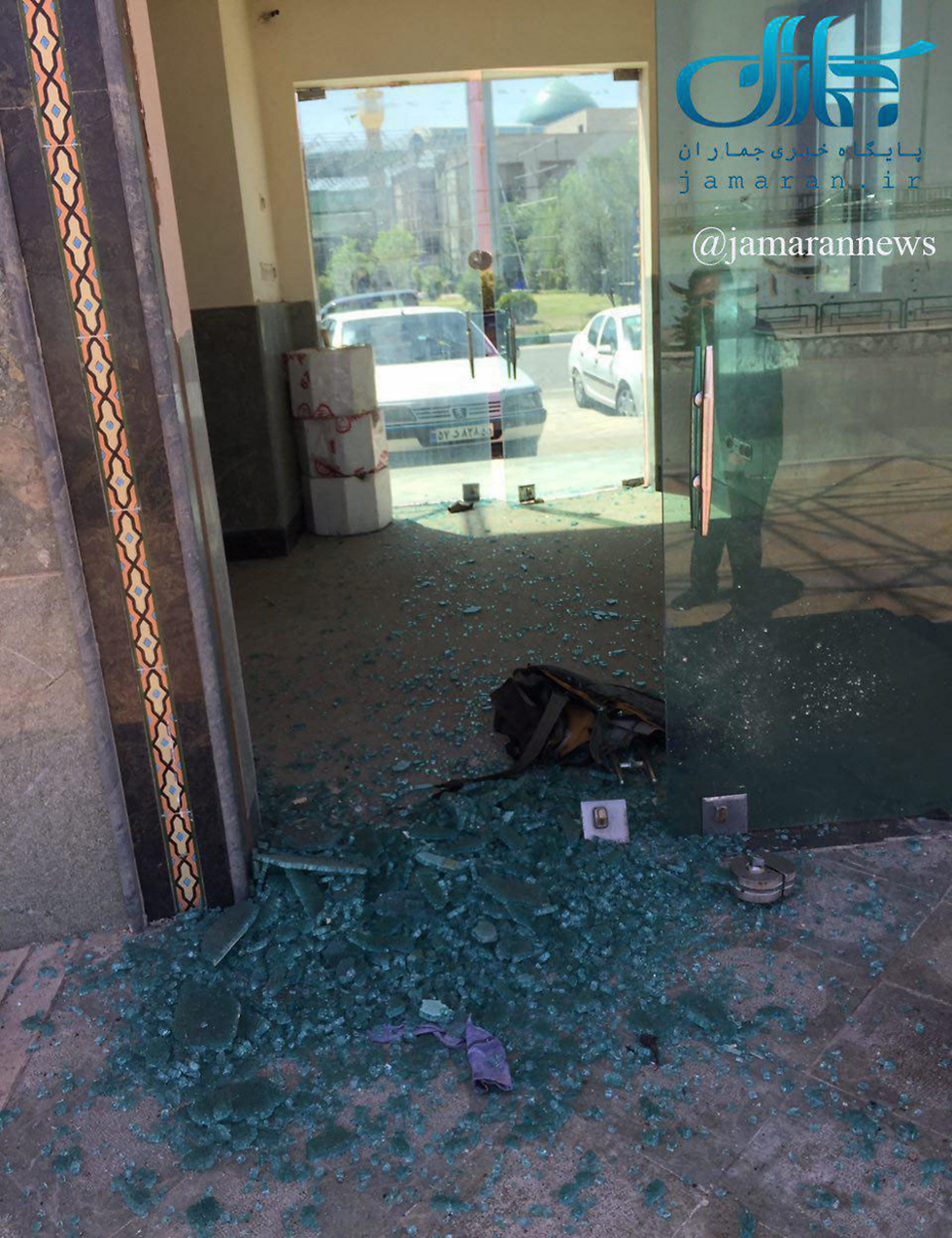
The terror attack at the mausoleum of Ayatollah Ruhollah Khomeini

The terror attack at the mausoleum of Ayatollah Ruhollah Khomeini

In addition, demonstrating the ability to accurately fire missiles with a range of 600 to 700 kilometers is an Iranian show of force, aimed at gaining the prestige and deterrence of a military, regional and maybe even world power. Up until now, the US and Russia have been the only countries to fire accurate missiles at such distances in the Middle East.

The Iranians said they had fired six missiles with a range of up to 700 kilometers, and referred to the strike as “successful” yet “limited.” We have no information yet about whether the missiles Iran used were cruise missiles or ballistic missiles. Ballistic missiles not only have a large warhead with hundreds of kilograms of explosives, but also navigation mechanisms that allow a very accurate hit.

We also don’t know the missiles’ level of accuracy. Iran likely fired different types of both cruise missiles and ballistic missiles to use this opportunity to test the accuracy and reliability of its long-range weapons. As long as Iran doesn’t know the results of this test, it won’t disclose the type of the missiles it used and whether the hits were accurate and fatal.

All this information should raise a lot of concern and interest in Israel, as anyone who is capable of hitting targets in eastern and northeastern Syria from Kermanshah in western Iran and from Kurdistan in the northwest is capable of using the same missiles to hit the Golan Heights in Israel and perhaps other places as well.
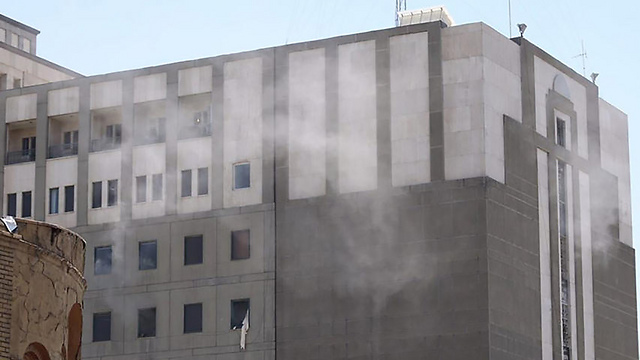
 

ISIS attack on the Iranian parliament building (Photo: EPA)

ISIS attack on the Iranian parliament building (Photo: EPA)

This wasn’t the Iranians’ final word, and they aren’t hiding the fact they have Shahab-3 missiles with a range of up to 1,400 kilometers. There are also missiles with a larger range of 2,000 kilometers and more, but those missiles aren’t accurate.

It’s also a known fact the Iranians have self-made cruise missiles, but before now they’ve hid their performance. The Iranian missile attack on ISIS targets in eastern Syria is, therefore, an issue which Israel should deal with on the diplomatic level as well, as part of Jerusalem’s battle together with the Trump administration to stop the Iranian missile program.

For the same reason, this strike must also serve as a warning to the Arab states in the Persian Gulf, which are part of the pro-American moderate Sunni camp. These countries’ oil fields and military facilities are located just 400 kilometers away from Iranian territory and are therefore more vulnerable. The US should also be worried, as its airbases, naval bases and command in Qatar and Bahrain are within the Iranian missiles’ range.


Russian military halts Syria sky incident prevention interactions with US as of June 19

June 19, 2017

Source: Russian military halts Syria sky incident prevention interactions with US as of June 19 – Moscow — RT News

FILE PHOTO: An S-400 air defence missile system at the Hmeymim airbase, Syria. © Dmitriy Vinogradov / Sputnik

The Russian Defense Ministry announced it is halting cooperation with its US counterparts in the framework of the Memorandum on the Prevention of Incidents and Ensuring Air Safety in Syria following the coalition’s downing of a Syrian warplane.

The ministry has demanded a thorough investigation by the US military command into the incident with the Syrian government military jet, with the results to be shared with the Russian side.

Read more

FILE PHOTO: An F/A-18E Super Hornet © U.S. Navy / Seaman Weston A. Mohr

“In the areas of combat missions of Russian air fleet in Syrian skies, any airborne objects, including aircraft and unmanned vehicles of the [US-led] international coalition, located to the west of the Euphrates River, will be tracked by Russian ground and air defense forces as air targets,” the Russian Ministry of Defense stated.

Downing the military jet within Syrian airspace “cynically” violates the sovereignty of the Syrian Arab Republic, Russian military said.

The actions of the US Air Force are in fact “military aggression” against Syria, the statement adds.

The ministry emphasized that Russian warplanes were on a mission in Syrian airspace during the US-led coalition’s attack on the Syrian Su-22, while the coalition failed to use the communication line to prevent an incident.

“The command of the coalition forces did not use the existing communication channel between the air commands of Al Udeid Airbase (in Qatar) and the Khmeimim Airbase to prevent incidents in Syrian airspace.”

The ministry considers the move “a conscious failure to comply with the obligations under the Memorandum on the Prevention of Incidents and Ensuring Air Safety in Syria,” and is thus halting cooperation with the US within the memorandum framework as of June 19, the statement concluded.

READ MORE: US-led coalition downs Syrian army plane in southern Raqqa

Earlier Russian Deputy Foreign Minister Sergey Ryabkov condemned the attack, branding it an act of aggression which actually helped the terrorists the US is fighting against.

The US-led coalition downed the Syrian government warplane on Sunday. At the moment of the attack the jet was carrying out operations against Islamic State (IS, formerly ISIS/ISIL) some 40km from Raqqa, the Russian Defense Ministry said. The pilot ejected from the plane above IS-controlled territory and is still missing.

US-led coalition downs Syrian army plane in southern Raqqa

June 19, 2017

Source: US-led coalition downs Syrian army plane in southern Raqqa — RT News

FILE PHOTO © Bassam Khabieh / Reuters

The US-led coalition has downed a government warplane in southern Syria, the Syrian army and coalition have announced in separate statements. The Syrian military added that the plane’s pilot is now missing.
Read more

FILE PHOTO: A US-made HIMARS (High Mobility Advanced Rocket System) © Getty Images

According to the Syrian statement, the plane was carrying out operations against Islamic State (IS, formerly ISIS/ISIL) in the countryside around Raqqa when it was targeted, leading to a crash and the loss of the pilot, who is currently missing.

“This attack comes at a time when the Syrian Arab army and its allies are advancing in the fight against ISIS terrorists who are being defeated in the Syrian desert in more ways than one,” the statement read.

The statement added that although such attacks seek to undermine the Syrian armed forces’ struggle against terrorism, they will not be deterred in fighting for stability and security in the Syrian Arab Republic.

The downing of the Syrian warplane, an Su-22, was confirmed by an official press statement from Operation Inherent Resolve, the US-led international task force against IS, which accused the Syrian government of targeting fighters from the Syrian Democratic Forces, a Kurdish-led militia.

“At 6:43pm, a Syrian regime SU-22 dropped bombs near SDF fighters south of Tabqah and, in accordance with rules of engagement and collective self-defense of Coalition partnered forces, was immediately shot down by a US F/A-18E Super Hornet,” the statement read.

Read more

© Hamad I Mohammed

The statement added that its mission is to defeat ISIS in Iraq and Syria and that the Coalition does not seek to “fight Syrian regime, Russian, or pro-regime forces partnered with them, but will not hesitate to defend Coalition or partner forces from any threat.”

This is not the first time that the US-led intervention in Syria has led to standoffs and violence against pro-government forces. In September 2016, a coalition airstrike on Deir ez-Zor killed over 60 Syrian soldiers while in April 2017, US President Donald Trump ordered a Tomahawk missile strike on the Shayrat airbase, ostensibly in retaliation for the use of chemical weapons by the Syria government, though no concrete evidence of this has emerged.

Earlier in June, the US deployed several High Mobility Artillery Rocket Systems (HIMARS) in southern Syria, close to the border with Jordan. Russian Foreign Minister Sergey Lavrov said the presence of the rocket launchers cannot be justified by a need to fight Islamic State terrorists, as IS forces are not active in the area. Instead, their presence threatens the cooperation between the Syrian government and their partners in Iraq.


